Tag: LinkedIn

  • Digital is the way to go, but…


    By Robin Thomas


    Consumers in India are evolving rapidly from print and radio to television and now digital. Just when you thought that digital was all about display advertising, bulk SMS, search, email advertising and online classifieds, in came the social media, video advertising, smart phones, tablets, apps, mobile advertising and so on.


    According to industry estimates there are 120 million internet users in India today, of which almost 30 per cent are from small towns. While India’s broadband internet penetration is still low, it is believed that the next phase of growth in internet will come from mobile users which are estimated to be over 800 million.


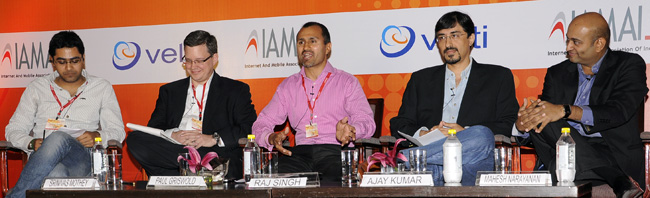
    As more and more youngsters gain access to various digital platforms, there is a greater need for marketers to not only engage the young consumers, but they must also be able to give them a unique experience across the digital platforms. The IAMAI (Internet And Mobile Association of India), which held its 8th Marketing Conclave, 2012 – ‘Digital Marketing 3.0’ on April 13 in Mumbai, extensively discussed the role of social media, video advertising and mobile advertising in the near future.


    Using Social Media:

    Today most companies have multiple social networking sites – Facebook, Twiter, LinkedIn and others. There are separate teams handling social media marketing for the company, but, are brands listening to their consumers? Do they interact and respond to queries and complaints? Do marketers understand the social media and know how to monetize it? Or are brands simply satisfied with the number of ‘Likes’ and views they generate on their social networking sites?


    Karthik Nagarajan, National Director, Social and Insights, Group M was of the view that unless one is not ready and mature enough as an organisation for the medium, the organization must stay away from social media.


    According to Usha Sangwan, Executive Director, LIC India, what brands lack today is the courage to be transparent, they don’t respond to negative feedback and fail to turn the customer as an advocate of their product. “Brands must not see social media as a mere marketing tool and limit to generating numbers alone, but social media must be used mainly for connecting with the TG and co-creating the product. Brands must try and understand their TG and become a part of their customer’s day to day life.”


    Virginia Sharma, Chief Marketing Officer, IBM India hit the nail on the head by stating that brands must have the ability to admit their mistake and apologise to the customer. She admitted that while there is a certain amount of fear among brands to apologise for a mistake committed because it may lead to negative public opinion, but felt it is always better to apologise and rectify the mistake which could lead customers to becoming an advocate of the brand.


    Vinay Bhatia, Customer Care Associate and Vice President Marketing and Loyalty, Shoppers Stop added that it a company’s reputation is harmed only when it fails to act responsibly to a complaint made, and not when it apologises for a mistake and tries to rectify it. “The problem with the companies today is that they make policies as if the consumer is a criminal. Accepting a feedback and acting upon it will not harm the brand but, if one chooses to remain silent about a complaint, that’s the worst one can do to his brand.”


    Leveraging Mobile Advertising:

    Besides the social media, mobile advertising is another challenge faced by marketers who have more or less failed to leverage the small screen. Sadly, mobile advertising is largely limited to only SMSes. Marketers are said to often mistake mobile as an extension of broadband internet and as a result they fail to give their consumers a unique experience on mobile.


    Speaking from a marketer’s point of view, Ajay Kakar, CMO, Financial Services, Aditya Birla Group stated that although the potential for mobile advertising is high, there is still a section of people who have not seen the mobile as an opportunity. He added that mobile industry must follow the ‘Jo dikhta hain, wahi bikhta hain’ policy and evangalise the benefits of mobile advertising. “Content is very important, don’t tells me about your brand, but tell me what’s in it for me? Give me the case study of successful mobile advertising. What I want to know is how much money mobile advertising is making for my brand and for my business? What you must do is to stop saying ‘buy me, buy me’ but, instead tell me ‘why me, why me’?”


    With the introduction of 3G and now 4G services, mobile internet is expected to be faster and with high quality content, better mobile applications, much better video and much more. In addition to these, smart phones and tablets are also said to play important roles in the growth of mobile internet in India.


    Mahesh Narayanan, Country Head-Mobile, GoogleIndiasaid that there is not only lack of understanding about mobile advertising, but also lack of discussion about mobile as a medium in board room meetings. “The consumer shift is already happening from traditional media to mobile; however, great amount of content for mobile is yet to be created. People are looking for your brand on their mobile phones but, ironically brands are absent on mobile.”


    While mobile subscribers will continue to grow and more people will access internet through their mobile phones, the challenge lies in monetizing the medium and to find newer ways to reach out to consumers besides SMS advertising.


    Paul Griswold, Director Product Management, Mobile Marketing, Velti was of the view that mobile is not treated as an integrated part of marketing strategy, but is seen as an extension to online. “There has been a failure to take the advantage of the one on one interactivity mobile offers and just sending SMS is definitely not the way.”


    The participants outlined not only the problems but also possible solutions. According to Srinivas Mothey, Head Mobile Marketing and Advertising, One97, the first step is to educate advertisers and agencies about the benefits of mobile advertising. Although every advertiser may have a different view about the medium, nevertheless they need to be encouraged to invest in mobile. “We are also encouraging advertisers to create mobile assets and not just mobile apps. We are beginning to see the positive results but, in order to see more results, it may take some more, but the first step needs to be taken.”


    Video Marketing:

    Video advertising/ marketing is not a new phenomenon for marketers. Traditionally, marketers are said to be comfortable with video and we have been seeing that on television, and will probably see the same, and in a much bigger way, online and on mobile in the near future.


    According to Debadutta Upadhyaya, Vice President, Vdopia Media, there has been over 50 per cent growth in video consumption in the last one year alone, the fourth largest globally. “Unlike other countries,Indiahas made the leap from web to email to social media and now video. There is still a long way to go on the creative aspect because the primary advertising medium of a creative agency has always been television, so creativity in video advertising is bound to take some time.”


    As India’s broadband penetration and mobile internet accessibility increases, it would be just a matter of time when video marketing would explode inIndia. Besides online, with 3G and 4G services, video consumption on mobile should be an altogether different experience for users and marketers.


    But Shubhranshu Singh, Marketing Director-IndiaandSouth Asia, Visa cautioned: “There is a difference between video on web and video on mobile, and the difference between the two is galloping ahead in terms of content. Perhaps the youngest audience in our country today will watch television online for the first time which could be an opportunity or a threat if we are not ready for it.”


    Digital marketing in itself has become 360 degree for marketers. It has gone beyond display and banner advertising, to becoming more interactive and innovative to reach out to consumers. Digital marketing, as the industry players pointed out, is in a transition phase from web, to email and now brands are trying to reach out to their customers through social media, mobile and video.


    Marketers must stop considering mobile internet as an extension to online and, therefore, give mobile users unique experience of mobile advertising. Social media must not be seen as a mere marketing but, a medium to interact with their consumers, know their behavior and be a part of their day to day life.


    Brands must be receptive to both positive and negative feedback of customers, admit to their mistakes, apologise to the customer and rectify the fault. Digital marketing will undoubtedly grow but, marketers must first be evangalised not only about the benefits of the medium but, also ways and means to leverage it.

    Imaging: Rafiq


  • LinkedIn Strengthens Follower Ecosystem

    By A Correspondent


    LinkedIn – the world’s largest professional network with more than 14 million inIndia- is furthering its commitment to help brands build a more effective follower ecosystem in a business context with the launch of LinkedIn Targeted Updates and Follower Statistics. LinkedIn has signed on a select group of early release partners – including DSP Blackrock, AT&T, Dell, Microsoft, and Samsung Mobile – who will be immediately using these new follower tools.


    With these new offerings, this initial group of marketers will have access to the most robust targeting and analytics capabilities for their campaign initiatives on the platform from their LinkedIn Company Pages. They will be able to create hyper-focused follower lists – based on several targeting criteria, including Industry, Seniority, Job Function, Company Size, Non-company Employees, and Geography – to which they can deliver highly relevant content to increase engagement.


    In addition, marketers will also have self-service access to an insights dashboard that will further support their efforts by allowing them to assess their follower acquisition efforts; track engagement metrics, including likes, shares, comments, and percentage engagement, over time; and review their followers’ demographic information.


    LinkedIn Targeted Updates and Follower Statistics, through the hyper-customization of messages and campaign performance analysis it provides, is enhancing the LinkedIn follower ecosystem and the ability of brands to communicate with their most impactful audiences on the platform.


    • LinkedIn’s Unique Follower Ecosystem:

    LinkedIn’s follower ecosystem has been designed to enables marketers to: identify and acquire the right followers; more effectively engage and communicate with followers on a regular basis via relevant content; and analyze and optimize the impact of their follower relationships.


    • LinkedIn’s Follow Company Button:

    LinkedIn Targeted Updates and Follower Statistics’ launch follows on the heels of the introduction of the LinkedIn Follow Company button – the first phase of LinkedIn’s follower ecosystem strategy in February. It facilitates engagement through a button added to businesses’ Web pages and other marketing materials.


    Also 63 per cent of LinkedIn members expect companies to have a presence on LinkedIn. Members “following” companies and want to maintain these relationships: 70 per cent of LinkedIn members follow or would follow companies on LinkedIn; two out of three LinkedIn followers (64 per cent) would follow companies “indefinitely”; followers are active on LinkedIn (global).


  • LinkedIn announces B2B Connect for Ind marketers

    By A Correspondent


    LinkedIn India has announced B2B Connect 2012 – a first of its kind event, exclusively for Indian marketers to be held on Tuesday, 17th April, 2012 at the Grand Hyatt, Mumbai. The inaugural by-invitation event will bring together leading global marketers and advertising industry stalwarts to discuss the current and future marketing potential of the online space and will seek to establish digital and social media as a core channel for B2B marketing.


    LinkedIn India has lined-up a stellar list of speakers and panelists from India and abroad for B2B Connect 2012 led by Jeff Weiner, CEO, LinkedIn, who will give the first keynote address. B2B Connect 2012’s second keynote speaker will be globally renowned B2B marketing strategist David Meerman Scott who will present on the New Rules of B2B Marketing. Arvind Rajan, Managing Director & Vice President, Asia Pacific and Japan – LinkedIn, Future Brands’ CEO Santosh Desai, Microsoft South East Asia’s Simon Mouyal and Philips Korstiaan van Wyngaarden will also address the audience at B2B Connect 2012. For more information and updates on speakers, please visit http://www.linkedinsolutions.in.

    Announcing the launch of B2B Connect 2012, Hari V Krishnan, Country Manager, LinkedIn India, said, “Indian B2B Marketers are finding that their traditional channels aren’t scaling or providing the measurability they desire. At B2B Connect 2012, we aim to bring together some of the best minds from across the globe to share their knowledge and expertise on how B2B brands can capitalize on the digital medium. The rise of social media has helped brands with the ability to reach the right audiences, and in the right context. In such a dynamic environment, it is critical for brands to be where decision makers are engaging with each other and influencers. At B2B Connect 2012, industry leaders will discover valuable insights and should leave inspired with a path forward for their brands to better market themselves in today’s connected world.”

    LinkedIn, with over 150 million members worldwide of which over 14 million are in India, has evolved into a preferred platform for marketers in the country. It is also the platform of choice for B2B marketers in many leading economies. Approximately 57% of LinkedIn members in India are decision makers. In 2011, 149 Million business leads were driven on the platform by professionals in the country. This potent member base has equipped brands including CISCO India, SAP India, Huawei Enterprise Business Group, Polycom and Trend Micro, with an opportunity to lead engagement with the right audience. LinkedIn Marketing Solutions entails a host of customizable solutions with tools including LinkedIn Audience Targeting, LinkedIn Personal Messaging Unit, LinkedIn Custom Groups, LinkedIn Company Pages, LinkedIn Content Ads and LinkedIn Partner Messages.

    “Indian brands have successfully leveraged the power of the LinkedIn professional network to reach an audience comprising of highly educated individuals in decision making capacities. This has become possible due to our approach of helping brands tailor their marketing approach as per their requirements. The combination of an empowered audience supported by unique tools and an emphasis on insights helps brands achieve a strong conversion rate and provides measurable results. At LinkedIn we provide marketers access to a product suite that caters to not only their short term tactical needs, but also long term strategic objectives,” said Dhiman Mukherji, Director, Marketing Solutions, LinkedIn India.

    Regular updates on B2B Connect 2012 will be posted on the official website and on Twitter (@LinkedInIndia).


  • LinkedIn survey shows luck helps career, Indians believe

    By A Correspondent


    Professional network LinkedIn has released data about global professionals’ perceptions of the role Lady Luck has played in their career trajectory.


    LinkedIn has more than 150 million members worldwide and over 14 million in India.


    LinkedIn surveyed more than 7,000 professionals globally and found that 84 percent of professionals do believe in career luck. Forty-eight percent consider themselves to have better luck in their careers, compared to other professionals.


    Seventy-nine percent of the more than 500 professionals surveyed in India believe in career luck. Out of the fifteen countries in which LinkedIn surveyed professionals, India ranked as the fourteenth-luckiest country. Thirty-six percent of survey respondents report feeling slightly luckier, or much luckier, than other professionals.


    For professionals in India, the top five most important factors that contribute to luck are:

    • Learning from your mistakes
    • Having a strong work ethic
    • Having strong communication skills
    • Striving to be the best at what you do
    • Having strong technical skills

    Globally, the top five most important factors that contribute to luck are:

    • Having strong communications skills
    • Being flexible
    • Having a strong work ethic
    • Acting on opportunities
    • Having a strong network

    India is the only country with “Having strong technical skills” in its list of the top five factors contributing to career luck.


    “Progressing in their careers and moving up the organizational ladder is crucial for professionals across all levels. The objective of this survey was to discover how professionals perceive luck in their career growth,” said Hari V. Krishnan, Country Manager, LinkedIn India.


  • ad:tech New Delhi 2012 hunts for the best Indian blog entry on digital marketing

    By A Correspondent


    The second edition of the world’s No.1 digital marketing, media and advertising event, ad:tech New Delhi 2012, is inviting entries for the ‘Best Blog Entry’ contest.


    Bloggers need to submit an original and unpublished article on “Digital Marketing- What’s in Store for 2012″ in up to 800 words, along with their short bio and credentials, by February 12t, 2012. Entries may be emailed to bloggercontest@networkplay.in.


    Shortlisted blogs will be put up on the official social media channels of ad:tech New Delhi 2012 and will compete against each other in a poll to get the maximum number of likes and retweets. The blog with the maximum public support will be adjudged the ‘Best Blog Entry’ which will entitle the blogger to an all access pass to the three day exhibition and conference.


    ad:techNew Delhiis being held at The Leela Kempinski in Gurgaon from February 22-24. It will provide the winning blogger once-in-a-lifetime chance to meet globally respected advertising and marketing experts, and to present his or her thoughts on digital marketing.


    This year’s ad:tech will have participation of over 70 digital marketing companies, more than 2,500 delegates and experts from the digital marketing fraternity. Promising to be bigger, better and bolder than ever, ad:tech New Delhi 2012 already has a glittering line up of keynote addresses by Shiv Singh, Global Head of Digital, PepsiCo Beverages; Pete Blackshaw, Global Head of Digital Marketing and Social Media, Nestle; Arvind Rajan, Managing Director & Vice President, Asia Pacific and Japan, LinkedIn; Gian M. Fulgoni, Executive Chairman & Co-Founder, comScore, Inc; Satyan Gajwani, Director – New Media, BCCL; Richard Dunmall, Vice President, Global Accounts & Agencies, Microsoft Advertising; and Kent Wertime, President and Representative Director, Ogilvy & Mather (Japan) K. K., Chief Operating Officer, Ogilvy Asia Pacific.


    The winning blogger will also get a chance to hear over 80 leading experts in various panel discussions and sponsored workshops, and attend the vast exhibition of the latest technologies in digital marketing. ad:tech New Delhi 2012 is also inviting and evaluating nominations for the official blogger for the event.


  • LinkedIn announces localized solutions 4 Indian recruiters

    By A Correspondent


    LinkedIn, world’s largest professional network, with over 135 million members worldwide and over 13 million in India, on Tuesday announced localized hiring solutions used by recruitment professionals in India.


    This move, a global first for LinkedIn, will give more recruiters in India access to high potential candidates and drive the growth of the local talent economy.


    LinkedIn India is rolling out, specifically for India, localized versions with India pricing for offerings like LinkedIn Recruiter, which will allow Indian recruiters to search and target profiles in India. Other offerings with differentiated India pricing include Jobs Network, Work with us Ads, Targeted Recruitment Ads and Talent Direct.


    “The growth currently being experienced by the Indian economy needs to be complimented with the right talent. Our member base, which consists of educated and engaged professionals, is much sought after by recruiters from corporations and executive search firms. By creating localized products for recruiters in India, we hope to build on our philosophy of connecting talent with opportunity,” said Irfan Abdulla, Head of Hiring Solutions at LinkedIn India.


    “LinkedIn’s localized pricing is in line with its commitment towards introducing efficiency enhancing tools for professionals and an acknowledgement of the growing demand for customized solutions in the Indian market,” he added.


    Since managing talent is core to making recruiters productive and successful, tools like LinkedIn Talent Pipeline enable recruiters to easily manage all their talent leads in one place; LinkedIn Career Pages, is a one stop virtual destination which helps companies build a brand amongst prospective candidates; and Targeted Recruiting Advertising is a strategic tool which enables recruiters to reach a specific population of candidates as per skill, location or experience. These tools empower hiring managers to make effective and strategic hiring decisions.


    In India, LinkedIn Hiring Solutions are used by a number of companies including ING Vysya, Genpact, Biocon, Wal-Mart, HCL Technologies, L&T Infotech among others.


  • AdAsia: From chat rooms to Twitter

    By Akash Raha

    That the digital revolution is already here, and is here to stay, is a given. But marketers are still perplexed on how to make full use of this phenomenon. In AdAsia 2011 a complete session was devoted to this very issue, and to be more precise, the subject of social media was discussed. The session in context was called ‘From chat rooms to Twitter… what next?’

    The panelists at this session were Kate Day, Communities Editor, Daily Telegraph Online, Arvind Rajan, Managing Director & Vice President, Asia Pacific and Japan, LinkedIn and Earl Wilkinson, Executive Director and CEO, INMA. The session was moderated by Rishad Tobaccowala, Chief Strategy and Innovation Officer, Vivaki.

    The session proposed that discussions were going to be a reverse of what this conference is about ‘Uncertainty: The new certainty’. What the session proposed was ‘Certainty: The new uncertainty’. It is certain that over the next few years the driving force will be social media. However, the uncertainty aspect is only what it means to marketers, media company etc.

    Ms Day said, “The question one often asks is, ‘What is the next big platform?’ My answer is it’s all about the people rather than the technology. Actually the underlying shift is with the patterns of behaviours of the people involved and audiences. Brand and customer relationship is the key. If that’s the case, then what platform is next does not matter because the people are here.”

    All the panelists stressed on the need to build consumer relationship and make the social media experience more real and humane. The consumers today want to interact with a human rather than with an automated interface, they want real conversation, moreover, in real time. It is essential to “get your own house in order and make the customers feel at home”. Also, often while we talk about social media, there are assumptions made about the product, content and consumers. Such clichés are something one should stay away from and not base one’s social media plans on them. Crating content and platform for ones invaluable customers is the key.

    FB, Twitter and LinkedIn are three global platforms, but as Mr Rajan said, the reason they are used still remain different. Twitter is a syndication platform. FB is for friends and family and LinkedIn is a professional network. The social media platforms are still new, there is still a lot to be done and lot of understanding needed. The essence is to have meaningful conversation with the audiences, connect with the customers and once that is done, it can be leveraged upon.

    Earl Wilkinson, of INMA also shared his learning in the field of social media apropos newspaper publishers across the globe. He pointed out how sharing has becoming the value added special sauce for journalism online. And in a way, he emphasized that digital times have saved journalism. Now that social media is here already, and everyone knows that communication is essential, the trick is how to structure the communication. For newspaper publishers, the way forward is going to be projecting newspapers and news brands as a trusted voice out in the community and the blog-sphere and get the audiences back on the websites.

    Arvind Tobaccowala of Vivaki said that the essence to being leader in social media space is differentiating content. Speaking about social media platforms he expressed hope for Google+. He said “Google is an amazing company… Believe it or not, Google+ will work, and it will work in a very big way. I don’t know how it will fit into broader eco system but it will be interesting to watch.”

    Pointing to sharing content on the social space as an interesting behavioural aspect and social media phenomenon, the panelists expressed hope that it will only grow further as it is a great way to engage with the audiences. Mr Tobaccowala also pointed out that on the social media space it is important to understand the behavioral aspects of the consumers. There are heavy users and heavy influencers. Right now the focus is less on heavy influencer… Heavy influencers can be further be divided into advocates and detractor. In a nutshell, he stressed that it’s imp to talk to detractors because they are the ones who are more vocal, even more than the advocates. Social media helps rediscover the idea of sharing in new and different ways to new and different audience. The essence is to start with Social media and start with it now. The panelists beseeched everyone to get on it and one might stumble upon something wonderful… “It is not necessary that you always know what you are doing,” said one of the panelists. Also, one should not look for any returns, one will get it eventually. Social media is new and still developing. Not everything that one experiments with comes out right, but one should try nevertheless. Ms Day emphatically suggested, “Don’t throw the baby out with the bathwater,” advocating that even if a few ideas don’t turn out right, it is a must to explore social media, as it is the big thing of the future.