Tag: LinkedIn

  • LinkedIn’s Nishant Rao in IAA webinar on June 27

    By A Correspondent


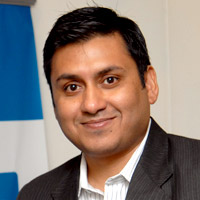
    The International Advertising Association (IAA) – India Chapter has announced its next webinar with Nishant Rao, Country Manager, LinkedIn, as speaker. The webinar will be held on the Google Hangout platform on Thursday, June 27 at 3pm. MxMIndia is partnering this initiative.


    Srinivasan Swamy, President, IAA, India Chapter, said, “We began with Rajan Anandan in April and followed it with Ajit Balakrishnan in May. We are seeing increased participation, and are glad that this knowledge sharing platform by IAA about the Digital medium is gaining traction.”


    Abhishek Karnani, Director, Free Press Journal and Manish Advani, Head – Marketing & Public Relations, Mahindra Special Services Group, are co-chairing this IAA webinar series.


    “It’s an honour to be presenting Nishant Rao in our next Webinar. This ‘World Goes Digital’ webinar series is aimed at helping professionals across age groups understand digital trends and nuances,” said Mr Karnani.


    “When I landed in India after a long stint in Canada, I didn’t know anyone in India, but through LinkedIn I was able to expand my network at a rapid pace. Network led to Net worth for my organization. I am glad through IAA many youngsters in India will learn more about LinkedIn that too from a leader of LinkedIn,” said Mr Advani.


    The inaugural webinar with Rajan Anandan, MD, Google India, was held in April and with Ajit Balakrishnan, Founder and CEO, Rediff.com in May. Over the last few months, the IAA (India Chapter) has conducted a series of activities – the IAA Leadership Awards, a Gender Sensitization Seminar, and the IAA Olive Crown Awards. Every month, the IAA also conducts IAA Debates in different cities, on topical issues concerning the industry.


  • LinkedIn appoints Nishant Rao as country manager, India

    By A Correspondent


    Global professional network LinkedIn has announced the appointment of Nishant K Rao as the new country manager for India. Mr Rao’s appointment at LinkedIn India comes following the promotion of former country manager Hari V Krishnan to a larger role as the Managing Director of Asia-Pacific and Japan.


    In his new role as the country manager for LinkedIn India, Mr Rao will focus on scaling up operations and staying committed to LinkedIn’s value proposition of connecting India’s professionals to make them more successful and productive and helping enterprises hire, market and sell effectively.


    “With a member base of 18 million professionals, India is one of our fastest growing markets and the largest outside the US,” said Mr Rao. “Indian marketers and recruiters are fast realizing the potential of LinkedIn’s affluent member base and are leveraging the platform for targeted and thought leadership oriented campaigns. I am excited about the opportunity to work with the LinkedIn India team to serve our customers and members in India.”


    Prior to being appointed as LinkedIn India’s country manager, Mr was Director, Business Operations – Head of Global Sales Strategy at LinkedIn’s headquarters in Mountain View. He has been with LinkedIn since September 2011 and has a strong understanding of the company’s business.


    Mr Rao has over 10 years of industry experience and has held leadership positions with companies like McKinsey and ARIBA Inc. He was also one of the founding members of Epicentre Technologies, among India’s first call centres. He holds an MBA in Strategy, Entrepreneurship, Marketing and International Business from the Massachusetts Institute of Technology and also a BS in Computer Science from the University of Texas.


  • Why CEOs find social media a double-edged sword

    By Nikhil Menon


    Recently, the CEO of Southwest Airlines in theUShit on a novel idea to get customer feedback directly from the source. He put up a question on LinkedIn asking: ‘How can an airline make you, the flier, more productive?’ He got 137 answers from people; many of them detailed essays on what his airline could do to improve its customer experience.


    “That kind of real, authentic feedback is very hard to get when you’re the CEO,” said Hari Krishnan, CEO of LinkedInIndia, as he recounts this story. And there, in a nutshell, you have perhaps the single most important thing about social networks – they are a great leveller. They also blur the line between what was considered one’s professional and personal space.


    From Donald Trump’s tirades against Barack Obama to Michael Dell’s constant praise for Dell’s employees worldwide and Vijay Mallya’s defensive tweets hitting back at critics of his ailing airline, CEOs are stepping up to make themselves heard. And while these are early days inIndia, promoter-CEOs and heads of business families like Anand Mahindra, Mallya and Naveen Jindal are early movers. The list of appointed CEOs on social media like HCL boss Vineet Nayar and RBS India head Meera Sanyal, however, is still rather small.


    Prakash Iyer, CEO of Kimberly-Clark Lever, admits that Indian executives are one step behind foreign CEOs in cashing in on the social media phenomenon: “Whenever something new comes along, we tend to see the negatives more than the good things. But CEOs, no matter what generation or industry they’re from, have to realise that social media is here to stay. And if they’re not using it, they are missing something.”


    If that’s true for heads of private companies, it’s truer for senior bureaucrats inIndia, who are known more for shunning the spotlight than soliciting it. Considering that, Amitabh Kant is a maverick. The 55-year old CEO of the DMIC (Delhi Mumbai Infrastructure Corridor) has an active Facebook account with 1,500-odd friends, a Twitter account he occasionally updates and even a personal blog, amitabhkant.in. Mr Kant reads and writes extensively on his pet interests – travel, urbanisation, photography, technology and cuisine – and also likes connecting with people who share those interests: “Social media has been a powerful and enlightening influence on my work. I read and discuss articles on infrastructure and urbanisation around the world.”


    What’s more, he thinks that others of his ilk should follow suit. “What’s the point of resisting social media? It’s a highly transparent world,” he said, relaxing at hisDelhihome after his mandatory Sunday morning golf session. “And civil servants need to understand that, especially in the RTI (right to information) age. In fact, I feel that the government should ask every bureaucrat above the rank of joint secretary to compulsorily be on social mediums to become more accessible to the people.”


    As long as we’re in the realm of wishful thinking, Jessie Paul has a gem of her own. As the battle to decideIndia’s next president rages on, the managing director of Paul Writer jokingly urges people to consider her for the position. When asked about her ambition to occupy Rashtrapati Bhavan, she chuckled: “I am a woman, so I am in a political minority. Besides, I am a Tamilian, married to a Bengali, so I should be acceptable to both Jayalalithaa and Mamta di. Why not?”


    Her irrefutable logic is met with much hilarity and even endorsement by the people who follow her. But looking beyond her easy candour, what’s interesting is how the managing director of Paul Writer effortlessly wields social media across half-a-dozen platforms.


    For Ms Paul, who is a regular on content sharing and networking sites like Slideshare, Youtube, Facebook and Flickr, online networking sites are food and drink.


    The author of a book on frugal marketing and former Chief Marketing Officer (CMO) of Wipro was one of LinkedIn’s first users inIndiain the early 2000s. In fact, Mr Krishnan of LinkedInIndiasaid that Jessie Paul is a case study, in the way she created a network of CMOs in her earlier avatar to trade best practices. Ms Paul eventually quit Wipro and started Paul Writer, through which she gives companies the benefit of her experience on tackling the social media beast. “Social media is more than about making friends or killing time; there’s some serious knowledge sharing going on, and more importantly, there are huge business opportunities waiting to be explored there,” she said.


    Some may argue that given her marketing background, it should be no surprise that Paul is so comfortable with social media. And it’s also worth mentioning that Amitabh Kant hasn’t been a ‘typical’ insular bureaucrat either. It’s been easier for Paul and Kant to brand themselves because social media has always been core to their interests and professions.


    Mr Kant, a 1980 Kerala cadre IAS officer, was earlier Joint Tourism Secretary with the Ministry of Tourism. He was also part of the teams that came up with the ‘Incredible India’ and ‘God’s Own Country’ (Kerala) branding campaigns in his former avatar. Mr Kant has written a book, Branding India, and is now co-launching an online initiative to promote ‘ancient Indian cuisine’. “It’s important to have interests outside of work. And using social media doesn’t take really much time – not when you’ve got the whole world on your smartphone,” he said.


    Using social media for casual networking may be a stretch, given that many CEOs don’t even use it for work. Tanvi Bhatt, founder of Panache Studios, advises many senior managers on personal brand management, of which online reputation management is a part. She said that less than 5 per cent of the senior executives she meets have a social media account.


    “They’re not even on LinkedIn, which I find amazing. These days, clients and partners Google senior executives before meeting them face to face. And if they don’t find them online, they start having doubts about the person’s or organisation’s credibility,” she said.


    The reasons for not having an account vary. Some CEOs are conservative by nature. Others don’t understand social media – and prefer to be safe rather than sorry. And then there are those who feel ‘I don’t need to do this, I’m the CEO’. Ms Bhatt said: “A lot of them think in terms of ‘what’s in it for me?’, whereas they should be thinking ‘what can I share from my knowledge and experience with the world?”


    Rajiv Dingra’s company WATConsult was one of the early movers in the social media consulting space back in 2007. And while he’s done a lot of work with companies, getting CEOs to apply themselves to the socialscape has been frustrating. “Frankly, Anand Mahindra is the only top CEO doing a good job – he connects with interesting people on a personal level, addresses complaints and leverages customer testimonials. The rest are rather boring,” he says. But there are those, like 30-year old venture capitalist Kris Nair, who are the very opposite of boring.


    Mr Nair, who heads Opdrage Ventures and has invested $20 million in about 33 companies so far, is unapologetically himself. He speaks his mind on everything from entrepreneurship to poetry to physics, rails at ‘idiots’ with the odd four- or five-letter word thrown in for emphasis. Sitting at a posh coffee shop in Bandra, Mumbai, he pushes his iPhone across the table so I can get a look at all the social apps on it. After the first dozen or so, I lose count.


    “A lot of my deal sourcing happens through social media. So I have to speak to my target audience of entrepreneurs and members of startup communities in a language they understand. I can never be a ‘suit’ and keep saying the right things,” he said, adding the last line with obvious contempt. It hasn’t always been smooth sailing, however. Once Mr Nair wrote against the Anna Hazare-led agitation and that got him in trouble, with threats pouring in online and offline. Then there was the time one of the investors in his fund asked him to curb his freewheeling style on social media.


    “They were afraid I might leak confidential information. That didn’t make me stop, of course, but I have mellowed down for sure,” Mr Dingra conceded that at some level, he understands the concerns senior executives have. “Being on social network is like being in a press conference 24/7. People can be particularly myopic and unforgiving on the Internet. The media can take your words and twist them around. You need to have a thick skin and take the bad with the good.”


    Ms Paul added: “Unlike western consumers, some buyers inIndiaare still immature. People will target you online if the washing machine made by your company doesn’t work. You have to be pretty confident of your service, especially if you’re in a B2C model.”


    While the possibility of being targeted always looms large, Meera Sanyal, chairperson and country executive of Royal Bank of Scotland Group feels social media provides a quick and very interactive channel for customer feedback.


    “While some of this may not be complimentary- if one uses the opportunity to remedy problems swiftly, then the organisation can build really good relationships with clients,” she said, “Therefore, I do act swiftly upon complaints directed to me in my official capacity, but in general on social media, I interact as an individual, sharing personal thoughts and views.”


    Ms Sanyal stood as an independent candidate for elections fromSouth Mumbaiin

    2009. She may not have made it to Parliament as the people’s representative, but is tremendously popular among tweeple, or people on Twitter. She says she began using Twitter ‘on an experimental basis’ some years ago. While she was a little hesitant at first, with some coaching by youngsters at home and work, she’s now a total convert.


    “The 140-character ceiling forces crispness of thought and posts from across the world keep me updated on the latest news and candid views of some very interesting people,” she says. How To Draw The Line – The first and perhaps most important thing to know before creating an account is which medium works best for you. Do you want to make friends, build business contacts, be a thought leader, recruit people or just read the latest news from your industry?


    Jessie Paul offers an easy-to-remember guide. “Facebook and LinkedIn are about who you know, while Twitter, Pinterest, Slideshare and Google Plus are about what you know,” she said. If getting on to social media is the first step, the second and perhaps more important thing is to avoid making a fool of oneself. Mallikarjunadas CR, CEO of Starcom MediaVest Group, said he doesn’t know what to think when he sees his peers playing games or watching dodgy videos in the middle of the day.


    “You have to be aware that people will form opinions based on all this,” he said, quoting the example of a person from his network, a senior TV channel executive, who bad-mouths brands left and right. “As a professional, one has to be careful when criticising people, organisations or brands. You may need their business tomorrow.”


    Mr Kant doesn’t write on anything that may get him into trouble; preferring to remain with topics like his travels, macro-economic issues and the occasional book or malt that captures his imagination. And like any proud parent, he cannot resist the occasional FB pic of his daughter’s graduation fromOxford. But apart from his busy Facebook page, he is quite selective about the people he chooses to add to his networks. Mr Iyer of Kimberly Clark Lever says that it’s important to come out of the shadow of the company you represent and present your human voice.


    “Anand Mahindra isn’t out there to sell one more car. It’s about listening to others and learning from them.” Being offensive or shallow is a lesser crime compared to being boring, feels Ms Paul, who advises people to stay away from social media unless they have a content pipeline. While you may have a lot to share, it all depends on how you weave it in your conversations. The good news is top executives seem to be getting it. As social media catches on, few can resist its lure. As Paul said: “Every time I log in, it’s a party out there.”


    Source: The Economic Times

    Copyright © 2012, Bennett, Coleman & Co. Ltd. All Rights Reserved

     

  • Blogging site IndiBlogger helps brands talk to customers

    By Preethi Chamikutty


    For most of us a blog is a destination to put up a view, an experience, a rant, videos and photos – some vivid, others vicarious – and then get back to a mundane life. But five hardcore bloggers from Chennai decided to be an exception when they founded IndiBlogger.in, a congregation of Indian bloggers who totalled some 27,000 at last count.


    With a tagline ‘Indians by birth, bloggers by choice,’ the IndiBlogger team fields more than 70 requests daily from wannabe Indibloggers. Vineet Rajan, 27, one of the directors who set up the site said: “We started off trying to just create a directory that allowed bloggers to submit their blogs.”


    Over the years, more features have been added based on what the community demanded on its discussion forums. For instance, the site now has IndiVine, a chat application, and Indi-Rank, a ranking algorithm for bloggers in India.


    In many ways, in its current avatar IndiBlogger is a social network for Indian bloggers.


    “It’s like LinkedIn for bloggers with an exclusive dashboard, and activity feeds that let them track other bloggers’ posts, and more,” Mr Rajan pointed out.


    It’s a unique concept and community, but at the end of the day it needs to make money. IndiBlogger’s revenue stream is, what Rajan calls, “earned media”, which he says is what brands are clamouring for. “With its blogs IndiBlogger can help brands build more trust and credibility than any other online media can,” he claimed.


    Mr Rajan cites Neilsen Global Trust in Advertising survey, 2011 that shows less than a third of netizens trust ads; in comparison 92 per cent who have faith in peer and word-of-mouth recommendations.


    IndiBlogger’s first brand engagement was with Microsoft through a blogger meet in 2007. Since then IndiBlogger has organized 50 such congregations; these have been coupled with over 50 contests with brands across sectors like consumer goods, travel & aviation and retailing among others. Samsung, Pepsi, Hindustan Unilever Ltd (HUL), Castrol, Cleartrip and Tata Docomo are some brands that have engaged with consumers through IndiBlogger.


    Last November, HUL’s Surf Excel used IndiBlogger to engage with women bloggers on the site via a blogger contest called ‘Surf Excel Matic #GetSmart.’


    Targeted at urban women in the 25+ age group, Surf managed to reach a little over 25 lakh netizens using IndiBlogger and its tools like IndiRank and IndiVine, says an HUL spokesperson. Maximum readers were from the cities of Bengaluru, Mumbai, New Delhi and Pune.


    “Bloggers are publishers and the popular ones have a good readership .They know the art of expressing their views and thoughts on a certain topic in an interesting way which also wins them dedicated following over time. The popular bloggers also have good networking skills which they use to publicise the content on their blogs on various social platforms,” said the HUL spokesperson.


    When popular bloggers write about a brand and its core message, it reaches their followers and readers of the blog. This also results in a lot of user-generated content for the brand, essentially making these bloggers the brand’s ambassadors, added the HUL spokesperson.


    In the Surf Excel Matic contest, although only 41per cent of the participants were women, they garnered more than 55per cent of the entire readership of the campaign, thereby, helping the campaign achieve its objective.


    For Castrol, which wanted to engage with passionate bikers, IndiBlogger was an extension of the lubricant brand’s presence in digital and social media. In the ‘Castrol Power1 Biker code of India’ contest, bloggers were encouraged to share what biking meant to them. The contest got 170 entries and the blogs attracted an audience of roughly 1 million viewers within the first 30 days of the campaign.


    “Besides creating a powerful platform to engage with bikers, the contest enabled us to gather rich insights about our target group, which is the passionate biker,” said Saugata Basuray, deputy head of marketing at Castrol India.


    Besides being an aggregator, IndiBlogger also provides assistance to people who approach the site with technical queries about how to make a blog, how to get a domain name and so on.


    A 14-member team spread across Mumbai, Bengaluru, Chennai and Delhi are responsible for maintaining the site, providing assistance and monitoring for offensive content. The blogger meets are mostly outsourced to event management companies who liaison with core members of the IndiBlogger team.


    Started with an investment of Rs10,000, the site turned profitable in June

    2010 and, according to Mr Rajan, their blogger database grew 37 per cent in 2011-12 over the previous fiscal year. He is wary talking about the company financials but says the website is on track to achieve $2 million revenues by 2015.


    Blogs are today gaining currency as a medium for engagement and Kanika Mathur, president, Digitas India, a digital marketing agency, says the influence that blogs can have on a brand is hard to dismiss. “People who go online today are looking for a point of view, so either they get this point of view from the brand or from a third person. Bloggers are a set of experienced people whose opinion has great credibility as they are not from the brand side,” she said.


    Source: The Economic Times

    Copyright © 2012, Bennett, Coleman & Co. Ltd. All Rights Reserved


  • A Jagannath joins LinkedIn to head trade marketing

    By A Correspondent


    LinkedIn, the professional network with over 15 million members in India, has appointed AL Jagannath as Head, trade marketing for India.


    With over 18 years of experience in marketing, Mr Jagannath’s immediate focus will be to drive existing and new initiatives for LinkedIn’s Marketing Solutions and Hiring Solutions portfolios.


    As part of LinkedIn India’s leadership team, he will be responsible for widening awareness about LinkedIn’s array of customized solutions that are available to advertisers and recruiters in the Indian market.


    “Being the second-largest member base for LinkedIn, we see tremendous potential for growing our business in India. We have built a strong and viable platform for the business over the last two and a half years. Our focus, moving forward, will be to build off this platform and continue to give the best value to our advertisers and recruiters. Jagannath brings invaluable experience in building up large businesses and his addition to the India leadership team will help us accelerate our growth in the market, strengthen our operations and associate with even more businesses in India,” said Hari V Krishnan, Country Manager, LinkedIn India.


    Based out of Bengaluru, Mr Jagannath joins LinkedIn from VMWare, where he was director, marketing for India and SAARC. Prior to VMWare, he also held leadership positions at some ofIndia’s largest IT companies like Satyam Computers, Reliance Infocomm and Mudra Communications. Having worked with these companies, Jagannath comes with holistic experience in business and consumer marketing.


    LinkedIn India is headquartered in Mumbai with offices in New Delhi and Bengaluru.


  • India’s Most Influential


    If you’ve been in the Indian media and are active on social networks, you just can’t ignore Mahesh Murthy (~5500 Facebook followers, ~18500 Twitter followers, 11600+ Linked-in connections!). On Saturday, he tweeted about the new Influencers rankings that his company Pinstorm produces, and the last time he did that, we noticed it was pretty well-received. However, we thought it would be a good idea to wait a bit and let the system get more robust. So when chanced upon his tweet on the Influencers 2.0, we checked out the list and invited him to write this piece for MxMIndia readers. And slipped in a request to send it the next day. That would be an impossible suggestion for most people, but we knew that Mr Murthy can will deliver. The Pinstorm founder and Seedfund managing partner is online nearly 24×7. Plus he understands the needs of our site and the profile of our readers: he has had first-hand experience of working with brands – now at Pinstorm and earlier with Ogilvy, Grey etc in advertising. He headed Channel [V] for a bit in the mid-1990s and a slew of media/onlne properties his companies PassionFund and now Seedfund have backed, including afaqs.com. – Ed


    By Mahesh Murthy


    Imagine you were a brand that bought a spot on Satyamev Jayate, or on one of the many IPL matches that we just got done with. Depending on the deal you struck, your placement must have cost you between Rs 2 lakh and Rs 10 lakh for every 10 seconds of airtime. Not counting the Rs 1 crore or so it must have cost you to produce the ad and pay the agency.


    Now both these programs got TRPs of around 3. That means around 3 per cent of India’s 121 million cable and satellite homes had tuned in. That’s 3.6 million households.


    Now imagine you were interested in the youth audience – and let’s keep it broad – say anywhere between 14 and 30 years of age. That would be about 1 such person per household – or 3.6 million people. And now let’s imagine you were interested in SEC A/B and not so much in C/D/E. So you have to cut that 3.6 million youth down to around 1 million at the most, that is if you’re feeling generous


    So it cost you around 500,000 or more rupees to reach 10,00,000 upscale youth once, for 10 seconds. On the programmes with the greatest reach in India. Most other TV programmes will have a fraction of this reach – where you’d be lucky to get 100,000 upscale youth watching your ad.


    Youth online

    Now let’s turn our attention to an entirely different medium. Let’s say that for some reason, Farhan Akhtar mentions your brand on a tweet. Or on his Facebook fan page. Or on a blog. Guess what your direct reach would be? About 10,00,000 people – mostly all upscale youth. Now let’s say just 1 per cent  of those re-tweet it. That’s 10,000 people. And if each of those re-tweeters has an average of around 150 followers, it’s now gone out to another 15,00,000 people. Even adjusting for duplication, that’s a total reach of 20,00,000 or more people. That’s more youth than the biggest TV shows in India can get you to.


    Now imagine that all of it is for free. Or, at best, for a teeny-tiny budget.


    And now imagine other people also talk of you online.


    Shashi Tharoor, our parliamentarian from Kerala directly reaches 13,00,000 people. Amitabh Bachchan reaches twice as many. Keeping showbiz aside, Yuvraj and Dhoni both directly reach more than Shashi Tharoor does. And the Dalai Lama, from his remote outpost in Dharamsala, directly reaches out to an amazing 44,00,000 people. The Delhi and Mumbai editions of The Times of India together don’t do that.


    But it’s not all celebs. Kiran Bedi reaches 4 lakh people online – mostly SEC A/B folks. That’s more than any show on MTV can get you across to. My friends Mehul Patel and Vishal of Pentagram can each get you to over a lakh people apiece, directly. More than any English business programme can.


    A section of the Pinstorm India Influencers 2.0 rankings of resident Indians (Please click to be taken to the live page)

    Mankind is the medium

    In this digital world, people don’t necessarily get their news and information from websites or TV channels. They get it increasingly from other people. The new medium isn’t digital: it’s you and me – and the places we talk.


    Facebook has 50 million Indians on it. That’s more people than watch Star Plus in the country. And 7 million of those are on Tata Docomo’s Facebook page. Approximately 7 times the monthly reach of MTV’s TV channel. So who needs who – does Docomo need MTV? Or is it the other way round?


    Once a Shahrukh Khan needed Filmfare and its circulation of 25,000. Today @iamSRK has a circulation of 25 lakh and a reach of twice as many. One would imagine a single tweet from him could double Filmfare’s newsstand sales if he chose to be gracious.


    Potential influence, not just reach

    But the power of different people on social media isn’t just that of their Facebook fan base or Twitter followers. That would be as silly as saying Doordarshan has a reach of 135 million just because every set in India can receive it.


    Social influence is measured based on many factors. How often do you talk – is it the notoriously taciturn @Aamir_Khan who has tweeted all of 90 times in the last few years? Or is it the motormouth @Agnivo who has tweeted over 2 lakh times in the same period?


    How often are your tweets forwarded or re-tweeted? What is the reach of those re-tweets? How often do people act on your tweets by replying to you – and how often do you engage back in conversation?


    All of these are factors that go into measuring one’s potential to influence online.


    The Pinstorm India Influencer Rank

    At Pinstorm we track the online influence of almost 5,000 Indian people and brands every day.


    We first created this list of social media mavens -and we add to it every month. Then we use scores from three different international measurement services – Klout, PeerIndex and Kred which look at an entity’s strength on Twitter, Facebook, LinkedIn, Quora and blogs – and then apply our own algorithm to these scores to arrive at a consolidated score and rank.


    Our scores are graduated out of 100 – and you can see them live at Pinstorm.com/ii. As at the time of writing this – and things can change every single day, Aamir Khan leads the individual influencer rankings with an II score of over 80 out of a possible 100. The only other entity with a similar 80+ score is NDTV, who heads our influencer rankings on the organisational or brand side.


    As you can imagine, Bollywood and sports personalities dominate the individual rankings, with 15 of the Top 20 individual rankings. The five exceptions being Rajdeep Sardesai, Shashi Tharoor, The Dalai Lama, Kiran Bedi and ex-adman and now comic tweeter Ramesh Srivats.


    Surprisingly, media properties don’t quite dominate the brand influence rankings, with just 8 of the top 20 positions. But cricket leads with 10 of the top 20: with CricInfo, CricketNext, IPL and 7 IPL teams holding top ranks.


    The best-ranked consumer brand in online influence terms is Samsung, followed by IndiaGames, Ixigo, Vodafone, Flipkart, Airtel and HCL.


    A section of the Pinstorm India Influencers 2.0 rankings of Indian brands (Please click to be taken to the live page)

    The purpose of maintaining these lists wasn’t just so social celebs could boast of their rankings to each other.


    Truth is that the vast majority of the 5,000 people we track aren’t celebs in the traditional media world. Perhaps you’ve not heard much of Madhavan Narayanan, Malini Agarwal, A R Karthick, Jaydip Parikh, Rahul Banker, Kaveri Ahuja or Sundar Raman. These people (and, I must somewhat embarrassingly add, myself too) appear in the Top 75 influencer list for India. With online influence scores greater than that for Viveik Oberoi, Shabana Azmi or the online avatars of The Economic Times, MTV or Star Plus.


    In India’s online world where there are more people on the net than there are TV sets – and where more people already access the net from their mobile phones than do from their desktops and laptops – where would you put your marketing rupees?


    At Pinstorm we suggest to marketers that a well-thought-through group of online evangelists, people who are interested in your product category and have credibility – should be lovingly tended and cared for. New announcements and launches should be shown to them first – because if they like what they see, they might talk about it online.


    And that combination of reach and credibility could do you a lot more good at lot less than a Rs 1 crore TV commercial shown repeatedly for Rs 10 lakh every 10 seconds.


    The Pinstorm India Influencer List is live and visible online at http://www.pinstorm.com/ii  We maintain lists across brands, residents of India, Indian non-residents and politicians. Mahesh Murthy is the founder of Pinstorm, India’s leading digital-first brand management firm.


  • LinkedIn celebrates 15 million members in India

    By A Correspondent


    LinkedIn announced that more than 15 million professionals are now using the platform in India. Indiais LinkedIn’s largest market outside the USin terms of membership. LinkedIn started its Indiaoperations in 2009 with a member base of 3.4 million.

    Hari V Krishnan, Country Manager, LinkedIn India, said: “We are delighted to reach the 15 million member milestone. It demonstrates that professional networking is becoming increasingly important to Indian professionals. In just three years our member base has grown by over 300 per cent. We attribute this growth to the tools we have developed that help professionals to stay connected, gain insights for their businesses, bag that dream job and ultimately, realize their professional potential. As awareness of our product features has grown, engagement and adoption of the platform has accelerated.”


    In India, members turn to LinkedIn to keep up with industry discussions (58 per cent), fostering their professional identity (75 per cent), networking with other professionals (77 per cent) and learning about companies (46 per cent).


    In addition to its growing membership base, LinkedIn has experienced growing demand for its marketing solutions and hiring solutions in India. A number of high profile brands are opting for LinkedIn Marketing Solutions to build conversations and influence with a highly targeted, affluent audience.


    Brands like AMEX, Wipro, DSP Blackrock and VolkswagenIndiahave leveraged the customized solutions that LinkedIn provides to its advertisers. Furthermore, companies like ING Vysya Bank, HCL Technologies, Genpact and Larsen & Toubro have been extensively using LinkedIn Hiring Solutions to recruit professionals for various positions in their organization.
    LinkedIn India is headquartered in Mumbai with 4 offices across Gurgaon, Bengaluru and Mumbai.


  • The Anchor: 6 things every marketer must pay heed to on social media

    By Rajiv Dingra


    Dialogue

    The rise of social media has brought about an important change in terms of communication between a brand and its audience. This is the magical two-way dialogue that social media offers. The days of a brand ‘communicating’ alone with its audience are gone. People and users are talking with brands online, and in many cases successful relationships are being forged because of this. A modern marketer should design marketing campaigns with this in mind. Being open and honest in your communication is the way to go.


    Equality

    Social media has given everyone a voice. This is good because now you as a brand can get access to some ‘real’ feedback and insights. The thing a modern marketer needs to note is that every person’s opinion and feedback holds value. You cannot just concentrate on the good things being said about your brand. You cannot afford to ignore anyone on your social platforms anymore. Instead delve deep into criticism and focus on how you can make it better for the person who has complained. This action will firstly get you a loyal consumer and all your fans and followers on your social pages will see this and react well to your brand.


    Brand reputation

    A brand’s reputation on social media hangs by a thread. One small negligent step can snowball into a huge media avalanche which can tarnish the brand that you have worked so hard to build. A lot of importance should thus be given to the content that you post on your social media platforms in terms of topic, context and viewpoints. It is good for a brand to believe in something, but at the same time ensure that whatever you post, it should not be construed in a negative way by your audiences. Stay away from controversies in your updates and even in your conversations with your audiences.


    Innovation

    Far too many times has the word, innovation been abused by peddlers of jargon. Real innovation is much more than that! First, you as marketer need to understand that innovations can be brought about by changing the way you view social platforms. Social media is not just your everyday media platform. It lives and breathes as a giant collective. The real question is ‘how do you inform and engage audiences instead of shoving your product down their face all the time?’ The second thing is to accept that not everything will be ‘viral’. As opposed to popular belief in marketing circles, you don’t conceive a viral video; it gets viral because it is good and marketed in the right way. Don’t let things settle down into a comfortable process. Experiment with your brands and your communication and then maybe you will succeed in getting something ‘viral’ done.


    Different platform, different strategy

    You can call it ‘Social Media’ for your ease but do not treat individual social media platforms as one. Ever. The ‘horses for courses’ approach is what needs to be taken to do well on Social Media. Every platform is distinctive in terms of features, UI, brand communication possibilities and its audience. You must learn to differentiate between platforms based on the parameters mentioned above. It might be easier to develop a broad social media strategy and deploy it, but trust me, it does not really work well for your brand. Learn the platform. Figure out the platform’s strength and weaknesses and position yourself accordingly. LinkedIn is a professional social network. How can your brand leverage this? If you can find more than one meaningful way, then get onto it and work your magic.


    Social is all about real-time

    Things move fast these days. The technology, the devices, the platforms and finally your audience. Never let anyone move faster than you. If your brand has to resonate with your consumer then it has to be perceived as fast, hip and trendy! This translates into a lot of effort for marketing. Dive headlong into the latest things, trends and crazes and figure out the potential they hold for your brands. Like I said before, take more risks! Don’t wait for someone else to try something out first, as this will only affect you negatively. These days there is a lot of buzz about Pinterest! If you are a retail brand or a restaurant, it is brilliant because of its visual nature. The first mover advantage is really very crucial in social media. Be prepared to think real-time or be prepared to be left behind!


    Rajiv Dingra is Founder and CEO of WATConsult


  • 63% Indian pros maintain a to-do list: LinkedIn

    By A Correspondent


    LinkedIn, the professional network with over 14 million members in India , released data about professionals and their daily to-do lists. The study examined how professionals in different industries tackle tasks planned for a given workday; the differences between men and women’s to-do list habits; and global insights on where professionals keep to-do lists and what gets in the way of completing them.


    LinkedIn surveyed more than 6,500 professionals globally and over 400 in India . The study revealed that among the countries in which the survey was conducted, India ranked sixth in maintaining to-do lists. Out of the India n professionals that were surveyed, 63 per cent reported that they frequently keep a to-do list. This matches the global average, as 63 per cent of all survey respondents reported that they frequently keep a to-do list. Globally, seventy-one per cent of women say they frequently keep to-do lists. Only 60 per cent of men say they frequently keep to-do lists.


    In India , 45 per cent of respondents said that they jot down their to-do lists by hand, while 48 per cent said they create them electronically. Globally however 50 per cent of those who jot down to-do lists do so by hand, while 45 per cent create them electronically. The remaining five per cent reported storing their lists in alternative places, like “In my mind only,” “Piles of files,” or other locations like whiteboards or chalkboards.


    The study showed that the likelihood that a professional will complete their to-do list varied by industry. Globally, professionals in agriculture claim to be the most productive, with 83 per cent of agriculture professionals stating they regularly fulfill most or all of their planned tasks. Professionals in the legal industry had the lowest completion rate on their daily plans, with 66 per cent of respondents accomplishing most or all tasks.


    Art industry professionals (40 per cent) agreed the most with this statement, “I tend to be distracted easily.” Agriculture industry professionals agreed the least with that statement; only 18 per cent of professionals in the agriculture industry are easily distracted.


    When it comes to checking the boxes on their to-do lists, only 11 per cent of professionals globally reported accomplishing all of the tasks they plan to do in a given workday. Survey respondents pointed to unplanned tasks (such as unscheduled phone calls, emails and meetings) as primary cause for not completing all items on their to-do lists. In India , 45 per cent of professionals reported splitting their workday equally between planned and unplanned tasks. At 38 per cent, India had the fourth-highest percentage of survey respondents who spent most of their day on planned tasks.


    “As professionals, we constantly attempt to plan our day at work in the most effective manner. While surprise phone calls, meetings and other unplanned tasks usually make it difficult to adhere to a to-do list, professionals can rely on the intelligence gathered on LinkedIn to work smarter,” said Hari V. Krishnan, Country Manager, LinkedIn India . “Individuals from every industry can benefit from LinkedIn’s simplified solutions to achieve work-goals while being time-efficient. Even while on the move, professionals can use LinkedIn’s mobile applications to strike off tasks from their to-do-lists.”


    Follow these “to-dos” to save time in your workday and cross more tasks off the list:


    1. Make meetings more efficient

    Check out meeting participants’ LinkedIn Profiles ahead of time to get a sense for what they bring to the table. Past experience and specific skills of your meeting cohorts could come in handy to creatively solve a problem — thereby keeping your meeting time to a minimum.


    2. Crowd source your challenge

    Use LinkedIn Answers and LinkedIn Groups to tap into the wisdom of your LinkedIn network or the rest of the 161 million LinkedIn members. By posing questions and starting discussions you’ll be able to assemble solutions in record time.


    3. Get up to speed in an instant

    Rather than visiting various news sources each morning, get your daily news fix in one place via LinkedIn Today. Customize LinkedIn Today so you get news that’s relevant to you and your clients. Access LinkedIn Today from your desk, iPad or phone by downloading LinkedIn Mobile.


  • Guardian Media partners with Mediaguru

    By A Correspondent


    The Guardian, London has entered into a partnership with MediaGuru and is to hold one of its 2012 Activate Summits in India for the first time.

     
    The Guardian Activate events bring together many of the world’s brightest and most influential figures to debate how technology is driving positive social change on a global scale. The first Activate event took place in London in 2009 and the event expanded into the US market last year with the first Activate New York taking place in April 2011.


    Previous speakers have included Google executive chairman Eric Schmidt, LinkedIn founder Reid Hoffman, Arianna Huffington, editor-in-chief of The Huffington Post, Craig’sList founder Craig Newmark and NYU professor Clay Shirky.


    The 2012 Guardian Activate summit in India is currently planned to take place in October in Delhi, and will be organised in partnership with MediaGuru, the media consulting, technology and entertainment company which has a presence in London, Singapore and all across India.


    The Guardian-MediaGuru partnership will see the Activate brand expanding into other territories, including Malaysia, Hong Kong and Singapore. It will also see an ambitious expansion of the Activate digital platform on guardian.co.uk, which will become an online content and networking hub for professionals working with technology to drive global change.
    Announcing the expansion, Alan Rusbridger said: “Technology is bringing the world closer together and at the Guardian we’re committed to encouraging debate between diverse, global audiences in line with our open and digital-first strategies. We’re thrilled to be bringing the Guardian Activate summit to new countries where technology is having a real impact, and look forward to joining and facilitating more fascinating conversations about the influence of web technologies in person, as well as online.”


    Sanjay Salil, Managing Director, MediaGuru, said: “By 2020, it is predicted that India will have 600 million internet users, making it the biggest open internet access market in the world. MediaGuru is proud to be bringing the Guardian Activate platform to India, where a gathering of technology, media, and social innovation leaders can help shape India’s technology and new media agenda.”


  • LinkedIn empowers mobile professionals with the new iPad application

    By A Correspondent


    LinkedIn, the professional network which has over 14 million users in India, on Thursday announced the launch of the LinkedIn application for iPad. Taking into account the new and specific ways that professionals are using their mobile devices, this application aims at helping professionals to be better prepared and empowered to make smarter business decisions wherever they may be working.


    “At LinkedIn, our focus continues to be on increasing the productivity of our members. We realize that today’s professional workforce is a mobile workforce. Hence, we constantly strive to provide them with simple solutions to achieve success and deliver a seamless LinkedIn experience everywhere,” said Hari V Krishnan, Country Manager, LinkedIn India.


    The mobile platform is the fastest growing consumer service at LinkedIn with 22 per cent of LinkedIn traffic coming from mobile devices. The LinkedIn iPad experience has been built and designed taking into account the unique and specific ways that professionals use their iPads.


    New features of the new LinkedIn iPad application include:

    • Calendar feature which gives an informative snapshot of anyone you have a meeting with and everything you need to know about them
    • News you can use which provides timely and relevant news surfaced by what your connections and industry peers are sharing and reading
    • Build your professional brand which connects and follows up with your professional peers and share your expertise


    The LinkedIn iPad application is free and available for members to download on their iPads from http://itunes.apple.com/in/app/linkedin/id288429040?mt=8


    Founded in 2003, LinkedIn has a diversified business model with revenues coming from member subscriptions, marketing solutions and hiring solutions. Headquartered inSilicon Valley, LinkedIn has offices across the globe.


  • For LinkedIn, it’s abt being relevant & contextual

    By A correspondent


    While social media in India is largely about congregating on two of the busiest portals in the space, mostly for the sake of networking and fun, there is another experience – led largely by B2B marketers – that is setting the business community abuzz for a while now.


    Having arrived in India only in 2009, LinkedIn has emerged as one of the fastest growing professional networks in India, being valued by its members as professional, trusted, and creating a remarkably different social environment. Having managed to outperform expectations by clocking over 14 millions+ users in a span of just two years and further generating business leads in the range of 149 million, it was an opportune time for the network in India to get together the community responsible for driving such a change.


    B2B Connect 2012 was the first such attempt by the network as they bought together marketing enthusiasts – led largely by blue chip clients, evangelists and practitioners to look into the scope that the medium offered for professionals to liaise, interact, get business leads and even look out for talent – new and experienced. Not wanting anyone from the network to miss out on the excitement, the Indian contingent were even successful in getting the otherwise hesitant global CEO Jeff Weiner to be a part of the event as they got him to kick-start the proceedings with a keynote address.


    Mr Weiner began by admiring the efforts and innovations bought in by late Apple CEO, Steve Jobs, who he described as a talent to reckon with. “The reason Apple is what it is, because it managed to find the right talent for the right opportunity. Obviously, it helped in having a team that was as instrumental in achieving the desired objective.” Likewise for LinkedIn, the focus was on making sure that the right talent matched with right opportunity in making the association with professionals more productive and successful. Emphasising on the three key attributes that would drive the network in the future, Mr Weiner said that it would be about creating an Identity, Insight and being Everywhere.


    Throwing up impressive numbers put up by the three divisions at LinkedIn, Mr Weiner said that Hiring Solutions contributed about $261 million, Marketing Solutions contributed about $156 million while Premium Subscriptions contributed about $106 million to the overall growth. Overall, the network witnessed a growth in excess of 100 per cent YoY.


    Dhiman Mukherji

    According to Mr Weiner, India was at top of the the markets that were putting up an exciting show, as it grew by more than 300 per cent in terms of user base. Drawing from what Mr Weiner had expressed at the event regarding India being a force to reckon with, Dhiman Mukherji, Director, Marketing Solutions said that the focus is on how the network is positioning B2B in the forefront of everything it does.


    In an interaction with MxM India, he said: “What has really worked is that we have been able to create a B2B marketplace and this event is a celebration of that. In two years’ time we have been able to leverage with some of the leading brands in India and that is what has helped us take our business to new levels. When I joined the company in 2010, we were at 3 million-odd user base and today we are at 14 million users. So it’s all a result of not only good trade marketing that has happened but a lot of PR communication drive that has taken place. The fact that increasingly people are finding value in the LinkedIn proposition is what is making this medium click.”


    Having already created a strong user base in the realm of IT, according to Mr Mukherji, the focus, going forward, would be to break into each and every vertical, including energy, construction, real estate, and so on. In fact, they are already seeing some amount of traction in these verticals as well. “Going forward we would be increasing our focus towards financial, travel & tourism, auto, and others,” he said.


    Providing an APAC perspective, Olivier Legrand, Senior Director – Marketing Solutions, APAC said that India’s current hold is such that “some of the most sophisticated campaigns that have been running in Asia Pacific have been coming out of India. The Indian market has proven to be successful from the users’ perspective. Even in terms of the marketers, as they are really leveraging what’s really available on the platform. We have been consistently working with marketers on what are they trying to achieve and how we could help them in their journey,” he said.


    On how India stacks up to other Asia Pacific countries for LinkedIn, Mr Legrand said, “APAC and India are very critical for us in achieving our objective of connecting professionals. Of the 150 million professionals that we have connected thus far, about 25 million are from APAC. We are anticipating a big part of the growth in users to come from this part of the world. Other markets that have been delivering good growth include Australia, Malaysia, Korea, Japan.” He further stated that the key markets going forward would be Indonesia and Malaysia.


    On comparisons being drawn to other popular social media platforms of today, Mr Mukherji said: “The two pillars that separate us from the rest is relevance and context because at LinkedIn, it is all about being relevant and contextual. It’s about a network of people who are bonding to share insights, to get feedback from each other and really benefit from each other. Our solutions are such that they give marketers an ability to position their brand in a way that it turns out to be productive and in a manner which is in context to whatever is happening around them.”


    Mr Legrand has another version to offer. For him, it all boils down to the mission set by the network: “To connect the professionals in a way so as to make them productive and successful. So what we bring is focus, what we bring is professional identity online, what we bring is opportunities for users to connect with businesses.”


    According to him, other social media firms deliver different values. “For example, if we look at Facebook, it deals with fun, entertainment, pictures, and so on and is an environment that has an interest for certain categories for users but we are a place for professionals and are very attractive for B2B marketers. So that’s how we are positioned and that’s what’s going to be our focus going forward. We are about providing identity, providing insights and being everywhere.”


    When asked on the growth put in by the Marketing Solutions division, Mr Mukherji said: “Where Marketing Solutions is concerned, we have grown by leaps and bounds. Not only has the user base grown but the sheer number of marketers who want to experiment with LinkedIn – that in itself is growing. So we have been growing substantially from where we started off in 2010.” Even the Hiring Solutions and Premium subscriptions too, contribute significantly to its business, he revealed.


    As for the goalpost of increasing the user base in India by a large sum this year, Mr Mukherji said: “We are not in a hurry to add more users as its basic philosophy is putting the user first. Have we improved the experience for the existing user – that is the core of our philosophy. If I can make his current experience on LinkedIn better by giving him access on the mobile, i-Pad, smartphones and others that’s what we would ideally like to concentrate on. So yes, we are not in a tearing hurry to get in more users; that will come when the experience in itself sees an improvisation over a period of time and when it starts benefiting our online community at large.”


    The event saw an impressive line-up of guests present interesting case-studies and examples of leveraging LinkedIn for deriving success for their brands. Dell, Philips, Citi India, Microsoft, HCL Technologies, Siemens were some blue chip clients who came in good numbers to imbibe meaningful solutions from the meet.