Tag: LinkedIn

  • LinkedIn releases list of influential voices for 2017


    LinkedIn has released India’s 15 most influential voices on the platform with its second annual ‘Top Voices’ list. These 15 Top Voices of India have triggered global debates, shaped opinions, and inspired other members to join in the conversation by creating quality, timely, and engaging content.


    India’s Top Voices on average got nearly 98,000 new follows this year, and their content received 54 times more likes and four times more comments than other contributors. Overall, 79 per cent of the Indian Top Voices published at least once a month, higher than the global average of 71 per cent.


    In India, the Top Voices belong to Muqbil Ahmar, environmentalist, social entrepreneur, tech evangelist and editor; Shalini Prakash, Venture Partner, 500 startups; K Yatish Rajawat, CEO, LocalCircles; Vartika Kashyap, Marketing Manager, ProofHub; Parag Kar, Vice President of Government Affairs, India & South Asia, Qualcomm; Prof Dr Ajit Patil , Professor of Marketing, Management & Retailing at Hari T.N, Head of HR at Big Basket and Strategic Advisor, The Fundamentum Partnership; Anuja Lath, Co-founder, RedAlkemi and Founder, OnPowerWeb; Swati Jena, Founder of GhostWritersWorld; Tamal Bandyopadhyay, Consulting Editor, Mint; Prabal Basu Roy, CEO, Diptish Investment and Fund Advisors Inc; Adhil Shetty, CEO, Bank Bazaar; Nirmit Shah, LinkedIn campus editor and student; Procyon Mukherjee, Chief Procurement Officer, LafargeHolcim; and Annesha Dutta, Founder of @AskAnnie


  • LinkedIn unveils India’s Top Voices of 2016

    By A Correspondent


    LinkedIn, with 467 million members globally and 39 million in India, announced the LinkedIn Top Voices list for 2016. Of nearly three million unique writers on the platform, LinkedIn Top Voices list puts the spotlight on professionals that have emerged as top voices by publishing compelling content. These storytellers of the year are from industries such as advertising and marketing, media, financial services and others.


    LinkedIn Top Voices list for 2016 identifies 15 popular writers including Prabhakar Mundkur, ‎Chief Mentor, HGS Interactive, Ester Martinez, CEO & Editor-in-Chief, People Matters and Subhash Chandra, a leading political consultant.


    The LinkedIn Top Voices 2016 List – India:

    Writers – Member List

    1.   Prabhakar Mundkur

    2.   Abhijit Bhaduri

    3.   Ester Martinez

    4.   Subhash Chandra

    5.   Tamal Bandyopadhyay

    6.   Prabal Basu Roy

    7.   Procyon Mukherjee

    8.   Purnima Menon

    9.   Hari TN

    10.   Roshni Dhal

    11.   Jayashree Patnaik

    12.   Vartika Kashyap

    13.   Ritesh Kumar Singh

    14.   Parag Kar

    15.   Lakshmipathy Bhat


    “LinkedIn Top Voices 2016 is our way of celebrating professionals who have developed an influential voice by investing in the exchange of knowledge, ideas and opinions. There are exciting times ahead for our members as they can leverage the opportunity to expand their knowledge and develop perspectives by following influential writers and honorees (influencers) to discover professionally-relevant local insights,” said Akshay Kothari, Country Manager and Head of Product, LinkedIn India.


    The top voices list also features seven influencers as honorees, including  Narendra Modi, Shradha Sharma, Kiran Mazumdar-Shaw, Vani Kola, Santosh Desai, Ravi Venkatesan andShashi Tharoor. The Top Voices 2016 also unveiled some interesting insights.

    • ‘India’ ranks first as discussion topic in 2016

    ○        The top content topic for 2016 was India, followed by management, branding, and advertising and marketing

    • Indians are reading as much as they are writing

    ○        On an average, Indian top writers garnered almost twice as many follows (96,000) compared to the global average (54,000)

    ○        Indian Honorees overtook their global counterparts by publishing on an average of 44 times this year while the global average stands at 36

    • Trending industries

    ○        Marketing and advertising was ranked as the number one industry followed by Information technology and services. In the third place was a mix that includes research, financial services and political organizations.


  • What Marketers Want


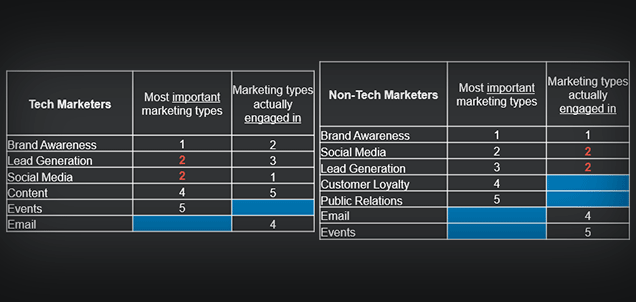
    Professional networking platform LinkedIn has conducted a study of Tech and Non –Tech Marketers in India and globally (link)..


    The survey sheds light on their main challenges in marketing for both tech and non-tech marketers. It also enlists the techniques each type is most engaged in and considers important. It was also found that76% Indian tech marketers go to social professional networks for marketing information, this is higher than the global average of 73%.


    We aren’t very sure if LinkedIn is so high on the reading and reference list of marketers, but then that’s what the survey says.


    Please refer to pdf here for the study.


  • LinkedIn appoints Akshay Kothari as Country Manager for India

    By A Correspondent


    Akshay Kothari

    LinkedIn has announced the appointment of Akshay Kothari as Country Manager for India, effective immediately. Akshay will report to Olivier Legrand, LinkedIn’s Managing Director for the Asia Pacific (APAC) region, and join the company’s APAC senior management team.


    Akshay joined LinkedIn in 2013 when Pulse, the company he co-founded and was CEO of for almost three years, was acquired by LinkedIn. Since then, based out of LinkedIn’s global headquarters in Mountain View, California, he successfully led several major product and content initiatives, including making Pulse one of the fastest-growing consumer product on LinkedIn, and boosting the number of members publishing on LinkedIn from 1,000 to nearly 2 million in the last two years.


    “My journey with LinkedIn started when Pulse became part of the LinkedIn family almost three years ago. I’m excited to have this opportunity to work with our teams across India, from sales to product and engineering. This new role also brings me back ‘full-circle’ to India, a high-growth market where there are opportunities abound to create even more value for our members and clients. Ultimately, my dream is for LinkedIn to play an even more significant role in helping to transform professionals and businesses in India, and showcase their success to the rest of the world,” Akshay said.


    Olivier commented, “India continues to be a strategic market for LinkedIn. While we have come a long way over the past 6 years in the country, we still have a long runway of opportunities to deliver even more compelling experiences and value for our members and clients. Akshay’s successful track record as an entrepreneur, leader and product executive will be a boost to our efforts, as he leads our team to the next stage of growth in India.”


  • Debt is OK for Millennial Rich Kids


    By A Correspondent


    Online professional network LinkedIn and leading media agency MEC have released ‘The Affluent Millennial Opportunity’ study in partnership with research firm Ipsos. The study reveals how the behaviour and attitudes of Affluent Millennials could reshape the future of the financial services industry.


    The study revealed that Affluent Millennials are more likely to facilitate their entrepreneurial and life goals by opting for debt related financial products. According to the survey, 68% of this group owns at least one credit card and 52% have a personal loan. Given their entrepreneurial spirit, it is not a surprise that 27% have a business loan.


    The dynamic, self-empowered and technologically advanced generation is a key driver of India’s economic growth. To help financial institutions nurture and deepen their relationships with the Affluent Millennials, here are some interesting insights from the study:

    Independent and hungry for information

    • 54% of Affluent Millennials said that they conduct their own research before making an investment, but consult with an advisor to validate before they take a decision
    • 68% Affluent Millennials expect to be successful and advance quickly in their career through their own hard work – not through their country’s prosperity
    • The study revealed that 86% of the Affluent Millennials use social media for obtaining financial information. They look for financial institution which offers a great degree of privacy and has a positive buzz online
    • Peer opinion (93%), thought leadership (92%) and informational resources (90%) is the content Affluent Millennials want from accompany on social networks


    Low dependence on salaries

    • The source of affluence for this group is changing.Salaries are losing prominence as the primary source of wealth ascompared to the GenX Affluents**. Affluent Millennialsare 1.8 times more likely to have gained their wealth from royalties, 1.6 times from self-employment and 1.4 times by way of grants and scholarships.


    High on loyalty

    • They are highly loyal and trust the financial institution they work with and more than three quarters of Affluent Millennials with multiple checking accounts hold all of them at the same financial institution.This is much higher compared to GenX (31%)
    • More than half of Affluent Millennials (51%) are more likely to say they are VERY loyal and plan to do more business with financial institutions they work with.


    “Millennials are an incredibly crucial audience for marketers and that makes this a very important study. For the very first time, we have deep insights about how this generation views financial matters”, says T. Gangadhar, MD, MEC India


    “Majority of the millennials consider themselves global citizens who are digitally savvy and constantly looking for information. Our study revealed that, 60% of this group consider social networks as a must have for making a financial decision. For financial services providers this translates into two key takeaways,building stronger relations with the Affluent Millennials and generating relevant content online,” said Ashutosh Gupta, Director of Marketing Solutions, LinkedIn India.


    Given the unique and dynamic behavior patterns of the Affluent Millennials, there are a number of opportunities available to financial services companies to alter their marketing strategies. They need to personalise and socialise their approach, provide expert advice in order to establish trust and enable independence and build a loyal customer base at an early stage.


  • LinkedIn reveals most influential brands for 2015

    By A Correspondent


    LinkedIn has revealed the most influential brands among its 364 million members worldwide, as well as the most influential among LinkedIn India’s 30+ million members.


    The rankings are based on LinkedIn’s Content Marketing Score, which is calculated by measuring a brand’s unique engagement and dividing it by a brand’s audience. LinkedIn has used this data to identify the behaviors and activity that boost content engagement. The most effective brands use a mix of reach, frequency and engagement to boost engagement on LinkedIn.


    Globally, technology companies emerged as winners this year with the number one slot going to Microsoft. Other technology companies included IBM,Hewlett-Packard, Google and Salesforce – all brands which have adopted an always-on strategy that is rooted in the quality of content. This is true in India too. The rankings show that technology companies are succeeding at content marketing efforts on social media with TCS, Wipro and HCL leading the way.


    The top ten most influential brands among LinkedIn members in India for 2015 are:

    1. TCS
    2. Wipro
    3. HCL
    4. Infosys
    5. Tech Mahindra
    6. Housing.com
    7. ICICI Bank
    8. Tata Communications
    9. Axis Bank
    10. Biocon


    Commenting on the rankings, Ashutosh Gupta, Director, Marketing Solutions, LinkedIn India said, “Content along with the right context is the essential way to engage, educate and inspire an evolved consumer base. With consumers becoming more discerning about the quality of content and lives getting busier, content must be educational, yet original. In India, technology brands seem to be getting this right by focussing on subjects that people are eager to hear about.”


  • Millennials set the rules on Monies


    By Dyanne Coelho


    Millennials are setting the rules of the game. That’s what Jennifer Grazel, Global Marketing Director, Financial Services Vertical for LinkedIn, believes. At the second edition of the LinkedIn Finance Connect, held last week, Grazel elaborated on how today, disruption equals innovation, and in the post digital age – defined largely by millennials and the way they operate — there has been a disruption in the way things work.


    The three key elements to building a successful brand image in an age of digital revolution are trust, having relevant content and focusing on the customer-decision journey, Grazel said, adding, that since “the customer journey is becoming the brand”, one needs to be authentic, relevant and constantly engaged in dialogue. Appropriate advice in a meet where the topic of discussion was ‘Building and Nurturing Relationships in a Networked World’.


    Insights from the study:

    Exceptionally high optimism:

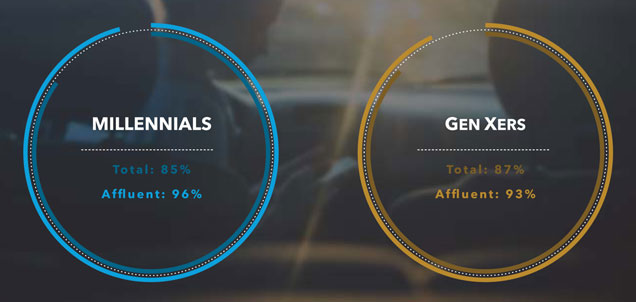
    According to the study,96% of affluent Indian millennials believe and are optimistic that every citizen has an equal opportunity to achieve success and prosperity through hard work, determination and initiative. This sentiment was highest amongst other countries surveyed.The opportunities that lie ahead is what makes them feel most confident about the current period.


    Marketers may therefore need to customize their products and relook at the traditional ways of marketing them to the new age affluent millennial force which is tech-savvy, more dynamic and relies immensely on what’s most relevant ‘now’.


    Global and social mobility equals personal success

    The millennials (18-34 year old) measure personal success through social and global mobility. This generation gives immense importance to personal vision. Success to 15% of the affluent means being financially able to travel and see the world. Moreover, 15% see success as doing better, financially, than their parents did.


    With success being so closely tied to lifestyle changes and personal engagement, brands need to alter their strategies to foster and engage with the millennials to match up to their fast-paced lives.


    Social networks drive personal financial strategies

    Being the first generation to have grown up in a digital world, millennials are technologically savvy and socially driven. The study reveals that 86% of the affluent millennials use social media for obtaining financial information. This choice of sourcing information further impacts their personal financial strategies and their methods of interacting with financial services brands.Interestingly, 71% of affluent millennials surveyed said that they are willing to try financial services offered by non-financial service brands.


    Hence, in order for brands to attract millennials, they need to be present where this audience spends most of its time. In this case, visibility on social networks is the key to engagement.


    Financially aware

    The research showed that 57% affluent millennials rate themselves as having advanced financial knowledge and this is higher than the global average.  With more than half of the affluent millennials in India being confident about their personal financial strategies, marketers need to generate targeted content which can position their brand as trustworthy, transparent and in alignment with this generation’s financial needs.


    According to Krishna Zulkarnain, Head of Marketing, APAC at LinkedIn, there’s a new wave taking over the business world, and it’s called ‘social selling’. About 75 per cent of buyers today use social media to make purchase decisions. “Our buyers are no longer passive consumers, but active solution seekers,” he said. Indeed, some 95 per cent of decision makers expect new or different insights from sales professionals. The era of cold calling is dead; only warm gestures work today, Zulkarnain informed. “It’s not always about finding people to talk to in the BFSI industry, rather it’s about finding the right people,” he said. Because the financial industry involves money, the challenge here is building trust, and building it in the fastest amount of time. “The tables have turned. The consumer is now the one in control,” Zulkarnain added.


    The Chief Marketing Officers’ roundtable saw participation by Sagnik Ghosh, Head of Marketing, Axis Bank, Manish Jain, Group Marketing head, Bajaj Finserv and Balaji Viswanath, Director Digital Marketing, American Express. The session was moderated by Edward Bray, Group Marketing Manager, LinkedIn. The discussion centred on disruptions caused to the financial services industry in the age of digital revolution. “Social media is now the key to target your stakeholders. We need to reinvent ourselves, because there is a new platform in the game,” said Jain, adding that this platform could either disrupt or engage the BFSI sector, depending on how it was used. While everyone agreed that social media is the main factor for the disruption, they also agreed that it is a tool bringing rapid transformation. “Everyone wants to see the mobile version of anything, first, today,” said Viswanath. Payment systems are evolving, and consumers are making financial decisions based on what they read online, Ghosh added. “We ought to move from tapping mere customers, to tapping the entire ecosystem,” Jain said.


    In their session, entitled ‘Content is Currency: Content Marketing for Financial Companies’, Grazel and Jennifer Cronin, Director of Social Content, BlackRock, delved deep into BlackRock’s digital strategies. Cronin stressed the fact that content marketing requires a great deal of both time and resources commitment. Everyone loves to tell a story, but what that story is, is the question, Cronin said. “Great content is the first part; you cannot sell something without it. People are smart, they know what you’re doing,” she added.


    A study conducted by Ipsos on millennials shows that 77 per cent picked a company that has a mobile app with full features. An insightful discussion on understanding Indian millennials had a panel including Tushar Vyas, Chief Strategy Officer, South Asia, Group M; Amit Adarkar, Managing Director, India, Ipsos; Peter Hubert, Head of Insights, APAC, LinkedIn and Grazel. Millennials now want a continuous sense of engagement, and on their terms. “Millennials are more interested in a better lifestyle than wealth,” said Hubert. In fact, this is the time to be optimistic as 60 per cent of affluent millennials are confident about the country’s economic future, the study showed. “Financial products that can engage millennials, is the way forward,” Vyas concluded.


    The ‘trending’ topic for the evening was the disruption caused to the financial services industry in the digital era. Olivier Legrand, Head of Marketing Solutions, APAC and Japan, LinkedIn, highlighted that the Indian market is now paying heed to the digital revolution. India is the second-largest country, after the US, in terms of LinkedIn users, Legrand said. Even though the internet is yet to penetrate many parts of the country, the Indian presence on LinkedIn is growing on a large scale every day.
     

  • LinkedIn’s Nishant Rao appointed IAMAI Chairman

    By A Correspondent


    Nishant Rao

    Nishant Rao, Country Manager – LinkedIn, is the new Chairman of Internet and Mobile Association of India (IAMAI). Rao would be taking over from Rajan Anandan, Managing Director – Google India.


    Nishant Rao takes over at a time when the industry is going through a growth trajectory with more than 300 million internet users and more than 200 million mobile internet users. He said: “This is an exciting phase in growth story of internet in India. The digital industry is growing steadfastly and with that we now have regulatory and policy issues cropping up. IAMAI has been working persistently towards the growth of the medium and is also working with all stakeholders to create a conducive digital eco-system. It is our vision to work closely with the government, agencies and members to ensure a healthy growth and functioning of the digital eco-system.”


    Vinodh Bhat, Co-Founder & President – Saavn is the new Vice-Chairman, who will take over his new role from Kirthiga Reddy, Managing Director, Facebook India. Kunal Shah, Founder – FreeCharge has been elected as the new Treasurer.


    The new team was announced at the 11th Annual General Meeting, which was held today.


  • LinkedIn crosses 30-million member mark in India

    By A Correspondent


    LinkedIn has announced that it has crossed 30 million members in India. This marks a 50 per cent growth over the past two years. LinkedIn had 3.4 million members when it started operations in the country in 2009. India continues to be the largest market for LinkedIn after the Unites States in terms of member base.


    The  30 million members on LinkedIn represent a diverse cross-section of skills (from management and human resources to testing and training) and industries (from tech to education and automotive),  helping to power  an already vibrant Indian economy and paving the way to strategic initiatives such as ‘Make in India’.


    Nishant Rao

    “We’ve reached a critical mass in India, a country that remains a strategic market for us.  But we still have a long way to go, and along the way, we want to continue to add value to the professional journeys of our members. We also see a significant opportunity to collaborate with key players in India in areas such as skills development, so that our members can create an even more significant impact on the economy,” said Nishant Rao, Country Manager, LinkedIn India.


    LinkedIn’s research shows that 1 in 2 (53 per cent) students and young professionals believe the best way to get their first job is through internships. In line with this finding, LinkedIn partnered with MTV and other major companies in India, such as Flipkart and L’Oreal to help students find internship opportunities. This partnership saw 85,000 students applying for internship opportunities and taking important first steps in their professional journeys.


    Other interesting facts about LinkedIn’s members in India:

    Top 10 industries represented:


    :: Information Technology and Services,
    :: Computer Software
    :: Accounting
    :: Education Management
    :: Electrical Manufacturing
    :: Financial Services
    :: Banking
    :: Mechanical engineering
    :: Telecommunications

    :: Automotive


    Top 10 most followed companies:

    Members in India are most interested in the technology industry, and are major followers of tech companies, including several home-grown giants.


    :: Tata Consultancy Services
    :: Accenture
    :: IBM
    :: Hewlett-Packard
    :: Infosys
    :: Cognizant
    :: Wipro
    :: Google
    :: Microsoft
    :: HCL Technologies


    About LinkedIn

    LinkedIn connects the world’s professionals to make them more productive and successful and transforms the ways companies hire, market and sell. Our vision is to create economic opportunity for every member of the global workforce through the ongoing development of the world’s first Economic Graph. LinkedIn has more than 364 million members and has offices around the world.


    Press contact


    Deepa Sapatnekar

    LinkedIn India

    +91 9920131177

    dsapatnekar@linkedin.com


    Trishnala Vijayakar

    Edelman India

    + 91 9773400258

    Trishnala.Vijayakar@edelman.com


  • LinkedIn hosts Finance Connect in India

    By a correspondent


    LinkedIn India recently organized one of its marquee events, Finance Connect in India. The event allowed a selective group of marketing leaders from the financial sector to understand the growing impact of social media and content marketing on their business.


    The clear objective of holding such an event was to reveal what are the latest trends on social media, what are the consumers in India seeking for and how does content marketing help brands in building a relationship with their customers? Though LinkedIn’s mission is to connect the world’s professionals to make the more productive and successful it envisions creating economic opportunity for every professional in the world. So if there were just about 1 million users globally in the year 2004, that figure has grown and has reached 300+million users in the year 2014 with 2 members getting added every second.


    Some of the key takeaways from the event:

    Three keys to success on social: Be accurate, Be helpful, Be every where


    Four keys to build relationships:

    1. Find your audience – geography, function, industry, seniority
    2. Establish trust – meaningful content distribution, company updates, sponsored updates, trending content, content market score
    3. Be personal – sponsored inmails, spotlight Ad
    4. Extend the experience -custom APIs


    Key tenets to building a content marketing relationship

    1. Don’t just sell, add value
    2. Ask them what they want to hear
    3. Be Human
    4. Tap into the power of story
    5. Empower employees to contribute content
    6. Compel your customers to spread the word


    The event also saw the release of Audience 360º which focuses on helping businesses achieve a complete 360 degree understanding of the personal and professional choices of their audience, which includes their motivations and needs, how they interact with various products, as well as their brand perceptions.


    The findings of this survey suggest that LinkedIn users in India comprises young educated professionals out of which 69 percent are under 35 years of age and 93 percent have received a university degree or higher. They are not only career focused but also have an international perspective and consider keeping up-to-date on modern technology as akey to their success.


    A few interesting highlights from the survey are mentioned below –

    • In India, LinkedIn members largely represent the IT and Financial Services sectors, working at companies with 1000+ employees, more than 1 in 3 are at manager and level above.
    • LinkedIn is the most used social media site among its India members - 92 percent say LinkedIn is their primary social media platform and is considered the most influential portal for business and professional content.
    • It is also a platform of choice for financial content – more people come to LinkedIn for financial information than any other social media site. In addition to finance, technology alerts and new product information are amongst the most sought after content on LinkedIn.
    • 77 percent of LinkedIn users in India are currently following companies on LinkedIn, as they see it as a credible and trustworthy platform.
    • More than 83 percent of the surveyed members own a smartphone, while 44% of them own a tablet. More than 74 percent LinkedIn India users daily access internet through their mobile device. They intend on making big gadget purchases in the next year.


    “The relationship-based LinkedIn ecosystem enables brands to develop an influential customer base. Our research highlights that 73 percent of our surveyed members trust the information received on LinkedIn more than any other online professional network. This provides an interesting opportunity for advertisers to effectively engage with their target audience through content marketing,” concluded Ashutosh Gupta, Director, Marketing Solutions, LinkedIn India.


  • LinkedIn unveils three new initiatives to drive content marketing forward

    By A Correspondent


    To drive its content strategy forward, LinkedIn has launched three new initiatives to help marketers and agencies build better relationships with target audiences through content. These include Sponsored Updates Partners, Content Partners Program and Sponsored InMail on Mobile.


    Sponsored Updates Partners will provide brands and agencies with campaign management tools to effectively and efficiently manage and optimize large sponsored updates campaigns. They also make it more efficient for brands to use a single dashboard to manage their paid content activities on multiple social channels. Other services offered include managed services to oversee campaign activities on behalf of the client.


    LinkedIn is launching the program with five of the industry’s top companies, including AdStage, Brand Networks, SHIFT, the Salesforce ExactTarget Marketing Cloud and Unified Social. Pilot results show an overall lift of more than 30 per cent in engagement rates on customer’s sponsored updates campaigns, significantly higher than on prior campaigns without partner services.


    A key ongoing challenge for organizations is to have enough quality content to share with audiences. The Content Partners program will connect companies with publishers, platforms, and original content producers to help them deliver content under their own brand name.


    Ten companies have been certified as part of this program, including publishers Bloomberg, CBS Interactive, and IDG; content platforms Newscred and Percolate; and custom content creators like Atlantic Media Strategies, Contently, Freshwire, and SJR.


    Sponsored InMail is available on mobile platforms (iPhone, Android, and mobile web). Where members could previously only see sponsored messages on desktop, this move enables marketers to engage targeted audiences with personalized, valuable content on mobile – which currently drives more than half of LinkedIn Inbox page views.


  • Weekend Exxxtra: One in 3 parents in India don’t understand what their child does for a living: LinkedIn study

    By A Correspondent


    One in three parents in India admit they are unfamiliar with what their child does for a living and so may find it challenging to provide the right advice to support their child’s success. Interestingly, 90 per cent of the Indian parents surveyed agree that they could benefit their child if they had a better understanding of what he/she did at the job. These were findings of global survey by online professional networking platform LinkedIn which was also conducted in India.


    ‘LinkedIn Bring in Your Parents Day’ is a way to help bridge this gap by bringing parents and their children together at the workplace, so they can learn from each other.


    LinkedIn has announced ‘LinkedIn Bring In Your Parents Day’, on Thursday, November 7, 2013 to help bridge this gap by bringing parents and their children together at the workplace, so they can learn from each other. Professionals are encouraged to invite their parents into their workplace to provide them with a first-hand look and greater understanding of what they actually do every day.


    Nishant Rao

    “With a plethora of options available to professionals today it is plausible to say that most parents may not completely comprehend what their children really do at work each day”, said Nishant Rao, LinkedIn India’s Country Manager. “By introducing LinkedIn Bring in Your Parents Day we not only attempt to bridge the gap between parents and their children, but also let professionals in India provide their folks a glimpse into what they do at work, and in return, takeaway valuable lessons and even greater appreciation from their parents.”


    The survey further reveals that two third of parents surveyed want to learn more about what job their child does. In India 65 per cent of parents surveyed are familiar with the job/career that their children pursue. Globally, careers such as social media manager, investment banker and sociologist are among the top 10 professions that parents are least likely to comprehend. While in India, this list includes professions such as care nurse, sub editor and radio producer.


    37 per cent of Indian parents surveyed would like their children to pursue a career path similar to theirs; the highest globally. However, when it comes to working in a preferred industry, Indian parents have varied views. Contrary to popular belief, a mere 28 per cent of Indian parents, want their children to become doctors, while 40 per cent of them would like to see their children employed in a finance-related job, making it one of the most coveted jobs/ sectors. According to the survey, a large number of Indian professionals (36 per cent) also look forward to bagging a job in finance. It is interesting to note that only 1 per cent of the parents surveyed want their children to become politicians.


    The top 10 misunderstood jobs in India, with the percentage of parents who weren’t confident in their ability to describe the job are:

    1. Lumberjack (75 per cent)

    2. User Interface designer (64 per cent)

    3. Actuary (64 per cent)

    4. Radio producer (59 per cent)

    5. Care Nurse (55 per cent)

    6. Fire-fighter (55 per cent)

    7. Laboratory technician (53 per cent)

    8. Sub-editor (52 per cent)

    9. Veterinarian (52 per cent)

    10. Data Scientist (51 per cent)


    LinkedIn Bring In Your Parents Day will be held in 14 countries including the United Kingdom, United States, France, The Netherlands, Sweden, Germany, Italy, Spain, Brazil, Australia, India, Canada, Singapore and Hong Kong. Many companies have confirmed their participation.


    We enourage – parent, employees, and businesses in media, advertising and marketing to participate. Details at www.LinkedInBringInYourParents.com.