Samsung Electronics has announced a new TVC aimed as a consumer connect initiative to showcase Galaxy Grand, recently introduced Dual SIM Smartphone in India. The commercial, conceptualized by Leo Burnett is aimed at the middle segment and bring outs fun, style and passion of everyday moments of a user.
Strongly focused on creating a work life balance between personal and professional lives of youngsters, the TVC creates synergy between the consumers and the features of the Galaxy Grand by showcasing aspirations, passions and hobbies of an ambitious and confident individual. It begins with a young male professional aspiring to live a grand life by travelling by bike to see mountains kiss clouds, sky changing colours to every possible shade. He wishes to capture his memories with big screen experience & stay connected with his friends. Next thing you know, he mentions about reserving special place to watch movies. A super appears in the foreground that reads: ‘Samsung Galaxy Grand.
It encourages younger generation to capture personal moments through technology purchase of the right smartphone in spite of budgetary constraints and highlights top-end hardware and software features with a very attractive price of Galaxy Grand.
The TVC will be aired across Hindi and English entertainment and movie channels.
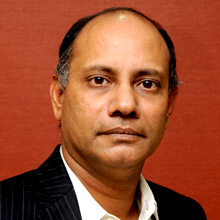
Changes are under way across ad agency Leo Burnett’s creative department. KV Sridhar formerly the national creative director at Leo Burnett India is now the chief creative officer of the Indian subcontinent.
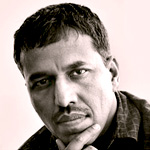
His brief expands to include Leo Burnett operations in Bangladesh, Pakistan and Sri Lanka, Leo Burnett India’s other agencies Black Pencil and Orchard, activation division Arc and digital agency Indigo. Nitesh Tiwari, who used to be executive creative director at Leo Burnett is now the chief creative officer of Leo Burnett India. Several young people across Leo Burnett have also been given an expanded mandate and new responsibilities.
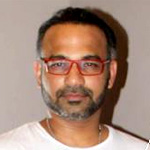
These include Vikram Pandey and Ashwiny Iyer Tiwari who are now executive creative directors and Vicky Bhambhani who is regional creative director on Tide. The list of creative directors include Abhishek Sinha, Nikhil Mehrotra, Piyush Gupta and Shreyas Jain. The agency is also bringing in fresh talent with Timsy Gupta, Rishi Agarwal, Sapna Ahluwalia and Rajneesh Ramakrishnan who come in from DDB Mudra, McCann Erickson, Bates and Creativeland Asia.
Speaking about the changes, Mr Sridhar says, “I’ve always believed in acquiring what we don’t have and what we’ve acquired is youth and enthusiasm.” The new system allows Leo Burnett to assign senior creative talent on key accounts and creates an atmosphere of healthy competition.
It puts in place a relatively flat creative hierarchy which is at odds with the multi-tiered structure that creative departments in several other agencies are built around. Leo Burnett had gone in for a similar arrangement in 2003 and, according to Mr Sridhar, the results were an unqualified success.
Some members of the then young creative team have gone on to head the creative departments at agencies like Nitesh Tiwari at Leo Burnett and Russell Barett at BBH. Others like Santosh Padhi of Taproot and KB Vinod of Company have started their own agencies.
Says Mark Tutssel, chief creative officer at Leo Burnett, “The constant infusion of new blood is vital for our long-term health and prosperity and a focus on new world thinking is critical to the future.”
Japanese advertising behemoth Dentsu has acquired a 51% stake in Taproot, arguably the most creative among the Indian independent advertising agencies.
Taproot's Agnello Dias (left) and Santosh Padhi (right) with Rohit Ohri of Dentsu (centre)
With several of the most popular recent campaigns like ‘Har Ek Friend Zaroori Hota Hai’ and ‘Joh Tera Hai Woh Mera Hai’ for Airtel and ‘Change the Game’ for Pepsi under its belt, the five year old agency has seen a meteoric rise. It’s also won critical acclaim; the most recent being a Gold Lion at Cannes along with Ramesh Deo Productions for the ‘I Am Mumbai’ film for Mumbai Mirror, a newspaper from the Times Group, which also publishes The Economic Time
The managements at both Dentsu and Taproot declined to discuss the financial aspects of the arrangement. Industry observers estimate the initial upfront payout at Rs 60 crore with another Rs 80 crore expected in future earn-outs
In a global deal in July, Dentsu had paid $4.9 billion for British media buying group Aegis, valuing the company at 12 times its earnings before interest, taxes, depreciation & amortisation.
The Economic Times had reported in June that Dentsu among other agency groups was speaking to Taproot about a possible acquisition. Says Rohit Ohri, executive chairman, Dentsu India group, who has previously worked with one of Taproot’s founders Agnello Dias at JWT: “They (Taproot’s co-founders & chief creative officers, Dias and Santosh Padhi) could have chosen anyone. What convinced them about Dentsu is that we are very entrepreneurial and evolving; and more willing to look at out of the box ways of working.”
Adds Dias: “We felt it was the right thing to do. Of all the conversations we had, we felt most comfortable with the equation we were sharing with Dentsu. Another reason cited is Dentsu’s global strengths in the digital medium and that it is currently the leading network in Asia.
Taproot will retain its identity and won’t be rebranded. Although Dentsu is a majority owner, management control of the agency continues to rest with Dias and Padhi. Dias says, “In terms of changes, there’s nothing in the pipeline. I think even Dentsu is saying ‘why should we upset a system that’s doing so well’?”
What the arrangement brings Taproot is integrated communication, superior execution abilities and a national network. As far as Dentsu is concerned, Taproot, says Ohri, “is really the creative firepower we needed in the group.” However, the firepower is not likely to be immediately applied to any of Dentsu’s current client relationships.
Both partners believe that Taproot will step in only when needed “on a case by case basis” according to Padhi. Interestingly enough, two of Taproot’s most productive client relationships have been with Airtel and Pepsi, brands that Ohri worked on in a previous stint at JWT. Ohri regards this as “a great bonus”, but he cites the talent of the two principals at Taproot and the chemistry with senior management at Dentsu as the main reasons for the merger.
Among a spate of recently launched creative-led independent agencies which include Creativeland Asia and Scarecrow Communications, Taproot has arguably been the most successful with several marquee campaigns to its name for Airtel, Pepsi and The Times Group.
The agency was founded in 2008 when Dias (then national creative director at JWT) decided to join forces with former colleague Santosh Padhi (executive creative director at Leo Burnett at the time). The 33 person strong agency has been particularly successful in wresting business from Dias’ former employer JWT, landing prestigious assignments from Pepsi and Airtel.
Never mind the famous introduction to Charles Dickens’ A Tale Of Two Cities; digital agencies today can afford to stop at ‘It was the best of times.’ Because, there has been no better time to be in this space. For one, marketers no longer need to be coaxed into going the digital route. Also unlike mainstream advertising, almost every new campaign or assignment has the scope for interesting, maybe even ground-breaking work; considering best practices are yet to be carved in stone. And finally it makes a lot of business sense. Through 2012, independents in this space both in India and overseas are being picked at a rapid clip and the people doing the picking are some of the biggest names in the marketing communications industry.
The one player that’s yet to announce a key purchase so far, Omnicom, is said to be keenly watching the Indian market, with a representative visiting practically every month. An industry insider is confident of at least three more acquisitions being announced before the year is through.
Amar Deep Singh
Not bad at all considering that many of today’s hottest targets started life a little over a decade ago, as a ragtag bunch of entrepreneur driven specialist shops. Many of them began either before, during or immediately after the great dotcom bust of 2000. It seemed a quixotic endeavour. Through the early years, most mainstream advertising and media agencies opted to ignore the space entirely. Says Amar Deep Singh, CEO, Interactive Avenues, “Traditional agencies missed the bus while advertisers saw value in using digital media. They now find it easier to buy than to build. It’s a win-win for both, because it gives traditional agencies digital expertise and it helps digital agencies get scale.”
Today, even as ‘old’ shops like Indigo Consulting and Hungama Digital Services get picked up by the likes of Leo Burnett and JWT, agencies and their holding companies are casting the net wider. While Ignitee which has survived two name changes and 12 years in the business is an obvious choice, even the three and a half year old 22 Feet which has worked on Titan Fastrack, Kingfisher and Lenovo is being approached. Brijesh Jacob, founder and director of 22 Feet, admits, “Every offer is tempting because it’s either an agency you adored growing up or someone that’s done awesome work.”
CVL Srinivas
In the fray are creative and media agencies, larger digital shops, holding companies and even IT firms. But among the first two, there’s a rivalry that’s as old as the days of unbundling. They have squabbled over who gets more face time with marketers and more recently over credits at award shows. And now, many senior practitioners on both sides are convinced that their firms are quite literally the best support system for a digital shop.
Media agency heads often argue that considering digital is a measurable, accountable, result driven medium, what better partner than a business that concerns itself daily with these very issues? Says CVL Srinivas, chairman, SMG, “Media agencies are ahead of the curve when it comes to digital. We hear this from clients and not just agencies.” Sudha Natrajan, founder of media consultancy, TMC and a veteran of Lintas Initiative Media believes, “The lines between creative and content, and analytics to chase, understand and convert consumers, do not exist. The talent and understanding in a media agency is more apt to capitalise on this, rather than a creative agency. Creative agencies have stopped understanding media a while ago; some are making a feeble attempt to understand the digital medium, but are failing.”
Sudha Natrajan
The creative agencies on the other hand argue that in the absence of ideas and content, there’s unlikely to be any consumer response worth measuring. Says Arvind Sharma, chairman and CEO, India subcontinent, Leo Burnett, “Agencies produce TV commercials and hand these over to media agencies who release them. But if you need to manage content on a live basis, just handing it over is not the future.” He believes media agencies can possibly work only in the short run and on specific clients where the communication is less dynamic.
Mr Sharma counters the media agency claim about being result driven with, “Human beings are persuaded by content. In a simple thing like door-to-door retail, change the message and the productivity levels are up from 20% to 80%. Around the world, who are the bigger winners of Effies, creative or media?” Madhukar Kamath, group CEO and managing director, DDB Mudra says a tad philosophically, “I disagree with the point of view saying either digital or activation should rest with a creative or media agency. It resides with whoever thinks like a full service agency; addressing brand issues.”
Arvind Sharma
While pretty much everyone is speaking (or has spoken to) everyone else, a pattern is emerging where the more content and social media driven digital agencies find a space within a creative network and the more result and search engine optimisation focused shops opt for media companies.
It’s an arrangement that Atul Hegde, CEO, Ignitee finds essentially flawed: “They should be doing the opposite. Why shouldn’t a media agency acquire a strong creatively led agency? It will bring completely varied skill sets.” Some digital heads claim they don’t have a dog in the fight between creative and media. This is especially true since it’s quite impossible to go in for unbundling in digital. Says Chhaya Balachandran Aiyer, founder and managing director, BC Webwise, “It will have to be pure play; agencies are okay either continuing independently or merging with an existing digital arm.”
Atul Hegde
The agencies themselves have earned the right to be spoken to on their own terms. The offers are a lot less diffused than they used to be. While previous conversations were primarily about money, these days, companies attempt with varying degrees of success to draw a roadmap. And given how digital firms have grown in size and scale and the frequent inability of the acquirers getting richer, the founders can take pride in their creations continuing to exist as standalone brands for the foreseeable future.
Says Vikas Tandon, CEO of Indigo Consulting, “Being part of Leo Burnett gives us a chance to be at the table when a strategy is formulated at the top management level.” And yet he argues, “It would be foolish to not leverage the equity of Indigo.”
Chhaya Balachandran Aiyer
Gulrez Alam, COO, Resultrix says “We are the leading buyer of Google in India and Performics is the biggest buyer of Google worldwide. We will be representing Performics in India.” However the name remains unchanged even post merger with the Publicis Groupe firm – Alam says the only addition will be the line ‘a Performics company.’
There are others who have been in conversations for years and are yet to hear anything they really like. Mr Hegde admits, “There have been no compelling offers; no network that can add value to our growth plans. Being independent is our strength today, allowing us to work across agencies and brands. One of the biggest things about acquisitions is someone comes to you for what you are. Once they acquire you, they try to make you who they are.”
Vikas Tandon
Besides, there’s a bit of scepticism about what value an acquisition really brings to the table. An industry insider believes Webchutney is pretty much unchanged and the same applies to Quasar. For the moment though, it sure feels good to be wanted. And digital agencies with their PC, Mac and Tab saturated offices, internet meme based humour and boisterous geeky staff are the unlikely belles of the ball.
Advertising Agencies Association India (AAAI) has elected Arvind Sharma, Chairman, Indian Subcontinent, Leo Burnett as the President for the year 2012-13. MG Parameswaran, Executive Director and CEO, Mumbai at Draftfcb Ulka has been elected as the Vice President. Nagesh Alai, the outgoing President will be the ex-officio member of the new AAAI Executive Committee.
When MxMIndia congratulated Mr Sharma and asked about his agenda for the year ahead, he said: “AAAI is an industry body and it is a team work. We will be meeting on August 17, where we shall be listening to each other’s views before setting up the agenda.”
He added: “The industry is growing and transforming at a rapid speed, thereby also providing newer opportunities to an advertising agency for growth. The amount of monies being invested in advertising has increased, and newer avenues have opened up for investments, thus the challenge is to understand and adapt to the changes. As an industry, we need to understand what lies ahead and prepare the agencies for the future.”
Other elected members of the Executive Committee include Ganesh Baliga (Fifth Estate Communications), Ashish Bhasin (Aegis Group), Nakul Chopra (Publicis Communications), Tanya Goyal (Mogae Group), Kunal Lalani (Crayons Advertising), Vinod Nair (Network Advertising), Pranav Premnarayen (Prem Associates Advertising & Marketing), Sridhar Ramasubramanian (Matrix Publicities and Media India), Vikram Sakhuja (Group M), Umesh Shrikhande (Contract Advertising) and Srinivasan Swamy (RK Swamy BBDO).
Kaun Banega Crorepati is back, and with the tagline – ‘Sirf Gyaan Hi Aapko Aapka Haq Dilata Hai’. This year’s theme revolves around the power of knowledge. The campaign which has been conceptualized by Leo Burnett will have four TVCs, each of which have a different story to tell. Two of the commercials are already on air, the second TVC was aired on July 26, the third TVC will be aired by next week and the fourth TVC will be aired around August 10.
This year’s campaign is said to be an extension of KBC’s previous two seasons, namely, ‘Koi Bhi Sawaal Chhota Nahi Hota’ and ‘Koi Bhi Insaan Chhota Nahin Hota’. The idea is about giving the audience a hope irrespective of their circumstances and the discrimination they faced, and that through KBC they will be able to get their due.
A 360 degree campaign will be rolled out wherein nearly 40 per cent of the marketing budget would be skewed towards cinema and television; 30 per cent will be spent on Out-of-Home and Print campaigns and the remaining 30 per cent will be spent on Digital, Radio and other BTL activities.
Following the television commercials, by mid-August, digital and other media campaigns will also be aired. The details of the campaigns were not known at the time of filing the report; however it is learnt that Sony wants to create a different user experience for the online users through its digital campaigns.
While the execution of the digital campaign is said to be completely different from television commercials, the story and the theme of the campaign will continue to be the same across media vehicles. OOH campaign for KBC also promises to be highly innovative and engaging to the audience. WhileMedia Circleis the OOH creative agency, Leo Burnett is the creative agency and OMD is the media agency for Sony Entertainment Television.
The latest season of KBC is expected to commence by the end of August or beginning September with nearly 52 episodes and duration of 1.5 hours. In addition to this, KBC 2012 is said to have witnessed a record 1.5 crore registration in the phase I of the campaign as compared to 46 lakh registrations last year. In fact, last season KBC is said to have received an average TVR of 4.8 per cent. Cadbury is the presenting sponsor of KBC 2012, powered by Idea.
Danish Khan, Senior Vice President and Marketing Head, SET said: “This year’s KBC campaign celebrates the power of knowledge. Our brief to Leo Burnett was to bring this thought alive with real people in real context. The campaign’s philosophy is a common man’s philosophy and is relevant to today’sIndia. The campaign thought captures the value of the show. We aim to reach out to a larger set of audience and provide common man a unique chance to change his destiny.”
Nitesh Tiwari, National Creative Resource, Leo Burnett, Mumbai said: “Having done two successful campaigns in the past – ‘Koi Bhi Sawaal Chhota Nahi Hota’ and ‘Koi Bhi Insaan Chhota Nahin Hota’, it wasn’t an easy task for me and my team to come up with something equally interesting, if not better. The thought is delivered in its characteristic style, will pan out with four films each with a distinct story talking about the biases of gender, lineage and language, showcasing different characters and their situations in life that will engage, entertain and bring alive the core thought of this season.”
Mr Anup Vishwanathan, Executive Vice President, Leo Burnett, Mumbai said: “The KBC campaign identifies with the hope that people have in them. And that’s the factor we wanted to leverage in our campaign. This also in sync with brand SET that is all about positive emotions.”
The trend of storytelling in an ad began with actors in the campaign sharing a fictional story that connected with the masses and now taking it a step ahead, advertisers are trying to connect directly with the masses and asking them to tell their original stories in the campaign.
Storytelling commercials capture the emotional side of an audience.
How beautiful or charming your story is depends on the imagination of the creator. How beautifully and effortlessly it’s told, depends on the media plan.
Some stories need more time, some don’t. While one understands that media comes at a price, one often forgets that the poorly told story, even if it fits the budget perfectly, is money down the drain as it won’t reap half the rewards as a beautifully told story will.
KV Sridhar
As KV Sridhar, NCD, Leo Burnett India, explains, stories are a “means of communicating to the world in an interesting manner and advertisements are no different. The only challenge is to tell a story in 30-60 seconds. Products have become brands and household names because of use of this concept in our commercials. The concept provides a benefit for the brand as it establishes an emotional connect with the consumers, it’s not just a sales message, but about narrating a story. In other words, we can regard a story as a sugar coated medicine. Initially, story telling in commercials was a one way process -brands created a virtual story to connect with the masses – but today it has become a two-way communication. And due to the popularity of social media – Facebook, Twitter – it’s become easier to interact with the consumer. Brands no more control the story, consumers do.”
Sumanto Chattopadhyay, ECD, Ogilvy & Mather, cites an example: “Pond’s created a very successful series of TV commercial a few years ago. It was a love triangle starring Priyanka Chopra, Saif Ali Khan and Neha Dhupia. These episodic films spun a classic love story with all the trademark melodrama of a top-rated TV serial.”
Sumanto Chattopadhyay
The only downside of episodic commercials is the high budget required to make and air multiple TV spots. But if made with skill and backed by deep pockets, they can be a worthwhile investment. The international trend in contemporary popular culture is marked by a penchant for realism combined with a desire for the limelight.
From reality shows that hunt for talent to advertising that is crowd-sourced, it is all about letting people step into the light to tell their own stories in their own voice. Andy Warhol was prescient when, decades ago, he said: “In the future everybody will be world famous for fifteen minutes.” Today, that is the mantra of many – offering the people the chance to have their names, faces and stories in the spotlight – which is also a shrewd strategy for brand success. The resulting authenticity has an inherent appeal to the modern mindset.
Storytelling is the means by which our culture has been passed down
Storytelling is the means by which our culture has been passed down from one generation to the next. Sometimes, through stories expressed verbally by our elders; at other times through pictures drawn on cave walls and later through sophisticated dance drama. So it is hardly surprising that we took like ducks to water to story telling in movies, TV serials and TV commercials.
Rahul Matthew, ECD, McCann Erickson said: “Storytelling, to get a point or ideology across, is not a creation of advertising. Stories have been used forever to sell ideologies, morals, and wisdom to people. Panchtantra or Mahabharata are all illustrations of the same. The only difference is that in advertising we use it to sell brands. It’s probably because story-telling makes anything less preachy and we’re always ready to hear a good story. A story also makes things more relate-able since it borrows from life; the same life that our brands and products have to be a part of. This so-called real story-telling has always been there. What’s called testimonials is just that. We used to use models to give the impression of a real-life consumer sharing his/her experiences with the product. And today instead of models we are recruiting real consumers to tell us what they feel or think.”
Mr Matthew further states that it’s more a reflection of a change in consumer behaviour than a change in advertising: “We are reaching out to reviews from unknown people through blogs/social media to make our choices, and at the same time proactively sharing our views for others to consume. And advertising has always merely reflected consumer behaviour.”
Minakshi Achan, co-founder, Salt Brand Solutions feels that storytelling has kept us riveted for centuries as it is part of popular culture and has shaped and defined us for the longest time through religion, entertainment, history and music. “Brands have simply adopted the art and used it to tell stories and shed light about their products and services. There is no better way to connect with your consumers and the greatest of brands know the profound impact it has on people. Brands are the greatest story tellers and if you count religion itself as a brand, we know the power of story telling, and the continued effect on us. The big change has not been in the concept of storytelling, but in the way we communicate because of the platforms available to us. In the yester world, there were no platforms for two-way communication or rather it was difficult to do so. Today’s world is open and the exchange and engagement with a consumer is far easier. Far greater possibilities exist thanks to social media – whether it is the internet or mobile,” she added.
Co-creation is the new way
Consumers have stories to tell and today brands can listen to them and have their contribution to impact their brands. This apart, the stories are more real, straight from the horse’s mouth, which lend great credibility to brands. Since the engagement models have changed, I think there is far more meaningful conversations possible today, feels Ms Achan.
All in all, we can say that stories surely are for everyone and quite naturally work across categories and consumer types. The length of time, the canvas of the medium may change but the premise is the same, and the objective for brands is just to impact the brand and consumers with this format. Whether it s a 3-hour movie or a 30 second commercial, the principles of storytelling remains.
Kapil Mishra, Executive Creative Director, Leo Burnett
1. Name of the Campaign: Tata I-Shakti unpolished dals
2. The Brief:
The brief given to the agency was to bring out the health advantage of ‘unpolished dals’ over the polished ones and marrying the qualities of the product – Taste and Health with the food cooked by celebrity chef Sanjeev Kapoor.
3. The thought process behind the creative:
I-Shakti dals are unpolished and reach the consumer after undergoing cleaning that is only absolutely necessary. The latest campaign seeks to bring alive this truth with the apt tagline ‘Bina chamke sehat chamkaaye’4. Media vehicles chosen:
The promotion campaign will have TV advertisement being aired across national and regional channels, supported by Market level and outdoor visibility drives. Such as bus back panels, toll hoardings, branding at Metro stations in key metro city markets.
TV channels national and Regional C&S, Outdoor media, in-shop branding and marketplace visibility through merchandising.
5. Does the treatment do justice to the brief:
The treatment is according to the brief which was to have a message based on goodness of Tata I-Shakti Unpolished dals and create generate awareness. To drive this point home, Sanjeev Kapoor, a trusted celebrity and household name has been chosen to endorse the brand. For a category in which the consumers don’t have an evolved yardstick of pre-evaluation to aid buying process, having Mr Kapoor lends credibility to message to choose a Tata I- Shakti dals which are a deviation from current buying behavior and consumption pattern.
6. What according to you is the differentiating factor about the ad:
When you have a message based on honesty and authenticity, the tone and manner in which it is delivered needs to be exactly the same – honest and authentic.
It’s a hotshop called ITSA. Based out of Gurgaon, the core team behind this creative outfit comprises brothers Emmanuel and Daniel Upputuru, Anirban Mozumdar and Vivek Suchanti.
While Emmanuel and Anirban have worked together closely in their last stints at Publicis India as national creative director and national planning director respectively, Daniel was heading TAG McCann Delhi till he “got tired of advertising” and took off to study anthropology. Now he is back as chief creative officer, ITSA.
Mr Suchanti, Chairman, Concept Group, who has invested in independent agencies like Scarecrow and Eleven Brandworks, feels “ITSA is a very different idea and it adds to the offerings from Concept.”
Speaking exclusively, Anirban said: “ITSA Brand Innovations will create innovative products, services and communication platforms with the intent to patent some new product ideas and innovations.” The team’s inspiration comes from global independents like Ideo, Apple, Droga5 and +Castro.
Some areas in which ITSA plans to apply for patents include automotive, insurance, youth, music and technology. Says Emmanuel: “We already have a prototype ready for the automotive sector followed by one for the financial services space.” The first launch is expected to go live by August.
Emmanuel, who has worked in a number of agencies from Contract and Leo Burnett to Saatchi & Saatchi and Ogilvy India, is the eldest of the four Upputuru brothers of advertising. The quartet has the distinction of having worked in Ogilvy Delhi at one point in time.
You may have seen only a few of them and probably even forgotten the underlying message that the campaigns had to tell. But now you could make a dash to have a hard copy of MOSAIC, a compilation of the Best in Print (campaigns) to have hit India n shores in 2011. The compilation has been put together by 23 creative agencies who have submitted their best pieces of work for the category in 2011. Conceptualised by Sanjeev Kotnala and team from the Dainik Bhaskar Group, the initiative has been made special through the “insights” and “personal favourite” sections that have been provided by Media agency bosses. These include Lynn de Souza of Lintas Media Group, Mallikarjun CR, CEO, Starcom MediaVest Group, PM Balakrishna, Chief Operating Ofiicer, Allied Media and Punitha Arumugam, Director – Agency Business, Google India.
Lynn de Souza, Chairman and CEO, Lintas Media Group, Chairman, Aaren Initiative and Director, Karishma Initiative
“An excellent idea to recreate interest and remind all about the power and impact of the print medium. My only reservation is that there were too many submissions of ‘pretty pictures-pithy headlines’ work that may or may not have been published and did not appear to fully grasp how the medium must be used effectively.”
TOP 5 Choices:
Click on the picture for larger view
1) DNA – ISKCON (Scarecrow India)
Reasons for choosing: The intelligent use of the cigarette-turned-food visual immediately targets the smoker and invites him/her to contribute in a very simple way to a cause that benefits both beneficiary and the giver – something not easy to achieve. I like the simple, clean look of the ad and the directness of the headline and copy.
Click on the picture for larger view
2) Flying machine “What an Ass” (Lowe)
Reasons for choosing: This is my idea of perfect ad! One that has used all the elements of the print medium – headline, visual, copy to present a bold, modern attitude through a perfectly harmonised contribution of all three. It’s an unmissable ad whether you are a guy or a gal.
Click on the picture for larger view
3) Parker – Ramnath Goenka Excellence in Journalism Awards (Lowe)
Reasons for choosing: A stark headline supported by the simple bottle of ink that says it all. An attention grabbing reminder of the power of the pen to influence the world. Perfect synergy for the subject – Journalism awards and the ‘always memorable’ image of a gold Parker fountain pen.
Click on the picture for larger view
4) The Times of India – A day in the Life of India (Taproot India)
Reasons for choosing: Fantastic art direction – great visual appeal that hooks you into reading the whole ad. The contemporary feel, using India n kitsch, with attention to detail, is riveting. (Check out the dog lifting his leg to pee on the bed of nails!) Bright, colourful, crowded yet not messy. I could read it again and again!
Click on the picture for larger view
5) Vaseline ‘Dear Mr. Vaughan’ (BBH India)
Reasons for choosing: The kind of ad that every Creative Director who woke up to it that morning would have said: “I wish I had written this”. There are some things you can do impactfully in a topical yet ‘permanent’ medium like print that you can’t do anywhere else, and this ad fits the bill. Nose-thumbingly outstanding!
Mallikarjun CR, CEO, Starcom MediaVest Group
“This is a fantastic initiative. As media agency professionals, our lenses to view the world are different. However, what comes across is that great creative work is universal. Really enjoyed it.”
TOP 5 Choices:
Click on the picture for larger view
1) Audi – World Cup (Creativeland Asia)
Reasons for choosing: Great connect with the Champion’s Trophy ’85 win. Most of the target audience that can buy an Audi will connect immediately with that moment. For a lot of us India ns, that was the first moment of connect with Audi.
Click on the picture for larger view
2) DNA ISKCON Food Relief Foundation (Scarecrow)
Reasons for choosing: A nice calculus linking smoking to food relief. Very innovative, eye catching visuals.
Click on the picture for larger view
3) Indigo Campaign (Weiden+Kennedy)
Reasons for choosing: Stark, consistent visuals. The colours, space everything reflects the qualities of the airlines. Nice word play that grabs your attention and makes you read the copy. The reference to price is as value and not cheap.
Click on the picture for larger view
4) Nissan Micra (TBWA\ India)
Reasons for choosing: Simple stark visuals. Driving home the relevance of a small car without talking price, affordability etc. Great, understated use of a celebrity.
Click on the picture for larger view
Reasons for choosing: Great expedient use of Michael Vaughan’s comment. Superb cut through and great visuals.
PM Balakrishna, Chief Operating Ofiicer, Allied Media
“I think this is a wonderful initiative and exposes the fantastic creativity. It is a very different platform as it is more an appreciation of great work rather than a competition as I believe each creative is great on its own.”
TOP 5 Choices:
Click on the picture for larger view
1) Bajaj Fans (Leo Burnett)
Reasons for choosing: The best part of this creative is the way it has integrated everyday common issues and weaved them into the core communication of the product. The creative is also very well crafted visually using the very cause of the product making it very effective.
Click on the picture for larger view
2) Birla Cellulose (Salt Brand Solutions)
Reasons for choosing: The sheer aesthetic treatment to the communication draws you and I like the beautiful and colourful way the creative has used nature and the human body (woman). It brings out the environmental friendly nature of the product in a very soft and appealing manner.
Click on the picture for larger view
3)Fuji(Grey)
Reasons for choosing: Colour and background are intrinsic material for any great creative and nothing better than drawing inspiration from Mother Nature and wildlife. The beautiful use of the animals brings the message home effectively and creatively and connects with any photographer or photo enthusiast.
Click on the picture for larger view
4)NipponPaints (JWT)
Reasons for choosing: They say a great picture is worth a thousand words and the effect is breathtaking when it is beautifully woven into the message making the communication very compelling and effective. In this case the product USP, a central factor in the category has been brought home very beautifully for correct impact.
Click on the picture for larger view
5) Zee 24 Taas (Draftfcb Ulka)
Reasons for choosing: Ganpati Bappa has a significant connect with the India n diaspora and especially with Maharashtrians who revere the elephant God. I like the way the creative has beautifully engaged the viewers in an innovative and personal manner and makes it unique and different.
Punitha Arumugam, Director – Agency Business, Google India
“This initiative continues the long tradition of Dainik Bhaskar – breaking boundaries and setting new trends in the industry.”
TOP 5 Choices:
Click on the picture for larger view
1) DNA Mumbai Marathon (Scarecrow)
Reasons for choosing: The power of long copy. It brings back memories of the old era, which was marked by a great headline and the power of long copy. It inspires and bonds with its audience.
Click on the picture for larger view
2) Murphy Richards epilators (Contract)
Reasons for choosing: The power of a picture. The visual intrigues, makes you pause, demonstrates the benefit and brings a smile – all this without a single word.
Click on the picture for larger view
3) MTR Spicy Pickle (Ogilvy)
Reasons for choosing: The power of insight. A true South India n like me will see this ad and can only say “How true!” Equating spicy with ‘tears’, the way the ad captures the cultural nuances – awesome!
Click on the picture for larger view
4) Parker – Ramnath Goenka Excellence in Journalism Awards (Lowe)
Reasons for choosing: The power of words. While most entries used the power of the picture, this ad stands out because it uses print for what it does best – leverage the power of words and intriguing headlines.
Click on the picture for larger view
5) Saffola Healthy Heart (McCann)
Reasons for choosing: The power of an innovation. A great collaboration between the creative agency, the brand team, the media agency and the publication to convey the brand message interestingly and inclusively so as to trigger an action from the reader.
Best of Print in Dainik Bhaskar Group’s MOSAIC
Some may see India’s performance of bagging just four Press Lions at Cannes out of the 30 that were shortlisted as a drab effort, but then there are some who would like to think of it as being otherwise. After all, Press Lions as a category managed to get India its largest tally of four metals versus any other category at the awards – a valiant effort considering that India finished 2012 with just 14 metals in its kitty.
While the category may have received its fair share of fame at the pinnacle of creative awards, many would agree that Indian adland has failed to laud the finesse that stems out from Print creatives over the years. While such is not the case in some large international markets where creative works across categories gets noticed and rewarded that gesture seems to be missing when it comes to India. Luckily for the creative frat in India, an opportunity to showcase their best works – besides the awards shows – were given a fillip by the Dainik Bhaskar Group that released the first of its kind creative compilation of the finest works produced in Print in the form of MOSAIC 2011.
Elaborating on the initiative, Sanjeev Kotnala, VP & National Head, Dainik Bhaskar Group said, “This has been a first year for MOSAIC, which is a rich collection of 150 creative units part of 77 campaigns that have been submitted by 23 agencies.” The creative showcase has been made special through some individual comments and insights that have been posted by creative leaders of individual agencies.
Elaborating on the thought process behind the compilation, Mr Kotnala said: “As a group, we believe that the Indian creative across mediums and media is of international standards, in its thinking, relevance and in its execution. Unfortunately there has been no single reference point for the same. MOSAIC bridges this gap and we would want it to be referred by the creative, clients, media and trade.”
As for the method that was adopted in getting the agencies to submit their campaigns, Mr Kotnala said that it began with Dainik Bhaskar requesting the creative heads at the agency to send their best Print work. “They know better than us – as by placing it in MOSAIC affirms it to be their best work. Though we did have constraints on the number of campaigns we could place in Mosaic from a single agency. This has all been a by-invitation. On the other side, there were few agencies that sent lesser number of creative units as they felt others were not up to the standard to feature in such a compilation. So it was created and evaluated by the creative teams themselves.”
On how print has evolved over the years as a medium, Mr Kotnala said: “Today print ads are working on all fronts of communication. They are not just for the purpose of awareness building or as a source of providing tactical information; they engage and involve the readers and are very result-oriented in their approach. We always held that the idea is more important than the medium. And it will automatically find its right medium for better efficiencies and effectively delivery of the message.”
In fact, the compilation has been made special with the involvement of four media agency heads who’ve provided their assessment of the campaigns. They include Lynn De Souza, Chairman and CEO, Lintas Media Group, Chairman, Aaaren Inititative and Director, Karshma Initiative; Mallikarjun CR, CEO, Starcom Mediavest Group; PM Balkrishna, Chief Operating Officer, Allied Media and Punitha Arumugam, Director- Agency Business, Google India.
With the first edition already finding appreciation within the industry, the Dainik Bhaskar group have their task cut out for the next year too. On his plans for a sequel, Mr Kotnala said, “We would want to see more regional and language work in the collection – and they still should meet the standards set. We would and could try getting clients and media owners also picking their favourites and definitely may wish to incorporate a section on media innovations. Though we have taken the task and brought out the book, in our mind it is an industry level initiative and we would want to keep it that way.”
Mosaic 2011 can be accessed and downloaded at http://i10.dainikbhaskar.com /dainikbhaskar2010/books/ Final_Book.PDF
Continuing with the feature we carried on July 2 (Link: http://www.mxmindia.com/2012/07/the-half-year-that-was/), we bring in more views from the industry on the six months gone by. This half-yearly report card is again a mixed bag – while some have had an excellent run, others had few hitches on the way. Here’s bringing views from some leading players of the industry.
Broadcasting:
Rohit Gupta
Rohit Gupta, President, Sony Entertainment Television
So far, it’s been an excellent year for Sony network. And I’m sure it’s been same for the industry, at large. The industry is still growing and there have been no cuts in spends. People are still putting their money in the medium. I’m sure there is no gloom surrounding this industry. Even the 2008 slowdown didn’t affect us. So, there is nothing to worry about too.
Sunil Lulla
Sunil Lulla, MD and CEO, Times Television Network
I would say, it has been testing six months for the broadcast industry. The biggest set-back has been the extension of the digitization implementation. The IBF ran a very good campaign for it but since MSOs couldn’t fulfill the requirements, unfortunately it has to be postponed. My advice to the ministry now would be to take strict actions and make sure the new deadline is met. It is important for the industry since it will shape the industry and help us understand it better too.
By and large, important events in the broadcast industry like IPL, Indian Idol did well and a new show like Satyamev Jayate was launched. However, there is still a gap between how a show performs and what the viewers really want. Hence, I think TAM needs to be more clear and needs to increase its sample size too.
But what really shocked the industry was the new adult timings and ‘A’ restrictions on television. What happened with Dirty Picture’s telecast was regrettable. Nevertheless, after the self regulation imposed by various channels – news and GECs – the quality of content has improved.
As from the business point of view, from January till April, it was good; but May onwards the marketers have had a watchful attitude. It might not impact the industry at large, but a certain sections might get affected. Also, given the current economic climate, one will have to keep a very watchful eye for the near future.
The last six months have been eventful for the broadcast industry. First it was the whole discussion regarding digitization – from notifications to it finally getting delayed. Hopefully, the new deadline will be met as it is positive for the broadcast industry. Also, the new advertising guidelines set by TRAI will make sure that the market doesn’t get diluted.  Such moves will only benefit the industry and help it grow.
However, there has been a slowdown in ad sales and revenue generation. Everyone knows what happened during an event like IPL. It is a slow phase right now, but the costs of purchasing rights are still high. So, it won’t be wrong to say that testing times are ahead.
K Sriram
K Sriram, GM, Vijay TV
The last 6 months in the Tamil GEC space has seen a dramatic change in programming. KBC travelled into Tamil Nadu and with actor Suriya donning the role of anchor. The barrier between the big screen and television was truly breached for the first time. KBC Tamil ensured that prime time television in TN was redefined, as it not only cut across audiences, but also surged ahead of the power cuts and the IPL fever and eroded into SUN TV’s prime time shares. Vijay TV saw a growth of 41 per cent in the year in a market which was otherwise declining. Content came to the fore.
Tamil television also saw the movie acquisition game being taken to another level with Nanban, the hit Tamil adaptation of 3 idiots, being screened within 100 Days on Vijay TV. Another path breaker given that A+ titles before were insulated for a year. Loud and clear in the Tamil GE space – the game just got bigger and in the last 6 months there was only one player playing the game. Competition is sure playing catch up.
Marketers:
Harkirat Singh
Harkirat Singh, MD, Woodland
The overall market in the branded retail segment has been seeing growth. The biggest change that one sees in this segment is that now the growth comes from smaller towns. In the earlier phase, the growth came from metros; and if one ventured into smaller towns in branded retail say a decade back, most likely, things would not fall in place. Now the risk factor in venturing into the smaller towns is much less and there are many players in branded retail who are turning towards these cities knowing that growth opportunity lies there.
For Woodland, last six months have seen steady growth and we intend to open 60 stores this year, though the rider is to expand but be selective. The market, I would say, has been slow. But that is the trend I would say during a particular time of the year where each year business is slow and picks up only later. As for retail, I think the market is vibrant and the sector has been seeing activity and is slated to see increased activity with FDI in retail being relaxed.
Vikas Jain
Vikas Jain, Executive Director and Co-Founder, Micromax
For the mobile phone industry there has been no concern about consumption, as the demand for new sets continues to be on rise. The change being that now the customers are well-educated on the mobile sets they want to buy and with change in technology there have been change in the preference on the type of mobile sets. The key, therefore, is to recognize and anticipate the product in demand and meet the needs of consumers. The players need to create a roadmap of the products to be launched rather than get carried away by technological changes. Keep an eye on the changing trends and tweak the launches accordingly.
On the flip side, the devaluation of rupee has put pressure on the margins and Micromax being a player that vouches for being cost effective will not yield to increasing prices of the phone sets. As for following any trend on cost cutting on the marketing and communications front, we have not done any. We continue to be associated with Bollywood and Cricket and would associate if any good opportunity came to us.
Media Agencies:
PM Balakrishna
PM Balakrishna, COO – Allied Media
I think the months of April-May were on par but June was not so great. The feeling is that of a slowdown for sure. But an advertising perspective there is cause for worry. It’s a reflection of the economy not looking good in the past few months with petrol prices seeing a hike, inflation seeing a rise and other such factors. These factors play a part in the way media spends pan out.
Where television is concerned there were some properties that did well like the Euro Cup recently and also the IPL before that, but then there are signs of slowdown with advertisers not being too keen to be associated with properties and also with the rates coming down. With Print, which sees ads from sectors like Real Estate and so on, there was a sudden upsurge that was seen in June with most property dealers advertising a lot in dailies and magazines. But that may be a sheer sign of desperation because transactions are not really happening or consumers are not really picking up stocks. There has not been a surge from other sectors as well and they are treading cautiously. So if one were to do a quarter to quarter analysis, one would see that there has been a decline in April-June this year compared to the same quarter last year.
As for the revival, what I have observed recently is that clients have been drawing up plans which they might want to unveil soon, probably around the festival season. But I think overall, the growth will meander along in the next quarter also. Probably the last four months of this year may turn out to be good but whether it is enough to offset the slow-burn over the first six months – I am not too sure.
Anamika Mehta
Anamika Mehta, COO – Lodestar Universal
Although we are six months into the year, I do not think the industry will record the original projections that were forecasted. We are just into the first quarter and therefore we cannot conclude much but overall some categories are seeing a slowdown. Sectors like real estate and finance have seen a slowdown in the spends but FMCG companies are yet to go slow. They are playing a cautious game though.
Also, much of the growth is also the result of the current economic conditions which do not look good at the moment. But it will not be all gloom and doom as is being witnessed in Europe but it will also not be a great story as was being propounded forIndia. Also, one cannot predict the exact figure beyond a point but the approach is going to be that of caution.
Sundeep Nagpal
Sundeep Nagpal, MD, Stratagem Media
I would say the media industry in India is already feeling the effects of the economic gloom that has been in the works for some time now. From what I have been given to understand the first quarter of this fiscal has been reasonably difficult. In fact nothing can be said about the trend that will emerge in the next six months as there is some amount of scepticism in the industry. Unfortunately, in our industry fluctuations are happening faster than what we have witnessed before – whether up or down. It takes a lot of deeper understanding and attention to details if one has to figure out what the current media scenario correlates to. Frankly, even I do not have an answer to that. It’s very easy to say that it is dependent on the overall global or Indian outlook but that is too macro a view to attribute to. If I was a media planner, I would be looking at ways to look out for the early signals and accordingly find out the relevant methods to adopt. Overall, the industry may just about see a decline in its growth numbers for 2012 than what was originally anticipated.
Advertising:
Arvind Sharma
Arvind Sharma, Chairman, Indian Subcontinent, Leo Burnett
As the GDP numbers have been showing a slowdown, one can see that it is getting reflected in the advertising spends too. While at peak the advertising industry was showing a growth of 25 per cent, it would be somewhere around 7 per cent in the first half of 2012. At individual agency level, while we have seen a growth on 40 per cent in 2010 and 25 per cent in 2011, in the first half of 2012 we would see a growth of around 15 per cent. But I think at an individual agency level we still can manage fairly good growth as India has close to Rs35,000 crore advertising expenditure hence the need of the hour is to get aggressive and lay claim to the bigger pie from that budget. This will happen from organic growth from current clients to acquiring new businesses. This growth will also come from making our offering robust.
If one were to look at growth, then in our case, I would say that we have seen growth from our existing clients but growth from new clients or from new major initiatives have been significantly less. However, I would say that the mood currently is to be cautious.
PR:
NS Rajan
NS Rajan, Managing Director, Ketchum Sampark
While we have grown by about 20 per cent in the first half, we are witnessing headwinds gathering across various sectors which can in turn affect growth in these segments and consequently the PR business in the second half.
Also margins could be under pressure in the coming months as the increased cost of servicing may not be compensated by incremental revenues unless the economic environment changes significantly which can lift up sentiment.
1992 is not a year on which I shall look back with undiluted pleasure. In the words of one of my more sympathetic correspondents, it has turned out to be an Annus Horribilis. Thus spoke Queen Elizabeth II describing the year that was quite horrible for the British royal family. Now as the world celebrates 60 years of her Accession, the Latin phrase could be used for India’s performance at the Cannes Lions.
Now that the 7-day grand creative festival has come to a close in the south of France, agencies that have emerged tall and triumphant from across the globe will be heading back to their respective continents to kick off celebrations.
And that we guess India will miss out on, as the contingent make its way back home. Some have done so already as you read this. The boardrooms, bars and smokers’ areas will be busy as a new week commences with agencies trying to figure out what exactly went wrong. Or perhaps what didn’t go right. Some obvious questions that’ll come up for scrutiny are whether agencies have become too complacent and are taking their creative skills for granted or whether other countries have simply outsmarted India in the game of creative one upmanship.
Few doubt the creative aptitude India possesses, having given a tough time to most agencies in the past but 2012 could easily be billed as the worst year thus far – just 14 metals in kitty when the number of entries that were sent were the highest at 1,182.
Even in a dry year like 2008 where India had sent only 982 entries, the total metal count stood at 23. The only bad year was 2007 where India bagged just 12 metals but then one expects performances to see an upward spike year-on-year and not the other way round. It will be interesting to see the kind of reactions that emerge from the entrant companies in the ensuing days.
Though it was a forgettable year for India , there were some agencies that shone bright and whose entries managed to win a few metals. Those that were hopeful of a win did just that and came back lapping up either Gold, Silver or Bronze in the respective categories. Mentos Sour Marbles by Ogilvy & Mather continued its winning spree across festivals as it bagged a bronze in the Press Lions category.
Another sureshot that bagged India its metal was an entry by Leo Burnett for its client Bajaj Electricals for their exhaust fans. The team of KV Sridhar and Nitesh Tiwari carried on with their winning spree bagging Silver in the Press Lions category.
In fact, the team of Leo Burnett carried on with their rich display by picking up a Media Lion Silver for its Doorstep School campaign in the Best Localised Campaign category. Another entry from India that was sure of a win was Cheil Worldwide’s campaign for Samsung Printers. The work bagged a Media Lion Silver in Best Use of Integrated Media in Media Lions. BBDO India’s You Shave, I shave campaign for Gillette continued with its winning streak as it bagged a Bronze in the Media Lions category.
While those that were touted to win did just that, it was the Gold winners that were the talk among the delegates at the Cannes Lions festival. The tally was opened by McCann Worldgroup which won an Outdoor Lions Gold for its client Western Union.
An elated Prasoon collected the coveted prize on the dais. DDB Mudra’s ‘The Hinglish Project’ for Ministry of Tourism, Government of India was another Gold winner as it bagged the metal in the Design Lions category. The same project also won a bronze in the same category.
Abhinay Deo
The third Gold winner was the entry ‘I am Mumbai’ that was entered by Ramesh Deo Productions and the advertising agency for which was Taproot India . Abhinay Deo, on bagging the award, said: “There is no thumb rule for success. All I can say is that one has to be honest to his craft. Never make a film to win an award be it Cannes or any other, because then you surely won’t.”
Failures Unlimited
While that was about the winners, the conversation that dominated the festival during the latter half was the lack of wins by India across categories. The discussion was compounded by India failing to make the shortlist across categories too. India would definitely want to forget its showing in the Mobile Lions & Cyber Lions category where it didn’t manage a single shortlist.
Even categories like Film Craft, Creative Effectiveness, Branded Content & Entertainment put up a poor show by bagging just a handful of nominations. In comparison, categories like Radio and PR performed better with the shortlisted entries in either of them going on to win metals.
In fact, the categories where India had the maximum number of shortlisted entries like Press and Outdoor too were failures as the conversion rate averaged about 10 per cent or so for each of them. Titanium & Integrated continued to elude the Indian contingent of bagging any metal.
KV Sridhar
The overall grim mood at the festival was highlighted by KV Sridhar, NCD, Leo Burnett India : “We are extremely satisfied with Leo Burnett’s performance at Cannes this year; getting three Lions is not an everyday event. The only disheartening thing being that India’s overall performance this year wasn’t gratifying. I think we need to push ourselves a little more to do well in such awards, because at the end of the day it’s not about how good your work is, but about how much better the world is performing than you.”
Said Pratap Bose, COO, DDB Mudra Group, whose agency did win some big awards but not as many as they had hoped: “At the end of the day, as DDB Mudra, we were more hopeful as we did get 21 shortlists. Though this is an extended India problem as well. We did bag a Gold and that compensated a little. The standard to which the world has risen surpasses India to a very great extent hence India has got a lot of catching up to do. To sum it all, we are quite disheartened with the overall performance.”
Pratap Bose
Mr Bose’s comments on the creative standard of other agencies around the world rising to surpass India may all but be true. Why else would entries that stood a high chance of bagging a metal miss out on winning one? DDB Mudra’s work for Stedfast, Volkswagen and GeeBees Beverages were all assured of a win but sadly missed up winning any.
Chaplin Chapters & Google Chrome by BBH India , Keeping the Legend Alive by McCann Worldgroup, Parle Agro by Creativeland Asia and A Day in the Life of India by Taproot were other worthy entrants too but were skipped for the sake of others that were found to be more deserving.
Manish Bhatt
Manish Bhatt, Founder-Director, Scarecrow and a jury member for Cannes, 2012, said, “I would say that winning at Cannes has a lot to do with probability, so many factors can work for or against a piece of work during the judging process. Also with my interactions with other jury members, I got a feel that many felt that while there is no disputing Indian creativity but the viability of that idea on various medium is restricted. As creativity is being redefined, there is a need to bring on an idea that can work on multiple platform. There is also a need to bring in more interactivity in our entries as thats what the judges are looking for.”
Perhaps, it’s time for India to stop being looked upon as the ‘favourite’ one and for more creative ideas to spawn if we have to make a rousing comeback in 2013.
We could then look forward to a wonderful year… Annus Mirabilis may be
With inputs from Shubhangi Mehta, Tuhina Anand and Meghna Sharma
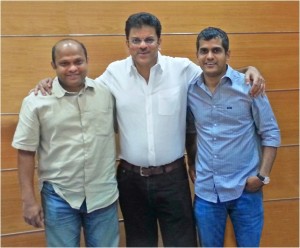

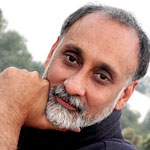





 Kapil Mishra, Executive Creative Director, Leo Burnett
 Lynn de Souza, Chairman and CEO, Lintas Media Group, Chairman, Aaren Initiative and Director, Karishma Initiative