Tag: IRS

  • IRS 2012Q1: English readership throws up usual pattern

    By A Correspondent


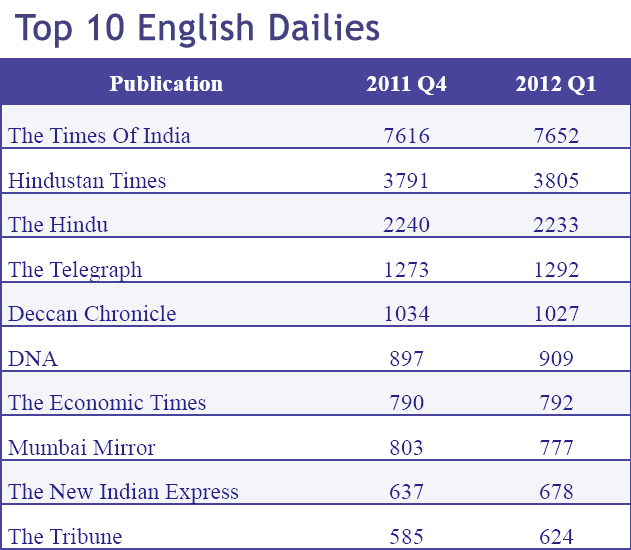
    A favourite with the urban zones and also with the advertisers, English dailies and magazines have shown an average readership trend in 2012Q1. Leading the list yet again for the dailies is Times of India that has recorded an AIR of 7,652 as against 7,616. Hindustan Times is next with an AIR of 3,805. The Hindu has seen a gradual decline with an AIR of 2,233 and occupies the third spot. The Telegraph comes fourth with an AIR of 1,292 while Deccan Chronicle is fifth with an AIR 1,027. DNA has shown a slight growth recording an AIR of 909 as against 897 it recorded in 2011Q4. The Economic Times follows with an AIR of 792 followed by Mumbai Mirror at 777. The New Indian Express is ninth with an AIR of 678 while The Tribune rounds off the list with an AIR of 624.


    (AIR numbers; all figures in ‘000)


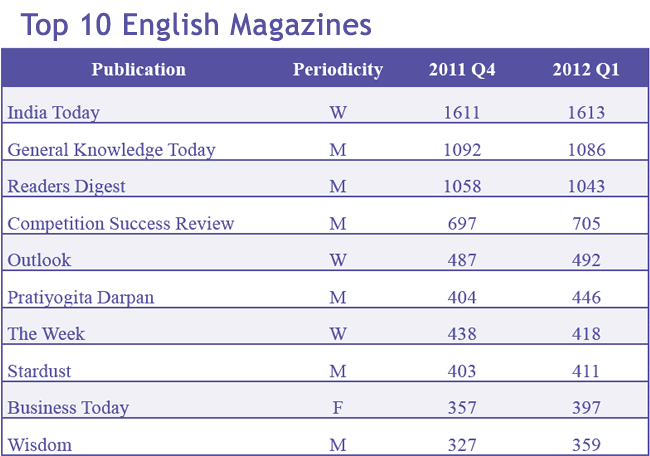
    The trend for magazines is somewhat similar to that delivered by dailies. India Today, retaining its top spot, has shown a small hike with an AIR of 1,613. General Knowledge Today is second on the list with an AIR of 1,086. The going is downhill for Readers Digest that posted an AIR of 1,043. Competition Success Review is next on the list having posted an AIR of 705. Outlook follows next showing growth with an AIR of 492. Pratiyogita Darpan is next with an AIR of 446. The Week follows with an AIR of 418 while Stardust is next with an AIR of 411. Business Today is ninth on the list with an AIR of 397 while Wisdom ends the list with an AIR of 359.


    (AIR numbers; all figures in ‘000)


  • IRS 2012Q1: Downward is the way for Language publications

    By A Correspondent


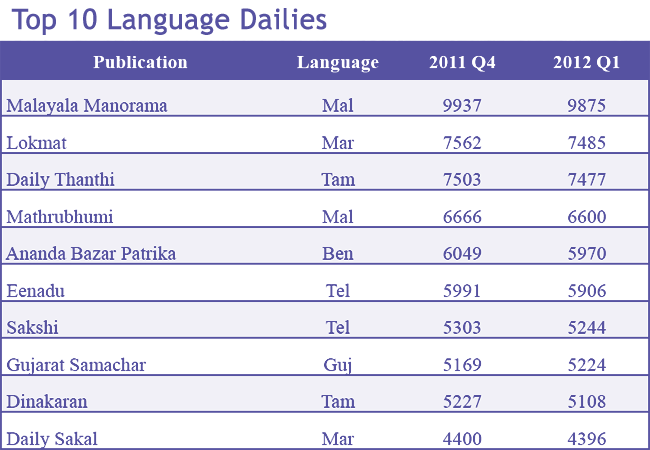
    Maybe it’s the shortage of ideas or lack of opportunities but language readership is certainly not seeing the best of times inIndia. Of the top 10 Language dailies to have made it to the list, just one newspaper – Gujarat Samachar – has seen growth; nine others have seen a decline in 2012Q2 readership over 2011Q1. Gujarat Samachar with an AIR of 5,224 is marginally better than its AIR number of 2011Q4 at 5,169.


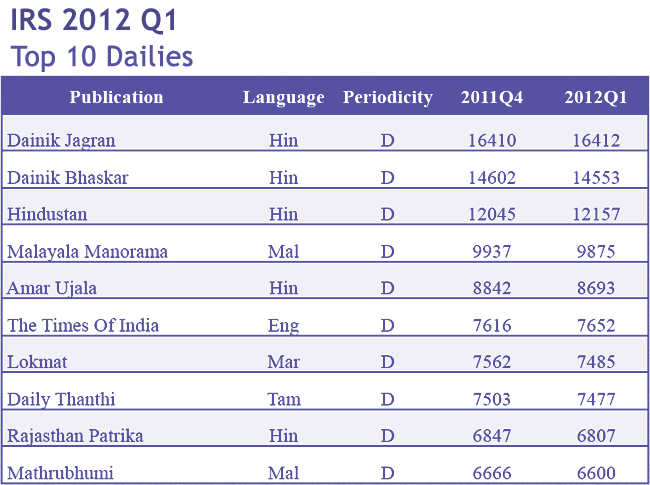
    Leading the charts at the top is Malayala Manorama which has recorded an AIR of 9,875 as against an AIR of 9,937. Marathi daily Lokmat follows next with an AIR figure of 7,485 as against 7,562 it reported last quarter. Tamil daily Daily Thanthi is next with an AIR of 7,477 as against 7,503 recorded in 2011Q4. Mathrubhumi follows next with an AIR of 6,600, Ananda Bazar Patrika with 5,970, Eenadu with an AIR of 5,906, Sakshi with an AIR of 5,244, Gujarat Samachar with 5,224, Dinakaran with an AIR of 5,108 and Daily Sakal with an AIR of 4,396.


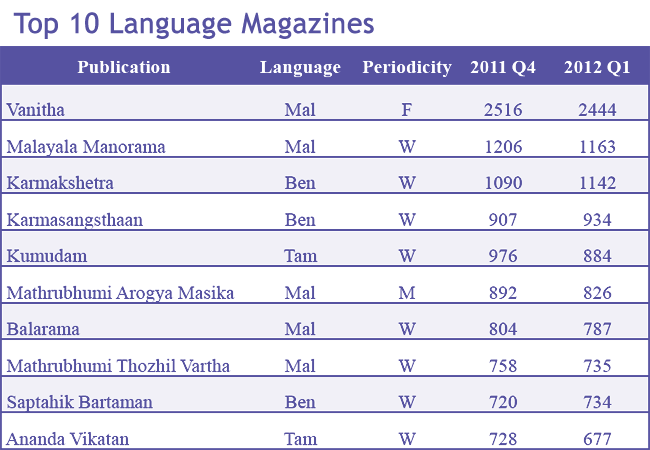
    Where magazines are concerned, three out of ten have shown marginal growth while seven have seen a decline. Vanitha leads at the top with an AIR of 2,444 followed by Malayala Manorama with an AIR of 1,163. Karmakshetra is third with an AIR of 1,142 while Karmasangsthaan is fourth with 934. Kumudam is fifth with an AIR of 884 while Mathrubhumi Arogya Masika is sixth with 826. Balarama follows with an AIR of 787 while Mathrubhumi Thozhil Vartha is next with an AIR of 735. Saptahik Bartaman is ninth with an AIR of 734 while Ananda Vikatan wraps up the list with an AIR of 677.


    Explaining the trend, Dinesh Rathore, Vice President, MediaVest Worldwide said: “As for language dailies and magazines seeing a decline, I think they have reached a saturation point; there is only so much that they can grow by. The percentage of people who speak Tamil or Malayalam in states other than their hometown is not that much, so there is not much enthusiasm by these players to launch editions in other states.”


    (AIR numbers; all figures in ‘000)


    (AIR numbers; all figures in ‘000)


  • IRS 2012Q1: Hindi readership sways its way towards +ve growth

    By A Correspondent


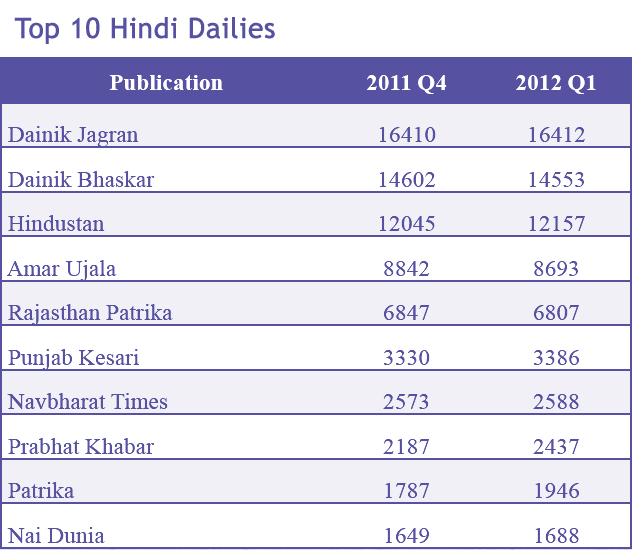
    As a large population of this country continue to swear by the usage of the national language – Hindi, it is no surprise that newspapers and magazines in this language have seen moderate growth in IRS 2012Q1. In the Top 10 Hindi dailies, Dainik Jagran dominates with AIR of 16,412 versus 16,410 that it reported last quarter. At second place is Dainik Bhaskar that recorded an AIR of 14,553 as against 14,602 in 2011Q4.Hindustancomes next with an AIR of 12,157; Amar Ujala at fourth with 8693 and Rajasthan Patrika at fifth with an AIR of 6807. Punjab Kesari has posted positive growth with an AIR of 3,386 compared to 3,330 in the last quarter. Navbharat Times is next with an AIR of 2588. Prabhat Khabar is the best placed with an AIR of 2,437 compared to 2,187 reported last quarter – an 11 per cent growth. Patrika is next at 1,946 (growth of 9 per cent) and Nai Duniya at 1,688.


    (AIR numbers; all figures in ‘000)


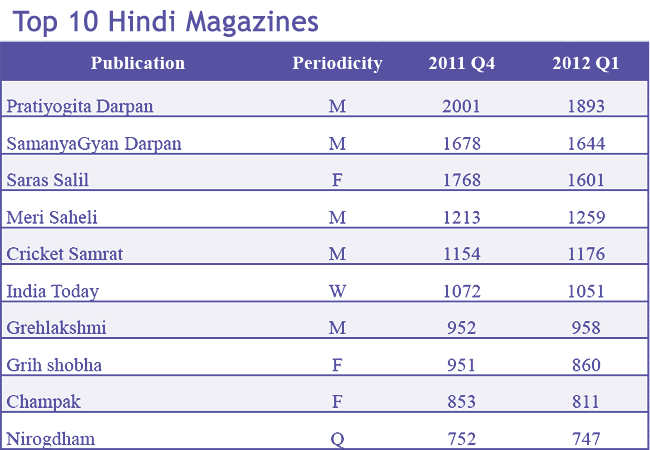
    Among the magazines, there has been a moderate effect that has been witnessed in the Hindi readership. Pratiyogita Darpan has seen a drop of 5.4 per cent with an AIR of 1,893 compared to an AIR of 2,001 in last quarter. SamanyaGyan Darpan has posted an AIR of 1,644 versus 1,678 recorded last quarter. At three is Saras Salil that has seen a big drop with an AIR of 1,601 versus 1,768 recorded last quarter – a drop of 9.5 per cent. Meri Saheli is steady at fourth with an AIR of 1,259 and Cricket Samrat is next with 1,176. India Today is next with 1,051 while Grahlakshmi follows with an AIR of 958. Completing the list is Grihshobha with an AIR of 860, Champak at ninth place with an AIR of 811 and Nirogdham with an AIR of 747.


    (AIR numbers; all figures in ‘000)


    Dinesh Rathore, Vice President, MediaVest Worldwide said: “The population of people who speak Hindi and English is seeing a rise and that explains the overall rise in readership of these language editions. Also, a lot of players are moving out of their markets and launching in other states leading to newer set of readers. Players like Dainik Jagran, Dainik Bhaskar, Rajasthan Patrika are launching in many new states. So this explains the rise in the readership of their papers.”


    Adding inputs, Anamika Mehta of Lodestar UM said: “By launching in newer markets you are creating specialists products to cater to those markets and therefore, language readership will see a rise to an extent. Also, as explosion of business happens in small towns and markets the regional media will follow suit and grow too. That is what we have seen in television too. For SMEs and business houses, print will continue to be an important medium for them.”


  • Stagnancy stages a comeback in IRS 2012Q1


    By A Correspondent


    The IRS 2012 Q1 readership results released by MRUC and Hansa has nothing new to tell but the obvious tale of the apparent rise in numbers of a few publications and the decline in readership of a majority of players. Going by the Average Issue Readership norm, in the Top 10 dailies there has been no change in the pecking order of the top performers but the readership of 7 out of 10 dailies has seen a marginal decline. Of the ten publications, five are Hindi in origin, two are in Malayalam, and one each in Tamil, English and Marathi.


    Emerging a frontrunner once again, Dainik Jagran manages to hold its forte showing slight readership growth with 16,412 in 2012Q1 as against 16,410 that it reported in 2011Q4. At No 2, Dainik Bhaskar has reported numbers totalling 14,553 a decline by 0.33 per cent from 2011Q4 figure of 14,602.Hindustansits comfortably at the third spot having reported a 1 per cent growth of 12,157 as against 12,045 reported in 2011Q4. Malayala Manorama is at the fourth spot with an AIR of 9,875 as against 9,937 in 2011Q4 – a drop of 0.6 per cent. Amar Ujala is next reporting an AIR of 8693 against an AIR of 8842 in 2011Q4 – a drop of 1.7 per cent. The Times of India English edition continues to see growth and comes in sixth with AIR of 7,652 as against 7,616 registered last quarter. Marathi daily Lokmat sees a marginal decline to end 2012Q1 at 7,485 compared to 2011Q4 AIR of 7,562. Tamil daily Daily Thanthi is next with AIR numbers of 7,477 as against 7,503 recorded in 2011Q4. Rajasthan Patrika with 6,807 and Mathrubhumi with 6,600 end the tally occupying the ninth and tenth spot respectively.


    Reacting to the overall trend, Dinesh Rathore, Vice President, MediaVest Worldwide said, “The study hasn’t thrown any new surprises. What is known is that the readership time spent on print is coming down these days, which is even lesser in case of magazines. Newspapers as a habit are not going to die soon but the time spent is surely on a decline. Also, if people were subscribing to more newspapers earlier, they are subscribing to one less now because of the options available on digital.”


    Highlighting her stance on the numbers, Anamika Mehta of Lodestar UM said: “What I infer is that the drop is very marginal. Print will continue to hold its ground in India. With literacy rates going up and the launch of several new products print will continue to drive growth in India . Also, what is seen is that there is a growth of consumption that is happening on the web and moreover, India is a very young country. Almost 60 per cent plus of the population are younger than 35 years. With these audiences the consumption is more on the web than on the physical newspaper. Also, we are seeing a lot of launches by players in the regional markets. So it’s not as bad as it seems.”


    Voicing a similar opinion as given by Mr Rathore, Priti Murthy, National Director – Insights, Maxus said, “I am not surprised by the overall trend that has been thrown up. Why do we read newspapers and magazines, for the sheer content that it provides and content is available faster in other mediums today – definitely digital and to a large extent even TV. I see this trend continuing in the next 3-4 years after which it will reach a saturation point. Also, how much ever tactical initiatives publications engage in to increase circulation, it clearly shows that readership is not going to increase. The time spent in reading newspapers and magazines will continue to see a decline. Also the new generation that is growing up may not grow up on a newspaper alone. They rely on mobile and other AV modes to receive their communication.”


    (AIR numbers; all figures in ‘000)


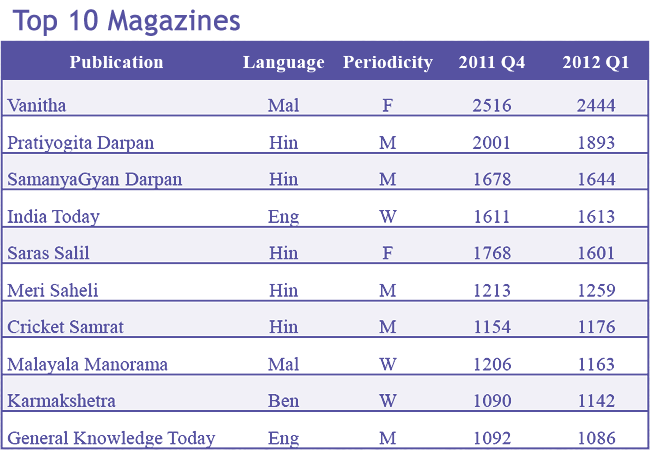
    The downfall story continues with magazines as well with leader Vanitha (Malayalam) reporting an AIR of 2,444 as against 2,516 in 2011Q4 – a decline by 3 per cent. Pratiyogita Darpan too sees a decline of 5.4 per cent having registered an AIR of 1,893 in 2012Q1 as against an AIR of 2001 in 2011Q4. SamanyaGyan Darpan sees a marginal decline with an AIR of 1,644 as against 1,678 reported last quarter. India Today is the topmost English magazine in this list and figures at the fourth spot with 1,613 as against an AIR of 1,611 reported last quarter. Saras Salil is next on the line-up and has reported a big drop of 9.5 per cent registering an AIR of 1601 as against an AIR of 1,768 reported in 2011Q4. Meri Saheli and Cricket Samrat have posted growth with an AIR of 1,259 and 1,176 respectively. Malayalam Manorama at 1,163 has seen a decline of 3.5 per cent while Bengali magazine Karmakshetra has seen a growth in its AIR at 1,142 as against 1,090 in 2011Q4. General Knowledge Today completes the list with an AIR of 1086.


    Throwing light on the trend spotted in magazines, Anamika Mehta said: “In the case of magazines, what we are seeing is that the time spent on magazines is going down but there are a lot of new and niche products being launched. A lot of international players too are coming into this market. So that should give it some scope for growth. But right now I think magazines are in a more worrying state than dailies in India but having said that I do not see the death of the medium coming here anytime soon.”


    (AIR numbers; all figures in ‘000)


  • Differentiation & Innovation key to success, says Harshad Jain

    As Business Head – Radio and Entertainment of HT Media, a role he assumed last year, Harshad Jain has his role tailormade for excitement. The FM Radio market may be small when compared to television or print, but given the nature of competition is a challenging play. In conversation with MxMIndia’s Robin Thomas, Mr Jain spoke about Fever 104 FM’s radio play – Gandhi, the consistency of the FM station’s leadership position in Delhi, Phase III plans and much more. Prior to joining Fever 104 FM, Mr Jain worked with companies like Pepsico, Worldspace and Airtel to name a few.


    Fever 104 FM recently launched radio play – Gandhi… What is the kind of response you have been receiving?

    The radio play, Gandhi, has done extremely well. It is currently aired at three different day time slots, and we have extremely good sponsors – Maruti Suzuki, Union Bank of India and Tata chemicals. We have been inundated with thousands of SMSes and calls, along with over 3,000 plus responses on Facebook wherein people have appreciated our initiative. And I do believe this has been one of the finest innovations in the radio industry.


    Do radio plays still strike a chord with listeners?

    Absolutely, because it drives a lot of appointment listenership. Today, the issue with the radio industry is the fact that it is tough to create differentiation. A radio drama like Gandhi or Ramayan is a high end production which drives appointment listening and, it is very relevant for any target group.


    According to RAM, Fever 104 FM Delhi consistently claimed the No 1 spot… What, would you say, are the factors that led to this success?

    Today, we are the single largest radio station in Delhi, not only among the private FM radio stations, but we have managed to go ahead of AIR FM Gold – we are the undisputed number one FM radio station in Delhi. The key reason for our success in Delhi is because we are a station which is very much integrated in Delhi. We believe that we have got a differentiated product offering in Delhi, we do a very high level of innovation and we’ve got an extremely strong local connect which makes us very powerful competition.


    IRS, on the other hand, seems to have a different story to tell… What would you say are the takeaways from IRS Q4 numbers?

    IRS is a readership survey; it is not a survey for radio. Radio Audience Measurement (RAM) on the other hand is an exclusive survey only for Radio. Second, IRS is a quarterly survey whereas RAM is a weekly survey. Third, the detailing in terms of RAM is excruciating as it provides time-band listenership, number of listeners by show, cumulative listenership, time-spent listening, therefore RAM is a measurement system meant to track a certain kind of medium. IRS is principally a tool for print media, it is about readership survey and a readership survey cannot do justice to a listenership survey.


    What, according to you, worked in Delhi but did not work in Kolkata and Bengaluru? What is the learning from Delhi for the remaining markets?

    The learning from Delhi comes from the fact that we need to be high on innovation, we need to have a differentiated product, and a very strong local connect.


    How has the Fever 104 FM Digisound impacted listenership?
    We used to be a distant number five in Mumbai, now we are a dominant number three player in the city. This proves that the strategy has worked positively for the station.


    What are your FM Phase III plans? Do you plan to expand to newer markets? Any specific cities or towns you are eyeing?

    We will participate in FM Phase III, we are still strategizing and only after thought through consideration, will we do what is required. We do have our expansions plans as to which markets we need to expand and depending on the how the viability and economic model works, we will expand.


    How active is you online presence – your website, Facebook and Twitter? How do you engage listeners off air?

    We do a lot of activities online, a lot of our RJ promotions and other engagement activities are done online. Digital is, therefore, a key part of our strategic mix in terms of reaching out to a larger audience, and we use it very effectively.


    How has the year been so far for Fever? And what would you say are the challenges and concerns facing the radio industry today?
    It has been a good year for us so far. We have entered the year very well, and we are looking at very strong sustained growth. As far as the challenges are concerned, there are couple of challenges – lack of differentiation in content is one of them. Second, the size of the advertising category is relatively small which needs to grow dramatically in the next couple of years, and third, the licence fees needs to be reduced.


  • Hansa, Ipsos to jointly bid for IRS in ’13, sign MoU

    By a Correspondent


    Hansa Research and Ipsos have entered into an MOU to jointly bid for the new Indian Readership Survey (IRS) contract that starts with IRS 2013. Hansa Research has been conducting the IRS, the world’s largest continuous readership survey for the last nine years i.e. since IRS 2003. This joint bid will combine Hansa’s extensive experience of readership measurement in the Indian context with Ipsos’ global expertise of conducting readership surveys in 60 countries. Through the joint participation, the two companies expect to make a very strong and forward looking pitch for the new IRS contract.


    Mr Ashok Das, Managing Director, Hansa Research Group said: “We are happy and excited to work with Ipsos on this prestigious project, and hope to bring in a number of new ideas into the IRS.”


    Mr Mick Gordon, CEO of Ipsos inIndiasaid: “We are delighted to be working with Hansa on this very exciting project and we hope we can persuade RSCI that our combination will be a very big plus for the industry. Ipsos measures readership in more than 60 countries around the world and has made a name for itself in introducing many innovations into this specialist area of market research – we were the first to use CAPI and DS-CAPI in readership measurement, for example. We believe we can add significant value to Hansa’s proven expertise and experience on the ground in India.”


    Speaking to MxMIndia, Mr. Suresh Nimbalkar, Senior Vice President, Hansa Research Group Pvt. Ltd said that the reason Hansa decided to join hands with Ipsos was to offerIndiathe best possible IRS. “We want to deliver the best possible product and we are working forward to it. We started people meter, IOS, we have continuously innovated and besides we have had a long standing relation with Ipsos. There is synergy between the two and so we decided to collaborate, rethink all aspects of IRS and offer an even better product (IRS) whether in technology, talent, and so on.”


    Hansa Research is a global full service market research agency headquartered in India, conducting market research in 77 countries with offices in India and US. Over the last few years, Hansa has developed sound mechanisms to reduce fieldwork related issues that has been widely acclaimed by research users for its ability to minimize some long standing industry weaknesses.


  • IRS 2011Q4: Not much change in rankings but dailies witness significant growth

    By A Correspondent


    Top 10 Hindi Dailies:

    IRS Q4, 2010 v/s IRS Q4, 2011

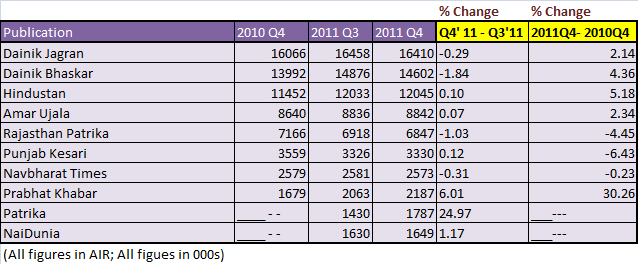
    There is not much of a difference in the rankings of the Top 10 Hindi Dailies. Dainik Jagran, Dainik Bhaskar,Hindustan, Amar Ujala and Rajasthan Patrika continue as the Top 5 Hindi Dailies. When compared to IRS 2010 Q4, IRS 2011 Q4 reveals the Top 4 Hindi Dailies, namely Dainik Jagran, Dainik Bhaskar,Hindustanand Amar Ujala have further strengthened their readership.


    A look at percentage change from Q4, 2010 to Q4, 2011 finds that Dainik Jagran has witnessed a growth of 2.14 per cent, Dainik Bhaskar grew by 4.36 per cent,Hindustanby 5.18 per cent while Amar Ujala grew by 2.34 per cent. The only Hindi daily to have witnessed double digit growth is Prabhat Khabar with a whopping 30.26 per cent growth in Q4, 2011 as against Q4, 2010. A total of five Hindi dailies have witnessed growth Quarter on Quarter.


    Q3, 2011 Vs Q4, 2011

    But the results for IRS Q4, 2011 Vs Q3, 2011 have a slightly different story to tell. The top two most read Hindi dailies – Dainik Jagran and Dainik Bhaskar – have witnessed a decline in Average Issue Readership (AIR), the decline is however marginal. Besides Dainik Jagran and Dainik Bhaskar, the Hindi dailies to have recorded growth in Q4, 2011 v/s Q3, 2011 are Hindustan, Amar Ujala, Punjab Kesari and Prabhat Khabar.


    Top 10 English Dailies:

    IRS Q4, 2010 Vs IRS Q4, 2011:

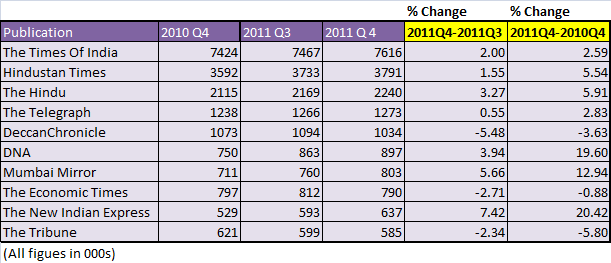
    The English dailies have performed exceedingly well in Q4, 2011. Seven out of the Top 10 English dailies have registered growth in their AIR. While DNA, Mumbai Mirror and The New Indian Express have registered growth in double digits, the top four English Dailies: The Times of India, Hindustan Times, The Hindu and The Telegraph have also witnessed growth quarter on quarter.


    IRS Q4, 2011 Vs Q3, 2011:

    The results for Q4, 2011 in comparison to the previous quarter also highlight the growth for most of the top Ten English dailies.


    Top 10 Language Dailies:

    IRS Q4, 2010 Vs IRS Q4, 2011:

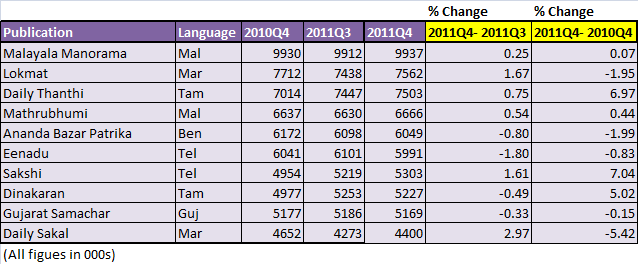
    The Q4, 2011 results as compared to the Q4, 2010 results have shown mixed reactions for Language dailies as only five publications witnessed growth since Q4, 2010 to Q4, 2011. Malayala Manorama continues to be the number one publication among the Language Dailies. According to IRS Q4, 2011 v/s Q4, 2010 findings, the Malayalam daily grew 0.07 per cent.


    Ranked second is Marathi daily, Lokmat which saw a decline of 1.95 per cent. The other Language dailies to have registered growth in their AIR are Daily Thanthi, Mathrubhumi, Sakshi and Dinakaran.


    Unlike the top two dailies, Daily Thanthi, ranked as third Language daily, grew by 6.97 per cent in IRS Q4, 2011 when compared to IRS Q4, 2010.


    It has been observed that the Malayalam dailies – Malayala Manorama and Mathrubhumi and the Tamil dailies – Daily Thanthi and Dinakaran have recorded growth in their AIR. Malayalam, Marathi, Tamil, Telugu, Gujarati and Bengali are some of the popular language dailies to have found a place in the Top 10 Language dailies.


    IRS Q4, 2011 v/s Q3, 2011:

    The top four Language dailies: Malayala Manorama, Lokmat, Daily Thanthi and Mathrubhumi have registered growth in their AIR numbers in IRS Q4, 2011 v/s IRS Q3, 2011. Besides the top four language dailies, Sakshi, the Telugu daily and Daily Sakal, the Marathi daily have also witnessed growth in their readership numbers.


    AIR or Average Issue Readership is defined as the readers of an average issue of a publication i.e. the estimated number of those who have read or looked at any issue of the publication within a specified time interval, which is equal to the periodicity of the publication (excluding the day of the interview). This is the preferred currency of media agencies across the country though often publications quote Total Readership (TR) when their AIR numbers are not impressive. MxMIndia only uses AIR in its IRS reportage.

  • IRS Q4 2011: Dailies flourish Year-on-Year


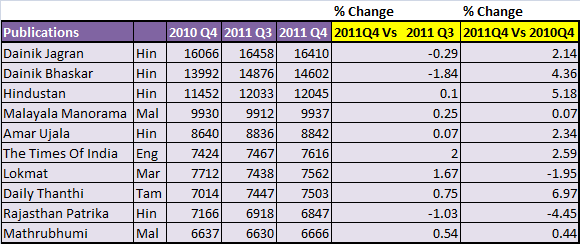
    The fourth quarter results of 2011 for the Indian Readership Survey were published on Monday and a quick look at comparing the numbers of IRS Q4 2011 versus Q4 2010 data, eight of the Top 10 publications – Dainik Jagran, Dainik Bhaskar, Hindustan, Malayala Manorama, Amar Ujala, The Times of India, Daily Thanthi and Mathrubhumi ­- have grown in their AIR (Average Issue Readership) Year-on-Year (YoY). Tamil daily Daily Thanthi and Marathi Daily Lokmat and Hindi Daily and the second most popular newspaper, Dainik Bhaskar  have registered the highest growths in AIR.


    When we compare Q3 2011 V/s Q4 2011, Dainik Jagran, Dainik Bhaskar and Rajasthan Patrika witnessed a slight decline in their readership. Dainik Jagran, Dainik Bhaskar, Hindustan, Malayala Manorama and Amar Ujala have retained their spots as the top five publications.


    After looking at the numbers, MxMIndia spoke to some of the publications for their views on the IRS Q4 2011 Topline numbers. Mr Rahul Kansal, Chief Marketing Officer, Times of India Group said: “Overall, I am quite happy with results, we have done pretty well in most of the markets including Delhi, Mumbai and Chennai, where we have seen very good growth.”


    However, Mr Rajiv Verma, CEO of HT Media Ltd, is disappointed with the IRS numbers but said in a statement, he will continue with investments in various markets. “While Hindustan Times has for long been No 1 in Delhi and No 2 in Mumbai, and Hindustan and Mint have consolidated their positions in their respective markets, as a group we are disappointed that these IRS numbers don’t reflect the full picture of our growth, and the reality of our investments and our efforts in the various markets across the country. However, we will continue to invest in various markets, to meet the needs of our readers and our advertisers, and will hope that the readership growth will be fully captured going forward.”


    Mr Sanjeev Kotnala, Vice President, Dainik Bhaskar Group said: “The IRS figures justify our focus on the urban, non-metro cities. Dainik Bhaskar is the only Gujarati newspaper to have a readership of more than 10 lakh in cities like Jaipur and Ahmedabad. If you see the figures for only the urban, non-metro cities, then you will realise that Dainik Bhaskar dominates the list. As far as the overall figures are concerned, we feel that it is a minor fluctuation, nothing major as far as our own perspective is concerned.”


    Speaking on trends from IRS Q4 findings, Mr Gautam Dalal, Vice President, Marketing, DNA said: “We observe that within Mumbai there is an increase in the overlap of English dailies readership – for every two readers there are three dailies being read. Mumbai, therefore, is seeing more penetration of English dailies and the trend of reading multiple newspapers is on the rise. Having such a high overlap percentage is a positive sign.”


    “In Mumbai we have had the highest number of growth for DNA, and these numbers are a testimony to our stand of having a high level of copy supported by the cutting edge editorial and by a focused market programme,” he added.


  • IRS 2011 Q4: Dainik Jagran maintains leadership; Vanita is most read magazine

    The numbers from the latest round of the Indian Readership Survey (IRS) are out as the Media Research Users Council (MRUC) and Hansa Research Group (HRG) announced the findings of the fourth quarter of 2011.


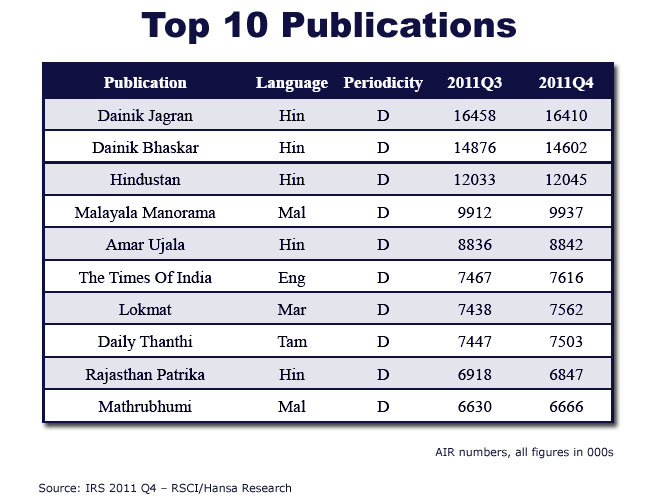
    No surprises here… According the AIR (Average Issue Readership) figures, Dainik Jagran continues to lead as the most read publication across the country. While Times of India is the only English daily to make it to the top 10 most read publications, Lokmat is the only Marathi daily in the top 10 most read publications. The rankings of the top six publications have not changed, however; the Marathi daily Lokmat has further strengthened its readership position, emerging as the seventh most read publication according to the AIR whereas the Tamil Daily Thanthi is now ranked eighth in its AIR.


    The rankings of the top 10 dailies are the same as the top 10 publications.


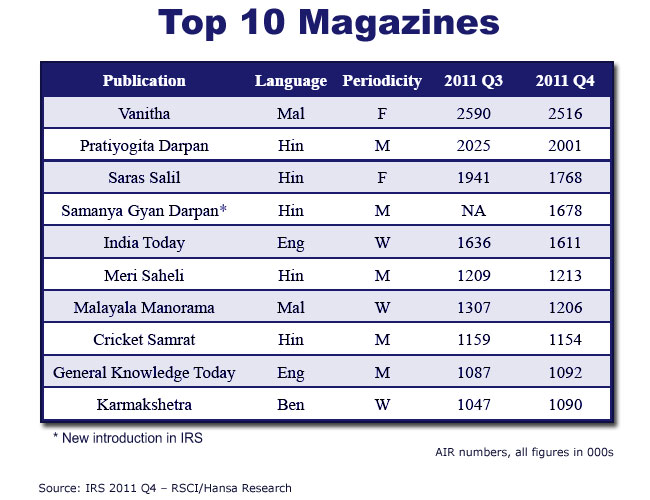
    The top 10 magazines of the country are mainly dominated by Hindi languages followed by English and Malayalam language magazines. Malayalam fortnightly magazine Vanitha continues to be the most read magazine across the country followed by Pratiyogita Darpan and Saras Salil.


    IRS Q42011 has a new entrant with Samanya Gyan Darpan; the Hindi monthly magazine is already ranked fourth most read magazine of the Country.


    Note AIR  or Average Issue Readership is defined as the readers of an average issue of a publication i.e. the estimated number of those who have read or looked at any issue of the publication within a specified time interval, which is equal to the periodicity of the publication (excluding the day of the interview).


  • Radio still needs to be evangelized: Harrish Bhatia

    Harrish M Bhatia, the Chief Executive Officer, MY FM, is said to have several landmark achievements to his name. He is said to have played a key role in making MY FM, the radio business of Dainik Bhaskar Group achieve its break-even position within a short time since its launch. Since the launch in 2007, he is said to have successfully launched the MY FM brand in 17 cities in under two years and led the company to operational break-even in just three years. In conversation with MxMIndia’s Robin Thomas, Mr Bhatia shared his views on MY FM’s Q3 results, the radio business post break-even, his FM phase III plans and much more.


    Q: Let’s start with the Q3 results. The ad revenues grew 22 per cent in Q3 2011- 12 and EBIDTA stood at Rs44 million… The results must have provided MY FM an extra boost for 2012? What would you say are the key factors behind the growth?

    We have always believed in the growth story and economic vibrancy of the 17 non-metro markets that we operate out of. The surge in the demand for consumer goods, services, FMCG products, better education avenues and son on makes the non-metro markets interesting and rewarding for marketers. While global slowdown may have affected the revenue of metro players, retail advertising remained unaffected as the consumers in these cities are not exposed to the daily stock market fluctuation.


    MY FM, with a strong focus on the non-metro markets, unparallel content offering like My Ramayana and Murari Babu in spiritual time band, daily song request shows like Dil Chahta Hai and listener engagement initiatives such as the award winning CSR – Ek Koshish and CJ943- City ka Campus Star with VJ Ranvijay and great HR practices, have all led to this outstanding performance.


    Q: The radio industry is, more or less, completely dependent on advertising revenues. Do you agree? What are the other sources of revenue for MY FM?

    Intelligent and smart advertisers who believe in radio are using radio to its true potential by going beyond FTC through innovations like sponsorships, content integration and activations. There is infinite scope to innovate on radio. Traditional advertisers, however, on account of their own consumption habits, are not taking the medium seriously.


    Radio offers opportunities to create unique ‘Radio properties’ and build ‘sonic triggers’ that are hard to replicate on other mediums. Long term properties like Ramayana, Murari Babu discourses in the spiritual time band, the remix show hosted by DJ NYK and others on MY FM should be seen as a strategic investments by advertisers to build a connect between the consumer and their brand.


    Q: MY FM achieved break-even way back in 2009… Has there been any change in the business since then – more focus on internal communications or infrastructure, getting more talents?

    Break-even was achieved as a result of cost optimisation and resource rationalisation.  The scenario has changed a lot since then with a focus on innovative HR practices and an ‘Employee First’ policy that includes:-

    • Trainings the Talent: Based on the leadership roles, key talent are identified and sent for training and workshops that best suits their development needs – from training by UK Radio, London to workshops at MDI and IIM-A.
    • Variable pay policy: Innovative policy for employees across the board liked to their quarterly performance.


    Q: You have always maintained that the actual growth of radio is coming from the non metros… Has the FM radio listenership in metros reached a saturation point?

    Trends indicate that there is an exponential growth of listenership in non-metros on accounts of factors like more leisure time, low internet penetration, power shortage and so on, while it is growing at a slow pace or almost stagnant in metros.


    FM penetration has already reached decent levels in metros with hardly any scope of growth – 88 per cent inDelhiand 87 per cent in Kolkata. While non-metro cities like Ahmedabad andNagpurhave low penetration levels of 53 per cent and 69 per cent respectively.


    Q: It’s been five years since MY FM came into existence in 2006. You have had several landmark achievements since then. What would you say were the high points and the lows for MY FM since it first started?

    Highs:

    • Fastest launch of stations in a record time of under a year.
    • Achieving operational break-even within 3 years of launch.
    • Appointment of an ombudsmen.
    • Content innovations like MY Ramayana, Murari Babu, DJ NYK, My Vastu, Numerology show with Sanjay Jumani, Kahani ki Kitab Se and others.
    • MY FM joining the league of select stations with the launch of its TVC and song last year.


    Lows:

    • Government policies that have resulted in the industry being unviable for investment.
    • Limited growth on account of content restrictions imposed on a nascent industry.
    • Absence of an acceptable radio measurement tools.
    • Talent crunch during the initial years.


    MY FM is present in 17 cities and 7 states. How is the radio consumption behaviour in these cities different from those of the metros? In Mumbai for instance, a chunk of listenership comes in the morning. Is the trend same with the mini metros?

    Radio consumption is very different in non-metros. InIndore, late morning records the highest listenership, while Jaipur has high listenership throughout the day; whereas Ahmedabad peaks in both morning and night time bands. Moreover, the time spent on radio is much higher in non-metros and set to go up further with increase in FM listenership on mobiles.


    Does the medium still need to be evangalised to advertisers or are advertising willingly flocking to radio?

    Yes, radio still needs to be evangelized. Radio is the medium that many professionals include in their quarterly and yearly plans at the last moment to highlight the probability of their idea being executable.


    Moreover, media spends are not being proportionately allocated to radio even though it has outgrown other media in time spent. As per the recent RAM research conducted in the four markets- Jaipur, Ahmedabad, Nagpur and Indore – average time spent listening to radio is 160 minutes as compared to IRS figures of 107 minutes watching TV, 85 minutes reading newspaper and 30 minutes on internet respectively.


    Smart and intelligent advertisers who believe in radio know that if properly planned and used innovatively, the radio can do wonders for a particular brand. Unlike TV, Radio is the only medium that has the power to address area-specific challenges through a focused communication in their own local language and is value for money. Big radio players should come forward for the growth of the industry and to highlight its mammoth reach and effectiveness.


    Q: We have learnt that AROI is working on content codes for radio stations. Is it high time that radio also follows self regulation?

    We welcome any such move. We are already following a stringent AIR code for content.


    Q: Although news will be sourced from only AIR, nevertheless how prepared is MY FM for news? Does MY FM have the infrastructure ready for news or is it that the present infrastructure is more than sufficient for AIR bulletins?

    Yes, MY FM, being part of a larger news media group, already has the infrastructure to broadcast news. However, we believe that radio players should be allowed to carry their own news-based content, making it relevant for our listeners.


    Q: You seem to be quite active on Facebook and Twitter. What about your website? Can you share with us your digital media plans? How are you using the digital medium to engage listeners?

    Digital media is an integral part of all our campaigns and promotions – both for communication and engagement like content participation, feedback on music preferences and so on. Radio is an aural medium, however, with the launch of the “radio dikhta hai” campaign, listeners became viewers as they are able to see the radio and the RJs hosting the show on YouTube. We recently concluded our microsite contest encouraging listeners to participate in brand evolution by sharing their ‘jiyo dil se’ moment with the best entries winning big ticket prizes.


    Q: Currently what according to you are the key challenges facing the radio industry? And what are the trends to watch out for in the coming years?

    Challenges:

    • Deregulate radio: Content restrictions are a big restraint for the industry and our creative freedom gets affected due to the limitation to provide any kind of news-based content.
    • The most important is the Music Royalty Issue. The royalty issue continues to worry FM stations, especially the smaller FM players or those in small towns.
    • Absence of an acceptable radio measurement tool, due to which media planning and buying is done on the basis of researches like IRS, is another challenge that we face in our industry.
    • The license fee for new stations is a challenge, making the medium unviable for investment by existing and new players.


    Trends:

    • Expansion of radio post Phase III rollout, covering newer towns, increasing radio footprint.
    • The way consumer soaks information is more fragmented and varied like never before. Not only has the mechanisms to reach to the consumers changed, the vehicles option have also multiplied. Radio has evolved and outgrown all other media with consumer spending more time on it. To reach out to such a consumer and influence them by appropriately allocating media spends is going to be a big thing for advertisers in 2012.
    • While metros will remain a staple for marketers, an increased non-metro footprint will be critical for volumes in the long run. There is a growth opportunity that is vastly under-rated by many marketers today, which could emerge as a key growth engine for the next 10 years.


    Q: What are your FM phase III expansion plans?  Would you explore the metros? New genres with multiple frequencies? 

    Yes, we would be exploring metros in Phase III as long as it makes business sense.


    MY FM has major expansion plans for Phase III. However it is too premature to discuss this. Moreover, as mentioned earlier, the license fee for new stations is a challenge that needs to be address before the Phase III rollout to encourage bidding.


    Q: What is the overall workforce or team size of MY FM? Is employee retention a challenge in the radio industry? Or is there a talent crunch that needs to be first dealt with?

    MY FM currently employees 350 full-time employees. Retention is never a challenge for key management / leadership team. It’s the support staff that is a challenge. Moreover, MY FM’s robust HR practices are one of the best in the industry allowing development and growth of talent.


    Q: On a lighter note, what is a typical day like for Mr Harrish Bhatia, CEO, MY FM?

    I believe in pushing myself each day. I am very passionate towards my fitness and wake up at 5am every day to jog and do yoga which is followed by breakfast with family. I reach office around 10am and quickly move to make an agenda for the day that needs to be looked into, pointers to be discussed with the team and any meetings in the course of the day as well as near future. I meet the Business Heads/Programming Heads for programming review followed by lunch.


    After lunch, I catch up with the senior management for strategising and ideating, checking emails and reverting back to any queries. At the end, I review the work according to the daily agenda and makes sure that the work assigned for the day is done.  After winding up work, I head home, spend quality time with my family and friends, watch television, checks emails on my iPad and hit the bed for another challenging day.
     

  • The Anchor: Suresh Srinivasan on 5 reasons IRS is an effective measurement tool

    By Suresh Srinivasan


    #1 The only indicator. Currently IRS is the de facto gold standard for measurement of newspapers and magazines. IRS is based on continuous study with fairly large data base. More importantly there is no other indicator and it is the standard used by the industry.


    #2 It’s not about just absolute numbers, but also gives the trend of the industry over the years. The trends are a valuable resource for media planners, publications and advertisers. These are not volatile numbers but have been slow and steady indicators of changes in the industry. This gives a meaningful picture of what’s happening in the industry.


    #3 Considering that we are a large nation, IRS proves to be a cost-effective, valid and timely method of assessment of consumption of media. The sheer magnitude and scale of collecting and collating this data involves lot of work but IRS makes this possible and a valid data is available its users.


    #4 Besides the readership data available on frequency and demographics, IRS has become a vital source of comprehensive information. It has become a repository of data that can provide information on various other parameters like intent to purchase.


    #5 With technology coming in IRS is poised to become much more robust and will take research to higher level. It is a continuous journey to present better data to its users.


    Suresh  Srinivasan is the Vice President (Advt) of The Hindu Group of Publications.

  • Claims, counter-claims rule IRS again


    By A Correspondent


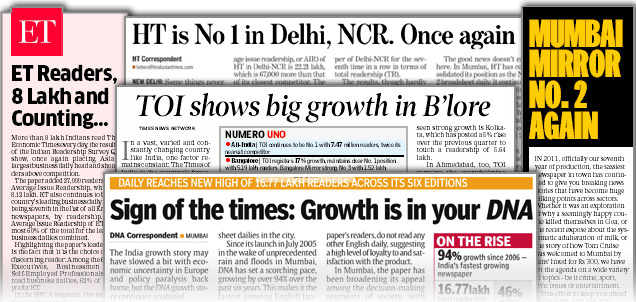
    It’s ironic. Mumbai is where most of the biggie media agencies exist. Some of the largest spenders are headquartered here. Still, publications pull out all stops to make crazy claims.


    Okay, they aren’t incorrect and the initiated amongst them can obviously see through the claims, but those who don’t – the lay reader, the young homemaker or the senior citizen who is not in the know – is sure to wonder what the truth. And if he/she subscribes to more than one paper, we are sure there will be some confusion.


    Obviously, the belief is that the reader is an ass. But this is a policy that can backfire terribly.


    But the confusion in a city like Mumbai is thanks to the two types of data that MRUC throws up in its IRSes – Average Issue Readership (AIR) and Total Readership (TR). Publications put up the data which throws them in better light. Also, newspaper X is a compact (tabloid- like-sized) newspaper while Y is a broadsheet. So one may be the #2 overall, another may be #2 broadsheet. Z may be #2 by TR and Y may be #2 by AIR.


    Fact is AIR is the accepted currency and there is a section which believes that a newspaper that comes free with another paper shouldn’t be taken for review. But there is a section which says that if a newspaper is able to attract revenues separately, that’s decidedly the best yardstick for the product’s utility. Perceived or otherwise.


    Sadly, the conferences which the Market Research Users Council and Hansa Research Group would conduct to release every round of the Indian Readership Survey have been done away with. The detailed dump is no longer handed out to the trade media. All of this charade of X, Y, Z could’ve been avoided had we got city and region-wise numbers from the MRUC (or via Hansa), but that’s not to be.


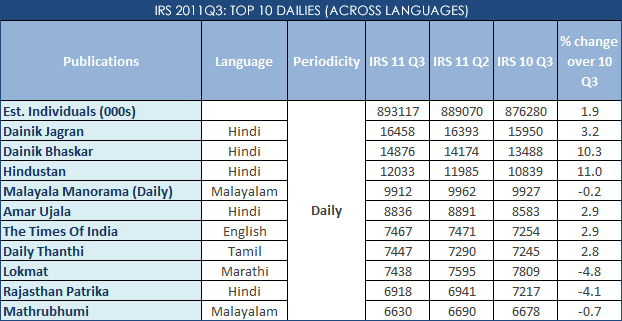
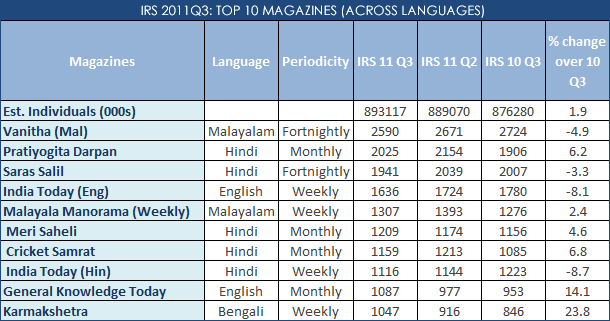
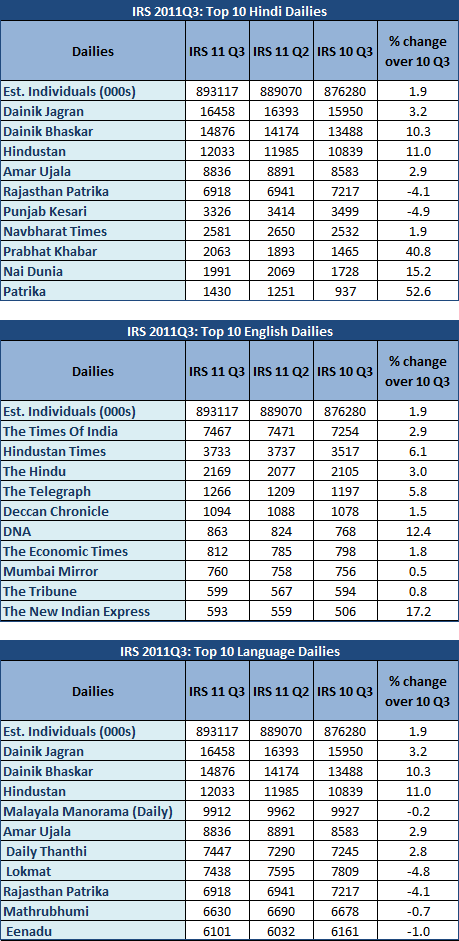
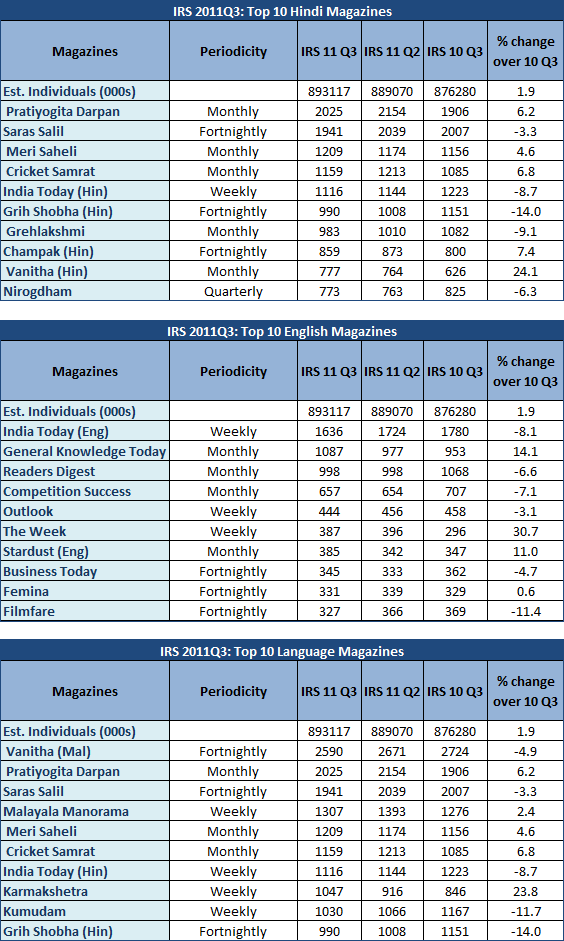
    Let’s look at the tables in detail (that we have based on the toplines publicly available).


    There’s no need of words. The growth or degrowth percentages tell the story. Some spectacular successes. Others not so.