Tag: Indian Premier League

  • Fantasy cricket apps & brand-building- A lesson for advertising agencies?

    Fantasy cricket apps & brand-building- A lesson for advertising agencies?

    With apologies to none at all

    Vikas MehtaBy Vikas Mehta

    My last column titled ‘Why are we building products and not brands’ seemed to have sparked off many reactions. Some raw, I dare say. The questions ranged from differentiation to personality to digital. But one question stood out. I was asked if all new age brands are just products? Is there anyone building a brand?

    The answer was not difficult, but I will take the liberty of using this column to explain how a brand is being built by a new age product. Disclaimer first: I have nothing to do with the brand except I know the founder of the communication company which is spearheading the brand-building exercise. This is totally an outsider’s perspective.

    I am talking about Dream 11.

    Not many know that the brand was launched in 2008. The fantasy cricket app which is what they are all about today was launched in 2012 and by 2014 they had a million registered users. This figure rose to around 45 million around 2018, just when serious brand-building efforts started and today, the figure stands at around 150 million. I am deliberately starting with numbers because this is a brand which has been successful by all standards.

    The brand started advertising during the Indian Premier League (IPL) around 2018 or so. It had a simple positioning. The cricketers, who play for India, back Dream 11. It was decidedly an endorsement but an endorsement done with a positioning, personality and differentiation in mind.

    First, they aligned with the best Indian cricketers. Dhoni, Rohit, Pant, Bumrah, Hardik, Ashwin, Dhawan. Dhoni dropped out after a season or two but the core has remained the same. One of the first campaigns I remember was using Dhoni which was about khelo dimaag se. Dhoni was always an astute cricketer and the brand used his personality to show that it was a game of skill and not luck. This was required at the time because Indian laws did not allow any game which could be seen as betting or lottery. So khelo dimaag se, worked for the brand in more ways than one.

    And then the brand took off. It decided that its personality needs to be light fun, cricket humour, and showing the human face of the Indian cricketers.

    The positioning evolved into snippets of Indian street cricket as portrayed by star Indian cricketers. It was not too focused, neither too narrow. It did not get bogged down by a consistent tagline. I am not saying that consistent tagline is bad but the positioning is not just what the brand says in a tagline. Positioning is what the consumer stores in his mind. A tagline is static, positioning needs to evolve. Not change but evolve. Dream 11 did it brilliantly.

    Yeh apna game hai

    Yeh main kar leta hoon tum Dream 11 pe team banao

    Dream big. Dream 11

    Sab khelenge

    Team se bada kuch nahin.

    And each one of these taglines had a story. An emotion.

    Weaved into the game as played by Indians everyday. Using the Indian stars.

    Remember, pehle main batting karoonga kyonki bat mera hai, leaving Rohit stumped. Yeh apna game hai. Watch here

    Or the film stars like Amir challenging the cricketers who are acting in ads.  Sab khelenge. Watch here.

    Pant’s dream of becoming a singer or Bumrah acting as a romatic hero. Dream Big. Watch here.

    Or even magnifying the role of seemingly insignificant people. Ashwin’s soup wallah. Or the groundsman who prepared pitches for Rohi. Allowing them to Dream big. Watch here.

    And Sharmaji ka beta. Team se bada kuch nahin. Watch here.

    The brand owned cricket. And how.

    For IPL, it focused on team or club rivalry which overtook national rivalry. So even cricketers from other nationalities were used. Even family members. Sunil Shetty for example.

    For World Cups there was collectiveness, national pride. Ek se dikhoge toh best kheloge. The Mummyjee ad.

    This was brand building at its best.

    Dominate cricket. Own cricket. Emotionally own the category.

    And they did many other things too. If one searches for Dream 11 on YouTube there are many videos made by the brand which are not brand-building but which support brand-building. Stories of ordinary people who won big. Videos of how easy it is to play the app. Videos made by influencers on why winning is so easy. Or videos on how Dream 11 employees have grown…… Watch here

    And you know what. The competition too did all these. My circle 11. MPL. They too have such videos. They have big offers. Rs one crore prize everyday. An SUV to win everyday. They too talk about the big winners. They too have influencers in you tube videos. They have also used some Indian stars like Shubhman, Rinku, even Sourav Ganguli in the past.

    But what they don’t have is a brand.

    That is distinct.

    That differentiates. Emotionally.

    That dominates the category.

    Chances are that if you want to play fantasy cricket you will first download Dream 11.

    Because you remember it.

    Because you connect with it.

    Because it seems to dominate cricket.

    In a category where big prize matters.

    Where spends are high

    And where quantitative parameters are easy to judge by.

    So how much you spend where, gets immediate results or not can be the sole criteria to judge success.

    In such a category, Dream 11 has built a differentiating, preferred and leadership brand.

    So, should we still focus on products?

    And ignore brand-building?

    In my mind that is the role of advertising agencies.

    Build brands.

    That is the focus which the agencies have lost.

    And that is why they are struggling.

    Agencies need to start reemphasizing the need to build a brand.

    Do not tell me that clients do not want it.

    Do agencies explain it to them?

    Do the agencies explain what the brand idea is?

    How it can be differentiating and can be sustained long term.

    The agencies are trying to do what the clients want.

    Not what the brands need.

    Agencies need to create a niche.

    And they will find it is much beyond a niche.

    Do you agree?


  • JSW Paints unveils digital campaign

    JSW Paints has unveiled a digital-first campaign to celebrate “crickets’ colourful spirit resonating across the country”. JSW Paints has partnered with six teams across the Indian Premier League (IPL) and its Women’s Premier League (WPL) franchisee.

    Said AS Sundaresan, Joint MD & CEO of JSW Paints: “Cricket is a sport that’s the heartbeat of India; it’s a way of life, a celebration of colours. By partnering with renowned teams in both the IPL and WPL, we not only expand our brand presence but also wish to be integral to the sport’s legacy. The JSW Paints anthem is our tribute to the way colours come together to make Cricket Spectacular – Rango ka Khel hai, Rangon ka Mel hai.”

    Govind Pandey, CEO, TBWA\India added: “The Anthem celebrates the unity in passion and love for the game of cricket in the diversity of the colours of fans and players of IPL and WPL. All colours are equal. Yet another beautiful thought from JSW Paints.”

    “Our anthem’s lyrics encapsulate the kaleidoscopic spirit of cricket, mirroring the vibrant range of JSW Paints. Just as cricket brings together players and fans of different teams, each having their unique colours, our diverse range of colours unites homes across India, infusing them with vibrancy and life. It’s a beautiful synergy that reflects the essence of both cricket and JSW Paints.” Russell Barrett, CCExpO, TBWA\India.

  • IPL ads: Entertaining or Philosophising?

    IPL ads: Entertaining or Philosophising?

    With apologies to none at all

    By Vikas Mehta

    Vikas MehtaA friend last week commented about the Indian Premier League (IPL) last week in a WhatsApp group. He likened the matches to the Roman colosseum where gladiators entertained thousands of cheering spectators to some gory spectacle. I was amused at the description and when I see the likes of Head, Abhishek, Salt demolish the bowlers, I feel for the bowlers who seem to be like the fodder served up for the kill, so that the spectators enjoy them being torn apart.

    And I feel the same when I see the ads on IPL. I visualise the various brand teams saying, ah! The gladiator season is here. We have an opportunity. Tens of crores of Indians will be watching the gladiators from the comfort of their homes. One opportunity to catch maximum number of Indians for 7-8 weeks. So, let’s make ads. We have 15-20 second slots. These are breaks in between the gladiator entertainment. Let’s give them some philosophy in the breaks. They are saturated with entertainment so let’s make the ads philosophical. These will stand out in all that entertainment gore.

    That is how, my dear readers, we see ads with such deep philosophical messages. I mean, how do you explain a brand like Pepsi, which all about irreverence, being a rebel, thinking out of the box, who use a Bollywood celebrity like Ranveer Singh, whose personality fits the personality of the brand to a T, suddenly spout lines like jitna bhi loud ho duniya ka shor, sunen sirf dil ki. Kyonki yeh dil mange more. There is nothing else, just the beleaguered celebrity spouting these lines on a mobike. Seriously, is that what’s Pepsi is about? Is Pepsi happy giving this speech to the Gen Z?

    Or take Parle. It tries to be funny in its execution, sorry, not funny, but slapstick. But the message it is giving is that Parle is about quality. Parle is about variety. Parle is about bharosa. Parle is about kuch naya. Parle is about sabki pasand. I seriously think they should have a contest asking viewers writing in and suggesting some more attributes that can be stuck to Parle. Here is my contribution. Parle is boring. Parle is unexciting. Parle is a yawn. Parle puts me to sleep….

    And then we have category which I think excites Gen Z the most. Financial apps which help you invest and make money. Actually, this category scares me too. Since I interact regularly with MBA students across the country and also with MBA aspirants, I have been noticing that a huge majority of these students invest in capital markets. To understand this better, I did some simple research. Between mid of January to end-March I was in touch with 315 such students. A staggering 263 out of these boasted of investing in stocks, derivatives and in options. That’s more than 80%. And these were not just kids from big cities but were from towns like Bheemavaram, Jhansi, Siliguri, Erode, Jhalawar, Latur etc also.

    The interesting part was that many of these were not from any financial background. But YouTube Videos and financial influencers had enticed them into making a quick buck. They did not understand any financial terms. Many could not differentiate between asset and liability or debit and credit. And yet they were following graphs and charts on you tube. Suggestions and tips from influencers. And most of them were happy that they had made good money on amounts ranging from fifteen thousand to a lakh.

    So, tell me, will an app like Groww not be wanting to rope in such students who will soon be earning and who may want proper financial guidance? And what does Groww tell them? Jo Groww karte hain woh life mein grow karte hain. Doosron ki nazar mein bade ho jate hain. Khud ke pairon pe khade ho jate hain. (Those who use Groww, grow in life. Become big in the eyes of others. They stand on their own legs) Nice philosophy. Nice emotion too. But is that good enough? Is capital market investment just feeding into your ego of coming to age only. And isn’t that what all financial apps and YouTubers and influencers want you to think. Upstox, on the other hand. does not spout philosophy but makes a bold statement (catches the attention of Gen Z, I say old chap) Kit kit hatiye. Stop the chatter, invest in mutual funds through Upstox. Sorry to pick up on the line from Sholay, but what did they think. Gen Z khush ho jayega, shabashi dega aur Upstox mein invest karega?

    If a brand like Pepsi was disappointing another brand which didn’t disappoint but actually shocked was Cadbury’s Dairy Milk. A brand which changed the way Indians looked at and consumed chocolates. A brand which gave us the hugely entertaining kya swad hai zindagi mein. A brand which made us include chocolates as a part of our sweet tooth habit with kuch meetha ho jaye (a popular idiom which means let’s have dessert). A brand which took CSR to another level with use of technology during Diwali in the last 3-4 years with Kuch meetha ho jaye, kuch accha ho jaya. That brand made such a flat, uninspiring and philosophical ad like #Thankyoufirstcaoch. The idea is not bad but the execution is very unlike Cadbury.

    Please, someone also explain to me what does the sound of India means? Jindal Steel has an ad which shows the various use of steel. From big to small. But then comes the philosophy of sound of India. The steel of India. Let me guess. Sound of India is construction happening all over India? India’s infrastructural boom? That makes sense but the ad shows even small things like hair clip or a nail or even a dancer’s headgear. So, what’s the sound of India? Philosophical nationalism for the sake of nationalism. I would any day still swear by Tata Steel’s We also make Steel or SAIL India’s There is a little bit of SAIL in Everybody’s Life. Not seen these? Watch here.

    And this philosophy mania has rubbed on some old advertisements being re telecasted during IPL too. Even the much-reviled apology of the pan masala ad featuring Sehwag and Gavaskar now spouts a line at the end which says har generation ka alag hai andaaz lekin sabke anokhe swad ka ek hai rang. Loosely translated: Every generation has a different style but in terms of taste it has the same colour.

    Am sure by now you are done with my pessimism. But it’s not all gloom and doom. I have already mentioned in the past about the Dream11 ads. I was also impressed with Rupay UPI Link credit card as well as the Make My Trip ads. These not only continue to entertain but have distinct messaging. You haven’t seen these yet? Go watch. And then of course, don’t miss the new Cred ad too, starring Warner with Rajamouli

    Thank God for some advertisers wanting to still give some gladiatorial entertainment and not spouting philosophy.

  • Rise Worldwide dominates IPL 2024 sponsorship

    Rise Worldwide, the sports and event management company, has facilitated multiple marquee deals for the ongoing season of the Indian Premier League (IPL), a communique from the firm has claimed. It has closed team partnerships worth around INR 300 cr which includes five front-of-jersey deals, capturing an impressive 50% of the coveted inventory for IPL 2024. It has secured over 50 brand partnerships ahead of this season.

    Among these significant partnerships, Dream11 has joined forces with Sunrisers Hyderabad, Gujarat Titans, Punjab Kings, and Kolkata Knight Riders, while Luminous has taken the spotlight as the front-of-jersey partner for Rajasthan Royals.

    Said Nikhil Bardia, Head of Rise Worldwide: “This IPL season has reaffirmed our status as the preferred partner in the Indian Premier League ecosystem. Overall, we have locked over 50 agreements as of now across our various partner teams. We have witnessed an increase of 20 percent in the team sponsorship deals.”

  • MxMLive with Manisha Kapoor, CEO & Secretary General, ASCI


    Readers of MxMIndia and folks in the advertising, marketing and media ecosystem know all about the Advertising Standards Council of India (ASCI, in short). Over the last few years, the self-regulatory body has reinvented itself with a slew of guidelines issued (including one on celebrity endorsement), tightened its guidelines on surrogate advertising, and embraced the ever-growing world of influencer-led advertising.


    Pradyuman Maheshwari, Editor-in-chief and Founder, MxMIndia caught up with Manisha Kapoor, Chief Executive Officer and Secretary General of ASCI, via an interview conducted over Zoom a few days after the conclusion of the 2023 edition of the Indian Premier League, which typically sees a large number of surrogate advertisements surfacing.


    Watch. Like. Enjoy.


  • Utterly Butterly IPL-ilicious


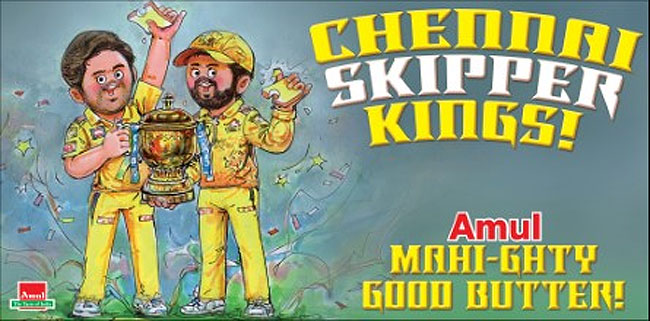
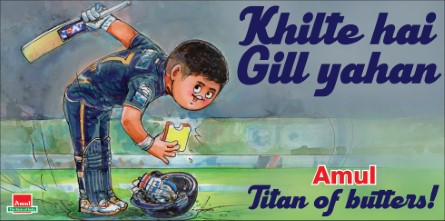
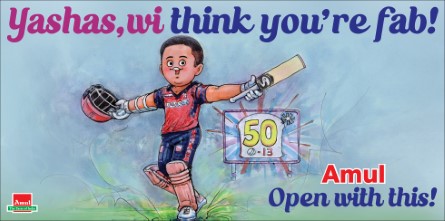
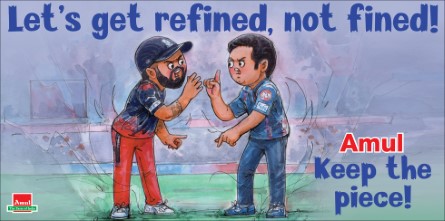
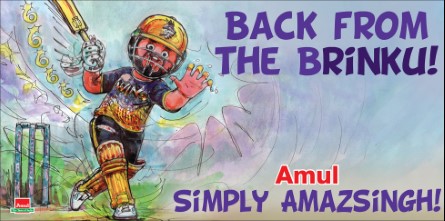
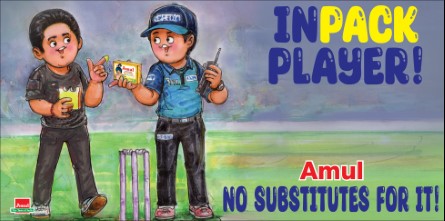
    Not too many of them, but the Amul Butter topicals captured the highlights of the recently concluded Indian Premier League as only they can. From the CSK win to the stupendous performance of Subhman Gill and Yashasvi Jaiswal to the Virat Kohli-Gautam Gambhir unground spat.


    Created by the team at da Cunha Communications, the Amul topicals have been chronicling the times since 1966.


  • The League of Extraordinary Gentlemen

    Courtesy: iplt20.com


    By Shailesh Kapoor


    Shailesh KapoorThe 16th edition of Indian Premier League is in its last leg now. The 2023 edition has been the most closely-fought of the 16, and by some margin. At the time of writing this, five games are left in the league stage, and yet, only one team (2022 winners Gujarat Titans) have qualified for the playoffs. Seven of the remaining nine are in the reckoning for the remaining three spots, though two of them have only an outside mathematical chance.


     

    How IPL manages to grow in stature year-on-year is quite extraordinary. And it’s not just growth in commercial stature (viewership, revenue, etc.). The impact of IPL in shaping Indian and international cricket is unmistakable. The meteoric rise of Yashasvi Jaiswal in the last six weeks is a topical example. Jaiswal’s humble background makes for a great underdog or rags-to-riches story. He’s almost certain to earn an India cap this year itself. But it’s difficult to imagine how that would have happened if there was no IPL.


    From a media perspective, IPL pretty much stands at the last marquee media event standing in India. The clutter of infinite options has fragmented audience consumption over the last decade, and it seems that days of a hit show that will unify the entire country (or even the Hindi markets) are long gone. But IPL bucks that trend. To borrow a term from the theatrical business, it’s the biggest ‘pan India’ property in business today.


    By offering IPL free to stream, JioCinema has managed to add to the property’s stature, by giving it recognition as a brand of the ‘masses’. Premium properties can be mass too, and IPL is a fine example of that. One hopes that JioCinema doesn’t relook at this proposition next year, now that the platform has entered the SVOD business.


    There’s another big-ticket cricket event later this year, the ODI World Cup in India. The ODI format is in a bit of a no-man’s-land, sandwiched between the popular entertainment offering of T20 and the connoisseur-backed Test cricket format. ICC is not the most nimble-footed organisation, which is why the ODI format continues to drag on. In the process, it’s damaging the global prospects of the sport of cricket irrevocably. Logically, this should be the last ODI World Cup. It’s only imminent that curtains are drawn on this format sooner than later.


    But nevertheless, the 2023 ODI World Cup will be a commercial success, especially because it’s being held in India, which opens up a wide array of advertising and association options for Indian brands, that are not available in an overseas tournament.


    But even as its best, a World Cup (ODI or T20) cannot match the brand power of IPL, an idea that continues to grow bigger with time.


    This column is taking a summer break, and restart from Friday, June 16, 2023


  • IPL: Are we the prisoners of advertisers’ laziness?


    With apologies to none at all

    By Vikas Mehta


    Vikas MehtaSome people have equated IPL matches as the equivalent of modern-day colosseum games with the two teams being the gladiators. The stadiums are a riot of screaming chanting spectators who are fenced in almost like prisoners. I tend to agree, having watched one or two matches at the stadium before the pandemic. But I think the same spectacle is at home too. Specially if one is watching the match on a big screen. Except one feels like being imprisoned by a cacophony of repetitive and listless ads. Not to forget the myriad ads by the channel which keep on promoting the matches endlessly.


    I used a strong word, prisoner. For many reasons. Because most of the ads are bad. I am sorry there is no better word to describe how I feel about the decline of a profession with which I was associated for quite a long time.  And I think everyone is getting caught in a vicious economic cycle, with we, the audience at home, getting the wrong end of the stick at the lowest end of the food chain.


    As a sport, IPL is definitely a hot property. It’s sport, entertainment, tamasha and money all rolled into one. And it can’t get bigger. The biggest name in world cricket are a part of it. There is a bottomless pit of unlimited audience and there are big brands and corporates ready to shower crores on it. Safe to say that IPL has made the BCCI the big bully of world cricket. But in all this, the viewers, who sit at home and watch the matches on TV and through streaming, who are the reasons that the brands spend the big bucks are being served up some sports in the cacophony of the ads. Hardly a decade ago, when the IPL started, brands and companies would work towards preparing some memorable communication for the IPL. But the decline is alarming.


    Many people put the blame on arrival of digital. On lack of enough data to measure ad effectiveness. On short attention spans. But all of this is irrelevant. What has happened is that in the guise of all of the above both, marketeers and advertisers have become lazy.


    Lazy enough to repeat product proposition and forgetting the role of desired response. Lazy enough to finetune the target audience and not talk to all. Lazy enough to get some celebrities and not bother to see if their personality matches with the brand’s. Lazy enough not to have an idea which the target group can relate to. And to sum it up, lazy enough to not weave a story but happy with hammering a generic benefit while glamming it up with technical effects.


    And still worse, in today’s day and age lazy enough to run ads which have been on air for past few months. Be it Kingfisher, Kamla Pasand, Rajashree Pan Masala, Vimal Pan Masala, TVS tyres, Macho underwear…….and all of them use celebrities, most of whom do not fit the brand personality.


    There are some new ads. Spinny. It’s a vehicle buy, sell and upgrade platform. And they use not one or two but three ex-cricketers. Tendulkar, Kumble and Yuvraj. I am not even getting into if the brand personalities match but I did not even get what the product is or how it is different from other vehicle resell platforms. And seriously, does the brand want us to believe that these three are the best of friends who would be going for long drives in ordinary vehicles?


    Those of you who read my last column here, will remember that I had singled out the Dream 11 ad as a stand out. It’s follow up ads are also very well done. I think that amidst a clutter of fantasy sports brands, it’s Dream 11 advertising which has positioned the brand brilliantly. The others, inspite of using celebrities, are a haze of similar sounding and similar offering brands.


    I had asked my readers to revert with their comments on the Ranveer Singh Pepsi ad. Some who responded, mostly GenZ, gave it a thums up. I think it’s a good ad, could have been better, but Pepsi has finally found a celebrity which matches its brand persona. Frankly, I wonder what took them so long. I always slotted, Ranvir as the Pepsi type of a guy.


    Then there is the new Rupay Visa card ad. A very good example of story telling while communicating the product proposition. Well crafted, good stimulus and sustains interest. Watch it here.


    In a similar vein is the new Maaza ad with Amitabh Bachchan. I thought the second ad in the series, worked very well. It sticks to the product benefit. It uses the personality of Mr. Bachchan and very nicely superimpose it onto the brand and in an interesting way also takes care of the target groups desired response. Here it is.


    Last IPL, Tata the key moneybags of the tournament, had launched the Tata Neu super app. While the product got a lot of flak and the consumer experience was not as great as thought, the communication has not disappointed. Even this year, the peppy, making shopping an enjoyable experience, the ads have focused on the story of Neu coins helping you buy more. The short stories have good humour and they have focused on the product proposition interestingly.


    Just when one thought that things were looking up, I came across this ad for Happilo. So, you are an official sponsor. You can use some cricketers. Their availability is an issue. They maybe cannot act or emote. What does one do? Use them in a song and dance. Use them against a chroma background. Superimpose the shots with some tech wizardy. Get a rap sounding song. Highlight all benefits in the lyrics. Use some GenZ typical words or phrases. Let the brand name be mouthed in direct proportion to the number of seconds that the celebrities can speak. Voila! You have an ad.


    Can it be worse? Yes, watch this Ceat tyre ad with three cricketers.

    I am bailing out. Need a release from all these ads.

    So, next week I am off to watch a match. Maybe it’s better to be a prisoner in the colosseum of a stadium rather than in my TV room. Will keep you all posted.


  • A different rivalry emerging in IPL


    With apologies to none at all

    By Vikas Mehta


    Vikas MehtaThe Indian Premier League (IPL0 has become famous for franchise rivalries over the years. MI vs CSK, KKR vs RCB and, as my daughter says, now LSG vs SRH biryani wars!


    But a most unexpected rivalry has surfaced around the IPL this year. And it started before the tournament commenced. When the media rights for IPL were announced for the next five years, television and digital rights went to two different entities. While Star Sports continued with the TV rights, Disney Hotstar lost the digital rights to Reliance group backed Viacom18. And thus started a new rivalry. TV vs Digital. Jio Cinema vs Star Sports.


    If we look at the numbers, it seems an unequal fight. TV penetration in India is almost 70%. Whereas smartphone penetration is just about 50% with roughly 600mn smartphones in use. While smartphone is an individual device, TV is watched by four-five people. But what makes these numbers interesting is the fact that many youngsters in TV households may be either abandoning TV for smartphones or TVs are being connected to streaming devices. Jio Cinema has been talking about its customised device integration partnership with OEMs like Jio set-top box, Apple TV, Amazon Firestick, One Plus TV, Sony, Samsung, LG and Xiaomi.


    And Jio Cinema fired the first salvo by announcing free subscription to IPL. Clearly, they were trying to catch more viewers which in turn would get more advertising moolah. So, for the first time, an advertising revenue war between streaming and TV was on. Brands and companies were being enticed on two fronts. And they had to take decisions which till now they need not as Star and Disney Hotstar were playing a complementing game with Disney also charging for subscription. Viewership now was an important dimension.


    And soon enough an advertising war broke out. Not surprisingly, Jio Cinema was the instigator. It released a long ad on Youtube which took a dig at watching IPL on old-fashioned, non-interactive, dumb TV sets. While it was entertaining and informative at the same time, it served a reminder as to how much more personalised the viewing can be on digital. Watch it here


    Star Sports then released an ad which claimed that normal TV watching through DTH channels like Tata Play and Airtel (my enemy’s enemy is my friend) could allow digital features like highlights, key moments, deep statistics dive etc. Star Sports Pro was launched which could turn your TV into TV on demand with these features. Watch the ad here.


    While Star spoke about commentary in nine languages, Jio Cinema went ahead and announced commentary in 11 languages including Bhojpuri. I think no ex-cricketer worth his salt is free in India today during IPL and anyone who is, needs to just learn a new language!


    Hardly had the first weekend passed that viewership figures were being bandied about. Star took out a full-page ad in leading dailies claiming a record-breaking TV Rating for the first match which went up by 29% and 47% increase in consumption of TV time as against last year. It also claimed 130 million viewers on its channels for the first match which was almost 90% of the Pay TV universe. Jio Cinema on its part issued press releases claiming 1.47 billion video views and 50 million new app downloads for Jio Cinema over the first weekend.


    While Jio’s figures were based on its own actual numbers, Star figures were based on BARC viewership data that uses a base of around 50,000 plus households and the number is then extrapolated to a national level, a fact shared gleefully by even Viacom18’s CEO in his press release. Clearly, the advantage of measurability went in favour of Jio Cinema.


    So, is there a clear winner? Of course not. Jio had glitches during streaming. While many claimed no audio, there was rebooting happening and many took to social media to vent their frustration. And while TV seems to have the upper hand just by sheer numbers, the habit of Gen Z to watch on small screen on an individual basis will eat into TV share. But then from my limited experience, I think it is just a high income phenomena. Most Indian families do not have the luxury of a personalised smartphone for each family member. Plus, IPL is a more involved family entertainment. That would mean a point in favour of TV.


    One thing though is for sure, this rivalry is going to become more intense and it would mean more benefits for the consumers.


    Oh! What about the ads on IPL you ask? Mostly a big bore. Mostly repetitive old ads. Most using the same few celebrities. Most covering the same few categories.


    But the one exception that came as a breath of fresh air was Dream 11. Like in the previous years they have not disappointed and have raised the bar by not just using famous cricketers but also roping in some celebrity actors. And with an all-out war between the two sets of celebrities, things are getting spiced up. It’s a shame if you haven’t watched the launch ad which is a longer version in the form of a press conference. Watch it here.


    And then the other ones which involve needling each other with some real life, incisive and stinging comments. The one where Rohit Sharma needles Aamir about not attending award shows, or the one where the cricketers are needled about retakes, or the one where Aamir is reminding himself that ‘all izz well’, are all well-crafted and wonderful to watch. A relief to see creativity, relevance and celebrity all being combined so well. Watch. One more. And one more.


    As I write this, I see a new Pepsi ad with Ranveer and a new Pepsi anthem too. These look and sound interesting. Watch the ad. And the theme song.


    Now tell me what do you think about them?


  • It’s raining monies at the IPL 2023-07 media rights auction


    By Our Staff


    There’s a popular reality show on general entertainment channel Colors called Khatron ke Khiladi. It requires contestants to perform daredevil acts, including tasks with snakes and scorpions, jumping off helicopters. And walking the tightrope. Literally.


    Now, veteran media professional Uday Shankar who has invested a fair deal in Viacom18 is now set to do a Khatron ke Khiladi act himself (lest it’s missed, the ‘fair deal’ pun was intended). The word ‘khatron’ should of course not be construed in the negative sense, but it’s just that what Shankar has bet really big on with the digital IPL win making him a ‘khiladi’ of the really big stage.


    Every summer, at the beginning and end of the cricketing extravaganza when the revenues will be aggregated, there will be an intense sweating, like it’s on the reality show. We should add the word ‘perhaps’ after ‘there will be’. Coz surely this is more than just playing fear factor. Unlike 2018 where he was an employee of Star, now he’s an investor in the project. So we can be sure there’s a method to the bidding.


    So, let’s get past the foreplay. Disney Star India and Viacom18 have bagged the TV and digital rights for the five-year 2023-2027 period of the Indian Premier League (IPL).


    The Board of Control for Cricket in India (BCCI)’s media rights for IPL 2023-27 will – as of now – generate Rs 44,075 crore, up from the Rs 16,347 crore paid by Disney Star for 2018-2022. An official statement from BCCI is awaited.


    Package A (television rights for Indian sub-continent) has netted it Rs 23,575 crore


    Package B (digital rights for Indian sub-continent) has got it Rs 20,500 crore


    Package C sundry digital rights have already touched Rs 1800 crore. The final outcome is awaited


    Package D rights results are also awaited


    It may be remembered that the entire television and digital rights were owned by Disney Star India until this year. In fact after bagging TV rights for 2023-27, Disney Star challenged Viacom18 in a fresh round of the e-auctions. Finally, Viacom18 took the big leap and closed the bidding with Rs 50 crore per match as its fee. Disney Star will need to pay Rs 57.5 crore per match for television. Overall, as of now, BCCI will earn Rs 107.5 crore per IPL encounter.


    During the media rights auctions that were held on June 12 and 13, TV rights fetched Rs 23,575 crore for broadcast rights and Rs 20,500 crore for digital, said people tracking the media rights auction.


    What’s balance is Package C and Package D rights, the results of which will be known later today (June 14).


    According to industry sources, ad rates will go north by 20-30 per cent on both digital and television. Industry commentators say the IPL 2023-27 dynamics will see a structural change happening in the media landscape. Linear television is going south in terms of viewership, and digital consumption is going to leapfrog. However, even though digital can allow micro-targeting, ad revenues are still found wanting. The play will surely be in the case of subscription-led revenues, and given that Viacom18 is part of the Reliance Industries stable which owns the Jio telecom network, there will be synergies.


  • ASCI takes cognisance of gaming ad violations in IPL

    By Our Staff


    The Indian Premier League (IPL), the latest edition of which kicked off on March 26, has witnessed high-decibel advertising from the online real-money gaming industry. Unfortunately, many of the commercials do not pass scrutiny when it comes to the guidelines prescribed by the Advertising Standards Council of India (ASCI).


    In the first week of the IPL alone, March 26 to April 3, ASCI screened 35 ads from the category and identified 14 as being in potential violation of its code. ASCI is keeping a tab on TV as well as OTT ads.  In addition, in March alone, 285 social media ads of online real-money gaming companies were identified as being in violation of the ASCI code.


    ASCI noted that in some instances dubious claims such as ‘India’s biggest 1st prize’ were being made, and in many cases the disclaimer informing consumers of the risks was flashed very quickly rather than at a normal speaking pace. In some cases, the advertisements had celebrities acting while the disclaimer was being spoken, distracting consumers from important information about risks. Some advertisements had disclaimers that were smaller than what has been prescribed.


    These attempts at glossing over the disclaimers required to be carried in the prescribed manner, informing about the risks of financial loss or game addiction, can severely compromise consumer interest. ASCI has urged gaming industry bodies to take up this issue with their members.


    ASCI guidelines on real-money gaming came into effect on December 15, 2020. The guidelines require advertisements to not be aimed at minors, not present gaming as a source of livelihood or link it to success. In addition, the guidelines require all advertisements to carry a prominent disclaimer regarding the risk of financial loss and the addictive nature of such games. These guidelines were backed by the Ministry of Information and Broadcasting, which issued an advisory asking that advertisements adhere to the guidelines.


    Manisha Kapoor
    Manisha Kapoor

    Said Manisha Kapoor, Chief Executive Officer (CEO) & Secretary General (SG), ASCI: “ASCI is concerned to note that, despite clear guidelines, some online real-money gaming firms are attempting a shortcut. For an industry that is under significant regulatory scrutiny, such acts by some companies paint the entire industry as irresponsible. IPL, being a massive platform, requires responsible behaviour from all parties – including gaming firms, broadcasters, celebrities and ad creators. We hope that all parties play their roles to ensure that consumers are not exposed to misleading advertising.”


  • Upstox trading platform launches campaign

    By Our Staff


    Upstox, an online stock trading platform, has launched its Indian Premier League (IPL) 2022 campaign, ‘Own Your Future’.


    Said Kavitha Subramanian, Co-Founder, Upstox: “The campaign ‘Own Your Future’ intends to encourage more Indians to participate in the equity market and make the right investment choices through Upstox. Young Indians today understand the value of owning assets and building a portfolio, via owning shares in companies. There’s a huge rise in startup culture and they understand that even if everyone cannot be an entrepreneur, you can still own a share of a company, and participate in its long term upside. Just like IPL has redefined cricket, Upstox aims to redefine investments for its customers. We have grown 3X year-on-year and expect a similar growth trajectory this year as well. We are positive that this campaign will help drive a culture of equity investment in India, as well as encourage more Indians to take charge of their financial future.”