Tag: HUL

  • 9 Indian entries shortlisted for FOM Awards

    By a correspondent


    After much deliberation, the 70 strong judging panel, led by Sameer Singh, VP, head of global media of GSK have cast their votes for the much anticipated Festival of Media Awards.


    A shortlist of 191 campaigns across 19 categories has been selected, recognizing the very best in media thinking from around the world including countries such as Australia, Brazil, Denmark, Germany, India, Japan, Mexico, Poland, Singapore, Sweden, UAE, UK, US and many more


    The entries from India that have managed to make it to the shortlists include Hindustan Unilever (HUL)’s Kissanpur 2.0 “Where What You Grow Is What You Eat” campaign in the Best Communication Strategy while Madison Media Infinity’s ‘How Radio triggered 1.6 years of engagement around an unspeakable problem’ campaign for Mediker Anti-Lice Treatment Naturals was shortlisted in the Best Engagement Strategy category.


    In the category of Best Event / Experiential, Mindshare found three of its campaigns vying for the top prize including ‘106,000 Found’ for Closeup Toothpaste; Sunlight – It’s Raining Roses for Sunlight Detergent Powder and Surf EW-Worshipping the Lord with 10 Hands for Surf Excel.


    Mediacom’s Soldier for Women for Gillette India was nominated in the Best Use of Content category, while PHD had two of its entries ‘Mobile Entertainment Box’ for Kaan Khajura Teshan and ‘Good Life Club’ for Brooke Bond that were nominated in the Best Use of Mobile category.


    In the Effectiveness Award, Madison Media Infinity’s ‘Convincing consumers to become our sales force’ for its client Parachute Advansed Ayurvedic Hair Oil was the final shortlist that was nominated from India.


  • Higher smartphone use rings in FMCG mobile ad growth

    By Samidha Sharma


    Consumer goods companies upped their media spends on the mobile platform in the past one year as smartphone penetration, coupled with a spurt in data usage, grew exponentially in the country. InMobi, a mobile advertising network, said spends by FMCG companies, which are clubbed as traditional advertisers, grew 175 per cent on its network last year. Similarly, Vserv.mobi, another mobile ad network, registered a 300 per cent increase in ad dollars while Vuclip, a mobile-focused aggregator of video content, saw its FMCG clients double their ad spends in 2013.


    In India, FMCG saw a high uptake in the last two quarters of 2013, as five major advertisers including ITC, Reckitt Benckiser, HUL, Mondelez and Nestle ran more than 30 campaigns at a reasonably good scale as opposed to 2012 where only one consumer goods company utilized mobile effectively, said Dippak Khurana, CEO & co-founder of Vserv.mobi.


    Buoyed by a slew of mobile-only content, the Indian mobile advertising market is estimated to reach Rs 2,800 crore by 2016 from a mere Rs 180 crore according to estimates by Avendus Capital, a Mumbai-based financial advisory firm. The Indian advertising industry is pegged at around Rs 28,000 crore with FMCG as the biggest contributor on mediums such as television and print as well.


    “With the growth of mobile solutions companies, apps and other mobile technologies, we have seen FMCG advertisers tap the mobile in a big way over the past year. With over 800 million mobile subscribers, these advertisers targeting rural consumers find the medium extremely effective as mobile reaches even the remotest geographies,” said Basabdutta Chowdhury, CEO of Platinum Media, a division of Madison, which buys media for FMCG majors like P&G, Marico and Godrej.


    What is significant is that India could currently have as much as 50 per cent or more mobile-only internet users, much above the global number, making the medium an attractive one for even traditional advertisers.


    Consumer products companies are increasingly adopting a mobile-first strategy. Our growth has come from engagements with more than half of the top 25 FMCG brands, including a partnership with Unilever, said Atul Satija, VP & MD (Asia-Pacific and Japan) at InMobi.


    Source:The Economic Times

    Copyright © 2014, Bennett, Coleman & Co. Ltd. All Rights Reserved

    Licensed to republish


  • Lowe Lintas, HUL win big at Effie 2013


    By Shobhana Nair


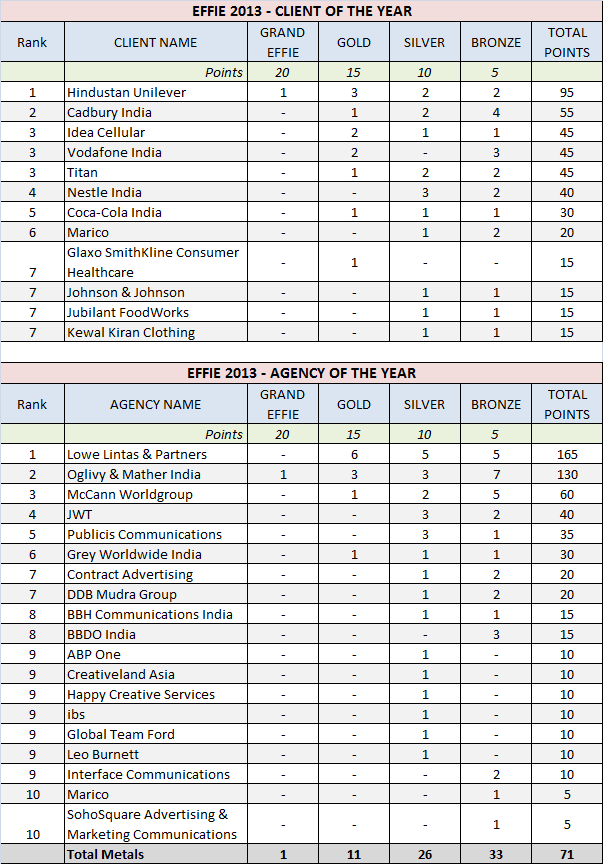
    It’s a fraternity which loves surprises. And the thousand-and-a-half-odd members of India’s advertising and marketing industry witnessed just that on Friday evening. The large contingent from Ogilvy & Mather India has made a habit out of winning big at the award events it participates in.  But the crew from Lowe Lintas ensured that the adlanders in black (as Ogilvy staffers always turn up at trade events) don’t experience their fifth consecutive win at the Effie, the annual advertising effectiveness awards conducted by the Advertising Club. Lowe won the coveted Effie Agency of the Year 2013 outwitting Ogilvy & Mather by just 35 points in the final tally. “This is one night of fun and party for 2500 bucks. We can’t have a cheaper party than this,” chuckled R Balki, Chairman and Chief Creative Officer at Lowe Lintas while celebrating his team’s victory.


    But it’s not that Pandey’s O&M cut a sorry figure. Other than scoring 130 points as compared to Lowe’s 165, Ogilvy also secured the Grand Effie for its Lifebuoy Roti campaign for Hindustan Unilever. Said Pandey who is Executive Chairman and. Creative Director, South Asia of the agency: “We have come first so many times and it feels great that Lowe is enjoying their win. Of course, being second is not a great feeling. You need to try harder.” The Aadat Campaign for Cadbury’s Bournvita and the Ear Muffs activation and Made for You campaign for Vodafone helped Ogilvy win its three golds.


    The other three agencies in the Top 5 were McCann Worldgroup, JWT and Publicis Communications at 60, 40 and 35 points respectively. Nakul Chopra, CEO, South Asia at Publicis admitted his agency could have done better but he’s bullish on the year ahead. “I am not happy and I think the kind of work that we will do in 2014 is what I am excited about. I think in the years to come Publicis is going to be a brand which will be known for quality work,” he said.


    From the client side, Hindustan Lever bagged the ‘Effie Client of the year’ after the total points came to 95. The campaigns for its brands Kissan and Lifebuoy were clear favourites of both the jury and the crowds at the awards. “Well, I think these awards are for effectiveness and we are quite delighted and proud to have received these awards,” said Hemant Bakshi, Executive Director – Home & Personal Care of Hindustan Unilever (HUL) and Chairman, Indian Society of Advertisers (ISA).


    Cadbury India which emerged the Client of the Year in 2011 and 2012 came second with 55 points.  “It is always a joy to win a few awards because it is recognition by the industry of the work that we have done,” said V Chandrmouli, Executive Director, Chocolates and Biscuits, Cadbury India. “Over the last few years, we have been getting recognition which pushes us to do better work,” he continue as Siddhartha Mukherjee, Director – Chocolate Category & Media added: “We have had a long-standing partnership with our agencies like Contract and Ogilvy who have produced excellent work over the years. And to get any award is a great reward to that partnership.”


    This year, the number of entries leapfrogged 20 per cent to 419 from 52 agencies participated while 1200 tickets were sold for the awards night.  On his impressions as the curtains came down on Effie 2013, Ajay Kakar, Chief Marketing Officer – Financial Services, Aditya Birla Group who was Chairperson of the Effie 2013 Committee said:  “Effie has grown in participation therefore in stature and respect which is gratifying. This is an awards show which is beyond question and controversy. Both agency and client happily participate at various stages.”


    Underscoring the role of the advertising effectiveness awards, K V Sridhar, Chief Creative Officer India subcontinent at Leo Burnett said: “Creativity will not matter without effectiveness and effectiveness doesn’t exist without creativity. The combination is what really works. This is why Effie is the most coveted award in India. Also, the fact is that there are no controversies attached to it.”


    Delighted: Hemant Bakshi


    Given the importance of advertising and promotion for its brands, it’s not surprising that Hindustan Unilever was crowned ‘Client of the Year’ at Effie 2013.  A quick Q&A with Hemant Bakshi, Executive Director – Home & Personal Care of Hindustan Unilever (HUL) on the win.


    How important are awards like the Effie for an organisation like Hindustan Unilever?

    Well, these awards are for effectiveness and we are quite delighted. We are proud to have received these awards.


    There’s this big debate about creativity versus effectiveness? What matters to you more?

    Well, it is good to know that we have created value through what we do in marketing. We acknowledge the external appreciation that we’ve got.


    And what are the goals you have set yourself for 2014?

    Clearly, we have to sustain what we achieved in 2013.


    In advertising, you are supposed to be more creative to be effective: R Balki


    If there was joy in breaking the winning run of Ogilvy at the Effie, Lowe Lintas & Partners’ R Balki was understating it.  A quick Q&A with the agency’s celebrated Chairman and Chief Creative Officer.


    How important are awards like the Effie you?

    What is important is to do the kind of work that you want do for the clients. Being able to do that right through the year and being satisfied with your own. Award or no award can’t increase or decrease the value of your work. You should know the value of your work before you have won or lost.


    There’s this big debate about creativity versus effectiveness? What matters to you more?

    I don’t know the difference between these two. In advertising, you are supposed to be more creative to be effective. Obviously, there’s connect but both are passé words.


    Apart from your work, which ads have managed to impress you?

    I love Ogilvy’s work. The Roti activation campaign for Lifebuoy was good. In fact I am a fan of their work.


  • Cadbury misses a hat-trick as Ogilvy misses 5th consecutive crown + Effies 2013 Tally tables

    By Our Research Associate


    The last time Lowe Lintas & Partners was Agency of the Year was in the year 2006. Hindustan Unilever was Client of the Year that year too. In 2008, the Effies were awarded on the day when the terrorist struck Mumbai – November 26, and JWT was the Agency of the Year (AOY) while Bennett, Coleman & Company was Client of the Year (COY).


    From 2009 onwards, Ogilvy has been AOY. But the COY title has moved around a bit – in 2009, Vodafone, in 2010 to Tata Teleservices and in 2011 and 2012 to Cadbury.


    Cadbury would’ve scored a hat-trick but this time thanks to both Lowe Lintas and Ogilvy contributing to its kitty, Hindustan Unilever forged ahead.


    According to a member of the jury who requested anonymity, entering the Effie requires some extra effort on the case study presentation. Remember you need to prove the fact that creativity has worked for the advertiser, and unless that’s done, you won’t win.


    A senior member of the industry told MxMIndia that given the body of work that Ogilvy had done, it could’ve surely been #1 had it presented some of its cases better.


    Perhaps.


    Meanwhile, take a look at the AOY and COY tally tables:


  • The Great CEO Churn: 16 CEOs from FMCG, auto & telcos switched jobs in 2013!

    By Kala Vijayaraghavan, Lijee Philip & Deepali Gupta


    At least 16 high profile CEOs from three consumer facing industries – FMCG, automotive and telecom – switched jobs in 2013. Volatile market conditions, demanding stakeholders and in some cases, poor performance, led to the unprecedented churn at the top, say industry leaders and top officials at executive search firms. “Companies doing badly tend to rope in a new CEO hoping for a turnaround from somebody with a fresh perspective,” says RC Bhargava, chairman of Maruti Suzuki. A few changes though were also routine rotations made by multinational companies.


    Many other changes in the FMCG sector, executive search firms say, have been almost incestuous, with companies tapping a very limited pool of tried and tested CEO talent. For instance, when Anand Kripalu moved from Mondelez India to Diageo, former Pepsi CEO Manu Anand moved in as Mondelez CEO and former Nokia India MD D Shivakumar filled the vacancy Anand left at Pepsi.


    “Three CEO changes can lead to CEO changes in 10 other companies,” says Navnit Singh, Managing Director-India Korn/Ferry International. “Usually, only a few known faces are part of this merry go round. We have been advising companies to ensure that there is a strong succession pipeline within.” The same trend was also partly visible in the automotive sector, where Maruti Suzuki, Volkswagen, Toyota Kirloskar, Ford, Skoda and Fiat and Chrysler all saw new CEOs this year.


    A shallow talent pool, particularly of senior managers, is providing top executives opportunities to move across companies. These external CEO replacements are a reflection of the senior-level gaps in organisations, says RR Nair, ex-HR head of HUL and a CEO coach and advisor. “Organisations also opted for talent with an outsider perspective to drive change at a faster rate,” he adds.


    Several other consumer-facing companies also had new CEOs – Sanjiv Mehta at HUL, Gopal Vittal at Bharti Airtel, Varun Berry at Britannia, and Vivek Gambhir at Godrej Consumer Products. Nestle India predictably placed another expat Etienne Benet as the MD. He took over from Antonio Helio Waszyk, another expat.


    Britannia CEO Berry attributes the big changes to “very tough economic conditions and intense competition that have forced consumer goods companies to fight for a share of meagre growth”. For example, Indian subsidiaries of Volkswagen and Toyota Kirloskar have initiated major reshuffles in the top management as the two car makers take fresh guard to tackle the slowdown.


    Uncertainty and slow growth which marred the business environment during the past six months to a year could be one reason behind the churn, adds Sunil Goel, MD, GlobalHunt. Mahesh Kodumudi, president and MD of Volkswagen India, has just taken on additional responsibilities at Volkswagen Group after Gerasimos Dorizas, the chief representative of Volkswagen Group India, left citing personal reasons. The changes are coming when the group’s mass market brands have seen a decline in sales. “There is a lot of pressure to generate and sustain revenues. Organisations expect leadership to be innovative,” says Global-Hunt’s Mr Goel.


    Toyota Kirloskar MD Hiroshi Nakagawa is moving back to Japan and is expected to be replaced by Yoshimasa Ishii. And at Maruti Suzuki, the country’s largest car maker, Kenichi Ayukawa succeeded Shinzo Nakanishi as the new MD this May. At Ford India, Joginder Singh succeeded Michael Boneham about a year ago. Fiat and Chrysler appointed Nagesh A Basavanhalli as president and managing director.


    2013 was a forgettable year for consumer-facing companies, says Sunil K Alagh, chairman of SK Advisors. “There were arrogant innovations and a lack of communication with consumers. New CEOs have to quickly understand consumer needs and work out a refreshing growth strategy,” he says.


    In the telecom sector, a different set of dynamics was at play, causing CEO-level churn. Except for Airtel and Jio Infocomm, all other CEO changes in this sector have been through internal promotions as companies deal with regulatory uncertainties and an urgent need to arrest losses.


    Russia’s Sistema, which operates under the MTS brand, replaced CEO Vsevolod Rozanov with Dmitry Shukov. The change of guard was on account of Rozanov being promoted to group CFO. In Rozanov’s words: “I came here because I wanted a challenge. Now, I need a new challenge and Dmitry is here.” Yogesh Malik, the India head of Norway-based Telenor’s Indian arm, quit only five months after taking charge. Asia head Sigve Brekke is stand-in chief for now.


    Most of Aircel’s top management quit over the last two years, and stand in chief Kaizad Heerjee, was promoted from COO to CEO after a year’s trial and achieving operational breakeven.


    Source:The Economic Times

    Copyright © 2013, Bennett, Coleman & Co. Ltd. All Rights Reserved

    Licensed to republish


  • Can Gopal Vittal be the CEO Bharti has been looking for?

    By Anandita Singh Mankotia


    Gopal Vittal

    He’s been CEO eight months in an ultra blue chip company where, in recent times, CEOs have typically lasted three years or less. The company’s promoter, who’s achieved near iconic status in India Inc, is known to hold his chief executives to high, unsparing standards.


    The CEO is right now in focus for a deal with an arch rival that analysts say could benefit the rival more. He has delivered, observers inside and outside the company say, on process changes. But the blue chip, while it needs process upgrades, needs vision, a big one.


    Can Gopal Vittal 45, formerly of HUL, appointed by Sunil Mittal in March, be the CEO Bharti has been looking for – a leader who trims a bloated management structure but is also able to take big and successful bets on telecom’s future? Is the recent deal between Bharti and Reliance Jio on sharing towers and optic fibre networks a proof of a smart bet or of underlying weakness?


    We spoke to dozens of people inside and outside Bharti to get a sense of the Vittal regime. No one, however, was willing to speak on record, citing a variety of reasons – company rules to client confidentiality. Mr Vittal’s own assessment of his tenure so far is that over the last two quarters, “costs are down by half…and focus is to grow data revenue”.


    MANAGERS COME, MANAGERS GO

    When he had joined, Mr Vittal had told his senior team, “Till now the company has grown in patchwork. The growth from here will be on the quality of customer acquisition and not quantity. We need to slow down the pace of acquisition but delve deeper into subscriber behavioral economics.”


    Bharti executives close to Mr Vittal say he started as he promised. Senior management had as many as seven key focus areas. Mr Vittal cut it down to three: quality customer acquisition, cost cutting and data growth. The new CEO was soon seen as a leader who prefers to see things for himself at the sharp end of the business. Mr Vittal, executives close to him say, travels to Airtel’s circles regularly. “Sixty per cent of his work time is spend outside the headquarters,” an executive said.


    Mr Vittal’s core team, under the interestingly named programme ‘Decay’, tightened sales and distribution networks, and targeted high revenue customers, weeding out low yield ones. Margins and realisation rates improved, customer churn decreased to an industry low of 3.3%, and the distribution network shrunk by about 15%. The last two quarters have seen the Vittal effect.


    “The entire front end has been reenergised and aligned,” a close colleague described Mr Vittal’s strategy. But there was pain – and Vittal didn’t hesitate when many executives left. Or in hiring plenty of new talent.


    More than 1,000 people have exited the company since Mr Vittal took charge, a large number of them at general manager and vice-president levels. Four out of the 12 members of the Airtel Management Board, the critical team of CXOs, have exited or are on their way out. The company, however, doesn’t appear to be worried about this.


    Mr Vittal-led Bharti doesn’t seem worried. “Automation has led to processes getting simplified” is how a senior executive explained the departure of so many senior colleagues.


    Mr Vittal’s new CXO appointments are a mix of in-house talent and executives with Western work experience. The latest to join the Vittal club is Harmeen Mehta, the new chief information officer. Mr Vittal introduced Mehta, who’s worked in Spanish and Latin American banking sectors, as “technology queen” to his CXOs.


    Ms Mehta, executives say, will soon find out what they have – Vittal is “taskoriented”. “He gives you a job, a deadline and expects it to get done,” said a CXO. He added that “people orientation” was not Vittal’s style. “He’s straight out of the Unilever nursery”, is how another CXO described him.


    COSTS, NOT COOL QUOTIENT

    A quite joke in Bharti’s senior management level is that the Vittal-led company looks more Lever than Airtel – because so much HUL talent has been imported and because so much of Airtel’s previous branding efforts have been nixed by Mr Vittal.


    Before Mr Vittal took over, Airtel’s vision thing was that it was going to become the coolest brand for the young by 2015. The plan was set in motion in 2010. Thus the TV jingles “Jo tera hai who mera hai” and “Har ek friend zaroori hota hai”. Thus, too, a blitzkrieg of high global visibility sponsorships: Formula One and Manchester United.


    But the music, so to speak, has stopped under Mr Vittal. “These events weren’t really adding much to organisation,” Mr Vittal told his team as he decided to rework brand visibility. Today’s TV commercials from Airtel emphasise data plans more and the cool quotient less.


    A CXO said: “What we have done is to drive a lot of new users into the data category through the launch of our one rupee network store. Half of our customers come through this route.”


    All this fits in with Mr Vittal’s ‘cut costs, get well-paying users’ strategy. It’s potentially changing, as Mr Vittal wants, Airtel from a mass brand churning out dozens of minutes on its networks to a service provider that makes money through selling megabytes of data. It’s making understanding consumer behaviour analytics critical for Airtel’s strategy – the company needs to predict which kind of customers will be big consumers of data. That, too, is part of the Vittal plan.


    But can the successful cost-cutter become the visionary who takes Airtel to big data territory? Many industry observers note that under Mr Vittal, capex has gone down


    THE VISION THING

    Mr Vittal stopped adding cell sites to Bharti’s network. This brought down costs. But does it point to a strategy that’s losing the big picture. A CXO close to Mr Vittal differs. “2G cell sites don’t need such heavy investment anymore, within the next few years 2G will become a legacy network that’s why we have reduced our capex this year,” he said.


    This CXO said Mr Vittal had to put the “house in order” before he took the big leap in data. Is the Bharti-Reliance Jio deal the first big step of that big leap?


    The data challenge for Indian telcos can be explained simply. India, thanks to extraordinary official shortsightedness, is a spectrumstarved market and will remain so in the foreseeable future. That means telcos will need to be innovative. But the thing with data is that infrastructure for carrying data needs to be in place to take advantage of a big jump in consumption – big growth in data business happens in spurts, and companies which don’t have carriage can miss out.


    And the best way to carry data is through fibre optic. The fibre-tohome (FTH) strategy is the best bet for a data revolution that matches the scale of voice revolution in India. But FTH is a money guzzler. And Mr Vittal’s handicap is that thanks to Bharti’s Africa venture and its 3G spend, the company is debt-laden. Appetite for capex on data network can’t be big, even if the CEO wants it to.


    Bharti would have had to spend billions of dollars for laying out FTH networks and paying for ‘rights of way’ in each state. A Mr Vittal-appointed CXO says Bharti is in talks with the government to “rationalise” rights of way expenses. But that’s, first, an elusive goal, the executive says and, second, the issue of spending money on fibre still remains.


    JIO FOR BHARTI?

    Is the deal with Reliance Jio the answer for Bharti’s data plans? Analysts who closely study the company aren’t sure. They told us that Bharti has little to gain beyond fat rentals from the tower-fibre optic sharing deal. Jio gets to use Bharti’s existing network and get a fast roll out while Bharti waits for Jio to lay down its fibre optic network. White Bharti waits, Jio, thanks to Bharti’s towers, may make a huge market impact – that’s what analysts reckon.


    But Bharti CXOs who spoke to us don’t agree. They say use of Jio’s fibre network is exactly what the company needs for its data plans. They argue the deal with Jio will help reduce capex but give Bharti a good play in the data business. “We are confident of expanding our market,” says a CXO, when asked about competition from cash-rich Jio.


    Airtel’s – and possibly Vittal’s – future depends on that argument turning out right.


    Source:The Economic Times

    Copyright © 2013, Bennett, Coleman & Co. Ltd. All Rights Reserved

    Licensed to republish


  • Return of the global desis

    By Kala Vijayaraghavan & Ratna Bhushan


    Sanjiv Mehta, who took charge as MD and CEO of HUL early last month, has never worked in India before. But he has headed two countries and a region (north Africa and Middle-East) in his 21-year career in Unilever. Sources within Unilever say he specifically asked for an India posting.


    Like Mr Mehta, over half-a-dozen top-level executives from P&G, PepsiCo, Mondelez, Coke and Reckitt Benkiser have given up global roles to move back to India in the past six months.


    “India provides a unique leadership experience,” says Samik Basu, chief people officer, PepsiCo India. “It is a highly competitive and complex market and provides an opportunity to combine global learning with local resourcefulness.”


    Gautham Mukkavilli, CEO-beverages, and Chetan Mathur-controller, Pepsico India, both moved back to India from Dubai in mid-2012.


    At Coke, Venkatesh Kini spent three years at the beverage firm’s head office Atlanta as global vice-president for juices, before moving back to Gurgaon as deputy president, India and South West Asia.


    P&G’s Sonali Dhawan moved here as the India marketing leader after leadership roles in Singapore on hair care and more recently as the pet care marketing leader for Asia & Australia-New Zealand.


    So has Vivek Sunder, who has spent a decade outside India in various roles across Thailand, the UK and Singapore, before coming back here in a leadership role in the India sales & distribution team. At least three senior managers from Mondelez International – Arjun Bhowmik, Sid Mukherjee and Venkat Venepally – have also done the same.


    “The most exciting reason for me to come back was that the India business of Mondelez International has been growing at a rapid pace and is one of the key priority markets for the company,” says Arjun Bhowmik, director, expansion, Mondelez. “Also, I wanted to be closer to family and was keen that my daughter should complete her secondary education in India.”


    He worked in the Philippines, Thailand and Indonesia for over seven years. Industry watchers say even with a 6-7 % growth, India fares better than other developed markets.


    “Several managers who had moved straight into global roles are now keen to work in India,” says Rajesh Ramanathan, HR director of Mondelez India. “Those with developed markets exposure now want developing markets and India experience on their CVs.”


    In advertising, Leo Burnett’s Saurabh Varma and Lowe Lintas’ Vikas Mehta both moved back from Singapore.


    “India postings have become hot property since it is an exciting growth market and offers diversity of experience,” says Suchet Narain, MD, DRH International, a global executive search firm.


    “Global organisations are also happy to send their managers to markets such as India to ensure implementation of global best practises such as corporate governance, safety or environment issues.” Most managers have children studying abroad, so they move in with their spouse but may not necessarily stay here long term. India’s infrastructure still compares very badly with other cities globally. “But having India on their CV gives them that depth of experience,” he says.


    Several top managers such as Atul Singh of Coke and V Chandramouli of Cadbury who have been offered global postings are opting to remain in India. Gopal Vittal, former director of HUL’s home and personal care business, once seen as a top candidate for the CEO job, chose to opt out of a plum global posting and quit early last year. Vittal, officials close to the development say, was unwilling to move out of India. He now heads Bharti Airtel in India.


    Says Sameer Wadhawan, VP, HR, Coca-Cola India and South West Asia: “India is emerging as one of the nodal points of the world economy and one-fourth of the world’s population is centred in Asia. India can be an operational hub for global CEOs.” But not all executives want to come back home. “Many young executives in their late 30s or early 40s are still open to take diverse challenges in different countries,” says Sangeeta Pal, partner at search firm Transearch.


    Source:The Economic Times

    Copyright © 2013, Bennett, Coleman & Co. Ltd. All Rights Reserved

    Licensed to republish


  • Why Unilever CEO Paul Polman doesn’t like to worry…


    By A  Correspondent


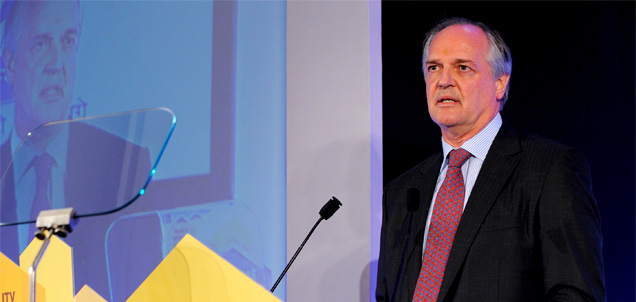
    Paul Polman’s Unilever has announced a profit warning and is battling slowing growth in emerging markets, but the CEO of the world’s biggest consumer goods company says he doesn’t worry about anything. “You can write that Mr Polman doesn’t like to worry about anything and you will be pretty close to the truth,” he told a meeting of select journalists in the Hindustan Unilever house in Mumbai. “If I sleep then at least I come to work with little bit more energy and think about what to do versus the others who worry too much and don’t sleep enough.”


    Mr Polman may not have much to worry about Hindustan Unilever whose second quarter profit and sales growth beat estimates, but a slowdown in emerging markets, combined with uncertainties in Europe and the US, is likely to occupy his attention for quite some time. HUL, the Indian unit of the Anglo-Dutch giant, has trebled its rural network, accelerated sales growth, developed new products and has consistently grown ahead of the consumer market.


    Mr Polman, who took over as CEO in 2009, has combined an unconventional approach with some plain-speaking in an attempt to refurbish the image of multinational giants tarnished by charges of corruption and heavy-handedness in the run-up to the global financial meltdown of 2008.


    He has abolished quarterly results, urged his company to invest for the long term and championed a business model built on sustainability and healthy living. In Mumbai he said that capitalism needs to evolve and that companies can no longer allow forests to be burned down and children to die of hunger. On Thursday, he said “there will always be bumps on the road to development,” adopting a measured stance on the governance crisis which has pitted businessmen and politicians against each other. Mr Polman said that politicians and businessmen are not against each other and that countries such as India and Brazil have similar problems.


    “In two weeks time, we are in Brazil to discuss the same issues with Dilma (Roussef, Brazilian president). My point with them is it is not politicians against business… (there are) so many major issues that this world faces… (it’s about) what we can do together,” Mr Polman said.


    Emerging market countries like Brazil and India have been rattled by a severe crisis of investor confidence after a dramatic slide in the value of their currencies felled stocks during the July-September period after the government fumbled on key reforms. India, along with other emerging market economies, contributes nearly 60% to Unilever revenues.


    India is facing a slump in corporate investment and Polman tried to assuage concerns by saying that the road to development is not always smooth. “We don’t run business on the basis of short-term concerns or financial markets. We run it on the basis of opportunities. Nothing has changed there. As I said to the PM, any road to development has some bumps. It is same in every business. Every quarter is never a straight line,” he added. Unilever, he added, has shown confidence in India by investing ¤2.5 billion to increase its stake to 67.35 from 52.5%. Over the past three years, HUL added about Rs 8,000 crore – bigger than the size of some mid-sized rivals – to its top line.


    However, what may seem like an achievement is also perhaps Mr Polman’s biggest worry. “The only worry is that if we become so big, we could become internally focused versus externally focused and might lose passion about the consumer.” “You have to think about how to make the company more agile, how to think of new opportunities to grow, how to reach more people in the bottom of the pyramid when governments don’t,” he added.


    Polman’s ambition of doubling Unilever’s 2009 size by 2020 by following a business model built on sustainable development has some lessons for India as well.


    “Yes, you create billionaires here, but there is one out of 20 children not making it to the age of five,” said Polman, who once wanted to be a doctor or a priest.


    Harish Manwani, HUL chairman, said that the company should focus relentlessly on costs and in increasing market share. “Business as usual in the long term and business unusual on cost.”


    Messrs Polman and Manwani together have around 70 years of experience in selling consumer products across markets.


    “The growth may have slowed down but people are still buying more premium products. We have multiple portfolios and brands and we must stay at top of the game in both urban and rural and across price-points,” said Mr Manwani.


    While a section of analysts and investors consider stocks of consumer goods companies, including HUL, fairly overvalued given the current slowdown, MR Polman isn’t perturbed. “HUL is a very attractive stock in India and when people have the opportunity to invest in Indian equity, HUL is among the top five choices,” said Polman referring to HUL’s stock price that has almost doubled since 2009 when he became the first-ever chief executive officer from outside Unilever.


    Source:The Economic Times

    Copyright © 2013, Bennett, Coleman & Co. Ltd. All Rights Reserved

    Licensed to republish


  • Leadership In A VUCA World


    Over 300 members of the media, advertising and marketing fraternity are to be in attendance at the global CEO conference being organized by The Indian Society of Advertisers (ISA), the apex body of advertisers in the country, tomorrow (that’s October 30, 2013) at the Leela in Mumbai. The theme is ‘Navigating a VUCA World’ and a galaxy of speakers including Unilever’s global CEO Paul Polman are scheduled to speak.


    Other speakers at the event will include R Gopalakrishnan, Director, Tata Sons; Manu Anand, President – India & South Asia, Cadbury India; Marten Pieters, CEO, Vodafone India; and Ravi Kant, Vice Chairman and Former Managing Director, Tata Motors, Pawan Munjal, MD & CEO, Hero Motocorp, Shantanu Khosla, MD, Procter & Gamble India and Prabha Parameswaran, MD, Colgate-Palmolive, Ashok Venkatramani, CEO, MCCS amongst many others. One of the goals of the conference is to find out how organizational processes and practices need to be recast to deliver to this new VUCA (Volatile, Uncertain, Complex and Ambiguous) world.


    Hemant Bakshi, Executive Director, Home & Personal Care, Hindustan Unilever who is Chairman, Indian Society of Advertisers and Paulomi Dhawan who is Chairperson, Events Committee and Treasurer, ISA are putting finishing touches to the event as you read this.


    Interestingly, Leadership in a VUCA World was the subject of the speech delivered by Haresh Manwani, Chairman, Hindustan Unilever Limited, at the company’s Annual General Meeting held on July 26, 2013. 


    We reproduce here the entire speech by Mr Manwani as it offers an excellent backgrounder to the ISA event on October 30.


    Section One: Introduction

    We are living in a world where volatility and uncertainty have become the New Normal. The Arab Spring saw a change of government in countries like Tunisia, Egypt, Libya and Yemen. Once powerful countries in Europe are now fighting bankruptcy. We have taken growth in the developing part of the world for granted, but economic growth in China and India – growth engines for the world economy – has begun to slow.


    Companies  that  were  synonymous  with  their  product categories just a few years ago are now no longer in existence. Kodak, the inventor of the digital camera had to wind up its operations. HMV, the British entertainment retailing company and Borders, once the second largest US bookstore, have shut down due to their inability to evolve their business models with the changing times.


    Section Two: A VUCA World

    What does this all mean for business and for a company like Unilever?


    The dynamic and fast-changing nature of our world today is best described by VUCA, a term coined by the US Army War College. VUCA stands for Volatility, Uncertainty, Complexity and Ambiguity.


    A few years ago the Lebanese American scholar Nicholas Taleb introduced the concept of black swans – events that are difficult to predict because they are low probability outliers so the past provides no reliable precedent. And yet these black swan events have a huge and profound impact. Think of the September 11 terrorist attacks or the rise of the Internet.


    We live now in a VUCA world surrounded by black swans. This is the New Normal. But even within this unpredictably changing world, there are a few important underlying megatrends that will shape our future.


    Section Three: Megatrends

    Digitisation

    The first of these megatrends is digitisation.


    It is worthwhile to step back and look at the recent history of human invention. The first telegraph machine was invented in 1838. Forty years later Alexander Graham Bell invented the telephone. It took over another forty years for us to invent the television and yet another forty to invent the silicon integrated circuit chip in the 1960s.


    But it has taken less than forty years since the silicon chip to put all of those things – a telegraph, a telephone, a television, a computer chip, and much, much more – into one device that fits into the palm of our hand, the smart phone.


    As a high school student in 1969, I remember listening on the radio (Yes, radio!) as Neil Armstrong took the first step on the moon. One small step for a man, a giant leap for mankind. I remember thinking to myself then, how amazing it was to be able to put a man on the moon! The height of human technological accomplishment.


    But today, NASA’s own website says, “Your cell phone has more computing power than the computers used during the Apollo era.”


    Today, there are almost as many mobile phones in the world as there are people. More than one-third of the world is online – a fivefold increase over the last decade. Facebook now has more than 1 billion active users; YouTube gets more than 100 hours of video content added every minute; and over 175 million tweets are added to Twitter timelines every single day. Interestingly enough, Facebook, YouTube and Twitter did not exist a decade ago!


    We are increasingly living in an interconnected world and this has changed how we interact with each other, and with governments and companies. Supported by social media, our Dove Sketches campaign in 2013 became the most viewed video advertising of all time with more than 200 million views on YouTube in just one month. At a societal level, this connectivity has also brought dramatic changes. Wael Ghonim, the Egyptian Internet activist & Google ex-employee described the Egyptian Revolution in 2011, saying: “We used Facebook to schedule the protests, Twitter to coordinate them and YouTube to show the world”.


    Digitisation is now advancing even more rapidly and fundamentally changing the way business and society works. It presents both opportunities and challenges and the companies that adapt to this reality will succeed in the future.


    Rise of the developing world

    At the same time, there is another megatrend happening. The world order is changing as economic power shifts from West to East. According to a 2012 McKinsey study, it took Britain more than 100 years to double its economic output per person during its industrial revolution and the US later took more than 50 years to do the same. More than a century later, China and India have doubled their GDP per capita in 12 and 16 years respectively. Significantly, China and India accomplished this while having about 100 times the population base as the US and Britain did during their industrial revolutions. The report goes on to state that “the two leading emerging economies are experiencing roughly ten times the economic acceleration of the Industrial Revolution, on 100 times the scale – resulting in an economic force that is over 1,000 times as big.” And we are just at the beginning of this massive transformation.


    For the last century, the developing world produced for the developed world to consume. But by 2020, emerging Asia will become the world’s largest consuming block, overtaking North America. This changing balance of power is redefining the world of business. China is poised to be the world’s largest market for luxury cars and luxury goods. At the same time, Asian multinational companies, including several from India, are expanding outside of their traditional markets and bringing innovations for bottom-of-the-pyramid consumers from the developing world to consumers in the developed world.


    Narayana Hrudayalaya Hospital right here in India is a great example of these trends. It is the largest heart surgery hospital in the world, doing 6,000 operations a year. Its efficiency and innovations allow it to perform world-class heart surgeries for $2,000 – a fraction of what it would cost in the US, yet at the same levels of safety. Now it is looking to export its expertise and business model to serve American patients by opening a hospital in the Cayman Islands – a one hour flight from Miami.


    This megatrend also presents both opportunities and risks to business. Companies reorganizing their resources and leadership development towards the new economic centre of gravity will benefit. Others will fall behind.


    Sustainability

    The third megatrend is the changing relationship between humanity and the planet we inhabit. Scientific evidence has proven beyond any doubt that today we are living beyond our means. Living beyond our means not just in a financial sense (which has already led to the 2008 financial crisis), but also in an environmental sense. You can see the impact already in the loss of bio-diversity, unpredictable weather patterns and natural disasters.


    Today, according to the World Wildlife Fund, we are consuming the resources of 1.5 planets. The human population took more than 250,000 years to reach the 1 billion mark in the 1800s. It took a century more to reach 2 billion in 1927. It then took us only 32 years to reach 3 billion around 1960 and only 50 years since then to add another 4 billion to reach 7 billion in 2011. By 2050, there will be another 2.3 billion more people on earth sharing the same space we have today. Almost all of them will be in the developing world.


    If the developing world consumed in the future at the rate the developed world consumes today, we would need somewhere between 3-5 planets. Obviously, that is not sustainable.


    Section Four: Role of Business in Society

    Fundamentally, the confluence of these megatrends raises the bigger question of the rightful role of business in society. Even as over two billion more people become more connected and economically active consuming the scarce resources of our planet, we still have one billion people going to bed hungry every night, 2.8 billion people short of water and 2.3 billion people living without access to basic sanitation.


    These are huge challenges that can only be addressed by rewriting the social contract between business and society so that we align business growth with socio-economic progress in a sustainable way. The path forward is a new paradigm for growth called responsible growth.


    Businesses have traditionally focused on shareholder value and delivering the 3Gs of growth: consistent, competitive and profitable growth. By adding this fourth G of responsible growth, the new business model looks beyond shareholder value towards creating shared value.


    Michael Porter talks about creating shared value as different from sharing created value. Creating shared value is “creating economic value in a way that also creates value for society by addressing its needs and challenges”.


    For Unilever and Hindustan Unilever Limited (HUL), this is the key differentiating factor.


    To be clear, business still needs to deliver the 3Gs of growth – consistent, competitive and profitable growth. The 3Gs are important because without these, a business cannot create any value. But in this New Normal, these alone are not sufficient. The fourth G recognizes that it is the role of business to not just create economic value but also social value, and to do this in a sustainable way.


    Section Five: Winning in a VUCA World

    Putting the four dimensions of growth together is the key to unlocking not just how business can win in a VUCA world, but also to rediscovering its true role in society. To do this, businesses need to first put in place the right hardware.


    Foresight and agility

    Winning in a VUCA world requires the ability to simultaneously manage both the short-term and the long-term goals of a business. In turbulent and fast-changing times, businesses need to be anchored in a long-term destination while also dynamically managing the short-term.


    The role of leadership is to have a clear point of view about the future and build an organisation that can navigate towards that destination through good times, and importantly, also in bad times.


    Consumer centricity

    As the world changes, consumers are also changing. There is an emerging poor in the developed world and an emerging affluent in the developing world. The way people shop and consume is also changing. More than ever, businesses must have an insight into the changing needs and aspirations of their consumers to be successful.


    Unilever has long embedded a culture of putting consumers at the heart of our business. Employees across the business are encouraged to constantly engage with consumers and customers to understand their needs and preferences. This consumer centricity has allowed us to build new markets and categories. The success of HUL in serving low-income consumers and leading market development has come from a simple consumer insight of making our brands accessible through low unit-priced formats and a business model of reverse engineering our costs to support the price that consumers are willing to pay. This helped us pioneer the shift from laundry bars to powders in the Detergents category and from soaps to shampoos in the Hair-care category through single dose low-priced sachets.


    A similar approach of consumer centricity is allowing us to lead the development of categories of tomorrow like hair conditioners, deodorants and packaged foods.


    Think local and act global

    To consistently succeed in the VUCA world, one also needs to be globally leveraged and locally relevant. A very common phrase used by multinationals is ‘Think Global, Act Local’. At Unilever, we believe the reality is the reverse because there is no such thing as a global consumer. Our mantra is to think local but act global. At Unilever, we begin by understanding what local consumers and customers need or want. Then we leverage our global understanding, technology and knowledge to provide the best solutions to meet these local needs. Our strength is our ability to combine global scale with locally tailored solutions. The success of our global brands like Dove, TRESemmé and Knorr are just a few examples of this approach. Organisations of tomorrow need to be neither hopelessly local nor mindlessly global.


    Attracting great talent

    The ability to attract, develop and retain the best talent is what makes businesses successful in the long-term. Increasingly, young men and women want to work for a company that reflects their own values. If they believe in a common vision and the larger corporate purpose, they are motivated to deliver great performance. It is no longer enough to be working for a business that is doing well if it is not also doing good.


    Many talented young people join us for this reason. In Unilever, we have always believed that we do not just sell soap and soup. Instead, we are committed to helping our consumers enhance their standard of living through our brands and improving the livelihoods of millions of people engaged across our value chain.


    An example is Lifebuoy. Lifebuoy is more than a bar of soap. It has a profound impact on raising the hygiene standards of millions of people and helps save lives. Similarly, our food brands provide nutrition and fortification to millions across the world. That is how we make a difference in the lives of more than 2 billion people every day across more than 190 countries. Equally, our value chain provides a huge opportunity for uplifting lives by bringing indirect benefits, including to hundreds of thousands of smallholder farmers, suppliers and small retailers. For example, an independent NGO study in Indonesia showed that beyond the 5,000 people directly employed in the business, our value chain indirectly provides the equivalent of full-time employment to 300,000 others.


    This is the reason why we attract some of the finest talent from around the world. Unilever is among the Top 3 Employer Brands in 37 countries. We are now the No.1 Employer in 21 countries, and this figure continues to increase. For us, building an Employer Brand is as important a driver of business as any of the financial measures. Successful global leaders of tomorrow must build commitment from their employees rather than just demand blind loyalty. This is only possible if businesses take a long-term and holistic view of our role in society.


    Section Six: Leadership in a VUCA World

    However, winning in a VUCA world is not just about the hardware. It is also about having new software – a new kind of leadership that is values-led and purpose-driven and leaders who can redefine the role of business in society.


    To be values-led is more than simply putting your values down on a piece of paper. It is about living and breathing those values every day.


    As a business leader, it is about having a true north – an internal compass with non-negotiables. It is also about being clear what those non-negotiables are, and most importantly, it is about sticking to them in good times and in adversity.


    More than 100 years ago, William Hesketh Lever captured the essence of what it means to be values-led and it continues to define how we at Unilever do business today. He said: “I believe that nothing can be greater than a business, however small it may be, that is governed by conscience; and that nothing can be meaner or more petty than a business, however large, governed without honesty and without brotherhood.”


    Today at Unilever, we are anchored in this VUCA world by much the same values that he espoused – values of integrity, responsibility, respect and a pioneering spirit. These are non-negotiables in Unilever.


    Being values-led is about the foundation that underpins the Company. Being purpose-driven is about the common objective we work towards that is larger than the Company itself.


    At Unilever, we are unified by a shared belief in the purpose of our business. Our purpose is very simple – “To make sustainable living commonplace. We work to create a better future every day, with brands and services that help people to feel good, look good and get more out of life.”


    This common purpose has remained largely the same since the 1890s and it unites all our employees across the Company so that no matter which part of the world we work in, we are working towards a common goal. From the worker on the assembly line making Lifebuoy soap or Pureit water purifiers, to our marketers and brand managers, from our newest recruits to our most experienced business leaders, this is the invisible glue that holds the Company together.


    We continue to invest in leadership development and building a pipeline of values-led and purpose-driven leaders to help us navigate through the VUCA world. In June 2013, we opened Four Acres in Singapore, our first-ever global leadership development centre outside the UK. This investment represents Unilever’s commitment to leadership development and building the next generation of leaders from the developing and emerging markets. It will double our capacity to train our pipeline of talent and bring our global curriculum to this part of the world. We are similarly investing here in India where we built a new state-of-the-art Learning Centre at the HUL campus in Andheri last year.


    Section Seven: Unilever Sustainable Living Plan

    The two ideas I’ve touched on – to be values-led and to be purpose-driven, are vital ingredients for leadership in this new world. They are the anchor that grounds us and the compass that helps us navigate the VUCA world.


    In late 2010, we launched the Unilever Sustainable Living Plan which embodies our values and purpose and underscores our commitment to grow our business responsibly. We have committed to doubling the size of our business while reducing our environmental footprint and increasing our positive social impact. Specifically, by 2020, we have committed to halving the environmental impact of our products across the value chain, to sourcing 100% of our agricultural raw materials sustainably and to helping more than 1 billion people take action to improve their health and well-being. We are proud that two years in, we have made significant progress towards achieving our targets.


    Let me give just a few concrete examples.


    Our progress in sustainable sourcing has been strong. We are concentrating first on our top ten agricultural raw material groups, which account for two-thirds of our volumes, and we are on track on these. By the end of 2012, 36% of agricultural raw materials across Unilever were sustainably sourced while HUL sourced more than 69% of agricultural raw materials sustainably. In palm oil for instance, 100% of our palm oil across Unilever is now from sustainable sources, which is three years ahead of schedule.


    We have also tied up with partners across our value chain, including smallholder farmers, entrepreneurs and governments to ensure sustainable production and responsible growth. By the end of 2012, through our supply partnerships, we have helped train 450,000 tea farmers in sustainable practices globally. In India, we have also expanded our network of Shakti ammas to 48,000 entrepreneurs covering 3.3 million households in over 135,000 Indian villages. This is the embodiment of our philosophy of doing well by doing good.


    Ultimately, our brands have to be agents at the forefront of social change. Diarrhoea alone claims the lives of 3,000 children below the age of five every day. Clinical trials show this is preventable. If we can persuade people to wash their hands with soap at key moments, we can make a big difference to reducing diarrhoeal disease and thus save lives. That is exactly what Lifebuoy soap aims to do. The Lifebuoy hand-washing education programme has already reached more than 119 million people in India and other developing countries. In addition, we have provided safe drinking water for 45 million people in India and globally through Pureit. India accounted for the largest part of the additional 10 million people that we provided safe drinking water to in 2012. Together, we aim to help more than a billion people to improve their hygiene habits and bring safe drinking water to 500 million people by 2020.


    Section Eight: Conclusion

    We are clearly living in a new reality characterised by Volatility, Uncertainty, Complexity and Ambiguity, and this new world is here to stay. For businesses to succeed in the future, leaders need to redefine the rightful role of business in society by pursuing responsible growth.


    At Unilever and at Hindustan Unilever Limited, we have a clear point of view about where we need to go and how to get there. We are building leaders who combine strategic foresight with agility; leaders who put consumers at the heart of the business; leaders with the ability to think local and act global; leaders who invest in building commitment in the organisation and developing others. Most important of all, we are building leaders who are guided by a shared set of values and sense of purpose. With these leaders in place, I am confident that we can overcome the challenges and seize the opportunities to win in this VUCA world. Together, we can fulfill our responsibility in society and in the words of Mahatma Gandhi, “be the change you wish to see in the world”.

     

    Unilever Sustainable Living Plan

    The two ideas I’ve touched on – to be values-led and to be purpose-driven, are vital ingredients for leadership in this new world. They are the anchor that grounds us and the compass that helps us navigate the VUCA world.


    In late 2010, we launched the Unilever Sustainable Living Plan which embodies our values and purpose and underscores our commitment to grow our business responsibly. We have committed to doubling the size of our business while reducing our environmental footprint and increasing our positive social impact. Specifically, by 2020, we have committed to halving the environmental impact of our products across the value chain, to sourcing 100% of our agricultural raw materials sustainably and to helping more than 1 billion people take action to improve their health and well-being. We are proud that two years in, we have made significant progress towards achieving our targets.


    Let me give just a few concrete examples.


    Our progress in sustainable sourcing has been strong. We are concentrating first on our top ten agricultural raw material groups, which account for two-thirds of our volumes, and we are on track on these. By the end of 2012, 36% of agricultural raw materials across Unilever were sustainably sourced while HUL sourced more than 69% of agricultural raw materials sustainably. In palm oil for instance, 100% of our palm oil across Unilever is now from sustainable sources, which is three years ahead of schedule.


    We have also tied up with partners across our value chain, including smallholder farmers, entrepreneurs and governments to ensure sustainable production and responsible growth. By the end of 2012, through our supply partnerships, we have helped train 450,000 tea farmers in sustainable practices globally. In India, we have also expanded our network of Shakti ammas to 48,000 entrepreneurs covering 3.3 million households in over 135,000 Indian villages. This is the embodiment of our philosophy of doing well by doing good.


    Ultimately, our brands have to be agents at the forefront of social change. Diarrhoea alone claims the lives of 3,000 children below the age of five every day. Clinical trials show this is preventable. If we can persuade people to wash their hands with soap at key moments, we can make a big difference to reducing diarrhoeal disease and thus save lives. That is exactly what Lifebuoy soap aims to do. The Lifebuoy hand-washing education programme has already reached more than 119 million people in India and other developing countries. In addition, we have provided safe drinking water for 45 million people in India and globally through Pureit. India accounted for the largest part of the additional 10 million people that we provided safe drinking water to in 2012. Together, we aim to help more than a billion people to improve their hygiene habits and bring safe drinking water to 500 million people by 2020.


    Section Eight: Conclusion

    We are clearly living in a new reality characterised by Volatility, Uncertainty, Complexity and Ambiguity, and this new world is here to stay. For businesses to succeed in the future, leaders need to redefine the rightful role of business in society by pursuing responsible growth.


    At Unilever and at Hindustan Unilever Limited, we have a clear point of view about where we need to go and how to get there. We are building leaders who combine strategic foresight with agility; leaders who put consumers at the heart of the business; leaders with the ability to think local and act global; leaders who invest in building commitment in the organisation and developing others. Most important of all, we are building leaders who are guided by a shared set of values and sense of purpose. With these leaders in place, I am confident that we can overcome the challenges and seize the opportunities to win in this VUCA world. Together, we can fulfill our responsibility in society and in the words of Mahatma Gandhi, “be the change you wish to see in the world”.


  • Big spenders advertisers prefer start-ups for digital


    By Kala Vijayraghavan & Lijee Philip


    In September 2012, when Mahindra & Mahindra was preparing to launch its compact SUV Quanto, it overlooked its mainstream advertising agencies Interface and Lodestar, and went to Hungama, a boutique agency, for a digital ad campaign screened in malls. Hungama developed a technology where a consumer’s electronic car key started a Quanto ad on a computer screen, which went on to simulate a feel of the vehicle in typical weekend settings. The idea was to create a digital experience of the SUV and help the brand break out of the clutter in a competitive segment.


    “The response time for social media activities should be next to nothing,” says PN Shah, CEO, automotive, Mahindra & Mahindra, explaining why he preferred a specialised digital agency over tried-and-tested partners.


    “We need tailormade, online, onsite and on-time solutions that help us react and respond quickly.” Like M&M, top consumer companies, including HUL, Godrej Consumer, Ford and Honda, are now cold-shouldering their traditional ad agencies such as JWT, Dentsu, Mindshare, Interface, Lowe Lintas and Mudra to tap social media marketing agencies such as WATConsult, BCWebWise, Bloggers’ Mind, Blogworks, Digit9.0 and other such startups for their digital requirements.


    “Traditional agencies are not thinking digital adequately,” says Hemant Bakshi, executive director, home and personal care business, HUL. “They are creating digital as separate divisions. Digital has to be at the heart of the communication and not peripheral to it.”


    Counters Suman Srivastava, ex-CEO, Euro RSCG and founder of Marketing Unplugged, a marketing consulting company: “It is fashionable to blame agencies or say they tend to think in silos. But the fact is the traditional marketers themselves do not understand the medium.”


    HUL has worked with BCWebWise quite a bit ever since Chaaya Baradhwaaj, its founder and CEO, launched HUL’s Sunsilk Gang of Girls, an online social networking website built around its leading beauty shampoo brand in 2006.


    Youngsters, who embody the credo of the internet age of being ‘digital natives’, are now guiding companies in digital, which is emerging as a disruptive force in consumer marketing. “Our roots are in digital. We come with no baggage of other media,” says BCWebWise’s Ms Baradhwaaj. “The dynamics of the technology-driven medium, the interactivity it offers, and the fact that consumer pull by far supersedes brand push can be inherently understood if you have been eating, breathing, and living digital in your advertising/communication life.” Adds Sunil Kataria, chief marketing officer of Godrej Consumer Products: “Twenty-something youngsters are able to understand digital better as a disruptive force in consumer marketing. We are tapping such specialised agencies and startups.”


    Mainstream advertising agencies counter this, saying there’s no great work happening. “These are college kids charging a low fee from these companies to earn extra money,” says Partha Sinha, director Asia, Publicis, a large advertising agency.


    “None of our digital ads have even been shortlisted at Cannes.” According to Mr Sinha, companies have created a perception barrier, and themselves do not have the systems and skills to understand digital.


    “They are only doing basic maintenance work on social media,” he says. “The fact is, companies are not desperate on digital. They are still hung up on outdoor and television. The day companies get serious about social media internally is when they will find similar change in their advertising agencies.”


    HUL is integrating social media and mobile into the marketing of its brands at the planning stage itself. These were premium brands that have a high online audience such as Tresemme, Sunsilk, Lakme, Closeup and Surf. In the next two years, it expects to treble ad spends in online and digital, taking it to 10% of its overall ad spends.


    Similarly, Godrej Consumer opted to tap an integrated design company, Creativeland Asia, for its digital campaigns to relaunch its Cinthol brand (MakesMeAlive) and launch its air purifier brand, Aer (colouryourfriendsapp). “Social media cannot be just an appendage to your traditional medium,” says Mr Kataria. “We are a new breed of organisation that thinks from the society aspect and then fashions our campaigns, and not vice versa,” says Sajan Raj Kurup, founder and CEO, Creativeland Asia.


    Sourav Jain, a social media marketing specialist, feels traditional advertisers have a lot of catching up to do. “They do not understand the technicality of the process in social media,” he says. “Social media is not only effective, but is also relatively inexpensive. Here, one gets a chance to interact, and build relationship and reputation for their brands.” Admitting that big agencies took to digital with a lag, Arun Iyer, creative director at Lowe Lintas, says they are up to the task today. Like Mr Sinha of Publicis, even he sees it as a perception problem at the end of the companies.


    “Even when we make our presentation in the digital space, clients do take a look at it, but then chose a smaller specialist,” says Iyer. In the current context, smaller players are packing more punch. “They are far more specialised and are able to build expertise faster,” says Rajesh Lalwani, founder and principal of Blogworks, a Delhi-based social media agency. Its team of 28-30 people has worked for Harley Davidson and Ford Fiesta AT model.


    Mr Lalwani says that, for most auto companies, social media accounts for 10-20% of their marketing spends. “Bigger agencies seem indifferent to social media at this point of time since it is too small to interest them,” adds Jnaneswar Sen, senior vice-president (marketing and sales), Honda Cars India.


    Despite working with Soho Square (part of Ogilvy), Dentsu and Grey Worldwide, when it came to leveraging social media to launch Amaze, Honda selected Blazar, a small boutique advertiser. “They are managed largely by a younger team,” says Sen. “They clearly know what the young generation wants.” Adds Rajiv Dingra, CEO of Mumbaibased social media agency Wat Consult, which ran the social media campaign for the Mahindra two-wheeler Centuro and Ford: “Car buying is a high involvement purchase and social media helps to keep the buzz alive.” Dhingra feels this does not come naturally to large agencies. “They are unable to specialise and build depth. We were able to quickly foresee what the consumer wanted. ” Understanding feedback/data, and modifying plans quickly, is a challenge best handled by smaller players, according to Carlton D’silva, chief creative officer of Hungama Digital. “Most likely, larger ad agencies will acquire boutique agencies rather than developing capabilities from scratch.”


    Source:The Economic Times

    Copyright © 2013, Bennett, Coleman & Co. Ltd. All Rights Reserved

    Licensed to republish


  • HUL’s Hemant Bakshi elected ISA Chairman

    By A Correspondent


    Hemant Bakshi, Executive Director, Home and Personal Care, Hindustan Unilever Limited, was elected Chairman of the Indian Society of Advertisers (ISA). He takes over from Kurush N Grant. The newly elected Executive Council of the Indian Society of Advertisers (ISA) met on September 11.
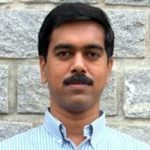
     

    An MBA from IIM Ahmedabad, Mr Bakshi has been recognized for his thought leadership in customer development and marketing in the industry. He is also the chairman of The Indian Soaps & Toiletries Manufacturers Association, a board member of Advertising Standards Council of India and is on the board of BARC, a nodal body for the advertisers, advertising agencies and broadcasters in the country. Apart from being a marketer, he is also a sportsman. He runs marathons and is a passionate golfer.


    On his election as Chairman of ISA, Mr Bakshi said: “We are going through a challenging period and it is crucial that ISA along with other associate members, works towards sustainable growth of the industry”.


    Other members of the Executive Council are:

    Atul Agrawal, Vice President – Corporate Affairs, Group Corporate Affairs and Media, Tata Services Ltd., Mumbai.


    Abraham Alapatt, Head – Marketing,Thomas Cook (India) Ltd., Mumbai.


    Narendra Ambwani, Director, Agro Tech Foods Ltd., Secunderabad.


    Jimmy R Anklesaria, Director – Business Development, Bajaj Corp Ltd., Mumbai.


    Mohit Beotra, Chief Brand Officer – India, BhartiAirtel Ltd., Gurgaon.


    J C Chopra, Director, Infogain India Private Limited, Noida, U.P.


    Paulomi Dhawan, Director, Landmarc Leisure Corporation Limited, Mumbai.


    Sonali Dhawan, Marketing Director, Procter & Gamble Hygiene and Health Care Ltd., Mumbai.


    Rajiv Dube, Director, Group Corporate Service, Aditya Birla Management Corporation Ltd., Mumbai.


    Kurush N. Grant, Executive Director, ITC Limited, Kolkata.


    Sunil Kataria, Chief Operating Officer – Sales, Marketing & SAARC, Godrej Consumer Products Ltd., Mumbai.


    Anisha Motwani, Director & Chief Marketing Officer, Max Life Insurance Co. Ltd., Gurgaon.


    Siddhartha Mukherjee, Director – Chocolate Category and Media, Cadbury India Limited, Mumbai.


    Mayank Pareek, Chief Operating Officer (Marketing & Sales), Maruti Suzuki India Limited, New Delhi.


    Bharat V. Patel, Board Member, Birla Sun Life Asset Management Co.Ltd., Mumbai.


    Chandrasekar Radhakrishnan, Vice President – Communications, Nestle India Ltd, Gurgaon.


    R. Ramakrishnan, Group CEO, Polycab Wires Pvt.Ltd.,Mumbai.


    Shipra Tripathi, Vice President, Corporate Global Marketing, Kirloskar Brothers Ltd., Pune


    and


    Brahm Vasudeva, Chairman, Hawkins Cookers Ltd., Mumbai.


    Former chairman Kurush N Grant continues to be on the Executive Council.


  • HUL to run region-specific ads on Nickelodeon as Viacom18 ties up with Amagi for micro-targeting

    By A Correspondent


    Viacom18 and Amagi Media have announced an alliance to increase advertising effectiveness on television using the latter’s technological prowess.


    Using Amagi’s DART technology platform, Viacom18 will enable Hindustan Unilever to simultaneously run different television advertisements in different regions on Nickelodeon. This innovation will allow HUL to micro-target its communication in each region. Amagi calls this “creative-versioning” where different television creative in terms of product variant or a different creative rendition of the same advertiser is played in different regions on the same channel simultaneously. Creative versioning addresses critical needs of both broadcasters and advertisers seeking to optimize their Return on Investment (ROI) from the television spot. Given the TRAI’s recent 12 minute ruling on advertising, broadcasters and advertisers have been seeking ways to optimize their Return on Investment and stretch the time within the limited inventory.


    Sudhanshu Vats
    Srinivasan K.A

    Said Sudhanshu Vats, Group CEO, Viacom 18: “As a leading broadcaster, Viacom 18 has been pioneering several innovations and has been at the forefront of providing newer platforms for improved customer deliveries. This initiative further builds on our strategic thrust of sharper segmentation. We are pleased to partner with Amagi and Hindustan Unilever on this unique concept of micro-targeting.”


    Srinivasan K.A, Co-Founder, Amagi Media added: “We are happy that we have been chosen as the partner to enable this innovation. This is the first time worldwide in television advertising that a single spot bought nationally has been used to communicate different brand messages in different regions. Such micro-targeting is going to be the future of television advertising.”