Tag: HUL

  • Indians cut spending on discretionary goods. Consumption at 10-yr low. Sale of consumer goods down to 7.5% in FY15

    By Ratna Bhushan and Sagar Malviya


    Sales of consumer goods have slowed the most in about a decade, suggesting that Indians are making cuts in spending — especially on discretionary products — amid high inflation and a sluggish economy. Most company bosses expect things to get better soon, but a bad monsoon looms as a threat over rural consumption.


    The overall consumer products market slowed to 7.5 per cent in the year to March from 10.6 per cent in the previous year, according to Nielsen data. The declining pace is across urban and rural markets and covers all three broad categories — food, home and personal care, and over-the-counter products.


    “The last time FMCG (fast-moving consumer goods) saw singledigit sales growth was in 2004-05 when it grew 8 per cent soon after a drought situation,” said Abneesh Roy, associate director at Edelweiss Securities. “Hence, last fiscal’s growth is the slowest in over a decade after strong double-digit growth of 15-17 per cent, especially with the rural market opening up.”


    The trend has hit consumer stocks — the BSE FMCG index rose 13 per cent in the year compared with a 63 per cent jump in the Sensex.


    “A lot of discretionary spending slowed down because economic sentiment hasn’t been positive for the most part of last year,” said Chittranjan Dar, CEO of ITC Foods, which makes Sunfeast biscuits and Bingo snacks. Things may be turning around, he suggested. “Indicators that things are looking better, though, are reflecting in the latest quarter and we should see a brighter picture going ahead.”


    Annual performance figures also reflect the direction of the market. Nestle and Godrej Consumer posted decade-low sales growth in FY15. Dabur posted its lowest revenue in nine years. Hindustan Unilever’s income growth in the past two fiscal years was its worst since 2005.


    Within the overall picture, companies report two contrasting trends — a shift to the value segment and premiumisation, or higher-priced products in the same category.


    “Over the past two years, the market has shifted more towards mass and popular pricing and towards sachets as opposed to large packs,” said HUL Managing Director Sanjiv Mehta. “(But) there are consumers who still have the capacity to consume brands such as TRESemme (hair care products) and Magnum (ice cream). We focus a lot on unlocking the potential not just at the bottom of the pyramid, but also at the top end of the fill.”


    More pain could be in the offing if predictions of a deficient monsoon come true, derailing any positive growth sentiment. Consumer goods firms are taking steps to hedge themselves against this risk, especially since the Nielsen data suggest rural market growth has outpaced that of urban areas, albeit on a smaller base.


    Leaning on urban demand

    Companies are leaning on urban demand to improve the numbers as it accounts for nearly 65 per cent of the total market. “We believe revival in the FMCG sector will be led by urban markets as the sector is expected to be at the forefront of development and growth,” said Sunil Duggal, chief executive of Dabur, the maker of Vatika hair oil and Real juices.


    He too is optimistic about things improving soon. “While the overall macro environment continues to remain challenging, consumer demand has started showing signs of a recovery,” he said. A gradual improvement in the consumption environment has helped the company perform well on several operating parameters.


    Dabur has piloted a new sales and distribution initiative, called ‘Project 50/50’, aimed at leveraging the potential of the top 130 towns that account for 50 per cent of urban consumption. The project involves segregating the grocery channel teams for wholesale and retail as both trades have differing requirements. “At the same time, rural demand has proved to be resilient, and we plan to focus on 60,000 high-potential villages over two-three years,” Duggal said.


    The economic situation has meant that the urban poor, who account for nearly 20 per cent of the market for most consumer product companies, have been facing a squeeze.


    “A lot of the urban poor or people like construction workers, because of job challenges, ended up moving back to villages or cutting down spends,” said Godrej Consumer Managing Director Vivek Gambhir. “While we would all love to see much faster growth, at least it is trending in the right direction with higher growth every quarter. It is achallenging environment.”


    Some analysts have been sounding a note of cautious optimism.


    “Consumption demand, until recently, was seeing a continuous decline despite lower inflation and improved consumer sentiment. However, Q4 results imply that demand in at least consumer staples has clearly bottomed out. The worst is possibly over (if monsoon is normal), but it would be a long wait before the party begins,” Axis Bank analysts Sanjay Singh, Ajay Thakur and Mihir Shah wrote in a recent investor note.


    Source:The Economic Times

    Copyright © 2015, Bennett, Coleman & Co. Ltd. All Rights Reserved

    Licensed to republish


  • Will Brand Salman lose sheen post conviction?


    By Ratna Bhushan & Nandini Raghavendra


    Almost all brands that Salman Khan endorses have started looking for ways to limit or withdraw their association with the Bollywood superstar soon after the Bombay High Court sentenced him to five years in jail for ‘culpable homicide’ in a 2002 hit-and-run incident.


    Khan, one of the most popular actors in the country, endorses about 10 national brands including Thums Up cola, Suzuki two-wheelers, HUL’s Wheel detergent, energy capsule Revital and online travel firm Yatra.com. He has over  Rs 200 crore riding on him and is known to charge Rs 4-5 crore a day for endorsements. While the court granted the 49-year-old actor two days’ interim bail late in the day, it is seen as only a temporary reprieve. “If on May 8, Salman does go to jail, we will certainly begin withdrawing television commercials and outdoor hoardings,” said an official of a top brand that Khan endorses.


    Atul Kasbekar, promoter of celebrity management firm Bling Entertainment that represents Sonam Kapoor and Farhan Akhtar, said, “Almost all endorsement contracts include riders that if either the celebrity or the brand does something unacceptable, the contract can be terminated. Either the brand can terminate the contract or the celebrity can decide to end the contract – it works both ways.”


    The court on Wednesday found Khan guilty of culpable homicide, saying he was driving under the influence of alcohol in a 2002 run-over accident that killed a man sleeping on the pavement. For most brands Khan is their most visible and expensive ambassador, and his sentencing will force most of them to completely change their advertising plans. Thums Up, for example, will have to withdraw Khan’s advertising just in the peak beverage season of summer months. A spokesperson of Coca-Cola, which owns Thums Up, said, “We hold the court verdict in the highest regard. We are evaluating the next steps.” Thums Up’s contract with Khan ends next year and it is most unlikely to renew the contract Spokespersons of HUL and Sun Pharma-owned Revital declined comment on whether they would continue their association with Khan. Suzuki couldn’t be reached for comment.


    The CEO of a top talent management firm said, “There’s no way that multinational brands could continue with a convicted person. These firms are also answerable to their international teams and contracts clearly spell out clauses under which anyone with questionable conduct has to be dropped.”


    ‘Bigg Boss’, the reality television show that Khan hosts on Colors channel, could also see a new host, an official close to the production house said. Khan has been hosting the show for the last five seasons and the viewership his presence got for the channel saw his asking price rise from  Rs 30 crore when he began in 2010 to Rs 50 crore or more. “The channel could very likely to change the host, post the verdict,” said the official.


    Salman Khan Ventures and Eros International’s Bajrangi Bhaijaan and Fox Star Studios and Sooraj Barjatiya’s Prem Ratan Dhan Payo are to be released this year.


    Khan also has an exclusive deal with Star TV for the satellite rights of all his films for five years starting from 2013. So far, Khan has only done two films – Jai Ho and Kick – since this deal was signed for approximately  Rs 450-500 crore. If Khan goes to jail, he stands to lose a hefty part of that deal since he might not be doing any other films in the said period.


    Shares of Mandhana Industries, which has the global licence to design, market and distribute Khan’s Being Human clothing brand and charity foundation, tanked as much as 4.1% in intraday trade. “Given that Salman has huge following, there is every likelihood that the business will continue to grow,” said Manish Mandhana, MD at Mandhana Industries. Industry sources said smaller brands that Khan endorses, such as PN Gadgil jewellers and Dixcy Scot innerwear, are likely to continue with him. Other small brands associated with Khan include Astral Pipes, Image eyewear and Splash Fashions.


    Source:The Economic Times

    Copyright © 2015, Bennett, Coleman & Co. Ltd. All Rights Reserved

    Licensed to republish


  • Lipton Green Tea offers a new shopping experience with TracyLocke

    By A Correspondent


    Leading tea brand Lipton wanted to drive the penetration of its green tea bags amongst health conscious young men and women by positioning it as an additional beverage for consumption during the day and educating them on the benefits of Lipton green tea.


    When TracyLocke conducted a survey, they found that the consumer is not sure where to buy and how to select on shelf when all tea products look the same. So the challenge lay in persuading shoppers on what benefits green tea offers them.


    To convey the thought to the mass, TracyLocke chose to take the mass route i.e. TAPRI. They conducted a daylong session and shortlisted five concepts. Here the task was to capture attention, connect with the consumer’s mindset and make it easy for them to commit to the brand. The team created FSUs, end caps, shelf strips, and parasite hangers depending on the insights from consumer’s feedback.


    The team conducted an extensive lab research for three days in a leading shopper research facility at Unilever’s premises. A combination of shopper observation and a post simulated purchase, in-depth interview was conducted that provided insights on the creative and the elements which the team had installed. Basis the findings, the team selected the winning route and created the final in-store elements. TracyLocke worked out the final creative elements which include parasite hangers, shelf cladding, end caps and visicube.


    Ashwath Srinivasan, Senior Brand Manager-Beverages at HUL said, “The green tea segment in India is the fastest growing segment within packaged tea. We believe that this is the right time to accelerate the development of green tea and become leading green tea brand by driving the penetration of Lipton green tea among health conscious young men and women. Research shows that while consumers know green tea is healthy they are not sure why exactly they should consume it and hence most shoppers tend to ignore it at the store. With the help of TracyLocke we were able to come up with a set of compelling in-store assets. In fact, we’ve used the in-store visual in other media too.”


    Mandeep Malhotra, President, DDB MudraMax quoted, “India is changing and so is the consumer behavior. Lipton is a very strong player in the tea segment and had to maintain the leadership stance. We were briefed on Green tea as a project and were up for using our proprietary tool’s to make a difference in the market. The ability to address the complete spectrum of consumer touch points with depth requires unique capabilities. We began with measuring and understanding the brand / the category and the environment. Layered with consumers’ behavior and there selection or deselection process on shelf space at the marketplace, we designed the key elements for visual relationship with healthier choice. A great execution and deployment role out of designs were proposed. Lot of research and testing on the work ensured that we come up with a shopper marketing campaign duly supported by media placement was rolled out. We are super happy with the work and results. We are glad that our contribution on making Lipton green tea a popular choice for a healthier India is a great case study for shopper marketing in India.”


  • Gaurav Jeet Singh to head media services at Unilever South Asia

    By Pritha Mitra Dasgupta


    Gaurav Jeet Singh, marketing manager, Hindustan Unilever (HUL), has replaced Atit Mehta as the head of media services, Unilever South Asia. Mehta, who was promoted to a regional media role for one of the international markets, has quit the company. Mr Mehta may be joining Sequoia Capital as vice-president, media, from January 6, sources said.


    HUL’s spokesperson said, “Gaurav Jeet Singh has been appointed as head, media services, for HUL. Gaurav Jeet Singh succeeds Atit Mehta who has left Unilever to pursue an external opportunity.”


    As head of media services, Singh will be responsible for driving effectiveness and impact of HUL’s media investments through a combination of strategic planning, media innovations and partnerships, said the spokesperson. He will also lead the digital and mobile agenda of the company. He will also oversee media services for Unilever in Pakistan, Bangladesh and Sri Lanka.


    Mr Singh started his career with L’Oreal in 1997, then launched his own venture called Unique Transport in Hyderabad in 1998. He joined HUL as regional sales and customer manager in Kolkata in 2008 and was promoted to branch sales manager in 2010.


    Source:The Economic Times

    Copyright © 2015, Bennett, Coleman & Co. Ltd. All Rights Reserved

    Licensed to republish


  • Shortlists for Indian Marketing Awards announced

    By A Correspondent


    Dabur, BJP, Infosys, HUL, Satyamev Jayate topped the list of campaigns shortlisted for the Indian Marketing Awards 2014 (IMA), which will be handed out at the awards gala on December 12 at Hotel Leela, Gurgaon. The shortlist includes 88 cutting-edge campaigns hailing from different parts of the country and reflects the finest work in setting new standards of marketing excellence today, while also pointing to the trends that will drive tomorrow’s marketing arena.


    The first part of the two-stage judging process was completed last week by a pre-screening jury comprising of leading industry leaders. The members of the pre-screening jury include Debabrata Mukherjee of Coca Cola, Vivek Sharma of Philips, Dinesh Garg of TTK Prestige, Prabhakar Tiwari of Ceat India, Aarti Ahuja of TCNS Clothing, Girish Shah of Godrej Properties, Sandipan Ghosh of Ruchi Soya Group, Anshul Punhani of Monster.com, Sandeep Aurora of Intel, Apurva Chamaria of HCL, Devendra Chawla of Future Retail and Saujanya Shrivastava of Bharti Axa Life Insurance.


    The IMA jury is headed by Vinita Bali, former Managing Director, Britannia and the jury members include RanjanKapur, Country Manager – India at WPP; Prema Sagar, Principal & Founder at Genesis Burson-Marsteller; Thomas Puliyel, President at IMRB International, Mumbai; Vijay Subramaniam, Managing Director – India & South East Asia, Bacardi India; Kamal Bali, Managing Director, Volvo India; Dr. Amarnath Anantha narayanan, Managing Director & CEO, Bharti AXA General Insurance; Amit Burman, Vice Chairman, Dabur; Geetu Verma, Executive Director – Foods & Refreshments, HUL; HaritNagpal, CEO, Tatasky; Sangeeta Pendurkar, Managing Director, Kellogg and Saugata Gupta, Managing Director & CEO, Marico.


    350 entries were received across 14 categories, which comprise Brand Activation; Brand Extension; Brand Revitalisation; Business-to-Business Marketing; Cause Related Marketing; Consumer Insight; Customer Relationship Marketing; Digital Marketing, Social Media, Mobile Marketing; E-Commerce; Global Marketing; Marketing Communication; Marketing on a Small Budget; New Brand, Product or Service Launch and Not-For-Profit Marketing.


    Leading communication agencies Contract Advertising, Genesis Burson-Marsteller and Landor have partnered with Indian Marketing Awards 2014. The awards are presented by Hindustan Times and powered by Colors, VIACOM 18.


    Anurag Batra

    Announcing the shortlisted campaigns, Anurag Batra, Chairman & Editor-in-Chief, Exchange4media group, said, “Indian Marketing Awards is our biggest and most prestigious competition, aimed at advancing the marketing profession and identifying the emerging trends in marketing. The awards will be presented to organizations, individuals and teams who have achieved extraordinary success from innovative and effective marketing practices, having regard to the particular circumstances of different industries and diversity of marketing programs”.


    “Indian Marketing Awards 2014 offers the chance for the next benchmark to be set for marketing effectiveness within the country. We have an exciting mixture of work on the shortlist and we will watch with interest to see which pieces the jury deem worthy of being elevated to prize winning status and in turn, set the new precedent,” says Vinita Bali, Non-Executive Director CRISIL, Titan Industries Ltd., The Wadia Group Companies and Piramal Glass Limited.


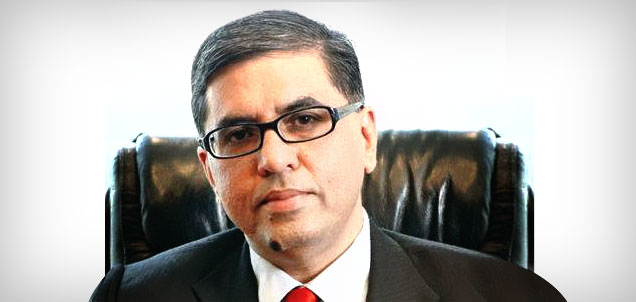
  • How Sanjiv Mehta wants HUL to Win in Many Indias


    By Kala Vijayraghavan


    A year into his tenure as CEO of Hindustan Unilever, Sanjiv Mehta has made his most significant move yet. Convinced new consumers can be found in heaps in the mosaic that is the Indian market, Mehta is giving his managers a new structure to go find it. In challenging HUL managers, he’s taking forward the process of embracing the market his predecessor Nitin Paranjpe began.


    When Sanjiv Mehta moved to Mumbai last October to take charge of Hindustan Unilever, India’s largest FMCG company, it had been 21 years since he last worked in the country. Yet, the son of an RBI accountant who grew up in Mumbai intuitively describes this melting pot of India as “home” and himself as a “Mumbaikar”. “When I reach the turn around the museum at Colaba, the years go by in a roll,” he says. “Mumbai has been my home for so many years. My mother lives in Colaba.”


    Still, for Mr Mehta, returning to India with some sense of permanence, and travelling across it, has been about renewing old attachments and finding new ones. That question of identity – just what is India, especially as a consumer – lies at the heart of the change Mr Mehta is trying to sell to his own managers, many of whom have built Hindustan Unilever into a Rs 29,233 crore company and who, at various points in time, have shrugged to say there’s little room for this giant to grow in the India they know. It’s a notion Mr Mehta is challenging.


    “None of the categories in which we operate are saturated. Not even soaps and detergents, which are highly penetrated categories,” says Mr Mehta. “If the per capita consumption in fabric conditioner was to increase to the same level as Vietnam, the market in India for fabric conditioners would be 40X larger.” Mr Mehta is laying down the marker in the inimitable way that has come to define the 55-year-old a leader: firm without being rude, purposeful rather than preachy, looking ahead and not back. The admittance that HUL could have done better on the growth front is implicit in his argument, but is subdued in its expression. The expression, instead, is all about structure.


    That structure is formally named ‘winning in many Indias’, or WIMI, and it was rolled out on September 21. In his one year at HUL, which he will complete this October 10, this is Mr Mehta’s most significant move.


    Previously, HUL made sales via a structure that broke up India into four regions. As part of WIMI, a fifth region has been added. More importantly, sales will now be flanked – and fed – by consumer insights from a parallel geographical structure that carves out India into 14 parts. The philosophy is to change HUL’s responsiveness from a place of being largely homogenous (seeing India as a few big markets) to a place that is a lot more heterogeneous (seeing India as a mosaic of markets). The idea is identify sales gaps and market-creation opportunities – of which, Mehta believes there are ample, even for a large company like HUL – and to infuse it with a growth mindset again.


    It’s the classic HUL leadership template, quips a former senior company official, and every new CEO does this. “Everyone has to justify changes,” he says, on the condition of anonymity. “Undeniably this focus will help… but HUL has been around for 70-80 years. What new findings are there that they haven’t yet discovered in India?” He believes that no what matter what HUL does, it will struggle to fend off the scatter of regional players.


    CK Ranganathan, founder-chairman of CavinKare, a South India-based competitor, is more circumspect in his assessment. “They seem to be focussing in small parts through smaller structures and sharper teams,” says Mr Ranganathan, whose company owns brands such as Nyle, Chik and Fairever. “That will help them win in various smaller markets. One of course needs to wait to see how effective that is.”


    The consolidation

    Mr Mehta could not wait. He began his homework on India between his appointment as the new HUL chief and his actual move from Dubai, where he was handling 20 emerging markets for parent Unilever as its chairman, North Africa and Middle East. “I had sent a note to my management-committee members, seeking detailed insights and information into their part of the business,” he recounts. “And when I moved here, I did the deep-dive sessions and met a large cross-section of people, from managers in my team in groups and individually to consumers for feedback about my business.”When he did move here, the Indian economy was facing economic headwinds. HUL had used price hikes and cost control to not only protect its operating margins, but even grow them. The issue was growth. For the year ended December 2013, its sales grew a lame 8%.


    Mr Mehta began incrementally: for example, renovating and innovating in several big brands, including Pond’s men range of personal care products, Tresemme hair care and Magnum ice-creams. Meanwhile, economic sentiment improved. At 13%, HUL’s revenue growth in the April to June quarter was the its highest in five quarters.


    At 21%, its operating profit growth was its highest in eight years. In the last three months, the HUL stock has gained 20%, against 9% posted by the BSE FMCG Index


    The strategy

    In the background of all this, a pilot was underway at HUL to gauge whether, and by how much, the company’s formidable sales and marketing machinery was missing. The pilot was in HUL’s South India sales branch, which was broken into two consumer clusters: TAP (Tamil Nadu and Andhra Pradesh) and KK (Karnataka and Kerala).


    From the pilot emerged instances where HUL had under-assessed market size and under-sold its products. One of those instance was of Wheel, HUL’s mass-market washing-powder brand, being absent in a small town in South India because its official did not see it as a market. The consumer insights team, however, discovered that a local player – with a product inferior to, and costlier than, Wheel – was building scale. HUL introduced Wheel, and it’s now overtaken that local brand and is number two in that market.


    It became apparent from the pilots to Mr Mehta that, as an organisation, HUL was not peeling the layers deep down in the market as well as it is capable of. Its officials were seeing India as a certain number of parts, but Mr Mehta wanted them to slice and dice it in many, many more ways – to pry open, what he describes as, “many small Indias”. That’s the big idea the 14 consumer clusters will try to service. The 14 new positions of cluster heads will be filled internally.


    “We are empowering our younger managers with challenging roles,” says Mr Mehta. The company declined to share the geographical boundaries of the clusters or the identities of the cluster heads. Mr Mehta is empowering these 14 consumer clusters to change the direction of operations. So, a cluster head can take an insight from her market – say, why Wheel should be launched there – to the sales, planning and category heads, make a case to roll it out, and reorganise planning and supply chain to that end.


    “This is very clearly the result of extreme aggression shown by smaller players across categories and across markets,” says an FMCG analyst at a foreign brokerage, not wanting to be named. “This is an initiative HUL should have taken a couple of years back as the country’s largest marketer.” There is a view that Mr Mehta, with his commercial background, is focussed on controlling costs. “That was an uninformed view,” he says. “My educational background is that of a chartered accountant, but I am running a marketing organisation. My focus, therefore, will be on brands and our people. Having said that, productivity and efficiency too are essential as they provide fuel for growth.”


    The orientation

    By essentially demanding a greater market orientation, Mr Mehta is looking to take forward the philosophical shifts in HUL his predecessor Nitin Paranjpe embarked on, with a fair degree of success. Mr Paranjpe pushed managers into the field and made them listen more to consumers. He wanted an HUL that was less complacent and more humble in the marketplace. One of his initiatives was ‘Mission Bush Fire, which required about 4,000 HUL managers to engage directly with customers. Another was ‘POPeye’, which called on HUL employees across departments to flag off product shortage in any store.


    In an internal email to employees, Mr Mehta is believed to have urged employees to continue with both. The way Mr Mehta has envisaged the consumer clusters, execution of the market plan can feed off a pet concept of Mr Paranjpe: micro-marketing, where the marketing team, once it identifies a smaller market for a brand, goes all out in activation and advertising promotion of a brand.


    Under Mehta, HUL is also doing a rethink on marketing, allocating more to non-TV spends and mobile. “About 25% of our spend will be on non-TV mediums like digital, mobile, print, outdoors and wall paintings,” he says. Amin Babwani, a former senior sales and marketing official at HUL and now an independent consultant, likes the concept of these consumer clusters.


    Asserting it is a continuity of the geographical emphasis HUL has consistently aimed for, he says: “With these clusters, focus is more accentuated and there is greater accountability since it is now enshrined in the structure.” Some observers feel a new structure is great, but the challenge posed by regional players goes deeper than that, and national players don’t understand that. “The issue is with their (HUL’s) portfolio,” says a leading brand expert on the condition of anonymity.


    “Some of their brands do not have a relevant proposition in the local markets and this is a typical MNC problem.” Vimal Pande, CEO of Vi-John Group, which owns the Vi-John brand of personal care and grooming products, says regional players are striking better partnerships in the marketplace.


    “Retailers and wholesalers are very happy with our proposition, which ensures they make reasonably good margins,” he says. “Ours is not a push-down (approach), and laying down of terms and conditions that larger players tend to do.” Mr Mehta points out that the bottom-of-the-pyramid has halved in size, drifting into HUL territory. “We want HUL to be futureready to tap into this opportunity,” says Mr Mehta. And the consumer clusters are being positioned to play a pivotal role in that architecture.


    (With inputs from Kiran Kabtta Somvanshi)


    Source:The Economic Times

    Copyright © 2014, Bennett, Coleman & Co. Ltd. All Rights Reserved

    Licensed to republish
     

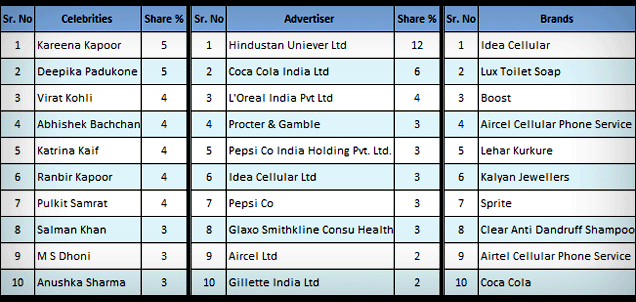
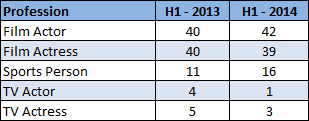
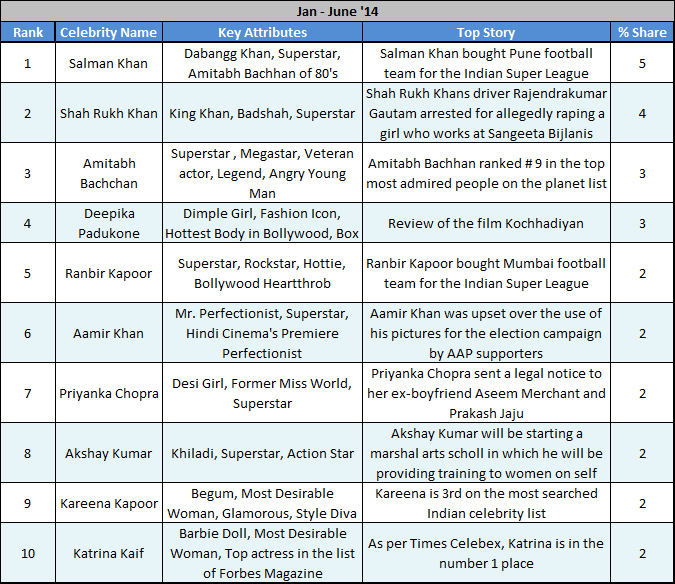
  • Vital Stats: Kareena, HUL & Idea top Celebrity Endorsement & Buzz in Jan-June 2014

    Celebrity Endorsement during Jan – June 2014

    Source : TAM AdEx


    Presenting Celebrity Endorsement Data which comes from TAM AdEx and Celebrity Buzz Data that is from Eikona. Here’s how this data can be helpful for the media industry and professionals:


    Eikona Data(Celebrity Buzz): While selecting a celebrity for a brand, the connect between brands and a celebrity is always important. The brand personality and celebrity personality have to complement each other. Eikona data with the help of attributes/adjectives used to describe the celebrities can be helpful for the advertiser/advertising agencies to select the proper fit for the brand.


    TAM AdEx Data (Celebrity Endorsement): Celebrity Endorsement Data showcases the visibility of celebrities during the breaktime on TV through Ad Volumes. This can be a great help for advertiser, advertising agencies, celebrity management companies to keep track of their celebrity brand endorsement.


    When we are talking of celebrities and the buzz they create, why have words. Let the figures (no pun intended) do the talking.


    Source: Eikona


  • Don’t show bias on basis of skin colour: ASCI to fairness cream brands like HUL, Emami

    By Shephali Bhatt & Ravi Balakrishnan


    New guidelines from the Advertising Standards Council of India, a self-regulatory body, could quite literally change the face of advertising in the approximately Rs 3,000-crore fairness category which includes creams, face washes and lotions.


    Hindustan Unilever dominates the category with its Fair & Lovely brand, and other big brands include Emami’s Fair & Handsome for men, as well as Garnier from L’Oreal.


    A draft of the new guidelines specifically targets several well-established tropes of fairness advertising.


    The new rules propose, among other things, that ads should not show darkerskinned people as unhappy, depressed, or disadvantaged in any way by skin tone, and should not associate skin colour with any particular socio-economic class, ethnicity or community.


    According to Sam Balsara, chairman and managing director, Madison World and a former chairman of ASCI, “The reason for these guidelines is to make it clear to advertisers as to what society finds acceptable and what it doesn’t.”


    When asked about the ramifications on the guidelines on its advertising, a spokesperson from Hindustan Unilever, said, “We welcome ASCI’s move to further strengthen guidelines. This will help to promote transparency in advertising. These guidelines are currently at a draft stage and have been published for seeking industry inputs.”


    Adds a spokesperson from Garnier, “We strongly believe advertising should not encourage social discrimination of people based on aspects like the colour of their skin. All Garnier communication focuses on the efficacy of the product and is most importantly, backed by scientific fact. Our conviction is that there is no single model for beauty.”


    Both ASCI and Balsara say that advertisers have been consulted while coming up with the guidelines. And advertising folk who chose to respond off the record believe (or at least hope) that the letter and spirit of these guidelines allow a certain room for interpretation.


    Pioneered by Afghan Snow in 1919, the fairness category is dominated by Hindustan Unilever’s Fair & Lovely, launched in 1975.


    Today, almost every skin care brand worth its name, from Garnier to Ponds, has a fairness variant, with an entire sub-category targeting men. It has been built on storylines about how being dark skinned could materially affect the job and marital prospects of consumers.


    However, over the last decade, there’s been a groundswell of protests against these products and how they are marketed. Celebrities like film director Shekhar Kapur have taken on the category on social media including Twitter.


    An entire segment in Madhur Bhandarkar’s Traffic Signal is devoted to an anti fairness-cream rant. The category’s ads has been pilloried in global media for promoting a kind of “racism”.


    Chennai-based Women of Worth has been running a campaign around the theme Dark is Beautiful with support from actor and director Nandita Das. It’s finally made ASCI take notice.


    Long regarded as a well intentioned but powerless body, the ASCI has revitalised itself over the last couple of years, moving with speed and aggression against ads that break its code of conduct.


    Says Shweta Purandare, secretary-general at the ASCI, “Over the years, we have come across several complaints against advertisements regarding skin lightening or fairness improvement.”


    Source:The Economic Times

    Copyright © 2014, Bennett, Coleman & Co. Ltd. All Rights Reserved

    Licensed to republish

     

  • Lowe Lintas + Partners wins Platinum award on Effectiveness at AMES

    By a correspondent


    Lowe Lintas + Partners India had a great run at the Asian Marketing Effectiveness & Strategy Awards, held in Singapore recently. The agency’s work on ‘Lifebuoy – Help a Child Reach 5’for its client Hindustan Unilever Limited bagged the enviable Platinum award (Effectiveness category) at AMES.


    Apart from the coveted award, Lowe Lintas + Partners India also won the Gold in Effectiveness – Food Products for their work on Kissan ‘100% Natural Seeded’ for HUL. The same entry also won a Bronze in Effective – Innovative Use of Media category. The agency also bagged a Silver under the Effective – Integrated Marketing Campaign category for its work on ‘Lifebuoy Help A Child Reach 5.


    Commenting on the wins, Joseph George, CEO of Lowe Lintas + Partners said: “This performance of Lowe Lintas + Partners and Unilever is our best ever at AMEs. For either of us. This reflects our shared belief in what makes for effective communication.”


    The performance at AMES follows Lowe Lintas + Partners’ fine achievement in April 2014 where it was named the most Effective Indian Agency at the APAC EFFIEs Awards 2014. The agency had bagged 4 metals including 2 Golds, a Sliver and a Bronze out of total 6 metals for India. Lowe Lintas + Partners was also bestowed the ‘Agency of the Year’ title at Indian Effies 2013.


    Vikas Mehta, CMO – Lowe Lintas + Partners said, “We had entered a small number of campaigns this year at the AMEs. Four wins including the all-important platinum is remarkable. I’m told it’s the country’s first AME platinum on effectiveness. That sure feels nice.”


    The Asian Marketing Effectiveness & Strategy Awards are Asia Pacific’s foremost awards honoring clients and their agencies for marketing strategies that deliver solid results to transform businesses and brands. The annual awards are judged by a panel of top client and agency professionals who review the submissions against stringent criteria to determine the winners of the prestigious Asian Marketing Effectiveness & Strategy awards.


  • Lifebuoy’s ‘Jump Pump’ activity casts positive impact on schoolkids

    By a correspondent


    It is a startling fact, that more than 2 million children lose their lives to diarrhoea every year. It is even more alarming, that a major contributor to this number is India. Washing hands with soap at key occasions during the day has been proven to be the most cost-effective and scalable solution to prevent the spread of deadly infections likes pneumonia and diarrhoea. This simple act has the potential to save millions of lives.
     

    Over the years, Lifebuoy has implemented several innovative programs to create habit change for hand washing amongst children as well as to raise awareness about the five critical hand washing occasions in a day. Of these five, one of the most important is washing hands with soap before eating.


    In April 2014, Lifebuoy chose the occasion of the mid-day meal to convey this message. India’s mid-day meal scheme feeds over 120 million children a day, making it the perfect opportunity to address the maximum number of children across schools, at the actual moment of truth.


    Across many rural schools, it was found that children were not washing hands before having lunch, despite the availability of soap. The fact was that the old and heavy hand-operated pumps are the only way to access water in these schools. Young children find it difficult and tiresome to operate these pumps and hence would simply not bother coming near them. The focus was thus shortlisted towards this key barrier.


    Vipul Salvi, National Creative Director / Geometry Global India said: “We need to keep pushing the limits of creativity to help solve basic problems like poor hygiene… the great thing about the Jump Pump is that it worked like a charm with kids while being cost-effective and easy to implement.”


    Rahul Saigal, President / Geometry Global, India added: “Sometimes the best way to teach kids an important lesson is to distract them into learning. You can’t engage children by mere preaching; you need to talk to them in a language they understand: the language of play!”


    What Lifebuoy did was install a specially crafted rocking horse, made from a combination of wood and metal with a simple screw-on mechanism, on to the handles of these hand pumps in schools – transforming them into “Jump-Pumps”.


    At lunchtime, when children headed out of class for their meal, they were taken by surprise by this colourful addition to their school premises. Promoters explained the concept and the proper technique of washing hands with soap along with putting up posters at prominent spots in the school to explain the “Jump Pump” game. Apart from this, Lifebuoy soap was also provided to ensure soap availability throughout the activation period.


    Currently, about 1500 rural schools across UP and Maharashtra are being impacted with this activity between April-May 2014.


    George Koshy, General Manager (Skin Cleansing), HUL said:” Lifebuoy has a proud history of being a brand that stands for saving lives. It is indeed our mission to ensure that hand washing with soap becomes a habit for children, as a step to reducing diarrheal mortality. The ‘Jump Pump’ activation is an innovative approach, appealing to children in a manner that is fun and enjoyable.”


  • HUL, McCann win big at IAA’s Olive Crown Awards for green advertising

    By A Correspondent


    The Holi weekend got off to a green start with the International Advertising Association India Chapter’s Olive Crown Awards on Friday, March 14 in Mumbai. The crème de la crème of the Indian advertising business was in attendance for the fourth edition of what is India’s first and only recognition for creative excellence in communicating sustainability.


     

    Mc Cann Erickson was crowned Green Agency of the Year. The agency also bagged the coveted Campaign of the Year for ‘Wake Up, Clean Up’. Dentsu Creative Impact got the Silver in the Campaign of the Year. Hindustan Unilever was awarded the Corporate Social Crusader of the Year as well as the Green Brand of the Year. Mathrubhumi too received the Corporate Social Crusader of the Year while the DDB Mudra group bagged the Silver in the Green Brand of the Year category.


    The Green Advertiser of the Year award went to the Bruhat Bengaluru Mahanagara Palike (BBMP), Karnataka State Government. The Green Crusader of the Year was awarded to Maneka Gandhi, Member of Parliament. The chief guest at the event was actor Amitabh Bachchan, who was also accorded the Honorary Membership of the IAA India Chapter.


    Srinivasan Swamy

    Said Srinivasan K Swamy, Chairman, R K Swamy BBDO and President, India Chapter and VP-Development Asia Pacific, IAA: “These awards have acquired the hue of a ’cause’ and this is one of the reasons for their universal acceptance.”


  • Leveraging films by top guns on MTV


    By A Correspondent


    In a seemingly volatile broadcast scenario in India, it is a given that only ideas that are fresh and out-of-the-box manage to make a mark while the others face the possibility of being rejected. In a synergy that probably plans to change the way the genre has been approached until now, leading youth channel MTV has joined hands with FMCG major Hindustan Unilever to launch MTV Films.


    The idea germinated out of a casual conversation that MTV and HUL’s media buying and planning agency Mindshare had sometime last year. Convincing HUL was easy for Mindshare, and since then it’s getting all parts of the act together.


    The initiative would see six young and well-known directors known for their cutting edge film making styles making original movies just for television. Eminent movie directors including Anurag Basu, Abhinay Deo, Shoojit Sircar, Rohan Sippy, Nikhil Advani and Anurag Kashyap have been assigned the task of bringing the idea alive on television.


    What would make this initiative unique is that MTV Films would be a mixed bag of six movies based on brand philosophies of different HUL products that will be showcased every month.


    An initiative to provide film buffs a unique movie viewing experience in the comfort of their homes, MTV Films offers a mix of all the ingredients that connect with the youth instantly. These 60-minute movies are inspired by HUL’s brands like Sunsilk, Ponds, Tresemme, Close Up, Lakme and depict today’s generation’s perspective on love, friendship, family, responsibilities in a light hearted fashion.


    Speaking about this initiative, Aditya Swamy, EVP and Business Head of MTV said, “It’s been a treat to watch six very special people look at youth through such different lenses. This project has redefined the rules of television and branded content in so many ways. Everyone around the table today has dared to take risks and it’s that spirit that has made this an exciting journey for all of us. With a new film being released every month, MTV Films can become a very strong franchise.”


    Hemant Bakshi, Executive Director, Home & Personal Care, HUL, said, “HUL firmly believes in pioneering and creating newer ways of engaging consumers by leveraging popular culture. With the launch of MTV Movies, we will re-define the way in which brands tell their stories to consumers. This initiative will focus on communicating brand purpose and we are confident that it will resonate with our audience and build brand love.”


    The initiative will see Bollywood, television and the corporate world collaborate to give consumers content they can best relate to. While MTV India is seen as the channel that has its check on the pulse of today’s youth, the film-makers roped in for this initiative have already made waves with their art and have an increasingly large fan base in the younger generation. Their unique approach and cutting edge portrayal of different themes has made a lasting impact on many. It is befitting then, that Hindustan Unilever – known for their innovative touch in every initiative – imbibes these themes in their brand philosophy and make MTV Films the perfect platform to reinforce their connect with the youth of today.


    ‘For HUL, the films are beyond passive integration… more of active integration’
     

    Aditya Swamy
    Ravi Rao

    Q&A with Aditya Swamy, EVP and Business Head, MTV and Ravi Rao, Leader, Mindshare South Asia


    And we thought MTV was a music channel… has the basic positioning changed by this move of getting into movies?

    Aditya Swamy: MTV is about entertainment and if you see there is a strong music element to all of the stuff that we create. So there’s this film that we showcased at the preview where a bunch of girls coming together to run a radio station…similarly there is a strong musical element in all the films.


    But the core premise of the channel initially was just around music…

    Aditya Swamy: My sense is that the audience is changing. Twenty years ago when we were asked what music you listened there were a few names that came top of mind. But the times have changed today where the youth have a plethora of options to choose from. Right from the brands they wear or endorse they are getting defined by a lot of other factors. So as the audience is moving forward the only way to stay relevant is to move with them. Like I say, music is synonymous with creativity and creativity will always be the sole of MTV. That’s where we take this from; it’s storytelling.


    Would you elaborate on the cost aspect of the deal with HUL?

    Aditya Swamy: I wouldn’t be able to talk about the costs and budgets but I would say the challenge is going to be for partners to have deals that bring in good ROI for everyone concerned. If you see the films, they are not cheap or made on handheld camera they are films made by some big directors and have the latest technology to its credit. Moreover the audiences want a quality product and the directors are creating films which are mega in approach. I think the objective will be that when a viewer sees this he would not feel that these are films made specifically for television; the content rests seamlessly across different platforms and this platform happens to be the TV platform.


    Was it tough to get the creative folk to weave in brands in the stories?

    Aditya Swamy: For me the real cool thing has been getting these six directors together but the common thing that ties all of them together is that they are going to jump into a space that they haven’t done before. According to me, what excites creative people is taking up new challenges. Earlier they used to tell stories in two-and-half hours now they have to say it in 60 minutes. So it’s challenges such as these that excite these people. They’ve always been leading the charge that let’s do something beyond advertising. This idea was something that everybody quickly latched onto immediately.


    How involved or over-involved were brands with the project?

    Aditya Swamy: If you see the film it’s a new era in branded content. We’ve not needlessly pushed brands; it’s about the brand philosophy coming to life. Once they were onboard the philosophy then they would like to run.


    Ravi Rao: I’d like to add here by saying that when you do a product integration exercise, the emphasis is how do I ensure that it is not just passive integration but more of an active integration. In these films what we did was give a positioning line for a brand and told them to interpret the way they want. If you see the banners that we have got it has been completely imagined by the directors themselves.


    At Mindshare, you’ve handled spends across various platforms. How different was this exercise for you?

    Ravi Rao: Whether we like it or not, content has been an important storyline for a long time. It’s just that the canvas is the same but we have made it bigger with high production values and great directors onboard. Also, for example when you say a shampoo can clean your hair, there are a whole lot of other attributes that can come aboard because it’s to do with the person and his/her choice of using the shampoo. It was a good opportunity to go beyond the 30- or 50-seconder where you can tell a story in a much more fluent way. To that extent it is going away from mainstream and making it even more interesting.


    Would you be engaging in a high decibel cross-platform promotion for this initiative?

    Ravi Rao: I think you should wait and see because some of the promotional ideas that we have got on this is very unique. It won’t be like what you see the other movies doing. It will be different. Also, while television as a medium will be huge, we would be exploiting the digital platform too. If the word-of-mouth happens you will see audiences coming back towards it. The first movie is just the trigger; you will have to wait to see how fine the others shape up as well.


    For the last six years, Mindshare has been trying to do the content space differently. The team has done a fantastic job this time too. Here it is about how you generate impact; what is the right story that we need to do and what is the media that will be apt for the initiative. It is also about being flexible and doing things in a unique way.


    An FMCG company like HUL is known to be very tough on deliverables…

    Ravi Rao: They still are but they have been fair. It is also about their philosophies; on the one end, they are talking about getting great effectiveness but they also lay great emphasis on innovation. We have pushed our idea limits to see what more can we do. If the idea is strong enough for a brand to capitalise it works brilliantly and HUL gives a canvas to do it our way.