Tag: Hindustan Unilever

  • Mindshare emerges victorious in a closely-fought Emvies 2013

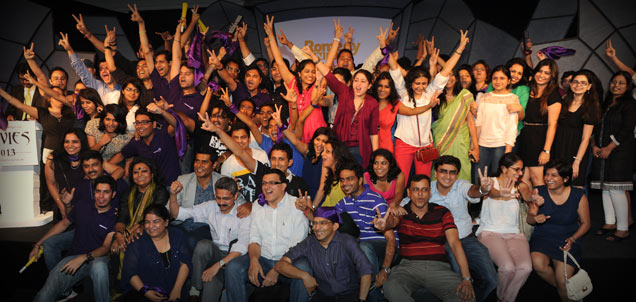
    The victorious Mindshare team winning the Best Media Agency of the Year 2013


    By Johnson Napier


    When an award show in the dynamic world of advertising returns with its next edition, one always expects an element of newness or surprise to come along with it. In keeping with the tradition, Emvies, the annual awards property honouring the best works coming out from media agencies, managed to do just that. The Ballroom at Taj Lands End, Mumbai was a house under deafening noise attack last Friday (September 6) as The Advertising Club hosted the thirteenth edition of its popular awards show. *See Disclaimer


    It is teamwork that matters: Atit Mehta


    It’s a different feeling to see your brand being felicitated at an awards stage that is meant to be dominated by another industry in limelight. But it’s become a habit now for Hindustan Unilever Ltd. that won the Media Client of the Year award at Emvies 2013, a platform that felicitates good work done by media agencies in the year gone by.


    Atit Mehta, Head of Media Services - South Asia for Unilever South Asia opens up on his excitement on winning the top prize at the Emvies and what makes HUL an organisation to vie for. Excerpts…


    Like your Agency of Record (AoR), winning the Client of the Year award at Emvies has become a habit of sorts for you too. Your comments.

    Rather than a habit, the good work getting appreciated is a very satisfying feeling. This year has been great; HUL has again won the Best Media Client of the Year award and our agency has also won the Agency of the Year award so it’s double excitement for us.


    What is the extent to which HUL associates itself with your AoR in reaching out the brand’s message to the masses?

    It’s teamwork that matters; they are our agency partners and whatever work comes out is a collaborative effort.


    What is the thrust that HUL lays on ad spends for its products under various categories?

    We are quite a large advertiser but more than that it is the hard work and sweat put in by the agency members that has resulted in us attaining the top spot this year too.


    How easy or difficult is it to get the desired work done by your agency year after year?

    It’s always a challenge but we push ourselves ahead with the belief that we need to excel and work hard every single day.


    Were you disappointed that some of the entries did not win any awards?

    No, there is no disappointment as such.


    What has been your emphasis on digital as a medium for advertising? How do you see it growing going forward?

    Digital is and will remain an important medium as we go forward.


    While those in attendance will vouch for the extent of euphoria that descended upon the venue, what was more unnerving was the neck-and-neck battle that was on between the Top 3 players every stage of the way. But at the end there had to be a single winner and it was no different this year as that honour was bestowed upon Mindshare, the WPP-owned agency that’s part of the Group M stable. With 165 points and 18 metals under its belt, including 3 Golds, 9 Silvers and 6 Bronzes, the agency just about marched past the others to emerge Agency of the Year for the sixth year in a row. Also, retaining its place as the best of the lot was Hindustan Unilever Ltd. that emerged the Client of the Year for 2013 as well. With 4 Golds, 4 Silvers and 4 Bronze metals to its credit HUL ended at the top of the client list tally with 120 points.


    But while Mindshare proved its dominance yet again what many would like to remember of the night was the manner in which it was challenged by surprise runner-up Lodestar UM. From the fifth position last year, the agency proved that it was right up there when it came to being the best as it finished a close second this year. With the most number of Golds (5) to its credit, the agency closed its tally at 150 points including 7 Silvers and a single Bronze metal. At No 3 was another regular Maxus, which ended its tally this year at 120 points that included 3 Golds, 6 Silvers, and 3 Bronze metals.  Maxus, also part of the Group M stable, was numero uno in the leaderboards for a good part of the awards ceremony.


    In keeping with the surprise element this year, what was also noteworthy was the emergence of another minnow (in terms of awards competence) ‘ibs’ that walked away with the Grand Emvie for work on its client Tata Docomo – Hyper personalization: The world’s first CRM-powered campaign on Social Media. With 65 points, including 3 Golds, it occupied the No 7 spot overall on the leaderboard. Also noteworthy, and surprising, was the presence of creative agency Ogilvy, which gave the big media agencies a run for their prowess, as it occupied the fourth spot with 85 points. It included 4 Golds, 2 Silvers and a single Bronze award with its work on Lifebuoy Roti Reminder and Akanksha Foundation – Classroom Mumbai being awarded across multiple categories.


    A total of 90 metals were handed out to agencies this year that had submitted the highest number of entries in 2013 at 742.


    As for the gold winners, Mindshare won two golds for work on ‘5.2 years of digital content viewed in just six months!’ campaign for Axe Deodorant in the Best Media Innovation – Digital (social media) category while its work on ‘Cholchhe Na Aar Cholbe Na: “Can’t Happen”, Won’t Happen Anymore!’ for ABP Ananda in the Best Integrated Campaign – Media/ Media Property category accounted for the third gold for the agency. As for Lodestar UM, its work on ‘National Headache Reliever’ campaign for Saridon (Best Media Strategy – Consumer Products) was one of the most appreciated and also won it a gold alongwith its work on ‘Making Milk Exciting – The Olympics’ campaign for Amul Milk (Best Media Innovation – Sponsorship), ‘Unfinished Stories’ campaign for Tata Docomo (Best Media Innovation – Print, dailies) and ‘Coke Studio: One with youth’ campaign for Coke Studio (Best Integrated Campaign – Consumer Products). Maxus bagged three golds for work on ‘The Advantage and Disadvantage’ for Fiat that won two golds in Best Media Strategy – Consumer Durables and Best Media Innovation – Digital (Search) categories, while the third gold came from ‘Your Wish is My App’ campaign for Nokia Lumia (Best Media Innovation – TV – Media/ Media Property).

     

    Hindustan Unilever awarded Media Client of the Year


    It’s not been that easy this year: Ravi Rao


    Emvies 2013 could be summed up as the closest contest ever fought between the Top 3 medai agencies in recent years. But it was business as usual for Mindshare as they bagged the Agency of the Year award for the sixth year in a row.


    In conversation with MxMIndia, Ravi Rao, Leader, South Asia at Mindshare shares his excitement of repeating the feat year after year, and, what to expect from the awards going forward.


    Lodestar UM and Maxus nearly toppled you from the top spot but in the end you prevailed and won the Media Agency of the Year title yet again. Did you expect the kind of contest that was witnessed at the Emvies this year?

    It has not been that easy this year. Two agencies Lodestar and Maxus almost gave me a heart attack with many of their works being appreciated. But this year was the sixth year in a row that we managed to win this title. The way the contest was fought this year only means that it is going to be a tough race again next year but I can assure you that we are going to give our best shot next year as well.


    Did you expect such a tough challenge from them?

    I did expect a close race from Lodestar UM and Maxus. I had seen some of their presentations and they were really up there. But all I want to say is that we want to continue to excel and keep giving the others a stiff competition. We will keep doing that all the time.


    Are you disappointed that a few entries did not make the cut and that the Grand Emvie did not come to you?

    There were a couple of shortlists that did not make the mark, so, yes, I am a bit disappointed over there. But that’s life; we’ve got to keep moving forward.


    Any entries or agencies that managed to spring up a surprise this year?

    I think the entry by ibs on Tata Docomo was brilliant. It was an agency that one had not heard of much before but the kind of work that they put up and the awards that they bagged this year makes them worthy of an admiration.


    How has Emvies as an award evolved this year? Are you happy with the way things panned out on this platform?

    I think this is one of the best media awards that you’ll see. Over here, the clients also decide on the calibre of work to be rewarded and for me that’s a huge compliment for the media agencies.


    Any words of advice to your sibling-cum-competitor Ajit Varghese?

    I’d like to say ‘hats off to you Ajit Varghese!’. It was such a close touch-and-go contest all the way. I know they are going to keep coming stronger… and I am prepared for that!


    What do you anticipate for the year 2014 on the awards front?

    I cannot say about 2014 right now but I wish and insist that it is us only.


    The other two big winners from the client’s end were Cadbury India Ltd that bagged a total of 3 Golds, 3 Silvers and 2 Bronze awards while Tata Docomo was third with 1 Grand Emvie and 3 Golds to its credit. Also noteworthy was the Young Emvie of the Year award that was bagged by Farah Siddiqui of Mindshare.


    As for the awards tally, the other winners include MediaCom Communications and ibs that secured sixth and seventh places with 80 and 65 points while DDB Mudra Max with 50 points, MEC with 30 points and OMD India with 20 points finished the tally in the eighth, ninth and tenth positions respectively.


    The awards presentation was interspersed with media professionals performing and competing for team and solo Indian and Western categories of the Band Baja Award.


    *MxMIndia was a Media Partner of Emvies 2013

    Photographs by Puneet Chandok. Courtesy: DNA

     

  • FMCG majors feel the pinch as consumers cut spending

    By Sagar Malviya


    It’s official: rising prices and slowing growth are making Indians check their household shopping list from soaps, shampoos and skincare to packaged groceries and food items.


    Market researcher Nielsen’ data shows that sales growth of more than a dozen key consumer goods categories in the June quarter was lower than both the previous quarter and the year-earlier period, more than one industry insider said.


    Overall FMCG sales grew 11% in value terms in the June quarter, down from 12% in March and 17% in June last year, they said, quoting Nielsen data. Consumer goods companies confirmed the slowdown in demand. “The overall FMCG sector is seeing a slowdown in the last few quarters from double-digit growth few quarters ago to around 2% volume growth now,” Harsh Mariwala, chairman at Marico, said.


    Combined sales of companies including Hindustan Unilever, Dabur, Godrej Consumers, Emami, Marico, GSK Consumer, Nestle India, ITC and Colgate India grew 13% during the quarter ended June, down from 15% a year earlier and 22% in June quarter 2011. Mr Mariwala expressed hope that good monsoon rains and a boost in manufacturing will check the slide.


    “With a good monsoon and boost in manufacturing sector, we don’t expect demand to deteriorate further,” he said. With the rupee on free fall, however, not all share Mr Mariwala’s optimism. Analysts say the Indian consumer industry fundamentals are deteriorating and the tailwinds that supported the sector during the last couple of years are waning.


    “With sharp rupee depreciation and essential commodities like crude and palm oil firming up, the headroom for gross margin improvement looks a lot smaller in second half than in the first half of this fiscal year,” a JP Morgan report dated August 19 said.


    According to data, growth in overall non-food segment slowed to 13% in the year ended June from 15% in the year ended March. The biggest fall was in the male grooming segment where sales growth almost halved to 6% in June from 11% in March.


    Nitin Paranjpe

    Nitin Paranjpe, CEO of the country’s largest FMCG firm Hindustan Unilever, while declaring the company’s June quarter numbers last month had said, “There is a general slowdown across categories. We are witnessing a significant slowdown from early 2013 to the middle of 2013.” To overcome the slowdown in demand, companies are looking to increase or at least maintain their margins.


    “For the first time, we are offering incentives to our sales force to sell higher margin products and have constructed three buckets – gold for high margin, silver for medium margins and bronze are lower margin,” Sunil Duggal, CEO of Dabur, said. Salespeople get more money if they sell gold products.


    Companies with mass-market portfolios hope that consumers will continue to buy staples, even as they check spends on discretionary or premium products.


    Vivek Gambhir, managing director of Godrej Consumer Products, for example, said a lot of the growth slowdown has been at the premium end, and hence his company has been insulated by overall slowdown thus far.


    Source:The Economic Times

    Copyright © 2013, Bennett, Coleman & Co. Ltd. All Rights Reserved

    Licensed to republish


  • Adult brands patronize kiddie channels

    By Shambhavi Anand


    When Lata Diwan went shopping for the household, her 5-year-old daughter Tanya suggested her to choose a certain brand on mosquito repellent. “It will drive the mosquitoes out as well as leave a fragrance around,” the young scholar told her mother.


    Tanya’s knowledge about mosquito repellents comes from an advertisement she watches in between her favourite programmes on cartoon channels, where it’s no longer just toymakers and children’s product brands that advertise. An increasing number of nontraditional advertisers including Maruti Suzuki, Honda bikes and Samsung is advertising on kids’ channels as more children participate in their parents’ purchase decisions and more parents watch television with their children.


    “While traditional advertisers such as GlaxoSmithKline, Hindustan Unilever, Cadbury, Mattel, Kellogg, Perfetti and ITC are amongst our top spenders, close to 50% of our revenues now come from non-traditional advertisers,” says Juhi Ravindranath, ad sales vice-president for South Asia at Turner International India, which owns Pogo and Cartoon Network channels. Most houses in India have one television set and it’s common that children and adults watch it together, and often the younger ones hold the sceptre – the remote control – and decide what to watch.


    Rahul Johri

    So advertisers targeting parents too are turning to kids’ channels. “Advertisers do not want to miss any opportunity of reaching out to their target audience, whether it is mothers, fathers or grandparents,” says Rahul Johri, senior vice president and general manager, South Asia, at Discovery Networks Asia Pacific, which owns Discovery Kids. The maximum growth in terms of adspend on these channels has been observed in fast-moving consumer goods.


    A spokesperson of Pogo channel says unconventional advertisers on the channel include Maruti Suzuki, Honda bikes, Hero Moto-Corp, Micromax, LG, Samsung and Hitachi. “We expect the number of new categories and advertisers to only grow,” the person adds. That’s because it’s seen as a win-win. While the kids’ channel gains from the increased advertiser base, the non-traditional advertiser benefits from the huge secondary target audience of parents and grandparents.


    Santosh Desai, advertising veteran and MD and CEO of Futurebrands India, says, “For marketers there are a couple of advantages of being on kids’ channels. First there will be some spillover adult viewer and children’s role in decision-making for the household has also increased. Secondly, these channels are relatively cheaper in the overall media mix.”


    A study by Cartoon Network, ‘Cartoon Network New Generations 2012′, shows a majority of parents watch television with their kids. After serials, cartoons are the most preferred genre for parents, ranking above news channels.


    About 75% parents spend time watching TV at least 5-6 times a week with their kids. This number is even higher, close to 80%, for parents of younger children. Channels say that in spite of the decent growth, the kids’ genre is extremely under-monetised, with 7% viewership and just 3% of revenue share.


    Source:The Economic Times

    Copyright © 2013, Bennett, Coleman & Co. Ltd. All Rights Reserved

    Licensed to republish


  • Hindustan Unilever sets up lab to train managers on digital media marketing

    By Sagar Malviya & Amit Bapna


    Unilever has set up its first media lab in the country in Mumbai, which will train its managers on digital media marketing and certify all digital initiatives of its Indian unit before they go public.


    The development signals a sharp focus on digital marketing by the country’s largest advertiser, and may make other marketers too to take the digital world more seriously.


    The lab at Hindustan Unilever’s headquarter at Andheri is the fourth such centre globally for the world’s second-largest consumer goods firm.


    Atit Mehta, media services head at Hindustan Unilever, said so far the company has been focusing on doing the similar things much better than others on digital media.


    “Now, we will be miles ahead from everybody else,” he said. The lab will ensure that all digital media campaigns of the consumer goods giant are compatible – from a basic mobile device to smartphone to tablet.


    The company will also increasingly opt for digital hoardings instead of static old banners. Digital media spends in India, although still very small compared traditional media, is growing at a faster rate than television and print as a rapidly rising number of Indians access internet on phone.


    CVL Srinivas

    Experts say HUL’s latest initiative would make other advertisers too to focus more on digital media. “Presently digital in general is under-leveraged. HUL has definitely been ahead of the curve. It’s only a matter of time before more advertisers start making serious investments in the medium,” said CVL Srinivas, chief executive officer (South Asia) at media buying agency GroupM.


    Vivek Bhargava, CEO of digital agency iProspect-Communicate2, says companies have no option but to take digital seriously as more and more consumers are trying to avoid conventional advertising. He says that if companies don’t allocate serious resources on digital marketing, then it could affect their survival.


    Vivek Bhargava

    Globally, Unilever increased its digital ad spends by about 40% in 2012-13. While Unilever has global partnerships with Samsung, Sony’s Arcade Creative Group and EA Sports, its Indian unit isn’t far behind. In the last few months, several HUL managers have been to global headquarters of Facebook and Google among others for training and digital certification.


    HUL launched a India-specific initiative, BE Digital, last year to draw up a complete digital roadmap for premium brands such as Tresemme, Sunsilk, Lakme, Close-up and Surf, where the target audience online is high.


    Source:The Economic Times

    Copyright © 2013, Bennett, Coleman & Co. Ltd. All Rights Reserved

    Licensed to republish


  • Amit Chopra new sales head at STAR, Kevin Vaz is now GM Eng and Bangla channels

    Kevin Vaz

    By Meghna Sharma


    Kevin Vaz, responsible for revenue generation for the entire bouquet of Hindi, English and niche genres under the STAR umbrella will now be incharge of Star Jalsha, Jalsha Movies and the English cluster of the network. He is the new GM of the channels.


    Meanwhile, Amit Chopra who joined Star from Hindustan Media Ventures Limited (HMVL) to handle sports telecast business will be heading the to revenue function.


    Mr Chopra began his career in 1993 with Hindustan Unilever.


    While MxMIndia has confirmed the news, the official Star spokesperson was tightlipped on the development.


    With close to 20 years of experience, Kevin Vaz has spent almost 16 years with Star India. He started his career at the Times of India as assistant manager, where he handled advertising and marketing functions. He joined Star in 1996.


  • Reckitt Benckiser’s Dettol Kitchen ad takes on HUL’s Vim

    By Ratna Bhushan and Sagar Malviya


    In a first for Reckitt Benckiser, the launching commercial for its Dettol Kitchen dishwashing and kitchen cleaning gel shows rival Hindustan Unilever’s Vim dishwash liquid clearly, in a move that may trigger a new advertising war between the two European multinationals.


    The commercial, first aired on Friday, marks the first time the Indian arm of the British consumer good major has directly attacked HUL in its advertising.


    Skirmishes between the two firms have been veiled in the past, although both have repeatedly taken each other to court and advertising watchdog Advertising Standards Council of India (ASCI).


    Officials of Reckitt Benckiser were not available for comment on the campaign. An HUL spokesperson too did not offer any comment on the subject. An official close to the developments said it was only a matter of days before HUL takes action against the disparaging ad.


    Experts say that even if HUL files a complaint to ASCI on Monday, the Dettol Kitchen ads released on Friday would have created maximum impact over the weekend.


    “Such ads gives a very strong message psychologically that it’s not just another product and they can compete with the market leader. While HUL almost has a monopoly in the segment, there could be more action now in an otherwise dull segment,” Nitin Mathur, consumer research analyst at Espirito Santo Securities, said.


    ASCI chairman Arvind Sharma, who is also the chairman & CEO of Leo Burnett in Indian subcontinent, said that featuring a rival brand in a campaign alone does not break advertising codes.


    “In general, the consumer complaints council code allows ads to show a rival brand as long as the claims made in the ad are fact-based,” said Mr Sharma who is also the president of Advertising Agencies Association of India.


    The consumer complaints council checks violations in advertising and initiates action as and when necessary.


    With this move, Reckitt Benckiser seems to have given HUL a taste of its own medicine.


    Two years ago, HUL’s ads for Rin detergent took a dig at rival Procter & Gamble’s Tide, clearly showing pictures of Tide in the Rin ad. P&G had moved the court within a day of the ad going on air, and the ad was stopped within days.


    As reported by The Economic Times last week, Reckitt Benckiser, which also makes Cherry Blossom shoe polish and Airwick air-fresheners, has taken its battle over germ-protection with HUL to the kitchen with the launch of Dettol Kitchen. India is only the second country after Korea to roll out Dettol Kitchen, a global innovation led by India.


    Reckitt Benckiser has positioned Dettol Kitchen as a ‘complete kitchen cleaner’, for use as a dish-washing gel and cleaning other kitchen surfaces like sinks and slabs.


    HUL’s Lifebuoy and Dettol have been rivals for close to three decades.


    The 80-year-old Dettol brand, launched first as an antiseptic liquid in 1933, has subsequently been launched across different categories including soap, plaster, handwash, shaving cream, hand sanitiser, and now kitchen cleaner.


    Vim, also an HUL power brand, has been dominating the dishwashing space for close to 100 years. The liquid dishwash segment is estimated at close to 300 crore, which is about 15% of the 2,000-crore overall dishwashing market that includes bars, powders and liquids. Growing at a rapid 40%, the liquid segment is the fastest growing among dishwashing formats.


    Apart from Vim, Dettol Kitchen will compete with Henkel-Jyothy’s Pril and Exo. Dettol has some 53% of the 300-crore handwash category, followed by Lifebuoy at a share of about 30%. But in soap, Lifebuoy has close to14% share, against Dettol’s 8.2% market share.


    The UK, Slough-based firm over a year ago named India as the headquarters for its South East Asia region, and placed India chairman and MD CM Sethi at the helm of 12 countries including Singapore, Malaysia and Thailand.


    The Dettol Kitchen commercial may trigger an aggressive ad war between British firm Reckitt Benckiser and Anglo-Dutch firm Unilever in India ahead of UK Prime Minister David Cameron’s visit to India from today (Feb 18).


    Source:The Economic Times

    Copyright © 2013, Bennett, Coleman & Co. Ltd. All Rights Reserved


  • Raising the underarm deodorant issue

    By A Correspondent


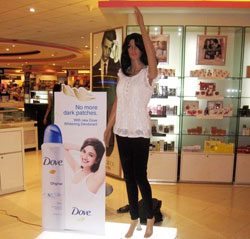
    Retail-media network Aurora Comms, or ‘A Comms’, used in-store mannequins to address the particular problem of underarm exposure among Indian women, in Hindustan Unilever’s campaign targeting upwardly affluent females for Dove’s ‘whitening deodorant’ promotion.


     

    For the campaign, a mannequin was set up in the women’s western wear sections of Central Stores and Shoppers Stop locations across the country. This is on a podium and the mannequin wears a white top with one arm raised. To highlight the ‘no more dark patches’ communication of the deo, this podium is lit up and a cut-out of the product and model placed next to it.


    On the same floor as the mannequin setup, the women’s trial rooms are branded with the promotion too, and the doors and mirrors carry the same visuals as the one next to the mannequin.


  • Suresh Balakrishna now also CEO of Lintas Outdoor

    Suresh Balakrishnan

    IPG Mediabrands has announced the appointment of Suresh Balakrishna as CEO of Lintas Initiative Outdoor. The leadership responsibilities of all the OOH businesses of IPG Mediabrands will now report to Suresh Balakrishna, with immediate effect, according to the official communique.


    Mr Balakrishna, a media veteran with over 25 years of publishing, brand building and media agency experience, had rejoined Lintas Media Group in January this year to roll out and lead BPN, the third agency network of IPG Mediabrands.


    He will be handling this assignment in addition to his current responsibilities as CEO of BPN India.


    Hemanth Shah, Managing Director of the company resigned a month ago and will be with the organisation till the end of August. His next destination is not known. He joined the company two years ago from Times OOH.


    Some of the leading OOH businesses in IPG Mediabrands include Nokia, Hindustan Unilever, Union Bank ofIndia, Coca Cola, Tata Consultancy Services, Expedia, Citibank, Monte Carlo etc.


    For the record, Lintas Initiative Outdoor has 22 offices around India.


  • HUL asked to erase ‘Ice Cream’ from Kwality Walls ads

    By Ratna Bhushan


    India’s advertising regulator has told consumer goods major Hindustan Unilever to stop mentioning its Kwality Walls brand as ‘ice cream’ in certain advertisements following a complaint by top ice-cream brand Amul.


    Kwality Walls is frozen dessert, which looks and tastes like ice cream but is made with vegetable fat and not milk fat. Hence, under Indian laws, it does not qualify as ice cream.


    “The consumer complaints council has concluded that the mention of Kwality Walls as an ice cream is misleading,” said Alan Collaco, secretary general of Advertising Standards Council of India, the self-regulatory body of advertising industry.


    The advertisements in question are in the form of advertorials, or advertisements designed in the style of editorial matter. HUL published three print advertorials, each featuring a celebrity talking about Kwality Walls brand, complete with heading, extensive text and photograph. They feature singer Shaan, chef Sanjeev Kapoor and TV actress Smita Bansal along with their families.


    An HUL spokesman said the company will replace the word ‘ice cream’ with ‘frozen dessert’ in the ads. “We have agreed with ASCI that wherever the word ice-cream appears in the said advertorial, it should be considered as an expression of opinion of the celebrity featured in the advertisement. However, with a view to close the issue amicably, we agreed with ASCI to include the words ‘Kwality Walls frozen dessert,’” he said in an email response to ET’s query.


    Gujarat Cooperative Milk Marketing Federation, which markets Amul, had complained to ASCI that the mention of Kwality Walls as ice cream was a deliberate attempt to mislead people.


    “The advertorial makes a clear mention to Kwality Walls Strawberry Cheesecake being an ice cream when in reality it is a frozen dessert,” wrote Nitin Karkare, COO of ad agency DraftFCB Ulka that represents Amul, in a letter to the regulator soon after HUL released the first ad featuring Shaan.


    “This is a case of a deliberate attempt at misleading the consumer, considering that the term has been strategically highlighted and hence cannot be a case of oversight,” he added.


    The ice cream-plus-frozen desserts market in India is estimated at about Rs1,700 crore, with market leader Amul holding about 40 per cent share. Other big players include Kwality Walls, Ahmedabad-based Vadilal, NDDB’s Mother Dairy and Ravi Jaipuria group’s Cream Bell.


    Source: The Economic Times

    Copyright © 2012, Bennett, Coleman & Co. Ltd. All Rights Reserved


  • HUL, Dabur & Colgate Q1 sales up 20%, next few Qs challenging

    By A Correspondent


    Consumer goods companies Hindustan Unilever, Colgate-Palmolive and Dabur said the next few quarters could be challenging if the monsoon is weak and the rupee continues to fall after reporting about 20 per cent jump in their first quarter sales.


    Hindustan Unilever, the country’s largest consumer goods company, whose presence in a range of daily consumption items such as soaps, shampoos and food makes its performance a good proxy for consumer sentiment, said it has not seen any evidence yet of customers trading down for cheaper products but delayed monsoon, weak rupee and volatile raw-material prices remain a concern.


    “When we look into the medium term, we believe that the growth drivers for FMCG are really positive,” said R Sridhar, chief financial officer at Hindustan Unilever. “But when we look at the next 2-3 quarters, clearly there are few challenges-the final shape of how monsoon distribution happens, rupee has depreciated quite significantly and inflation continues to be at a very high level,” he said.


    Dabur CEO Sunil Duggal too said: “As of now, we have not witnessed any slowdown in rural consumption, but there could be some amount of demand contraction this (July-September) quarter.”


    HUL’s total income rose 20 per cent to Rs6,378.7 crore in the April-June quarter from Rs5,323.6 crore in the year-ago period, outperforming the broader FMCG industry that grew 16 per cent during the quarter. Profit after tax before exceptional items at the Indian unit of Anglo-Dutch Unilever rose 48 per cent to Rs855 crore in the three months to June. Exceptional items included sale of properties worth Rs607 crore.


    The company said it was able to increase its operating profit margins by 180 basis points. Its cost of goods sold during the period was 200 basis points lower than in the year-ago period.


    During the quarter, HUL’s sales of soaps and detergents-its largest business segment-rose 24 per cent to Rs3,163.05 crore, helped mainly by price increases. Double-digit volume growth drove up sales of personal care products by 17per cent  to Rs1,847.08 crore, while beverages sales were 7per cent  higher at Rs654.07 crore. New launches in brands such as Kwality Walls helped its packaged foods business grow 17 per cent to Rs436.98 crore.


    What pleased analysts the most about the results was the companies’ sustainable volume growth. HUL, Dabur and Colgate-Palmolive grew their volumes between 9-12 per cent as the makers of daily household products sold more goods despite increasing prices. “Across companies, margins have expanded and ad spends increased too. With sales of premium products growing, there isn’t even first signs of slowdown yet,” said Anand Mour of Ambit Capital. Colgate-Palmolive reported a 17 per cent jump in first quarter profit at Rs117 crore, while its sales grew 20 per cent at Rs736 crore. “In an inflationary environment, the company’s continuing efforts and focussed programs to enhance efficiencies and reduce costs continue to yield strong, positive results, helping to maintain margin and fund investments in building and strengthening brand equity and the business,” Colgate said in a statement. The company said prudent price increases and cost management helped it maintain its strong gross margin.


    Dabur reported 21 per cent jump in April-June sales at Rs1,461.9 crore, while net profit increased 17 per cent year-on-year to Rs149.4 crore, riding on categories like health supplements, shampoos and food. Faster network expansion in rural markets too helped the firm drive sales. Dabur CEO Duggal said the company was forecasting double-digit growth over the next two quarters although there could be some slowdown in demand.


    Source: The Economic Times

    Copyright © 2012, Bennett, Coleman & Co. Ltd. All Rights Reserved


  • FMCGs brace for a weak monsoon

    By Ratna Bhushan & Sagar Malviya


    Consumer goods companies are busy firming up contingency plans to stem any decline in volume sales in case a deficit in monsoon rainfall hit crop yields, escalate food prices and impact consumer spend.


    Companies such as Dabur and Parle Products said they will delay price increases, emphasise on low-priced packs of Rs2, 5 and 10, explore new value price points and step up promotions to prevent possible downtrading, or consumers switching to cheaper products, in case of a crisis.


    “If there’s a monsoon deficit, we would obviously look at protecting volumes,” said Sunil Duggal, CEO of Dabur, which makes Vatika shampoo and Babool toothpaste.


    “Contingency plans could include a combination of things like putting off price increases, accelerating focus on smaller packs and allocating more spends on consumer promotions, depending on where the deficit is,” he added.


    BK Rao, general manager at top biscuits maker Parle Products said the maker of Parle-G, Monaco and Hide & Seek biscuits will focus on smaller price points if the situation is bad.


    The monsoon has revived significantly in the past week to reduce total deficit in the country so far to 22 per cent from 31 per cent and accelerated crop planting. But crop yields may still be lower as rainfall has been uneven, with some regions, including parts of Karnataka and Maharashtra, remaining practically dry for three weeks. Economists warn that food prices may rise sharply if rainfall weakens again.


    FMCG companies have been bucking the overall slowdown in the economy and posting an average 15 per cent growth, but a weak monsoon could change it.


    “A weak monsoon will naturally reflect on costs and we will have to work around that. The industry will feel the impact around September-October,” said Chitranjan Dar, divisional chief executive of tobacco-to-chips maker ITC Foods.


    While impact of inflation on the premium urban rich is not very significant, mid-rung and rural demand is strongly linked to the monsoons. Thus, top FMCG firm Hindustan Unilever, Dabur and biscuit maker Britannia, which have large rural presence, could be hurt more than Nestle and GlaxoSmithKline Consumer, which have an urban focus for their products, say experts.


    Analysts say consumer goods companies tend to push ‘magic price points’ of Rs2, 3, 5 and 10 in an inflationary scenario to minimise any negative impact on discretionary spends. Such low-unit packs account for over 25-30 per cent sales of makers of shampoos, hair dyes, biscuits and snack foods.


    Also, with local competition always posing a threat, established players would have to step up volume discounts and consumer promotions in a weak monsoon scenario. A significant 70 per cent of low unit packs are sold through kirana shops (mom and pop stores).


    “Small SKUs and distribution expansion may save the day. Downtrading too would be arrested at the small-pack level,” Shirish Pardeshi, executive director and co-head, research, at financial services firm Anand Rathi Securities, wrote in an investor note two weeks back. “Rural expansion of distribution (for example, HUL’s Project Shakti and Emami’s Swadesh initiatives – both aimed at accelerating expansion in rural markets) would help arrest drop in consumption,” the note said.


    Some analysts, however, believe the impact of a weak monsoon will be limited on rural consumption because dependence on agricultural income has been declining. “Our discussions with rural trade and consumers have always highlighted that one bad monsoon does not result in consumption declining. Instead, it leads to trade credit terms becoming more onerous in rural India,” Ambit Capital’s Anand Mour wrote in a report.


    Some companies such as Marico, maker of Saffola edible oil, say they would wait for some more time before start worrying about monsoon. “The June-July period is too early to take any decision. We will have to wait for August to check the monsoon trend and get a clearer picture,” said Marico CEO Saugata Gupta.


    Source: The Economic Times

    Copyright © 2012, Bennett, Coleman & Co. Ltd. All Rights Reserved


  • Kiranas dump big brands for high margin Bharti Walmart wares

    By Sagar Malviya


    A few months ago, Dhananjay Jain, a grocery owner at Vidisha Road in Bhopal, decided to stock two alien brands – Right Buy and Members Mark – because they offered much higher margins than national brands and had lower price tags. Today, these floor cleaners, tea and cornflakes brands contribute nearly 20 per cent to his monthly sales.


    Many of his consumers may still have no idea where these brands priced 10-30 per cent less than those of Hindustan Unilever, Dabur and PepsiCo are sourced from. Well, they come from the world’s largest retailer, Walmart.


    Mr Jain gets these brands from a Best Price Modern Wholesale outlet – run by Walmart’s joint venture with Bharti Enterprises – just two kilometres from his store.


    Walmart is not allowed to sell directly to Indian consumers yet, but its brands across some three dozen categories have started sliding into Indian homes, as its cash-and-carry venture becomes a hit among grocery shop owners.


    “The idea is that the reseller should make more profits by selling our brands than he does by selling national brands,” said Arvind Mediratta, chief operating officer of Bharti Walmart. He said the firm’s private labels adhere to all the quality norms despite their lower price tags.


    Bharti Walmart operates 17 cashand-carry format Best Price Wholesale outlets, selling products to licensed neighbourhood stores, schools, offices and large enterprises. It has more than 3 lakh members, who own grocery stores.


    The firm launched Right Buy and Members Mark after phasing out its earlier brand Great Value, which is now restricted to Bharti’s Easy Day supermarket chain.


    So far, Walmart has developed a network of 100 suppliers to make private label products ranging from groceries, home care and personal care products to apparel and stationery. And it may soon get into categories such as soaps, shampoos and detergent. “We are planning to add several more categories in coming months and open over 10 outlets by next year,” Mr Mediratta said.


    Company officials say its brands already control 20-22 per cent share in most categories at its members’ outlets. Some shop owners even say they have stopped stocking national brands. “In categories such as floor cleaners and dish washing, we have stopped stocking national brands as consumers just want the lowest priced products in these segments,” said Mohammed Fayaz, a storeowner at Guntur in Andhra Pradesh, where Walmart has opened two wholesale outlets.


    What excites kiranawallahs is the huge margin they get. For instance, a 500ml bottle of Walmart’s toilet cleaner brand sports a price tag of Rs55 but is available to a kirana owner at Rs37. That makes the retailer’s margin a whopping 48 per cent. National rivals such as Reckitt Benckiser’s Harpic and HUL’s Domex are sold at Rs58, with the grocer earning 12-15 per cent margin on an average. Bharti Walmart also provides 10-30 per cent higher margins than national brands on tea, colas and juices that allow shopkeepers earn 10-30 per cent higher margins than national brands. Consumer products companies have been increasingly fighting private labels of modern retailers.


    In fact, private labels outsell several national brands in home care and packaged food categories at the outlets of retailers such as Future Group, Reliance Retail and Aditya Birla Group.


    FMCG companies didn’t feel too threatened because modern trade accounts for just 7-10 per cent of their total sales. But now, with Walmart’s private labels finding place in consumer companies’ largest sales channel – the country’s ubiquitous neighbourhood stores – this trend could become a headache for them.


    “As Walmart and other similar players scale up their cash-and-carry operations, given the price consciousness of the Indian consumer and the fact that kirana stores are here to stay, it is likely that this trend will start to worry large consumer goods companies,” said Siddharth Bafna, partner at advisory firm Lodha & Co.


    Not everybody agrees. The chief executive of a leading consumer products firm, however, said such private labels would not challenge big brands in evolved categories such as personal care. “There are always some categories, especially commodities, that are more prone to losing out to private labels because of pricing. However, several brands in the personal care segment that keep innovating aren’t threatened by private labels even in markets where modern trade is evolved,” the person said, requesting anonymity because Walmart is one of its partners.


    Some shopkeepers say it’s not easy to make people try new brands. “We are able to convince some consumers to opt for lower priced Walmart brands. But there are still many consumers who want to buy popular brands from national companies even if the price is higher,” said Jas Karan Singh, a store owner in Amritsar, where Walmart opened its first cash-and-carry outlet four years ago. Private labels accounted for around 7 per cent of Bharti Walmart’s annual sales of Rs 1,876 crore last calendar at over Rs 130 crore.


    Worldwide, the US retail giant is performing well despite the slowdown. For the fiscal year ended January 2012, it increased net sales by 5.9 per cent to $443.9 billion and ranked first on the 2011 Fortune 500 list of the world’s largest companies by revenues.


    Source: The Economic Times

    Copyright © 2012, Bennett, Coleman & Co. Ltd. All Rights Reserved