Tag: Havas Media

  • Mother of all Brand Surveys!


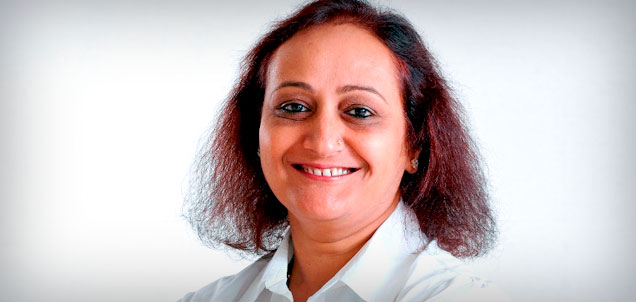
    You’ve read about the Meaningful Brands survey on MxM already. Here’s a link, if you missed it: http://www.mxmindia.com/2015/11/amul-is-indias-most-meaningful-brand/. Last week, we met Anita Nayyar, CEO of Havas Media India and South Asia at her office in Gurgaon, Delhi NCR, for a freewheeling discussion on the study and more. The study is so consumer-centric, that there is a valuable lesson in there for companies and their CMOs on how they can improve their brands’ standing, Nayyar told Pradyuman Maheshwari


    There are brand surveys and brand surveys. How is this different from the others?

    This is the mother of all brand surveys. The Meaningful Brands Survey looks at a brand in totality – how it is meaningful to people, the community or the market place. I think this is a complete study, and it doesn’t have the ‘most liked’ or ‘most popular’ brand type of thing.


    Except that what is meaningful to me may not be meaning to you and vice versa…

    So the study pans across three parameters – personal well-being, collective well-being and the marketplace. As a consumer, I need to figure out how a brand is more meaningful to me; collectively, how it is meaningful for society at large, and finally, does the marketing manager actually think his/her brand is far more meaningful try to project the brand in the marketplace that way?


    But how does the survey help a brand apart from the fact that it looks on the CMO’s CV?

    We don’t do this study for it to appear on the CV of the CMO. But we do take a lot of attributes into account when we do the survey: Pricing, packaging, whether the brand contributes to good health or not, whether it makes any difference to people’s lives, how it is doing versus its competitors and such. These attributes can be interestingly used by marketing, not only to look at brand health, but also in the communication for the brand. For instance, if the pricing is low, is it perceived as a low quality brand? When you get into the details of the study, you can get lots of cues from it that brands can use [to improve themselves].


    But in your Top 10 you do not have brands from the Tata, Birla and Ambani groups –brands that one would think are an integral part of the economy and are hugely trusted…

    This is the third year of the study and as we go along, we will add more brands. Last year, the Tata Group was also one of the top meaningful brands but as we added more categories, like food, [groups like] Amul became more relevant. The study also allows for year-on-year tracking, so I could figure out the meaningful brand index core for Tata, Amul or LIC. Whether they are going up or down or what is the attachment score for these brands. So, today, Amul is the most meaningful brand out of the 100 brands [we have considered] across the country, but LIC has the highest attachment score. That means if LIC vanishes tomorrow, then 86-87 per cent people will be worried and concerned.


    In the past few years, private insurance players have been creating some great advertising around their brands. Surprising, that this does not necessarily make them more meaningful in the eyes of the consumer…

    Yes, good creatives do not make you meaningful, good actions do. Take the case of LIC. When the Uttarakhand floods happened, LIC was one of the companies who was there doling out insurance monies and reimbursements to [the affected] people. When addressing why LIC is a top brand, we take into consideration, for instance, the ease of getting your reimbursements, the presence of that company during calamities and such. Today, getting insurance cover out from a private company is a nightmare. The ease of transacting business, the security people think a brand brings to them and obviously the trust, has led the brand to becoming a very meaningful one over time.


    Globally, Samsung is the No. 1 brand, but it’s #10 in India. Why this variance between the Global and Indian Top 10?

    That will always be there because brands which are important in one country may not be important in another. The relevance of the brand matters in the market. The classic example again is LIC; nowhere else is insurance as relevant as it is in our country.


    How come brands like Dettol or Colgate, which are such an integral part of our lives, and are also meaningful and helpful, don’t figure in this list?

    The oral care category is not covered. Like I said earlier, you have to look at the categories that we have covered. I am sure when we add more categories you will find Colgate or Pepsodent or Dettol or Lifebuoy there.


    Speaking of meaningful, shouldn’t some public undertakings, like BEST buses in Mumbai or the Delhi Metro, also be considered since they are important in the lives of consumers in these places?

    They should. But like I said, we will definitely add on more brands in the coming years. Three years ago when we launched the study, we had just 25 brands. This year, we have a hundred.


    As costs go, having 13,000 respondents across the country means this is an expensive endeavor. So are people paying for it?

    One of the issues with research – and this is not country specific – is that it costs a lot of money. We have not been funded by anybody to do this research, but invested a lot both globally and in the India perspective. Three years ago, we had just 25 brands. We have increased it to a 100 now, and in our fourth year, we will have 150 brands. So it costs us a lot of money and once we have more funds, we will be able to make the study more elaborate. We would definitely be happy for brands to take a little financial load off us, but we will continue to do the study nevertheless.


    A part of this interview first appeared in dna of brands on Nov 23. Don’t miss the interview with Anita Nayyar on BrandStand on Zee Business on Saturday, Nov 28 at 1.30pm and Sunday, Nov 29 at 7.30pm

     

  • Amul is India’s Most Meaningful Brand


    By A Correspondent


    Amul has emerged as India’s Most Meaningful Brand as per the Havas Media ‘Meaningful Brands’ study announced today. This is the study’s sixth edition globally and for the third year in India.


    In India, ‘food’ is one of the most meaningful sectors, according to the study, attaining strong attachment and trust. Food brands are especially meaningful for making our daily lives better with their rational benefits of savings, convenience, health and better nutritional habits. Local brands like Amul take the lead with multinational corporations like Cadbury who introduce local brands to resonate with consumer context and tastes, locally, according to a communique.


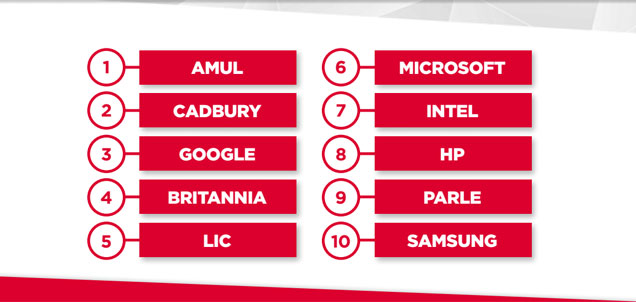
    The Top 10 Meaningful Brands 2015 are as follows:

    India: Amul, Cadbury, Google, Britannia, Life Insurance Corporation (LIC), Microsoft, Intel, HP, Parle, Samsung


    Global: Samsung, Google, Nestlé, Bimbo, Sony, Microsoft, Nivea, Visa, IKEA, Intel.


    The findings note that Indians have the highest attachment towards Life Insurance Corporation of India (LIC), the state-owned insurance group. Interestingly, 86% of people would care if LIC disappeared tomorrow (globally most people do not care if 74% of brands disappeared the next day).


    Meaningful Brands, Havas’ metric of brand strength, tracks 1000 brands and 300,000 people over 34 countries, across 12 industries. The India leg, its most extensive yet, covered 100 brands, 13000 people, 11 sectors, across the country. The research covers all aspects of people’s lives, including the impact on collective wellbeing (the role brands play in our communities and the communities one care about), in personal wellbeing (self-esteem, healthy lifestyles, connectivity with friends and family, making lives easier, fitness and happiness) and marketplace factors, which relate to product performance such as quality and price.


    Further, Asia Pacific stands out as one of the best relationships between consumers and brands from across the globe. According to the study, in India, brands have a high level of meaningfulness and are seen as providers of personal and collective wellbeing. They are viewed as much more than functional products. Brands here are also seen to be meeting consumers’ expectations more than in any other region. Sample this: 75% of Indians believe brands should play a role in improving our quality of life and wellbeing; the Asia Pacific the average being 69% and the globally average 67%. More than half i.e. 67% of Indian’s feel that brands are working hard at improving our quality of life and wellbeing, compared to an Asia Pacific average of 55% and Global average of 38%.


    The study found that for every 10% increase in meaningfulness, a brand can increase its purchase intent by 6.6%, repurchase by 3.2% and price premiums by 10.4%, statistically demonstrating that a brand’s


    Speaking about the study, Anita Nayyar, CEO, Havas Media India & South Asia, explained:  “This is our largest India study to date in size and scope. Marketers will be encouraged to know that India once again stands out as the No.1 country, globally, where consumers have the closest relationship with brands. India is also the most ‘grateful’ country, rewarding meaningful brands, in business terms. We are seeing that in a developing economy like India, unlike the West and more developed economies, people are more trusting of brands. People here believe brands can play a meaningful role in their lives and that brands are working hard towards improving our quality of life and wellbeing. This creates tremendous opportunities for brands in India to communicate and connect with their customers, in our organic world – which is at the core of the Meaningful Brands Project.”


    Added Mohit Joshi, Managing Director, Havas Media Group India: “People in India are happy to have brands as partners and as enablers to help them improve their quality of life and wellbeing. While in the West there is a high commoditisation of brands, people in India,have ‘high expectations’ and ‘reward’ those brands that contribute to their wellbeing – this is the second time in a row that LIC has scored as the brand with the highest attachment. The study throws open exciting possibilities for marketers and brands to interact with their customers.”


  • Havas Media wins integrated mandate of HolidayIQ

    By A Correspondent


    Havas Media Group India has won the Integrated media mandate of HolidayIQ.com, a travel community and holiday’s recommendation engine,in a multi-agency pitch. The duties will include traditional, digital and mobile solutions. The estimated size of the business is upwards of Rs 30 crores, as per a Havas Media communiqué.


    Speaking on the association, Hari Nair, Founder CEO, HolidayIQ said, “We believe in the science of holidays and Havas Media delivered an impressive scientific, strategic approach to the business which was in sync with ourobjectives. Young, professional and passionate we look forward to working with this Havas Media team.”


    “The recommendations from Havas Media had a good balance of data and content. Their deep understanding of the category and their thought leadership made them win this mandate,” said Diptakirti Chaudhuri, CMO, HolidayIQ.com.


    Anita Nayyar

    Commenting on the win Anita Nayyar, CEO, Havas Media Group-India and South Asiasaid, “It is a great win for us.  Bengaluru is an important market for us and we are seriously investing time and talent in expanding our operations here.” Added Mohit Joshi, Managing Director, Havas Media Group-India, “We are glad that our focused efforts and strategy towards acquiring the integrated media mandatesof new age businesses is paying off.”


    The win comes on the back of Havas winning the integrated media business of BlueStone.com.


    Both these businesses will be handled out of the Havas Media Bengaluru office in addition to the duties of Quikr, which is its lead account in the market.


  • Havas Media wins integrated media AOR of ClubMyCab

    By A Correspondent


    Havas Media announced the win of the Integrated Media mandate of ClubMyCab in a multi-agency pitch. The account will be handled from the New Delhi office.


    ClubMyCab is a ride sharing app that makes ride sharing safe and fun. The biggest obstacle to ride sharing taking off in a big way in India is that people don’t feel safe sharing a cab or car with strangers. ClubMyCab believes that sharing works best with people you trust – friends, colleagues and neighbours – not with strangers.


    ClubMyCab allows one to create these trusted “clubs” of known people who travel the same routes as you and start sharing with them. Examples of clubs could be – your home to office, home to airport, office to airport, etc. – essentially routes that someone travels on frequently. ClubMyCab helps you reclaim 3-4 hours of your life everyday by travelling in comfort and being able to catch up on many other things – chatting with friends, reading a book or just grabbing a nap.


    Pratul Chopra

    Speaking on the appointment Pratul Chopra, Founder-CEO, ClubMyCab, said, “Ride sharing is still a nascent concept in India and requires building customer awareness towards the benefits. We are therefore partnering with Havas Media to take this message to our customers. We believe Havas Media’s vast experience and established infrastructure in customer communication design and delivery will be of immense value to ClubMyCab.”


    Anita Nayyar

    Anita Nayyar, CEO, Havas Media Group-India and South Asia said, “ClubMyCab is an innovative concept and very necessary in the daily lives of Indians. Comfort, affordability and above all safety are the key drivers in travel today and ClubMyCab offers these. More so travelling in a more social environment helps beat the traffic grind and also allows for a happier disposition and hence higher productivity. We look forward to partner with the team as they scale in India.”


  • Madison Media wins Media AOR of Shaadi.com

    By A Correspondent


    Madison Media Sigma has won the media mandate of Shaadi.com, one of the largest matchmaking portals in India. Madison Media Sigma was chosen after a multi-agency pitch. The account will be handled out of the agency’s Mumbai office and the estimated size of the account is Rs. 50 crores. Earlier, the media buying duties for the brand were with Havas Media.


    Shaadi.com, one of India’s best known brands and the world’s largest matchmaking service was founded with a simple objective – to help people find happiness. The company pioneered online matchmaking in 1996 and continues to lead this exciting category for more than a decade. By redefining the way Indian brides and grooms meet for marriage, Shaadi.com has created a world-renowned service that has touched over 30 million people.


    Says Aditya Save, Chief Marketing Officer, Shaadi.com on selecting Madison Media, “We believe that great marketing work requires able agency partnerships & hence are delighted to have Madison Media Sigma as our media partners. We are looking forward to working with them to do some innovative & disruptive media work.”


    Sam Balsara

    Sam Balsara, Chairman & Managing Director, Madison World said, “I am delighted that Shaadi.com has found Madison Media to be worthy of handling their unique business. We are thrilled to be associated with Shaadi.com. Matchmaking in itself is challenging and partnering with World’s No 1 Matchmaking Service is a big responsibility. With our strong experience of clutter-breaking, engaging communication campaigns across industries, we are confident of taking the brand to greater heights.”


    Madison Media Group has been on an account winning spree, having won a host of new businesses in 2015 including Snapdeal, Viber, Lenskart.com, Zivame.com, Metro Cash & Carry, Gaana.com, Cricbuzz.com, Amul Hosiery, DHFL and Bandhan Bank, amongst others.


  • Havas Media wins digital mandate of Turtle

    By A Correspondent


    Havas Media has won the digital mandate of Turtle Limited. The Turtle mandate includes media planning and buying and digital solutions including social, search and mobile. The account will be lead out of Havas Media’s Kolkata office.


    Turtle has a pan India presence with its own Turtle Stores as well as TurtleOnline.com. It also retails through leading online and store-in-store outfits which also includes the large format stores.


    Shitanshu Jhunjhunwalla

    Shitanshu Jhunjhunwalla, Director Turtle Limited said, “Turtle is young and ambitious. We are on a high growth path and looking to expand our pan India footprint. At our core is delivering value, variety, quality and a great experience to our customer. Havas Media shares the same passion and philosophy of being meaningful. Their understanding of the category and customised digital strategy are in line with our growth plans and we look at them as long term partners.”


    Anita Nayyar

    Anita Nayyar, CEO, Havas Media Group India and South Asia explained, “Turtle is in a fast growing, interesting and challenging category. Today’s Indian male is always on the move, has a sense of style, likes choice and dresses for the occasion. We look forward to partnering with Team Turtle to scale their offering to the digitally engaged mobile Indian male.”


    Mohit Joshi

    Mohit Joshi, Managing Director, Havas Media India, continued, “This is a good win – a great brand and team to work with. Havas has been on a winning spree of mandates with digital focus. We are glad that clients find us as the go-to brand keyed in on their marketing plans. The win further boosts our Kolkata operations.”


  • Havas Media wins Integrated mandate of Arpita Agro

    By A Correspondent


    Havas Media announced the win of Arpita Agro Products (P) Ltd. The media mandate includes both traditional and digital duties. The account will be handled from the Kolkata office.


    Arpita Agro Products (P) Ltd. is a leading manufacturer and supplier of Herbal Neem Products which include popular brands such as Nimyle, Nimwash, Nimit, Nimglo Skincare, Nimglo Glycerine and Nimgreen. Viable Alternative Products forms the cornerstone of  Arpita Agro Products, which was conceived with the vision of providing herbal and organic alternatives to the chemical products available in the market that are toxic and harmful for consumers. The products are safe for use in homes, hospitals, schools and various other institutions, personal care and agricultural use.


    Speaking on the appointment, Arpita Majumdar, Head of Marketing, Arpita Agro Products Pvt. Ltd. said, “We are very passionate about the company we have built and our innovative natural product range. This is the same passion we found in Havas Media. We are looking to scale the brand further – Havas Media has the experience, understands the category and has shown us the strategic approach across media from our brand perspective. We see them as a long term partner.”


    Commenting on the win Anita Nayyar, CEO, Havas Media Group India and South Asia said, “It is a good win and the ‘natural’ focus of the products is important to customers today. We look forward to building another Meaningful Brand. It further consolidates our Kolkata operations.”

  • #ZeeMelt15: Multiple screens, many needs

    By Labonita Ghosh


    Digital is mainstream

    Adam Ostrow, Chief Strategy Officer, Mashable

    “In 2015, digital culture is the mainstream culture,” says Ostrow. Statistics show that the size of the online market has quadrupled in the last couple of years, he points out. Among other curious findings is the fact that about 38 per cent of two-year-olds now use mobile devices. However, while ad revenues for TV and broadcast are rapidly shrinking, as per research by Google, about 56 per cent of digital ads are never seen. Ostrow points out a few key trends in the media and advertising space. Social media has become primarily a mobile activity, he says. People are turning to social platforms for news and entertainment. “To succeed in 2015, you have to be relevant in your feed, you have to be able to draw attention in seconds,” he says. Nowadays, on a social media page, posts from advertisers and any corporate house are competing with posts from friends and family. You have to find a way to stand out of the crowd, he says emphatically, adding: “In a world where everyone is a content creator, data provides your competitive edge.”


    Content no longer king 

    Joshua Black, CEO, GroupM

    “If you believe that content is king, you’re probably still stuck in the 80s,” says Black. “Content is not king. The days of capturing a mass audience through television are over. If you’re not in the right place, distributing your content to audiences where they are, when they want it and how they want it, you’ve failed.” Today, the consumer is in control; people no longer have to sit before their TV waiting for their favourite show. “People are also always on the go,” says Black. “They don’t live in their houses any more. They live in offices, in coffee shops or even outdoors.” So content has to reach them wherever they are. Consumers want content in a specific way too. Studies in the US have shown that large numbers of people report binge-viewing their favourite TV shows, sometimes for six or eight hours straight. Clearly, consumers want control over this sort of consumption. “Producing great content is not a strategy,” says Black. “It’s only a part of the strategy.” The bigger, more critical part is delivering it, in a custom-made manner.


    Too many screens

    Tom Goodwin, SVP Strategy and Innovation, Havas Media

    There was a time when the TV was the most important screen in people’s lives. Then came the laptop. Now there are tablets, mobile phones and digital watches. A host of screens are competing for our attention. So what is a marketer to do? The answer, says Goodwin, is not to make ads smaller; but to “reimagine advertising for the future not by the size of the screen, but by the richness of data all around us.” Indeed, marketers will also have to keep some other things in mind. While the phone has become a gateway to everything, it will continue to become a thinner, more personal web experience. Moreover, the debate is no longer about digital versus traditional marketing; it’s just the modern world one has to cater to. Similarly, it’s no longer TV versus video; it’s just about video being viewed on multiple and different screens. “A whole generation of people will grow up with no concept of what it is to go offline,” says Goodwin.


    TV is a second screen

    Huib van Bockel, Marketing and (Social) Media Expert, The Social Brand

    Just as there is a whole generation that might never know what it’s like to be offline, there is likely to be a whole generation that will never know what a TV commercial is. Huib van Bockel has actually glimpsed such a future. On a recent vacation, van Bockel sat his kids in front of a TV to keep them occupied. After some time, his six-year-old daughter came rushing to him to say the ‘film’ they were watching was bad one because it had a man who was only talking about toothpaste. van Bockel explains that children today (his included) are so used to TiVo, provisions like TVadblocker or ad-less channels like Netflix that a whole generation might grow up never seeing a TV commercial. And that will pose a new challenge to traditional marketing. “Online has already or will soon pass TV,” says van Bockel. “Unlike an earlier time, the television is now your second screen. Your mobile phone is your first. There is no longer an ‘audience’ waiting for your message.” Consumers will decide, with just one swipe of their mobile screen, if they like or dislike a product. So brands have literally one second to grab their attention.


    It’s all about the moments

    Parminder Singh, Managing Director for SEA, India & MENA, Twitter

    Singh feels the important thing that marketers need to worry about today are the changing rules of customer engagement. After all, the mobile phone is less of a voice device today and more of both a content provider and a content creator (even when you take a selfie and upload it, it counts as content). According to Singh, in 2015, there are eight million connected devices. By 2020, this figure is estimated to grow to 50 billion. “We are in an age of digital Darwinism,” says Singh. “Only those who are adaptable to change, will survive.” Singh does provide solutions, too. He says there are at least two ways to improve engagement. First, to find the relevant moments, and then to create great content around those moments. “Brands don’t just have target markets any more, they have target moments,” he says. As a Twitter study shows, people tweet a lot during the Oscars or the World Cup, but they also tweet about special “moments” during their day, like the sunrise or a special meal.


    Mobile is the future

    Tomi Ahonen, Author and consultant

    The average smartphone owner looks at his or her phone at least 221 times a day, says Ahonen. He should know; among other things this long-time observer of the mobile industry has written 12 books on the subject exploring practically every aspect. “The mobile industry is worth 1.6 trillion dollars [as of 2014],” says Ahonen. “It is as big as the FM radio, internet, personal computers, and television and landline business combined. And its only 35 years’ old. While all of the other media continue growing, mobile is the future.” Indeed, there will be a ‘grand convergence’ of other industries with mobile, says Ahonen. “We all know that media is merging with the internet, which in turn is merging with advertising, which is then merging with mobile,” he says. “In all, some 17 industries will eventually land in the mobile space.” That is, they will find ways to do business on the mobile platform. “And the golden age of the mobile is only now starting,” says Ahonen. So what should marketers do? Jump on the mobile bandwagon, of course, with creativity and imagination. “But don’t spam and don’t spy,” says Ahonen. “Opt in to serve your customers better.”


    Navigate well through fragmentation

    Martin Sorrell, CEO, WPP Plc

    Sir Martin has no doubt that mobile phones and mobile content will become increasingly more important. At the same time, so will data (“Big Data is just a sexy term that trips lightly off the tongue”). So what can agencies do to keep pace? “We’re doing a lot to stimulate creativity and programming to various kinds, including lot of native advertising and sponsored content for mobile,” says Sorrell of WPP’s initiatives. But this will only get more challenging, he cautions. Digital today comprises about 10 per cent of the market. But as it grows, the market will get more fragmented. The role agencies will then have to play is to integrate the various kinds of media and lead their clients safely through the fragmentation jungle in a safe and coordinated way. Shouldn’t be too difficult for Indian agencies, however. Sir Martin believes India has the best talent in the world in the A&M sector, and that this will always be the case.


    Need ‘wide’ data, not Big

    Jason Harrison, Worldwide CEO, Gain Theory

    In this session about what keeps marketers up at night, Harrison said he found a few common ‘pain points’ in this group. They often find themselves swamped by data, which can be confounding; They work in a field which is replete with jargon and terminology, whereas it needs to be less so and more simplified; They often have to deal with inconsistent answers that they receive to questions and findings, and – the worst one – everything is about speed. That is, everyone feels the need to get faster and smarter insights. The last point, in particular, can be most challenging, says Harrison. “The reality of data is that it has created expectations among marketers that we should all be able to make decisions more quickly and effectively to grow our brand,” says Harrison. The fact, however, is that Big Data – that magical thing that everyone is talking about – is a misnomer, according to Harrison. “What we need to solve a problem is ‘wide’ data,” adds Harrison.


    Humanise the data

    Pele Cortizo-Burgess, Chief Media Strategist, MEC

    Cortizo-Burgess is a man with a mission. He wants to change what he believes is a globally-prevalent idea, that when it comes to various aspects of marketing, media people are always given the last 10 minutes of a meeting. In other words, the least important place in the discussion. “Media is treated as a backroom practice,” says Cortizo-Burgess. “[Brands feel] we need to create the idea first, and then we will invite the media people to come and take it forward.” Whereas the media function is extremely important because “the role of the media is to insert the brand and its products into the moments when people really need an ally,” says Cortizo-Burgess. But to be effective, the media team must be able to humanise data points; they must create insights that can ‘incite’ a change in thought or behaviour and keep connecting and reconnecting the dots till they have a better understanding of the market. “Don’t ask what’s the digital strategy,” says Cortizo-Burgess, in a refreshing change from the current preoccupation of marketers to create content for smaller and more multiple screens. “It’s all about storytelling.”


    (with inputs from Dyanne Coelho)


  • Damien Marchi is Global Head of Content at Havas Media

    By A Correspondent


    Damien Marchi

    Havas Media Group has announced the appointment of Damien Marchi as Global Head of Content. The news follows the Group’s recent launch of the Global Music Data Alliance with Universal Music Group and its partnership with NewsCred, the world’s leading content marketing platform.


    Marchi has over 15 years experience specialising in cross platform content production, commercialisation and marketing in TV and digital, across entertainment, drama and news. He has lived and worked in France UK and Sweden working at local, EMEA and global levels and led digital adaptations for shows such as The X Factor, Got Talent, Idols (FremantleMedia), Big Brother and Star Academy (Endemol). He has worked with brands such as RedBull, Air France, P&G and L’Oréal.


    Prior to joining Havas, Damien was member of the executive committee of Euronews, the most watched news channel in Europe, in charge of Innovation and Products and championing the digital transformation of the newsroom.


    Dominique Delport

    Dominique Delport, Global Managing Director Havas Media Group commented: “2015 will be the year of content for Havas. We are going to innovate at scale and it’s already started thanks to our friends at Universal and NewsCred. Multi device content marketing runs through Damien’s veins. He has always been at the forefront of global developments in content, working on some of the world’s most talked about shows. Data and content is at the core of what we do and Damien is a true all-rounded digital innovator. There is no doubt that he will help lead our teams through what will be an incredibly fast and interesting time for Havas and its clients in this space”.


    In line with the Group’s “Havas’ Village” approach to promote integration between its divisions, Damien is working closely with Lucien Boyer, Global CEO of Havas Sports & Entertainment and Vin Farrell, Global Chief Content Officer for Havas Worldwide.


    Damien is based in the Havas Paris HQ and reports directly to Dominique Delport.


  • Star twinkles as India shines


    By Ravi Teja Sharma & Ratna Bhushan


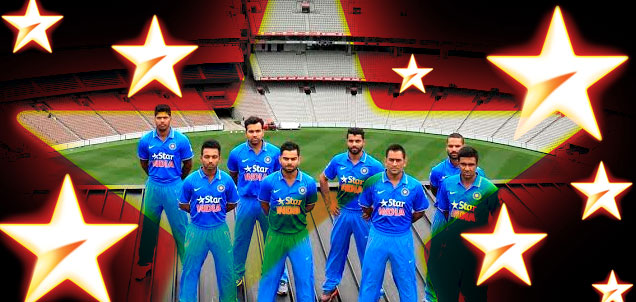
    Star India, official broadcaster of the ongoing cricket World Cup, has lost no time in hiking ad rates for the tournament even further, riding on the two big wins India recorded and all-time high television viewership of the India-Pakistan match. Rates have shot up by almost 25-30% over the past two days, and are in the range of Rs 18 lakh to Rs 20 lakh for a 10-second ad spot, up from close to Rs 12 lakh, said two media buyers requesting anonymity.


    Sam Balsara, chairman and managing director at media buying group Madison World said it was usual for broadcasters to up rates on highly watched shows. “India’s performance has been unexpectedly good so far. So its natural to hike rates for any broadcaster,” he said. Media planners say rates may peak that of the last World Cup which India won.


    Anita Nayyar

    “The India show gives India more muscle to stick to its rates. Even if advertisers think the rates are too steep, they don’t have a choice,” said a marketing head of a top foods firm. “When the World Cup started, there was scepticism. In the last two matches India has done phenomenally well giving a lot of philip to the tournament. With viewership increasing, Star is increasing rates,” said Anita Nayyar, CEO of Havas Media, India and South Asia. She said there are clients who are waiting for quarters, semi-finals and finals to advertise as they know that people will watch these games irrespective of the Indian cricket team’s presence in the stages.


    Media buying firms say now even unconventional advertisers are looking to buy one-off spots, even at a premium, with India almost certain to reach the final league stages. Without specifying the rates, a Star India spokesperson said: “The pricing for the remaining matches is dynamic and depends on the inventory left. Most brands are interested in buying spots for a group of matches, therefore single game spots are sold at a premium.”


    Star claims it has over 100 advertisers on the tournament. “The final stage matches will definitely get Star a higher rate. With India doing well, they will get their desired rates for these few matches,” says Vinit Karnik, national director, sports and live events, at GroupM ESP.


    The India-Pakistan World Cup thriller on February 15 was watched by 288 million people in India – the most watched event in the country since the last World Cup final, according to data provided by World Cup Star India. In comparison, on the opening day of the World Cup, the Australia-England match was viewed by over 100 million people. The match, which India won convincingly by 76 runs, got a rating of 14.8 TVR among male viewers.


    With Star launching commentary on its regional channels, about 76% of the total viewership during the match came from regional and Hindi while the rest came from English, said Star. The India-Pakistan match had also created history on the digital front with Star India’s digital platforms garnering over 25 million views, the highest in the world for a single game.


    Source:The Economic Times

    Copyright © 2015, Bennett, Coleman & Co. Ltd.

    All Rights Reserved, Licensed to republish


  • Concept Communication acquires majority stake in Liqvd Asia

    By A Correspondent


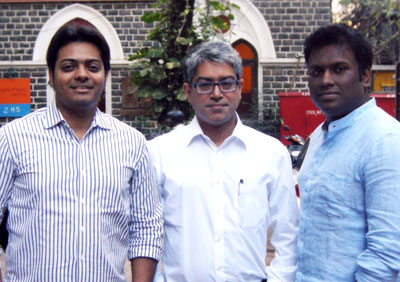
    Zubin Nalawala, Founding member, Liqvd Asia, Vivek Suchanti, Chariman and Managing Director, Concept Communication, and Arnab Mitra, Founding member, Liqvd Asia(l-r)

    Concept Communication announced it has acquired a majority stake in Liqvd Asia, an experiential digital marketing company. With this, the two founding members of Liqvd Asia – Arnab Mitra and Zubin Nalawalla along with their team of 28 will become an integrated part of the Concept Group driving the digital mandate in the country and select markets in Asia.


    Liqvd Asia started operations in 2013. Its clients include Celkon Mobile, Axis Bank, Benetton, LifeCell, Lonely Planet, Sennheiser, Kalpataru, Glanbia plc and Adidas Originals. The company is head quartered in Mumbai and has a presence in Singapore as well.


    Commenting on the acquisition, Vivek Suchanti, Chairman and Managing Director, Concept Communication, said: “This acquisition consolidates our position in the digital space. Arnab is experienced at establishing operational excellence within diverse new age marketing techniques, translating conceptual models into specific growth strategies, and planning and executing multi-faceted national and regional advertising campaigns. His expertise will help us create a bouquet of offerings to our clients across various Group entities. With the addition of Liqvd Asia, we are taking another step in helping our clients ‘get digitally right’. We are delighted to welcome Arnab and his team to be an integral part of Concept family.”


    Before starting up, Arnab Mitra worked as National Director for Starcom Mediavest Group and prior to that he has worked with Havas Media, where he was heading the agency in South Asia.


    Sharing his views on the merger, Mr Mitra said: “We’re very excited to become a part of the Concept Group. Concept is recognized as a formidable brand in the country and Vivek has been one of most respected names in the Indian advertising and related services industry. With this merger we will soon emerge to be the leaders in providing digital experiential solutions in the country and region.”


  • Havas Media wins media biz of World Kabaddi League

    By A Correspondent


    On the heels of retaining the prestigious MTS India media business, Havas Media India has been awarded the integrated media mandate for World Kabaddi League (WKL) – the first professional Kabaddi League of the world, in a multi-agency pitch. The account is estimated to be upwards of INR 30crores.



    Raman Raheja

    WKL is an initiative to uplift the level of Kabaddi by professionalizing the sport. It aims to give a chance to experienced players as well as upcoming talent from various countries to come on one platform and play to win.


    Talking on the appointment, Raman Raheja, CEO, World Kabaddi League said, “We are a young and dynamic organization looking to scale Kabaddi to new heights on a global platform. Havas Media understood this. They have scale, the thought leadership, experience, were transparent and displayed tremendous passion. We know they are the people to partner with to achieve our goals.”


    Anita Nayyar

    Commenting on the association, Anita Nayyar, CEO, Havas Media Group, India and South Asia said, “We are honoured that WKL has chosen us as their partners to further their business objectives. It has been a good year at Havas Media with strong integrated media new business wins. Our digital at core approach has paid off big dividents and impressed clients.”


    Havas Media recently won the integrated media mandate of MTS India, Yepme.com and the digital mandates for Businessworld magazine and XOLO mobile.