Tag: facebook

  • Follow us at F-T-Y-B: Hareesh Tibrewala

    By Hareesh Tibrewala


    While on a business trip to Delhi last week.  I happened to find myself in the midst of a traffic jam (so what’s new?) and while patiently waiting for the car to start crawling, my eyes fell on a large advertising hoarding. It was a well-designed hoarding for a luxury brand with some superlative creatives and the company web URL printed in the lower left hand corner. While everything on this 200 square meter hoarding looked perfect, what triggered my discomfort were four small colourful boxes in the bottom right corner, preceded by the words “Follow us on”.


    The colourful boxes were the single character brand logos for Facebook, Twitter, YouTube and Blogger, and quite obviously the brand manager was trying to invite the reader to engage with the brand on these social networks. What I saw on this billboard is a representation of what one sees in others forms of communication as well. Lots and lots of social networking site logos and lots and lots of URLs. Does this really help?


    Here are my thoughts


    • Simply putting colourful boxes with logos of social networking sites (without the full brand URL eg www.facebook.com/yourbrand) does not add any value to your communication. If at all, it only contributes to promoting the brand value of that social networking site.
    • Putting a half a dozen URLs in a communication serves no purpose either. No one has time to visit a single URL or click on a single link, leave alone click on half a dozen links. When I see a communication which has lots “Follow us on ..” links, frankly it is a bit intimidating
    • Just because you ask someone to “Follow” you is no reason to believe that that person is actually going to follow you.


    So what should be done ?


    • Sure, social networking sites are now the default place where consumers engage with brands. Also the days when consumer went to content are over. Now content has to reach the consumer. Thus continuing the engagement with the consumer, from your bill board onto a social networking site makes all the sense
    • If your brand is present on multiple social networks, choose one where you think you have the best chance of building a community or engaging with the consumer. Promote just this one link. When the consumer reaches this page, you can always provide links to your other social media presence.
    • Display the link in full (www.Youtube.com/yourbrandname). Chance of a brand recall is much higher compared to just saying : Find us on YouTube
    • Finally if you are putting out a link, see if you can build in a strong call to action. Try to answer the question, “why should the consumer follow my link”. And use that answer to trigger a strong call to action.


    Hareesh Tibrewala is Joint CEO, Social Wavelength. You can engage with him socially at linkedin.com/in/hareeshtibrewala


  • Mindshare makes thousands experience Lays Magic with Saif

    By A Correspondent


    Imagine being in a television commercial of a major brand like Lays with a superstar like Saif Ali Khan with thousands others. Imagine all your friends liking and sharing the YouTube video of that commercial on Facebook.


    That’s exactly what Mindshare set out to do when they brought to life experientially the new Lays proposition of ‘Pal Banaye Magical’ through an interactive augmented reality activity. Augmented Reality adds new dimensions by letting users discover emerging technology whilst enhancing brand awareness through virtual reality game play within their own everyday life environment.


    A first inIndia, in terms of scale, the activity saw thousands of consumers dancing  virtually with the Lays brand ambassador Saif Ali Khan and saw their own projection in the ‘Pal Banaye Magical’ commercial on a giant screen – across several malls in Delhi and Chandigarh- making their moment truly magical!


    The Mindshare Dialect and Digital teams worked on the campaign in handling the activation and its digital amplification respectively. The icing on the cake was the consumer videos of the AR activity, made viral on social media platforms such as YouTube and Facebook by Mindshare Digital.


    Speaking about the concept, Rahul Thappa, Client Leader for Mindshare North India, said: “Augmented reality campaigns are an effective means of effectively engaging with the audience. This campaign provided an unforgettable experience for people present at the malls. The activation has helped us bring alive Lays new ‘Pal Banaye Magical’ proposition for consumers, the essence of the proposition being that Lays makes every moment magical!”


    The Augmented Reality experience was organized atNew Delhiand Gurgaon whereby more than a thousand consumers engaged with Lays and Saif. Such experiences provided the brand with the chance of interacting with consumers in an original manner.


    As a follow up, Lays is now engaging its consumers with another campaign fashioned around the IPL. Six big hitting cricketers have created six distinct flavours, and consumers have to associate the right cricketer with the right flavor. The entire engagement titled “Guess Whose Flavor” is driving participation to laysguesswhoseflavor.com


    Mindshare is a global media and marketing services network with billings in excess of $27.8 billion (source: RECMA). The network consists of 114 offices in 82 countries throughout the North America, Latin America, Europe, Middle East, and Asia Pacific, each dedicated to forging competitive marketing advantage for businesses and their brands.  Mindshare is a member of WPP, the world’s leading communications service group with $84.2bn in billings (source: RECMA), and is part of GroupM, the world’s leading full service media investment management operation, which was created by WPP Group to oversee its assets in this sector.


  • Authenticity and engagement is what brands must give consumers: MTV youth summit

    By A Correspondent


    Brands today need to listen, learn and begin to engage with the youth; they need to be authentic as young people today are willing to speak positively about the brand they trust. These were some of the points discussed at the ‘MTV Power of One’- Youth Marketing Forum 2012.


    Ms Angela Barkan, Senior Director, Marketing and Publicity, Sony Music Entertainment; Mr Chetan Bhagat, Author of five blockbuster novels; Mr Andrew Ridley, Executive Director and Co-Founder, Earth Hour; Mr Henri Holm, Senior Vice President, Rovio Entertainment, the creators of Angry Birds; Simon Smith, European Digital Director at Interbrand were some of the speakers at the Youth Marketing Forum which saw presentations and a panel discussion on ways to engage the youth in the digital media era.


    Aditya Swamy

    The MTV Youth Marketing Forum 2012 kick-started with Mr Aditya Swamy, EVP and Business Head, MTV India sharing some of the findings from the MTV’s study on the Indian youth. The study titled ‘Power of One’ was unveiled on Friday, April 27. Mr Swamy said that over 5,000 youth were interviewed across the Country and an overwhelming 76 per cent said that they are happy with their life. According to the findings, for today’s youth family is more important than their friends, as a lot of young people see their parents as their role model.


    The survey also says that 97 per cent of the youth believe that they can bring about change and that social media has given them a voice, thus making them feel empowered. “Single screen engagements are not going to work, today web and mobile are required to engage the youth. Today the youth do not need inspirations but engagement, so there needs to be a two way conversation. If brands learn to keep the promises they make to their consumers, it will see more people, particularly youngsters flocking towards their brands” Mr Swamy added.


    Andrew Ridley

    A good idea needs good platform:

    Mr Andrew Ridley, Executive Director and Co-Founder, Earth Hour spoke about how the movement first started in one city -Sydney, before it became a global movement. He spoke about how every individual has the power to change the world they live in and how social media strengthens that power and provides a vehicle to take action. Citing the example of how Earth Hour was designed to build reach and increase its reach to billions of people around the world, Mr Ridley was of the view that a good idea needs a good platform in order to reap rich benefits. “I believe that for the first time we have the power to connect. We are still at the initial stage of creating a big change, but if our core idea is relevant and connected to the young people in particular, it will lead to a huge change in the world” said Mr Ridley.


    Henri Holm

    It’s all about communication…

    Speaking on the success story of Angry Birds, Mr Henri Holm, Senior Vice President, Rovio Entertainment, said that it took the company nearly eight years to be where it is today. He also spoke about how to engage the younger generation with the powerful concept and the characters and also how the distribution channels were also chosen carefully to reach out to the millions and to be of service to the fans. Since youth is the core TG, Rovio Entertainment hopes to stay relevant, connected and constantly find new ways to engage the youth.


    Besides the online experience, Angry Birds also gave the audience offline experience of the game, thus not only engaging its TG but even getting newer audience. “One of the reasons for the success of Angry Birds is its simplicity. We put a lot of weight on communication and feedback from our audience, therefore for us it is all about building business with fans and not features. Angry Birds is a permanent part of the youth culture and our aim is to further service the youth efficiently in the years to come.”


    Chetan Bhagat

    Reaching out through social media

    Author of five blockbuster novels, Mr Chetan Bhagat, also known as the marketing guru gave his insights on marketing. He said that social media is a good way to execute the power of one: “Social media has become very popular today and one must know what a Facebook or a Twitter is. As far as I am concerned social media is a great platform, my goal is to reach out to maximum number of people and social media is one of the ways to reach out.”


    He said that one of the reasons why his books worked was because the plots were tight, they were unputdownable, the language was simple, and the characters were relatable. Mr Bhagat also gave some insights into the mind of the youth. He said that the youth today has the ‘hunger’ to do well in life, to gain respect and make money; that they want an education that could provide them skills that would help them make money. Besides the love for their careers and seeking out their love, youth today deeply care for their country and are willing to clean up the system.


    Simon Smith

    The power of one

    Mr Simon Smith, European Digital Director, Interbrand spoke about the power of conformity, and the willingness to conform publicly in order to attain social rewards. We need to understand the power of one and how powerful it is. The power of one, I believe, is simply about being human. One must not move with the crowd but, remain an individual he or she is supposed to be. “Fundamentally, as humans, we haven’t changed much, but our expressions to our needs have dramatically changed with technology, society and changing power structure. The relation between brand and consumer has fundamentally changed, so if a brand makes a promise to its consumers, it better deliver on those promises or the consumer will never trust the brand and influence others to rebuke the brand too.”


    Angela Barkan

    Authenticity and the art of listening to the youth

    Ms Angela Barkan of Sony Music International spoke about millennials, youngsters aged between 12 to 30 years. She was of the view that millenials are multi-taskers and optimists, that they expect brands to be authentic and have two way communications with them. She also said that this is a group which loves to share and that they define themselves by what they share. She also said that this unusual group is found mostly online. “Collaborations and interactions are very important when talking about music as it results in lifelong fans. However, there is a need for brands to be authentic because if a brand is authentic, then millenials are willing to speak positively about the brand they trust.”


    Reaching out to the youth

    A panel discussion which included eminent panelists like Mr Avinash Pant, Marketing Head, Nike India; Mr Sumeet Pahwa, DGM – Marketing, TATA Docomo; Mr Vikram Malhotra, COO Viacom 18 Motion Pictures; Mr Bejoy Nambiar, Director and Screen Writer; and Mr Ayushman Khurana, VJ turned Actor and was moderated by Mr Nikhil Chinappa, VJ and Founder, Summer Sunburn Festival spoke about the difficulties of marketing to the young generation and the possible ways of reaching out the youth. They also spoke on the role of social media marketing and whether social media is actually an effective tool to reach out to the youth.


    Mr Pahwa spoke about how the social media is a big platform to engage the youth citing the example of how it helped Tata Docomo successfully engage the youth by having a two way conversation with them.


    According to Mr Malhotra, “Brands need to listen a lot more, even to criticisms, and problems must be solved as and when brought by the consumers. The attitudes of the youth are fast changing, today they trust their family and friends more than the brands, hence brands need to listen, learn and begin to engage with the youth.”


    Mr Pant was of the view that the youth today are looking for innovation: “Things are moving so fast today that our conventional thought process itself needs to change drastically. We have to think a lot more digital.”


    Ayushman Khurana pointed out that the youth do not have the patience to listen, but they do have a strong opinion about films or any other product or brand. So one needs to understand its audience and find ways to connect with the audience and have a two way communication with them.


    Be authentic, have a two way communication, listen a lot more to your consumers, respond to criticisms and fix problems because young people are willing to be advocates of brands on social networking sites as long as they trust it otherwise brands must be ready for a backlash. These are some of the lessons to be learnt from the MTV Youth Marketing Forum 2012.


  • Narendra Nag on 5 reasons why no marketing campaign can do without social

    By Narendra Nag


    1. Your audience is online: 58 million Indians are on Facebook and half of them log in everyday. Younger people, usually the most attractive demographic for brands, spend more time on Facebook than they do reading the newspaper or watching TV.


    2. People don’t easily believe what brands tell them any longer – but they do trust what they hear/read about from real people. So, a blogger or someone of Twitter has more influence on purchase decisions than an ad on TV.


    3. Apple, mobile phones, health and wellness products/services, luxury brands and car/bike brands have it easy – people like to say nice things about them. For everybody else, pretty much the only time somebody mentions their washing machine or microwave is when it isn’t working. To combat all that negative sentiment, your marketing campaign needs to be social in nature – connecting with people over something they care about.


    4. Social stretches out each marketing rupee to the max. That event you’re doing at the mall, promote it on social and you’ll get a lot more people involved and engaged. That ad campaign on TV – don’t just show the ad on YouTube, create a social campaign that goes on a lot longer than the four weeks your ads on TV.


    5. If you’re not social, you’re dead. Brands no longer get to tell consumers what to make of them, audiences who’ve never bought the product are defining what a brand stands for. If you’re still thinking communication, your brand is dying a slow death. Start listening and participating in conversations to get a handle on what your brand truly means.


    Narendra Nag is Co-Lead, MSLGROUP India Social


  • Info explosion has made India smarter: ‘New Realities 3.0’ study

    By Robin Thomas

    The Interpublic  Group (IPG), one of the world’s premier advertising and marketing services companies, has come out with its global ‘New Realities 3.0’ study that provides a unique window into how the Indian consumer is coping with information overload. The study provides insights on the decision-making process of the consumer in today’s era of information explosion. The study also aims to answer the unanswered queries of marketers on whether the information explosion has made consumers smarter or confused, the role of social media in a making consumers more informed, the role of brand advocates and much more.


    The study covered five countries namely, India, China, Brazil, America (US) and Germany. The India leg of the interview was conducted by Draftfcb Ulka’s independent consulting agency, Cogito Consulting. Over 600 online interviews were conducted in each of the five countries between October 26 and November 10, 2011. Some of the findings from the ‘New Realities 3.0’ study reveal that most Indian consumers feel they have grown smarter with the available product information, which is higher than the other countries. Further, the study notes that consumers in India rated a reasonable 7.3/10 when asked whether the available product information made them feel smarter compared to China that showed a rating of just 3.9/10, the US at 6.8/10, Brazil at 6.4/10 and Germany reporting 7.0/10.


    Interestingly, despite consumers in India claiming to feel smarter and not confused or frustrated with the product information available to them, they do not trust the information they see on brands, especially from the manufacturers end. Further, 32 per cent of Indian consumers say they do not trust most of the information they see on brands, whereas 31 per cent say they do not trust information from manufacturers or providers.


    The trust deficit that brands have among Indian consumers is higher than the other four countries, for instance only 11 per cent of Germans say they do not trust any information from brands whereas 22 per cent say they do not trust information from manufacturers or providers. Even Chinese consumers seem to trust information from brands and manufactures as compared to the Indian consumers. 19 per cent of Chinese say they do not trust information from brands whereas 24 per cent Chinese do not trust information from manufacturers or providers. 16 per cent of those interviewed in the US say they do not trust information from brands whereas 15 per cent do not trust information from manufacturers.


    Another interesting finding is that with the exception of Germany, the remaining four countries interviewed – India, China, Brazil and United States have said that product learning is a source of joy and fulfillment. 54 per cent of Indians have said that they enjoy researching the information for buying decision whereas 52 per cent of them say they find the information on brands fulfilling.


    Terry D. Peigh

    The findings have also revealed that most Indians learn product information to build an expertise about a certain product and brand as well as because it helps them stand out in their social circle. 53 per cent of Indians said that the reason they stay informed about certain products is because ‘people value me and my knowledge about certain products’, whereas 52 per cent of them said it helps them enhance their self-esteem.


    In addition to these, the study also revealed that consumers in India and China are most likely to turn into brand advocates and become a media channel and that in India, Brazil and China, especially, social networking sites are a good source for word of mouth information on brand experience.


    As vague and unique as it sounds, MxM India’s Robin Thomas got Mr Terry D. Peigh, Managing Director and Senior Vice President, IPG to relay more outcomes from the study, the role of social networking sites in decision-making capabilities and much more.


    New Realities… is an online study across multiple countries, including India. What is the sample size that was chosen for this study? Who are the respondents i.e. the TG for this study?

    We interviewed 600 people in each country i.e. in India, China, Brazil, United States and Germany. Out of the 600 people sampled, one-third were Gen X, one-third were Gen Y and one-third were boomers. 50 per cent of those polled were men and 50 per cent women.


    What was the key objective of the study? What, according to you, are the learnings for the Indian market, as well as the global market?

    The key objective was to better understand how the consumer has changed because of the new media. We came across the idea years ago as we noticed that the number of information sources available to consumers today has grown exponentially. So we found out if people were confused, frustrated, overwhelmed, and how are consumers viewing the overall experience of absorbing product information and using that information.


    We learnt that consumers have evolved over the years and hence they are not confused or frustrated with the information explosion. Consumers have not only learnt to easily filter or absorb the information but, they have also learnt how to manoeuvre their way through all the multiple choices of product information available to them.


    We have also learnt that surprising number of consumers, especially from India, are now very open, willing and eager to learn about product information as they find a lot of joy and satisfaction in learning about product information. In fact, our research also shows that people in India are most likely to really enjoy research and product information.


    One of the reasons why many in India are willing or open to product information is because they find it of social value as it allows them to have an expertise in certain products. We have also learnt that consumers are aggressively willing to become advocates of brand. Our research also shows that they are now interested in continuing to learn about a product even after they have purchased a product as they want to learn more about the product and advance their knowledge about that product.


    What this reveals is that communication should not stop at the time of sale and that marketers must continue to talk to their consumers even after they have purchased the product. As a result marketers may convert their consumers to brand advocates.


    The study reveals that Information explosion in India has led consumers to become smarter and helped them beat the system – much higher than what the other countries have reported. What are some of the factors that influence the consumer’s decision-making process around a product?

    We see a dominant role of family and friends in a consumers’ decision-making process. Although social media is still small, its role as a channel is growing, but too often social networking sites are limited to ‘likes’ or number of friends which is wrong. It’s too easy to get someone to push the like button or accept a friend request, even though they may really not like the brand or want to be their friend. A research from Australia finds that less than one per cent of friends are actively engaged and want to be truly engaged to the brand. So we keep encouraging our clients to go beyond ‘friends’ or ‘likes’ on a social networking page but, instead seek true engagement.


    As India becomes more tech-savvy, do you anticipate further information explosion to come about that could lead to further increase or decline in consumers who are confused or frustrated with the information?

    We were, in fact, surprised that the confusion or frustration numbers were not higher. My projection, however, is that it (frustration and confusion) will not go up as consumers have learnt the role of technology very quickly. Technology is fast reaching to the lowest common denominator very quickly so, I think people are learning to process information very quickly.


    Will there be a Phase II of the ‘New Realities 3.0’ study?

    Yes. We will soon be out with the second phase of the study in another 18 or 20 months, which will help us understand more trends. In China, for instance, during Phase I and II we have seen dramatic changes in over 18 months. We found that the Chinese were much more inclined to use the internet for product research. In China, the internet was used primarily for entertainment purposes, now it’s used for product information.


    Not surprisingly, consumers in India do not trust brand information especially from the manufacturers. This is not so with other countries, particularly Germany, US and China. How would you explain this? What must brands / marketers in India do to build the trust deficit among their consumers?

    I believe it is because of the newness of the consumer culture in India. In the US, for instance, there has been a mass market of consumer culture for 100 years and the same in Western Europe. I think consumers need to develop trust for their products. Brands must not be afraid to enter into the world of social media and hearing negative comments about one’s brand. There is probably no quicker way to gain trust with the consumer than to actually legitimately and honestly respond to criticism and fix the problem. This, I believe, is one way for brands to gain trust of the consumers.


    With the exception of Germany all other countries seem to enjoy product learning. What makes the consumers in Germany not really enjoy product learning?

    Yes, German people usually do not associate joy from product information. The Germans usually get their joy from music and food


    How has social media changed consumers’ decision-making across the globe? What role do you see social networking sites play in the near future in India?

    The role of social networking sites as a tool for brand advocates will increase. One thing we have noticed in the western world is that the number of people visiting brand pages on social networking sites is on a decline in Europe. This is not the case in India. In the western world a lot of consumers say that they do not visit Facebook for brands, but for friends therefore, it will be interesting to see if it will be any different in the developing economies. Nevertheless brands like Coca-Cola have leveraged social media well by finding ways to reach out to the consumers by engaging in a good conversation and get them to participate in brand activities. Right now the data shows consumers are willing and eager to visit social media to learn about products or brands.


    Even though broadband penetration is still low in India as compared to the US, why are consumers in the US and Germany reluctant in using social media for product research?

    This may be because brands that first started using the social media didn’t do a good job in engaging the consumers. The consumers may have clicked ‘like’ or may have become friends but, the brand may not have received anything else. Brands must, therefore, learn to go beyond the ‘likes’ and adding of friends to adding value in a consumer’s life as the consumer is not accessing social networking sites for brands but for something else. Therefore, in order to leverage the social media, brands need to operate in a different way. Increasingly, many brands are beginning to use social media effectively to engage with their consumers.


    How do you plan to reach the brands or marketers with the study? What can brands or marketers expect from the study?

    This study is important for clients because it is consumer based, is fresh, is in-depth, is broad, it looks at many different segments by product category, by demographic and it is the consumer telling us what he or she is thinking about.


  • Amith Prabhu: PR frat needs a Goafest-like event

    By Amith Prabhu


    Goafest has become the annual jamboree for the advertising folks in India. And nothing wrong with that if it serves the purpose of those organizing and those attending. It is an expensive programme, especially for younger people. The cost to attend Goafest for a person varies from as low as Rs12,000 (if a person under 30 from Mumbai travels by road or rail and lives in very simple accommodation for 2 nights) to Rs40,000 (if a person over 30 from Delhi flies low-cost and lives in decent three-star accommodation).


    The point is that in all this effort and investment or spending (depends who pays the bill) very little is achieved for the industry in terms of learning. Most high profile speakers either use the opportunity to make a sales pitch or are not effective enough to make an impact (I have been to two events and seen for myself).


    The few who are impactful and are not making a sales pitch have few takers because they are either not well known, haven’t got the right publicity in advance and therefore those who should be listening to them are either on the beach or in their luxury rooms or sightseeing.


    The real achievement is for those who want a break and get it (most often fully or partially company sponsored), great work done in the year gone by gets rewarded (sometimes with controversy), people seeking a job change get to meet their potential employers and those who want to catch up in a non-work environment with former colleagues and buddies get to do that.


    Some PR professionals attend because they are involved in some way with the organizing and some others are connected with the ad agency that has a big role to play.


    But most inspiring of all the achievements is that all the big boys and girls in creative and media agencies who fight it out like bitter rivals in new business pitches and industry awards between May and March come together in April to celebrate the profession. And this to me is remarkable. No doubt there are a handful of boycotts that happen each year, but those are bound to happen and frenemies come and go.


    Cannes, around which part of Goafest is modelled, embraced PR a couple of years ago by including a separate category for PR and having a full-fledged PR jury. I’m not saying Goafest should do that. I’m here to seed the idea of a gathering of PR professionals from around the country. Head honchos of PR firms can collectively do a lot for the industry and the young and mid-level professionals. The three things they should do at break neck speed is put together a forum for PR professionals modelled on PRSA, create an industry award that is transparent, world-class and the gold standard for younger professionals to gain inspiration from and plan a gathering of PR professionals over a weekend to learn from each other. Networking is no longer a major need in the age of Facebook, Twitter and frequent after hours parties in the metros.


    There are several forums that function formally and informally in the PR space. But none that brings together corporate communication executives and public relations professionals, at all levels and of all ages, under one umbrella. It is time for a body that works closely and learns from PRSA. There is so much it does through several chapters for the betterment of the practitioner. With almost 15 of the Top 20 global PR firms present in India there is scope to even be handheld by one of the well-established forums.


    Thereafter, this organization should establish a PR award that enables entries to compete in the global arena. There is a major vacuum that needs to be filled and no one can help us on this but ourselves.


    Finally, the PR fraternity of India needs an annual event where PR professionals get together, listen to experts fromIndiaand around the world and celebrate the profession keeping aside differences for 48 hours at least, if not more. Maybe this could be called PondyPoweR and be held at Pondicherry on the east coast ofIndia. Symbolically, a quaint town with a rich heritage, near the beach for those who want to mix learning with fun.


    Hope this happens sooner than later, so public relations people can ponder on how to do some Public Relations for themselves, their firms and most importantly for the profession.


    Amith Prabhu is a public relations professional who spent a large part of his career in India and is now based in Chicago working for a PR major. Views are personal and do not reflect that of the writer’s employer. 


  • For LinkedIn, it’s abt being relevant & contextual

    By A correspondent


    While social media in India is largely about congregating on two of the busiest portals in the space, mostly for the sake of networking and fun, there is another experience – led largely by B2B marketers – that is setting the business community abuzz for a while now.


    Having arrived in India only in 2009, LinkedIn has emerged as one of the fastest growing professional networks in India, being valued by its members as professional, trusted, and creating a remarkably different social environment. Having managed to outperform expectations by clocking over 14 millions+ users in a span of just two years and further generating business leads in the range of 149 million, it was an opportune time for the network in India to get together the community responsible for driving such a change.


    B2B Connect 2012 was the first such attempt by the network as they bought together marketing enthusiasts – led largely by blue chip clients, evangelists and practitioners to look into the scope that the medium offered for professionals to liaise, interact, get business leads and even look out for talent – new and experienced. Not wanting anyone from the network to miss out on the excitement, the Indian contingent were even successful in getting the otherwise hesitant global CEO Jeff Weiner to be a part of the event as they got him to kick-start the proceedings with a keynote address.


    Mr Weiner began by admiring the efforts and innovations bought in by late Apple CEO, Steve Jobs, who he described as a talent to reckon with. “The reason Apple is what it is, because it managed to find the right talent for the right opportunity. Obviously, it helped in having a team that was as instrumental in achieving the desired objective.” Likewise for LinkedIn, the focus was on making sure that the right talent matched with right opportunity in making the association with professionals more productive and successful. Emphasising on the three key attributes that would drive the network in the future, Mr Weiner said that it would be about creating an Identity, Insight and being Everywhere.


    Throwing up impressive numbers put up by the three divisions at LinkedIn, Mr Weiner said that Hiring Solutions contributed about $261 million, Marketing Solutions contributed about $156 million while Premium Subscriptions contributed about $106 million to the overall growth. Overall, the network witnessed a growth in excess of 100 per cent YoY.


    Dhiman Mukherji

    According to Mr Weiner, India was at top of the the markets that were putting up an exciting show, as it grew by more than 300 per cent in terms of user base. Drawing from what Mr Weiner had expressed at the event regarding India being a force to reckon with, Dhiman Mukherji, Director, Marketing Solutions said that the focus is on how the network is positioning B2B in the forefront of everything it does.


    In an interaction with MxM India, he said: “What has really worked is that we have been able to create a B2B marketplace and this event is a celebration of that. In two years’ time we have been able to leverage with some of the leading brands in India and that is what has helped us take our business to new levels. When I joined the company in 2010, we were at 3 million-odd user base and today we are at 14 million users. So it’s all a result of not only good trade marketing that has happened but a lot of PR communication drive that has taken place. The fact that increasingly people are finding value in the LinkedIn proposition is what is making this medium click.”


    Having already created a strong user base in the realm of IT, according to Mr Mukherji, the focus, going forward, would be to break into each and every vertical, including energy, construction, real estate, and so on. In fact, they are already seeing some amount of traction in these verticals as well. “Going forward we would be increasing our focus towards financial, travel & tourism, auto, and others,” he said.


    Providing an APAC perspective, Olivier Legrand, Senior Director – Marketing Solutions, APAC said that India’s current hold is such that “some of the most sophisticated campaigns that have been running in Asia Pacific have been coming out of India. The Indian market has proven to be successful from the users’ perspective. Even in terms of the marketers, as they are really leveraging what’s really available on the platform. We have been consistently working with marketers on what are they trying to achieve and how we could help them in their journey,” he said.


    On how India stacks up to other Asia Pacific countries for LinkedIn, Mr Legrand said, “APAC and India are very critical for us in achieving our objective of connecting professionals. Of the 150 million professionals that we have connected thus far, about 25 million are from APAC. We are anticipating a big part of the growth in users to come from this part of the world. Other markets that have been delivering good growth include Australia, Malaysia, Korea, Japan.” He further stated that the key markets going forward would be Indonesia and Malaysia.


    On comparisons being drawn to other popular social media platforms of today, Mr Mukherji said: “The two pillars that separate us from the rest is relevance and context because at LinkedIn, it is all about being relevant and contextual. It’s about a network of people who are bonding to share insights, to get feedback from each other and really benefit from each other. Our solutions are such that they give marketers an ability to position their brand in a way that it turns out to be productive and in a manner which is in context to whatever is happening around them.”


    Mr Legrand has another version to offer. For him, it all boils down to the mission set by the network: “To connect the professionals in a way so as to make them productive and successful. So what we bring is focus, what we bring is professional identity online, what we bring is opportunities for users to connect with businesses.”


    According to him, other social media firms deliver different values. “For example, if we look at Facebook, it deals with fun, entertainment, pictures, and so on and is an environment that has an interest for certain categories for users but we are a place for professionals and are very attractive for B2B marketers. So that’s how we are positioned and that’s what’s going to be our focus going forward. We are about providing identity, providing insights and being everywhere.”


    When asked on the growth put in by the Marketing Solutions division, Mr Mukherji said: “Where Marketing Solutions is concerned, we have grown by leaps and bounds. Not only has the user base grown but the sheer number of marketers who want to experiment with LinkedIn – that in itself is growing. So we have been growing substantially from where we started off in 2010.” Even the Hiring Solutions and Premium subscriptions too, contribute significantly to its business, he revealed.


    As for the goalpost of increasing the user base in India by a large sum this year, Mr Mukherji said: “We are not in a hurry to add more users as its basic philosophy is putting the user first. Have we improved the experience for the existing user – that is the core of our philosophy. If I can make his current experience on LinkedIn better by giving him access on the mobile, i-Pad, smartphones and others that’s what we would ideally like to concentrate on. So yes, we are not in a tearing hurry to get in more users; that will come when the experience in itself sees an improvisation over a period of time and when it starts benefiting our online community at large.”


    The event saw an impressive line-up of guests present interesting case-studies and examples of leveraging LinkedIn for deriving success for their brands. Dell, Philips, Citi India, Microsoft, HCL Technologies, Siemens were some blue chip clients who came in good numbers to imbibe meaningful solutions from the meet.


  • HDFC Life’s new campaign propagates ‘Never Give Up’ attitude

    By A Correspondent


    HDFC Life, one of India’s leading private life insurance players, has unveiled a new advertising campaign featuring the players of Rajasthan Royals to promote and propagate its brand philosophy of ‘Self Respect’. HDFC Life has been associated with Rajasthan Royals for the fourth consecutive year as the Associate Sponsor.


    Commenting on the new campaign, Sanjay Tripathy, Executive Vice President and Head, Marketing and Direct Channels said: “Our campaign carries a simple yet compelling message. The theme is focused on the spirit of ‘Never Giving Up and Moving Forward to face all challenges’. With the new IPL season, the Rajasthan Royals’ commitment is focused on giving their best to the game. Their attitude is not solely to win or lose, but to perform for the team. In simple terms, they play with pride, self-respect and determination.”


    Mr. KV Sridhar, National Creative Director, Leo Burnett, said: “Through this simple ad, we have tried to showcase the significance of HDFC Life’s brand value ‘Sar Utha ke Jiyo’. When a team gets onto the field, full of zeal to perform their best, it doesn’t really matter what would be the result, but to play the game for pride and self-respect.”


    HDFC Life plans to drive the core essence of the association through different platforms and intensify the brand experience. It will drive a focused TV campaign on the news genre, followed by the movies segment to derive maximum visibility for the campaign on account of regular news updates on the IPL property. The campaign will be running along with exciting contests across prime multiplexes in India (Fame, Fun, Big Cinemas, Inox and Cinemax).


    In digital space, HDFC Life will leverage on the cricket frenzy season and drive users to a very engaging contest on Facebook. The users will not only get a chance to interact with the other cricket fans, but also get an opportunity to win exciting IPL Rajasthan Royals merchandise. The company, in partnership with Indiatimes and  Youtube IPL, will roll out a unique HDFC Life Zone to feature the Man of the Match, best batting innings and best bowling innings as the ‘Sar Utha Ke Jiyo’ moments of the day. Through this unique partnership, HDFC Life intends to reach out to millions of consumers across the country.


    For the on-ground activation, HDFC Life ‘Game of Pride’, an interesting mall activation drive will be rolled out in two phases across four cities.


    Campaign Credits for Rajasthan Royals 2012:

    Creative agency – Leo Burnett, Mumbai

    Executive Creative Director -  Rajesh Mani

    Creative Director -  Manan Mistry

    Copywriter – Rajesh Mani, Akshay Seth and Shatrughan Tripathi

    Art Director – Manan Mistry

    Production House – Opticus Inc

    Director – Sanjay Shetty


  • Digital is the way to go, but…


    By Robin Thomas


    Consumers in India are evolving rapidly from print and radio to television and now digital. Just when you thought that digital was all about display advertising, bulk SMS, search, email advertising and online classifieds, in came the social media, video advertising, smart phones, tablets, apps, mobile advertising and so on.


    According to industry estimates there are 120 million internet users in India today, of which almost 30 per cent are from small towns. While India’s broadband internet penetration is still low, it is believed that the next phase of growth in internet will come from mobile users which are estimated to be over 800 million.


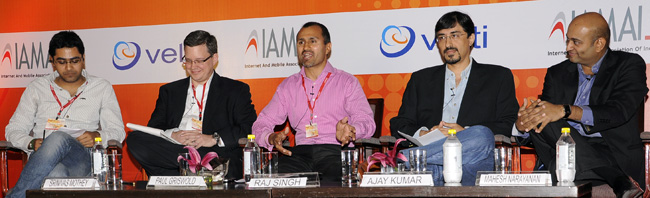
    As more and more youngsters gain access to various digital platforms, there is a greater need for marketers to not only engage the young consumers, but they must also be able to give them a unique experience across the digital platforms. The IAMAI (Internet And Mobile Association of India), which held its 8th Marketing Conclave, 2012 – ‘Digital Marketing 3.0’ on April 13 in Mumbai, extensively discussed the role of social media, video advertising and mobile advertising in the near future.


    Using Social Media:

    Today most companies have multiple social networking sites – Facebook, Twiter, LinkedIn and others. There are separate teams handling social media marketing for the company, but, are brands listening to their consumers? Do they interact and respond to queries and complaints? Do marketers understand the social media and know how to monetize it? Or are brands simply satisfied with the number of ‘Likes’ and views they generate on their social networking sites?


    Karthik Nagarajan, National Director, Social and Insights, Group M was of the view that unless one is not ready and mature enough as an organisation for the medium, the organization must stay away from social media.


    According to Usha Sangwan, Executive Director, LIC India, what brands lack today is the courage to be transparent, they don’t respond to negative feedback and fail to turn the customer as an advocate of their product. “Brands must not see social media as a mere marketing tool and limit to generating numbers alone, but social media must be used mainly for connecting with the TG and co-creating the product. Brands must try and understand their TG and become a part of their customer’s day to day life.”


    Virginia Sharma, Chief Marketing Officer, IBM India hit the nail on the head by stating that brands must have the ability to admit their mistake and apologise to the customer. She admitted that while there is a certain amount of fear among brands to apologise for a mistake committed because it may lead to negative public opinion, but felt it is always better to apologise and rectify the mistake which could lead customers to becoming an advocate of the brand.


    Vinay Bhatia, Customer Care Associate and Vice President Marketing and Loyalty, Shoppers Stop added that it a company’s reputation is harmed only when it fails to act responsibly to a complaint made, and not when it apologises for a mistake and tries to rectify it. “The problem with the companies today is that they make policies as if the consumer is a criminal. Accepting a feedback and acting upon it will not harm the brand but, if one chooses to remain silent about a complaint, that’s the worst one can do to his brand.”


    Leveraging Mobile Advertising:

    Besides the social media, mobile advertising is another challenge faced by marketers who have more or less failed to leverage the small screen. Sadly, mobile advertising is largely limited to only SMSes. Marketers are said to often mistake mobile as an extension of broadband internet and as a result they fail to give their consumers a unique experience on mobile.


    Speaking from a marketer’s point of view, Ajay Kakar, CMO, Financial Services, Aditya Birla Group stated that although the potential for mobile advertising is high, there is still a section of people who have not seen the mobile as an opportunity. He added that mobile industry must follow the ‘Jo dikhta hain, wahi bikhta hain’ policy and evangalise the benefits of mobile advertising. “Content is very important, don’t tells me about your brand, but tell me what’s in it for me? Give me the case study of successful mobile advertising. What I want to know is how much money mobile advertising is making for my brand and for my business? What you must do is to stop saying ‘buy me, buy me’ but, instead tell me ‘why me, why me’?”


    With the introduction of 3G and now 4G services, mobile internet is expected to be faster and with high quality content, better mobile applications, much better video and much more. In addition to these, smart phones and tablets are also said to play important roles in the growth of mobile internet in India.


    Mahesh Narayanan, Country Head-Mobile, GoogleIndiasaid that there is not only lack of understanding about mobile advertising, but also lack of discussion about mobile as a medium in board room meetings. “The consumer shift is already happening from traditional media to mobile; however, great amount of content for mobile is yet to be created. People are looking for your brand on their mobile phones but, ironically brands are absent on mobile.”


    While mobile subscribers will continue to grow and more people will access internet through their mobile phones, the challenge lies in monetizing the medium and to find newer ways to reach out to consumers besides SMS advertising.


    Paul Griswold, Director Product Management, Mobile Marketing, Velti was of the view that mobile is not treated as an integrated part of marketing strategy, but is seen as an extension to online. “There has been a failure to take the advantage of the one on one interactivity mobile offers and just sending SMS is definitely not the way.”


    The participants outlined not only the problems but also possible solutions. According to Srinivas Mothey, Head Mobile Marketing and Advertising, One97, the first step is to educate advertisers and agencies about the benefits of mobile advertising. Although every advertiser may have a different view about the medium, nevertheless they need to be encouraged to invest in mobile. “We are also encouraging advertisers to create mobile assets and not just mobile apps. We are beginning to see the positive results but, in order to see more results, it may take some more, but the first step needs to be taken.”


    Video Marketing:

    Video advertising/ marketing is not a new phenomenon for marketers. Traditionally, marketers are said to be comfortable with video and we have been seeing that on television, and will probably see the same, and in a much bigger way, online and on mobile in the near future.


    According to Debadutta Upadhyaya, Vice President, Vdopia Media, there has been over 50 per cent growth in video consumption in the last one year alone, the fourth largest globally. “Unlike other countries,Indiahas made the leap from web to email to social media and now video. There is still a long way to go on the creative aspect because the primary advertising medium of a creative agency has always been television, so creativity in video advertising is bound to take some time.”


    As India’s broadband penetration and mobile internet accessibility increases, it would be just a matter of time when video marketing would explode inIndia. Besides online, with 3G and 4G services, video consumption on mobile should be an altogether different experience for users and marketers.


    But Shubhranshu Singh, Marketing Director-IndiaandSouth Asia, Visa cautioned: “There is a difference between video on web and video on mobile, and the difference between the two is galloping ahead in terms of content. Perhaps the youngest audience in our country today will watch television online for the first time which could be an opportunity or a threat if we are not ready for it.”


    Digital marketing in itself has become 360 degree for marketers. It has gone beyond display and banner advertising, to becoming more interactive and innovative to reach out to consumers. Digital marketing, as the industry players pointed out, is in a transition phase from web, to email and now brands are trying to reach out to their customers through social media, mobile and video.


    Marketers must stop considering mobile internet as an extension to online and, therefore, give mobile users unique experience of mobile advertising. Social media must not be seen as a mere marketing but, a medium to interact with their consumers, know their behavior and be a part of their day to day life.


    Brands must be receptive to both positive and negative feedback of customers, admit to their mistakes, apologise to the customer and rectify the fault. Digital marketing will undoubtedly grow but, marketers must first be evangalised not only about the benefits of the medium but, also ways and means to leverage it.

    Imaging: Rafiq


  • The Anchor: Rahul Kishore on 5 reasons why Facebook is such a stressbuster at work

    By Rahul Kishore


    Having joined Facebook four years back, and being active on it I can honestly say that not only is it a great stress buster at work…but helps me stay focused all day. The reasons are many…


    1. It cuts out other forms of relief which are detrimental to one’s health

    Smoking for example and endless cups of coffee or both. I don’t need to walk out to the terrace in dusty Gurgaon to look around while taking puffs out of a cigarette. Nor do I need caffeine to get me through. I don’t smoke though…


    2. It helps me stay in touch with my friends and some important associates

    Feel the need for a chat? Just log in…of the 15 odd friends logged in, you will definitely find a reason to chat with atleast two, if not three…this chat could at best be five minutes. Sometimes with more than one person…Lightens the mood and energizes one to get back to work with gusto.


    3. Helps me stay young

    While reading others’ status updates you are able to relate a lot more to the younger lot. Comment on something, and they fire back almost instantaneously. The repartee has to be swift and sharp. I win on most occasions…in fact all! 🙂


    4. Good for a laugh

    Laughter is the best stress buster of all. I see the photos and the updates and sometimes laugh uproariously. Women in catfights, people having babies just to get Facebook likes, reporting gynae visits, discussing exes…such fun! The things people do for Facebook!


    5. Great way to stalk your exes

    Others’ exes too…see how they shaped up 20 years later…how fat, how bald, how old they look. What are their kids like? Where do they party and holiday? Are you better off without them?


    Rahul Kishore is Senior Vice President, Mogae Media


  • MY FM launches Mobile App for android phone users

    By A Correspondent


    MY FM launched its mobile application, ‘My Mobile’ for Android phone users, with an aim of further increasing their interaction with the station. The launch of MY FM app comes after the huge success of ‘Radio Dikhta Hai’ campaign wherein listeners could watch their favourite shows on MY FM’s YouTube channel.


    The mobile app has unique integrated features designed keeping the brand engagement in mind. Users will be able to set an alarm or a show reminder along with MY FM tones instead of default handset tones with the feature MY Alarm. MY Connect would allow users to go to their city-specific social media platforms – Facebook, YouTube or MY FM website instantly to view, comment or participate in any discussions or contests.


    Other interesting features include MY Message where one can send a song request and MY Download where end users can download MY FM tones as their mobile ringtones.


    In addition to these exciting features one could also get regular updates such as station promotion, information regarding a show etc. with the Ticker feature. The application is available for free on Android Marketplace as well as on MY FM website.


    Mr. Harrish M. Bhatia, CEO, 94.3 MY FM said: “This is a one-of-its-kind innovation by an Indian FM station. With an increase in consumption of FM radio on mobile handsets, this application seamlessly fits into listeners’ life, enhancing their overall brand experience.”


  • Five days to return of IPL mega-carnival


    By Tuhina Anand


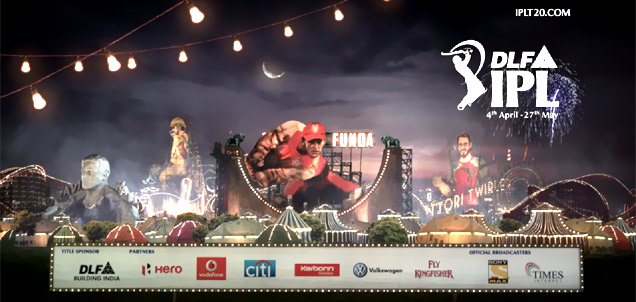
    The annual IPL event is no less than a carnival or a circus and the TVC featuring the two kids with the Eena Meena Deeka song playing in the background aptly sums it. As the countdown begins for the circus to visit our cities or beam in to our TV sets, we take a look at the various marketing activities planned around the IPL.


    Once touted as the biggest property for marketers, the game lost some sheen because of the negative coverage it got in its last avatar. Fully aware of the situation, those involved with the IPL have now gone all out to woo audience and it’s no surprise that lately, especially in the last two weeks, one has seen and heard a lot about IPL on various medium.


    Eena Meena Deeka- Carnival- Ye IPL Hai Boss
    [youtube width=”400″ height=”200″]http://www.youtube.com/watch?v=b2lDDabuGLs[/youtube]

    Rohit Gupta, President, Multi Screen Media (MSM), the official broadcaster of DLF IPL, talking about the inventory sold on MAX said: “We are in the process of closing deals and it’s been a regular sellout process. The start was a bit slow, but once our marketing campaign kicked off we have managed to rope in most of the key brands. In fact, we have not dropped our rate which is Rs5.5 lakh for a 10-second spot.”


    Mr Gupta, in fact, is confident that the rates will go up once the game begins and more audience comes in to watch the matches.


    Talking about the campaign, Gaurav Seth, Senior VP, Marketing and Communications, MAX, said: “We have reached the end phase of a very long campaign that was kickstarted on February 23 with Aisa Mauka Aur Kaha Milega and April 4 will see the culmination of all the activities we had undertaken as the IPL begins. As for sustenance, we will take a call on the basis of the viewership and address the issue accordingly.”


    [youtube width=”400″ height=”200″]http://www.youtube.com/watch?v=UXQsIgN_530[/youtube]

    Some of the activities that MAX has undertaken include a partnership with Radio Mirchi for 40 stations across India which will include radio spots, RJ mentions, and IPL contests. For OOH, they have taken over 700 units across 70 towns including billboards, bus shelters and various other innovative OOH panels. The print engagement includes both English and vernacular newspapers. They are also engaging the audience through mobile and FB along with BTL activation. It is learnt that the budget earmarked for IPL 5 is almost Rs30 crore.


    Mr Seth said: “We are reaching out to our audience with one million printed schedules which will be distributed through multiple outlets. We have planned flash mobs across 10 IPL towns. The mobs will give info on IPL by disruption and the sequences will be uploaded on YouTube which we hope will go the viral route.”


    “This is the 5th year of IPL so people know what it is. The challenge is to create something that is innovative and appeals to the consumers. Aisa Mauka is perfect as it talks about IPL being an opportunity to bond with family and friends. It invites people to enjoy the IPL experience,” he added, on marketing IPL which has definitely been a mega exercise.


    [youtube width=”400″ height=”200″]http://www.youtube.com/watch?v=xkBVlfisg88[/youtube]

    Extraaa Innings T20 2012 on MAX has also come out with a special video featuring its presenters on the theme of Aisa Mauka Aur Kaha Milega.


    Here’s a look at some of the marketing initiatives taken by various IPL teams:


    Mumbai Indians

    Mumbai Indians has taken the digital route to connect with its close to 2.5 million fans. The unique marketing campaign by O&M is being digitally driven on Facebook’s MI fan page ‘MIPaltan’. The campaign ‘Players become Friends’ is aimed at increasing the interactivity quotient between the players and the fans in the digital space. The fans can get to be friends with Sachin Tendulkar, Harbhajan Singh, Rohit Sharma, Munaf Patel and other team players and know about their real lives, practice sessions and much more.

    https://www.facebook.com/mumbaiindians?sk=app_358303457535779


    MI has also unveiled its new website www.mumbaiindians.com, which offers a fresh view for the fans to know more about the team. The new website presents dynamic online tools, easy navigation and is rich in its contents. The fresh look and feel of the website, designed in keeping with international standards, echoes the value which best epitomizes the team – ‘Play Like One’.


    Mumbai Indians has recently signed a brand alliance with Walt Disney India, which marks the first time Mickey Mouse will be associated with cricket. The Mumbai Indians Disney merchandise is available for sale in India.


    Delhi Daredevils

    Delhi Daredevils, in its bid to engage its fans, signed four remarkable flagbearers of daredevilry as Delhi Daredevils Superfans. These include India’s only IronMan athlete, Anuradha Vaidyanathan; the youngest Indian climber to summit three peaks beyond 8000m, including Mount Everest, Arjun Vajpai; India’s only ultramarathon runner Arun Bhardwaj and the only Indian woman to ski her way to South Pole, Reena Kaushal Dharmshaktu.


    It also launched the team’s Hindi website, making it the first IPL franchise to create an online destination for cricket fans who would like to follow the game in the language. The English website too had been redesigned. Also on anvil is the launch of mobile version of the website. Smartphone users can download a mobile App to get scores and updates. DD also launched its new official song titled ‘Munday Dilli Ke’ to herald the coming season of DLF Indian Premier League.


    Chennai Super Kings

    CSK took its ‘Whistle podu’ further by launching a brand new participative cheer video. Titled ‘Chennai Super Kings ku Raise Your Hands’ this video too is a tribute to the unwavering fan support that the team enjoys. The one-minute video captures a fan formation that gathers momentum, with supporters joining in to form a Mexican wave cheering their favourite team. The video was uploaded on YouTube late evening on March 25, and in less than 12 hours it had already generated over 10,000 views.


    In another unique initiative, Washington Apple have partnered with CSK as ‘Official Fruit’ for the upcoming IPL season. South India is India’s largest market for Washington Apples and Chennai, in particular, is the key port of entry and distribution hub and also a key market for the company, hence the association.


    Kolkata Knight Riders

    Venky Mysore, MD & CEO of KKR on the marketing initiatives said: “KKR recently unveiled its new marketing campaign, ‘New Dawn, New Knights’. The campaign is about the new team that we have formed and its new attitude and intensity. It signifies the new winning spirit that has been brought in by our new players and the new coach. All of these go a long way in ensuring a new beginning.”


    He also said that their digital community exceeds 700,000 and before the start of the latest season of IPL, they are confident of reaching a million. The marketing would be mostly done through merchandising on the digital platform as well as through ticketing. “Contrary to public perception, we don’t go out and buy media, because we don’t need to. We have a brand that we constantly work on. Part of how we do that is to ensure the team is doing well, and we also try to be a part of mutually beneficial associations that can be leveraged. Hence, we develop marketing programmes that allow brands associated with us to activate themselves. For instance, we created a lot of content with our sponsors on digital and electronic media last year which they utilized advantageously,” Mr Mysore said.


    KKR is working to create new revenue streams like merchandising and licensing. Since various third party reports indicate that KKR is the most valuable brand franchise, they are looking at ways to strike licensing agreements to monetize on the same. As a result of multiple merchandising deals, they have made available a number of branded KKR merchandise like T-shirts, hats, head bands, fridge magnets, pens, ties and so on.


    “The market segment that IPL attracts is very different from that of a Test and One Day format of the game. I think it depends on the product. If you look at toothpaste today, you have hundreds of brands, but it all depends on how you package it and how you market it. So the challenge for us is to keep working on the product, its packaging and delivery, and if we do a good job, then we would be successful as a franchise,” he added.


    Rajasthan Royals

    Rajasthan Royals has again tied up with Sanskar School for their annual inter-school Kanni Thahryamal Tournament to develop, nurture and motivate young talent at the grassroots level. Various Rajasthan Royals players, including Rahul Dravid, scouted for talent at the tournament and. RR also supported the Ambuja Jaipur Marathon 2012 as Official Fitness Partner.


    They recently unveiled the pink-coloured training jersey dedicated to the city of Jaipur, the team’s home. On the digital front, the focus is on interactivity and their fan zone on the website encourages fans to express themselves through content, videos, images, forums or polls. Points are awarded based on interactivity on the website which can be redeemed for exclusive memorabilia and merchandise.


    UltraTech Cement Limited is the team’s Principal Sponsor for IPL 5. The cement brand has been associated with the squad since 2008.


    Kings XI Punjab

    This IPL team hosts the Kings XI Punjab Cup, a tournament organized to provide a platform for young guns to showcase their talent. Through this annual tournament, KXIP aims to nurture talent at the grass root level by giving them an opportunity to display their talent.


    Kings XI Punjab has initiated an activity with Institute of Fashion technology at Punjab University. As a part of the initiative, the aspirants were given an opportunity to design their favourite local team’s merchandise. The chosen designs have been used in the merchandising of Kings XI Punjab.


    The team associated with Indraprastha All India Sports Foundation to launch the one-of-a-kind reality show ‘Cricket Champs’. This reality show is being powered by Kings XI Punjab and a number of players from the franchisee are also part of the proceedings. This pan-India initiative is featuring on UTV.


    Deccan Chargers

    Emirates International has come on board as the Team Sponsor for Deccan Chargers. DC also kick-started its Blue Campaign in Hyderabad with ‘its gotta be blue’ line celebrating food, music and cricket. Some Tollywood films have also associated with Deccan Chargers for promotional campaigns. DC is also taking the digital route to connect and interact with its fans in a better way.


    Royal Challengers Bangalore

    RCB launched its new website earlier this month, which is aimed at making navigation easier for its fans. The site has new collection of photos, videos and other downloads for its followers. Most of the initiatives are on the RCB site.


    Pune Warriors

    This IPL team has been focusing on interacting with its fans with its website. In keeping with the name, the site has sections like ‘Our Warriors’ which give information about the players, War news and Warrior Club Updates. The Bhartiya Nrityanganas or the cheer queens with the Indian flavour will be encouraging the team on field. The team has also associated with Bookmyshow for buying tickets for the games.