Tag: facebook

  • Hanmer MSL wins Bees Award for eBay.in

    By A Correspondent


    MSLGroup India’s Hanmer MSL has been awarded ‘Best Social Customer Relations Management’ at the third edition of the prestigious Bees Awards for its social media engagement campaign of eBay India.


    The Bees Awards is the first international social media competition honouring communication and marketing professionals and judged campaigns from agencies and brands from across 40 countries.


    The eBay winning campaign – eBay India Wins with Social CRM – received the award for its creative customer engagement strategy that identified female consumers as brand evangelists and developed rich, visual talking-points to create a viral effect and foster brand loyalty. The agency also established a strong customer relationship management mechanism that focused on seamless integration of the user-facing CRM process on Facebook with eBay’s back-end processes to create a real-time response set-up.


    The award win follows MSLGroup Asia’s finalist nomination at the Bees Awards in 2011, for MSL China’s work with IKEA in the ‘Best use of Microblogging Platform’ and MSL Singapore’s nomination in the ‘best relationship with blogs’ category for feminine care brand Whisper, “Happy it’s Here!” social media campaign.


    Commenting on the win, Jaideep Shergill, CEO, Hanmer MSL, said: “I’m extremely proud of our social media team for notching up an impressive win at the Bees Awards this year, and for being the only agency from Indiato do so. This award acknowledges our industry – leading, best-in-country social media engagement expertise and creativity. We are truly proud to have been honoured in a competition that brings together brands and agencies from the communications industry across the world.”


    MSLGroup’s MSL Nordics also won the “Best Use of Alternative Tools” category with Ariel Fashion Shoot, undertaken in partnership with Saatchi & Saatchi.


  • PUMA Social once again focuses on after-hour athletes

    By A Correspondent


    Every professional athlete wears a uniform, but what about the amateur athlete. The king of foosball or the reigning champion of darts? PUMA brings fun and irreverence to the sports sphere once again with the launch of ‘PUMA Social,’ a campaign bringing together after-hours athletes from around the world. With this campaign, sport lifestyle brand PUMA takes the next step in bringing the party to the playing field.


    The PUMA Social range of clothing symbolises how PUMA fuses sport with lifestyle into everyday life. It is about a distinct lifestyle rather than a specific product. The brand sets out to celebrate the lesser-known games played among friends and the amateur athletes who rarely make the headlines. The PUMA Social campaign is about paying homage to the obscure, bizarre and after-hours games that every group of friends makes up at one point or another.


    To complement the popular in-market program, PUMA has launched a mobile extension with the launch of the PUMA Social Cards Mobile Application for iOS devices. Showcasing the distinctive characters that make up the universe of late night revelers, the PUMA Social Cards app comes loaded with pre-designed and customized archetype templates, encouraging After Hours Athletes to unite in celebration of late night and after-hours fun.


    The digital deck captures the spirit of social stereotypes, playful party superstars and bar-sport warriors, allowing users to label their friends in the best way possible and share their shots via PUMA.com/Social as well as their own social platforms such as Facebook. At its core, the app is meant to embody the PUMA brand’s philosophy that life deserves to be played and enjoyed with teammates near and far.


  • Can Facebook, the marketer’s online best friend ever become its ace salesman?

    By Delshad Irani & Ravi Balakrishnan


    In 2009, Facebook terminated the ‘Whopper Sacrifice’, Burger King’s social experiment cum marketing activation. Created by Crispin Porter Bogusky, the campaign’s premise was the more ties you sever the closer you get to your BK Whopper. The application as it turned out was a whopping success.


    Within a week 200,000 ‘friends’ were virtually burned out of existence from various lists. Facebook couldn’t handle the loss of those hard-earned friendships. Burger King, on the other hand, proved the point it set out to make – Americans sure do love their burgers. That same year, Swedish furniture giant Ikea spent practically nothing to create a campaign to promote its newest store.


    The agency Forsman & Bodenfors created a new Facebook account for the manager at the store in the city of Malmo and posted catalogue pictures of furnished rooms.


    Users could win furniture and other items in the photos if they beat their friends to the punch. All they needed to do was tag the pieces with their names first. Needless to say the prospect of first-to-tag-wins drove Facebookians crazy. The campaign was hassle-free, cheap and effective, just like the Scandinavian furniture it was advertising.


    Fast-forward to a few weeks ago. General Motors, the world’s fourth-largest advertiser and spender of $3.9 billion globally on advertising in 2010, haunted by questions related to effectiveness and ROI, pulled out its pretty penny, all $10 million of it, from Facebook’s paid-ad kitty just days before the social network’s stock went public.


    In addition to that sum, the automaker spends a reported $30 million on content creation for social media. These examples make Baccarat-crystal clear what we know already – you don’t have to pay big to make an impact via social media.


    In India, most marketers love talking about the worth of a campaign by the number of fans, or likes received on the most recent post. But even they are starting to ask a tricky question: what’s the real worth of their campaigns on Facebook? Worth more than a burger, eh?


    The site itself has been trying to tell advertisers that no longer will mere presence and innovative social media campaigns cut it. If they want scale, they’ll have to shell out the hard cash for offerings like “sponsored stories”, not to be confused with “sponsored ads”.


    For instance, products like Reach Generator guarantee that posts by a brand stand to be seen by 75 per cent of its fans every month or an estimated 50 per cent every week. Non users of the tool will have to settle for an average of only 16 per cent of fans viewing posts on a weekly basis. Not everyone’s buying though, believing that compelling content will win any day of the week.


    Anuradha Aggarwal, senior VP, brand communication and insights, Vodafone India said: “Since having high engagement scores is our goal, we focus on creating content on our Facebook page rather than on advertising. We focus on creating posts and apps to enable our 3.2 million fans to create conversations and experiences around the brand.”


    PepsiCo’s approach is to use a combination of both, posts/promotions on brand pages and display advertising. One of the cola maker’s prominent campaigns on the site was ‘Meet Messi in Miami’ where fans had to complete a series of tasks to win a chance to meet The Atomic Flea.


    During the 2011 ICC Cricket World Cup, Pepsi launched an online progamme as part of the ‘Change the Game’ campaign where fans could win a dream trip across the country for all India matches. The latter initiative was listed as one of the 19 best campaigns in the world by Facebook on their success stories blog, the only Indian effort to feature on the page.


    According to Homi Battiwalla, category director – colas, hydration and mango based beverages, PepsiCo India, it is too early to give a conclusive opinion on new advertising properties like sponsored stories and other offers. So the bottom line when it comes to the marketing on the social network is the game hasn’t quite changed. “The primary focus remains on organic content as we believe it results in better consumer connect,” said Mr Battiwalla.


    For automakers like Mahindra & Mahindra, Facebook is good for what it was born to do in the first place. Well, that and to spy on “old acquaintances”. According to Vivek Nayer, senior VP, marketing, automotive division, Mahindra & Mahindra: “Rather than looking at Facebook for advertising reach, we’ve leveraged it for what the platform is inherently good at; building communities. Today at 5 million, we are the largest automotive community on Facebook in India”


    In the case of Unilever, the company moved from almost accidentally stumbling on the power of the site – after noting a lot of action on its first Cornetto Luv Reels page long after the promotion was over – to it being a key pillar to the launch of Fruttare, its new range for the summer. Sapan Sharma, general manager – ice creams, Hindustan Unilever, said: “There’s an advertiser login where you get all the details. In the first 10 days of launch, 1.2 lakh fans signed up and there were 1.2 to 1.5 lakh conversations.”


    Arch-rival P&G is not lagging either. According to a company spokesperson: “In just less than two months, we have over 690,000 fans for our Thank You, Mom campaign. This makes it the largest, most engaged-with Thank You, Mom community globally.” For the launch of Olay’s premium skin care range, Olay Regenerist, a Facebook waiting list was created, with both fashion journalists and consumers signing up for an exclusive trial on the site; in less than three weeks, over 11,400 people had registered.


    But as the eight-year-old Facebook enters a new league as a listed company, it needs to, and rather urgently, scale its revenues to sync with its audience. Minute, often ineffective, right-rail ads aren’t exactly a juicy bone to dangle in front of existing and potential advertisers; thus the introduction of premium ads and better placement.


    According to Siddhart Rao, CEO of digital agency Webchutney, the sweet spot between organic and paid promotion is the one that will yield maximum benefit to brands looking to extract value from social media marketing platforms like Facebook. “One cannot work without the other,” he said.


    S Yesudas, managing director – Indian subcontinent, Vizeum, said: “I do not think all marketers know what to expect from the medium. The hurry to be on to the bandwagon gets them there. The fact that Facebook offers free advertising inventory for brands to test the medium gets overlooked. In my opinion, the medium can be successfully used to build relationships with the consumers.


    Targeting can be done based on profile information, relationship status, interest or based on certain words in profiles or status messages. But the truth is the brand communication will always compete with the updates, videos, etc from friends.”


    Indeed, it’s complicated; the relationship between advertisers and Facebook. Especially when one moves from the fluffy world of engagement to hard sales. Many retailers in the West like JC Penney, Gamestop and Gap pulled the shutters on their stores on Facebook this February.


    Chhaya Balachandran Aiyer – founder – MD, BC Web Wise said: “Ironically Wade

    Gerten, the founder of 8thBridge – the flower store that was responsible for the coinage of the term F-commerce as it was the first to open shop on Facebook for 1,800 Flowers – has admitted that sales never really materialised for their first or other F-outlets, adding that F-commerce deserved an F. Given the fact that F-commerce (Facebook commerce) has failed in the west for retailers, it appears that Facebook would be an engagement vehicle. Peer recommendation and product ratings are not integrated. Should it launch a brand intelligence tool which can be used by consumers – which exposes peer comments and recommendations that can be accessed by the FB community – then the ball game will change.”


    Venkat Mallik – president, Tribal DDB & Rapp India says Facebook’s ability to deliver sales impact has been a bit of a mixed bag: “There need to be more strong case studies demonstrating the sales or brand impact from the use of Facebook led engagement.”


    However while Facebook may not itself be a platform to sell it can impact sales according to some of its satisfied customers. Unilever’s Mr Sharma for instance believes there’s a definite co-relation between high levels of engagement and products sold.


    According to Carlton D’Silva, chief creative officer, Hungama Digital Media, “Opinions of family and friends matter when making purchase decisions decisions and Facebook activity will provide a lot of data to consumers, which can be leveraged in places where they make these decisions, causing a significant, if not direct impact on purchase behaviour.”


    “GM is slashing its advertising budgets by $ 2 billion, of this only $10 million or 0.5 per cent was on Facebook. They have also announced they won’t advertise on Super Bowl, either. Further, what should be noted is that GM has 8 million fans already. I am sure that they are going to continue with the engagement plans for acquired fans. It would be foolish to assume anything beyond, or assume Facebook has failed for GM, it would be just that advertising further is currently not the best bet in its media plan,” said Ms Aiyer


    The users of Facebook both on the agency and the marketer side each have their wishlist ready.


    “The analytics are available at a lag of 7 to 15 days; I’m sure it can come earlier. I’m sure there will be a time when we can talk to people from a specific city or market,” said Mr Sharma


    “They are hugely data rich. If in some way they get to using some of the data millions of people put in their hands on a minute to minute basis, sky will be the limit for them.This will surely come in with resistance from the users, unless they persuade them. They have to walk this path very carefully,” added Mr Yesudas.


    Most brands have a clear agenda from marketing spends on social media platforms like Facebook – greater outreach among target audiences through personalised interaction and engagement, leading to higher impact on conversions and sales.


    “It’s a perfectly reasonable expectation from a social communication platform with 900 million members,” said Mr Rao of Webchutney, “but whether brands invest enough thought, time, resources and action to engage audiences meaningfully is another question.” And one helluva question it is. Because for every whopper of a Scandinavian success story, there are at least a dozen marketing campaigns that have fallen flat on their face. So, ask not what you can do on Facebook but what Facebook can do for you.


    Source: The Economic Times
    Copyright © 2012, Bennett, Coleman & Co. Ltd. All Rights Reserved

  • GroupM selects Buddy Media as preferred social ad partner globally

    By A Correspondent


    Buddy Media, the social enterprise software for eight of the world’s top ten global advertisers, announced that GroupM has selected the company’s BuyBuddy social ad product as its preferred social ad management partner.


    “We are proud that GroupM has chosen Buddy Media as its preferred social ad partner,” said Michael Lazerow, CEO and Founder, Buddy Media. “Our self-serve social ad buying technology will make it easy for any GroupM agency to effectively scale and measure social spend for their clients.”


    GroupM will roll out Buddy Media’s BuyBuddy to all of its agencies, including Maxus, MEC, MediaCom, Mindshare, M80 and other business units. It will also begin training on how to maximize the benefits of Buddy Media’s unified social marketing software solution across paid, owned and earned media.


    “After extensive evaluation of the marketplace, GroupM is excited to deploy Buddy Media’s social ad software to all of our agencies,” said Rob Norman, CEO, GroupM Interaction Worldwide. “Social media success is of critical importance to our clients, and Buddy Media is the proven self-serve solution in market that has a focus on empowering agencies and being a true partner. We will continue to work with other partners but believe this consolidation will offer our clients and teams the opportunity to develop consistent high performance in a rapidly developing market.”


    GroupM invested $200 million in Facebook advertising in 2011. Social network ad revenues will grow to nearly $10 billion in 2013, up from to $5.54 billion in 2011, according to eMarketer.


  • Isobar named Facebook’s preferred marketing developer in India

    By A Correspondent


    IsobarIndiahas been accepted into Facebook’s new global Preferred Marketing Developer (PMD) Programme, along with three other markets in Asia Pacific. Isobar India, Hong Kong, Malaysia and Taiwan have all been recognised for their ongoing creation of innovative solutions and apps for brands across the Facebook platform.


    Facebook has separated developer service providers into four possible badge qualifications; Pages, Ads, Apps, and Insights. The programme recognises companies who have built on the Facebook Platform since its launch, and those who are adept at understanding platform policy and development tools, and who have a long track record of providing Facebook-centric services to brands.


    Following a highly-selective application process, Isobar India has been certified in the Apps category of the PMD programme, in recognition of the agency’s innovative work for Reebok, Expedia and Philips to name a few.


    “We’re proud to have been accepted as a Facebook Preferred Developer and see it as recognition of the great work we’ve produced for our clients. Social media is central to our full-service offering, so we look forward to working more closely with Facebook to deliver even better solutions for our clients,” said Shamsuddin Jasani, Managing Director, Isobar India.


    Isobar has also been recognised as a Facebook Preferred Marketing Developer in six other markets worldwide, including the United Kingdom, Finland, Hungary, Poland, Norway and the United States.


    The Aegis Media India group comprises Isobar, the global communications agency with digital at its heart, Carat, the world’s largest independent media communications specialist, Vizeum, Posterscopethe global OOH sector leader, Brandscope,  Hyperspace (Retail), Carat Fresh Integrated (Activation), PSI (Airports), Doosra(Creative),and iProspect, the global leader in search and performance marketing.


  • What’s-On-India Launches Social EPG

    By A Correspondent


    What’s-On-India, the TV Search & EPG (Electronic Program Guide) company has announced the launch of a revolutionary new product called Social EPG. What’s-OnIndiahas integrated Facebook login on its website and is in the process of extending Facebook logins to all its mobile and tablet apps as well. The central idea is that TV viewers could use Facebook to share each other’s viewing preferences to discover TV shows as well as converse about them.


    What’s-On-India’s Social EPGs will help viewers discover shows, films, matches and documentaries that their social networks and peers are talking about as well as share common interest programs to converse about those shows. “Social TV recommendations are considered powerful due to their viral nature and their ability to create tremendous positive or negative word-of-mouth especially for new shows and program launches”, said Atul Phadnis, CEO, What’s-On-India. “Our social network has different clusters of friends representing different interest groups – tennis buddies, college friends, school friends, work contacts and so on. Each of these interest groups could collectively or individually spark off discovery of common interest TV shows relevant to those specific friend clusters,” he added.


    This power of social TV recommendations is due to the fact that they originate from a ‘trusted’ source based on their relationship to the person who made the recommendation. This integration between What’s-On-India’s TV search platforms and Facebook will now help the viewers find, share, and engage around TV content.


    The next move from the company is to provide these features on the What’s-On-India applications (iPhone, iPad, Android, Windows, Symbian & Blackberry) and also integrate the same with other social networking platforms such as Twitter and Google+. All of these features will be powered using What’s-On-India’s proprietary EPG-On-Cloud platform and can be embedded inside third party apps as well.


  • The Anchor: Sevanti Ninan on 5 things she’d like to change about journalism today

    By Sevanti Ninan


    1. Its idea of what constitutes national

    Delhi and Mumbai.  At a pinch add Chennai and Kolkata, because Mamata and Jaya are there to provide copy.


    2. Its notion of public opinion

    What Twitter, Facebook and smses on TV are saying.  Get off the computer and hit the streets to find out what’s happening to those who are not on social networking sites? Na, that’s uncool. Besides being too much work.


    3. Its notion of the arts

    Movies, movies, Bollywood, Bollywood. Regional stars in the field of writing, art, music: confined to the regional press unless they know how to make the scene in Delhi or Mumbai.


    4. What makes news

    Political spats, crime, scams.  Social issues are for documentary film makers, unless Aamir Khan comes with the package.


    5. Its notion of what constitutes progress for both India and Bharat

    Sexy industries like telecom and IT. Education reporting means tracking the IITs. Health coverage means celebrity cancer. Primary health centres and anganwadis-what’s that and where would I find them?


    Sevanti Ninan is Editor, thehoot.org and Columnist, Mint


  • It’s not about co-creation, but increation: Boschma

    The “youth” of today have been touted as being the marketer’s favourite TG for some time now but it’s not just about catering to their apparent behavioural habits. The effort by marketers has to be able to reach out to the subliminal preferences of the youth that are redefining the way they communicate with a brand. Having studied their behavioural patterns and preferences from early 2000, the one person who has seen this group evolve over the years rapidly is well-known international author and speaker, Jeroen Boschma.


    In India to launch his book ‘Generation Einstein’, that has been co-authored by UTV Bindass, MxM India got Boschma to delve on the emergence of the youth of today, why brands and marketers should be wary of this TG, and what are the learnings that could be picked up from this book by those interested in catering to the highly volatile TG. Excerpts:


    After having vowed the world, your book Generation Einstein finally makes its debut in India. What are your first thoughts on the book seeing the light of the day in India?

    The book is about the first global generation from around the world – even the Indian youth is not Indian but is really a part of the global youth. The book delves into the behavioural aspects of the youth, their habits, preferences, and so on. Of course, the behavioural background of Indians is different from those of the generational background of youth fromHolland, where the book was first launched. It also provides an insight and a view to everybody that wants to communicate to youngsters – not only marketers and brand managers but I think even school teachers, professors and others. Basically, it is aimed at those seeking to make an impact on the youth of today.


    Could you delve on the thought process behind narrowcasting the next generation youngsters as your core TG towards writing the book?

    It took me five years to write the first version of the book. The way I approached it is I made notes of my learnings, which at the end totalled in excess of 400 pages. There was also a heavy amount of research that was done and then all the elements were brought together to be edited and written in a proper way. I am grateful to the help from my Indian colleagues who helped me in putting together this book so as to reflect the findings and tastes of the Indian youth of today.


    How different are the three versions of the book from each other?

    The first edition was published when Facebook didn’t even exist. So the other two editions had to be rewritten to accommodate learnings and findings from the social media space as well.


    What are some of the trends you came across while you got down to analyse the youth of today?

    The fact is that the youth of today do care of the world and they want to associate brands with respect to nature and for the sake of humanity. Another big trend is that the youth of today are very entrepreneurial and start their start-ups at a very young age. I have seen so many new ventures set up by young people inIndiaand they have been performing phenomenally well. I would say that is one of the big trends transpiring around the world today.


    You have pioneered the term Increation. Could you throw more light on the significance of the term?

    Increation is the process of coming up with marketing campaigns that work. We have been working on it for five years and now we have a firm grip on the way it needs to function. It provides a learning experience to ad agencies and brands to source their creation. It’s different from co-creation which doesn’t work; Increation works.


    How would you rate your experiences of co-authoring this book to suit the tastes of the youth of India?

    It’s been a long process putting this book together for the Indian audiences. It’s not easy as constructing a house; it’s about putting together thoughts together and creating an environment that the youth of today are familiar with.


    What is the lesson that Generation Einstein throws up for marketers and brands of today?

    What I have observed with Generation Einstein inIndiais that it is getting more extreme; we really do not have a choice – we have to change. We all are trying to keep the old world alive but the old world doesn’t exist anymore. It’s about the new generation and their understanding of the trends of today. The marketers and brands of today have to unlearn everything they know about the old world and channelize their focus on the youth of today.


    What are your plans for the future?

    The plan next is to organise a full-day Generation Einstein conference to get into the depth and help marketers come up with solutions to cater to the youth of today. I am also in the process of writing another book which I plan to launch internationally very soon. It still is in the early stages and the full context will only be known later.


  • The Anchor: 5 Reasons why Brands get it wrong with the Youth

    By Samyak Chakrabarty


    1. Boxing youth into strict definitions

    In a country as diverse asIndia, one cannot define our youth or predict consumption behaviour by merely categorizing them under conventional economic segmentation or geographies. Our youth is continuously evolving, especially those born after 1988 are still caught in a transitional phase from and into very different eras. It can never be obvious what a SEC A+ 20 year old male inNew Delhiwill purchase just by looking at the size of his wallet or the kind of college he studies in !


    2. Youth don’t wake up thinking about brands

    Just because your brand ambassador maybe Ranbir Kapoor or your communication is ‘cool’ (I hate it when brand managers say this!), one can’t take it for granted that youngsters will always have your brand on their top of mind or will purchase your product. Today, we are more conscious and calculative about what we consume, hence substance is equally as important as packaging. Second, to build loyalty with this generation, the brand has to be equally loyal to them!


    3. Digital is the holy grail

    There was a time when brand managers would pull out their hair trying to figure how to engage youth sustainably. Soon enough,Silicon Valleyanswered their prayers and there landed from ‘the cloud’ Facebook, Twitter and YouTube. But unfortunately, brands take it for granted that just because they are on social media or rather have a million likes/views, theirs is a ‘cool youth brand’. This is not true, these days we ‘view’, ‘like’ or ‘tweet’ about anything and everything that comes into our online space – it has become a function of habit. These numbers cannot be used to measure brand engagement/conversions in pure statistical terms. Just because your brand is now digital, it is not young.


    4. Trying to measure word of mouth

    Indiais perhaps the only country in the world where brand managers ask for a ‘measurement matrix’ for world of mouth campaigns conducted in colleges. I guess they like to show off to their bosses how much they know and meticulous they are. How can one ever measure, record or contain conversations that happen offline? And just because therefore there is no direct ‘ROI’, youth brands in India refuse to run simple WOM campaigns, even though in fact, if rightly administered and structured, the investment can be more profitable then all digital spends put together since most purchases/brand decisions happen through peer references that take place in conversations over chai in the canteen or a beer in the pub – NOT on Facebook.


    5. Today’s Youth is an alien species

    To my final point, brands look at ‘youth’ as a totally alien species, which they are trying to figure and due to that very attitude, all the numbers, insights and ideas start not making sense. I, myself, have written above that those born after 1988 are indeed a totally different than their predecessors but that doesn’t mean that we overcomplicate and give too much importance to the way they think, eat, drink and surf! I guess the simplest thing to do is work on an intelligent, creative and smart campaign without reading too much into youth behaviour because reality is that one will never ever be able to understand how these mindsets function since there is no one point where this transition will end.


    Samyak Chakrabarty is Chief Youth Marketer, DDB Mudra Max


  • Tata Nano partners with MTV India for India’s first Social Road Trip

    By A Correspondent


    To celebrate its over 1 million fan base on Facebook, Tata Nano announced the launch ofIndia’s first Social Road Trip called, Nano Drivewith MTV, where the digital world will meet the real world. Tata Nano has partnered with MTV India to create a unique driving experience and will leverage the online medium to treat travel enthusiasts to a 20-day, over 2000 km drive.


    Commenting on this unique property, Delna Avari, Head – Nano Product Group, Tata Motors said: “Tata Nano is a personal mobility option for everyone. We are increasingly becoming the popular choice of mobility amongst youth – about 42 per cent of Nano owners are in the 18 to 34 age group. TheNano Drivewith MTV will enable our customers to further understand and experience the brand.”


    Tata Motors, MTV and Nano fans will select 4 teams for this drive. Each team will comprise 4 members and these teams will be allocated 4 different routes to be covered in 20 days. The teams will need to overcome obstacles, tasks and move up the ladder. Social media will play a vital role in this unique road trip as viewers will get a chance to vote for their favourite teams online. While the winning team will be awarded with 4 Tata Nanos, the most ardent fan also gets a chance to win a Tata Nano.


    In November 2011, Tata Motors introduced the Nano 2012, with a bouquet of features, further improving on its record asIndia’s most fuel efficient petrol car.


    With the launch of this drive, over 1 million Facebook Nano fans can look forward to a thrilling social road trip.


  • Hungama earns Facebook’s ‘Most Preferred Marketing Developer’ badge

    By A Correspondent


    The Digital Services division of Hungama Digital Media Entertainment Pvt Ltd was conferred with the Preferred Marketing Developer (PMD) badge by Facebook. PMD is given to developers that have demonstrated value-added capabilities in one or more of the following qualification areas: Pages, Ads, Apps, and Insights. The badge is for companies that have clearly demonstrated unique capabilities that help marketers scale and achieve efficiency and extend measurably beyond the functionality of Facebook’s native tools.


    Commenting on this Siddhartha Roy, COO, Consumer Business & Allied Services, Hungama Digital Media, said: “Being among the few companies worldwide to earn ‘Preferred Marketing Developer’ badge underlines our ongoing investment in providing cross-channel interactive solutions to clients across various verticals. In a digitally connected world, it is important to engage the consumer where he spends most of his time; the social media platform, especially Facebook, has emerged as the new media real estate where brands can build greater engagement and interaction with the consumer.”


    Hungama Digital Media helps brands build awareness, engagement and loyalty, using a full range of digital skills, including campaign strategy and creative development, website design, online media planning and buying, viral marketing, social media strategy and optimization, mobile marketing, search engine marketing, gaming. On social media, specific to Facebook, the agency provides page management and publishing, community management, applications development, social plugins, advertising (ad creation, auto bid optimization, target segmentation, creative, conversion tracking, reporting), monitoring and reporting (insights).


    Hungama has built digital campaigns for clients that include Mahindra & Mahindra (Automotive), Mahindra Racing, Bacardi, Yum Restaurants, LG and Nokia amongst others; that utilizes the Facebook ads API such as Bacardi Together Club, Black List Application, Celebrate Life, ICC World Cup Fever, Zinger Application, Create Your Comic Strip, Valentine’s Day, to name a few.


    Hungama Digital is the No.1 Digital Advertising agency in 2011 according to The Economic Times Brand Equity Agency Reckoner 2011. The parent company, Hungama is the largest aggregator, developer, publisher and distributor of Bollywood and South-Asian entertainment content in the world. With partnerships with over 305 content creators, across record labels, studios, broadcasters Hungama has licensed worldwide exclusive digital rights to over 2 million music and video titles. Hungama has successfully managed more than 2,000 mobile and digital campaigns for as many as 300 brands globally.


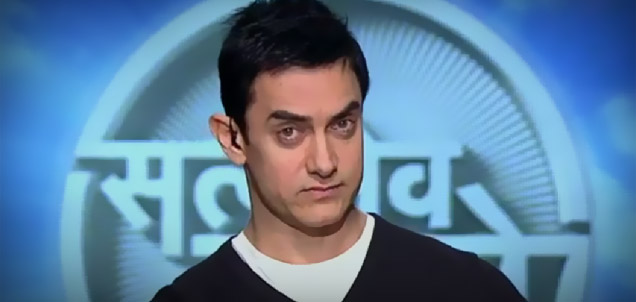
  • Dream start for Satyamev Jayate


    By Meghna Sharma


    On World Laughter Day, Aamir Khan was able to achieve just the opposite – make Indians wake up to the social evils we only talk about in hushed tones and cry while consuming  the harsh reality we all run away from. The much-awaited Satyamev Jayate premiered yesterday (Sunday, May 6) morning after a well-orchestrated marketing campaign. As expected, the show was a hit among the masses and media personalities. MxMIndia spoke to a cross-section of mediapersons and experts for their reactions to the show – and to know if the show will be able to sustain the hype and curiosity it has generated.


    Anita Nayyar

    TRPs, no problem

    Most media planners are happy with the show – personally as well as professionally. They feel that the show was able to generate enough curiosity by making people switch on their television sets on a Sunday morning and will continue to do so.


    “The show had a huge amount of emotional quotient, but the way the issue was dealt in the episode will be able to impact people and many of them will wait for the next episodes too. The way everyone is talking about it, I’m sure that the channel will be able to get its TRPs. Apart from the Aamir factor, the issues being discussed on the mass-reach channel will also help it,” said Anita Nayyar, director (customer strategy), BCCL.


    Mediaah! Thank you, Star Plus. Thank you, Aamir Khan

    Anil Thakraney: Oprah Khan

    Agreeing with Ms Nayyar, another senior media planner felt that that the show has the potential of becoming the highest TRP generator in the morning slot. “It’s an episodic show, so a lot depends on how each episode is produced. The show, though a little over dramatic at certain portions, will catch people’s attention,” said the media planner, requesting anonymity.


    The show was telecast on nine channels – of Star the network, Doordarshan and ETV Telugu  and was also dubbed and had subtitles to reach out to various parts of the country.


    Chandradeep Mitra, managing partner, Anvention and who is now based in Kolkata, liked the show and felt that even though it is not pure entertainment and deals with uncomfortable topic, it will be a hit among the masses. “The show was telecast with subtitles in Bengali on Star Jalsa, which helped it retain its genuineness. People here are comfortable with Hindi, so language won’t be a problem. After the initial hype, a lot will depend on how it is written and talked about on the social and mass media. Also, the topics will show how the show will do in the future. For instance, the first episode would have an impact on the Hindi-speaking belt,” he said.


    Anil Sathiraju

    Another media planner who saw the show on Star Plus and a regional channel, Star Vijay, felt that only Aamir Khan will be able to catch people’s attention down south. “It might not catch people’s attention as everyone is expecting, but it’s unpredictable.  Although, one look at the show and one can see that the actor and his team have done their homework well,” said Anil Sathiraju, head – south, Mudra Max Media.


    Many also felt that it’s a bold step by an entertainment channel to deal with such a topic and to such an extent. The money spent on the show is no secret. “Aamir is a popular actor, but I don’t think the show will be able to garner the same kind of popularity and following like other weekday prime time shows on similar channels. But hats off to the channel and the actor for taking up such a bold step and deal with social issues no one wants to talk about,” said Sundeep Nagpal, founder director, Stratagem Media.


    Marketers’ paradise?

    The 10-second advertisement slots for the show were said to have been sold at thrice the usual rates. The main sponsors have already paid a huge sum to be associated with the show. According to the marketers, the tear-jerker has the mass-appeal and the pull.


    Lloyd Mathias

    The show has been ‘trending’ on Twitter the whole of Sunday and has an ever-increasing number of followers on Facebook too. So, on the popularity front, the show has been able to reach out to its target audience. At least the socially networked intelligentsia for sure.


    Former CMO, Tata Teleservices, Lloyd Mathias said that the show is a huge marketing property. “The hype created before and after the show, is a clear signal about the impact it has created. Apart from the Aamir Khan factor, even the issues bieng dealt with have created uniqueness and curiosity.  So, every marketer will be glad to be associated with the show.”


    Sanjay Tripathy

    Even Sanjay Tripathy, executive vice president – Marketing & Direct Channels, HDFC Life, felt that marketers would be glad to jump onto the bandwagon: “Every show has a certain TG and marketers advertise with them according to their TG. Satyamev Jayate is a show which has appeal across sections – class, age, region and religion. So, even though the show is not at a prime time slot and not a pure entertainer, people will watch it. So, why wouldn’t any advertiser want to be part of it?


    More than a tear-jerker

    The first episode dealt with the issue of female foeticide – not something people aren’t aware of. Sociologist, human right activists and media commentators are glad that someone is talking about such taboo topics on such a platform. And since, an actor of certain credibility and reputation is bringing it to the masses, there might be some change in the society.


    “The portrayal of the issue was sensible and the personal experiences of the three women on the show were heart wrenching. Till now, such topics were only debated by academicians and activists. But now it’s in the public domain. And it has shaken up the people. However, now the concern is, will it be able to find a solution for such highly-prevalent evils of our society? A follow-up is needed so that the show doesn’t just become another tear-jerker,” said Sarla Bijapurkar, sociologist.


    Ranjona Banerji
    Ayaz Memon

    Ranjona Banerji, senior journalist and contributing editor, MxMIndia, felt that sustainability is a challenge now. “A lot of times, after a hard-hitting start, many shows tend to bend towards populist themes. So, I hope the show doesn’t do that or run behind TRPs. The show will have the similar constituency of followers like Anna Hazare. Thus, change in a society might happen, but a lot will depend on how the show progresses from here.”


    Agreeing with her is Ayaz Memon, veteran journalist and editor, who too believes that sustainability is a challenge the show will face if it wants to be different: “Very rarely do people want to watch ‘reality’, but the show was able to catch almost everyone’s attention on Sunday. Apart from sustainability, another challenge the show will have to overcome is how quickly it is able to capture the youth’s attention, because one doesn’t know what will happen after three weeks.”


    If that’s not enough, Teesta Setalvad, journalist and activist feels that the show was great, but there were loopholes in it too. “For instance, in the show Aamir Khan said that he will write a letter to the CM, but in reality he can’t do much about it. It’s the chief justice who can make a difference and take action. Also it didn’t tell people where to go when such issues happen, no matter how weak the organization might be. Apart from that, the show was excellent and a good start in creating awareness.”


    Photograph: Video grab from SatyamevJayate.in


    > The Importance of Being Aamir Khan

    > Why SJ will rule weekends; Stratagem analysis: Weekday Show #23 > Weekend Show #1

    > SJ is Aamir’s baby, completely: Satyajit Bhatkal (director of the show)

    > High EQ at Aamir Khan talk show Satyameva Jayate

    > Airtel slashes SMS rates for Satyamev Jayate

    > Anil Thakraney: Aamir wants to play God