Tag: Ernst & Young

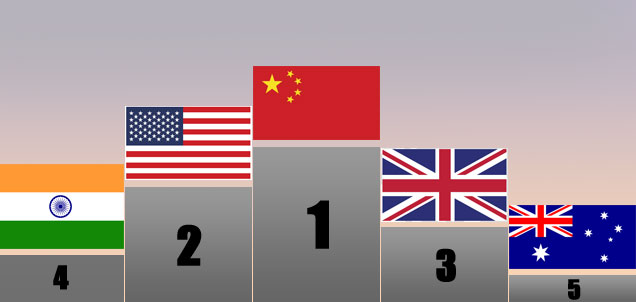
  • India #4 in EY’s Most Attractive Nations for M&E Investment


    By A Correspondent


    It’s India Shining in the world order. At least for the Media and Entertainment sector. According to consulting firm EY (eka Ernst & Young), India ranks fourth in the most attractive nations for investment. This coupled with the fact that espite the usual industry challenges and downside risks, the media and entertainment (M&E) sector has a high level of confidence in the global economy. EY recently survey senior executives from global M&E companies for the 13th Global Capital Confidence Barometer which was released on Monday.

    Specifically, this is what the EY report says on India:

    Even as the outlook for many emerging markets turns negative, investor sentiment toward India is seeing a significant recovery. The Indian Government’s pro-business stance and an increasingly promising economic outlook are fostering a more attractive investment landscape for inbound investment.

    Several government initiatives, including the digitisation of cable television, the Phase III auctions of FM radio spectrum and an increase in FDI limits, are expected to drive growth in traditional media. India is also the second largest internet market after China with over 300 million internet users. Although digital content consumption is currently tempered by low smartphone and broadband penetration, a surge in broadband adoption is expected with the rollout of 4G services and the government’s Digital India initiative.

    While the ubiquity of media consumption has not yet translated into significant industry revenue – by 2016, India’s online advertising market is forecast to be a little more than  US$1 billion, while the forecast for China is in excess of US$23 billion –  India is expected to become the third largest economy in the world by 2030 after the US and China.

    With a triple fold increase in GDP expected over the next 15 years, M&E industry revenues and their contribution to the GDP are expected to increase significantly.

    India has seen some big M&A deals in M&E in 2015. The key ones being:

    Deal Type

    Announced Total Value (USD Mn)

    Target Name

    Acquirer Name

    M&A

    417

    MAA Television Network Star India

    Pre-IPO

    273.4

    Videocon d2h Silver Eagle Acquisition Corp

    Private equity

    166.5

    Prime Focus – Reliance Mediaworks merger

    M&A

    110.8

    Reliance MediaWorks -BIG Cinemas Carnival Films

    M&A

    (Closure pending)

    78.1

    DT Cinemas PVR

    When asked their perspective on the state of the global economy, 81% of executives said it is improving, up from 52% one year ago. Executives surveyed maintained an overall positive attitude, indicating an improving level of confidence in corporate earnings (64%), short-term market stability (83%), credit availability (77%) and equity valuations (56%).


    Says John Harrison, Global Media & Entertainment, Transaction Advisory Services Leader at EY: “Media and entertainment executives are more confident about the global economy and key market indicators than 12 months ago. However, short-term headwinds, such as foreign currency volatility and earnings pressure from digital transformation are tempering enthusiasm. As the industry learns to better harness digital adoption and fully exploit the multiplatform distribution environment, companies are becoming more confident about expanding their offerings and making strategic acquisitions that will improve their competitive advantage.”


    When assessing economic risks to their businesses, executives indicated increased volatility in currencies to be the greatest, (36%), followed by slowing growth in key emerging markets (23%), the economic and political situation in the Eurozone (20%), increased global and regional political instability (14%) and timing and pace of interest rate rises in the US (7%).


    Executives surveyed overwhelmingly expect the global mergers and acquisitions market to remain strong in the year ahead, with 73% indicating it will improve (up from 49% last year), 24% saying it will remain stable and 3% saying that it will decline. When asked if they expect to actively pursue acquisitions in the next 12 months, 59% responded favorably, which is more than double from two years ago when only 25% indicated they were going to actively pursue acquisitions. While the number of M&E companies expecting to pursue an acquisition in the next 12 months is the highest it has been in two years, only 44% of respondents are optimistic about the likelihood of closing acquisitions. This is possibly a result of the perceived valuation differential between sellers and buyers increasing in the past six months.


    Target deal sizes are moving higher, with 22% of respondents indicating that their largest planned acquisition size in the next 12 months will be greater than US$250m. While a majority of acquisitions are expected in the US$250m or less area, the trend since last year is toward more substantial deal sizes.


    Confidence in corporate earnings is more measured, possibly a result of foreign currency volatility as well as structural challenges facing the M&E industry from digital transformation.


    Other key findings of the report include:

    • Digital continues to have the greatest impact on M&E companies’ core business and acquisition strategies.
    • Foreign exchange volatility is causing concern as a lot of costs are US-dominated and revenue is increasingly international.
    • Structural challenges related to digital adoption persist, which, along with foreign exchange fluctuations, is having a near-term impact on corporate earnings.
    • Respondents are most likely to invest in China, the US, the UK, India and Australia.
    • 58% of executives said that their company’s focus during the next 12 months will be cost reduction and operational efficiency, followed by growth at 28% and maintaining stability, 14%.
    • Strategic divestment and other potential portfolio actions are moving higher on the boardroom agenda as media and entertainment companies seek to optimize capital allocation to thrive within a fast-changing world


    The report is a survey of senior executives from large M&E companies around the world that gauges corporate confidence in the economy, identifies boardroom trends and provides insight into companies’ capital agenda.


     

  • Achche Din for M&E


    By Ajay Shah


    India is expected to become the third largest economy in the world by 2030 — after the US and China — and the GDP per capita is expected to grow from $1600 to $4,500 by 2030. As seen globally, an increase in the GDP per capita increases the proportion of the M&E industry’s contribution to the GDP. With a triple fold increase in GDP over the next 15 years, the M&E industry’s contribution to the GDP is expected to increase significantly. But this isn’t all. Here are eight reasons the country will be an attractive destination for M&E investments —


    1. Currently, the Indian M&E industry is growing at a CAGR of 13-14 per cent per year which is almost twice that of the global media industry. Despite the faster growth, advertising spends, which drive growth in M&E industry, as a percentage of GDP is 0.4 per cent, which is significantly lower than developed markets (0.7- 1 per cent). Over time, the M&E sector will witness increasing ad spends as a proportion of the GDP


    2. With over half a billion people under the age of 25, India is witnessing a rise in disposable incomes. Increasing income levels have also led to increasing spend on M&E, as evident from the fast growth of multiplexes  and the success of various sporting leagues in the last five years


    3. Compared to the most developed markets, India is a unique market with traditional media and digital media segments growing simultaneously. Traditional media is expected to continue on the growth trajectory because of the under-penetration of media segments in Tier II and III cities


    4. Several government initiatives, like the digitisation of Cable TV, Phase III auctions of FM spectrum and increase in FDI limits, will aid the growth of traditional media


    5. India is the second-largest internet market after China, with over 300 million internet users. Additionally, government thrust on the Digital India campaign will significantly increase internet penetration in the next decade, thus expanding the digital media opportunity


    6. The mobile subscriber base of 900 million users, sub-$100 smartphones, and one of the lowest data cost globally, is expected to drive a surge in mobile data traffic from 88 TB/Month in 2014, to 1,100 TB/Month by 2019


    7. With existing internet penetration lower than 25 per cent, India is already among the Top Five online video markets globally, in terms of viewership, and is expected to be the second largest market by 2017. As internet penetration increases, India will become one of the most important M&E markets


    8. Currently, investors are interested in TV distribution, cinema exhibition and digital media sub-segments, and we expect this trend to continue for the next few years


    Ajay Shah is Partner and Leader, Deal Advisory, Media and Entertainment at EY (Ernst & Young). Last week, EY released its 12th Media and Entertainment Capital Confidence Barometer


  • Digital shining on Deal Street: EY


    India has seen a substantial increase in Media and Entertainment (M&E) deal activity in the last year, with digital media becoming the fastest growing segment contributing to 50% of deal volume, according to EY’s 12th M&E Capital Confidence Barometer.


    According to EY (eka Ernst & Young), the Indian telecom ecosystem will present a further boost for digital adoption in the country. For instance, India is set to exceed 200 million smartphone users by 2016, toppling the US as the world’s second largest smartphone market. The impending launch of 4G services is also expected to create a surge in broadband adoption.


    More importantly, India is far more receptive to foreign M&E content and investment than other Asian countries. Additionally, India also has the largest box office attendance, 160 million pay-TV households and publishes 94,000 newspapers, making it of particular interest for companies looking to invest in the country.


    Looking ahead, market consolidation, portfolio diversification, market entry and digitisation are expected to drive deal activity in India as M&E companies seek to gain presence across the value chain.


    The survey conducted by EY of more than 1,600 senior executives, of which 70 respondents were from M&E companies, in more than 60 countries conducted by EY for the 12th Global Capital Confidence Barometer shows that confidence in the global economy among the world’s leading media and entertainment (M&E) companies is at its highest point since the global financial crisis. This wave of confidence is fueling their deal pipelines and creating an expected record number of mergers and acquisitions.


    Other global key findings include:

    > Executives remain confident in key economic indicators and the performance of their businesses. Eighty-two percent are confident in corporate earnings; 76%, credit availability; 76%, short-term market stability; and 44%, equity valuations and stock market outlook.


    > The greatest economic risks to media and entertainment businesses are political instability, 39%; volatility in commodities and currencies, 27%; slowing growth in key emerging markets, 13%; economic situation in the Eurozone, 11%; regulatory environment, 9%; and deflation, 1%.


    > Despite the high level of confidence in the global economy, cost cutting ranked highest (34%) when executives were asked to list areas of focus in their boardroom, followed by acquisitions, 25%; changing commodity prices, 22%; returning cash to shareholders, 13%; and strategic divestment, 6%.


    > The top markets in which companies will be most likely to invest are China, the United Kingdom, the Netherlands, Australia and the United States.


    EY’s Global Capital Confidence Barometer is a biannual survey of more than 1,600 senior executives from large companies around the world and across industry sectors.


  • Events & Activation grows 15% annually fm 2011-12: EY-EEMA report


    The organized events industry has grown at 15% annually from INR2,800 crore in 2011-12 to INR4, 258 crore in 2014-15.


    Managed events remain the largest service offering, but, IPs (Intellectual Property) and digital events are growing at a faster rate than managed events. IPs continue to provide a disproportionately high share of revenues to their owners and activations are increasing in importance; however, managed events are beginning to get commoditized.


    Survey respondents have increased their staff strength from an average of 55 employees in 2011-12 to 84 employees in 2014-15, which has resulted in payroll costs increasing from 13% to 18% of total costs. EBIDTA margins are in the 10%-15% range.


    The key strengths of the industry remain the ability to get things done, ideation and efficiency, while there is a need for the industry to work on acquiring the right talent, managing costs, demonstrating ROI to marketers and increasing transparency in operations.


    Future trends

    The industry is expected to grow at 16%-17% to reach INR5, 779 crore in 2016-17, on the back of marketers increasing their below the line (including digital) spends to 21% of their total marketing spends. The growth will be led by personal events, MICE (meetings, incentives, conferences and exhibitions), activations and sports. Most survey respondents are expected to develop one to three IPs over the next few years.


    Non-metro markets are expected to increase in importance as marketers look to tier II and tier III cities for incremental growth. Digital events and activation is also expected to grow significantly on the back of smart phone penetration, internet availability and the cost efficiency of such campaigns for marketers.


    Margins are expected to decline from an average of 16% to 13% over the next two years, mainly due to a growth in overall costs by 12%, and more particularly in payroll costs by 15%, as companies expect to increase their average headcount from 84 to 104 employees.


    Mergers and acquisitions

    While the industry has reported very few M&A transactions over the last few years, there exists scope for consolidation. More than 50% of deal activity over the last few years has been inbound (foreign companies buying into India). However, deal values are usually sub-US$10 million. Valuations are driven by IPs owned, advertising agencies’ interest in activations and digital events and sports leagues.


    Tax implications

    Taxes continue to be a large cost for event companies in India. There are several challenges such as double taxation, taxation across multiple states and varying and inconsistent application of different taxes. The introduction of Goods and Services tax could have a significant impact on the industry in terms of rates and implementation across multi-state activities.


    Governance, risk and control

    The introduction of the new Companies Act, 2013 will result in a more comprehensive approach to governance, risk and control for events and activation companies. Key changes will be in internal financial controls, compliance with more than 60 acts and regulations, and implementing a vigil mechanism to identify undesirable activities.


    EEMA wishlist

    There is a need to grant industry status to the events and activation industry, enable single window clearances, manage withholding and other tax issues and enable skill development for the industry.


    Vision 20:20

    In order to succeed in the future, the industry needs to work towards the following initiatives:

    > Internal aspects: Improve the quality of talent through skill definition for various jobs, skill development, job security, compensation benchmarking and implementation of health and safety standards. The industry must build robust olicies, processes and information systems to manage business efficiently and safely, and implement technology and automation.


    > External aspects: The industry needs to work on its positioning to marketers, build an account focus and demonstrate returns more effectively. There is a need to improve the supply chain by developing quality vendors, implementing a system of vendor accreditation and improving overall risk management. The regulatory ecosystem needs to be made more conducive by simplifying taxation, permissions and copyright issues.


    > Strategic aspects: The industry must build more IPs focused on defined communities of interest to marketers, and embrace the opportunity provided by marketers’ increasing spends on digital media.


  • 10 Trends that will Drive TV Tomorrow


    Global leader in assurance, tax, transaction and advisory services Ernst & Young LLP or EY, as it’s now known, presented a report at the TV.NXT conference being held in Mumbai and organised by leading industry publication afaqs. Presenting an extract from the report presented by senior EY professionals  Devendra Parulekar and Ashish Pherwani


    The Indian television industry is undergoing a seismic shift. The pace of technological change is accelerating so quickly that finding the right balance between addressing today’s daily operational challenges and planning for the next big thing can be a struggle. Many executives are so focussed on the critical issues that they need to address today that looking forward is nearly impossible. And yet, looking forward is what executives need to do if they want to innovate, prosper and survive.


    Here are ten emerging trends that we see as having the biggest impact on the future of television in India

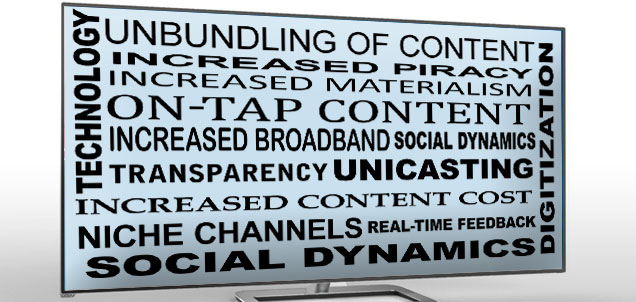
    1. Unbundling of content will drive new revenue models

    Trend:

    As seen in both music and books, with the advent of good-quality broadband and increasing per-capita income, TV content will get unbundled. There will be a shift from channel loyalty and TV loyalty to program loyalty and device disloyalty


    Implications:

    1. Need for sachet pricing models -Pricing by episode, series, day, etc willbe required

    2. Loss of traditional subscriptionrevenues
    3. Threat that high individual pricingcould be hampered by piracy


    2. Technology will enable omniplatform consumption

    Trend:

    Consumption will move from one location to many, as viewers’ desire to be entertained across locations will become possible with the aid of technology like wifi. They will consume content across various formats and devices.


    Implications:

    1. Content will need to move seamlessly across devices and locales; storytelling will need to evolve

    2. Measurement of viewership will be individualized, and be based on large volumes of actual data
    3. Increased adoption of digital supply chain to reduce cost and time


    3. “On-tap” content will lead to time-shifted bingeing

    Trend:

    As there is no need for immediacy of viewing (except in sports and breaking news), viewers will access most content at their ease, and indulge in binging (consuming many episodes at once).


    Implications:

    1. Digital asset management wouldneed to be strengthened to enable subscription revenues

    2. New pricing and packagingmodels would emerge
    3. Growth of Multi Channel Networks


    4. Increased materialism will move TV consumption from the living room to the bedroom

    Trend:

    Increased materialism and lower TV, broadband and PC costs will enable families to split their viewing patterns from the “common” or living room, to the “individual” or bedroom


    Implications:

    1. Lower share for GECs and increased importance of niche channels

    2. Ability for advertisers to target audiences one-on-one


    5. Increased broadband will result in increased piracy

    Trend:

    Broadband growth = Piracy growth. Specially when broadband rates reduce and come on par with cable rates.


    Implications:

    1. Need for industry-level initiatives to curb piracy

    2. Flexible & fair content pricing models


    6. Increased content cost will shift power to the content producer

    Trend:

    IP will begin to be co-owned by production houses, and not just broadcasters, as increasing content costs will result in increased risk sharing


    Implications:

    1. New models of content licensing

    2. Need for robust content use monitoring systems
    3. Premium artists start to share the risk


    7. Digitization will increase importance of niche channels

    Trend:

    India will digitize its distribution across Phases I to III, and increased collections from subscribers will trickle to broadcasters. Phase IV will remain a fragmented or HITS play, with LCOs retaining their last-mile relationships.


    Implications:

    1. Increased revenues for niche channels

    2. Fragmentation of the “GEC” into “sub- GECs” with focused target audiences
    3. Possibility of massive viewership measurement at the household level
    4. Marketing will need to support Phase III viewership support


    8. Transparency will lead to perviewer carriage models

    Trend:

    Carriage is a distribution cost and will be recognized as such, till such time as MSOs begin to collect a larger share of subscription revenues


    Implication:

    1. Per-viewer carriage models will come into being; split across 50 large and medium distributors


    9. Unicasting could lead to resultbased ad models

    Trend:

    Ad service will change to unicast models, targeting individual viewers, like the internet.


    Implications:

    1 Advertisers will begin to pay per ad served and viewed, and increased measurement will be the norm
    2. Value of a served customer vs. a mass customer will be determined
    3. Use of return path (where possible) to drive interactivity


    10. Social dynamics will lead to more real-time feedback

    Trend:

    Apart from viewership measurement, trends from social media like Facebook, Twitter, etc. will provide inputs to marketing, pricing and story-telling


    Implications:

    1. Need to implement social media crawlers and big data analytics
    2. Content supply chain needs to be flexible


    Published with permission from EY


  • Times Group extends support to youth for Spikes Asia

    The Times of India Group has been supporting young talent in the advertising and media industry by creating opportunities on the Young Lions and Young Spikes stages. A great outcome this year was the Silver bagged by the Young Marketer’s team by HUL at the Cannes Young Lions last month. In keeping with this endeavor, The Times of India has announced the Young Spikes contest for two categories – Integrated & Media.

     

    Times Group will sponsor the winning teams with an all expense paid trip to Singapore to represent India and compete internationally at Spikes Asia 2014, happening on 23rd – 26th September 2014. Entries will be judged by a prelim jury and the chosen finalists will make a physical presentation to the final jury in the first week of August in Mumbai. The entire judging process will be overseen by Ernst & Young, Process Partners for Young Spikes.


    This year’s Theme for Young Spikes – Integrated is on “Stop Unnecessary & Incessant Honking on Roads”, while the Theme for Young Spikes – Media is on “Naked Overhead Wires, a Threat to Life”.


    The final jury for Young Spikes Integrated has a host of prominent names like Josy Paul, Arun Iyer and Senthil. An equally distinguished jury for Young Spikes Media consists of names like Nandini Dias, Yesudas and Ravi Rao.


  • No restrictions on news in print, TV or digital media, so why on radio?

    By A Correspondent


    The decision to allow All India Radio news on private FM has drawn mixed reactions.


    Here is the view of Ashish Pherwani, Partner & Radio Segment Champion, EY (eka Ernst & Young):

    “The regulator continues to restrict news on radio by restricting FM radio to broadcast only AIR bulletins, while no such restrictions are placed on print, TV or digital media.  News on radio (without curbs) could be used either in capsules to increase listener stickiness on existing channels, or through the launch of dedicated news channels which could open up a whole new genre of content.”


  • Understanding the Tax proposals in the Budget. Expert view by Ernst & Young


    The devil, as they say, is in the details. We don’t have the fine print yet but here’s a Tax Alert for the M&E sector from leading consulting firm Ernst & Young (now referred to as EY)


    Direct Taxes

    :: No changes have been proposed to the existing tax rates (including surcharge  and education cess)


    :: Retrospective amendments introduced by Finance Act 2012 have not been repealed. However, the Finance Minister has announced in his speech that all fresh cases involving applicability of retrospective amendment on indirect transfers will be scrutinized by the high level committee of CBDT before initiation of any action by the Assessing Officer


    :: Presently, the tax legislation provides that a taxpayer can approach the Authority for Advance Ruling (‘AAR’) only to determine the tax liability of a non-resident. The Finance Minister in his speech has proposed to permit resident taxpayers to approach the AAR (subject to fulfillment of prescribed threshold limits) – necessary legislative amendments are expected to be made in this regard. Further, additional benches of AAR will be constituted to expedite the disposal of cases pending before the AAR.


    :: The New Companies Act 2013 provides for companies meeting prescribed criteria to spend certain percentage of their profit on activities relating to Corporate Social Responsibility (‘CSR’). A clarificatory explanation has been proposed to Section 37(1) of the Act that amount spent on CSR activities for compliance with the provisions of Companies Act 2013 will not be allowed as a deduction. However, CSR expenditure of the nature described in Section 30 to 36 of the Act shall be allowed as deduction, subject to satisfaction of conditions of those sections.


    :: Presently, provisions of Section 40(a)(ia) of the Act warrant a complete disallowance of expenditure in case of non-deduction or non-deposit of TDS on payments to residents. This Section has now been amended to provide a disallowance of 30% of the expenditure. The scope of Section 40(a)(ia) of the Act has now been proposedto include all payments to residents (currently, payments like salaries are not covered within the scope of Section 40(a)(ia) of the Act).


    :: As per the current provisions of Section 40(a)(i) of the Act, payments made to non-residents are not allowed as a deduction if the applicable withholding tax thereon is not deducted and deposited into the Indian Government Treasury before the end of the relevant financial year. It is now proposed that payments made to non-residents would be allowed as a deduction in the relevant financial year provided that the withholding taxes deducted are deposited into the Indian Government Treasury by the due date of filing the tax return.


    :: Presently, shares of a company (not listed on a recognized stock exchange in India) or a non-equity oriented mutual fund qualified as a long term capital asset where such assets were held for a period of not less than 12 months. It has now been proposed to provide that where such assets are held for a period of less than 36 months, they shall be considered as short term capital assets


    :: Section 201 proceedings in case of withholding tax default in respect of payments made to resident payees can now be initiated within 7 years from the end of the financial year in which payment is made or credited. The time limit of 2 years from the end of the financial year in which withholding tax returns are filed has been deleted, since generally withholding tax defaults would generally be in respect of transactions not reported in the withholding tax returns.


    :: With effect from 1 October 2014, DDT to be calculated on the gross amount of dividends declared by the Company.


    :: The Finance Minister in his speech has announced that he proposes to review the Direct Tax Code (‘DTC’) in its current form and accordingly, take a view on the whole matter.


    Transfer Pricing

    :: Given the overwhelming response received in the first 2 years of the APA program, it has been proposed to further strengthen the administrative set-up of the APA program so as to expedite processing of the APA applications.


    :: Presently, a taxpayer could apply for an APA only for future years (ie the APA application had to be filed before commencement of the first financial year to be covered under the APA). Keeping in line with international practice, rollbackprovisions have now been introduced wherein the APA could also cover the four previous years immediately preceding the first year covered under the APA, subject to conditions that may be prescribed. This amendment has been introduced with effect from 1 October 2014.


    :: Presently, as per the wordings of the existing legislation, there was ambiguity as to whether the provisions relating to ‘deemed international transactions’ would apply where both the contracting entities are Indian residents. The legislation has been amended to clarify that the provisions relating to ‘deemed international transactions would also apply to transactions between two resident entities.


    :: Presently, the Indian transfer pricing regulations provide for computation of arm’s length price based on the ‘arithmetic mean’ of comparable prices. In line with international practice, the Finance Minister in his speech today has proposed to introduce computation of the arm’s length price based on the ‘Range’ concept (except in cases where adequate numbers of comparables are not available). Necessary legislative amendments are expected to be made in this regard.


    :: Presently, the Indian Revenue authorities have been taking a position that only single year comparable data should be considered for computing the arm’s length price. The Finance Minister in his speech has clarified that use of multiple year data can be used for computation of the arm’s length price. Necessary legislative amendments are expected to be made in this regard.


    Indirect Taxes

    Service tax

    :: Service tax rate remains unchanged at 12.36%


    :: Sale of space on all media such as internet, out-of-home media, on film  screen in theatres, bill boards, aerial advertising, etc. is now again proposed to be made leviable to service tax (Sale of space on Radio and TV was always taxable)


    :: Sale of space on Print media continues to remain in the negative list and not be liable to service tax.


    :: Limitation of six months introduced for claiming Cenvat credits on input and input services.


    Excise Duty

    :: Rate of excise duty on manufacture of ‘gloves specially designed for use in sports’ has been reduced from 12% to 2% (without availability of cenvat credit benefit) and 6% (with cenvat credit benefit).


    Customs Duty

    :: The Basic Customs Duty (‘BCD’) on LCD and LED TV panels of below 19 inches as well as on colour picture tubes for manufacture of cathode ray TVs has been reduced from 10% to NIL.


    Interest and Penalty

    :: Deposit of 7.5% to 10% of the total tax and penalty demanded proposed, made a mandatory pre-condition for being eligible to file an appeal under service tax and excise legislations.


    :: Increased rate of interest on delayed payment of service tax

    – Interest of 24% to be payable on delay of over 6 months to a year

    – Interest of 30% for delay beyond one year


    The EY report can be accessed at: http://www.ey.com/Publication/vwLUAssets/Budget_ Alert_Media_Ent_2014/$FILE/Budget_Alert_Media_Ent_2014.pdf


  • My FM announces Season II of Jiyo Dil Se Awards

    By A Correspondent


    Riding high on the success of the Jiyo Dil Se Awards Season I, 94.3 My FM has announced the second season of the awards to recognize and acknowledge unsung heroes of society. A campaign will be rolled out in My FM markets covering the 7 states of Rajasthan, Punjab, Madhya Pradesh, Chhattisgarh, Maharashtra, Gujarat and Haryana.


    There will be nine award categories: Education, Environment Conservation, Health & Sanitation, Public Service, Culture & Art, Sports, Women Welfare & Empowerment, Child Care & Development and Economic Development.


    Harrish M Bhatia

    Ernst & Young will be the official tabulators for the Jiyo Dil Se Awards Season II. Speaking on the initiative, Harrish M Bhatia, CEO, 94.3 My FM, said: “We are proud to announce the Jiyo Dil Se Awards Season II as it takes further our brand’s belief that every individual, or entity should also give back to the society in which it dwells. The second season of Jiyo Dil Se Awards carries forward from Season 1, the effort to recognize the individual who has showcased immense dedication and passion for a cause brining about a difference and spreading happiness in peoples’ lives.”


    To apply for the award, people can log on to www.myfmindia.com and download the form. Selected top entries in each category will be put for public voting and jury and listeners’ votes will determine the winners.


  • How Foursquare, Netflix & Spotify are developing agile organizations


    These three case studies – on Foursquare, Netflix and Spotify – give an indicator of some of the methods being deployed by digitally agile organizations to foster this culture of innovation (and growth). Reproduced with permission from Ernst & Young from the report Digital agility now published as part of the Digital Leadership Study Series from EY’s Global Technology Centre and Global Media & Entertainment Centre


    Media and Entertainment (M&E) companies recognize that to achieve the culture of innovation they desire, they must structure their organizations for agility. M&E companies’ vision of meeting high-velocity, continuous change with a steady stream of innovative product, service, distribution, marketing and business model ideas can only be achieved through organizational agility. Research indicates that M&E companies expect to use technology to enable agility and a culture of innovation. Their goal is to break down organizational silos so the business can work synergistically – and rapidly – to deliver products and services that are highly integrated and meet customer expectations. For example, borrowing the phrase “loosely coupled” from software architecture, Netflix labels its own organizational approach “highly aligned, loosely coupled”. That means strategy and goals are clear, and management works hard to ensure they are well articulated and broadly understood. But tactics are executed with minimal cross-functional discussion or approvals, replaced by trust among groups, and leaders who reach out proactively for ad hoc coordination as appropriate. This attracts top-flight talent and affords significant power to solve problems without extensive chains of command that slow decision-making.


    Foursquare’s start-up culture

    More than 35 million people use Foursquare worldwide, the mobile location-sharing-and-discovery application, to learn about areas they are visiting, “check in” with friends or find deals from merchants or restaurants in their vicinity. Its CEO, Dennis Crowley, believes the company is perfectly positioned to become the location-data platform of choice for the internet.


    The mobile world changes rapidly, however, and Crowley is determined to keep Foursquare’s start-up feel, even as the head count has grown from just a handful of employees to more than 160. His executive management committee consists of just five people.


    “A lot of the work we do is consensus-driven,” he explains. “We’ll take the 10 smartest people on mobile and ask, ‘Should we do this or not?’” If a key decision requires a tie-breaker, then an in-person meeting takes place. “There is no CTO that is making the call,” Crowley says. “A lot of times these guys will duke it out, and if the argument goes on longer than a couple of days, then I’ll step in and make the decision.”


    His company, he says, doesn’t have time for formal committee meetings. “Everyone is weighing in on these critical decisions all the time,” he says, “because we’re making 25 of them every single day.”


    He also believes small, innovative companies like his need to rely on their own “gut instincts” in order to maintain their momentum. Building a technology infrastructure is the “easy part, and assembling the user base and getting something that people are passionate about and really feel strongly about, that’s the part that is really difficult.”


    The shared goal is to make each individual customer experience a unique and personal one and to maintain a strong bond with each customer.


    Netflix’s flexible approach

    Netflix, the video streaming service, says its goal is to be “big, fast and flexible.” Indeed, in the first quarter of 2013, its viewership exceeded that of many conventional cable TV channels when subscribers streamed some 4 billion hours of content, a remarkable turnaround from a very public 2011 misstep when it quickly lost 800,000 customers after a poorly communicated attempt to separate video streaming from DVD rental services.


    Most small companies inevitably become bureaucratic and hierarchical as they grow larger. Netflix, by contrast, aspires to grow fast without becoming complex or chaotic, according to company executives. In fact, the company’s recruitment materials note that it doesn’t want to hire “jerks” but high-performing individuals who don’t “wait to be told what to do,” and will also “pick up the trash lying on the floor.”


    Instead of creating lots of rules and hierarchy, it believes in trusting its people to make their own decisions. “We have a very non-hierarchical approach that stresses freedom and responsibility,” explains Jonathan Friedland, Chief Communications Officer and a member of the Netflix executive committee. Executives spend a lot of time “making sure everybody has the right context to forge ahead with what they’re doing” by laying out specific strategic goals and timetables, but without micro-managing or asserting control. In essence, the company tells its staff that over the long run, flexibility is key.


    What does that mean in practice? There are no limits on vacation or sick days at Netflix. No one tells workers when to come and go, or clocks when they do. But doing B-level work will likely earn you a severance package. (Indeed the annual attrition is a chilling 20%.) A-level work results in more money and responsibility.


    The company calls this strategy “Highly Aligned, Loosely Coupled”. “Each of us is responsible for our own particular areas,” Friedland explained. “If we do a good job on it, we keep our jobs. If we don’t, we get fired.”


    Spotify’s squads and tribes

    “Think it, build it, ship it, tweak it.” That mantra, together with its agility-focused organizational structure, has helped build music-streaming service Spotify to more than 6 million subscribers in 20 countries.


    Spotify rapidly releases software solutions it improves iteratively thereafter. Its focus on rapid-fire development influences not only how it designs and releases products, but also how it organizes its workforce. The basic work unit at Spotify is the “squad” – a self-organizing team whose members have autonomy to design, develop, test and release products. Members of a squad sit in the same office, and jointly decide how they will fulfill their specific mission. A squad doesn’t have a formally appointed leader. It does have a product owner who is responsible for prioritizing the work – but not how the work is done.


    To help identify impediments and improve their development methods, squads also meet regularly with an “agility coach”. “Autonomy is one of our guiding principles,” explains Henrik Kniberg, an agility coach at Spotify. “We aim for independent squads that can build and release products on their own without having to be tightly coordinated.” Quarterly audits of its teams identify which squads are working well, and which might require additional support.


    To coordinate within the company, squads are aligned into “tribes” that meet to share information and identify development roadblocks. The number of workers belonging to a tribe is held at about 100. In addition, Spotify organizes its employees into “guilds” and “chapters” to support cross-tribe knowledge sharing.


    Squads are told to release products “early and often”. Rather than distribute “perfect” upgrades or new services, Spotify focuses instead on achieving simple results that can be subsequently perfected. Leaders establish a “minimum viable product” for each product or upgrade being released then gather customer feedback to iteratively improve it. By testing, tweaking and releasing constant upgrades, Spotify expects to remain agile and continuously improve the customer experience.


  • FM radio will generate Rs 14bn in coming year: E&Y report

    By A Correspondent


    India’s private FM radio segment is expected to generate revenue of around Rs 14 billion in 2012–13. With 245 private FM stations operating in 86 cities, the sector has been growing at a CAGR of 14 percent annually. Furthermore, the sector is expected to grow to INR 23 billion, at a CAGR of 18 percent, within three years of Phase III being rolled out, according to ‘Poised for Growth: FM radio in India’, the latest study by CII and Ernst & Young. The sector accounts for around 4 percent of the country’s total ad industry. Globally, radio’s average share of the total ad industry is between 5 percent and 10 percent.


    According to IRS 2012 Q2 data, radio has an estimated audience of 158 million people (out of which FM radio accounts for 106 million), as compared to 563 million in the TV segment and 352 million in the print sector. Advertising revenues comprise more than 85-90 percent of the total revenue generated by FM radio companies; non-FCT sales can contribute up to 20 percent of a radio company’s total revenue today.


    Ashish Pherwani

    Ashish Pherwani, Partner, Ernst & Young said, “The report is a compilation of the views of 23 industry stakeholders including radio companies, regulators, music labels, etc. It highlights the need for a speedy implementation of Phase III, which can grow the radio industry from INR14 bn to INR23 bn in three years, subject to enabling networking and cost management, development of a measurement metric which supports the industry, and ensuring license fee prices during Phase III auctions are not irrational. The report also highlights operational, tax and technology implications of the industry.”


    Current state of the industry

    Radio is not considered a primary advertising medium due to its limited number of stations. While larger cities are mostly covered by it, advertisers interested in regional ad campaigns prefer using regional print (which can enable them to reach several more cities and towns than radio currently can) or regional TV, which has grown significantly since 2005. Therefore, radio is only used as a back-up medium for most ad campaigns. However, with the implementation of Phase III, with 839 frequencies being made available for auction, radio is expected to provide advertisers with a much deeper reach.


    More than 50 percent of FM radio consumption is in homes, followed by people listening in transit (on mobile phones and in-car listening) and out-of-home listening at restaurants, offices, shops and so forth. Around 25 percent of total radio listenership is now on mobile phones, fuelled by handset manufacturers that have made FM radio a standard feature in most of their models. Some radio companies claimed that their research indicates that mobile phone listenership in metros comprises more than 75 percent of their total listenership.


    The study highlights the fact that the key challenges faced by this industry today include limited inventory, inability to demonstrate ROI and slow recovery of ad effective rates (ERs). Therefore, the need of the hour is for radio industry is to collaborate and implement a measurement system that supports the growth of the industry.


    Phase III

    Phase III of FM radio licensing promises further growth opportunities for the Indian FM radio industry, since it covers 294 cities and 839 licenses.  However, only 52 of these licenses are in high revenue-generating category A+, A and B cities.


    They expect the share of local retail advertising to increase from current levels to more than 50 percent of the total revenues generated in the segment, and activations and other below-the-line marketing initiatives to play a more important role in generating revenues. The margins of radio stations are projected to decline in the short run, stabilize in three to five years and then rise. The growth in mobile and internet ad spends could, however, pose a threat to the rise of FM radio.


    Phase III is also likely to make the industry more conducive to M&A due to proposals such as reduction of the license lock-in period from 5-3 years, an increase in the license period from 10 to 15 years, significantly more networking between all the stations to enable cost optimization, ownership of multiple frequencies in a city and an increase in the foreign investment limit to 26 percent from the current 20 percent. The industry needs to push for parity with the FDI norms of other media segments such as broadcast TV.


    In the long term, significant growth for the private FM radio industry will only be possible if several thousand stations are operationalized, burden of high licence fees is removed by increasing the variable component and reducing fixed costs, and news dissemination is equated with other media.


  • Monetizing Content in a Digital World: E&Y


    Excerpts from an Ernst & Young report titled ‘Monetizing Your Content In A Digital World’ which focuses on the changing nature of media and entertainment consumption and the impact that these trends are having on the digital strategies of Media & Entertainment companies. And more importantly, how these companies are (and need to be) tailoring their products and service strategies to meet the increasing consumer demands for content anywhere, anytime and in any form.


    Media and entertainment technology manufacturers put the future on display every year at consumer electronics events around the world. In the past, it would take two or three years for a new version of a product to appear in the market. Today, some consumers, especially those belonging to Generation Y, expect the release of a new version within a year.


    The debate in television technology has moved from plasma versus LCD to on-demand and then 3D. Netbooks are ceding ground to eBook readers and tablets that deliver the latest in information mobility.


    In India, internet broadband, which till now has constrained digital content consumption, is at an inflexion point. The launch of 3G services and the eventual launch of 4G are expected to bring a ‘late surge’ in wireless-based broadband adoption. In conjunction with the country’s mobile phone user base of over 900 million subscribers, the potential reach of wireless broadband in the country is enormous.


    The rapid adoption of technology and broadband is bound to have a profound influence on the behaviour of Indian consumers. Much more than moving from physical to digital media and from mass to targeted entertainment, consumers will expect access to content anytime, anywhere and from any device at their disposal.


    Farokh T Balsara,    Media & Entertainment Industry Leader – Europe, Middle East, India and Africa

    Technology is fundamentally changing how and where consumers access content, fragmenting audiences and revenue streams. M&E companies are now searching for new ways to monetize products and services and are now developing multiple paid content strategies that focus on value for the consumer. In India, with the expected surge in mass broadband adoption, launch of 3G services and the imminent 4G services, the scale and impact of potential digital content consumption is enormous…


    Raghav Anand Segment Champion, Digital Media, Ernst & Young

    As distribution gets digitized, content choice for the consumer increases manifold leading to fragmented media landscape. Successful digital monetization in a fragmented landscape depends on sharp customer targeting, providing enhanced value in entertainment experiences and seamless integration of targeted advertising micropayment mechanisms. Media owners who rework their business models based on these parameters will be valued in the future.


    This is expected to create both opportunities and challenges for Indian media and entertainment (M&E) companies. As far as opportunities are concerned, they will have a variety of new channels to create and distribute content. But they will face challenges in maintaining and rebuilding customer relationships that are being fragmented by an array of new platforms and devices.


    And then there is the challenge of solving the monetization puzzle. M&E companies will have to devise new strategies to monetize their growing digital audiences. Here, the Indian M&E industry is in a unique position to learn from the experiences of its global peers. M&E companies in mature markets are inventing new products by unbundling and repackaging content to create bundles of differentiated content, solutions and services that consumers value with their time and money.


    They are also beginning to offer personalized on-demand content – microcontent – that creates a series of microtransactions across a growing number of distribution platforms, for which robust micropayment systems that are secure, cost-effective and user-friendly need to be developed.


    Indian M&E companies have an exciting opportunity to develop digital businesses that cater to a new generation of broadband-empowered digital media consumers, and learn from the experiences of their global peers. This report provides insights into how M&E companies, abroad and in India, are reinventing themselves to meet the ever-evolving demands of the “connected” consumer.


    When it comes to accessing information, consumers have more choice than ever before. Since the 1980s, there has been increasing acceleration in the proliferation of technology devices designed to inform and entertain, as well as the underlying platforms that support them.


    Globally, digital media platform penetration rates have nearly quadrupled in the last five years alone. In 2010, the Ernst & Young digital media platform saturation index was estimated to be 0.4 for global households.


    By 2013, the Ernst & Young index will reach 0.67 of global households, illustrating the rise of multi-platform consumption.


    Taking the risk

    The scale and impact of the potential for consumption of digital content in India is enormous. With the rollout of 3G (and eventually 4G) services and the country’s huge mobile phone subscriber base, Indian M&E companies have an incredible opportunity to develop digital businesses that cater to a new generation of broadband-empowered digital media consumers.


    However, seizing these opportunities will require new thinking about how M&E content is created, packaged, distributed and sold.


    M&E companies must develop ways to differentiate themselves through a branded customer experience strategy that offers premium content and services to their customers. This enhanced value will come from four key dimensions – format and additional content, timing, availability and interoperability, and sharing and engagement. Using one or more of these dimensions will not only help to create new digital revenue streams, but will also go a long way in strengthening digital price points.


    But content alone will not suffice. To succeed, M&E companies will need to research consumers’ general media-spending habits, both online and offline, to identify patterns between their media-consumption and media-spending behaviour.


    However, even the best laid plans can fail if the infrastructure and processes of Indian M&E companies are not up to the task. They must build world-class infrastructures to support their digital initiatives. They also need to put in place IP management systems that manage contracts, rights and royalty agreements, along with digital supply chains that make digital content easy to store, search and exploit throughout the enterprise.


    As Indian M&E companies begin developing creative ways to generate digital revenues, they are likely to launch products before they have built the operational infrastructure processes to support them at times. This period, from idea to execution, creates significant risks of error and inefficiency.


    Points to consider

    Strategic

    o Understand how changing technology and consumer shifts are reshaping your sector(s), and how these changes may increase your company’s vulnerabilities.

    o Realize that business models – even digital ones – require constant modification.

    o Experiment with new platforms; waiting until a new platform has a viable business model may be too late.

    o Continue to invest to staying ahead of changing consumer demands, even during lean financial times.


    Unbundling/Repackaging

    o Be relevant to consumers by accommodating their desire for interactivity, mobility and flexible pricing models.

    o Continue to enhance the digital experience to give consumers a reason to pay for access or content.

    o Use the four dimensions of value – format and additional content, timing, availability and interoperability, and sharing and engagement – to increase the attractiveness of your products and services to the consumer.

    o Conduct a thorough revenue and margin analysis of the revenue impact of unbundling content.


    Infrastructure

    o Build IP management systems that encompass the entire lifecycle associated with managing contracts, rights use and royalties.

    o Deploy a rights management system that knows which content can be used when, where and in what formats.

    o Automate rights systems to increase speed to market and decrease risk of contract violations.

    o Focus on digital supply management to ensure that media assets can easily be found and distributed across media platforms.

    o Increase data capture to support new business models and drive decision-making.


    Direct-to-Consumer (D2C) models

    o Understand how a D2C model impacts your business and that of your current value chain partners.

    o Acquire the skills and competencies required to develop deep knowledge of customers.

    o Understand the metrics in consumers’ digital ‘footprint’ that matter the most.

    o Collect demand trends on a multi- platform basis.

    o Use digital feedback loops to become aware of and gain an insight into consumers’ preferences to make changes in products, pricing and marketing strategy.

    o Innovate continuously despite the risks.


    Courtesy: Ernst & Young Media and Entertainment practice (http://www.ey.com/IN/en/Industries/Media—Entertainment)