Tag: Diwali

  • Tanishq celebrates ‘Riwaazon wali’ Diwali through Virasat collection

    By A Correspondent


    It’s Diwali and the time when we see an all-new Tanishq blitz. This year, to launch its new festive collection called Virasat,  a TVC campaign attempts to brings alive the essence of age-old traditions, cultures and rituals which have been followed through generations.


    Speaking on the launch of TVC, Deepika Tewari, Associate Vice President– Marketing, Jewellery Division at Titan Company Limited said: “Each Diwali is a testament of the traditions that has been passed down from one generation to another and has been followed each year with equal vigour. This campaign is an ode to the innumerable ‘Rivaaj’ or traditions that are followed by us, especially that of buying gold and hence the name ‘Virasat’. We sincerely hope our grand new Virasat Collection will add a bit of sparkle to everyone’s life. At Tanishq we wish everyone to be a part of Riwaazon wali Diwali, Tanishq waali Diwali.”


    Added Sagar Kapoor, Chief Creative Officer, Lowe Lintas, Tanishq’s creative agency: “Diwali and Tanishq are integral to each other. Buying gold in Diwali has been a big part of tradition across the country. This year Tanishq inspires people to take this tradition, this ‘riwaaj’ forward. Of course at the heart of the communication is the love, prosperity and joy that Tanishq jewelry brings about in people’s lives.”


  • Amazon v/s Flipkart: The Big Sale Fight


    By Sanjeev Kotnala


    In all likelihood, over the next few days, you will buy some item on the ‘Amazon Great Indian Festival Sale’ or the ‘Flipkart Billion Days Sale’. And at the end of the sale period, one of them will claim some astronomical figure of realised sales.

    Through the years, Amazon and Flipkart have successfully redefined ‘the biggest sale’ in Indian festival calendar. It is now nearer to Dassera than Diwali, an attempt to sweep the market before the traditional sale period.

    Sales in India on a single day are nowhere close to the eye-popping record $30.8 Billion ‘Single’s day’ sale of Alibaba, which was more than the ‘Black Friday’ and ‘Cyber Monday’ sales combined. But we are getting there with growing e-commerce, better logistics, infrastructure and some help the banks and payment gateways.


    STRAIGHT FIGHT BETWEEN AMAZON AND FLIPKART.

    Ladies and Gentleman, the man/woman with a high-end mobile and slow connection and the laptop babu with a fast connection. The fight is opening soon. Guaranteed you will benefit in this ‘diwalia hone ko tayyar‘ (Ready to get bankrupt) sentiment associated with such sales.

    In the red corner of this ring of festival annual sale fight is the Amazon Great Indian Festival Sale with its very cultural centric motif that is scheduled for September 29 to October 4. Amazon Prime members can try it out from September 28 itself.

    In the blue corner is Flipkart, which has mastered the art of sale throughout the year. Its Big Billion Days Sale will start on September and 29 and end on October 4.


    This is a straight fight no consumer worth his or her last spending INR wants to miss.

    The banks are joining the fun with further cash backs and easy EMIs. Somewhere there is a hint of cashback within 72 hours of sale! Additionally, to keep the excitement, there is a promise of new additions on hourly sale, which is expected to boost repeat logins. And the exchange offers are not missing from the sale. Don’t have money, well, there is some 1,00,000 credit possibility with Flipkart.

    Both Amazon and Flipkart want you to keep your wishlist ready. No doubt this is the best sale one can aim at. But as per the earlier pattern, one can see additional Dassera sale, Electronic sales, Diwali sale online and offline. Maybe the only issue is too much option for the consumer that may delay decision-making.


    CONNECTING WITH THE CONSUMER.

    Now both the e-commerce sites have upgraded their systems and made arrangement to smoothen the consumer experience. But the campaigns by Flipkart seem heavy and lacking conviction. There has been a Billion Day Sale for production and media. It is overloaded.

    Deviating from ‘children acting like adults (adult kid)’ theme that predominates Flipkart as a brand, it seems to have gone back to the safety of celebrity advertising. Flipkart has cornered and employed every possible top celebrity interested in selling the idea of getting ready for the sale. Virat as a Cop and Deepika as a Lawyer, Amitabh as a Godown owner and Alia as a newsreader. Regional skew and for every region worth as a priority market, they have a regional star selling the Big Billion Day sale. Don’t know if the celebrities came in some sale.

    Meanwhile, Flipkart continued with the strongly associated Adult Kid format borrowing the characters of Circuit and Munnabhai for its Rewards Programme.

    Amazon is playing on the brand pull and the past experience of the family as the purchasing unit. And whoever I have spoken with, seems to have a strong perception that the discounts- delivery- experience at Amazon is far better than at Flipkart.

    This, in fact, will be a more significant factor in deciding which way the match swings. Because, people know in India that sale and discount is one thing, delivery, service and protection is something totally different.


    THE COMMUNICATIONS.

    AMAZON GREAT INDIAN FESTIVAL SALE


    FLIPKART BIG BILLION DAY SALE.


    In the past, Flipkart has used their strong Adult Kid format for the Big Billion Day Sale.. But for some reason, most likely it not giving then enough ROI, they have opted for the celebrity safety net.


    https://youtube.com/watch?v=FHD_yTkx9Dk

  • Happy Diwali! We’ll be back on Nov 12

    By A Correspondent

    The offices of MxMIndia will be shut from tomorrow, November 7 to Sunday, November 11 for Diwali.

    But while our offices are shut, we’ll be connected and spring back if there’s anything urgent or that you need to know.

    So our scheduled updates and newsletter will not be released until Nov 11, and we’ll be back with a bang on November 12. And since we’ll be adequately recharged, expect some content upgrades and more action wef next week.

    Meanwhile, have a great Diwali. Bestest wishes. Enjoy responsibly. And do share your joy with others… especially the underprivileged.


  • Just how much do we spend on media for Diwali ad campaigns?


    By Indrani Sen


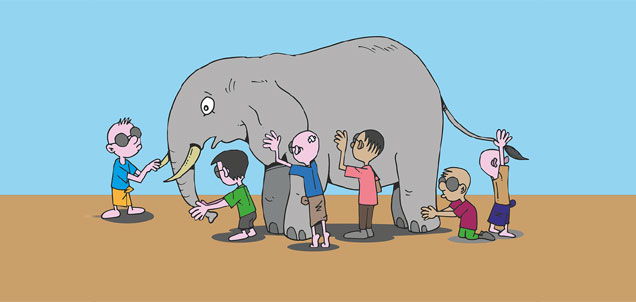
    Trying to estimate the traditional media expenditures during the three months, from August to October, is like the age old story of the blind men with the elephant. Each blind man made a guess based on which part of the elephant he was touching! In this case, please read it as based on the media agency or the advertisers own experience with rate negotiation for Diwali campaigns. The estimates put up by TAM India for Adex is therefore corrected accordingly.


    Well, TAM India estimates Adex for Print, TV and Radio which is based on monitoring of large number of media vehicles during the stipulated three months. As we all know, Adex is calculated on the basis of market rates and not on the basis of actual negotiated rates. Industry insiders are also aware of special discounts offered by media houses over and above their negotiated rates with media agencies/ advertisers for the Diwali campaigns. It is important for the leading media houses to get a fair share of the Diwali budget, the once a year bonanza for which most of them are prepared to bent backwards!


    The scheduling off course depends on the actual date of the Diwali festival, which falls on a date between mid-October to mid-November in the solar calendar based on the calculations given in advance about the auspicious dates in our lunar calendar published in our almanacs. So, it is debatable if we should look at the three months August to October or redefine the period as 12 weeks before the Diwali. For example, this year Diwali is on November 7, 2018 and we have been seeing lot of frenzied advertising activities in all traditional media as well as digital and social media since October 1. Obviously, if the TAM Adex reports compare August to October 2017 with August to October 2018, then a large chunk of the pre-Diwali advertising will not be reflected in the analysis.


    Last year TAM India published in their newsletter a comparison of pre-Diwali Adex for 2016 and 2017 https://www.tamindia.com/wp-content/uploads/2018/03/tam_newsletter_04.pdf and concluded that there was drop in print and radio expenditures in 2017 compared to 2016. Diwali festival in 2016 was on October 30, 2016 and in the next year the date fell on October 19, 2017. There is usually a huge drop in advertising traffic immediately after Diwali across all traditional media. Last year, therefore the Adex naturally dropped after October 19 while 2016 enjoyed the full thrust of Diwali advertising till October 30. Obviously the lull over the last ten days of October painted Print and Radio at a disadvantage in comparison with the same period in 2016.


    It is my earnest request to TAM India to change the period for comparing Diwali expenditures to 12 weeks before the festival instead of the standard three months August to December. Their calculations will still be on market rates, but at least the estimates would be comparable across the different media. We generally see a long diminishing tail of TV media after Diwali which are part of free spots or bonus spots which generally feature in the rate negotiations. Ideally speaking, the same TV spots should not be added to the overall cost of the particular advertisers’ Diwali campaign.


    TAM India is working on publishing a Digital Adex shortly, which will complete the process of estimating Diwali media expenditures by adding to traditional expenditures, digital and social media expenditures. There has been a trend since 2014 to link Diwali campaigns with social needs and year on year we are finding more advertisers climbing into that band wagon. Needless to mention, a considerable chunk of their Diwali advertising budget is being utilised through the new media channels.  We need to end this game played by blind men and have a robust estimates of how much we are spending on Diwali advertising on a year-on-year basis.


    Wishing the readers of www.mxmindia.com a Happy Diwali and a Prosperous New Year!


  • ICICI Pru aims to spread the light of financial prudence this Diwali

    By A Correspondent


    This Diwali, ICICI Prudential Asset Management Company (AMC) has unveiled a campaign titled #YehDiwaliSIPWali. The campaign talks about the perks of investments through SIP.


    Said Abhijit Shah, Head – Marketing, Digital & Customer Experience: “Come Diwali, come expenditures. Diwali is that time of the year when the celebrations are larger than life and usually, so are the expenses. Through our latest campaign #Yeh Diwali SIP Wali, we seek to take a pledge towards illuminating financial well-being and a better financial future by starting a Systematic Investment Plan (SIP) in mutual funds.”


  • Acche Din as ecom players expect $4bn sales this Puja/Dassera-Diwali-Xmas


    By Anjal Agarwal


    E-commerce firms are running their preparations for the coming festive season at full steam, expecting sales to the tune of Rs 25,600 crore ($4 billion). The festive months from October-December are expected to account for 40% of the $10-billion annual sales e-commerce firms are likely to record this year, according to management consulting firm Technopark Advisors. The industry had reported $7 billion sales in FY15, with 40% sales coming during the festive season, the firm’s senior vice-president Ankur Bisen said.


    Online marketplace Snapdeal, which saw a 15x increase in traffic last Diwali, is strengthening all aspects of business operations, including logistics, supply-chain, financial and technological support, Idi Srinivas Murthy, senior vicepresident, marketing, Snapdeal said. “We have launched faster last-mile delivery solutions and a refreshed user interface. We are also developing a host of solutions for our 1,50,000 sellers,” he added.


    Two major areas come into sharp focus as dozens of etailers jostle with each other for greater share of festive spends – delivery performance and customer satisfaction.


    Mumbai-based furniture and home products marketplace Pepperfry has increased merchant base, multiplied marketing outreach, and invested in doubling its logistics capabilities by expanding fulfilment centres, delivery and assembly capabilities as well as technology capabilities, according to chief marketing officer Kashyap Vadapalli. “Our sales were up 200% (last Diwali) as we took necessary steps both at the logistics and supply end,” he added.


    The coming festive months are crucial not just to the ecommerce industry, but also for companies providing logistics solutions. Logistics startup Delhivery is expecting a significant surge in volumes, similar to last year. “Delhivery is continuously investing in technology, infrastructure and automation to ensure such surges are managed well during the festive season,” said Mohit Tandon, co-founder, Delhivery. However, with rising demand, these companies are bound to face innumerable challenges.


    “Since the logistics partners are common to almost all players, fulfilling the demands over a given period of time becomes a concern,” said Praveen Sinha, managing director and founder of online fashion retailer Jabong. “It is not always easy due to the overwhelming response that we get during this time. It sometimes becomes challenging to have a constant stock of products,” he added.


    In the past one year mobile and internet penetration has increased further indicating that this year online purchasing will grow multi-fold compared to Diwali 2014, Kushal Nahata, CEO and cofounder of enterprise mobility platform FarEye said.


    Source:The Economic Times

    Copyright © 2015, Bennett, Coleman & Co. Ltd. All Rights Reserved

    Licensed to republish


  • Dhanda wasn’t really manda this Diwali


    By Sushma U N & Rajesh Chandramouli


    The Indian consumer did not disappoint. Early trends indicate they shopped with full vigour this Diwali. Everyone from hawkers on the streets to luxury brands on the high streets had pinned their hopes on the festive season this year, and from what retailers say, they are all heaving a sigh of relief.


    While mobile phones flew off the shelves, car sales remained brisk. However, refrigerators and washing machines sales were down.


    Chocolates, smartphones strike gold this season
    By Writankar MukherjeeThis Diwali, consumer goods brands across categories are striking gold. Brands like Apple, Samsung, Nestle and Ferrero are hitting new highs in sales, with products coloured various shades of gold, which marketers say Indian consumers associate with being premium.


    Check this out: Apple’s iPhone 5s in the gold version sold out within minutes of its launch, and received the maximum number of advance bookings. If that’s not enough, the model is now being resold by smaller neighbourhood retailers who have hoarded stock, and on websites like eBay, at Rs 10,000- Rs 15,000 premium.


    Last week, Apple’s rival Samsung too joined the ‘gold’ rush by launching its costliest smartphone ever in India, the golden-colour Samsung Galaxy Golden which, the company says, has sold beyond its expectations.


    Among chocolates, Nestle’s Alpino and Ferrero Rocher have sizzled retail shelves during the festive season gifting, both drawing the consumer’s eye with their gilded packaging.


    “Gold has huge appeal amongst Indian consumers since it’s a fantastic premium stand-out colour,” says Samsung India country head (mobile and digital imaging) Vineet Taneja. “This also means the product needs to be niche or super-premium,” he says.


    It is probably the same understanding which led Apple to launch just 200-odd units of the gold colour iPhone 5s as part of the launch phase last weekend.


    Cellphone retail chains like The MobileStore, UniverCell and PlanetM Retail said consumers are ready to pay in advance for the gold device. And of course, some customers who managed to score a gold iPhone5S at Apple’s launch events are re-selling the device on marketplaces like eBay, where a 16GB model is priced at around Rs 63,000 to Rs 67,000, compared with the device’s official retail price of Rs 53,500.


    UnivelCell Telecom CEO D Satish Babu said several neighbourhood retailers are selling the iPhone 5s model at a significant premium to the market price. The phone was available in the grey market even before its official India launch – dealers at outlets in Delhi’s Gaffar Market and Mumbai’s Heera Panna were quoting as much as 1 lakh for it.


    No wonder, Samsung is selling its gold-colour offering Galaxy Golden smartphone at Rs 50,000, compared with as compared to its flagship Galaxy Note 3 selling at around Rs 47,000. Samsung’s Mr Taneja says despite the premium pricing, demand for the model has been much more than the company’s expectation during Diwali sales.


    In chocolates, retail chains like Spencer’s Retail and Future Group say while Ferrero Rocher has been the king of Diwali gifting due to its similarity with the Indian ladoo in shape and golden colour wrapper, Nestle’s first premium chocolate brand Alpino has started off well with a similar packaging giving competition to Cadbury and imported brands.


    Spencer’s Retail president & CEO Mohit Kampani says while Ferrero’s share increased from 25% to 32% in Diwali FMCG gifting this year, Alpino has notched up a decent 2% share within a couple of months of its launch.


    Source:The Economic Times

    Copyright © 2013, Bennett, Coleman & Co. Ltd. All Rights Reserved

    Licensed to republish


    “Diwali sales were as good as last year. The theory that people prefer discount models in a downturn economy got validated. The beginning to the season was sluggish and we were nervous.


    However, last Friday (November 1) sales were way above expectations,” Raghunath Narayanan, MD of Europa Group, a clothing discount chains, said. “While exact sales numbers are still being collated, we have witnessed single-digit growth in Diwali sales. Per bill value of each customer was slightly lower than last year, but more shoppers compensated for that drop and ensured growth. In this market , not to have de-grown itself is an achievement,” he said.


    Several automakers who expected muted sales this season were in for a surprise . “Early numbers show that sales grew 10% during Diwali. Our daily shipments , which were 9,800 vehicles a day last Diwali, rose to 15,800 this year,” said Mayank Pareek COO, marketing & sales, Maruti Suzuki.


    “What we saw this year was a result of pent-up demand. Customers, who postponed purchases, chose Diwali to complete the purchase. However , for the past five or six years, Diwali sales were sluggish. We need to wait and see if this momentum in sales will sustain,” he said.


    Mobile phone sales appear top draw this year. Sales at India’s largest mobile phone retailer Univercell grew 30% this year. “Sales have been very good this year, with a 30% increase in sales by value compared with last Diwali. This was driven by the Rs 5,000-10 ,000 and the Rs 10,000-Rs 20,000 price bands, which saw highest growth,” Soumya Menon , V-P of marketing and brand strategy, UniverCell Telecommunications.


    Charath Narasimhan, CEO of Indian Terrain, a mens’ clothing brand echoes this view. “Overall sales have been reasonably good with 30% same-store growth in sales. This has been in line with our expectations. Trousers saw highest growth with khakhi coming back in fashion and sales spiking during the weekend,” Mr Narasimhan said.


    The consumer durables sector saw mixed response with sales of TVs growing, while sale of refrigerators and washing machines fell this year, said B A Srinivasa, CEO and joint MD, Viveks, a multibrand consumer durables retailer. Over the last few weeks, there was doubt over sales of durables as RBI had banned sales of products at 0% interest on credit cards but this has not impacted sales, Mr Srinivasa said.


    The monsoon/end-of-season sale in July was good, Diwali turned out better, and going forward too, for the new year sale, retailers expect the buoyant mood to carry on through what is left of the year. “The wedding season in the north is just a week away. Weathermen have said the winter is going to be strong, and this bodes well because retail will stay longer due to the winter,” said Mr Narasimhan of Indian Terrain.


    MAKING MERRY

    Europa Group, a clothing chain, has seen single-digit growth in sales. Per bill value was lower but more shoppers were seen.


    Maruti Suzuki’s daily shipments for Diwali this year were 15,800 cars compared to 9,800 vehicles last year. Sales grew 10% Mobile phone retailer Univercell saw 30% sales growth this year with 5k- 10k, 10k- 20K segments growing most Multibrand consumer durables retailer Viveks witnessed good sales in TVs while refrigerators and washing machines fell.


    Source:The Economic Times

    Copyright © 2013, Bennett, Coleman & Co. Ltd. All Rights Reserved

    Licensed to republish


  • Watch out! The shopper next to you could be fake

    By Shramana Ganguly


    Vidya Nayak could be shopping alongside you during the pre-Diwali rush. This 36-year-old Bengaluru housewife looks no different from the hundreds of others you rub shoulders with this season, but she’s on a mission that’s not just a sale.


    The onset of this festive season and some product launches have brought to the retail floor the mystery shopper – a person paid to shop in a bid to screen brand performances, gauge trends and consumer sentiment.


    “I have been checking if the promotions and pricing are presented in a correct manner to the consumer in this festive season,” says Ms Nayak, who takes time out for this assignment for Sony and LG.


    Fears of a bleak Diwali have pushed brands across FMCG, apparel, consumer electronics and automotives to send in the reserve forces to fight poor sales. “Diwali will get waves of mystery shoppers,” notes Saurabh Mishra, senior manager (marketing) at Channelplay Ltd. The retail marketing company assists brands in retail intelligence, visual merchandising, loyalty programmes, et al. Mr Mishra has 400 mystery shoppers working doubly hard this season.


    Ms Nayak, for instance, browses and bargains like an authentic shopper. She may or may not spend, according to her client briefing, but would check on brand performance. A luxury automotive brand could hire 40-year-old mystery shoppers, preferably a couple, while an apparel brand could have a 20-year-old do the job.


    Assocham says the festive shopping spirit is lowest across Delhi, Ahmedabad, Chennai, Mumbai and Hyderabad on “expected lines, as economic recovery is rather slow and consumer confidence low”.


    “Consumers are not bullish this season. Every brand will try to ensure maximum conversions against walk-ins, although less compared to last season,” notes Sanjeev Shenoy of HS Brands International. HS offers mystery shopping services, loss preventional solutions and data collection tools to retailers and brands globally.


    For instance, mystery shoppers at AlphaOne saw developers Alpha G:Corp install an ‘automatic piano’ on the second floor to attract customers, triggering a 200% jump in footfall. The retail destination in Ahmedabad houses KFC, Swarovski, Tommy Hilfiger, Levis, FCUK, Timberland, Sony, HP, Samsung and Pizza Hut, among others.


    “Stores on the second floor are now looking forward to converting this momentum into sales with exclusive offers and value deals,” said Alpha G:Corp executive director (marketing, corporate affairs & retail) Prodipta Sen.


    With staggering sales at stake, the mystery shopper ensures that each consumer is handled in the best possible way to ensure she spends.


    Source:The Economic Times

    Copyright © 2013, Bennett, Coleman & Co. Ltd. All Rights Reserved

    Licensed to republish


  • The Anchor: 5 reasons why chocolates are the sweetest things to gift this Diwali

    By Deepa D’Souza


    India has woken up to the fad of chocolate being considered as a gift proposition. While even till few years ago sweets were the only option in delicacy gifting, overt media exposure and smart marketing techniques have positioned chocolates as an alternative.


    Mintel’s new research shows that seasonal launches have proved to be particularly dynamic across the market, with 300% increase between 2008 and 2011, accounting for 7% of total new product launches in 2011 vs. 2% in 2008.


    Given the importance that gifting has in Indian culture especially during seasonal festivities, it is not surprising that chocolate gifting is a significant market. Indian people usually are seen spending more on gifting to others than they do on self-consumption in this category. Chocolates is soon replacing tradition sweets as option for gifting occasions such as Diwali, Rakhi, Christmas, Eid, Valentines celebrations etc.


    According to leading retailers in India last year, 40-45% of all chocolate sales in India were during the festive season, up from 30% the previous year. Influx of International brands selling at affordable ranges especially in Gift packs adding an Indian touch to the pack has helped this sudden surge.


    Five key reasons that could be driving this change in consumerism are:


    01. Convenience

    While chocolates undoubtedly remain a popular distress gift purchase for those short of time or ideas, the growth of the artisan chocolatier sector is breathing new life into the gifting of chocolate.


    Chocolate gift options are now available across the stores, be it a supermarket or a mom and pop store as against traditional sweets, available in specific stores and may be limited to the neighborhood of a consumer.


    Apart from this there are plenty of stores that offer Gift Wrapping and free home deliveries so the burden of carrying the huge bulk of purchase for the festive occasion is further reduced by offering more convenience to the consumer.


    We’ve seen how packaging motivates purchasing, offering both convenience and Premiumness with Ferrero offering bespoke gold packaging and Mars’ Galaxy rebranding its range as “Shubh Avasar” (auspicious occasion).


    02. Hygiene/ Longer Shelf Life

    Many Indians consider chocolate assortment boxes to be more hygienic and longer-lasting than traditional Indian sweets. This mindset has contributed to an increase in volume sales as the popularity of seasonal gifting of chocolate, particularly during Diwali, has grown over the last decade. According to Mintel’s research chocolate volume has grown strongly in the past few years, to reach 88 thousand tonnes in 2011 – up from 50 thousand tonnes in 2008. This equates to a per capita consumption of 70 grams in 2011 up from 40 grams in 2008.


    With the increasing incidence of adulteration in traditional sweets and a media uproar which may have dented the likeness of consumer to traditional sweet. On the contrary chocolates are perceived to offer hygiene and quality standards that make them a safer option.


    03. Premium Appeal

    Indians have always had a fascination for international brands perceiving the Quality and taste to give a more premium feel to it. People want to be seen gifting imported chocolates because they connote premiumness.


    Premiumisation as a claim has seen a 100% growth over last three years, from 4% of launches in 2008 to 6% in 2011 of the total New Product launches in the chocolate confectionery as shown by Mintel’s new research.


    Last couple of years Lindt, a premium chocolate confectionery brand entered India, with prices range from Rs 90 for a 35 gm pack of dark chocolate to Rs 195-Rs 235 for a 100 gm bar, going up to Rs 2,500 for a gift pack. Besides Mars, Snickers and Bounty bars and other imported chocolate brands are found in India also including those of Cadbury, Ferrero Rocher and Hershey’s.


    Chocolates in the corporate gifting segment are the new trend, with variety of gift-packaging and customization in branding. Chocolates have become a premium gifting option.


    Personalization as a key trend is growing strong in the Western markets whilst personalization or customization is a gap to be explored for the Indian chocolate Market. Gourmets, handmade and personalizing are some features that could entice the Niche segments. Traditional Sweets do offer customization which can be a cue for the chocolate manufacturers to explore this opportunity.


    Aspirational buying is a key trend seen across food and non-food categories in India. There is an opportunity for foreign brands to revamp their products to better suit Indian tastes while offering a Premium promise.


    04. Adults buying in

    Until a few years ago, chocolate was more of a child’s goody but today it’s every brand’s challenge to extend it to cater to the nouveau targets – The Adults, by attaching an occasion for its consumption or playing on the nostalgia.


    It’s been a rather successful effort put in by chocolate manufacturers to extend its offering to the adult segments all of it supported by media campaigns which hovers around creating an indulgence platform. Dark Chocolate has been a key step towards the adult positioning; today every brand has or wants to have a range that exclusively is with dark chocolate – Cocoa 60% and more.


    According to Mintel’s Analysis Dark Chocolates have grown 160% in 2011 vs. 2009, a positive for marketing the category to the adults.


    05. Accessibility – value and variety

    Thanks to rise in organized retail, this has benefited the chocolate manufacturers to offer value in gift packs. The Indian consumer is clearly enjoying the modern trade formats, because of simple reasons of value, range and ambience that these stores offer.


    To enhance the potential for increased gifting sales, most brands are putting efforts into in-store display, banners or leaflet to stimulate consumer purchase not just during festive occasions but other holidays such as Children Day, Mother’s Day, Father’s Day, and newer occasions to choose a gift pack.


    The other face to what possibly could be driving pick up of chocolates as a gift option is that consumers are considering an investment in chocolate to be justifiable in the current economy where inflationary prices to basic raw materials such as sugar, nuts and fat have put a pressure on the traditional sweet market. The chocolate manufacturers have launched chocolate gift boxes at various price points, starting as low as INR. 20/- onwards catering to both mass as well as premium segments.


    Festive holidays are celebrated differently, and at different times, limited edition products can be designed for the traditions in each region to drive the festive sales.


    The writer is Ms. Deepa D’Souza Trend and Innovation Consultant – India at Mintel

     

  • Jaldi 5 with Sourabh Sharma: Light up lives this Diwali!

    Milaap is a unique community welfare organization as it raises money not in the form of donation by way of loans which can then be claimed back by the donor. Set up by a group of professionals, it is now running a ‘Light a 1000 homes’ for Diwali (*see disclosure). MxMIndia Milaap interview co-founder Sourabh Sharma.


    01.   Milaap is a unique concept in fund-raising where you loan money for causes as against donate. How has it worked thus far?

    It has worked really well so far… Our company started in June 2010 and in the last two years, we have raised over 600,000 USD, with more than 5000 lenders — impacting more than 13,000 lives in India and we expect it to grow at much faster pace as more and more people are getting involved.


    It’s critical that organizations who borrow pay back… is that secured?

     

    Microfinance is unsecured lending in traditional banking parlance but it has seen better repayment rates than even the best of banks. The industry average is close to 98% repayment rate. This is because of the unique model of lending in joint liability groups where group members vouch for each other.


    In our two years of lending, we have not had any defaults till date – which is a proof that the model works. Still, we clearly tell our lenders that lending via Milaap carries an inherent risk of loss in principal and therefore the motivation to lend is still primarily philanthropic. Additionally, our field partners do offer to cover up to 20% of the defaults in case there are any.


    02.   Tell us briefly of the ‘Light a 1000 homes’ Diwali campaign…

    As much as 50% of rural India does not have access electricity and are forced to use kerosene lamps for light and firewood for cooking. Noxious fumes claim a life every 20 seconds as a result of early childhood pneumonia, emphysema, cataracts, lung cancer, bronchitis which claim more lives than malaria or tuberculosis.  On this Festival of Lights, we plan to bring light to 1000 homes in India by providing them with solar lights and smokeless stoves thereby providing them with clean and healthy life.  People can either make a loan directly or adopt a village and help us raise funds by spreading the word among their friends. The cost of providing solar lights to 100 homes (village) is about 1lakh INR.


    03.   Specifically, how has the response been?

    The reponse has been great so far. Besides individual loans, we already have 22 fundraisers – where people have adopted villages are helping us raise funds from their friends. Adding to your previous question- fundraisers are another way of gaining traction hence we are looking to grow and much faster pace in the future.


    04.   Would you say NRIs are more responsive than resident Indians

    It really does not matter where the person is located. We have seen benelovent people making loans from all stratas of society  and both from within India as well as outside. In our limited experience, we have observed that geographical location or financial status has nothing to do with goodness of the heart.


    06.   Apart from writing about Milaap, how do you think can Indian media and advertising help in your efforts?

    By adopting a village and help us 🙂 Also, by writing about the change which has come in the lives of the people who may be poor but are equally hard working and smart and take control of solving their problems in their own hands.


    Any efforts towards this direction?


    Please look at some of the videos we have made of stories of change in the lives of the people we are helping: youtube.com/milaapdotorg We would love to invite people from the press to join us on our field assessment trips and write about working poor.


    05.   What are your current promotional strategies and campaigns in India?

    We primarily engage our audience via newsletters and social media (Facebook and Twitter) and also come up with seasonal campaigns such as the Adopt-an-entrepreeur campaign we did around Independence Day and now this Diwali campaign.


    Disclosure: MxMIndia is supporting Milaap’s ‘Light a 1000 homes’ campaign for Diwali


  • Anil Thakraney: How to make Diwali count

    By Anil Thakraney


    Diwali is upon us and a whole lot of advertisers must be gearing up to make the most of India’s biggest festival. And for the next fortnight the media will be flooded with Diwali special ads and offers. All very fine, but there’s a small problem: Most advertisers and their agencies create the usual, predictable ads, very few try to either explore the cultural facets of the fest or dig into the various joys it brings to people’s lives.


    Yesterday I reviewed the Tanishq Diwali ad in the Debrief section, where I felt that the advertiser had wonderfully synergized the festive mood with their own product. And this set me thinking. What must advertisers do to ensure they don’t end up with those stupid, generic ‘Happy Diwali’ ads? And headlines that scream the usual discounts and freebies? Is there some sort of a road map for making the most of this festival? Quite obviously there can’t be because this is a creative activity, so one gets limited only by one’s own imagination.


    However, here are some things to look out for, and these are only a few pointers, there’s a lot more that can be done.


    No advertiser ever attempts to use the key message of Diwali: The victory of good over evil. Are they worried about treading too close to religion? They don’t need to be, this can be handled in a religion-neutral way, because it’s the universal truth. I can visualize interesting work with this particular route.


    Diwali is that time of the year when desi family members travel miles to be together. (This is the reason why airlines jack up their rates big-time.) And this leads to a lot of bonding/secrets sharing/new discoveries within the family. While Bollywood does exploit this, it’s rare to find it in advertising.


    Some people gamble on Diwali night, it’s a cultural thingy. Again, this never finds place in our ads. Wonder why, when such engaging situations can be created using this as a backdrop.


    Most people wear brand new clothes on the big night. Funnily, I have rarely witnessed anyone using this theme, not even fashion and accessory brands!


    I can go on but I guess you get the drift. There’s no point releasing ads that look like clones of each other, no brand really benefits in the process. Diwali is a festival of many cultural hues, and it’s a great opportunity to associate one’s brand with them for effective advertising.


    ***


    PS: Like many other James Bond fans, I too am eagerly awaiting the release of Skyfall, the latest in the Bond series. But we must look out for it for another reason: The movie has pushed the envelope on product placement, many big brands find their place in the film. Would be interesting to watch how they tackle this, because Bollywood invariably screws up product placement. Here’s more in The Guardian:


    Link: http://m.guardian.co.uk/film/filmblog/2012/oct/23/skyfall-marketing-james-bond?cat=film&type=article


  • Debrief: Coca-Cola: Tremendous insight

    By Anil Thakraney


    Coke’s new positioning for the Diwali season is: ‘Saath khao, khushiyaan badhao’. I like the consumer insight, it originates from the ancient proverb: The family that eats together stays together. And it’s most valid in the Indian context because we folks believe in the idea of the family as a single unit. Look around you at restaurants… the number of tables occupied by hanste khelte parivaars is likely to be far higher than those occupied by couples and singles.


    The TVC features a large family at the dining table. As they bond over food and Coke. It’s a very simple treatment, there are no dialogues, and typical family interactions are captured through expressions. A strict dad who won’t relent to his son’s demands. A granny with an emotional tale to tell. A disinterested kid who later begins to enjoy the family time. And so on. All the things that usually happen at a family table.


    [youtube width=”400″ height=”220″]http://www.youtube.com/watch?v=XP6sPhwmDag[/youtube]

    Good stuff, and there are many reasons why I like this approach. There are no celebrities in the ad, only regular people. The music track is very cool, it adds to the liveliness of a happy family gathering. ‘Saath khao, khushiyaan badhao’ further strengthens Coke’s ‘Open Happiness’ idea, so they haven’t gone away from that. And despite the lack of a storyline, the TVC entertains. I particularly like the last touch. A mobile phone buzzing away in a corner and no one bothers to answer it. This is family time you see, the ‘Airtel zaroori friend’ can wait! Brilliant!


    Rating: (On a scale of 1-5): 4. Cool insight backed by endearing creative