Tag: Coca-Cola

  • ‘Kolaveri di…’ gets a Turkish makeover in new Coca Cola ad

    By A Correspondent


    With almost 100 million hits on YouTube, Sony Music has licensed one of the biggest viral rages of 2011 to Coca Cola Turkey. Going beyond geographies, ‘Why this Kolaveri Di’ is one of the biggest hits worldwide, to put it simply.


    What started as a simple activity, of posting a video online, progressed to becoming viral nearly four years ago. Coca Cola picked up the tune for their Turkish advertisement and posted the video on May 4, 2015 on YouTube, in which the Kolaveri tune is taken to the beach and given a different twist with the Turkish lyrics.


    The video has been picked up well and has garnered over 326,000 views and still counting on YouTube in just two days.


  • Be consistent, Stay relevant: Coca Cola’s Venkatesh Kini

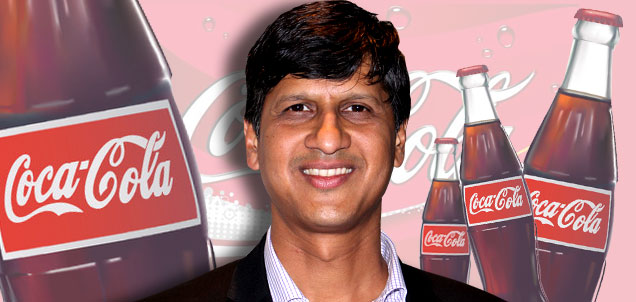
    Venkatesh Kini

    By Dyanne Coelho


    The International Advertising Association (India Chapter) hosted the ‘IAA Retrospect and Prospects: The Coca-Cola Viewpoint’ seminar in Mumbai, which brought in Venkatesh Kini, President, India and South West Asia, Coca Cola as the keynote speaker. And for those that had assembled at the venue to hear him speak, it was an opportunity worth the wait.


    Taking the audience right to the moment of reckoning in his career, Kini said “It was only after I quit marketing five years back and made the switch to general management that I realized the world doesn’t revolve around marketing,” He pointed out that Marketing is one of the many things that needs to go hand in hand for a product to be a success. “Coca Cola has been around for 128 years and the one thing we’ve learned is that advertising and marketing truly works”, he said. “Our consumers have helped make the brand what it is and that’s our secret formula,” Kini said, talking about Coca Cola sticking around successfully in the beverage industry for over a century.


    Presenting a comparative analysis, Kini said that the difference between then and now is that then there existed one screen for many people, and now it’s one person–many screens. The way one connects with consumers has changed, he pointed out. “Everything is moving to a 2”x4” screen,” he said. The concept of a target audience no longer exists, Kini said, that paradigm is changing, as we can no longer focus our communication on one set of individuals. “Your target is no longer a single point, but a node in a network.” The question today is, how does one get a conversation going about a brand and then amplify that conversation through television advertisements, social media, etc. “A consumer today is a great reporter, and twitter is the most widely read newspaper,” he said.


    Kini gave out a few pointers that he recommends marketers should absolutely not do without. He noted: “Be share worthy, simple, and contemporary, be constructively discontent, be consistent, disruptive, collaborative, and always have a purpose.” Kini spoke of a campaign initiated by Coke in the Philippines. Coke studied the Filipino population and realized that many left the country for better opportunities abroad, and due to very expensive air tickets, some hadn’t seen their families and kids in years and even decades. The campaign was done during the Christmas season, which is an important festival of celebration in the Philippines. Coke bought tickets for some of the Filipinos living abroad and sent them home for Christmas, surprising their families. The advertisement went viral in the Philippines and many other countries, not simply because of the brand Coke, but because the story was touching and share worthy, Kini stated.


    Coke has managed to keep the brand contemporary even after 128 years. It is important to keep the brand relevant for today’s consumers and evolve with them, he said, citing the example of the remake of Coke’s 1971 hilltop ad. In the hilltop ad of 1971, Coke gathered people from different parts of the world on a hilltop in Italy, where they sang, ‘I’d like to buy the world a Coke, it’s the real thing.’ This ad was a huge success in the 1970s and Coke wanted to reinvent and contemporize the ad for today’s consumers. So they partnered with Google and Google pitched the idea of actually creating a technology wherein people from one part of the world could actually buy a coke for a stranger on the other side of the globe. They came up with special vending machines, where you could pay for a coke in one country and someone in the country you chose would receive a free coke. The receiver could also send back a thank you message. This is how Coke has constantly reinvented itself, Kini said, “We haven’t reinvented or logo, product, or the color of our packaging, we’ve merely evolved with our consumers.”


    Talking about being disruptive in your marketing strategy, Kini cited the example of Coke Studio, where the company spent little or no money on advertising. The concept of Coke Studio was so unique that it automatically grabbed eyeballs, he stated. “We have given several emerging independent musicians a platform to showcase their own music through Coke Studio. No Bollywood music has been used. Simultaneously, we’ve also brought about the revival of folk music through Coke studio,” Kini added proudly. This out of the ordinary form of marketing is what has created a loyal fan following, he said. “There is a lot of value to doing the unexpected and unconventional.”


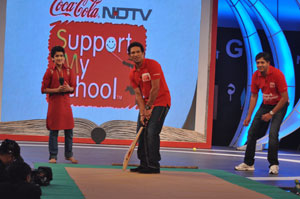
    Kini spoke about the CSR initiative that Coke has been working on in collaboration with NDTV. Support my School is an initiative by Coca Cola and NDTV by which they visit schools in rural areas and assist in the renovation, building toilets, playgrounds, etc. “We can’t thrive unless the communities we serve thrive. We ought to appeal to a higher purpose,” Kini said emphatically.


    Kini ended on a lively note, citing the example of the Coke ad wherein Coke arranged for a team of blind footballers to be able to touch and hold the FIFA World Cup. Usually the FIFA Cup can only be touched by the winning team and heads of state. Coke made it possible for these physically impaired young boys to be able to touch the cup of their dreams. This again was a story of having a higher purpose, Kini said, that’s why it got shared and became popular.


    Storytelling is the way forward, Kini added, and the story has to connect with human emotions. “The future is in the power of a story well told,” he concluded.


  • How Coca-Cola has stayed relevant over 128 years


    In this age of reduced attention span, how does a 128-year-old brand like Coca-Cola stay relevant for young, restless minds toggling between several screens? Venkatesh Kini, President, India & South West Asia, of the company presents a stock-take of marketing, media and advertising in 2014-15 along with some crystal ball-gazing at an International Advertising Association (India Chapter) programme in Gurgaon. Shruti Pushkarna captures highlights from the review. MxMIndia had carried a short report on the event last week, but this is a more detailed account as stated by Mr Kini.


    What’s the secret formula of Coca-Cola? The secret formula is its consumers and the Coca-Cola’s ability to stay relevant to changing consumer trends. The world of media, advertising and marketing is changing, and marketers and advertisers like us need to adapt to this change in order to stay relevant to the consumer.


    So how does a 128-year-old brand like Coke stay relevant?


    There are fundamental shifts that are occurring today. There is a shift from people watching one screen, to people watching many screens. What we see is not just a fragmentation of media, but also a fragmentation of attention. This fragmentation and shortening of people’s attention span, is the biggest seismic shift that we are seeing in the industry. Today, people watch more YouTube videos every day than they drink cans of Coke — or even all beverages put together. There are more cellphones in the world than there are people. And over 60 per cent of people in leading markets engage with social media on their phones. That means the world of communication is essentially shifting to a 2×4 screen. What does that signify for advertisers or marketers? We are moving away from the world of one-way communication — with television at the centre of it — to a world of conversations that start through social media and also occur on TV and other digital platforms. It all boils down to having conversations.


    Another interesting shift happening in the industry is the concept of the ‘target audience’ vanishing. Marketers always thought of the target audience as the destination. But now there’s no longer a single target audience. Earlier, the only way of consumers turning into networks was through word of mouth. Today, every consumer has a global audience.


    Marketers and advertisers have got to get into the business of consumer experiences because the rules of engagement are changing. The new rules start, first, with stories. Stories that are share-worthy; stories that people tell or brands tell and stories that will spread, with or without you. Today’s consumers don’t just consume brand messages, they get into conversations with each other. And the pace at which these conversations spread is unbelievable.


    The best way to get your message out there is to get people talking about it. And for it to be share-worthy, it needs to be provocative. Provocative sometimes means taking a few chances. A good example of this would be a campaign done by Coke on a sensitive issue like India-Pakistan. Coke put vending machines in Delhi and Lahore, and both vending machines had cameras that could display and communicate all that was happening on the other side. Coke did not spend a rupee to advertise this video. It was put on YouTube and people simply shared it. The reason people shared it was because it was a nice story and it was provocative.


    Apart from being provocative, one has to be able to break the status quo. One good example of this would be what Coke has managed to do with Coke Studio. This has created, by itself, a complete genre of music that is neither film nor folk. It has popularised music and musicians that would otherwise never have had an audience. This would be an interesting example of how to build a connect with today’s youth, where you bring them new experiences, and these experiences get them together. It’s not just a television commercial, it’s something more; it’s a consumer experience.


    It’s also important to keep your message simple. Today, if you can’t grab consumers’ attention in five seconds, then you’ve lost them. That’s the world we live in today. Just 140 characters is all it takes to get worldwide audience. So be simple, be short, be succinct.


    In the past 128 years, Coke has constantly reinvented itself. The one thing it hasn’t reinvented, is its logo, its product and the color of its packaging. So how does a brand like Coca-Cola stay contemporary? To cite another example, Coke took the most successful campaign from 1971 and contemporised it. The original campaign was called the hilltop ad and Coke partnered with Google to create a 21st century version of it. The hilltop ad was produced in 1971 and aired at a time when there was a lot of opposition to the Vietnam war, especially in the US. There was a desire to create peace and harmony, and Coke gave voice to that movement through this ad, where it assembled young people from all over the world on a hilltop in Italy to sing, “I’d like to buy the world a Coke…because it’s the real thing”. To contemporise that message, Coke partnered with Google, where the latter came up with the idea of ‘actually’ buying a bottle of Coke for a stranger across the globe. It was about connecting the world through technology, where technology is just a tool to make the world a little smaller, a little happier and hopefully a little more peaceful.


    When brands first started 150 years ago, they stood for a trademark that promised you a better product. Then as brands evolved, they said this brand doesn’t just make a better product, it promises a better you. And for a long time, it was all about creating emotional and personal benefits. But 21st century branding has become about a better world. Since social media has made consumers far more connected and conscious, they want to know if their brands and companies are making the world a better place. And brands that can connect to a higher purpose, find themselves connecting with consumers far more effectively.


    Ultimately, the world is becoming more complex and marketers and advertisers have to think of themselves as being part of a network. Through a collaborative model, they can spread a message or sell a service. Change is going to happen and change will be disruptive. So it is important to be adaptable, flexible and contemporary, as well as appeal to a higher purpose.


    This story first appeared in ‘dna of brands’ dated March 16, 2015


    Big Story imaging by Rafiq Barak


  • We’re seeing a fragmentation of attention: Venkatesh Kini


    By Shruti Pushkarna


    The India Chapter of International Advertising Association hosted its annual review of marketing, media and advertising at the Westin in Gurgaon on March 12. The annual review, titled IAA Retrospect and Prospects, was presented by Venkatesh Kini, President, India & South West Asia, Coca-Cola.


    Mr Kini started his presentation by citing the major shifts occurring in the world of media, advertising and marketing today. Through a series of audio video presentations, he pointed out the change in consumer trends and how Coca-Cola has tried to stay relevant for the past 128 years. “The secret formula of Coke is staying relevant to consumers and consumer trends,”  Mr Kini said.


    One fundamental shift according to Mr Kini that is occurring today is fragmentation of attention. He said: “There’s a shift from many people watching one screen to one person watching many screens. We don’t just see fragmentation of media but a fragmentation of attention. This fragmentation of attention and shortening of attention span is the biggest seismic shift that you are going to see in the industry going forward.”


    Among other changing trends taking place today, Mr Kini pointed out, the shift from one-way communication to conversations that take place on social media and other digital platforms. He said: “The concept of a target audience is gone. There is no one target but a network of people. And the best way to get your message out there is to get people talking about it.” For the message to be share worthy, it needs to be provocative, he added. He shared the example of a campaign by Coke on a sensitive issue of India and Pakistan, where they put vending machines in Delhi and Lahore, and both vending machines had cameras that could display and communicate what’s happening on the other side. He shared that Coke did not spend a rupee to advertise the campaign and just put it on YouTube where people shared it. The reason, he said, it got shared was because it was a nice story and it was provocative.


    Another change Mr Kini talked about is what brands have to stand for, today. “When brands first started 150 years ago, all it stood for was a trademark that promised you a better product. Then as brands evolved, they said this brand doesn’t just make a better product, it promises a better you. And for a long time it was about how brands create emotional benefits and personal benefits. But 21st century branding has become about a better world.” Mr Kini explained brands that can connect to a higher purpose connect to consumers far more effectively, because consumers are more socially aware and conscious today.


    Marketers and advertisers need to take note of the changing trends in consumer behaviour and consumer experience in order to communicate and get their ideas across, he said, adding: “The world is becoming complex and we’ve to think of ourselves as part of a network and through collaboration, we can sell anything we want or communicate any idea we want.”


    The event opened with a welcome address by Srinivasan K Swamy, President, IAA India Chapter who introduced the subject and the key speaker for the evening. He also listed out some of the upcoming events planned by IAA for this year.


  • Watch out, TVwallahs. P&G, Coke eyeing mobile video streaming for effective & cheaper advertising

    By Deepali Gupta


    Procter & Gamble and Coca-Cola are considering launching video channels over mobile phones to deliver branded content and advertisements directly to consumers in India, because it is cheaper than running ads on television and easier to measure the impact. The launch of third- and fourth generation mobile technology is making this possible and more affordable for advertisers, allowing them to sidestep, at least partially, the traditional mass media.


    Airing ads over telecommunication networks will also allow the companies to know who is watching their ads, something that is difficult to measure in TV advertisements.


    P&G and Coca-Cola, two of the biggest advertisers globally, are in preliminary discussions with India’s top telecom operators to start their own streaming video channels which consumers could access free of charge, three people familiar with the talks said. Another executive at one of the two consumer-goods companies said it was too early to say if his company would launch such a channel. “We have just had a meeting with the telecom operators, that’s it. There is no way to say whether this will happen or if it does when,” this person said.


    Initially, the brands may make their programmes available to customers of the nation’s top two mobile operators, Bharti Airtel and Vodafone India, that roughly account for 60 per cent of the subscribers across India, said one of the three people cited above. Bharti Airtel and Vodafone did not respond to emails seeking comment. P&G and Coca-Cola declined to comment.


    The talks come close on the heels of Hindustan Unilever launching a dedicated radio station on mobile phone in Bihar which has already acquired more than five million subscribers. P&G and Coca-Cola are also encouraged by the response to their existing online video content.


    Beverages-maker Coca-Cola has branded content such as the Coke Studio musical performance which receives lot of hits on You Tube, one of the people said. “We can push that content to users on their mobile phones,” this person said, adding that the channels would also carry company or brand logo through all shows which will be interspersed with advertisements. “It is cheaper than running campaigns on national television.”


    There is huge demand for mobile video content. Bharti Airtel’s Re 1 per video offer had 22 million hits within the first two months of its launch in May 2013, with nearly a quarter of them by first-time data users, according to data released by the company. Much of the content was Bollywood or fashion. As much as 80 per cent of that was accessed on feature phones – phones that can access Internet but are cheaper than smartphones – and nearly half in rural, content-starved markets. “Now imagine this is free to access,” said one of them, referring to the video channels these companies are considering. “I think there would be much more viewership.”


    However, the concept is still in its inception, added another. It involves a content aggregator creating the channel, the brand buying bulk data and an operator pushing the site to data-enabled phones. Offering this service requires the operator to enable data connections also on phones that don’t subscribe to data service and allow free connectivity as long as the device accesses merely the streaming channel.


    For telecom operators, offering free programmes will likely help attract voice consumers to data, and once they get hooked, the companies can sell services outside the free channel. According to analyst estimates, India has around 400 million phones that can use Internet or data services, such as viewing streaming video. However, only around 140 million actively connect to the Internet.


    Smartphone maker BlackBerry too has spoken of monetising its dedicated channels that brands like Café Coffee Day, Mercedes-Benz and even some political parties such as the Bharatiya Janata Party and Aam Aadmi Party use to connect with Blackberry Messenger customers. The channels started by the brands involve posting text and pictures that are shared by followers accumulated through invites.


    Source:The Economic Times

    Copyright © 2014, Bennett, Coleman & Co. Ltd. All Rights Reserved

    Licensed to republish


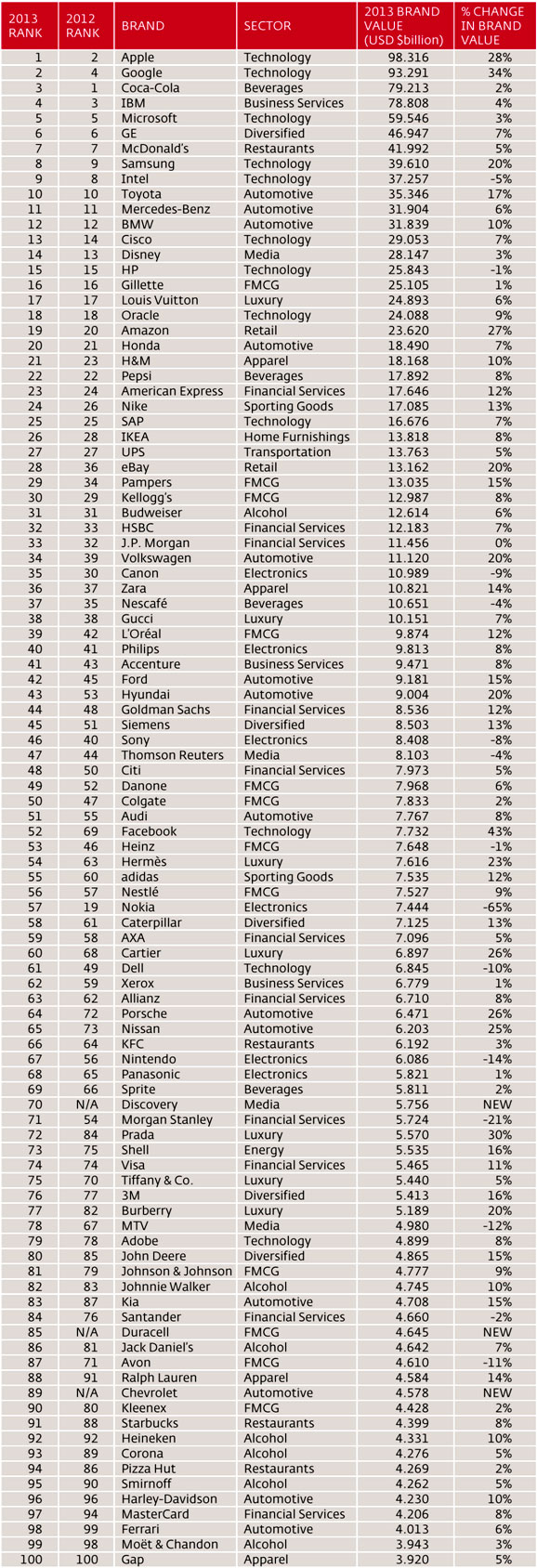
  • Apple, Google topple Coca-Cola out of top slots in Interbrand’s Best Global Brands report

    By A Correspondent


    For the first time in the history of Interbrand’s Best Global Brands report, there is a new #1 brand: Apple. Leading brand consultancy Interbrand publishes Best Global Brands on an annual basis, identifying and examining the Top100 most valuable global brands.


    With Apple claiming the top position this year, Google jumps to #2 and Coca-Cola, the brand that held the #1 position for 13 consecutive years, moves to #3.This year, the total value of all 100 Best Global Brands is USD $1.5 trillion — an 8.4 percent record increase over the total value of the 100 Best Global Brands in 2012.


    Apple hasappeared on Interbrand’s Best Global Brands ranking since 2000, when the ranking debuted. In 2000, Apple ranked #36 and had a brand value of USD $6.6 billion. Today, Apple’s brand value is USD $98.3 billion- almost 15 times the amount of its brand value in 2000.


    “Every so often, a company changes our lives-not just with its products, but with its ethos. This is why, following Coca-Cola’s 13-year run at the top of Best Global Brands, Apple now ranks #1,” said Jez Frampton, Interbrand’s Global Chief Executive Officer. “Tim Cook has assembled a solid leadership team and has kept Steve Jobs’vision intact – a vision that has allowed Apple to deliver on its promise of innovation time and time again.”


    Ashish Mishra

    Adds Ashish Mishra, Managing Director, Interbrand India – “Yes, for the first time in the BGB’s 14-year history, Coca-Cola is no longer #1. This year, Apple claims the top spot – and Google captures the #2 position.This to our minds is the single biggest story of the new times, of a changed world. Of who really leads the brand – the marketer or the consumer, or both? And how anticipation, co creation, conversation, innovation, investment in people &big data, strategic CSR and new leadership is the new way”.


    When determining the Top100 most valuable global brands, Interbrand examines three key aspects that contribute to a brand’s value:

    :: The financial performance of the branded products or service
    :: The role the brand plays in influencing consumer choice
    :: The strength the brand has to command a premium price, or secure earnings for the company

    Interbrand’s 2013 Best Global Brands (Top 100)


  • Sach an opportunity!


    By Ravi Teja Sharma, Ratna Bhushan & Vijaya Rathore


    Sachin Tendulkar’s 200th Test match is set to become a mega marketing event with his sponsors planning special campaigns to celebrate the milestone in the hope of reaping rich dividends from all the hype and hoopla.


    That this Test could be played in the master blaster’s home town of Mumbai and might possibly be his last, make the match even more of an occasion.


    “This is a national event. I don’t think people have been able to gauge the importance of the event until now,” says Shailendra Singh, joint managing director of media agency Percept.


    Tendulkar, who will become the first cricket player in the history of the game to play 200 tests, has repeatedly refused to specify a date for his retirement from Test cricket. But the cricket’s board decision to invite West Indies to play a special two-Test match series in November, ahead of a scheduled South Africa tour has given rise to speculation that India’s greatest cricketer will bid farewell to the game at the end of this series. The decision to award a Test match to Mumbai, ahead of Ahmadabad which should have hosted a game in the series, as per the board’s policy of rotating Test centres, has added fuel to the fire.


    Sensing one last opportunity to drum up some visibility in these depressing times, brands such as Aviva, Coca-Cola, Adidas and Toshiba, which are associated with the master blaster, are planning strategic campaigns and initiatives, which could translate into incremental sales in the festive season.


    Pune-based real estate developer Amit Enterprises is working on launching Sachin branded 200-apartment projects in Mumbai, Pune and Nashik. “The real estate market is slow but Sachin will sell. We have also asked JWT to work on a brand campaign,” says Kishor Pate, managing director of the company, which had signed up with the right-handed batsman in 2010, when Sachin had played 175 Tests.


    Aviva Life, the life insurance company, is planning a digital media campaign featuring Sachin to connect with the Facebook and Twitter generation. “We are looking to celebrate the 200th test by launching an effective campaign in social media and digital media since he has a lot of following in that space too,” says Rishi Piparaiya, director marketing at Aviva Life.


    Television-maker Toshiba has created a special television series with the cricketer and will be launching it by mid-September. “The new product is especially created with Sachin’s contribution and will be dedicated to cricket fans,” says Sanjay Warke, country head for Toshiba India (DS Division).


    Sportswear maker Adidas was drawing up a marketing plan for January. “But there seems to be a change of schedule now,” says Tushar Goculdas, the company’s brand director. “The exact plan is being worked out, but we have a few things on mind like creating a memento for Tendulkar himself and roll out some product for fans commemorating his 200th.”


    Swiss watchmaker Audemars Piguet and Coca-Cola, whose brands Sachin endorses, are working on smaller initiatives. While the watchmaker plans to roll out a bunch of congratulatory messages if Tendulkar breaks or makes any new records, Coca-Cola, which had invested heavily in a campaign surrounding Sachin’s 100th century only to see it bomb, is playing it safe. A spokesperson of the beverage maker said the firm will leverage Tendulkar’s achievement to amplify its CSR activities and projects.


    Two years ago, sponsors had seen their marketing campaign fizzle as Tendulkar’s 100th century took much longer than anticipated. Coca-Cola had planned to release 6.5 million special ‘Sachin’ cans in the summer of 2011 to mark the occasion. But Tendulkar’s poor form meant that the company had to release most of these cans before he reached the landmark.


    Similarly, Aviva had planned to fly contest winners to London to meet Sachin as he was expected to score the 100th ton during India’s four match test series against England in 2011.


    This time however, barring a freak incident, the date and venue of the milestone will be known well in advance. Brands associated with Sachin would certainly use this opportunity to leverage their association with him,” says Ajit Varghese, managing director at media buying firm Maxus South Asia, a part of Group M. Adds ad filmmaker Prahlad Kakkar:”Today, all brands are suffering because of the slowdown. The smart ones will ride on Sachin and in the bargain push their products, keeping the post Diwali festivities going.”


    According to Forbes magazine, Tendulkar’s earnings, including his match fees and endorsement money, stood at $22 million as of June 2013. He has played 198 Tests has scored 15,837 runs and has 100 international centuries to his name, the most by any player so far.


    For the record, BCCI refuses to admit there is a plan to help Tendulkar go out on a high. “Who said he will play? We haven’t selected him as yet. No one is picked just because he is playing his 100th or 200th match,” was a terse response from Ratnakar Shetty, a top official of the cricket board.


    The joint secretary of the Mumbai Cricket Association, Nitin Dalal, however, says every effort is being made to get the match to Wankhede. “We will request the BCCI. He is a Mumbai boy and the crowd will be thrilled to watch him play on the home ground. The MCA management committee believes that it is going to be a big event and we will have to make it very special not only for the cricketer but also the public,” he says.


    After undergoing a surgery on his left palm, Tendulkar recently started practising and has confirmed that he will be available for the Champions League T20 later this month on behalf of Mumbai Indians.


    Source:The Economic Times

    Copyright © 2013, Bennett, Coleman & Co. Ltd. All Rights Reserved

    Licensed to republish

     

  • Keeping Gen Y Happy & Motivated


    By Devina Sengupta & Sreeradha D Basu


    Two months ago, a global Coca-Cola team arrived in India for a focus group discussion with the youngest set of employees. Suggestions were jotted down with the promise that markets permitting, they would be implemented. “Asia and Africa are crucial markets, dominated by a young workforce, so these ideas will be paid heed to,” says Sameer Wadhawan, vice president, human resource, for the beverage firm in India.


    A third of Coca-Cola’s Indian employees are born after 1980, which makes them Gen Y or the millennial generation. Their needs include a salary that supports their lifestyle and is not based on hierarchy, and a structure that helps them avail of a utility loan from the company. Company officials also made note of the fact that that unlike the earlier generation, they liked short-term assignments and did not mind the disruption caused by frequent relocations.


    Like Coca-Cola, many organizations are waking up to Gen Y’s rhythm, and disturbingly, their shifting loyalties. Attrition amongst Gen Y, on average, is at 20% to 25%, according to Shiv Agrawal, MD of ABC Consultants. Policies like reverse mentoring, flexible work, career accelerators or global assignments may no longer be enough to keep the flock home, and teams across industries are constantly tweaking them. From seating arrangements to internet access, every detail is looked into.


    Yashwant Mahadik, HR head of Philips India, discovered that Gen Y – nearly 48% of employees in his company – did not like three-day-long training sessions, and may not believe in loyalty to the organization or the person they worked for. They believe in being loyal only to their job and their craft. “They would rather focus on delivering terrific results as compared to spending energy in managing all kinds of stakeholders,” adds Mr Mahadik.


    There was a deeper understanding of this generation that Mr Mahadik’s studies revealed to him. “They have not stood in long queues at railway stations and hence have not had the disappointment of not getting a train reservation of their choice after almost half-a-day’s wait. So they don’t fear shortage as much as the older generation does,” he says.


    He, like the rest of India Inc, is trying to do his best to keep the fast-growing group satiated. Every detail has to be taken into account. So, if 100 people need to attend a meeting, there need to be 80 working seats in addition to free seating everyday, with the assumption that at least 20% of employees will be away from work or working from home.


    “They want clear line of sight on their careers, are open to change as the time comes, but need to have this clarity always,” says Ashutosh Telang, executive VP and global head – HR of Marico. The FMCG firm, for the first time ever, has included a few Gen Y employees in leadership roles and is paying them close attention, to address the slightest dissatisfaction. Access to social media sites is never blocked at Marico so as to keep 63% of the workforce happy.


    “Gen Y looks beyond money and the commercial objectives of the company, and aspires to work with an organization that is associated with a larger purpose,” says Sripada Chandrasekhar, VP and head – HR, IBM India & South Asia. IBM has realised that this generation has a social conscience, among other things.


    The organization started Corporate Service Corps, which partners governments and nonprofits in emerging markets around the world. The best performing young employees are made part of this group wherein they offer expertise in technology and management consulting to address pressing problems of the community. “This initiative has proven to add value for all the three stakeholders: communities, IBM employees, especially the millennials and IBM,” says Mr Chandrasekhar.


    It took alarm bells for companies like PwC to realise what millennials wanted. “A decade after the first millennials entered PwC, it began to notice that the youngest generation of professionals was leaving in growing numbers after just a few years,” said the firm in a report of a study conducted along with University of Southern California and London Business School.


    “Perhaps even more alarmingly, a significant majority of them appeared to lack interest in the traditional professional services career path, one that required an intense work commitment early in their career in exchange for the chance to make partners later,” said the report in PwC’s largest ever generational study. Nearly a 1,000 millennial employees participated in 300 interviews and 30 focus group studies. By 2016, the group expects 80% of employees to belong to Gen Y. Among other lessons, the accounting firm learnt that millennials have a greater expectation to be supported and appreciated in return for their contributions, compared with non-millennials, who attach more importance to pay and career track record.


    Also, those in developed regions like North America, Europe and certain parts of the East give a greater emphasis to work-life balance. It impacts their commitment and job satisfaction more than those in other parts of the world.


    “It is critical that organizations acknowledge this seismic upheaval and devise new strategies and paradigms that will create a stable foundation,” stated the report.


    Source:The Economic Times

    Copyright © 2013, Bennett, Coleman & Co. Ltd. All Rights Reserved

    Licensed to republish
     

  • Early rains knock off fizz for Pepsi, Coke & other ‘thandas’

    By Ratna Bhushan


    Early and heavy rains flooding almost the entire country have hit soft drink sales in June, the most critical month for the Rs 14,000-crore industry.


    “June has been a bad month with sales down across the country because of early rains,” a leading bottler said. “Typically, if the month of June does robust sales, it sets the momentum for the rest of the year. But this year, that’s not been the case,” the person added.


    With growth slowing to single digits, soft drink giants Coca-Cola and PepsiCo are stepping up consumer promotions and trade discounts to push sales. “The firms are discounting heavily to trade and buying volume,” said an executive at a retail chain.


    The April-June quarter marks the highest spurt in soft drink sales in a year, contributing close to 40% of annual sales. A spokesman of PepsiCo India, which makes Pepsi Cola, 7Up lime drink and Aquafina water, however, said August could make up for the slowdown in June.


    For the beverages industry, the five-month period from April-August should be considered as the critical season instead of looking at just one month, he said in response to a query.


    “If monsoon arrives early in some years (say in June), the industry usually witnesses better than average August sales, as monsoon also recedes early in those years,” he said.


    To counter the impact of early monsoon, PepsiCo is focusing on providing better value to consumers through pricing in traditional trade and driving distribution, especially in rural areas. “We also have ongoing consumer promotions in modern trade to drive planned purchases of multi-serve packs for in-home consumption,” the PepsiCo spokesman said.


    A Coca-Cola India spokesperson maintained that the seasonality curve for beverages industry was ‘tapering off’ and that the firm was continuing to offer products in different packs at varying price points.


    Besides trade incentives, Coca-Cola has been pushing 200-ml glass bottles of brand Coke priced at Rs 8 in smaller markets at the cost of profitability, hoping to make up in volumes. In bigger markets, the firm is selling multi-serve packs such as 300-ml, 400-ml and 500-ml bottles.


    The world’s biggest soft drinks firm, which makes Coke, Sprite and Fanta aerated drinks, had posted a robust volume growth of 20% in India, the highest among BRIC countries in the April-June 2012 quarter.


    An industry veteran said the growth would not touch the levels of last year in the June quarter. “Market conditions are very different now and consumption is down. The unseasonal rains have added to the tough times,” the person said.


    During January-March, Coca-Cola had posted 8% volume growth in India. PepsiCo does not declare volume sales of its India division.


    According to India meteorological department, the country received its heaviest rainfall in 12 years in the month of June, and the monsoon season is expected to last through September. The department also said that the south-west monsoon has advanced the fastest this year over a period of 50 years, a month earlier than expected.


    Last month, rains and flash floods wreaked havoc in Uttarakhand, a sizeable tourism market for beverages, especially in peak season.


    Source:The Economic Times

    Copyright © 2013, Bennett, Coleman & Co. Ltd. All Rights Reserved

    Licensed to republish
     

  • Pepsi plans Rs 150-cr IPL splash to take on Coca-Cola

    By Ratna Bhushan


    PepsiCo is spending almost Rs 70 crore on top of its title sponsorship deal of the Indian Premier League to bag almost all possible on-air and on-ground sponsorship and branding deals for the upcoming T20 tournament.


    The US beverage and snacks maker has signed a Rs 50-crore deal with Multi Screen Media, owners of SET Max channel, to become one of the two presenting sponsors of the event, and will cough up another Rs 16-18 crore to become drinks partners of all eight IPL teams expect Mumbai Indians.


    Overall, it will be spending almost Rs 150 crore, or Rs 3 crore per day, on the 50-day tournament in what is seen as a strategy to block out arch rival Coca-Cola from the most lucrative sporting event in the country. In November, PepsiCo had bagged title sponsorship of IPL for five years for Rs 400 crore, or Rs 80 crore per year.


    Homi Battiwalla, senior director, marketing (colas, juices and hydration), at PepsiCo India, justified the huge investment, saying IPL is ‘the most relevant property’ in the season. “There’s a lot of opportunity to maximise the valuation… we are optimistic we will generate much more value over what we have invested,” he said.


    Experts said while the strategy of blocking Coke in peak summer season will surely help PepsiCo in branding and consumer connect, PepsiCo may be over-spending on a tournament which has been seeing declining ratings over the past two years. Also, it will have to back the plan with aggressive marketing strategy to make the most of it.


    “This could be the revival of the cola war,” said Basabdutta Chowdhury, CEO of Platinum Media, a division of media buying group Madison World that buys media for Bharti Airtel and ITC. “Though IPL coincides with peak season time for beverages, the investments are huge and will have to be backed by a robust marketing plan,” she added.


    The IPL will be played between April 3 and May 26. Navin Khemka, managing partner at media buying firm Zenith-Optimedia, said Coca-Cola may still buy advertisement spots. “I am not sure if they can be blocked off,” he said. As a presenting sponsor, PepsiCo will get a major share of advertising time on Set Max, which will telecast the matches live. Coca-Cola can buy limited ad spots at about 15% higher rates than what Pepsi-Co paid.


    An official directly involved with the developments said PepsiCo has bought 210 seconds of advertising time per match out of a total of about 2,500 seconds of ad time per match. PepsiCo’s Mr Battiwalla said: “The broadcast sponsorship allows us a very strong play of our portfolio. We are working on a series of customised innovations with MSM to maximise our association with the broadcaster.”


    Apart from its drinks brands, including Pepsi Cola, lime-lemon drinks Mountain Dew and 7Up, Mirinda orange, Aquafina water and Tropicana juices, PepsiCo will promote its snacks brands Kurkure, Lays chips and Aliva biscuits through IPL.


    It is also in advanced stages of negotiations with eight IPL teams to tie up as pouring rights partner, while Mumbai Indians already has a deal with Coca-Cola.


    With every team charging anywhere between Rs 50 lakh to Rs 2 crore for pouring rights and team activations, PepsiCo will end up paying close to Rs 16-18 crore to the teams.


    Coca-Cola was also in talks to buy pouring rights for the nine IPL teams, but opted out because it believes the valuation doesn’t justify the asking prices, a person aware of the beverage maker’s plans said.


    “Coca-Cola is minimising its association with the IPL and instead is looking to maximise branding activities outside of the IPL,” the person said. A Coca-Cola spokesperson declined to comment on the IPL association.


    Pouring rights gives a beverage maker exclusive rights to serve its beverages in the team’s home stadiums. The individual team rights also allow it to take space on T-shirts and jerseys of teams and advertise on perimeter boards at the stadium. Pouring rights is not a central sponsorship, and deals have to be inked individually between teams and interested companies.


    Meanwhile, Rohit Gupta, president of MSM, said the broadcaster expected 20% growth over last year from IPL. “We have 8-10 presenting sponsorship slots in addition to ad spots,” he said.


    This despite on-air rates having been cut this season by about 15%, in line with declining viewership. Data by TAM Media Research shows that the first 60 matches of IPL last year recorded average ratings of 3.27, down from 3.39 in IPL 4 and over 4.0 in the first three IPL tournaments.


    MSM has released a marketing campaign for the IPL with Bollywood director Farah Khan, and this season, the tournament will be simultaneously telecast on all MSM channels – Set Max, Sony Six and Sony Six HD.


    Source:The Economic Times

    Copyright © 2013, Bennett, Coleman & Co. Ltd. All Rights Reserved


  • Sachin exceeds target for Support My School campaign

    By A Correspondent


    NDTV, along with the entire Coca-Cola family of bottlers and employees came together with campaign ambassador Sachin Tendulkar and Bollywood superstar and icon Aishwarya Rai Bachchan to support the live 12-hour telethon which was telecast across the NDTV network channels on February 3. Sachin set a target of 250 schools to be supported.

     

    This edition of the campaign received an overwhelming response from people across different walks of life and generated 13.5 crores to support 272 schools, with the Bollywood and TV fraternity, corporate houses, athletes, NGOs politicians and everyone contributing wholeheartedly to this cause to raise funds, and partner NDTV in its mission to make a difference to as many schools as possible across the country.


    A host of prominent personalities including Kajol, Ajay Devgan, Anil Kapoor, Ronnie Screwvala, Alyque Padamsee, Pamela Chopra, Priya Dutt, Yuvraj Singh, Shashi Tharoor, Kailash Kher, Javed Ali, Sushant Singh Rajput, Rahul Bose, Adnan Sami, Shilpa Rao, Cyrus Broacha, Prasoon Joshi, Govind Nihalani, PT Usha, Nagarjuna, Chief Ministers Shivraj Singh Chauhan, Bhupinder Singh Hooda, Coca-Cola CEO Atul Singh, Dr Kulwant Singh of UN- Habitat, Bhagyashree Dengle Head World Vision & Plan India, Dr Jay Kumar of World Vision, Meenakshi Batra CEO CAF, Khozem Merchant CEO Pearson, Anubhav Sinha and more, along with NDTV’s Group CEO Vikram Chandra, campaign ambassador Sachin Tendulkar and co-host Aishwarya Rai Bachchan took centre-stage to reach out to millions of viewers to generate maximum funds for the cause.


    Delighted with the tremendous response received for the initiative, Dr Prannoy Roy, Chairperson, NDTV Group, said, “This campaign which focuses on reducing the school drop-out rate by girl students across the country is of great importance. Most girl students drop out of school because there are no toilets for girls in majority of our schools. This campaign aims at changing that directly by adopting schools and building these facilities as well as indirectly by raising awareness of the problem and putting pressure on state governments to ensure that every school has toilets and facilities for girl students. We appreciate the amazing support from our viewers and urge everyone to once again come forward and help Sachin and NDTV “Support My School”


    Speaking about the campaign, Atul Singh, President & CEO, Coca-Cola India and South West Asia, said, “It has been a heartening experience to see the variety of stakeholders who came together for this noble cause today. We believe that Support My School’s success is a result of collective endeavor and this has been proven again today. I am proud to be part of this initiative which is not only revitalizing schools but also helping shift the national focus to the issues plaguing our education infrastructure. The response we have received this year has surpassed the previous year and I am excited about the journey ahead for the campaign, this season. The contributions raised at the Telethon 2013 will go a long way in fulfilling our vision for season 2 and bring more children back to where they belong.in schools.”


    Actress Aishwarya Rai Bachchan, Campaign Ambassador, who led the campaign along with Sachin Tendulkar said, “Joining the Support My School Team on this platform today truly gives me great pleasure. I believe Education is immensely Invaluable, Essential and the most Empowering gift we can give the children of our Country. Every child deserves the best of opportunities to grow and prosper… Every girl needs to recognise that she herself is a beacon of hope and has the potential to influence her future. And I understand and recognise, for this to be possible, these opportunities have to be made available to our children!!! In a vast country like India, there are many and varied challenges one faces while working with diverse rural and semi-urban communities. Individually, we may not comprehend these challenges, but collectively we are much stronger! And the overwhelming response to this campaign this time has proven that! With 272 schools and counting, the second season of Coca-Cola NDTV Support My School is spreading the joy of learning amongst the children of our country… And this has only been possible All Thanks to Every support and encouragement from donors, viewers, campaign partners and all on board the collective effort today!!! God Bless everyone for their contribution and Thank you!!!”


    With the funds generated through the ‘Support My School’ Telethon, NDTV and Coca-Cola along with CAF, UN-Habitat, World Vision, Plan India and Pearson will reach out to transform 272 schools across the length and breadth of the county providing Sanitation, separate toilets for girls and boys, drinking water, libraries, Sports and Recreation facilities and improvement in their overall infrastructure and environment, to give Indian children a better tomorrow.


    Supporting the initiative actor Ajay Devgan said, “The only thing we lack in our country is education. Any solution to any problem in our country is education.”


    Adding to it Kajol said, “For a country to go forward education is the first basic step to it and it is every child’s birth right. If by taking small steps such as this can change the situation, more of these should be done.”


    The event also featured several enthralling performances by Ayushman Khurana, Kailash Kher, Javed Ali, Adnan Sami, Shilpa Rao, Shweta Tiwari, Nikhil Paul George, Anwesha from Chote Ustad, Anshuman and Deep Raj from India’s Got Talent, Faisal and Ronan from Dance India Dance, Salman, Azmat Husaain and Sanjana Bhola Sa Re Ga Ma Pa Little Champs and India’s 3 year old Drummer, Anshuman Nandi, young singers Priyanshi and Rimsha and honoured a few deserving teachers, toppers and child prodigies. Adding further excitement to the event was ‘Sachin ki Paathshala’ – an interactive session where the Master Blaster shared his Gyaan with children joining in live from across the country. The telethon also featured success stories from supported schools across rural India.


    Batting maestro Sachin Tendulkar, who spent 12 hours on the show giving valuable tips to school students while repeatedly appealing for donations, made a personal contribution of Rs 10 lakhs, as did Aishwarya Rai Bachchan and Kajol and Ajay Devgn.


  • Debrief: Coke: Crazy nahin kiya re!

    By Anil Thakraney


    Coke has extended the ‘open happiness’ idea. The latest TVC features ‘crazy’ things people do to bring joy to strangers. Apparently the situations are based on real incidents filed by Coke drinkers. This not a new thought, Maggi noodles has been doing the real stories gig for some time, and Coke has made the same error Maggi made in the treatment, but we’ll come to that soon.


    The ad features a collage of so-called crazy actions. A young cyclist high fives a middle-aged gent who’s extending his hand to hail an auto-rickshaw. One kindly soul gifts a Coke bottle to a security guard. A kid leaves a bottle for a tired Santa. And so on. I like the jingle, it’s quite catchy. This is a good thought because it opens up opportunities for thinking offbeat situations, and it should work in India because we folks usually ignore strangers. Nobody even exchanges smiles on the streets in this stuck-up nation, so people will find the idea novel.


    Yes, all fine and dandy. The problem is this: Situations featured aren’t really crazy. They might just make you smile on the first exposure but from thereon they do nothing to you. I think Coke should go all-out on the crazy quotient; they need to think of wild and charming incidents. And there’s no need for multiple situations, they should tell us one cool story/incident at a time. This will make the communication stronger.


    And if Coke isn’t able to get hold of exciting stuff from the janata, the creative team should cook it up. Viewers don’t care about the modus operandi, they look for entertainment. Maggi ads suffered from the same problem because they weren’t able to obtain fantastic Maggi moments. I think this can be handled in both the cases very easily.


    So go crazy full-on, dear Coke. You are onto a good thing, don’t mess it up by relying on dull real stories.


    [youtube width=”400″ height=”220″]http://www.youtube.com/watch?v=jyEWtpYtpv4[/youtube]

    Rating: (On a scale of 1-5): 2.5 Idea has potential, needs to get wings.