Tag: Coca-Cola

  • Day 1 @ the Dome: ‘Innovation is the magic of Ideas’


    By A Correspondent


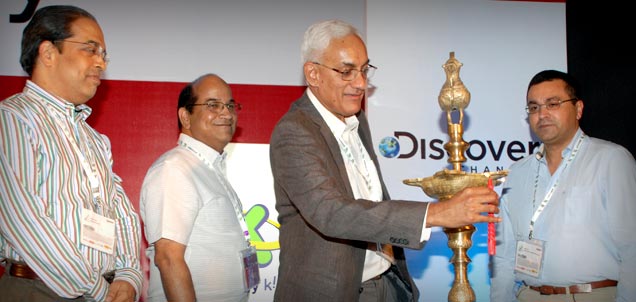
    Goafest 2012 kicked off with the lighting of the lamp by the industry dignitaries, Mr Arvind Sharma, Chairman Goafest 2012; Mr Nagesh Alai, President, AAAI; Mr Shashi Sinha and Mr Ambi Parmeswaran, ED and CEO, Mumbai Draftfcb Ulka Advertising. Mr Sharma said that he was thrilled as Goafest 2012 over 3,000 participants, including representatives from Sri Lanka and Bangladesh.


    Mr Parmeswaran said that he was ecstatic about the event this year as there was a restructuring of knowledge sessions. Mr Sinha observed that with more metals and more categories at the awards than last year, more participants, representatives from foreign countries, exciting prices for the audience, Goafest 2012 is aiming to give participants an experience with qualitative improvement every year. And unlike previous years, presentations by speakers were followed by the Q&A sessions moderated by industry veterans.


    The first session, ‘Magical Ideas Come when You Harness the Power of Many People’, commenced with a flash mob from YouTube, taking everyone by surprise and perhaps sending a message that it was one way of using consumers to building your brand.


    Mr Lucas Watson, Global Vice President, YouTube spoke about how passionate consumers can help one build brands and how online videos can help even startups spread awareness and the reach needed in a very cost effective and efficient way. “Just get started online, you don’t have to be a big brand, all you have to do is gain trust among your consumers and you will be surprised how passionate people are to participate in the brands they love. The magic of YouTube is available for all to see, as it allows everyone to participate and that too in a cost efficient manner.”


    The first session was moderated by Mr N Rajaram of Airtel. When asked about the scope of co-existence between television and online videos, Mr Watson said: “Like many industries, we too are going through a transformation. There are brands which are afraid to disrupt their current mode of functioning and there are brands who want to try new and better ways of reaching out to their consumers. So I believe there will be some co-existence, nevertheless there will be winners and losers as well.”


    Gerson da Cunha, stage and film actor, social worker and author dedicated Ad Katha, a book that tracks the history of Indian advertising to the late Bal Mundkur, founder of Ulka. Mr da Cunha gave the audience a glimpse of the Indian advertising right since it started through the present day advertising. He also pointed out that advertising bloomed in India from print media and that in 1991 it even opened doors to the global economy.


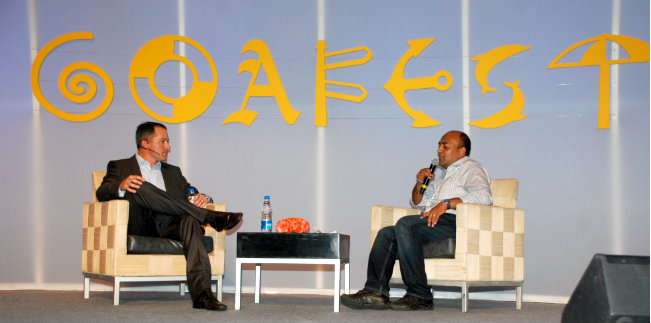
    Mr Jonathan Mildenhall, Vice President, Global Advertising Strategy and Content Excellence, Coca-Cola spoke on the use of creativity and content and how Coca-Cola moved from creative excellence to content excellence. He also explained that there is a need to encourage consumers to express their stories and how a brand must move to dynamic storytelling. “A brands story must show that it’s committed to make world a better place. There is a need to converse and not just listen to our consumers but to create inspiration and provocation.”


    In the session moderated by Sanjay Behl, CEO, Reliance Digital, when asked about a marketer’s role in the future and the consequences of negative conversation on a brand, Mr Mildenhall said: “Brands have to be a lot more transparent, if you inspire good conversation, it manages itself and I believe good eventually wins over evil. Brands, therefore, need to rethink the creative story they are telling their consumers. A 30 second media spot is valuable and it should be a gateway for brands to reach higher grounds.”


    Mr Tim Love, CEO, APIMA and Vice Chairman, Omnicom Group spoke about ‘The Magic of Ideas- Our Language Impediment’. He was of the view that innovation is the magic of ideas and that language is a technology. Mr Love also pointed out that as internet penetrates further in India, language communication will be going to new heights.


    The session (all of them held at what’s called the ‘Dome’) on Language Impediment was moderated by Kainaz Guzdar of P&G. When asked for his suggestions on how marketers and advertisers can come up with great ideas on language impediments, Mr Love said that they will have to be more cognizant in language and respect the sensitivity of various people. He also said that ideas are best when communication is from one individual to another.


    Mr Charles Wright, MD of Wolff Olins shared his insights about how consultancies are equally important to creating and building brands. He spoke about how by combining rigour with magic, one can solve complex business problems and how a Wolff Olins experience of branding may be completely different from an advertising agency’s experience despite working on the same product or brand. “In order to build brands that succeed, it is important that one understands what is important to the customers. We are all living in a world of perception but branding is all about changing the way people behave, and simply making promises is not important but, delivering on those promises is far more important.” He added: “Design, as a language, can help change people from hating a particular brand to making them like the brand and then probably even love that brand.”

    Click here to view all Goafest 2012 stories
     

  • Ad Conclave Takeout #1: Technology is the new tool for creativity!


    By Robin Thomas


    ‘Ideas that impact the full circle’ is the theme for Goafest Advertising Conclave 2012, expected to be attended by over 3,000 members of the media, advertising and marketing fraternity from not just India, but various south Asian countries as well. Yes, this year’s edition of Goafest is billed as the biggest ever in the history of the event and will include delegates from Sri Lanka, Pakistan, and Bangladesh.


    The Goafest Advertising Conclave 2012 held on Thursday highlighted the fact that the next few years are going to be transformational as far as creativity in the industry is concerned. We live in an era where young people are growing up in a digital era, they spend more time on social network and brands are targeting their consumers on social networking sites. India is restless and what the country needs is not traditional creativity, but radical creativity. Technology is the new tool for creativity and India must immerse into it.


    Tim Love, CEO, APIMA, Vice Chairman, Omnicom Group spoke about how the world has become not only interconnected but also inter-dependent due to digitization and globalisation. He was also quick to point out living in an era of digitization, there is plenty of information available, but there is a need to know how to use that data effectively.


    Jonathan Mildenhall, VP, Global Advertising Strategy and Creative Excellence, Coca-Cola pointed out that there are two types of creativity – traditional creativity and radical creativity. What India needs today is not traditional creativity but, radical creativity. “We need to develop ideas and hence we need to integrate technology with creatives. We need to move away from 30 minute television storytelling to dynamic storytelling,” he clarified.


    Mr Mildenhall also explained that brand stories must add values and significance to the consumers’ life. The stories must engage the consumers and make them feel connected to the brand. “We need bigger creative thinking in our heart and we need online dialogue as well as engagement with our consumers. Nevertheless, we need to iterate our content and not replicate them.”


    While speaking on ‘Building brands in an era of multiple degrees of freedom’, Jayant Murty, Director of Strategy, Media and Integrated Marketing, Asia Pacific Region, Intel Corp  observed that most often brands bribe their consumers to get involved, but they fail to understand that the consumers do not want to be bribed. He added that brands must be remarkable and different. “Immerse in technology because technology is the new tool to creativity and find partners that understand the use of technology,” he further added.


    Keeping in line with the theme of ‘Ideas That Impact The Full Circle’, a panel discussion moderated by Anuradha Sengupta, Features Editor, CNBC TV18 and including panellists Tim Love of Omnicom Group, Jonathan Mildenhall of Coca-Cola, Jayant Murty of Intel Corp and Jean-Yves Naouri, COO, Publicis Group focussed on the need to present their agencies differently; the loss of long-term relation between the clients and the agencies and the need for multiple agencies to build a brand.


    Mr Love observed that advertising is actually an education, also noting that while the advertising industry is all about ideas and thus the need for young rebellious minds, there is also a need for the old and the wise to guide and direct the youth.


    Mr Jean-Yves Naouri, on the other hand, highlighted that creative agencies are here to respond to business and gain the trust, mind and presence in their client’s life. “Keep the dialogue between brand and consumer alive. Engage consumers as there will be people who will be inspired b the brands and this is what matters the most,” he counselled.


    Speaking on the agency-client relationship, Mr Mildenhall said that it is easy to maintain one relationship better that ten different ones, and therefore he would reluctantly look outside his roster agencies for creativity. However, he felt that brands may scout for multiple creative agencies if they find the need for specialist agencies that could help them reach out to their clients more effectively. He was also quick to point that although digital is showing robust growth inIndia, it needs to boost its creativity in this space. “Majority of the UK spends on digital, however the internet reality is bigger than the creative ambition inIndia.”


    KV Sridhar aka Pops, NCD, Leo Burnett talked about how advertisements look in a world of censorship. He was of the view that though advertising is a serious subject, it is nothing less than entertainment. Therefore, if one puts restrictions on advertisements, it may lose its enjoyment. Pops highlighted that there are two types of people in advertising, the ones that care and the ones that don’t care and therefore the industry must be sensitive to the sentiment of various people. He also said that while the industry should be governed by creativity and not regulations, there is also a need to keep a check of the contents as it is in our hands.


    Industry expectations are high, especially after the conclave on Thursday as was summed up by a variety of delegates. Said Niloufer Dundh, Head- Integrated Media, Hungama Digital Media Entertainment Pvt Ltd: “The advertising conclave was fabulous. Great speaker line-up and the points raised finally focused on digital. The international speakers don’t treat digital as an extra or add-on; it is part of their communication strategy. Jonathan Mildenhall’s speech on Global Advertising Strategy and Creative Excellence was awesome!”


    Another delegate who did not wish to be named said he was looking forward to getting the ”real” lessons from marketers. “I am glad Goafest is giving us this opportunity.” But, he said, the only problem is the “awful” heat. Now you can’t get all things in the world your way, can you?


    Click here to view all Goafest 2012 stories


  • TIL brings a bigger and better IPL season 5

    By A Correspondent


    Times Internet Limited (TIL), in partnership with YouTube, is back with a slew of new features to woo cricket lovers for the fifth edition of the Indian Premier League (IPL), which starts on Wednesday.


    TIL’s dedicated IPL site, ipl.indiatimes.com, now offers interactive scorecards, high-definition streaming of IPL matches, DVR features (to rewind during a match), online radio commentary in partnership with AIR , video-on-demand facility, and an all new ‘Battleground’ section.


    Making its debut this year is the interactive 10 minute video show ‘Pitch Studio’, where fans can interact with stalwarts from the cricketing world including a former cricket team captain and expert, by posting their comments and questions on Facebook and Twitter. These pre-match shows will give a quick recap of past matches and talk about key events, with guest stars adding an element of surprise.


    “Having attracted a total of 72 million global views last year, we are looking to make IPL 2012 a lot more user-centric, giving user’s total control over their IPL viewing experience,” says Rishi Khiani, CEO, Times Internet Limited.


    In the ‘Battleground’ section, IPL fans can post their comments and also indulge in activities such as throwing tomatoes and eggs at the other side during a live match. The new DVR feature will allow fans to rewind on the time-line and watch any part of the match that they may have missed. Adding to all the fun is the cheerleader application, video scorecard that captures video highlights on the fly during the match stream, and the video-on-demand feature, which offers match highlights such as fours, sixes and face-offs between players.


    Given the phenomenal success of the Indiatimes platform during the previous IPL season, it’s no surprise that this year too, some of its heavy weight sponsors including Maruti, Coca Cola, and Samsung, have put their weight behind TIL as premium sponsors.

  • The Anchor: 5 ways a brand can stay relevant

    By Alpana Parida


    #1 Rejuvenate

    An old brand like Pepsi has remained relevant for Gen X in the ’80s and now Gen Y as it has constantly rejuvenated itself. If a brand never changes the way it appears – it atrophies and dies. It must constantly rejuvenate itself to infuse freshness and youth into the brand.


    #2 Reinvent

    Environment keeps changing and brands need to reinvent the brand proposition to create relevance. Amul Ghee was slowly losing relevance even in homes where ghee was loved. A dry roti was becoming the norm. At DY Works, we realized that the consumer needed a nudge in reassuring them that there was enough according to Ayurveda that said one spoon a day was good for you.


    #3 Repurpose

    No amount of logo rejuvenation can keep a brand from dying if it does not repurpose its core deliverables in a changing environment. By not taking the threat of digital cameras seriously and in a timely manner, Kodak joined the brand graveyard which is littered with examples of giants who did not read the writing on the wall.


    #4 Retract

    Flexibility is key. Admitting mistakes is greatness. Wrong decisions get taken but brand leaders, like great generals, know when to retreat. Coca-Cola became an American Classic when it quickly retracted its New Coke formulation.


    #5 Restore

    As I was passing by Metro Cinema in Mumbai the other day, I was struck by how little interest there is in restoring its glory. Metro Cinema (1938) is an example of our Art Deco heritage. Today it is a multiplex movie theatre in Mumbai. It was built and originally run by Metro-Goldwyn-Mayer (MGM), the Hollywood studio. This has the ability to become a destination landmark and the equivalent of the Kodak Theater in LA for Bollywood. Sometimes, all that great brands really need is a little restoration.


    Alpana Parida is President, DY Works.


  • Brand race as Ormax study reveals Day After Cricket recall

    By A Correspondent


    According to Ormax Media’s Cricket Advertising Recall & Effectiveness research – Day After Cricket (DAC), the top recalled brands during IPL 4 were Vodafone, Pepsi, Coca-Cola, & Hero Honda.


    Ormax Media released topline findings of Day After Cricket for IPL 4, while announcing the launch of the research for IPL 5. The table below lists the top brands recalled by the viewers in the day-after recall research conducted during the fourth edition of the IPL.


    Top 10 Brands Recalled (IPL 4)
    Rank Brand
    1 Vodafone
    2 Pepsi
    3 Coca Cola
    4 Hero Honda
    5 Airtel
    6 Tata Docomo
    7 Kingfisher
    8 Idea
    9 Volkswagen
    10 Nokia


    The top 10 most liked campaigns or promotions in IPL 4 are listed in the table below.


    Top 10 Most Liked Campaigns (IPL 4)
    Rank Brand
    1 Vodafone
    2 Cadbury Dairy Milk
    3 Coca Cola
    4 Tata Docomo
    5 Volkswagen
    6 Thums Up
    7 Glucon D
    8 Hyundai
    9 Hero Honda
    10 Kingfisher


    Top 5 innovations with the highest brand recall for the sponsor were Karbonn Kamaal Katch, Maxx Mobile Strategic Time Out and Kingfisher Third Umpire Decision, Kingfisher Fair Play Award and DLF Maximum respectively Day After Cricket for IPL 5 will be conducted in two phases. The first phase involves daily day-after tracking of Ad Recall, Ad Likeability & Innovation Sponsor Recall. The second phase is the post-event association effectiveness measurement phase, customized for a brand.


  • Olympics countdown: Hero, Airtel etc flock to hockey on rising public interest

    By Ratna Bhushan & Meenakshi Verma Ambwani


    Indian marketers are joining the ‘Chak De India’ brigade going to London Olympics. A day after the Indian hockey team qualified for the Olympics in spectacular style, advertisers such as Hero MotoCorp, Bharti Airtel and Vodafone plan to associate with the team and the event while Coca-Cola and Samsung may look to cash in on their official partnerships for the event, say people involved in their media buying plans.


    Media planners say official broadcaster ESPN Star Sports hopes to earn Rs95-100 crore by selling advertisement spots during the 17-day event in July-August as well as related programmes that will be spread over five months starting March.


    This amount is several times more than Rs5-7 crore that Doordarshan had raked in during the Beijing Olympics in 2008, but experts say three factors will help ESPN Star Sports reach its revenue target.


    These are, Indian cricket team’s disastrous performance in recent times that has pushed the sport’s television viewership to new lows; the fact that the Olympics is being shown on a private channel for the first time, leading to aggressive marketing of the event; and, a strong revival in interest in hockey and other sports.


    “The hockey team qualifier has changed things. Many companies are now seeing the Olympics as an opportunity to cash in on their global partnerships,” said Navin Khemka, senior vice-president at media buying firm Zenith Optimedia, which buys media for Reckitt Benckiser.


    Advertisers game for London

    ESPN Software Executive VP Sanjay Kailash said there is significant interest among Indian brands to advertise on the Olympics. “With the Indian team qualifying for hockey, the interest and buzz around the Olympics among Indian viewers and advertisers will only increase,” he said.


    ESPN Star Sports plans to rope in eight partners for the event. Consumer electronics giant Samsung is the official partner of the Indian delegation to the London Olympics while dairy products brand Amul on Monday announced a deal to sponsor the Indian contingent.


    “The hockey team’s performance has added muscle to our sponsorship plans,” said RS Sodhi, managing director of Amul brand owner Gujarat Cooperative Milk Marketing Federation, which will provide Rs1 crore for athletes who have qualified for the London Olympics.


    A Samsung spokeswoman said the company is yet to work out the specifics of its Olympics campaign. The firm is supporting training expenses of six players. Two-wheeler manufacturer Hero MotoCorp, the title sponsor for the Olympics qualifying tournament concluded in New Delhi on Sunday, is also expected to pick up broadcasting spots.


    Others such as telecom services providers Bharti Airtel and Vodafone too have evinced interest in associating with the Indian team, either on ground or on television, say media planners. Sahara Group, which renewed its five year sponsorship deal with Hockey India earlier this month, too may pitch in.


    Cricket’s loss helps

    In a strange turn of the wheel of fortune, the Indian hockey team, by merely qualifying for an event it had missed only once since the country’s Independence, has stolen the limelight from the national cricket team that won the World Cup less than a year ago.


    Television rating points for India’s ongoing series in Australia have plunged to less than 2, now that India has lost all the Test matches and is almost certain to finish last in the three-nation one-day international tournament.


    The downturn started in England last year, when the Indian team lost all its matches and meekly surrendered its top ranking in Tests to the host country. Yet, ESPN Star is expected to have earned about Rs300 crore in advertising revenues from the three-month Indian tour to Australia.


    “Family viewership for cricket has dropped and rates are now out of reach of certain brands,” says Shripad Kulkarni, chief executive officer of Allied Media, part of sports entertainment company Percept.


    Source: The Economic Times
    Copyright © 2012, Bennett, Coleman & Co. Ltd. All Rights Reserved

  • Eye on volumes, Coca-Cola to revive Citra after 19 years

    By Ratna Bhushan


    Coca-Cola will revive Citra, a clear-lime drink it bought from Ramesh Chauhan two decades ago but junked in favour of Sprite, in a move that analysts believe is more to target price-sensitive consumer segments than to unlock the brand’s heritage value.


    A person familiar with the top beverages maker’s plans said Citra will be priced about 20 per cent cheaper than existing lime-lemon drinks such as its own brands Sprite and Limca as well as PepsiCo’s Mountain Dew and 7 Up, to target a wider audience and take on smaller brands.


    A Coca-Cola spokesman confirmed the company is introducing Citra in “a few towns in Maharashtra and Gujarat” on a pilot basis. This will be followed by a staggered launch across other metros and bigger cities.


    The move has surprised industry watchers because Coca-Cola’s Sprite, the second-largest soft drink brand in the country after Thums Up, leads the lime-lemon drinks segment, which is the fastest-growing soft drink category in India’s Rs13,000-crore fizzy drinks market.


    Among those surprised is Ramesh Chauhan, who created brand Citra and made it popular in the late 1980s and early 1990s.


    “After keeping the brand in cold storage for so many years, it’s strange they want to re-introduce it now, especially when they have a strong presence in the clear-lime segment,” Chauhan said. “If they are looking for retention and heritage value, then logically even Gold Spot should be revived.”


    When Coca-Cola re-entered India in 1993, it bought out all Parle brands except Bisleri from Chauhan.


    Move aimed at mopping up volumes

    While Citra and Gold Spot were phased out to make way for Coca-Cola’s global brands Sprite and Fanta, respectively, Thums Up, Limca and Maaza were retained. Shashi Kalathil, CEO of management advisory firm Y-factor and partner at private equity fund Exponentia Capital, said the move may be aimed at mopping up volumes. “Coca-Cola probably doesn’t want Citra’s pricing to impact its larger brands. So this could be more of a pricing game and about treating Citra more as a trademark than a brand,” he said.


    Parle brand again

    It’s history that the US major sidelined Parle’s cola brand Thums Up to promote its own brand Coca-Cola for years before waking up to the potential of the Indian brand and backing it.


    Now it seems like deja vu for Coca-Cola as it is banking on a Parle brand once again to push market share in the lime segment. The Coca-Cola spokesman said Citra would not cannibalise its existing lemon drinks because there is ample room for multiple brands in a developing segment like sparkling fizzy drink in a high-potential market such as India.


    Devendra Chawla, president of food & FMCG segments at the country’s largest retailer Future Group, said the move will aid the growth of the clear-lime category, which is already seeing heightened brand activity. “To grow carbonated soft drinks’ per capita in India, apart from growing colas, it’s critical to activate flavours which have natural acceptance from Indian consumers such as lime and mango,” said Chawla, who formerly worked with Coca-Cola.


    India’s per capita consumption of carbonated drinks is just 11 litres a year compared to 34 litres in China and 675 litres in Mexico.


    The lime-lemon category in India has been growing 16-17 per cent a year, ahead of colas at about 11-12 per cent and orange drinks at 8-9 per cent. Apart from being a familiar flavour that Indians consume at home (in the form of nimbu paani), lime-lemon drinks are considered ideal thirst quenchers.


    Both Coca-Cola and PepsiCo have been promoting their brands aggressively in this segment. PepsiCo has Bollywood star Salman Khan endorsing Mountain Dew and actor Sharman Joshi for 7 Up, while Coca-Cola pushes clear-lime drink Sprite and cloudy lemon drink Limca on the irreverent and freshness platforms, respectively.


    Source:The Economic Times

    Copyright © 2012, Bennett, Coleman & Co. Ltd. All Rights Reserved

  • Winning consumers, dil se


    By Shubhangi Mehta


    ‘Advertising’ generally relates to a 30-60 second commercial which is, in some way, a break from whatever has grabbed our attention on the TV. It is, at times, packed with humour or creativity which manages to engage audiences and pay attention to the product being endorsed. But these days, brands are thinking beyond short term goals such as increasing sales to a long term goal of maintaining goodwill for the brand.


    For a while now, a lot of advertisements are not just based on a self-centred motive to sell the product but the brands and creatives are becoming more and more altruistic and trying to engage the audiences by including them in the commercial.


    Whether it is Coca-Cola “spreading happiness” or Tata Tea asking the consumer to “Jaago Re”, almost every brand is trying to step ahead and be an element revolutionising society.


    [youtube width=”400″ height=”250″]http://www.youtube.com/watch?v=M5ECJrnqPcI[/youtube]

    R Balki, Chairman and CCO, Lowe Lintas India, said, “There needs to be a connect of the message with the product. Brands just cannot jump onto the bandwagon by saying something which isn’t connected with the product. Even before Tata Tea or Lead India, it was Lifebuoy that came up with ‘koi dar nahi’, which encouraged kids to walk out and clean the streets. Hence, there is a definite need of product association with the message. Even in the Tata Tea campaign, tea is always associated with awakening and, with a name like Tata attached to it, we took it a step ahead and correlated it with awakening against corrupt politicians and so on. The thought was based on being optimistic and not cynical.”


    As a matter of fact if we are to recall, such advertisements are also the ones that manage stay in our minds the longest. Be it ‘Jaago Re’ ‘Lead India’ ‘Hum Mein Hai Hero’, ‘Idea’ commercials or the latest Stayfree campaigns.


    [youtube width=”400″ height=”250″]http://www.youtube.com/watch?v=A0M0EZ8T5J8[/youtube]

    “Every businessman today realises that just a transactional relationship with a client does not work these days, there is a very important need for emotional connect with the consumers, and brands like Coca Cola are realising the same. The trend has been there for a while, but its gaining momentum as every brand wants to be in the good books of the consumer. This is a worldwide trend where the society needs to know what exactly we are giving them back,” explained Prasoon Joshi.


    The problem lies when rather than being engaging, these commercials become preachy. The idea should be that it sermonises in such a creative way that it manages to engage a consumer, who considers an advertisement a break from a nail biting cricket/football match, or a soap opera that he /she is watching


    KV Sridhar, NCD, Leo Burnett, India, said, “More and more brand are realising these days that whatever we do is replicable. All the uniqueness and benefits get blurred after a while. Be it the uniqueness of an iPhone which is replicated by Chinese and Korean companies or the uniqueness of a brand communication. The other thing that marketers have understood is that ‘honesty’ and ‘selflessness’ are the keys to attract audiences. The Brand now tries to tell the audience that your ideas and my ideas are the same and this has become the solution to connect with the masses.”


    It won’t be wrong to say that Indian society gives utmost importance to values when compared to any other society. Hence, it helps a brand to come across as socially responsible.


    [youtube width=”400″ height=”250″]http://www.youtube.com/watch?v=6DkS7wfPMdQ[/youtube]

    Rahul Kansal, CMO, Bennett, Coleman and Co, said: “When it comes to using a social message to promote one’s brand, it has to have certain connection with the product. Sometime back, we saw Aircel’s campaign to Save the Tigers. Despite being a good concept, the campaign did not leave a mark, as it didn’t really help the brand because the cause wasn’t really connected with the brand. On the other hand, if we talk about Tata Tea’s Jaago Re campaign, it is a beautiful example of laddering up by a brand since tea is always associated with awakening and here the brand communication took it a step further by making it an awakening of the society towards the corrupt system. The Coke ad is also an example of going ahead with a thought of a drink which is meant to quench thirst, stepping ahead and becoming a brand to spread happiness. Times ofIndia’s ‘Lead India’ and ‘TeachIndia’ are also an example of laddering up by using a social message.”


    One might wonder, is creativity becoming a follower rather than a creator? One can also speculate that creative thought is the slave of trend, where one does something exceptional and others follow, as that becomes what the audiences want. The fact that such campaigns manage to capture the consumers’ eye is evidence. This practice had been seen in the past as well, but more and more brands have been adopting the concept lately. Will it continue, and how well can creativity present it? The fact remains that any product endorsing itself on such messages, even if remotely, needs to be connected with the communication at a certain level.


  • Coca-Cola to put $2 billion into India

    By A Correspondent

    Coca-Cola India has announced that Coca-Cola System will be investing US$2 billion in India in the next five years, beginning 2012. The investment is to further capture the opportunity in the Indian nonalcoholic ready-to-drink (NARTD) beverage market. India is a strategic growth country for the company ranking among its top 10 markets in volume globally and as the largest market in the Eurasia and Africa Group.

    Commenting on the development, Ahmet C Bozer, Coca-Cola’s President, Eurasia and Africa Group, said, “India is one of our most important growth markets as we work toward our 2020 Vision of doubling system revenues and servings this decade. The opportunity in the packaged beverage segment is immense, and our efforts in India are focused on being the beverage of choice all day, every day.  If we continue to do the right things each day and at all times, it would not surprise me if India becomes one of the top five markets for the Company globally by the end of this decade.”

    NARTD beverages have enormous growth potential in India.  The Coca-Cola Company and its bottling partners have robust plans to capture this opportunity with investments in innovation, consumer marketing and brand building, expansion of distribution and cold drink equipment placement as well as further development of manufacturing capacity to meet growing consumer demand.

    The Coca-Cola system has already invested over US$2 billion in India since it re-entered the country in 1993, and currently it directly employs more than 25,000 people. The system is estimated to have created indirect employment for more than 150,000 people in related industries through its vast procurement, supply chain and distribution system. The current investments announced by Coca-Cola will further catalyze economic growth and create new opportunities for the local community. The Coca-Cola system currently employs more than 700,000 people worldwide.

    Atul Singh, President  & CEO, Coca-Cola India and South West Asia, said, “This investment is a part of our long-term commitment to invest in innovation, partnerships and a portfolio of brands that will enable us to grow our business in a sustainable and responsible way. In addition to our infrastructure and capabilities, the new investment will also focus on enhancing the consumer experience, building brand loyalty and contributing to environmental sustainability and community development. Our India business has been growing at a robust rate over the last five years, and our goal is to continue this growth momentum. The country’s demographics, economic and social parameters are all huge drivers of growth and we have to ensure that we capitalize on the opportunity.”

    The Coca-Cola system has a long history of partnership with non-governmental organizations in India for community development and sustainability initiatives. As a system, Coca-Cola has now achieved a net zero balance with regard to groundwater usage in India.  It is well integrated with local Indian communities and is a valued contributor to economic and social growth. The Company and its bottling partners are strong supporters of education in India through programs like the ‘Coca-Cola NDTV Support My School’ campaign, which is aimed at creating more than 100 model schools in India. The Company also supports sports programs to encourage active, healthy living such as the Coca-Cola Under-16 Cup cricket tournament, the Coca-Cola Mir Iqbal Hussain Trophy football tournament, Sprite Gully Cricket and Sprite NBA Jam.

    Worldwide, The Coca-Cola Company and its bottling partners are investing nearly $30 billion over the next five years to support anticipated growth across its system. These investments range from new manufacturing facilities to new distribution systems to new marketing investments in emerging economies.

  • Debrief: The Diwali Special

    By Anil Thakraney

    Diwali special


    Not much Diwali themed ad action this season. Guess because the sentiment is a bit dull in the market place, thanks to the heavy inflation. How do I gift stuff to anyone if all my savings have been burnt on getting KLPD? *(For the one-track mind wallahs, that’s Kerosene, LPG, Petrol, Diesel.)

    Still, three ads caught my attention. The Cadbury’s ad I have already dealt with earlier. The other two are from Coke and Big Bazaar.

    `

    [youtube width=”320″ height=”200″]http://www.youtube.com/watch?v=IfH9hm9Ea7o[/youtube]
    Rating: (On a scale of 1 to 5): 2. Only for the jingle. Watch this commercial with your eyes shut, and it works rather nicely!

    Coke: Great audio, poor video

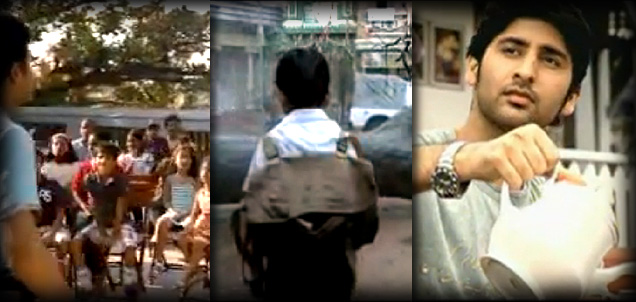
    To begin with, there’s no direct connect between a soft drink and Diwali. No one gifts a cola on D-day. Unless, of course, very subtly the Coca Cola guys are asking us to do just that, since we are all so bloody broke! Coke’s ad wants us to light ‘two extra diyas’ this Diwali. I suppose this is an extension of their ‘open happiness’ idea. And the execution involves kids lighting diyas at their regular haunts. College canteen, girls’ hostel, on the wall that serves as ‘stumps’ for their cricket matches, etc.

    I think it’s a nice idea wasted on juvenile imagery. Coke should have taken the ‘share happiness’ route and come up with situations that are touching and emotional without being heavy. ‘Khushiyaan baanto’ as a concept lends itself to emotion very well. Even the jingle is warm and tugs at the heart. But the silly visuals leave you cold and detached. I suspect this is what happens in the desperation to feature kids at all costs. Even accepting that, surely there’s more to youngsters than canteen and cricket.


    Rating: (On a scale of 1 to 5): 3.5. For the advertiser’s deep empathy with the target consumers. 

    Big Bazaar: Relevant and thoughtful

    It’s a simple, no-frills Diwali commercial. And you know what? It works perfectly well for me. Because the idea and the execution reflect a clear and sharp understanding of Big Bazaar’s core target market.

    The TVC features a teenage girl inside her home. She looks fed up of her regular salwar kameez, and yearns for a stylish one she spots in a magazine. The setting and the casting clearly tell you this is a lower middle class household. However, her dad, who’s decorating the house, smiles and tells her: ‘Diwali aa rahi hai’. And yes, it’s time to hit Big Bazaar and get hold of that salwar kameez, and more!

    Good one. I like the fact that Big Bazaar is totally clued in on their key customers, which is the middle and the lower middle class segment. And this results in an engaging, warm, and very relevant communication. Big Bazaar and the ad agency will definitely not win any awards for this effort, but the store will surely get many footfalls this festive season. And in the end, that’s what really matters.

  • The Anchor: 7 ads that star sports and sportsmen

    By Hemant Kenkre


    In no particular order – from the dancing girl on the cricket field to Sehwag’s Ma – there’s something about Indian ads and sports that hits the spot


    #1 Palmolive Da Jawaab Nahi:The Haryana Hurricane, as Kapil Dev was known, endeared himself to millions of Indians (not just cricket fans) with the line from the Palmolive Ad – ‘Palmolive Da Jawaab Nahi. ’ Kapil’s earthy personality and toothy smile in the ad will always be remembered as much as the “Kitne Aadmi The” dialogue from Sholay.
    #2 Cadbury – Asli Swaad Zindagi Ka:Can anyone forget the Cadbury TVC where the lady friend of the batsman prances out on the field and dances her way into the arms of her hero, who has just hit a six? Kucch Khaas Hai Is Ad Main!
    #3 Josh Ka Rang – Coca-Cola 1996 World Cup:In 1996 when Coca-Cola won the pouring rights for the ICC World Cup (India. Pakistan & Sri Lanka), they announced their return into India with a super TVC – Josh Ka Rang –that ‘played’ around the colour red, showed youngsters from the Indian sub-continent playing on the streets, on the banks of the Jamuna, with the Taj as the backdrop, running among red-chillies laid out to dry. All peppered with the awesome ‘Dum Mast Kalandar’ track by Nusrat Fateh Ali Khan
    #4 Nothing Official About It – Pepsi 1996:While Coca-Cola’s TVC and strong PR campaign for the 1996 ICC World Cup was going great guns, rivals Pepsi  pulled the rug from under their feet by launching their campaign ‘Nothing Official About It,’ which featured most Indian and international cricketers who were playing the World Cup and cocked a cheeky snook at Coca-Cola’s ‘Official beverage of the Cup’ status
    #5 Aila Plane – Pepsi  2003 ICC World Cup:This Pepsi campaign, where Shane Warne and Carl Hooper kidnap Sachin Tendulkar – ostensibly to put him out of action from the tournament – is hilarious. Especially Warne and Hooper mouthing Hindi words like ‘Iski Toh Gayee’ and when Sachin sees an aircraft and says ‘Alia Plane’
    #6 Nike 2007 Cricket:The 2007 edition of the ICC World Cup saw Nike, the official apparel sponsor of the Indian team produce a superb TVC where young cricketers atop a bus stuck in a traffic jam, playing the game with passion, smashing tea cups from the hands of innocent bystanders all spiced with the Goan folk song ‘Yo Baile Yo’ playing in the background.
    #7 Karlo Duniyaa Mutthi Main, Sehwag Ki Maa – Reliance Mobile:This TVC was probably inspired by a Bollywood blockbuster where the Najafgarh’s hero (Virendra Sehwag) cannot connect bat to ball and gets a call from his Mother who tells him ‘Karlo Duniyaa Mutthi Main.’ Our hero tosses off his helmet and the ‘villainous’ bowler is promptly whacked out of the park by Viru!


    A communications professional, Hemant Kenkre played cricket for Bombay University and has captained the Cricket Club of India.