Tag: Coca-Cola

  • Brand Lessons from Clay & Grass!


    By Avik Chattopadhyay

     

    Avik ChattopadhyayThe French Open 2021 tennis championships just got over and the Euro 2020 football championships are currently on. Over the last three weeks, events have happened that bear implications for the world of brands and brand management.


    To me, the French Open winners were Novak S. Djokovic [quite obviously] and Naomi Z Osaka. While both are huge brands by themselves, this piece is about the way brands associated with them have performed over the two weeks at Roland Garros, for the world to see.


    “Novak ‘S.’ Djokovic?”, you would ask. Yes. The ‘S’ stands for ‘silent’. The man silently went about winning his 19th Gland Slam title, silencing a lot of his critics. If one followed him through this year’s tournament it was easy to observe his evolved behaviour on court and off it. Gone were the ebullient celebrations after each match, especially in the semis and the finals. There was an occasional roar, but that was it. He was smiling at his own mistakes. He was calm as a monk at the breaks. One expected that all the pent-up internal pressure would see an exit valve sometime, but no. And then he gave his racquet to a little supporter on the sidelines after winning, saying that was the best way to express gratitude to his “cute little coach”.


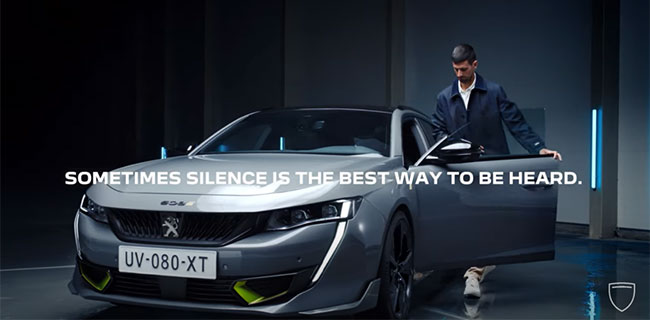
    Djokovic sports two brands apart from apparel sponsor Lacoste. One is a technology firm called UKG. The other is Peugeot. His association with the French car brand has been for more than six years now but this year, the brand, in a new avatar, took a really bold step to create a piece of communication with their brand ambassador released for Roland Garros. Announcing the launch of the Peugeot 508 SW plug-in-hybrid, it is a terrific demonstration of when the sponsor’s and ambassador’s DNAs totally are in sync.
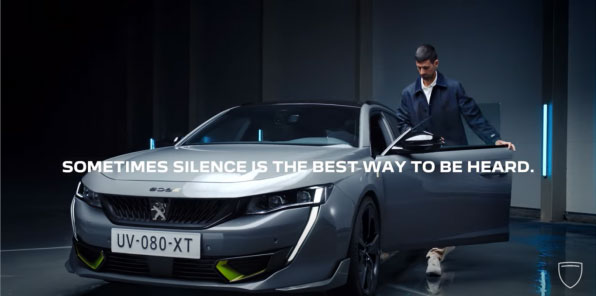


    And the words at the end, captured here in the screengrab say it all. The commercial can be viewed at https://youtu.be/ugNSGoISTmg


    Coming to Naomi Z. Osaka. Yes, the ‘Z’ stands for Gen-Z. It does take immense guts and candour to withdraw from a tournament of this stature because she could not agree with the rule of appearing at post-match press meets which made her uncomfortable. [Djokovic was one of the few who openly supported her stand.] Why not appear at a press meet when one gets more exposure, one would ask? But Osaka belongs to a generation that most of us managing brands are still coming to terms with. I went across and asked two of my friends for some insights to understand Gen-Z better. One, Subhash Chandra, a market research analyst shared lots of short clippings about the ‘post-millennials’ as they are also called. The other, Nirmal Dayani, shared the same sentiments of his Gen-Z son on this issue.
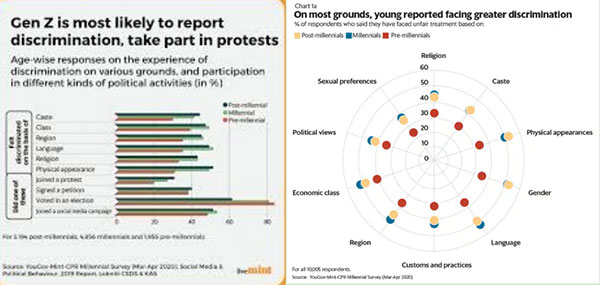
     

    [Source – YouGov-Mint-CPR Millennial Survey, March-April 2020]


    In the older times, the sponsors would have taken serious offence to such a sudden move by their brand ambassador, and one might have even decided to pull out of the contract due to an obvious breach of the same. Not in the case of Osaka. Nike, ANA, and Nissin all stayed steadfast behind her as if endorsing her decision. Also, that way they continue to connect with the Gen-Z whom Osaka represents, for their own business interests.


    Cut to the Euro 2020 being played across the continent right now.


    On June 12, during a game against Finland, Christian Eriksen of Denmark had a serious medical emergency. While his teammates shielded him while CPR was being given and the stadium was in stunned silence, the television cameras were showing close-ups of the attempts to revive him and of his shocked wife being comforted by teammates Schmeichel and Klaer. After some time the cameras pulled back and stayed there. There was huge backlash on the broadcasters for getting too close to the medical activity and sharing personal moments. The BBC formally apologised the very next day.
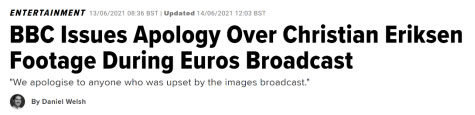


    This is a clear indicator on the maturity with which brands need to handle totally unexpected situations. It is easy to get carried away and behave in a manner that may bring in immediate social media chatter but eventually lead to social media outrage. A clear pointer to the media brands across the world, more so in India, who tend to sensationalise events for personal gains, at the cost of social propriety!


    A few days later, at their respective post-match press meets, Cristiano Ronaldo removed a couple of Coca-Cola bottles from the table while Paul Pogba removed a Heineken bottle. There were news items of how Coke lost $4.00 billion in the stock market due to that action. We are yet to know how much Heineken lost, but then Pogba is not as big a star as CR7 is!
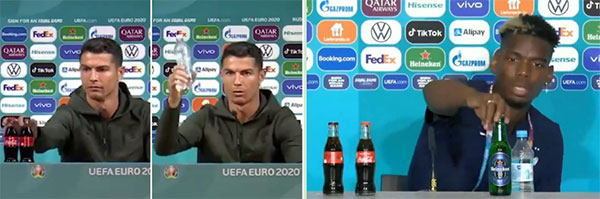


    This is again a strong message going out to brands to be empathetic to people’s sensitivities. While one may question the very logic of having a fizzy drink sponsoring an event about fitness, the onus lies on the brand[s] to show respect. CR7 is known to espouse the cause of health food so it would be downright silly to position those Coke bottles in front of him. Pogba is a Muslim so would never like to have an alcohol brand with him. The logos of the sponsors are anyway on the backdrops, so why this urge to do the overkill with product placement? In todays times, these do not have the desired positive impact. In fact, if they boomerang, then they garner more social media space!


    Anyway, the Russians are leading the Finns by a goal while Turkey and Wales are warming up for their game which is a must-win for both. So, I better rush back to my place in front of the screen. Cheers!

     

  • Zenith appoints Priyanka Kapur as Vice President

    By Our Staff


    Priyanka Kapur
    Priyanka Kapur

    Zenith India has appointed Priyanka Kapur as Vice President to lead its Nestlé business. She will be responsible for media planning, relationship management and supervising the complete and integrated offering for the client. Her key focus will be on strategy, digital transformation, data, analytics, implementation and buying.


    A postgraduate from NMIMS, Kapur has over 18 years of rich experience in media and marketing. Her last assignment was with Lodestar UM for almost 10 years as Connections Lead for its key client Coca-Cola. Her role involved spearheading the strategic planning product across portfolio brands and in crafting solutions, connecting brands to consumers. She was also responsible for research, insights and staying updated on the latest consumer trends and building them seamlessly into  solutions for brands.


    Announcing the appointment, Jai Lala, CEO, Zenith India said: “I am delighted to have Priyanka on-board.  Priyanka’s diverse work experience in the field of media and strategic approach towards the  business will help provide impactful and effective solutions to our clients, in an evolving media landscape.”


    Added Kapur: “I am really excited about Zenith’s unique ROI plus and digital-first approach that delivers maximum business results for clients. Also, I am delighted to be part of  Publicis Groupe and look forward to the PowerOfOne advantage.”


  • How Many Ad Films are too Many in a Campaign?


    By Sanjeev Kotnala


    Brands make multiple television or digital video commercials (TVC/DVC in short,  referred hereafter as ad films) to engage their audience and deliver the message. They are mostly various expressions of the same idea. So, how many ad films should a brand make? Or, how does the team decide how many should be made? Or, why create a series of ad films? That is not counting the edits and adaptations into regional languages.





    Why Multiple Ad Films?


    There are possibly so many highly logical reasons that may push the client and the creative to look for multiple ad films:


    • The client believes in iterative expressions.

    • There is a budget to make multiple ad films.

    • The creative is of the point of view that the concepts need clarity.

    • The media agency needs it to keep the audience engaged when the ad frequency is high.

    • The campaign runs aggressively across a property like IPL, and hence audience gets bored faster.

    • To take advantage of economies of scale in production.

    • To justify the high fee of a celebrity.

    • The communication aims to change behaviour and hence more ad films.

    • The concept is so disruptive that we better have more ad films to explain.

    • The idea is so strong that it demands multiple ad films.

    • The idea is weak, and with multiple ad films, we minimise risk.


    I am stopping listing reasons knowing that there could be many more for such a strategic decision. But the questions kept bugging me, and soon I found myself with my dear friend, consultant Vermajee, the Management Guru. Last Friday, over Antiquity Blue topped with chilled No 1 club soda, served in steel glasses, I got enlightened on the subject. Being Navratri, drinking was banned at home. So, we parked his SUV under a banyan tree on the Western Express Highway within sight of a ‘No Parking Zone’ sign and chewed on the subject along with Faldhari Chiwda. Vermajee shared his gyaan and opened my eyes. He usually does have that impact on me.


    Ad Films Earlier – Vermajee’s Time


    Some few decades back, when Vermajee was part of the agency circus, the brands were happy with one TVC at a time. Maybe one TVC per season. Some TVCs lasted many seasons over TV, Cinema and Rural Vans.


    It was not the creative teams lacked ideas. The act of making a TVC was time-consuming and very painful. You had to really work hard. Work in detail. Post work was astronomically costly. Budgets were sacrosanct and less clutter in the media. The clients as usual finicky and khadoos, wanting a Merc at the cost of a Maruti.


    The client today is no different. Even then, they did not understand that creative and advertising was an investment, not an expense. They fail to see, it is better to invest in good creative even at the cost of the media budget and expose it a less number of times. Cutting production budget, making an average TVC and exposing it more number of times is a bad idea.


    Yes, some clients made TVC throughout the year. If you made a judgmental error in one, there was not much to worry as the next TVC was on its way.


    However, we were absolutely sure of our craft but a bit unsure of consumer understanding. The research was used as the master key for campaign support and approvals. The scripts and even at times the edits were pre and post researched. It was too costly to change anything at a later stage, not that changes did not happen.


    Vermajee Gyaan


    Vermajee explained the difference between episodic series (procedural) and serialised ad films. He reiterated the need to judge an ad film more on strategy and impact, likeability, memory and engagement than anything else. He empathised on the law of marginal returns. Vermajee said: “the client and creative along with media must risk raising the question about the number of Ad films and must stop when they stop adding value to the campaign”.


    The Case of Multiple Ad Films


    Here, the same story is repeated with a slight twist or a change of character. Each of the films is complete, and you don’t lose much, not watching all of them collectively or in a particular series.


    The recent Cred communication is an example. Film celebrities like Anil Kapoor, Madhuri Dixit and Bappi Lahiri audition for Cred. They perform in their signature styles but are rejected. They are so overexposed that one completely forgets the Cred ad of last year, which is more explanation-based.


    People question the creativity in the Cred campaign. There is a huge awareness buildup for Cred, and the single-minded message is clearly established. I don’t have data for app downloads and usage. Recently, we saw  Alka Yagnik- Udit Narayan auditioning, which makes me think that the brand missed an opportunity in using influencers and UGC.

    In another version of this, you have the same proposition and intent but the playground and the story changes. The episodes remain independent and complete in themselves. It works brilliantly with a simple message and some emotional engagement.

    Dream11 seems to have been successful in campaigns in this style of multiple ad films. Dream11 last year #YehGameHaiMahan with multiple fils – Bush or pipeline, Dhobighat, old friends etc. pr the campaign #kheloDimaagsey. This year the Dream11 campaign #YehApnaGameHai features Dhoni, Shikar, Rohit and others.

    One of the best examples of it is Thanda Matlab Coke. Here Aamir Khan played different roles from the Punjabi farmer, Pahadi guide, to Bengali babu and some more. Well, one can not forget the ZooZoos.


    The Serialised Ad Film

    Here the multiple ad films that are following a pre-defined narrative. There is a link between them. Sometimes subtle and sometimes overt. They are best watched in series or totality.

    The story moves forward with each ad film, keeping the audience engaged in the campaign. There is a surprise packet of what next. The character layers get unravelled with time.

    Some years back we saw Amazon  Chokpur cheetahs; India Ke Sapno Ki Apni Dukkan. A small town bunch of cricket players and their coach. The ad films are still remembered with films like Dhyani’s Birthday, Introduction, Kab Khelenge 2020 and official song among others.

    Nowadays we are seeing something of serialised ad films by PhonePe ads featuring Aamir Khan and Aliya Bhat. The Chaiwala,  Kiskepass, safety and more. This time, the functionality is overpowering, it is making its point, and the interplay of characters is excellent. However, will it really become a true serialised ad film set is yet to be seen?


    The best I have seen in the Indian context is Tata Sky Chota Recharge. The campaign kept the audience glued. In fact, they were rooting for the teenagers to meet and love to blossom. The brand message delivered simply. In such cases, when the audience gets hooked, they want more of it.

     The attempts of true serialised campaigns have been far and few. Such creative requires commitment and a willingness to carry the collective risk. But like gambling, the response and gains are equally large. 


    Reminder: How Many Ad Films?

    :: Always look at multiple Ad Film from Brand and the strategy point of view.

    :: Always evaluate the content and multiple ad films in the context of the newness of the message, brand, service, media budgets and complexity or simplicity of communication.


    Invest in creative development even at the cost of media budgets. An excellent creative product exposed less will always pay back far more than a bad/mediocre/average creative exposed more number of times.

    Evaluate from consumer interest engagement point of view than the jury and judges at the awards point of view.

    No need to make more films just because you have a good script. As you may end up hitting marginalised returns and underexpose other films.

    Go ahead and do multiple ad films if they really add to the brand message understanding or clarity, emotions and association.

    Maybe Dream11 did not need all the films and Cred could benefit from serialised rather than a series of films. Perhaps, the client-agency-media teams on these brands know better the reason for multiple ad films, and when did they hit the curve of marginalised decreasing returns or maybe they can do with some more films.

  • Coca-Cola unveils ‘Ummeedo Wali Dhoop’ film written by Prasoon Joshi

    By A Correspondent


    Coca-Cola India has released a series of stories narrated through the digital medium as short films, static posts on its social assets and long-format stories on Coca-Cola India Journey titled ‘Ummeedo Wali Dhoop’. The campaign features stories of everyday heroes who have gone above and beyond the call of duty to help the community amidst the COVID-19 pandemic.


    Said Shrenik Dasani, Vice President – Sparkling Category, Coca-Cola India and South West Asia: “At a time when the human spirit is being tested like never before, this was our attempt to share an inspiring, optimistic message with people and collectively reaffirm our unshakeable faith in the resilience and power of the human spirit. In equal measure, the campaign is a small expression of our gratitude to all those individuals, who acted as living proof of that resilience, when they went above and beyond what was expected and rose up in aid of their fellow human beings in a time of great need.”


    The anthem has been written by Prasoon Joshi, CEO of McCann World group India and Chairman (Asia Pacific). The now-released stories are an extension of the campaign which features ‘heroes’ from across the country and various walks of life.


  • Smartwater and Taproot Dentsu unveil latest ad campaign

    By A Correspondent


    Coca Cola’s Smartwater has unveiled two new films for its ‘Made Differently’ campaign, featuring celebrity brand ambassadors Rana Daggubati and Radhika Apte.


    The theme of the campaign ‘Made Differently’ depicts smart thinkers who break through the conventions with simplicity and style. The campaign featuring brand ambassadors Rana Dagubbatti and Radhika Apte is conceptualised by Taproot Dentsu.


    Anoop Manohar

    Speaking about the campaign, Anoop Manohar, Director – Emerging Categories, Coca-Cola India said: “The brief given to the agency was to showcase the unique process story of Smartwater. Our aim with this campaign is to help consumers relate to the bright idea that Smartwater is. As a premium water brand, Smartwater is more than just a product, it is a lifestyle choice, a frame of mind and an attitude of seeking the best;  all rolled into one.”


    Titus Upputuru

    Added Titus Upputuru, Creative Head, Taproot Dentsu: “Typically, brand campaigns are about what brands do for consumers. This brief was challenging. We were asked to talk about the manufacturing process. Now that could have gotten really boring. But we saw a parallel between the actors Rana Daggubatti, Radhika Apte and the product Smartwater. We found that they were all made differently. The choices that these actors have made in terms of the films and the characters is a testimony to this. The way Smartwater is made is inspired from the clouds. We found this very fascinating. So, we didn’t want to just relegate it to the product window. We wanted to romance it. The installation execution seemed appropriate for a premium brand like Smartwater. It was great to work with Rana Daggubatti and Radhika Apte.”


  • Sony Pictures appoints Manu Wadhwa to head HR

    By A Correspondent


    Manu Wadhwa

    Sony Pictures Networks India (SPN) has appointed Manu Wadhwa as Chief Human Resource Officer (CHRO) for the network. In her last assignment, Manu was associated with Coca-Cola, as the Head of Human Resources – India and South West Asia.


    Said N P Singh, Managing Director & CEO, Sony Pictures Networks India (SPN): “It is our constant endeavour to build SPN as an engaging and empowering workplace. As a member of SPN’s leadership team, Manu will play a vital role in working towards this goal. She will lead the HR function and I am confident that under her leadership, we will continue to build a culture that attracts and retains the best talent.”


  • Is Thums Up losing its Thunder?


    By Prabhakar Mundkur


    When Coca-Cola launched Thums Up Charged with great fanfare two years ago, they might have consciously ignored what was happening to the cola market in general.  The signs of decline in colas has been a global phenomenon for some time now. An increasingly health conscious population, especially amongst the millennials, has meant that colas in general might not be the preferred beverage. Consumers are increasingly moving to juices and non-cola beverages and colas are no longer as ‘cool’ as they were even a decade ago.  The logic of therefore launching a extra fizzy Thums up Charged defied the logic of a cola market already under pressure. If fizz was unhealthy then extra fizz was likely to be even more unhealthy!
     

    The government has also held the health banner to cola products by classifying them as ‘sin products’ and have taxed them heavily.  As with most other harmful products like tobacco, colas attract 28% GST and a 12% cess or ‘sin’ tax. It is unlikely that colas could have carried this new burden in addition to a shift in consumer attitudes to more healthy beverages.


    So the prediction of $1 billion revenue announced with the launch of Thums Up Charged may have been a little premature.  The company has not yet announced if it met that target.


    So, what happens when brands don’t do as well as they are expected to? Typically, they change agencies. After all advertising agencies are the easiest scapegoats for CMOs when they have to answer to their superiors.


    What then might have taken the Thunder out of Thums Up?  Toofani Thanda or Taste the Thunder which evolved to Main Hoon Toofani,  Live the Thunder and Aaj Kuch toofani karten hain was a classic positioning that the brand has held for years and made it the leader in the market for the last few decades since it was first acquired by Coca Cola in 1993. Thanda in Hindi has been the generic label for all colas.


    The Thums Up Masculinity Model

    The earlier masculinity model projected by Thums Up represented pure machoism with Salman Khan. There was something raw about it.  In this, model men were expected to be muscular, drink a few gallons of alcohol without getting intoxicated and strong enough to be heavy smokers. Ian Fleming’s James Bond in his books represented this kind of raw masculinity. Typically, men projected toughness and independence and seemed invulnerable.  Brands and marketers projected this masculinity by finding appropriate role models and celebrities and for Thums Up it was Salman Khan. For other brands like Cinthol in the old days, it was Vinod Khanna that represented this kind of masculinity.


    https://www.youtube.com/watch?v=cCqG3FTdEMw


    When Thums Up made the change from Salman Khan to Ranveer Singh, they made a conscious effort to change the original masculinity code of Thums Up.  The launch of Ranveer Singh with Main Hoon Toofani theme, had Ranveer in a feat where he helped schoolchildren out of a bus that was about to fall in to a gorge.  Heroic and a social do-gooder yes, but was it masculine enough? Probably not.  Earlier commercials for Thums Up had shown Salman go to any lengths to get his bottle of Thums Up and in the process overcome several hurdles.  In comparison the new Ranveer film did not have the same purpose. Also, variant advertising is not easy. How do you differentiate variants adequately in advertising so that the classic variant is different from the new variant?  Did the Ranveer commercial achieve this distinction of differentiating Thums Up Charged adequately from the classic Thums Up? I am not sure.  It was not clear what the emotional benefit the extra fizz resulted in for the Ranveer commercial.


    https://www.youtube.com/watch?v=CgEVNWdfIEo


    Cutting to the latest commercial in November 2018 for Thums Up lacked both a theme and any substance.  Ranveer Singh seemed to be running away from thugs and finally escapes them with a swig of Thums Up before he jumps into some rapids.   Heroic again but not particularly masculine.


    https://www.youtube.com/watch?v=KPjy_6pX9wA


    Contrast all this advertising with the Salman Khan advertising of yore.  Maybe it was time to bring the real Toofani back to Thums Up. Which might explain the change of agencies from Burnett to Lowe.


  • Coca-Cola expands its ‘elevator’ experience in Punjabi

    By A Correspondent


    Coca-Cola India launched the ‘Elevator’ commercial with DiljitDosanjhin a vibrant Punjabi flavour. The ad is a follow-up to the elevator themed ad with DeepikaPadukone under “Taste the Feeling” campaign which highlights the role of Coke in setting off camaraderie between a celeb and their fan. The previously-launched adin the series has managed to garner more than 25 million views on digital channels till now.


    The narrative opens with Diljit being followed by photographers outside a hotel. To escape, Diljit quickly rushes into an elevator and notices a housekeeping attendant with a service trolley inside the elevator. Suddenly there is a glitch and the elevator stops in between the floors. To lighten up the environment, the housekeeper offers a chilled bottle of Coca-Cola to Diljit. Diljit looks pleased with the gesture. He really needed a Coca-Cola right now. This is followed by great camaraderie and cheerful dancing by the two. The popular Punjabi music in the story lifts the feeling and adds to the entertainment quotient. Coke is at the centre of the advertisement which is designed to spread the message of breaking social barriers to foster a strong connect with each other and the carefree spirit within us.


    The campaignwill be launched on digital platforms with the exciting teasers featuring DiljitDosanjh, followed by a pilot run of the on-ground consumer engagement activities leveraging augmented reality. The consumers may also get a chance to meet Diljit by participating in many contests and activities that the company is planning to organize.


    Explaining the thought behind the campaign, Debabrata Mukherjee, Vice President- Marketing, Coca-Cola India, added,“Diljit is an inspiration to millions of youth in the country and we really value his association with the brand that stands for positivity and youthfulness. The commercial brings out the message of optimism, happiness and making regular moments special with the simple act of sharing a Coke. We hope the commercial will find favour with our audience that loves lively Punjabi music, spirited dancing, and a beautiful story with Coca-Cola in the centre.”


    Highlighting the thought behind the campaign, Prasoon Joshi, Chairman Asia Pacific, CEO & Chief Creative Officer – India, McCann, who supervised the creativesof the campaign said “The new Coca-Cola Elevator campaign captures a tale of togetherness between total strangers. The light-hearted film features DiljitDosanjh as himself, where a fan bumps into his heart-throb in an elevator. Coca-Cola breaks the ice and makes the connection between the celebrity and the awe-struck fan special. The choice of music and dance make the film truly enjoyable.”


    Sharing his experience, Diljitsaid, “The ad was so much fun to do. It is a beautiful paradox that two strangers inside an elevator warm up to each other because of Chilled Coke. I had a great time with my elevator buddy while enacting the script. And it goes without saying that Coke is truly refreshing and I love drinking it.”


  • Coca-Cola retains media mandate with LodestarUM

    By A Correspondent


    Coca-Cola has retained its media mandate for India with LodestarUM. The IPG Media brands flagship media agency has been working on the cola giant since 2010. That the media AOR was on a pitch was well-known with five agencies in the running for the business.


    According to reports received, other than Lodestar UM, GroupM, Madison, Starcom and Dentsu were active in the pitch. In the final decision-making GroupM, Madison and Lodestar UM were in the fray.


    The account is being spearheaded by Anamika Mehta, CEO, Global Clients at IPG Mediabrands and according to industry estimate is estimated to have a size of Rs 350-400crore.


  • Thumbs Up to Ramesh Chauhan’s new innings!


    More than two decades after he sold Thums Up, Limca and Gold Spot to Coca-Cola, Ramesh Chauhan, founder of India’s largest bottled-water brand Bisleri, is planning a comeback with a new range of soft drinks. He speaks to Pradyuman Maheshwari about his latest offerings, his strategy and why incompetence and complacency are the silent killers for any business


    Some 23 years after you sold the famed Thums Up and other carbonated drinks, you are returning to soft drinks. How does it feel to get back to the market you loved so much?

    We are not entering the same market. I’ve been trying to impress upon everyone, that we are doing some variance. Our cola is different; it’s a spicy, masala cola. Someone who has a spicy cola would find it hard to switch to a regular one. A lot of people today take a cola and add some spice to it, some masala, so we observed that this is what we need to do. The Pina Colada is a completely novel product for most people in the market, and I would have thought that it would be difficult to sell it. It seems to be the hottest selling product.


    What’s your favourite flavour?

    I’ve said very clearly to everyone that nobody should have a favourite because I don’t want to have a bias. All four should be able to run in a parallel manner.


    Your non-compete clause with Coca-Cola ended in 2008, so what took you so long to enter the market?

    It’s not an easy thing to jump into any business. You don’t get into a business based on your past love and passion. You have to have infrastructure, a distribution system. The earlier infrastructure is gone, so we have had to start from scratch. In ’95 when we started building up Bisleri, and in the 20 years since, we’ve got a significant number of people in the field as well as contracts with retailers.


    You’ve been asked this question several times before, but as you look back, do you have any regrets about selling out to Coke 23 years ago?

    No.


    Tell us more about Bisleri Pop, the Limonata, the orange drink, the Pina Colada and the Spicy Cola. How did these come about?

    I have talked about the Spicy Cola, but the Limonata is different from any other lemon drink which is there in the market. This is a lemonade with lime, not a lemon, which is very different from a lemon. The Fonzo is a mixed fruit drink, it’s not just a mango or an orange. Are four are uniquely different.


    I still remember the old Thums Up, Limca and Gold Spot ads. Advertising paid a huge role in your products becoming as big as they did, so how do see the role of adverting in the soft drinks market?

    It’s very important. Without advertising, all these brands are meaningless. Today, advertising no longer means just television or print. You have the electronic and social media, which lends ample opportunity to promote your products in ways that are different from what you were doing before.


    And for these four flavours, you have a creative and a digital agency. So how big is the advertising offensive for this?

    Not as much as people think we should do. What we have seen is that the product acceptance in the market, with the retailer and the consumer is fantastic. We didn’t expect this kind of welcome from retailers, distributors and consumers. I haven’t come across a single person who says ‘I don’t like the flavour or taste’.


    But in this range, apart from the regular cola and the lemon drinks, there are a lot of variants in the market from not-so-well known brands. There are jeera colas and the like, so where do you think you fit into the market?

    The jeera cola is the one that got us talking about the spicy cola. But the jeera cola has got nowhere, with only one manufacturer and not much structure to support it.


    Rim-Zim your brand, right?

    Yes.


    So you have been in this kind of space before?

    Yes.


    And this cola is spicier than Rim-Zim?

    I wouldn’t say that. It’s different. It’s like a Rim-Zim and cola put together.


    How critical is advertising for the success of a product? A lot of people say it is the product’s quality, its taste, and finally it’s distribution that matter. Having tracked this business for so long, what do you think about advertising vis-à-vis distribution and product quality?

    Distribution is a must. Without distribution, you can’t sell. Your product must be available. Besides, the advertising can’t be the traditional kind only, it has to include digital and social media advertising. What is fantastic is retailers have a communication system among themselves as well. Like in Mumbai, we started around our plant in Andheri and Vile Parle, but retailers in South Bombay were asking ‘why are you are not talking to us?’. So communication within the trade is very high and especially now, with mobile phones. In fact, the people in Andheri probably have a branch or an associate running an outlet in South Mumbai.


    Thums Up as a brand has done very well in northern India. Do you anticipate any specific geographical domination of your current lot of drinks?

    We have four drunks, but we don’t know which will dominate in which part of the country.


    How is Bisleri doing? It’s been there for many years, and is a leader in the bottled-water segment. What are your plans for it?

    Bisleri is doing very well, it’s growing at a healthy 32per cent. We feel a bit guilty not spending enough time and money on promoting Bisleri, but we are struggling to get more and more outlets and more and more production to support the growth.


    And Urzza, which you launched as an energy drink?

    That is on the backburner now. We will take it up once we are comfortable with Bisleri Pop.


    You had once said, or written in your book rather, that our biggest competitor is our incompetence. Do you still believe that?

    Yes.


    So how do you ensure that in your company, you are able to overcome it?

    In India, the market is huge and the population is also so large that it gives us immense satisfaction to be growing at 22 per cent. But is there more we can do? The market is much bigger and we can do better, but people tend to say, ‘this is enough’.


    You have launched four drinks now. Is there a plan to launch more in the near future?

    Of course, but I think we need to see how these four drinks move. I don’t think we can think about adding anything for at least another three months. We first need to get feedback from everywhere.


    So assuming the feedback is good, would you look at adding expanding your portfolio of drinks?

    Not necessarily, because if the feedback is good, you are going to concentrate on making that product even more dominant. Sprite, 7Up and such are top-of-the-mind recall, and for us to reach that level of brand recognition and that kind of demand, it takes a lot of time.


    I know it’s an unfair question to ask, but can you comment on how the other drinks are doing now — the drinks that you sold versus the other drinks that have entered the market?

    The drinks which we sold, are doing very well. But you cannot leave it to the drink. It’s the people who drive it – how much attention they are paying, what are their inputs, because it’s a helluva job trying to sell so many different products of so many different sizes.


    With drinks such as yours entering the market and the fact that you are looking at achieving a fairly stiff target in the next five years, do you see the soft drinks market – which is around Rs 14,000-crore or so– growing to a bigger extent?

    That’s a big question. The market is now shrinking and the juice market seems to be growing much faster, and water even faster still. So it’s different. We haven’t paid attention to the soft drink market as such.


    One last word to people who are your observers, who have tracked you for so many years, and now your re-entry into soft drinks: What should they look forward to from you now?

    They should look forward to innovation and of course, a good, high-quality product. Because whatever we have introduced till now, was always of high quality and consistency.


    This interview first appeared in BrandStand on March 12 and 13 and in dna of brands on March 14


  • ‘Taste the Feeling’ out to woo consumers in India

    By A Correspondent


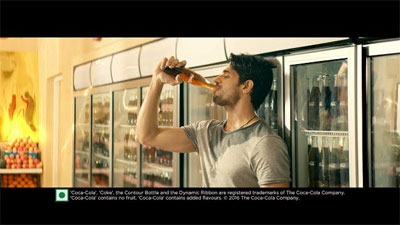
    Coca-Cola has launched the local rendition of its new global campaign in India – “Taste the Feeling”. The campaign seeks to remind the consumers of the happy and joyous moments that a chilled and effervescent Coca-Cola bottle brings to their life. The new Coca-Cola TVC launched in India features Bollywood superstar Sidharth Malhotra enjoying the feeling of sipping on Coca-Cola.

     

    After years of creating compelling stories with innovative marketing strategies, Coca-Cola has launched the ‘Taste the Feeling’ campaign as their first global campaign in seven years. For the same, the brand has united Coca-Cola, Diet Coke, and Coca-Cola Zero under the iconic Coca-Cola brand positioning in one global creative campaign. The One brand strategy positions Coca-Cola as an iconic brand that highlights the company’s commitment to choice, allowing consumers to choose whichever Coca-Cola suits their taste, lifestyle and diet.


    The TVC featuring Sidharth Malhotra emphasizes on storytelling and celebrating everyday moments. Entering a supermarket, Sidharth romances the feeling of drinking Coca-Cola which catches the attention of the female cashier. Watching Sidharth enjoying his ice cold Coca-Cola, the cashier gets lost in her thoughts and gets caught off guard when Sidharth comes in front of her. To cover up she spontaneously tells him that he is their lucky customer and has won a Coca-Cola with the condition that he has to drink it there itself. As Sidharth gulps his Coca-Cola, the cashier continues to watch him in awe.


    After the award winning “Open Happiness” campaign, the new campaign “Taste the Feeling” by Coca-Cola is the latest global campaign that hopes to capture the hearts and minds of the younger generation.


    Speaking about the campaign, Bollywood actor and Coca-Cola Brand Ambassador, Sidharth Malhotra said, “Everyone seeks refreshment for different reasons and nothing beats the delicious refreshment offered by a chilled bottle of Coca-Cola. Being the ultimate refreshing beverage, Coca-Cola has been an integral part of my growing up years and I will never forget how the simple pleasure of drinking an ice-cold Coca-Cola made so many moments more memorable. I am very excited to be a part of the new ‘Taste the Feeling’ campaign, celebrating one of the many ordinary, day to day moments made special by Coca-Cola. I am sure the consumers will enjoy the ad and get reminded of their own special moments with Coca-Cola”.


  • Mobile marketing is top driver of sales: MMA study


    By Labonita Ghosh


    Corporates, if you haven’t been paying much attention to your mobile marketing spends, here’s a compelling reason to do so. The Mobile Marketing Association (MMA), a global non-profit with more than 800 member-companies from 50 countries, conducted a recent study for the Coca-Cola in China, which is something of an eye-opener.


    The study — on Smart Mobile Cross Marketing Effectiveness (SMoX) – shows, among other things, that mobile marketing offered nearly double the RoI than TV, and was also twice as efficient in driving sales, compared to the campaign on an average. And also that if you spend about eight per cent of your total budget on mobile spends, you are likely to see that drive seven per cent of profits. Correspondingly, a 15 per cent spend would drive 16 per cent of profits.


    In short, the findings, released in Shanghai last week, confirm that marketers would significantly improve their overall campaign performance without increasing budget, by simply raising mobile spend. According to the study, the optimal spend for mobile (based on total campaign spend, and not just digital) currently hovers at 8-15 per cent. Mobile marketing is broadly defined as including advertising, apps, messaging, mCommerce and CRM on all mobile devices, including smart phones and tablets.


    The study also showed that mobile video emerged as significantly more effective compared to both TV and digital video (by around 3x). This was a greater increase than even the strong trends seen for mobile video in comparable research in the US. Moreover, mobile display drives purchase intent, while mobile social initiatives drive both purchase intent and engagement. According to SMoX, therefore, optimised mobile spend level is 15 per cent, impacting sales even further and producing a double-digit profit increase.


    “With empirical data, the SMoX study with Coca-Cola in China, demonstrates the impact of mobile on a business and its competitive opportunity in this region, similar to what we have observed in the United States—but with even better results,” said Rohit Dadwal, Managing Director of the MMA in Asia Pacific. “It is a great data set for marketers to reassess and optimise their spending with the most impactful allocations in their marketing mix, while leveraging mobile with double-digit spends. As an industry, it is time we learned the effectiveness of the channel to aid marketers with their ambitions, and kept pace with consumers to understand the power of the mobile.”


    Greg Stuart, CEO of the MMA, said: “The market has acknowledged that there is a deep chasm between consumer behavior and what brands are currently spending on mobile. But now there is real, indisputable proof on the value of mobile to a brand’s business goals.” Tom Daly, Group Director, Global Connections, at The Coca-Cola Company, added: “Based on the results for China, as well as the study we conducted in the US, we have begun to see a number of truths about mobile that provide a clear path forward, especially around marketing effectiveness. We now have the facts we needed.”


    Conducted in combination with Marketing Evolution and InsightExpress, SMoX assesses the economic value of mobile compared to traditional marketing channels and provides brand marketers empirical evidence on the impact of mobile in the marketing mix. The results from China reinforce the findings of the other US SMoX studies: That mobile is a key driver of business results across the entire purchasing funnel. Additionally, the study highlights that mobile, when executed with best practices, impacts performance even further. SMoX applies Marketing Evolution’s unique cross-media attribution modelling approach, leveraging new techniques to provide a granular read on mobile and other media.


    The results from this study were seen to be consistent with results from other, recently released studies in the US, with AT&T, Coca-Cola, MasterCard and Walmart. Additional studies are being conducted in U.S., China, UK, Turkey and Brazil.


    This first appeared in dna of brands dated August 17, 2015