Tag: big story

  • Is Delhi upstaging Mumbai in A&M?


    By Ananya Saha


    Chalo Dilli, as Ad Club drops Bombay


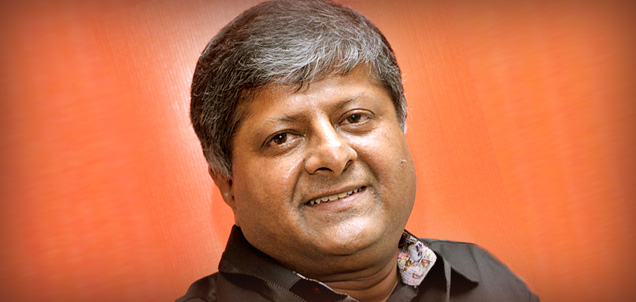
    Jaldi 5 with Shashi Sinha: “The idea is not to emerge as the only Ad Club in India”


    Anil Thakraney: Delhi ad guys less cynical than Mumbai frat


    At first it may not sound like a big deal. What’s in a name? And what’s in just the shedding of a part of the name? A lot, we think. For, in the context of the Advertising Club Bombay dropping the Bombay from the name, it’s indicative of the changing times.


    The attempt  to be more all-inclusive is a welcome sign no doubt. But as the Club’s president told MxMIndia: “Delhi is a key market for the advertising industry with big agencies being housed there and also some big clients too based there. This is definitely one of the main reasons for us bringing Delhi under our purview.”


    So is this move a firm indicator that Delhi is emerging as a more challenging player than Mumbai in Advertising and Marketing?


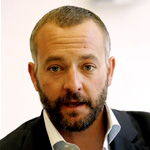
    Rahul Kishore

    According to Rahul Kishore, Senior VP – Priority Projects at Mogae Media, does not believe in this creative demarcation and would rather see Delhi (“Gurgaon actually”) and Mumbai sharing an equal pedestal.


    Mr Kishore said, “I am totally against this Delhi v/s Bombay tussle that keeps happening on and off. It should just be The Advertising Club. As I said there are agencies that are present all across the country but just because a few are headquartered in Mumbai it doesn’t give Bombay to be the leader of sorts. I don’t think that’s a true representation; I think there’s a lot more business that happens out of North India. I can tell you that in North India.”


    Satbir Singh

    Satbir Singh, Managing Partner & Chief Creative Officer: Euro RSCG India, echoes this view. He believes that Delhi has an edge over Mumbai especially when it comes to clients. He said, “The rate of growth that Delhi has had over Mumbai has been phenomenal, especially over the last four-five years. Delhi has largest spenders: whether it is auto sector, telecom or large scale FMCGs like Reckitt Benckiser, Dabur, Pepsi, Coke etc.”


    “Mumbai still scores with financial sector and the fact that large-spending media clients like GECs are based out of Mumbai. One spender that can perhaps tip scales in favour of Mumbai is Hindustan Lever since it equals the large spenders that Delhi has,” Mr Singh added.  “But that apart, the sheer number and concentration of large spenders is very heavy in Delhi and this will continue for a long time. Earlier, most of the senior people were based out of Mumbai. But increasingly we see more senior people either based out of Delhi or flying to the capital for meetings and decisions.”


    Delhi has the edge, no doubt. Mumbai, though, still has a dominant edge when it comes to creativity – in areas like advertising films etc thanks to the presence of Bollywood and the best post production facilities – but here too the gap is narrowing.


    Lloyd Mathias

    Lloyd Mathias, Director, GreenBean Ventures, Former President & CMO, Tata Teleservices is originally from Mumbai, but has worked extensively in Delhi and for a bit in recent years in Mumbai too. “I would not say dominant, but Delhi is rapidly moving to equal Mumbai in the advertising and marketing space,” he said. “In certain sectors, such as mobile phones, consumer durables and automobiles, Delhi has already pulled ahead of Mumbai. Given Mumbai’s historical dominance as India’s commercial centre it had the edge with a more professional approach to work; but the with the emergence of MNC’s over the last decade in the Gurgaon/Delhi/NCR region , the gap has narrowed down to a large extent,”  he added.


    An industry analyst with a leading consulting firm who did not wish to be named, said, “There has been a massive increase in Delhi , definitely. Delhi team is more efficient at negotiation, is the finding. The Delhi team thinks bigger. They do not approach clients as space-vendors; rather they go as concept-sellers and are able to get higher rates from advertiser.”


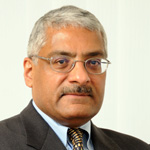
    Sathyamurthy NP

    What has possibly helped Delhi is the increasing professionalism and an improved work ethic. The industry analyst further said, “What has become a norm is that the foreigners come and set up base in Delhi. An MNC set-up brings in systems and processes of evolved advertising markets to Delhi . When you sell to those guys, you sell fancier ideas. All that gets a premium. Advertisers in Delhi are savvy, wherein Mumbai guys are more focused on bottom lines and rates. That is why we also think of servicing a client out of Delhi , for the Delhi team can present better concepts and thus, crack better deals.”


    Prathap Suthan

    Sathyamurthy NP, President & Head – DDB MudraMax reasoned that we should not be making too much of the move by the Advertising Club. “Though Mumbai will continue to be the advertising hub of India, it’s time we hear the voice of Delhi too,” he told MxMIndia, adding:  “When it comes to being professional, Delhi is as good as Mumbai.”


    The move by the Advertising Club to be more inclusive is decidedly in the right direction. But will it help the industry to keep politics aside and show more participation, only time can tell. Meanwhile, the Mumbai v/s Delhi debate is endless. And, as veteran adman Prathap Suthan told MxMIndia, “intercity rivalry is healthy, positive and must be sustained”.

    with inputs from Tuhina Anand and Johnson Napier


  • Do pre-release star appearances work?


    By Meghna Sharma


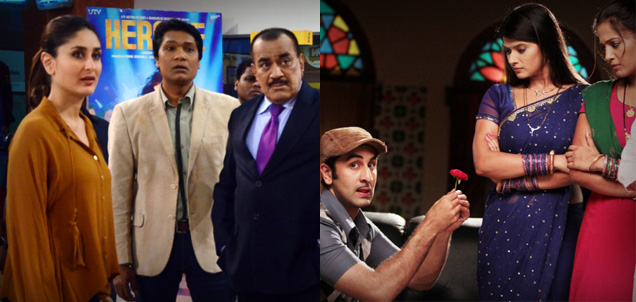
    What is common between Kareena Kapoor and Bipasha Basu? The answer is: CID. Yes, both the actors were rescued by none other than our very own team of ACP Pradyuman and his agents.


    Today, seeing actors on television is not a surprise. Most of them can be seen on the small screen as hosts or judges on reality shows. However, in the recent past one has seen them play a character or themselves in fictional shows where the plot of an episode is scripted around them. And the two actors are the latest to join the bandwagon of various other actors who have made a “special appearance” on the small screen to promote their upcoming film.


    Dinesh Rathore

    According to Dinesh Rathore, COO, Madison Media Omega, the difference between the big screen and the small screen faded away in the last decade as superstars entered the medium. “Actors making an appearance on television is a win-win situation for both. Television has vast reach so actors get to promote their films, and a channel can save money if the actor appears on their shows to promote his/her film.”


    He’s not alone, even broadcasters which are competing with each other to get the stars to their channel before others do also feel the same. Vivek Bahl, Chief Creative Director, Sony Entertainment Television says, “Big fiction shows with a dedicated & measurable viewer base is a great platform for an actor to promote his / her upcoming film with the show. And, for the show itself, one can always create buzz and sampling with the

    Vivek Bahl

    anticipation of a star appearance.”


    On the same note, Ajay Bhalwankar, ZEEL’s Content Head (Hindi GECs) feels that fiction shows are the staple diet of any General Entertainment Channel and the presence of a Bollywood celebrity is woven into the existing storyline of the fiction show, hence increasing the chances of a better recall. “As a medium TV cannot be ignored by marketers.”


    Prashaant Bhatt

    “Be it with a Jhalak Dikhhala Jaa or Madhubala, the audience for each show is varied and this is what works in favour of the movie that is promoted on the show,” explains Prashaant Bhatt, Weekday Programming Head of Colors, who believes that the trend is only going to move forward. “It is vital for any promotional activity to be present on all the mediums that helps them connect with the viewer. So, in the future, the trend could possibly be digital with the introduction of various apps etc, anywhere the audience/moviegoer is.”


    Shailesh Kapoor

    However, Shailesh Kapoor, CEO of Ormax Media feels that film star presence on fiction shows helps the films more than the channels. But the channels can use the stars in the promos and create buzz around it. It can give a viewership spike only if the star does something really interesting in the show. “In a recent study conducted by us, television emerged as the driver of both reach and appeal for film campaigns, way ahead of print and outdoor. I believe that channels should start charging film producers for such integrations, the way they charge advertisers.”


    Priti Murthy

    If both stars and broadcasters are winners here, Priti Murthy, National Director – Insights at Maxus India adds that viewers too don’t have much to lose out on. “I think even viewers win here as they get to see new faces or a new plot in their regular shows. Also, stars appearing on shows is a global phenomenon; in the west, stars appear on shows like Saturday Night Live.”


    It appears no one has anything to lose here!


  • Promising tales of tiny, tall agencies


    By Johnson Napier


    The last few weeks were rife with news of independent — or shall we say not-so-big — advertising agencies that were going all out to make their presence felt in the M&E space in India. Whether for the awards they had bagged across festivals or the largescale client wins that they had managed to pocket in their kitty, these agencies were in the news for some reason or the other. But while it may be the ‘popularity’ tag or the affiliation to a large parent company that may have done the trick for these agencies, there are others that fall shy of this honour.


    For instance, one may have faint acquaintance with an agency that goes by the name Apex Advertising or for that matter Flagship Advertising but if one were given a glimpse of the kind of clientele they have to boast – be it RBI, Taj Group of Hotels, BSNL, Pantaloon Retail, Pidilite Industries, MTV Networks etc – or even the kind of billings that they manage to pile up that ranges anywhere from Rs 5 to 50 crore, it would make for an interesting cover. And that’s precisely where the industry seems to be holding back or rather not giving these small yet powerful ad independents their due.


    This lacuna is currently being addressed by veteran print player Free Press Journal, that has come up with an interesting coffee table book titled ‘Tiny Tall Tales’. As the tagline suggests, this book plays up the initiatives of small agencies that are making it big. Said to be a slice of the coverage from The Free Press Journal’s column ‘Small Size Big Ideas’, the book will be launched at FPJ’s second roundtable conclave on 22nd September by Lynn De Souza, Chairman and CEO, Lintas Media Group.


    Abhishek Karnani

    Throwing light on the thought-process and the merit behind warranting such an effort that has been the benchmark of FPJ for some time now, Abhishek Karnani, Director, Free Press Journal said: “There are around 180 accredited ad agencies in Mumbai but we always hear and talk about the Top 15 agencies. There is life beyond them and these not so big agencies are doing great work away from the limelight. These agencies also represent a substantial business and have close affinity with the clients. We are proud of this initiative of the Free Press Journal, where we have taken time to look not at the obvious leaders but at those who are important and often overlooked by the media. This outlook builds on our worldview that there is deep value in the big and the small and it is important to study the not-so-big to learn about ground realities and to spot trends and understand markets that much better.”


    Sharing his experience, Author & producer of the book Sandeep Singh said, “Traditionally if you see, everybody just loves to talk about the top 10-15 agencies but there is a whole volume of business that comes from smaller agencies. Some of them are intentionally small because they want to be creative or whatever way you want to look at it, but great works do come across from them. This book is an attempt to cover these agencies.” Elaborating on the participation factor on behalf of the agencies, Singh said, “Though a few agencies refrained from participating citing some reason or the other, the book profiles most of them. Also, it is worth noting that the minimum billing of the agencies in this book is around Rs 5 crore while the maximum is pegged at Rs 50 crore.”


    Elaborating on the scope and scale of the initiative, Jagdish Rattanani, Business Editor, Free Press Journal who along with his team has helped in putting together the book said, “We hear a lot about the top 10 or 15 small ad agencies in India who are spoken about and praised a lot by the media but if you go beyond there are these ‘not-so-big’ advertising agencies that are still big in terms of what they manage to bring to the table. They are big in being strong and powerful enterprises and are dealing with a lot of interesting ideas. We sensed that there was a lot of energy and growth potential amongst these small agencies. Also we found that nobody ever tries to cover them and understand their perspective or see what they might need in this era of change to make the next big leap. That’s what encouraged us in taking this initiative further.”


    As for the point on finding the cause to be an apt fit with the model with which Free Press Journal itself moves forward with, Rattanani asserted by saying, “Though Free Press Journal is not among the biggest of the big, it is but the oldest Indian-owned English newspaper in Mumbai. Basis this, we said that we have a special interest and focus on trying to look at the others who are as good but are not so big and thus started the journey of deliberately trying to exclude the very big and focussing on the not-so-big,” affirmed Rattanani. Adding further he said, “For this exercise, we ended up going and visiting these agencies and even ran features over a period of two years and tried to play up their point of view and perspectives. All said and done, the larger story is of the ideas that lie just beneath the surface.”


    On whether the initiative was carried out to bring about intangible benefits for the newspaper group in terms of revenue from advertisers, Karnani thwarted the thinking by suggesting, “We are rendering this as a Corporate Social Responsibility. Our only concern is to help this segment to take a leap to the next level. We want to empower the not so big ad agencies to not only survive but also thrive and outgrow the market in these times.”


    In fact the group is looking at other avenues to take forward similar causes on behalf of the industry. Asserted Karnani: “We have already kickstarted our Knowledge Series wherein we invite experts to come and share their views with this group. We are also in talks with international ad associations wherein we plan to use their platform to host events for the not-so-big agencies. Also, we are also hosting our second exclusive conclave “The Change That Cometh” that is focused on the not-so-big advertising agencies. So there is a lot to look forward to.”


    While it is too early to predict the outcome of the book from peers from the ad industry, Singh is hopeful that the book will receive a positive approval from all concerned. He avers: “I hope the bigger agencies are happy and take note of the initiative in a positive light.”


    As for its plans of coming out with a sequel to the book, Singh said, “We would like to explore an opportunity of coming out with a sequel to this edition but it is still early days to be talking about that.” Agreeing with Singh, Rattanani said, “I can only say that the idea is rich and we can build on this idea but how the idea will further shape up only time will tell.”


  • Sony Six all set for the fight!


    By Johnson Napier


    If all had gone as planned, then Sony Six, the much-hyped sports channel from Multi Screen Media, would have been the toast of sport-loving viewers in India by now. The single biggest property that was scheduled to be relayed on the channel – the IPL, was supposed to be the booster with which the channel was supposed to be flagged off in India. But that was not to be and Six was forced to launch itself in a manner that was meek by nature.


    A few months into its journey and with cricket taking a minor backseat for the network, the channel is back in action with a big-ticketing property to boast. Ultimate Fighting Championship (UFC), the world’s premier mixed martial arts organization has partnered with Sony Six to popularise the sport in India. Owned and operated by Zuffa, LLC, headquartered in Las Vegas, Nevada, and with offices in London, England, Toronto, Canada and Beijing, China, UFC programming is broadcast in over 150 countries and territories, to nearly one billion homes worldwide and is available in 20 different languages. It is known to produce more than 30 live events annually and is the largest Pay-Per-View event provider in the world.


    While the physical sport phenomena is not new to India – made famous by WWE on Ten Sports and properties like Bellator on BIG CBS Prime – UFC seeks to change all that is associated with Mixed Martial Arts (the format on which UFC is modelled around) and get in viewers to take a liking to the sport. It is the ‘real’ fights that will attract the viewers, say the promoters, and not ‘fake’ action that gets thrown across to them.


    The partnership will kick off in India with the production of an all-Indian edition of the Ultimate Fighter, the UFC’s long-running reality TV show where 16 of the most talented unsigned martial artists compete for a contract with the UFC. The schedule for the same will kick off around Diwali. The actual show will be telecast in India in 2013.


    On the sidelines of the launch, MxMIndia’s Johnson Napier got the chieftains of Multi Screen Media, CEO Man Jit Singh and COO NP Singh and also UFC Chairman and CEO Lorenzo Fertitta, to dwell on the gameplan for UFC in India and also what to expect from the channel Sony Six in the immediate future.


    We are aiming at being the No 2 sport in India after cricket: Lorenzo


    Lorenzzo Ferttita

    What would be your immediate operational plans for UFC in India?

    The immediate focus would be to work with Sony Six and ensure that the sport is on the right track in terms of attaining a foothold in India. In October we would be launching a massive ad campaign around UFC that would include mediums like print, radio, outdoor etc. We would also be looking at social media in a big way. A lot of our marketing activity would be focussed online on the youth in the 18-34 age bracket where the attempt would be to make them more aware of UFC and get them to be a part of our database. These would be largely centred on large metropolitan cities like Delhi, Mumbai, etc.


    The only other popular sport related to what UFC attempts to do in India is WWE. What are your plans to combat the popularity of WWE and get viewers accustomed to your sport?

    WWE is very different from UFC. The thing about WWE is that it is fake while UFC is real. While WWE has a large fan base but once we enter the market we expect our TG to migrate from there and become regular viewers of UFC. We follow what WWE does and we know that they have a large fan base here but we hope to attain a large market share with UFC.


    Sony Six has assured that UFC will draw in more viewership numbers compared to a popular market like the US. What is your assessment of the ratings that you wish to draw from India?

    I really cannot say much on that but we are relying on Sony’s expertise in the market to get us the viewership numbers. Obviously we know that we are going to be very successful here and we know that fighting dominates the sport scene and we are aiming at being the No 2 sport in India after cricket. We feel it is going to be a very successful business for us as it is very big in terms of the market.


    Did you scan the market for other potential buyers for your property? What was the motive behind shortlisting Sony Six for UFC?

    We spoke to every other sporting network in India and we shortlisted Sony Six because firstly, we share a pretty good relationship with Manjit Singh and we also like the fact that they broadcast the IPL, which has a huge following in India. So we liked having that connection. UFC is an important event for us. We didn’t want it to be on a general entertainment channel because the way our marketing and positioning is that we are a sport; we didn’t want to be on any other channel.


    Where do you plan to head next in your bid to expand in the Asia Pacific market?

    From an Asia point of view, our next stop is going to be Macau in greater China. Beyond that the focus is going to be in taking the live event to other major capitals like Shanghai, Taipei, Seoul, Kuala Lumpur and Singapore. So these are our next priority markets for Asia. We would be taking these events to these markets by 2013.


    Hope to see Sony Six among the top-3 players in India soon: Man Jit singh


    Man Jit singh

    Why the decision to invest behind a physical sport that is yet to find a foothold in this country?

    Our strategy is to target young India. What we have gathered is that young India is interested in new fast-pace sports and UFC is the epitome of a fast-pace sport. We have great expectations that over time we will be able to build the UFC brand and also build the audience for UFC. One has to remember that it is the fastest growing sport in the world today. In Brazil, where the sport was launched some time ago it has become a hugely successful show now. According to me, Brazil and India are similar by nature and we feel we will be able to attain a similar success in India too.


    What is the USP that UFC will offer its users compared to what is already being aired by properties like WWE, etc?

    It’s too premature to comment but you could take a look at the models of other fight sports that are around like WWE – it is the second-most watched sport in India after cricket. We expect to much exceed something like that because it is a real sport; it’s about real fight, there’s no pretence in what you will see the contestants doing. That’s what I feel is the core differentiator for us.


    A large percentage of the TG that you plan to target is transfixed around WWE. How do you plan to convert them to like your product?

    The TG for our show is youth that fall under the 18-34 year-old bracket. I feel once they get older they will migrate from make-belief to the real thing. It would be a natural progression that we hope to see happening in this space. We are already of the opinion that we have a natural base of fans that will migrate to us.


    Would it be okay if children below 14 take a liking to your sport? There is a tendency for them to go overboard in terms of aping stunts, etc?

    I do not see any issue with children below 14 years coming to our channel to watch the show. I have been to events where they have children even in the audience who are avid fans of the sport. Remember that it is a sport; it’s like you asking if children like to watch boxing, if they like to then why not?


    Did you engage in any research exercise before you finalised on bringing in a fighting sport in India?

    We had carried out research studies in the market last year where the focus was on finding out the interest levels among viewers on fight sports and the pride that our people have on the sportspersons in India. We can tell that wrestling is going to be a big thing in India because the athletes are performing well on the international platform. Also, Indians like seeing Indians do well internationally. That we feel was a natural fit for us. Our real expectations are that UFC be a very successful sport in India.


    Have you managed to arouse the curiosity levels of marketers for this property?

    We haven’t yet started out on advertising, sponsorships and stuff like that. We are waiting till around Diwali time to get this sport established, to get the channel fully established on all platforms and then we will go and talk to the advertisers. It will be a premium priced product though. It will be available on all platforms by October.


    What are the other big-ticket properties to expect from Sony Six?

    We are looking at properties like basketball, soccer, fight sports of all kinds, tennis, cycling etc.


    What is the gameplan you have for Sony Six in the coming one year?

    We hope to see Sony Six be among the top 3 sports channels in the country.


    Sony Six will become the home for new sports in India: NP Singh


    NP Singh

    What promise does an event like UFC hold for Sony Six in India?

    Traditionally, fight sports have always been popular in India. Through UFC the attempt is to get real fight sport made available on Indian television, which the youth too will be able to connect with. It would a good example for the youth to look up to a real sport like UFC and inspire them to face real life challenges. UFC holds a lot of promise for Sony Six and for the youth of the country.


    What’s the next step for UFC in India?

    The journey has just begun. We would be showcasing a lot of the UFC Talent hunt everyday on Sony Six. Getting the local talent to come and register for the ultimate fight will start soon.


    The buzz is that you plan to tap in the viewership from IPL and convert them to watch UFC. Do you think the attempt will fetch you high viewership for UFC?

    UFC in the US attracts a viewership of 20 million whereas for the last season of IPL the number was 163 million. So that’s the size that we are talking about. We hope to better the numbers that a big market like the US throws up for UFC. We have just launched our channel a few months ago but it is already being beamed across 30 million homes. Also, we have still not completed our distribution but by the time we are done it will be in double those homes. One should understand that our country has a high percentage of youth and of late they have started taking a liking to other sports like football, F1 etc. We believe that Sony Six will become the home for new sports in India. I am much more confident that we will manage to engage the youth much more than any other sports channel in India.


    Does India need a sport like UFC in the first place?

    Through UFC, we hope to establish Mixed Martial Arts (MMA) in the Indian market which I am sure will benefit everyone concerned.


    Sony Six was launched a few months ago but is yet to see traction in terms of viewers and properties. Your comments?

    We are first trying to establish the channel and within that the sport has to be established. Our efforts are on. UFC is one big step in that direction.


    The UFC deal seems to be heavy on investment. Would you be going all out to promote the event in India?

    As a network we have never stopped short of making investments in every new initiative that we take. Likewise would be the case with Sony Six and with UFC. Anything that we as a network do we do it big. UFC will too be in the big league for us. For one, we are positioning ourselves differently by calling ourselves a sports entertainment channel. Entertainment is in our DNA so everything and anything that we do will be garnished with a lot of entertainment.


  • Verghese Kurien: Great vision, Dream client


    By Bharat Dabholkar


    No better client, no better professional
    By Anil KapoorChairman Emeritus, DraftFCB+Ulka


    Dr Kurien was one of the greatest human beings I’ve worked with. You couldn’t find a better client, a better professional. When we were being briefed for what became Amul: The Taste of India, he said “Amul is an iconic Indian brand. Rather than doing advertising on the products, let’s do this and the rest will follow.”


    Based on the brief, we took the script and music to him and it was approved immediately. He was a proud Indian who always wanted original Indian advertising. After that, even as they launched a number of other products they never had to do separate advertising.


    It was always Amul: The Taste of India. Dr Kurien used to say, “If I have a good product and good advertising, it will sell by itself.”


    That’s why Amul is such an iconic brand. In the food industry where brands are constantly coming up with schemes, it has never relied on any schemes to dealers or consumers.


    Everything moved; they’ve never dumped. He gave the agency a total free hand and never changed so much as a comma or full stop in the copy.


    Once when we were presenting a campaign, a gentleman turned around and started to make suggestions. This was not Dr Kurien’s style at all. ‘


    He turned around and told the man, “If you call an architect and then make changes, if the roof falls, would you blame the architect or yourself?”


    (As told to Ravi Balakrishnan)


    He gave each man his own space
    By Rahul daCunhaCEO, daCunha Communications


    My father Sylvester daCunha created the Amul butter campaign in the 1960s. He took it to Dr Kurien and explained its unique qualities: the creation of the girl, the need to run it on outdoor hoardings, the topical nature of the campaign. It needed a certain frequency to be created and therefore the trust that they could go ahead without the client approval.


    These were the incredible trust guidelines that Dr Kurien set down — a great example of a client saying ‘You are good at what you do so just go ahead.’ He backed the campaign in spite of it not having any of the clichés of food product advertising since what he created at Amul was off the beaten track.


    My interactions with him were more as a child and not so much as a client. By the time I came on board, he’d pretty much delegated the campaign to his team. But the core team has not changed and in many ways, that’s what makes the Amul model so unique. The current marketing team and managing director have worked with Dr Kurien and so it’s just a question of carrying the campaign on. In their favour, many clients change campaigns only when they don’t get good feedback or the sales have been dropping; neither of which has happened with Amul.


    Dr Kurien did support us though: there was one hoarding, where the person it was about got quite upset; I won’t get into who the person is. I was quite stressed. This person thought it would be clever to sue Dr Kurien. Which was the worst thing to do since he had dealt with a lot more than one man suing him.


    He was quite happy with our work; happy that a campaign he’d given a green signal to back in the 1960s could continue. I interviewed him for the book Amul’s India and he says a very interesting thing: “I realise how wise a decision it was to give complete freedom to the ad agency to do their job in a professional way. I never interfered with their work and the result is before you. They have done an exemplary job.”


    When you see a man like this and then see the levels of corruption that exist today you wonder, where are our leaders? Where are the visionaries of today? Here was a man who built a brand and a movement that’s been reproduced in so many unions. We use words like ‘a great man’ very loosely these days; he actually was one.


    (As told to Ravi Balakrishnan)


    Source:The Economic Times

    Copyright © 2012, Bennett, Coleman & Co. Ltd. All Rights Reserved


    I have worked for almost 15 years on Amul and I have interacted professionally with Verghese Kurien. He was a dream client to work with and simply an amazing person. At the outset, he had set the premise of our working relationship, where he clearly said he didn’t want to see what we were doing as he didn’t want to interfere in our work. He said he didn’t know advertising and that is the reason he had got us, so he didn’t want to change or rewrite anything that we wrote. This was such a change from clients who would always want to give their inputs even if they didn’t know anything about the way advertising works.


    I have always maintained that the success of Amul advertising lies in the hand of Mr Kurien and his approach. His immense trust in the agency and their creative potential is so gratifying, and that was what made us push to do good work. If the onus lies fully on you to create something and you get total freedom to create that brand I think it only leads to more responsibility and makes one conscious of the efforts one is making, because it had better be brilliant and match the confidence that the client has shown.


    I have visited him a few times in Anand and what he has created is a dream out of nowhere. His vision is unmatched, whether it is about creating a world class campus at Anand or in his vision of creating milk powder from buffalo milk instead of cow which was the norm. He rewrote rules and was an innovative thinker. He had a fabulous lot of lieutenants who supported him and whom he supported in these innovations. Like when we launched Nutramul he tasted it and said make chocolate out of it too, so he was inspirational too.


    For his advertising agencies, he knew that he had chosen the right people and trusted them immensely. The confidence he showed in a copywriter tells much about his personality.


    Another thing I shall always remember about him was that he was always very punctual and never late for meetings. If he had given a time to his agency he would never make them wait unlike many who deliberately would make an agency wait. He respected the agency and not just see them as supplier of creative product. This was a rare personality.


    He was an honest entrepreneur. I remember once we were to launch Amul milk shake and we came up with our research that said chocolate and strawberry were the most popular flavours. He immediately said that chocolate milk shake was possible because of the chocolate powder Nutramul but strawberry he said was a seasonal product and he refused to put essence as it would be cheating consumers. He put his foot down on the strawberry flavor instead opted for elaichi which was more readily available.


    Also I remember when Amul launched its tetra pack he hated the design. Once when we went to meet him, he asked, are you still using the horrible pack? But he never interfered and asked us to redesign having known that even if he didn’t like it the pack worked in the market.

    I feel fortunate to have met someone like Mr Kurien and to have had a client like him.


    – As told to Tuhina Anand
    Image credit: amul.com


  • We need an Indian voice in our ads: Ram Madhvani


    By Anil Thakraney


    I did a few ad films with Ram Madhvani nearly 18 years ago. Both of us were very young at the time, quite fresh into the ad business. But there was one difference: While I was floundering around, trying to find my way, Ram was already on top of his game. He was confident, committed and meticulous in his work.


    As the years rolled by, Ram has cultivated a powerful name for himself in the Indian ad world. He is, for many ad agencies, the go-to filmmaker. But it’s not been a linear journey. The director has had to keep re-inventing himself to stay relevant in a market that has seen many rapid changes. And this is the key reason behind his continuing success; Ram has thrived even as many big names in the ad filmmaking business fell by the wayside. The director’s dazzling portfolio contains many memorable commercials. Happydent (which won two Cannes Lions), LMN, Hippo, Airtel, Coke, Bisleri and Adidas, to name just a few.


    Over a long session, we discuss his craft, his sensibility and his views on advertising and filmmaking. This is not an interview; it is a solid training session for all those associated with the ad world. Not just on filmmaking… on life itself.


    Director Ram’s Mantra
    1. The director’s job is to have a vision, and then to pass it on to the team. To the art department, the camera department, the actors, etc2. Intellectual rigour without intellectual rigour mortis.3. Have an opinion and not a judgment.4. Don’t organize shoots, host them.

    5. Meditate daily to connect with your own self.

    6. Try to see how cinema or advertising can be the vehicle to self knowledge.

    7. Have a conscience. Can you face yourself, look yourself in the eye, on the work you do?

    8. ‘If you don’t know where you are going, all roads will take you there.’ (From the Wizard of Oz.)

    Q: How did a nice Gujju boy become an ad filmmaker? Didn’t want to pursue the family business?

    I was very clear from the age of 16 that I wanted to be a filmmaker. Actually, there’s an interesting story. My school friend tells me it happened because of the smell of burning film. We used to watch all kinds of movies when I was at school in Panchgani, this used to be on Saturdays in the assembly hall. There was this old projector, and the film would tear and burn. Maybe that’s how it started! Films, of course, happened much later, after college and theatre. My father expired early, and I had to earn a living. I sold carpets, I sold diamonds, I sold milk, in fact, I even worked as a peon for a while. (Laughs.) But in the evenings I would either do theatre or catch up with international cinema. Later on I did a course at NYU, when I worked for a while with my elder brother who was in America. I came back and joined Equinox. And two years later, Sumantra (Ghosal) offered me a partnership.


    Q: But why ad films?

    Because the family felt that rather than getting into the big bad world of feature films, it’s better to get into the big ad world.


    Q: Which was your first ad film as director?

    Baygon Spray – ‘No entry for pests’. I still have a copy of the cheque with me. (Smiles.)


    Q: Is Sumantra still active? Or are you the sole owner of Equinox?

    No, he’s retired, I am now the sole owner. Sumantra is of course the Chairman and he’s on the board of directors. He’s my guru; I consult him on many things. He is more than an elder brother… in fact, Sumantra gave away my wife.

     

    “I have to re-invent, I have to be on top of the game. I would hate it if people said, ‘Ram used to make great films at one time’”

    Q: It’s been over two decades. What keeps you going?

    Fear. That I will become a has-been. I have to re-invent, I have to be on top of the game. I would hate it if people said, ‘Ram used to make great films at one time’.


    Q: Which ad film turned things around for you? You did a number of mediocre ads when you started out, and I recall I was one of those guilty of palming off rubbish storyboards onto you.

    (Laughs.) You know, sometimes you take on work in order to convert it. In the hope that because people saw the hard work you put in the film, tomorrow you will be considered for a better film. At the same time, when you are doing that work, you do think it will be of some import.


    Q: I always thought you made such films only for money.

    To be honest, I haven’t been a profitable director for this company till as recently as a few years ago. I would not be living today in a 2BHK house in Prabhadevi if I had made lots of money. In fact, if I had made a lot of money, perhaps I wouldn’t be in the game today. People know if you are out there to do your work, or to make money. Also, very often a friend calls up and says, ‘This is how much I have, will you do it?’ There is no option but to say yes, and then try and figure how to make it work. Because if I say no, they’ll go to the next person and forget me! (Laughs.) I was reading somewhere that the Sistine Chapel was the world’s biggest hoarding for Christianity. Who commissioned Michelangelo? The Pope did it. And when you look at it, it was meant to advertise a certain thing. So if Michelangelo can be commissioned, why can’t I be? (Laughs.)


    “From last year I have started doing theatre workshops for every film, I bring all the actors together, I do familiarization and touchy-feely exercises.”

    Q: Still, which was the first film that made you proud?

    I had done a lot of good work for a long time. Tata Steel, Thums Up, Dunlop Spectrawide, etc. But I wasn’t considered an A-Lister. And I was very upset about this. I thought maybe I am not a pedigree top dog. So I went for a week to my friend’s farm in Kodaikanal, and I sat down and wrote what I needed to do to at least become a footnote in the history of advertising film producers and directors. I decided the first thing to do is to acknowledge that you are a mongrel. Two, look at what’s your voice, and what is everyone else’s voice. And having done that, see where you want to go. Then I decided I will only do films with a visual language. Because, at that time, I wasn’t too respectful of the Indian tradition of acting. Which was about ‘to show’ and not ‘to be’. A number of my friends suffered because I took their scripts and converted them into visual language films, and I screwed up a lot. But three or four films got talked about. One of them was Adidas with Sachin Tendulkar. And then for five years I followed the visual language route, and it culminated with Happydent. And then I realized that people are now expecting me to do a certain kind of work. So last year I decided to become a humanist, I re-invented again! You must have seen that with Airtel’s ‘Har Ek Friend’. My mission now is to try and get truth into acting. On how do I make the audiences believe that these actors existed before ‘Action’ and after ‘Cut’. For e.g., in the Airtel ‘Classroom’ ad, those kids in the classroom have a life before and after the ad. From last year I have started doing theatre workshops for every film, I bring all the actors together, I do familiarization and touchy-feely exercises.


    Q: Is there one aspect of filmmaking you enjoy the most?

    I don’t like shootings. I have been trying very hard to make the shooting space like my home. So I am figuring out how to do housekeeping. When I go to a studio floor, my production team has to show me a map on where things will be kept. I also do human traffic policing. When I walk from my video assist to my actor, sometimes I feel I have to wear a rugby helmet just to push people out of the way. I have a very polite person stationed at the shoot, whose job is to ensure people stand where they are supposed to stand. I think I am 25% there in terms of making it my home environment. I don’t want to organize a shoot, I want to host it.


    Q: What is the sensibility you bring to your ad films?

    What I like to be is an experimental filmmaker, one who’s precocious and is looking upon, with curious wonder, at this art and this craft. And practicing it in a non-judgmental manner. I am here to play with clay. Currently, as I told you, I like to do human work. Now when you look at a film, you won’t be able to say, ‘That’s definitely Ram.’ Right now, I don’t know what my voice is, but I know what I have lost. I think I have lost a bit of the experimental nature, I have become too popular. (Laughs.) I actually want the surprise factor. I want people to say, “Haila, he did that?”


    Q: You made the Tata Docomo ‘maid’ film, where the bai was seen stealing a mobile phone. It was criticized for promoting a stereotype. Regret the film?

    No, I don’t. These things shouldn’t be taken so seriously, there was no such intention. It was not a judgment on all maids, it was about this one character in the film. It did not even occur to any of in the team that we are stereotyping someone. But I must tell you I don’t do fairness creams. There no logical reason for this, it’s just a stupid hang-up. I don’t want to tell people that if you are white, you will become this or that.


    Q: How do you keep yourself refreshed and relevant in the changing milieu?

    I have the greatest collection of books on films. I have also been a voracious reader. But in the last few years, I have stopped reading. Every book I read entertained and enriched me in that moment, but it hasn’t enriched me in the long term. Apart from a few books, like the Bhagwad Gita and Patanjali’s Yoga Sutras. And these are the kind of books I am now reading. I have become very sceptical about Western philosophy, because the epitome of that philosophy is: ‘I think therefore I am’. The epitome of Eastern philosophy is: ‘Don’t think’. The whole purpose of life is to find peace rather than the buzz in our heads. Western society wants us to have more buzz. Eastern philosophy told us 5,000 years ago that the mind is not where you reside, you reside in your heart. The greatest distance I have traveled in the last twenty years is between the mind and the heart. From the intellectual side, I have moved to the emotional side.


    Q: Do awards meaning anything to you?

    Yes, they do. Because I am living in a world where they do, people do judge you for that. I have won two Cannes awards, and it has helped. At the same time, I have no creative envy, and that’s happened because of Sumantra. There was an indoctrination of creative generosity that happened at a young age. Whenever I see a great ad film done by anybody, I send out a congratulatory SMS. And that generosity gives me greater joy that what envy would have given me.


    Q: Creative directors you most enjoy working with.

    Prasoon Joshi. He’s got a poet’s mind, and he’s also a true intellectual. And Aggie (Agnello Dias). He’s very rooted. I would also include Raj Kurup and Ravi Deshpande.
     

    “I am finding that nobody in Indian advertising is doing pure emotional work. Kal Bhi Aaj Bhi Kal Bhi and Hamara Bajaj had soul, they made you cry, and that is something we have lost.”

    Q: Is there something that disappoints you about ad agencies in India?

    I think we need more of the Indian voice in the ads. Right now what’s happening is the universal joke. If there is one nation that can teach the world about heart and emotion, it’s us. The reason Bollywood works is because they are purely in the emotional territory. I am finding that nobody in Indian advertising is doing pure emotional work. Make me cry, I am sick and tired of being made to laugh. Thailand has a voice, so do South America and England. Kal Bhi Aaj Bhi Kal Bhi and Hamara Bajaj had soul, they made you cry, and that is something we have lost.


    Q: Anything else?

    There is too much internecine warfare amongst the ad agencies. Everybody is out to get each other. I don’t know why that is, it’s perhaps the very nature of competition. Maybe it was different when Mr Subhas Ghosal and Mr Gerson Da Cunha were around, maybe there was a certain camaraderie then. Also, there isn’t enough of passing on of knowledge. So if I want to learn, there is no trade journal. A lot of it is I-Me-Myself.


    “There is too much internecine warfare amongst the ad agencies. Everybody is out to get each other.”

    Q: I watched your feature film, Let’s Talk. It was very well received and yet you didn’t make another film.

    I was supposed to direct a big budget film with Vidhu Vinod Chopra producing it. It was a fantasy film called Talisman. But I wasn’t happy with the script. I have been approached by many people, but I think they are approaching me for my craft. And I believe cinema should have something to say. Now, the things I want to say, I am not getting the money to say them. And what they want me to say, I don’t feel like saying it. Right now I am in a situation where the universe has not conspired and grace has not descended. (Laughs.)


    Q: Which genre of cinema excites you?

    Three of them. Love and infidelity. Food. And spirituality.


    Q: Er, why does infidelity excite? Worried about it?

    As a warning! (Laughs loudly.) In this business, you do get close to people. And you have to tell yourself, ‘Hey, hang on!’. I am extremely happily married for 24 years, and I have no such desires. But I get completely amazed with other people when they go through it, because it’s so much heartache and suffering. Why don’t they just do their work yaar? (Laughs.)

     

  • The media planner has become a zombie: Shashi Sinha


    Shashi Sinha has done a lifetime in the business of advertising and media. It’s been an interesting journey for an engineer who went from selling booze to crunching complicated numbers. The CEO of Lodestar UM shares his views on many important issues, including media research, the demise of the full service agency, key challenges facing media buyers in today’s market and how he managed to restore some credibility in the creative awards. The 54-year-old, who’s usually soft-spoken and politically correct, candidly speaks his mind on this occasion. Media buyers and creative directors must pay close attention. He makes some very valid points.


    By Anil Thakraney


    You work for two companies?

    I work for the Draft FCB group where I handle Lodestar. And recently I have taken charge of a creative agency called Interface. But my primary responsibility is Lodestar.


    Whom do you report to?

    I have dual reporting. I report to the Draft FCB Global CEO, Laurence Boschetto. On the Universal McCann side, I report to a gentleman called Jim Hytner who’s based in London.


    Dual reporting is always a tricky thing…

    It is tricky. Since they are sister companies you have to keep both masters happy. One of my strengths is getting along with people and ensuring that their objectives are met. I have been doing this for five years now. As long as the combined operation is successful, things are okay.


    Cut to the past. What attracted you to advertising, when you were a sales manager with the UB group?

    I actually came into advertising for the wrong reasons. I grew reasonably fast in the UB group at a young age and I was in sales there. But I wanted to migrate to marketing and that would have been an effort. Then a friend said to me I should work in advertising as I would get to work on many brands at one shot. And so I joined the ad world in 1986 and stayed on.


    And you started out as an account planner in Ulka. How did media happen?

    In those days planning was an unknown concept. Bal Mundkur used to run the agency at the time, and he thought planning was an airy fairy function, that it had lost steam. He asked me to do some ‘real work’. So I started doing odd jobs like running the financial advertising cell, selling sponsored prorgammes, etc. Later I shifted to client servicing. Along the way my interest in media grew. When the FCB guys decided to make India the regional hub, Anil Kapoor said the time had come for me to fully move to the media function.


    Share an interesting memory of Bal Mundkur.

    He had balls. Today our revenues and profits are huge and yet I would not take a decision which Bal took in the late eighties. The servicing team handling a large multinational client was very unhappy, they said they were being treated like shit. Bal wrote a six-page hand-written letter to the client explaining why the agency would like to part ways with them. When he told me about it, I was horrified. I asked him to instead change the team on the account. But Bal said, “No, it is a matter of pride.” (After some prodding Shashi reveals the name of the client. It was Glaxo.)


    You are involved in many activities, you run the GoaFest awards, now you are heading the Ad Club as well.  You have excess time on hand?

    (Laughs.) I have enjoyed it for the last three years but it’s getting to me now. I believe when you take something on you must give it your best. I took on GoaFest last year because it was in a mess. So one had to get some credibility back, I had a point to prove.


    I guess next year you would not want to do it.

    I will definitely not run the awards next year.


    Why has the Bombay Ad Club gone dead in the last few years? I recall they used to hold many events in the past.

    You are right, it has ended up becoming an awards-only body. The regular interactions have reduced. The agenda for the future is to make it broad-based. The Delhi market has become very big and it’s a starved market. So we can collaborate and do things. As soon as GoaFest is over you will see a lot of action happening in the Ad Club.


    Do you miss the days of the full service ad agency?

    I do. In fact, I’ll let you in on a secret. I want to go back to the integration system with Interface, and the response I have got so far is very good. I genuinely believe that full service is the final solution. The best ideas come when you are sitting around the table.


    Shashi, after all these years of happily running a media buying agency you are suddenly talking of integration.

    One has been playing to a role. One is building the media agency, building one’s clients. But the best quality works happens in a full service agency.


    And the media buying market has become like a sabzi mandi. How much fun can that be for someone who comes from the old school?

    This is the unfortunate downside of globalization, global clients and global processes. Truth is that internationally advertising is not a hot profession any more, it comes way down the totem pole. Though in India it still has a pedigree, there’s some respect left. Ten years later it may not be there.


    One super media innovation you are most proud of having effected.

    It’s always teamwork so it’s embarrassing to say I did it. We have enabled many, but the one I am most proud of was for Nerolac Paints about five years ago. We took up a Mumbai local and deposited the shades onto the train. Nerolac deposited their paint on the outside of the train and made a shade card out of it. It was a wonderful idea.


    How many years do you give the print medium in this country?

    I can’t say about Bombay, Delhi and Bangalore, but as a country, print will be here for a very long time. The smaller towns are under-leveraged. Secondly, even if there’s internet access, there’s no power supply in these places. So how much can one use the computer, how much can one read on the mobile? If the time spent in Bombay on a newspaper is 15 minutes, for a town in UP it would be forty minutes. The entire family reads it.


    Key challenges the buyer faces in a highly fragmented media market.

    Everyone chases the rate game and how to buy it cheap. To me that’s stupid. For most of the organized media there are metrics in place to measure the media efficiencies. So in media terms how many consumers we’ve reached is all bull. The big challenge is to find whether that’s working for my brand or not. That, no one is able to answer.


    That’s the media planner’s job. And the industry has killed the planner.

    Correct. The problem is that the media business has become all about volumes, the business has become transactional. The planner today has become a zombie, a computer programmer.


    How can the industry improve media research in this nation? There are too many question marks on television audience measurement and print readership studies.

    Someone has to put money on the table, it’s as simple as that. The solutions are all known, I know very bright and talented people in research, what needs to be fixed is known. The problem is: No one is wiling to invest. Today, if television measurement costs Rs 20 crores, what if Rs 100 crores was spent on it? Or, for readership surveys, which cost Rs 4 cores today, what will happen if they had Rs 15 crores? So it’s nothing but lack of funds. Neither the newspapers nor the media agencies nor the clients want to put down that kind of money. And that’s the only problem.


    GoaFest will be a sub-continental event this year?

    This being a tough year, we’ll have to see how to bring Pakistan and Bangladesh in. We have to see how many of them will come, it’s early days yet so I don’t know the answers. We are also trying to get the clients in.


    On the awards, how did you lick the problems of self voting and media leaks?

    On the problem of self-voting, it was very simple, it didn’t need a very bright mind. We stopped the practice of raising hands during the judging, and they had to vote on a piece of paper. So if a judge voted for his own agency’s work, we would block that score.


    You must be very disappointed with the creative directors who were indulging in this.

    Yes, 110 percent. In the Effies, the majority of the judges are the clients. And they are not as desperate to win as the creative directors. Which is why the creative directors take short cuts. And as long as you allow short cuts to happen, people will get even more emboldened. As far as the issue of the leaks goes, we solved it from the media end, because it’s very difficult to nab the person who was doing it. I reached out to various people in the media and got a commitment from their senior leadership that they won’t do it. Also, the switch to secret voting format helped.


    And yet, Lowe refuses to take part. Which means you still haven’t been able to crack the core credibility issues.

    Balki has taken a position and his problems are beyond the purview of someone running the awards. I am just a process coordinator. If he says he does not like his peers judging his work, that he doesn’t respect them, I can’t do anything about it. I can only clean up the processes. But forget Balki, there are other people who have their own agendas for not entering the awards, they fire over the awards committee’s shoulders. Privately they’d say to me they don’t have a good enough body of work so they won’t take part. But their public posture would be very different.


    Can’t you change the composition of the jury? Does it have to consist of creative directors?

    I would definitely like to bring the clients on the jury. Perhaps 50 percent of the panel. But I have been told by creative directors that ‘these are our awards’. You must understand that one is running an industry association and there will be many voices. And so it’s like a democracy; I may have a point of view but there are nine other people voting.


    One rival media buying agency head you admire.

    Jasmin Sohrabji (Managing Director, OMD India). She is far younger than I am but I respect her for building something from the start. She’s built the company from scratch in the last five years, and she’s done a terrific job.


    What are the future goals you’ve set for yourself?

    I think there’s a huge opportunity in the content space. And one would like to do something that’s related to advertising. It could be digital or television content. We have taken some baby steps in that direction but haven’t been able to ignite it. In fact, I have told our global parents they should offer quasi-entrepreneurial opportunities to the team members. In the sense that people within the company are given pilot projects to run, in which they have some stake.


    One big life regret.

    It’s not a regret but sometimes I wonder if after completing my IIT I made the right decision to stay on in India. I had the opportunity to get a scholarship to do my MBA abroad, and I could have stayed on there.


    Why? Don’t like working in India?

    Nothing like that. But the scale of operations abroad is dramatically different. The quality of life is good out here, but one is a big fish in a small pond.


    Click here to view all Goafest 2012 stories


  • Very challenging times for radio: Rana Barua


    By Robin Thomas


    Rana Barua is a veteran media professional. He is Chief Operating Officer (COO) at Red FM. Prior to joining Red FM, he was the EVP – Programming & Marketing at Radio City. Before he moved over to radio, he was VP and Head – Mumbai at Bates. And earlier:

    Client Services Director at Rediffusion DY&R, Account Director at McCann, Senior Account Exec at Ogilvy & Mather and Account Exec at JWT. He’s been through it all.

    In conversation with MxMIndia.com, Mr Barua speaks about FM phase III, and how radio can emerge stronger from the ongoing slowdown.


    Q: How did your transition from advertising to radio happen?

    Advertising was getting a bit stagnant, the market in media was opening up, television had opened up in a big way at that time, newer media were on the anvil, movie marketing was also opening up, radio was also growing at that point in time (ie about six years ago). I have always been very keen to move into a domain which is more or less a specialized medium. Since radio was also into huge expansion mode with phase II at that time, it made more sense to move into radio rather than any other medium.


    Q: And the advertising experience came in handy…

    Oh yes! I think it comes in extremely handy if you come in from classical advertising or communication which is more specialized. Since I moved as Head, Marketing, it made a lot of sense because I worked with a lot of brands, and had the entire expertise of knowing clients, advertising, communication skills, media and creative agencies. Thus the entire gamut came in handy which helped me settle in easily. So, the transition was good, it was just that the scope was very different.


    Q: Can you throw some light on the overall importance of phase III for FM radio?

    Phase III is extremely, extremely important for radio growth. This is probably going to be very exciting, at the same time a really challenging time for the industry because radio is multidimensional. There is huge expansion, multi frequency will be allowed and news will be available but not in its best form as it will be sourced from All India Radio (AIR). FDI gets raised from 20 percent to 26 percent. I’ve always said it should have been higher because that would have allowed more international players or private investors/ equity holders to look at it in a more serious way. Fourthly, networking will be allowed, which means one will be allowed to run the FM station sitting out of a main hub; as a result the cost may come down. Therefore if you look at it on the whole, these are definitely exciting times and we will probably know how all of us shape up in the next two years. There are going to be many challenges and a great number of opportunities for everybody in the radio medium.


    Q: And this will help increase the ad pie…

    It should! The only contrary point is that you may have new FM players entering, but the ad pie will grow because of different genres coming in, as a result new clients may also come in who would have not necessarily advertised on radio. And since costs will also come down, you will find a lot of innovative programming happening in radio. Nevertheless, these are still early days; the overall scenario looks very positive, but the challenge is, what will be the benchmark for research? There are also other challenges like the music royalty issue, the entire migration process from phase II to phase III, the e-auction as bidding process etc.


    Q: Do you view e-auctions favourably?

    We are pretty okay with e-auction, and from what I have understood from a lot of people, it is a much cleaner exercise.


    Q: Are there any setbacks…?

    Everyone will have some issues which are different from each other. The common factor however is the music royalty issue which is still unresolved. We are still a little unclear about the multiple licensing because if the e-auction bid goes into some preposterous amount it will naturally lead to some kind of setback for the overall industry, so we are hoping that this does not happen. News could have been better if it had been a bit more independent and I am sure we would have invested in the entire medium/department. Nevertheless if you see the overall picture, especially the way radio has been growing over the last three or four years, this gives you an impetus. Today if you look at the global economic scenario you just can’t predict any more but, yes it is a movement forward, with exciting times, greater challenges. Yes, certain things could have been better or more favourable for us, but we will go step by step.


    Q: How is Red FM gearing up for FM phase III?

    We are still weighing the pros and cons. Yes, we will be seriously involved in Phase III. We are clear about being present in most of the markets which will have some kind of ROI but we will weigh the pros and cons, we will see the costs, we will be extremely cautious about the approach because breaking even in radio is not the easiest of forms as it will all depend on the return on investment (ROI), the advertising revenues etc. If you ask me whether we are serious about phase III, then yes we are definitely looking at it in a very serious way.


    Q: Any specific cities that you are looking at?

    No, we are not looking at certain cities, but we are looking at towns… say where we are not available, which are important for advertisers. We are looking at these as one of our strategies, but we are weighing all the pros and cons and only then are we going forward.


    Q: Is there any lesson or takeaway that the radio industry should learn in Phase III from Phase I and II?

    One of the critical learnings for a lot of us in phase I and II is probably going to be that we must not overestimate the potential of the market. We also know that we look at certain benchmark figures and we tend to overestimate and because of that one tends to overbid. This is one of the key learnings one is hoping that everybody puts on the table before one gets into the e-auction process because at the end of the day it’s a fixed pie and from that fixed pie you would probably get a certain amount of revenue for radio. More than phase I, and phase II, one of the learnings for all of us is the uncertainty of the markets as we don’t know what’s coming up in the next three months. Therefore, I think the biggest challenge that lies ahead for all of us is the uncertainty, which has become such a huge thing that everybody is talking about the uncertain future. Hence I think a cautious approach is going to be extremely critical.


    Q: So, is the uncertain future – the global economic slowdown that seems to have come back – is that something to worry about?

    Yes, absolutely. However, more than worry I believe we should be taking complete cognizance of the fact that there is definitely a slowdown. The clients, advertisers, everybody are extremely, extremely careful about the money they are investing in any form of media. Taking things for granted and creating business plans for the next two or three years seems passé now. It’s more like making a business model and reviewing it every month because the numbers keep changing every month, not because of wrong projections of estimation, but because the moment costs go up, inflation goes up, prices go up. The environment has become so dynamic – which it wasn’t even a year ago; every day there is a new story. So, it’s great to plan for the future, but I think one needs to be very cautious about any kind of numbers or projections or predictions made by various studies and research etc, which will however be reviewed very soon.


    Q: How would you sum up 2011 for Red FM?

    We have definitely grown; even this year we have made overall growth in our entire network, at a certain target we had set for ourselves. But as I said, with the environment being so dynamic naturally those numbers are nowhere close to what one would have guesstimated maybe earlier, say last year when things were so much on the rise and one had hoped that coming out of a slump the next two or three years would be on the way up. What we have managed to do very well is that as a network we have grown extremely strong – into a formidable player post the RAM numbers which were released I think a month or two ago, wherein for the first time RAM went into the nine markets which they are hoping to do more frequently. So we are pretty confident that all the efforts of building the brand and all the efforts in programming have really helped. We are confident because we have got people and our talent in place.


    Yes, we are aware that with phase III coming in there would be a lot of movement again, but that’s part of the business. We have got a great team going, who are extremely motivated and work passionately for their brand and numbers therefore are showing very well. As I said the larger markets are not showing growth that it should have ideally shown, but it’s the mini metros and towns which have grown much more dynamically for us.


    Q: And how would you sum up 2011 for the radio industry?

    Overall if you look at the numbers one had predicted for radio, the growth has not been as dramatic as one would have expected because it is understood that there has been an overall slowdown. One of the things we need to look out for is some kind of consolidation which is how we would want the medium to grow.

  • Yes, the French do have designs on India!

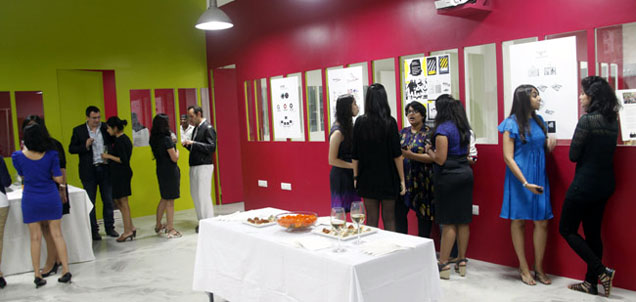
    Students and guests at the formal unveiling of ecole intuit.lab last week


    By Shubhangi Mehta

    École intuit.lab is a design and visual communication French school cofounded in 2001 by Patrick Félices along with Clément Derock and Frederic Lalande.

    The aim of the school has been to produce high quality professionals whose profiles meet the specific needs of the graphic design and visual communication sectors in India, France and across the world. With the newly begun school in India, the syllabus has been especially skewed to meet the professional demands of the visual communications industry in India and to tap the potential that design holds in the country.

    The average fee across various courses is 3.5 lakh annually. The institute will provide the students with high class faculty,French graphic designers which will provide the students an edge over others.

    Mr Ravi Deshpande, co-founder, école intuit lab, India,said, “Over the last few years we have seen a massive talent dearth. I thought of being a part of the solution rather than being a part of the problem. The school has been established to cater to and encourage talented students.”

    École intuit.lab through its students have built solid relationships with over 800 companies in France and other countries.

    The setting up of top French design school, école intuit.lab in Mumbai is a step in the direction of the marked improvement that is required in the field of education related to graphic design, art and advertising.

    Mr Rajesh Kejriwal, founder, CEO, KYOORIUS, said, “India really needs such design institutes; the China government is planning to open 500 design institutions across the country, Indian government should also  try and do something similar as the existing and upcoming institutes are expensive and not everyone can afford them. Hence a lot of talent will still be left behind without opportunities.”

    Ms Preeti Vyas, Chairwoman, VGC, mentioned, “These institutes are extremely important. If we put 20 more such institutes in our country, it will still be a lesser number. The courses are expensive but the kind of inputs, technology and faculty that goes into such institutes, it is impossible to have a low cost institute for such courses until and unless it’s a government funded institute.”

    École intuit.lab has achieved success by incorporating professional exposure in the academic curriculum – a much needed position that has been so far vacant, in the design and art education milieu in India.

    École intuit.lab through its students have built solid relationships with over 800 companies in France and other countries. école intuit.lab’s excellent success rate in finding work placements for its students makes it a real standard setter in vocational training for the visual communications sector.

  • Copy us? Go ahead, says Reckitt honcho


    By Shruti Pushkarna

    Reckitt Benckiser needs no introduction and neither does the man who has ensured an outstanding record for the company in India.


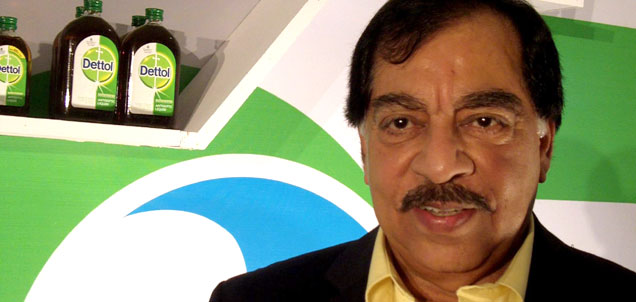
    MxM India caught up with Mr Chander Mohan Sethi, Regional Director – South Asia, Chairman and Managing Director, Reckitt Benckiser (India) in a one-on-one interview, at the release of the latest international Dettol Habit Study by the Global Hygiene Council in association with Reckitt Benckiser, in New Delhi. The study which was carried out in 12 countries including India, found that people who have good manners have better personal hygiene.

    Mr Chander Mohan Sethi has envisioned and assisted Reckitt Benckiser in its entry into various sectors, as well as helped the company establish a strong foothold in the household products and personal care sector.

    Mr Sethi began his career at Reckitt Benckiser India as Branch Manager- Eastern Region in 1984. He was promoted to the position of National Sales Manager in 1987 and in three years, recognizing his huge contribution to the company, he was promoted as Head of Marketing and Sales. He also headed Reckitt Benckiser, Nigeria and West Africa in 1994. Mr Sethi began his career as a management trainee with Glaxo SmithKline Consumer Products Ltd.

    Reckitt Benckiser, a global consumer goods company, headquartered in UK, is a world leader in household, health and personal care. Some of its leading brands include, Dettol, Harpic, Strepsils, Vanish, Veet and Mortein.

    In this candid interaction, Mr Sethi reinforces Dettol’s growing market share and the need for competing brands to think of newer ideas to take on an iconic brand like Dettol.


    Q: What are the key insights of the latest Dettol Habit Study, specific to India?

    First and foremost, the study has been done in 12 countries; more than 14,000 consumers have been contacted. In India, the study has also been done, both in metros, mini metros and in smaller towns. I think two key insights have come. One is that, male and female hygiene habits are the same. And secondly, which is a bit concerning, is that the younger generation unfortunately is not following as good hygiene practices as they should. I think that certainly is a surprise for us.


    Q: As the latest report states, good manners and behaviour are equally important factors as much as the availability of good infrastructure to practice good hygiene. How do you react to that?

    I think it’s a great insight, it’s a great fact of life, that you could have the best infrastructure but if you don’t have the right hygiene habits, it would lead to, you know, infection. So you can have a very clean room, you have a very large home but if you don’t have the right habits, there is going to be a problem of hygiene.


    Q: Is Reckitt Benckiser taking any specific initiatives for hygiene awareness in rural India?

    There is a very fine definition between rural-rural and what I call semi-urban. In very small, 40,000-50,000 population towns, we focus in different regions in terms of going to these towns and doing mother contact programmes, also in school programmes and hospitals. I would like my team to go into areas where they can effectively to do it.


    Q: How does the Global Hygiene Council function?

    The Global Hygiene Council is basically an independent body made up of very eminent doctors and scholars. They do studies on hygiene practices, on what should and what should not be done, after getting insights into consumers’ lives and consumers’ homes, in places of work. These are independent specialists, who get funded by their universities or hospitals where they are attached. But when they come to the Council, which is where we put an education endowment to run this entire body for more than ten countries, they meet a couple of times, and we use their material to be able to propagate good hygiene.


    Q: Dettol ranked as No1 in the Most Trusted Brand survey by Brand Equity in 2002. It slipped down to No2 in 2003. Even though the brand has consistently ranked in the Top 10 Most Trusted Brands, it never regained the No1 mark. How do you react to that?

    The first point is that Dettol is one of the most trusted brands in this country and over decades together. The second point is that there are a lot of new brands that have come, whether it is in the technology sector, cars, information or services etc. So it’s a question of what is the priority in that consumer’s mind at that point of time on his list of things. For us, it’s very important that we read the consumer’s reaction and feedback. But just to give you an idea, Dettol Liquid, in an independent survey by Nielsen, is 85 percent of the market. If you take Dettol Liquid hand wash, again Nielsen says, 53 percent of the market, so I could go on. Now if Dettol were not in one of the most trusted brands then we wouldn’t have 85 percent of the market in liquids, wouldn’t have 53 percent in hand wash. And just to say, Dettol soap for example, the body soap, it used to be No 8 in the soap market, and it is today No 3 in the entire soap market. Certainly in the germicidals, we are today at the top.


    Q: Dettol has positioned itself as the germ fighter brand; how have other players in the market affected this position? In fact, as a study indicates, in 2007 Dettol made an effort to reposition itself to take on Lifebuoy. What do you say to that?

    Lifebuoy tried to position itself like Dettol, I mean they must be running out of ideas that they have to… but you know, I can’t blame them. If you have an iconic brand like Dettol, everybody would want to be like Dettol. So good luck to those guys who want to copy us but the consumer says there is only one Dettol, there is only one brand which they trust in terms of hygiene.

  • Rise of the Indie

    By Tuhina Anand


    Creativeland Asia literally began life at Mr Sajan Raj Kurup’s dining table, where he discussed it with his friends four years ago when he quit his job as Regional Creative Director at Grey Worldwide. And the independent agency’s time seems to have come.


    For those who need to break away from large networks where creativity sometimes yields to hierarchy, setting up their own agency is the answer. And it seems to be an answer that works. A recent example would be Creativeland Asia bagging the Independent Agency of the Year at Spikes Asia. This was the first year when this award was introduced, and it aims at encouraging the spirit of creative entrepreneurship that has helped forge outstanding companies.


    Mr Kurup’s venture has now grown to a strength of 8o people across two full-fledged offices in India and nine strategic offices in Asia.


    Creativeland Asia also brought home a Grand Prix in integrated media category for 3D Experience for its client Audi India, a business it bagged in July last year. This also was a campaign of Indian origin which for the first time Audi adapted and used across the globe. The agency also bagged a Bronze Spike in digital for Hippo’s Plan-T. In fact, it was invited by Twitter to make a presentation on Plan-T which basically is a Twitter-led campaign which has won them accolades for innovative thinking. The agency has also won awards and accolades at other platforms including D&AD, One Show, Adfest, Spikes Asia and Cannes, and our very own Goafest.


    On his win, Mr Kurup, Founder & Creative Chairman, Creativeland Asia, says, “Winning the ‘Independent Agency of the Year’ award is a proud moment for us. This win is also significant for all independent agencies in India. To bag the Grand Prix for real work and on a global brand like Audi underscores the creative culture at Creativeland. It goes to show that when you consistently create good and inspiring work, lady luck is bound to shine on you sooner or later.”


    The agency has also done some pathbreaking work for its client Frooti where the brand has been totally refreshed itself including a funky package design. It also launched recently Saint Juice beginning the exercise of naming the brand signifying purity and 100 per cent juice. Some of the other brands it has worked for include Café Coffee Day, Medimix, LMN and Appy Fizz among others. The common link among all the brands is that Mr Kurup when he started out had said he wanted the agency to focus on marketing to the youth, and largely the brands that Creativeland has worked on exude this approach in its work.


    So does the win at Spikes for Creativeland really signify that today is the time of the independents. Yes, one can say that the time is conducive for independents with talent, and who are big on ideas, to come to the fore. Like Taproot changing the way industry looks at small agencies with its work on Airtel which is a big client, and getting praise for its campaign “Hare ek friend zaroori hota hai.” It’s also a time when the client’s approach is changing, too, and they are willing to take risks especially in a cluttered market with an overdose of media vehicles where it becomes imperative to get your brand noticed with cutting-edge and “hat ke” ideas.


    In that sense Creativeland Asia’s win affirms this wind of change. And the might of independents cannot be undermined as they are ready to take the biggies and steadily increasing their strength by diversifying their portfolios. Just like Creativeland, which has been expanding its footprint with providing content for four television channels including two reality shows. In fact, the agency is also venturing into the film industry with their first production, Karmayogi.