Tag: big story

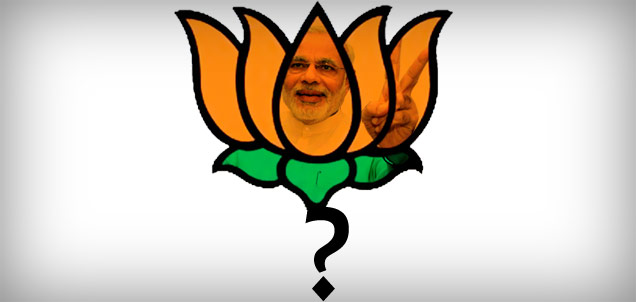
  • Can the NaMo magic work for the BJP?


    By Johnson Napier


    The Congress party in India may have been doing all it can to stay away from the negative noises created by Opposition. Led largely by the BJP, the foes from the other end are leaving no stone unturned in making sure that the Congress faces its toughest test yet as the country heads into election mode in 2014.


    While this may have been a daunting task until five years ago, led by the man of the moment, Narendra Modi, the BJP is set to face the task ahead. After silencing his critics and assuring his huge fan following that he has what it takes to rule the country with an iron fist, the NaMo chant has been growing louder as the days pass.


    The immediate impact of his appointment as head of the BJP’s election offensive was the resignation of party leader LK Advani and the consequent withdrawal of the same. But with news of infighting and internal differences being the order of the day, the picture may not be as rosy as it seems. MxMIndia spoke to a few professionals who have been associated with image-enhancing initiatives or track the way politics is run in the country and presents the viewpoints.


    Sushil Pandit

    Sushil Pandit, Director & CEO of Hive Communications, which has done campaigns for the party in the past, sounded optimistic as he said that Narendra Modi has today emerged as a locomotive for the BJP; the engine for the party’s growth and acceptance. “He represents the best of BJP – its potential, its performance and credibility. He brings a lot of incremental approval to BJP’s existing support base. So brand Modi complements brand BJP and is all set to propel it much further from where it is today,” he said.


    Highlighting the game-changing dynamics being witnessed, Mr Pandit asserted, “Today, a whole host of key determinants have changed in Indian politics including the way the youth of today perceive the leadership, their aspiration, their demand, their definition of what kind of a leader they expect…it has risen far above from the earlier narrow consideration of dynasty, caste, etc and has focussed more on the performance aspect and what is possible. Narendra Modi therefore has emerged as a huge force in converting such aspirations into approval and work for the party.”


    According to him, with a year left before the elections in 2014 there is a great deal of hope and a lot of fervour amongst the masses – factors that should see the party through in the 2014 elections.


    Sanjay Mehta

    Sanjay Mehta, Founder & Joint CEO, Social Wavelength, put forth a prudent outlook for the party as he said that the happenings at BJP are a natural outcome of a major change. He affirmed, “It was always suspected to be a challenge for Narendra Modi to move into top position, and be the party’s PM candidate, given his legacy in Gujarat, from 2002. That over the years, he has managed to create a change in the manner in which he is perceived and reached a point where the party sees their best hope in projecting him as their leader, is a huge achievement.” Adding further he said, “In the face of this, to enable the change from the old to the new, and one which is largely acceptable within the party, still has its share of friction, and the Advani resignation etc. are a part of that. All these are an integral part of Indian politics and I do not believe that these impact the party’s brand image to a large extent. It is unlike major corruption or other scandals that have plagued parties too in recent days! More importantly, this has happened several months before the elections,” he reiterated.


    Presenting his stance on the impact being created on brand BJP, Mr Mehta highlighted, “What I hope is that the short-term impact on the BJP brand will not affect the longer term prospects. Assuming that the necessary compromises are made within the party, and thereafter, as a whole, the party is willing to position Modi as their leader, unanimously, that is a strong plank for the party to take forth, into the 2014 elections.” But sounding a word of caution, Mr Mehta said that with LK Advani taking back his resignation, “the only fear is that closer to the elections, he doesn’t again raise his ambitions for the PM position, and create a ruckus then. If that happens, it will hurt BJP much more than the current hiccup.”


    Harish Bijoor

    Not holding back his thoughts, brand consultant Harish Bijoor of Harish Bijoor Consults Inc. was forthright as he said, “I do believe brand BJP is hit for sure. The hit is seen clearly in television footage of the leaders of the party and their really overtly saddened faces. This is not good for morale.” However, Mr Bijoor does believe that this is a temporary setback. “The party will bounce back with vigour after the dust settles and the old guard has given way to the new. Modi is a brand man in reality. He is a very savvy leader who uses every modern tool there is in branding. I do believe he will revive the morale for sure.”


    Knowing what it takes for a brand to enhance its image offering, Sridhar Kondiparthi, Chief Creative Officer – India Sub Continent of Leo Burnett asserted that everything that is happening within the BJP and RSS, including a sulking Advani, will only benefit the BJP and Narendra Modi. But sounding a caution, Mr Kondiparthi said, “A reluctant old guard will have no sympathy with the younger voters; India wants a younger and more ambitious leadership.”


    Naresh Gupta

    While it is still early days, there is a lot at stake for brand BJP for it to win back the confidence of the masses. It could begin by getting its basics about branding itself right. As Naresh Gupta, Managing Partner, Bang in the Middle, asserts, “Elections and political branding are a bit different from usual brands and consumers do consume them differently. The perceptions are transient and a lot depends on how the competition plays the game. Currently it is affecting the brand. The controversy is not adding to the appeal of BJP. What matters now is what does the market do?”


    As for the way ahead for the party, Mr Gupta affirms, “The elections are still some time away and we can’t say what may happen by then, though going by what’s happening now it will strengthen the brand in a small core but weaken in large potential audience.”


    Mr Gupta may be critical of the party’s success as yet but for the ardent believers of brand NaMo, also the driving force behind brand BJP as of now, the moment certainly seems to be favourable for it to make an impression in the minds of the people.


  • Old tunes, new TVCs: Good, bad, or…?


    By Meghna Sharma


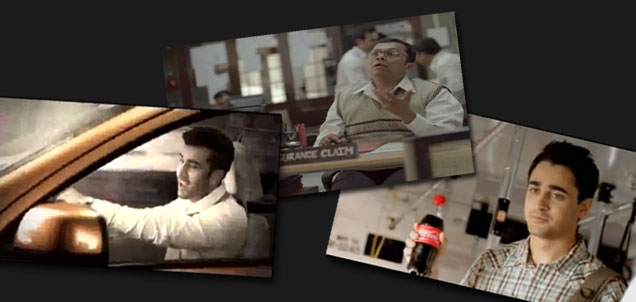
    What do Bharti AXA, Hero Pleasure and Slice have in common? In their latest commercials, all have used old songs, remixed or tweaked, to sell their products.


    Yes, the old melodious songs are once again back in vogue as advertisement industry jazz them up to attract audiences. Chala jaata hoon (from the film Mere Jeevan Saathi) and Chakke mein chakka (Brahmachari) for the Nissan Micra ads, Aap yahaan aaye kis liye (Kal Aaj Aur Kal) for Bharti AXA, Tum jo mil gaye ho (Hanste Zakhm) and the earlier Aaj ki raat (Anamika) for Coca Cola, Aaj kal tere mere pyaar ke charche (Brahmachari) for Raymond and Mud mud ke na dekh (Shri 420) for TVS Scooty are some of the new-old tunes on the block. Even Bombay Times got into the act, using Style mara toh darna kya, an edgy takeoff on Pyaar kiya toh darna kya from Mughal-e-Azam, with the words changed to suit the brand.


    Why is there such an epidemic of remix fever in TVC land? Are creatives running out of ideas, or have they just hit upon the fact that old is, well, gold?


    New, or an old trend?

    Prathap Suthan

    History repeats itself and the advertising industry knows that they cannot do without the old classics. “It’s not for the first time that you’ll see advertising agency using old songs, it’s been going on since a very old time, It was there even when I joined the profession,” recalls Prathap Suthan, Managing Partner/Chief Creative Officer at BangInTheMiddle and Chief Creative Officer at iYogi Inc.


    He isn’t alone; many from the industry feel that the old classics are evergreen and anyone can relate to them. But what’s more important is, how does one use them? “If an old song works for one brand, you’ll see many others copying the trend. But that doesn’t mean or guarantee it will work for all of them. If a song fits the situation and helps the brand tell their story in 30 seconds is when an agency has done a good job with it,” feels Manish Bhatt, founder director, Scarecrow.


    Manish Bhatt

    The Indian Railways advertisement which used Ashok Kumar’s song Rail gaadi is a perfect example of using an old film song for a current situation. The advertisement not only became an instant rage among youngsters but also got many awards at national and international level. “Encashing on an old tune is what matters here more,” adds Mr Bhatt.


    Narendra Kusnur

    Narendra Kusnur, music columnist and critic, feels that since Hindi film songs have always been popular in India and the older ones have a high recall value, so naturally they can act as an effective tool in advertising as longed as they are used intelligently and go along with the brand positioning. “Why only old Hindi songs? Titan watches used the western classical piece Mozart’s 25th Symphony. People remember the tune and the ad, though many don’t know it’s Mozart. However, it’s always more satisfying to create a completely original jingle line. Something like Lifebuoy or Vicco Vajradanti or Vicks. So that should be the first effort,” he adds.


    Josy Paul

    “Making one nostalgic has worked in the past, does even today and will continue to do so even in the future,” asserts Mr Suthan.


    However, Josy Paul, Chairman and National Creative Director, BBDO India, feels that a trend is not an idea but a bunch of guys following each other. And the guy who started it may have already left the room.


    Shortcut or creativity?

    There is no dearth of songs because of the Indian film industry and one can find a song to fit any situation – but does using them mean that the advertising industry being lazy? Or is this creativity too?


    “Using an old song alone won’t do the trick; one needs to add new value to the song or force people to look at it again because of the unusual nature of the idea. Else, it’s just an old song which one might hear on the radio,” says Mr Paul.


    “There is nothing wrong in using an old track, but one should not treat it as a shortcut. Finding an appropriate song which fits the bill is difficult and needs creativity too. It’s an art form as well,” adds Mr Suthan.


    Citing the example of Parle’s campaign Roko mat, Mr Bhatt explains, “If an original jingle/song is catchy or works wonder for a brand then originality shouldn’t never be ignored. The main aim is to stand out of the clutter and help a brand reach its TG.”


    Hemant Kenkre

    Hemant Kenkre, a former music channel professional and a corporate and brand communications veteran, explains, “The old songs are remixed to suit the younger lot whereas the older generation too recalls the retro numbers. However, the brand managers need to understand that the song should suit their brand rather than overpower it. But it wouldn’t be right to say that there is any negative impact in using old songs for a brand.”


    “Using the power of music to one’s benefit is the deal breaker here – old or new doesn’t matter,” Mr Bhatt adds.


  • Madison is much more important than money: Sam Balsara


    It was in the mid-nineties that India started showing up on the global business radar, and multinationals started looking at India with renewed interest. Advertising was no exception. It was the time when many Indian agencies were taken over by, or merged with, global agencies. It was, they said, just a matter of time before Madison would be part of a larger media force. Rumours have not died since… but Madison World is not only alive with a radiant glow, but also growing – and how!


    Now 25, it has shed its puppy fat, is young and energetic, and the spring in its step is complemented by maturity of thought.


    Launched in 1988 as a full-service agency, it turned into a force to reckon with as India’s first full-fledged specialised media agency. Madison World now comprises 22 specialised units – media, though, continues to be the mainstay.


    For those who’ve had the privilege of visiting the agency’s Fort office in South Mumbai and have now walked the corridors of its Andheri headquarters in North West Mumbai, the Madison journey is very palpable. What has not changed though is the energy and charisma of its Chairman and MD Sam Balsara, and the rules he set out for himself and his agency.


    A labour of love and passion, Madison World turns 25 today. Clearly, a well-deserved and well-earned silver jubilee.


    In this freewheeling interview, PRADYUMAN MAHESHWARI and RITU MIDHA of MxMIndia make an attempt to capture the spirit of Madison World, its journey so far, future plans and what really makes Sam Balsara tick.


    One still remembers the time you announced the setting up of Madison in 1988. What really got you to take the plunge at that time?

    Well, I had already spent four years at Mudra and was kind of No 2 there. Mr A G Krishnamurthy was the CEO based out of Ahmedabad. While I was working there, the sense I got was that Mudra wanted to be – a la Reliance style – India’s largest advertising agency. I, however, felt that I was probably not the man – either capable or desirous – of the intense growth required to make Mudra the largest agency in the country.


    My heart and mind told me that a good agency is a small agency with a few large clients. That was my interpretation of an ideal agency – both from the clients’ as well as my perspective. I distinctly remember – it was Tanya and Lara’s Navjote, and I had taken a few days off. Being away from work gave me time to introspect and think. Those seven days in me triggered the thought that I should start something on my own.


    Did you speak with some of your clients before you really set up Madison?

    Yes, of course. After I had made up my mind, one fine day I asked Mr Godrej for an appointment. I went and met both Mr and Mrs Godrej one evening in their Juhu beach house. I told them about my plans, and asked them if they could give me one of their accounts to handle. They were very kind, and gracious and gave me the Cinthol account.


    …and Cinthol at that point was really flying high with its flamboyant advertising which got you into the limelight pretty fast.

    Yes, correct. I would say I got into the bigger limelight, thanks to Cinthol’s largest competitor, Lever. I don’t know whether I should get into it or not …. Lever played the oldest trick in the world – in order to stymie Cinthol Lime, they copied our commercial and inserted some shots from it into their commercial. They then went ahead and put their Liril commercial on air a few days before our Cinthol Lime was scheduled to go on air – obviously to prevent us from going on air. The incident created a lot of controversy at that point because we refused to be cowed down; we went to the press and made big noise about it. Levers and Lintas had sort of connived to spring this upon us.


    On a lighter note, over the next two to three years post this event, many clients were keen that I should create a similar controversy for them. It was because some marketing pundits thought that Cinthol Lime had gained a lot because of this controversy.


    Moving on, Madison has grown considerably and now it is a multi-brand agency. You started off as a full-service agency – and though you still have components of a full service agency…

    Soon after we got the P&G media account, I got sold on the virtues of specialisation, both from the agency as well as client perspective. To my mind, specialisation is great because it builds a body of knowledge, creates a cadre of people, and brings in efficiency and expertise, so you are able to offer service at a lower cost. The client not only gets the benefit of service at a lower cost, but also specialist expert advice. And so, as they say, if it ain’t broke, why fix it?!


    I then tried to replicate the specialist approach in other disciplines of marketing and advertising – for instance we spun off a PR agency with its own independent head, a few years later we did the same thing with outdoor – though it is a part of the media function, we have a separate outdoors agency called MOMS that runs completely independent of Madison Media.


    Madison World has grown a little larger than what my original vision was, we have tried to stick to my original principle that a good agency is a small agency with a few large clients. Madison World is today an amalgam of 22 units each headed by a unit head – who is designated CEO, GM or COO – who runs his/her agency, and has an independent set of clients almost like an independent agency. None of these units handles more than eight or ten clients. With all these units put together we do not have more than 220 clients. In Madison Media with all its units we handle about 45 clients


    So would you say Madison is David or Goliath?

    Madison is David, and it continues to be David.


    Isn’t 220 clients very large for it to be David?

    We have only 45 clients in media… 220 is the overall number.


    45 very large clients…

    Yes. But that is as per my original plan.


    Do you still believe that thinking small, as you say, is the recipe of Madison’s success?

    Yes, it is. I have also always believed that it is an advantage to know and recognise that you are at a disadvantage – because then you fight harder, think harder. And it is a disadvantage to know that you are at an advantage because then you become complacent.


    Have you ever become complacent in your own judgement?

    I don’t think so. Maybe sometimes my people get complacent – they might mistakenly feel that they are working for a large agency, but I never feel that.


    In these 25 years, what in your view, are a couple of high points that changed the course of your agency?

    The launch of Cinthol Lime and the controversy that erupted was clearly a high point. The second was when Godrej tied up with P&G – both of them encouraged me to tie up with DMB&B. It enabled us to continue working on Cinthol, and in addition work on P&G brands like Whisper and Vicks. I think breaking of the relationship with DMB&B also, in hindsight, was a high point. At that time, though, it appeared to be a big blow as I lost 70% of my business – we first lost the Cinthol account, and then because of break in relationship, we also lost the Vicks, Whisper and Philips accounts.


    In keeping with my principle that it is an advantage to know that you are at a disadvantage, we worked harder, we fought harder, we kind of developed this specialisation approach. In all this, of course, our creative did suffer.


    Any other milestones…?

    Media has been a reasonably good run. I think a more recent high point would be when P&G went on pitch and WPP approached me for a tie-up. This ultimately resulted in our ownership of Mediacom in India.


    Would you say it was the biggest high point?

    I would say it was one of the biggest high points, but you cannot take away from others.


    On one level you are competing with WPP, and on another you are partnering them – how does this work for you?

    I think one of the things I have learnt the hard way in life is that in the world of business there are no permanent enemies and friends. In today’s complex world, you have to be willing to work under various kinds of situations – you cooperate with some, you collaborate with others.


    While I would say that at one level it was a bit scary to collaborate with a competitor, it is a good, relevant experience and successful too – as we have demonstrated, Mediacom is a good successful agency.


    How do you make sure that all 22 units of Madison work towards the same goal, and that there is the same spirit of excellence?

    It is definitely not easy. Now I am being helped by Lara at the managerial level, so it helps us keep better tabs and controls. Our value system, according to me, also happens to be a sound business practice. The fact that you are transparent, simple and honest might be an old-fashioned way, but it makes good business sense. I presume that clients like to deal with transparent and honest agencies. Having said that, a principle is not a principle unless it hurts, and some of our principles have hurt us in a business or profit sense. Though, in the long term, these are also principles that help in retaining and growing business.


    One of the advantages or disadvantages of Madison is Sam Balsara. How have you managed to ensure that even as the organisation does not get too impacted by your persona, it reaps the benefits of it at the same time?

    Yes, you are right – it is both an advantage and a disadvantage. Disadvantage because I cannot be here, there and everywhere – many times I attend meetings which I easily need not have attended. It does put some extra pressure on our time.


    Probably one of the reasons some of my colleagues pull my leg for emailing them  at 2am is because they don’t know that I suffer from insomnia. I do not really know if it is hard work that led to insomnia, or is it insomnia that makes me work at 2 in the morning (laughs).


    What is the key differentiator that distinguishes Madison from the rest of the pack? Has it changed across the years?

    Differentiators obviously have been different. Today we are a little better structured, we have a better infrastructure, better resources, better ability to have a better well-oiled machinery that can service our clients’ needs and brands much better. We are getting increasingly focused now on not delivering the result anyhow or somehow, but delivering it through process and structure. We are able to deliver result by design – rather than by accident. Since last two to three years, we have been spending considerable time and energy on that.


    The media space is now changing at a fast pace – digital is growing. What is your strategy to adapt and cope with the changing media space?

    Since the last two years, we have been spending considerable time, money and resources on digital. The reason is that our clients have also begun to like the interactive and engaging power of digital. We believe that for an organisation our size, it is important to use our resources at the right time – it does not pay to invest in something 10 years ahead of its time. Investing ahead of time is a good idea if you invest six months to a year ahead, not 10 years ahead. The digital age is showing signs of explosion in India, and that is the reason for increased focus on digital in the last two years.


    Have you made any structural changes in the organisation in this direction?

    We want each of our planners to be digital savvy. However, considering that digital is a new area of functional expertise, we have islands of digital excellence and some people who evangelise digital among our large army of media planners.


    As the big strive to get bigger in the media space through mergers and acquisitons, do you see the scene getting more complex for Madison?

    The situation for Madison has never been easy. Neither was it in the ’80s and ’90s, nor is it now. As long as you operate independently, and as long as you operate in the business environment whether it is in India or America, there will always be severe competition in our kind of businesses. We will have to learn to cope with it.


    I know it is difficult to be a soothsayer, but in terms of future, where do you see Madison grow in the next 5 years?

    Let me try to sidestep your question a little by saying I am less of a visionary and more of an action man. I do strongly believe that if my today is safe, sound and successful, I will be alright tomorrow. Given that, we are doing reasonably well. Though it is difficult for me to say something specific, I would like Madison to be bigger, better and stronger than it is today.


    There are rumours time and again about you tying up with another international player or selling out…

    I can say with reasonable confidence that we have never ever thought of selling out. However, we are not closed to the possibility of having a joint venture partner in Madison with a view to making it stronger, better and more capable.


    Is there a specific timeframe you are looking at?

    Things like this cannot have a timeframe – how can I tell you when my daughter is going to get married? One thing I can tell you – though it might sound ridiculous – I did not start Madison to make a lot of money, neither will I sell Madison to make a lot of money. Madison is much more important than money.


    Are there areas in the last 25 years where you think that, given a chance, you would have done things differently?

    Of course there are. In hindsight, I think it was stupid of me to decry creative awards in the early years – when Madison was strong in that area. I always thought that awards came in the marketplace, and not from some forum or stage, though I myself presided over so many award juries. It was clearly a mistake. In the absence of anything else, clients look at the award telly to check the creativity quotient of an agency, and my overall approach and thinking in the ’90s that awards were not important was clearly a mistake.


    In terms of your agency, is there anything that you think you could have done differently?

    Yes, in our early years we should have focused on resourcing our creative department much better and stronger and deeper then we actually did.


    Though you do have 22 constituents, Madison World is essentially seen as a media agency…

    Yes. But in a way we have outdoor units, we have mobile, we have retail, we have sports management, PR. That is one of our ambitions, to make them as big in their respective fields.


    And Sam Balsara is best known for Madison Media…

    I don’t think any man can decide the label he would be given, especially by media people like you – 15 years ago The Economic Times decided to call me a media wizard, and I think the label has stuck. However, having said that, let me tell you, our OOH and PR units are doing extremely well and they are improving not just their financials but also stature and reputation. Mates, our celebrity management unit, is also doing well.


    So do you get involved with meeting celebs with Mates?

    No I am not. However let me tell you that initially I was the PR expert, the client servicing expert, the celebrity management expert, the media expert…I was everything.


    And ultimately all the hard work paid off…

    One of the things I said to myself when I started Madison was that any agency I create must be worthy of Sam Balsara working in it. It had to have a certain reputation and stature. Having spent nearly eight years in two good client organisations, and another eight in client agencies, I did not want to spend another 16 working in a company that did not deserve me as an employee.


    And your people helped you in attaining that. Who would be the key people without whom Madison would not be where it is today?

    I think they are predictable – first there was D Sriram, then Srini, Veena Gidwani, then Punitha more recently, Prabha is still there. Now Lara, Gautam… having said that, they are not the only ones. We have many young people burning midnight oil, and making a difference.


    Has Gautam’s arrival changed things at Madison?

    Gautam has worked in larger organisations – and hence, he is a little more focused on processes and structure than just the outcome. It is good for an organisation our size at this stage in our life.


    You work with a number of global networks – is there anyone you would want to emulate in terms of their practices and processes?

    Their challenges are a little different, and cannot be compared to ours. Theirs are organisations of 100,000 or 150,000 people with billions of dollars of income. Many of them are publicly listed – the challenge for them is managing their stock price and profitability etc. Fortunately our concerns are none of all these. Our key challenges are: Is the client happy with our services? Are we helping our brands score in the market place, are we building our brands?


    What is your biggest learning as the head of Madison?

    I would say you need to decide on what should be the objectives of your organisation, and where you want to lead it, and remain focused on that. These objectives cannot be stated only in terms of market share and profits.


    You have a number of long-standing client relationships, as well as returning clients…

    If I may say so, in lighter vein, a Madison client is an over-serviced client. We love them, we pamper them, we spoil them and they get used to us – and find it difficult to leave us.


    Is Madison ready for the next round of leaders?

    In today’s media and advertising world, changes are happening or changes in people are happening all the time – we have seen that we are able to survive these changes and actually make something out of them. I think every change is an opportunity to climb greater heights.


    Lastly, If you had to look back and give yourself a self-score on a scale of 1 to 10, what would it be?

    I would say 5.5.


    You are being tough on yourself.

    Not exactly. I am quite fair. Contrary to what a lot of people think, I am not as focused on growth and business and profits as many people give me credit for. I am a little more focused on doing a job well, getting a job done and making our brands succeed in the marketplace. I dare say there is a compromise in there, and I would rather compromise on this side than that. Almost for the first five years of Madison’s life, not only did we not pitch for a new client, if somebody called me and said we want to talk to you – I would tell them that we were pretty tied up and could not come. It is actually reflected in the fact that for the first four-five years, we only had our two founding clients – Godrej and Nelco. This, however, does not mean that we did not really grow – we got substantial additional business from Godrej, which kept us growing. Though management pundits today call it stupidity to put all your eggs in one basket, to my mind I did not want to spread myself too thin as I felt that it was a bigger risk than actually putting all my eggs in one or two baskets.


    So 5.5 it is?

    Unfortunately in today’s world the only yardstick for success has become marketshare growth and bottomline – my performance is not that good on these scores.

     

  • Love makes for good business


    By Meghna Sharma


    If a price can be put on love, it is put in February. From hoardings on the urban landscape to the countless offers on products and services, everyone is looking to cash in on Valentine’s Day.


    Mohit Joshi

    “Valentine’s Day has become an important youth touchpoint over the years. It is almost like a ‘festival of youth’. This is why relevant brands cash on this unique opportunity through various consumer-connect programmes,” says Mohit Joshi, managing director, Havas Media India.


    For a brand which caters to various age groups and especially youth, which is usually scattered in their choice and opinion, the day acts as a perfect solution to catch their attention through the message of love.


    “The concept of Valentine’s Day mostly revolves around the idea of gifting, and hence we see many consumers opting for gift vouchers for their loved ones. It’s still not as big as New Year’s Day, wedding season, Diwali, etc, but we see a lot of traction towards our ‘beauty-oriented’ services. The demand for such services is much higher in this season and we see a surge of almost 15 percent especially when we run attractive promotions,” says Chhavi Sharma, marketing Manager, Kaya Ltd.


    Online shopping websites which cater mostly to youngsters are also reaching out to their TA with attractive offers. A spokesperson for Myntra.com says, “Festive seasons such as Diwali and Christmas have a mass appeal across all age groups, but Valentine’s Day is especially popular with the youth who constitute a large part of Myntra.com’s TG. This Valentine’s Day, Myntra.com is not only looking at giving shoppers great deals but is also trying to engage with them as a brand. With the Love Connection contest, the brand is engaging with its audience in a two-way conversation and giving them a chance to win prizes.”


    TimesMobileLtd. (TML) has launched a greetings and gifting mobile app, GreetZAP. The app introduces the concept of voice cards, which enables users to record a message and send it to their loved ones through physical Voice Cards, which are home delivered. Speaking about this new initiative, Ajay Vaishnavi, Director – Telecom, TML, said, “With Voice Cards, we have brought a new way to express feelings which today’s youth, who are very connected and tech-savvy, will love to use. With the GreetZAP app, they can do a lot more than sending plain text messages while greeting their near and dear ones.”


    However, many brands feel that age has nothing to do with it and are leaving no stone unturned to reach out to various age groups, as the Idea Valentine’s Day ad shows. SBI Life has launched a marketing campaign riding on the Valentine’s Day mood through their latest ad – Valentine Gift at 60 – across national and regional channels.


    Chandramohan Mehra, VP and Head – Brand and Cross Sell, SBI Life Insurance, says “High on emotional engagement, the campaign reinforces our promise of enabling customers to ‘Celebrate Life’. The idea is to trigger the thought of planning for post-retirement needs. Consistently, we continue to anchor our brand communication on positive emotions, to drive across the point that customers need to plan today so that they can continue to live life to the fullest.”


    Not only brands, but media too isn’t shying away from making the most of the opportunity. This Valentine’s Day, 92.7 BIG FM has announced the launch of a special campaign to rekindle romance among married couples. The campaign, named ‘Phir Pyaar Ho Gaya’, celebrates the season of love dedicated to married couples.


    Nikhil Gandhi

    “Given its place in the lives of our viewers, the day is an important one for us at Bindass since we are a 360-degree youth entertainment brand,” says Nikhil Gandhi, executive director, youth channels, media networks, DisneyUTV. The channel has partnered with Close-Up for their ‘Bindass Come Fall In Love’ initiative to give 10 couples a chance to go skydiving with their partners at Amby Valley.


    Arunabh Das

    Notwithstanding all the hype, the general feeling is that though the day has come up tremendously and is an interesting advertising opportunity for many, it’s still a small event. “If we compare the event with others like Diwali, it has a long way to go. Newspapers do get advertisements related to the day, but since not major economic activities take place around it, brands don’t take it that seriously,” says Arunabh Das Sharma, president, BCCL.


    Neel Kamal Sharma

    “Diwali and New Year have much more mass appeal and a larger opportunity for business as compared to Valentine’s Day which is still limited. So, by figuring out the relevance of these days for a product/ service, we work out suitable customized communication which will be more effective,” adds Neel Kamal Sharma, COO – Buying, Madison Group.


  • Into the printed world of luxury


    By Johnson Napier


    Be it a shopping mall or a supermarket, one cannot help but notice some loud and in-your-face visuals that crave the consumer’s indulgence. In fact this practice is not just limited to malls and large stores where consumers flock in droves – these humongous posters seem to greet us everywhere.


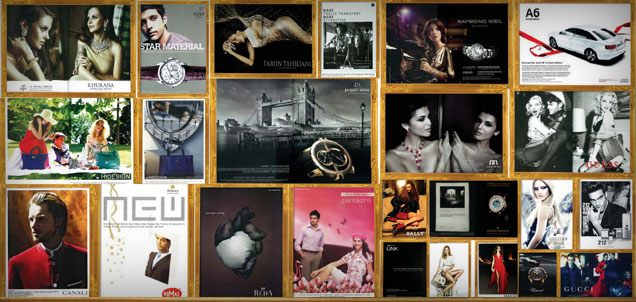
    And they are familiar sights – one sees them not just outdoors but within the pages of glossy magazines as well. Most of these larger-than-life posters are for luxury brands. While out-of-home is generally the medium of choice for brands, it still doesn’t compare to what the medium of print has been delivering as it continues to rule the course where advertising of niche and lifestyle-centric brands are concerned. At least that’s what can be inferred from a survey released by Cogito Consulting.


    In its report ‘An Analysis of Marketing Communication of Luxury Brands through the Lens of Luxury Magazines’, Cogito Consulting decided to do a deep dive into leading upmarket magazines carrying advertising for luxury brands to unearth key trends and semiotic codes of luxury advertising in India.


    The report is an analysis of some 511 advertisements in leading luxury magazines like Vogue, Verve, Time N Style, GQ, Harper’s Bazaar, MW and Cosmopolitan. All the ads were mapped quantitatively on various parameters and additionally, a qualitative analysis along with few expert interviews were done to arrive at some key learnings.


    Kinjal Medh

    Sharing his thoughts on the study, Kinjal Medh, COO, Cogito Consulting said, “The idea was to understand whether there were any patterns or codes that were common to most luxury brands. What we observed through our course of analysis over a six-month period is that a lot of luxury brands follow a similar pattern of advertising. We sampled over 500+ publications which typically feature advertising by luxury brands.” In fact according to Mr Medh, the unique trend that this study throws up is that “Luxury brands have grown perhaps more than the other brands in the market as they are not sensitive to economic conditions. As a result, people who can afford them can do so without being worried about what the economic climate in the country is. In fact my guess is that this sector will grow even faster and has a long way to go in India.”


    Composition of Ads

    According to the study, personal adornment brands feature the maximum number of ads in the magazines under study. On the other hand, products which do not directly enhance personality are advertised far lesser. For example: Apparel and watches which are a direct gateway to status elevation have the highest number of ads. While categories like real estate, home furnishing, hospitality etc. are relatively lesser.


    Affirms Mr Medh on the trend: “Where the composition of ads is concerned, it has remained somewhat the same. In fact it has not changed since the coming in of international brands in India. Before that there was not much of luxury brands who advertised; just a few jewellery brands. This was a trend prevalent almost about a decade ago. But that has now changed with the coming of international titles in India who brought with them the scope for luxury brands to associate with.”


    Another important trend that the study analyzed was the use or rather non-use of celebrities for luxury advertising. The study notes that only 12 percent of the ads studied, featured celebrities. Among the ads which featured celebrities, Watches, Jewellery, Perfumes and Apparel were the top categories using celebrities in their advertising. Further, of this 12 per cent, the majority (52 percent) were international celebrities while 48 percent featured Indian celebrities.


    Sharing his views on the trend, Mr Medh asserted, “One of the things happening in India is that there is a celebrity overplay. In fact there are instances where a same celebrity endorses high-end products and then also endorses hair oil, which is contrasting in a sense. As a result the level of exclusivity that luxury brands require is often not possible. This is not the case with international celebrities who are very selective in terms of the brands they accept to endorse.”


    Paradoxes of Luxury Advertising

    An important facet of the study or rather a paradox is the occurrence of luxury brands going increasingly local while mainstream Indian brands were going international. The study goes on to state that lot of Indian brands are trying to project an international imagery by using international models in the advertising. Approximately 14 percent of Indian brands advertised have used international models in their advertisements, it claims. “It is part of the experimentation that luxury brands do to discover new ways of marketing themselves. So while international brands tend to look inside India most Indian brands are looking outside to expand their base,” Mr Medh commented.


    Another interesting finding that the study highlights is that most of the brands advertised in the magazines have no body copy. About 60 percent of the ads analyzed did not have any copy, it noted. They featured only visuals and brand name. The ads project visuals which define the personality of the brand and along with visuals just the brand name. For those consumers well versed with the personality of the brand, only the name is enough and for the uninitiated, sharp visuals work in attracting them.


    Ironically, from the consumer’s point of view the financial investment in luxury brands is far higher than mass brands and the justification from the seller’s point of view is correspondingly far lesser. In other words, Mass brands’ advertising sell, Luxury brands’ advertising evoke Desire.


    The analysis revealed that primarily there are six key tenets that form the basis of most luxury brand advertising. These 6 codes include The Two Tone Code, The Exclusivity Code, The Sensuality Code, The Craftsmanship Code, The Origin Code and The Heritage Code. Of the whole lot, the study noted the Two Tones Code to be more effective. In its analysis of 511 ads, about 66% of brands that were advertised had black/white logo. On the other hand, in the case of mainstream Indian brands, logos do not necessarily follow a black and white pattern.


    Asserted Mr Medh about the popular Code, “I think that the Two Toned Code is the most interesting be it for its advertising or even the use of logo which mostly is black & white. I expect this trend to continue going forward as black and white tones do lend a certain amount of mystique and sophistication; unless certain brand advertising demands the use of colour I largely see two toned as the most popular form of advertising.”


    As for the Sensuality Code, the study observed that advertising for luxury brands is much more sensual than mass brands. Probably it is one of the ways to create a desirable personality and distance luxury brands from others brands. From perfumes to handbags to watches, sensuality is an integral part of luxury advertising, it noted.


    Where the Exclusivity Code was concerned, the study noted that luxury brands try and create an aura of uniqueness since it gives an assurance of being owned only by selected people. Over abundance and easy availability of a luxury brand can cause dilution of luxury character, hence many brands try to maintain the perception that the goods are scarce.


    Where the Craftsmanship Code is concerned, the study states that luxury brand advertising lays more emphasis on the craftsmanship and intricate mechanisms involved in the product. For example, an apparel ad shows the cut and fabric up close or a watch ad shows the mechanisms inside the watch.


    The study further notes that for the Origin Code, some luxury brands elucidate the luxury quotient of their brand by mentioning the country of origin of the brand. Going ahead, luxury marketers are taking a step further and using the city of origin and bringing in more credibility to the brand.


    As for the sixth code, the Heritage Code the study notes that the heritage of a brand builds an aura of several years of finesse and excellence in providing luxury products. It exemplifies the years of mastery or lineage to add a mystique to the brand. A mystique is generally built around the exceptional legendary founder character of the past, making up an integral part of the brand story and brand personality.


  • MxM Mondays: Is magazine readership sliding?


    By Ananya Saha


    As magazine publishers are set to meet for the Indian Magazine Congress in Mumbai on February 14 and 15, the indifferent numbers posted by the latest findings of the Indian Readership Survey continue to mar what appears to be business as usual. According to the IRS 2012 Q3 figures, magazine readership is on the decline barring a few magazines that have gained AIR.


    Even as the Indian print industry continues to see new launches, the readership of magazines is sliding (including regional language, Hindi and English magazines), as recorded by the IRS. MxMIndia spoke to a cross-section of industry veterans about the Indian magazine industry, and the shape of things to come. In alphabetical order of their last names:


    Suresh Balakrishna, CEO, BPN

    Newspapers and television have taken over the space which was once occupied by magazines. Therefore, general news/interest magazines readership is on a decline. However, niche magazines which cater to a small but specific audience are doing well and will continue to do well. Even as we speak niche magazines on jewellery, garments, travel etc are being launched. And advertisers are interested in putting their money on them as they are leisure magazines and will get their message across to their target audience. Hence, the future of niche magazines is bright although other magazines will have to take a hit


    Mitrajit Bhattacharya, Publisher & President, Chitralekha Group

    A survey like IRS hardly does justice to a highly complex category like magazines. Magazines are heterogeneous in nature with skewed distribution, which is missed by a huge survey like IRS; or in simple words, IRS is not even designed to capture readership of magazines (particularly special interest or niche ones). There are concerns about certain genres of magazines facing difficulties in retaining loyalty among its audiences, but there is surely traction in the specialized space. How else can you justify launch of so many new titles every year? IRS is not a good measurement tool. It is a one-size-fits-all omnibus survey with no focus on skewed distribution of magazines.


    The industry is reorienting, specialised genres are doing great even if some traditional genres are threatened. Also the digital formats are doing well for all big magazine brands. I see further traction in this. Digital will complement the print formats in a great way and magazines will lead the space for their superior content and presentation.


    Varghese Chandy, Chief General Manager, Marketing Advertising Sales, Malayala Manorama

    The quarterly result or six-month readership data will not establish if readership is declining or not. The readership is dropping compared to a few years ago. What we need to understand is that the way a magazine is consumed or read is getting different. It is changing because online versions are available. The time will come that when you talk of magazine readership, you will actually have to add the online and offline (print) readership of the magazine, including tablets and mobile. That is what one should look at in the long run, whether you are able to retain readership through all possible formats. Unfortunately, we are not in position to capture this readership currently.


    The way readership is captured in India for the magazine is very newspaper-oriented. For the newspaper, the readership is concentrated is the catchment area that is near printing or publication centres. Magazines, on the other hand, are dispersed widely, and in most cases, nationally. Even the language magazines are dispersed beyond one geographical state where the language is read. Thus, the sample pickup for magazine and newspaper cannot be the same because of the wide dispersion. The present readership survey, and this is something all of us have been saying for some time, is not actually geared to capture the readership of the magazines; particularly the niche magazines and magazines that have specialized readership.


    That is why you see readership drop even in cases of English and general interest magazines. Some readership figures and drops should be seen as rationalization of numbers. There used to be a time when the readership of one copy was seen as 10 or 15, which is out of the question. Some of this rationalization is definitely happening.


    We need a much larger sample base for a magazine-focused readership survey.


    Ashish Pherwani, Partner, Advisory Services, M&E, Ernst & Young

    To measure the readership of magazines, a standard measure is used by IRS. It does not capture the online readership of magazines. Also, one needs to understand that readership is one of the ways that a magazine reaches the readers. The magazine is a brand that you (readers) believe in. The brand can reach their targeted audience via television, internet, tablet, event etc. Take the example of Femina: the brand is larger than a magazine and the database of customers that Femina is connected with is much bigger than its magazine readership. It is connected to readers via Facebook, social media, its website, events, and what not.


    IRS is the only currency, so it needs to be used. It does not measure the brand value. IRS is just one part of the brand and publishers need to take cognizance of that.


    Tarun Rai, CEO, World Wide Media and President, AIM

    Declining readership of magazines is a myth. Magazines like all media are going through dynamic changes. Yes, there are some genres of magazines which may be witnessing some decline but most others should actually be showing an increase. Our circulation numbers are going up. So many new magazines are being launched. That wouldn’t be the case if readership was going down.


    There are issues with the retail infrastructure of magazines. Getting our magazines to our readers is not easy and is expensive. However, our concern is more fair measurement. In its current form the IRS does not capture the reality of magazine readership. We have been in discussions with them and hope we will be able to get to a satisfactory solution soon.


    Rather than a decline, we see an increase in magazine readership, going forward. There are two reasons for this. On the one hand, with increasing disposable incomes and more choices, people are looking for quality content and expert advice which only magazines offer. On the other hand, digital devices are enabling magazines to take their content to a much larger number of people. And digital technology also allows magazine editors to enhance the reading experience. I believe that lifestyle and special interest magazines are the sunrise sector of Indian media.


  • It’s the time to go digital!


    By Ananya Saha


    Media libraries are a rich source of history, especially given the vast history of journalism in India. And looking up this treasure trove of information has been made far easier with the advent of the digital age. No more thick tomes and long afternoons among the shelves – Google has quickly become the one-stop for all searches. But not everything is on the internet, and there is an increasingly urgent need for proper digitization of media archives and libraries, to both preserve information better and also make it easily accessible.


    Speaking at the first National Conference of Association of Media Libraries and Archives (AMLANC-2013) on the theme, ‘Managing Indian Media Libraries and Archives: Challenges, Opportunities and Best Practices’, Jawhar Sircar, CEO, Prasar Bharati, predicted that as the Indian media continues to grow, the future prospects of media libraries and archives is very bright and “the latest developments technology is playing a major role in offering digital and online library and archival services in various media organizations”.


    In his brief address, Chaitanya Kalbag, Editor-in-Chief, Business Today, stressed on the importance of the availability of high-quality and authentic information for journalists. He further stated that it is the professional duty of media libraries and archives to constantly innovate and offer value-added library and information services in media organizations. Mr Kalbag said, “Every issue of the 21-year-old Business Today has been digitally archived.”


    ED!

    So why is a feature on media libraries and digital archiving the Big Story today?

    Because the heart of any newsroom is its library and digital archiving resource. I still remember how as a rookie journalist in the late ’80s in Mumbai, I would discuss story ideas with the librarians at the Indian Express and Centre for Education and Documentation (CED) reference sections. They would often come up with suggestions and provide clips of stuff that I hadn’t even heard of.


    Now, as the biggest reference source in the world in the form of the internet (and more specifically Wikipedia) easily accessible to all of us, not many of us acknowledge the role of a library or a digital archiving system in news media. Journalists are satisfied with the web presence of all content and the only reason why a librarian is sought after is to enable the easy tracing of file photographs. As one media CFO asked me a few years back, do you need a medium ticket librarian to do all of this? Can’t a couple of entry level staffers do the job?


    It’s critical that the ‘librarian’ or the ‘digital archivist’ is made an integral part of a newsroom. Let her/him be part of news meetings. Equip this team with ‘infographicists’ and see how archives-based content can make a newspaper or magazine come alive. Ditto with news television. For this to happen, it’s vital that those running libraries in news media organizations move out of their cubicles and get proactive.


    I wasn’t able to make it to the first National Conference of the Association of Media Libraries and Archives in Delhi, but by way of our editorial coverage as well as MxMIndia being a  Media Partner, we’ve tried to promote the cause. For, even as we can’t do without Google and Wikipedia, there is a huge role that the library and archives section can play in a newsroom.


    – Pradyuman Maheshwari

    Editor-in-Chief, MxMIndia.com 

    Why do digital?

    Dr Dinesh Katre, Associate Director, C-DAC said, “Digital preservation provides benefits such as legal protection, knowledge heritage for future work or generations, trend analysis, reuse etc.” If the data is not digitally archived, the heaps of papers might just become a part of library with no or limited access and loss of data in the long run. With 24X7 inflow of news, it is impossible for someone to go through heaps of newspaper archives. Everybody needs information at a click of a button.


    A media enterprise basically needs two broad types of information sources to expand its body of knowledge as well as carry out its business process, according to R Venkata Kesavan, DGM & Head, Times Archives & Knowledge Centre, a) editorial information sources and b) business information sources. “While the professionals working in a media organisation may have more than one information source, it is primarily the responsibility of a media library/information centre to cater to the information needs of employees from time to time.


    Mr Kesavan said that the TAKC was set up over a century ago in Mumbai, and the centre now has digitally archived all Times of India editions since the first issue – Nov 3, 1838. He highlighted how the three A’s rule the digital preservation: Authenticity, authentication and access. Not all articles or pictures, according to the archivists, are preserved. Only the authentic exclusive articles and pictures are usually archived digitally.


    Digital preservation is the need of the hour, yes, but enough it is also important to keep in mind the reasons to go digital. It is important to create ‘fit for purpose’ project management; identify the users and organisational needs; draw up a development policy and project management plan. Besides it is also important to digitize authentic copyright articles or images, especially in a media group. What is also important that budget estimates are prepared well in advance. Once the content digitization process begins, it is imperative for the organisation to educate the employees to make appropriate use of the digital archives. Besides adding value to the parent organisation, digital archives also help in saving the time of library staff and information users.


    Media houses, such as DNA and Times of India, are also earning revenues off their digital archives through syndication services. The syndication is not only available on articles, but also on cartoons and images. TOI’s digital archive from 1838-2003 is charged for the users. For newspapers like DNA, being born in digital era is an advantage since all their editions are e-editions as soon as they go into print. According to Priya Pai of DNA, archival system is important to collate and build intellectual property. DNA has been syndicating its content since January 2006.


    “Apart from syndication, digital archiving helps ad sales team in special features and supplements by providing background information and pictures from the archives. We can also trace the articles that were published in the newspaper in past so as to help make the pitch to convince the clients for ads,” Ms Pai shared.


    Framework of digital archiving

    • Data capture and creation: Formats and compression; managing hardware and software; copyright IPR and ethics; metadata; indexing and cataloguing
    • Data Access and Delivery: Search and retrieval; access management
    • Data Collection Management: Database creation and system design; workflow and procedure management; quality assurance
    • Digital Preservation: Storage and archiving


    Benefits of digital archiving

    • Anytime, anywhere availability of authentic data
    • Information can be uploaded on continuous basis
    • Wider access
    • Monetization possibilities though syndication
    • Improved preservation


    Issues regarding digital archiving

    • Non-availability of quality manpower
    • Digital preservation of huge volume of archival data
    • Data security of digital archives
    • Maintaining copyright
    • Analogue to digital conversion remains an expensive process
    • Evolution of, and obsolete, storage media

    Challenges

    The benefits of digital archiving do not come without challenges. Careful planning is required when building digital archive. Issues such as copyright clearance, metadata issues and project management can have severe impact on both resources and time. Dr Katre said that the data that is stored on software today, might become obsolete in another 20 or 50 years, as technology changes every six months now and “we do not even have access to systems that can read data on floppies”.


    India does not have a legal framework regarding digitized data unlike the US. Digital records do not have legal sanctity in India. Copyright is always critical for media houses. Then there are technology issues, which includes conversion and security. The protection of copyright data, however, can be beefed up with encryption technology, watermarking, digital signature and back up, and signing contracts with outsourced digital archiving management.


    Vrunda Pathare, Chief Archivist, Godrej & Boyce, also put forth her concerns. “It is not really true that if data is digitally archived, it is preserved. There is an increasing unreliability of storage mediums and obsolete technology. And to convert analogue data to digital is very expensive, even for corporates like us.”


    Digital preservation is a constant interaction between data and technology. Thus, inter-disciplinary co-operation becomes imperative. Trained manpower that understands and adapts to changing technology is also a concern for the industry.


    But as Mr Kesavan concluded, “Nobody has the perfect answer to digital preservation for every case. If we try we may fail; if we do not try we will certainly fail.”


    AMLANC has been jointly organised by the Association of Media Libraries & Archives (AMLA) and Central Library, Jawaharlal Nehru University. MxM India is the Media Partner of the conference. In the two-day conference about 40 papers on the main theme and related sub-themes will be presented.


  • Gujarati writer-journalist Devendra Patel’s journey to the Padma Shri


    By Ananya Saha


    At 68, Devendra Patel reads 4-5 hours daily, which includes 25-30 newspapers. He watches television for two hours  and keeps himself updated with national and international news, ranging from Barack Obama and Manmohan Singh, to Bipasha Basu and Katrina Kaif. Mr Patel, Advisor to the Editor and columnist for Gujarati newspaper Sandesh, was recently awarded Padma Shri in the discipline of Literature & Education.


    “I was elated at the announcement. I am not a hypocrite to say that I did not feel good. Naturally, it feels good,” he said. Mr Patel who was born on October 20, 1945 in Gujarat, began his career as a journalist began in June 1967, when he joined Gujarat Samachar as a reporter. It was actually by accident that he chose this career. “I was to join the Intelligence Bureau, and could not go because of some reason. I was desperate to work, and joined this field. It was a dramatic incident,” he shared.


    Mr Patel maintains that he does not have any idols or role model in journalism that he followed, but he was impressed by Mahatma Gandhi and his journalistic efforts and launguage. “I was only influenced by Gandhiji indirectly, not as a journalist,” he clarified.


    Mr Patel has written “lots of stories”, but he gave prominence to human interest news stories. He recalled, “Some hardcore criminals of Dadva village inBhavnagargang raped one 19-year-old female, the young wife of atemplepujari(priest), burnt their house and shop and ultimately forced them to leave the village. The policed refused to lodge their complaint and the couple came to Ahmedabad to commit suicide in theKankariaLake. Before doing so, they came to Gujarat Samachar and told me the whole story.” Gujarat High Court took note of the story and sent a notice to the Gujarat government suo moto. The government had to act and more than 12 culprits were behind bars within 24 hours.


    The woman became the sarpanch of that village later. “Back then, I used the name of the woman and even her picture in the story I filed. The story created quite a stir. In those times, SC had not ordered yet that the victim’s name and identity cannot be revealed,” he said.


    Thirty years ago, Mr Patel through his articles alerted parents of girls against fraudulent US green card holders who used to cheat the cultured, educated Gujarati girls through marriage. “More than 50 cases came to me. I wrote every story. The same is happening inPunjabnow. But after I published my stories, the educated girls no longer got excited by the prospect of getting married to a green card holder. Now, parents are also cautious about NRI boys who want to get married to Gujarati girls,” he said.


    But the good work comes with various bad experiences as well. Mr Patel recalled, “In 1985, the students of the B.J.Medical College started ‘Anti-reservation movement’. The Madhav Singh Solanki government wanted to crush this movement aggressively. The police started torturing innocent people by baton charge and firing. I started a column ‘Wohi Raftar’ against this torture in Gujarat Samachar, which was the true reflection of the people’s mood in Gujarat. It became ‘the voice of Gujarat’ ultimately. This made some elements furious and irritated and as a result, they set Gujarat Samachar press on fire. However, the daily began again after 15 days and I wrote, ‘We will write from the ashes of Gujarat Samachar’. The Madhav Singh government desperately wanted to put me behind the bars and I had to go hiding with my family for 15 days. However, the Delhi high command had to take serious note of this and ultimately Madhav Singh was forced to resign as the chief minister of Gujarat.”


    It was in December 2007 that he joined Sandesh as the advisor to the Editor and column writer and very soon, became an integral part of the ‘Sandesh’ family. In his career spanning 42 years, Mr Patel has penned 40 books apart from two books in Gujarati on America’s war onIraqtitled ‘Gulf War’ and ‘Saddam Hussain’. His book ‘Israel: the land of the Bible’ received the Best Book award by Gujarat State Sahitya Akademi. In 2009, he got the Best Writer award by the Trans Media, Mumbai, for the TV serial ‘Kabhi Kabhi’ on Zee Gujarati.


    Mr Patel is confident that the young generation is going to take the cause of journalism more aggressively. He said, “I am really inspired by the new generation. We started the concept of fieldwork 45 years ago, but the new generation is more excited and intelligent. If they get to know of the issue, they take action and do good work. Every new generation is better than the previous generation. I see the youngsters and feel proud about the way they work and research.”


  • Can Hockey India League match IPL?


    By Ananya Saha


    From getting big brands to tie up, to having celebrities lend a face to the initiative, all efforts are geared towards making the inaugural Hero Hockey India League (HHIL) a success.


    The League, which began on January 14, is receiving similar enthusiasm from sports broadcaster ESPN, which wants to promote it similar to the IPL. It has even appointed cricketer Navjot Singh Sidhu as the brand ambassador of the League. Aloke Malik, Managing Director, ESPN Software India, is bullish on the future of the League and said, “We believe that hockey as a game has the pull as well as the potential to become a prominent #2 sport in the country after cricket. The game has huge following across pockets in the country. This league has all the ingredients like franchisee-led teams, home and away matches and the world’s very best players in action, to make it a success.”


    But can HHIL emerge a favourite for audiences as the IPL managed to do when it kicked off in 2008? Further, will the League provide enough bang for the buck of the brands involved? MxMIndia finds out what experts think.


    Lloyd Mathias, Director, GreenBean Ventures

    No, I don’t think the Hockey India League can become as big as the IPL, for two primary reasons. The fan-following for hockey is much smaller in India and the game format does not allow too much for advertisers: just 70 minutes and no advertising when the game is in progress, unlike cricket. Also, there are not as many superstars/big names as cricket – few people can name more than five hockey stars. There is little support from the allied entertainers that IPL benefits from – like Bollywood stars, politicians & other glitterati. Other than this, India has a relatively low standing in world hockey (we were 12th in the Olympics), fewer teams – just five this year, and not many category SA sponsors besides Hero, Dabur and Sahara.


    Anita Nayyar, CEO, Havas Sports & Entertainment, and CEO, Havas Media, India

    To compare any sport to cricket is almost unfair. The big league needs the big audience and cricket is an essential part of the Indian DNA, which is beyond any promotion.


    Just as IPL gave further impetus to cricket and local players, the Hockey India League will increase interest in hockey as a game. This is much deserved and should lead to its popularity, but in revenue terms it will be no match compared to IPL/cricket.


    Indian hockey in any form or league will only tend to gain, minus the politics the game has been plagued with for decades. It is sad and unfair to a game and its players when the game becomes a political playing field. Hockey has endured despite being written off many times, which speaks a lot about its popularity of this game which has won eight Olympic medals.


    The international focus will enable a stronger domestic league, more competitive on international platforms, so the unfortunate events of Beijing 2008 are far from repeating themselves.


    Ambika Sharma, MD & CEO, Pulp Strategy

    The money involved in the HHIL is less compared to the mindboggling figures of the IPL, but it’s a good start. With this investment there will be better facilities, more viewers, recognition, fame, sponsors and pressure to perform. It will definitely motivate the Indian hockey players to improve their stick work and attract more talent to join the sport. IPL is now a brand and it was the brainchild of the BCCI, which had the business motivation to market it. Cricket was at the height of its popularity. On the other hand HHIL is run by Hockey India; they will need to pull out all the stops to get to the level IPL is at today. It will take time, but well begun is half done.


    Aditya Save, Head, Media & Digital Marketing, Marico Ltd

    There is no point comparing the two leagues. Sport is supposed to encourage and bring out values. As long as it fulfils that, it should not be compared. When IPL was conceived, it was not supposed to be an entertaining format but look at how it turned out. As long as the game is interesting, it should be good.


    Raghu Viswanath, Founder & Managing Director at Vertebrand Management Consulting

    Comparison with cricket is probably not relevant. Indian hockey last won an Olympic gold in 1980 and since then has been on the downswing. With every passing year, it has touched a new low. The string of controversies which has accompanied this game recently has only added to its woes!


    Compare it with cricket, which won public imagination since India’s World Cup win in 1983. From being underdogs who pulled out a surprise win, the Indian team has gone from strength to strength. Cartloads of financial backing have poured in, making BCCI and cricket the richest things in the country today. This in turn has fired the aspirations of Indian youth, even in rural markets, each of who dreams of becoming the next Sachin Tendulkar and owning a garage full of Ferraris!


    The same generation has virtually no exposure to hockey today. May be it will not take another 10 years for HHIL to come to the level of IPL but it is definitely a long haul. Quiz any youngster about hockey and they are likely to give a blank stare.


    HHIL has tied up with a reputed industrial house, the Hero group. The challenge before them is not about making HHIL a hot property but about creating a favourable disposition for hockey as a game. How many of us would have really been interested in it but for the controversy of Pakistani players being denied participation at the last minute?


    Indians are known to tilt towards hero worship. Cricket, though it’s a team game, lends itself to individual brilliance, which in turn means heroes and gods are created and worshipped. Hockey needs to find a way to create heroes who represent the game. Their onscreen and offscreen persona needs to resonate with young Indians and they need to adopt the game. This means that you promote the game at every level of the community.


    So it’s a long way before hockey and cricket can even be compared.


  • MxM Mondays: Are delegates ready to face the heat at Goafest 2013?


    By Johnson Napier and Ananya Saha


    The festival that has been hailed as the Cannes of India beckons upon the advertising industry. April 4-6, 2013 are the days when the who’s who from advertising will be joined by a few from the media and marketing domains in keeping with the tradition of making it to the venue every year. The venue this year remains the same – Zuri White Sands in Goa! Like every year, the Goafest committee will be going all out to ensure that the event remains world-class, be it in the quality of speakers or the introduction of new initiatives or simply by bringing about a twist in the awards tale.


    But in doing their bit in raising the bar of the festival, what they have not achieved so far is holding the event in some other month in Goa – by now the biggest peeve facing delegates. The Goafest committee led by Nakul Chopra of Publicis this year, has been making attempts to actively bring it forward by a few weeks if not a month or two. But that doesn’t help solve the issue of the torrid heat that delegates have to put up with in order to enjoy a festival that boasts of being the largest of its kind.


    MxMIndia speaks to a few committee members and also some members from the ad and marketing fraternity and explores possibilities of whether the delegates can expect the unexpected…


    Nakul Chopra, Chairman, Goafest Committee

    There is a logistical issue with doing it in February from a perspective of the location. As one would know, the tourism season here starts from October right until March. The same is the case with Cannes where it is not a vacation season when the awards are held there. But we’ve tried our best by getting the event ahead in the first week of April. We do understand that the heat gets unbearable but we would make provisions to have more cooling areas in the venue.


    As for the non-participation dilemma, I don’t think that with Abbys and Goafest in its current avatar, anybody is staying away in protest. Probably some agencies have a principle of not participating in awards or any other personal reason but not because of some issue from our end. These were issues of the past and as an industry we have managed to fairly overcome them in recent years. Due credit should be given to the fact that Goafest is the only award of this size and stature that is being run by industry bodies. This enables us to reach out to as many agencies and delegates as possible and not be limited in our approach towards the industry.


    Ajay Kakar, Chief Marketing Officer, Aditya Birla Group – Financial Services

    The heat and passion of advertising industry is stronger than the heat of Goa. Whenever you have it is immaterial. On a serious note, there is an economics of the whole thing. We try to do it away from the peak season, which helps us in two ways. One, of course the economics and second, it helps us with avoiding the crowd and congestion all over.


    It is a democratic country but it is too early to think or know who might not be a part of Goafest. So far, we have the support of every agency. And it is too early to think anything to the contrary.


    Anant Rangaswami, senior editor at Firstpost.com and author of The Elephants in the Room

    On the timing, all I can say is that April first week is better than April second or third week. That they managed to get it to the first week is not a bad thing. Also, it’s not easy to get an event of this scale to be held in February/March; it could be a logistical nightmare. Whether they should hold the festival at some other venue, I don’t know what’ll be the right thing to say as they had envisaged the festival with a certain concept in mind. I think it is a trap that they are finding difficult to get out of. Goa will continue to remain the venue as long as the name remains Goafest. That is not the case with other awards like Spikes that can be held at Bali, Singapore etc. For me, it looks like a big trap that they cannot get out of.


    As for non-participation in the awards, the number has come down significantly. As for McCann Erickson preferring to opt out last year, it  did not opt out of the awards because of any issue with the way it was conducted. Prasoon made it quite clear that he did not think that they had a body of award-winning work. I can understand that, because the awards are an expensive business, and it makes sense not to enter unless you stand a decent chance of winning. In this industry, every sector apart from television is about scam and scam requires investment, time, energy…it’s not easy. There’s serious money that goes in the development of scam. But what the committee has done in the past two years is also noteworthy as they have managed to eradicate issues like bias in judging by the jury, favouritism, leaking of results and other such things involving the awards.


    Arvind Sharma, President of the Advertising Agencies Association of India (AAAI)

    The real challenge is getting rooms for so many delegates. With so much international tourists pouring in and domestic travel also seeing a spike it becomes difficult to arrange for rooms for so many delegates. But can it be held in early March, yes it certainly can. We are working towards it.


    Any awards show around the world, a few agencies will chose not to participate for a variety of reasons. We should be looking at the fact that the number of participating agencies is increasing every year at Goafest. It also means that the number of winners are increasing every year because part of the purpose of an awards show is to be a beacon of light for excellence and I am particularly excited that we are recognising excellence in more than 119 organisations.


    Shashi Sinha, President – The Advertising Club and Chairman of the Awards Governing Council, Goafest



    The event is a very low-cost affair and not on the scale of what one gets to see at Cannes. There is no-profit motive behind this event and the effort is to try and accommodate the youngsters by offering them subsidised rates. This whole exercise is designed on the basis of sponsorships. The goal is to ensure that we have the right balance of sponsorships and also encourage more youngsters to come and attend the event. The other point is that October-March happens to be peak season for tourism and therefore the rates are pretty expensive. To accommodate more than 3000 delegates therefore becomes a huge task. We have tried our best to bring it forward by hosting it in the first week of April. But we would be providing more cooling options at the venue like the display area that saw heavy movement last year by the youngsters.


    On the issue of non-participation by agencies, we have managed to successfully bring down that number significantly in the past two years. In fact last year there was only agency – McCann Erickson that did not participate. What we have managed to do is that if somebody is not participating we have made it clear that it is not because of the process; it is because of some other reason. Previously it was very convenient to blame the committee etc for the drawback but that is not the case today. One of the biggest reasons why agencies now participate openly is because of the transparency that we managed to bring in the process. That has cleared doubts that existed among agencies.


    Prathap Suthan, Managing Partner & Chief Creative Officer, Bang In The Middle

    I personally have not been there too many times and I did find that the heat was a torture. It is actually the old in the industry that are affected by the heat, the younger lot are not. It is a bit of summer blast everywhere in India at that time before summer actually begins. For youngsters, it implies lots of time on the beach, lots of time to run around, lots of beer, hang out in the shacks. It is going to be, let us say, 200 seniors and rest are going to be juniors. From that perspective, it does not really matter. Going to Goa, for youngsters, is the big thing no matter what time of the year. Seniors, anyway, are used to be driven around, staying in air-conditioned homes and offices. So to be outdoors, it is terrible. I am in creative, so I go for shoots, I do not complain. If I am in Goa then, I would prefer to stay in the auditorium or watch and learn rather than go out and stand in the sun. If I were young, say 25, I would be enjoying going everywhere. For organisers, to get hold of amenities is possibly a better deal at this time of the year. Since February and March are tourist seasons, availability of rooms could be a problem for organisers.


    For the agencies refraining from participating, I would say that everything is fair. It is all about the money at the end of the day. If I have ‘X’ amount of money and I am sure of winning a metal at international festival, I would rather put my money at Cannes rather than Goa. It is also about the fight of action between two or three groups. Personally, I do not ascribe to any awards. I do not want to be part of any awards. I am very happy doing whatever I am doing. I am not here cutting any favours. My whole responsibility is only towards the clients that I handle, and towards my juniors.


    I may or may not go. But boys and girls from my office will definitely go.


  • Insensitive or just mirroring reality?


    By Tuhina Anand and Johnson Napier


    The portrayal of women in advertising has always been a contentious issue. It is even more sharply in focus now with questions being raised about whether popular culture causes men to assault women.


    Prasoon Joshi

    Leading Indian adman Prasoon Joshi, Chairman and CCO, McCann Worldgroup, made a statement on the popular show ‘Storyboard’ on CNBC-TV18 saying in effect that advertising is meant to sell a product, and market reality is “jo dikhta hai who bikta hai”. He cited a song which has offensive lyrics but has also a huge number of hits, so even if someone might be condemning it, huge numbers are still consuming it.


    While there may be many who may have thought that he was being candid, Mr Joshi’s statement wasn’t taken too kindly by some of the people who watched the show. In advertising as in films and music videos, instances abound of eyeball-grabbing via alluring depictions of women, often irrelevant to the subject matter. But since we see them, daily, and have been doing so over the years, an eyebrow may be raised at times but we generally don’t think of protesting at the insidious and subtle projection of women as objects.


    However, that’s changing. Population First, an NGO set up by veteran adman S V (Bobby) Sista has taken a pioneering role in showing the way and educating advertisers and agencies on the need to be careful about how women are portrayed.


    Ranjona Banerji

    Senior journalist and MxMIndia Contributing Editor Ranjona Banerji who very severely criticized Mr Joshi for his comment believes there’s got to be an attitudinal shift. “Why should a housewife be seen buying detergent or serving a breakfast cereal? It could be done by a working woman or any other member of the family, the husband may be?” Ms Banerji, like NewsLaundry founder-editor Madhu Trehan on the Storyboad show not, doesn’t damn the objectification of women in ads such as the Amul Macho TVC as much.


    KV Sridhar

    Echoing the view that advertising has a huge effect on people and there has to be some responsibility in the way ads communicate with them is KV Sridhar (Pops), National Creative Director, Leo Burnett India, who has been working with UNFPA and Population First on the issue of gender sensitivity in media and advertising. He said, “I would not want to criticize anybody but I do believe that currently our advertising and media has been very insensitive in their portrayal of women.”


    Pops says that the issue can only be resolved when the influence comes from the influencer. Simply because the person who is working in creating the concept has a white sheet and can bring subtle changes to make the portrayal gender sensitive. Like in HDFC ad, Leo Burnett consciously brings in a girl who wants to become an astronaut and a mother who is listening, rather than bringing in the gender stereotype of the mother serving tea to the father. Pops said, “It would be wonderful that instead of showing a family with father, mother and one boy and a girl why not show a family with two girls. Ads influence people and these kind of subtle changes would go a long way in changing the mindset of people albeit in a small way but it shall be a beginning to show some respect towards the female gender.”


    Rahul Sengupta

    While Pops talks of bringing a change by subtle but conscious ways, Rahul Sengupta, National Creative Director, TBWA\India, agrees that women are used as props or for glamour in advertising. He said, “To add beauty or sexuality to the film, many a times women are added in the storyline. However, if it’s a derogatory portrayal remember that the communication might catch initial eyeballs but will not go long way in building the brand.”


    He added, “Crudeness in advertising will never work especially in the premier segment. Those who do it do it as a short cut. We should definitely refrain from using such regressive concepts like ladki patana (woo a girl) which I can recall from a Virat Kohli ad. There has to be some thought given in what one depicts.”


    So then why do we have so many women in ads selling deodorants? Well Pops is of the opinion that it’s the worst-thought-of strategy. Women don’t like men who are abusive, hence he terms these ads as sheer stupidity.


    Agnello Dias

    Agnello Dias, Co-founder, Taproot India reasons that the advertising fraternity is not really clued in about how women are to be portrayed in commercials today and there is a need for the industry itself to put in some extra effort and have a filter in the way they portray women. He said, “What happens usually is that we get busy thinking about other issues that may get an ad into trouble like religion, animal rights etc because of the perceived repercussions that may arise out of doing something on those lines. But not many think of what may be the short-term repercussions of how women are portrayed.” However, Aggie is optimistic and feels that may possibly change as we move forward.


    Srinivasan K Swamy

    Voicing his opinion on the issue of portrayal of women in commercials, Srinivasan K Swamy, Chairman & Managing Director, RK Swamy BBDO was categorical as he said: “Advertising reflects the mores of our times. But that does mean we can crudely depict the so-called mores. Typifying women in commercials are not necessary since there are many ways to communicate the message. Also use of women as ‘objects’ in certain product categories like motor cycles, or even deodorant is unnecessary. Having said that, it is important to note that stereo-typing women roles are done by everyone without thinking. Take movies, TV serials or how stories are written in Indian language publications.  A greater level of consciousness is needed to overcome this by everyone.”


    However, not everyone believes that a more correct portrayal of women is the answer to the problem. Asks Anita Nayyar, CEO, Havas Media India and South Asia: “If advertising stopped using women or depicted them only as mothers, teachers, businesswomen creating jobs and nation-builders, or wrapped them in gunny sacks, would atrocities against women lessen? Are women safe in nations where only their eyes are visible? What about kid’s stereotype portrayal, does this also need changing to keep two- and six-year-old girls safe? And are we forgetting innocent little boys, now what of that?”


    Anita Nayyar

    She continues, “Ads tell stories – women help bring them alive. But she is the creator, and there are more positive portrayals than negative ones. Did even one husband run to buy an anniversary gift or make a mobile anniversary reminder, because in Century Ply the wife turned into a gorilla? Well, may be just one! Regulation, moderation and discussion will simply create more breaking news opportunity than any real effect for the present and future brave and unfortunate women.”


    Ms Nayyar believes that the need of the hour is education and the courage of conviction to take a stand as would a Nehru, Ambedkar or any of them who gave us liberty, all initially just common men. Every nursery, school -government or private, workplace – from smallest to global must have this as mandatory education and regulation is needed to incorporate it so it is a part of the Indian psyche, embedded as culture, like you must wear clothes. Advertising could in fact help educate and put this into motion; enterprise and government looking at branding can enable a social motion of action over passive discussion.


    Clearly, there’s need for all sections of society to prevent excesses against women. But the role of advertisements in furthering stereotypes or reflecting the reality is going to be much debated.


  • MxM Mondays: Are stakeholders ready for Phase 2 of Digitization?


    By Ananya Saha


    Even as the first phase of digitization has been lauded as a success, two (Kolkata and Chennai) of of the four metros (Delhi, Mumbai, Kolkata and Chennai) are yet to achieve 100 percent digitization. As per the notification, 38 cities with a population of more than one million are to be digitized before March 31, 2013. Are the stakeholders prepared? Presenting a cross-section of views (in alphabetical order of their last names):


    Phase II: 38 Cities that need to
    be digitized by March 31, 2013
    1. Bangalore
    2. Hyderabad
    3. Ahmedabad
    4. Pune
    5. Surat
    6. Kanpur
    7. Jaipur
    8. Lucknow
    9. Nagpur
    10. Patna
    11. Indore
    12. Bhopal
    13. Thane
    14. Ludhiana
    15. Agra
    16. Pimpri Chinchwad
    17. Nashik
    18. Vadodara
    19. Faridabad
    20. Ghaziabad
    21. Rajkot
    22. Meerut
    23. Kalyan-Dombivli
    24. Varanasi
    25. Amritsar
    26. Navi Mumbai
    27. Aurangabad
    28. Solapur
    29. Allahabad
    30. Jabalpur
    31. Srinagar
    32. Vizag
    33. Ranchi
    34. Howrah
    35. Chandigarh
    36. Coimbatore
    37. Mysore
    38. Jodhpur


    Anand Chakravarthy, EVP- Marketing and Business Head – BIG CBS Networks

    Kolkata was slow but it is almost there now. Chennai has had its issues. Delhi and Mumbai, which are bigger markets and have far bigger number of households, have been able to get there. As a broadcaster, and as a third-party observer, enough time has been given to everybody in the distribution space to get their planning together. The date 31 March was proposed two-and-a-half-year back. I think that is enough time for distributor to get their act together, and to recognize opportunity not just for broadcaster and advertisers but as an opportunity for themselves. I think the big MSOs have seen the opportunity and they have done what was required in Mumbai and Delhi. In all the markets in Phase 2, you have real distribution players. Our sense of ground is that most of the distribution players are clearing by starting to export STBs three-to-four months back itself. I believe that in key markets like UP, MP, Gujarat, Punjab, digitization will happen as scheduled may be a couple of days up and down possibly. The ground realities are always going to change closer to the date. My assumption is that it will close between March 31 and April 30.


    Phase I of digitization has been a great enabler for our channel, especially the English channels in the four metros. Both Love and Prime have grown significantly. With the HSM markets getting digitized, we realize that numbers will grow given that there is a large number of audience out there. Digitization removes the distribution advantage that large bouquet channels have. In terms of reach, any advantage that your competitor has will get nullified due to digitization. And that will help in greater viewership and reach for few channels like ours. As we get to reach more markets, share will automatically improve.


    In accordance to DAS regulation, all broadcasters have made certain business plans keeping in mind that digitization will happen by a certain date. If by chance, there is fairly long delay in implementation, it will impact all broadcasters’ plans. All PnL’s made in accordance to this deadline will get completely changed. It is important that the time frame is adhered to and any delays are reduced as possible. Not only broadcasters, it will impact MSOs who will get higher revenues from LCOs since every subscriber will count. For advertiser, our channels do not only imply ‘reach in top eight metros’ since we will be available across country. Thus, advertisers get a larger footprint.


    If the deadline is adhered to, it will be a game-changer for everyone in the industry.


    Anuj Gandhi, Group CEO, IndiaCast

    As broadcasters, we are ready for Phase 2 of digitization. If you see, DAS Phase 1, it was in November that most of communication and other work got done. This time, getting the agreement between stakeholders, which was a challenge in Phase 1, is not there. Broadcaster- MSO deals have been set for Phase I, so the same has to be duplicated for Phase 2. Similarly, there has been precedence when it comes to announcing the packages. It is much easier, thus, play in that sense. The bulk of consumer awareness happens mostly in the last 60 days or so. As far as communication is concerned, IBF has written to all broadcasters. Some of the news channels are running the scrolls in these 38 cities. So, the awareness is already on.


    The challenges might be on the financial and hardware side for the MSO.


    Ashok Mansukhani, President, MSO Alliance

    Yes, the deadline is achievable. There is a great consumer demand, and there is a great desire to catch up with the metros. The only question is the availability of STBs, which has to be organized in terms of funding, infrastructure and customs permissions. Otherwise the target is definitely achievable. Most of the MSOs have already submitted their plans to the government and have taken the necessary funding from their promoters or shareholders.


    Roop Sharma, President, Cable Operators Federation of India

    The addressability issues of Phase I are yet to be solved. Phase I has been a failure, how do you expect Phase 2 to succeed? Digitization is not only about installing STBs, it is about digitizing the processes as well and it is has not happened. As we move towards, Phase 2 deadline, the LCOs are not being invited to the meetings. The government is protecting the interests of private players. Why is the government not revealing the taxes collected through digitization in the metros?


    Uday K Varma, Secretary, Ministry of Information and Broadcasting

    I think it is well on track. The beauty of digitization is that it is market-friendly. We have got the basic data. We are holding regular meetings with the stakeholders. We are reconstituting the taskforce, which will oversee the whole thing. We are quite sure that we will be able to meet the phase 2 deadline. I am satisfied with the progress. There are many cities and towns in phase 2 of which 70-80 percent is already digitized. This is quite a large number where digitization has taken place already. It is not a step that has to begin afresh.