As an event, one couldn’t have thought of a better way to spend a Tuesday evening than sampling the soothing breeze and top-notch refreshments at the Turf Club, Mumbai. Of course, the event was the Effie 2012, so the focus was necessarily on the awards.
Piyush Pandey
Perhaps unsurprisingly, the show was stolen by Ogilvy and Mather, who came ahead by miles, with the Man of the Moment being its executive chairman and creative director, South Asia Piyush Pandey once again. Ogilvy and Mather, with 280 points (more than 400 percent over its closest rival) was declared Effie Agency of the Year. When it came to clients, the competition was stiffer, although both Cadbury India Ltd (Effie Client of the Year) and No 2, Star India Pvt Ltd, are O&M clients.
An emotionally charged Piyush Pandey said, “It is all by God’s grace. The credit completely goes to our team and culture. New blood joins with its own creative thinking and seamlessly blends with the existing creative thought process.” On being a repeat winner, he said, “It feels ecstatic to be winning again and again. To tell you the truth – the joy and thrill of winning increases every year.”
The victorious Ogilvy team with Shashi Sinha (hugging Piyush Pandey) and Rajesh Iyer, Marketing Head of Colors (extreme left)
Shashi Sinha
The Effies themselves were enhanced in stature this year, both in participation and jury process. Advertising Club President Shashi Sinha stated, “It is special for two reasons: it is the first Effie under the aegis of the Ad Club post it becoming the Ad Club of India.” Also, he said, “This year the entire judging process has been conducted online – and the credit goes to Bipin Pandit and his team for managing it smoothly, considering that there were more than 100 jury members this year.”
This year, the number of entries increased to 357. And while last year 29 agencies had participated – this year the number reached 50. Another feather in the Effie cap is that 50 percent of the jury members represented clients – best placed to judge the effectiveness of a campaign.
Ajay Kakar
Emphasizing the way the Effie is growing, Chairperson of the Organising Committee Ajay Kakar said, “This year, judging moved beyond Mumbai, and was extended to Delhi. We have also introduced two new categories – Direct Marketing and Ongoing Campaign.” He added, “It is a matter of pride that it is not a small set of agencies winning an Effie tonight; 13 agencies have contributed to the winning entries.”
Ravi Rao
Another point worth mentioning is the fact of a media agency winning two Effie trophies this year. Mindshare took away two bronzes – and considers it just the right beginning. Mindshare’s Leader, South Asia Ravi Rao told MxMIndia, “We bagged three bronzes, two for Axe Shower Gel and one for HSBC. I am really glad that we made it to the Effies. We will strive harder next time around.”
Creativity vs Effectiveness: what is more important for any brand’s advertising? What is the point of the other if only one is more important? Is creativity a means to communicate effectiveness, or a means or gather awards?
MxM India spoke to creative heads and marketers to get their views.
Vivek Srivastava
Vivek Srivastava, Jt. Managing Director, Innocean Worldwide India
This debate is perpetuated by people who wish to create a divide in the business of communication. To my mind creativity has always been evaluated. In the case of art by artists and art connoisseurs, in case of scientific discoveries by scientists and the far-reaching impact around us, and in the case of advertising by its beneficiaries. So it is a rather frivolous way to look at a serious commercial and business building endeavour by saying that creativity and effectiveness are separate perspectives. They are intertwined. One without the other does not and cannot exist. Those who claim otherwise are merely perpetuating shallow myths.
Not just Effies, but Cannes, Emvies or even Goafest, I presume, the endeavour is to reward creativity that causes impact to state it broadly. I guess if we allow ourselves to be driven by aimless scamsters who do one off ads/pieces for merely awards and succeed then we are giving too much credence to a set of renegades. The motto or credo for the business of advertising is one and will be that way forever – It isn’t creative if it doesn’t sell.
Ajay Kakar
Ajay Kakar, Chief Marketing Officer, Aditya Birla Group – Financial Services
If you have creativity for the sake of creativity, them someone someday will ask us to put it at the National Museum of Arts. If we are spending money and so much money as marketers, the only measure should be the creativity that works in the marketplace. And therefore, it works. More and more clients are demanding to know ‘what is their campaign doing in the market’. On one hand, everybody wants effectiveness and on the other, rupee and budget is a scarce commodity and you want every rupee to work. To create work that works is imperative.
Bipin Pandit
Bipin Pandit, COO, The Advertising Club
Effectiveness is supreme. How can one explain the rationale behind making an advertisement if it does not take the brand to the next level? The campaign should be designed or created in a way that it works in the marketplace. Yes, creativity is important but not at the cost of effectiveness.
Bindu Sethi
Bindu Sethi, Chief Strategy Officer, JWT
The effective campaign is based on creative thought. The creativity, however, should stem from the strategy behind the product just like a fire behind the rocket. Creativity is absence of strategy would not work. But creativity can work wonders for the campaign if executed in line with the thought behind the product.
N Rajaram
N Rajaram, CMO, Airtel Centre
It is important that the clients and creative agency sit and work together while devising campaign strategy. The agencies work for creative solutions while brands aim at effectiveness. There can be no mismatch between the two if both the parties work for creative solution for effectiveness.
Anil Dua, Sr VP – Sales and Marketing, Hero Honda
Effectiveness is about result. Effectiveness of a campaign lies in the saliency it delivers. A campaign grows your business and it should be sustainable in the longer run. A campaign, if creatively effective, will be advantageous for your brand and will take your business on higher growth trajectory. Of course, effectiveness is more important for a brand than creativity but creativity is important to attract more consumers.
Satbir Singh
Satbir Singh, Managing Partner and Chief Creative Officer, Havas Worldwide India
Creative work that is effective works. Advertising exists speak about a product or service, effectively. If you belong to the brand or creative side, you cannot push people to buy your product or prefer your service. Yes, it is about effectiveness but not about boring people. The role of creative, depending on business strategy, is to entice people to prefer a brand’s product or service over another. How creatively can you do it is the question.
Raghav Subramanian
Raghav Subramanian, Founder, The Media Cafe
One cannot do without the other. Effectiveness and creativity, to me, are not different things. Effectiveness is a metric while creativity is a means. Both go together and both fail without each other. It is like asking of the body can work better without the brain or without the heart. Creativity and effectiveness are an essential part of a successful and meaningful campaign.
Prashant Mathur, GM, Contract Advertising
Creativity and effectiveness lead to each other. Unless the message is effective, creativity fails. Effectiveness of a campaign measures creativity. It is important to see how the message is received. Sometimes when agency loses the plot, which happens very rarely, the intent is not to be less effective. It only happens when the intent of a campaign is not clear.
Shiv Sethuraman, CEO TBWA\India
Creativity and Effectiveness – these two words cannot and must not ever be used in opposition. There is no conflict; only complementarity. To ask which is more important is akin to asking, “Would you like a great journey or a great destination?” Obviously both.
Effectiveness is the end. Creativity is the means to that end. If you focus only on the means you may have a lot of fun on the way but there is no telling where you will end up. If the end is your exclusive focus then you might find the ride there uninteresting and (often) more expensive than you’d imagined.
The verdict on this particular case has come in many years ago. You need both. And both together provides better results than either alone. Effectiveness through Creativity is the Holy Grail.
Cartoonist Hemant Morparia’s take on the controversy. First appeared in Mumbai Mirror. Republished with the permission of the cartoonist
By Ananya Saha
“Everyday thousands of people die. But the world still moves on. Just due to one politician dead. A natural death. Everyone just goes crazy. They should know. We are resilient by force, not by choice. When was the last time did any one show some respect or even 2 mins silence for Shahid Bhagat Singh, Azad, Sukhdev, or any of the people because of whom we r free living Indians. Respect is earned, not given. N definitely not forced. Today, Mumbai shuts down. (sic)”
These are the words, posted as her Facebook status, that got a 21-year-old girl arrested. Not only that, her uncle’s hospital was ransacked in protest. If you cannot say ‘what’s on your mind’ on Facebook, and share with your friends, what good is social media? Well, you could have ‘Liked’ the status, and landed up in jail too. That is what happened to her friend. Both have now completely logged off Facebook. And everybody is left asking, what is wrong with the system?
Maheshwar Peri
Maheshwar Peri, Chairman, Pathfinder Publishing opined, “It is ridiculous whoever accepted the complaint based on a Facebook status. Social media is all about interaction with my friends and whoever subscribes to or believes in my opinion.” According to him, if the private discourse on internet or otherwise has been intruded upon leads to a police complaint and the police acts on it, it is ridiculous.
The girls were charged with 505 (2) of the IPC and 66 A of the IT Act, arrested and later granted bail. The last few months have seen some interesting places in this regard, whether it is Aseem Trivedi, Karthi Chidambaram or the present case, which only point to the inefficacy of Indian cyberlaw.
Pavan Duggal
Pavan Duggal, Advocate, Supreme Court of India and President, Cyberlaw Asia, explained, “The entire case has demonstrated the complete inadequacy of the Indian Cyberlaw. The language and scope of provisions used under Section 66A are very wide and are capable of distinctive varied interpretations. Seen from another angle, Section 66A can be effectively used as a tool for gagging legitimate free online speech. The problem under Section 66A is that it comes up with extremely wide parameters which have not been given any specific definition under the law. These parameters are capable of being interpreted in any manner possible, by the law-enforcement agencies. As such, while Section 66A talks about sending any information that is grossly offensive or having menacing character, the law does not give any guidance as to what is grossly offensive or information having menacing character. Thus, it is left to the subjective description of the law-enforcement agencies in this regard. Further Section 66A(b) talks about sending any information by means of a computer resource or a communication device which a person knows to be false, but has been sent for the purposes of causing annoyance, inconvenience, obstruction, insult, injury, criminal intimidation, enmity, hatred or ill-will, persistently by making use of such computer resource or a communication device. All these wide meaning terms used under Section 66A have not been defined, which itself provides huge amount of flexibility in Section 66A to be used in any circumstances perceivable. Thus, huge portions of legitimate free online speech could also be brought within the ambit of Section 66A of the amended Information Technology Act, 2000.”
The present case has once again brought to the forefront as to what is the concept of liking on Facebook and its legal ramifications. Mr Duggal further pointed out that when a person clicks on “Like” button on Facebook, it does not constitute an offence under Section 66A. “Technically speaking, a person is only clicking the button of “Like” but is not per se either sending any information that is grossly offensive or has menacing character. Neither is the said person sending any information which he knows to be false but which has been sent for the purposes of causing annoyance, inconvenience, obstruction, insult, injury, criminal intimidation, enmity, hatred or ill-will. In the present case, Section 66A has been erroneously invoked,” he pointed out.
While Pranesh Prakash, Policy Director at Centre for Internet and Society, maintained that just because something is published ‘online’, it does not mean that it is exempt from law, he added, “The online laws in India are even worse than the laws applied offline and some of those laws that are applied online, are unconstitutional.” The fact that people were posting their views about Mumbai Bandh on various other media, it remarkably shows the unconstitutional application of the applied laws.
“Indian cyberlaw is only aimed to be an enabling legislation for promoting growth of e-commerce, m-commercial and online free speech. Indian cyberlaw should not act as an impediment to the evolution and growth of online free speech, nor should it be seen as a handle to suppress free online speech. Section 66A needs to be serious quickly reviewed and amended so as to ensure that it does not become a tool for silencing genuine legitimate online free speech, under the garb of the parameters detailed therein,” said Mr Duggal.
But that is exactly what it is doing, according to Mr Peri. He said, “If you look at the entire ecosystem we are living in, you have a govt which enjoys control, you have a law which can be misinterpreted, you have law enforcement agencies which are not as free as they are supposed to be and you have a mainstream media which is fearful of the big and mighty. Three of the four pillars of democracy are fearful of repercussion. How can you and I enjoy personal freedom then?”
However, as Mr Duggal explained, certain restrictions have been put online free speech. “For example, the online free speech does not give the license to defame. Similarly, the entire issue pertaining to the Facebook status needs to be examined more carefully. There are various nuances under the Information Technology Act, 2000 which could be applicable,” he said. The present controversial action arose because Section 66A provides parameters for its inherent misuse. There are tremendous loopholes under the existing law. There is a need for ensuring that the Information Technology Act, 2000 needs to be amended in such a manner so as to ensure that the provision like Section 66A of the amended Information Technology Act 2000 are not used to the detriment of online free speech.
Mr Duggal asserted, “In this particular case, it is well possible for the Government to have adopted the route available under the Information Technology Rules, 2011. In this case, Facebook is an intermediary under Section 2(1)(w) of the amended Information Technology Act, 2000 and could be mandated by virtue of direction by the Government under the Information Technology (Intermediary Guidelines) Rules, 2011 to remove such content. Such an action could have been done best in a manner that would have ensured minimal disturbance and yet would have ensured that the relevant language is removed.” However, what we are now seeing on the Internet is that more and more people reproducing the same lines and content that the girls posted.
Section 66A also brings up the huge conflict that it has with the Article 19 of the Constitution of India. Article 19 (1)(a) of the Constitution of India guarantees to all citizens the fundamental rights to freedom of speech and expression. The restrictions given under Article 19(2) are the guiding lights for regulating free speech including online free speech. However, the parameters and restrictions granted under Section 66A are far more broad and wider than Article 19(2) of the Constitution of India. “Seen from another angle, Section 66A appears to be perfect tool to promote and propagate the concept of Internet censorship and censorship of free speech inIndia,” said Mr Duggal.
The complexity of India may make it easy for such assaults on freedom of expression. But the democracy of India is where the solution lies. Is India’s social fabric strong enough?
Genesis Burson-Marsteller started operations in 1992. Led by Prema Sagar, the PR agency is a member of WPP global network. As it completes two decades, we speak to Ms Sagar, Principal and Founder, Genesis Burson-Marsteller, about the past and the future. And of course the present.
How has the journey been for Genesis B-M in the past 20 years? Please share the milestones that defined this journey.
The journey of Genesis B-M has even surprised me! It started in a basement with no vision, mission or strategy! It began with a passion, challenge and an opportunity to create something new and different. It started out with one employee, one office boy and one client. Today, we have grown to over 270 employees in six markets across India. Our journey as a firm mirrored the growth of public relations inIndia- growing year after year, working with global clients and expanding our service lines to meet the evolving needs of our clients. There have been many milestones reflecting this growth, including the opening of new offices, and launching new business lines like Public Affairs and Corporate Responsibility. The digital era we are now living in has also changed the way we communicate, both with our clients as well as the media, and will certainly impact our journey in the years ahead.
Which account wins have been the turning points for the agency?
All of our client wins are important and celebrated. Our very first client, Park Hotels, set Genesis PR in motion. We are very proud of the fact that Park is still our client after 20 years and we value this relationship tremendously even though there are many larger clients in the roster. Priya Paul, Chairperson, Apeejay Surrendra Park Hotel gave me the first break and I was paid while I learnt the ropes! She is a great professional and I admire her courage in more ways than one. We are proud of a number of clients with whom we have long term relationships, some we have served for over ten years.
A call one day from Tarun Das, Director General, CII asked if we would be interested to manage the public relations for the Indo-British Partnership Initiative (IBPI) where the two governments, their ministers and corporate CEOs were to meet on the Royal Yacht to sign partnerships and joint ventures – a great boost to the economy. The event was a great success, our entire team of 5 people including me were in Mumbai to execute this great event. As a result of this, Genesis got to be known! I always felt that I should have paid Priya Paul and Tarun Das for our early learnings – but we needed the money desperately so I never mentioned it.
The turning point of our journey was when we reached 30 retainer clients such as Indian Aluminum Company (INDAL), Ranbaxy, DCM Ltd, SRF, Eicher, India Habitat Centre (IHC), Confederation of Indian Industries (CII), Lakme Fashion Week and so many others in its early years as a result of a great team that delivered outstanding campaigns year on year. I look at the long list of organisations with whom we have worked since 1992 and it is such a diverse mix of industries and services. The nature of the work has been equally diverse – crisis preparedness, thought leadership, product launches, advocacy and much more. We are proud of our roster of clients and we believe that our clients are our endorsements.
Experiences such as launching the first luxury car in India, the first international liqour company, managing a hostile bid, fire at a manufacturing unit on New Year’s eve, petrol/diesel issue, pesticide issue, environmental issues and many others that taught us a great deal.
Genesis B-M today has the domain expertise and services that go beyond just public relations – public affairs, advocacy, corporate responsibility, digital and content creation. Each of these developments was a turning point for us and has helped us become leaders in the industry. We work at keeping a fresh perspective, always asking ourselves new questions. How can we build further capabilities? How can we improve based on what we are doing today and what will it bring us in the years ahead? Always thirsty to Change the Game…and you will see more of that in the coming year!
If you were to re-live the past 20 years, would there be anything that you would like to change/alter in the agency?
Looking back, there are a number of things that served as learning experiences. Learning is constant and comes from good decisions as well as bad ones.
Have the challenges that PR industry faces today, changed from what it were 20 years ago?
Our challenges have evolved with the growth of the industry. More clients today understand the value of strategic communications and public relations in general, than was the case 20 years ago. Certainly there is more competition now than there was then. A competitive environment only improves the quality of work and therefore the bar on the level of quality raises the standard of the industry.
We are fortunate to have and continue to attract great talent. The quality and experience of the leadership at Genesis B-M is recognised not only by our international colleagues but also our competitors. As a result of this the company has had steady growth. The programmes at the GBM Learning Centre, established almost 12 years ago, has built capabilities and is a big differentiator. Having said that, the branding of a GBMer for the rest of the industry to attract them is our challenge!
Finding great talent is the biggest challenge facing all service sectors across the globe. How we invest in it – is the solution. We are proud to see many of our talented alumni in top jobs in Asia Pacific and now going West-wards. We can look at the glass as half empty or half full. We look at it as an opportunity to provide the foundation of a strong industry in India.
The biggest challenge we face are recognition of suitable fees for quality work and experienced communicators who are advisers to the CEO rather than being a function. While it is evolving now it needs to move upwards sooner rather than later in a challenging environment. CEOs today need to invest in Thought Leadership that brings together the elements of social development, policy environment for the larger good of all while building a business.
After the B-M partnership, how has the agency grown/changed?
The B-M partnership has delivered great opportunities, not only for client development but also as for talent development. The exposure to global opportunities brings about a whole new world of learning for team members at all levels. We have run successful projects for international clients in recent years, which has opened new doors of opportunity for us. As for our talent, being part of such a respected and successful global network gives them a chance to work with our offices around the world, providing great exposure to best practices and new ideas.
What will be the next target for Genesis B-M?
I am proud of the fact that we have always been a step ahead of what the market demands. Our ability to service clients with fully integrated programmes that work across practices and geographies has set us apart from our competitors in the industry. The continued development of practice specialties will always remain a focus for Genesis B-M, today and in the years to come.
Five years down the line, how do you see the agency growing?
I think it’s important that our growth continues to reflect the changing needs and growing demands of the industry. For example, we are seeing a shift in target markets, with client’s focusing not only on the key metros likeDelhi, Mumbai andBangalore; but also Tier II and Tier III markets as well, including the rural areas. This presents both an opportunity and a challenge for us. Communicating across India’s diverse landscape poses numerous challenges, but is increasingly essential to any successful communications plan. Having the reach to these outside markets will contribute significantly to our ability to service more clients, and in turn, contribute to our continued growth as well.
Phase I of digitization has been a challenged ride. Even as MIB believes that as on November 5, 2012, 22.4 lakh Set Top Boxes (STBs) were installed in Mumbai, 25.15 lakh in Delhi, and 17.74 lakh STBs in Kolkata; analogue signals still continue to beam in the four cities. The Chennai matter is sub-judice in the Madras High Court. To top it all off, the sunset date for the second phase has already been announced. It is no doubt that 100 percent digitisation of the four metros is still a huge task.
Anita Nayyar
Anita Nayyar, CEO, Havas Media, India & South Asia said, “The current state will carry on over the next eight weeks until stabilization sets in and state government and consumers realize it’s here to stay. The change to digital, now or later is eminent in waves if not crests and troughs. Hundred percent digitization across India will certainly take much longer and there will be many more extension dates.” Raj Datta, Senior GM, MPG-Kolkata also opined that reaching 100 percent digitization in Kolkata will take close to three months.
Raj Datta
While the broadcasters are happy with the numbers, since it will give them additional revenues and save them the carriage fee, the advertisers are still apprehensive. The cost of set-top box (STB) and infrastructure are the primary concerns of the industry. The suspension of TAM data, simultaneous beaming of analogue and digital signals is only adding to the confusion during the festive season. Mona Jain, CEO, Vivaki Exchange opined that the advertisers are wary of the fact that visibility will drop due to the transition. She said, “For the advertising fraternity, the festive season is the key period for them. Due to transition to STBs and digital signals, there are going to be shortfall and shifting in terms of visibility. This is a big concern for them. They are not able to predict the shifts in their current plan and that is an issue.”
Mona Jain
Kolkata has been grappling with low transition numbers. While Mr Datta predicts that digitisation might shoot up due to the impeding cricket season, he is quick to point out, “We do not know what the numbers will show because TAM data has been suspended and will be available only after December 15. Anything and everything is an estimate. It remains to be seen how channel scenario will change. I am guessing that the viewership of niche channels such as History, Nat Geo might shoot up. Post digitization, illegal connections will also drastically drop, also because they will have to shell out money and take a connection. Thus, I feel that the whole scenario will change towards what SEC A likes.” He also said that the sampling of SEC A, B has also increased and this might result in shift of advertisers’ money.
“Advertisers as rule will have to adopt a more segmented and targeted approach sub-slicing their segments. With access to more channels, viewership by TG, will get spread, people will experiment and consume more even if it is not focused consumption and this will happen across genres. Marketers and advertisers if they want immediate results will be looking at incremental spend than earlier budgeted as they will have the option to follow the spread,” opined Ms Nayyar, adding, “Underreporting of C&S households has been an issue and resulted in loss to the exchequer. Further there is the deferring of the TAM data which clients are used to even though digitization will allow more refined information, but while this is already being done it will take a while to become a norm.”
She also said that advertising will increasingly get localised and spill over to local print and radio in the long run.
According to Mr Datta, advertisers are apprehensive about believing the historical data and the current situation. “As a media agency, we have to depend on historical TAM data that we have till October 7, but we do not know if it is giving the correct picture. But we do feel that overall viewership might drop because of digitisation. These issues are coming up repeatedly since we work with cost effective measure called CPRP, and broadcasters are a little apprehensive. It is a complete wait-and-watch kind of scenario. Something definite is quite difficult to predict,” he said.
While the planners and buyers feel the broadcasters are co-operating, it remains to be seen who emerges unscathed in the digitization fracas.
It’s a week since Manish Tewari took charge as I&B Minister… just two days before the sunset date of Phase I of digitization. The foremost challenge he faces is overseeing and implementing the digitization process. While the digitization numbers as posted by the MIB look impressive, it remains to be seen if the challenging ground realities are met. Another task at hand would be to let the broadcast industry flourish.
MxMIndia spoke to industry captains about their expectations from the new I&B Minister.
Ravi Dhariwal
Ravi Dhariwal, CEO – Publishing, BCCL
I just wish that the new minister on board would help media industry in India grow and become more relevant – whether it is print or television. The minister should create an enabling environment where we, as a media fraternity, can serve the country in best traditions.
Man Jit Singh, President, Indian Broadcasting Foundation and CEO, Multi Screen Media
Man Jit Singh
I have a three-pronged expectation list from the minister. I believe he has the same priorities as us when it comes to the process of digitization. We hope that the digitization process is smooth and continuous for him. And the second phase is also rolled out soon. I expect the new minister to support us in making sure there are no pirated signals or disruptive systems.
The new I&B minister, as we know, supports self-regulation. As broadcasters, we believe self-regulation, and we look for his continuous support.
The last and the most important thing is the issue of Price Control that was put in place in 2003. There was meant to be a sunset date for the price control, which has not happened till date. It has been too long that broadcasters have been following it. Now, it is the time that market forces decide the price.
KVL Narayan Rao, President, News Broadcasters Association and Executive Vice-Chairman, NDTV Group
KVL Narayan Rao
I would not go so far as to call it expectation but a belief that he will continue to take forward the good policies that previous I&B minister, Ms Ambika Soni, had initiated. There are three things that Mr Manish Tewari should aim at: digitization being the first one. He should uphold the price for carriage fees and support self-regulation. He should support the industry from the perspective of unreasonable levels of taxation – whether it is direct or indirect service tax. We hope that the next Bill that he presents talks about these issues.
Mr Tewari is a democrat, and will probably look at the whole picture and then make decisions.
Ashok Mansukhani
Ashok Mansukhani, President, MSO Alliance
Basically, three things: the first thing – the first phase of digitization needs his personal interest to stabilize it. It requires political direction to put it on the right path, especially since the process of digitization has to happen through state governments. I don’t think the minister should leave it to bureaucracy alone.
The second thing is that the second phase of digitization is too near the first stage, which is March. And, I think, at this moment it is a mirage to think that we can achieve that target on 31st March because the stabilization of the first phase of digitization is not dependent on a press note. It is the dependent on the acceptance of digitization by the consumer. Now the consumer is at least a month away from understanding what digitization means, what it will cost him and what the benefits are. This is a learning process and the process will take some time, and therefore, I think phase two – even though everyone will say it is non-negotiable – in my view, it will have to be pushed back by six months.
The third step is that Mr Manish Tewari needs to very carefully look at the fact that you cannot regulate a multimedia delivery that India has in the form of cable, DTH, mobile TV and IPTV through the Cable Act. The Cable Act is fine as far as cable is concerned. We need to work towards an Electronic Media Management Act. Basically, this Act would function on the basis of self-regulation but which has a safety net of autonomous public authority that Supreme Court asked in 1992 for the Cricket Judgement in which SC had said that airwaves are neither private property nor government property but it is public property. And public property is best protected by an autonomous authority. In 1992, only cable and broadcasters were present but in 2012 you have four technologies and who knows if fifth one will come through 4G.
The way I would like to see it that the last thing the Minister needs to do is that everybody somehow managed to do Phase I of digitization without getting any incentive from the government. But I think that what happened in the last week or first 10 days to the run up to sunset date was the sudden realisation that the much-beloved Census figures itself showed that 50% of people in India are poor. If that is so and in any case MSOs were giving a subsidy of nearly Rs 1000, Rs 500 is also proving too much for this really poor class. Someway has to be found to lower the burden on slum areas as much as possible. And one way to do it is what TRAI had wanted to do in 2010, which is to say that if you are a digital infrastructure provider, you will be treated on equal footing as other infrastructure providers and given a tax holiday for seven years so that whatever you invest now, you are able to then recover it in form of low taxes over the next seven years. Also, there has to be some form of set top subsidy scheme, which is not just borne by cable but is also borne by broadcasters in form of lower prices and government in the form of duty reduction.
If digitization be his main objective, then apart from that he has to ensure that everybody is kept on a level-playing field. He made some statements in the beginning about it but he is silent in the last four days. So, I think that I am really looking for is more sane and more stable approach to digitization and a level-playing field, which is technology-proof for the future.
Roop Sharma
Roop Sharma, President, Cable Operators Federation of India
We expect him to treat all stakeholders in the digitization process equally. He should understand the realities. The new minister should work in tandem with the ground realities of digitization. Mr Manish Tewari should listen to all stakeholders, and take into consideration the problem and hiccups that each state and stakeholder is undergoing in this process.
L to R: Uday Kumar Varma, I&B Secretary, Chandrajit Banerjee, DG, CII; Andy Kaplan, President, Worldwide Network, Sony Picture Television; Amit Khanna, Chairman, CII National Committee on M & E and Chairman, Reliance Entertainment; Uday Shankar, CEO, Star India and Ronnie Screwvala, MD, The Walt Disney Co
By Ananya Saha
CII Media and Entertainment Summit 2012, India – The Big Picture discussed critical issues such as cause and effect of market-driven approach in the media and entertainment (M&E) sector, censorship hurdles, and the roadmap for $100 billion Indian M&E industry. The two-day conference saw the who’s who of the sector take a close look at the critical role that M&E plays in India.
“We are drunk on our own volumes: largest number of newspapers in circulation, largest number of television viewers at 400 million, 100 million digital consumers. Digital, in particular, is an indictment of our creative and strategic limitations – we have 600 million mobile screens and yet we do not have a unique content proposition for the medium,” Uday Shankar, CEO, Star India, said in his keynote address, adding, “Our ability to convert that into corresponding value is disappointing.â€
“Media and industry is a globally growing industry – but our participation in that eco-system is zero and India is hardly factored into the global thought process of technology or content,” he added. Similarly, on the domestic front, the industry is yet to fully unlock the potential of the vast Indian market.” The size of India’s Media and Entertainment industry, which includes television, print, radio, digital media, was pegged at $15 billion at the end of 2011. The industry is growing at around 14 percent a year. “At this rate, we will still take 15 years to get to $100 billion. Obviously, we want to get there much faster. The question is: Why and how do we do that?” Mr Shankar quipped.
Ministry of Information and Broadcasting Secretary Uday Kumar Varma, Leader of the opposition in Rajya Sabha Arun Jaitley, The Walt Disney Co MD Ronnie Screwvala, Viacom 18 Media Pvt Ltd CEO Sudhanshu Vats, Sony Picture Television President for the worldwide network Andy Kaplan, News Corp Sr Executive VP David Hill, NDTV Group CEO and Executive Director Vikram Chandra, Times Television Network MD and CEO Sunil Lulla, Sony Entertainment Television CEO Man Jit Singh, Times Group CEO Ravi Dhariwal, Prasar Bharti CEO Jawahar Sircar, eminent journalists such as Nik Gowing, Vir Sanghvi, Vinod Mehta and Aroon Purie shared their views at the summit.
Uday Kumar Varma, Secretary, MIB, recent decision of the government to allow 74 per cent FDI in DTH, IPTV, mobile TV etc. are some of the steps that have been taken in this direction and underscored that those steps would be game changers. He said that many positive steps would be taken in revamping the FM Radio to enhance its reach and content. The empowered Group of Ministers are looking into some of the grey areas in the auction of 839 new FM radio stations across over 290 towns and cities in the country. “We hope to complete the auction of the first tranche of the stations by the end of the financial year,” he added.
Day 1 of the summit saw Arun Jaitley, Leader of the Opposition, Rajya Sabha make a scathing attack on trial by media and said that most often such debates are based on half- truths and imaginations. Nik Gowing, Presenter, BBC World News said, “Media is greatly influenced by technology and speed in which the information travels. Political leaders and corporations have to realize that to become a leader in the technology driven environs, where they would be put to scrutiny not necessarily by the media but also by public at large, through twitters and other social media, was an onerous task.” Vinod Mehta said, “What we require is blending good business practices with news collection and dissemination, which is a formidable task of media industry.” Ravi Dhariwal, CEO, Times Group, said that media is judged by its contemporary relevance and trust it builds with the general public.
Broadband penetration to reach 600 mn by 2020
Speaking on the panel for ‘The Game Changers: Taking M&E industry to $100 bn’, R Chandrasekhar, Secretary, Information Technology and Chairman Telecom Commission said the government is taking proactive steps for enhancing the broadband penetration in the country from the present level of 20 million to 600 million by 2020 so as to cover the entire breadth and length of the country.
“The government is investing Rs 20,000 crore over the next few years for strengthening the broadband network in the country. In its wake, such massive investment will give a boost to the digitization, cloud-based services and convergence to reach out to the common man in the far flung areas,” he said. The government’s role, he stressed, would be that of a facilitator and the last mile movers would be cable and telecom service providers.
Manjit Singh, CEO, Sony Entertainment Television maintained that advertisement and subscription income from media business should be at a 50:50 basis and a business model based on these parameters would help penetration of broadband, inflow of more FDI and the government would stand to gain from realization of more taxes. The ratio of TV advertisement to GDP in India is abysmally poor as compared to developed countries and hoped that the stress on subscription would give a sustainable and healthy revenue stream to the media business. Narayan Rao, Executive Vice-Chairperson, NDTV said, “For the ambitious target to reach 100 bn, the industry needs to recognise three things: advertisers need to recognise that as audiences have grown, and thus, rates also need to grow; the broadcasters need to get rid of carriage fees; and the broadcasters need to look at alternate sources o revenue, which can currently come only from subscription revenues.â€
TGBCL’s MD and CEO Sunil Lulla said the industry needs to dream a collective dream to reach the $100 bn mark. “The industry needs to collaborate, partner and compete for a healthier industry status,” he said. Smitha Jha, Leader, Entertainment & Media practice, PWC India, observed that the game changers in the media industry would be advertisement, subscription and infrastructure and policy framework. In India, she said that the consumer spends only $7 per month as subscription as against US$ 500 in the US. Also, to help industry to achieve the potential, infrastructure has to be toned up, such as rolling out of 3G and 4G coupled with strengthening broadband network.
Policy Conundrum
Rahul Khullar, Chairman, Telecom Regulatory Authority of India (TRAI) stressed on the need for a separate regulator for content and carriage. He also said that the Indian market should not be compared to Western markets and stressed on the fact that India is a price-sensitive market. Harit Nagpal, MD and CEO, Tata Sky pointed out, “We are most heavily taxed business in the industry. We pay close to 30-35 percent as taxes, exclusive of the import duty on set-top boxes.” Agreeing with Mr Nagpal, SN Sharma, CEO of Den Networks said, “Taxation is going through the roof, and ultimately consumers will have to bear the costs.”
Anuj Gandhi, Group CEO, IndiaCast, opined, “As we progress with digitisation, it is important that the issue of carriage fees is sorted out. We need to get the ARPUs right to be on the path to reach $100 bn-industry.” The panel also pointed out how the policies in India have not found the regulation support. Vanita Kohli-Khandekar, Contributing Editor, Business Standard said that tax holidays can do wonders for stabilising the industry. She also pointed out how regulation is required in the areas of cross-media monopoly; how 50-60 percent of media buying is concentrated in the hands of one agency and the ownership of news media.
In response to the worries voiced by the panel, Mr Khullar said that the regulator is aiming at bringing out a white paper on cross-media ownership, which will be done with prior consultation. He also said that as digitisation progresses, the industry should foresee and prepare on changing business models.
Managing M&E in digital era
As digitization takes last steps towards sunset date, issues related to convergence have been taking centre stage at various discussions and forums. The panel on convergence issues chaired Neeraj Roy, MD and CEO, Hungama Digital Media was of the view that consumption and monetising of content, global IT systems, infrastructure and policies that deal with convergence need to be developed to provide clarity to industry players as well as consumers.
Vikram Chandra, Group CEO and ED, NDTV, said, “With convergence and real-time interactivity taking shape, the only question that remains to be answered is how do we monetise the properties.†Vijay Lazarus, President, IMI pointed out how in absence of policy regulations, music became the first victim of technology in the form of piracy. “But then knowing there was no turning back, the music industry also embraced technology,†Mr Lazarus pointed out.
The panel agreed that innovation in convergence will result in monetisation.
The last panel on Sports and Entertainment focused on whether sports broadcasting in India is only about cricket or is there an opportunity much beyond which lies untested and unexplored. “The government, corporations, media and civil society should come forward to support sports beyond cricket with a long term roadmap,” maintained Atul Singh, CEO, Coca Cola India. He also hinted that dependence on one form of sports is not the ideal approach since that would lead to unbalanced growth of sports in the country.
Mr Singh cautioned the corporations not to look for immediate results and dividends from sponsored games other than cricket. David Hill, Senior Executive Vice President, New Corp said, “Sports is predominantly a middle-class indulgence and with India’s middle class touching one billion by 2025, sports will receive a lot of attention in the future.” Referring to the lack of corporate support in India, Harish Thawani, Executive Chairman, Nimbus Communications said that corporates allot adequate budgets for CSR and massive commitment for advertisements but hardly any when it comes to sports.
While there is no doubt that the Indian M&E industry is seeing unprecedented growth, the question is whether the industry will be able to shed policy inhibitions and grow to the $100-billion-stage by 2016.
Come festive season and the consumer durable giants go all out to woo their prospective customers. After all, this is the time when consumers are amenable to the idea of getting that new refrigerator or purchase that LCD notwithstanding the dreaded economic slowdown or high inflation. All the leading players in this segment have worked out elaborate plans to get customers to opt for their brand and spending mega bucks to seeing their plan materialize and reap in benefits.
LG India has planned big budget spends on marketing to attract customers this festive season. Giving a peek at their plans, L K Gupta, Vice President, Marketing LG India, said, “This festival season we are offering a true 0% finance scheme on selected products to encourage consumers to upgrade to latest products and enhance their lifestyle. There are many other exciting combo offers like BD blu ray player+ 3 3D movies with Cinema screen 3D TV, another offer is 3D camcorder & 8GB USB with 55 & above Cinema screen 3D TV, 3D blockbuster movies in 8GB USB with Cinema 3D TV and many more exciting offers . In the Home Appliance Category LG is offering 10 years warranty on the compressor of the select models of Refrigerators. This offer is also valid on the motor of front load and selects models of top load washing machine.”
So there is a mix of attractive offers like exciting combos and then finance schemes to woo customers. Sony India has allocated a budget of Rs 150 crore (Sep-Nov 12) towards marketing activities for this festive season. In fact, the company is expecting revenue of Rs. 2,850 crore, during the period of September and November 2012 period from the Indian market and hopes to achieve 50% sales growth over last year’s festive sales. These numbers were shared by Kenichiro Hibi, Managing Director, Sony India.
Sony India has introduced an extravagant lucky draw for its consumers- This Diwali Bond with Sony. Sony’s has tied-up with Sony Pictures Entertainment for the much awaited James Bond action thriller – Skyfall as a part of its marketing initiative for the festive season. Besides, attractive offers and innovative products, Sony India has a dedicated multi-media marketing campaign for its flagship product category. The campaign has been created keeping in mind the flavour and zest of the Indian festive season. This campaign is on-air from mid October till end of November, 2012.
To top it all, to ensure that all the offers are even lighter on the customer’s pocket, the payment procedure is made convenient and affordable by Zero Percent Finance Offer and Zero Processing Fee. Sony is offering attractive EMI offers on Select Credit Cards as well. Some of the popular Sony products line up that has offers include- Cyber-Shot, VAIO and Bravia. These products also make for a great gifting option.
For another consumer durable major Samsung, it is focusing on ‘smart home celebrations’ for this festive. The company is targeting around 25% growth for the festival season and there are gifts with the purchase of Samsung audio visual and home appliance products.
“Smart Home Celebrations” offers attractive gifts on the purchase of Samsung audio visual and home appliance products. Mahesh Krishnan, Vice President, Consumer Electronics Business, Samsung India said, “It is our endeavor to make the auspicious festive season even more special for our consumers by giving them exciting gifts with their purchase of a Samsung product. The gifts available to consumers range from Samsung tablets for our hi-end Series 7 and 8 in Smart TVs and select Side by Side refrigerators to mobiles for select Home Appliance products.”
The consumer promotion and Samsung’s innovative product range will be supported with a multi-media advertising campaign as well as below the line marketing activities during the auspicious period of Durga Puja and Diwali.
“Based on our strong product lineup and festival offers, we are looking at a 25% jump in sales during the festival period,” said Mr. Krishnan. The Samsung ‘Smart Home Celebrations’, promotion is valid from October 01 till November 30, 2012 nationwide, and for West Bengal, Orissa, Assam and North Andhra Pradesh from September 29 till November 18, 2012.
There are offers that include that in the Home Appliances category, the Samsung Side-by-Side refrigerators will entitle consumers to a free Galaxy Tab 7.0, while on the purchase of frost free and direct cool refrigerators, front and top loading washing machines, or the Samsung dishwasher, the Company will give away a free Samsung mobile phone. On the purchase of 46″ and above size Samsung Smart LED/ Plasma TV models in Series 7 and 8 will entitle consumers to a Galaxy Tab 7.0 and an 11 by 1 easy consumer finance scheme. So offers are in plenty that is sure to appeal to the customers.
Panasonic India is betting big on this festive season and has rolled out a range of special offers under its nationwide campaign ‘Celebrations for Life’. These offers announced by Panasonic in presence of their Eco brand ambassador Dia Mirza promises assured gifts for consumers looking for new purchases to commemorate the spirit of festivity. Panasonic is confident that this appealing campaign will play a big role in lifting the dampening sentiments created in the consumer durable space throughout the year with rupee depreciation and price hike.
Daizo Ito, President, Panasonic India said, “It is well known that no other country holds so many festivals of antiquity with such joy as does India and this is what makes it a great nation. Panasonic is committed to the Indian market and that buying new products during this time is considered auspicious. Thus we are announcing a variety of consumer schemes and offers on purchase of a wide range of products.”
Manish Sharma, Managing Director, Consumer Product Division, Panasonic India too added, “As the season of celebrations is about to start, we at Panasonic India are delighted to add to the festive spirit with several enthralling schemes for our customers. We have announced various offers so that our consumers can enjoy the festivities with the latest Panasonic offerings in a pocket-friendly manner. Through these offers, we are targeting a turnover of Rs. 1200 crores nationally this festive season.”
As part of channel support programme during festive celebrations, Panasonic has also designed special offers that will enable channel to get maximum benefits from Panasonic products.
Whirlpool of India has unveiled its festival promotion called ‘A Kitchen In Your Honour’. The consumer promotion for the festive period promises to give real value to its consumers and is expected to generate excitement and a heightened desire to purchase Whirlpool products during the festival season. Apart from a gift on every purchase, the consumer will also be entitled to a scratch card through which 1200 lucky customers stand a chance to win Whirlpool kitchen appliances. Additionally, the company is also offering a bumper prize of Kitchen makeover worth Rs 2.5 lakh to fuve lucky customers. Further enhancing the festive spirits, Whirlpool has also introduced new products and giving away gifts. The Diwali promotion and the newly launched products will be supported in print and radio and through a host of innovative activities such as OOH, Digital and Outdoors. The total advertising and marketing spend earmarked for the Diwali promotion this year is in the range of Rs 10-12 crore.
Commenting on Whirlpool’s offers during the festival season, Shantanu Dasgupta, Vice President- Corporate Affairs & Strategy, Whirlpool India said, “Whirlpool believes in understanding and launching innovative products, which would delight our consumers, thus this festive season, we are happy to launch ‘A Kitchen In Your Honour’ promotion for all our customers. Our new premium range of products has been specially designed keeping in mind the needs of a homemaker. We intend to give our consumers best in class products and offers that would bring magic to their homes this Diwali. The brand is targeting a growth of 20% over last year and aims for sales of around 900 crores during this festive season.â€
So there are deals galore and attractive offers thus enticing the consumers to get that bigger screen or the better camera. So get ready to loosen your purse strings this festive season.
It’s not unusual that national dailies (or dailies which have a large footprint in the country) have tried to make a mark in markets where there have been strong, well-entrenched regional players. The Times of India, for instance, set up successfully in Bengaluru many years back, but found the story different with Deccan Chronicle in Hyderabad. In Chennai and Kolkata earlier, it did not outwit competition entirely, but was successful in shaking up the market.
Earlier this month, the TOI group enterted the Bengali newspaper market, taking on the Ananda Bazar Patrika group in possibly the country’s most culturally aware market.
But it is not about one newspaper group spreading its tentacles and the issue we are looking in MxM Mondays today is: Do regional newspapers have it in them to face the competition and clout of national newspapers. We spoke to a cross-section of industrypersons on the issue:
(in alphabetical order of their last names)
?
Anwesh Bose, Senior Vice President, DDB MudraMax Media
Anwesh Bose
The Times of India’s success in Bangalore has a lot to do with Bangalore evolving from a sleepy and quiet retirement paradise to a bulging at the seams metropolis. With Bangalore becoming a metropolis, the swell of urban to urban migration came prominently from Delhi and Mumbai wherein Times of India was already an established brand. The resident Bangalorean is still not satisfied without his Deccan Herald and coffee. Barring this example Times of India has not been able to create a significant dent among any other regional market. The trend of emergence of regional parties (Didi, Amma, Behenji, Nitish ji, Karuna ji, Mulayam ji, Patnaik ji, Abdulla ji, etc) who are calling the shots in the country also mirror the fact that not only are regional entities more relevant than they ever were but are here to stay & dominate. India as a country was, is & will remain to be culturally diverse and local will always be more prevalent than national. To conclude, Vijay Vani is already on its way to unseat the position of Vijay Karnataka… keep watching!
Mitrajit Bhattacharya, President-Publisher, Chitralekha Group
Mitrajit Bhattacharya
I think we should not look at it from the individual brand point of view.
It is actually more from the portfolio point of view from the groups, for example, the English traditional groups like the TOI are expanding into regional markets. Similarly, regional biggies are launching in English. ABP group has launched magazines and got licences for magazines like Fortune. The larger groups are getting larger, and are consolidating by having as many products to cover all the gaps in their portfolio. It is not as simple as saying that the regional biggies are outdoing the English biggies or the English biggies are outdoing the regional biggies.
If you really look at the percentage of advertising which the English media garners vis-Ã -vis their readership, it’s totally lopsided compared to the regional media players. Now the thing is that even if the regional player has much larger readership, they still get much lesser advertising. This was the traditional format. It also happened in television. This format is changing and regional players with their smart marketing moves in the last five years have started garnering a lot more advertising than they used to get probably 5-10 years ago. That shift is happening and that shift will sharpen.
Now there is another point. It is also happening because the tier 2 and tier 3 towns are becoming more and more critical in the marketing mix of most organisations. So when tier 2 and 3 cities become more important the regional players’ share of advertising is bound to go up.
Manajit Ghoshal, MD & CEO, Midday Infomedia Ltd.
Manajit Ghoshal
I am a firm believer in the saying ‘Change is the only constant’. As much as some of our predecessors in the media would like us to believe that brand loyalty is sacrosanct (especially in newsprint reading habits), I beg to differ. Yes, newspaper reading is a habit-forming phenomenon, but like all other things, this is changing and it’s changing at an accelerating pace.
The English print readers are migrating to digital. The newly educated in vernacular languages are adding to the regional language print readership, but these readers are going to be increasingly brand neutral. The regional newspapers have an increasingly older readership profile and these newspapers need to reinvent themselves if they are to appeal to the regional youth as they once appealed to their forefathers.
Having said that, the national newspapers will have to spend huge sums of capital to break the iron grip that some of the regional newspapers have over their markets. The financial resources and the timelines required to do this is naturally an entry barrier and will give some breathing space to the regional newspapers to catch up, but not for long.
The national newspapers have clearly realized that they cannot have ‘one size fits all’ type of content and are playing this round smartly by having increasingly localized content and are challenging the hyper-local content strategy of regional newspapers by playing their own game and beating the regional newspapers through bigger and better resources.
It is up to the regional newspapers to invest in their brands and protect their turf, but the consolidation game has already started in right earnest and it might already be too late for them.
Bharat Kapadia, Chairman, Whatuwant Solutions, and Founder at ideas@bharatkapadia.com
Bharat Kapadia
We do not have any real national newspaper in India. One shouldn’t confuse regional languages with regional papers. Among English language papers, TOI has done very well but it is 5-6 editions that are significant, and it just barely features in the top 10 read newspapers. TOI had started a Gujarati newspaper which they closed down. Their Maharashtra edition is growing well now. In Western countries, for example in the USA , Wall Street Journal will have a national presence but everywhere else it will be NY Times, LA Times Chicago Tribune and so on. There was no national newspaper till the time USA Today was launched!
Speaking of the advertising trend, about 10 years ago, 70-80 percent of advertising went to English newspapers even when English newspapers had limited editions and readership. Today, this percentage stands has come down at less than 60 percent for English newspapers. Surprisingly DAVP also gives importance to English newspapers which as per their policy have to get 30 percent ads and at a premium. Hindi gets 35 percent and all the regional newspapers put together get 35 percent of their advertisements, which is ridiculous.
However, the growth of tier II and III cities, and lower penetration of English (less than 5 percent) will result in advertising buck to follow the regional newspapers. Literacy levels are also rising. When the person gets literate, the chances are it will be in his/her own regional language. Hence, you see, unlike anywhere else in the world, regional newspapers are growing in India when it comes to readership and circulation.
For me, it is definitely in favour of regional media for some time at least.
Basant Rathore, Vice President-Strategy, Brand and BD, Jagran Prakashan Ltd
Basant Rathore
To my mind, there is no one national newspaper in India. There are papers that are available in various languages addressing individual markets and audience segments within each individual market.
If we were to structure the print market, there are there are the South states, Gujarat, Maharashtra, Punjab, West Bengal, Orissa, Assam and North East. Then we have the Hindi belt comprising UP, UT, Bihar, Jharkhand, MP, Chhattisgarh, Punjab, Haryana, J&K, HP, Delhi, Rajasthan – this is by far the largest geographical belt, and the Hindi papers have the highest readership in India. Five of the Top 10 papers of India are in Hindi. The reach of any Hindi daily is 3.4 X of the next language – and this No 2 language is not English. Marathi and Malayalam dailies have a higher reach than English. So therefore, this entire segmentation of newspapers into National and Regional dailies has no basis.
Over the last few years, there has been a significant amount of marketing attention shifting to the tier 2 and tier 3 markets. As benefits of development percolate down the tiers, interest in different geographies is increasing. Marketers want to reach out to a wider market and media that reach these markets are the natural choices. Therefore, these markets will have competition across sectors.
Having said that, each newspaper has its own strengths, on the basis of which it competes. Today there are brand leaders in different languages and different geographies – all of them have a connect with their readers and their marketing strategies are something that are customized based on the individual market conditions. So when a brand which operates in a particular geography launches the brand in another market, to my mind, there is a level competitive playing field for all. Each brand would leverage its existing strength, and the reader chooses to buy the brand or brands he/she wants. So when a so-called “national newspaper” launches in a “regional stronghold” of another daily, it’s competition as usual. Eventually, the brand that strikes a better local cultural connect will win and just credentials alone aren’t enough to guarantee success.
Anita Nayyar, CEO, Havas Media, India & South Asia
Anita Nayyar
The answer is: Yes and No, It depends (on the approach and method). Newspapers as a medium form a relationship and habit patterns with readers. Also here you don’t have a new one dropping in every day as it does in your inbox, so you open it once in a way.
Culturally, India is diverse and its languages without the dialects are vast; 438 as per the Economist. IRS has consistently shown how the top five publications and dailies are not English. Tier 2 and 3 cities are new ports even for luxury brands with their old wealth and new-age entrepreneurs.
Today marketing is getting more footprint-mandated and more segmented as brands are launching many sub-brands catering to these segments to increase revenue and market share. Print traditionally is sustained by this advertising. This is a climate all publications are very aware of. Growth is coming from regional markets, making the national biggies focus on these and in the process expand their footprint. Smaller towns are becoming welcome targets for brands and their consumption is leading to market expansions which are a welcoming sign for publications to reach and target.
Hindustan Times (HT) when only in Delhi did not have the geographical reach and lost in advertising economies of scale to Times of India (TOI). Even the south-based Hindu has focused on increasing its Delhi readership as essential to command ad-rates and advertiser perception. So many major publications will use the strategy to go across and cross region; but readership will belong to those who are able forge either a relevant position or sufficient connect with the customer.
TOI in Bangalore focused on the incoming new audience at the time of the IT boom, its inherent position of youthful and buzzing rendering a profitable mix with the upcoming economic and cultural mindset. The south, however, becomes complicated with its languages and dialects. In Hyderabad, TOI has not been able to penetrate the landscape to reach number 1 while local publications, even new ones launched like Sakshi, are doing well. Even the regional biggies have multiple editions to penetrate the cities, not such an easy infrastructure to follow.
Anand Business Patrika’s Kolkata-based Telegraph has used a regional strategy in its expansion focusing on the east so it has established many roots to be severed before it is de-throned. Ei Samay in Kolkota has definitely made an impact with the shift of some of the editorial team, launch at 79 pages and TOI bundled add on packaging of Rs.150-Rs.200 making it most lucrative. But ABP too has responded in a way it has not done before, by dropping rates and being open to deals even in an approaching festive season when ad sales, down this year are expected to pick up.
Yes, Hindu is the Mount Road Maha Vishnu, but TOI is the old lady of Bori Bunder and she did ‘awaken’ the Lord to an aggressive ‘Good Morning Chennai’; but also, she learnt, has muscle and a flexible attitude. The recent Kerala TOI launch with elephants was theatrical but then TOI does know how to get heard. It also knows how to get inventive, readers can save Rs 50 per month by subscribing to TOI and Mathrubhumi, packaging English and Malyalam, a good idea for a family speaking both. Also the old lady attracts innovation – the aromatic coffee newspaper with ‘Bru’ and ‘Hide & Seek’ or the newspapers with a voice by Volkswagen.
Hence my answer, ‘Yes and No, It depends’. Either way neither national dailies nor regional biggies can afford to get complacent but will have to be aggressive, proactive and inventive to protect their territories or make the break-through, and it will be over time.
Relevance is a very important factor here. Talk to me in my language and you become more relevant. Be present in my environment and you have more retention, customise to my needs and you find a place in my life and get a share of my wallet. This is what brands need to do irrespective of whether it is a publication or any other product category.
PN Vasanti, Director, CMS India
PN Vasanti
I do not see the difference between regional and national biggies. There is no difference when it comes to tactics, strategies, and manoeuvring. It is only that regional newspapers have local advantage, which national newspapers miss. We are in competition era and in media space for next generation everybody will try to establish themselves. And survival of the fittest is going to matter. Everybody, hence, will try to launch as many products to see where they can survive and fit, and where they cannot.
There will be competition. But where there is enough market potential, one will have to enter otherwise one would not be able to survive.
Photograph courtesy: Music channel M-Tunes which had premiered Psy’s Gangnam Style earlier this month
By Tuhina Anand
Who would have thought that a rather stocky looking guy mouthing Korean lines would have become a rage around the world? Gangnam Style by South Korean rapper Psy has become a viral hit just like Kolaveri Di which took the digital world by storm. Last, Gangnam Style had 474,915,766 views since being uploaded in July 2012 while Kolaveri Di has 62,798,000 views since it was uploaded in November 2011. The popularity of Gangnam surpasses that of Kolaveri, and it is digital that has played the key role in the video becoming such a rage. How is it that some videos catch the fancy and become such huge hits, whereas others just die out eventually? Dhanush’s Kolaveri Di was such a rage but his next video where he pays tribute to Sachin… errrrr what is it anyway… did not match up to the success of Kolaveri even though it is about a cricketing legend that the nation is crazy about.
Rahul Nanda
Rahul Nanda, COO at Webchutney, explained, “There is no science that can work out a formula for the success of a viral. I think it depends on the quality of content.” Giving a peek into creating a viral he pointed that one should stick to the basics and remember that content is always the king. He added, “Gangnam Style video doesn’t really feature a handsome hero but the dancing catches the eye. It is then essentially about providing that hook which could be humour or having an emotional connect which has the potential of catching viral and being shared by people. Also to keep in mind is that what catches peoples’ attention is usually something that is simple and easy to understand.”
A Kolaveri Di could not have been such a hit had it just been an audio. The video which captures behind-the-scene moments while recording the song makes it extremely delightful to watch, it shows fun while making the song which many enjoy watching. Similarly, if Gangnam Style was just a song it would probably not be so popular, but the video element adds to the song thus making it extremely watchable and shareable.
Rajiv Dingra
Rajiv Dingra, CEO of WATConsult.com categorically puts that going viral and a hit depends on two factors- it should be unexpected and original. People would want to watch and share only if there is an element of surprise like in Gangnam Style the dance moves and in Kolaveri Di the lyrics. There has to be a surprise element, besides of course the content has to be original. He adds, “The content while being original should allow people to create their own versions thus giving people a sense of identification.” This definitely happened in the case of Kolaveri considering the various versions that came out and they too enjoy a decent number of views.
Zafar Rais
On the success of Kolaveri Di or Gangnam style, Zafar Rais, Founder and CEO, Mindshift Interactive, said, “Kolaveri Di owes 80 percent of its success to the entertaining content it brought along. That is the element most brands forget in wanting to create the next ‘viral’ concept. An agency does have the capability to use the right strategies in increasing visibility to help you reach out, but without an insightful approach towards the content apt for your consumers, you just won’t make it. Humour, music and emotions are the key riders of all viral marketing efforts. Likewise, for the Gangnam style of dancing. Additionally, originality and unexpectedness are the superpowers in the viral race. It’s time for simple ideas to take over big ideas, Beyond One Language: strengthening the concept that regional innovations with a mix of global touches, does add to the concept. If it’s funny, it got to be viral and youth connect: connecting with the youth via their daily experiences in their diction is the key.”
One cannot overlook the role of professional players in making a viral gain epic proportion. Like in the case of Gangnam which has been around for 6-8 months but gained popularity only once Sony Music took over its distribution and splashed it across various networks to garner better mileage.
Same was also the case with Kolaveri Di too which Sony Music and the agency Jack in the Box Worldwide worked on to devise its viral strategy.
Carlton D’Silva
Carlton D’Silva, Chief Creative Officer at Hungama Digital Media Entertainment also pointed that the ridiculous nature of the video is what has helped in making Gangnam popular. He said, “I have seen that humour though not the only factor but is an important driving factor when essaying out a viral campaign. It’s not necessary to just bank on humour to make inroads into the digital medium and reaching the consumers. However, humour works well on the internet medium.” He also cites the example of Johnnie Walker F1 campaign where they put videos of behind the scenes which has caught on well on viral and this doesn’t necessarily stick to taking the humorous approach.
Arvind Nair, Business Head, Social Wavelength echoes the humour element that all the digital players have expressed. However, he added, “It has to do with creating content that cut across all type of people. However, there have been brands who have experienced great success on digital by taking the route of a cause. Aircel with Save the Tiger campaign has done it successfully and has sustained it for long thus becoming relatable with this cause and also a viral hit.”
So it is clear that original with a surprise element does best for going viral. Humour is the best route but not the only route when brands want to go viral. Keep in mind though that it is always the content that rules.
Pardon us stretching it a bit in the headline. We loved The Big Bang Theory when it aired on Zee Cafe and earlier Star World. But this big bang theory will be of the real kind.
For, trendsetting broadcast network Zee Entertainment Enterprises Ltd (ZEEL) seems to be at its game-changing best yet again as it announced the rollout of an all-new channel. Called ZeeQ, the channel is being tagged as India’s first edutainment channel and will focus onschool-going children and attempt to help parents and teachers in the collective effort to facilitate emotional, social, academic and behavioral development of children.
The channel will be beamed live from November 5 on leading DTH and digital cable platforms as a paid-for channel.
Said Punit Goenka, MD & CEO – Zee Entertainment Enterprises Limited, at the launch announcement on Monday, October 15, “Zee as a group stands by its principle of improvement of human capital, and so is the initiative, ZeeQ. It is a step ahead in fostering the curiosity amongst children through fun and entertainment.” Mr Goenka added by stating that for two decades, Zee Entertainment Enterprises has been making a difference in the lives of millions, and now ZeeQ will sustain that philosophy further.”
According to officials, ZeeQ will have mix of home produced and acquired content. While 70 per cent of the content would be beamed in Hindi the remaining 30 per cent would be in English. Elaborating further, Subhadarshi Tripathi, Business Head of ZeeQ informed that as of now, ZeeQ would be having about three-and-a-half hours of original programming and further one-and-a-half hours of animated programming. While 50 per cent of the programming would be homegrown, the remaining would be sourced from outside and will be retained with ZeeQ for a period of 5 years.
Asserted Mr Tripathi, “The programming and scheduling approach of ZeeQ’s content is geared to help children with subliminal education while keeping them engaged in never-before edutainment fashion. To achieve this, ZeeQ has a mix of programmes that has been specially designed and produced by the programming team.
Some of the shows that have been conceptualized for the channel include:
Teenovation — a show in association with The National Innovation Foundation about Children innovators who display brilliance and create utility items for problems they see around them
Wordmatch — Â a National level Hindi game show for children, which enhances their knowledge of English spelling, word usage, sentence construction and vocabulary
Brain Cafe — a super-cool Cafe with anything and everything to do with Science, Brain Cafe is the perfect hang out to learn all about science theories, concepts and their applications in a fun way.
To drive forward its focus on content around education, ZeeQ is relying heavily on the experiences of education division Zee Learn Ltd. On the backing being provided by Zee Learn, Mr Goenka informed, “During production and acquisition of content, we took into consideration the learnings from the 18 years that Zee Learn Limited has been interacting with as many as 300000 students, parents and teachers across India. And this has helped us make its edutainment content engaging and relevant to the needs of Indian children.”
Navneet Anhal, COO – Zee Learn Limited, said, “ZeeQ is based on our core operating principle of ‘What is Right for the Child’. We are confident that the channel will benefit school-going children and help their parents and teachers in the collective effort to facilitate emotional, social, academic and behavioral development of the children. ZeeQ, will further strengthen the endeavor of Zee Learn to prepare children for 21st century by inculcating much needed knowledge, life skills and values.”
MxMIndia spoke to a few media agency heads to gather their perspective on the road ahead for ZeeQ.
Shashi Sinha
Shashi Sinha, CEO, Lodestar Universal
It’s a good idea as the genre is said to be expanding by the day. The move is good one by Zee as India is a young country and is getting younger by the day. Also the investor power is increasing so there is a growing market for Zee and they want to complete their bouquet of offerings. I think there is enough space for more such channels to exist. I do not know what the exact content line-up is but I presume that it will good enough to drive viewership to the channel.
Â
Gautam Kiyawat
Gautam Kiyawat, CEO, Madison Media
With digitization there will always be higher potential for new entrants to be viable. It’s good for everyone.
Mona Jain
Mona Jain, CEO, VivaKi Exchange
There aren’t many options from a learning point of view for kids today. The (kids) channels of today are more entertainment-centric and do not have much of educative content to offer. This is a good move by Zee where the key would be to have a far more qualitative viewing and bring in a lot of quality content in an interesting manner. Also, this venture is such that it can be promoted by the schools and the parents themselves. This is what happened with Discovery where it managed to get in the required traction as it began beaming as an infotainment channel, an option that was received well by the parents as well.
If you look at the viewership pattern that the kids have right now it emaps into the adult viewership to a large extent. That’s because in India you have large number of single TV households and the kids’ viewership is driven by probably what the mother or parent is watching. Having said that the kids do have content now that is tailored specifically for their viewing. So if one is able to provide such content that is compelling enough and gives information about what’s happening around their universe, I am sure they will be able to pull in their audiences. The USP is that it is niche and not a mass channel, so they shouldn’t have a problem attracting viewers to the channel.
Where Zee is concerned, this move will give them a better bandwidth and better genre-play. For a network to operate across various genres that caters to all possible requirements and needs of advertisers is a preferred option. There are many who prefer to be a one-stop shop for all genres and very few succeed in doing that. This move would surely strengthen Zee’s overall position.
Anwesh Bose
Anwesh Bose, Senior VP, DDB MudraMax, Delhi
Nowadays kids have become very important as there has been a sudden spurt of channels that are out to target them. But the way the kids of today evolve, they have already made space for quite a few brands in their minds from a channel perspective. Today there is distinctly nothing for a 4-14 yr-old to whom you can offer everything in one channel. It’s just not possible. It therefore would have made sense if Zee would have changed their TG to 4-9 or 9-14 yr-olds.
I get a feeling that what they used to have as Zee Kids is being recreated again through ZeeQ. But the issue is different: with the coming of age of internet as a medium the kids of today do not want any gyaan; what they want is entertainment. They anyways get enough gyaan in school and if they want more they have Discovery Kids or Discovery Turbo or Discovery Science that has some amazing content to boast. So kids have gone beyond a phase where you can be professorial to them.
To put it aptly, I think the TG could have been more sharp for ZeeQ to have shortlisted. And secondly, if your TG is sharp then the content needs to be planned accordingly. According to me what ZeeQ needs to do is get more contemporary in their approach. It is very essential today for a channel to understand what brandworld a child is living in and act accordingly.
Television reflects society and social trends, and hence, a look at TV programmes over the years shows that channels have, from time to time, taken up social issues and woven stories around serious themes. From the era of Doordarshan to today, soaps like Hum Log, Rajni to Balika Vadhu, and reality shows like Satyamev Jayate, to name some, have tackled issues which need people’s attention. And recently, the trend has increased as many issues like female foeticide, surrogacy etc are being shown on primetime.
So, does this mean that the general entertainment channels (GECs) have taken up the role of social activists or is it just another bid to garner more eyeballs? What role does a channel/broadcaster play while showing such issues? MxMIndia spoke to a few experts and industry people…
Dr B Manjula, associate professor, School of Media and Cultural Studies, Tata InsISS:
Intially when television was launched in the country, its main role was to educated and enlighten people. Doordarshan showcased not only documentaries but also shows dealing with social issues. With a high rate of illteracy in the country, television was seen as a great option to bring about a change. However, with privatisation and coming in of cable TV, things changed. Media became more of a business than a medium to bring about that change. Broadcasters now are more worried about ratings and gaining popularity among its audience. However, in the past few years, GECs are showcasing serials which have taken a bend towards social issues. But there are two things one needs to keep in mind:
1. How aware are they of the issue itself? Many a times, shows /channels are not aware of issue but only touch it on a peripheral level. Proper and thorough research needs to be done so that not only can shows get an in-depth meaning into their storyline but also help in bringing about a change in people’s mindsets and important points aren’t lost in translation.
2. What is channel more interested in – TRPs or change? Not only channels but many companies too aren’t clear about the two. Corporate social responsibility isn’t about just doing something once in a while but to bring about a change at grass-root level. There is a gap between an idea and what is practiced. An idea might be good but unless and until, it is shown properly, it will be lost. The bridge between the two needs to be filled.
I feel that broadcasters shouldn’t forget that there is still a high rate of illiteracy (around 40%) in the country; hence, for them television is the ‘world’. Therefore, they need to be credible and responsible too instead of just focusing on money making.
Ajay Bhalwankar, Content Head (Hindi GECs), Zee Entertainment:
That’s been the trend even from the days of Doordarshan. Social issues like discrimination against skin colour, education of the girl child, female foeticide, remarriage, child abuse and surrogacy, etc., are common on primetime shows. They highlight a reality prevalent in society and it gets an instant connect with lakhs of viewers…
We have always handled any social issue very sensitively and showcased the ‘Umeed’ aspect to edutain viewers on how to get rigid customs and views out of their minds and work towards a happier and progressive society. However, GECs do not want to be social activists but are definitely instrumental in spreading the message or creating awareness about a pertinent social cause. The primary purpose of any GEC is to entertain people. I would like to add that Zee TV has a multi-genre offering and is living up to its image of being a socially conscious channel. With path breaking shows like Hasne aur Hasane Ka Tonic Ladies Special, Agle Janam Mohe Bitiya Hi Kijo, Aapki Antara, Pavitra Rishta, Shree, Maayka, Punarvivaah, Phir Subah Hogi, Sa Re Ga Ma Pa and Dance India Dance, the channel has established icons such as Laali, Archana, Antara, Lakshmi, Aarti and Sugni who have entertained audiences at the same time addressed socially relevant issues like autism, child trafficking and remarriage to name a few. So, it won’t be wrong to say that, it has helped in educating the audience. It has also helped in changing perceptions. For instance, parents encouraged their kids to take up dance as a serious career option in India after watching ‘Dance India Dance.’ Punarvivaah, our primetime show on remarriage, has received tremendous positive feedback. Lakhs of people across the world have written into us sharing their stories and how they’ve changed their mindsets to allow their family and friends find happiness a second time around.
Yes, we would all like our shows to have maximum eyeballs but there has to be honesty in showcasing any concept. And not all shows with social causes are successful… that the industry attempts such stories to entertain and edutain viewers in India is good! Change is slow and a constant around us…Our primary objective is to entertain and if in the process, awareness, positivity, happier families and relations are built, we are doubly pleased.
Prashaant Bhatt, Weekday Programming Head – Colors:
GECs are not taking up the role of social activitss, but just presenting shows that have a context and relevance. If by bringing socially relevant content, we are successful in initiating a social change, we consider our message delivered. Television, today, is more than a medium of entertainment; it’s a mouthpiece for the common man to put his views across. By introducing content that has a social impact, we are doing our bit in raising not only awareness but also extending a platform for discussion.
As a channel, we believe in variety entertainment and offering an experience that is educative and enriching. With this added in our bouquet of programming, we are catering to the different entertainment options of the audiences. It does have an impact on the common man who watches these shows regularly. One case example being a Rajasthani girl named Lakshmi Sangara, who was married off to a much elderly man at a young age. She, aided by her lawyer, succeeded in getting a divorce from her husband after watching Balika Vadhu and realizing that child marriage is an offence. This is our success, if this is the result and the power of a show then we are not looking at chasing numbers but rather making a real difference. It is a challenge for the channel to portray such strong situations in a socially acceptable manner. For us, it is not just about portraying the issue, but being a General Entertainment Channel, we need to craft storylines that are appealing and accepted by the audiences. By using content to set the context for prevalent issues, we are making an attempt to bring about a change in society and the prevailing mindset. And living in a democratic country, it is highly essential to euphemize these issues and present them to the viewers to make their choices.
Samir Khanna, EVP and Head, DDB MudraMax Media:
We need to make the differentiation when we say that GECs are taking up the role of social activists; that is, break up GECs into two verticals: fictional and non-fictional shows. When we talk of fictional shows, there are issues in these serials that agitate the mind of the audience today with the everyday issues such as dowry, corruption, rape etc which are seamed into the storyline. Now because it agitates the mind of the audience, the viewer gets absorbed into the episode or the episodes of the fictional show. I don’t think, in the fictional shows, they are trying to be the activists. At the end of it all, the aim of fictional show is essentially to sell it to the advertising and marketing fraternity, and to grab eyeballs. Being an activist in a fictional show is difficult since the show follows the storyline with the characters into it. Usually, what they do is plug a sub-story into the show and then they carry it forward. The moment you try to talk too much about it, the show becomes preachy, which people wouldn’t like. It is all about eyeballs.
But the moment you talk of non-fiction shows, like Satyamev Jayate, on the GECs, they not only talk but debate about societal issues and also try to come up with advice. There is this non-fictional weekend show, ‘Zindagi ki Haqeekat se Aamna Saamna’, wherein you have a courtroom set up and the show tries to come up solutions for the fighting family members. There are non-fictional shows that do come up with solutions and advice.
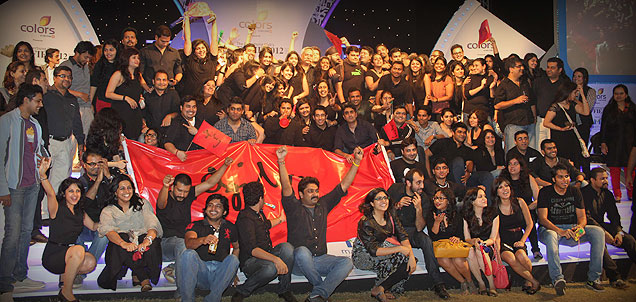

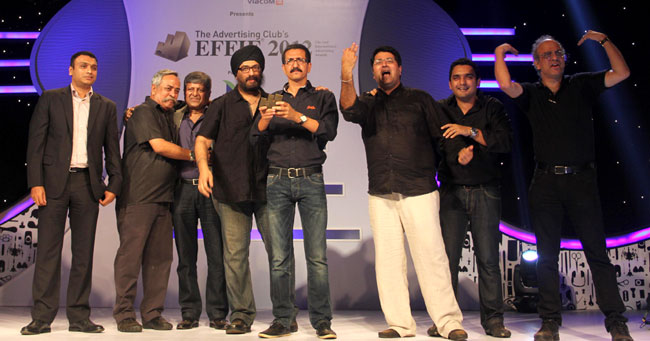
























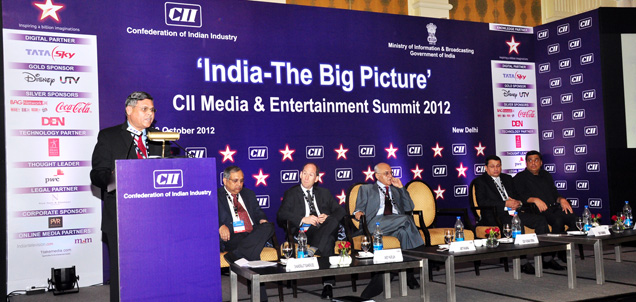














 Intially when television was launched in the country, its main role was to educated and enlighten people. Doordarshan showcased not only documentaries but also shows dealing with social issues. With a high rate of illteracy in the country, television was seen as a great option to bring about a change. However, with privatisation and coming in of cable TV, things changed. Media became more of a business than a medium to bring about that change. Broadcasters now are more worried about ratings and gaining popularity among its audience. However, in the past few years, GECs are showcasing serials which have taken a bend towards social issues. But there are two things one needs to keep in mind:
 We need to make the differentiation when we say that GECs are taking up the role of social activists; that is, break up GECs into two verticals: fictional and non-fictional shows. When we talk of fictional shows, there are issues in these serials that agitate the mind of the audience today with the everyday issues such as dowry, corruption, rape etc which are seamed into the storyline. Now because it agitates the mind of the audience, the viewer gets absorbed into the episode or the episodes of the fictional show. I don’t think, in the fictional shows, they are trying to be the activists. At the end of it all, the aim of fictional show is essentially to sell it to the advertising and marketing fraternity, and to grab eyeballs. Being an activist in a fictional show is difficult since the show follows the storyline with the characters into it. Usually, what they do is plug a sub-story into the show and then they carry it forward. The moment you try to talk too much about it, the show becomes preachy, which people wouldn’t like. It is all about eyeballs.