The Advertising Standards Council of India (ASCI) has launched the #ChupNaBaitho, a call-to-action digital campaign, to create an awareness about objectionable advertisements and encourage consumers to report such advertisements. In the three-month pilot, ASCI will focus on Mumbai and New Delhi.
Said Manisha Kapoor, Secretary General, ASCI: “One of ASCI’s key objectives is to turn consumers into allies. We want them to be more aware of their rights and what constitutes objectionable advertising. We want them to report such claims to us and we promise to act quickly and decisively on such complaints. The overall goal is to drastically reduce the number of misleading and objectionable advertisements. Over the last few months, we have introduced several guidelines, reports and advisories like the ones on COVID-19 advertising and Online Gaming for Real money winnings. The Trust in Advertising report that studied how much faith consumers have in advertising is another example of how focused we are towards protecting consumers. #ChupNaBaitho is another step towards this goal. We want to encourage consumers, especially the youth, to report advertisements that they find objectionable. This campaign is just the start and will be followed by other such initiatives in the year.”
Congratulations, ASCI. I serious sincerely love this. However, I am not fully satisfied. There are mixed emotions. It was waiting to happen for a long time. ASCI banning brands for Surrogate advertising– mainly Surrogate Liquor Advertising is excellent.
ASCI (short for Advertising Standards Council of India) is often compared to be a toothless tiger or a dog that can bark and not bite. Recent changes in the law dealing with Surrogate Advertising gave ASCI a positive momentum. May be this is a result of it.
Blatant Surrogate Advertising
To a layman and public at large, the surrogacy of these liquor advertising was never in doubt. Often, questions on industry turning a blind eye to such rampant surrogacy were raised and not well defended in the classrooms. The law should take its own course used to be the only saving grace. The change in the rules and the framework have added to the ASCI power and intent to act.
ASCI’S Surrogate v/s Genuine Brand Extension
• For a brand extension of a product (liquor, tobacco, etc.) to be considered genuine, it must be registered with an appropriate government authority such as the Food and Drug Administration and the Food Safety and Standards Authority of India.
• In-store availability must be at least 10% of that of the leading brand in the category that the product competes, or sales turnover must exceed Rs 5 crore per annum or Rs 1 crore per annum in each state it is distributed in
• It must have a valid certificate from an independent organisation for such turnover and distribution data.
• Advertising for such brand extensions cannot feature what is prohibited by law or banned products. Neither can the advertising allude to or hint at products that cannot be advertised.
• As per the law, advertisements for liquor brand extensions can run on TV if they have a CBFC certificate.
Nexus
This blatant use of Surrogate Advertising could not have happened without a substantial nexus between the clients, advertising agency, media houses and Brand Ambassadors. Names like Ranveer Singh, Rohit Sharma, Jaspreet Bumrah, Virat Kohli and Priyanka Chopra have featured in what seems explicit surrogate Liquor advertisements.
Are these celebrities, including sportsperson not sure of what they are doing and how the youth idolises them? It seems they don’t care. I am yet to see icons refrain from the lure of surrogate advertising.
Ethics – Morality V/s Blindness V/s Business
For agencies, media owners it is business as usual. Do we seriously believe they do not know that the brand that they are advertising is a surrogate and may not be a genuine brand extension? How is that possible? These are big Agency brands. What makes them work on such projects? Creative license. Celebrity association. Awards. Maybe awards cannot have a category for best Surrogate Advertising.
Yes, I have also said that I will work on any brand that is legally allowed to be advertised. And I stick to it. But, I will not do misleading advertising.
ASCI not on time
It is good to note that ASCI as a self-initiative took some 14 brands under the scanner. Another 12 were taken to ASCI’sASCI’s Consumer Complaints Council (CCC).
In November 2020, ASCI wrote to brands within 24 to 48 hours of commercials’ airing during the Indian Premier League (IPL). But, once again, the process seems too long.
Inaction by ASCI in the past has been called out by many. This includes the possibility of exposing under Legal Drinking age kids; rightly pointed out by Sandeep Goyal as more toxic and injurious than a mere commercial transaction. In his article in Brand Equity, Sandeep pointed out that ‘surrogates use the logos, colours and graphics of the original liquor parents. Just, the ASCI doesn’t seem to see them. It violates Cable Television Networks (Regulation) Act, 1995, Rule 7(2)(viii). The act prohibits the direct or indirect promotion of cigarettes, tobacco products, wine, alcohol, liquor and other intoxicants. Moreover, it prohibits using particular colours and layout or presentations associated with prohibited products.’
Surrogate Advertising Wins. Feel Cheated
It pains to see that the industry body has not named the 12 brands that have been banned. I am in with Sandeep Goyal in feeling Cheated by the process and non-transparency. ASCI always called brands – then why is Liquor Category being treated differently. A review petition filed by four of the advertisers is a strong statement to show that many know what they have been doing.
LEGALLY ADVERTISING.
A press note that appeared in 2019– clearly pointed out that the Whisky Brand has signed on the celebrity. In 2018, ICC took Royal Stag as a partner with ”Make It Large” brief – what was Large was obvious. It even had a limited edition world cup pack– and what else do you need to influence and connect with the youngsters. In this case, the sports Governing body, the Brand Royal Stag and the celebrity all maybe legally doing right what is wrong. But then that is not surrogate advertising.
Here is ROYAL STAG – make it large. Trust it is just the PACKAGED MINERAL WATER.
I enjoy the Imperial Blue Men-will-be-men series. But, I am sure it is an example of surrogate advertising.
Eight out of 10 people trust advertising. That’s the basic standout from a study commissioned by the Advertising Standards Council of India (ASCI) and the Indian Society of Advertisers (ISA), and conducted by Nielsen.
The Trust in Advertising study was conducted with people across age groups in 20 centres in India, including metros, smaller towns and rural areas. The study found that eight out of 10 people trusted advertising messages across media.
TV (94%) was the most common medium for consumption of advertising, followed by digital (82%), print (77%) and radio (29%). Viewership of TV ads is driven by non-metro markets. Interestingly, viewership of ads on digital is the same in rural (82%) as it is in metros (83%).
Prasun Basu
According to Prasun Basu, Global Head, Strategic Alliances and New Verticals Nielsen, this demonstrates the growing importance and centrality of this medium in the hinterland. ASCI spotted early that the growing consumption of digital content and advertising pointed to a permanent change in consumer behaviour and marketing. Accordingly, it set up robust monitoring mechanisms for digital platforms alongside its monitoring of print and TV advertising. It now scans more than 3,000 digital platforms for misleading messages.
Advertising seen on traditional media continues to enjoy high trust amongst consumers. Advertising in newspapers (86%) emerged as the most trusted, closely followed by that on TV (83%) and Radio (83%). Text/SMS ads were the least trusted at 52%.
In terms of shifts, consumers put greater trust in advertisements consumed on TV, print, radio, social media, outdoor and search engines as compared to what they did in a similar survey conducted by Nielsen in 2015, but there is a fall in the percentage of consumers trusting text messages over this period (58% vs. 52%)
Among sectors, audiences displayed a very high level of trust for advertisements of educational institutions at 82%. This is possibly because culturally, Indians have a strong belief in education as a means to secure their future. Ironically, ASCI finds that a significant portion of misleading ads come from the education sector. ASCI therefore has a high focus on education sector advertising.
Manisha Kapoor
Said Manisha Kapoor, Secretary General, ASCI: “ASCI’s job of monitoring the education sector is even more crucial, given these findings. In India, the poorest of people prioritize education spends over other necessities. Most educational institutions promise job guarantees or make false claims of being the No 1 or guaranteeing 100% placement without any objective data or evidence. We are doing our best to make sure that such false advertising is removed from the market,”.
Sunil Kataria
Added Sunil Kataria, Chairman of ISA: “Brands are built on the back of long term communication with consumers and audiences. It is in the advertisers’ own self-interest to make sure that all communication is honest and truthful, so consumers can trust advertising messages, and thereby, brands. This study helps advertisers, agencies, media owners and planners understand what works well and introspect on what needs improvement”
The detailed findings of the study can be accessesd by clicking here
In August and September 2020, the Advertising Standards Council of India (ASCI) reports that it has looked into complaints against 317 ads, of these 64 were “promptly withdrawn by advertisers on ASCI’s intervention”. The independent Consumer Complaints Council (CCC) of ASCI evaluated the remaining 253, of which complaints against 221 advertisements were upheld. Of these 221 advertisements, 101 belonged to the education sector, 77 to healthcare, eight to food and beverage, seven to personal care, three to finance and investments and 25 were from other categories. Complaints against 32 advertisements were not upheld as they were found to not be in violation of the ASCI code.
Notes a commuique: “In August and September both, the education sector saw a sharp rise in institutes making misleading and false claims in their advertisements, claims such as top of their field, Ranking No. 1, 100% job placements, best institute, 100% passing rate, were the most used claims that violated ASCI’s code. One online learning app claimed to be the best and pioneer of live online classes. Many educational institutions didn’t have substantial data and surveys to support the claims they were making and the CCC recommended that these advertisements be declared misleading. ASCI also upheld misleading ad claims made on various digital platforms like Instagram, Twitter and Facebook.”
Said Manisha Kapoor, Secretary General of ASCI said: “Covid-19 related claims as well as misleading education claims continued to dominate the kind of complaints we received at ASCI during this period. The independent Consumer Complaints Council (CCC), which comprises members of civil society as well as industry, jointly view such advertisements and adjudicate. The CCC goes deep into understanding the underlying complaint and the advertiser response and justification before an opinion is given. ASCI’s only goal is to promote responsible advertising which safeguards consumers.”
The Advertising Standards Council of India (ASCI) has issued a statement following a decision on the complaints received against the Tanishq advertisement. The complaint that the ad was objectionable “since it promoted communal intermingling”, as per an ASCI communique.
Added the ASCI communique: “The advertisement in question was viewed at ASCI by an independent multi stakeholder panel – The Consumer Complaints Council, which balances view points from industry, civil society, lawyers, consumer activists as well as domain experts. This panel was unanimous that nothing in the advertisement was indecent or vulgar or repulsive, which is likely in the light of generally prevailing standards of decency and propriety, to cause grave and widespread offence. The complaint was not upheld, as the advertisement did not violate the ASCI codes of honesty, truthfulness and decency in advertising. Therefore ASCI has no objection to the airing of this advertisement, should the advertiser choose to do so.”
In the months of June and July 2020, the Advertising Standards Council of India (ASCI) investigated complaints against 363 advertisements, of which 76 were withdrawn by advertisers. The independent Consumer Complaints Council (CCC) of ASCI evaluated remaining the 287 advertisements, of which complaints against 257 advertisements were upheld. Of these, 150 belonged to the healthcare sector, 40 to education, 20 to food and beverages, 4 to GAMA complaints, 12 to personal care and 31 to the other category.
Subhash Kamath
Said Subhash Kamath, Chairman of ASCI: “There has been a flood of advertisements with dubious claims about COVID-19 cures and preventions. Especially at this time when consumers are feeling more vulnerable about the virus, it becomes more important for us as regulators to ensure that these ads don’t exploit the consumer’s anxiety. We understand that such claims can adversely affect consumers and we are committed to work closely with the Ministry of Ayush to help eliminate such malpractices from society.”
In the week before the last, the Consumer Affairs Ministry had issued a draft of the Central Consumer Protection Authority (Prevention of Misleading Advertisements and Necessary Due Diligence for Endorsement of Advertisements) Guidelines, 2020 requesting people to submit their comments and suggestions on the guidelines by September 18, 2020. As per industry estimates based on TAM Adex data, the size of total surrogate advertising in India is around Rs 700-800 crore per annum with 70% share of TV in the pie. The new draft guidelines, if enforced with immediate effect, may affect the post lockdown financial recovery of TV channels.
Along with guidelines for endorsements, definitions for valid advertising, new rules for advertisements targeting children etc., the new guidelines clearly prohibit surrogate advertising — the practice of promoting banned products like liquor and tobacco by promoting another product under the umbrella of ‘Brand Extension’ unless the promotion of the said product advertised under the same brand name can be substantiated with certain proofs of its legitimacy. The legitimacy would be judged based on (a) if the new product is produced, distributed and sold in ‘reasonable quantities’ having regard to the scale of the advertising campaign in question, the media used, and the markets targeted and (b) do not have any direct or indirect indication of a banned product. While the guide lines do not give definition of ‘reasonable quantities’, the same allow for some concessions like advertisements wouldn’t be disqualified just for using similar branding of a banned product.
The revised guideline issued by the Ministry of Information & Broadcasting last week, under rule number 7(2)(vih)(A) of Advertising Code in the Cable Television Network Rule 1994, notifies that all such TV commercials falling under the ‘Brand Extension’ of banned products like cigarettes, other tobacco products, wine, alcohol, liquor etc. will have to be first previewed by Central Board of Film Certification and certified as fit for consumption before any TV channel can broadcast the same. It is not very clear from the advisory if the legitimacy of the product will also be reviewed by the CBFC or if that would be done separately by the MIB before the advertiser invests in the production of the TV commercial. Traditionally, the Chairman and members of the CBFC are from the film and entertainment industry. The CEOs are usually selected from bureaucrats like Ravinder Bhakar, a 1999 batch officer of Indian Railway Stores Service (IRSS), who has taken over as the Chief Executive Officer (CEO) of Central Board of Films Certification (CBFC) from March 2020.
Can ASCI play an active role in this entire new process of decision making on surrogate advertising? They would be in a far better position to judge the legitimacy of the product than the MIB or CBFC. ASCI’s role has been acclaimed by various Government bodies including The Department of Consumer Affairs (DoCA), Food Safety and Standards Authority of India (FSSAI), Ministry of AYUSH as well as the Ministry of Information and Broadcasting (MIB). In January 2017, the Supreme Court of India in its judgement affirmed and recognized the self-regulatory mechanism as an effective pre-emptive step to statutory provisions in the sphere of advertising content regulation for TV and Radio in India.
I read a research paper ‘Surrogate Advertising or Brand Extension Advertising: A Need for Strict Norms’ authored by Prof. Neha Bansal in International Journal of Marketing & Financial Management, Vol. 2, Issue 1, Jan-Feb-2014 ISSN: 2348 –3954. Prof. Bansal presented in her paper a six point formula for developing and implementing strict norms:
1. Developing an explicit plan of action.
2. Code to differentiate between acceptable advertising from unacceptable advertising.
3. Translucent laws for banning such kind surrogate promotion.
4. More powers in hands of ASCI.
5. Increase consumer awareness.
6. Strict actions against those involved to set lesson for future wrong doers.
The Consumer Affairs Ministry and the Ministry of Information & Broadcasting have taken steps in the right direction except involving ASCI in the process. ASCI can also explain to the ministry the need for having a two step approval process, first getting the legitimacy of the brand extension approved and then applying for the approval of the TV commercial to avoid the financial loss of investing in a TVC and then getting stuck at the approval stage on the legitimacy issues. ASCI can also advise the government regarding the paper work needed for establishing the legitimacy of the products as ‘non-surrogate’ and as genuine brand extension. We can only hope that good sense will prevail in the implementation of the new rules drafted by the government and adequate notice would be given to the industry for changing their advertising campaigns as per the new guidelines.
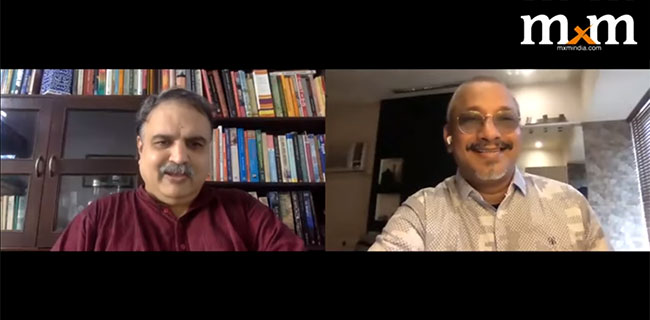
Last Thursday, September 10, CEO of BBH-Publicis Worldwide Subhash Kamath was unanimously elected Chairman of the Advertising Standards Council of India (ASCI). We interviewed him a day later as part of the MxM Live Leadership Series, and Kamath was, as always, his candid best. But first a disclosure, I have been a part of ASCI’s Consumer Complaints Council for a few years, but that I must tell you is purely coincidental.
A little about Kamath: He has been in the business of building brands for over three decades (32 years, to be precise), 22 of which have been in senior leadership roles. Over those many years, he has worked in renowned creative agencies in India like Ogilvy, Trikaya Grey, Ambience Publicis and Bates 141. He was one of the founding Managing Partners at BBH India in 2009 and currently serves as the CEO for BBH & Publicis Worldwide, India which is part of the Publicis Groupe.
Kamath has been an active member of The Ad Club in the past and has served on the Board of Governors of the Advertising Standards Council of India (ASCI) since 2010. He plays in a rock band called ‘Wanted Yesterday’, and is crazy about cricket, single malts and good food.
Subhash Kamath, Chief Executive Officer at BBH & Publicis Worldwide, India, has been unanimously elected chairman of the Board of Governors of the Advertising Standards Council of India (ASCI). The vote was held at the Board meeting that followed the 34th Annual General Meeting on Thursday, September 10, afternoon.
NS Rajan, Managing Director, Ketchum Sampark was elected Vice-Chairman and Shashidhar Sinha, CEO, Mediabrands India P. Ltd was reappointed as honorary treasurer at the same meeting.
The Board of Governors includes: Abanti Sankaranarayanan, Co-Chairman & Board Member, ISWAI; D Shivakumar Group Executive President, Aditya Birla Management Corporation P. Ltd; Girish Agarwal, Director, Dainik Bhaskar Group ; Harish Bhat, Director, Tata Consumer Products Ltd; KV Sridhar, Chief Creative Officer (Global), Nihilent Ltd; Madhusudan Gopalan, CEO, Procter & Gamble Hygiene and Health Care Ltd; Rohit Gupta, President – Network Sales & International Business, Sony Pictures Networks India P. Ltd; Prof SK Palekar, Centre For Developmental Education, IFIM Business School; Priya Nair, Executive Director Beauty and Personal Care, Hindustan Unilever Ltd; Prasun Basu, President – South Asia, Nielsen (India) P. Ltd; Sivakumar Sundaram, President Revenue, Bennett Coleman & Co. Ltd; Umesh Shrikhande, CEO, Taproot India Comm. P. Ltd.
Said Kamath: “It’s a genuine privilege to accept this role as Chairman of ASCI. Having served ten years on the board, I have had the honour of working and learning from very senior and experienced leaders of the industry. More importantly, I have learned the immense value of self-regulation and the far reaching impact of the work ASCI has done over the years. Our industry today is at a crucial stage. With the digital revolution influencing brand messaging and engagement with consumers, advertising is evolving rapidly. And with the recent formation of the Central Consumer Protection Authority constituted by the government, self-regulation will be even more crucial in promoting consumer confidence and trust. As I have always said, with great creative power, comes great responsibility. So I look forward to working closely with the ASCI team to continue the good work set up by my predecessors and to introduce some newer, more future-facing initiatives as well.”
Recalling his year-long tenure at ASCI, outgoing chairman Rohit Gupta added: “I thank all my colleagues, ASCI members and everyone who was part of this incredible journey. I am glad I was given an opportunity to drive the body that spearheaded important changes in the advertising industry. This year has been the most eventful for ASCI as we tackled several challenges. The pandemic saw many misleading ads, which were dealt with immediately. The Ministry of AYUSH reached out for help in flagging misleading advertisements regarding prevention and treatment of Covid-19. We also signed up with TAM to monitor 3,000 digital portals for misleading claims. We successfully met the three objectives we had set: increasing our consumer base, monitoring the digital space and working closely with government bodies. I wish Kamath and the board the very best.”
At the AGM, veteran mediaperson Roger Pereira presented a tribute to Brahm Vasudeva, non-executive chairman of Hawkins Cookers and the first chairman of ASCI, who passed away in July. ASCI members missed his presence at the AGM where Vasudeva would always come up with pertinent and well-researched questions.
The Advertising Standards Council of India (ASCI) has partnered with TAM Media Research to add the monitoring of digital platforms to the already tracked print and television media under its National Advertising Monitoring Service (NAMS) for identifying potentially misleading advertisements. Initially, ASCI will track the food and beverage, healthcare and education sectors on digital media as they accounted for 79% of the complaints processed by ASCI last year, notes a communique, which adds: “With this, ASCI will now be monitoring a media horizon that is estimated to have more than 80% of India’s advertising spend on it. With digital advertising now accounting for 30% of the total mediaspends, and growing fast, this was the need of the hour. The variety of platforms covered spans search engines to video sites, news portals and websites for interests like astrology and automobiles. It is a natural extension of the responsibilities ASCI takes on to ensure the highest ethical standards in advertising and to increase consumer trust in it.”
Said Rohit Gupta, Chairman, ASCI: “We live in a world that’s becoming more digital by the day, so a lot of marketing is shifting to such platforms. For a self-regulatory body, it makes sense to expand our monitoring of the offline space to include the online space as well. I believe ASCI is the only self-regulatory organisation in the world that does such extensive and ongoing monitoring of advertising. We couldn’t have asked for a better partner than TAM – its reputation and wide experience will help us achieve our mission to enhance trust in advertising and to ensure that our ethical code is adhered to.”
The Advertising Standards Council of India (ASCI) has named Manisha Kapoor as its new Secretary-General. From September 1, Kapoor will take over ASCI’s secretariat responsibilities, including the consumer complaints redressal process as well as the marketing, public relations and social media initiatives. Kapoor has been part of ASCI’s Consumer Complaints Council for the past five years and is, therefore, closely associated with the advertising industry’s self-regulatory body. She will take over from Shweta Purandare who joined ASCI eight years ago as Chief Complaints Officer and took over in 2014 as the Secretary-General.
Said Rohit Gupta, Chairman of ASCI: “We thank Purandare for her work in achieving our vision and her belief in our goals and motto. She was instrumental in enabling ASCI’s closer engagement with the regulators resulting in ASCI signing MoUs with the Department of Consumer Affairs, the Food Safety and Standards Authority of India and the Ministry of AYUSH. As she embarks on the next phase of her career, we wish her the very best. We are delighted that Kapoor will take on the role now. We look forward to her valuable inputs and leadership.”
Added Purandare: “It has been an extremely enriching experience professionally through which I could contribute to ASCI’s transformation in terms of capacity, capabilities and stature. As I move on to undertake a new journey, I wish Kapoor the very best.”
Said Kapoor: “It’s an honour to be given the responsibility of leading ASCI’s vision for the future. I look forward to working closely with all of ASCI’s stakeholders and furthering its agenda of fairness in advertising.”
Kapoor has more than 25 years of experience in building brands and businesses. Having worked with companies like Hindustan Unilever and J&J India, she has also consulted with corporations on brand development and strategy for the past 15 years – first with MarketGate Consulting and more recently with Futurebrands Consulting. Kapoor has also worked with non-profits and the government on development sector projects.
The Advertising Standards Council of India (ASCI) has mandated Pitchfork Partners Strategic Consulting with its public relations and digital counsel following a multi-agency pitch. Ketchum Sampark held the mandate until recently.
Rohit Gupta
Said Rohit Gupta, Chairman, ASCI: “When it came to choosing our communication partner, we wanted people who could synergise with ASCI’s vision and direction, refresh its communication and ensure that our connection with consumers strengthens more than ever before. We are delighted to have Pitchfork Partners as our communication experts. Pitchfork’s young team and expertise will help us achieve our mission.”
Jaideep Shergill
Added Jaideep Shergill, Co-founder, Pitchfork Partners: “We are elated to partner with ASCI. With the growth in miscommunication through advertisements which in turn harms the consumer, especially in these times, ASCI has a very important role to play. The new consumer protection regulations mean great empowerment for consumers. This is an opportunity for ASCI to make an even stronger impact and underscore its leadership role in consumer protection and responsible advertising. Pitchfork Partners will assist ASCI through its strategic counsel in this effort.”
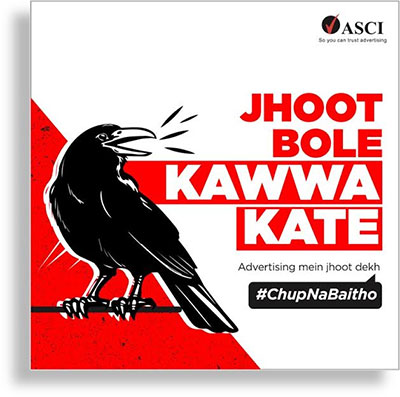 The Advertising Standards Council of India (ASCI) has launched the #ChupNaBaitho, a call-to-action digital campaign, to create an awareness about objectionable advertisements and encourage consumers to report such advertisements. In the three-month pilot, ASCI will focus on Mumbai and New Delhi.
 Congratulations, ASCI. I serious sincerely love this. However, I am not fully satisfied. There are mixed emotions. It was waiting to happen for a long time. ASCI banning brands for Surrogate advertising– mainly Surrogate Liquor Advertising is excellent.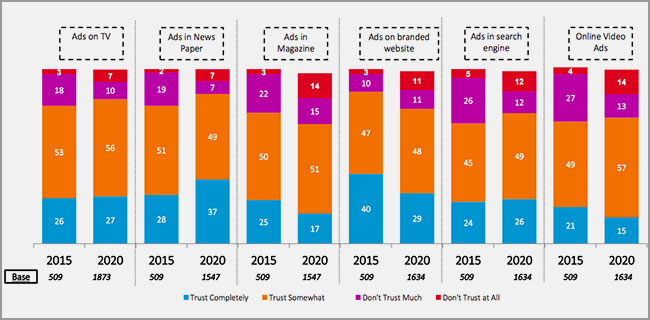





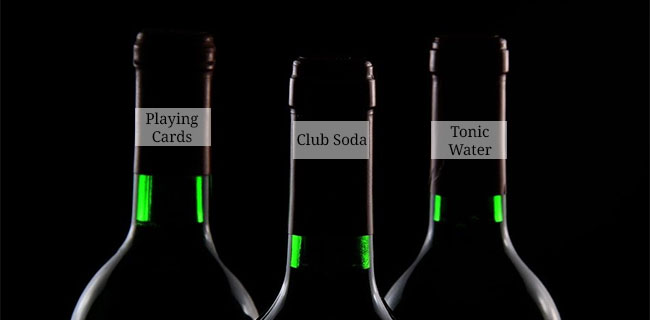
 In the week before the last, the Consumer Affairs Ministry had issued a draft of the Central Consumer Protection Authority (Prevention of Misleading Advertisements and Necessary Due Diligence for Endorsement of Advertisements) Guidelines, 2020 requesting people to submit their comments and suggestions on the guidelines by September 18, 2020. As per industry estimates based on TAM Adex data, the size of total surrogate advertising in India is around Rs 700-800 crore per annum with 70% share of TV in the pie. The new draft guidelines, if enforced with immediate effect, may affect the post lockdown financial recovery of TV channels.