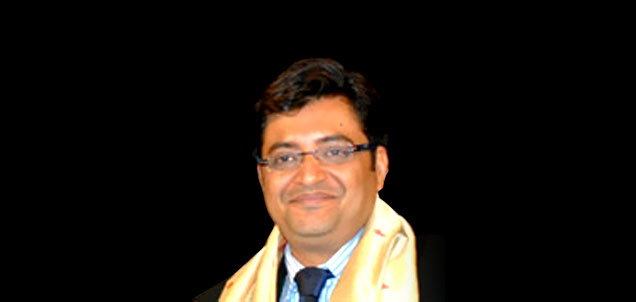
By Ranjona Banerji
It’s the biggest media news of the week, no question there. Hell, the year, the decade or at any rate since November 2008. Arnab Goswami, editor-in-chief of Times Now, emperor of the Newshour, copyright holder of “The Nation Wants to Knowâ€, asker of the “Burning Questionâ€, ruler of the airwaves, has quit. Of course, you already knew that, even if you’ve been living on Mars. The Indian nation which wants to know is hampered neither by geographical boundaries nor by the limits of space communication.
It’s the biggest media news definitely. But what does it mean for journalism? For at least a year, if not more, there have been some serious questions asked about whether Times Now under Goswami practised journalism at all, at least not in the way most of us journalists understand it. This is after making allowances for the allowances that television makes with journalism.
There have always been journalists who think it is their duty to toe the government line. But Goswami seemed to take that several notches further, he took up cudgels on behalf of the Narendra Modi-led government at the Centre and fought battles on its behalf. Anyone who disagreed with the government was anti-national and guilty of treason.
In his emotional farewell speech to his team, in a video easily available on the internet, Goswami is heard saying: “Don’t lose faith in independent India… Nobody can teach us independent media. It has come and I have been able to do it only because of you.â€
There is no question that Goswami’s brand of primetime news debates took the nation by storm. Since he shot into the limelight during Times Now’s coverage of the November 2008 Mumbai attacks, he has come a very long way. He was no longer the man in the background, playing second-fiddle to those who were the then Star News’s star anchors, Barkha Dutt and Rajdeep Sardesai.
He slowly built his own distinct identity as he built up an identity for his show. He put up one of the best defences of women’s rights I have heard on Indian television. He took up people’s issues which other news channels did not.
But as time passed, and especially since May 2014, Newshour became less about journalism and more about melodramatic theatrics from both the anchor and the panellists. It also became about all-out support for the government at the Centre. And it made that fatal mistake for journalists – it stopped asking questions of the authorities. How often has Goswami repeated his “never ever never never ever†outrage with any member of the BJP, as he had done with BJP member Meenakshi Lekhi, after the BJP came to power at the Centre?
That the Bennett Coleman management and Goswami seemed a bit out of sync has been evident for a while. There were strong rumours that Goswami was on his way out earlier this year as the group’s flagship newspaper The Times of India and Times Now seemed at odds with each other. However, on February 29, the “editors†of the group put out a statement which put forth the idea that BCCL is a “federal structure†where each media outlet within the group can follow its own path.
The statement made some intriguing points, if you read between the lines: “Federalism in this Indian tradition is, therefore, a balance between two conflicting forces that always apply to any collective human endeavour – authority and liberty. Neither can exist on its own, both need to feed off each other, and they always challenge each other. Progress is a tug of war between authority and liberty. Federalism provides for the best solution to this conflict because, while there is an authority, the powers of that authority are limited by liberty, and those powers diminish as the collective grows.â€
But perhaps even such hi-falutin’ thinking has its limitations. Over the past few weeks, tweets from BCCL managing director Vineet Jain have shown a complete dissonance with Times Now over the news channel’s stance on Pakistani artistes performing in India. Jain emphasised the need for India to stand up for its liberal ethos and encourage “soft powerâ€. If Times Now had that much courage, it would have dubbed its own managing director a pro-Pakistani traitor, the way it had TV journalist Barkha Dutt and indeed every person who disagreed with the government on its Pakistan policy.
In Goswami’s farewell speech he also said, “We have nothing but our professional ability.†That is absolutely true. But it is also evident that the definition of professionalism is not absolute. The way Goswami has practised it in recent times is not the way journalism deserves to be practised.
There are rumours that Goswami is looking to start his own news channel to “challenge the hegemony of the West†or, conversely, that he and a BJP-inclined MP and a Murdoch-owned TV conglomerate will launch Fox News in India. We wish him well and are certain he will thrive especially in Rumour 2!
**
What will happen to Times Now? I have no doubt it will survive because everyone knows that no one is indispensible. But as Pradyuman Maheshwari, editor-in-chief of MxMIndia has pointed out on this website, Times Now’s problem is that it has not built up a second line. So Times Now may take a while to recover.
And as fellow MxM columnist Jaisurya Das stated in a recent column: “Well, this is left to be seen but I certainly don’t envy the TOI group at this stage. They over-marketed him and now face serious brand erosion. One man, one show and the entire media house rides on him…â€
**
Interestingly, here’s Akshaya Mukul of The Times of India and winner of a Ramnath Goenka Award for Excellence in Journalism on why he refused to accept the award from Prime Minister Narendra Modi: “I cannot live with the idea of Modi and me in the same frame, smiling at the camera even as he hands over the award to me.â€
Mukul, a senior journalist, won the award for his book The Making of Hindu India. He referred in his refusal to attend the event to the events at Patiala House Court in February this year, when journalists were attacked by lawyers led by a BJP member, OP Sharma.
Well there are journalists and there are journalists within a “federal structureâ€, right?



 In 2008, well before 26/11 or the Mumbai terror attack, I had written that Arnab Goswami is a lot better than Rajdeep Sardesai and Barkha Dutt (and of course a host of other stars on NDTV). He asked the tough questions, he spoke for you and me. There were no holy cows in his book then.
 Ding dong ding dong… hear that? It’s the death knell of journalism being rung in India thanks to Times Now. That Times Now is on a collision course with both good sense and reality is well known. But did the new channel reach the end game on Thursday, March 26, after India lost in the semi-final of the Cricket World Cup against Australia in Sydney? The answer could well be “yes”.I can safely say that I have never been as appalled with a pair of journalists in 30 years in the profession as I was with the display that Anand Narasimhan and Tina Sharma Tiwari put up on television after the semi-final. People reacted with so much anger to their “#ShamedAtSydney” hashtag running across the screen that #ShameonTimesNow was soon trending on Twitter and continued to do so up to Friday morning.