Tag: Arnab Goswami

  • Ranjona Banerji: News or Entertainment?

    By Ranjona Banerji


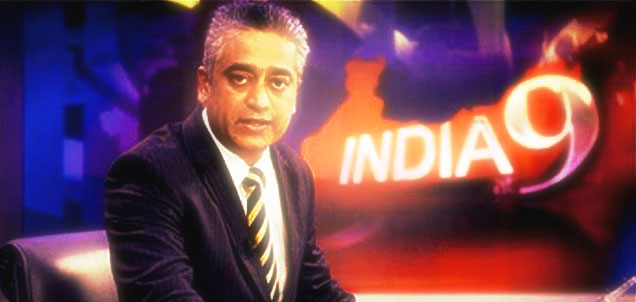
    This is a story which I heard the other day. A friend who lives abroad went to a restaurant in Mumbai one evening to get some food packed. He found that the TV screens were all on Arnab Goswami and Times Now. He asked the owner how he could bear it. The owner laughed and said, “But sir, this is more entertaining than any soap or serial.”


    I write this as several media commentators have made some very succinct, incisive and well-argued comments on the damage done to journalism by Goswami in his crusader mode, especially when he fought for India’s image with his #NirbhayaInsulted hashtags, railing against the India’s Daughter documentary.


    However, I might want to argue that in many ways TV in India has gone beyond journalism. There is almost no space for the boring, anodyne, journalistic stuff any longer. It’s now all hysterics, outrage, anger, reaction and provocation. And finally, you just have to laugh. I would argue that Goswami is a pioneer in India who has redefined TV news. There was a time when I compared him to Howard Beale in Sidney Lumet’s 1976 classic Network. But Goswami has gone beyond Beale and created a distinct and enviable persona of his own. The mood at dinner time or in drawing rooms rises and falls to the cadences of his voice as he builds up his case for the night.


    And whether they admit it or not, half the news anchors in India either emulate, copy or want to be like him. There are a few who are hanging on to their shreds of sanity. And there are some star TV anchors who bemoan what TV has done to journalism. But those are just the last remnants of a lost civilisation.


    News is now entertainment in India and it will take a revolution to change that.


    **


    The most intriguing love-hate relationship in India is between TV journalists and the Aam Aadmi Party. When it was the India Against Corruption movement, TV loved it. TV cameras exaggerated crowd figures as did reporters. TV anchors made us believe the whole country had come to a standstill. Even I believed it and dragged a friend interested in politics to Azad Maidan with me to watch this phenomenon. It was sorely disappointing to watch a straggling crowd of a few hundred when I had been led to believe it was thousands. Luckily, the Mumbai Press Club and cheap Old Monk is close enough to drown all sorrows and outrage at TV, er, lies.


    That was 2011. Since then it was been a very rocky relationship between TV and Kejriwal and clan. No other political party in India, and this is in spite of all the efforts of Sanghi trolls and Congi agents, has been under such close scrutiny as the AAP. Every move it makes or doesn’t make is analysed in high decibel theatrics.


    The AAP has been peculiarly obliging to the media too, letting itself and its supporters down with clockwork regularity. All its shenanigans seem to be made for TV too, with sting operations and press conferences and public dissent and revolution. AAP and TV media are now involved in one of those symbiotic or parasitic relationships you read about in nature, where one organism cannot survive against the other.


    All the established parties can spend millions and try as much as they like to win PR battles. AAP has figured out the publicity game perfectly even if it is often to its own detriment.


  • AAPHEW! Ranjona Banerji: Times Now, Twitter score with Delhi results

    By Ranjona Banerji


    “ARNAB GOSWAMI JUST CONGRATULATED ARNAB GOSWAMI FOR HIS VICTORY IN THE DELHI ELECTION!”


    This is a tweet, capital letters and all, from Overrated Outcast (@Over_rated). Because without a doubt, Times Now was the only channel worth watching, for its entertainment value at least, as the results of the Delhi state elections were being counted.


    It started soon after 8am on February 10 as the counting started. Other news channels started putting out trend figures. Goswami was spitting scorn. Other channels, he said, were “psephological paparazzi”. Some hapless guest tried to claim that phrase as his own. I laughed so much that I missed who the guest was: mea culpa. But Goswami used the phrase through the morning as results poured in and has effectively made it his own.


    He carried on with it and by 11.40am was even asking for a CBI enquiry into news channels which put out figures which inflated the BJP’s wins!


    Times Now and Goswami also took great glee in pointing out that exit polls and forecasters got the Delhi election wrong, since the Aam Aadmi Party effectively swept through Delhi. But one might point out that the night before, on February 9, Navika Kumar of Times Now said that the BJP could not be written off since the BJP claimed that there was a voting surge for them between 3 and 5 in the afternoon on voting day. Goswami did not at that time react as fiercely as he did with such claimants on February 10.


    Instead, Goswami, who is often seen as pro-BJP, took off on the BJP as the results became clear. Shazia Ilmi walked out of the studio after being asked tough questions. This is a sure way of getting ahead of the rating points for any channel and Times Now has won.


    Having surfed through most news channels in various Indian languages, it was clear that the most exciting channel was Times Now. And all credit for that has to go to Goswami for being compelling viewing, with all the attendant melodrama and hysterics. He interrupted the discussions to show us where in the world the hashtag #TimesNow was trending. The US apparently, where he told us, Times Now has a huge following. No ad breaks, however.


    But having doffed my hat to Times Now and it is still blaring as I write this, the winner has to be Twitter across all media. There is no better way to track news events. You don’t just get the news but you get humour, analysis, wit, scorn, anger, bitterness and rubbish as well: the whole human experience.


    And as for tracking the election results, the Election Commission is surely the most reliable: http://eciresults.nic.in/.


    You can track the results through constituency, party and vote share. You can therefore be ahead of the hysteria of news channels. Though the fun of Arnab Goswami cannot be beat! NDTV, too civilised and calm. Headlines Today looks like a CNN-IBN copy unless Rahul Kanwal and Gaurav Sawant are allowed to prance about. NewsX looks like a copy of all. CNN-IBN looks like His Master’s Voice except the BJP master and his main puppeteer are missing in action after this drubbing.


    **


    Jokes aside though, there is an urgent need for India’s best known journalists, especially those on TV, to do a little thinking. Their all out sycophancy for the government at the Centre has run its course. No?


  • Times Now unveils campaign focusing on new positioning

    By A Correspondent


    Times Now has always believed in taking a tough stand against issues that affects the nation. Raising the voice for ‘Positive Provocation’ and asking ‘The Right Questions’ that lead to action has always been the core of the channel’s philosophy. With the conviction to shape a better tomorrow, the channel further strengthened its core philosophy of through a sharp-focused positioning – Action Begins Here. The channel has launched a series of hard-hitting, issue-based films to reiterate its repositioning.


    M K Anand

    MK Anand, CEO & Managing Director, Times Television Network said, “’Action Begins Here’ truly articulates what Times Now stands for, it explains what we are really doing. As india’s leading News brand, we are well aware of the power our voice has in society. And we constructively use that power to give voice to issues that affect our nation and raise the right questions that lead to Action. Action that leads to concrete solutions, to change for a better India. The re-positioning will be reflected in the overall brand communication coupledwith intense & engaging content.”


    Arnab Goswami

    Arnab Goswami, Editor-in-chief, Times Now said, “Times Now has been the popular choice for more than 7 years as the number 1 channel. We have changed news delivery from deadpan to passionate; from uninvolved to journalism that steps forward to fight for the citizen. Action Begins Here is a campaign that reflects this new age journalism, and showcases our fundamental strength of direct reporting to viewers across the globe.”


    The channel has launched a 360 degree marketing plan that includes extensive Print, OOH, Cinema, Digital and Cross-Channel Promotions. The creatives are extremely insightful and thought provoking.


  • Somewhat Seriously: Martin beats Arnab 7-4 in Shadow Boxing


    By Sanjeev Kotnala


    Thank you IAA for making it possible. One can see why the IAA India Chapter won the most active IAA Chapter award recently.


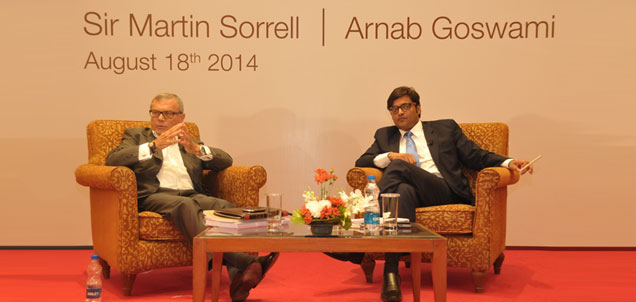
    Sir Martin Sorrell (SMS) gave a basic course in TACKLING Arnab Goswami (AG). From the world GO, SMS opened with Cricket stating that it seems MSD seems to be a captain with fixed thinking. Then he fired His question. How have the elections been for you? An open-ended conversation that followed with: why was there a gap between the Rahul and Modi interviews?  It forced AG to go in a detailed explanation. It was half-way through his comment that AG realized it was he who was supposed to be asking the questions.


    The election discussion closed with SMS probing. When the Congress says the media is to blame for their debacle, were they referring to media as media or you? AG in self-congratulating mode pointed out the Rahul English media exposure was limited to Times Now.


    I wish that Indian politicians should not watch this show when it’s telecast or is on Youtube. They may learn how a tactfully well-prepared person, with smile and humour can enjoy the discussion. How to be precise in your answer, not allow AG to corner you or allow him to put words in your mouth. SMS seem to have taken the advice in yesterday’s post.


    AG started with -‘I am honoured to be interviewing you and I have great regards… ‘ Was turned by SMS into a class for politely being rude. SMS said ‘you can be sure it’s going to be tough one and dam sure if the guy says ‘Personally I have nothing against you’.


    AG – there is respect in your well-preparedness and being very focused in your approach and questions. You as always were well-prepared with your data, quote and historical references. But today, you did meet someone who betters in it.


    SMS ON MEDIA: There is a mismatch between, the amount of time the consumer devotes or by the way the consumer consumes media and the investment (read advertising revenues) by agencies and client in it. Pointed out that this will find its balance. Fragmented media is a challenge and it will get more challenging with time.


    SMS ON TAM:  AG half-volley  ‘Your comment on TAM’ was met with a nice cover drive ‘Nice Company’.  Keeping the Indian scenario out of discussion, SMS pointed out that in most  (I did hear him say all) of the companies there is only one TV audience measurement currency. Can there be 1-2 or 3 measurement currencies is something that the market will decide.  AG doosara on does TAM (read SMS) need to wait for government directive for enhancing TV Meter numbers was hit hard. SMS pointed out that additional meters means additional cost and it must be shared by the agencies, client and the channels must share the burden.  Reiterating that WPP is committed to provide the most accurate measurement, he made a point that it’s not meters alone but a willingness to shift measurement process with change in consumer habits is required. Giving an example he cited the use of C+3 and C+7 meters that track not only on-air but deferred viewing.


    SMS ON INDIA AND CHANGES: The Independence Week made AG continuously probe SMS outside the off-stump. Is India at the Vortex of change? Can India- made media be global?  SMS showed a straight bat. He was optimistic that the new strong leadership in government is coupled with strong commercial leadership, then India which has been in the wrong side of the history for so long would definitely see a change.  And that it is advisable for the businesses to first exhaust the local opportunities before looking out.


    SMS ON FURTHER INVESTMENT BUYOUTS IN INDIA: He rattled off that WWP business in India is about 499 Million. And growing @ 10%. Talking to Sam (Balsara), he said: ‘If there is a business opportunity that is 50 million worth, he would consider it and is willing to write a blank cheque.” SMS thinks that his competitors in recent past have made some ill-advised low-leveraged investments and that is starting to reflect in their figures.


    SAM AND SMS: Sam raised a probing question that in the Indian situation where TV and Print (the legacy media) dominants. The foreigners (like you) come and talk just digital-digital. Are you not missing the bus?  In SMS’s view: “This is true as of now but all businesses have to look future-ready. I am not sure when the tipping point will come and change the dynamics. But it will come surely, with the speed of change speeding up’.


    SMS ON THREAT.  The biggest threat is not competition but Complacency, Arrogance, Satisfaction and lack of energy. He said he is a disruption freak. All his life the growth has come from disruption.


    SMS ON BALANCE. He referred to his divorce as an example. His lawyers had two possible solution and they asked: what was more important – business or family.  Not surprising, the answer is both.  This was when AG tried creating a 2×2 matrix between King and God on one side and Data and Analysis on another. SMS went to the extent of drilling the point home in more ways then one. As per him, creative and data, science and art, gut feel and analysis are such a pair where balance is more important.  Balance is not something that’s 50-50, but the right mix. Whenever the pendulum would swing to one side creating a biased skew: correction will be needed.


    MY SPECIAL:  (1) SAM, can we raise the same question on legacy v/s new media for all the discussion that happens in Indian forums? And many such places you are one of the guiding force? (2) I am surprised at the limited attendance to the event. At any stage, there were not more than 120 people in hall set for 150-plus. IAA could start planned invitation push (even paid) public beyond their members for such an event.  (3) Liked SMS referring to AG as a fly buzzing. (2) Liked AG comparing SMS to a Smart Politician and we would know where that feeling was coming from.


    Disclaimer: The above personal interpretation of the discussion.


    Aside: In a fraternity meet like this, with most being media or IAA invitees or senior people- this long introduction of SMS and AG- was that required?  I personally felt it went too long.


    Sanjeev Kotnala is Head Catalyst, P1P2Solutions. The views expressed here are his own


  • IAA Conversations to feature Sir Martin Sorrell and Arnab Goswami

    By A Correspondent


    WPP CEO Sir Martin Sorrell and Times Now Editor-in-Chief Arnab Goswami will be engaged in a lively discussion on Monday, August 18 as part of the ‘IAA Conversations’ series of the Indian Chapter of the International Advertising Association. The event will be held at the ITC Grand Central Hotel in Parel, Mumbai from 3.30 pm to 5 pm.


    Srinivasan K Swamy

    “We find the IAA Conversations offering an excellent opportunity to engage two well-known media professionals in a meaningful dialogue on wide-ranging professional and personal topics. Sir Martin Sorrell, is one of the most important powerful media professionals in the world and our own Arnab Goswami is one of the most popular faces of news television in the country,” said Srinivasan K Swamy, President, IAA India Chapter & Vice President-Development, Asia Pacific.


    Bhaskar Das

    Dr. Bhaskar Das, Chairperson of the event said, “Both Sir Martin Sorrell and Arnab Goswami are great to listen to. And now when they sit together at the IAA Conversations, we are sure to not just have a lively session but also see some interesting insights coming up. People who follow ‘Frankly Speaking with Arnab’ will see a similar program but in a live format. An open-to-audience Q&A will follow the discussion.”


  • Mediaah! Will CNN-IBN survive without Rajdeep Sardesai?


    Mediaah! By Pradyuman Maheshwari


    Rajdeep Sardesai’s decision to quit CNN-IBN isn’t like that of an employee leaving any organisation. Had he not quit NDTV in 2005, he wouldn’t have not gone on to team up with Sameer Manchanda and Raghav Bahl and set up the channel.


    In Bahl, Rajdeep found an able ally and his teaming up with Manchanda, one of the sharpest brains in the business, ensured that the new channel started operations near-instantly. Rajdeep quit NDTV in April and CNN-IBN went on air in December 2005, and its instant success contributed much to Bahl’s fortunes as well as image of being a television news tycoon.


    Until early 2008, Rajdeep and his channel were the clear leaders. They had trounced NDTV early and the year 2006 and 2007 belonged to them. Rajdeep was voted ‘Impact Person of the Year’ in 2006 and was clearly the toast of town and the must-have guest in the capital’s political circuit.


    However, from 2008, after much fumbling and a really terrible take-off,  Times Now started gaining ground. This columnist, then writing on exchange4media.com, commented much to the annoyance of many how Arnab Goswami was a better, more aggressive, news anchor.  If Rajdeep would frown on his shows, Arnab would ask the tough questions. He was bratty, and often abrasive, and represented the mood of the viewing masses.


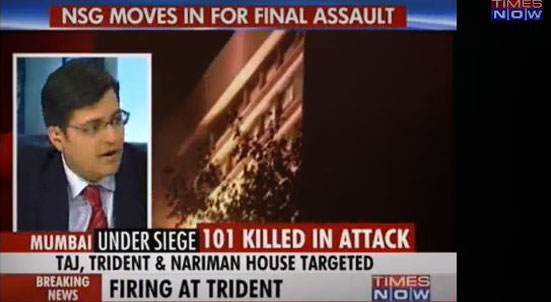
    The November 26 Mumbai terror strike changed things dramatically for Arnab and Times Now.  It was the undisputed leader. Simultaneously there was a sense of outrage against Barkha Dutt, though not as much against Rajdeep, who was equally shrill in his coverage from the terror zone. But then so were most other television journalists, including Times Now staffers.


    What emerged from Arnab’s show right then and the scene hasn’t changed dramatically ever since is that there’s little else other than the Newshour on Times Now. The other popular programme is Total Recall, but that’s Bollywood nostalgia.


    NDTV has established a huge second and third layer, though other than Prannoy Roy and Barkha Dutt, the rest of the cabin crew  – Vikram Chandra, Sonia Verma Singh and Sreenivasan Jain – pale in comparison even as they can hold fort for a month or two. Quite like CNN-IBN where Bhupendra Chaubey was an excellent stand-in for Rajdeep on the days he took off, but is he the man who can steer the channel to the top slot amongst English news offerings? Can his interviewing skills match those of Arnab?  The answer is a clear No. Read that in 200 points, all caps.


    So will CNN-IBN survive after Rajdeep Sardesai’s exit? Oh, yes, it will. Just as India not just survived but thrived after Indira, the Tatas after JRD, the Aditya Birla group after Aditya Birla etc etc. Also, remember, we have had channels which have meandered directionless for years. Headlines Today, for instance. Or even NewsX.


    Headlines Today has seen a fresh lease of life after the entry of Karan Thapar and it will gain more respectability with newly appointed vice chair and editor-in-chief  Shekhar Gupta on air.


    There were rumours that both Arnab Goswami and Barkha Dutt were approached by Reliance Industries for the top editorial job at CNN-IBN. Barkha is said to have spent a few days in Mumbai recently and even though she denied the news posted by Sahara Samay on its website last week, many believe she may well accept the job now that it’s clear that Rajdeep has exited. A well-known face like Barkha’s will ensure that Rajdeep’s absence is not felt by viewers.


    Meanwhile, a new top deck is reportedly assuming charge at Network18 and an announcement is likely to be made on who will lead the company in the absence of most biggies in the organisation.


    Will Rajdeep join the India Today group, as was speculated? Or is he taking time off to write a book? Since MxMIndia doesn’t revel in breaking news or carrying wild gossip , we recommend you look up other trade sites for that. What we would like to reinforce are three things.


    1. Had Rajdeep Sardesai not existed or not quit NDTV, CNN-IBN would’nt have been around or at least not happened as early as December 2005. Of the various news channels, CNN-IBN has an excellent reporting team, even though many were retrenched last year.


    2. The success of any leader is indicative by how it manages operations after he or she leaves. Prannoy Roy has ensured that. Arnab hasn’t. You don’t want to watch the 9pm bulletin when he’s not on air. Rajdeep has a good B and C team but none of them with the same profile has him


    3. CNN-IBN (and IBN7) will survive for sure. But it’ll need a new face soon.  Clearly, money is not going to be the constraining factor for this recruitment. For Mukesh Ambani and Reliance Industries Limited, that’s hardly a worry. What the master and his advisors have to convince the big and famous editors is that they will be allowed to operate in a free and frank manner.  That they will be allowed to carry news which may be negative on them. Now will that will be a tough ask?


    There are many who  believe news journalism is doomed with the active entry of Reliance Industries in news media. That, as I have written earlier, is an incorrect assumption. Most of our big publications were set up by business houses – large or small.  Moreover,  we do know of some well-known media conglomerates indulging in corrupt or incorrect practices.


    If in the true spirit of business, Mukeshbhai and Reliance Industries do not devalue the brand, there is no stopping CNN-IBN and the rest of the media empire from attaining greater heights. If considerations of the rest of their businesses impact the editorial policies, the Ambanis know what happened to TheSunday Observer and the Observer of Business and Politics in the 1990s.


    Interesting times ahead for sure.


  • 10 April Fool stories I wish were true: Noose Night @ mid-day

    It’s All Fool’s Day and we present you a link to Pradyuman Maheshwari’s column in mid-day on the 10 stories he hopes would happen to the world of news television in India.


    Some of these are headlined:

    More meaningful talk on Arnab’s show.

    Majority foreign stake allowed in news

    NewsX gets more relevant

    The Minister of I&B ensures a free news media


    Suggest you visit the column at: http://www.mid-day.com/articles/10-april-fool-stories-i-wish-were-true/15197059


    Links to earlier columns: http://www.mid-day.com/news/pradyuman-maheshwari


  • Kejriwal and the Media: Ranjona Banerji & Pradyuman Maheshwari


    Ranjona Banerji: Kejriwal’s threat to democracy?


    By Ranjona Banerji


    The media, willy-nilly, has become part of these elections. Not as the “fourth estate” of democracy but more like a “fifth column” which is out to destroy institutions – that is, if you listen to our politicians of all colours and persuasions and try to assess the anger on social media. But why blame politicians or Twitter and trolls alone? The media itself – and here most fingers will have to point to television – has behaved in extremely irrational and even unprofessional ways when it comes to bread and butter journalism.


    Starting from the extraordinary coverage of the India Against Corruption movement in 2011, television decided to become a player rather than an observer. Even I got taken in by the exhortations of TV anchors in 2011 when they talked about millions of people taking to the streets in support of the Anna Hazare-led movement to clean up public life. Alas, when I arrived at Azad Maidan, there were less than 500 people present. Not the hundreds of thousands promised by well-positioned TV cameras.


    But once India Against Corruption transformed itself into a political party – the Aam Aadmi Party – and Anna Hazare was replaced as the movement’s leader by Arvind Kejriwal, TV started to change its tune. The tide was now against the movement. None of the surveys running up to the Delhi state elections could predict what AAP would do. The Congress would be struck down and the BJP would win is what we were told. Instead, we had the AAP forming a very close second. So much for election surveys, psephology and astrology.


    Once the AAP formed the government, the wrath of television knew no bounds. Of the English channels, Headlines Today and Times Now were the angriest. Every hand gesture of AAP members was dissected and denigrated. This is not to suggest that the AAP had a perfect month in power – far from it. Indeed, their law minister Somnath Bharti’s unconscionable midnight raid looking for sex workers in Khirki Extension deserved the strong condemnation it received. But the poor AAP did not even have the short “honeymoon” period accorded to everyone else by the media.


    Since then, some TV news channels of all languages have abandoned all objectivity and decided that the AAP has to be their primary target. The fact that some journalists have joined this party has enraged them even further. The AAP has reacted with matching bile and Kejriwal has decided that he will arrest mediapersons if he comes to power. What a wonderful circus of democracy. Enter the clowns, exit all good sense.


    Some mediapersons have now had additional tantrums about the threat to democracy promised by Kejriwal. All this is sans irony, especially of the threat to journalism as practised by them. Never mind.


    Here are some other media views:

    Senior journalists question the overreaction to Kejriwal: http://www.thehindu.com/news/ national/why-overreact-to-kejriwals-criticism-ask-journalists/article5789153.ece


    And Shekhar Gupta speaks as an “aam patrakar” in The Indian Express: http://indianexpress.com/article /opinion /columns/national-interest- main-hoon-aam-patrakar/


    **


    The upshot is that the AAP has to be treated as one more political party. Neither angel nor devil. And that ought to hold true for all of them.


    Ranjona Banerji, senior journalist and columnist, is Contributing Editor, MxMIndia. The views expressed here are her own. Twitter: @ranjona


    Mediaah!: Time media shows Kejriwal his place


    By Pradyuman Maheshwari


    Not many moons ago, Arnab Goswami could be seen screaming at anyone who didn’t agree with him that there was an Arvind Kejriwal wave sweeping the country.


    Arnab isn’t too kind with anyone who disagrees with him. His body language changes and his head shakes in denial the moment the guest with an opposing view opens his or her mouth.


    In fact, even before a guest finishes his first two or three words, Arnab opens his mouth and the two can be seen to be talking together. But that’s his style, and people love the Times Now editor-in-chief for that.


    The problem for Kejriwal is that soon after his party’s great showing at the Delhi elections, he started negating the highfalutin statements he made before the polls and after them.


    Many in the media – and this writer included – had then regarded Kejriwal as the messiah who God had sent to cleanse the country’s political system. And as it often happens, it propelled him to dizzying heights.


    Some of my friends and colleagues in the profession didn’t think too much of Anna Hazare and Arvind Kejriwal. I thought they would come around the man and his ways soon enough. After all, weren’t there many who thought a certain Mohandas Karamchand Gandhi was nuts with his satyagraha and non-violence movement?


    I was proved wrong and to my dismay – quite like the disillusionment I had with the BJP post L K Advani’s Rath Yatra and the Babri Masjid desecration in 1992 – Kejriwal made a mockery of himself and all that he stood for.


    In fact things have gotten so bad now that even though the AAP leader could well be speaking the truth, no one really trusts him.  The media at least doesn’t.


    We know the media isn’t above board. There is corruption in many newsrooms.  Paid news is rampant, and despite all of the Election Commission’s efforts, the smart ones still get away. There is paid news even for non-political content, but I don’t think Kejriwal will be too bothered about the other kind of parties.


    But is it right for him to question the integrity of news channels just because they are now treating him the way they treat all others? Just because they are questioning every act of his, which they wouldn’t just six months back?


    I have found Arnab Goswami unduly harsh on Kejriwal (see: Is Arnab being too harsh on Kejriwal, mid-day, March 13:  http://www.mid-day.com/articles/is-arnab- being-too-harsh-on-kejriwal/15156104), but that’s no reason for anyone to rubbish him (Arnab) and suggest that he and other newsroom bosses are on the take from Narendra Modi or Rahul Gandhi.


    The News Broadcasters Association acted on it a few days after the utterance and his issued a warning to the AAP leader. The message from the NBA: stop the trash, Mr Kejriwal, or our members will stop covering you.


    While Arnab Goswami was pretty scathing on his News Hour, the real blow came from Rajat Sharma on his show ‘Aaj Ki Baat’ on Times Now. Coming on air when he was down with fever and a bad throat, Mr Sharma was scathing in his criticism of Kejriwal and exposed his doublespeak in a one-hour show.


    Meanwhile, Arvind Kejriwal and AAP would’ve been taught a lesson not to subject the media to their loose talk.  Damn the media, and be ready to get damned.


    Although Pradyuman Maheshwari is Editor-in-Chief and co-founder of MxMIndia.com, the views expressed here are his own. Twitter: @pmahesh


  • Ranjona Banerji: The Rahul Gandhi interview was more about Arnab Goswami

    By Ranjona Banerji


    Am I a serious journalist? After last night’s interview of Rahul Gandhi conducted by Arnab “I am a serious journalist” Goswami, I have come to the conclusion that I am emphatically not. My understanding of being a journalist is less me and more you. An interview has to draw out the interviewee. It has to place them on the spot, yes, but it cannot be about the interviewer. And an interview has to move along – if it’s getting stuck, you have to step back and come back to that unanswered point later. The reader or the viewer has to be your first priority.


    In this case, the unanswered point was the 1984 riots in Delhi where thousands of Sikhs were massacred by Congress members and others after Indira Gandhi’s assassination by her Sikh bodyguards. The horror of the killings was exacerbated by Rajiv Gandhi’s comment at the time that the ground shakes when a big tree falls. The point is important. The problem was that Rahul Gandhi was not the person to answer it. He was a child when it happened. The party has apologised since then as has the current prime minister. Why badger Rahul Gandhi endlessly on this issue when you can take him up on so many others.


    Then there’s the issue of corruption. Instead of talking about the sea of allegations against the Congress Party and issues like the coal allocation scam, Goswami got stuck on allegations against Virbhadra Singh, chief minister of Himachal Pradesh, based on some investigation that Times Now had done. Much as the nation apparently wants to know what Goswami thinks every weeknight at 9 pm, there is an India beyond Times Now. Really.


    Moreover, the number of times Rahul Gandhi mentioned “RTI”, “youngsters”, “women” and “empowerment”, anyone else would have taken him up on those issues and questioned him on what he had done about it. There are a number of problems with RTI in the states, including Congress-ruled states. Why not bring those up? What about the brother-in-law Robert Vadra? Not a single question on that.


    Bringing up Subramaniam Swamy’s allegations about Rahul Gandhi’s education was ludicrous. The kindest thing one can say about Swamy is that he is a “maverick” and he is infamous for throwing allegations all around, hoping something somewhere will stick. He is hardly the gold standard for information.


    The endless questions on Narendra Modi and the Gujarat riots became tedious after a point. And just to inform journalists in general, Modi did not get a “clean chit” from anyone. The SIT report said “no prosecutable evidence” which is quite a different matter.


    The whole interview sounded too structured. There was no flow and there was no charm. As of now, Rahul Gandhi does not stand accused of anything except being seemingly reluctant to take on too much and vanishing after making declamatory statements.


    I for one learnt little new about Rahul Gandhi except that he has some good artwork on his walls.


    However, the funniest thing about this interview was the “discussion” later with Vinod Mehta, editor emeritus of Outlook magazine and Siddharth Vardarajan, former editor of The Hindu. This was a first for me: an interviewer holding a discussion on how his interview went. If this is how serious journalists behave, well, thank the lord there are so many of us non-serious ones around!


    I hear that tonight there’s going to be even more discussion, from 8 to 11 pm. Luckily I have found itvchoice on my HD set top box so I shall watch some British reality TV shows about dancing on ice, dancing in your house and dancing in general. As it is I missed Elementary on AXN because of this interview.


    Or there’s always the BBC’s Hard Talk series on India…


    **


    Twitter not unnaturally was abuzz with the Rahul Gandhi speech and suddenly, Modi and Arvind Kejriwal (have I got the order wrong?) were off the grid, except when mentioned with regard to Gandhi.


    Now that was funny. May not last too long though.


    Ranjona Banerji is a senior journalist and commentator based in Mumbai. She is also Contributing Editor, MxMIndia. She can be reached via Twitter at @ranjona. The views here are her own


  • Down with Meenakshi Lekhi!

    YouTube screengrab of BJP's Meenakshi Lekhi on Newshour on Times Now on Thursday, December 12


    By Ranjona Banerji


    I have been both an admirer and a very harsh critic of Times Now’s editor-in-chief Arnab Goswami in these columns. But now I come as an admirer. His equanimity in dealing with an appalling personal comment on the News Hour debate on Thursday night is truly commendable. The BJP’s Meenakshi Lekhi accused Goswami of taking money from interested lobbies in a discussion on political reactions to Section 377 of the Indian Penal Code which criminalises homosexuality.


    While Lekhi is free to have her personal opinions about homosexuality and morality, she perhaps found herself cornered in this discussion. Her stand was that the whole fuss about the Supreme Court recriminalising homosexuality was “much ado about nothing” – although the media and many sections of Indian society are up in arms. The media has sided with human rights, dignity and the rights of the LGBT community. These may not be the same views as the conservative part of society, which Lekhi’s party represents. But to accuse Goswami and the media of being paid to stand up for Constitutional freedom is unacceptable.


    It is to Goswami’s great credit that after a somewhat menacing exchange with Lekhi, he continued with the show. However, by then the atmosphere had changed and it was a very subdued and hurried end to what had until then been a lively discussion.


    Casual conversation nowadays often refers to “paid media”, thanks mainly to the media itself discussing it. But that does not give licence to people to point fingers at someone’s personal integrity without proof on national television. The idea itself is ludicrous: that the LGBT community will have paid everyone from the media to lawyers to politicians to speak out against a clear attack on human rights. If indeed the LGBT community could do that much, then Section 377 might have been struck down long ago by legislation.


    But logic is not part of this argument. The fact is that the Congress, unlike its normal pusillanimous self these days, came out strongly against Section 377. The BJP has obfuscated the issue. Lekhi herself first said that she was happy that Section 377 was not struck down. And then she came up with this “much ado about nothing” line, a blatant misuse of Shakespeare if any. Instead of being feted on news television the way it normally is these days, Lekhi found herself under attack. A mention of the RSS – the mother organisation from which the BJP draws its moral strength and raison d’etre – and Lekhi saw red.


    It is possible that Goswami will be the larger person and let Lekhi’s comments go. But they are no less reprehensible for all that and represent an attack on media integrity as a whole. In my view, Goswami should not let it go. Legal action is a possible recourse for him since Lekhi’s remarks can be seen as defamation. But the media and the BJP need to relook at the suitability of Lekhi as a spokesperson. Much as television in India has challenged all norms of civilised behaviour, this one crossed the line.


    **


    The English media has been, as is evident, ranged against the Supreme Court after this judgment and came out in full support of the LGBT community. Newspaper coverage, from front pages to editorials, has spoken in one voice. So has news television. This is most welcome. Although there is likely to be a backlash from conservative and religious voices – letters to the editor already suggest as much – the media has not flinched. Indeed religious leaders of all colours have been made to explain themselves on TV, much to their discomfiture. Interviews with parents of gay children have given us the human picture of the families and support structures affected by this judgment. The grandmother on Barkha Dutt’s show on NDTV is most memorable, bringing tears to everyone’s eyes. Rahul Eeshwar – who often represents the right wing voice on TV especially on religious matters – was shot down when he tried to present his bogus science on Times Now on Wednesday night. Vikram Seth’s interview to Karan Thapar on CNN-IBN’s Devil’s Advocate presented the pain of the Indian homosexual in erudite terms.


    **


    Social media as ever was at the vanguard of the anger against the Supreme Court and Twitter certainly offers a quick idea of how the wind is blowing – even if it is limited socially and economically. For the most part, apart from some absurd tweets which said Sonia Gandhi was against Section 377 because all homosexuals are Christian, the rabid side of Twitter was less apparent.


  • What’s made Arnab the Face of News TV


    It’s been five long years since that evening of November 26, 2008 when Mumbai was taken hostage by 10 terrorists in various parts of South Mumbai. We’ve seen the television coverage of the Kargil clash and some of the disturbances within the country like in Gujarat, post-Godhra, but clearly the Mumbai terror siege was the biggest news happening after 24×7 news television arrived. Social media hadn’t taken off in right earnest then, else the coverage could’ve taken an all-new complexion.


    We spoke with Arnab Goswami, Editor-in-Chief of Times Now, who could be called the Face of the 26/11 Coverage and whose channel hasn’t looked back ever since. In fact, in time, he has become arguably the Face of News Television in the country. In this freewheeling chat, Mr Goswami talks to MxMIndia on what he thinks helped his channel score with the coverage, why he chose to stay in the studio and not go out on the field and the government’s criticism of the television media’s live coverage of the terror attack.


    Excerpts from the interview:


    So where were you on the night of November 26?

    I was in our newsroom. We were doing Newshour and there were phone calls from people who said there was some firing at CST. I think we were the first to go on air with the report that something was going on and we were also among the first to break away from standard programming. So I started at about 10 o’clock and went on for three-and-a-half days. I remember going home only once and must’ve slept for an hour in that entire period.


    Was it a conscious decision for you to stay in the newsroom. You were the seniormost journalist of the channel, based in Mumbai and you stayed back in the newsroom rather than be on the field?

    Yes, It was a very critical decision for me. As you know, in my stint at NDTV I was a reporter through and through. I was probably the only news channel editor based in Mumbai at that time so the natural temptation was of getting into a car with camera units and going on the spot. But I had done that, what would have my reporters done and I would have not been able to focus on what we were putting on air minute-to-minute. At that point, what was very important was the graphics, visual and text we were putting out. Key decisions needed to be taken – on what we carried live and what we didn’t, which reporter went to different locations, what versions to take from the security agencies, from the government and how much of the information we had needed to be disseminated. Since all these decisions are taken better in my view if you are in newsroom rather than from the spot, I decided to stay back.


    So you never went to the spot, not even for a wee bit?

    Yes, I didn’t go to any of the spots for the entire duration when this event happened.


    There has been a lot of criticism of the media in general for the coverage especially this charge that the media was giving away vital information on the movement of our armed forces and police. Do you think it’s fair criticism?

    Well I can speak for ourselves, we did not do that. I don’t want to use the fact that we didn’t do that to be critical of other channels but speaking for Times Now, we didn’t give away a lot of the information related to individuals and specifics and at that point of time we had a lot of information which we felt if we put out in the public domain may compromise the security of the people involved. Like the floors/restaurants in individuals were present. I remember we shared the fact that we were holding some information with our viewers and I think our discerning viewers would have appreciated that.


    As you look back, do you think the government and the authorities should have restricted the movement of journalists?

    The government too was reacting to a situation and they had no idea what was happening. Clearly, if the media needed to be held back from reporting from certain locations, the security agencies needed to do that. For instance, there were camera teams right up to the lane which led to Chabad House and that was dangerous for the reporters as well. In retrospect you can always argue that perhaps the reporter shouldn’t have gone that far, but at that time they were doing their job.


    Were your reporters worried about their safety and lives?

    No, I don’t think that was even a consideration at that point of time. We had some reporters wearing bullet proof jackets. I think the place which was from my perspective worrying in terms of safety was Chabad House. We were careful not to compromise any of our reporters, they would go in and out and they would send footage and we would carry it.


    There were many discussions with the government after the siege and there was a possibility of a severe clampdown on the functioning of news channels. What was your advice to the I&B ministry then?

    I have never been in the business of advising the government


    You were part of the NBA and from what I remember instrumental in formulating a code or some such?

    Yes, I did play a role initially in drafting this code and I have been actively associated with the NBA. At that point of time, we did officially put in a word to then information and broadcasting minister because channels had got blacked out in Mumbai and there was outcry from viewers who wanted to watch what was happening and I must say the government responded quite quickly. The channels were back on air in less than an hour. I think there are lessons from all of this and if you ask me one of the reason why people watched Times Now much more than any news channel in that period was the fact that we never compromised the credibility of our coverage. We weren’t hyping the event nor making ourselves the story.


    We were simply and only focusing on getting the maximum amount of information first and fast and to that extent the events of 2008 and we never looked back since as a channel and the events of 2008 told us that at the end of the day, accurate and objective, fast and passionate news coverage determine leadership and that for me was important. Those hundred hours were a big learning for our reporters and in the growth of the Times Now as a channel as well. We have also not forgotten this event as every year we have done something though we don’t try and do it in a commemorative fashion but as a news channel that focuses on internal security issues much more than any other. We bring back renewed focus on 26/11 almost every year whether in terms of how far the case has progressed with Pakistan or the local security situation.


    As you look back, would you possible redo your coverage? Should something have been done in a different way?

    Honestly, we did not do the things that people have criticized 26/11 coverage for. We did not reveal sensitive stills. I would still not do that. There were times when we chose to put out delayed footage. I would still do that and we dropped all breaks in that period and covered it for a stretch in a committed manner and stayed with the story. I would still do that, so I think a lot of the things we did right. I wouldn’t say what we did was perfect, people can say the quality of broadcast could have been better. We did the best we could. We had a very young and passionate team which we still do which did the job. So, looking back after five years, we did as decent job as we could.


    There were some who also said that one of the reasons why other channels were showing more sensitive stuff is because they were getting it… given that there were senior people out there on the field.

    You know I am not the best journalist around but I think that everybody had more or less the same information. It is in these occasions the newsdesk plays a crucial role and the role of the editor is better when he or she is on the desk because you are putting out information which is very quick and you need to put it out in the breaking news situation. The editor has to take decisions on a minute-to-minute basis. I felt that was a big challenge for me in those four days and that’s one of the reason, I stayed with the story nonstop.


    But you were on air all the time, so how could you take those split-second decisions?

    See, most of our anchors on our channels are also people who have had strong experience on the newsdesk and I believe that you can only be a good anchor when you have done that. So I had back0up anchors and I would keep going in and out and we would have a conference roughly every two hours where the producers, the executive producers, the senior producers desk sat down and discussed very briefly what we were doing and we would then go back to the broadcast.


    For Times Now specifically there has no looking back since then. While you may have been on the rise even before, would it be right to say that November 26 was the turning point.

    I won’t try to be politically correct with you. Yes, the evolution of news channels tells you that critical moments in a nation’s history determine the growth of news channel so whether it’s an election or a Gulf War in United States whether it’s 26/11 here or whether it’s going to be an election in the future, how a news channel covers a particular major event is seen to be a test of the channel’s competence. I think that with 26/11, I am not the one to overstate what we did but I think we did a decent job and I think we won the trust of lot of people but we have also worked very very hard to retain that trust because in the news business you often would be remembered for the mistakes you made. We have worked very consciously on retaining the trust and not just on this 26/11 but all the scams we reported. The manner in which the viewers responded to us – with love, affection, respect and regard after 26/11 was quite overwhelming for me and my team because we were a group of journalists who all at least a decade younger and a decade less experience than any of the other channels but the passion and the fact that we were working as a team, we are very closely knit as an editorial team it made up for our lack of experience and the fact that the viewers responded well to us was a big confidence booster for my team at that point of time.


    I don’t really remember how it began and how it ended and I don’t remember what happened in between…  all I remember is that we were at it and most importantly the same team that started the broadcast ended it, in that period not one of my people or reporter went home, there were no shifts so while it will be argued whether that was the way to do it ,but you know putting hundred hours equal focus on a live broadcast where enormous number of people are watching is a huge amount of team work. I personally I think 26/11 is one of those events which teach you that television is all about team work. Some of our people have gone on to do so well inside the organization, some outside the organization and I feel very proud about it. The experience of covering 26/11 has added a lot to our collective experience and our maturity.


  • Keeping the Media Free & Fair


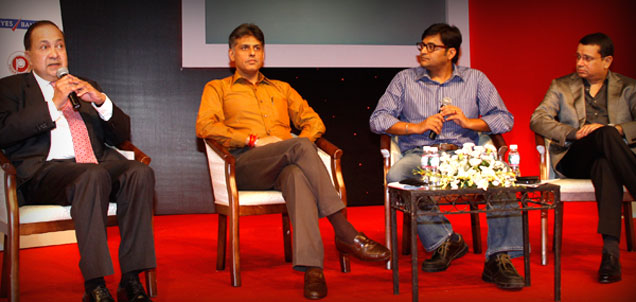
    Panel discussions can be quite boring but at the Press Club Mumbai’s RedInk awards last Saturday (May 25), the audience gathered was actually asking for more. This despite an awards presentation and of course drinks and dinner that were awaiting members of the fraternity.  The theme of the discussion was ‘Keeping the media free and fair’ and moderating it was Arnab Goswami, editor-in-chief, Times Now. Former editor-in-chief of the Hindu group, I&B Minister Manish Tewari and Star India CEO Uday Shankar were the panellists discussing the issue.


    Arnab Goswami: Keeping the media free and fair… I was just thinking if you ask Mr N Srinivasan today who has refused to speak to Times Now about 10 times in the last 10 hours, he will certainly say that media is too free and is completely unfair. That’s what it is all about. It is totally subjective assessment. I would restrain my own views, the problem is because on television, I tend to forget that I am an anchor. I have assumed the role of an analyst much too often. But I will try and hold myself back because I have three absolutely tremendous speakers here today, three people who represent different points of view voice of youth, men with great experience.


    I’d like to start this chat by first asking the most experienced gentleman as far as this profession is concerned, certainly on the panel, Mr Ram this question makes a few presumptions. Keeping the media free and fair, you assume that there is a threat that the media presently faces and it also makes the assumption that media might not be fair in the future. May I ask you to give your points of view on this?

    N Ram: Yes, I think that is a good entry point into this discussion. It is quite provocative assumption that you are not my friend, are we really free? I used to think that India, among the developing countries, was in an enviable position. And I have revised my view after that. Why do we say this so far as press is concerned, Article 19 (1) A, plus Article 19 (1) G equals freedom of press. That is not possible because qualified by the reasonable restrictions enabled by the constitution are the eight heads and no more. That be reasonable. And thanks to judicial interpretation, freedom of the press has come to stay. This is the great advantage in India, institutionally speaking.


    Unfortunately, the broadcast media and now news television in particular, haven’t been given the same status so far as freedom of speech or expression is concerned. Although in practice, they seem to be rather free as Arnab’s channels and many others bring out every day. So I am not quite sure of that but the problem today is that the so-called reasonable restrictions have turned down, some of them, to be mightily unreasonable. The law of criminal defamation is a daily threat to the press, to television. The contempt of court where judges decide their own cause – that is a problem although it’s not that frequently invoked. Legislative privileges poses problem here and there. Above all, the jurisdiction of criminal contempt, I think, is a major threat. Add to it the intolerance that we see around us. And not just from the govt, I must emphasise that, from many sources in our society including governments and state governments also.


    I think this has now changed the game so that the feeling of insecurity, what a famous American jurist called the chilling effect phenomenon. People censor themselves when they write or speak on television or so forth. Despite that we only admire our colleagues, including young men and women, who brave these hazards every day and take huge risk and end up in jail or have to appear in court on matters that wouldn’t get them in any trouble in a truly democratic system. So I have revised my view on this.


    The second part of question: are we fair? There also I have doubts because very often, the press as well as television – we fall short of the standards of fairness and justice that would be demanded of our institutions. Apart from the phenomenon of paid newsand  apart from problems like private treaties and so on which clearly militate against fair coverage, we have various other problems: hyper-commercialization in the news media, the control that proprietors exert over the content, poor material conditions of many of our colleagues. I recently read the longish report of the standing committee on Information Technology that your ministry has put out. It has got some interesting things to say on the condition of journalists in India including their remuneration. I think all this detracts from a healthy state in the media. I do not want to go on and deal with the central paradox of the digital age. I think on the whole, we fall short institutionally speaking, on the standards of fairness of justice which the public including politicians are entitled to expect from us.


    One of the issues which bothers me is editorializing in the guise of news. I speak of newspapers here, but it might apply to television. These days, the standard argument is that everyone knows what’s happening – breaking news on TV, you do not say it for the first time. The front page function of the newspaper has changed profoundly. So what do you do to engage the readers or audience? You editorialize, you give it colour. And in the process, I think the standards of journalism get affected. It’s not easy problem to resolve because merely dull recording, factual reporting, may not engage the audience and you may lose the plot but editorializing blatantly in the guise of news, I think, has become a vice in the Indian press but I also see it elsewhere. I see it in the UK, I see it in the US on sensitive international issues. We must do something about it. I am not talking about an anchor expressing strong views. I am talking about the reporter in the field compelled to editorialize in news reports.


    Arnab Goswami: On one side there are at this point of time, and I see them, moderate to strong disagreements of your views with those of Manish Tewari. You feel the medium is threat to profession and you also feel medium needs to live up to certain standards. You put these two very well. Manish, may I ask you to respond to that. I have three points which I would make. Mr Ra Mr Ram’s observations lead me to my first, which is to put it bluntly, this great concern of the falling standards of journalism that I hear from the political class of this country seem to coincide with the scams of the last three years. Ten years back, or pardon my saying so Manish, six years back there were challenges unique to news and Mr Uday Shankar – a purveyor of news television would know that there was lot of criticism of Hindi channels. Nobody complained about that as much as they started complaining about the falling standards of the profession, the lack of responsibility of journalist to coincide with the CWG scam and continues up to today. Why this concern, especially at the time of scams?

    Manish Tewari: When I think of what you have succeeded in doing, is narrowing the focus of something which should have been a far more esoteric and academic discussion. And I do not want to, because we have done it, night after night, for the simple reason that some of those gentlemen who were possibly responsible for putting out some of that stuff in the public space have now honourably retired. So I will allow them to rest. But to come back to a far more substantive point that Mr Ram made about the sum total of the freedom of the press that 19 (1) A and 19 (1) G adds up to the freedom of press. With all due respect to Mr Ram and I have great respect for him as a professional, I beg to disagree. And the reason I disagree is because 19 (1) A and the reasonable restriction of 19 (2) which apply to it, and 19 (1) G and 19 (1) 6 operate on two different fields altogether. While the former operates with the extrapolation of the freedom of the press from the freedom of speech and expression, the latter really applies to the entire business of the media per se. And there I think you need to make a distinction — a distinction between the freedom of the press and the freedom of the owner of the press. While I do not think anybody has an issue with the former, with regard to the latter, and at times we joke amongst ourselves that we give two sorts of licenses in the broadcasting space – a news licence and a non-news license, so I was thinking to myself that it is high time we start giving views license also because most of the times what you hear is views, and do not hear the news.


    So therefore, I think and that’s why when I outline those paradoxes, they are real situations which all of us collectively address as we go along. Because my apprehension is that increasingly you are seeing judicial intervention taking place in areas which should be preserved for self-regulation. And if we do not self-correct, and if we do not come to certain solutions, I am afraid that these interventions will just keep growing. You are concerned about falling standards of journalism. I have a very healthy respect for journalists. You would have never heard me talk about falling standards of journalism. In fact, I think in totality, journalists do a great job. And I am not talking about the national press. I represent a constituency which is one-third rural. We have journalists in the tehsils, and they run a far greater risk at reportage because of the tyranny of the state governments which Mr Ram referred to. Yes, there are people like the esteemed chairperson of Press Council of India, the former Judge of the Supreme Court who has concerns, I am not saying right or wrong, about “falling standards of journalism”. He is unfortunately not here, he is in the US . But next time he is here, I think we should have a discussion.


    Arnab Goswami: I have had the pleasure of having him in some discussions in the past. His interest lies more in Sanjay Dutt these days. I am glad to have problems in the profession and standards of journalism because many would say, Mr Tewari with great respect and this is what young journalists feel that the nature of journalism is changing. Yes, it is becoming more strident. Views are a right of expression of every journalist. And as far as self-regulation is concerned, I think Mr Tewari Mr Uday Shankar will elaborate further on this, in this Azad Maidan – here there was an almost riot-like situation, I have never seen journalist expressing his self-regulation so voluntarily as he did at that time. Now whether you talk about that or renewal of communal situation arising in Uttar Pradesh or during the coverage of Ayodhya verdict, one have never seen so much voluntary self-regulation so maturely from so many young journalists.

    Manish Tewari: Before you go to Uday, let me say: The difficulty with the whole self-regulation, for any regulatory mechanism to work, it has to be universal. It cannot apply to certain segment of media only. Therefore, you will have to find a way of making it universal and if the self-regulatory bodies do decide to take punitive action in a particular case, there should not be an option of opting out. ‘I am leaving the association, it’s my way or the highway’. So that is why I am saying that we are committed to the institution of self-regulation take route but I think we need to find a modus vivendi to make it universal so that it can be applicable across the board.


    Arnab Goswami: Mr Tewari, taking from what you said on ‘views’, I’d like to go across to Uday Shankar and get his side of the story as well. Uday, my question to you would be what really comes out of kind of observation that Mr Tewari makes out of views, I can interpret that differently. May be some people in the audience will feel that today because of the strength of views and directors of views, politicians are feeling more moral/public/ethical pressure to respond. So even though they would not like to respond to certain situations, they have to because of the pressure that the media puts on them. How would you like to respond to that in the light of the subject today of media being free?

    Uday Shankar: Whenever there is a debate on whether media is free and fair, I get a little suspicious depending on the nature of people who are talking on it. I am eminently comfortable when the gathering is of this kind because you have a point of view, you have practitioners who can throw light on this. As Ram said very clearly that fairness of the media is under question and should be questioned continuously. Not just in this country, but should be done everywhere. And it is not just about media, it is about any profession. What you are doing always has a scope for improvement and that should be done but usually people make the argument in this country, and recently more and more so, people make the argument primarily to suggest that since media is not fair, hence it must be curtailed because that is invariably the subject. As you said, there are eminent people who are concerned about falling standards in media and the practice of fairness in media. They have not once expressed concern about falling standards in their own profession. And I need to understand that everything is hunky-dory in legal profession? Everything is hunky-dory in judiciary? We have equal, if not bigger challenges, in this profession. But that does not mean that a journalist should be made incharge of regulating them. And similarly, if there are issues with journalism, we need to address them.


    I agree with the Minister that it cannot be an option, but it is optional primarily because it has got no institutional support from the State or the Government usually. Today, for first time in the last couple of years, regulation has been given a chance in television to an extent and I think it has made things a lot better than any official enforcement would have brought.


    Arnab Goswami: I think you have hit the nail on the head and I would like to go back to Mr Ram.

    N Ram: If I may pick three points. The first one is complaints come up when news media gets very active in investigating and exposing the wrong-doing corruption. I remember the struggle against the so-called anti-defamation bill of 1988 which came very close to the heels of our Bofors investigation. We had a spirited movement here in Mumbai. So it is true and an important point. Secondly, I am glad that the Minister brought out the distinction because put in another way, I’d say you must make a distinction between state of the news industry towards printed press and broadcast media and the state of journalism.


    The first may be reasonably buoyant although right now the economy seems to be hardened. The state of journalism is quite something else and very often in public discussions, these get conflated and I think, according to him as a lawyer comes straight from the constitutional self. Thirdly on regulation, the best discussion and debate I have come across on self-regulation was around the Leveson’s enquiry. Leveson eventually came to a very clever scheme in my opinion although for complex reasons, the British press has not yet signed onto it. What is the mode? independent self-regulation underpinned by legislation. That was the original idea. There was virtual revolt against legislation so, it is underpinned by Royal Charter, which itself is underpinned by legislation, by law. And yet, they have not signed onto it. I thought long and hard, why are they so scared of it and almost paranoid? Why are people refusing to come onto this? Because they are running scared of independent self-regulation.


    Self-regulation that is compelled in the sense, it’s a contradiction in terms but you are required to be self-regulated by system, readers, and viewers. Then I think it is a genuine check on the vices and malpractices of media. And that is the lesson I draw from Leveson. Fortunately, in India, you have a Press Council, which is largely toothless and I have read Mr Katju on it who has some valid points and suggestion he makes for licensing is totally unacceptable. But what is the problem here. The Press Council is not independent. It is packed, I would say it is infested, with our own kin and a few politicians. And Leveson wanted to avoid both. I think we have got the model completely wrong. And if you are really going to self-regulate, I do not think that self-regulation without statutory underpinning is going to get very far. It is a good worthy experiment but it does not go far enough. So how do you bring these two things on the same page? Press Council – not independent, toothless, but having a certain history, and a certain visibility. The other thing – self-regulation – which is not really independent enough although it is better than the Press Council. So how do you get them on the same page and how do you get the model right? That could be of great interest to us.


    Arnab Goswami: You know, 2- 3 years back, before Mr Tewari took over as the Minister, I had the opportunity of sitting in on a meeting where all channel heads were called. And the government, literally on a plate, offered statutory self-regulation. In other words, the govt told us that you self-regulate and we give you the power to do so. And the resistance from the channels at that point of time, which I think was worthy resistance, was that we will regulate ourselves not as a gift from you but as a right that we arrogate to ourselves. And I would just like to make that point following from what you said. But Mr Tewari, first of all I would like you to respond to the fairly straightforward observations of my friend Uday. Secondly, you talked about the foreboding possibility that in the near future you would not like to regulate the media but the judiciary might like to. Mr Tewari, of late, there has been more tension between politicians especially between your government and the judiciary than between the media and the judiciary. Tomorrow, if the judiciary were to regulate politicians, you would fight back. And in every point of time, there have been several discussions including editorial articles by your sitting ministers ( I do not know if you have written it yourself) where you basically told the judiciary not to encroach in the area of the executive. And today I want a concrete statement from you on whether you feel the media in this country represented by the several in this audience has the same right to defend its territory that you give yourself.

    Manish Tewari: I think, Arnab, the very straight answer to that is that I think that the media is very capable of fighting its own battle. I don’t think you need to fire the gun from our shoulders. If you feel that the judiciary is encroaching on to your turf, stand up and fight. Not withstanding the tension between political executive and the judiciary, which are inherent in the constitutional scheme of things and that’s the manner in which it has been designed. Judgment after judgement which is coming out of the courts is not coming out to regulate the politicians. The whole structure of democratic governance is designed in a manner whereby Parliament regulates itself. Judgment after judgment is telling us that please regulate the media. And that’s why I say, and to come back to your point of you’re sitting in a discussion’ and ‘you wanting it as a right and not as a gift from the government’, I think you have probably not studied the ASCI model. The ASCI model of self-regulation in the advertising space which is underpinned by a statutory rule in the advertising code, 7 (9) if I remember correctly, is a perfect model of self-regulation, which has a statutory basis. I think that’s something you should look at. BCCC should look at it. The NBA should look at it. And if you guys feel that advertising model has worked which according to ASCI and incidentally when it comes to surrogate branding and stuff like that we have, not withstanding the rules, deferred to what ASCI says.


    So it would be worth your while to really look at that model.


    Arnab Goswami: Mr Tewari, with respect, advertising is not journalism. Journalism is not advertising. Never the twain will meet.

    Manish Tewari: I think those lines are getting blurred. And they are getting blurred very quickly, my friend


    Arnab Goswami: Mr Tewari, I wouldn’t try to shoot from your shoulders. You said about what the judiciary thinks. Where do you stand?

    Manish Tewari: I do not have a mandate in this point in time to speak on behalf of judiciary but I do have mandate to speak on behalf of government. and repeatedly, we have demonstrated it through our track record that our relationship with media, not with standing the inherent tension, has been an essay in persuasion, has not been regulation. I think our track record for the past 9 years, speaks for itself.


    N Ram: I would agree with you on this. We have not faced any real problems from the central government in the recent period but why doesn’t the government take the initiative to get rid of the whole jurisdiction of the criminal contempt. And you can strengthen the civil law. But why do we still need this law of criminal contempt? Here I can say that it is an act of omission, it is becoming very costly for the freedom of the press and freedom of news television in India.


    Manish Tewari: Mr Ram, I think you made a fair point there. Because it is not only journalists, there are other lot of us who operate in the public space who are unwitting victims of the law of criminal defamation. But I think we need to tread very carefully because some of the judgements which have come out recently even with regard to civil defamation with due respect have been very excessive, therefore I think, the whole issue needs to be looked at holistically. And you make a fair point in regard to both the laws of sedition and the criminal defamation and possibly at some point in time when you do decide to revise a penal code which goes back to 1860, you need to look at lot of these issues afresh in contemporary sense of the word.


    Uday Shankar: I think we must understand that when we say we fear attempts to subjugate from political executive and bureaucracy, we are not saying that it is the only source of apprehension. I do not think judiciary left to itself, would accredit itself any better as far as regulating or gagging the media is concerned. When we say there are attacks on free and fair media, those attacks are not just from the political class. Left to itself, any group which is drunk on its power would attempt exactly the same thing because what the media seeks to do is question/ challenge the authority, which they do not like. If we dislike or push back against he attempts to control from the political class, we should be even more vigilant of such attempts coming from institutions and community like judiciary because at least here you can have a blunt debate and you can stand up. This whole shield of contempt is far more dangerous when it comes to pushing back attempts of gagging from institutions like the judiciary.


    The second point we should be conscious about is that media is just throwing a spotlight, it doesn’t decide anything. To that extent, it is a good idea to encourage a system where we are minimizing the scope for debate. It’s a good idea to encourage the space for good debate. And that good debate is not being restricted by these people. There is an internal attempt from the owners. Sometimes it is a very unconscious process of time and sometimes it is a conscious process of that space for debate being eroded by the ownership and the people who run media houses.


    Arnab Goswami: Do you believe, Uday – you have been into television journalism for long time now – this debate that you are talking about is making some people uncomfortable? If I were to report the BCCI story in a PTI wire copy-DD news (with all respect) form, then it would have no impact? Mr Srinivasan would be laughing. The fact is that people debate, people get involved in subjects and people want their own point of view. This same plurality of views that democracy gives us become a threat?

    Uday Shankar: I think it is indeed a threat whether it is the BCCI or the International Olympic Association or whether it is another field. Any authority or body is always unsettled by it. so that is definitely the case. The real issue is to come back the point that Ram made that there is a lot of opinion masquerading in news, I think that’s true and even bigger problem is that a lot of very poor opinion is masquerading in news. It is bad enought that it is opinion in garb of news and worse that it is really half-baked, ill-informed opinion. And in newspapers, I see, I see in name of analysis it is all opinion. While there must be analysis, I see no analysis but only opinion.


    And that brings me to another issue that we must address as journalists ourselves and that’s exposing ourselves to a lot of criticism is the issue of competence. I think the quality of journalists, and while in general we see a lot of good quality people and very good quality of journalism, but we need to conscious about quality of people who are coming into the business. I continue to get very concerned about quality of intake and the way this society has changed; the way employment universe has changed. Earlier, if you were a Liberal Arts graduate in the country, no matter how good you are, in the country you have two-three options only: you became a teacher or journalist. If you were slightly liberal radical in your approach, chances were you would end up either as a professor or become a journalist. Today, those people have many more options. As a result, the kind of people who are coming in media are clearly not equipped half the time to tackle the issues and do the stories they are supposed to be doing. And the effort that is going internally and somewhere it is also about the collapse of the entire institution of mentoring by the editor — that has collapsed. And that is particularly a big challenge in electronic media. And if we do not address that it becomes a very unvirtuous cycle where poor quality, poorly mentored people are doing poor quality stories: opinionating a great deal and hence exposing the whole institution to question and attacks.


    Compiled by Ananya Saha