Tag: Arnab Goswami

  • Arnab Khush Hua!


    By Ranjona Banerji


    Ranjona BanerjiI started this morning impressed, amazed and a little horrified at both. On a whim, I decided to check on the most dramatic man on Indian television, and someone I have ignored for a long time: Arnab Goswami. And what do I find? That the Lord of the Shouts, the Nation wants to Know, the Burning Flame of Melodrama was very happy that the Supreme Court had sent the 11 convicted rapists of Bilkis Bano back to prison.

    For those who do not remember, last August a Gujarat court decided that these 11 men had suffered enough after 14 years and set them free, with due permissions from the Central government. These convicted rapists were then garlanded and welcomed home like heroes.

    In case more reminders are needed, the men were part of the various mobs that ravaged Gujarat in 2002, attacking and killing Muslims. Bilkis Bano was pregnant with her second child when she was raped by these men; she lost the child and 14 members of her family.

    https://www.bbc.com/news/world-asia-india-67909348


    It was the concerted efforts of a group of committed women – politicians Subhasini Ali and Mahua Moitra, academic Roop Rekha Verma, journalist Revati Laul, former police office Meeran Chaddha Borwankar – who filed a petition against the remission of these convicts. Some of India’s best lawyers joined in battle.

    https://indianexpress.com/article/india/a-professor-a-politician-a-journalist-3-women-joined-hands-to-fight-for-bilkis-bano-9100867/


    Justice BV Nagarathna of the two-judge Supreme Court bench said, “Justice encompasses not just the rights of the convicts but also the rights of the victims… rule of law must be preserved unmindful of the ripples of the consequences”.

    The ripples of the consequences are in fact large and important. The BJP-run state Government had pushed for the release of these rapists. The BJP-run Central government had allowed the release of these men. The BJP and its affiliate Hindutva organisations had been part of the post-release celebrations. All are culpable in the release and all of them should and must be questioned.

    https://www.thehindu.com/opinion/editorial/unlawful-remission-the-hindu-editorial-on-the-bilkis-bano-case/article67719957.ece


    However. Regardless of Arnab Goswami’s eloquent grandstanding, the rest of the mainstream media has behaved with as little conscience, ethical understanding and moral underpinning as possible.

    We know that nothing can be taken for granted in India any more: that Constitutional provisions will be upheld by courts, the elected governments will fulfil their basic democratic obligations, that the rights of citizens will get precedence over the demands of political compulsion, and that an independent media will vigorously throw truth to power. If all of these were transgressed in some form or the other over the last 75 years, they have never been as enthusiastically contravened at the same time and over a period of 10 years.

    And even in this important instance, there were so many other distractions available to the media.

    Let us not forget that seven months of ongoing civil war and violence in Manipur have been successfully ignored by the Modi Government and its lapdog media. What heft and influence does a case going back to events 22 years ago wield, especially when it shows Narendra Modi, when he was chief minister of Gujarat, in a bad light?

    The news focus was skilfully positioned on Modi, as he posed and strolled about the beaches of Lakshadweep. Around that developed a whole campaign to push Lakshadweep as a tourist destination over the Maldives. A few ministers in the Maldives government made some needless and rude remarks about Modi, calling him a clown and a puppet in the hands of the Israeli government. India’s honour at stake, the media, social media influences and stars and starlets began attacks on the Maldives. Unfortunately, in their enthusiasm they used photographs of the Maldives to promote Lakshadweep, but never mind.

    The upshot is that the obvious happened. Bilkis Bano and the Supreme Court were pushed to one side and this tiny little fracas over tiny little islands gained media prominence.

    Must be honest, I did not go as far as to check Goswami’s take on the Maldives. After all, there is only so much I can withstand!


    Ranjona Banerji is a senior journalist and commentator. She writes on MxMIndia on Tuesdays and Fridays. Her views here are personal.


  • Mohit Dhamne is CFO, Republic

    By Our Staff


    Republic Media Network has appointed Mohit Dhamne as Chief Financial Officer (CFO). Further, S. Sundaram has been been elevated to Director, Strategy for the Network. Dhamne, 43, has been part of the Republic Media Network since its inception in 2016.


    On the announcement, Republic Media Network’s Chairman and Editor-in-Chief Arnab Goswami said: “I wish Mr. Sundaram and Mohit all the very best in their new roles. We are building a team to take Republic to the next level through this second phase of expansion, on broadcast as well as on digital. I am certain that with Mr. Sundaram leading the Strategic operations and Mohit spearheading the Financial Operations of the Network, we are set to deliver on the vision that we launched this Network with.”


  • When Arnab Goswami took on the Modi government on Manipur…


    By Ranjona Banerji


    Ranjona BanerjiIn the doom and gloom that is India now, there are occasional moments of gallows humour to cheer us up.

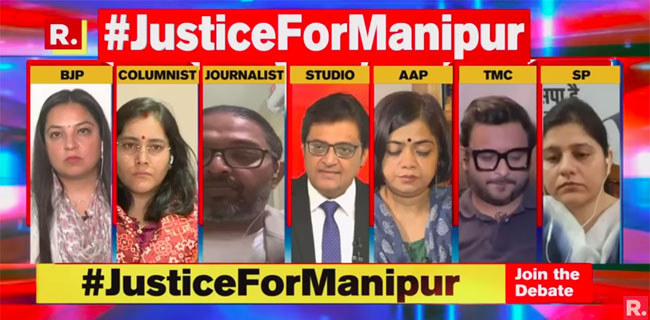
    Like Arnab Goswami screaming that whataboutery on Manipur is wrong, that the Modi government has made a mistake by not sacking Manipur Chief Minister, and so on.

    This is the first time I have seen Goswami’s face in I don’t know how long. So first I was amazed by how young he looks. Then I heard his bombastic shouting and realised it must be good exercise for face muscles. I may try it.

    The clip itself is short. So I have no doubt that Goswami went back to his usual BJP propaganda soon. The channel he runs is supported by the ruling disposition in more ways than one.

    But it was very entertaining.

    We all know, except for old journalists who have forgotten the new rules, even if they championed the hero who changed the rules, that the Modi government will avoid Manipur and do what it can to save Prime Minister Narendra Modi from being questioned on Manipur.

    This is a given.

    But since people will continue to watch TV there is nothing to be done.

    Except entertain yourself on social media.

    Like with the Modi government reaction to the film Oppenheimer.

    And that of former magazine employees who now work for the government. One such wrote a letter to director Christopher Nolan objecting to sex scenes where the Bhagvad Gita was quoted. The objector had not seen the film, but based his objections on social media comments. An honest admission. But also  a good lesson to be careful when journalists liberally sprinkle their copy or TV people their monologues with “sources”. Who knows what their sources are.

    Trolls on Twitter for instance.

    Another such important journalist who once worked for another government has also jumped into the fray on another matter: that the Congress President who is not a Gandhi family member is a puppet of the Gandhi family. This is the same story he has spun for years. But you have to admire his sense of timing.

    With poor Modi being protected from falling airport ceilings, collapsing highways and an increasingly impossible situation in Manipur, it’s all hands on deck to help. And who better than an inside man from the other side?

    I apologise for qualifying journalist with “important”. All journalists are important. Those who live in Delhi and have sources are more important than others.

    I digress. While some old school journalists are up to their usual tricks, others forget the rules have changed and a few try to climb out of the molasses to talk about collapses. Not just Manipur, but landslides, roads, drains and soon, at least 25 per cent of India’s forest cover.

    If you though Manipur was too far away for Delhi to bother about, imagine how far all the Himalayan states are.

    Look out for the amendments to the Forest Conservation Act. Or rather, the new Forest Construction Act. While you sleep, the polity carries on with its destructive policies.

    You could of course also laugh about Elon Musk changing Twitter’s name to X. Extreme foresight about our imminent extinction.


    Ranjona Banerji is a senior journalist and commentator. She writes on MxMIndia on Tuesdays and Fridays. Her views here are personal.


  • Will ChatGPT see the end of journalism as we know it?


    There has been much discussion and fear about the impact of artificial intelligence (AI) and various tools like ChatGPT on journalism. So we decided to do a Q&A with ChatGPT and asked it some leading questions. Here goes. Our first question is what this feature is headlined: will ChatGPT see the end of journalism as we know it?


    No, ChatGPT will not see the end of journalism as we know it. While AI language models like ChatGPT can assist with certain functions in a newsroom, such as fact-checking and content curation, they cannot replace the role of human journalists and editors entirely.

    Journalism is a multifaceted field that requires skills, experience, and critical thinking that go beyond just language proficiency. Journalists conduct interviews, investigate stories, and provide context and analysis, all of which require a deep understanding of the subject matter and the ability to make editorial judgments. Additionally, journalists are responsible for upholding ethical standards and ensuring that their reporting is fair, accurate, and balanced.


    While AI can automate some tasks in the newsroom, it cannot replicate the human element of journalism. Journalists bring a unique perspective, creativity, and storytelling ability to their reporting that AI cannot replicate. Furthermore, AI-generated content lacks the context and analysis that human journalists can provide, and it is not always able to capture the nuances of language, culture, and social context.


    In summary, while AI can assist with some functions in the newsroom, journalism will continue to rely on human reporters, editors, and analysts to provide context, analysis, and storytelling that AI cannot replicate.


    And here are a few more questions we asked:


    What kind of media professionals should be worried about losing their jobs thanks to ChatGPT?


    While AI-powered tools like ChatGPT can assist with some aspects of media production, it is unlikely that they will lead to widespread job losses in the industry. Instead, AI is more likely to augment the work of media professionals, freeing them up to focus on higher-level tasks that require human expertise.


    That said, certain types of media professionals may be more susceptible to job displacement than others. For example, journalists who specialize in writing routine news stories, such as earnings reports or sports recaps, may find that their work can be automated to some degree using AI tools. Similarly, content creators who produce large volumes of similar content, such as social media posts or product descriptions, may also be at risk of automation.


    However, media professionals who bring a unique perspective, voice, or set of skills to their work are less likely to be displaced by AI. This includes journalists who specialize in investigative reporting, opinion writing, or feature writing, as well as creative professionals like graphic designers, video producers, and photographers. These professionals bring a level of creativity, nuance, and human connection to their work that AI cannot replicate.


    Overall, while AI is likely to transform certain aspects of media production, it is unlikely to lead to widespread job losses in the industry. Instead, AI is more likely to augment the work of media professionals, enabling them to be more productive and efficient in their work.


    What are the functions in news media that ChatGPT can never ever replace or make redundant? 

    While AI language models like ChatGPT can assist with many aspects of news media production, there are certain functions that are unlikely to ever be fully replaced or made redundant by technology. Here are a few examples:

    1. Investigative reporting: Investigative journalism often involves digging deep into complex issues, tracking down sources, and following leads that require a high degree of human intuition, empathy, and persistence. While AI can assist with data analysis and other tasks, it is unlikely to be able to replicate the depth of human research and analysis that is required for investigative reporting.

    2. Ethical decision-making: News media professionals are often called upon to make ethical decisions, such as deciding whether to publish sensitive information, protecting the privacy of sources, or ensuring that reporting is fair and accurate. These decisions require a high degree of human judgment, empathy, and understanding of ethical principles and codes of conduct.

    3. Creative expression: Journalism and other forms of media production often involve creative expression, such as writing compelling narratives, capturing powerful images, or producing engaging multimedia content. While AI can assist with tasks like language translation or generating data visualizations, it is unlikely to be able to replicate the full range of human creativity and expression that is required for successful media production.

    4. Audience engagement: Finally, news media professionals play an important role in engaging with audiences, building trust, and fostering a sense of community around media content. While AI can assist with tasks like social media monitoring or audience analytics, it is unlikely to be able to replace the human connections and relationships that are built through effective audience engagement.


    Can ChatGPT replace sub-editors in newsrooms? 

    As an AI language model, I can assist in automating some of the tasks that sub-editors perform in newsrooms, such as grammar and spelling checks, fact-checking, and basic copy editing. However, I cannot entirely replace the role of sub-editors.

    Sub-editors perform a range of critical functions in a newsroom that requires a combination of skills and experience that go beyond just language proficiency. They make editorial judgments, ensure that stories are accurate, balanced, and ethical, and maintain the overall tone and style of the publication. Sub-editors also have a deep understanding of their publication’s brand, voice, and audience, which allows them to craft headlines, subheadings, and captions that are both informative and engaging.

    While AI can assist with certain tasks, it is not yet advanced enough to replace sub-editors fully. Sub-editors bring a human touch to the editorial process that AI cannot replicate. They provide context, critical thinking, and creativity that are essential in the editorial decision-making process. Therefore, it is more likely that AI will be used to support sub-editors, rather than to replace them completely.


    What are the other newsroom functions that ChatGPT can help with?

    As an AI language model, ChatGPT can assist with various functions in a newsroom beyond basic language editing. Here are some examples:

    1. Generating news articles: ChatGPT can generate news articles based on a given topic or prompt. However, it is important to note that these articles would need to be reviewed and edited by a human editor before publishing.

    2. Content curation: ChatGPT can assist with content curation by recommending articles or stories that are relevant to a specific topic or theme. It can also help identify sources for research or data gathering.

    3. Translation: ChatGPT can help translate articles or stories from one language to another. However, it is essential to note that AI translation is not always perfect and may require a human translator to ensure accuracy.

    4. Fact-checking: ChatGPT can assist with fact-checking by verifying claims made in articles against reliable sources. However, final verification should be performed by a human editor to ensure accuracy.

    5. Social media management: ChatGPT can assist with managing social media accounts by suggesting topics for posts, drafting social media updates, and identifying trending topics.


    Overall, while ChatGPT can assist with various tasks in a newsroom, it is essential to note that AI should not replace the human element entirely. Instead, it should be used as a tool to support and enhance the work of human editors and journalists.


    Can ChatGPT also do newsroom production tasks like pagemaking?

    While ChatGPT is an advanced language model that can generate text, it is not designed to perform newsroom production tasks such as pagemaking. Pagemaking involves the design and layout of a publication’s pages, including the placement of articles, photos, and advertisements. This requires skills in graphic design and layout, which are beyond the scope of ChatGPT’s capabilities.


    However, there are other AI tools and software available that can assist with pagemaking, such as Adobe InDesign, QuarkXPress, and other desktop publishing software. These tools can help automate the layout process, provide design templates and suggestions, and allow for easy collaboration between editors and designers.


    Overall, while AI can assist with some tasks in the newsroom, it cannot replace the skills and expertise of human editors, journalists, and designers. Newsroom production requires a combination of technical skills, creativity, and editorial judgment that go beyond what AI can currently provide.


    Can ChatGPT also replace talking heads or news anchors on television? 

    As an AI language model, ChatGPT is not designed to replace talking heads or news anchors on television. While AI-powered digital assistants and avatars can be used to simulate human interaction, they lack the expressiveness, emotional intelligence, and physical presence of human beings.


    Television news anchors and talking heads play a critical role in communicating news and information to audiences. They bring a personal touch and emotional resonance to news reporting, which is difficult to replicate with AI. News anchors and talking heads also bring a level of authority, credibility, and trust to their reporting, which is essential for news organisations to maintain their reputations.


    While AI can be used to automate some aspects of news reporting, such as generating news articles or providing real-time language translation, it cannot replace the human element entirely. News anchors and talking heads play an essential role in building connections with audiences, providing commentary and analysis, and guiding viewers through complex news stories.


    In summary, while AI can assist with certain tasks in news reporting, it cannot replace the role of news anchors or talking heads on television. The human element of news reporting is critical in building trust, credibility, and emotional resonance with audiences.


    So ChatGPT will not replace an Arnab Goswami? 

    As an AI language model, ChatGPT is not designed to replace Arnab Goswami or any other news anchor. While AI can assist with certain tasks in news reporting, it cannot replace the unique skills and abilities that human anchors bring to the job.


    News anchors like Arnab Goswami play a critical role in delivering news and information to audiences. They bring a level of authority, credibility, and trust to their reporting, which is essential for news organisations to maintain their reputations. They also provide commentary, analysis, and context to news stories, helping audiences understand complex issues.


    Furthermore, news anchors are skilled communicators who can engage with audiences, ask insightful questions, and respond to breaking news in real-time. They bring a level of emotional intelligence, expressiveness, and physical presence that AI cannot replicate.


    In summary, while AI can assist with certain tasks in news reporting, it cannot replace the unique skills and abilities of human news anchors like Arnab Goswami. The human element of news reporting is critical in building trust, credibility, and emotional resonance with audiences.


    Can ChatGPT do video production work? 

    ChatGPT, as an AI language model, is not designed to perform video production work. Video production involves a range of tasks, including shooting video footage, editing, special effects, and sound design, which require a combination of technical skills, creativity, and editorial judgment. While AI tools can assist with some aspects of video production, such as automating tasks like video editing or color correction, they cannot replace the skills and expertise of human video producers and editors.


    There are some AI-powered tools available that can assist with video production tasks, such as Adobe Premiere Pro, which has integrated AI-powered features that can analyze footage, perform colour correction, and suggest edits. Additionally, some AI-powered tools can create video content automatically from text-based sources or other data, but these videos lack the nuance and creativity of human-produced content.


    Overall, while AI can assist with some aspects of video production, it cannot replace the skills and expertise of human video producers and editors. Video production requires a combination of technical skills, creativity, and editorial judgment that go beyond what AI can currently provide.


    Any recommendations for journalists to brace themselves for the new post-ChatGPT world order? 

    As AI technology continues to advance and transform the media industry, journalists can take steps to prepare themselves for the new post-ChatGPT world order. Here are some recommendations:


    1. Embrace new technologies and tools: Rather than viewing AI as a threat, journalists can learn to use new technologies and tools to enhance their work. This includes using AI-powered tools to assist with tasks like data analysis, language translation, and fact-checking.

    2. Focus on unique skills and perspectives: To differentiate themselves from AI-powered content, journalists can focus on bringing a unique perspective, voice, or set of skills to their work. This might include specializing in investigative reporting, opinion writing, or feature writing, or developing expertise in a particular topic or beat.

    3. Build a personal brand: In a world where AI-generated content is becoming more prevalent, journalists can build a personal brand that connects with audiences and builds trust. This might include building a social media following, creating a personal website or blog, or developing a strong presence on multimedia platforms like podcasts or video channels.

    4. Develop multimedia skills: As AI technology enables new forms of multimedia content, journalists can develop skills in areas like video production, podcasting, and interactive media. This can help them create engaging, immersive content that connects with audiences in new ways.

    5. Stay informed about AI developments: Finally, journalists can stay informed about the latest AI developments in the media industry, including new tools, applications, and use cases. By staying informed, journalists can adapt their skills and strategies to stay ahead of the curve and remain competitive in the new post-ChatGPT world order.

    We edited this question a bit for publishing here…


    On a lighter note, how can I ensure that some obnoxious news anchors can be replaced or are made redundant?

    As an AI language model, I cannot make specific recommendations about replacing or making individuals redundant. It’s important to remember that media professionals, including journalists and news anchors, play an important role in informing and engaging audiences, and they bring unique perspectives and expertise to their work. While AI-powered tools like ChatGPT can assist with some aspects of media production, they cannot replace the skills and expertise of human media professionals.


    If you have concerns about the work or behaviour of a particular media professional, the best course of action is to express your views through channels like social media, letters to the editor, or other forms of public feedback. Additionally, supporting and promoting media outlets and journalists who produce high-quality, accurate, and engaging content can help to ensure a healthy and vibrant media ecosystem that serves the needs of audiences.


    We asked this question again, a few days after we asked the first set of questions…


    One final question: are you saying that journalists needn’t worry about ChatGPT

    Journalists should not worry about ChatGPT or AI language models replacing their role or rendering them redundant. AI language models like ChatGPT are tools that can assist with information retrieval, generate text, and engage in conversations, but they do not possess the skills, expertise, and contextual understanding that human journalists bring to their work.


    Journalism is a multifaceted profession that involves investigative research, interviewing, analysis, and critical thinking. Journalists play a crucial role in fact-checking, verifying information, providing context, and delivering nuanced reporting. These are skills and qualities that AI models do not possess.


    While AI can support journalists in tasks like data analysis, research, or generating initial drafts, human judgment, ethics, and interpretation are still essential components of journalism. Journalists bring their experience, storytelling abilities, and deep understanding of societal and cultural nuances, which are critical for accurate and impactful reporting.


    Instead of being a threat, AI tools can be seen as valuable resources that journalists can utilise to enhance their work, streamline certain processes, and focus on more complex and creative aspects of their profession.


    In summary, journalists should view AI language models as tools to augment their work rather than replacements for their expertise and essential role in the field of journalism.
     

  • So what’s next for Dr Bhaskar Das?

    By Our Staff

    There were telltale signs at Goafest last week.
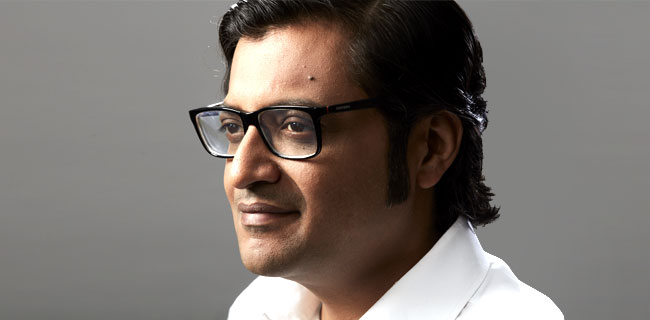
    One of the oldest and seniormost delegates present at the three-day event was perhaps also the most energetic. Present at nearly every session held and of course the awards. He ran upto the stage to meet star guests. Selfies galore with all the people who matter. 

    He is decidedly one of the most cerebral advertising and marketing professionals, one of the few people in the industry who has done his Ph D in marketing twice (not once) and is now working towards his thesis. He is on the Governing Council of MICA, and on the advisory boards and faculty at a few other temples of learning. And then amidst all of this, he does five to seven sales calls a day, is a door-opener for meetings with people who are otherwise unreachable to even the big bosses at media giants. And, yes, he also answers to our questions in Das ka Dum Monday through Friday.

    So the telltale signs were that he was present at Goafest not as a representative where he has be Group President/Chief Strategy Officer/Mentor, but as Secretary of The Advertising Club. Yes, you read it right: he was not representing Republic at Goafest.

    We tried reaching out to Dr Bhaskar Das, he politely declined to speak. We wrote to Republic via the marketing and PR head. No reply. We wrote to Republic owner, MD and editor-in-chief Arnab Goswami via his secretary. Not once, but twice. No reply. News entities we feel should be concerned about authentic information getting out in the market, are often the last to cooperate with sharing of news.

    We also feel that there should be some graciousness, but this is not a story on morals and what’s not cool.

    Das’s exit, if indeed true, will of course significantly impact Republic. In the short run at least. For in the last two years, where many corporate and advertising biggies have been dubbing the channel’s content as toxic, Das and the former Group CEO Vikas Khanchandani have been holding fort. Das’s persuasive and self-effacing demeanour has ensured that even those who detest the channel and its face didn’t mind inviting him for a coffee.

    In the days when the channel was facing a lot of heat, despite friends in the industry asking him to quit, his only reply was: Yes, I am disturbed with the controversy. My age doesn’t allow me the strain. But I will never desert the ship at a time like this..

    While entities like The Times of India, Zee and Dainik Bhaskar have thrived even after his exit, all of them have had a much longer legacy and many leaders who have had a fair equity amongst the powers that be.

    Republic has had a string of senior and mid-level exits. COO and distribution head Priya Mukherjee, Group CEO Vikas Khanchandani and now Dr Das.

    So what does Dr Bhaskar Das do next?

    He has just turned 69. In fact a friend of the family told us that he put in his papers on his birthday on Sunday, on his return from Goafest. He wants to spend more than the hour-odd that he currently does at the gym and spend time with the family, but he also once told us that he wants to fight possible cognitive malnutrition by doing work.

    He is active with MICA, and has also been teaching at various other business schools. He also mentors a few start-ups. Is working on his next PhD. Gives gyaan and put things in perspective for whoever needs the help. And is everyone’s friend.

    Will he join another news entity?

    We don’t know, but we’ll be surprised if he is (or rather his services are) not lapped by anyone.

    He once told us: “Lord Krishna will take care of me. He knows it. I am a das, a loyal servant. I’ve always had cordial relations with whosoever I’ve left.”

    Hmmm.

  • Zelenskyy interview sees R. digital viewership leapfrog

    By Our Staff


    Republic Media Network reports significant traction of its exclusive interview with Ukraine President Volodymyr Zelenskyy las tweek


    The 60-minute interview conducted virually “has propelled crucial global conversations on the ongoing Russia-Ukraine war,” reports the network. On digital, the interview, the network claims, received 600 million estimated impressions within the first 24 hours. Within minutes of the first playout of the live interview of President Zelenskyy to Republic Media Network’s Editor-in-Chief Arnab Goswami, the interview was trending across India, added a release.


    According to a communique, on Youtube, the interview garnered over 20 million impressions in the first day of playout. On YouTube, the interview got over 2.61 million views in less than 20 hours.


    Notes a communique: “With four full playouts over the weekend, and an unstoppable on-going virality on social media, new digital records will continue to be set by Asia’s largest news network, the Republic Media Network.”


    Editor’s Note: Digital viewership doesn’t have any universally accepted third-party credible measurement tools, and even if some good ones exist, there are many reports of these being inorganically boosted. Consequently, MxMIndia, as a policy, does not report on digital measurement claims. However, when we do report on viewership spikes, we are convinced that there was a increase in viewership. However, we wish to assert that the numbers have not been verified by us or a third-party, so we urge our readers to base their decision by verifying these.


  • The Façade of Being #1


    Shailesh KapoorBy Shailesh Kapoor


    Last week, news channel ratings were released after a long hiatus. What followed was bizarre, to say the least. Within a few hours, multiple channels had staked their claim for the no. 1 position. Between Hindi and English news genres itself, I read mailers and trade stories from at least seven channels claiming to be #1.


    The communication was not restricted to the trade. Channels went on air with their claims. You may have already seen Arnab Goswami’s self-congratulatory video from the day, in which he takes digs at competition while he finishes his 10,000 steps for the day, addressing Living Media as “Tak waalon” repeatedly.


    That video is funny at one level, but sad at another. The return of news ratings should have been an industry moment. A positive step towards better times ahead, where advertisers can make more informed choices. Instead, it was reduced to a game of one-upmanship. Other channels were not as shrill as Goswami. But the ideas were similar, nonetheless.


    This is all perception play, of course. None of the channels were technically “lying”. They were just looking at TG cuts that suited them. You can play with gender, age, NCCS and markets, and there are at least 120+ possible ‘reasonable’ combinations to choose from. In English News, where the reach is limited, it is quite possible that almost every channel will find itself being ranked #1 in at least one of these combinations.


    I often wonder how these trade campaigns make any sense. Surely, the advertisers know better by now. They have access to the same data. The senior planners are seasoned enough to see through this trickery of numbers. And yet, the mailers, the stories and the on-air coverage only gets more visible each year. It’s perhaps a case of channels doing this just to build the morale of the editorial and the sales teams. It’s that Arnab-type brouhaha that they may be going for, inside their respective offices, even when the cameras are not recording.


    This time, so many trade publications carried press releases on news ratings as they were. In an emailer from one of the websites, there were three stories, next to each other, from three different channels, all claiming to be #1. I have a theory that if you send some incomprehensible gobbledygook in the form of a press release, some of our trade websites will still carry it.


    The onus, in this case, should lie with BARC India. I find their advisories on usage of ratings data for sales and marketing to be loose and non-committal. BARC India could, and perhaps rightly, argue that which TG a channel selects is not their business. But in a genre that has come out of a ratings blackout that went on for a year and a half, BARC India can surely play a more active role in maintaining sanity.


    Because, by now, we should know that our news channels couldn’t care less about sanity.


    Shailesh Kapoor is Founder and CEO, Ormax Media. He writes on MxMIndia every Friday. His views here are personal


    Editor’s Note: As a policy, MxMIndia has not published any news around the rankings of any news channels since the day of release on March 17, 2022. We will wait for data release for at least four weeks before doing that. However, we do carry advertising mailers and banner ads of news channels. While we appreciate that as a responsible media platform, we are liable for ALL content we serve, all entities advertising with us are governed by the laws of the land and the advertising is subject to scrutiny by the Advertising Standards Council of India and the respective trade bodies. In the specific case of television ratings, the industry-owned body BARC also has a clear policy on how the data can be used in promotional communication.


  • Vikas Khanchandani quits Republic. Hersh Bhandari to take charge as Group COO. Darius Maneckji is Business Head

    By Our Staff


    Vikas Khanchandani
    Vikas Khanchandani

    Republic Media Network Group CEO Vikas Khanchandani has decided to move on from the organisation. The departure is with immediate effect and MxMIndia has confirmed the development. It is not known where Khanchandani will be moving to.


    Meanwhile, Republic has announced a restructure of its management, effective immediately. Newly-inducted Darius Maneckji will report to Hersh Bhandari, who has been elevated to Group COO – Broadcasting Division. Bhandari will be incharge of the entire broadcasting businesses of the network.


    Hersh-Bhandari
    Hersh Bhandari
    Darius-Maneckji
    Darius-Maneckji

    Maneckji will be Business Head-Republic TV and Senior EVP. He will now lead the national operations for Republic TV, including the channel’s offices in Bengaluru, Noida, Gurugram, Kolkata and Mumbai. He has been National Sales Head in the past for Times Now and also National Sales Head for the English Movie Cluster at Turner International India.  Before onboarding with Republic TV, his last assignment was with TV Today.


    Arnab Goswami

    Said Arnab Goswami, Founder and Editor-in-Chief of the Republic Media Network: “The induction of strong business talent is part of the expansion of the Network and creation of a strong organizational base to take the plans forward,: adding: “I am excited about the new roles for both Hersh and Darius. The broadcasting division under Hersh will see rapid growth, like never before. Our digital business is being expanded by 100 percent and together with our Strategic Business partnerships, will be hived off into separate business divisions, each with their own leadership and goals. At a consolidated level, this should place us in a fantastic position to be the number one TV+Digital News company across the board in two years.”


    On his elevation, Bhandari said: “At Republic Media Network, we continue to consolidate and strengthen ourselves with speed for the growth that beckons us. I’m energised by the trust reposed in me by the Board, Management, and my colleagues, to help shape and deliver the next phase of growth. We think and move as one, shoulder-to-shoulder.”

    Added Maneckji: “I’m excited to join India’s fastest growing news Network. I look forward to working with one of the best teams in the business to ensure we continue to command and establish our leadership role in the English News genre.”


    Priya Mukherjee
    Priya Mukherjee

    Khanchandani is the second senior person in the founding team of Republic TV. Distribution head Priya Mukherjee had moved out last year. Both Khanchandani and Mukherjee were part of Republic from before it started in 2017.


  • So who will be the 2021 MxMIndia Mediaperson of the Year


    By A Correspondent


    This is awards season. From politics, business and films to many, many, many awards in the A&M world. Not just in A&M, in PR communications, content… everything.


    But amongst all of this, there’s the MxMIndia Mediaperson of the Year award.


    And how are we different:


    1. No jury. So no influencing, no lobbying. No accommodation of one person this year, and another the next

    2. No sponsor. No pressure from anyone on who the award should go to

    3. No event. So no pressure of having a chief guest, sponsors for the event, and hence the pulls and pressures on ensuring that the winner is a “saleable” name

    4. Planning through the year. We ensure that those who do well in the end of the year don’t have an unfair advantage as they are top-of-mind

    5. Democratic, albeit partially. We invite nominations from the world, but the decision is ours


    Our winners so far:

    2020: The Independent Journalist

    2019:  Sidharth Rao

    2018: Piyush Pandey

    2017: Arnab Goswami

    2016: Ashish Bhasin

    2015: Punit Goenka, Shashi Sinha, Partho Dasgupta for BARC India


    So who will it be this year?

    There are a few people who are in our shortlist.

    We received 26 nominations for 12 people and two organisations in response to our call for nominations on October 13.

    So, who will it be?

    Well, it’s going to happen on December 17, 2021.

    It’s a Friday.

    We’ll announce the name by 12noon that day.

    No events. No drama. No tamasha.

    An honest award for the Mediaperson of the Year.


  • MIB formally recognises NBF’S self-regulatory body

    By Our Staff


    The Union Ministry of Information and Broadcasting (MIB) has officially recognised the News Broadcasters Federation (NBF)’s self-regulatory body. “The granting of official status by the MIB to the NBF makes the body the only institution of its kind in the entire nation to get the accreditation from the Government of India,” notes an NBF communique. MxMIndia hasn’t verified this. The older News Broadcasters Association’s self-regulatory body has been in existence for much longer.


    Said NBF President Arnab Goswami: “I want to thank all the members of the governing body of the NBF who have worked with me towards making this happen. The media has a pivotal role in strengthening our democracy and taking it to even greater heights. Strengthening the framework of the self-regulation of the media is a big step in that direction. And that’s exactly what the NBF has been working round the clock towards. The NBF prides on its democratic structure and roots across the country. Different languages, dynamic formats and varied audiences, but what binds the NBF is our commitment in coming together to strengthen the media pillar of Indian democracy. We look forward to working with the Ministry of Information and Broadcasting to further strengthen self-regulation in our media.”


    Added R Jai Krishna, Secretary General of the NBF: “We are privileged to be the first officially recognised self-regulatory body to be registered for TV news broadcasters. We are grateful to the Ministry of Information and Broadcasting and our members for reposing trust and faith. We ensure that we will take the news broadcasting of the country to great milestones with our democratic structure, excellence in self-regulation, and bringing the truth and reflections to the doorsteps across the country in maximum languages.”


  • NBF Board also meets new I&B Minister, makes case for resumption of ratings

    By Our Staff


    News Broadcasters Federation’s governing board members held a meeting with Union Information & Broadcasting Minister Anurag Thakur on Tuesday.  The Board apprised the minister on key issues facing the news industry, the recent growth and trends in the news broadcasting sector and the challenges facing the news broadcasting industry in recent times.


    During the meeting, members of the NBF highlighted the need for the “immediate resumption of viewership ratings for the news genre, which have been unilaterally paused and has severely impacted the sustainability of  news channels”.


    Said Thakur, “It was a pleasure to meet and exchange views with the NBF governing board led by Mr Arnab Goswami. It was a productive exchange of views and I look forward to engaging with the NBF on issues regarding news broadcasting and the role of news broadcasting in strengthening our democracy.”


    Added Goswami: “The meeting of NBF members with the minister was a wonderful opportunity to apprise him about the steps we have taken to build India’s largest federation of news broadcasters. The minister has heard our views and concerns in detail and we look forward to working with the Ministry of Information and Broadcasting to make the news broadcasting sector even stronger.”


    Added Barun Das, CEO of News9 Network and Vice President of the NBF: “It was a pleasure to be a part of the NBF delegation to meet the honourable minister of I&B. The highly competitive news TV genre certainly needs a level-playing field for new promising players both in the national arena and regional markets. We  felt extremely assured after our meeting today.” The TV9/News9 network is now back as an NBF member.


    Added Shankar Bala, CEO of Fourth Dimension and Vice President of the NBF after the meeting with the Minister: “Today’s meeting was really pathbreaking. It was a great opportunity to meet the minister. He was extremely cordial and he heard us patiently. Whatever the issues were, those were addressed. We have particularly stated that it is essential to release the viewership ratings for news channels, which were unilaterally stopped. The resumption of the publication of news ratings will ensure fair play and a measurement-driven competitive news industry. We have a lot of expectations after our talks.”


    And this is what Bhuyan Sarma, Managing Director of Pride East Entertainments said: “’It was a cordial meeting with Mr Anurag ji and it was a very positive meeting. As a team, NBF put forth the problems we tend to face and the ways in which we want to raise and address our concerns. At least, we can go forward and help regional industries survive, like ours. The minister gave us a patient hearing and we are very grateful to the ministry. We are now looking forward to the future and ways as to how we can progress together.”


    Said Kartikeya Sharma, Promoter of ITV Network and Vice-President of the NBF:  “It was a very positive meeting with the minister. The minister heard out all the matters raised by various members of the NBF. I would like to thank the ,inister for hearing the viewpoints of all news channels from across India and from regional channels as well.”

    The NBF delegation included Goswami, Das, Sanjive Narain, Founder/Managing Director of Prag News, Sarma, Sharma, Bala, Hemant Sharma, News Director of TV9 Bharatvarsh, Manoj Gairola, Editor-in-chief of News Nation, Mahendra Bhatla, Chairperson of MHOne, Divaakar S, Business Head of Newsfirst Kannada, R. Jai Krishna, Secretary-General of NBF and Eshita, Associate for Policy and Regulations of NBF.


  • Republic announces global expansion, Arnab Goswami to be back on air wef June 21

    By Our Staff [updated]


    Republic Media Network made some growth announcements on Wednesday, with expansion plans across the digital and broadcast space for audiences in India and abroad.


    Simultaneously, going live with its game-changer #RepublicIsTheNews brand campaign, the network announced a 600% digital growth and increase in traffic. Meanwhile, like Zee group chairman Subhash Chandra did with WION a few years, Republic Managing Director and Editor-in-Chief Arnab Goswami has announced R. Global. Over 120 journalists have been engaged for the effort.


    Meanwhile, it has been announced that Goswami who has been off-air from early April is scheduled to be back at primetime from Monday, June 21, at 9pm.


    Dear Viewers, #Arnab has really missed you. Let the countdown to #Arnab LIVE at 9pm on Monday begin! He can’t wait to be back being with you. #ArnabIsBack pic.twitter.com/lMG9TnPkI3

    — Republic (@republic) June 18, 2021