Tag: Arnab Goswami

  • Anil Thakraney: Rage on, Arnab!

    By Anil Thakraney


    Arnab Goswami is Indian television media’s all-season angry middle-aged man. That we all know. But when it comes to issues on Indo/Pak conflict, his anger turns into savage fury. As we are currently witnessing in the case of the mutilated bodies of Indian soldiers, the deed allegedly done by Pak soldiers. And Arnab’s anger very quickly becomes contagious; anchors on other channels, who start out rather calmly, switch to the anger mode. And for days it becomes a lot of shouting and heckling on all the news channels.


    My first thoughts: It’s a complete waste of time and energy. The Pakistani government gives a rat’s arse about all the drama inside Indian TV studios, and will continue with what they want to do. For example, all the rage over 26/11 has yielded zero results so far. It’s also quite possible that the Pak netas and indeed their army generals had no role to play in the mutilation of the soldiers’ bodies. This cowardly act may well have been carried out by a few barbaric, retarded Pak soldiers of their own volition; therefore it would be difficult for even Pak to get to the truth. In short, a pointless exercise, a needless diversion from the anti-rape campaign.


    However, on second thoughts, I do believe we need the anger going on Pakistani issues. Simply because we are a proven soft state, we have a Prime Minster for whom even opening the mouth becomes a challenging task. As usual, all we are hearing is the same old useless political reactions: We will lodge a protest, we will take suitable action, we will not allow this, etc. And this can and will have a negative effect on the morale of the army. Why fight for a nation when it doesn’t care if you die, and if the head from your body is chopped off?


    In this depressing scenario, all the fury in the media is indeed required. The viewing public feels a little vindicated. And the army jawans might feel their own anger getting vented. This venting is very important to maintain status quo.


    So rage on guys! Keep insulting and humiliating the Paki spokespersons. We are right behind you!


    ***


    PS: Speaking of the Indo/Pak conflict at the LOC, here’s a stunning commercial from a music company. It’s set on Christmas Eve of 1914, when the Allies were at war with the Germans. Notice the honour code enemies dutifully follow in the zone of conflict. Wish the barbaric elements of Pakistan would learn something from this.


    [youtube width=”400″ height=”220″]http://www.youtube.com/watch?v=3aRLGwsafTM[/youtube]


  • The Anchor: 6 reasons why Arnab Goswami should be given the Bharat Ratna

    By A N Chorrea


    1. He generates extreme emotions in his viewers: the man whom many love to hate and even more hate to love.

    2. He has a single-minded devotion to rid India of all its malaises

    3. His brand of journalism rubbishes all that one was taught in media school that as a journalist one ought to be neutral. Takes a position as a journalist like few others

    4. The more he damns his guests, the more they love him

    5. You can read him from his body language. He lets his body do his talking

    6. He shows his human side when he meets someone powerful: last year when he interviewed Raj Thackeray, he was soft and gentlemanly and let him off easily.


    A N Chorrea is a senior industryperson writing under a pseudonym


  • Ranjona Banerji: Headlines Today tops Modi discussions while Arnab Goswami tires us

    By Ranjona Banerji


    To my absolute surprise (I can be charged with “misunderestimating” here), the better discussions on the assembly election results on Thursday evening happened on Headlines Today – barring of course Rajya Sabha TV which lives up to its reputation of being above the rest. Between Shiv Vishwanathan, Mani Shankar Aiyar, Seshadri Chari, Ashok Malik and Vir Sanghvi, moderated by Rahul Shiv Shankar, you had a lively and sometimes funny discussion on Narendra Modi’s third term, with some insights as well.


    Arnab Goswami’s excitement and his various poses of offence and defence are starting to get very tired now. His ruse of taking a position and then manipulating or browbeating everyone else around him is so transparent as to be ineffective. His political sense is not as finely honed as his finger on the pulse of how to save the nation and this means Times Now suffers when the subject is politics. Put Goswami at the helm of a discussion about gang-rape and he is bound to win because you feel his pain and feel that he articulates your anger. If the subject is politics itself however and the lack of depth is evident – much as understanding politics requires any depth at all, perhaps all you need is a feel for the iniquity of human character!


    On NDTV, there was Barkha Dutt in a pink top in the morning and Barkha Dutt in a green top in the evening. Prannoy Roy, who invented election results broadcasting as far as India is concerned (introduced us to the word ‘psephology’) was nowhere to be seen. Why a channel should hide its trump card is inexplicable.


    CNNIBN was its solid self – neither terrible nor extraordinary. This may be all right in normal conditions but election results require a little more fire perhaps.


    Hardly anyone, it must be admitted, focused much on how the exit polls went a bit wonky – as they always do. (Although on Friday morning, Hindustan Times had a story on that.)


    **


    Together with Narendra Modi’s hat-trick in Gujarat, TV channels did not forget the gang-rape victims and gave us occasional updates. However the fracas in the Lok Sabha over the quota promotions bill with the House being adjourned many times seemed to be forgotten.


    TV’s recurring problem is lack of depth. Every time some BJP leader said that Modi’s hat-trick was historic as being the first ever in human history, no anchor or reporter managed to correct them. Even Rajdeep Sardesai of CNNIBN almost made the same mistake but then quickly changed his sentence. His channel through the day told us that Modi first came to power in Gujarat in 1998, when it was in fact in October 2001 (sent to replace Keshubhai Patel after debacle over earthquake rehab), won a by-poll in February 2002 and the assembly elections in 2002. One has to thank The Times of India for giving us a box on all the chief ministers who have managed more than three terms throughout human history. It’s a long list as it happens and Jyoti Basu of West Bengal tops it with five terms!


    What did get forgotten more or less was Himachal Pradesh as Modi towered over the news and the discussions all day and night on TV. Perhaps there was nothing to say?


    **


    In their editorials, The Times of India, Hindu and Hindustan Times all dealt with Modi’s victory. TOI pointed out that his Hindutva image would be a problem for his all India ambitions even if his achievements in Gujarat are formidable. The Hindu did not focus on Hindutva so much as on how Modi’s authoritarianism alienates many within his party and its larger family and polarises his voters. Hindustan Times focused on how the Congress did not put up a leader to combat Modi’s enormous presence.


    **


    Since I have managed to write this, I can only assume the world has not ended yet or that December 21 2012 was not so much the end of the world for the Mayans but one more Mayajal!


  • Mediaah!: What’s not right with Arnab Goswami

    By Pradyuman Maheshwari


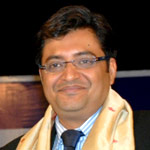
    Many months back, even ahead of the November 26 terror strike in Mumbai which transformed the English news television landscape entirely, I had written that Arnab Goswami was the best anchor on primetime news TV.


    He was different from Rajdeep Sardesai and Barkha Dutt who were stars of the nightly bulletins. He was direct, he asked the tough questions and didn’t let his guests get away easily.


    In many ways, just as Angry Young Man Amitabh Bachchan mesmerized the nation in the 1970s, the Angry Young Man Arnab Goswami grew big on television. Rajdeep and Barkha (and Prannoy Roy etc) were journalists… this guy was like one of us.


    November 26, 2008 onwards was when he was at his peak. Some may say he took the easy (and if one may add uncharitably: safer) option of being in the studio as his reporters went closer to the hostage drama. But it was a wise decision. While it’s good to have your trump cards in action  – whether they should be on the field or off is a call that’s got to be taken. By staying in the studios, Arnab ensured that the 60+ hours of the hostage crisis was covered the best on Times Now.
     

    Arnab Goswami

    It’s been no looking back thereafter. He took the nationalistic line and the longevity of the terror discussion ensured that he would go on and on and on. Then there were border concerns in China and immigrant problems in Australia and wherever there was an issue where there was an Indian case to be fought for, Superman Arnab came to the rescue.


    A variety of political scandals and multiple scams ensured that there were enough ratings for news on television. Plus a packed sporting season.


    However, Arnab appeared to have got greedy. Or was forced to not see reason and hold back. He stretched his nationalistic debates a bit much.


    Agreed the nation wants answers and is happy that Arnab asks for them too, but the shrillness with which he goes about his task makes it a charade. There is a hardly a night when there is peace among his his panelists.


    There are other problems with the Arnab we see on Newshour and beyond. His body language as he faces the camera shows that he gets in with a view. And he wants to lead the discussion as per that.


    He gets carried away. Like he failed to see reason when Anna Hazare was at his peak. Like he did last Sunday as anchored a newsroom discussion through the day for Shiv Sena chief Bal Thackeray’s funeral procession. While one didn’t expect him to damn him, the death of a political leader like Thackeray offered enough reason for a debate on his policies and style of functioning.


    Arnab’s ‘Frankly Speaking’ with Raj Thackeray may have seen him raise some probing questions, but he let him get away. Raj even had some fun at Arnab’s expense.


    Last night (on Tuesday, Nov 20), we had a discussion on the two girls in suburban Palghar being arrested over a Facebook comment. The arrest as well as the vandalism thereafter must be damned. Those who committed both the crimes ought to be taken to task.


    I hold no brief for any of the three Mumbai women guests present, but Arnab was being offensive. At least allow Shaina NC to speak and move on if she’s not making a direct reference to the Sena, though later she did make an oblique reference!


    Arnab is fortunate that his competition, save Rajdeep Sardesai’s CNN-IBN, is not formidable. The NDTV 24×7 coverage of the Bal Thackeray death and funeral procession was pathetic. Sreenivasan Jain is poor with live news TV. His performance has been consistently below par: he was no great shakes when he was the Mumbai bureau head some years back, on Profit and now with the Thackeray coverage. Yes, on-off documentaries are great as are his exposes.


    As for Headlines Today, I think I have the solution to how it can be a force to reckon with. Let Rahul Kanwal be around for interviews et al, but get another primetime anchor-editor.


    Since I don’t have NewsX piped in through my digitized signal, I don’t watch the channel, but to my mind, CNN-IBN is by far the best English news television channel.


    Mind you, Rajdeep also gets shrill at times and Sagorika Ghose is a dozen times his decibel levels, but what makes the channel stand out is that it’s got multiple faces.


    Times Now appears happy to have not created a face beyond Arnab. But that’s their internal policy, though I am not sure if it’s a wise one.


    As for NDTV 24×7, it’s sad to see a wealth of talent often being wasted. Although I didn’t see much of the channel after a point last weekend, perhaps getting Barkha Dutt on would’ve been better with the Bal Thackeray coverage.


    Back to Arnab. If he really wants the viewing masses to find him spending their primetime with, he must switch tracks, get less combative and chill.


    A 10-day Vipassana course perhaps?


    Mediaah! Is written by Pradyuman Maheshwari, Editor-in-Chief, MxMIndia. The views expressed here are his own. If you don’t want to use the messageboard below, inbox your comments to him at pradyumanm@mxmindia.com. Or BBM 29FEA79C.

    File Photo: Fotocorp
     

  • Good Times with Arnab Goswami

    By A Correspondent


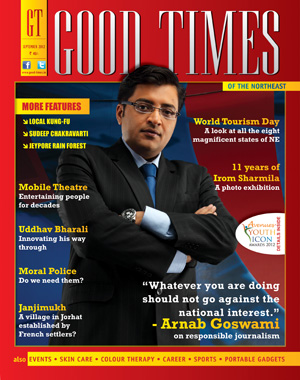
    He is one of Assam’s most famous sons, probably the best known Assamese face in the world. Okay, there have been other big names from the state – Bhupen Hazarika being the foremost, but there’s no doubting the fact that Arnab Goswami is undoubtedly the most prominent – not just in the media but from other walks of life as.


    Little wonder that he was on the cover of the second issue of Good Times, an all-new lifestyle magazine that is edited by Guwahati-based mediaperson Koushik Hazarika.  Mr Hazarika was until earlier this year Executive Editor and Marketing Manager with Eclectic Publications. His magazine is priced at Rs 40 and Mr Hazarika can be reached at: koushik.h@gmail.com


    Sample some questions posed to Mr Goswami:

    Coming to debates, there are a lot of talk shows that are aired in the television channels now. What is the kind of impact that these shows should aim to create with these discussions? It seems like it has happened on TV and then it’s over!


    I have often thought about this and I have come to a conclusion that only when the people, who need to be embarrassed and the people, who need to be humiliated are exposed, only then can a change happen…


    Personal and professional future in the next 5 years?

    I wouldn’t know about the professional future but yes, I do dream that at sometime in the future, our country will have a channel like BBC or CNN which is going to be broadcast to the world and if such an opportunity arises, I would certainly like to play a role in it. Personally, I hope I get more time to visit my parents who are in Guwahati and to spend time with my family. That would be good enough.


    One last thing – regarding the recent open letter by Madhu Kishwar. Any comments?


    I have a postal as well as an e-mail address and if anyone wants to reach me, they can write directly to me.


  • Ranjona Banerji: Anna movement reaches its predictable end

    By Ranjona Banerji


    The news was quick to jump on India’s new Union Home minister after a series of bomb blasts hit Pune the day Sushil Kumar Shinde was appointed. In a revealing interview with Rajdeep Sardesai of CNN-IBN, Shinde exposed himself as a “family” man and also attributed his political success to his Dalit caste. These are just the kinds of things a new India does not want to hear. Even worse, he then went on to say that he had been an “excellent” power minister – this on the day that North and East India reeled under power blackouts for the second consecutive day.


    Fortunately for Shinde and his possible short-comings – and also therefore for the UPA government – escape came from what has been the top news story, especially on television: the Anna Hazare-led anti-corruption movement.


    Two days ago, Times Now editor-in-chief Arnab Goswami had practically been in tears over the frail but defiant condition of Anna Hazare adviser Arvind Kejriwal. The activist, who is apparently a diabetic, was in a bad way but was refusing to break his fast until all his conditions were met – arrest half the government and so on.


    Goswami therefore got into fighting mode as there were indications that the movement was looking for a political solution. Karan Thapar also explored this on his Last Word on CNN-IBN.


    By Thursday, it was announced that the anti-corruption movement would now become a political platform. The news was welcomed by all political parties since the fight had moved away from civil society to a battle ground they were all very familiar with.


    The media’s relationship with the Anna Hazare movement has been fascinating. TV went overboard last year as it supported the movement wholeheartedly and since most TV journalists are under the age of 11, they must have felt this was bigger than the freedom movement. The print media however remained cautious and in some cases critical. The people of India also get enthusiastic and social media was buzzing with anti-corruption rage. The government helped by bumbling and fumbling in its negotiations. But nothing topped the one lakh people who supported the movement in Delhi last year. The Lokpal bill was passed in the Lok Sabha but did not get past the Rajya Sabha.


    Buoyed by its success, the movement went a little overboard in its demands and so TV also started asking difficult questions. No one showed up in Mumbai in December and TV totally turned. All the allegations against people like Kiran Bedi and Arvind Kejriwal were discussed. Hazare’s rustic ideas on politics and society became public knowledge. The group’s diverse and contradictory views on the politics, on political parties and ideologies were exposed.


    This time’s agitation saw the love coming full circle. TV tried to be supportive but the people were not. The movement’s supporters roughed up journalists for reporting the lack of popular support. The government was unmoved.


    The result is that the movement has gone political. Media support, which bolstered the movement so much in its early days, is now no longer assured. An interesting tale of how activists took on the government and enthused some people for a short while has reached a very predictable end. The media, they will have to remember from now on, will never be a pillar of support if it has to be a pillar of democracy.


  • Ranjona Banerji: TV news viewing can be injurious to the lower jaw

    By Ranjona Banerji


    Since president-elect Pranab Mukherjee spoke to almost everyone on Tuesday, it was hard to see why news channels rushed to qualify their interviews as “first” or “better” or whatever. Exclusive, in TV parlance, is apparently when you do the same thing as everyone else, except five minutes before.


    Anyway, Mukherjee did not say very much about anything he was going to do as President although he talked about his childhood and his early political career. The silliest question I reckon came from Sagorika Ghose of CNN-IBN who asked whether Mukherjee’s ascension to Rashtrapati Bhavan was a “return of Bengal to the mainstream”. At this point my jaw dropped so low that it fell off and I was so busy retrieving it that I couldn’t pay attention to the rest of the interview.


    The best I could get from Arnab Goswami’s interview with Mukherjee on Times Now was that first Mukherjee walked round his garden 40 times, then 33 times and now 30 times and he did not know how many times he was going to walk around the Mughal Gardens. He said he heard the gardens were very large. Anyway, as President he will have ample time to work out stuff like that. Or if he asks someone they might tell him how big the Mughal Gardens are.


    * * *


    Sunday was all about the presidential election as well as everyone gave us live coverage. Of course, after some time they ran out of things to say because there was very little to say about a presidential election in India, at least not enough that can last a whole day even given TV’s marvellous propensity for waffling on about nothing. The highlight of the day was losing candidate PA Sangma’s losing speech. He started by congratulating Mukherjee and then went into a whine about how the Congress had used bribery, extortion and threats to ensure Mukherjee’s victory and how the North East and betrayed not just him but all tribals and themselves as well. (They didn’t vote for him.) Sangma’s entire campaign was based on pettiness, so nothing surprising here. What was surprising was Navika Kumar of Times Now stating emphatically that this was the best, most gracious and most sportsmanlike speech she has ever heard from a loser. Her guests Krishna Prasad of Outlook and commentator NN Satchidanand tried to point out otherwise, but she would have none of it. Jaw-retrieval is a common affliction for those who watch too much TV news, as I should know by now.


    * * *


    Rupert Murdoch has stepped down from several boards which control News Corp’s titles in the US, UK and India. The pressure to do so apparently came from investors, after the phone-hacking scandal led to the closing of The News of the World and all the arrests of News Corp staff, current and former. Murdoch’s rise saw a lot of bile but in his fall are some abject lessons for media bosses and for those journalists who decide that principles are nothing when faced with corporate pressure to perform in a particular manner or to do anything to get results. The Nuremberg trials ought to be required reading for young aspiring journalists: the fact that you got an order is not defence enough.


    * * *


    I was appalled yesterday and continue to be appalled today about Monday’s front page anchor in The Times of India about a group of Indian athletes that went to the 1936 Berlin Games under a saffron flag singing Vande Mataram and impressed Adolf Hitler enough to give the group a medal. The story behaved as if getting a medal from the 20th century’s most frightening dictator was a great honour. There was not a squeak in the story about Nazism and what the organiser of the group thought of that. The glorification of Nazism in India is restricted to those influenced by the religious nationalism that comes of out of Nagpur. The story, therefore, should have mentioned or questioned the RSS connections of the group. Saffron flags and Vande Mataram were clear giveaways but why not come out openly and say so? And for a journalist – and a newspaper – to ignore the Nazi angle to such a story is criminal.


    * * *


    Vikram Doctor’s article in The Economic Times on food and the Olympics was extremely readable and well-researched. Try it: http://blogs.economictimes.indiatimes.com/onmyplate/entry/thanks-to-french-humour-here-s-best-of-british-food


  • Ranjona Banerji: TV does right by Baby Mahi!

    Ranjona Banerji

    By Ranjona Banerji


    Let’s cut TV news a little flak. What! Did I really just say that? The story of “baby Mahi” who fell into an abandoned borewell on her birthday last week but could not be rescued for almost five days is a made-for-TV story. Most newspapers would have reduced the story to a brief, if they carried it at all. Human life or in this unfortunate case death means very little in Indian newspapers unless it concerns high net worth individuals or happens in large numbers. Here also the concern is relative: for a Mumbai newspaper a bus that falls into a ravine and kills 50 of a marriage party in Bihar means less than an accident on the Mumbai-Pune expressway which kills 15. Geography and proximity carry more weight than the idea of death itself.


    TV news, however, challenges these assumptions made by the print media. While some may find TV’s attention to baby Mahi excessive or indeed point out that people fall into wells all the time, they are missing the point. Newspapers belong to the old, fatalistic India, where you took everything in your stride because life taught you that horrible things happen to everyone and especially to poor people. TV belongs to New India and as we learn every night, India always wants to know.


    And some questions, we must admit, need to be answered. There is no reason why people should regularly die because they accidentally fall into wells. There is no reason why we should not insist that safety protocols be put in place to prevent such accidents. There is no reason why local officials are not pulled up for being callous.


    Even if the hyperbole and hysteria generated by TV reporters and anchors can be vastly annoying, it does not mean that the reason they are having fits is not genuine. It took every bit of fortitude I could muster at midnight to listen to Arnab Goswami’s impassioned outburst against apathy and indifference (Wimbledon means I cannot get to TV news before midnight, yes I have no life and thank god I don’t watch football!) but behind all the bluster – there was a point.


    The trick for TV now is not to let this baby Mahi case turn into a real-life version of Peepli Live. They have to continue with the campaign they have begun so that they do not become as cynical as print journalists. It may be a tall order, but they started it.


    * * *


    I greatly admire Pakistanis who appear on Indian TV news discussions about terrorism. It takes great courage to withstand all that solid evidence against them and continue selling their government’s line. And they seem to be quite happy to do it. I do not get to watch Pak TV any more so I do not know if Indians appear on panel discussions to get pilloried. Does anyone know?


    * * *


    Football has taken over our newspapers. It is now emerging as cricket’s biggest competitor. We all know that Indian football does not generate any interest at all (somewhat like Indian hockey) but every FIFA tournament brings the lives of others to a standstill.


    The test I suppose is when cricket (with India playing) and football tournaments happen at the same time. Who do you think will win? Or will we then know whether sports pages are just lazy or have some top class brains involved in the planning?


    * * *


    The Times of India in its little debate section on the edit page has gone for and against on the use of the term “Bollywood”. It’s an old argument and an amusing one. We all know that the term is derogatory and was coined in the 1970s with that in mind. We also know that as long as the Hindi film industry continues to make song and dance potboilers, the term will continue to stick. No one calls Shyam Benegal or his oeuvre “Bollywood” so we all know the difference. TOI could have suggested options like “Goregaon”, since that’s where so many films are made and that’s how Hollywood got its name. Any takers?


  • Ranjona Banerji: Media double faults in Paes-Bhupathi match

    Ranjona Banerji

    By Ranjona Banerji


    After years of working with city reporters, I accepted the fact that many grappled to understand the concept of “presumption of innocence”: If the police made an accusation against someone, why then it had to be true. But, of course, every accused has the right to defence. And while reporting a story, journalists are supposed to be objective. If they cannot provide both sides of a dispute, they must explain to the reader why they have failed.


    But in the initial rounds of this rather unfortunate fight in Indian tennis, where Mahesh Bhupathi and Rohan Bopanna have refused to partner India’s top tennis player Leander Paes in the 2012 London Olympics, the media started out batting for Bhupathi alone. In what appears to be a well-thought-out campaign, the doubles pair of Bhupathi and Bopanna sent out a series of letters and emails signalling their refusal to play with Paes even before the All Indian Tennis Association decided on the Olympic team. Several newspapers and news channels did not even make a willy-nilly attempt to contact Paes.


    The exceptions are possibly DNA and Headlines Today, who got in touch with Paes’s father. But for the most part, it was about the terrible wrong that was about to be done to Bhupathi and Bopanna – being forced to play with Paes for the Olympics. Mail Today and The Times of India seemed like they had stakes in Bhupathi’s career.


    These pressure tactics appeared to have failed and the AITA decided to pair Bhupathi with Paes. This is where objectivity completely failed India’s sports journalists. Bhupathi came on air and was quoted in print making all kinds of allegations against Paes. The Times of India at last informed us that they could not contact Paes. Therefore, the story remained one-sided.


    Bhupathi and Bopanna meanwhile, perhaps emboldened by this out-and-out media support stated firmly that if either had to partner Paes, they were willing to forgo the Olympics. Despite the media’s usual pattern of extreme jingoism, even this display of lack of country love, did not deter the pro-Bhupathi-Bopanna journalists. One cannot state that sports journalists are less jingoistic than the rest – we see what they do to cricketers regularly. In fact I can guarantee that any top cricketer who refused to play for India because he did not like his team members would be hung, drawn and quartered by the media. By the way, cricket is not even an Olympic sport and technically, when Indian cricketers play, they represent the board. Not so for tennis, where professional players put aside career considerations to play Davis Cup and the Olympics.


    However, as the week of allegations by Bhupathi and Bopanna came to a close, the media slowly started to turn. Paes may have contributed to that by issuing a statement that he was willing to go by the AITA’s decision. The Indian Express and Mid-Day started to look at being fair to all concerned. The Hindustan Times later also presented a larger picture. The Times of India came to the party last – but more on its edit pages than its sports pages.


    Where a reader should have been given perspective on this battle and information to negotiate through this unseemly fight, he or she got a minefield of accusations from only one side. Now the villain of the piece is apparently the AITA as Bhupathi has approached the sports ministry to step in. Bhupathi has accused the selection committee of being a bunch of bureaucrats who know nothing about tennis. To me they appear to be former players – perhaps not of the stature of Bhupathi but tennis players nonetheless, a fact which needs to be pointed out in the media.


    Monday night saw Times Now’s Arnab Goswami ask Mahesh Bhupathi some tough questions – some of which he struggled to answer. This is the first time that Bhupathi’s accusations were questioned. Later, the fathers of Paes and Bhupathi were on Times Now, where Paes Senior pointed out that Bhupathi was not blameless in this battle, while Bhupathi Senior tried to shrug that off and say the Olympic riddle had to be solved not the mistakes made by the boys.


    Appalling as this ego battle between India’s top tennis players may be, the media’s partisan stand has been as appalling.


  • Ranjona Banerji: Why I criticise Times Now most

    Ranjona Banerji

    By Ranjona Banerji


    Is the cacophony of television news adding anything substantial to the dissemination of news, views and information? In fact I should make that “substantive” since this seems to be the new fashionable word. I repeatedly hear people saying it on TV and since there is no editing provision for live TV debates, mistakes are exaggerated and emphasised. A man who was introduced as a Supreme Court lawyer (I cannot remember his name but he also hates the BCCI, if that’s a clue) said this repeatedly and I would have liked to have been a fly on the wall if he had ever appeared before Markandey Katju. Sadly, the print media is also unable to see the difference between “substantial” and “substantive” even as it continues to mis-spell “minuscule” as “miniscule”, probably because it doesn’t register on spell check in Microsoft Word. The dictionary has not been spotted in newspaper offices for over a decade now and sits high on the endangered species list. And of course the difference (or as they say on TV “differential”) between “less” and “lesser” is a lost cause as far as the print media is concerned.


    This segue from irrelevant debates to bad spelling is now over. This week, Times Now spent half an hour discussing a proposal by Air India to give special favours to MPs. The problem was that no one except the anchor, editor-in-chief Arnab Goswami, knew anything about the plan. So the discussion – if it can be called that – never went anywhere.


    There are events which are offensive and annoying. But not all of them have enough substance – substantial or substantive – to merit a debate. A little discretion is advised if you do not want to drive viewers away.


    **


    I have to admit that I watch more Times Now at primetime than any other English TV news channel . And that is why I criticise it the most. But even in all the seemingly manufactured outrage, it appeared that Times Now had a finger on the pulse of its viewers. Now I wonder – drama for the sake of drama gets boring after a while, even in a country which thinks that Rowdy Rathore is a good film.


    CNN-IBN is dull, NDTV I have ambivalent feelings towards and I stopped watching Barkha Dutt after her reaction to the Radia tapes, Headlines Today remains a channel for babies and NewsX appears to have not paid its carriage fees to over half the country’s operators. The best programmes on CNN-IBN are probably Cyrus Broacha’s The Week That Wasn’t and Karan Thapar’s Devil’s Advocate and Last Word.


    **


    The problem for TV of course is that issues like the economy, drought, government inaction, female foeticide – which newspapers have focused on today – have no visual or dramatic traction. Indian TV news does not seem to have as yet worked out how to develop a story. If everything has to be breaking news, then at best you have raw data which can move in any direction and at worst, you have nothing.


    The Indonesian connection to Madhu Koda is a case in point. For such a story to have maximum impact, it would have made better sense for Times Now to construct a story and then air it. By just running with what they had, they only confused and bored people.


    This lack of direction and journalistic skill is why they keep running to people for reactions, whether it is a tree that has fallen or a road accident. Or indeed, a proposal by Air India to treat MPs like kings.


    Ranjona Banerji is a senior journalist and commentator. She is also Contributing Editor, MxMIndia. The views expressed here are her own.


  • Bandh a ‘partial success’, no effect on petrol prices

    Ranjona Banerji

    By Ranjona Banerji


    Tracking Thursday’s Bharat Bandh protesting against the petrol price hike on TV led to a bit of confusion – was it a success or not. As it turned out, the Opposition-led bandh was what is known as a “partial success” so if you’re a half-glass pessimist, that’s the same as a “partial failure”. For Mumbai, TV showed us a bus in Mulund being attacked by a man in a BJP T-shirt – who either did not have the good sense or was just to brazen to hide his face from the camera. But social networking sites seemed to suggest that people did go to work. The morning papers said 60 per cent turn out in private offices and slightly more in government offices (really!). The commercial loss, said The Times of India, was Rs1,000 crore while Mid-Day pegged it at a more conservative Rs300 crore. Of course maybe with current rupee-dollar rate, both figures mean the same thing?


    There is also the other question about the loss caused by damage to property by “bandh” enforcers which as every newspaper painstakingly informed us, we the people would have to pay for.


    Across the country, the bandh fared better in some parts than others and apparently had no effect in Kerala at all.


    Petrol prices, by the way, had not come down by Friday morning at least.


    * * *


    As the TV news day progressed however, the bandh was sidelined first by BJP veteran LK Advani who announced in his blog that the BJP had made too many bad decisions recently and used the party’s favourite word “introspection”. This kind of took the wind out of the BJP’s sails as the main “bandh” caller. Immediate speculation began about a rift in the party – something political commentators have long known about. http://blog.lkadvani.in/blog-in-english/bjp-a-hub-of-hope


    Arnab Goswami interviewed Ram Jethamalani who had said similar things in a letter to Nitin Gadkari and Jethamalani was a hoot as always, even as he lost his ear pieces for a while and Goswami watched precious air time and money dribbling away.


    Jethamalani told Goswami he was a clever man who was trying to get Jethmalani round to Goswami’s opinion. Goswami said he had no opinion.


    No comment from me either.


    * * *


    The other big bandh spoiler was the Indian economy and the fall in GDP growth to 5.3 per cent, the lowest in nine years. Our TV newswallahs who usually shy away from the economy – possibly because they know so little about it – were forced to sit up and take notice and so gave us some uninformed guff, interspersed with a lot of dramatic music and stuff.


    Since the economic recession in the West in 2008, international TV newswallahs have become experts at this economy stuff and our TV people could learn from them how to use jargon effectively and impressively. Or, they could hire some journalists with a background in business and the economy. This would be particularly useful for the Sensex channels.


    Amartya Sen on NDTV sort of turned the argument on its head by saying that this obsession with GDP was misplaced. He started talking about inclusive growth and stuff which usually makes business people and economists turn faint from boredom as they cannot understand what that means.


    * * *


    At prime time, Headlines Today was still worried about cricket and Rahul Kanwal was in “hot pursuit” of Gautam Gambhir. Arnab Goswami asked why we need such bandhs at all and then proceeded to have a quarrel with Ravi Shankar Prasad about the NDA’s petrol policies.


    Mohandas Pai formerly of Infosys came up with a novel solution to bandhs – he said all bandh-callers should sit around statues of Mahatma Gandhi and hold hunger strikes. BJP people looked bewildered having never heard of this man nor seen statues of him anywhere in India.


    * * *


    Chief Election Commissioner SY Quraishi in Thursday’s Indian Express said, “Serious thought needs to be given to the ‘paid news’ that is threatening to erode the value and pride of the press and is starting to shake the foundations of democracy. A voluntary code would be the effective answer”.


    He was speaking at the annual convocation of the Express Institute of Media Studies.


  • [MJR] TV gets boring after IPL

    Ranjona Banerji

    By Ranjona Banerji


    The end of the IPL has seen a flurry of articles, analyses and edits – as well as some television breast-beating. Tuesday’s must-read is Ayaz Memon in The Times of India as he dissects the IPL and people’s reaction to it. TOI also carries an edit on the IPL – a day after everyone else.


    On TV, Rahul Kanwal of Headlines Today, wearing far too much make-up – almost like those pictures of stars like Rajendra Kumar and Biswajit with orange lipstick that movie halls used to carry – was in “hot pursuit” with BCCI chief TV spokesperson (if that’s not a designation it should be) Rajiv Shukla trying to solve all the problems with the IPL.


    The upheaval in the Uttar Pradesh Assembly also bothered our TVwallahs and led to one more verbal fisticuffs on Times Now. This followed another one on the Andhra High Court striking down a quota for minorities. One feels that TV channels need to stop inviting people like Ravi Shankar Prasad and Mohammed Owaisi on the same show as it only leads to acrimonious yelling rather than informed debate. Arnab Goswami did not even bother to control them. TV debates appear to have run through their usefulness. They provide little information or food for thought and now that the actors are the same on every channel night after night, there is no variety or novelty either.


    * * *


    The big news for newspapers in Mumbai was the horrific road accident on the Mumbai-Pune expressway where 27 members of a marriage party were crushed to death by a speeding truck. Several heart-wrenching details about the accident were in all the newspapers and were in fact almost too much to bear.


    The problems of no proper ambulance or paramedical services or the dangers of Indian roads and our lack of disaster preparedness were all covered. None of this makes the spectacle of accidental death any easier of course.


    The drought in Maharashtra is also now making almost a daily appearance in newspapers but I haven’t noticed it on TV yet. That is hardly surprising because unless there is mass-scale devastation, even 24 hour TV news channels struggling to fill in the gaps will not be interested. There is limited scope for engineered outrage and explosive TV debates when it comes to drought or even malnutrition.


    * * *


    The biggest media-related news was former British prime minister Tony Blair telling the Leveson inquiry into media ethics that politicians have to hobnob with the media in today’s world. He admitted to flying to Australia to convince Rupert Murdoch to support the Labour Party in the general elections. Interesting… Now how many Indian politicians would be so courteous to the Indian media?


    * * *


    On a personal note, was quite pleased to see the French Open get so much coverage in the newspapers. Of course, the IPL is over so there’s plenty of space… Hindustan Times gets top marks – but it has increasingly established itself as a newspaper which covers all sports not just cricket. Even the Times of India deigned to provide a little space to tennis and the Grand Slam which has just started in Paris. That is high honour indeed.