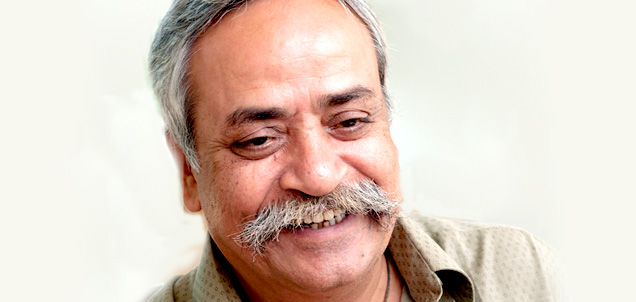
Tag: anil thakraney

  • Anil Thakraney’s Debrief: Good strategy, poor creative

    There’s a new commercial on air for Parker Pens. And it stars brand ambassador Amitabh Bachchan. The creative thought is this: ‘What the world calls a pen’. And it’s a correct one. Because as we all know, pens as a category is on a fast decline on the product life cycle chart. There will come a time when the pen will become a historical product, much like the typewriter. So it makes sense to make the brand synonymous with the product, to own the category, and thus at least be a leader for as long as the product survives. I completely agree with this strategy.


    But the creative fails to leave a mark. Bachchan is seen sitting inside what looks like a hotel lobby. And he’s got the whole range of Parkers spread out on the table. What is he, a pen seller? That’s not explained. Suddenly, a firang arrives and asks if he can borrow a pen. But instead of lending him one, Big B begins educating the gent on how Parker is pronounced in various nations. Exasperated, the man asks for a Parker, which is immediately handed to him.


    Boring creative. After the first exposure, you will reach out for the zap button on the remote control. Because it’s laboured, un-engaging and witless. While I like the idea of getting the brand to be the hero, so that consumers ask for it at retail outlets, sadly the commercial is very dry. And no, Bachchan has no role to play out here… he’s forced in, as he usually is in ads.


    Rating: (On a scale of 1 to 5): 2. For a sound strategy.


    Anil Thakraney’s ad review column DeBrief will appear twice a week – Tuesdays and Thursdays.

  • Anil Thakraney’s Hard Knocks: Are newspaper owners in sleep mode?

    The latest IRS figures are in. And as usual, newspaper edits get busy boasting about rise in readership. Or, they’ll work out ingenious ways to interpret the findings, to keep their board of directors and advertisers in good cheer. By the way, I often wonder if everyone’s readership is healthy, who’s taking the fall? Anyway, that’s not the point of my article. And neither do I wish to discuss IRS’s methodology.


    What I want to say is this: Newspaper proprietors in India should be thrilled even if there is no growth for their brands. India is that unique nation where dailies continue to thrive even as they struggle to survive in the rest of the world. And that’s purely because, as Indian Express chief Shekhar Gupta said to me in an interview for GQ mag, and I quote: “India has more space for media than most societies. People read multiple newspapers. We may see a shakeout, but not in the near future. Simply because of the demographics. India is adding nearly three crore literate people to the market every year. That’s the size of a large European country.”


    Shekhar is right. India’s large population base and rise in education will sustain newspapers for a pretty long time. But the proprietors will do well not to get complacent and sit on their laurels. Because the global trends will sooner or later catch up with India. Soon the tech revolution will hit India hard, and many newspaper brands will be compelled to shut shop.


    And innovations and out-of-the-box thinking must start NOW before it’s too late. Sadly, I haven’t seen any signs of that so far. Almost every single news that gets ‘broken’ on the covers of our dailies, I have already been made aware of the previous night by TV and/or Twitter.


    So people, do gloat if you wish on the IRS figures. But also do take care to smell the coffee.


    ***


    PS: I badly wanted to stay inside the Bigg Boss house this time. But couldn’t think of anyone to kill, rape, molest, abuse or cheat. So I didn’t qualify. The loss is all mine.

  • Anil Thakraney’s Debrief: Dulux lacks colour

    Dulux has come out with a bad copy of the Asian Paints idea. While I understand the desperate need for a lifestyle approach to paints advertising, since the functional route won’t work in this category, there is a crying need for originality in this category. Because that’s the only way to induce brand connect for paints.


    Dulux’s new commercial says ‘Apna Rang Chhalakne Do’. It features actors Shahid Kapur and Boman Irani. Irani is finicky about the red colour he wants, and is seen giving hell to his painter on the exact shade. Suddenly, Kapur waltzes into his house, with Irani’s daughter in his arms, wearing what is called a ‘Rascal red’ tee. This follows a sequence of some very trite banter between the characters, till we are told Kapur is a doctor! Wow, we are impressed!


    Not only does the ad immediately remind you of the Asian Paints ‘Mera wala blue’ campaign, the execution is so dull, boring and well, colourless, it puts you off despite the presence of movie actors. The conversation is forced, the humour contrived. In short, the commercial is a dud any which way you look at it.


    The least Dulux ought to have done was to come up with a more interesting tribute to Asian Paints.


    Rating: (On a scale of 1 to 5): A BIG ZERO. In Rascal red.


    Anil Thakraney’s ad review column DeBrief will appear twice a week – Tuesdays and Thursdays.

  • Anil Thakraney’s Hard Knocks: Why did telemarketers lose the game?

    Today morning, I sent a text message to 1909, and in a matter of seconds, forever banished telemarketers from my life. Or at least I hope I did. (This is India, where there are many laws, but many more people ready to flout them.) But at the same time it did make me feel a wee bit sad as a communication professional. Here is a powerful medium destroyed by the foibles of some very incompetent telemarketers.


    I am not a direct marketing guru, but here are three key reasons I think why the tele guys lost the plot. You can add your own.


    1.  Badly trained, poorly paid staffers who lack even basic communication skills. ‘Hello sir, main XYZ se bol rahi hoon, aapko ek free SIM card ka offer hai, kya aap interested hain?’ Imagine I could be doing 100 important things when this call arrives. Even hanging precariously by a cliff. Is it too difficult for callers to politely ask for a ‘good time’ to call?  We often do that with friends, leave alone strangers. Who knows, some courtesy may encourage people to at least have a conversation. And in telemarketing, that’s half the battle won. I really think some amount of smart training would help.


    1. Poor sense of timing: I would get calls at 10.30 AM Monday, the peak work hour, from someone selling me a holiday package to Macau. Or, on a lazy Sunday noon, from a chap asking if I want a computer printer. Worse, someone texts me at night offering Yoga classes. Is anyone even trying to think out there on when to sell what?


    1.  I know this is a cold calling business, but does have it to be like blind shooting in the dark? Is market segmentation so difficult in telemarketing? Can’t the proprietors invest some funds in market research before hitting the phone? I’ll give you an example. Once, an expensive time share resorts seller called my driver. Overhearing their conversation, I encouraged him to talk, so we could have some masti. Not only did the excited tele girl ‘sell’ him a Rs 2-lakh-worth worth life membership, she even agreed to drop by his chawl for a cup of tea. I told him to have fun!


    All said, it’s a pity, really. Because telemarketing is a very useful tool for one-on-one communication. And it’s failed in India because it’s run by people who just don’t get it.


    ***


    PS: Must say I am more than surprised with the overreaction and anger in India at Shoaib Akhtar’s book. The mud he’s flung at fellow cricketers in his book, as per reports, is totally consistent with his own brand personality. He’s lived an entirely controversial life, so why must his book be any different? What were people expecting? A collection of sweet lullabies? Hello? Branding, anyone?

  • Anil Thakraney’s Debrief: Senseless fun

    Mineral water brand Bisleri has released a brand new commercial. ‘Stay Protected’ is the message. While the message sounds all serious and professional, the commercial is a riot.

    Two chaps emerge out of a painting and decide to go on a boat yatra. The treatment is part animation and part live action. On the high seas, they run into a she-monster and her baby. The baby tries to gobble down one of the dudes on the boat, but he gets stuck in the baby monster’s mouth. Mommy monster grabs the Bisleri bottle from the other chap’s hand, and uses the water to help her baby swallow down the ‘meal’. The she-monster, in a gesture of gratitude, not only returns the Bisleri bottle to the lone survivor, it also spares his life.

    Haha, it’s both funny and corny. Kids will like this cartoon story. And I appreciate the effort to inject some fun into what’s just a brand of water. However, here’s a red flag: Mineral water is a very, very low involvement product category, and consumers don’t really suss the brand name before purchase. So while it’s great to do a fun story, should the focus not be on communication that tells us what makes Bisleri special and different from other brands in the category? So that I have a clear reason for demanding Bisleri from the grocer, rather just any mineral water. How can I ‘stay protected’ through a fairy tale involving sea monsters??

    Bottom line: I am all for mad. But madness with method. Not plain mad.

    Rating: (On a scale of 1-5): 2 (For the cute animation.)  

    Anil Thakraney’s ad review column DeBrief will appear twice a week – Tuesdays and Thursdays.

  • No place for Sonal Dabral and Prasoon Joshi at O&M


    By Anil Thakraney


    It has been a fantastic advertising career, to put it mildly, for the 56-year-young Piyush Pandey. Enough has been said about Ogilvy & Mather’s top dog and the Indian ad industry’s most celebrated player. So let’s just sneak in some yorkers and see if the bat still packs in the punch. It’s always a joy to meet the man because of his joie-de-vivre and the on-the-tap humour. Tonight it’s even more fun as we lounge by his sea-facing apartment off Shivaji Park, with Piyush downing vodka shots.


    Q: Don’t see you much in the media these days. Finally got fed up of the over-exposure?

    I have never approached any journalist ever in my life. And I have never said no to any journalist either. Actually, I have been travelling quite a bit these days. But I have never felt I am missing out on anything. And sometimes journalists call to ask about things one doesn’t know. Anything that happens, I get a call! (Laughs.) Also, in the earlier days, I used to attend parties but now I seldom go. I even avoid judging (ad competitions) these days because it takes away five days of my time.


    Q: You’ve spent a lifetime in the ad world. Still get the same buzz? Aren’t you bored?

    The day I stop getting excited about this business I will go. You don’t know what a kick I get out of this profession. Gratification comes to people from various things. Some get it by playing golf. Others by spending a day at the club. I get my kicks out of meeting people in my office, and out of the ideas. I have never thought of my job as a burden, I am having a ball.


    Q: Oh ok. After you built yourself that palace in Goa, I thought Piyush would disappear to the beaches.

    It’s a three-bedroom house, not a palace! And when I am in Goa, I look at my watch and say, “Oh! It’s only nine o’clock!”


    Q: O&M’s big boss, Shelley Lazarus, famously said you are the brightest mind in the network. And we all thought Piyush would take global charge of the agency.  

    It doesn’t make sense to the company and it doesn’t make sense to me. I do sit on the worldwide board, I have a view on the worldwide policies. But I will never re-locate myself. Also, I don’t believe in controlling the world, I enjoy being in India. I think we are still on a graph which is unfolding. And I love having Indians around me. So I can give all that I have learnt to the world, wherever relevant, but I don’t think that burden is mine. (Laughs.)


    Q: I suspect the key reason for your huge success is understanding the Indian culture and ethos. By extension, that means you will struggle in other nations.

    Markets don’t scare me, I do help if there’s a need somewhere. I go there and discuss the idea and then leave it to the locals to express it. What I once hated happening in the good old days, how can I do that to the others now that I am a worldwide board member? I will never do all those things which I disliked. Even when I discuss ideas with Pakistan, I tell them I don’t think I am capable of understanding their local nuances.


    Q: Ah, I get it. You don’t want to do what Neil French did to you. Which is to try and interfere in your work. I remember you told him this: “Neil, come help me, don’t f*** with me.”

    I did tell him that. Because he tried to (interfere). But he couldn’t do it. My first conversation with him was, “I will show you some work we have done for Cadbury’s and I don’t want your comment on it”. (Laughs.) I must share another incident with you. Many years later at a creative meet near Jodhpur, Neil saw the Hutch boy-and-dog film and tried to make fun of the song. And in the evening my boys went and got the Rajasthani musicians to sing the same song for him! (Laughs loudly.)


    Q: Your rival agency heads are pursuing other passions and enjoying a lot of success in those. Making movies, writing songs. You don’t feel the need to experiment?

    Those things come to you when you are bored of what you are doing. And I don’t think three hours is a greater achievement than one minute. I did it once, I wrote the script for the film ‘Dus’ for Mukul Anand but it never got completed because he passed away. But it (movies) never excited me. The kind of people who wanted me and Prasoon (Pandey) to write… from Yash Chopra to Subhash Ghai to Dev Anand… and I told all of them this is stuff I would do on a weekend or at night. That my first job is advertising. I can only handle one thing at a time.


    Q: New media is upon you in a big way. Ready for it? Honestly.

    One, we are investing heavily in the new media. There is no technology that we haven’t provided to our youngsters. And two, in my working life, things aren’t going to change. I see maximum activity in the mass media at least for the next five years. So the idea is to invest for the future. Which we are doing.


    Q: And you aren’t on Twitter or Facebook.

    I am not even on the internet. I don’t even know how to start a computer.


    Q: You are joking.

    I am not joking. I did not study all these years to become a typist. Every computer user is a fantastic typist. (Guffaws.)


    Q: So if a client wants to know how he can promote his brand on the digital media, you are in trouble.

    I will sit with him (the client) to assess the solution. And tell him that I have people on my side who will help him. To give you an analogy, I know what a good ball is, but I can’t bowl it. So I will get Kapil Dev to bowl it.
     

    Q: I think you are a test match player who now has to deal with the T20 format. And you don’t understand that game.

    I am saying to the client, I will put together a team that can satisfy his needs. I will not play the T20 match. But I will come and watch every match. I will hire the best T20 players. And I will cheerlead them.


    Q: There’s a flip side too. Does it worry you the excess use of tech may make the youngsters get disconnected from the real world? Which is where big ideas come from.

    I didn’t write the MP Tourism ad, the kids wrote it. Also the Asian Paints work featuring the two brothers. They wrote it. So I think the next generation is very savvy. They know that even in the digital space it is the idea that will win. The idea is to know the medium, but express the same kind of engagement that we have done all these years. But yes, about being buried in technology, there is a worry, and for the world at large, not just for Ogilvy. I say to the youngsters: go to Facebook, but don’t become faceless. That, interface is the greatest way to connect with people.


    Q: The one big challenge facing the ad world?

    We need better remuneration from clients to be able to hire interesting people in the industry. I don’t have the answer to this challenge right now. But before I leave this company, I will make every attempt to make sure this is solved. If we don’t pay people well, how will we get the best people into the industry? Every agency is under so much pressure, we are not negotiating properly with clients. Maybe clients are better negotiators than us. If other industries are taking our people away, then we have a problem.


    Q: Does it hurt when you nurture young guys, train them, and then they go and head rival agencies?

    Sometimes, yes. But not with guys who are leaving to do the same job that I am doing. That is a natural progression of life. I regret losing those people who had misconceptions about themselves and their abilities, and left to do it on their own. And then disappeared. And all that talent Ogilvy alone hasn’t lost, the industry has lost it. Because in the next job, if the guy is a failure, he simply disappears.


    Q: If Sonal Dabral and Prasoon Joshi wanted to return to O&M, and you had place only for one, who would you pick?

    None of them. Because our people have grown. And in the last five years, they’ve done work that’s the best in the industry. So why would I put anyone on top of them? Sometimes when you vacate a position, others grow into that position so fast, it becomes difficult for them to be brought back. If you missed three matches, and Vinod Kambli came and scored three double hundreds, how do you get Kambli out of there? It’s important for all of us to be at the right place at the right time. Suppose I decide, before my retirement, that I want to be in Goa and am going to write my book. Then somebody will obviously occupy my position here. Now if I want this position back two years later, and if that guy has done so well in the meanwhile, they’ll say ‘Sorry!’.


    Q: Are you planning to write a book?

    I will write one. But it will not be a prescriptive book. I will write something that people read between the lines. It will apply to life and not just advertising.


    Q: Any red hot-tips for youngsters?

    One, celebrate life. Don’t crib. Because if you crib four hours a day, you don’t approach anything with a positive mind. Two, if you are passionate about something, go ahead and do it. Don’t worry about society. You might actually become the role model for that. And three, in the world of communications, respect your environment. If you don’t think of the receiver, you will never make a good giver. For example, on your way to Jaisalmer, did you notice, in that 48 degrees heat, those guys who are tarring the roads, they are singing songs to distract themselves from the adversity? That is what will give you insights.


    Q: Your retirement is due in exactly two years. Will you actually leave?

    Maine aaj tak life plan nahin ki. Did you, in your younger years, ever hear from me that one day I want to be the Chairman of this company? You didn’t. I don’t make long-term plans, I only make plans for tomorrow. That I will wake up at five in the morning and go for my walk. And even that may not happen! (Laughs.)

  • Hard Knocks:Journos,keep your distance from celebs

    By Anil Thakraney


    The Twitter boom has helped celebrities the most. Politicians, movie stars, sports icons, authors, etc, now have direct access to their fans. And it also helps them promote their own work and speak their minds without having to deal with the “middleman” (mass media). Nothing wrong with that. And more power to twitter!


    As it turns out, many of us journalists are also on Twitter. Not only does the platform help us break news, it also gives us a firsthand report on what the celebs are doing and thinking. Most of it is garbage like “I am eating a piping hot masala dosa” or “Traff&cked in Chennai”…. Still, it’s a useful medium for quick info.


    So far so good.


    However, I have noticed some over-eager journalists bond with celebs over Twitter, as if they were conversing with close buddies. I notice a huge amount of backslapping and general bonhomie. It’s quite possible some journos feel a high with this instant celeb connect. But quite frankly, this is an unhealthy thing to happen.


    At the root of good journalism lies the Lakshman Rekha between reporters/editors and celebrities. Because this line of control helps to keep reportage and analysis unbiased and free. This detachment is absolutely essential to journalism. While it’s okay to wish the celebs now and then on momentous occasions, the interaction must remain at that level. Because the truth is, you cannot write bad and embarrassing things about friends. You will hesitate in doing so, and that’s human nature.


    Already we saw what happened during Radiagate. Some journos, because of their good friendship with politicians, crossed the line. And made fools of themselves. And Twitter has made possibilities of such things happening at a higher frequency.


    So yes, let’s tweet. Let’s read their tweets. Let’s even re-tweet. And that’s where it must all end.


    PS: Speaking of Twitter, some days back there was a massive rumour going around that the J&K CM Omar Abdullah is in a relationship with a senior TV journo (speak of crossing Lakshman Rekhas!). And that he was even planning to marry her. Not sure if there’s any truth in this. But if true, the journo in question must examine the past history of neta/journalist alliances. It’s doesn’t read very well.


  • DeBrief: Reliance Netconnect’s little movies

    Reliance Netconnect has put out a speed challenge. ‘It’s fast. Are you?’, is the question being asked. And to highlight that offer, they have released three thrilling commercials.


    In one, an unknown ‘taskmaster’ has tied a chap with a rope, and placed him inside a van parked across a railway track. As the train approaches, the man struggles but manages to reach his laptop, he then affixes the Reliance Netconnect dongle to it, and surfs to find a way to untie the knots. Yup, he does get out of the van just before the collision happens. In another ad, a girl has been locked inside a moving car, and the boot is set on fire. But she manages to escape by locating the nearest fire station. Using Reliance Netconnect, of course. In the third one, a young dude frolicking inside a deep forest comes face to face with a marauding elephant. And manages to get away by using Reliance Netconnect. When he streams a video that distracts the animal.


    Yes, the ads are dramatic and entertaining. Like little action-packed movies. And as Reliance Netconnect has been used as the key part of the plot, it doesn’t appear forced into the stories. Should appeal to young net users.


    However, there’s a built-in problem with this approach: Shorter edits of these films won’t work, the drama simply won’t happen in a 20-seconder. Which means Reliance better have huge budgets ready to keep releasing 45-second films. An idea is powerful when it works in short edits too. Creative directors must never forget this basic ad principle before writing TV scripts.


    Rating: (On a scale of 1-5): 2.5


    Anil Thakraney’s ad review column DeBrief will appear twice a week – Tuesdays and Thursdays.

  • DeBrief: It’s raining MCPs!

    [youtube width=”300″ height=”220″]http://www.youtube.com/watch?v=o9XOvpyFm8E[/youtube]What’s with male deodorant brands? Why are all of them based on the idea of insulting women by projecting them as mindless sex objects? What sort of male chauvinist pigs do they target? Do the MCPs constitute such a vast populace? To be honest, I am left quite flummoxed by the advertising in this category.


    I suppose Axe started it all but their ads are at least a little more tasteful. The bad copycats have used this route with the one-point agenda of treating women as sex slaves to beastly men. The latest brand to join this flesh party is Killer.


    I watched three commercials. In one, the killer dude has just finished a sex romp with a very pleased girl. He then proudly tells her the next romp is with the girl’s sister. And the pleased lass looks even more pleased to hear that! In another ad, he effortlessly picks up two girls from the streets, and no, they aren’t hookers. And in the third one, the killer picks up a sexy chick from a laundromat. Simply by talking dirty.


    Completely pathetic advertising. Makes you want to reach for the barf bag. Additionally, if all male deo brands have the same positioning, where’s the brand differential? How will I recall Killer at the retail outlet if all deo ads look like clones of each other? So, not only is the advertising repugnant, it’s also senseless from the marketing point of view.


    PS: At this rate, I may quit using deos altogether! Meet me at your own peril, man.


    Rating: (On a scale of 1-5): -5


    Anil Thakraney’s ad review column DeBrief will appear twice a week- Tuesdays and Thursdays.

  • Anil Thakraney’s Hard Knocks: No country for funny men

    By Anil Thakraney


    There are many reasons I quit the ad world a long time ago. One of them being there’s no place for irreverence in desi advertising. Not even fun irreverence. And that’s because Indians lack the ability to laugh at themselves, and take offence at the slightest mischief. We people take ourselves too damn seriously. Which is why most advertisers panic when wicked storyboards are presented to them. And this issue, for me at least, is just too depressing.

    It is in this context that I have been keeping a hawk’s eye on the new Tata Docomo campaign. I sort of knew this wickedly humorous stuff would sooner or later get into trouble. ThatIndiais not ready for it. This is the ‘No Getting Away’ campaign. There are many ads on air, but the one I found cutest is where a maid, while cleaning the living room, lucks upon a carelessly left cell phone instrument. Because no one’s watching, she grabs it and hides it inside her blouse. But the memsaab manages to nab her. Because the phone starts buzzing inside the blouse. Yup, no getting away! I loved it, because it’s tongue-in-cheek, wicked communication. Meant for a few good laughs.

    [youtube width=”300″ height=”225″]http://www.youtube.com/watch?v=wWsGT63dAUU[/youtube]And yes, the commercial is in trouble. Not only is the maids’ union up in arms, Raj Thackeray saab has got into the act. Saying this ad denigrates the Marathi manoos, since the maid looks like a typical Mumbai bai. And once Raj bhau raises his voice, the ad is as good as dead. There’s no getting away from him either!

    Now here’s the deal: I would have laughed equally hard if the maid was Bengali, Punjabi, Muslim, Tamil, Christian or Sindhi. And I would have laughed even harder if they had featured a corporate CEO stealing a phone at an airport (and some do!). Because the dirt, the bias, is in our minds. We want to laugh at others but not at ourselves. I don’t know who wrote the Docomo script, but am absolutely certain that dude or dudette was not out to trash any community. They were having fun, and will now have to face the music.

    And the pity is this: After this incident, the rest of the already worried advertisers will kiss irreverent advertising goodbye for many more years. And I suspect the alarmed Docomo guys will swiftly revert to their stupid Ranbir Kapoor talks shows. Sad.

    Anyway, I am glad I no longer play the game. I don’t do safe.


    [youtube width=”300″ height=”225″]http://www.youtube.com/watch?v=SbqBjnBy-1s[/youtube]PS: Watched the Listerine ad. And strangely, funny man Cyrus Sahukar acts so serious, it’s like Raj bhau sent him a hot memo too. What’s the point of casting the mad-cap Cyrus and running a clinical ad? It’s as corny as casting Narendra Modi in an ad where he talks of peace and brotherhood! (Peace, Motabhai, peace!)

  • Hard Knocks: Ban terrorism coverage

    Knock, knock. Before you get into the blog, here’s an intro. It was meant to be a one-sentencer, but it’s turned to be a loooongish one. Anil Thakraney is an adman-turned-journalist living mostly in Mumbai, but sometimes in Bengaluru or Nashik. Or for a few days in a year or two: London. Many moons ago, he would edit The Brief:, an ad magazine that the adfrat loved to hate or hated to love. Well, they loved it and hated it. The Brief: was unceremoniously shut, but Thakraney had tasted the thunder. He went on to subject all and sundry to his interviews and stings (and stinging interviews) at Mid-Day and later with Mumbai Mirror. He was even editor of Mid-Day’s Bengaluru edition for a bit.

    When I joined the exchange4media group in 2008, I got Thakraney, a former colleague and friend, to write reviews and interviews. It was only natural that when I thought of launching MxMIndia, I asked him to be our Editor-at-Large. Do a blog, write reviews, interview the biggies. Etc, etc. Publishing Thakraney’s blog was like wearing a near-red shirt in a bull ring. But, heck, he’s one of the bestest writers on medialand. His views, most often contrarian, are interesting. I enjoyed reading his hat ke views today, and I am sure you too will. As for those who are at the receiving end of his commentary, I can only say: dil mein mat lena yaar! – Pradyuman Maheshwari

    Without much ado, Hard Knocks. By The Anil Thakraney:

    I am aware this is a heretical thing to say. And it goes against all tenets of good journalism. But drastic times call for drastic measures, as it’s said. I really think time has come for the owners of the mass media, in particular the TV channels and the newspapers, to come together and shun exhaustive coverage of bomb blasts and other terror attacks.


    And I propose this seemingly preposterous idea because the biggest source of motivation for terrorists is to sit back and watch (with beer and popcorn for company… the 76 virgins will have to wait) the hectic media blast of their actions. This 24×7 coverage not only provides oxygen to their deeds, it also encourages other terrorists to join the party. And their message of hatred quickly gets spread all over the world, free of cost. And sometimes, as it happened on 26/11, the TV coverage aids them directly in their planning and execution. In short, the media unwittingly ends up providing a huge bang for their buck.


    I wonder if their enthusiasm levels will remain the same if the oxygen supply is cut off. If they are ignored like petty pickpocketers. If they don’t get the bhav they currently get. I suspect it will be a setback for these buggers.


    So then what about the role of journalism, you ask? Isn’t it the duty of the media to inform the janata on what’s happening? How can the media ignore such a huge story? These are valid questions. But maybe for the greater good, these need to be compromised. I think a bomb blast should get a tiny slot in the coverage, as would a road rage incident. So people DO know it happened, but there’s no accompanying drama around it. The terrorists will deem this to be an insult to their work. And that’s a good thing, no?


    Yup, I know traditional journos and media barons will immediately scoff at this idea. Because it sounds crazy. But once the laughter dies down, they would do well to chew on it. Because often for difficult problems we need to search for lateral solutions. Especially when the horizontal and the vertical ones have failed. And especially when you are operating inside a soft state called India.

    PS: There’s this ad which the Pak government recently released in theUSpress. It would have won an award at Cannes for sure. But they screwed up a bit with a small typo. The headline should have read: ‘WHICH COUNTRY CAN DO MORE FOR YOUR PIECES?’