Tag: anil thakraney

  • #Mirrored! | Our battle is to out-think Times of India. Meenal Baghel interview in MxM in July 2012

    Meenal Baghel
    Meenal Baghel

    By A Correspondent

    On July 25, 2012, senior journalist and adperson Anil Thakraney had interviewed Mirror Editor Meenal Baghel.

    Given the announcement of the closure of the the bran as a daily newspaper in Mumbai and Pune, a re-read of the interview is a must. Here’s the link: https://www.mxmindia.com/2012/07/our-battle-is-to-out-think-toi-meenal-baghel/


  • Anil Thakraney: Shredding Sanjay Manjrekar to bits and pieces

    Anil Thakraney

    By Anil Thakraney


    Sanjay Manjrekar did not enjoy a very impressive career as a batsman, especially if you compare it with that of his colleague Sachin Tendulkar, who played alongside him. He promised a lot, in fact, in the early nineties. Manjrekar used to be called a ‘technically correct batsman’ by commentators at the time, but delivered a lot less. Before walking into the sunset, Manjrekar managed to play just 37 Test matches and 74 one-day games, registering a mediocre average score and strike rate. Basically he disappeared from international cricket without much noise.

    However, in his new avatar as a cricket commentator, Manjrekar’s journey has been quite noisy. He has been getting a lot of attention, most of it negative. The trolling on social media has been rabid, he has often been called a ‘panvati’ commentator, his coarse voice and poor command over English has been dissed, some of the abuse he regularly receives on Twitter is not even printable. Things got worse during the ongoing World Cup when he called all-rounder Ravindra Jadeja a ‘bits and pieces’ player, the cricketer hit back and termed it as Manjrekar’s ‘verbal diarrohea’, and of course all hell broke loose for Manjrekar.

    The question to be asked is this: Would the same abuse have come Tendulkar or Ganguly’s way if they had called someone a bits and pieces player? I suspect not, having been a low achiever in his own career, Manjrekar does not command much respect from cricket fans or current players. However, does this mean he cannot speak his mind while commentating, should he be expected to always say goody-goody things about current cricketers? Is he paid to be honest about his perceptions or to be politically correct at all times?

    Now, I am not a fan of Manjrekar’s commentary either, I also believe he is a bit of a hypocrite. Case in point, when ex English cricketer and current commentator Michael Vaughan made fun of Manjrekar’s ‘bits and pieces’ remark, Manjrekar promptly blocked him on Twitter. This proves while the man is ready to dish out criticism to others, he isn’t cool about some of it coming his own way.

    And yet I am a firm believer that he must be allowed to freely speak his mind on air and on social media, that’s his job. If a current cricketer doesn’t like what Manjrekar has to say about him, that cricketer should learn to take it on the chin or hit back hard, as indeed Jadeja did. If sports television networks and tournament organisers gag cricket commentators, it will take us back to the days of the boring, life-less radio commentary, when commentators only reported what was happening on the cricket field and not much else, that would be a really regressive step.

    Incidentally, during the current cricket World Cup, Michael Holding, the ex-West Indies bowler and now commentator, was furious with the International Cricket Council for asking him to cut down on the criticism of umpires. He reportedly said in his reply that, ‘Commentators are being more and more compromised by controlling organisations to the point of censorship’. This is indeed a sad development, it will not just render cricket commentary impotent, it demolishes the idea of freedom of expression.

    There is a general feeling this may have been Manjrekar’s final stint as a cricket commentator. If so, that would be terribly unfair. Sack him by all means if you believe he is a poor commentator, but don’t sack him for speaking his mind, that will set a disastrous precedent and strike terror into the hearts of other commentators, it will trigger the death of honest cricket commentary.


    Anil Thakraney is a senior journalist and commentator. Our readers would remember that he was a regular columnist in the early days of MxMIndia. Thakraney will now write a little more frequently for MxM. Khabardaar!


  • Ready to be dissed by all and sundry: Anil Thakraney


    Most people who’ve been reading MxMIndia and some of those who would read The Brief: in the 1990s are familiar with Anil Thakraney’s work. Or you’ve read his interviews or stings in Mid-Day and Mumbai Mirror.


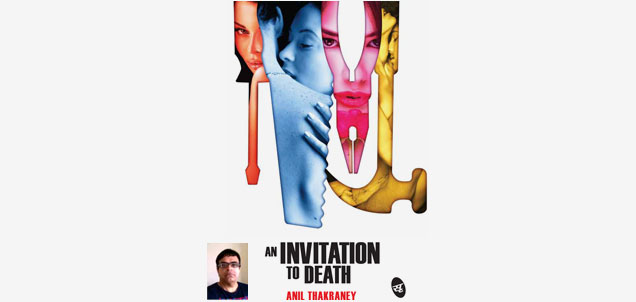
    Over the last two years, Thakraney has been working on his first novel – a crime thriller called ‘An Invitation to Death’. Released on Friday, July 10, the book has been received well, we hear. We read a review on Sunday and that said it was unputdownable.


    Pradyuman Maheshwari interviewed Anil Thakraney and put him through the kind of questions he [Thakraney] would subject various others to. Anyone smiling, hehehaha?!

    Read on…


    Why I wrote ‘An Invitation To Death’

    Once I decided the time had come to get cracking on my first book, the decision to write on crime was a no-brainer. Because crime has always fascinated me (I would dearly like to eliminate a few people, hehe). And I gravitated toward fiction because I needed my characters to be interesting people. People I would want to hang out with for a drink, even at the risk of being stabbed on the way to the loo. Real-llfe crime stories I have read about in India (and covered as a journalist) have left me uninterested in the protagonists; hard-core criminals, mind-effed for sure, but essentially boring, depressing people.


    While pondering on the subject, the thought of writing on a serial killer was alluring. Mainly because there hasn’t been a noteworthy story written on the subject in this country. Perhaps because most of the serial killers in post-independent India have come from the lower strata of the society, there hasn’t really been a suave, handsome, intelligent white collared serial murderer (aside from Charles Sobhraj, who is half-Indian, from another era, and has been dealt with to death across the world). I suppose this might have been a dampener for writers.


    This got me thinking. What if there WAS one such in today’s India. What would he look like, how would he behave, what would be his background, what would he do for a living, indeed, what would be his personality and motivations. And soon Darius Irani was born. A dark, mysterious, edgy but immensely interesting and charming character. Someone you want to know more about, someone who attracts you. Someone who invites you to your death, and you gladly accept it.


    As novelist Chelsea Cain says, ‘Ugly people kill people all the time. But when pretty people did, it got attention.’ And Darius Irani will get your attention all right. He will stay with you long after the last page is done. That’s a promise. (I can hear him sniggering. Loudly.)


    (from AnilThakraney.com)


    Why a crime thriller? Why not a love story? Or something else?

    Hard crime has always fascinated me. Have always wondered exactly what goes on inside a killer’s mind, what are his/her motivations, what drives a human to take another human’s life. And within this genre, I was most keen to write the story of a serial killer. Mainly because there haven’t been too many serial killers in India (not recorded, at least), and most of those that have been, have come from the lower strata of the society. This got me thinking; what if there was an educated, urban, white collar, true blue desi serial killer in our midst? Someone like you and me? That I found enormously alluring. Sure I will write a love story some day but there will be plenty of blood and gore in it. 🙂


    You weren’t ever a crime journalist. As a genre, does crime interest you more than anyone else?

    While crime wasn’t my specific beat, both at Mid Day and at Mumbai Mirror, I worked on the odd crime story. Also don’t forget, I have interviewed policemen, top cops and criminals in my journalism career. Not to speak of the netas and the so-called religious heads with criminal records. Crime does interest me but that won’t prevent me from exploring another genre in the future. Basically it’s about the story idea, that’s paramount.


    You are an accomplished writer of not-so-long print/digital media copy? Was writing loooooong copy for fiction tough? How much time from start to finish?

    Not really. Once I got going, the words simply poured and poured. It was like the characters had got a life of their own, and were doing their number with me watching as a spectator. It’s almost an eerie feeling. I once went for a drink, and felt the serial killer in my book, Darius Irani, sitting right beside me, loudly making fun of someone seated on another table. It’s almost a schizophrenic feeling. It took about two years in all, but it would have taken lesser if I didn’t have bills to pay! I would write for maximum three hours a day, and then slip into work that kept the home fires burning.


    As someone who’s revels in subjecting others to intense scrutiny, is it worrying that now you too will be subjected to the same, especially by all those you damned?

    Haha. I am ready for the book to be dissed by all and sundry! As you know, I once edited a fearless, give-a-damn ad and media magazine called The Brief. I then went on to write hundreds, maybe thousands of columns with my pen loaded with sulphuric acid. The extremely harsh reader comments I would often get in return, and the open threats from the high and mighty, to either get me sacked or killed, only helped to make my skin thicker than it already was.


    If you have to self-assess, how would you rate ‘An Invitation to Death’? On a score from 1 to 10?

    9.5. I have taken off 0.5 because I don’t want to appear immodest. 🙂


    You haven’t gone for a big-name publisher for your first novel? Is it because the biggies were acting difficult? Or is it because you make money in self-publishing?

    An Invitation To Death isn’t self published, it’s been published by the Delhi-based Srishti Publishers & Distributors. While they aren’t as high profile as some of the bigger ones, their distribution network is solid, and that’s well know in the publishing industry. Also, I approached only three publishers. One did not bother to reply, the other asked me to ‘tone down the violence’ (eeeks!). Srishti fully believed in the idea and the story, they were super excited, and that’s what I needed from my publisher.


    One has heard stories about how certain writers rose up the popularity charts by buying their own books in bulk from the bookstores? Any plans on that?

    Sounds good! What an idea, Sirji! Would love to do that but will need to rob a bank first. You know how poorly we freelance journalists get paid in this country. I can’t even afford a fancy book reading do at Crossword, and that’s being honest.


    We have read the first chapter, and it’s possibly too early to talk about it, but are you looking at converting this to a film or TV series?

    Yes. Would make for kickass cinema. Will discuss with a few producers after the book is out. I just hope they don’t tone down the violence! 🙂


    There is talk of likenesses to real-life folk from the media in your work? You’ll obviously want us to read the book to figure it out for ourselves, but some clues?

    Yes, you will identify a few characters. But the book isn’t really about targeting individual media personalities. As for the media angle to the story, it’s more about how the Indian media, particularly television channels, deal with crime in this country. The focus is usually on sensationalism and eyeball gathering, rather than concern for loss of human life. You will discover the heartlessness and callousness of India’s so-called ‘vibrant’ media.


    What next? Have you started work on your next book?

    Nope, not immediately. Have to first get my bread and butter work in order, the courier company just delivered the latest electricity bill. 🙂




  • MediaAsides: Times mulls realty channel, Anil Thakraney’s crime novel characters resemble media folk…

    By Mediaahwallah


    And on a day when Pratap Bose has announced his new agency, we are back dearies.  With some goss, some asides and some gupshup.


    Times Network to launch real estate channel

    We aren’t sure whether this it’s going to be very high on the ratings roster, but our sources in Bahadurshah Zafar Marg, DN Road and Kamla Mills Compound tell us that it’s going to happen soon.


    The spreadsheets have been approved, the sanctions have been got and if all goes as per plan, Times Network will launch a full-fledged channel on the real estate sector.

    If our memory serves us right, in the mid-1990s, NEPC had come up with an exclusive real estate channel. It didn’t last too long.

    But in the case of Times of India group, the real estate sector depends a great deal on the print avatar, so this could well work.

    We will wait and watch.


    Lalit Modi takes on Vineet Jain


    Lalit Modi
    Vineet Jain

    If you don’t follow Lalit Modi on Twitter, do so now (the handle is @lalitkmodi).

    Obviously reacting to the aggressive coverage on him on Times Now, Modi is now taking the battle to the Times camp, and he has been taking on Bennet, Coleman (the Times of India and Times Now parent company) managing director Vineet Jain in his tweets.

    None of Modi’s attempts to embarrass Jain have been successful so far, as other than tweeting several times all of the weekend, there has been no dramatic claim or expose. Until the time of writing at least.


    Anil Thakraney’s crime novel has characters having close resemblances with media folk

    Anil Thakraney

    MxMIndia regulars and folks in the ad and media business are familiar with Anil Thakraney’s writings.  Thakraney’s first book – a crime thriller — is due to be released on July 22 and is titled ‘An Invitation to Death’. The story is about a serial killer and is set in contemporary India.  According to info available on Thakraney’s website (anilthakraney.com), the protagonist is Darius Irani, a hyper-intelligent young man who goes on a murderous spree, targeting young, beautiful, urban women, who fall prey to his easy charm, sense of humour and innate madness.

    Any characters in the book resembling people in advertising and journalism, we asked someone in the know. “Yes,” we were told. “Especially in the media.  He has not even tried to conceal the resemblance too much.”

    Aha! One book we are going to pre-book for sure. And since deliveries will happen a month from today, we’ve requested for the first chapter which is available for free.


    Can’t wait to play the guessing game!


  • Anil Thakraney on Mike Khanna: An encounter in the loo

    By Anil Thakraney


    The entire industry is aware of Mike Khanna’s stunning success, of how he ably captained HTA’s ship and fast forwarded the agency’s revenues to staggering heights, making it India’s largest and most profitable ad agency by a fair margin. So I will desist from replaying the numbers game. This post is more about my take on the man, having worked at HTA in the mid nineties for over four years (my longest stint at an ad agency).


    Office & Gentleman is an oft-used cliché but it is one I would still use to best describe Mike. I always felt the title was originally coined for him, and it fit him like a well-cut Saville Row suit. Polite to a fault, always calm and unflappable, always well-dressed, always well-mannered, Mike was a Classy guy with a capital C. I would in fact go on to suggest he was a dream CEO for any organization, not just an ad agency. Even if his mind was loaded with stress (can happen when you run a 1000 crore rupee outfit in the service sector), he never showed it. When he was invited to take a look at big campaigns just before the work left for the client’s office, even if he thought the stuff sucked, he would only gently say: ‘It’s interesting but perhaps needs a little sexing up. Good work, guys.’ And then he would casually walk out of the room. And we would quickly get back to the drawing board, aware that the big boss had just pissed all over our work, in his uniquely classy way.


    If there is one weak spot in Mike’s legacy, it’s that he did not encourage creativity to flourish in his agency. Under his stewardship, the power center was located in the suits’ cabins, and that’s where the final shots were fired from. While that environment was frustrating for a creative person (and I include myself), beyond a point, it is difficult to argue with success. And Mike’s strategy was hugely successful, the agency was growing furiously, the clients were happy and the perks enjoyed by all of us were cool. So no one really complained, except for the usual bitching we creative people do at pubs after hours. Conveniently forgetting that the one-week free holiday we had just enjoyed at Sun City in South Africa was courtesy HTA’s financial might. Mike was well aware that the ‘creative types’ like to crib, so he never took it seriously. He concentrated on what he was best at: Make HTA bigger, richer, more prosperous. And he was phenomenally successful at that.


    As a young writer at the agency, I was in awe of the man. Despite the fact that he always appeared cool and cheerful, many of us would feel intimidated in his presence. He was the big daddy after all, the big daddy who said very little and signed the very big cheques. And because he said little, one felt even more intimidated.


    I recall the team on Ford’s launch in India was putting together the auto giant’s show at Pragati Maidan. Naturally a very prestigious issue for the company and the agency. The local Delhi fabricator was running desperately behind schedule and the firang executives from Ford, used to a planned life, were getting stressed out. As a writer, in charge of only the audio visual matter, I would watch from the sidelines and enjoy the tamasha, as the client team would periodically pull up the client service executives. However just two days before the grand opening, and with completion nowhere in sight, we were informed that Mike will be arriving on the Big Day. And that got me personally fired-up. Although it wasn’t really my job, I took the fabricating company’s main man aside, and told him exactly these words: ‘Saale, tum corrupt, lazy Dilliwaalon ne bahut chutiya bana liya, ab ek baat barabar sun le. Agar tune jaldi kam khatam nahin kiya, mein Bombaywala tereko teri gali mein aakar pitega. Tune hamari izzat nahin rakhi toh mein teri bhi loot loonga. Yeh promise yaad rakh.’ The stunned man tried to hit back but was wisely advised by his colleague to back off. After this the work went on all day, all night, at super speed, and we had a fabulous launch. And later me and the Delhi fabricator shook hands. It wasn’t personal, after all.


    Mike Khanna did that to you. You didn’t want to let him down. Not because you could get fired, but because you simply didn’t want to let him down. He was that kind of a CEO.


    Another memory is my first meeting with him, in the year 1994. I had just been transferred from HTA’s Bangalore office to its Bombay office, and was still floundering around, trying to find my way, to fit in. I still recall that noon when I was peeing in the office loo, and Mike arrived to relieve himself, and used the urinal right next to mine, although all the other urinals were vacant. Being completely in awe of the man, and having only seen his pictures in newspapers and magazines, I froze midway, unsure of how to react, how to feel. I nervously looked in his direction, and as if sensing my discomfort, Mike turned to me, smiled and said. ‘Hi Anil. Welcome to Bombay, hope you have a great time in the creative department.’


    And I thought the man didn’t know who I was. Or what I did for a living. But that was Mike. Understated, but sharp. Cool, but in control. Low key, but totally clued in.


    RIP.


    Anil Thakraney, a former ad professional, is a senior journalist and commentator


  • Anil Thakraney: Rape: News channels get it all wrong

    By Anil Thakraney


    In a frantic attempt to come up with a new ‘angle’ on the gangrape incident, some television channels have taken off on a wild tangent. All the debates about ‘Two Mumbais’, ‘Clash of the Haves and the Have-nots’, ‘Influx of Migrants’, etc, have been keeping me quite amused. All bollocks.


    The problem in this case is clear: It was a plain and simple case of policing failure. And all these bizarre arguments are serving only one purpose: Get the cops off the hook. What happened inside the abandoned Shakti Mills compound is this: A few criminals got lucky. They had discovered a secluded adda to conduct their nefarious deeds, and had found it to be a cool pad to obtain free sex, read, rape women who happened to be passing by. Mirror’s headline, which revealed the exchange between the rapists, says it all: ‘Mehmaan aaye hain, khatirdari karne aaja.’ While only further investigations will (hopefully) reveal the truth, it’s clear that the gang had assaulted women before, perhaps on several occasions. And these unfortunate victims could have been ragpickers, maids, college students, couples looking for a private dating spot… just about anybody. Because the woman who reported the incident happens to come from the middle class does not mean the dregs of this city were out to fix the rich city girl. She just happened to be at the wrong spot, it could have been anyone in her place.


    Instead, the media pressure should be on the bumbling cops. While they have done a good job post the rape, one has to ask why they aren’t patrolling such desolate spots that are located right in the center of the city, why they aren’t evicting all the squatters from out of there?  Surely their khabris would know that Shakti Mills has been taken over by anti-social elements. And this has nothing to do with shortage of police staff. Try parking your car in a Lokhandwala or Bandra or Colaba lane at 11pm, with your partner sitting beside you, and within minutes a patrol team will arrive to kick you out of there. Even if you are only chatting. This tells me the cops find it great fun to harass the aam aadmi, but getting after drug addicts who are happily chilling in lonely places is too much of a bother. And perhaps boring.


    In short, all these crazy debates are only ensuring the cops don’t take responsibility for what is very clearly their fault.


  • Anil Thakraney: Khans are misusing their charisma

    By Anil Thakraney


    I haven’t watched Chennai Express although everyone I know seems to have. Now, after reading the sad reviews, I am not sure I want to blow up three hundred bucks (plus popcorn). However, trade reports indicate that the film grossed a hundred crore plus rupees on the opening weekend, which means the junta is hitting the halls in hordes. Clearly, it has to do with Shah Rukh’s appeal, which shows no signs of waning.


    It is the same story with all those crappy Salman Khan flicks. These two Khans (and Akshay Kumar, to an extent) get the crowds in on the strength of star power and aggro marketing, and the producers make a lot of money even if the script sucks. While good movies with not-so-famous actors fare miserably at the box-office. And even if word gets out that the Khan film is a disaster, it’s too late in this age of multiplexes, satellite rights and brand tie-ups, the money has already been pocketed. I blame the masses for this blind idol worship; they seem to be okay with the two Khans acting themselves in every single film, no matter what the character demands. It’s quite a unique situation, this does not happen anywhere else in the world. Clooney, Pitt and Depp don’t carry their persona into the films, they get into the skin of the character.


    All this basically means a whole lot of moolah gets pumped into rubbish. And many Bollywood financers would give two hoots, they are here only to do dhandha. The onus then is on the two Khans. They need to evolve, hone their acting skills, and only agree to perform if the script is super-exciting. And they don’t need to tax their brains too much, the role model lives in their own backyard: Aamir Khan. AK has found the correct balance between star appeal and story. Despite the fact that a film from him gets a huge initial draw, he rejects most of the scripts. While the other two Khans continue with their hit-and-run strategy (er, in Salman’s case, that takes an entirely new meaning!).


    Bottomline: If Bollywood wants the world to take it a bit more seriously, its biggest stars need to get their act together. SRK and Salman must understand that movie-making is an art, a creative process, it’s not the same as selling cars and underwear. Which the two anyway do in the ads.


    PS: A collection of outstanding print work. A reminder for lazy Indian creative directors that you can have fun with press ads, that life does not begin and end with the TV commercial.


    Link: http://www.creativebloq.com/inspiration/print-ads-1233780


    Anil Thakraney is a senior journalist and commentator. He is also Editor-at-Large, MxMIndia. The views expressed here are his own. He can be reached via Twitter at @anilthakraney


  • Debrief: Matrix: Shoddy job

    By Anil Thakraney


    An okayish commercial, but one that leaves you sniggering. Not at the situation, at the careless direction and post-prod.


    So there’s this nervous international traveller at the immigration desk. The clerk begins by talking tough with him but later goes all lovey-dovey when he discovers the chap originates from the same gaon, rather has a family connection out there. He prescribes regular calls to family back home, the clerk even guides the traveller to the Matrix phone card counter.


    It’s not a bad idea though they could have had so much fun with it. The conversation might interest you on the first exposure, after that it becomes a drag. The Youtube version has scored a decent number of hits, so perhaps a section of the junta likes this stuff. However, there are two howlers, and the director of this commercial should be given a rap on the knuckles. One, the chroma key job is spectacularly sloppy, the background looks like a joke. Perhaps there were budget issues, but this is unforgivable, ask any post production exec. Two, notice the direction in which the immigration clerk points to indicate the location of the Matrix counter, and then check the direction in which our traveller stares in response. They are exact opposite of each other! Funny that no one, not even the ad agency personnel, noticed this glaring goof up.


    Poor Matrix. Guess they operate on very low profit margins. Which explains why they had to hire amateurs to produce their ad.


    Rating: (On a scale of 1-5): 1. Mediocre script, clumsy treatment.


  • Anil Thakraney: Prison Break Diary

    By Anil Thakraney


    Okay, so I have finished four seasons of the American TV serial, Prison Break. It cost me a huge number of man hours, but I was intensely mesmerized and could not stop. Stuff like filing of tax returns and a routine heart check-up had to take a backseat. In a previous post, I have discussed in detail why Hindi GECs find it very difficult to match the standards of a Prison Break and yet, there are key learnings, and these can be useful for desi soap makers. So here goes:


    More than anything else, what got me hooked is a sense of bonding with the characters. Not only do you identify with their predicament, you want them to win and be happy. (This despite the fact that some of these guys are hardened criminals.) And, even more significantly, these are blokes you want to hang out with, to be pals with. Now this doesn’t cost a lot of money to achieve, what you need is a superlative casting director. Producers of Indian serials often don’t pay attention to this issue which is critical for television (more than movies) because serials run for a long period.


    The super fast pace is another thing, and again, it’s not costly to do, it has to do with the fertile imagination of the writers. Prison Break’s various plots and sub-plots move at a frenetic pace, things change suddenly and shockingly, so much so that you can’t afford to take your eyes off the screen even for a few seconds. This is what makes Prison Break addictive, the unpredictability factor. Haven’t seen much of this in desi soaps, you can not only predict what will happen in the next episode, you can correctly guess the story twenty episodes down the line. That really sucks.


    Attention to detail in terms of clothes, props and sets. Again, because US serial makers have access to more funds, life becomes easier. But not all of it needs big bucks, it’s simply a matter of someone keeping an eye. For example, I have seen bahus in our weepy serials wearing lipstick, and in the very next shot, it’s gone! This means there is a great deal of carelessness in production, and as a viewer, these sorts of bloopers put you off.


    Lastly, the background score. Captivating and brilliantly produced to embellish the situations and the pace. Prison Break’s music has its own fan following, key in ‘Prison Break Background Music’ on Google and you’ll land a staggering 1,670,000 results. Again, this isn’t about mega funds, Indian serial makers don’t necessarily need to sign up AR Rahman. It’s a question of briefing the music composers correctly, and then inspiring them to come up with their best.


    By the way, there is one deadly lesson they have learnt from us: Dead characters suddenly come alive! Ektaji should be proud. 🙂


    Anil Thakraney is a senior journalist and commentator. He is also Editor-at-Large, MxMIndia. The views expressed here are his own. He can be reached via Twitter at @anilthakraney


  • What our columnists say on Bezos’ buy of WaPo


    Ranjona Banerji: Wake up and smell the coffee! What’s Bezos’s trip?
     

    By Ranjona Banerji


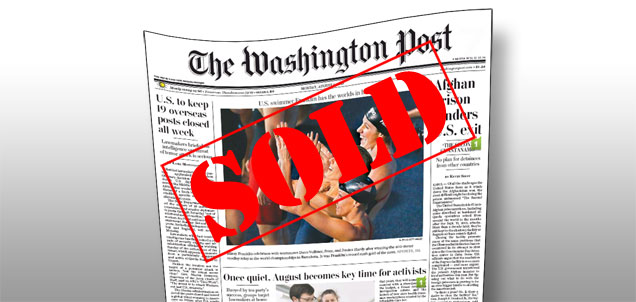
    There has been both astonishment and hand-wringing over Jeff Bezos’s purchase of the Washington Post for $250 million. The venerable newspaper – most famous to the rest of the world for breaking the Watergate story – has belonged to the same family for some years and Katharine Graham was a formidable name in the publishing industry. Now the newspaper belongs to the founder of Amazon, the internet bookseller that revolutionised online buying and the selling of books.


    The jokes have been many – Bezos added Washington Post to his shopping cart by mistake, his wife asked him to bring him a newspaper so he just bought the whole company and more. But below the humour is some sort of fear that someone from this dreaded new internet world has infringed into some respected old heritage property. The intentions may not be evil says this thinking but the outcome certainly will be.


    Well, wake up and smell the coffee. The internet is everywhere and like every human invention it can be good and it can be bad. As far as print journalism is concerned, the internet is a better friend than television which really hurt its revenues and its reach. Reserve falling into the depths of depression over paper being replaced by electronic tablets for about 10 minutes in the morning and use the rest of your free minutes to just consider how much time people today spend online, whether on phones, tablets or computers.


    Many media houses which are not owned by internet whizzes have destroyed their intellectual properties and ruined their staff all by themselves. The New York Times for instance sold the Boston Globe – which it acquired some 20 years ago – to the owner of an American baseball team for $ 70 million, less than what they bought it for. Is that more or less frightening than Bezos buying the Washington Post?


    India is full of all kinds of cross-media ownership with industrial houses with vested interests popping up all over the place. No one spends sleepless nights over that. And for all we know, once the handwringing has stopped, Washington Post might be able to use Amazon’s internet experience to mark out a path for all newspapers to follow in this digital world.


    By Anil Thakraney


    Why on earth would a tech expert, an internet king, a man with a scientific bent of mind (he dreams of building amusement parks and hotels in the space!) buy himself an old world thingy? That too a newspaper, a product category that’s clearly on a brisk walk into the sunset, at least in the developed world. It’s quite intriguing.


    There can be two possibilities: One, Jeff Bezos has hot new tricks up his sleeve for the Washington Post. Perhaps he has killer ideas on how to change the fortunes of a brand that’s on the decline, perhaps he’ll show other newspaper barons how an akbaar should be run profitably in the age of the internet. Perhaps a bored Bezos has taken on a brand new challenge for himself. If this is the case, good luck to him. It’s quite possible with his visionary ideas and innovative thinking, Bezos will be able to reverse the newspaper clock. If indeed this is the plan, all eyes will be on the Washington Post from here on.


    Two, Bezos has done what many industrialists with extra cash do across the world, most certainly in India. Which is to buy a media brand with a simple agenda: To promote other products from the enterprise and more importantly, use it as a lever in negotiations with those in power. If this is the case, it will be a real pity. As a staffer of the Washington Post, I would carry my resignation letter typed and ready in my left hip pocket. Since the tycoon has bought the newspaper with his own ‘pocket money’ (Amazon has nothing to do with it), I am afraid the second possibility sounds very real.


    However, to be fair to the man, we will have to wait and watch where the Washington Post goes from here. It will either be packed with advertorials and plugs and biased reports. Or we’ll read about another Watergate scandal. Or Bezos will create a brand new way of making a daily newspaper. Any which way, interesting times ahead.


  • Debrief: Tata Nano: Awesomely poor

    By Anil Thakraney


    The Tata Nano guys just can’t seem to get it right. I have repeatedly pointed out in my posts that positioning the brand as the ‘poor man’s car’ was a terrible idea because even for the ‘poor man’ a car has to deliver status value. I have always believed it is this positioning which has cost Nano its sales. They finally seem to have corrected that, and are now targeting the urban youth. But they have badly screwed it up in the execution.


    ‘Celebrate Awesomeness’ is the message in the new commercial. It’s a nonsense ad, and contains the same stuff we have watched umpteenth number of times. Youngsters moving, shaking, jumping around, etc. The car is forced into this clichéd imagery. And at the end of the ad, you are left scratching your head on what just happened. After many exposures I spotted a magician, have no bloody idea what the chap is doing in the TVC.


    What a sorry mess! If the muddled Tata Nano suits are reading this, let me simplify life for them: All that Tata Nano has to do is play to its strength, which is its ‘cute and small’ shape. The communication’s entire focus should be on: Small is beautiful, small is smart, small is happening. It must make users of big cars feel like idiots. That’s the kind of power attitude that will make Nano desirable, not just to the youth, to old fogeys like myself.


    Shoving the word ‘Kickassness’ in the ad doesn’t make you kickass. You have to kick the ass of other cars to deserve that title.


    Rating: (On a scale of 1-5): Big Zero. Complete waste of ad spend.


    Anil Thakraney is a senior journalist and commentator. He is also Editor-at-Large, MxMIndia. The views of the writer are his own. He can be reached via Twitter at @anilthakraney


  • Anil Thakraney: Media needs to go beyond Durga

    By Anil Thakraney


    Must say in the beginning, the media ODing on this lady called Durga Shakti was getting on my nerves. An IAS officer from Uttar Pradesh has a run-in with the state CM, toh bhaiyya main kya karoon? What has it got to do with me, and indeed, the rest of India? I assumed this was yet another case of the politics-obsessed Delhi-based journos going berserk over a localized story, unmindful of its irrelevance to the nation. Truth is, I am more worried about the huge pothole that’s sprouted near my building, one that almost demolished my car the other day.


    However, after I decided to (reluctantly) pay some attention to the story, I realized this is a bigger game, it’s about the clash of politics and bureaucracy. The media has decided to stand up for Ms Durga, and in principle, I support it. From what one gathers from the media reports, here’s an honest officer being victimized by her bosses. And a campaign for Durga will motivate the rest of the IAS officers in the nation, or so one hopes, though I am afraid nothing really will come from this. Because the hard reality is this: just as the netas, a majority of the babu class in India is corrupt, and the rot has sunk deep into the system. In fact, the two often collaborate to screw the nation. And to be fair, often the babus have no choice in the matter because the netas decide their destiny; if an upright babu fights against the system, he/she gets promptly suspended. In such a pathetic scenario, a media campaign for one officer doesn’t appear to be a game-changing idea.


    Therefore the media effort must instead focus on a structural change, one that will have a long-term impact on the nation. The idea should be to achieve greater autonomy and more power for the bureaucrats, so that they are armed with enough teeth to put checks and balances on chor netas, to stand up to them. I have no idea how that can be done, that’s for the experts to figure out. Perhaps one of the large media companies can set up a forum with these experts to arrive at possible solutions. And then put pressure on the political class to make it happen.


    And that shall be the real deal. If the media’s focus is only to get Ms Durga re-instated in her job, then the whole exercise is a waste of time. I’d rather the media worked harder on how to make the lethal pothole down my road go away. For good.


    PS: Really cool resignation letter. Hope creative people in the desi ad world write such witty letters when they quit. They should, after all there’s no client or client servicing exec around to punch holes. 🙂


    http://www.brainpickings.org/index.php/2013/07/25/sherwood-anderson-resignation-letter/?utm_source=buffer&utm_campaign=Buffer&utm_content=bufferf015e&utm_medium=twitter


    Anil Thakraney is a senior journalist and commentator. He is also Editor-at-Large, MxMIndia. The views expressed here are his own. He can be reached via Twitter at @anilthakraney