
Tag: Alia Bhatt

  • Flipkart ropes in Alia Bhatt to promote EOSS

    By Our Staff


    Flipkart has announced its end of season sale (EOSS) event which will bring more than 10,000 brands with a selection of fashion, beauty and lifestyle products. It has roped in Alia Bhatt for TVC to promote EOSS. The week-long event EOSS will happen from June 10 to 17.


    Commenting on the event, Sandeep Karwa, Vice President, Flipkart Fashion said: “Flipkart always aims to bring joy to people, in big ways and small, through a diverse offering on our platform. The End Of Season Sale is truly a festival for us. And given the phenomenal response it has received through the years; we are sure our customers and partners share this sentiment. As a marketplace platform, we are bringing sellers, brands and customers together while leveraging technology solutions to bring unparalleled value to our customers. Every season, Flipkart observes consumer behaviour and works collaboratively with thousands of brands in the ecosystem, to bring forth the best products and offers. After a two-year hiatus, we look forward to making this season a memorable one for everyone involved. We are confident that this event will propel our endeavour to onboard the next 200 million customers and chart a sharper growth trajectory for our partner brands.”


  • Titan Raga onboards Alia Bhatt for campaign

    By Our Staff


    Titan Raga premium watches onboards Alia Bhatt as its brand ambassador  for its new TVC campaign. The film is conceptualised with Ogilvy.


    Commenting on the announcement, Sirish Chandrashekar, Marketing Head, Titan said: “We are delighted to have Alia Bhatt on board as Titan Raga’s brand ambassador. Titan Raga symbolises expressiveness. Be it through product design or through advertising, the brand always expresses a definitive point of view that resonates with the contemporary young woman. Alia, being bold and expressive herself, is an ideal choice to amplify the brand’s narrative.”


    Added  Puneet Kapoor, Chief Creative Officer, Ogilvy South: “It is true that you don’t just match brands to your body, but to your personality and to your soul. There’s always something about a great brand that goes beyond the beautiful design and functionality and connects deeper within. Titan Raga’s tone and manner has been one such stellar voice that’s always been beautifully bold, unabashed and authentic in expression. This story is an attempt to capture that spirit with our ever-changing, ever-evolving social scenario.”


  • Topics that kept readers engaged in April 2022: Taboola

    By Our Staff


    Taboola, the recommendations engine for the open web, has released the readership insights for the month of April, 2022. Although Taboola is often considered adversely impacting the user experience, it offers much-need advertising dollars to publishers, and guess that’s what matters.


    Here are some of the key insights revealed from the readership trends released:


    1. The threat of new Covid Wave

    The rising cases of coronavirus in the subcontinent alerted the readers as Taboola Newsroom saw a 65% surge in readership to 23MN pageviews peaking in mid-April. As Delhi and NCR region reported maximum cases, article headlines mentioning Delhi and COVID also peaked by 137%.


    2. India’s love for cricket

    Nothing causes a stronger buzz in India as much as cricket does. The new season of IPL caused an 877% surge in the readership by drawing a traffic of 14MN pageviews over the last 45 days. As people searched to gather updates about their favorite teams and players, Chennai Super Kings gained a lot of traffic during the season since the start of March while Gujarat Titans and Punjab Kings saw a surge from mid-April.


    3. Celebrating celebrity unions

    The celebrity wedding of Alia Bhatt and Ranbir Kapoor caused much anticipation in the country. According to Taboola Newsroom, Alia Bhatt and Ranbir Kapoor drove 24MN (350%) and 15MN (1,831%) pageviews since early April respectively.  The couple tied the knot on 14 April 2022 and continue to drive readership in the entertainment segment as the country is geared up to know more about the newlyweds.


  • TBWA\India creates campaign for JSW Paints

    By Our Staff


    JSW Paints, part of the US JSW Group, has launched its product campaign focusing on the Halo Aquaglo range.  JSW Paints Aquaglo is India’s first water-based paints for wood & metal surfaces with Germ Block Zn2+ion technology.


    The Aquaglo campaign brings the focus back on consumers’ overall health and well-being through the Bollywood star and JSW Paints brand ambassador, Alia Bhatt, as she urges consumers to #PaintKaGKBadhao. The campaign also includes well-known artist and stand-up comedian Atul Khatri and brings to life the mass hysteria related to any new idea.


    According to Anuradha Bose, Chief Marketing Officer of JSW Paints: “Following the successful disruption of our Any Colour One Price initiative, we are now delighted to launch our thoughtful product innovation, Aquaglo. It aims to change yet another convention in paints of using only ‘oil paint’ for wood & metal. Our new campaign draws consumers’ attention to the clear benefit of adopting a water-based Aquaglo range of paints for painting wooden doors, metal grills and other such surfaces in their homes. Paint Ka GK badhao is a clear call to action to make India sit up and choose wellness and comfort.”


    Speaking about the Aquaglo campaign’s attempt to change Indian paint consumers’ expectations, Govind Pandey, CEO, TBWA\India said, “Paint category has been dominated by the same market leaders for decades without any real challenger. JSW Paints is the disruptor that is questioning the status quo prevailing in the industry. It is also encouraging the end consumers to get more involved because only then they will discover the best solutions for themselves.”


  • Virat Kohli leads Duff & Phelps Celebrity Brand Study

    By Our Staff


    Duff & Phelps, the leading provider of data, technology and insights related to risk, governance and growth, has announced the release of the seventh edition of its Celebrity Brand Valuation Study 2021 titled, ‘Digital Acceleration 2.0’. Virat Kohli led the list while fellow cricketers MS Dhoni, Sachin Tendulkar, Rohit Sharma came in at fifth, eleventh, and thirteen positions.


    Said Aviral Jain, Managing Director, Duff & Phelps: “While prominent Bollywood celebrities continue to feature in our list of top 20 celebrity brands, this year we saw some notable changes. Ranveer Singh, Alia Bhatt, and MS Dhoni witnessed a stellar jump in their brand values and they seem to have hit the right chords with the audience in 2021. We also saw more sportspersons rising in the top celebrity rankings, including the likes of Sachin Tendulkar, Rohit Sharma, and PV Sindhu. This significant jump was because of the lesser competition from Bollywood celebrities since there were fewer theatrical releases in 2021.”


    Added Varun Gupta, Head of Asia Pacific, Valuation Advisory Services, Duff & Phelps: “Businesses and brands have heavily leveraged social media and other online platforms for brand endorsements this year, too, with below par weightage to traditional platforms. 2021 also saw the emergence and growth of several startups in the fintech and direct-to-consumer (D2C) business segments that significantly contributed to the overall number of brand endorsements undertaken by the top 20 celebrities. As traditional as well as upcoming industries adopted the digital route to continue engaging with their consumers, we observed greater traction in fintech, social media and OTT platforms, and D2C platforms from a celebrity endorsement standpoint.”


  • Alia Bhatt to be the new face of Blenders Pride

    By Our Staff


    Blenders Pride welcomed Alia Bhatt as the new face of the brand with a campaign film, ‘Made of Pride’. Conceptualised by Lowe Lintas, the TVC has been shot by the famous French filmmaker and visual artist Jean Claude Thibaut, known for his path-breaking work in Luxury Lifestyle.


    Commenting on the announcement, Kartik Mohindra, Chief Marketing Officer, Pernod Ricard India, said: “Alia Bhatt’s story of becoming today’s youth icon and one of the most talented stars in our film industry makes her unarguably the best choice for our new brand ambassador for Blenders Pride. Our new campaign celebrates the pride of being your authentic self, showcasing Alia’s strength of character and resilience.  In a world where making safe choices comes easy, the new campaign aims to nudge today’s confident consumers, and encourage them to let their pride be the catalyst in making authentic choices that take them further in life.”


    Added Prateek Bhardwaj, Chief Creative Officer – Lowe Lintas: “The campaign reframes the relationship between pride and success. For Blenders Pride, true pride isn’t a result of success. Instead, it’s a prerequisite to handle success. With Alia Bhatt staring down the limelight in a never-seen-before avatar, the brand boldly challenges older notions of pride, and encourages us to unabashedly own our choices.”


  • Ranbir & Alia in new campaign of Flipkart

    By Our Staff


    Flipkart launched the ninth edition of the ‘India Ka Fashion Capital’ campaign with a focus on being a complete lifestyle destination. It features actors Ranbir Kapoor and Alia Bhatt.


    Speaking about the campaign, Prasanth Naidu – Director, Marketing, Flipkart, said” “Flipkart has a strong understanding of customer needs, which has helped us provide them with best-in-class offerings over the years. Today’s shoppers prefer to live a fashionable lifestyle that is both accessible and value-driven. With this campaign, our aim is to establish Flipkart as a value lifestyle destination that caters to various needs and appeals to a diverse demographic across the country. We are sure that Ranbir and Alia will create a unique connection with our target audience and inspire them to look at Flipkart as a one-stop-shop for all their lifestyle needs.”


  • Evolution, Revolution & Mutation of Kanyadaan by Manyavar


    By Sanjeev Kotnala


    Sanjeev KotnalaMatriarchy, patriarchy, new norms and rules, purposeful intent, a lot is happening worldwide on equal opportunities and an unbiased evaluation of women’s contribution to life. Advertising is not left untouched. Brands are seeking a say in it with their camouflaged purpose-led communication.


    They are trying to pick things that are now considered unquestionably questionable. However, they result from changes in life, society, expectation, experiences through the ages. In this evolution process, the new rituals with ignorance and misunderstanding of the original thinking and real purpose have crept in.


    The evolution of societal role assignment has polarised roles. One party took a dominant seat, and the other was pushed back to such an extent that it now demands a revolution. It is no longer satisfied with the slow-paced evolution. There is a vested interest in the well-intended commercial businesses fuelling the fire.


    There is a kneejerk reaction to a situation. What one understands is simple and somewhat controversial, might even be wrong. Revolution leads typically to mutation. And one mutation cannot be the answer to another.


    Men are in a crisis and victims of the same social setup and value systems. Women are no outsiders to the deteriorated situation and misaligned understanding. It is natural for them to want a share of the material powergame. In that sense, many things are not about reversing the power gap but evolution to the desired status. Equal say, equality of opportunities and consideration for the women contribution is a result of the process. As a result, a lot of process and affirmative actions for women has been rightly introduced. Some of them are actions like the custody laws, divorce laws, triple talaq, opening of new frontiers, breaking the glass ceiling, the reduced taboo around menstruation, and laws against objectifying women. But it might not be enough or not fast enough.


    Family and marriage should not necessarily be seen as patriarchal institutions invented to subjugate women. Behind the women’s demand for revolution is a demand for equality and respect. No one can find fault at it.


    Many women readers could object to current rituals and expectations. They may rightly say, ‘I wish it was always like that, but it isn’t’, and they might not be far from the truth. The new push against female foeticide, child marriage. Parental leave. Push for education and resulting financial strength are positive outcomes. But it may take ages to happen, and hence the need felt for revolution.


    However, society too follows a bell curve. There will always be a mix of bad and good, supportive and oppressive, facilitating and barrier creators, patriarchal and matriarchal POV. The right and wrong are contextual and much complex than a simple #Kanyadaan to #KanyaMaan.


    Women have lived a complex life. They are the pivot of the family in more ways than one, juggling relations, maintaining relationships, balancing the budget, and making the  house a home. In fact, they dominate the transfer of legacy, culture, and social values to the next generation. In many ways, these contributions are so hidden that they fail to be realised. As a result, the lives seen through the societal lens of experiences are not comparable across genders.


    However, does it not give brands a right to wrongly portray the situation and rituals of only one religion and suggest corrective measures? Why are brands blind to other religions traditions and practices? Do they lack a spine to do so? Or do they fear a violent backlash?


    Yes, I am totally irritated with this appalling situation. And when brands try to define society and start commenting on it, they better be willing to share the repercussions, however well-intended their actions be.


    ‘Real-life needs a more intelligent, holistic, nuanced and science-based intervention and not one driven by ideological antagonism and resentment against patriarchy or rituals of a religion. (Comment picked up from a discussion in a closed WhatsApp group)


    Patriarchy exists, however, it did not happen overnight. It is a social evolution based on circumstances. If the situations change, the rituals and their meanings are bound to change. But a revolution that mutates the mindset due to gross misrepresentation is not the solution.


    Yes, differences exist, and they are bound to exist. Roles are assigned based on social expectations and situations, which were driven by pure biological needs, property consolidation, physical attributes, and the ecosystem. Some experiences may not be exactly right by today’s standards, and one is right to question them. It is life.


    The truth: If you fight for women, you are a hero! If you fight for men, you are a misogynist! If you defend your religion, you are radicalised! And I am happy to be a hero, a misogynist and radicalised at the same time.


    The concept of paraya dhan seems to be easily understood and exists across religions. Giving away of the bride has been wrongly established as a Daan or giving away the responsibilities.


    The lives in the urban and rural world, the world of the haves and the have-nots’, the life in Bharat and India are different. The ecosystem is different. The lives are different, and the interpretation, naturally different. Somewhere female kids are seen as a burden and an asset for social alliances and growth in other places. And in a lot many places, the Maan of the family.


    I am not against change and a brand trying to make it their purpose. In such a case, few things are essential. Authenticity and Consistency. And more than that, a proper understanding of the rituals. No lazy armchair analysis and no polarised communication emerging from a lack of misguided understanding. It will only result in poisoning the mind of the generation and further alienate them from the real meaning.


    Brands can take the right way. Project the proper understanding and meaning. Remind and revise the culture and not just try pin-pointing the wrong, if any. The biggest problem is the freedom of making choices and decisions impacting their own lives. And most of these need to have a constitutional and law-based solution, not a one-film wonder. Till personal laws remain different, till a country is not governed under the same law and grant equality, equality of gender will remain a distant fantasy.


    Having said so, I have a question for these well-intending brands. Is there no way to be good without pointing to someone else as bad? Am I been too idealistic? Or is being politically, societally and religiously incorrect the new politically correctness for the brands?


    If someone really pursues the subject, they will understand that ancient Indian thinking, the progressive variety, has complete gender differentiation but much respect for women. And here I am, not even using the term Hindu.


    Much has been said and written about this #Kanyadaan and #KanyaMaan. But the best that I read and endorse seem to be captured in the tweeted thread by @MumukshuSavitri. It correctly identifies it not as an Alia Bhatt ad- but a brand Manyavar advertisement featuring Alia Bhatt. And here, the brand is to be questioned and not the endorser.


    Can Manyavar refute that Kanyadana and other rituals of the Vivaha ceremony in Hindu marriage are not patriarchal but show immense reverence and Mana for the bride? If not, they must apologise and withdraw this highly offensive ad and stop demeaning & demonising Hindu customs.


    Can brands stop half-baked attacks and false representation of the Hindu religion? And while saying it, I am not asking the brands to look and project rituals in any other faith as wrong. I ask them to detest from interfering and objectifying, downgrading Hindus, the tolerant ones.


    The tweet takes offence to the brand Manyavar claiming #KanyaDaan in Hindu Marriage objectifies women. And I #ignorantHindu share it for a wider reach.


    …………………………………………..


    THE TWEET TEXT . I have done minor correction in the text- and the original tweet can be read above. Few brackets in the below text are my addition.


    In reality, no other marriage ceremony in the world honours & reveres the bride as wholly as the Hindu Vivaha (marriage) ceremony.


    Marriage is seen as a means of spiritual growth; the husband and wife are co-partners in religious life and function. The wife is not a mere pleasure companion of her husband for the temporal life. Manu (9.26) states; The husband is said to be one with the wife. The wife is designated ARDHAGINI. i.e. the half part of the body of the husband as constituted by the wife. Women are created, by the Atman, as equal halves of man, thereby completing them, like halves of a shell complete the whole shell.


    Undoubtedly, patriarchal distortions crept into Hindu marriages due to the dark age of Islamic rule when women were raped, molested & killed relentlessly. Social evils like child marriage & dowry arose due to the desperation of Hindus to marry their daughters & protect them. (societal evolution and mutation).


    Authoritative Hindu texts, however, expressly forbid treating the bride as a material object to be exchanged. The Manu Smriti clearly warns that anyone selling their daughter for any price & treating her like property is assured a place in Hell.


    None of these later patriarchal distortions in the Vivah rituals were sanctioned by original Hindu sacred texts. The Hindu Vivah has always based its essential rituals on the famous cosmic marriage described in the most ancient Rig Veda (Mandala 10, Sukta 85).


    The Rig Vedic verses describe the cosmic union of the Sun with the Moon. Surya Savitri is the sun bride & Soma, the moon groom. The Vivah honours this celestial marriage by reciting the same Rig Vedic Mantras as a reminder of the sanctity & cosmic significance of Vivah.


    Surya and Soma are the prototypes for all Hindu couples as human marriages follow the pattern of the celestial union. The bride & groom re-enact it to unify & elevate their lives & walk together on the path to Moksha, as Hindus believe humanity is a reflection of divine life.


    The Nirukta provides the etymological basis of Vedic terms. It defines Kanya as derived from the root “Kan”, which means to illuminate. So the bride/Kanya symbolises the illumined Sun who fulfils creation & the groom symbolises the Moon who receives & reflects her light.


    This deliberate usage of the word “Kanya” reveals the real intent of Kanyadaan. If it was about giving away a daughter, Putri or Duhita would suffice. The specific usage of Kanya emphasises the Rig Vedic view of the bride as the illuminating Sun, Surya Savitri.


    Vedic rituals were later elaborated in many Grihya Sutras, like Apastambha, Bharadwaja, Baudhayana, etc., to understand the ceremony, rituals & local customs according to the Gotras. These rites demonstrate how the Hindu bride is revered & respected in every part of the Vivah.


    From the initial betrothal ceremony (Kanyavarana) itself, tradition requires the groom to appear in his best clothes to ask for the guardian’s consent to the marriage. Once consent is given, he must first worship the bride & pray to her for good luck, health & children.


    The bride’s guardians perform Kanyadana to bestow the luminous Surya (the sun bride) to be received by Soma (the moon groom). Ignorant people understood this to mean donation (dana) of an object when it actually refers to receiving her energy as Kanya-Adana.


    During the Kanyadana, the guardians recite Mantras bestowing the bride as Lakshmi, who unites with the groom representing Vishnu. This is a symbolic transformation of the cosmic Surya & Soma manifested in earthly forms to mimic the ideal divine pair Lakshmi & Vishnu.


    Kanyadana thus treats the bride as divine energy. It shows both mana (respect) & parigraha (reverence) for the bride, so for Manyavar to coin a new term, “Kanyamana”, is ridiculous. It indicates they know nothing about Hindu marriage & even less about the Sanskrit language.


    After Kanyadana, the groom asks the guardian, “Who gives this bride to me?” And the answer is “Kama” (The God of love). This clearly shows that Kanya was not given away as an object but symbolically bestowed by the God of love when she is ready to share her life energy.


    It is only after this that the Pani Grahana (holding hands) shown in the ad follows. The groom clasps the bride’s hand to receive prosperity & divine energy. In the Ramayana, Janaka tells Rama that he is accepting prosperity by grasping Sita’s hand during this ceremony.


    After essential ceremonies such as Agniparanayana, Lajahoma, Asmarohana, Saptapadi are all performed, the couple is blessed by everyone. Then the couple does Suryadikshana (homage to the Sun) during the day or Arundhati darshanam at night.


    Viewing Arundhati-Vasishta (Alcor-Mizar) indicates Hinduism’s profound knowledge. Most binary star systems have one-star stationery as the other rotates around it. Here both stars revolve around each other. Neither dominates; both support & travel in an ideal partnership.


    Post-wedding during the Grihya Pravesh, the bride is worshipped as Lakshmi. She tips over a pot of rice at the threshold to symbolise prosperity entering her new home. With feet dipped in red lac, she walks through the home to leave auspicious footprints & bless her new family.(Will an objectified item given as Daan be accorded this respect)


    In her role as Lakshmi, she also gives charity to Brahmanas & poor people on behalf of her new family. Dressed in the best garments & jewellery, she worships the family deities & temples. The Ramayana recounts how Sita & her sisters performed these rituals on reaching Ayodhya. (Was Sita a Daan to Rama?)


    To Hindus, Vivaha is not a contract. It is a sacred process to endow the couple with abilities to refine their moral & spiritual traits as householders (Grihastha). It transforms lower desires into higher spiritual goals to attain Moksha together.


    An analysis of the rituals practised in a traditional Hindu Vivah demonstrates that the bride is not just respected but worshipped as sacred illumined energy throughout the ceremony. No other tradition comes close to giving women such prominence & reverence.


    Sanjeev Kotnala is a senior marketing and business strategist and educator. He writes on MxMIndia every Wednesdays. The views here are personal.




  • The Advertising Police

    Image : pexels.com


    By Prabhakar Mundkur


    Prabhakar MundkurNever has marketing communication been under the scrutiny of so many, ever before in its history.
     

    First, there are the regulatory bodies who look over your shoulder. While working in China in the late 1990s, and when censorship was much stricter perhaps than it is today, I remember having a tough time. In a commercial of mine, a student acts cheeky with his teacher. It was intended to be tongue-in-cheek, but the humour of the situation was lost on the powers that be. We were told that it went against the norms of the teacher-student relationship which went back to none other than Confucius who had articulated with great lucidity on the subject. I even remember, Close-up toothpaste, which was then running the ‘Kisses’ campaign in the US my version of the campaign for China, had two toothpaste tubes of Close-up coming together to suggest they were kissing. At the time, it was a big hit in countries like Indonesia, which again had strict censorship rules in place.


    Coming back to the present moment, with the addition of the Department of Consumer Affairs being added in the last few years, means there are two watchdogs, a government watchdog and the Advertising Standards Council of India (ASCI) which is the self-regulatory industry watchdog. One is not quite sure what the government watchdog has been up to since they don’t publish their achievements, but the ASCI publishes every quarter the cases disposed of by them which run into a few thousand. In addition to the regular cases which come under the Advertising Code, we now have a third entity that is policing advertising and that is the consumer.


    The Culture Police


    The Tanishq ad that got shot down by social media last year would have had no objections from either the ASCI or the Department of Consumer Affairs. But the social media police is quite another story. These are typically the cultural watchdogs if one may call them that. They scan the environment for cultural misdoings like the Tanishq ad which was innocently launched during Diwali last year to promote its Ekvatam collection. The YouTube description for the ad said: “She is married into a family that loves her like their own child. Only for her, they go out of their way to celebrate an occasion that they usually don’t. A beautiful confluence of two different religions, traditions, cultures.”


    It was story of a Muslim family, with a Hindu daughter-in-law which was helping her to celebrate her own festivals. But the social media immediately jumped on to a conspiracy theory called ‘love-jihad’ which which accuses Muslims of converting Hindu girls to increase their own population.


    A lot of people were shocked with the objections but nothing doing, Tanishq was forced to take the ad off the air to appease the social media groups especially when the danger manifested itself in crowds wanting to damage their Tanishq showrooms.


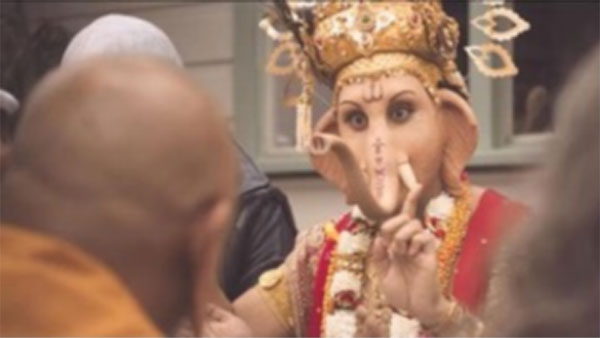
    This is not just an Indian phenomenon but the culture police also exist in other countries. This is very familiar to the Ganesha ad that got shot down in Australia. Meat and Livestock Australia put our favourite Lord Ganesha in an ad which showed meat-eating.


    This enraged the local Hindu groups who of course besides staging protests to Ad Standards, in Australia


    The ad showed Lord Ganesha sitting and enjoying the meat with Jesus Christ, Moses, Aphrodite, lord Buddha, Zeus, Obi Wan Kenobi from Star Wars franchise along with Ron Hubbard, the founder of Scientology. Ad Standards Australia upheld the complaint from local Hindu organisations and the ad went off air.


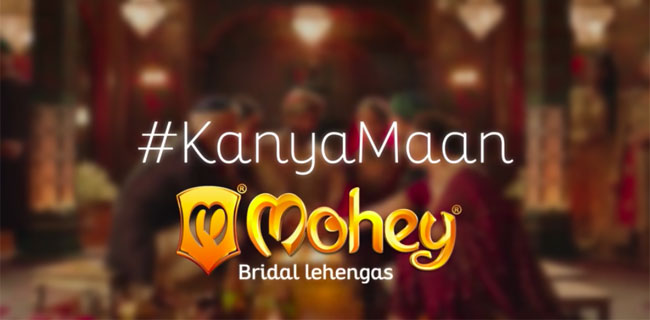
    The latest ad questioned by the Culture Police is Manyavar Mohey ad (Mohey is the brand for women) featuring Alia Bhatt which was received with mixed feelings. While the ad was trying to break away from the age-old practice associated with marriage, where the daughter like a commodity, ( kanyadaan), the ad proposed greater respect for women (kanyamaan ). Unfortunately, when celebrities like Kangana Ranaut join the culture police, the attack on ads become stronger. She is known to have said: “Don’t use religion to sell products.”


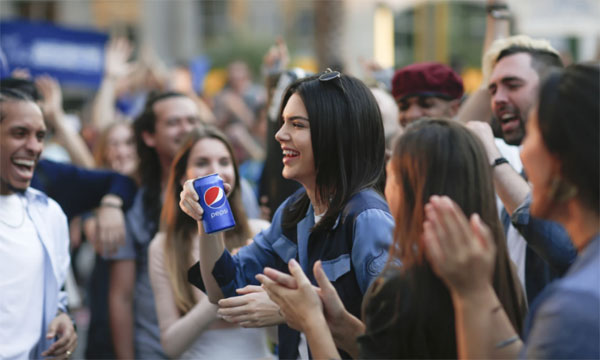
    Again, not very different from the Pepsi ad which showed supermodel Kendall Jenner leading a Black Lives Matter movement with a fizzy can of Pepsi.


    It provoked Martin Luther King’s daughter to make a blistering remark on Twitter, that read: “If only Daddy would have known about the power of #Pepsi.” Bernice King’s tweet was accompanied alongside a photo of her father being pushed back by police.


    Another ad that was forced to bite the dust. 


    The Human Rights Police


    Here the human rights police objected to the extreme conditions that Zomato delivery men are put through when they don’t even get a moment to themselves between orders. In the commercial, Hrithik Roshan goes in to get his mobile to get a selfie with the Zomato delivery man. But the delivery man is so busy that he forgoes the opportunity of a pic with Hrithik because he is getting late for his next order. Zomato was quick to appease the trollers with their tweet which read, “We have been listening intently to the chatter about gig workers and the problems associated with this part of the economy. We understand you expect more and better from us”.


    Advertising uses Figures of Speech

    A few advertising regulators coupled with public groups on social media who keep a watch, means that advertising will have to be more careful than before. Diversity and inclusion is no longer an option, it is an imperative. In 2021, it will need to become a habit for most advertisers.


    For the last 100 years or so, advertising has used figures of speech to communicate. So parody (humour), hyperbole (exaggeration ) to make a point, and metaphor (where a word or phrase is applied to an object or action to which it is not literally applicable ) are some of the main figures of speech that advertising uses to make an impact.  Advertising can continue to use them but now will have to keep away from sensitive subjects.


    A long time ago, Jerry Della Femina said: “I honestly believe that advertising is the most fun you can have with your clothes on”.


    I am not so sure it is any longer for more than one reason. The times they are a changing!


    Prabhakar Mundkur is a former advertising agency captain and has spent over four decades in marketing services across geographies. He is a prolific writer and was a few years back rated as among the top voices by LinkedIn. Other than advertising and writing, Prabs, as he is known to friends, is a very active musician and a self-taught producer of music. In the pandemic, he has performed and produced nearly 50 songs, including one with the very accomplished Usha Uthup. Mundkur’s views here are personal.


  • Alia Bhatt features in new ad of Mohey fashions

    By Our Staff


    Mohey’s recent digital video campaign featuring Alia Bhatt tries to promote a more inclusive and equal space for women in marriage and in life. It strives for a balance between tradition and equality. Through the film, Alia talks about a new idea that creates a union between the ritual itself and its underlying thought process placed in modern context.


    Said Vedant Modi, CMO, Vedant Fashions Limited: “Mohey has always symbolized the progressive women of our society. Through this commercial, we have tried to bring about a shift in the mindset of the general populace while being respectful and fervent towards our traditions and rituals.”


    Speaking about the making of the ad, the Director of Shreyansh Innovations, Shreyansh Baid added:, “We have always believed in progressive communication and our main thought behind making this film was to convey a strong message that is rooted in the rich Indian culture, and yet takes it a step forward by deriving inspiration from the new-age Woman and the new-age society. With Alia onboard we have been able to create a communication that strikes a chord and invokes a positive change.


  • Alia Bhatt signs campaign deal with Duroflex

    By Our Staff


    Duroflex has launched its first campaign featuring brand ambassador Alia Bhatt. The campaign has been conceived by Creativeland Asia and the films have been directed by Abhishek Varman. The brand has launched the campaign nationally through a multi-channel strategy.


    Commenting on this brand endeavour, Mathew Chandy, Managing Director, Duroflex said: “As an innovator brand in the sleep solutions space, this association with Alia Bhatt marks the beginning of our next growth phase of reaching consumers across generations and geographies. It fortifies our journey of being the fastest growing brand in FY 22 with a deep commitment to helping India sleep better.”


    Speaking about the new campaign, Smita Murarka, Chief Marketing Officer, Duroflex added: “Our campaign aims to awaken the Indian consumer to take their sleep seriously, making active and thoughtful choices on health-transforming products like mattresses. The campaign has been designed to communicate a home setting and is representative of a real-life conversation between two friends. The cutting-edge technology and research-backed products set us apart. With Alia, we aim to take this main messaging across the country, that there is ‘Nothing Like Duroflex’ and everything else is a compromise.  Being a sleep evangelist herself, Alia brought alive our campaign in a candid and effortless way. We are sure it will resonate well with the modern consumer.”


  • Parle Agro films summer campaign for Frooti

    By Our Staff

    Parle Agro has announced the launch of its new #LiveTheFrootiLife summer campaign for 2021. Brand ambassadors Alia Bhatt and Varun Dhawan feature in the TVC. Allu Arjun along with Alia Bhatt will feature in TVC for the southern markets.  &Walsh, the creative agency for Frooti, has led the campaign narrative.

    Said Nadia Chauhan, Joint Managing Director and CMO, Parle Agro: “This year’s summer campaign is an extension to the surreal world of miniatures interknitted intricately with our brand ambassadors – Alia Bhatt and Varun Dhawan for national markets and Alia Bhatt and Allu Arjun for southern markets. The campaign aesthetically blends in new and quaint elements of the Frooti brand story. Through our campaign, we want Frooti fans to unleash their enthusiasm and #LiveTheFrootiLife”