Tag: AAAI

  • Madhukar Sabnavis to lead ‘Mining for Insights’ workshop in Mumbai

    By A Correspondent


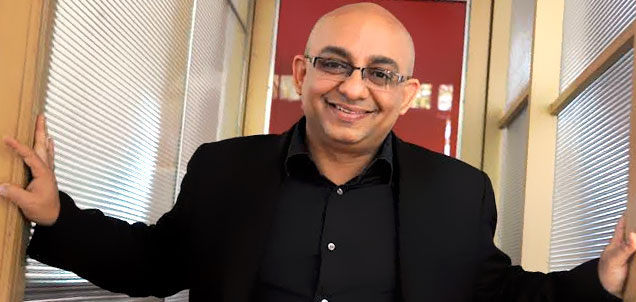
    Advertising Agencies Association of India (AAAI) under the aegis of the AAAI Prowess initiative has announced a one-day Consumer Insights workshop titled ‘Mining for Insights’. The event is scheduled for 21st January 2016 in Mumbai at AAAI’s Training Centre at Lower Parel. This workshop will be led by Madhukar Sabnavis.


    Insights and ideas are the most popular words in the world of advertising. Madhukar will share with participants what an insight is, why is it important in communication, where do you find them and how do you unearth them. He will use real life examples of successful communication to illustrate the same. Five types of insights will be covered- Product, Human, Social, Cultural and Digital and is targeted at young leaders with 5-10 years of experience.


    The workshop will be in two parts – In the morning, it will be a class room session explaining the concepts with illustrations; In the afternoon, it will be a workshop- fun and learning- to actually unearth insights using some data. The participants will work in groups to uncover some insights. This will be a learning-by-sharing session. While Madhukar will share his views, he will also encourage the participants to share their experiences so that learning is enhanced through sharing.


    Madhukar Sabnavis is Vice Chairman and Director- Client Relations at Ogilvy and Mather India. He has over 30 years of experience in advertising – 27 of them with Ogilvy. He has championed some innovative techniques to understand brands and consumers – Media ethnography, social listening and semiotics decoding of advertising- to name a few. His interests include teaching and writing. He has taught in many business schools and has contributed columns for many business publications.


  • Sony Max launches HD avatar

    By A Correspondent


    Sony Pictures Networks Television India (SPN) has added an HD channel to its bouquet of offerings by launching MAX HD. With a differentiated brand positioning of ‘Jee Ke Dekho’, MAX HD will entice viewers and bring alive the emotions and moments that touch various aspects of their life. The channel mirrors the disposition of the Indian viewers who love their movies, appreciate superior quality and expect premiumness in their TV watching experience.


    MAX HD will go on air from 25th December 2015. To celebrate the season’s festivities MAX HD will  showcase blockbuster films such as  Bahubali, PK, Queen, Jab Tak Hai Jaan, Ram Leela and Aashiqui, to name a few.


    MAX HD will be available across multiple DTH and leading digital cable platforms.


  • Ramesh Narayan to helm Abby Awards Governing Council for Goafest 2016

    By A Correspondent


    The Advertising Club and Advertising Agencies Association of India has announced the Awards Governing Council for Goafest 2016. Ad veteran and industry leader Ramesh Narayan, founder at Canco Advertising Pvt. Ltd. has been appointed theChairman of the AGC. The other members elected to the Council are:


    Chairman (CEO, Publicis South Asia & Vice President) of Goafest Organizing Committee – Nakul Chopra; President Advertising Agencies Association of India (AAA’s of I) & Advisor, FCB Ulka Advertising – Ambi M G Parameshwaran; Chairman and CEO at Dentsu Aegis Network – Ashish Bhasin; President, Sony Pictures Networks – Rohit Gupta; CEO at Group M, South Asia – CVL Srinivas; CEO at Mediabrands – Shashi Sinha; CEO at Percept H Pvt. Ltd. – Ajay Chandwani; National Head, Sales, English Cluster at Viacom18 – Namrata Tata; Chief Executive Officer at Contract Advertising – Rana Barua; Founding Partner and Chairman at The Social Street – Pratap Bose.


    Announcing the appointment, Raj Nayak, President of The Advertising Club said, “We are pleased to announce that Ramesh Narayan will be the Chairman of the Awards Governing Council of the Goafest. He brings his unique experience as one of the very few people who has been President of the Advertising Club and the Advertising Agencies Association of India (AAAI) to this post. He has also been Chairman of the Abby Awards Committee twice, and was the first Indian to judge the Effie Awards finals in New York. Ramesh is the only person to have been conferred the Lifetime Achievement Award by the AAAI and been inducted into the International Advertising Association’s Hall of Fame.” 


    Welcoming the announcement Ambi M G Parameshwaran – President, Advertising Agencies Association of India (AAA’s of I) said “Ad Club is a wonderful institution. I am delighted to hear about Ramesh Narayan’s appointment. With his unparalled understanding of India’s advertising scenario, and his years of valuable experience, Ramesh is sure to bring in a whole new perspective which will definitely drive the council to greater heights of success.”


    Nakul Chopra- Chairman of Goafest Organizing Committee, showed his excitement about the new appointment as well. “I’ve known Ramesh as a visionary leader who embraces change and is open to new ideas. I’m sure his appointment means an interesting phase for the Council is on the anvil.”


  • AAAI to organise day-long Leadership Workshop

    By A Correspondent


    Advertising Agencies Association of India (AAAI) announced that under the aegis of the AAAI Prowess brand, a one-day Leadership Workshop will be held on 15th October 2015 at AAAI’s Training Centre. This workshop has been titled ‘Unleash The Leader Within’ and is targeted at young managers with 5-10 years of experience and those who have moved to a leadership role managing teams of 3 to 10 people. The workshop to be conducted by Prakash Iyer will focus on practical advice, powerful tips and actionable strategies that can be put to use right away by participants and is designed to meet the following objectives:

    • Learn  what successful leaders do
    • Becoming a better coach, a builder of great talent
    • Communicate better
    • Get better at working with people
    • Leverage the power of story-telling and building your own leadership brand
    • Build winning teams and become an inspirational leader


    Commenting on the workshop, AAAI President Dr MG Parameswaran said, “We announced this workshop based on feedback we got after our first workshop on Negotiation Skills organised by AAAI recently. And when one talks of leadership, who better to conduct such a workshop than Prakash Iyer who has successfully helmed companies across various industry verticals in leadership roles including being CEO of the victorious Mumbai Indians franchise during the last IPL season.”


    Prakash Iyer has spent nearly three decades in various companies selling everything from soaps and colas to yellow pages and diapers before deciding in 2014 to step out of the corporate world to pursue his passion for writing, speaking and helping other people unleash the leader within. In his last role, he was the Managing Director of Kimberly Clark Lever in India. Apart from being a best-selling author and a leadership coach, Prakash is also an independent director on the board of Xerox India and an advisor to Multiples (a Private Equity fund).


  • Shekhar Gupta to deliver the AAAI-Subhas Ghosal Memorial Lecture 2015

    By A Correspondent


    The Advertising Agencies Association of India (AAAI) announced that the renowned journalist Shekhar Gupta will speak on ‘Changing Role of Media in Today’s India’ at the AAAI-Subhas Ghosal Memorial Lecture 2015 on 9th October at ITC Grand Central, Parel, Mumbai.


    This is the first of the newly created AAAI-Subhas Ghosal Memorial Lecture Series wherein notable personalities from the field of media and advertising will be invited to share their views on various topics of interest to the advertising, media and marketing fraternity.


    In the past, Subhas Ghosal Foundation had occasionally organized a Memorial Lecture on its own and past speakers included Dr. Prannoy Roy, Javed Akhtar, Dr Gurcharan Das, Shyam Benegal amongst others.


    Recently, the Foundation partnered with AAAI to create the AAAI-Subhas Ghosal Memorial Lecture. On the tie up, President of AAAI Dr Ambi M G Parameswaran said, “We at AAAI are constantly examining how the Association can play a more meaningful role in changing and shaping public opinion about advertising, media and marketing. The partnership with Subhas Ghosal Foundation gives us a great platform to invite thought leaders from various domains to share their perspectives on the changing discourse on media, advertising and society. Through this effort we will also remember one of the visionaries of Indian advertising.”


    Shekhar Gupta is chairperson of Mediascape. Mediascape is an exciting new start-up in Indian news media, and is currently under development. He is a prolific columnist, with his highly influential columns translated into Hindi, Telugu, Kannada, Gujarati and Marathi. He is a senior prime-time anchor at NDTV. Over the past two decades, Shekhar’s weekly column, National Interest, has been regarded as the sharpest, most perceptive analysis of current events as they unfold. His columns were recently collected in the bestselling book, Anticipating India. Currently, National Interest appears in Business Standard every Saturday. He also writes a fortnightly column for India’s leading Hindi newspaper, DainikBhaskar.  Shekhar hosts “Walk the Talk” on NDTV 24×7 every week. A collection of his news-making interviews will be published soon. He has now started a second weekly show in Hindi, “Chalet Chalte”, telecast on NDTV India.


  • Raj Nayak, mancom take charge at Ad Club

    By A Correspondent


    Among the first things he did in public after getting his team in place was to set up a Twitter handle for the Club. And it’s evident, that the Club’s outreach will increase manifold.

     

    MxMIndia was the first to report that senior industryperson and Colors CEO Raj Nayak was elected President of the Advertising Club. This was held at the Club’s Annual General Meeting  in Mumbai last week.


    The new officebearers elected are: Vice President: Dr Bhaskar Das, Group CEO, Zee Media Corporation; Secretary: Vikram Sakhuja, Senior Media & Marketing Professional; Joint Secretary: Ajay Kakkar, Chief Marketing Officer, Aditya Birla Group-Financial Services;  Treasurer: Shashi Sinha, CEO, IPG Mediabrands India. Pratap Bose, Chairman & Co-founder, The Social Street will be Immediate Past President.


    The other members elected to the Managing Committee are: Rohit Gupta (Multi Screen Media), Punitha Arumugam (Google India), Namrata Tata (Viacom18), Ajay Chandwani (Percept, Strategic Brand Consultant), Pradeep Dwivedi (Dainik Bhaskar group), Vikas Khanchandani (Aidem) and Viral Jani (Twitter). Senior industryperson Ramesh Narayan has been co-opted to the Managing Committee. Prasoon Joshi, CEO, McCann World Group India and Chairman (Asia Pacific) has been inducted as Special Invitee and Creative Advisor. Satyaki Ghosh, Director-Consumer Product Division L’Oreal India has also been inducted as a Special Invitee.


    As someone who has followed Ad Club mancom compositions closely said, the composition this year is interesting and has some new faces.


    Commenting on his appointment, Raj Nayak, said in a communique, “I am humbled by the faith and trust that my friends and well wishers in the Industry have bestowed on me. It will be my sincere endeavor to work towards strengthening and building upon the foundation on which the club has been built over the last six decades.”


    In a significant departure from the past, the press release formally announcing the election of Nayak and the constituting of the new managing committee was welcomed with statements from the Presidents of the Advertising Agencies Association of India and the International Advertising Association. Welcoming the announcement M G Parameswaran said “ Ad Club is a wonderful institution with a great legacy of achievements. I am delighted to hear that Raj Nayak is taking over as its next President. I am sure he will bring his own brand of energy, excitement and innovation to take The Ad Club to greater heights. We at AAAI look forward to a great partnership with the Ad Club in all our joint industry efforts.” Ambi, as Parameswaran, is known in the industry is a former Ad Club president.


    Srinivasan Swamy, President, IAA India Chapter and VP-Development, IAA Asia Pacific said: “With Raj Nayak as President, we can expect to see a new phase in Ad Club’s history – which will be more vibrant, more purposeful, more relevant, more classy. IAA India, if invited, would be happy to partner with Ad Club on initiatives that build the competencies of the industry at various levels. There are a few events/properties that are exclusive to Ad Club or IAA, but clearly there are opportunities where cooperation between the two will be synergistic. IAA looks forward to this interesting phase with great enthusiasm”.


    Meanwhile, the Ad Club Twitter handle is: @TheAdClub_India. We’re following it J


  • AAAI, IOAA sign agreement for better OOH business

    By A Correspondent


    The Advertising Agencies Association of India (AAAI) and the Indian Outdoor Advertising Association (IOAA) have signed a joint agreement for the first time, AAAI President MG Parameswaran and IOAA Chairman N D Mehta announced recently.


    The overall objective of coming together is to help the outdoor advertising industry in India grow in an organised and regulated fashion, to ensure that proper systems and processes are followed and timelines adhered to, as well as commitments honoured on both sides, Parameswaran said. He added that a suitable mechanism will also be set up to penalise defaulters, with a view to preventing future defaults and bringing everybody in line with policies and good practices. Alongside all this the agreement will also focus on regulating and disciplining advertiser behaviour in matters concerning outdoor trade, agency remuneration, corporate governance and adherence to payment deadlines.


    A special feature of this agreement is that the advertiser will not be allowed to shift their business to another agency until dues of the earlier agency are cleared. Mehta mentioned that IOAA, on its part, has also embarked on an ambitious project to conduct viewership studies on OOH, initially in the major cities. Further, it will ensure 100 per cent listing of all sites with a unique ID number, in a scientific manner, for the benefit of all concerned. The AAAI is the official, national body of advertising agencies, which protects their interests by promoting professionalism and sound business practices between advertisers, agencies and various media.


    The IOAA, registered as a not-for-profit company, has been actively promoting legal media and ethical, best practices among outdoor media owners.


  • 3-month online copywriting course unveiled by AAAI

    By A Correspondent


    Advertising Agencies Association India (AAAI), has launched a specialized course in Advertising Copywriting, online. In keeping with the objectives of AAAI, the course is aimed at identifying, nurturing, and providing high quality creative talent to member agencies.


    The course has been developed by Omnivore Academy, AAAI’s Knowledge Partner, and is backed by experienced faculty who are not only acclaimed and much-awarded Creative Directors, with an enviable portfolio of successful campaigns under their belt, but are excellent teachers too, a rare combination.


    The duration of the course is 3 months, and will be conducted entirely online. The course can be accessed by a student anywhere, anytime, as long as he/she has internet connectivity. The curriculum has been developed keeping in mind the specific needs of the advertising industry – so it covers everything a copywriter would need to know and work on in an agency – from understanding the brief, to generating ideas, writing headlines, body copy, slogans/taglines, writing scripts for TV and Radio, developing campaigns for Digital Media, etc.


    The course consists of 18 modules, 20 exercises and will take around 3 hours of course-work every week during the 12 week / 3 month program.


    Dr M G Parameswaran

    Speaking on this initiative, Dr M G Parameswaran, President, AAAI, said, “At AAAI training and development is a key part of our agenda and we are rolling out a series of initiatives under the banner ‘AAAI PROWESS’. The online copywriting course with knowledge partner Omnivore Academy is the first under this new banner. Since the course is run under the aegis of AAAI, we have powerful resources at work here – the Panel of Advisors comprise highly respected people from the advertising industry. We are delighted to have Omnivore Academy as our Knowledge Partners as they bring on substantive and enriched learning into their unique curriculum.


    “We want to give talented young people from all over the country an opportunity to excel in a creative career,” he said, “So we’re offering 50% Scholarship to candidates who pass the AdCAT (Advertising Creative Aptitude Test), and successfully complete the course.”


    He continued, “We want the course to be a complete ‘incubation’ process’ – from finding talented young people, to nurturing them, and finally giving them hands-on, practical experience. So we’re also endeavoring to offer a 2-month internship with member agencies. And if she/he proves to be good, the agency may offer a job, too!”


    Rajan Nair

    Adman Rajan Nair, Course Director, Omnivore Academy and visiting faculty at MICA, said: “We are looking forward to commencing the course soon and are confident it would develop a great pipeline of copywriting talent for the industry”.


    The course will start on 1 Sept, 2015, with the first batch of 30 students.


  • Commonsense was my only qualification: Bobby Sista


    By Dyanne Coelho


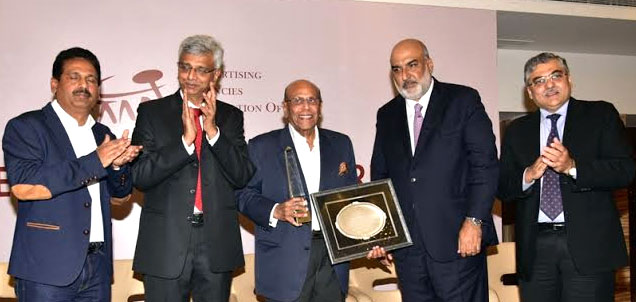
    “Let’s drink to Bobby, the only brother in town who’s a Sista.” One can always trust long-time adman Gerson da Cunha, to come up with a memorable line like this one. But it was particularly apt since it was delivered at an event where SV Sista – better known as Bobby – was conferred the Advertising Agencies Association of India (AAAI) Lifetime Achievement Award 2015 for his contribution to the advertising industry. “I am greatly honoured to receive this prestigious award, and am privileged to receive it in the presence of such a distinguished audience,” Sista said, even as a 40-strong contingent of his colleagues and mentees took up the chant of “love you boss, love you boss, love you boss”.


    The Citation

    The Advertising Agencies Association of India

    takes pleasure in presenting the AAAI Lifetime Achievement Award 2015 to

    S. V. Sista

    For leading an agency that created some of the most remembered campaigns of its time.

    For his stellar contribution to the growth and development of various Industry bodies in India.

    For his professional integrity and devotion to ethical business practices in advertising.

    For his commitment to give back to society in so many different ways right through the last two decades.

    For being a selfless beacon for all of us in the advertising industry.

    He is truly deserving of the high commendation which this award bestows on him. 


    The AAAI Lifetime Achievement Award is usually conferred on advertising industry veterans, and Sista certainly is one. Well-known for his professional integrity, devotion to ethical business practices and his contribution to a number of industry bodies in India, Sista has had a lot of milestones in his career. “To have over 40 of my colleagues present here, from Chennai and Bengaluru, and Ravi Prasad, who has flown in from Dubai this morning especially for this — obviously I have a guardian angel watching over me,” Sista said, in a clearly grateful and heartfelt message.


    Bobby joined the world of advertising and marketing shortly after he finished college, joining the eponymous agency run by his father. As an apprentice at Sista’s, he followed a different track, when he was involved in the marketing of a magazine, Reader’s Digest, in 1965. Five years later, he became Managing Director at Sista’s. “From the time I took over, I was clear in my mind that Sista’s would be known for, and compete on, the quality of our creative output,” Sista said, reminiscing about the early days of the agency that is known for creating some of the most iconic ad campaigns. “I did not have an MBA degree. I had neither training nor experience of running an agency. Common sense was my only qualification, and personality and people skills, my assets.”


    Feted for his campaigns to bridge the gender divide in the country and his attempts to change the way India perceives women, Sista had a request to make to the advertising industry at large. “I wish to make one request to the Who’s Who of advertising and marketing leaders gathered here– please institute an Abby for gender sensitivity in advertising,” he said. “It has to be an industry award. While I understand that gender sensitivity should be an integral part of any good communication, including advertising, rewarding those who are using their creative space to redefine gender roles and stereotypes would, in the long run, institutionalise it as a core value of the industry. Is that not what we want – an India where men and women have equal opportunities and rights, and share a space that is free of discrimination and violence?”


    Ravi Prasad, a colleague at Sista’s, had nothing but praise for his former employer whom he lovingly addressed as ‘Boss’. “Sista’s has an alumni association and we meet every year,” he said. “The sense of belonging that Bobby created in the company, has become a necessity for us all. That’s why even 20 years after the company stopped existing, every former member of Sista’s still has a bond with every other individual who also worked in the company.”


    “Mr Sista’s willingness to reason and understand an alternate perspective or change his stance for a cause, along with his [general] support and commitment, has been remarkable,” Dr. A L Sharada, who joined the NGO Population First, as CEO in 2003, said.


    The event, held in Mumbai on Friday, brought together several stalwarts of the advertising industry,


    Full text of Acceptance Speech by S V Sista


    Friends,


    I am greatly honoured to receive this prestigious award and am privileged to receive it in the presence of such a distinguished audience.


    All of you know it all, have done it all. There is nothing that I have done which you are not already deeply immersed into – neither the learning nor the experiences. I left advertising more than 15 years ago. You are still very much a part of today’s scenario and are aware of what the future looks like.


    So I crave your indulgence, I will confine myself to my personal experiences and hope I don’t bore you too much.


    At the outset, let me say that I have been very lucky, both in my personal life and my professional career. I was very lucky to have wonderful parents, lucky to have doting siblings and above all extremely lucky with a fantastic wife but for whom I would not have been able to accomplish a lot of what I have done and she presented me with two lovely children, a son and a daughter. I am also lucky to have a large number of friends and acquaintances and no enemies – rather no one who had a reason to dislike me. And am I singularly blessed or what? To have over 40 of my ex-sista’s colleagues present here- they have come from Chennai, Bangalore, and Ravi Prasad has specially flown in from Dubai this morning and is returning tomorrow. Obviously there has been a Guardian Angel watching over me.


    I have happy memories of my school and college days. And on the whole, my professional career has been happy and satisfying. I was lucky to have the opportunity of working in four different areas and levels of Advertising and Marketing viz As an apprentice in Sista’s under my father straight after college, Marketing of a consumer product – Tinopal which I launched while in Sista’s, Marketing of a magazine – Reader’s Digest. And finally, taking over Sista’s as Managing Director in 1970.


    In 1951 I had the good fortune of going to London to attend an International Advertising Conference as a Youth Delegate. And to stay on for two years to do a course in Advertising and work in an Advertising Agency. Soon after returning from London, I joined Sista’s as an Account Executive and was looking forward eagerly to applying to my job, the knowledge and experience gained in London. While I handled many clients covering consumer products and services, the account that gave me most pleasure and satisfaction was a product (an optical whitener) called TINOPAL (later became Ranipal). I was lucky enough to launch Tinopal. I was even luckier with the client, (a dream client) who gave me complete freedom to write my own creative brief, for the choice of media and determining the budget. For a budget of Rs13 lakhs (a big sum in those days) I was able to virtually saturate the media in all the main languages. The most notable feature of this account was that advertising drove distribution and not the other way round. Suhrid-Geigy, the client was mainly a Dyestuffs and Chemicals company and TINOPAL was a single consumer product. Their distributors had no experience of consumer product marketing. The demand created by the advertising forced them to appoint stockists who in turn serviced the retailers. Before the launch of Tinopal, there were a couple of brands – Amarwhite and a Sandoz product, called Sandowhite. Within 3 years Tinopal had 90%  market share. The client was so happy that they offered me a job as Marketing Manager – again – for a single product. Dr. Vikram Sarabhai took a keen interest in the marketing of Tinopal. It gave me the opportunity of going on a Bharat Darshan for three months.


    I would like to mention two proud moments – one while still in Sista’s and one during my five year stint with Suhrid-Geigy. A very talented artist in Sista’s had created a series of ads for a Textile Journal. The  Chairman of Geigy in Switzerland wrote to Mr. Uebersax, my boss at Suhrid-Geigy that these were the best advertisements for Tinopal of all the countries Tinopal operated in.


    The other was Dr. Vikram Sarabhai telling me that Mr. Prakash Tandon, then Chairman of Hindustan Lever praising our distribution. He couldn’t understand how Tinopal (by then it was marketed in 1 gm sachets) was available at every panwala where even Hindustan Lever products could not be found. This was because, as I said earlier, the advertising drove distribution.


    The six and half years I spent in Sista’s  before joining Suhrid-Geigy, were quite eventful and brought to the fore my enthusiasm and skills in organizing extra-curricular activities in my personal life and professional career.


    The Advertising Club, Bombay (then known as the Advertising Luncheon Club) was launched in August 1954. I along with Mr Soli Talyarkhan was one of the Founders and served as Honorary Secretary for four years. Distinguished people from all walks of life accepted our invitation to speak at the monthly Lunch meetings. During these four years, it was my good fortune to meet several CEO’S and senior people in advertising agencies and corporates. These contacts stood me in good stead throughout my career. We also instituted the Annual Advertising Arts Ball. This became the most looked forward to event in the Advertising Calendar.


    In March 1965, I joined Reader’s Digest as the First Marketing Manager for India. Spent two months in the London Office being inducted into the nuances and intricacies of Direct Marketing of a Magazine.


    It was quite fascinating. As you all know, unlike conventional advertising this medium gets the results of its mailing within a few days and you know whether a campaign has succeeded or failed.


    The following year I again spent two months in the London Office. My visit was timed to enable me to attend their Annual Review. It was a five day affair and was held in a Sea Side Resort, TORQUAY. This was another exhilarating experience for me. I felt I was listening to a high level discussion on the Art of Writing and the Science of persuasive and effective communication.


    The Head of International Marketing was Tom Schreckar. Reader’s Digest, India was under his jurisdiction. He visited quite regularly and I learnt a lot from him. He and my boss, Param seemed to be quite pleased with my performance and I was told that I was being groomed to be number two to my boss in India. However, fate decided otherwise- the position of MD of Sista’s fell vacant in early 1970. I had to choose between  remaining in the Digest to eventually become number one in India or taking over Sista’s immediately as MD.I had no hesitation in getting back to my first love-Advertising and that too the challenge of re-building  an agency  that had dropped to number 27. Within three years I took it to number 10.


    Here again I was very lucky. My wife Sheila and Jean Durante had both left Chaitra. Sheila joined me as Director of Finance and she persuaded Jean to come on board. During Jean’s tenure in Sista’s she was easily one of the top creative Directors in the country. From the time I took over in 1970, 1 was clear in my mind that Sista’s would be known for and compete on the quality of our creative output.  All the executives knew that creative would not be over ruled by the executives or even by the client.


    I did not have an MBA Degree. I had neither training nor experience of running an agency. Common Sense was my only qualification and personality and people skills my assets. I was lucky with the team I was able to build up and the roster of clients we had acquired as we went along. We had four branches- Bangalore, Delhi, Madras and Calcutta. I was lucky with my branch Managers who were all competent, committed and successful. As a small agency we were competing with JWT, Bensons (now O&M)  Lintas and other larger agencies. Where we scored was in the consistent quality of our creative output. We built many brands –NYCIL, Lakshmi Vishnu 100%, Terene  Sarees ,S Kumars, VIP Luggage, HMT Watches, Aristocrat Luggage, HOT SHOT and many more. Nycil was handled by many agencies before the client came to us – some very weird work was done prior to their coming to us. We came up with just one ad – one idea – a woman with a bare back on which we put a bramble. This became such a powerful mnemonic that the client used this one picture on every piece of communication and merchandising. It eventually ended up on the pack. Johnson & Johnson were the market leaders with 70% market share. Within one year of our “bramble back” the market share was reversed with Nycil reaching a market share of 70%.


    S.Kumars (distributors of Laxmi Vishnu products) was another brand we built up without the use of conventional advertising, but entirely through very innovative radio programmes and fashion shows in over 40 cities. The logistics involved in organizing these road shows were extremely tight, complicated and physically very tiring for the models and all the rest of us.


    For VIP luggage, we not only made them No.1 brand in 3 years but also increased the size of the moulded luggage market by more than 300%. We ran a press campaign featuring foreign personalities from different countries extolling the virtues of VIP luggage. The campaign became a hit and was praised even by our peers in the profession. It went against the conventional short copy rule. It was entirely based on long text bringing out the features of VIP luggage, but laced with humour. One of the films had a Spanish lady dancing on a VIP suitcase.


    We lost the VIP account and immediately gained the ARISTOCRAT luggage account. We produced a Magnum Opus of a film shot entirely in a palace in Jaipur which featured the first suitcase on wheels and highlighted this feature through different fun situations. Here again, within 3 years Aristocrat caught up with VIP (in market share).


    Hot Shot, of course, gave us the scope for some very high profile advertising. The central theme Jean decided was – “There is now a smile behind the camera”. Prahlad Kakkar came up with the line “Just aim and Khatak” instead of “aim and shoot”. To my knowledge this was the first time an audio mnemonic was created. The campaign featured people who were earlier afraid of taking photographs and they were shown enjoying the ease of wielding a camera. One of the ads featured a typical middle class Maharashtrian woman with the camera and saying “Agdi Simple”. Please allow me to take a few minutes of your time to tell you what impact our campaign had on the sales of HOT SHOT cameras- we had planned the campaign in two phases- the first in April & May to take advantage of the holiday season. The second phase was after the monsoons, to take advantage of the festive season- Dussera, Diwali, X-mas. During the first phase itself they sold all the cameras they had planned to produce for both the phases. Thanks to the break in the monsoons, the client was able to quickly step up production.


    For the size of agency we were, we collected quite a few Awards. Hot Shot broke all records for the number of awards won, and that too over two years. Sista’s had many firsts to their credit. We were the first agency in Bombay to create a three dimensional, lighted hoarding (the Chowpatty Bridge), the first, to the best of my knowledge, to organise a fashion show on a Swimming Pool, arguably the first to have the courage to launch Lakshmi Vishnu 100% Terene Sarees with four large ads on consecutive days featuring Persis Khambatta. I did not know then that Brendan Pereira had created a campaign for Laxmi Vishnu Sarees featuring Persis Khambatta. We were the first to create a complete office set outside NCPA-with all the necessary furniture for a Hyderabad Client, Regency Ceramics. They made ceramic tiles. I am still using two chairs from the set. Also a bedroom set by the sea and one more. Each set, cost Rs One Lakh – a huge sum in those days.


    Again the period 1970 to 1998 when I headed Sista’s was a happy period. Of course, there were worries- financial and otherwise, frustrations, many mistakes I made, but on the whole it provided a lot of satisfaction and sense of achievement. In 1998 I sold the advertising business to Saatchi & Saatchi. We had a staff strength of 370 between the Head Office and four branches. I quit because my heart was into social communications and I wanted to explore the opportunities in the development sector.


    Prior to this I had setup a PR Division and tied up with a global consortium of PR Consultants named WORLDCOM PR. I named the division, Sista’s –Worldcom. They had a wonderful program called World Young Business Achiever. I ran the India Young Business Achiever Programme for seven years. The IYBA went abroad to compete with Achievers from nearly twenty countries.  Three criteria had to be fulfilled- he or she had to be a first generation entrepreneur (as opposed to a family business), under the age 40 and a track record of three years in business. In the seventh year, our candidate, Manoj Tirodkar, won the finals.


    I particularly took up this programme because I always held a strong belief that India was a country of Entrepreneurs in all fields of activity- from Farming to Manufacturing to Business. It is thanks to our Entrepreneural spirit and talent that India became the 10th Largest Industrialized Country in just twenty years since Independence.


    Although the IYBA programme was doing well, I was still not happy as I had not yet got into Social Communication. I explored a gamut of issues and finally zeroed in on “Population”. That is how Population First came to be registered as a Trust in March 2002. I felt enough importance was not being given to it and my heart was set on doing what little I could. It was launched at a very high profile and largely attended Press Conference. Mr. Keshub Mahindra, Mr Ratan Tata, Mr Jamshed Irani, Mrs Rajashri Birla, Shekhar Gupta were present. These and other distinguished Business Leaders later formed our Board of Trustees.


    Here again I am very lucky to have such a distinguished Board of Trustees. It reads like the who’s who of Indian business and Academia Dr. M S Swaminathan an internationally reputed scientist is one of our trustees. Another great piece of luck was to have found Dr. A L Sharada in 2003 and have her join Population First as CEO.  It was thanks to Sharada that our activities gathered momentum. It was Sharada who conceived of and implemented the activities and programmes. It is entirely thanks to her commitment, expertise and dedication that Population First has reached where we are at.


    One of the questions that Dr.Sharada asked me when she joined was if Population is an issue of numbers or quality of life. And why the numbers are bad, is it because of lack of awareness or because of mindsets which deny women their rights. I was shocked to know that 95 percent of people are aware of contraception but they are not able to use them because of gender inequalities and gender-based violence. The low social development indices – 500+ women out of 1lac pregnant women were dying in India at the turn of the millennium as compared to less than 5 women in the developed world and the shocking data of the falling sex ratio which was highlighted by the 2001 census was a strong indicator of the bias against the girl child. These redefined the objectives of Population First as addressing health and population issues from a gender and social development perspective. And our two projects were designed to take that objective forward.


    Our AMCHI project brings in social and economic development to 100 villages in Shahapur block, Thane District through people’s participation, strengthening of local institutions as well as service providers and empowerment of youth and women. The focus is on community empowerment and not on doling out charity. My heart swells when I hear the success stories from the field, of villages getting digital schools, water connections and what have you by challenging the corrupt system by fighting for their rights and fulfilling their obligations as responsible citizens. That was Gandhi’s dream of Swaraj which we are able to actualize in our villages. I know very few of you are aware of this project.


    The second Initiative is the Laadli campaign; the Laadli Media Awards are a part of it which you all are aware of. Let me tell you, it is not just an award event. With the motto of influencing the influencers to change the way India perceives and treats its women it is a year-long advocacy campaign. We are constantly in touch with the media and advertising fraternity at various levels, forging partnerships – one of our most fruitful partnerships was with IAA, developing gender guidelines and style guides for media and advertising, having consultations with media owners, senior editors, script writers and creative directors, media workshops for working and student journalists, media fellowships etc etc. We also have a major campaign in 30 colleges of Mumbai where we work with youth on gender issues through our Change Makers Clubs


    I am happy to see a shift in the media – print, electronic and films as well as in advertising, with more positive portrayals of women and the gender equations. Each time my team shows me a gender sensitive ad I feel we have contributed to it in some small measure somewhere. The fact that Dr. Sharada’s gender scoring of ads in Campaign being accepted by the ad fraternity shows the openness of the industry to new ideas and perspectives. I feel proud to be a part of such a vibrant and live industry.


    Before I bring my speech to an end, I wish to make one request to the who’s who of advertising and marketing leaders gathered here. Please institute an Abby for gender sensitivity in advertising. It has to be an Industry award. While I understand that gender sensitivity should be an integral part of any good communication including advertising, rewarding those who are using their creative space to redefine the gender roles and stereotypes would in the long run institutionalize it as a core value of the industry. Is that not what we want – An India where men and women have equal opportunities and rights and share a space that is free of discrimination and violence?


  • M G Parameswaran re-elected President of AAAI

    By A Correspondent


    M G Parameswaran
    Nakul Chopra

    Ambi M G Parameswaran, Executive Director, FCB Ulka Advertising Pvt Ltd, was re-elected President of Advertising Agencies Association of India (AAAI) for the year 2015-2016 at its Annual General Body Meeting held recently.


    Nakul Chopra, CEO-South Asia, Publicis Communications Pvt Ltd, was re-elected Vice-President of the Association.


    Other members of the Executive Committee in alphabetical order are:


    Ashish Bhasin – Aegis Media India Pvt Ltd

    C V L Srinivas – Group M Media India Pvt Ltd

    Ganesh Baliga – Fifth Estate Communications Pvt Ltd

    Jaideep Gandhi – Jaya Advertising Pvt Ltd

    Kunal Lalani – Crayons Advertising Ltd

    Nagesh Alai – Interface Communications Pvt Ltd

    Pranav Premnarayen – Prem Associates Advertising & Marketing

    R Sridhar – Matrix Publicities and Media India Pvt Ltd

    Rana Barua – Contract Advertising (India) Pvt Ltd

    Sam Balsara – Madison Communications Pvt Ltd

    Srinivasan K Swamy – R K SWAMY BBDO Pvt Ltd

    Tarun Rai – JWT

    Vivek Srivastava – Innocean Worldwide Communication Pvt Ltd


    Immediate Past President, Arvind Sharma will be the ex-officio member of the new AAAI Executive Committee.


  • AAAI to present Lifetime Achievement Award to Bobby Sista

    By A Correspondent


    The Advertising Agencies Association of India announced that this year’s AAAI Lifetime Achievement Award will be given to Shambhu Venkatrao Sista popularly known as Bobby Sista. This Award is the highest honour to be given to an individual in India for his/her outstanding contribution to the Advertising Industry.


    Bobby Sista has been one of the stalwarts of Indian Advertising. Known for his professional integrity, he constantly fought to ensure ethical business practices in a fiercely competitive profession. In 1970, after brief stints in Suhrid-Geigy and Readers Digest, he took charge of Sista’s Private Ltd, an agency founded by his father, the late Venkatrao Sista, a pioneer of Indian Advertising and one of the first Indians to establish a full-fledged advertising agency, in 1934.


    Always committed to the growth of the Advertising profession and its image, Bobby Sista has held important offices in many industry bodies. He was Vice-President of the Advertising Agencies Association of India (AAAI) for two terms. During his association with AAAI, Bobby played an important role in liaising with the government on numerous industry matters. He was also the founding member of Advertising Club Bombay!


    After his innings in the advertising industry, Bobby has been associated with a variety of social causes like ActionAid (an U.K. based Charity and the parent organisation of Partners in Change) , Sukhi Pariwar – an integrated Health Services and Family Planning Programme working successfully in Pune district, Citizens Council for a Better Tomorrow (CCBT), Mumbai. He is an Executive Committee Member of the Council for Fair Business Practices (CFBP), Mumbai. He also helped to set up the first Jaipur Foot Centre outside Jaipur. This was under the aegis of the Anga Karunya Kendra in Bangalore of which he is the Founder-Trustee. Currently as an Executive Trustee of Population First, he is actively pursuing the task of enhancing communications component of Government programmes and mobilizing the communication industry and media to create a people’s movement for social development and gender sensitization through his ‘Laadli’ initiative.


    Making the announcement, Dr. Ambi M G Parameswaran, President, AAAI, stated that “Bobby Sista is an industry veteran whose agency did some truly pioneering work in the 70’s, 80’s and 90’s. It is admirable that even after leaving the advertising business he has tirelessly worked for numerous worthy causes for social development. He is an inspiration to all of us!”


    The AAAI Lifetime Achievement Award will be presented to Mr Sista on 31st July 2015 in Mumbai.


  • Tough & wanting to be in the Top 5


    Saurabh Varma, CEO, Leo Burnett, was considered an ‘outsider’ when he took charge of the network of agencies 18 months ago. But that didn’t stop him from taking some bold steps in acquiring talent, setting goals, and generally shaking up an organisation that was doing well. But, as Varma tells Pradyuman Maheshwari, just being among the best in India is not enough. He wants Leo Burnett’s India operations to be counted among the Top 5 in the world in two years. And he doesn’t mind being the tough taskmaster boss as long as achieves results.


    It’s been a year-and-a-half since you came in. How has been the journey so far, between Leo Burnett then and now?

    It’s been 18-odd months but it seems like a lifetime. For us, the journey always starts with a shared belief and common purpose for collaboration. If you ask any of the leaders or youngsters who have joined us, in the last 18 months, we’ve managed to make sure everybody understands what our shared belief is. As an organisation, we want to become among the Top 5 creative agencies in the world by 2017. Once you have that overall vision, it’s about having a clear strategic roadmap to get there. And that is a function of structures, systems, people, the talent you hire, how you brand yourself in the marketplace and the kind of product you create. In the last 18 months, we’ve been very focused on our growth strategy, which is around integration and specialisation. Integration is not equal to generalisation; it’s not an idea that travels across different media. True integration is when you have a bunch of specialists working together to create magic. We’ve been focused on building our specialist pillars one by one, making sure they have the ability to work with each other. Every client wants integration, but not at the cost of not having specialisation.


    Burnett wasn’t doing badly when you took charge. So why the need to reinvent and fix things?

    In 2013, we were already the Creative Agency of the Year, but our benchmark was India. We were not looking to become the best in the world. Now we are. If you don’t refocus on a new strategic mission, on a new ambition, you will become complacent and not move forward. That’s why the need to reinvent.


    For us, this journey is a function of three things — people, product and profits. Profits are critical in the overall scheme of things, because our belief is, great creativity across centuries has only happened when you have prosperity. On the people front, we’ve made some significant changes. When I joined, everybody wanted a sense of comfort as far as creative leadership was concerned. There were some standard names floating around in the market, and everybody advised us to go for them.


    But you opted for a rank outsider…

    Yes, and it was driven by strategy. We operated without fear, because when the agency is already going through a big change in the leadership at that point, to make one more significant change and change everything, is risky.


    Did you have the full support of your international offices on that?

    Absolutely. I’ve had the blessing to do what is required to create a model organisation. For us to hire a 35-year-old Chief Creative Officer was a bold move, but it was a function of our ambition to be among the Top 5 in the world.


    Were your clients okay with it? You’ve had some pedigreed, long-standing clients. Did they require any convincing?

    I think the question is not whether they were fine then. The question is whether they are fine now. Obviously, we needed to have conversations with clients and share the reason we were making such a big shift. We needed to convince them about our strategic direction, and why it would benefit them in both the short and long term.


    People, product and profits are the mainstay of any business. How have you performed on these?

    I’ve already mentioned one part on the people front. The other part is, if we look at our teams across the board – the business directors, strategic planners or creative leadership team –. there’s a new team in Bengaluru, and a new leadership in Delhi. All of this is a function of knowing we need people who are digital by blood and understand modern paradigms. The industry is full of prima donnas, especially in India, but we’ve steered clear of them. One of the keys to driving integration is a focus on people who can collaborate with each other. So we’ve hired what we call the ‘Positive A’ types – those who have the ability and guts to deliver, and also have a positive spirit about them.


    Was it easy bringing this about? Or was it tough getting the old-timers to believe in this whole new philosophy?

    When you have a clear strategic roadmap, and you share your vision continuously with the teams, they start getting a sense of confidence that you genuinely believe in that vision yourself. They look at the leader to see whether he has the confidence to deliver against that vision. When they start seeing results, it creates more momentum.


    We’ve heard stories that Saurabh is a very tough guy, a taskmaster and all of that. Is all of that true?

    I would think that would be absolutely true. I think we have ruthlessly pursued a single agenda to be the best creative agency in the world.


    So what comes first, the carrot or the stick?

    No it’s not about the carrot or the stick, it’s about decision-making, it’s about making sure that everybody is aligned to a single vision, and I think if you look at what’s happened with us, most of the people have stayed back because they believed in that vision.


    All of us, on the outside, were closely following the many changes taking place [at the agency]…

    Most people have stayed back because they believed in the vision. People who did not are the ones we felt were not going to add to the energy and the momentum that we wanted, and are not with us anymore.


    Was it easy getting a few of the older guys to exit?

    A lot of what you call the ‘old guys’ are still in our system and they’re thriving and succeeding. I think what people want to see is a shared belief and a shared destiny, and everybody who exists here, believes in that.


    What about profits? How are you doing in terms of your bottomlines?

    Right now, we are the fastest-growing Leo Burnett agency in Asia. We are growing twice as fast as the industry average, and I wouldn’t be surprised if we are the fastest-growing agency in the country at the moment. We have huge momentum as an agency and this happened because of focussing on our clients, solving their problems and doing great work, that’s all.


    How has the change in strategy impacted your other arms like Orchard and Indigo?

    So like I said, first, we’re united by that single ambition, which is to be among the Top 5 creative agencies in the world. Second is the function of deciding what the unique purpose of each company is: What is the leadership we need in that country and how we’re going to grow. If you look at Indigo, we are blessed that it’s a build agency. About 18 months ago, we were only a Mumbai agency. Today, we are one of the best holistic digital agencies in the country. For us, Indigo has been a unique growth story, but that’s only one part of it. The second part is integrating it with Leo Burnett as a network. Till18 months ago, there were hardly any shared clients; Indigo and Leo Burnett had their own sets of clients. Today, we have integrated across the board on clients for whom we do multiple things, from search, social and retail to activation and ATL. There are teams from Indigo, from our park shopper unit, from activation unit all working together seamlessly to create solutions.


    Wouldn’t it have been better if you had to integrate Indigo within Leo Burnett to make it fully forward-looking?

    It already is integrated incredibly well at the moment. When you say integration, it is merged; we have one P/L, that’s the great part about Leo Burnett at the moment. We don’t have the same silos you see in some large organisations. Our ability, therefore, to create a systemic solution for clients, is far more dynamic than other agencies. The way we work on these solutions is that we have one integration manager, rather than an account manager, who runs everything and understands search, social, e-commerce, retail, and that requires a very different kind of training as far as the individual is concerned.


    In the last 18 months, while you have possibly been putting your house in order, you’ve been away from most industry events. Was that deliberate?

    It’s deliberate for two reasons. First, the only thing that really matters is our clients’ work. When you spend too much energy on extra-curricular activities, it defocuses you from your true objective. Second, we don’t think there is enough maturity as far as the awards in India go, to participate. There are too many factions, and we don’t want to be a part of any of them.


    But some amount of collaboration with other agencies always helps, right?

    We have been collaborating. The Publicis group has 13,000 people, and that’s where we want to collaborate. We have access to one of the best PR agencies, MSL, and some of the best media agencies with huge digital capabilities, like Starcom and Zenith, and that’s where we’re collaborating. We have lots of shared exercises and shared programmes.


    And awards?

    Every agency loves awards. We participate in Spikes, Adfest, we have a huge battalion going to Cannes – the biggest you can possibly imagine, right from youngsters to account people, HR people etc. We do believe in awards; in seminars and listening to the best people in the world really matters. It tells us what the benchmarks in the world are. What we do not want to be a part of, is what’s happening at the moment.


    You have the D&AD-backed Kyoorius Awards, but you didn’t participate in that either…

    I think the whole industry has not come together. I’ve been pretty vocal about my sentiments on this. Until the time awards are driven by a sense of maturity and not agendas, we will not participate.


    One of the things said about you not participating is because there’s not enough work that you think can win awards. Is that true?

    I am certain that if you put our best work alongside the best work of any other agency, we will be among the Top # in India any time. So that’s not the problem. The issue is what kind of awards do you believe in? We’re not an agency which believes in doing a poster for or press campaign for an award. If you see some of our work you will see what we believe in, is great work.


    Are you looking at any acquisitions, any more organic growth, to achieve becoming among the top five agencies of the world?

    We are continuously looking at building our specialist functions but we’re not looking at acquiring agencies for scale. That’s never been part of our strategy. For us it is very strategic; if there is an agency or a specialist function which is in line with our strategic intent, we will go for that acquisition.


    Coming back to your start at Leo Burnett, there were questions being asked about whether you can do it. You were not from an Indian scenario; you were put into a system which was doing fairly well, but had to reinvent. Do you think those disadvantages actually proved to be your strengths?

    I never thought of it as a disadvantage. For us it was a strategic decision. We started discussing this move four years ago. We planned for this move for the last three years. So it wasn’t done all of a sudden. The industry will say what it will; we’ve never really bothered about that. For us it’s about following through all our strategy and delivering on what we believe is the right thing to do for ourselves and for our clients.


    The fact that your predecessor Arvind Sharma and Co put in some great work would’ve helped?

    Yes, we’ve always focused on great work. Work for our clients and solving their problems. That’s the strength of Leo Burnett and that’s an advantage we continue to build on.


    And great work is possible even through a non-star creative head?

    No I think we have the biggest rock star in the making. And mark my words on that. Raj Deepak Das will be the biggest star, I’m not talking about India, but globally. I’m only betting on my belief in that, and my ability to partner with him in making that happen. So for us all, what we’ve done is we’ve strategically decided what we need to do, we believe we have the talent, we’ve identified the talent to take us into that trajectory.


    Are you looking at hiring more talent?

    All the time. With our growth we need to continuously find new talent to join us, and like I keep saying, talent is what we call the ‘Positive A’ types.


    On a lighter note, now that you’ve reached close to where you are, do you think you would be less tough on everybody, or is that something that you need to be?

    See I don’t think I’m tough, I’m single-minded. I’m single-minded in my ambition, and single-minded in my focus. That’s what I’m doing and I think some of those decisions, might not seem the right decisions at a certain point of time, and I can live with that.


    This interview first appeared in dna on brands on June 15, 2015