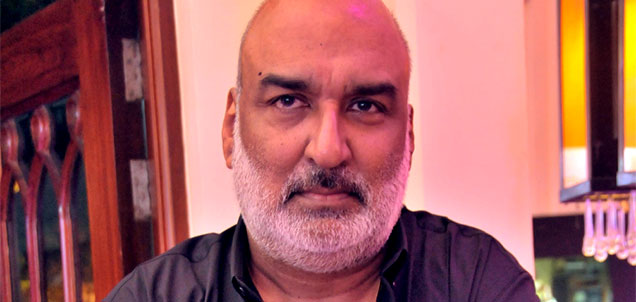
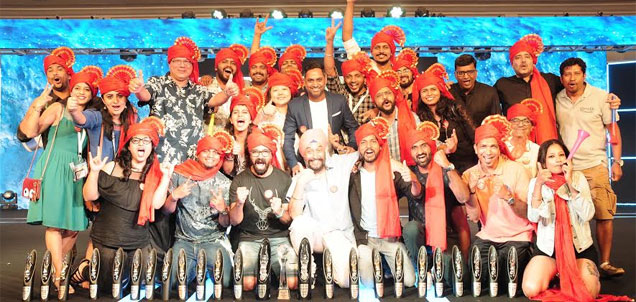
It was a special Day 3 at Goafest 2018 with The Social Street emerging at the top of its game with a total of 17 metals in the Creative Abbys. The agency has bagged many metals across virtually all categories at the Abby Awards 2018. The agency’s captains – Pratap Bose and Mandeep Malhotra and the entire contingent wearing red turbans – had ensured they made a significant impact at the Awards for the second consecutive year. Last year, they were second to Taproot Dentsu in the awards tally. Branded Content and Entertainment Abbys saw Medulla WYP Network winning the most with four metals including two golds. DentsuWebchutney took home eight metals in the Digital and Mobile Abby category. But the biggest applause of the evening went to none other than Early Man Film Pvt. Ltd. for its outstanding work in the category of Audio Visual Long Form for Reforest India – The Story of Kaveri.
Earlier McCann Worldgroup India CEO and Chairman, McCann Eriksson APAC Prasoon Joshiwas felicitated with a special award. Recognizing his unparalleled contribution to the world of Indian media, the special award is a reaffirmation of the advertising fraternity’s confidence that he will take the power of creativity further and make it a part of the things that matter in a new and resurgent India.
On Day 2 of the Abby Awards, the Broadcaster, Public Relations, Still Craft, Video Craft, Design and Direct Abby were awards. The awards celebrate the best-in-class creative geniuses and works of stellar significance in creativity. While Sony Pictures Networks led the tally for the Broadcaster Abbys with six metals, it was ZEEL that took home the gold for the night. While Design Abbys showed favour to Open Strategy and Design with six metals including 1 gold; Pi Communications took home 4 metals where Direct Specialist Abbys were concerned. While a total of 13 golds were handed out to top honours in Public Relations amongst other metals, it was Value 360 Communications that ate into the pie with a total of 8 metals. Still Craft Abbys saw dominance by The Social Street who grabbed 4 metals including 2 gold. Early Man Film Pvt. Ltd., took home a whopping 16 metals in the Video Craft Specialist category which included 5 golds, 4 silvers and 7 bronzes!
Speaking about Goafest 2018, Nakul Chopra, President – Advertising Agencies Association of India (AAAI) said: “When we started planning for Goafest 2018, our aim was to create a festival filled with knowledge, wisdom, entertainment, fun and which was also a great networking opportunity. The quality of the speakers, the valuable knowledge shared during the seminars, the networking opportunities across the three days and presentation of Abbys that celebrate excellence in creativity is what make Goafest such a unique experience. Goafest is a confluence of creative minds who gather here year on year to connect, communicate and celebrate the amount of hard work that each one of them is putting in to make media, marketing and advertising industries successful. I would like to thank everyone who has been a part of Goafest 2018 for their unrelenting support. And many congratulations to all our winners. You all deserve every bit of all the recognition that has been bestowed upon you by the industry.â€
Discussing the Abby Awards to be handed out at Goafest 2018, VikramSakhuja, President – The Advertising Club said: “Goafest is a phenomenon that is close to the hearts of the entire media andcreative fraternity. Months of hard work by the AAAI and The Advertising Club teams, the Abbys Master Jury, and encouragement from all of you present here has perspired into yet another stellar festival this year. In this 50th year of Abby Awards, we made crucial changes and rationalized categories which just made the Abbys even more coveted. I would like to extend my heartfelt congratulations to all the winners and also thank the jury for their meticulous and fair evaluation that makes Abby Awards the numerouno recognition of creative mastery in India.â€
Added Ashish Bhasin, Chairman of Goafest 2018 & Vice President of Advertising Agencies Association of India (AAAI): “After witnessing the event over the three days, I can proudly say we have achieved everything that we had set out to. Not only did we have best of the speakers coming forward to impart learnings to young ones, we also saw ideas being exchanged and people truly enjoying themselves. Over the last three days, Goa has seen some of the most creative minds in India together at one place – meeting, interacting, engaging and celebrating ABBY wins with each other. This is what the true spirit of Goafest is all about. Everyone who is going home with a metal from Goafest 2018 is truly deserving of victory and I congratulate each and every one of them for their incredible wins. It is definitely truly deserved.â€
Said Ajay Kakar, Vice President of The Advertising Club and Chairman – Awards Governing Council:“I would love to take this opportunity to thank the industry stalwarts and youngsters who helped us co-create Abby Awards 2018, courtesy their inputs. A very big thank you also to the industry for sending in entries and their wholehearted participation in the fest this year. I would also like to salute Prasoon Joshi for his contribution to the world of advertising, communications and films and for being a convergence point for mass India through his craft.â€
The Advertising Agencies Association of India (AAAI)Â and Association of Radio Operators for India (AROI) signed a Memorandum of Understanding last week that envisages a close working relationship between the radio players and Advertising Agencies Associations through joint committees and standard procedures. The alliance will enable them to make joint efforts for promoting advertising business on radio and develop and implement a credit control and collection mechanism with standard operating procedures to ensure best credit terms and timely collections.
The MoU was signed by the Presidents of the respective associations, Nakul Chopra for AAAI and Anurradha Prasad Shukla for AROI.
It may be noted that commercial radio currently entirely operates through over 310 FM radio stations in the country with about 70 more under operationalization. Another 700 more stations are expected to be auctioned by the Government of India over the next one year. Also, being the last entrant in the Indian media space, the strong ground presence and the vitality, efficacy and viability of radio (the only media that can be consumed while doing other activities) is only now being strongly realized by various advertisers and consumers.
Said Tarun Katial, CEO, BIG FM on the MoU: “[It is a] landmark moment - AAAI and AROI sign the MOU on credit relationship for the benefit of all stakeholders. Thanks a lot Ashish Bhasin, Sam Balsara, Shashi Sinha, Abe Thomas, Anurradha Prasad for all your support – look forward to a much better working relationship.â€
The Advertising Agencies Association of India and The Advertising Club have announced the dates for the 2018 edition of Goafest. It is scheduled for April 5 to 7 to be held in Goa.
The event will be helmed by Ashish Bhasin, Chairman & CEO South Asia Dentsu Aegis Network and Vice President of Advertising Agencies Association of India (AAAI), who has been elected as the Chairman of Goafest 2018. Ajay Kakar, CMO Aditya Birla Capital and Vice President of The Advertising Club will be Chairman of the Awards Governing Council.
Speaking about the focus of the 2018 edition of Goafest, Vikram Sakhuja: President, The Advertising Club said: Goafest is a landmark event that is marked in every brand and media professional’s calendar. The festival is the definitive platform for industry to engage, network and celebrate the pioneering creative work done through the year. At Goafest 2018 we will continue to up the ante on lifting the standard of creative brilliance. Watch this space.â€
Speaking on Bhasin’s appointment as Chairman of Goafest 2018, Nakul Chopra President AAAI said: “Ashish is an industry veteran with indepth understanding of the global media and entertainment industry dynamic. He played a decisive role in ensuring that Goafest 2017 was a grand affair that saw many pioneering initiatives. Goafest 2017 under his aegis is sure so see many more interesting and groundbreaking initiatives that will further up the bar on engagement.â€
Added Bhasin who had also chaired the organising committee at Goafest 2017: “Goafest has been at the center of celebrating transformational brand stories and fostering the media and entertainment industry’s growth agenda. Our endeavour continues to be create a festival experience that is inclusive, inspiring and delivers an immersive ideas exchange platform to all festival goers. Goafest, 2018 is sure to provide learning enrichment and facilitate synergies, thereby providing significant value to all festival goers.”
And this is what Ajay Kakar, Chair of the all-important Awards Governing Council said: “The Abbys have,historically, been both aspirational and inspirational beacons for the advertising, media and marketing industries. This year we intend to bring about exciting changes that will remind people why they have always loved the Abbys. And also remind them why the Abbys have always been regarded and recognised as the gold standard in creativity.â€
Other members of the Awards Governing Council include:
VikramSakhuja: President, The Advertising Club & Group CEO – Madison Media & OOH – ‎Madison World
Nakul Chopra; President AAAI and Senior Advisor, Publicis Communications
Ashish Bhasin: Chairman & CEO South Asia Dentsu Aegis Network – ‎Aegis Group plc
CVL Srinivas, Country Head – India, WPP & CEO, GroupM South Asia
M G Parameswaran: Founder, Brand-Building.com
PunithaArumugam: Entrepreneur and Digital Evangelist
Ask anyone from the advertising business, and the one word that you’ll be told to describe the Indian outdoor industry is: unorganised. There are quite a few other adjectives which are hence assigned to the sector and that’s what creates a problem for the business.
So while no one can really ignore the power of the outdoor medium which no goes beyond billboards to a variety of outdoor opportunities, the lack of transparency necessitates a different kind of acumen to deal with the sector.
It’s not that people don’t realise this malaise. Also, the presence of a large number of internationally networked agencies in the business has indeed brought in some order. But the reality is that if the business has to grow, then it’s got to a follow processes that make sense.
A Memorandum of Understanding was signed between the Advertising Agencies Association of India (AAAI) and the Indian Outdoor Advertising Association (IOAA), after months of discussion and deliberations and both parties have arrived at a Standard Operating Procedure (SOP) to be followed by members of both associations, with a view to regulating the Indian outdoor advertising
On the occasion, both associations echoed the sentiment that this is a landmark agreement in the long history of the outdoor Industry in India and will go a long way in building advertiser confidence in buying outdoor sites and enabling them to invest heavily in outdoor and exploiting its true
Said Nakul Chopra, President of AAAI: “I am delighted that many vexing issues have been sorted out in an amicable manner through healthy debate and discussion over the past few months and I am confident that this will go a long way in growing the OOH
Added Noomi Mehta, President of IOAA: “The IOAA is a premier association of large and established outdoor players in India and growing in strength with more outdoor owners signing up as our members. The agreement on SOP between IOAA and AAAI is a significant step and I do hope that both outdoor owners and agency owners will carry out their responsibilities in order to benefit from the advantages that the SOP spells out for both parties.â€
The outdoor media industry is highly fragmented in India with a large number of not-well-organised and small players who own sites or are concessionaires of site owners. This has led to improper utilisation of the medium and also stunted growth of the industry. This has also often led to the exploitation of either advertiser or outdoor agency or outdoor media owner, depending from which lens you view the Industry. Also, advertisers have been unable to buy outdoor with the same confidence that they buy other media.
To enable outdoor agencies to participate in the AAAI forum, AAAI has formed an Outdoor Media Forum (OMF) and AAAI-OMF has entered into a far reaching agreement with Indian Outdoor Agencies Association (IOAA- an Association of Outdoor Owners) with a view to regulate and grow the outdoor advertising industry and ensure that all parties involved, discharge their responsibility honorably and no one party gets exploited in the transaction or feels he is exploited.
Not many of the younger set of professionals would remember that Shripad Kulkarni, Managing Director, Vizeum India has been an educator for many years. Now the Advertising Agencies Association of India (AAAI) under the aegis of its AAAI Prowess initiative, has invited Kulkarni to conduct a one-day workshop ‘‘Media Strategy in the Digital Age†scheduled for September 22 at its training centre in Mumbai.
The one-day workshop would take stock of the media changing landscape i.e. what has changed and what will change and will cover basic media concepts; digital media concepts; approach to media in the new milieu; a new construct for media strategy; basics of new age tools and digital strategy and aligning creative approach to different digital media messaging.
Nakul Chopra, Senior Advisor, Publicis Communications Pvt Ltd, was re-elected President of Advertising Agencies Association of India (AAAI) for the year 2017-2018 at the AAAI’s Annual General Body Meeting. Ashish Bhasin, Chairman & CEO – South Asia, Dentsu Aegis Network, was elected Vice-President of the Association.
Other elected members of the Executive Committee include: Kunal Lalani, Crayons Advertising; Vinod Nair, Network Advertising; Pranav Premnarayen, Prem Associates; CVL Srinivas, GroupM and Vivek Srivastava, Innocean Worldwide. Immediate Past President Dr M G Parameswaran will be the ex-officio member of the new AAAI Executive Committee.
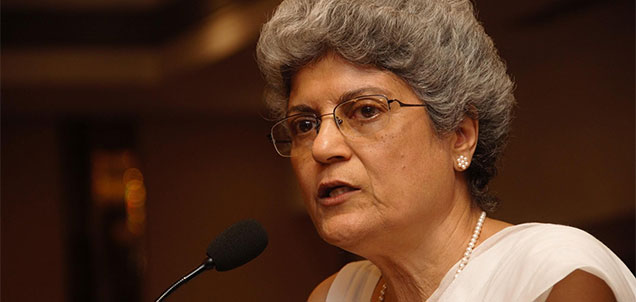
It was supposed to have reached us last weekend, but it didn’t. Normally we would’ve forgotten about it. But, as we were urged at the event itself, and then later via Twitter and various Whatsapp messages, we decided to wait for it, and publish Roda Mehta’s acceptance speech on her being presented the Lifetime Achievement Award by the Advertising Agencies Association of India. As is.
Yes, the speech is a little long and may not seem very relevant to those who entered the profession after 2000-odd, but one would say it’s essential reading for every advertising profession in India. So, sit back, and enjoy.
Nakul Chopra and the Managing Committee of the Advertising Agencies Association of India, Ashish Bhasin and members of the Selection Committee, and the many who have graced this occasion with your presence.
It never ever occurred to me that one day I would be back again before you! This award has come as an unexpected surprise, for in the past 19 years since I left this industry, I have thought and worked on much else than advertising!
You are honoring me for much today. As far as I can remember, all I did was a good day’s job, followed by a good night’s sleep, and that was all there was to it! That all these developments took place at a time of rapid change was entirely coincidental!!! But since you have chosen to honor me for it, let me share how this came to be.
Back in 1971, at the age of 21, faced with the choice between an unknown called advertising that was asking for computerisation of the National Readership Survey 1970 and a known called banking, the advice of a professor guided me: “If your aim is to contribute and grow, take the former. If you want a steady path in your career, take the latterâ€. I took the former and was completely undecided on the wisdom of that choice for the first two years. I remember the first day I stepped into HTA at Express Towers, Heather Almeida, a senior Account Executive, exclaimed “What is an MBA doing in Media?†That pretty much summed it up! For, unknown to me, Media was primarily a clerical function, releasing advertisements created by the agency. Not too long after came the realization that with only printed data on offer, computerisation was well nigh impossible. All this laid bare the very reason for my being there!
Those first years were spent studying the NRS inside out, linking it to other sources of information like the Audit Bureau of Circulation, Census data, etc., and in developing Reach and Frequency estimation methods with sister agency IMRB. Those formative years developed my knowledge and set the foundation for what was to come.
In 1973, the Clarion-Mote Media Model was presented at the Advertising Club of Bombay and HTA was asked to critique it. The talk catapulted me onto the industry stage. A two-month secondment to the Indian Space Research Organisation for their Satellite Instructional Television Experiment, working with some brilliant minds, followed, and then a study across markets on the impact of Hindi Cinema on young adult behaviour. My first industry experience was on the Advertising Club Committee for All India Radio. In 1972, an assistant in the Account Servicing Department requested for training in Media and was assigned to me. Her name was Roxane Guzdar. Others followed. One day, a media clerk came up and said, â€You train outsiders, but you never train usâ€. It came as a jolt. That day I vowed that no one, irrespective of his or her job role, should be held back from working at his or her full potential. But by then, I was close to leaving HTA.
The formal offer from Ogilvy Benson & Mather came without a meeting; so I asked to interview the Managing Director! I placed before him two conditions – complete independence in work and no politics! Mani Ayer accepted and I moved to OBM as Media Group Head in August of 1975.
The very first media presentation made to the Marketing Director of an international food company was in the presence of Mani Ayer and the full servicing team. After many appreciative comments, the client left and then sent back its usual list of publications for release! That experience drove me to targeting one client every year to scientific media planning. Â Fortunately, client companies had also begun hiring MBAs as trainees and promoting them to Brand Management. As we spoke the same language, very soon scientifically conceived media plans were being accepted down up.
Now unlike HTA, where Account Servicing would analyse and decode client brand marketing briefs for Media, at OBM, client briefs were handed over directly to Media. With limited resources and ambitious targets for an over-stretched function, I remember storming into Mani Ayer’s cabin one morning stating that Account Servicing was not doing its job and was merely passing down client marketing briefs, to which he quietly responded, “Then you do itâ€.
That is how the Media functioned, through backward integration, started market-consumer-media analysis that became a part of every brand media strategy. Â Clients took to this approach instantaneously and often fine-tuned their own objectives through this process.
Now to every direct approach made by the Media to clients came the response: “Our agency decides our media plansâ€. With nowhere else to go, they learnt soon enough that a visit to OBM necessitated a deep understanding of their product – its content and layout, advertising categories (particularly use by classifieds), advertising placement strategies, distribution network, printing quality, etc. Why was this necessary? Because the projections in the NRS from small sample sizes at each target group level needed other measures to ratify media choices. Publishers began changing their selling approach, training sales personnel with a study of their readers, with intra-media and inter-media competitive profiling, etc. Thus Media began to hire differently and to professionalize its service.
A detailed conceptual understanding of media definitions and the manual process involved to develop plans became great training ground for new entrants. It also became the engine for new business acquisitions. And soon Media was the place to be in. Talent began applying from all over – banking, account management, the print media, graduates from management schools, etc. By the mid-80s, Media at OBM was on a roll. Not unexpectedly, it also became readymade hiring ground for other agencies. While it was not easy to loose talent, the realization dawned that these trained professionals, imbued with a strong work ethic, would assist in the professionalisation of this industry.
While these developments were taking place in OBM, there was much churning in the mass media. When I joined the industry, there was only B&W print advertising, radio spots and cinema films or slides.  Then 1976 saw the launch of B&W commercial television in the four metros. Inclusion of Hindi films and film song sequences led to smart growth in demand for TV sets across the entire social spectrum. Six years later, in 1982, television went color with the Asian Games held in New Delhi, followed by the setting up of transmitter-a-day across 141 towns in the country.  These developments proved to be a game changer in every way. Television set sales grew exponentially. Cinema, a monopoly medium that had resisted audience measurement, got wiped out for advertising. Print found itself confronted by a very strong competitor with live News telecasts generating publisher nightmares. For advertisers, strong demand-pull was a new experience as consumers chased products, demanding rapid distribution expansion.
In all this turmoil, when needed most, Media audience measurement was slow to respond, appearing after long gaps – in 1978, 1983, 1989. So the impact of rapid changes in audience consumption was either not captured (as in rural India) or not delivered in time for sound planning. Furthermore, the bandwidth and financial resources of research agencies to host a National Readership Survey before recovering costs, raised issues of reliability due to high projections on low target group sample bases. These two factors finally led to the formation of the Media Research Users Council after AAAI and IENS declined undertaking future NRSs. Conceptually the Council was a very sound idea as it made users the owners of information with full inputs on questionnaire design, sampling structure, fieldwork reviews, data analysis etc. – in short its reliability. So when a newspaper from another state entered Rajasthan and the IRS data revealed a decline in the readership of the then leading newspaper, we held back for three months to conduct incognito checks to gauge the reliability of the findings. Once verified, the data was released.
During these years, industry fortunes see-sawed, as did advertiser spends. Media budgets saw many periods of stagnation or marginal increase. But media costs kept rising.
To ensure that brand budgets went the extra mile, we looked at print pricing structures and found that add-on charges for double-spread, bleed, newspaper positions, etc. using the same quantum of newsprint was unfair. That is how the need to negotiate began. It was always done with a view to get more for the given level of brand spend, and for no other reason. We also worked much harder on small budgets. This led to agency-level negotiations for benefits to be passed across all brands.
On television, the major issue was a completely irrational rate structure. The Advertising Club of Bombay under Amol Bose set up a committee for Doordarshan rate rationalisation but we made no headway at all. As David Ogilvy would say “Search your parks in all your cities. You’ll find no statues of committeesâ€! In 1984, at a last quarter OBM Board meeting, we came face-to-face with the reality that clients had been unable to spend 30% of their customary Diwali budgets for want of Doordarshan commercial time. I resolved that day that the situation had to change. So every month from then, I walked the corridors of the Ministry of I&B, getting to know every official that had anything to do with Doordarshan, building a case for rate rationalization, as well as meeting everyone from programming to commercial to audience measurement at Doordarshan. In the early days it looked like a hopeless case with All India Radio personnel appointed at the helm.  Then in July 1986, Bhaskar Ghose, an IAS officer, was nominated as Director General. Independent of decision, he was nevertheless open and understanding, and many an hour was spent educating and convincing him. When the much sought-after rationalization of rates finally got introduced, it benefitted both industry and Doordarshan’s coffers. As an aside… In late 1987, Mani Ayer received a call from Mr. Ghose requesting him to second me as Additional Director-General, Doordarshan. Mani replied that I would be of greater service outside Doordarshan than inside. The following year, Bhaskar Ghose was summarily removed as DG because a news feature had shown the Congress party in unfavorable light! What a lucky escape!
When a new person joined OBM, s/he went through an induction programme during which David Ogilvy’s Agency principles on advertising and “the way we do things here†was shared. Each hiring came with a six-month probationary period. If the person had the right attitude and showed promise, confirmation came within 3 months. After a year, came responsibility under the guidance of a Media Supervisor. Each year-end, appraisals were sacrosanct across all offices, and every person’s progress was reviewed with me. Increments were decided with Servicing, Creative and Media sitting together and negotiating proposals. In fact, there was a time when Mani Ayer, the Creative Director Suresh Mullick and I interviewed a potential hiring, as the aim was to get seamless teamwork.
David Ogilvy’s credos of “We Sell or Else†and “First-class business in a first-class way†was fundamental to the working of the agency. If a publisher said, “Take it or leave it†when we complained about poor reproduction, we left it, no matter how important that publication was. If attempts were made to get business in anything other than a well-reasoned way, we not only refused it but also discussed it openly in the department so everyone learnt from it. And they knew that I would never ask of them anything that I would not do myself.
The concept of “One Agency Indivisible†seeped through the fabric of Media. Every office was on par, irrespective of the size of its media spend. In fact, offices were assigned to Media teams along with their clients. The day the person in Delhi office, assigned for Doordarshan storyboard approval for all offices, alerted a Media team in Bombay of a competitive brand launch, forewarning the client, it ratified a neatly ticking network, unaffected by narrow territorial constraints and client loyalties. It was teamwork at its best.
After OBM crossed a hundred-crore billing, the Board was asked how we could help take this further. Evaluating our client spends across media, I realized that we were not delivering on 16% of their spend as we did not have any expertise in outdoor as a medium. At the time, this medium formed a part of regional sales budgets, and was entirely discretionary. To change the client’s approach was the first objective. For which the foremost problem was lack of data on the value of the medium. Even till today, media has not realized that data, even if it offers challenges, also provides opportunities to adapt, modify and grow. The one attempt to professionalize this medium through the Indian Outdoor Survey in 2009, I am told, was not subscribed to by a single outdoor owner! By now, Outdoor should have been a strong medium contending for the advertising rupee on a scientific platform, and supported by the advertising community in the face of regulatory enforcements. Instead, it has remained an uncoordinated band of owners, intent on navel gazing.
In 1991-92, at a Blue Sky thinking program, Media mooted the view that brands were moving into rural areas and it was an opportunity for the agency. Thus began the journey of initiating a rural network to service brand communication needs. It took 3 years to establish, but it has not looked back ever since.
You honor me today for what, in hindsight, was primarily a 16-year period — from 1976 to 1992 — before I moved on to other assignments within the agency.
Three factors made this possible.
Firstly, the only reason I came into this industry was because of media measurement. And to think that in a developing country like ours, conflict of interests have led to 2 national-level readership surveys at very high cost and with conflicting outcomes, that outdoor measurement is non-existent, that radio measurement is meager, and that Internet measurement has not even begun begs some questions, among which is the viability of the current media remuneration system that must surely inhibit investment in time and resources for sound measurement studies.
Secondly, Suresh Mullick.
A Creative partner whose work spoke for him. When I returned from London in December 1980, OBM had just won the Cadbury’s Dairy Milk Cholocate business that had thus far promoted the nutritional glass-and-a-half of milk. To grow the market by re-positioning the brand, Suresh had created the “Sometimes Cadbury’s can say it better than words†campaign in full color with salivating close-ups. There was not a single publication that could have saved face for not featuring that campaign. This gave Media the negotiating strength to buy adequate frequency from a major newspaper by changing its policy on the minimum size for color advertising. Of the 10 best campaigns in the Decade of the 80’s announced by the Advertising Club of Bombay, Suresh, won for OBM, 4 out of 10 – not a bad tally at all! Campaign after campaign, Suresh’s partnership raised Media’s delivery to new highs.
The fact is that advertising space will always be there if the medium or vehicle exits. Is the role of Media then merely to choose which vehicles and at the lowest price? At a very early stage, I came to realise that unless Media recommends a medium, Creative does not develop the experience and skill sets for it. A case in point was television in the early days. At best, creative would offer film slides with radio jingles! And then when radio was not recommended for quite some years with the rush to television, creative forgot how to create advertising for radio! Or when we began outdoor, print ads were what we got! Rural advertising was another matter altogether. Likewise, if a brand promise is better communicated by Creative via certain media or in certain lengths, Media has to adapt and tweak its plans to allow for its full expression. It is completely beyond me how Creative and Media can be disassociated.
Finally, Mani Ayer.
In your citation to him for the Lifetime Achievement Award, it said and I quote: â€Over the years, Mani’s position as a leader in the industry and one of the most successful managers in advertising has been unquestioned…. his leadership is inspirational and at all times encourages civilised behaviour. His acumen in the business of advertising is unquestioned and widely acknowledged.â€
You were so right! Being given the top job when he was just 34 years of age, led to the emergence of an agency where grey hair or gravitas was not material, where heirarchy was not in the reckoning. Merit and performance were all that counted. Given the task of turning around an agency in the red, he sought exceptional people across the board, and then gave them full rope. I can think of no other reason why at 26 years, he made me head of Media. I never had to look over my shoulder, my decisions and actions were independent, and he stepped in whenever support was needed. He would tell others: “Roda is her own bossâ€. It needs a very secure person to be able to say that. So Mani Ayer delivered in every way on his promise when I first met him. He led this agency through reflected glory.
Inherently, Mani, Suresh and I were all trainers. We knew that our partnership set an example of mutuality of interest within the entire agency, across all offices and disciplines. Even as we spread out to larger teams across levels and offices, we aimed to be inclusive, to build across the board and across disciplines. The many fine professionals trained to service client and brand needs are evidence of that. We built others even as we were growing the agency. The memories of those who passed through the agency ratify to those having been the best years of their careers. Those were OBM’s Camelot years when we trained knights to join the round-table.
Being essentially an Indian agency with Ogily & Mather Worldwide as a minority partner, and with the Indian shares widely held across all offices and disciplines – from a peon to the Managing Director – the sense of ownership was very strong; and the dividends reaped each year renewed employee commitment. Under David Ogilvy as Chairman during the latter years of the 80s, we were encouraged to undertake work in the public domain. When he wrote to dissuade me from taking the Doordarshan offer, he said: “I applaud you for wanting to contribute at a national level. But marketing TV would not be much of a contribution, compared, for example, with running the population programmme or the information department in the Prime Minister’s office. ….If I owned OBM, I would set up a think-tank in Delhi, to advise all departments of the Government on how to communicate with the public on issues of national importance.â€
So you see, the critical ingredient that set this agency apart was that while others were slugging it out for the top slot, OBM’s orientation was creating value for brands, for the industry and for the nation. Had its focus been on size, the agency would have been a very different place.
So let it be said today, that I could never have done what you honor me for today had it been any other agency or had it been at any other time in the history of this agency.
Across the spectrum of advertisers, agencies, research and all arms of the media, this industry will be preserved only through the masterpieces of women and men who through their organizations serve the interests of all, who through their Associations seek the betterment of all, and who through their actions deliver what is best for all.
The Advertising Agencies Association of India is felicitating Roda Mehta this (July 14) evening with the ‘Lifetime Achievement Award’, regarded as the Indian advertising industry’s highest honour. Here we bring you a very personal account on Mehta by Piyush Pandey, Executive Chairman & Creative Director, Ogilvy South Asia.
By Piyush Pandey
Roda Mehta is one of the foundation pillars of Ogilvy and Mather India. When I joined Ogilvy as an Assistant Account Executive, Roda was a Director of the company. Along with the late Mr Ayer, the late Suresh Mullick and Ranjan Kapur, Roda was one of the four pillars of Ogilvy through the 1980s and 90s. She gave stature to the media business overall. She made media aspirational at Ogilvy, at an equal standing with client servicing and creative.
A no-nonsense person, Roda has a very sensitive mind. Apart from regular work, I had the privilege of working with Roda on the National Literacy Mission project. She was the brand leader of the task force- the media leader- and I, her creative partner. We travelled the country together and I saw the soft and sensitive side of her- beyond her tough and disciplined approach to work. Roda continues to contribute to media and society in various capacities.
There are people who make a difference to Ogilvy, there are people who make a difference to the industry. Roda did both!
Roda inspired many women to play significant roles in their companies and business.
Today, we salute Roda Mehta. We salute her for being honoured with the AAAI Lifetime achievement award for her contribution to the Advertising Industry. Let’s take this occasion to thank her for what she has done for all of us at Ogilvy. And wish her the best for the future.
It is AAAI President Nakul Chopra’s fourth year as a part of the core organising committee of Goafest, and it must be acknowledged that the three-day festival has taken a quantum leap in his tenure. Although this interview was conducted much before the fest concluded, we asked Chopra on his expectations, his achievements on his view on the absence of some of the big agencies.
Your fourth Goafest where you’ve been a key part of the organising committee. How would you say was this year’s edition vis-à -vis those of the past years?
The year 2013 was my first year as the Goafest Chairman. I think A. the mandate was in a sense that it’s all going very well, continue with what’s being done. B. I think I had a lot of trepidation. I think I was given a responsibility I think I wasn’t 100% on top of it. So, 2013 was more a Goafest in which I felt my way around. What became very clear in my head that year was that we needed a fundamental change in the way we approached the festival. It’s a festival, as Raj said, that it’s a pro-bono effort by the associations. However, if you come here as a delegate, how do you care, whether it’s pro bono or for profit or not. You come here and you see the value you receive from the festival for here. And so, when I came back in 2015 to do it, I remember I sat with the then President of Ad ClubPratap Bose and AAAI President AmbiParameswaran. I said I want your blessings on one thing. We are going to put up the best show we’ve ever put up. Even if it causes a negative financials on our part. But, we have to set a standard with this thing and not the other way around.
While you are an industryperson and an agency leader, you are also known to be fairly aggressive in your approach. The fact is it needed a slightly bolder approach to doing things. Did that really help?
No, I may have an aggressive personality but I haven’t been aggressive in the way I’ve done business. That’s another matter. Right here, the question was: are you willing to take the bait? Are you willing to say that we will spend the money and we’ll do a great show and the results will follow. And I think somewhere for me, this year in particular is a vindication of that. Because the journey really started in 2015 which progressed a lot in 2016. I’m very proud of the fact that the outlay of the fact has more than trebled in these 3 years! It’s not about me feeling good about it. But hopefully, that is the increased value we are bringing to people who are coming here.
Since when you took charge and till now, are you happy or do you think there is unfinished agenda?
I could almost say it would almost be a dream for me to do nothing else in the next 2 years. I’m not saying that’s what I want to do. But, in the limited context of GoaFest, there is so much more we can do. But it has to be somebody’s day job for 12 months of the year. It’s very difficult to do that if it is many people’s second job for six months of the year.
Have you ever felt that like it’s with Cannes Lions, you should have a full-time organising team just for Goafest?
I think there is glamour to Goafest that is endearing. The collective effort of the industry, not just the advertisers alone. The advertisers contribute to it by coming here, speaking. The media contributes in a very big way. You guys contribute to it. I think there’s some magic in that glamour. I don’t want to lose that. That’s part of Goafest! I think, within that context, there’s a lot more we can do.
Anything that you think you wanted to achieve but have not over the last four years? What is that one thing you’d have wanted to achieve?
I don’t think so. I have targets in my head every year. To say, this year these are the three-four new things you can do. I think we can still improve… not just improve… I think we can perhaps revisewhat we did three years ago…
Does the absence of some big agencies matter to you?
Of course, it matters. Not just as people who organise the festival. But I think it matters equally to associations who are doing everything they can to be as inclusive as possible. So of course it matters to us. As I have said many times before, I think different agencies have different reasons. Not necessarily all the same. So if there’s a list of things that I could change, that would be on top of my list. I think the real world is competitive and we have to respect that people have competitive reasons for doing what they are doing.
Would you say that people who are not participating are not participating because they haven’t done good work?
I can’t say that as a blanket thing for all those who haven’t participated. But, I would certainly say to you that seems to be one of the prominent reasons why some agencies don’t.
It’s that time of the year when the industry folk get set for Goafest and the Abby awards. And some don’t. But despite the demonetisation and a tightening of budgetary belts, this year’s edition has, say Organising Committee chair Ashish Bhasin, Awards Governing Council chair Ramesh Narayan and Ad Club president Raj Nayak, garnered a record amount of sponsorships and number of entries. For the first time, the organisers fear they may have to say no to delegates with a ‘housefull’ board. In a no-holds-barred discussion over lunch last week, Messrs Bhasin, Narayan and Nayak speak to Pradyuman Maheshwari on this year’s edition, the participation (and non-participation) of some agencies in the Abby, and how Goafest and the Abby are now a lot more than just for creative agencies and awards. Excerpts:
Let’s start with you, Mr Ashish Bhasin. Given all the pressures, would you say being Chair of the Organising Committee is a thankless job. Is it really?Â
Ashish Bhasin (ABhasin): I wouldn’t say thankless. Actually it’s very gratifying because once the thing is done, you feel good about it. But people often underestimate the logistics of it. It’s like having a ‘baraat’ of 2,500 people come over for three days, and the logistics that go into making that happen — the quality of speakers, the funds that have to be organised and the very organising of the event and the awards — are a task. It’s like [working with] 10,000 moving parts. The thing that you are always aware of is that about 9,999 times you will do right and no one will remember that. But the one or two things that may not go as expected, are the things that throw you off.
And all of this alongside your day job…
ABhasin: Is taxing, but it all comes together. This is the time that it all starts bunching up. This year we started well in time, and because of that, I think we have a much better speaker line-up than we’ve ever had.
So to get straight to the point: What’s special this year?
ABhasin: This year’s Goafest, to my mind, is going to be like never before. We already have a record number of creative entries and a record number of media entries, and therefore a record number of total entries. I also think we will have some of the best speakers that we’ve had in a long, long time…
People whom one hasn’t heard or seen before?
ABhasin: Yes. Some you haven’t seen and heard, and to an extent less incestuous, but because it’s not only going to be advertising people talking to advertising people, there is a lot of learning to be had from related industries and from people who have achieved a lot in other areas, like people from Bollywood or spiritual leaders. The Phogat sisters, for example. I think there is a lot to learn from their story.
We are also going to have Masterclasses which will be ‘By Invitation’ and conducted by a very senior [industry leader from] Israel. There will also be one day on innovation, and one on creativity. This will be for a select group, on a first come-first served basis among those who have applied for it. There are a lot of other things planned. You know about the Champions of Excellence award, which Mr Ramesh Narayan will talk more about. Also, this time Goafest is going green in part because we have to be responsible about the environment. So for the first time, we are taking baby steps in water conservation because when there are 2,500 people, it is sometimes painful to see people take three swigs from a bottle of water and then discard it. If you consider this could happen eight hours a day over three days, you can imagine how much wastage of water actually happens. So we are trying to make [Goafest] a little more sustainable. Also the element of fun..
You aren’t returning to make Goafest 2017 more outdoorsy…
ABhasin: Obviously [moving it indoors] works better in terms of both timing and control, and the new technology we are now using, probably won’t work outdoors. But this year, we’ll have sundowners with the sea as a backdrop.
Okay, let’s move onto the awards, and to you Mr Ramesh Narayan, as Chairman of Awards Governing Council. How have the entries and judging been? Other than the Champions of Excellence category, what’s new this year?
Ramesh Narayan (RNarayan): The Abby Awards are now over 65 years old. They’re a brand that everybody knowsand loves. Everyone said that in a year like this, with demonetisation and a slow economy, it’s good even if we get 20% fewer entries. But, as you know, we’ve got more entries than last time, and it’s the highest ever — despite an increase in the rate…
Will you be able to share some details with us?
RNarayan: [It’s more] in terms of numbers. But I see anincreaseacross categories too, especially in digital. Digital and publishers have led — as far as the numbers go. Another thing to note is that when it comes to awards, historically you’ve had the Big Five of print, film, outdoors and such. Today, throughout the world (and here as well) you have broadcasters and publishers, and now there is an all-new category called Mobile. This was not there before…
Last year, the response from publishers was not very good… they had not entered their best work. How has it been this year?
RNarayan: It has been very good this year. We made it a point to reach out to all the publishers, and even involved the INS (Indian Newspaper Society). We asked them to circulate our mails in the industry. Everybody has cooperated, and the quality has been good. We’ve got very good jury members too. So the whole experience had been quite gratifying. This time, we also had our annual Town Hall very early, sometime in November, so it gave us the opportunity to listen to all voices from our industry and on-board their ideas and suggestions.
Who were the people who attended it?
RNarayan: Creative people
From across agencies?
RNarayan: Yes.
Including those who were not participating?
RNarayan: Yes, at that time they were not aware that they were not participating. So they did come. I can state, for the record, that as far as processes and systems go, we are now ‘super’. I don’t think anybody can have anything to say about it — and I am willing to debate it out with anyone who does!
There has been a charge that it’s not held at the right time. One of the leading lights of your industry, Bobby Pawar, mentioned this during a panel discussion on ET Now. When asked a question, he said that the meeting with creative folk should be held immediately after Goafest.
RNarayan: That’s too early. November, I think, is the ideal time. If you have it in June or something like that, that would be like giving a brief to your advertising agency six months in advance, and asking them to deliver the campaign and no one will remember it.
Mr Bhasin, as someone associated with both creative agencies and advertising agencies, how do you view Goafest in terms of your agency’s participation? We do know that Taproot participates in a big way. I remember the other Dentsu creative agencies participating in large numbers last year. So how do your folks look at it? You are also an active member of the Ad Club …
ABhasin: I wear two distinctly separate hats, my industry hat and my agency hat. When I am sitting with my agency people, they are least bothered about the fact that I am the chairman of Goafest. They want to see what’s in it for them, as any industry agency would do. But as a group, we view this in two or three ways.
First, we see it as a great learning opportunity for youngsters, so we encourage more youngsters, rather than the seniormost guys, to attend. We have a lot of incentives and a lot of facilitation for some of the youngsters because during these three days, you get to see and hear the best of the best. This year, for example, we are concentrating on digital trends.
What about the participating in the Abbys?
ABhasin: I am separating the two. You said going to Goafest. So we encourage people, particularly the youngsters, to hear from the best of the best speakers which they otherwise won’t get an opportunity to do. As far as the awards are concerned, Dentsu, I have to confess, wasn’t very focused on awards until maybe a year ago. It just wasn’t on our radar, apart from Taproot Dentsu, who have always have been very good at it and done brilliantly. Last year, we tried it as an experiment, and it was very encouraging because as a group, we got the highest number of creative awards, and among the Top 10 agencies, three were ours.
What was it that led you to participate in the Abbys when you weren’t earlier?
ABhasin: It’s not that Dentsu wasn’t participating. It was just that we were not taking it seriously enough. When you go and make your creds presentation, when you go out and talk about your creative reputation and go out to recruit youngsters, there is a big high for campaigns that have done well. In the Indian context, there isn’t a bigger awards show than Goafest. So we just decided to dip our toes in it last year. Not just dip our toes, but go in a more serious way. But when three of our agencies made it to the Top 10, we decided to build on that this year.
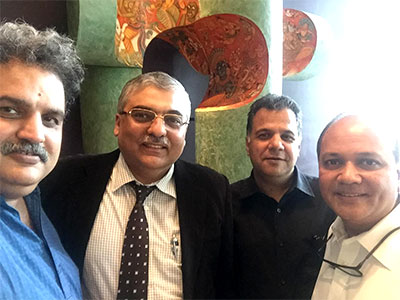
Selfie time! From Right: Ramesh Narayan, Raj Nayak, Ashish Bhasin and Pradyuman Maheshwari
ABhasin: Absolutely, and that’s why they continue to participate. This is also a good time of the year because after this comes Cannes and various other international award festivals
Do you participate at Kyoorius?
ABhasin: One or two of our agencies have…
Taproot doesn’t?
ABhasin: It’s not that we don’t participate, but how many awards shows can you focus on? It’s a huge investment as well, so you have to balance it out. Last year, we focussed on Goafest. Besides Taproot, this is a relatively new thing [for our other agencies]. So you’ve got to ace the sysem, start learning to present your work, and learning to encourage your team to come up with good work. Once we do consistently well in the local awards, we will start looking at the international ones.
So we have a plan whereby we hope that at the end of three or four years, we will dominate, not just pan-India, but also the international circuit. But I think we’re still on a learning curve with some of our agencies, so that’s where we are.
We have seen that while many creative agencies stay away from awards, media agencies participate in large numbers. I’m not referring to digital and outdoor, since they are slightly different, but creative and media are the two traditional players. Why do you think this happens?
RNarayan: First, the fact that media agencies from all the big groups do, in fact, take part, validates the point that none of them has anything against either the Ad Club, Goafest or the Abby judging… Because if they did, they might be split in their decision even within the group, with one arm participating and the other staying away…
Sorry to interrupt, in the case of WPP you have one part agency participating in all its might like JWT as it is not participating so…
RNarayan: True, so all the more reason to say that this one thing is absolutely clear to all people now, and I’m glad that the organisers of the Abbys don’t need to defend themselves anymore. That age is gone now, as we can see with all the networks and all the agencies participating in some way or the other….
Pardon my saying this, but does this mean you are showing the finger to those who don’t participate?
RNarayan: No it’s not, certainly not. I have always said this, and I say this on record that I will be the happiest man if all the agencies participate. However, I can appreciate that each one has some reason [to stay away], and that this has nothing to do with processes or the way this whole thing is organised. Each one has its unique reason. For some it could be budgets; for some it could be [the condition that if they] enter, they have to win big. Sometimes it may not be a very healthy bag of entries they can send in, so they won’t enter at all.
Are you saying that one of the reasons people may not participate is that they don’t have good work?
RNarayan: Adequate good work. All of them will have [to have] some excellent work to show. Or enough numbers to be able to rank among the Top 3 or even the Top 5. It’s a cultural issue where they might feel this is an important thing for them.
There are charges that the judging quality is not right. [Some agencies] don’t think it’s right for people from their own industry to do the judging. And also the fact that the views of the industry are not taken in time…
RNarayan: As to the views of the industry not being taken, we have a Town Hall for this and it was held early this time, in November. Many people attended it. But for those who did not vote, I’d say if you didn’t vote, keep your mouth shut.
ABhasin: I will add to that. This is the first year in which I actually said that we want to crowdsource Goafest. The speakers, the awards, we wanted to crowdsource it all.
Were Ogilvy and Lowe invited for this meeting?
RNarayan: Everybody was invited. All our members were invited from the Ad Club as well as AAAI. May I say two more things which are my like my hobby horses? First, that the Champion of Excellence award is not an Abby. It is an award, and it goes to those advertisers who have nurtured brands or who have taken that leap of faith and ought to be celebrated. So that is a new thing. Second, as Ashish mentioned, the Abbys have gone green this time, but they’ve also gone good. For the first time we have an industry initiative to start a campaign to mitigate violence against women.
Which you kind of introduced last year in a smaller way…
RNarayan: That was an Abby, in gender-sensitive advertising. This is an industry initiative where we have invited entries, and the winning entry will be funded by the industry to turn into a campaign that will then run for a month, across the country and across media. For example, we had FCB creating the call for entries; and we’ll have GroupM running the campaign for us afterwards. We have MullenLowe Lintas’ chairperson judging it… in the chair, so we’ve got the entire industry on board for this, and I think that speaks volumes for today’s leadership of Goafest — the Ad Club and AAAI– who have been able to pull this off.
Sorry to push on this question: Participation in this proposed campaign is from across agencies, even those who are not participating in the Abbys?
RNarayan: So Goafest has now evolved into a thing that is bigger than the Abbys. We have all these agencies participating to mitigate violence against women, so I don’t want to distinguish between those who are a part of this campaign and those who will participate in the Abbys. Though it is a fact of life that yes, those who have judged an Abby have not judged here. I don’t want to say, but it’s true; Lintas is there, so that makes everybody.
Having discussed the nitty-gritty of Goafest and the Abby with Messrs Bhasin and Narayan, I am going to turn to you, Mr Raj Nayak.
Raj Nayak (RNayak): I won’t go politically correct, so don’t worry.
Sodoes it upset you that you’re still not able to get the growing number who choose to stay away from the Abbys, to participate in the awards?
RNayak: Let me pick it up from where Ashish left off. I don’t know if you’ve noticed, but over the last two or three years, there has been a strategic shift in the way we view Goafest, both as an industry body and at AAAI. The Abbys are not just about creative awards anymore. It’s a place for networking, for showcasing work, yes, and it is one place where we bring all parts of the industry under one roof – broadcasters, publishers and even digital. I think you can’t find another award [that has all of this put together].
And, of course, the speakers. Year on year, we have over 3,000 or 4,000 people come together for a three-day festival. First, there is no entity or body that brings all this together for three days in one place. More importantly, the way to look at this is there is no agency which has not participated. You say my right hand has participated or my left leg has not participated, but the fact is that taken collectively, there is no agency that has not participated.
Can you elaborate?
RNayak: You name an agency.
Lowe Lintas?
RNayak: Yes, but their media has participated.
I’m talking about the creative agencies
RNayak: My friends will be politically correct. But I have spoken to a lot of media people and a lot of agency heads I don’t wish to name, and they’ve clearly told me this is about one or two people not participating, though nobody wants to assign any reasons for it. But I think sometimes when you take a stand, it becomes difficult for you to do a U-turn from that stand without a valid reason. Then there are those who don’t want to lose if don’t have enough good work. One person told me that they did not have enough good work this year, and didn’t want to send an entry just for the sake of it. If I don’t participate, it doesn’t matter if I don’t win. But if I do participate, and I don’t win — or don’t make it to the Top 5 at least – that makes me look bad. It’s like the countries who stay away from the Olympics.
All these agencies who tell you that we don’t listen to the industry and we don’t take feedback from them [are not being entirely honest]. Last year, I personally invited them to the Town Hall, where you were also present. We had a media meet last year where we said ‘forget about feedback, we welcome you to come, and be part of the event.’ But you have no right to be an armchair critic and say this is bad or that is bad, if you don’t involve yourself. Why are Ashish, who runs his full-fledged agency, and Ramesh Narayan, who’s got his own business, giving up their time for this? Why am I, with my full-time job, doing it? It’s not for personal benefit, it’s for the industry.
Does it worry or anger you when people from your own business — as you might have seen on a recent TV show – and just stop short of damning the awards?
RNayak: I don’t know which show this is, but I’m sure that there was no representation from AAAI or Ad Clubthere.
The anchor, Sonali Krishna , said she reached out [to you’ll]. She didn’t quite use the word boycott, but she almost said that.
RNayak: Of course. I will go on record to tell you that we chose not go on that show.
Why?
RNayak: Because this has been going on for the last five years, and it’s time to move on. Goafest has become bigger, is getting more entries and more delegates. Goafest is getting better. So you have to move on. As an industry body, you can’t pander to one or two individuals.
Why do you think some in the A&M media are being unfair? Because you have chosen not to participate in one event, in one panel discussion now, another anchor of another show has been openly critical of Goafest and the Abby? Do you think it matters?
RNayak: It doesn’t matter. You have to do what you believe is in the best interests of the industry. We are all practising professionals. We have full-time jobs to do and yet everybody is giving their time, pro bono, for the sake of the industry and that is something that must be recognised and appreciated.
The happening thing is, of course, that all of them — including the Big 2 or the Big 5 – do participate in the Effies. So it’s not that they have something against the Ad Club…
RNayak: Let me tell you that it’s the same process that we follow for Effies and the Emvies. We have 150 or 200 jury members even for the Goafest Abbys in different phases. Everything is online. It is transparent and we even upload the shortlist. How much more transparent can one get? Be upfront. I have no hesitation if you to say: ‘listen, I don’t want to participate’. This is the first time — and I’m saying this on record – that we did not reach out to anybody asking them to participate. We said Goafest will continue, irrespective of someone’s participation (or not). You can’t be saying the same thing every year. You have to move on, and that’s what I am saying.
Given the fact that people are saying they don’t have enough good work — and some of these are big agencies — do you think there’s a way out where you can still attract some really good work? I know you don’t have a ranking system, but whatever it is, one does to look at ranking eventually…Â
RNayak: But even if you have one good work, and if you believe it to be good, you can get you an award. You don’t necessarily have to get the Grand Prix. I mean, if India were to participate in the Olympics only if we are to get all the medals, that won’t work. You may be good in shooting or you may be good in wrestling, but you are still bringing honour for your country. You are still bringing honour for your agency.
ABhasin: And even the sad part is, most of the guys who are part of the non-participating agencies, have built their careers on the Abbys.
RNayak: Very true. Did you see the campaign ‘Made of Abbys’? Did you see agency after agency, some of whom are not participating, featured in our campaign?
Yes, I saw one with Piyush Pandey or Ogilvy
Let me tell you something very interesting. We released a set of eight agencies and obviously we would want to show every agency who has won in the Abbys, but it’s not possible because we don’t have the campaign or the resources to do that. So we decided we will pick out eight agencies and we will put it in order. We chose strategically to showcase first those agencies who are participating. The head of an agency which is not participating – I will not name the agency – asked: ‘How come we are not featured in your campaign?’ And I said: ‘You are being featured, my friend. It’s just that we will put you later’. We actually included their campaign after the entries were closed, and it was a strategic decision to demonstrate that we are not canvassing for entries. And also to demonstrate that as an industry body, we will always continue to be inclusive. It’s not a mom-and-pop show.
After attending various Goafests and Abbys, I can say that last year’s was a stupendous show. Does it really upset all of you, having spent so much time and pro-bono effort, that people who should be participating in the event, are not participating?
RNayak: It used to upset me – I’d be lying if I said that it didn’t — probably next year, I may not be there. Ramesh may not be there. Ashish may be there for a year or two. We will pass the baton to somebody else. But I believe that Goafest, given the way it’s going, will only get bigger and better. [So as an agency] you may choose to stay away today, but there will come a stage when you will want to be a part of it.
You do, however, also recognise people who are not participating, like Balki or Piyush….
RNayak: Of course. We are an industry body and we have no personal agenda. We will always be inclusive, no matter who participates or doesn’t. It is a stated rule for AAAI and the Ad Club that as an industry body, irrespective of participation, we will be continue to be inclusive. If there are good suggestions, we will always welcome them. We may make a mistake, but you should look at the intent behind everything that we do. As president of the Ad Club and on behalf of president of AAAI and my colleagues, the intent is to give it our best. Let’s put on a great show, and let’s do it for the industry.
I’m going to ask you a question, you can choose not to answer it…
RNayak: No, I will answer it.
As the CEO of Colors, you are also associated with the Kyoorius Awards. What is your experience with that? Even that doesn’t get the participation of all.
RNayak: See, I could have been petty and not sponsored Kyoorius, right? But for us, every awards event is mutually exclusive. That’s a private show. Some other media publication may host another one. We are a part of everything. We are a part of the Ad Club as well, and continue to be. For me as Colors CEO, if I see value in an event — whether or not it is an industry event, though there must be some RoI because I am answerable to my organisation — we may decide to either sponsor it or be associated with it. But there is a big difference between an event for profit and an industry event. Made in India…
Let me ask you a naughty question. Which gives better RoI?
RNayak: Definitely Goafest, for the simple reason that there is no other event that brings all the different constituents under one roof for three days. If there was something that you could compare it with, maybe it would have been difficult for me to say. But right now, every other event is a smaller one.
RNarayan: I would like to add that I’d also like everybody to keep in mind that Goafest and the Abbys are probably the only industry-organised awards show in the world may be. So it’s in our interest to get together and to cherish it.
There is a feeling that privately managed shows are better…
ABhasin: What is your opinion?
Two or three years ago, I felt the same. But since the tenure of Shashi Sinha, the Abbys have been very well-organised.
RNarayan: Without naming any shows abroad, it’s true you don’t have any kind of right to appeal there. Here you can pick up the phone and speak to Ramesh Narayan, and ask, ‘What the hell is going on, guys?’ That happens only in India. So, in fact, we must celebrate it.
Any last word from the Goafest chairman?
ABhasin: I think this might be the first year when we may have to say no to delegates. When we started off, we did so with trepidation. We started marketing Goafest from the morning of November 8 and you know what happened that day. and I’m happy to go on record to say that we’ve received record sponsorships than ever before.
Then we feared that we might get 20-35% fewer entries this year, because everyone was on a tight budget. But we got a record number of entries and now it’s looking like I might have physical, space constraints because the hall only has a certain capacity. Already, it looks like it may be over-packed. So much as we would not like to, this might be the first year when we have to close the delegates list on the date we say we will. This year, we might have to put up a ‘housefull’ board.
In a unique joint initiative, The Advertising Club (TAC) and the Advertising Agencies Association of India (AAAI) have combined forces to launch a pioneering campaign to pitch communication as a force for good and battle the scourge of violence against women.
Explaining the thought behind the initiative, Raj Nayak, President, The Advertising Club said, “From governments to Fortune 500 companies, everybody entrusts us to communicate their agenda to the larger public. It is time to take our combined learnings and experience to devise a campaign that is in the interests of this larger public. To this end, we will be running a national search for a multi-media campaign that will aim to mitigate violence against women. I am confident that, as one, our industry will rise to pool in the highly creative resources at our disposal, to come up with a highly creative and effective communication campaign. We will fund the production of the wining campaign and launch it at Goafest in April 2017.â€
Elaborating further, Nakul Chopra, President, AAAI commented, “Violence against women is an issue that concerns each and every one of us. As an industry we have the finest creative minds and strongest media linkages that are at the core of a high voltage communication effort. We also have the heart to take up a cause like this at a national level. I believe it will make the younger people proud to be a part of an industry that cares about real problems and uses its resources to address them.”
Ashish Bhasin, Chairman, Goafest observed the growing scope of the festival, saying, “Goafest was all about saluting creativity and presenting the Abby awards. We then added a knowledge quotient with the day-long seminars. Now, with this meaningful effort being launched here, the festival will celebrate not just our achievements but lay down our agenda of giving back to the society that we influence through our creativity.â€
The Advertising Club and the Advertising Association of India will release the campaign to call for entries on Thursday, January 19. The entries would be judged by an elite jury and the winning entry would be produced as a multimedia campaign and released ceremoniously on April 7 at Goafest.
The Advertising Agencies Association of India (AAAI) and The Advertising Club have announced the Champions of Excellence awards to recognize and honour six champions of excellence at Goafest 2017.
Speaking about instituting the new awards, Raj Nayak President, The Advertising Club said: “We believe that this initiative will plug a very important white space in the process of celebrating excellence in advertising. The advertiser’s product or service is the raison d’etre for advertising and their role in inspiring good advertising is imperative and must be celebrated.â€
Added Nakul Chopra, President AAAI: “These awards celebrate clients who motivate and encourage their agencies to push the creative envelope and create winning campaigns. They also acknowledge clients who invest in meaningful relationships with their agencies.â€
Said Ashish Bhasin, Chairman, GoaFest: “The presentation of this award at Goafest makes our festival more complete and comprehensive. Now we have all the people playing an instrumental role in bringing alive the magic we call advertising, assembled and recognized in one place.â€
Nominations for the awards are invited from agencies for Champions of Excellence, and will be judged by senior members of the Awards Governing Council of the Abby awards. The entry should mention the name of a senior member of the advertiser team who could be considered for this high honor. It should include a note of not more than 500 words explaining why the individual was deserving of this award. The entry should be signed by the NCD or CEO of the Agency and sent to the AAAI (aaai@vsnl.com) before January 31, 2017. Multiple entries are permitted. There is no entry fee.
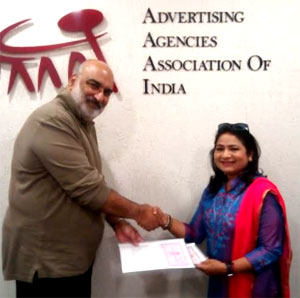 The Advertising Agencies Association of India (AAAI)Â and Association of Radio Operators for India (AROI) signed a Memorandum of Understanding last week that envisages a close working relationship between the radio players and Advertising Agencies Associations through joint committees and standard procedures. The alliance will enable them to make joint efforts for promoting advertising business on radio and develop and implement a credit control and collection mechanism with standard operating procedures to ensure best credit terms and timely collections.


 By Piyush Pandey