Blog

  • No pain, no gain: Everest bags Volini

    By A Correspondent


    Everest has won the creative pitch for Ranbaxy Laboratories’ Volini portfolio, in a contest among eight agencies including DDB Mudra, Law & Kenneth, and Saatchi & Saatchi among others. Saatchi & Saatchi is the incumbent agency which participated in the pitch process.


    Mr Brijesh Kapil, Vice President, Global Consumer Healthcare, Ranbaxy Laboratories said “Volini is the fastest growing OTC star brand expanding through extensions and is today a role model on how the Rx to OTC switch should be done. On account of the expanding work, it was mandated that a fresh look at brand strategy be done to do justice to all the extensions planned for the category.”


    On reasons for selecting Everest, he said: “Amongst the pitching agencies, we chose Everest because it performed the best and could really deliver on leveraging Volini’s legacy and positioning an appropriate differentiating extension of Volini.”


    Commenting on the win, Mr Dhunji Wadia, President, Everest Brand Solutions said,

    “We are delighted to be the agency of choice for Volini. Both client and agency share the same passion for the brand. We look forward to take the brand to greater height.


    Mr Rahul Jauhari, NCD, Everest Brand Solutions said, “It’s a great win for the team and we look forwarding to creating some notable work on the brand.”


    Mr Naveen Saraswat, COO, Everest Brand Solutions, said, “We feel privileged about working on a very strong brand like Volini and look forward to making significant contributions to further building the mother brand and its extensions.”

  • Paid news: Who will bell the cat?

    By Akash Raha

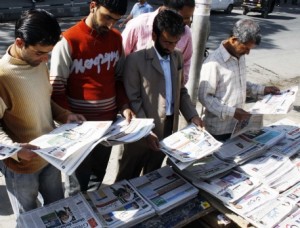
    While it is generally agreed that paid news is a menace, newspaper editors across India are averse to the idea of a government regulatory body to check it. It could turn out to be a Big Brother and usurp the freedom that the media enjoys today. Yet, it is also acknowledged that something does need to be done to stop the iniquity of paid news, which affects the whole industry.

    Some critics suggest that a government-funded body be found which can be a regulator, yet remain independent of government intervention. Such a body will also be independent of media and corporate interests. The regulator thus formed will not only keep the print media, but also the electronic media under check from paid news. Some editors have suggested that the Press Council of India could be the regulator and given more teeth to take punitive action. As the debate seethes, MxM India reflects some voices and concerns from the industry.

    Paranjoy Guha Thakurta

    I think that organizations which indulge in such malpractices are undoing their own cause. Putting up ads in the name of news is not going to help them in the long run. Hence, it is in the self-interest of the media to act in a more responsible manner and discontinue such unethical practices. Moreover, now it is up to the Election Commissioner or India, Securities and Exchange Board of India (SEBI) and a group of ministers, a process that has already been initiated, to decide whether the government will make the law bring the corrupt practice of paid news under the conduct of election rules. What the group of ministers will eventually decide I cannot guess, but I think such a step should be taken.

    Some government intervention and interference is perhaps required if media can’t keep its own actions under check. Self-regulation is good, but only when everyone behaves like nice guys and we won’t have a problem. It is because self-regulation is failing, that’s why you need an independent regulator. I think the regulator should be independent of media and other corporate interests. Likewise, it could be funded by the government, yet not directly under the government.

    Moreover, whatever regulatory authority is set up, it should be empowered. Right now, we have the Press Council of India (PCI) which is a quasi-judicial authority, but unfortunately, it has no punitive powers. It can’t punish a journalist or newspaper management indulging in corrupt practice. Even if the PCI says that a particular newspaper should be denied government advertisements, which are released by Directorate of Audio Visual Publicity (DAVP)… Even that the PCI does not have the power to ensure that it is implemented. Government bodies are not obliged to implement the recommendations of the PCI. So basically we currently have a PCI which is toothless body without punitive power. On top of that the electronic media does not come under the purview of the PCI.

    Jayant Mammen Mathew, Deputy Editor, Malayala Manorama

    “I am not sure how paid news came in to being… However, I think the reader will see through those carrying paid news and this will ultimately end in erosion of trust the reader has with the newspaper. The Malayala Manorama group’s editorial policy is very clear about paid news. We have a zero tolerance policy and we are completely against paid news.”

    Shashi Shekhar, Editor, Hindustan

    I am strongly opposed to the idea of government interference in any form. It is true that paid news has to be checked, yet government interference is going to mess with the workings of the media industry. Debates are on in the industry if self-regulation is the best and the media industry as a whole should decide what is best for it. I can’t speak for other media houses, but as far as we are concerned, we have given a signed affidavit to the Editors Guild to stay away from paid news.

    Kulbir Chikara, Group Editor, Hari Bhoomi

    The problem of paid news cannot be solved by government intervention and there can be no law to differentiate between paid and un-paid news. Moreover, paid news can be camouflaged to suit purpose. For example, liquor owners were banned from advertising their product, but they have camouflaged their way out of it. Those who want to indulge in such malpractices will always find a way around it… There is a massive difference in promotional feature stories and paid news in political context. I think the second is more harmful as the future of India depends on it. It is indeed a problem when the readers are unsure whether it is the neutral media speaking or a political party. Such practices are bad and unethical. I think the efforts of PCI and government will be of no use till news broadcasters and publishers themselves understand that such practice hits credibility and thereafter the whole business. Regulation or law of any kind, according to me, will be ineffective.

    Ranvijay Singh, Group Editor, Rashtriya Sahara

    I strongly believe in the ethics of journalism and hence, evils such as paid news should be done away with. Having said that I am totally opposed to any sort of government role in this matter. I think that there is still a substantial part of media who are driven by ethics and they will decide the course of what should be done to curb paid news. I think PCI should come up as a strong body. PCI should be able to impeach a journalist or media house if there is evidence against them.

    Shyam Parekh, Resident Editor, DNA Ahmedabad

    I feel the newspaper industry survives on credibility. If newspapers lose credibility, there is no business. I am talking not only talking in terms of being a journalist but also in terms of the business. Newspaper is the first thing a consumer spends his money on to begin a day, and he would certainly not like to read bogus news. Eventually, the audience will see through the network of paid news and will stop spending time on something which is not in his interest, but in someone else’s interest.

    Sachin Kalbag, Editor, Mid-Day

    My opinion on paid news is very simple: It’s an abhorrent practice. It demeans journalism. I don’t really know when this crept in, but it has plagued the media for decades. Unscrupulous journalists have been on the take for several years, and this is not a new phenomenon. The widely cited example of institutional selling of content space is Bombay Times which introduced a rate card for coverage in the supplement. Recently, the supplement began putting a disclaimer under its masthead. The phenomenon of institutional selling of content space crept into the media for various reasons – but the root cause was always to increase revenue.

    Our editorial policy is very clear: any “Advertorial” is placed in a two-page section called Centre Stage, which is part of the Classifieds section of the newspaper. Centre Stage in Mid-Day is differentiated in various ways from the editorial part of the newspaper. Here’s how: 1) The Centre Stage carries a prominent disclaimer in a large point size under the masthead “People, Parties, Promotions”. This has been happening since the day Mid-Day started Centre Stage, which was more than two years ago. In Centre Stage, we carry items on movie releases and profiles of actors, fashion designers, parties, etc, that happened in Mumbai that week, apart from product launches.

    Close to 85 percent of the Centre Stage advertorial section is non-paid, that is to say the Centre Stage team of writers (this team is not part of the Mid-Day editorial team) interviews people or writes about their parties or products. Around 15 per cent of the items are placed where the content space is sold by the sales team. Once again, these items are only about Bollywood, fashion, parties or product launches. There is a separate, specialized sales team that sells this space, and at no point in time do they dictate terms to

    Editorial, mainly because Centre Stage is not editorial space, but marketing real estate. In fact, there have been several instances when the Editorial staff in Mid-Day has trashed Centre Stage advertisers in the review section of the newspaper, and the sales team has gotten into trouble due to that negative coverage. Yet, we are very clear at Mid-Day that the Sales and Editorial wires do not cross, and that the Chinese wall between them stays even though we may be good friends outside the office.

    We are also very clear that Centre Stage will not carry any “news”, but only information on these three or four categories listed above. There is neither any opinion nor any recommendation made in the section that is endorsed by the editor. In the strictest sense of the term, it is an advertorial. Mid-Day, therefore, has stayed away from “paid news” and will continue to do so.

    Photograph: Fotocorp

  • First on MxMIndia: Lowe Lintas wins Videocon D2H and UltraTech creative biz

    By A Correspondent

    It’s high five time at Lowe Lintas. MxMIndia learns that Lowe Lintas has bagged the creative mandate for Videocon D2H, direct-to-home (DTH) service provider arm of Videocon Group and UltraTech Cement. Although there is no official confirmation of the news, reliable sources have affirmed that the deed is done. The incumbent for Videocon D2H is Publicis Ambience whereas for UltraTech it is Interface.


    The creative pitch for UltraTech was called last year and had seen the participation of agencies such as Lowe Lintas, McCann Erickson, JWT and Mudra.


    Videocon d2h is a pay TV provider, providing direct broadcast satellite service—including satellite television, audio programming, and interactive television services—to commercial and residential customers in India.



    Part of the Aditya Birla Group, UltraTech Cement one of the largest exporters of cement clinker in India. The export markets span countries around the Indian Ocean, Africa, Europe and the Middle East.


    It may be remembered that last year, Lowe Lintas had undergone a restructuring as Charles Cadell CEO India bid adieu to the agency. It brought in the dual NCD structure with Amer Jaleel and Arun Iyer as the head reporting to R Balki, Chairperson of the agency. And then Joseph George was elevated to the post of CEO. Meanwhile, the agency has been consistently pocketing new businesses. It has won creative mandate for Suzlon, 3M and iProf among others. The agency has also been in the news for its recently created campaign for Suzlon titled p.a.l.s (Pure Air Lovers Society) and Idea Cellular’s population control campaign – 3G pe India busy.


  • Big brands hire rival captains to forge ahead

    By Rahul Sachitanand & Gauri Kamath


    In late August, when Aventis Pharma, the Indian subsidiary of Europe’s largest drugmaker Sanofi, announced the acquisition of Indian firm Universal Medicare’s branded nutraceuticals business, Mr Ranga Iyer joined the celebration.


    Mr Iyer, a former MD of US drugmaker Wyeth in India, was the man Aventis had turned to 18 months ago to help bulk up its presence in the Indian healthcare market. He had then just stepped down from Wyeth after its global merger with world number one Pfizer. Eschewing other job offers, Mr Iyer turned advisor to CEOs of pharmaceutical companies on strategy, business development, mergers and acquisitions. Helping Aventis scout around for potential acquisitions was one of those mandates.


    Mr Iyer is not the only head honcho-turned-consultant advising companies that were once rivals. Across India Inc, companies are turning to former business heads of competing organisations for advice and handholding in product launches, entry strategies, acquisitions and new projects. Mr Sunil Alagh, Mr Shripad Nadkarni, Mr Narendra Ambwani and Mr Nabankar ‘Nobby’ Gupta are some of yesteryear’s hotshots who have now become backroom strategists.


    When GlaxoSmithKline Consumer Healthcare (GSKCH) decided to extend the Horlicks brand into the fragmented 10,000-crore biscuits market two years ago, it sought help from one of the most accomplished names in the industry.


    It leaned on the expertise of Mr Sunil Alagh, a former managing director of Britannia Industries, who had built the Bangalore-based biscuit-maker’s brand during his 29-year stint, launching products such as Tiger and foraying into allied areas such as dairy products. GSKCH wanted Mr Alagh to help recreate some of that magic with its own fledgling brand. The strategy appears to have worked. In the near three years Mr Alagh has worked with the company, Horlicks has grown into an over Rs 100-crore brand and launched at least a dozen variants to expand its market share in this competitive market.


    Mr Alagh’s inputs were critical for GSKCH to gain a foothold in a market in which multinationals such as Cadbury Kraft are gaining ground and established players such as Britannia and Parle are fighting to retain their shares. After his bitter parting with Britannia in 2003, this may be a sweet comeback for Mr Alagh, but for executives at GSKCH, it’s also a short-cut to the success of its biscuits business. GSKCH declined to comment.


    Mr Shripad Nadkarni is a former marketing whiz of Coca Cola, who was responsible for the thanda matlab Coca Cola ad slogan. He’s also credited with growing Thums Up’s lead in the cola segment and was given responsibility of leading the advertising for the beverage-maker’s core brands across rural China, Nepal, Bangladesh and Sri Lanka, besides India.


    Now, Mr Nadkarni is using his marketing skills at his boutique consulting firm, Market Gate, that has Coke’s archrival PepsiCo and other beverages firms like Tata Global Beverages listed as clients. He calls his services “consumer informed business strategy” and says his expertise is centred on business turnarounds and expanding footprints.


    Those looking for expert insights on consumer medical products are likely to reach out to Mr Narendra Ambwani, a former India MD at Johnson & Johnson (J&J), the maker of Band Aid and Johnson’s Baby Powder. “I have frequently been contacted by other companies in this field since I retired,” says Mr Ambwani. “They want my expertise in branding and marketing their products and also want to leverage my expertise in operations across South and South-East Asia.” Mr Ambwani has used his consumer goods marketing and distribution skills with the likes of Modi Naturals and Godrej Consumer Products.


    Mr Nobby Gupta is best known for his skills acquired as the marketing head for consumer durables marketers such as Philips and Videocon. Now, he is leveraging those skills to consult other companies in the white goods space. He is currently advising, among others, one of the world’s largest electronic retailers on their India entry. “Confidentiality is paramount,” says Mr Gupta, whose last corporate role was as president of apparel-maker Raymond’s. “For me, the biggest growth potential exists among mid-market companies, which are open to ideas and have strong growth ambitions.”


    Source:The Economic Times

    Copyright © 2011, Bennett, Coleman & Co. Ltd. All Rights Reserved

  • SAB meets the laughter challenge

     By Dhara Salla


    Cluttered as the General Entertainment Channel (GEC) space is with new shows and many new channels, one that stands out is Multi Screen Media’s SAB, which makes the most of the relatively unexplored comedy genre and has posted tremendous growth.

    Competition

    It is always a point of benefit when there is less competition or no competition at all and there are hardly any channels in this genre. Mr Anooj Kapoor, EVP and Business Head SAB reasons, “We are the pioneers and it becomes easy to stay on the top when there is less competition. But there is a tremendous dearth of comedy talent in the industry. It is difficult for the new entrants to tap into the existing pool of talent and still churn out so many comedies. On the other hand, more players entering this genre could attract new talent to the industry and expand the talent base.”


    The secret of success

    SAB has been able to achieve a growth of 500 percent in the past three years, with its success attributable to mainly two reasons. Firstly it provides clean comedy and family entertainment which helps to generate stickiness among the audience. The target audience for SAB is the age group of 4+, hence it gets a huge viewership benefit. Besides, the channel’s tagline is “Asli maza sab ke saath hai” which is underlined well by the shows on SAB. According to Anooj Kapoor, EVP and Business Head of SAB, “We have brought the concept of the joint family in with a positive face, unlike other soaps which convey a negative sense, which is one of the reasons we have been able to achieve our targets.”


    SAB is also trying to be a pan-India channel so as to increase their viewer base, with soaps like Tarak Mehta ka Oolta Chashma which has a Gujarati backdrop, Chintu Chinki Aur ek Badi si Love Story set in Bhopal, Ammaji ki Gali with a Punjabi flavour, and mostly all their shows currently sporting a regional connection.


    One problem that most GECs are facing is audience fragmentation, due to the wide variety of choices available. SAB has turned this to its advantage as its audiences are not fragmented. Other reality-based comedy shows don’t offer much competition as they are projected mostly towards male audiences, and SAB still garners the major chunk in the comedy market.


    Mr Anwesh Bose, Head North/East, Mudramax, states “SAB has taken a quantum leap. In the past SAB was selling at a rate of 800 and then moved to 2500 per 10 secs spot in the prime time but now it has touched 8000 CPRP. For advertisers today it promises a stable ROI.” He further adds, “All the brands that target the HSM would like to advertise on SAB. At the GEC 1 level it becomes expensive to enter with the rate of 13,000-14,000 CPRP so SAB becomes an entry ticket for brands to advertise, which is very cost effective.”


    Future plans and growth

    SAB is all geared up to face the new challenges, “We are coming up with a reality show which would happen in the next couple of months, but unlike other stand-up comedy shows, it would be a comedy reality show of the families, by the families and for the families and are also coming up with two-three new soaps by the end of the year” confirmed Kapoor. On a final note, Kapoor reveals the expectations of touching 200 GRP’s by the end of fiscal 2011.


    Mr Sathiraju shares, “Sab has a good potential. But currently the skew is too much towards Gujarat. Therefore if, for my brand, Gujarat is not a market then I wouldn’t even consider, alternatively if Gujarat is my key market, I would certainly consider. Probably the channel therefore has to relook at this and ensure that the skews are also balanced.”


    Mr Bose forecasts, “While SAB can never reach the number one slot in GEC’s, though they are number one in comedy genre, but today to be on the fifth position among the GEC is a great achievement. It is a steady progression. They can reach to 10,000 CPRP. The Indian advertisers don’t give in so easily but the road looks brighter”

  • Chitralekha group announces watch awards

    By Akash Raha


    The Chitralekha group’s Watch World magazine is all set to unveil the second chapter of Watch World Awards 2011 on September 24, 2011.


    Commenting on the occasion, Mitrajit Bhattacharya, President and Publisher, Chitralekha  said, “With participation of international brands with their latest global launches, Watch World Award is an international award coming from India’s premier watch magazine. An event made possible, thanks to whole hearted participation by leading and iconic brands and a jury comprising the best from the world of horology, fashion, sports, aesthetics and design.”


    According to Chitralekha group, this year’s awards received 40 per cent more entries, 30 per cent increase in nominations and 9 new participating brands. Marquee brands like Harry Winston, Zenith, Baume & Mercier, Carl F. Bucherer, Ulysse Nardin, TAG Heuer, Greubel & Forsey, Breitling, Hublot, Girard-Perregaux, Corum, Montblanc, Parmigiani, Romain Jerome, Seiko, Citizen, Swarovski, GC, Titan, Chronotech etc participated in the awards.


    The coveted awards cover eleven product categories and six marketing categories and one mega award named as ‘Watch of the Year’. The product categories are Complicated Watch of the Year, Jewellery Watch of the Year, Sports Watch of the Year, Fashion Watch of the Year, Watch with Best Design, Watch with Most Innovative Design, Watch with Highest Utility, Watch with Artistic Excellence, Value for Money Watch of the Year, Limited Edition Watch of the Year and Concept Watch of the Year. The six Marketing Categories are Best Campaign in Print, Best Campaign on Television, Best Out of Home Campaign, Best In-store Merchandise, Best Boutique and Best Organised Event.


    The composition of the product jury members was; Mr. Antoine Simonin, an extremely accomplished Swiss master watchmaker and author, based in Neuchatel with over 50 years of watch making experience; Ms. Chhaya Momaya, leading image consultant of India; Mr. Ayaz Memon, reputed journalist and a keen observer of the luxury space and Ms Varuna D Jani, distinguished jewellery designer. Ms. Sharda Agarwal and Mr. Shripad Nadkarni, founders of Market Gate Consulting and seasoned marketing professionals made up the Marketing Jury. Both the jury panels were moderated by Chitralekha’s Mitrajit Bhattacharya.


    Says jury member Mr Antoine Simonin who is on his second visit to India to judge the awards: “I am honoured to be a part of the jury once again. There has been an exponential increase in the brands and quality of nominations this year. Seeing the response of global brands in the second year, Watch World Award has made a mark for itself in a very short span.”


    The Award night will be a weekend event (September 24-25), where VIP guests will stay overnight at Jaypee Greens Golf & Spa Resort. The night promises to be an evening to remember with a priceless exhibition of exquisite watches. Next morning guests will enjoy a game of golf at the sprawling 18-hole golf course, one of the best in India.


    The Watch World team is committed to making this annual event the most respected word for the watch industry. The event is supported by its partners, AU Finja, Luxure by Louis Philippe, GIA, Chhattisgarh Handicrafts, Bloomberg UTV (BUTV), Mint and Big FM besides outdoor and online partners.

  • DeBrief: It’s raining MCPs!

    [youtube width=”300″ height=”220″]http://www.youtube.com/watch?v=o9XOvpyFm8E[/youtube]What’s with male deodorant brands? Why are all of them based on the idea of insulting women by projecting them as mindless sex objects? What sort of male chauvinist pigs do they target? Do the MCPs constitute such a vast populace? To be honest, I am left quite flummoxed by the advertising in this category.


    I suppose Axe started it all but their ads are at least a little more tasteful. The bad copycats have used this route with the one-point agenda of treating women as sex slaves to beastly men. The latest brand to join this flesh party is Killer.


    I watched three commercials. In one, the killer dude has just finished a sex romp with a very pleased girl. He then proudly tells her the next romp is with the girl’s sister. And the pleased lass looks even more pleased to hear that! In another ad, he effortlessly picks up two girls from the streets, and no, they aren’t hookers. And in the third one, the killer picks up a sexy chick from a laundromat. Simply by talking dirty.


    Completely pathetic advertising. Makes you want to reach for the barf bag. Additionally, if all male deo brands have the same positioning, where’s the brand differential? How will I recall Killer at the retail outlet if all deo ads look like clones of each other? So, not only is the advertising repugnant, it’s also senseless from the marketing point of view.


    PS: At this rate, I may quit using deos altogether! Meet me at your own peril, man.


    Rating: (On a scale of 1-5): -5


    Anil Thakraney’s ad review column DeBrief will appear twice a week- Tuesdays and Thursdays.

  • The anchor: Naresh Gupta on 7 things research will never tell a marketer

    No self-respecting marketing executive can live without market research. Market research offers purposeful information to make plans, policies, programmes and procedures for any marketing activity. The market research industry is as old as the communications industry and, many would argue, more important than the mainstream communications industry. Yet there are pitfalls, and things that can’t be foretold. Here are seven things MR can rarely tell.

     

    #1 Reflect reality

    Market research is a post facto measurement of what had happened. The common belief is that research data reflects the current reality and hence can be used as a basis for predicting future. If that was the case then well researched brands would have never failed

    #2 Predict the future

    Research means placing human beings together in one place ask them their opinions and forming that as the basis for predicting the future. This is like saying that if you watch a lion in zoo, you will learn all about lions. The human zoo is no different from an animal zoo, and is rarely the right basis for prediction.

    #3 Is never free of bias

    Any form of research suffers from investigator bias and statistical errors. Research too is a classic case of stimulus response. The answers depend on what you ask, and that define the findings. Can research ever be free of bias?

    #4 Right answers depend on the right questions

    The new Coke is the stuff that is now a case study. While the new formulation tested well, scored on blind tastes and passed every test the research industry threw at it, it failed when launched. The consumer was not asked the most obvious question; will the formulation change the brand they love? Do they want the brand to change? The result was a massacre in the market.

    #5 No guarantee of success

    Testing a new commercial for predicting its success in market is a common practice. It is easy to score a commercial on emotional appeal, on message comprehension, on ability to create perception. Yet more commercials fail then succeed. We all know that, yet we are slaves to practice.

    #6 Does not replace experience and gut

    We need to remember that research is a tool, and not the decision. A marketer’s gut, experience, market reality are far more important than any amount of research data. Yet the tendency is to live more by research data and less by collective experience.

    #7 Quality matters

    We all know this.

    Right?

    Yet an average marketer rarely spends time on figuring out who will administer the stimulus for research. Will an average field executive be up to scratch? Will the average investigator strike the right balance of objectivity and expertise? Most researches are spoilt by simple overlooking of this crucial aspect. Next time, pay attention to field investigators.


    As a simple test try this, ban MR for a while, live by what you know as a marketer, trust your experience, trust your market feel, trust the hours you have spent in the field. Take the decisions that need to be taken, and use research almost as the last step to check gross negative. You just might speed up the process, learn a great deal more from mistakes, and possibly be more successful.

    Experience always triumphs over data.


    Naresh Gupta is Head – Brand Strategy, iYogi Technical Services

  • Spikes Sidelights | No random networking

    By Chhaya Balachandran Aiyer
    It was an insightful weekend at the Mandarin Oriental Singapore reviewing some of the best works from across Asia. But before I get to that, let me say that the dinner on the evening before we actually sat together to review the work, helped to get together and know one another, be familiar with the professional backgrounds to set the pace of views and reviews that would be relevant over the next two days.

    Rather than an informal dinner setting I appreciated how Spikes Asia had organized a sit down dinner where each jury was assigned their table to group together with their co-members. So there was no random networking, and no one was left out of the conversation. It was a very
    productive dinner so to speak.

    The next two days we started really early, well yes by Indian Standard Time, it was a 6 a.m. Fortunately I was able to be wide awake for the prospect of reviewing work with people across the Asian region was definitely exciting, plus to have anyone from Crispin Porter + Bogusky to chair the meet was an equally if not more exciting prospect. And Jeff Benjamin, chief creative officer CPB, the jury chair, was someone I did learn from over the last two days. I was humbled of course by the kind of work that rest of Asia is producing. And yes, barring an idea or two, saw how far away we in India are from thinking beyond getting the basic’s right, executing great ideas, and presenting stuff in a manner that can capture the juror’s attention.

    We had some fun during the day of course. There was the jury photo shoot where the jury chair more than we women on the jury was concerned about the effect of blowing wind and his flying hair, and well, when a couple of guys decided that the silence from the next jury room was killing. So a `help me’ note was slipped under the door, a lot of sound effects were created so it would get noticed and we get some reaction, but the note was totally ignored :P.

    Finally the day was over. We finished with champagne by the poolside last evening after we had finally decided on the metals. It was refreshing. Jeff ordered some Singapore Sling shots, to top it, and that was a nice lift to the end of the day.

    Hope to catch up on the some of the sessions today at the Festival, and some of the after dark parties organized by some of the agencies here in Singapore this evening.

    Chhaya Balachandran Aiyer is founder and managing director, BC Web Wise

  • Day 2 of Spikes Asia gets underway

    By A Correspondent


    Spikes Asia took off in Singapore yesterday with India dominating the participating countries in the awards event with 612 entries. Celebrating creativity in advertising and communications, the three-day event is the apex congregation of the trade in the region.

    “As the largest awards in Asia Pacific, we are delighted with the continued support of the industry in the region, demonstrated by this incredible growth. Spikes Asia is the place to see the region’s great creative work across all the different disciplines, including the two new categories for this year – Mobile and PR. Winning a much sought-after Spike, provides important recognition, inspiration and motivation for both agencies and clients alike,” said Mr Terry Savage, Co-Chairman of the Spikes Asia. “With a record number of attendees this year, Spikes Asia is set to be a great event, with much to learn and discuss,” he continued.

    During his session, Mr John Wren, President & CEO, Omnicom Group had summed on the must-have’s among the people they hire-high energy, talented and nice. He also dubbed mobile as the core to change in future. He also pointed that Asia is the growth center for marketers and its here that they can achieve the greatest growth.

    Mr Stephen Kim, General Manager, Global Creative Solutions, Microsoft discussed the journey of storytelling and pointed that every brand and every consumer has a story to tell and as marketers, it is important resonate these stories with the consumers.

    There was also a presentation on `Lessons In Creativity And Innovation From The Simpsons’ by Mr Joel Cohen, the Writer and co-executive Producer of The Simpsons. Mr Cohen attributed the success  of the Simpsons to the environment in which it is created and also reminded the importance of connecting with the audience before innovating.

    There are many more sessions that delegates are making a beeline for. These include Creativity & Fear by Todd Sampson, CEO, Leo Burnett Australia, Does Creativity Make Advertising More Effective? by James Hurman, Planning Director, Colenso BBDO and The Gamification Of Marketing by Laurie Coots, Chief Marketing Officer, TBWA\Worldwide among host of others.

    The grand awards event will be held tomorrow evening.

  • Ayaz Memon in Newswatch: A series that wasn’t

    Newswatch is a weekly series where we invite editors and veteran journalists from across the country to comment on media coverage. Last week we had Aroon Tikekar, this time, it’s Ayaz Memon:

    The English media’s coverage of the Indian cricket team’s ill-fated tour this summer went from heady expectation to surprise then astonishment followed by disappointment and finally distraught acceptance.

    By all accounts, this was a terrible tour, arguably the worst-ever in Indian cricket history. This was captured well in the mood and tenor of the media which, like the rest of the cricket world, had been taken by surprise by India’s utterly hopeless performances.

    The 4-0 whitewash in the Tests followed by a 3-0 defeat in the ODIs left the Indian team exposed to barbs and criticisms, not all unjustified. To twist a famous quote, no team had promised so much and delivered so little, which perhaps made the job of the media difficult. After all, how much can analyses vary if the team’s failures follow the same pattern every time, with only one player – the magnificent Rahul Dravid – performing in match after match?

    The build-up to the Test series had been fantastic; the best I’ve seen in three decades. In earlier years the media in England could be neglectful or patronizing, but this time the volume of space and tenor of opinion bespoke India’s status in the sport – both on and off the field.

    As the powerhouse that drives the eyeballs for cricket currently, India has acquired a curiosity, awe, envy, frustration, ire, appreciation, admiration across the globe. But interest in this tour was not only because of the financial clout India commands: this was also a marquee series, remember, because Mahendra Singh Dhoni’s team was number 1 in the ICC Test rankings and only a couple of months prior had also won the 50-over World Cup.

    The charisma of Sachin Tendulkar, poised to get his 100th international century, made the series even more seductive. Tendulkar had scored his first-ever international century in England in 1990 and had since gone on to become not just one of the greatest cricketers of all time, but also the Pied Piper of modern cricket, attracting fans and media everywhere.

    Tendulkar’s teammates were stalwarts like Rahul Dravid, V V S Laxman, Zaheer Khan, Harbhajan Singh, Gautam Gambhir and Dhoni which India an all-star attraction. The fact that the first Test at Lord’s would be the 2000th in the history of the sport and the 100th between India and England added to the significance and the glamour, always good grist to the mill for the media.

    Pre-series write-ups flooded the English newspapers. Broadsheets devoted big space to the greatness and virtuosity of Tendulkar, Dravid and Laxman – all on their last tour of England – as well as India’s phenomenal rise in international cricket in every aspect over the past decade.

    England’s victory in the Ashes series a few months earlier had made them strong aspirants to become the number 1 Test team, and this contest promised high drama and spectacular performances galore. But this proved to be unfounded as India crumbled badly because of poor preparation, and even poorer application under pressure.

    By the middle of the tour, it was clear that there was to be no turnaround in India’s performances and the tone of the media had gone from admiration to cynicism. The world champions were looking like they had feet of clay. Tendulkar’s impending 100th century became a matter of ifs, buts and sighs. Barring Dravid’s resilience – and to an extent the hard toil of Praveen Kumar – there was little to extol in the Indian team.

    Several causes and reasons were sought to explain the utterly abject performances of this highly regarded side and inevitably the Indian Premier League, the BCCI’s greed, recalcitrance to accept the DRS etc came under sharper focus than might otherwise have happened.

    One of these debates on TV led to an altercation between former captains Ravi Shastri and Nasser Husain – with the former defending the BCCI and Husain emphatic that he had a right to criticize as a professional mediaperson — that was to resonate even across the seven seas.

    In many ways, that was also the high point of a series that wasn’t in the cricketing sense.

  • Activists upset with new Flying Machine ad

    By Rajiv Singh


    It was meant to transport the brand into the consciousness of India’s youth, but a new advertisement by Flying Machine has flown into a storm of controversy instead. A welcome controversy! One of India’s early home-grown jeans brands, Flying Machine, over the weekend, released a print advertisement that shows the picture of a female model wearing tight fit jeans around her buttocks, with the catchline in big, bold font screaming: ‘What an Ass!’ It was probably meant to highlight the oomph and cool quotient in an old brand, perhaps even mimic the edginess of the ‘All asses were not created equal’ tagline in an advertisement last year by larger rival Levi Strauss & Co. While the jury is out on whether Flying Machine’s latest campaign has found resonance with the cool set, the advertisement is generating heat in some quarters.


    Women rights activists are certainly not amused. “It’s outrageous and vulgar,” says women rights activist and director of Centre for Social Research Ms Ranjana Kumari. “Such sexually suggestive and titillating advertisements are responsible for creating the image of women as sex objects.” Ms Kumari plans to take up the matter with the National Commission for Women and the Ministry of Women and Child Development.


    However, Flying Machine, owned by Ahmedabad-based Arvind Mills, the world’s fourth-largest producer of denim and a supplier to some of the biggest brands in the planet, does not find anything vulgar in the ad. “There is a sensational headline,” says Ms Alok Dubey, chief operating officer of the youth, denim and sportswear division of Arvind Lifestyle Brands. “But if you read the headline and body copy harmoniously, there is humour.”


    Mr Dubey says the Flying Machine advertisement reflects a strong attitude of a mature and aware girl who “doesn’t care about those who mock her existence or physicality”.


    Mr Ankit Fadia, a 26-year-old who acquired fame and fortune after he published a book on ethical hacking at the age of 15, also can’t seem to understand why there is so much fuss around the advertisement. “This is modern India and women dress up the way they want to,” says Mr Fadia, adding that this advertisement is not at all vulgar when compared with the kind of advertisements aired on TV and what appears in movies.


    Mr Fadia is one of Flying Machine’s brand ambassadors along with cricketer Mr Virat Kohli and Bollywood star Mr Abhishek Bachchan. Some branding experts say the advertisement was designed to be controversial, with the ensuing brouhaha aimed at making it a talking point that could improve the product’s visibility.


    “Once a familiar brand, Flying Machine is now trying hard to get back into public consciousness,” says Mr Josy Paul, chairman and chief creative officer of ad agency BBDO India. “Sensationalism makes even a small-size ad look bigger.”


    Branding expert and CEO of brand consultancy firm Brand-comm, Mr Ramanujam Sridhar, says: “Young would love it, activists would hate it, but nobody can ignore it.”


    In Arvind’s case, given what is at stake – India’s denimwear market, according to Technopak Advisors, is expected to double to Rs 14,000 crore by 2015 from around Rs 7,000 crore last year – any controversy can only be good for business.


    In a nation of more than a billion people, over 70% of whom are less than 35 years old and fast westernising, branding experts say Flying Machine, whose tagline is ‘I’m Sexy When I Am Me’, knows too well it needs a new, edgy language if it has to connect effectively with this demographic.


    It’s not the only one using what can be considered provocative language. A host of marketers are pushing the envelope of decency with edgy advertisements these days, hoping to stand apart from other competing products and nursing hopes that some controversy can yield collateral benefits.


    A very fine line separates the sensational from the vulgar, and campaigns that fall in the latter category have found themselves on the wrong side of public decency – and with it, law. Recently, the Ministry of Information and Broadcasting cracked the whip on some men’s deodorant commercials for being overtly sexual and against good taste and decency because they depicted women as sex-starved.


    Flying Machine must wish its latest ad is viewed as firmly in the first category, becoming the news while appearing between it.


    Source:The Economic Times

    Copyright © 2011, Bennett, Coleman & Co. Ltd. All Rights Reserved