Blog

  • Flipkart: Making e-commerce click with an Indian flavour

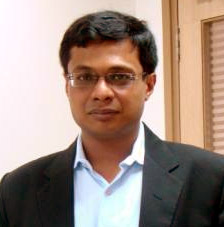
    Sachin Bansal is the CEO and Co-founder of Flipkart and oversees all the customer facing activities of the company ranging from technology to marketing. He is also in charge of Flipkart’s corporate divisions which include the finance and legal departments. A graduated from IIT-Delhi with a degree in Computer Engineering, he joined Amazon.com in India in the year 2006. He left the company to set up Flipkart in 2007, and talks to Tuhina Anand about current developments and future plans.

    Q: With plans of Amazon firming up in India, how do you think this will affect Flipkart, considering the might of Amazon?

    E-commerce in India is at a very nascent stage. The industry is evolving and the growth will escalate with the entrance of serious players like Amazon. Such a development should boost the momentum that the e-commerce market is now witnessing. We do not see this impacting Flipkart’s plans to a great extent. We have met all the benchmarks that we had set for ourselves and will continue to do so in the near future.

    Q: Do you think that India is a different market and even a behemoth like Amazon can’t succeed unless it understands Indian sensibilities like Flipkart has, especially with its COD option which even FashionandYou has adopted to?

    Amazon has the advantage of being an established brand name. However, the challenges posed by the market in India are unique – from supply-chain and logistics to warehousing and payments. Any company which is starting operations in this country will have to invest time and resources to overcome challenges that most other companies operating in this space have already faced

    Q: There has been a lot of speculation on Flipkart looking for PE/VC funding. What is your response to it?

    We are not commenting on any speculation with respect to our funding.

    Q: What are some of the portfolio expansion in terms of selling that one should expect from Flipkart in the next few months?

    We have recently added categories like healthcare and personal products as well as home appliances. We will complete the entire gamut of electronics first and will then look at other categories. We will continue to add more products / selection to our existing categories as well. For example, we have recently added tablets, desktops and peripherals like printers and scanners to our computers category.

    Q: Any plans of partnering with Indian e-book reader companies to offer on Flipkart?

    We are keeping a close watch on this market and also studying similar models abroad. We will definitely give this space serious consideration when we see that the opportunity is right in India.


    Q: What would you say has been the reason for Flipkart’s success?

    We were confident of the space and the model we were operating in.  We continued to focus on delivering a positive customer experience by ensuring convenience and a hassle-free shopping experience at every customer engagement point, and this translated into strong word-of-mouth promotion for us.

    Our obsession with customer experience, coupled with offers, EMI options as well as setting up our own delivery network to take care of last mile delivery bottlenecks, has worked in our favour and made it easier for customers to trust us.

    What started off as a modest venture has gone on to becoming one of India’s leading online shopping destinations with 2,500 employees across the country. We are present across ten product categories – movies, music, games, mobiles and accessories, computers, gaming consoles, MP3 players and iPods, personal and healthcare products and home appliances – and are still growing. In books alone we have nearly 11.5 million titles, making us the largest online book retailer in India.

    We now have a registered user base of 1 million customers and are currently selling 22,000 items a day, clocking daily sales of Rs 1.5 crore.

    Q: Recently, the brand has been active in advertising, especially with the new TVC; what really prompted this move at this point of time? How are these TVCs being supported offline?

    While most consumers in Flipkart’s core target group understand the benefits of online shopping, such as selection, price and convenience, many are held back by apprehensions associated with online purchase of physical goods. These range from shipment of faulty products, delayed or lost shipments and the reluctance to divulge credit card details online.

    The campaign, which talks of some of our path-breaking initiatives like payment on delivery, product warranty and 30-day replacement policy, seeks to address these concerns and bring those shopping offline into the online space.

    Our national campaign on TV and print is being supported by other mediums like OOH and radio. These will be used to expand reach in markets that already have high e-commerce penetration like Mumbai, Delhi and Bangalore.

  • MTV’s Roadies is a game to wait and watch for

    By Dhara Salla


    Nine years down the line, the Roadies fever can still grip the way it always does. This is probably India’s only reality show format to be adopted internationally.  MXM tracks down the complete journey masala of Roadies.

    MTV Roadies has caught on among the youth to the extent that it has been termed a cult. Not only was audience interest intact throughout, it geared up in its fourth and fifth season. Mr Raghu Ram, the producer of the show, had commented in a media report back in 2005 itself that the popularity of the show has increased to 2500 per cent than what it was in the first season.

    According to the TAM data, Target Audience, CS-15+ in the HSM, for the opening episodes in 2003, the first season of Roadies opened with just 0.14 TVR. Later in the second season in 2004 it ascended to 0.27 TVR and in 2005 to 0.3. It really picked up in the fourth season and one of the reasons of this credit goes to Gurbani, known as VJ Bani, with whom the TVR touched 0.31 in 2006. This was followed by 0.34, 0.34, 0.42 and 0.29 TVR in 2007, 2008, 2009 and 2011.There has been a consistent upward trend except for 2011.

    In 2009, Roadie Palak aka Gurmeet Kaur claimed to Times of India that Roadies is scripted and all those youth who consider to be a part of this show should re-think. But according to the TVR it did not touch the popularity quotient.


    Success Mantra

    Then what could be the success mantra? According to Ormax study in the month of August, it said VJ and Actor Rannvijay is the most popular personality among the youth followed by Mr Raghu Ram. Does the popularity of the faces make this show so successful or is it the concept? Mr Aditya Swamy, Channel Head MTV, answers this, “Every year we try to set a different standard for the show. It is a cult, Rannvijay came in because of Roadies and now Roadies is associated with his face, and Raghu is the brain behind this concept. Everything together gives a complete package of success. We always need two hands to clap.”

    According to Mr Swamy, its not only about the TV show but also the off-TV engagement that they have created, like on Orkut Roadies where the community has more than 3 lakh members. The Roadies Page on Facebook is the fifth most engaged page in the world, and the Roadies Battleground contest that happens online encourages youth to participate by giving them tasks online and uploading their videos.


    This year’s Roadies

    MTV Hero Roadies 9 this year travels to USA with the new theme, “Everything or Nothing.” Mr Swamy explains, “The Roadies contestants will be given two choices at every turn and they will have to choose one which will lead to either everything or nothing.” He further adds, “As this year we are going to USA the tasks will be according to that, for example in Las Vegas the tasks will be about gambling.”

    The auditions have already started but Mumbai is not in the list of cities for auditions. On this Swamy reveals that, “Roadies has its diehard fans in the cities like Pune and Hyderabad so we chose to go there and get the right people.”

    The title sponsor is Hero (earlier known as Hero Honda) and the associate sponsors are Mountain Dew, Lava mobiles, Spraymint, Ceat, Steelbird, Denver. Cafe partner is CCD, Radio Partners are Radio Mirchi in Pune, Kolkata, Delhi and Hyderabad and Big FM in Chandigarh, and Multiplex Partners are Inox in Pune and Kolkata and PVR Cinemas in Delhi, Chandigarh and Hyderabad.


    What’s In Store

    Mr Swamy said, “We have MTV Unplugged with 10 episodes, second season of Crunch which is a multi platform reality show, F1 Rocks, Vodafone Race to Fame and Roadies will be on air by the end of the year.”

    MTV is a channel that originally started as music television, then moved on to be a youth reality channel and now it is a mixed bag of youth channel and music. Whether Roadies, MTV’s hottest property, will live up to expectations and continue to rule the charts, remains to be seen.

  • DeBrief: Reliance Netconnect’s little movies

    Reliance Netconnect has put out a speed challenge. ‘It’s fast. Are you?’, is the question being asked. And to highlight that offer, they have released three thrilling commercials.


    In one, an unknown ‘taskmaster’ has tied a chap with a rope, and placed him inside a van parked across a railway track. As the train approaches, the man struggles but manages to reach his laptop, he then affixes the Reliance Netconnect dongle to it, and surfs to find a way to untie the knots. Yup, he does get out of the van just before the collision happens. In another ad, a girl has been locked inside a moving car, and the boot is set on fire. But she manages to escape by locating the nearest fire station. Using Reliance Netconnect, of course. In the third one, a young dude frolicking inside a deep forest comes face to face with a marauding elephant. And manages to get away by using Reliance Netconnect. When he streams a video that distracts the animal.


    Yes, the ads are dramatic and entertaining. Like little action-packed movies. And as Reliance Netconnect has been used as the key part of the plot, it doesn’t appear forced into the stories. Should appeal to young net users.


    However, there’s a built-in problem with this approach: Shorter edits of these films won’t work, the drama simply won’t happen in a 20-seconder. Which means Reliance better have huge budgets ready to keep releasing 45-second films. An idea is powerful when it works in short edits too. Creative directors must never forget this basic ad principle before writing TV scripts.


    Rating: (On a scale of 1-5): 2.5


    Anil Thakraney’s ad review column DeBrief will appear twice a week – Tuesdays and Thursdays.

  • The Anchor: Sneha Iype recalls 8 memorable characters on Indian television


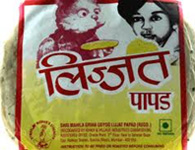
    #1 “Hein hein hein … hein hein hein…” Remember the head-bobbing rabbit from the Lijjat Papad commercial of yesteryear? That had to be the most memorable of the lot for me.

    The jingle got under one’s skin and in those days on television there was no escaping the ingratiating opening laugh of the rabbit with the papad.

    The rabbit and the jingle obviously catapulted sales and recall hugely for this amazing Shri Mahila Griha Udyog Lijjat Papad cooperative movement in its initial years, today a big marketing movement story by itself.


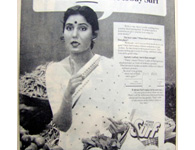
    #2 “Surf ki kharidaari mein hi samajhdaari hai…” Lalitaji is probably the most iconic symbol of Indian advertising. She stood for the discerning middle-class woman who made smart decisions for her home and boldly presented her case. Unforgettable.


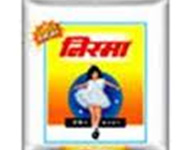
    #3 “Doodh ki safedi Nirma se aaye…” The girl in white swaying to the ultimate melodious jingle was such a success that even after all these years the client can’t seem to let go of the tune in any of their communication. It’s obviously their trademark. Nirma was synonymous with the happy, hummable jingle.


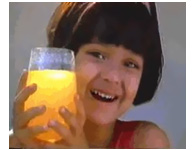
    #4 “I love you Rasna…” Rasna came up with an idea of showing the mother-child relationship through their product. This gave birth to the very famous commercial featuring the Rasna Girl (Ankita Zaveri). The ad was revolutionary in more than one sense. Not only did it position Rasna as a family product, but also introduced the tagline “I Love You Rasna”, which became immensely popular among the masses. Rasna kept this tagline for many years to come.


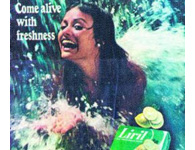
    #5 “La la la la, la la la la la…” Sing it aloud. It’s truly refreshing.

    Yes, that’s what Liril did in 1985. It broke out of the sari and put model Karen Lunel in a swimsuit under a waterfall, creating history for the brand and for Indian advertising. Another case where the brand was synonymous with freshness and lime because of its pathbreaking visual and music.


    #6 “Jab main chhota ladka tha, badi sharaarat karta tha, meri chori pakdi jaati…” Roshni ki duniya ka sartaj Bajaj. A most endearing film and a truly enjoyable one too. I can still watch it and enjoy it.


    #7 A boy and his dog. They were an icon for the “wherever you go our network follows” line. Vodafone , in those days “Hutch”, launched with this amazingly simple campaign and showed no phone in a commercial that communicated network. A big hit.


    #8 The Zoozoos were the IPL season 1 superstars. They stood for innovation and a great media tool with the release of one ad a day through the IPL series. They blew the minds of millions, giving Vodafone a huge edge in the advertising of their value added services. Very fresh and very cool too.


    Sneha Iype is Executive Producer, Nirvana Films

  • Retail pioneer Pillai in Hall of Fame

    By A Correspondent

    Raghu Pillai (1957-2011), considered the father of modern retail in India, was declared the first inductee into the Indian Retail Hall of Fame at a function organized at the India Retail Forum 2011.

    In an emotional ceremony jam-packed with delegates at the two-day retail industry get-together at The Renaissance Hotel, Mumbai, business leaders such as Thomas Varghese, CEO, Aditya Birla Retail, Bijou Kurien, Chairman, IRF and President, Reliance Retail, Lifestyle, and Vikram Bakshi, MD, McDonald’s (North and East India), paid rich tributes to Pillai who passed away in Chennai in April this year due to a fatal cardiac arrest. He is survived by his wife, daughter and son.

    Mr Varghese of Aditya Birla Retail said: “Raghu introduced modern retail to India. A towering and inspiring personality, he was a true leader of men who led from the front. He was full of humility and humanity and had a strong sense of right and wrong. The award couldn’t have gone to a more fitting person. He is a worthy example for all young managers to emulate.”

    Mr Bakshi of McDonald’s said: “I learnt a lot from Raghu. When there was a bitter debate going on in India about organized versus unorganized retail, he injected a fresh perspective by saying that there was no clash between the two and it was all about introducing modern retail in India. He believed that modernizing retail was important because it was the last mile for anything that gets manufactured. He was an excellent professional and a true human being. People like him never die but always live in the stories that they leave behind.”

    Mr Kurien of Reliance Retail said: “Raghu loved good food and a good drink and was full of life with an overpowering personality and a loud baritone voice. He had a can-do spirit and was a natural born leader and visionary. Raghu was also very daring who never got stuck with endless analysis. Once he decided something had to be done, he made sure it was done and could be extremely pushy when it came to achieving goals.”

    “He was also a great family man, a loving father and a great husband who never failed to take the call of family members regardless of how busy he was. As a professional, he gave me a lot of insights into the world of retail. He had a unique insight into what makes a store work and just by looking at a location he could tell if an outlet there would be successful or not,” Mr Kurien added.

    Mr Pillai’s wife Janaki Pillai, who specially flew in from Chennai to accept the award on her husband’s behalf, said: “Raghu always said his life must be a story that he could tell to his grand-children. To the last, he was true to his word.  I would like to thank India Retail Forum and the retail fraternity for this honour.”


  • Hurry to register at AdAsia for discounts

    Indian Delegates : Registration Fees – Rs 40,000; Early Bird – Rs 33,000

    International Delegates; Registration Fees –US$ 1,500; Early Bird – US$1,200

    Accompanying Person: Indian Delegates – Rs 10,000; International Delegates – US$500

    Early bird prices are available to those who register before September 30.

    The AdAsia agenda will feature more than 20 intellectually stimulating sessions that explore the business ecosystem and understand the nature of disruption. The topics have been carefully selected to stimulate exciting and cutting-edge debate on concerns vital to the marketing, advertising and media industries.

    • Can industry reinvent itself to fit the new world order?
    • Who will be the Game Changers?
    • Marketing is dead, engagement is in…Trust is dead, excitement and edginess are in. What are the new rules for survival for brands and their markets?
    • Has the DNA of the new consumer been decoded?
    • How will strategy and structure evolve to tango better?
    • The Asian conglomerate – just a pipe dream?
    • From Chat Rooms to Facebook to Twitter…..What Next?
    • Will Asia lead the next creative renaissance?
    • How will clients cut through clutter to navigate media traffic?
    • Can Unpredictability be managed in Life and Business?
    • Will Brands with a Conscience survive?
    • India 2020 – a global brand?
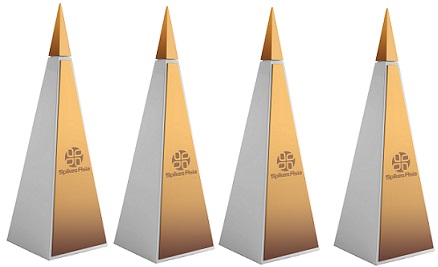
  • Indian agencies bag 34 metals at Spikes Asia


    By A Correspondent

    If the Cannes Lions is the Olympics, Spikes Asia is the Asian Games. Competition is stiff, but heck there is no North and South America and no Europe.

    But this is no attempt to undermine the rep of Spikes Asia, the annual congregation of ad, marcom and marketing professionals in Singapore. At the three-day event which concluded last evening with much merrymaking in Singapore, Indian advertising boys and girls came back with 34 metals.


    It may be remembered that the score at Cannes Lions this year was 24 metals, but then not everyone at the Lions goes in for a Spikes.


    So, here’s the agency-wise tally:


    Agency

    GP

    G

    S

    B

    Total

    BBDO India

    1

    1

    6

    8

    Beehive

    1

    1

    Contract

    1

    1

    Creativeland Asia

    1

    1

    2

    JWT

    1

    3

    4

    Leo Burnett

    1

    1

    McCann

    1

    1

    Mediacom

    1

    1

    2

    Mindshare

    1

    1

    Mudra

    2

    6

    8

    Ogilvy

    1

    1

    2

    Taproot

    1

    1

    TBWA

    1

    1

    2


    In the metal types, here’s how it appears:


    Tally
    Grand Prix

    1

    Gold

    3

    Silver

    9

    Bronze

    21

    Total

    41


    Note, Indian entrants came back empty-handed in PR, Mobile and Outdoor.

    In the special awards category, Mudra Communications, Mumbai gets the third place as the Agency of the Year. O&M Malaysia gets first and DDB Group Singapore scores the second place. The big one definitely is for Raj Kurup’s CreativeLand Asia which is the Independent Agency of the Year, an award which celebrates the spirit of entrepreneurship. Samsonite won the Advertiser of the Year. In the category for Network of the Year, which is awarded to the Network which gets highest scores for entries across categories include DDB, BBDO and JWT in that order. India drew a blank in the Media Agency of the Year Category. Last year, Mediacom was runner-up.

    The Spikes Awards has been around for around a quarter of a century and the Spikes Asia Advertising Festival is a collaboration between the International Festival of Creativity, organisers of Cannes Lions, Dubai Lynx and Eurobest, and Haymarket, publishers of CampaignIndia. According to the organisers, Spikes Asia provides “the region’s growing creative and advertising industry with a platform to network and exchange ideas, bringing together some of the finest creative thinkers from across the region and around the world”.

    The Awards, judged by leading international and regional creatives including many from India, recognise top creative work in the categories of Film, Film Craft, Print, Print & Poster Craft, Outdoor, Radio, Digital, Integrated, Direct, Sales Promotion, Media, Design, Mobile and PR.

  • Innovation and OOH are synonymous: John Ellery

    Having studied to become a Chartered Surveyor, working in property management and sales, Mr John Ellery joined the outdoor contractor London and Provincial in 1968 and trained in all aspects of the outdoor medium from billposting to backlight development. L+P was at the forefront of the outdoor advertising industry at that time and led many industry initiatives.

    Specifically Mr Ellery was involved in the birth of the street furniture medium, developing acceptable designs and working with local authorities to integrate outdoor within modern town centre developments, and the street scene.

    From there on it was an upward progression as Mr Ellery went on to become Marketing Director of Smiths and Masons, Board Director of L+P Group and Adshel, Managing Director, Dennis Sullivan at Portland, and formed the International Division of Poster Publicity. He opened their offices worldwide, providing a global network with 18 offices outside the UK, producing over half of the groups annual billings of US$400 million. PP opened their 19th office, in Sydney, early in 2005.

    PP and WPP formed a joint company, with Portland, called Kinetic Worldwide, to continue to develop the outdoor specialist function globally. Since 2006 Mr Ellery ceased his connection with the company and is now an international OOH consultant.

    In an exclusive interview with Nibha, John Ellery shares his views on tackling the economic slowdown, global consolidation, work ethics, global OOH guidelines and much more.


    Q: Do you think that the current economic slowdown will give out-of-home advertising an edge over other media, across the globe?

    This will vary market by market. In the main I believe that OOH has many advantages over other media, but as several advertisers believe that OOH so often only accounts for a small percentage of total media spend, in difficult times, it is sometimes the first part of a media schedule to be cancelled. However with the right marketing and enthusiastic, well connected sales force, many outdoor owners can provide advertisers with some more reasonably priced advertising alternatives to their regular media choice. There is still an education job to be carried out on many advertisers. All sectors of media are suffering at this time, but from what I am seeing, a medium that can offer a specific and well targeted audience is enjoying a better sales ratio, than a medium that is broader in its audience appeal.


    Q: The current economic slowdown is affecting the OOH media owners’ businesses across the world; as a result a number of major advertisers are cutting back on their advertising spends. What according to you is the key to win back advertisers to the OOH arena?

    It must be a continuing effort to provide a well positioned OOH medium with top quality servicing and display performance. Of course this costs money, but we have such a public medium which is only as good as the last site that was seen. In the UK and US the number of outdoor sites displaying paper and glue displays is reducing quite dramatically. In the US it is proposed to have no further paper and glue sites by the end of this year. I know traditional panels in India are now almost all vinyl, but with “dry posting” recyclable materials are being used. Good qualitative research is playing a growing role in outdoor, and is important to be able to demonstrate “eyes on results”’ rather than simple opportunities to see.


    Q: What advice would you give to the Indian Outdoor fraternity, both in terms of marketing and pricing of their media’s so that they don’t face the heat of the global economic slowdown?

    Be realistic about the economic climate. It will help if the OOH business was to work in concert as a proper industry. I know that it is easy to say, and it is a difficult dream to realise, but OOH is one of the more minor media choices, and we should work together to demonstrate its strengths and advantages. Each individual company will want to maximise its share of any budget. That often leads to reducing price. Of course an advertiser wants to achieve good value for money, but OOH must hold its head up! We cannot be turned off, or ignored like TV and press. Both TV and press have seen dramatic reductions in their advertising income over recent years, due to a reducing audience. The Outdoor audience is generally increasing, and that should carry an equivalent increase in value. The growth in the online sector is generally to the detriment of TV and press, not OOH.


    Q: Is the OOH industry doing enough to foster new formats and has the global consolidation of media owners helped this?

    There have been a number of new formats over the recent years, and OOH is all about the position of the site and audience. I have seen several new formats fail because they have not reached the awareness of the client. All very traditional and simple. But we are seeing successful new formats – LED, plasma screens, mobile phones.  The current financial conditions are not really supportive of these sorts of formats, but we need to encourage advertisers to really appreciate the positives that these new formats provide.


    Q: Out of Home is in the spotlight more than ever for its variety and breadth of offering. What new OOH media types have impressed you and why?

    LED enables so many clients to present their advertisement in the key locations where the opportunities exist. However, the success of LED is very dependent upon the programming and creative expertise utilized. Similarly, the same applies to plasma screens. The escalator plasma panels on the London Underground have been well used by several advertisers. The angle of the escalators provide a truly great creative programming opportunity, which a number of advertisers have taken full advantage of, to provide a very memorable advertising campaign.  To see products jump from screen to screen in time with the movement of the escalator is very eye-catching and absorbing.


    Q: What role do you think innovation plays in OOH media? And in the recent past can you name any campaign which you could call really innovative?

    Innovation and OOH are synonymous, whether the innovation applies to the creativity of the artwork/programming, the location in relation to the audience, the timing of the event, or the combination of media used. However it must be said that many and indeed most OOH campaigns simply work because they advertise a product or brand in a simple and clear way on a campaign of well placed outdoor sites. It would be inappropriate, I think, to name one or two “really innovative” campaigns as there are, and have been, so many.


    Q: How does one justify the cost of innovations in terms of both the recall value and the rise in the market share especially when we in India, don’t have any posting technology at place, wherein one can justify the effectiveness of the OOH campaign?

    This is a difficult question to answer. The simple answer is that since its origins, many hundreds of years ago, OOH has been proven to work in many, many markets. Justification of “innovation” can be measured by research, and by sales and ROI. The research work that has been going on in our industry world-wide has been immense. The India market can benefit from it, and I do hope that it is at this moment. In Europe and the US we have been working on global guidelines for OOH research which I have encouraged the market to consider and accept, and I believe this is happening. Where you don’t have a particular technology in place I think you need to look at other markets and share their experiences to your advantage.


    Q: How do you rate the change in the Indian OOH industry, especially in the past 3-4 years? And according to you, what is it that will make OOH media more than just a “reminder” medium?

    One of the obvious changes, probably in more than the past 3-4 years, is the reduction of hand-painted, and the growth in “PVC” or “vinyl” on large scale panels. This has really improved the presentation and appearance of the medium in India. Also the growth in the Street Furniture sector, and the huge improvement in the Airport Advertising offerings, is helping the medium to become a force to be reckoned with. The “negative” that I have heard from a number of people on the buying side of the business is the clutter that appears in a number of locations in most of the cities in India. OOH is seen in conjunction with the environment, and this is a matter for improvement by all the players that are in the business.


    Q: According to you is accountability the factor that is keeping clients at a distance from OOH, when it comes to the Media Plan? And do you think that the clients are ready to experiment with realtime innovations and not just cutouts and neons?

    Accountability is extremely important in the OOH business. Lack of accountability has held the medium back in many markets around the world, over the years. It’s a difficult factor to achieve when there are many players in the business, and all very keen to maximise income. But without it, as you say, it will keep clients at bay. In a market with many landlords controlling site locations, who are only interested in their financial returns it is difficult to establish a trusting, level OOH business which is accountable. But overall it is the contractors that can bring accountability. They need to work together for the benefit of the OOH Industry, by establishing a code of conduct, that all will adhere to. The research programme that is currently ongoing will go a long way towards helping out. I am sure that clients are ready to experiment with real time innovations which will become more apparent as time moves on.


    Q: How important is building up relationships with Agencies, Advertisers and Associations? And what sort of difficulties have you faced in the recent times across the globe?

    Very important! I am not the first person to state that the most important relationship is with the client, and the agency. It’s more straightforward to tell clients and agencies about a TV commercial – time of transmission, and potential audience etc, than it is to explain the locations and potential audience of a group of outdoor sites. We are back to accountability and trust again. Explaining the way in which the message can be delivered directly to the target audience is all important. In some markets there have been questions asked when it appears that not all sites booked appear. Double bookings have also caused questions to be asked. If we do not play our business in a straight and honest way, then the future will not look good.


    Q: Your site mentions the steering board of a new group, responsible for providing global guidelines for OOH research. What is the current progress on this?

    FEPE – the “Federation of European Publicite Exteriure” was formed in 1959 by the legendary Jacques Dauphin. This year we celebrate FEPE’s 50th Birthday at the World congress in Sardinia 3-6 June (www.fepe.com). FEPE represents the European OOH industry, along with many other OOH countries who are members.  Back in November 2007 FEPE met with ESOMAR – the global media research body and agreed that global guidelines for OOH research should be produced. This would help agencies and clients to compare the OOH medium globally, to compare apples with apples. A number of bodies were invited to join, and in addition to FEPE, and ESOMAR. These are:

    EACA – The European Association of Communication Agencies

    Chairman of the Technical Committee – Neil Eddleston JCDecaux

    WFA – The world Federation of Advertisers

    OAAA – The Outdoor Advertising Association of America

    AAAA – The American Association of Advertising Agencies

    MRC – The Media Ratings Council

    CANA – The China Association of National Advertisers


    Q: What sort of challenges and opportunities do you see, when you look at a market like India?

    There is a notable improvement in the way OOH is handled and marketed in India. New developments into the street Furniture domain, the modern treatment of airport advertising concessions show how more aware operators have become.  Improved accountability always helps generate a greater trust in the medium. A closer and more trusting relationship between the site operators can also improve the way OOH is perceived.

    Clients do not wish to be associated with clutter, so a continued drive to improve the environmental landscape will be to the advantage of the OOH Industry.

    Support the research guidelines and generate “eyes-on” figures will create more credibility for the medium. So, continue the move towards standardisation of panel sizes and the investment in backlights, MUPIs etc. Move towards using recyclable print substrates, and improve awareness of green issues.
  • Spikes Sidelights | Not a spectacular night

    By Chhaya Balachandran Aiyer

    Finally, the grand evening, the Awards Night for Spikes Asia at the Esplanade Theatre. I must admit the evening was not as spectacular as I thought it would be. It was a laundry list of awards being given out. But the highlights were, as it should rightly be to see the presentations and films for the Gold and Grand Prix winners. That I must say, almost all of them made me believe in advertising and
    communications all over again. It was fascinating to see some awesome craft and design work in particular. They did let the imagination take leaps and bounds.

    It felt very good whenever `India’ won something and whenever any Indian walked up on stage. It felt good to see Samsonite win the Advertiser of the year award and an `Indian’ who was the Asia-Pacific head, Dr Ramesh Tainwala of the Tainwala Group that Samsonite has its joint-venture with, walk up on stage to receive the award.

    A simple man, simply dressed, humble to say he is not used to it, and who said the best of things any agency, in this case JWT, would love to hear, and ensured that the Indian arm Contract got a mention too when he was up there on stage. That speaks volumes about the person, and I guess a reason why Samsonite is such a big success in the region, they got the best partners in India.

    I skipped the party thereafter at a place called `Indo Chine’ I think, hosted by Leo Burnett. Thought I would catch an early nights nap, for we leave the hotel tomorrow morning at 7 a.m for the airport, and that is 4.30 am India time.

    Signing out from Spikes Asia… thank you, it was fun and a great learning opportunity in many ways.


    Chhaya Balachandran Aiyer is founder-managing director, BC Webwise

  • Lever wants more lather from personal care products

    By Kala Vijayraghavan & Sagar Malviya


    In the 1920s and 1930s as radio caught the imagination of Americans, Procter & Gamble (P&G) moved in to sponsor programmes, giving birth to the term ‘soap opera.’ Over the decades, P&G even began producing soap operas. Suddenly something changed a year ago. The maker of Tide detergent and Ivory soap discovered Facebook, Twitter, Youtube and its countless cousins. By the end of 2010, P&G announced that it had bid goodbye to its association with soap operas and instead embraced social media.


    Back home, P&G’s global rival Unilever too is moving along similar lines. It’s not as if the Indian affiliate, Hindustan Unilever Ltd (HUL), is washing its hands off soaps. Rather, soaps and detergents are no longer the biggest winners for HUL. The new hero: the personal care portfolio – from Pond’s cream to Dove shampoo – which now accounts for three fifths of profits as against two fifths eight years ago.


    At 47%, soaps and detergents still contribute the most to the top line but only a third of profits. Personal products (PP) account for 28% of sales and that will keep increasing in the years ahead on the back of new product launches, new category creations and brand extensions. Consumer analysts at Standard Chartered Research expect “continuous launches in the fast growing personal care segment such as Vaseline for men, Pond’s Gold radiance, Dove hair care range to increase PP’s contribution to 32 per cent in 2013.”


    That shift will be even more pronounced in the years to come. For two reasons: Unilever’s CEO Paul Polman wants three fourths of the global operations’ sales to come from developing markets. And most of that growth is going to come from health and personal products as awareness levels and exposure to new lifestyles increase in countries like India and China.


    What’s more, soaps and detergents are well penetrated categories where growth rates have to taper off sooner than later. Cut-throat competition on price with P&G and a rush of domestic brands will also play its part in slowing growth in this segment. On the other hand, penetration levels in personal care and packaged foods are still in low double digits.


    “Our strategy is consumer-led,” explains HUL CEO Nitin Paranjpe in an emailed response. Growing affluence levels, a younger population and changing aspirations and attitudes towards consumption are driving growth in personal care and packaged foods, Paranjpe points out. “Our investments in these segments reflect the changing consumption structure in India.”


    Hair care or shampoo is clearly HUL’s mainstay in PP. With brands like Clinic Plus, Sunsilk and Dove, the consumer products giant has a share of just under 46% of the shampoo market. The other pillars of growth are skin care where, in the premium fairness category in urban areas, HUL has almost 38% of the market in the bag.


    Meantime, HUL has also been entering other categories. Over the past year, for instance, it extended the Dove brand into face wash and launched the Sure brand of antiperspirant deodorants for men. Fair & Lovely(FAL) has also been extended to FAL Multi Vitamin Face Wash and to the Anti Marks Eraser Pen.


    Bringing in international brands like Sure is one part of the game plan. Extending some of HUL’s timeworn brands – including those of soaps and detergents – is the other prong. For instance, mass soap brand Hamam can now be seen in the hand wash segment; and the Rin detergent bar has been stretched into fabric whitening. And one of HUL’s oldest brands Vaseline has found its way into male grooming segments such as skin cream, face and body wash.


    In a recent internal presentation, marketers let on that HUL has a 30% share in the hair conditioner category worth 27 million euros, which is growing at 40% annually. Business in the face cleansing segment has doubled in a year through deployment of a portfolio of brands including Ponds, Pears, Lakme and Fair & Lovely. The presentation also made the point that “in the case of premium skin care products we are focusing on premium skin lightening and anti-ageing with Ponds, Vaseline in hand, body wash and men’s grooming.”


    If Paranjpe and the HUL top brass are keen to pump up the PP volume, it’s also because profit margins are higher there. Analysts reckon that operating margins in PP are 25% whilst in soaps and detergents they have declined from highs of 14% a few yeas ago to 7.5-9% now.


    Rivals, however, sound a note of caution. “The personal care industry was seen as a high margin business, but the recent spike in raw material prices and the disruptive competition in the market have seen margin profile of this business change completely,” says Dabur India CEO Sunil Duggal. Analysts reckon that margins in PP would have come down by 150 basis points over the past 3-4 quarters.


    Adds Harsh Agarwal, Director, Emami: “There is a misnomer that the personal care segment has very high margins. But it may not be so in mass-priced products where gross margins depend purely on the brand’s pricing power.”


    Just like in soaps and detergents, HUL too has to reckon with intensifying competition in PP. Emami with brands like Fair & Handsome, which is a market leader in skin care for males with a 60%share. In 2010-11, Dabur’s skin care portfolio reported a near 17% growth led by robust growth across the Fem, Gulabari and Uveda brands.


    And a clutch of international cosmetic and personal care majors from L’Oreal to Shiseido are keeping HUL on its toes in higher end segments. Still, with relatively new-found categories face wash, hair conditioners and anti-ageing creams opening up, HUL may well be looking at a fairer and lovelier in the road ahead.


    Source:The Economic Times

    Copyright © 2011, Bennett, Coleman & Co. Ltd. All Rights Reserved

  • O&M, OMD get Bosch Home Appliances mandates

    By A Correspondent

    Bosch Siemens Home Appliances (BSH Group) is all set to launch in India. Their new TVC created by the creative team of O&M will be launched today.

    The company has appointed OMD as their media agency and O&M as their creative agency.

    The company will address the media today to officially announce their India entry and launch of their home appliances product range

    Mr Marc Hantscher, Managing Director and CEO of BSH Home Appliances Pvt Ltd will discuss the new product range to be launched and the company’s retailing strategy for India.

    BSH Bosch und Siemens Hausgeräte GmbH, (or Bosch and Siemens Household Appliances, BSH) is manufacturer of home appliances in Europe and one of the leading companies in the sector worldwide. The group stemmed from a joint venture set up in 1967 between Robert Bosch GmbH (Stuttgart) and Siemens AG (Munich) and posted annual sales of 9,073 billion Euro (13,000 billion US Dollars) in the year 2010. Today, BSH operates 41 factories in 13 countries in Europe, the USA, Latin America and Asia. Together with a global network of sales and customer service firms, the BSH  today is made up of about 70 companies in 46 countries, with a total workforce of close to 43,000 people.

    The BSH product portfolio covers a wide spectrum. It includes large home appliances for cooking, dishwashing, laundry (washing and drying), refrigeration and freezing, as well as a multitude of high-quality small appliances, such as fully automatic espresso machines, floor care and hot water appliances (consumer products). One of BSH’s particular areas of expertise lies in built-in appliances.

  • Anil Thakraney’s Hard Knocks: What use IIM degree if you are Mr Crude?

    I recently shut my account with a well-known international bank. After nearly nine years of really poor experiences. And I took this long to pull the plug because, one, I used to think, well, at least this was a known devil… who knows what awaits elsewhere. Two, many of my clients directly remit funds to my account, so it’s painful to reinvent the wheel. And three, because I genuinely believe people should be given many opportunities before you hang them.


    Anyway, guess I made a serious error of judgment. Not only was the account ill-serviced right through, the last straw that broke my back was when a few cheques I had issued bounced, leading to loss of face for me. And I knew I had more than sufficient funds in my account so this could not be happening. Panicked, I dumped urgent assignments, and rushed to the nearest branch of the bank. Where I was cheerfully told my account had been blocked. Because I had failed to submit some documents required for a business account, as prescribed by a new RBI guideline.


    And I was like, “Whoa! No one told me!”


    This is what happened: I was told my so-called “Relationship Manager”, whom I had never heard from in all these years, is based in Delhi, and that I should talk to him. And the reason they’ve allotted me a dude fromDelhiis because that’s where I opened my account in the year 2003. No matter that I left that city in the year 2004, and my Mumbai address has been in the bank’s records for all these years. And this gent very sweetly tells me he called myDelhimobile number (!) and wrote to myDelhiaddress (!), because at his bank they only use contact details that appear in the account opening documents! And that on getting no response, he blocked my account.


    Er, chief, why didn’t you check the records carefully to see if my address had changed? The Mumbai address has been there in the bank’s records for years, they have been sending me monthly statements at that address. “Sorry, that’s not in our standard operating process,” he chirped. Half an hour later he magically accessed my e-mail address, and mailed me the notification which I should have received months ago. And despite speaking on the phone for 20 long minutes, the mail addressed me as “Dear Ma’am.” And not even a little word of apology to dear ma’am for all the inconvenience caused.


    You might wonder why am I boring you with this sorry tale. Here’s why: There’s a lesson in this for all those senior managers who operate in the service industry. Advertising, banking, telephony, corporate communications, PR, etc.  Where direct customer interface is par for course, is full-on, is integral to the operations, and is critical to the survival of the business. That, when you hire young people, please don’t do so based purely on qualifications and experience. Those are important but secondary. The first quality interviewers must suss is the candidate’s people-handling skills, his response in the face of an upset client, his demeanour when his own organization is in the wrong. And most importantly, how he deals with a situation where the client has faced embarrassment for no fault of the latter.


    Because when the employee behaves like a moron in such circumstances, it DIRECTLY hurts the company’s business. There is no point in fancy management degrees if you lack basic communication skills. It’s anathema to hire such people in an industry where communication is at the heart of the business.


    ***


    PS: Was much intrigued to find Sachin Tendulkar in the children’s “Right to Education” ads. Our hero dropped out of school to pursue his passion, and then went on to make billions out of it. And the rest of the bachchas must sadao inside classrooms and become managers of post offices? Haila, not on, I say! 🙂