Blog

  • For Airtel, Docomo, Vodafone & Pepsi, har friendship zaroori hai!

    By Rajiv Singh


    What would you do when things get tough and you struggle to keep pace with your competition? Most people would turn to their friends. So did the country’s largest mobile operator. After reporting lower profits in the first quarter and failing to score with its recent campaigns, Airtel came out with Har ek friend zaroori hota hai ad, and won over several fans if not friends.


    Consider this: the ad has had 1.8 million views on YouTube, shared over 62,000 times on Facebook and mentioned in 10 lakh plus Tweets; more than 1.45 lakh users have set it as their hello tune, and some 1.17 lakh people downloaded the tune in August!


    “Airtel’s manifestation of connection in its latest ad is better than any other brand; it speaks the language of the youth and the entire concept of staying connected with friends has been executed well,” says Mr Abraham Koshy, professor of marketing at IIM Ahmedabad.


    It’s not just Airtel that has rode piggy on friendship to connect with the new-read Facebook-generation of consumers by either using it as a theme in advertising or as a business model. Its rivals Vodafone and DoCoMo, cola majors Coca-Cola and PepsiCo, internet giant Google and liquor maker United Spirits have all used friendship as a model for marketing or building brands.


    While the concept itself is not new, it has emerged a big trend of late, thanks to a modern lifestyle where people spend hours socializing, if not in pubs then on social media network sites such as Facebook and Twitter.  “The big difference today is the idea of ‘friends with benefits’. Friendship now is almost a currency,” says Mr Dheeraj Sinha, regional planning director of marketing communications agency Bates 141.


    FRIENDSHIP IS ‘TOUCHSHIP’


    Two-thirds of young people in India admit that their friends have more influence over their decisions than their families, according to McCann Worldgroup’s latest Truth About Youth global study released in May 2011. A recent survey by research firm Demographix and Know Your Mobile found that 93% participants offered advice and recommendations to their friends and families on mobile phones.


    McCann’s Truth About Youth revealed that connecting to a broader network of friends has replaced the singular need to belong to a tight-knit group of friends. Lyricist and McCann Worldgroup Executive Chairman Mr Prasoon Joshi calls it a friendship of convenience, which is less demanding, less taxing and suited to the mindset of consumers. “We are becoming a more self-indulgent society, and it’s reflected in the friendship and the friends that we have. To stay in touch has become the latest phenomenon; therefore, it’s no longer friendship but touchship,” says Mr Joshi.


    Clearly, friendship is no longer only about emotions; it’s also about the transaction that this relationship enables. And this shift from emotions to benefits has become a big playing ground for brands.


    FRIENDSHIP IS BUSINESS


    United Spirits’ McDowell’s No. 1 has been consistently celebrating the spirit of friendship in its ads and brand positioning over the last few decades. Whether it’s Golden McDowell Moments with friends or Dosti Ka No. 1 Spirit campaign, the brand has grown on the friendship plank to become the fastest growing Indian liquor brand in the world.


    “For McDowell’s No.1, friendship is the language of the consumers,” says United Spirits Senior Vice President (Marketing) Mr Mathew Xavier. “The brand has ensured integrating this language in all its consumer communication across all media.”


    The brand is now launching a Dosti Anthem composed by Vishal and Shekhar-the most successful friendship jodi (combination) in Bollywood music.


    Several brands, particularly internet companies, ride piggy on circle of friends to grow their business. “One of the best examples of using friendship as a business model is the way Google popularised Gmail, which was launched as an invitation-only service,” says Bates 141’s Mr Sinha.


    Firms are exploring friendship culture inhouse too, using employee referrals for hiring. An Infosys spokesperson said 57% of the country’s second largest IT company’s lateral hires in FY 2011 were through referrals. Intelenet Global Services hires over 30% of its staff via internal referrals.


    “While referral hiring has been in vogue for quite some time, it has become a widely accepted means to hire over the last 12-18 months,” says temporary staffing company TeamLease Co-Founder and Senior Vice President Ms Rituparna Chakravarty. This system helps them cut recruitment cost drastically and ensures a certain degree of reliability, she adds.


    Clearly, for India Inc and every brand chasing the new-age consumer, har ek friend zaroori hota hai.


    Source:The Economic Times

    Copyright © 2011, Bennett, Coleman & Co. Ltd. All Rights Reserved

  • Marico son Rishabh takes the soapy way

    By Kala Vijayraghavan


    His start-up is dubbed Soap Opera N More – an apt name not just for the nature of the business but perhaps also for the succession drama that’s playing out at the Mariwala family-owned consumer company Marico. Mr Rishabh Mariwala, the 29-year-old son of Marico founder Mr Harsh Mariwala, has moved out of the family’s flagship operations to unleash his entrepreneurial skills.


    Rishabh, who spent three years developing business at Marico’s beauty salon services arm, Kaya Skin Clinic, will now sell premium handmade soaps. Two years ago, Rajvi, 30, Mr Mariwala’s elder daughter had also opted out of Marico, where she was a part of the brand-building team, to focus on sociological research.


    So what’s playing on the founder’s mind? Does he want to give the Gen Y members a shot at garnering experience in the world before cementing their positions in Marico; or is he clear that professionals will run the organisation, with family having no role to play in operations? As things stand, Mr Mariwala is the only family member with an executive presence on Marico’s board although the family owns around 63% of the company.


    There are no clear answers to those questions. But even if Mr Mariwala is entertaining the thought of passing on the baton to his son, he isn’t going to present it on a platter. “This is not a ‘lala’ company,” he declares. “Family members are not automatically entitled to succession. They have to prove their mettle by building a business.” Company watchers add that Mariwala is keen that Rishabh step out of his comfort zone and go through the tribulations of starting and then running a business.


    Rishabh’s path is a unique one. Here is a case of a potential successor who got into the business, then got out of it, with the distinct possibility of getting back again. The alumnus of Frank G Zarb School of Business, Hofstra University, New York, will start up Soap Opera N More with family funds, report to his father and sell the handmade soaps that are the brainchild of his mother, Ms Archana Mariwala.


    “There are no compulsions of any kind on us as far as our career paths are concerned. And this (start-up) is a great learning experience for me,” says the lad who comes from a family that has a lineage of trading (“Mariwala” translates into pepper trader). Harsh broke out by founding his own consumer-oriented venture.


    His son may well be keen to emulate him. “I am an entrepreneur and want Rishabh to have a similar experience in setting up an organisation from scratch. There are no pressures on family members to be part of Marico; eventually it will be their decision.


    Marico has always been a professionally-run organisation” says the chairman. A nomination and governance committee in Marico has put in place a drop-dead succession plan as part of a risk-mitigation strategy. As a board member puts it on condition of anonymity: “Blood has nothing to do with the way Marico is run; there is a strong culture of professionalism and it operates independent of who is the largest shareholder.”


    Perhaps the Marico founder wants to be sure of the fire in his son’s belly before he hands him a larger responsibility. Elsewhere in India Inc, second-generation scions have chosen routes to the family business. Rishad, son of Wipro chairman Mr Azim Premji, worked with GE Capital and consulting firm Bain & Co before joining the IT services major in 2006. Shravin, the 23-year-old son of Bharti’s Mr Sunil Mittal, worked as analyst with Wall Street banks in London and New York before joining up at one of Bharti’s subsidiaries.


    Says Ms Padmaja Alaganandan executive director, PricewaterhouseCoopers: “A very high proportion of geNext in family businesses have professional qualifications and experience of working with good organisations outside their own; this gives them a broader canvas of experience and a good anchor to position and drive change within their organisations.”


    In contrast, Mr Adi Godrej’s children Nisaba and Tanya, like Mr Rajiv Bajaj of Bajaj Auto, joined the business at the junior rungs and worked their way up while Mr Sasha Mirchandani, son of Mr Gulu Mirchandani of Onida, is treading a totally different path: he has opted to work with start-ups by founding Mumbai Angels, India’s first angel investment group.


    Source:The Economic Times

    Copyright © 2011, Bennett, Coleman & Co. Ltd. All Rights Reserved


  • Educational publication sector will see more ads

    By Akash Raha

    With the increasing growth of the middle class, and spread of education to the grass-roots levels, educational print publications seem to be doing fairly well in India. According to a report from advertising tracking service AdEx India, education sector print advertising in H1 2011 saw a jump of 4 percent vis-à-vis the same period in 2010. However, the top two categories advertising in this segment were ‘Educational Institutions’ and ‘Coaching / Competitive Examination Centres’ which contributed to 90 percent of this sector’s advertising. MxM India explored the reasons for the growth in advertising in this segment even as advertising in several other sectors continues to shrink, and the reason advertisers from other categories stay away from education sector print advertising.

    It is indeed true that India is a country where education is valued and is sought after. The population of the aspiring middle class too is constantly increasing. “India as a country has always been serious with education,” says Mr Anindya Ray, Vice President, Lodestar UM, “Academics and a good job is the sign of ultimate success. Alternative careers like sports, singing, adventure related sports etcetera, are not the staple for the vast Indian middle class. Even though of late such alternative areas are coming up, a basic-level degree education is a must. Hence education will always be on the growth path. In fact, during the worldwide recession of 2008/2009 when India was having a soft market situation, when all other advertisers were holding on to their media spends, education sector still showed a growth and was the leading spender.”

    Mr Premjeet Sodhi, President, The Collaborative, Lintas Media Group too touched a similar note and said, “Education as a sector is fairly liberalised and there is a lot of private/corporate interest in the sector. A large and growing youth population provides an opportunity for private enterprise in India and hence this sector is on the anvil of significant growth. From the advertising perspective, its prominence in advertising shares is mainly because of the huge number of companies that contribute to the advertising of the sector. In the future, more companies are expected to start advertising. Besides, even the existing ones are expected to increase their advertising spends. However, it remains to be seen if these spends will be retained within the print sector or will television and digital take more and more of it. The recent trends do suggest that it will be a challenge for print to continue to grow in this domain. If one were to estimate the growth not in terms of volume but in value then the trend may already be unfavourable for the print category.”

    As the number suggests, 90 percent of the advertising in this segment come from ‘Educational Institutions’ and ‘Coaching / Competitive Examination Centres’. The rest 10 percent is comprised of ‘Computer Education’, ‘Vocational Training Institutes’ and other categories. When asked why advertisers from other categories don’t see this segment as an opportunity to advertise and get to the young and educated Indians, Mr Dinesh Vyas, Business Head, MEC India said, “Advertisements gain a lot from the editorial content of a magazine. It might be true that educational publications are doing well and is a medium to reach young-educated Indians but several categories might be a misfit in the publication. A consumer buys educational magazines to know more about education and an advertisement about diamond sets or deodorants would be a total mismatch.  While advertising, it is important to match the environment of the magazine”

    When asked the same question, Mr Ray said, “Yes it does make sense for advertisers from other segments to advertise in this sector – theoretically though. However in our country, education is a serious subject and entertainment, technology, consumer durable industries do not want to be in that atmosphere. More so, because there is not a single minded education platform in India and the best that you have are the various education supplements with mainline dailies.”

    In a burgeoning population of educated Indians, the scope of growth in this sector is likely to soar in the years to come. With it, the advertising revenue will rise too and the sector will grow further. However, in the world of digitisation, the current players will have to throw caution to the wind and plan well ahead of time.

    According to Mr Sodhi, as the AdEx data suggests, “The education sector is highly disorganised and fragmented. There have been attempts by various education brands to monetize their education materials/periodicals, events and their chain of training centres, websites, etc by associating with other advertising brands. However, I am not aware of formal education sector print that can be consistently be used as an advertising medium by others.”

    How much the sector grows in future, and whether or not it will put up a good show at IRS and other measurement researches, only time will tell. But currently, going by the media planners’ verdict, this sector seems to be giving good value for money for its advertisers, though some semblance of organization would help the medium on the bullish ride forward.

  • A whole new world to discover: Rahul Johri

    The footprint of his responsibility is huge and very challenging. Mr Rahul Johri, Senior Vice President and General Manager, South Asia at Discovery Networks Asia-Pacific, leads his network’s South Asia operations and is responsible for driving the company’s growth in the region which includes India, Pakistan, Sri Lanka, Bangladesh, Maldives, Bhutan and Nepal.


    He is responsible for revenue generation, portfolio expansion, affiliate partnerships, networks’ viewership, content creation and talent management. In 2010, he led Discovery Channel to become India’s No.1 channel in non-fiction entertainment. He cemented TLC as India’s favourite lifestyle channel and energized Animal Planet within the advertising community.


    Mr Johri has over 18 years of media industry experience across various verticals including news channels, magazines and print dailies. He has been actively involved in the launch of many of India’s leading media brands including Aaj Tak, Outlook and HT City. Prior to joining Discovery, he was the General Manager – Sales of IMG India.


    In this interaction with Tuhina Anand, Mr Johri talks about the channel and its impact and further plans.


    It looks like the way to go ahead is regional; how has Discovery in regional languages and feeds helped in garnering greater viewership share?

    Dubbing in Indian languages has been one of our important growth strategies in India. Dubbed content attracts strong viewership from across age groups, genders and geographies and is accepted very well by the viewers. Thus introduction of regional language feeds is our attempt to localize the content for viewers across India, reaching the specific markets in their own language.


    Discovery Channel which is currently available in four languages – English, Hindi, Telugu and Bangla – has shown upward trend in viewership post introduction of 24-hour parallel language feeds. It has helped the channel grow and connect with a larger audience.


    In 1998, Discovery Channel launched its 24-hour parallel Hindi feed, which boosted the channel’s nationwide viewership. Continuing with its promise to delight its viewers across India, the channel launched the Telugu feed from January 01, 2011 and Bangla from 15th April 2011. Post the Telugu launch, Discovery Channel’s viewership in Andhra Pradesh jumped by 180 percent (source: TAM, Market – Andhra Pradesh, Wk 1-40 2010 vs 1-28 2011, 0700-2359 Hrs, Viewership comparison, TVR000s), and witnessed rise of 20 percent post the launch of the Bangla feed. (Source: TAM, West Bengal, Wk 1-15, 2011 vs Wk16-28 2011, TVR%)


    From August 15, Discovery Networks Asia-Pacific has launched its first regional channel – Discovery Channel Tamil for the viewers of Tamil Nadu. Our constant research and feedback from the viewers encouraged us to launch a dedicated 24-hour channel for Tamil viewers in their native language.


    Our 24-hour wildlife channel Animal Planet which presents engaging stories from the depths of oceans to the interiors of jungles in the comfort of your homes, is also available in English and Hindi.


    What other regional languages do you have on your radar and by when would they fructify?

    We constantly keep evaluating new languages.


    How have the channels such as Discovery Science and Discovery Turbo fared for the network?

    Discovery Science and Discovery Turbo are unique content channels dedicated to science and automobiles respectively. These channels were launched last year to cater to the demands of quality content by the aspirational Indian viewers. The channels are available across analogue and on all leading DTH platforms – Dish TV, Tata Sky, Airtel Digital TV and Videocon D2H, the channels are currently reaching over 17 million subscribers each.


    India is a young country and there is immense curiosity amongst the viewers for information. Knowledge is cool. The viewers want to be informed and entertained about the various advancements and technologies from around the world. As expected both Discovery Science and Discovery Turbo have received encouraging response from the viewers across the country.


    The most visible proof of the growth and success of these unique content channels is the increasing interest and spends by advertisers and affiliates on our networks.


    From your own experience, how much does re-branding help a channel, a case in point being TLC?

    TLC, formerly known as Discovery Travel & Living, has remained India’s leading lifestyle channel. It was the first channel to introduce lifestyle programming on diverse manifestations in travel, food, fashion, music way back in 2004.


    Today’s consumer has evolved. The aspirational, well-travelled and informed Indian viewer demands unique and compelling content. This evolution is accelerated by increasing integration with globalised lifestyle and consumption patterns leading to the overhaul of the Indian consumer.


    Keeping pace with this metamorphosis, television channels have to innovate and remain relevant. Re-branding helps refresh the brand proposition, offering and strengthen consumer connect. TLC was rebranded in 2010 to make it bigger, better and bolder, featuring new faces, new genres and new places.


    Travel as a genre has become a competitive space, with some channels like Fox History & Entertainment re-branding to include the travel genre in their name. Does it impact TLC in anyway?

    TLC offers unmatched brand proposition and remains India’s ultimate lifestyle destination with a distinct identity. The channel offers a unique blend of international lifestyle programmes and India productions which sets it apart from the other channels in Indian television space.


    Having innovation at its core, TLC pioneered in travel programming under a variety of themes such as exotic locales, cultural destinations, luxurious hotels, world’s best beaches, culinary journeys and this year introduced a dedicated time band for travel, at 9pm. Some of the popular travel series on the channel presented by renowned travel experts are  Samantha Brown’s Great Weekends, Beach Watch, Anthony Bourdain: No Reservations, Get Out, Xtreme Tourist, Sea Nation and Fun Asia.


    Redefining the food genre on Indian television, TLC introduced the most sought after chefs and food experts who bring in variety of cuisines from different parts of the world. The channel explores the finer nuances of culinary skills through its enticing food series presented by celebrated chefs like Kylie Kwong, Nigella Lawson, baking expert Rachel Allen and bizarre foods with Andrew Zimmern.


    TLC offers its viewers an experience of the fascinating world – ranging from ice diving in the high Arctic to watching the sun come up over the pyramids, from stripping in Las Vegas to diving with sharks, from driving a Ferrari to swimming the English Channel and from spending a night in a haunted castle to exploring the volcanoes in Indonesia. No experience is left unturned.


    For further growth, you need to go beyond tier 1 cities, do you think in tier 11 and 111 cities are ready to go beyond fiction, news and sports? What does your research say?

    Discovery’s mission is to satisfy the curiosity of millions of Indian viewers through high-quality, entertaining programmes. The power of the Discovery brand stems from our ability to provide unparalleled content and create meaningful connections with audiences. Introduction of local language feeds gives us just the opportunity to reach millions of viewers across India.


    Our flagship channel Discovery Channel last year became India’s 9th largest channel amongst all 600+ channels, in cumulative reach. Discovery Channel is currently amongst the top ten distributed channels, available in over 2 lakh villages and reaching over 160 million subscribers through the country.


    Also, the various programmes on Discovery’s various channels are mostly documentary-dramas, which further makes dubbing more relevant without losing the basic essence of the series.


    Animal Planet is also available in English and Hindi. This year Discovery Networks has launched Discovery Channel Tamil dedicated to the viewers of Tamil Nadu. This dubbed content is much appreciated by the viewers beyond metros.


    In terms of big properties, what should we expect from the channel by the end of this year?

    We continue to refresh our programming on a quarterly basis across our seven networks, bringing new programmes, refreshing formats, enthralling hosts and newer seasons of the existing series.


    Some of the new programmes across our channels are:

    Rising: Rebuilding Ground Zero (to air from September12-17, 9 pm) which is nearly a decade after the September 11th World Trade Center attacks, Discovery Channel and acclaimed producer Steven Spielberg bring special series chronicling the historic reconstruction of Ground Zero. Documenting this gigantic project in a six-part series, Rising: Rebuilding Ground Zero, Discovery Channel takes a comprehensive look at Ground Zero’s rise from the ashes, as seen through the eyes of those who are making it happen.


    Discovery Channel – Norway Massacre (to air on September 21, 9 pm): July 2, 2011, a day now indelibly ingrained in Norway’s history, is the date Anders Behring Breivik killed eight people in a bomb set off outside government headquarters in Oslo and embarked on a 90-minute shooting spree, resulting in the death of 69 young people on Utoya Island. Discovery Channel chronicles the events of that horrid day – and the impact it has on this nation and its people – in Norway Massacre.


    On TLC we will have Chuck’s Day Off, where the owner and head chef of one of Canada’s hottest restaurants spends his only day off by… cooking!


    Discovery Science- Innovation Nation: What will the future look like? Will people fly to work? Will one live a disease-free life? Will one never age? Brilliant thinkers, cutting edge research, backyard inventors are on the way to breakthrough science that will change lives forever. Innovation Nation features budding inventors, innovators and designers who have been laboring away in sheds to dig out things that we would have only thought of. Travelling across the globe from cutting-edge research to ingenious inventors, it offers intimate access to the people who make high science a reality. Real world demonstrations, lab experiments, and in-depth interviews are complemented by stunning visuals, all of which bring the planet’s bravest new ideas to life.


    One last question: it’s been 15 years since Discovery’s debut in India; in these years what has been your biggest challenge?

    Discovery refreshes the content of all its seven channels in India every three months. This decision to offer new content every three months is a big challenge but we have been successful in converting into an opportunity. Variety is our unique strength. No one can replicate it.

     

  • Reviewing the Reviews: Vanity Unfair

    Jaana Pehchana

    Key Cast: Sachin, Ranjeeta, Birbal, Vikram Sahu, Mehmood Junior

    Written and Directed By: Sachin

    Produced by: Ajit Kumar Barjatya, Kamal Kumar Barjatya


    One of the essentials of a movie sequel is that the original should have been a great hit, or at least a film that audiences remember with affection. And there really is no point for a sequel coming out 33 years later—by which time the original is not even a distant memory. So Jaana Pehchana, the very belated sequel to Hiren Nag’s Ankhiyon Ke Jharokon Se (1978), is just a vanity exercise for director Sachin Pilgaonkar, who was the toothy, curly-mopped, cutesy protagonist of the original, opposite Ranjeeta (who retired years ago after a fairly successful but also unremarkable career).

    The Rajshris, producers of AKJS and several small-budget, non-star-cast films in that period, have refused to change with the times. Their last monster hit was Hum Aapke Hain Koun in 1994, and for Jaana Pehchana, they have used the same strategy of releasing it in one moviehall – the delightfully retro Liberty. HAHK had picked up, thanks to its stars (Salman Khan-Madhuri Dixit) and popular music.  Jaana Pehchana mostly retreads the old movie in the form of lengthy flashbacks and reuses Ravindra Jain’s score that now sounds too high-pitched and annoying.

    Very few bothered to review Jaana Pehchana, and obviously it comes out rather poorly in comparison with the old film, which was hardly a classic to begin with—plucked as it was from 1970 Hollywood weepie Love Story. It’s not very likely that many of the current crop of reviewers would have seen the original—though they will get more than a glimpse in Jaana Pehchana.  And seeing Mehmood Junior, Birbal and the once ubiquitous Rama Kaka provides unintentional giggles.

    Our take: The stars have arrived in 2011 in decent shape, but did anyone miss Sachin and Ranjeeta so much as to want to see them romance again? The Rajshri style of filmmaking looks almost primitive by  today’s sophisticated standards, but it is also equally true that filmmakers of that period knew how to tell a story without relying on styling and digital tools.

    A generous two stars by DNA’s Akanksha Naval Shetye and Soumyadipta Banerjee (two to write on this film?) and a title that states: Jaana Pehchana is the cake rather than the icing.  “While many in their upper 40s will find it entertaining and won’t mind a nostalgic trip down memory lane, the younger cine-goers may find it hard to bear. Sachin clad in white shorts running around with Ranjeeta in pretty frocks on Juhu beach; Birbal and Jr Mehmood providing comic relief, in a way that – like the bell bottoms – only suited that decade, might evoke laughter, instead of get them to relate to the romance.”

    Mayank Shekhar gives the film one star and refers to the 50ish protagonists as “geriatric”—which is terribly ageist. Odd that only he remembers the Mallika Sherawat vehicle Khwahish.  He writes, “Calming allure of the earlier film comes through. The last time Bollywood remade Love Story, they’d turned the Ali MacGraw classic into a slut-fest on the rocks called Khwahish (2003), heavy publicised for its 17 kisses that the makers had kept count of. Sachin asks his girl out instead in more charming ways, “How about a date? Din mein dono saath saath rahenge, ghoomenge (We’ll spend a day together, travel around?) Any objections?” Not at all. Heroine’s floored. Hero drives her around in a two-seater convertible. This is ultimate comfort cinema in deliciously crummy Eastmancolor for those of a certain vintage that grew up appreciating film for its appealing simplicities.”

    Gaurav Malani writing in the online version of the Times of India notes, “So it doesn’t matter whether you have watched the original film since you get to see most of it in the sequel. But that’s precisely why the sequel doesn’t work for you either, because with the repeat telecast of the original, it sets a direct contrast and thereby highlights the mediocrity of the sequel.”

    Preeti Arora of rediff.com gives it two stars, but her headline says it all, ‘Jaana Pehchana is outdated.’  Not one to mince her words, she writes, “The characters live in a perfect world, a second opportunity for love is being handed to them but romance is something which happens once in a lifetime. Reaching out for it a second time around isn’t something selfless people indulge in. But in today’s times these perfect worlds do not exist. People do not give up on romance or life merely because one relationship ends abruptly.  It is these good-as-gold characters with outdated values in their simplistic uncomplicated world which make the film unbelievable.”

    Trade journalist Komal Nahata, whose reviews appear on koimoi.com, gives the film one star but is also rather kind, praising the script and the performances. But adds, “Today’s audience may not be enthusiastic to watch yesteryear actors Sachin and Ranjeeta play the central roles in what basically remains a love story albeit with a difference. Moreover, there is an entire generation of under-30s, which may never have seen Ankhiyon Ke Jharokon Se. Of course, the film can be fully understood even if one hasn’t seen the first part (AKJS) but again, the question arises: without having seen and loved AKJS, how many among the youth (which comprises a sizeable chunk of our audience today) would be keen to watch Jaana Pehchana?”


    Deepa Gahlot is a National Award-winning film reviewer and a veteran writer and commentator on the arts. She currently heads programming for Theatre and Film at the National Centre for the Performing Arts, Mumbai

  • Anil Thakraney’s Hard Knocks: No country for funny men

    By Anil Thakraney


    There are many reasons I quit the ad world a long time ago. One of them being there’s no place for irreverence in desi advertising. Not even fun irreverence. And that’s because Indians lack the ability to laugh at themselves, and take offence at the slightest mischief. We people take ourselves too damn seriously. Which is why most advertisers panic when wicked storyboards are presented to them. And this issue, for me at least, is just too depressing.

    It is in this context that I have been keeping a hawk’s eye on the new Tata Docomo campaign. I sort of knew this wickedly humorous stuff would sooner or later get into trouble. ThatIndiais not ready for it. This is the ‘No Getting Away’ campaign. There are many ads on air, but the one I found cutest is where a maid, while cleaning the living room, lucks upon a carelessly left cell phone instrument. Because no one’s watching, she grabs it and hides it inside her blouse. But the memsaab manages to nab her. Because the phone starts buzzing inside the blouse. Yup, no getting away! I loved it, because it’s tongue-in-cheek, wicked communication. Meant for a few good laughs.

    [youtube width=”300″ height=”225″]http://www.youtube.com/watch?v=wWsGT63dAUU[/youtube]And yes, the commercial is in trouble. Not only is the maids’ union up in arms, Raj Thackeray saab has got into the act. Saying this ad denigrates the Marathi manoos, since the maid looks like a typical Mumbai bai. And once Raj bhau raises his voice, the ad is as good as dead. There’s no getting away from him either!

    Now here’s the deal: I would have laughed equally hard if the maid was Bengali, Punjabi, Muslim, Tamil, Christian or Sindhi. And I would have laughed even harder if they had featured a corporate CEO stealing a phone at an airport (and some do!). Because the dirt, the bias, is in our minds. We want to laugh at others but not at ourselves. I don’t know who wrote the Docomo script, but am absolutely certain that dude or dudette was not out to trash any community. They were having fun, and will now have to face the music.

    And the pity is this: After this incident, the rest of the already worried advertisers will kiss irreverent advertising goodbye for many more years. And I suspect the alarmed Docomo guys will swiftly revert to their stupid Ranbir Kapoor talks shows. Sad.

    Anyway, I am glad I no longer play the game. I don’t do safe.


    [youtube width=”300″ height=”225″]http://www.youtube.com/watch?v=SbqBjnBy-1s[/youtube]PS: Watched the Listerine ad. And strangely, funny man Cyrus Sahukar acts so serious, it’s like Raj bhau sent him a hot memo too. What’s the point of casting the mad-cap Cyrus and running a clinical ad? It’s as corny as casting Narendra Modi in an ad where he talks of peace and brotherhood! (Peace, Motabhai, peace!)

  • Anchor:K Vaitheeswaran on 6 reasons why this is the time for e-commerce in India

    #1 Big market

    When we started Indiaplaza, India’s first online shopping company in India in 1999, the internet population in India was just 3 million. Today, this number has crossed 50 million and by 2015, it is expected to cross 350 million, which will make India the world’s second largest internet market after China.


    #2 Growing comfort with the medium

    Millions of Indians are now comfortable with buying tickets online, paying bills, internet banking and other such transactions which is increasing their comfort with online transactions and also reducing their security concerns. And for the remaining skeptics, there’s always cash-on-delivery


    #3 Penetration of the web in smaller towns

    In large metros, organized retailers provide reasonable selection and good shopping ambience which is absent in smaller towns. As the web becomes popular in tier II and tier III towns, consumers in these places are realizing that internet retailers provide them with astounding selection and low prices across categories that were not available to them till now.


    #4 Infrastructure challenges in large metros

    As the pace of daily life in metros gets more challenging and driven, gone are the days when families could casually drive to stores, park in comfort and shop with time on hand. Online shopping and the associated convenience is really a boon for such money-rich-time-poor class of consumers.


    #5 Product standardization

    Online shopping is well suited to standard products and brands. As Indians shift their purchases to global brands like Apple, Nokia, Canon, Sony, Acer with detailed product information available online, it is so easy to simply research and order online, in most cases at lower prices also.

    #6 Investment

    There is a positive climate today with many investors willing to put up serious capital for e-commerce companies. This capital availability is sure to result in more e-commerce players launching and offering better service levels to consumers which will further fuel growth and demand.


    K Vaitheeswaran is Founder & CEO, Indiaplaza.com


  • 9X Tashan debuts with a century

    By A Correspondent

    Punjabi music channel 9X Tashan has made its mark by registering an unprecedented growth of over 100 GRPs in the opening week of its launch across the PHCHP markets.

    Mr Sandip Bansal, Managing Director of 9X Tashan, said, “We wonder if any other music channel has ever hit a century in its opening week. The robust performance of 9X Tashan has made it the most preferred Punjabi music destination for youth and has also captivated viewers across all age groups in the PHCHP markets.”

    Launched on August 31, 9X Tashan has emerged a clear leader in the Punjabi music genre across the PHCHP markets.

    Per TAM data for Week 37, 2011 Punjabi Music; C&S 15 – 24, PHCHP: 9X Tashan – 104 GRPs; PTC Chak De – 47 GRPs; MH1 – 32.5 GRPs; ETC Punjabi – 6.2 GRPs

    Per TAM data for Week 37, 2011 Punjabi Music; C&S 4+ yrs, PHCHP: 9X Tashan – 67.8 GRPs; PTC Chak De – 28.9 GRPs; MH1 – 28.5 GRPs; ETC Punjabi – 5.4 GRPs

    Per TAM data for Week 37, 2011 Punjabi Music; C&S 15 – 24 ABC, PHCHP: 9X Tashan – 95 GRPs; PTC Chak De – 40 GRPs; MH1 – 24 GRPs; ETC Punjabi – 7 GRPs

    Per TAM data for Week 37, 2011 Punjabi Music; C&S 15 – 34, PHCHP: 9X Tashan – 83 GRPs; PTC Chak De – 44 GRPs; MH1 – 27 GRPs; ETC Punjabi – 6 GRPs

    Mr Baljinder Mahant, Programming Head for 9X Tashan, said, “9X Tashan has overall expanded the Punjabi music genre. Its success proves that viewers appreciate the combination of great music and rib-tickling animation.”

    9X Media Group’s flagship Channel 9XM continues its No 1 position in the Hindi music genre across all age groups, being at the top across all age groups for the past 18 weeks according to TAM data.

    Commenting on the strong performance of 9X Tashan and of 9XM, Mr Punit Pandey, Senior Vice President and Business Head – 9X Media Group, said, “It is a double whammy for 9X Media Group as 9X Tashan and 9XM have both emerged leaders in their respective genres. The TAM data endorses our commitment to offer the best music to viewers across various genres. We aim to make 9X Media Group the ultimate destination for music in India.”


  • Corporate sector to fuel GDP growth in coming years: Singh

    By A Correspondent

    The government is taking several initiatives to usher in a new level of corporate governance which is essential for the national economy to grow annually at a rate of 9 percent, minister of state for corporate affairs Mr R P N Singh said.

    “Our economy is on the verge of a take-off stage. The role of corporate sector is phenomenal in achieving the ambitious target of nine per cent GDP growth during 2011-12,” he said while inaugurating a conference organised by The Associated Chambers of Commerce and Industry of India (Assocham).

    Some initiatives taken by the government to propel this growth include online approval of director identification number (DIN), integration of DIN and designated partner identification number (DPIN), doing away with the requirement of having two numbers for registering a company or a limited liability partnership, and introduction of online payment through the national electronic fund transfer (NEFT) enabling stakeholders to pay from any bank.

    Other measures taken so far are introduction of XBRL reporting format for filing of annual returns profit and loss account, and creation of a refund mechanism to return stakeholders’ money in cases of wrong debit, said Mr Singh.

    “This brings the chief financial officers on the centre stage to coordinate and monitor all-round organisational growth in terms of output, upgrade professional competencies, create new business markets and – above all – improve bottom-line of an organization at micro-level.”

    Meanwhile, Assocham secretary general Mr D S Rawat said a CFO has to play a strategic role in an organisation’s growth. The role of senior financial executives has expanded to include business strategy, regulatory and ethical leadership, product development and bottom-line growth.

    Mr Mritunjay Kapoor, country managing director of Protiviti Consulting, said the recent economic crisis, introduction of new financial instruments, global expansion opportunities through mergers and acquisitions, and currency fluctuations have broadened the range of responsibilities on the part of CFOs.

    This skill set development and expansion has helped the present day CFOs to move a step closer and lay claim for the top CEO’s job, he said.

    Others at the conference were Mr B D Narang, former chairman and managing director of Oriental Bank of Commerce; Mr S C Aggarwal, chairman and managing director of SMC Group; Mr Gautam Bhandari, managing director of Morgan Stanley India; and Mr B N S Ratnakar, general manager of Central Bank of India.


  • My Way: Shashi Sinha on his priorities as President of Ad Club Bombay

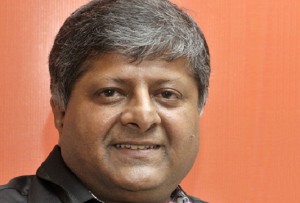
    Shashi SinhaBy Tuhina Anand

    The Advertising Club Bombay has appointed its new officebearers for the year 2011-12 with Mr Shashi Sinha as its President. As revealed first by MxMIndia on September 9, Mr Sinha’s appointment was confirmed on Friday after the Club’s annual general meeting. Mr Sunil Lulla, the MD and CEO of Times Television Network, is Vice President. Mr Ajay Kakar, CMO – Financial Services, Aditya Birla Group is the new Secretary, Mr Sujay Ghosh of Bennett Coleman and Co Ltd is the Joint Secretary and Pratap Bose, CEO-Mudra Max the Treasurer.


    Mr Sinha, the newly elected President of the Advertising Club Bombay and CEO of Lodestar Universal India, talks about the priorities that he and his managing committee will take on this year for Ad Club.


    Continuing education:

    The Ad Club has been organizing knowledge series and training programme for the fraternity. We are looking at increasing the frequency of these knowledge sharing session which would help the fraternity.


    Making the ad club relevant to youngsters:

    While we have big tickets events like the Abby awards, Effies and Emvies which sees participation from young in our industry, we have to look at ways by which the Ad Club can be relevant to these youngsters. We want to encourage them to become members and want them to feel proud to be a part of the Ad Club.


    Make it inclusive:

    When the Ad Club Bombay was started, the city being the hub for the industry was a leading body but was also inclusive in its approach as other cities did not have such representative bodies. Now many cities have their own Ad Clubs but we would want to adopt the approach of making Ad Club Bombay a place where fraternity from other places is also welcome. We already have our Abby Awards which sees participation from across the country and the idea is to involve lot more people like in the judging process who belong to our industry but are in different city.


    Restore credibility:

    The Abby Awards has come under much scrutiny and has been criticized in the past. This year we tried to set things right by making the awards more transparent and tried to curb the accusations which were on votes being sold. We hope to restore the credibility of the awards so that fraternity truly holds it in high esteem. But one has to also understand that flak has come only for Abby’s and not for our other awards be it Effies or Emvies. We have tried to plug the hole when it came to creative awards but it becomes difficult beyond a point. Nevertheless, to restore credibility of our awards is our biggest priority.


    Asia-Pacific Effie to India:

    We have got the licence to host the Asia-Pacific Effie in India next year and we see this as a great opportunity. The Effie Awards recognize excellence in effective marketing communications and involves marketers in a big way. In fact, the grouse of the industry on awards is often that the marketers are not interested in these awards but Effie is different in that context. Hosting the Asia-Pacific Effie in India will give us a bigger platform to involve the marketers and the fraternity from the region.


  • Another ASCI in the making? PMO wants regulator for misleading ads

    By A Correspondent


    The government is working on framing rules for the advertisement industry to check misleading advertisements such as those promising strength, looks and sharper memory, following a directive from the Prime Minister’s Office.

    The PMO has directed the consumer affairs department to prepare a draft regulatory framework within a month, a government official said on condition of anonymity.

    A decision to this effect was taken at a meeting Prime Minister Mr Manmohan Singh’s principal secretary Mr T K A Nair held with top ministry officials. “The ministry will put in place this regulatory framework in a year’s time,” the person said.

    This is for the first time that the government has taken up the issue of misleading advertisements ranging from an actor jumping off a cliff unhurt after drinking a particular beverage to a soap or cream making one look younger and fairer to a drink that enhances one’s memory.

    At present, the country does not have a legal framework to protect consumers from such misleading ads.

    The industry, however, has a self-regulatory body, the Advertising Standards Council of India (ASCI), which advertising professionals say is extremely effective.

    “We don’t know about the details of the new proposal, but the ASCI is doing a great job in any case. I’m not sure if two bodies are required to regulate advertising,” said Mr Colvyn Harris, CEO of JWT, India’s largest ad agency that manages the creatives of beverage maker PepsiCo and telecom services provider Bharti Airtel.

    ASCI Secretary General Mr Alan Collaco said, “We have a code for self-regulation for advertising and a robust consumer complaints council in place. This has been working very well for the past 26 years.”

    The council takes actions against advertisements, which are considered false, misleading, indecent, illegal, leading to unsafe practices, or unfair to competition, but it does not have any legal backing.

    The Food Safety and Standards Authority of India too is in the process of rolling out a set of guidelines defining an exhaustive code of self-regulation in all advertising of foods and beverages, to be implemented by the health ministry. It has been talking to the advertising council to work jointly on the guidelines.

    Industry insiders say that these guidelines will wipe out misleading claims in food and drink advertisement including health benefits. “Celebrities and prominent people who promote food should recognize their responsibility towards society and not promote food in such a way so as to undermine a healthy diet,” reads a clause of the proposed guidelines.

    While various jurisdictions around the world have specific guidelines and codes to dictate minimum standards for food ads, most of these codes are self-regulatory. In many world markets, companies such as Unilever, Coca-Cola, PepsiCo, Kellogg’s, Kraft Foods and General Mills have come together under the EU Pledge to self-regulate responsible advertising.


    Source:The Economic Times

    Copyright © 2011, Bennett, Coleman & Co. Ltd. All Rights Reserved


  • Sabyasachi Mishra appointed as JWT Vietnam CEO

    By Amit Bapna

    Indians are making their mark globally, in the advertising and marketing space. Close on the heels of Indians being appointed as CEOs by JWT Sri Lanka and Ogilvy Malaysia offices (Mr Himanshu Saxena and Mr Ananad Badami respectively) comes the news that JWT has announced the appointment of Mr Sabyasachi Mishra as CEO, JWT Vietnam and Indochina.

    The current JWT Vietnam CEO Mr Chris Von Selle, will be moving to Beirut to take on a new assignment with the agency’s Africa operations. Prior to this global role, Mr Mishra was working as the Chief Growth Officer for Lowe India where his mandate included driving the business growth for agency’s India operations.

    He has worked on brands that include Unilever, Nestlé, Coca Cola, Maruti-Suzuki, Gillette, ITC and Mercedes Benz amongst others. Interestingly he is not new to the region, and has had a stint as managing director of Lowe Vietnam in 2005. Vietnam is being seen as one of the fastest growing markets in the Asian region, and the dragon is waiting to unleash its full potential.

    Mr Michael Maedel, President and CEO of JWT Asia Pacific, agreed, adding, “We have big ambitions for our future in Vietnam and Indochina and I am confident Mishra, with his knowledge and expertise in the market, will be able to take the business through the region’s next growth phase.”


    Source:The Economic Times

    Copyright © 2011, Bennett, Coleman & Co. Ltd. All Rights Reserved