Blog

  • Business Standard celebrates use of Hindi in biz

    By Akash Raha


    Business Standard Hindi recently celebrated Hindi Diwas and activated the initiative which was aimed at promoting the use of Hindi language in business parlance. This initiative of Business Standard is going to commence at the end of this month. The tag line for this initiative is “Behtar Business woh, jo aapke bhaasha mein ho!”


    Speaking on necessity and efficacy of spreading the business language in Hindi, Mr Arun Natesh, Head-Marketing, Business Standard said, “This initiative was important as there are a lot of people in the country do their business in Hindi, because that is the language of the masses. But inspite of that, there are a lot of words and terminologies that people use that is not easily understandable as it lacks homogeneity. So the idea is to promote business terminology and language in Hindi. Since our newspaper gives them comprehensive information on business, our initiative empowers them in understanding the effective terminology of use.”


    For this initiative, they compiled a special pullout which looked at the usage of the Hindi language online, in mobile and the growing interest globally for the language by the likes of Microsoft and Google.


    As a part of this initiative Business Standard organized quizzes testing knowledge of business terminology. Enthusiastic participation was seen across Mumbai, Delhi, Lucknow, Patna, Bhopal, Raipur and Kolkata. Business Standard went to the premises of organizations like SBI, LIC, Allahabad Bank, NABARD, BHEL, Bhilai Steel Plant, Bank of Baroda, Union Bank etc.


    Business Standard, in Hindi, reaches out to small and medium entrepreneurs, traders, small investors etc. Keeping this focus, the paper itself is designed around meeting this need by adding locally relevant content. Business Standard also brings to the reader what its editorial team is famed for – incisive and in-depth analysis of events. In recent times, the paper has strengthened the coverage of local commodity information immensely benefiting the large trading community.

  • Riot moves to SK&V Communications

    By A Correspondent

    SK&V Communications has just picked up the fashion brand Riot, whose advertising spends are pegged at a couple of crores this year.


    This is the agency’s third win in its first three months. It has already acquired the 360-degree businesses of Saint-Gobain Weber and Gesture Jeans.


    Riot is a part of Suditi Industries, a leading garment manufacturer and exporter since 1991. The brand has grown substantially in the past two years. Within Mumbai one can find Riot stores at R City Ghatkopar, Korum Thane, Center One Vashi and Infiniti Mall Malad. In Nasik, it’s placed at City Center. At Goa, the Riot store is at Madgaon, in Aurangabad at Prozone Mall and in Raipur at City Centre.


    Riot is readying to take on Pune with stores in Phoenix Mall and Pacific Mall,  – Pune. And plans to enter more cities will be unveiled soon.


    According to Mr Harshad Sharma, Partner & Head Creative, SK&V Communications, “When you partner a company that also creates concepts on a daily basis, the most important thing is the meetings of minds. We found ourselves on the same page as the Riot team in most respects –  the way we look at creative, temperaments, priorities etc.


    Ms Dheeraj Vashisht, Partner & Head, Business Development, SK&V Communications, adds, “Fashion brands have always been a passion. My 17 years in the business includes stints as Marketing Head of Killer Jeans and Provogue. We would like to believe that we have a deep understanding of the category.”


    Mr Vibhaas Singh, Vice President Marketing & Creative, Riot, said, “At Riot we believe that fashion is a medium of expression rather than just clothes… and it reflects the voice of the people who subscribe to it. Working with SK&V came naturally because they as an agency are completely clued on to the youth mindset and make our job at Riot effortless when it comes to communicating our brand to the consumer. Denim Ver 2.0 is a new chapter in Riot that they have written for us beautifully. We look forward to a great and long association.”

  • UFO Moviez now holds 52% stake in Scrabble Ent

    By NANDINI RAGHAVENDRA & AMEYA CHUMBHALE


    UFO Moviez has picked up 26% equity stake in Scrabble Entertainment, taking its total holding in the Manmohan Shetty-promoted digital cinema systems provider to 52%.


    UFO, a joint venture between the Valuable Group and Apollo International, which is in the same business as Scrabble, had bought 26% stake in the company a few months ago. Both companies help exhibit movies in the digital format, which is replacing traditional film prints.


    Mr Shetty, a Bollywood film producer who made a killing in 2007 when he sold his production house Adlabs Films to the Anil Dhirubhai Ambani Group, had launched Scrabble with 72% ownership the same year. Following the deal with UFO, his shareholding in Scrabble has fallen to 21%.


    The other promoters, Mr Ranjit Thakur and mr Sunil Patil, hold 27% stake in the company. Private equity firm 3i and Providence Equity Partners have invested in UFO. Providence recently invested Rs 260 crore in the company.


    UFO has 2,350 digital installations across India and Nepal, while Scrabble, India’s only 2K digital cinema initiatives (DCI)-compliant entity, is expanding its footprint to Latin America, the Middle East and Eastern Europe. It plans to increase the number of its screens from 300 in India to around 2,500 by 2013.


    Hollywood’s big six studios – Sony, Warner, Disney, Fox, Universal and Paramount – have signed a global initiative whereby their content would only be released in DCI-compliant screens.


    “We are planning to invest over Rs 150 crore to expand the Scrabble DCI screens and we expect, with this infusion, to reach 800-1000 screens in one and half years,” Mr Sanjay Gaekwad, managing director of UFO Moviez, said. “This will help Scrabble Entertainment increase its global footprint. It would have struggled in isolation,” said Scrabble’s Mr Shetty.


    Source:The Economic Times

    Copyright © 2011, Bennett, Coleman & Co. Ltd. All Rights Reserved

  • Choice between lion and jackal: Santosh Bhartiya

    Founder of Chauthi Duniya Mr Santosh Bhartiya is known for unabashed journalism, andhis radical approach to television, especially election coverage. He speaks to Akash Raha about politics, journalism and how the greed of media owners has led to the institutionalization of corruption.


    Q: From being a Member of Parliament to being an eminent journalist, you have been on both sides of the picture. How does it feel now to write scathing commentaries on politics in India?

    In politics, I have realized, no one can do anything positive in India. There is a lack of inspiration to do anything positive. Moreover, we have a “babu system” here in India, where the MP hardly even knows anything about the bill that is been drafted. I am back in journalism because I realized that most of the famous leaders we know today are nothing but middle-men. I think a journalist should stay in the field of journalism and write against corruption and the malpractices that we see in politics these days.


    Q: Internet TV sounds like a very interesting concept. How is it doing and do you have plans for a full-fledged television channel soon?

    Our internet TV has been very successful. The concept is one of a kind and the political subjects that we tackle are doing phenomenally well. Here, we have both live and recorded shows. If ratings are anything to go by, we will give quite a few news channels in India a run for their money. Definitely in the near future we will come out with our own television channel. The pressure from our internet TV viewers to start a 24-hour television channel is immense, as the comments on the site show. We are strictly against PR journalism and this is what our audiences like about us. However, the plan for a TV news channel is still at a budding stage.


    Q: Why haven’t you tried to monetize your online space?

    We are not here to do business, we are here only to earn credibility. We feel that when you have the treasure of credibility, money will come when the time is right. Our promoters are happy this way, and they fully support us in this thought process.


    Q: What do you think of the phenomenon of paid news in the media and how do you think it should be dealt with?

    In the current scheme of things and in our society, corruption is a way of life. And the people sitting in the highest echelons of power are responsible for making it so. When the topmost leaders of our country are corrupt and are sitting at Tihar jail today, what will the rest of the country do but follow suit? Journalism too is no stranger to corruption… Earlier, corruption in journalism used to be small, and there was only a minor case here and there of a journalist taking favours to write a particular story. But now TV owners and newspaper owners are committing corruption at a massive level and are charging huge commissions. I know at least one organization whose owner called a meeting in Delhi and spoke to his employees about ways of making money and to increase profits, obviously through malpractices. The greed of media owners has led to institutionalization of corruption. But like in the case of Anna Hazare, someday the public will stand against media too. Only then will “paid news” stop. Paid news can’t be stopped by seminars and discussion. Public opinion is building against media and it is time they do something about it. Journalism is at the lowest that I have ever seen in India… The concept of investigative journalism, which the 1980s were famous for, is over. This is the age of PR journalism.


    Q: People often say that there is sensationalism in language media. What do you feel?

    There is a difference between English and language publications here which one must understand. English journalism, by virtue of being the language of urban elites, caters to them. Language journalism, since it caters to even the poorest of poor, talks about grass-roots-level issues. What might appear sensational to the urban elite is not sensational in reality, but a part of the rural lifestyle. Rarely have I seen such stories on grass-roots issues in English media since the time of Ashwani Sareen when he did the story on Kamla. But such stories appear regularly in language publications.


    Q: Do you think in this age, where business and economics in media houses are of prime importance, content is still the king?

    Content is and always will remain the king, just as a lion will always be the king of the jungle. The question is whether you want to become the lion or you’re happy being a jackal. There is always a choice… Either you can earn money or earn satisfaction by hard work, doing stories that can’t be contradicted or challenged. Unfortunately today journalists only want to earn money and their stories lack veracity.


    Q: Can you talk about an instance of activism through journalism that Chauthi Duniya has achieved?

    One of the bright examples of this is our show Do Took (in Hindi) which is broadcasted on all Hindi language channels of ETV. We specially make this show for ETV and its idea is unique. There are many shows where there is an interview and the interviewer, but in this show, there is no interviewer and I directly address the audiences. We pick up intriguing and interesting political topics and do a complete show on this. The videos are available on our internet TV site too. There are several other examples of such journalism. I take pride in saying that Chauthi Duniya is known for its credibility and fearlessness in journalism. We aspire to recreate the golden era of journalism in India during the ’80s of which people like SP Singh, MJ Akbar and Pritish Nandy were a part.


    Q: How are your various publications doing? Are there any new publications on the cards?

    We are planning to launch an English weekly magazine soon. It might still take a couple of months before the magazine hits the stand. It will be a hard hitting political magazine with excellent content. We are on our way to building a strong team, after which we’ll launch. Like all other publications and offerings from our group, the English magazine too will become a personification of excellence in journalism. Apart from that, we are at the initial stages of planning for a full-fledged TV channel. Our Urdu weekly publication which was released approximately six months ago is doing well, too. The newspaper is available internationally as well, in countries like Canada, England and the Gulf. The total circulation of the weekly newspaper (both nationally and internationally) is about 45,000 copies. The website hits too are phenomenal.

  • Editor Pataudi/Tribute by Vivek Sengupta

    By Vivek Sengupta

    Tiger Pataudi and I were colleagues: In the sense that an editor and a junior hack working for the same publishing house could call themselves colleagues. Pataudi was for long years the Editor of Sportsworld, a publication of the ABP Group. And I worked during different times for New Delhi magazine, Sunday magazine and The Telegraph, all publications of the same publishing house.


    This was during the heyday of ABP in the early Eighties when each publication of the group was a highly regarded market leader. What was more remarkable was that each publication was brought out by a bunch of very bright and very young journalists and editors. Those were heady days for hacks. To paraphrase Wordsworth, bliss was it in that dawn to be a journalist, but to be young was very heaven.  There was very little compartmentalization between the publications and a lot more camaraderie between the editorial teams than can be imagined today. Which is perhaps why, even though I never worked for Pataudi, in his passing it seems to me as if I have lost a former editor.


    Years later, in the early Nineties, we did become direct colleagues, when we both worked for Kapil Dev’s Dev Features in Delhi. We were part of the team that brought out the video magazine Sports Channel. Tiger Pataudi was the anchor of the video magazine and I was Executive Producer of the production house, in which slot I had succeeded the legendary SP Singh, who went on to found Aaj Tak.


    In between these two stints, I had watched Pataudi somewhat closely in another editorial avatar: He was Editor of the Wills Book of Excellence-Cricket, a collector’s volume of text and pictures. Friends and colleagues from ABP and Orient Longman, the publishing firm, were involved in bringing out the Wills Books of Excellence series and I would get regular reports of the ups and downs of the very ambitious project sponsored by ITC.


    How was Pataudi as an editor? By all accounts he was an exceptional leader, who preferred to inspire rather than control or micro manage. He was a man who led with a light hand and who, by his sheer gentility and understatement, made himself unforgettable. A man of very few words, he had a terrific sense of humour and an ability to connect with people on the strength of his easygoing manner.


    He was the very opposite of the typical hands-on editor of today. In fact, the legendary newspaper editors of the pre-Sameer Jain era, who were interested only in the editorial page and little else in their newspaper, were perhaps more hands-on than Tiger was! It seemed as though he was content to add star value to the editor’s job.  As Editor of Sportsworld, he worked out of Delhi, while the editorial team of the magazine worked out of Calcutta. He did like to have a say in the planning of editions. But he had little interest in putting them together. In other words, he was the epitome of the hands-off editor. The Associate Editor, the No. 2, was really the editor in that sense. It was he who commissioned the articles, oversaw the subbing of copy and the production of pages, grappling in turns with the Ad Department, the PTS (Phototypesetting) Department, the Art Department and the Printing Press. Tiger did not have to bother with any of that.


    But it was said that he read every word of what had gone into the magazine and always gave feedback. And in one key respect, Tiger was very much the Editor. The Editorial always came from him, written in impeccable Queen’s English. Not surprising when you consider that the Nawab of Pataudi went to public school in England and thereafter to Oxford. Come to think of it, he had also captained the Oxford University cricket team!


    Vivek Sengupta is Founder and Chief Executive of the consulting firm Moving Finger Communications

  • The Anchor: Pradeep Chopra on 8 mistakes marketers make about social media

     #1 Marketers treat social media like a short-term advertising campaign.

    Social media is all about building a lifetime relationship with your audience. However, marketers are still to understand and acknowledge that. It requires more of unlearning vs new learning.


    #2 Marketers measure ROI of social media like other digital marketing avenues.

    Unlike SEO, PPC or even email marketing, social media is not just about driving traffic to a website and measure the contribution in a typical funnel approach as used in SEO or PPC advertising. Leveraging FB ads for lead generation will be an exception.


    #3 Marketers underestimate the value of content and quality of conversations.

    Unfortunately, even today a significant percentage of marketers are focusing on metrics such as number of fans on Facebook. While the number of fans is necessary, it’s not sufficient.


    #4 Marketers don’t put required effort into defining objectives.

    While social media requires constant experimentation, laying down the objectives lays down the framework to think, execute and measure appropriately.


    #5 Marketers believe social media is about technology.

    A large number of marketers still consider social media more of a technology and less of a marketing activity. Thus, they don’t put the right resources in at the right place.


    #6 Marketers think that listening to their customers is optional.

    In the fear of confronting negative conversations about their brand, marketers don’t realise that they don’t control what others are saying about them. Hence, listening to their customers on social media is not a choice.


    #7 Marketers believe that they’ll jump in when it gets settled.

    It’s been over seven years and the only thing which is constant about Facebook is change. By the time social media reaches a stage of stability, the opportunity will be proportionally low of newer players.


    #8 Marketers still feel that social media is timepass.

    Unfortunately, a large number of marketers still feel that platforms such as Facebook are only for socialising or passing the time. While Facebook started as a social network, today it has taken the shape of a hybrid (social + professional) network and there are global case studies of B2B companies, such as Intel, Dell and GE, which have been leveraging Facebook to fulfil various business objectives.


    Pradeep Chopra is co-founder and CEO of Digital Vidya, and co-founder of dvBytes

  • Freaking News | Making sense of gobbedygook

    A week is a long time in politics said one British prime minister or another and as far as news cycles are concerned, a week could be an eternity. Last week’s newsmakers have vanished as the 2G scam took control of television once more. However, most of what was happening was official gobbledygook as everyone, from anchors to honoured guests tried to make sense of it. Even Arnab Goswami, as he demanded answers for things which India wanted to know, got caught up in dates, memos and LOIs, possibly leaving viewers searching for the remote as the evening’s melodrama had been denied them.

    Early on Wednesday, there was plenty of television excitement over the news that the Rashtriya Swayamsewak Sangh (RSS), the puppet-master of the Bharatiya Janata Party, had informed LK Advani that he was not a potential prime ministerial candidate for the next general elections. By the evening it became clear that no one really cared and no one doubted that the RSS controlled the BJP.

    In any case, it all became about a letter which the finance ministry under Pranab Mukherjee had written which raised questions about the position on 2G taken by the finance ministry under P Chidambaram. But much as TV channels tried to put to the Union home minister in the dock, the government did not bite. And then it all became about dates, LOIs (which it turned out means letters of intent) and memos.

    Internationally, the focus was on the plea to stop the execution of a man convicted in 1991 for killing a police officer in 1989, in the American state of Georgia. Questions had since been raised about the investigation, witnesses had retracted their statements and there appeared to be no physical evidence linking him to the crime. However the US Supreme Court did not stay Troy Davies’s execution. This led to debates about justice and capital punishment. However Indian channels did not find Davies to be newsworthy – although social networking sites were buzzing with it.

    The changes made to Facebook also got international airtime and certainly, both Twitter and Facebook were filled with angry comments from users. You get the feeling that Indian channels keep a close watch on various popularity measuring mechanisms which also tell them how much drama can be milked from a news event and how much jingoism can be added to it. If it fails on these two counts, the event is now news. Therefore one can conclude that possibly erroneous death penalties in other countries and social networking sites do not make Indian blood boil.

    Is it then surprising that The Times of India issued an ad that said that TV was all hot air and only newspapers can shed light on events?

    **

    Newspapers of course tried to explain what the latest 2G revelations mean but even they struggled between dates and memos. With the prime and finance ministers out of the country, further political explanations became difficult. The Supreme Court stepped in to make it clear that its silence on 2G should not be misinterpreted to mean that it is asleep.

    The Sikkim earthquake and the problems of rescue operations got adequate representation (although TV did not forget, it must be acknowledged).

    Also the Planning Commission’s bizarre figures to determine poverty in India got newspaper space and flak. Advani’s little problem was a single column here and there – this is not a new story after all.

    Salman Rushdie’s introduction to Twitter was found to be newsworthy, two days after he took the literati of the twitterati by surprise by showing up there.


    **

    Every time a new film is due, the India media behaves as if a new inhabitable planet has been found. This week, it seems, a new film will be released. One does not know yet whether space suits will be required or it will be one more black hole.

  • Saatchi & Saatchi appoints Hari Desikan as Senior Planner

    By A Correspondent

    Saatchi & Saatchi India today announced the appointment of Mr Hari Ganesh Desikan as Senior Planner at its Mumbai office, thus strengthening its planning division, an area that has always been of prime importance for the agency. Hari will be responsible for regional planning for Pampers as well as some other key brands.

    Talking about the appointment, Ms Nisha Singhania, GM, Saatchi & Saatchi, Mumbai said, “With Hari joining the planning department in Saatchi Mumbai we now have a truly fantastic team of planners with a diverse set of experiences and talent. I wish Hari all the best and look forward to him helping create some Lovemarks for us.”

    Speaking on the development Ms Kavita Kailas, Vice President – Planning, Saatchi & Saatchi, Mumbai said, “We are very excited to have Hari on board. Along with rich experience across categories, his forte is infusing fresh thinking into brands, which will be of immense value to clients”

    Mr Desikan, an electronics and communications engineer, comes with a rich experience of over a decade years in marketing, brand management and advertising. Talking about the new assignment, Mr Desikan says, “Saatchi Mumbai has a wonderful set of people, in fact more than the brands that I would get to work on, what made me choose Saatchi was the chance to work with Mr Sourabh Mishra, Ms Kavita Kailas and team”.

  • Mediaah!: Of a toothless Press Council and spineless Editors’ Guild

    By Pradyuman Maheshwari

    Apologies for not being regular. A colleague has been indisposed. We’ve been getting our share of exclusives and firsts. So a good part of the day is spent in ensuring that MxMIndia turns into a broadbased media website. So all of you who’ve been missing your daily dose of Mediaah!, chill! I don’t think the blog will be a daily, but an update at least three to four times a week?!


    Mint editor R Sukumar’s ‘Edspace’ is a delight to read. Pity it doesn’t appear every Saturday. Delight for me because it deals essentially with the media, and often on ethics. For instance, last weekend, he wrote about journalists being responsible for the state in which the profession is in the India – the corruption levels given the direct and indirect favours journos take (see link). Like awards, being part of a government committee. Sukumar hopes the Editors’ Guild of India will debate these issues.

    Being a Delhi-based editor and “an unacknowledged member” of the Guild, I guess he hopes the apex association of editors will do something. My own belief is that it will not. It could do precious little when the paid political news controversy first surfaced a couple of years back and Medianet did a decade ago.

    If the Press Council of India is toothless, the Guild is spineless. And this is despite having editors like T N Ninan, M J Akbar and Rajdeep Sardesai at the helm. Guess it’s one thing writing about the government or demining, say, a Narendra Modi, but another to take on biggies in their own biradiri.


    Paid news and Mid-Day

    Mid-Day exec editor Sachin Kalbag makes a brave defence for the paid news practice that his paper indulges in. Quoted in The Big Story on MxMIndia.com earlier this week, he defends the ‘Centre Stage’ feature in his paper that contains advertorials. Just 15 percent of the content is paid for. He also calls the tagline under the Bombay Times masthead as a disclaimer.

    I don’t think people see it as a disclaimer. If The Times of India and Mid-Day are serious about informing their readers that some of the stuff in their papers is published not on the merit of its editorial content but the amount someone’s paid for it, they must clearly state that they are doing it. They must tell the reader that the content in question must not be construed as that done by the paper’s journalists. Just as Mint has been doing about its advertorials. So in every sense of the term, the 15% of the paper’s Centre Stage section is paid content.

    So, lemme repeat what Sachin says:

    My opinion on paid news is very simple: It’s an abhorrent practice. It demeans journalism. I don’t really know when this crept in, but it has plagued the media for decades. Unscrupulous journalists have been on the take for several years, and this is not a new phenomenon. The widely cited example of institutional selling of content space is Bombay Times which introduced a rate card for coverage in the supplement. Recently, the supplement began putting a disclaimer under its masthead. The phenomenon of institutional selling of content space crept into the media for various reasons – but the root cause was always to increase revenue.

    Our editorial policy is very clear: any “Advertorial” is placed in a two-page section called Centre Stage, which is part of the Classifieds section of the newspaper. Centre Stage in Mid-Day is differentiated in various ways from the editorial part of the newspaper. Here’s how: 1) The Centre Stage carries a prominent disclaimer in a large point size under the masthead “People, Parties, Promotions”. This has been happening since the day Mid-Day started Centre Stage, which was more than two years ago. In Centre Stage, we carry items on movie releases and profiles of actors, fashion designers, parties, etc, that happened in Mumbai that week, apart from product launches.

    Close to 85 percent of the Centre Stage advertorial section is non-paid, that is to say the Centre Stage team of writers (this team is not part of the Mid-Day editorial team) interviews people or writes about their parties or products. Around 15 per cent of the items are placed where the content space is sold by the sales team. Once again, these items are only about Bollywood, fashion, parties or product launches. There is a separate, specialized sales team that sells this space, and at no point in time do they dictate terms to

    Editorial, mainly because Centre Stage is not editorial space, but marketing real estate. In fact, there have been several instances when the Editorial staff in Mid-Day has trashed Centre Stage advertisers in the review section of the newspaper, and the sales team has gotten into trouble due to that negative coverage. Yet, we are very clear at Mid-Day that the Sales and Editorial wires do not cross, and that the Chinese wall between them stays even though we may be good friends outside the office.

    We are also very clear that Centre Stage will not carry any “news”, but only information on these three or four categories listed above. There is neither any opinion nor any recommendation made in the section that is endorsed by the editor. In the strictest sense of the term, it is an advertorial. Mid-Day, therefore, has stayed away from “paid news” and will continue to do so.

    Thus, Centre Stage in Mid-Day is institutional selling of content space which I guess has a rate card. I am told revenues are healthy and though they don’t run over a 100-odd crore as Medianet is said to be generating, but even if it’s 1/100th that, it’s too much to sacrifice for stupid things like editorial integrity.

    Guess for some publications, editorial ethics is also an abhorrent practice. It demeans ad sales!


    Dabbang Sinha!

    As a strategy, it’s a win-win. He took on the information broadcasting minister in public saying that ever since DNA went ballistic with the anti-corruption drive of Anna Hazare, the government stopped advertising in his paper. (Link to column)

    Now, from whatever I’ve known of Ambika Soni, she’s a pretty reasonable minister. Given all the complaints that every I&B mantri receives, she could’ve made life miserable for media players. Especially broadcasters. Like her predecessors did.

    A senior journalist in the Capital told me that Aditya Sinha’s column last Sunday is sure to see his scalp. Subhash Chandraji could find it too hot to handle, and the Zee supremo needs the government for his plans a helluva lot.

    But this is why I said it’s a win-win for Sinha. If he gets the sack, he will turn a martyr (that doesn’t help much, I can tell you from experience). And if he continues, he’ll turn into a hero because after all, few have had the balls to say the government is kinda blackmailing the press.

    Sample some gems from his column:

    > Soni’s statement led us to infer that our Anna Hazare coverage was being punished by a suspension of government ads, and that Soni met our ad executives just to ensure the point was driven home.

    >This was not surprising because DNA recently has faced suspicion and hostility from the government which has apparently adopted an attitude of “you’re either with us or against us”. The prime minister’s media advisor has privately accused DNA of an agenda against the government, and its Editor-in-Chief of being close to a political party in the opposition.

    >The day after the meeting with Soni, DNA started getting DAVP ads again. Presumably, from the government side, mission was accomplished

    >Loss of business can be measured, but the loss of credibility cannot. Above all, that someone in government tried to be petty and vindictive is, to us, validation that we were doing our job right

    The views expressed here are my own and are not necessarily those of MxMIndia and its editorial team. In fact often it’s in variance with their views. Meanwhile, buzz me if you have a story to tell. Confidentiality assured. There are various ways you can reach me: pradyumanm[at]mxmindia.com, 23050B5D, pradyumanm@gmail.com, @pmahesh, 98338 76278.


    Tomorrow:  Is The Times of India taking on Times Now?
  • Rise of the Indie

    By Tuhina Anand


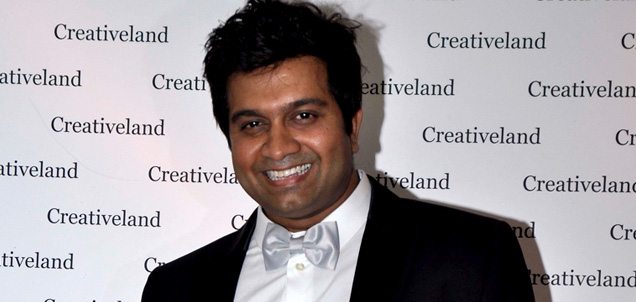
    Creativeland Asia literally began life at Mr Sajan Raj Kurup’s dining table, where he discussed it with his friends four years ago when he quit his job as Regional Creative Director at Grey Worldwide. And the independent agency’s time seems to have come.


    For those who need to break away from large networks where creativity sometimes yields to hierarchy, setting up their own agency is the answer. And it seems to be an answer that works. A recent example would be Creativeland Asia bagging the Independent Agency of the Year at Spikes Asia. This was the first year when this award was introduced, and it aims at encouraging the spirit of creative entrepreneurship that has helped forge outstanding companies.


    Mr Kurup’s venture has now grown to a strength of 8o people across two full-fledged offices in India and nine strategic offices in Asia.


    Creativeland Asia also brought home a Grand Prix in integrated media category for 3D Experience for its client Audi India, a business it bagged in July last year. This also was a campaign of Indian origin which for the first time Audi adapted and used across the globe. The agency also bagged a Bronze Spike in digital for Hippo’s Plan-T. In fact, it was invited by Twitter to make a presentation on Plan-T which basically is a Twitter-led campaign which has won them accolades for innovative thinking. The agency has also won awards and accolades at other platforms including D&AD, One Show, Adfest, Spikes Asia and Cannes, and our very own Goafest.


    On his win, Mr Kurup, Founder & Creative Chairman, Creativeland Asia, says, “Winning the ‘Independent Agency of the Year’ award is a proud moment for us. This win is also significant for all independent agencies in India. To bag the Grand Prix for real work and on a global brand like Audi underscores the creative culture at Creativeland. It goes to show that when you consistently create good and inspiring work, lady luck is bound to shine on you sooner or later.”


    The agency has also done some pathbreaking work for its client Frooti where the brand has been totally refreshed itself including a funky package design. It also launched recently Saint Juice beginning the exercise of naming the brand signifying purity and 100 per cent juice. Some of the other brands it has worked for include Café Coffee Day, Medimix, LMN and Appy Fizz among others. The common link among all the brands is that Mr Kurup when he started out had said he wanted the agency to focus on marketing to the youth, and largely the brands that Creativeland has worked on exude this approach in its work.


    So does the win at Spikes for Creativeland really signify that today is the time of the independents. Yes, one can say that the time is conducive for independents with talent, and who are big on ideas, to come to the fore. Like Taproot changing the way industry looks at small agencies with its work on Airtel which is a big client, and getting praise for its campaign “Hare ek friend zaroori hota hai.” It’s also a time when the client’s approach is changing, too, and they are willing to take risks especially in a cluttered market with an overdose of media vehicles where it becomes imperative to get your brand noticed with cutting-edge and “hat ke” ideas.


    In that sense Creativeland Asia’s win affirms this wind of change. And the might of independents cannot be undermined as they are ready to take the biggies and steadily increasing their strength by diversifying their portfolios. Just like Creativeland, which has been expanding its footprint with providing content for four television channels including two reality shows. In fact, the agency is also venturing into the film industry with their first production, Karmayogi.


  • Smart move! Huawei ropes in Chetan Bhagat

    By Gulveen Aulakh

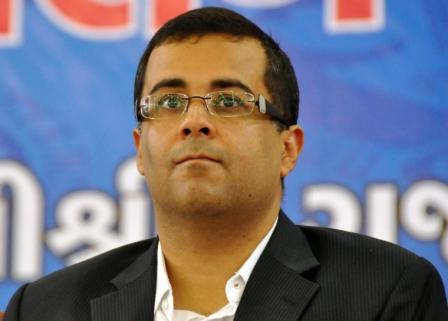
    India’s bestselling writer is entering unchartered territory, perhaps a first for any writer-the world of celebrity brand ambassadors. Chinese telecom equipment maker Huawei Technologies has roped in Mr Chetan Bhagat as brand associate for its devices such as smart phones and tablets, a senior executive told ET.


    “Mr Chetan Bhagat is a youth icon and he has changed the dynamics of the publishing industry. Our endeavour is to bring high-end technology at affordable prices. Our target audience and values are the same,” Huawei Devices India President Mr Victor Shan said. He refused to disclose the size of the deal. Industry insiders estimate it at nearly Rs 1 crore.


    Mr Bhagat-whose fifth book, Revolution 2020, is scheduled for launch on October 8-said he liked the concept of brand association. “They offered a brand-association in which I had no pressure to say nice things as such, unless I actually liked the product. I liked that concept,” he told ET in an email from Bangkok.


    <r Bhagat has been using Huawei phones for more than a month. The move has come as a surprise for brand experts. “I do not believe it (the partnership) gels, but it just might work. Companies make very odd choices, sometimes they click and do well,” brand consultant Mr Harish Bijoor said. He added that the deal gives hope for a different class of brand ambassadors and pave way for more cerebral kind.


    As part of his first endorsement deal, Mr Bhagat will launch Huawei’s new products including the world’s first Android 3.2-powered tablet, Mediapad, and Vision cloudphone, the world’s first smart phone based on cloud services.


    The tablet, scheduled for launch next month, will have electronic versions of Mr Bhagat’s books pre-embedded in it. Mr Bhagat will also be associated with all promotional and marketing activities of the firm across all media-be it digital, above-the-line or below-the-line campaign.


    Huawei, which plans to spend $3 million on promotions and advertising till December, has been struggling to build a positive image in India. Its image took a hit when the Indian government raised concerns that Chinese vendors could use telecom equipment they supply to snoop on the country and even launch cyber attacks.


    Huawei -the world’s second-largest telecom gear maker after Ericsson with 2010 revenues of $28 billion, or Rs 1.27 lakh crore – is now banking on Mr Bhagat’s power as an influential writer and motivational speaker to revive its image.


    Mr Bhagat will be Huawei’s brand associate for six months. “We will monitor the change in perception of the brand after the association, and then decide to extend it further,” Huawei Devices Director, Marketing & Solutions, Mr Anand Narang said.


    Huawei, which has been selling its gadgets in India for two years now, plans to become a more consumer-oriented company. In 2010-11, it recorded $490-million sales in the country and sold 12 million units including data cards, set-top boxes, CDMA and GSM feature phones and smart phones. The company targets $600-million sales this fiscal.


    It will seek to reach out to young consumers through new products and services over the next few months. Mr Bhagat will use these products and engage with consumers.


    “Chetan has a huge presence on Facebook and Twitter, with a combined following of nearly 2 million. He will engage with consumers on social media on his new book Revolution 2020, beginning from a contest on Facebook site this week,” Mr Narang said.


    Huawei is the launch partner for Revolution 2020. Huawei Devices Sales Director Mr P Sanjeev said that the company will consider the possibility of Chetan creating content for the brand, for instance, writing short stories that will be available for Huawei device users. The gear maker also plans to work with colleges where Huawei may offer some products at special prices .


    Source:The Economic Times

    Copyright © 2011, Bennett, Coleman & Co. Ltd. All Rights Reserved

  • Festive season ad spends to rise by 60%

    By A Correspondent

    Despite a slowdown in economic growth during the first quarter of 2011-12, many companies plan to unveil new products during the upcoming festival season and back their marketing plans with aggressive advertising, discount offers and brand promotion, industry body Assocham said.

    Several of them – especially fast moving consumer goods (FMCG) companies-have hiked their advertising and promotional budget by 60 per cent compared to previous year in an effort to perk up demand and shore up revenues followed by home and electronic appliances, real estate, textiles, gems and jewellery and luxury products, according to The Associated Chambers of Commerce and Industry of India (Assocham).

    Nearly 150 corporates in ten major cities including Delhi, Mumbai, Chennai, Kolkata, Hyderabad, Ahmedabad, Pune and Chandigarh were contacted between July and August. The chamber said companies selling home and electronic appliances, automobiles, textiles, gems and jewellery, luxury products and homes expect sales to go up by 30 to 40 per cent.

    The festival season generally accounts for 40 to 45 per cent of annual ad spending by Indian companies, said Assocham secretary general Mr DS Rawat. “The trend is likely to continue this year as well in spite of disconnect between macro-economic trends and micro factors.”

    Electronic appliances are on the top advertisers on TV for a 2011 followed by retail, auto and cellular services with a five per cent increase in ad spend as compared to festive 2010. Some of the brands that spent big on corporate advertising are Videocon, Whirlpool, LG, Britannia and Samsung.

    Mr Rawat further said that the consumers’ spending intentions are turning into actual spending reality, which is translating into advertising activity rapidly returning to pre-downturn levels. The average increase on advertising spending on media has been 30 to 35 per cent on a year-on-year basis.

    Festivals like Durga Puja, Dussehra, Diwali and harvest festivals in south India are also something that the people of the region look forward to.

    The survey also adds that companies too take advantage of the festive fervour making planned efforts in campaigns aimed and the enhanced customer spend expected.

    Ad spends in TV and press will be up by 45 per cent as compared to festive 2010. While FMCGs and corporate ad campaigns dominated TV, while print was a more mixed bag, with spends coming from auto mobile, durables, real estate and cellular services, according to Assocham.

    Nearly 65 per cent of the marketing heads said that companies see in the festive season a perfect time to advertise their products. Even as the media cost has been reasonable, except for certain television prime time slots, companies want to work closely through consumer touch points in retail outlets. Moreover, televison and radio media are increasingly used to promote activities in a mall or a retail outlet, added the survey.