Blog

  • Devesh Rai quits Mail Today, turns entrepreneur

    By Akash Raha

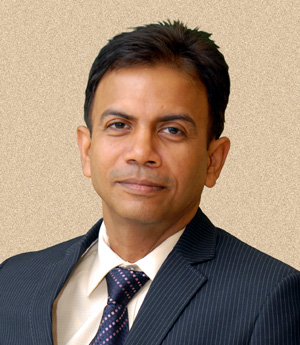
    Mr Devesh Rai G is moving on from Mail Today as its head – distribution and marketing. Mr Rai plans to pursue his own entrepreneural interests.

    Mr Rai graduated from Delhi University and went on to do his MBA from IIM Calcutta.

    He has held various positions in marketing, brand and product management in corporate and consulting as well as for five years in advertising agencies. Prior to Mail Today, he was Head, Product Marketing at consulting firm Headstrong. He has also worked with HCL Technologies, Hindustan Times, Rediffusion D&&R and Lowe.

  • Skoda Rapid debuts on NDTV show

    NDTV’s long-running automobile-based programme The Car and Bike Show has completed 400 episodes, and eight years on air. To celebrate this India-first milestone, NDTV will broadcast the show’s first-ever studio-based format programming. Considering the show as the right platform to debut its new car, Skoda unveiled the Rapid on the sets of the show.

    The special two-part series will be aired on Saturday, October 15 at 1.30pm and Sunday, October 16 at 7pm on NDTV Profit.

    Hosted by Mr Siddharth Vinayak Patankar, NDTV The Car & Bike Show is one of India’s most awarded automobile programmes. It has been the most watched show in its genre and has held pioneer status since inception. Mr Patankar, Editor-Auto, NDTV, said, “We began in October 2003, with the intention of presenting the best from the world of automobiles to our viewers – and I mean the whole world. I am happy that the original intent remains intact, and we have been able to build on that foundation to challenge our own boundaries and continue to excite our faithful audience.”

    Mr Anand Mahindra, VC & MD, Mahindra & Mahindra said “I am partial to Siddharth and the show, given our old association but even objectively speaking I think Siddharth and the NDTV team have done an outstanding job. I think the fact that its covered in all the channels on NDTV network makes its reach very wide and therefore it has a tremendous impact on car lovers throughout the country.”

    Mr Thomas Kuehl, Board Member-Sales & Marketing, Skoda Auto India said, “We are launching the next big leap for Skoda this year. It is our new C Segment car, and we thought it would be a good idea to exclusively debut it on NDTV Car and Bike Show. This in a way is our birthday gift for the great show. It will be the all new Skoda Rapid. It is the most accessible limousine in the Skoda world now. We are starting with the compact limousine first. So the first market for Skoda worldwide is India to launch the first compact limousine.”

    Skoda also announced new base variants of its Yeti and Superb on the show.

  • Star’s Hollywood Blockbusters aims to thrill

    By A Correspondent

    Star Movies, India’s leading English movie channel, presents Star Movies Hollywood Premieres; an initiative that brings exclusive screenings of Hollywood titles for their fans a day prior to their official theatrical release by leveraging the strength of their studio tie-ups.

    To be a part of this experience viewer will have to participate in a simple contest and answer questions that will be broadcasted on Star Movies and their India Facebook fan page. Lucky viewers will get a chance to attend the exclusive premier screening of the latest upcoming movie titles by Star Movies Hollywood Premieres. Star Movies kickstarts the initiative with its inaugural movie premiere of The Three Musketeers on October 14 at select theaters in Mumbai, Delhi, Bengaluru and Kolkata.

    The channel also holds the exclusive rights to premiere other Hollywood biggies like ‘In Time’, ‘Twilight Saga- Breaking Dawn’ and ‘The Darkest Hour among others.

  • Magazine readership looking up

    By A Correspondent

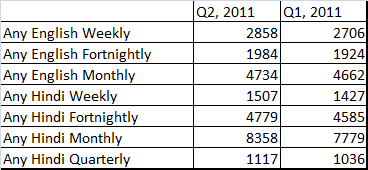
    Magazines have been witnessing a bit of rough weather of late. It is not an Indian phenomenon but is being witnessed worldwide. However, this IRS Q2, 2011 shows an increase in readership of both Hindi and English magazines as compared to Q1, 2011. Here is a quick look at AIR for the same:

    Readership in this duration has increased for Kannada and Telugu publications also. For Assamese, Gujarati and Marathi it has gone down – while for other languages the response is mixed.

    Keeping the focus on English and Hindi magazines for the purpose of this article, is it safe to assume that this IRS marks the revival of magazines? Says Anita Nayyar, CEO – Havas Media, India & South Asia, “This IRS certainly indicates better health for magazines but not necessarily revival.”

    Rajni Menon, Associate Vice President, Carat Media India, too believes that it is not really the revival of magazines and mentions two reasons for marginal upward trend for the magazines. She said, “The Week and Business World have been actively working towards increasing readership and it has had an impact in the market. Secondly, new magazines which were not captured in IRS earlier, eg 2010 Q2 IRS did not cover the following magazines – Outlook Profit, Economist, People, Life Positive. The biggies like India Today, Outlook have seen only marginal shifts only.”

    However the experts believe that there is definite scope of growth in niche and special interest publications, which have shown an upward trend. Ms Nayyar said, “Niche magazines are doing better than mass magazines.” Ms Menon endorsed this, “There has been growth in numbers for niche magazines : India Today Travel Plus, Good Housekeeping, Femina WTW, so that could show an indicative trend along with the fact that one does see more new magazines on the stands every few months. Travel, Women, Lifestyle. “

    However, a major issue faced by media planners and buyers is that a number of niche magazines are not tracked in IRS. As per Ms Menon, “We still can’t make a definite decision on magazines because there are so many in the market which are not covered by IRS. Mainline magazines like Open and Tehelka are yet to be covered, so seeing new niche magazine get covered is a long shot.

    Ms Nayyar too stated that niche and special interest publications are set to grow, but most niche magazines are not tracked.


  • The Anchor: Sanjay Tripathy on 7 reasons a marketer chooses an ad agency

    #1 End-to-end expertise and servicing. An advertising agency which provides a bouquet of services and is capable of creating effective 360-degree integrated communications campaigns is important, as classic one-dimensionaldvertising is becoming less relevant in the current environment.

    #2 Team credentials and clients handled. People form the most important part of an advertising agency, and their credentials and experience are a huge factor in deciding to work with them. The advertising agency needs to be evaluated to determine their expertise in handling different business categories, especially their experience of working on your type of business and if they understand the competition in your field. At the same time, it is important that the agency have some experience in other business sectors as it brings in fresh ideas and helps create clutter-breaking communication.

    #3  Size and scale of agency. It is important to ascertain whether the agency is adequately equipped to deal with the corresponding size of the client’s business in terms of creative, operational and technical resources.

    #4 International exposure. The more the agency has interacted with global clients and has experience in creating campaigns globally, the better. It helps bring in more professional working and a lot of fresh ideas.

    #5 Consistency in dealing. The ability of an agency to maintain consistency as well as transparency in dealing with its clients is very vital from a client’s perspective. It enables ease in dealing on a day-to-day basis and helps meet timelines and implement campaign plans more efficiently.

    #6 Strength in research. A strong research wing in an agency helps ensure that the campaign is backed by high sensitivity in terms of socio-cultural understanding and aesthetics while maintaining the brand philosophy. The tools that the agency uses in planning campaigns and analyzing the brand and competitors need to be scientifically prepared.

    #7 Balance between creative and business strategy. A path-breaking creative idea may not always be the best solution for a business problem. An agency which understands the importance of business problem-solving through communication is beneficial in the long run. Also, its ability to align with the long-term strategy of the client is important.


    Sanjay Tripathy is Executive Vice President – Head Marketing and Direct Channels at HDFC Life.

  • WMC 2011: Mag publishers have eye on future


    By Akash Raha

    Future trends, changing media dynamics and measurement issues were discussed during the October 11 session of the 38th FIPP World Magazine Congress. After  addresses by Mr Aroon Purie, Chairman FIPP and Chairman and Editor in Chief, India Today and Ms Ambika Soni, Minister of Information and Broadcasting, a series of interesting and intriguing sessions on various issues followed.

    How tablets are re-inventing the future of magazine media

    The session discussed the various current trends in the tablet publishing. The panelists showed how the audiences are viewing the experience of tablets through their presentations. Ralph Buchi, Head of International Division, Axel Springer, Germany said that the penetration of tablets and smart phones are growing each day. “Tablets are creating new reader base every day. Those who did not read us before are now reading us on tablets. Also, it creates newer audiences in a new age group. People are willing to pay for the content and we are able to garner good advertisements too.” The case study of Axel Springer showed that paid content strategy is paying off as they can boast of significant sales figures of the title with as many as 134,000 digital sales per issue across all our titles.” Mr Buchi pointed out two important reasons for this; increasing willingness to pay for premium content and growing penetration of the devices.

    Neil Morgan, Managing Director, McPheters and Company, UK spoke about imonitors, which was launched in June 2010 to allow publishers and agencies to share the cost of thoroughly monitoring developments of apps. Talking about tablets he went on to say, “Penetration of tablets is expected to triple over the next three years. The number of publication-related apps is expanding rapidly too. Apple still dominates the app marketplace, providing yet another reason for the consumer to prefer the iPad over other tablets; however, Android is growing rapidly to increase competition.” Peo Strindlund. Vice President of Sales – Europe and Asia, Magplus Sweden observed, “Tablet ownership among 35-54 year old is changing drastically. Nearly two-thirds of respondents spend approximately two hours with the device regularly. It is essential to understand this changing behaviour to make profits.”


    Social Media Phenomenon: How magazine brands can benefit

    It’s a truth universally acknowledged that social media can make or break a brand. This session portrayed, through case studies, how magazines can take advantage of social media. “We have to understand that times have changed. The consumer wants relevant content and social media is one such medium to provide that. Today, consumers want everything in real time. The question is that how can media take advantage of that? We have only nine seconds to win the attention of the customer, and if we don’t want to lose that opportunity. Content is king, but content in a context is what is important today,” said a speaker from Meridth, USA. He went on to say, “To be successful in social media we have to adopt an editorial mindset and breed hybrid thinkers. Secondly, keep it fresh and find an innovative angle to the story.”

    Sergio Zalis, Editor in Chief, Contigo Groupo Abril, Brazil, a weekly magazine, said that his group has three major platforms, magazine, internet and events. He said events is one of the most important vehicles in a country famous for its carnival, and spoke about how they have created a community around it. “We create news during carnivals. We have good sponsors that bring us good revenues. We have almost 200 million people in Brazil out of which 80 million people are connected to the internet, 87 percent are connected to social networks. We are a social brand and wanted to interact with our readers. Contigo’s Facebook page had 105,000 followers in only 15 days. Eighteen percent of the traffic that comes to our site comes from social networks.” Svida Alisjahbana, President director and CEO, Femina Group Indonesia said, “In Indonesia, mobile accounts for 62 percent of digital exposure. One of the reasons for that is Blackberry’s penetration in Asia with Blackberry messenger being a craze… Social media has been a powerful medium for us. Our Chief Editor is also Chief Community Officer where she is managing a lot of different type of communities on the social space. Content, Community and Channel is important to us. Content is king, but conversation is the kingdom.” Feng Xincheng, Executive Editor in Chief, News Weekly, China said, “Being a weekly magazine, earlier we communicated with our readers only once a week. But with social media and internet, we refresh our news each day and can communicate whenever we want.”


    Magazine media innovation is a 360° environment

    Mr Juan Senor, UK Director, Innovations, UK spoke in this session about the imaginative ideas being employed not only with the emerging opportunities that digital technology brings but also in the traditional magazine disciplines. “He said that it is time to start charging because ‘free’ can prove to be expensive is very expensive and there is a cost burden… We are moving towards an app based world, but we are not at the tablet world yet. Mobile is still bigger than websites and tablets and will be for some time to come. Digital today is important, yes, but digital alone is not enough. The print has to co-exist with it. The future of paper is a premium future and it will exist for decades.”


    Changing Face of Retail

    Inventory management, efficient print runs and managing the changing retail environment are the key to enhancing profitability. Frederic Chevalier, EVP, Strategy Innovation and Sustainable Development, Lagardere Services, France spoke in length about his company and other success models. Talking about the issues concerning the industry he said, “Declining retail sale or single copy sale poses a major threat to the entire industry, to the publisher, distributor and retailers. Single copy sales are of outmost importance and newsstands are the best places where you can show and showcase your magazine to your audience. The consumer can see, read and browse through your magazine.” He added, “We must collectively adapt our business to the changing world. We must try and make the industry more efficient to reap profits. Also, adopt retail businesses best practices and incorporate newer technologies to make our business profitable.”


    Audience metrics: How to measure multi-platform brand reach

    Advertisers are demanding ever more sophisticated targeting and measurement analytics, particularly of brands operating on several platforms. The point of debate was, what are the trends in audience measurement and what are the criteria advertisers value the most. Ambika Srivastava, Chairperson, Vivaki Media Exchange and ZenithOptimedia, India said, “Brand experience correlates with market share. People positively disposed towards the brand looked at the ads more closely. Without experience, we cannot survive. The brand experience of magazines and the internet is significantly higher than ad share. There has been a lot of action in the automobile sector, for instance, where not only the trade magazines but even general magazines have been preferred for advertising.”


    Emerging markets

    This session discussed through case studies some of the areas where rampant growth can be witnessed. Didier Guerin, CEO, Media Convergence Australia moderated the session and introduced the panelists. Colin Crowell, General Manager, Ringer Vietnam spoke about how the growth opportunity in Vietnam, owing to strong internet penetration, is immense. “We focused on our print product first and thereafter, grew at a steady pace as the print ad revenues kept flowing. The only problem that we faced at the beginning was perhaps to   find the right partner.” Michael von Schlippe, President, Partners Media Group, Kazakhstan spoke about his success story of his magazine in the largest landlocked country lying between Russia and China, and invited the audience to invest in 20 percent (according to government norms of foreign media ownership) of his company. Likewise Chang Eui Lee, CEO, Chosun Magazine, South Korea too narrated his success story and the rapid growth the magazine saw. He stressed on the importance of being ahead of the times and gave the audience and insight to his five-year plan (2012-2016) of increasing the magazine market which includes steps such as improving distribution system, strengthen global competitiveness, support digitization and improve quality of magazine content.

    Paid content and paywalls

    High quality content comes at a price, yet many publishers hesitate to introduce charges on their websites. Mahesh Murthy, Founder and CEO, Pinstorm India was the moderator of this session and gave his invaluable insights on the topic of paywalls. According to Alessandro Cederle, President ANES Italy, CEO Ediemme Gruppo Editoriale, Italy, “Making money with content is an increasingly big challenge for publishers nowadays and hence it is important to define or rather redefine the issue. It’s not about making money but about understanding how content can create value; and if content creates value, then you can automatically make money out of it.” James Tye, CEO, Dennis Publishing, UK said, “It is not possible to put all brands, and we have 30-40 brands, into an iPad-specific app. So when you choose them, choose the one with the most glam potential, choose the one with the highest brand recognition, the most advertising potential, and critically the most assets; so you must have video assets, extra pictures, great content.” He went on to say “All we do as a company is produce good content. I give it to people in the way they want to consume it. So if they want to read it in print, we’ll be there. If they want to read it on the iPad, we’ll be there.”


    The future of international magazine brands in the 360° media world.

    Publishers need to ensure that the consumer experience is a consistent brand wherever they might be in the world, in whichever language they might consume the magazine in and on whatever device they might consume it on. The issue in this session was how publishers are handling the brand across multiple platforms. The session was moderated by Barry Mcllheney, CEO, PPA, UK. Torsten Klein, President, Gruner+Jahr, Germany noted, “We had given content for free on the worldwide web, but we can’t afford to make the same mistake again with tablets. We must put a premium on content from the very beginning and not give it for free.” Roberto Briglia, Chief Content Manager and General Manager of International Activities, Mondadori, Italy said, “The big question still remains how to monetize digital. We have to change the way we sell advertisement and reconceive the way in which we produce content. We must use digital to successfully create new business opportunities. When asked by Mr Mcllheney, whether magazine is at the absolute heart of it, or is it merely one of the platforms, Duncan Edwards, President and CEO, Hearst International, USA said, “Magazines are at the absolute heart of it all and the rest of the mediums are build around it. Magazines as a product will be efficacious for several decades and that is where we will make most of our revenues from. The other mediums will only be alternate sources of revenue.”

    Magazine: The medium of the future

    Despite the drive towards digital media, researches has repeatedly shown that magazine continue to be a relevant and trusted medium and hence, a medium of the future. Susan Kaufman, Editor, People StyleWatch, USA presented a case study citing the success story of StyleWatch. She said, “The success of any brand (magazine) lies in how well does it emotionally relate to its readers… The main reasons for the success of StyleWatch are that we respect and connect with our readers – that’s probably how we managed to sail through the recession as authenticity is one key factor. We are not a regular celeb gossip magazine; our magazine uses celebrities as aspirations and inspirations. Our celebs help validate the trends we cite. We know how to delight and surprise, our magazine is like a present to the reader.”

    Nicholas Coleridge, Managing Director, Conde Nast, UK said, “The first magazine congress I ever attended was 21 years ago, and it had the same theme. This was long before digital was invented. The keynote at that congress was a ‘guru’ from Henley Centre who gave the most apocalyptic speech I had ever heard. Magazines, he said, have no future. But thankfully I got into the business and figured out the optimism in reality.” He pointed out that average issue publication from 1971 to 2011 has been on a constant rise and the statement that magazines have no future is one of the great untruths of our century. He went on to say, “We are bringing out digital versions, apps etc, but we haven’t forgotten that print is foremost. The sheer beauty of the printed page can never be replicated in any other media. Seventy percent people prefer print to digital and this in the age group of 21 to 27 yrs; 81 percent think images look best in print.” Thereafter, MS Min Liao, Editorial Director, Trends Group, China cited the case study of Trends to drive her point that the future of magazine is bright. “Our strategy is brand focus and audience focus. You need to provide something unique to the consumers, as they have greater expectations now.”


    Also Read: http://www.mxmindia.com/2011/10/soni-sees-bright-future-for-mags/

    Photograph: Video grab picture of I&B MInister Ambika Soni with Aroon Purie (to her left) and Tarun Rai.


  • WMC 2011: We have to be innovators as much as publishers: Aroon Purie

    By Shruti Pushkarna


    Addressing delegates at the 38th FIPP World Magazine Congress in New Delhi, Aroon Purie, FIPP

    Chairman and Chairman and Editor-in-Chief, India Today, said much had changed since he first joined FIPP at the Paris World Magazine Congress 2000. He believes, “India has arrived at the world stage and the fact that the World Magazine Congress is being held in Delhi is a reflection of that.” Mr Purie leaves the chairmanship of FIPP at the end of the Congress.


    Compared to 2000, when the Indian media space had not opened up to the world, in 2011, the media space in India is bustling with activity. With 10, 500 newspapers and 58,100 magazines registered in this country, Mr Purie emphasized, “Although newspapers are shutting down in most parts of the world, and most cities have only one newspaper; in a place like Delhi, you can get 16 English newspapers delivered to your doorstep and there are 10 Hindi language newspapers. I don’t think that’s possible anywhere in the world.”


    The demographics in the Indian market, assured Mr Purie, will make any publisher “salivate”. We have 22 official languages which means you have that many more languages to publish in. In that sense, we are like Europe, except Europe has a population of only 739 million and ours is 1.2 billion.”


    India, Purie further added, is a country “straddles many centuries simultaneously”. “That is our

    uniqueness in a way. Not far from here you’re likely to see a bullock cart on the road next to a Bentley, both stuck in the same traffic jam. So it is in the media space. We happily straddle digital as well as traditional media and both are growing rapidly.”


    Citing the latest numbers, Mr Purie added, “Consider that magazine advertising is slated to grow by

    a compound annual growth rate of 13 percent for the next five years. Internet connectivity, although

    now low in terms of penetration, still has 100 million people accessing the net. This is expected to grow to 237 million by 2015. Smartphones now constitute only 5 to 6 percent of the total phones but this is expected to grow to a 25 percent by 2015. India has 31 million Facebook users which makes India the third largest market for Facebook. India is a country rich with promise.”


    But the uniqueness of Indian market does not take away the need to innovate. Mr Purie recalled, “When I took over FIPP two years ago as the Chairman, the mood among publishers was truly dismal. It was like watching terminal cancer patients just biting their time. There is now an aggressive optimism and a growing realization that the new technology is not a cancer but one of those injections that offer rejuvenation.”


    Mr Purie believes that tablets will be both “the saviour and the biggest challenge for magazine publishers”. “For us to succeed we have to know now to design content for eyes, fingers and ears too, and provide an immersive experience to our consumers,” he said.


    Drawing a parallel with this year’s theme, ‘The 360 Opportunity’, Mr Purie reiterated the need to

    integrate the traditional models of content with new technology and new platforms.

  • First on MxMIndia: Tarun Rai is new AIM President, Mitrajit Bhattacharya is VP

    By Akash Raha

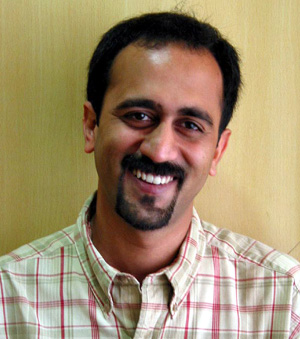
    Mr Tarun Rai, CEO of World Wide Media, The Times of India group’s magazine publishing company, has been appointed President of the Association of Indian Magazines. This was announced at the annual general meeting of the apex association of magazines held soon after the proceedings of Day 1 of the World Magazine Congress concluded. Other officebearers are Mr Mitrajit Bhattacharya as Vice-President, Mr Rajmohan as General Secretary and Mr Paresh Nath as Treasurer. Mr Rai and his team will lead the Association of Indian Magazines until 2013.

    Mr Rai takes charge from Mr Pradeep Gupta, Cybermedia group chairman and managing director, who has been holding the position since November 2009. The  officebearers in Mr Gupta’s tenure of 2009-11 were: Mr Rai as Vice-President, Mr Mitrajit Bhattacharya as General Secretary and Mr Nath as Treasurer.

  • WMC2011: Soni sees bright future for mags

    By Shruti Pushkarna

    After the smashing opening of the 38th FIPP World Magazine Congress with King Khan dancing to “Chammak challo”, Day 2 opened with optimistic assurances from the Minister for Information and Broadcasting, Ms Ambika Soni. Chairman of FIPP and Chairman & Editor-in-Chief, India Today, Mr Aroon Purie invited the I&B minister to grace the opening of the second day with her address.

    A self-confessed “avid magazine reader”, Ms Soni was extremely optimistic in her views on the future of magazines and print media. Addressing the Congress, the Minister stated, “…With 77,000 registered publications, including magazines in different languages, we are one of the major magazine hubs of the world. India represents one of the developing markets for magazines globally, and (are together) expected to contribute about 31 percent of the global advertising expenditure this year, and 67 percent of the growth of this crucial segment of the media.”

    The minister also emphasized the diversified nature of the India market. “We also probably have the greatest possible diversity represented in our magazines in terms of genre and content, not only language. From the glossiest and most sophisticated luxury magazines to those making effective use of the latest digital trends, to the more simply and cheaply produced publications… all co-exist in a highly diversified, highly segmented, highly stratified market.”

    Ms Soni showed that she is not oblivious to the threat that the digital revolution poses to the magazine segment. But she assured the audience that the danger was not as grave as it seemed in, perhaps, the last Congress. She summarized the solution to the problem in three words – innovation, expansion and adaptation. “There will always be room for innovative ideas, in terms of content and format. Adaptation of course to internet age, to tablets, to phones, to developing new revenue models… But there are also significant gains to be made by expansion; this is especially true in developing markets like India.”

    The minister also shared some interesting figures, reiterating the prospects of growth in the magazine segment. “While the print market in India is dominated by newspapers which accounted for 94 percent of all print revenues in 2010, the important point to note is that the overall pie is growing and the magazine segment is estimated to grow at a CAGR of 4.8 percent in the period from 2010 to 2015.”

    And donning the role of a ‘government representative’, she shared with foreign delegates how liberalized government policies are aiding the growth of the print medium: “For the benefit of all the delegates who’ve come from outside, I would like to emphasize that we’ve come a long way, a long way since the basic premise of our print media policy of 1955 which did not allow any kind of foreign publications, either newspapers or periodicals. The policy which was subsequently reviewed in 2002 and then again in 2005 has paved the way for a spurt in the magazine sector. The liberalization of our print media policy has not only attracted foreign direct investment, it has given a growth perspective to the magazine industry in India as well.”

    The minister also assured the AIM members that their “longish wishlist” is being carefully examined and all issues will be addressed soon.

    On a lighter note, she also promised the foreign delegates to “again look at the government’s policy on visas on arrival”.

    Ms Soni left the audience with an interesting question to ponder. She said, “With over 90 million copies in circulation daily, the print industry is among the largest in the world. But the vast untapped potential in this industry is even greater. More than 300 million literate individuals don’t read any publications. These 300 million individuals have rising levels of income and aspirations. Will all these be diverted straight to the internet?” With internet access in India still quite low and broadband access even lower, the minister added, “…Today there is a large window of opportunity for the print media that Indian publishers should therefore capitalize upon.”

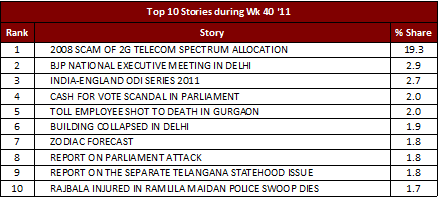
  • NCT Data Wk 40 ’11

    Source: News Content Track – A service of TAM Media Research Pvt. Ltd

    Channels: Aaj Tak, CNN IBN, Headlines Today, IBN 7, India TV, NDTV 24/7, NDTV India, Star News, Times Now & Zee News

    Period: Wk 40 – Sep 25 to Oct 1, 2011

    Note : Analysis is based on the telecast duration

    About TAM Media Research

    TAM is a joint venture between Nielsen Company & Kantar Media Research. Besides measuring TV Viewership, TAM also monitors Advertising Expenditure of Television, Print & Radio through its division AdEx India. Since 2004, it extended its presence in the PR Measurement & Analysis space for Corporate/Marketing Clients by setting up a separate division Eikona PR Measurement.

    In 2007, the joint venture introduced RAM (Radio Audio Measurement) service to track Radio Listenership for the Indian Radio Broadcast Industry. In year 2009, TAM launched a division, called TAM Sports that specializes in monitoring Sports Sponsorship ROI.

    TAM Media Research’s objective is to fuel media insights that will drive the growth of the Indian Media Industry.

  • Time to take the government head on

    Ranjona Banerji

    Much as it was interesting to watch members of Team Anna squirming and dissembling to explain their foray into electoral politics on an anti-Congress campaign or hearing the speculation about whether LK Advani’s yatra is about him trying to become PM again, more attention needs to be paid to the government’s attempts to control the electronic media.
    Much as TV news channels can be annoying, irresponsible, depth-less and sometimes sense-less, they are an integral and important part of the media and have to be protected against government interference. The government would not dare to cancel newspaper registrations for five transgressions of some standards law; there is no reason why TV should be subjected to such harsh and illogical treatment.
    Both the print and broadcast media need to take the government head on. Since so much media dirty linen, soul-searching and hand-wringing is now done in public there is no reason why the public should be left out of this discussion. Do we need the government to control the media and decide on transgressions? Do we need better or more stringent internal control? How far does freedom of expression go (as far, it must be said, as various Indian laws allow)? Why aren’t FM radio channels allowed to carry news broadcasts? Do we want to go back to the days of an exclusive government-controlled broadcast media?  The media may be a pillar of democracy but it is not an organ of the government. It has to be independent and critical.
    It is imperative that these issues be discussed. The Times of India carries an edit on the subject but that is insufficient. There needs to be a larger debate.

    **

    The death of ghazal maestro Jagjit Singh – who had been in a critical state for two weeks – was covered comprehensively by both TV and print. Attempts were made to make the obits objective rather than merely hagiographic, which is amazing when you consider the completely adulatory writings which followed the death of Apple’s Steve Jobs, a man, it appears, who could do no wrong or at least be held accountable.

    **
    The Champions League came and went and almost passed under the radar. This is a new for cricket in India and it is probably down to fan fatigue, overkill and India’s miserable performance in the UK tour. At any rate, it proves that hype can only take you so far and sometimes, somewhere, reality sinks in. And apparently, no one cares.

  • The Anchor: Anil K Sathiraju’s 8 reasons why Birthday Boy Big B is the most bankable TV star

    1. He is looked upto as an icon, an idol, a god-sent, a good Samaritan, a humble human being

    2. He commands respect from a person who is probably 10 years or even 90 years… guess that’s what makes him such a great human being

    3. He is probably the only actor in the country or probably in the world who commands extremely great respect that no other person does – to the extent
    that you actually get goosebump when he says, “Main Amitabh Bachchan bol raha hoon Kaun Banega Crorepati se”

    4. He is ‘the most safest actor’ any channel can bank upon – obviously therefore it translates into people viewing the program that he is hosting

    5. He is a part of so many people’s lives – almost like a senior member of the family – there are millions of people who have grown seeing him, who
    have idolized him, has so much of hero worship, who are probably living because of him

    6. He becomes the character in whatever he does… that’s a great thing about him and I guess that’s why he is Big B

    7. He has a sense of gratitude for people for making him big, for making him what he is today – it is because of the people that he is who he is. He says it so
    genuinely everytime he talks to or listens to someone who says about him

    8. Finally, he becomes a common man with the common man – Needless to say, this part of him is what makes him the Big B

    Anilkumar Sathiraju is Associate VP and Head South, Mudra Max