Blog

  • Quadrant appliesTiger Balm, bags creative biz

    By Shubhangi Mehta

    The creative mandates for Tiger Balm have been won by Quadrant Communications, industry sources close to the development have confirmed the news to MxM India.

    The account size is estimated to be Rs 10 crore. This is the first time that Tiger Balm has appointed an agency to handle their creative mandates.

    Tiger Balm competes with the likes of Zandu Balm and Amrutanjan. Jagdish Saxena, chairman, Elder Group introduced the balm over 20 years ago. It initially imported the product from Singapore. Later on, Elder manufactured Tiger Balm Red and White at their Ponta Sahib factory in Himachal Pradesh.

    It may be noted that in July this year,BSE-listed Elder Healthcare, which was the exclusive marketer of Tiger Balm in India, parted ways with its long-term partner, Singapore-based Haw Par Healthcare .

    Quadrant Communications Ltd is a full-service advertising agency, providing clients with 360-degree marketing communications solutions.

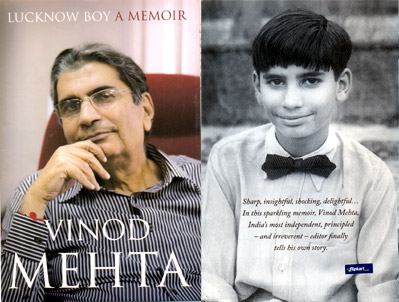
  • Book Review: Lucknow Boy is a fluent, easy & juicy read

    By Ranjona Banerji


    If you want a fluent, easy and juicy read there’s nothing quite like hunkering down over a weekend with Vinod Mehta’s Lucknow Boy – especially of course for a media person. Yet, thanks to the letters page on Outlook, where so many readers seem to know him so well, one suspects that anyone interested in the news or the way the media runs will want to pick this one up.

    The story starts at the beginning with a solidly middle class upbringing in quieter, gentler times in charming and civilised Lucknow, which Mehta describes movingly but not in a maudlin manner. All those Outlook readers who fume at Mehta’s secularism can blame his childhood and this rather inclusive town in which he lived – as he himself does. Not quite sure what he was going to do with his life – apart from being a table tennis champion – a young Mehta landed up in England looking for opportunities and it must be said, girls. The swinging sixties provided the latter in plentiful apparently and also a variety of odd jobs. Mehta returned to India still with little clue about what he wanted to do and then headed for Bombay and advertising.

    From here it was a few skips and jumps to becoming the editor of Debonair which some might remember as India’s first “girlie” magazine. Mehta is one of a small but significant breed which started a career in journalism as an editor, without doing the slog. Those who are old enough (waaaaah!) will remember that in spite of the uncomfortable semi-nudes, Debonair had some good reading matter, using the Playboy model.

    The next episode in Mehta’s life led to his becoming a legend – starting and editing two classy newspapers from scratch (Sunday Observer and Independent) and recasting one (Indian Post) and resurrecting another (Pioneer). All four were well-planned, classy, stylish and paid attention to good writing. There are and must be a variety of views on them and not all of them positive but there is no doubt that they shook the establishment and frightened the fuddy-duddies.

    Not all were successes and Mehta himself suffered for decisions taken or managements changing tack. It is here that he is at his most acerbic about his fellow journalists and editors. The debacle at Indian Post where owner Vijaypat Singhania could not withstand political pressure was followed by another at The Independent. Mehta quit this paper a month after it launched when a huge scandal broke out over a story which said that YB Chavan was an American mole.

    Mehta describes all these quite candidly. The animosity he mentions shown by Times of India staffers to The Independent was quite amusing for those of us who were outside both: where the nose-in-the-air ‘we are Times journos and no one can touch us’ battled against the ‘we are the intellectually and stylishly superior’ Independent brigade. To be honest, both sides were a bit full of themselves!

    Mehta doesn’t hold his punches when it comes to Dileep Padgaonkar, who was editor of Times at the time and later with Lalit Mohan Thapar, owner of Pioneer. The end of his one month at the Independent also led to his shifting to Delhi and then to The Pioneer. The creation of Outlook follows a low period in his life and from here on, the way is up which is where the story pretty much ends.

    Lucknow Boy is a good nostalgia trip for those who are familiar with the place and time and will remember names and incidents. It is also a good lesson for those starting in the profession.

    Mehta also adds his views on people he has known and who have influenced him (yes, Sonia Gandhi is in one section and Editor the dog in the other) as well as tips to budding journalists. Expectedly, there is both humour and insight here.

    I have to thank Mehta for the huge space he has given to my old friend, the late designer MG Moinuddin whom he met at Debonair. Moin was indeed a massive talent and we were colleagues for many of the years that he moonlighted for Mehta’s various papers.

    In this very compelling read, there are some negatives, primarily when we reach the Outlook story. It gets a bit tedious and self-congratulatory – perhaps acceptable but still mildly annoying: all publications after all can come up with lists of some good story or the other it has done. However the sections on the letters to the editor, full of communal rants, as well as the fights between Ramchandra Guha and William Dalrymple are amusing.

    Although Mehta writes about the Radia tapes, where Outlook played a sterling role, I would have expected also some more stringent comment on the fallout as far as journalism is concerned. Mehta discusses Vir Sanghvi’s decision to step back from journalism but lets Barkha Dutt off the hook.

    There is one error which I have to point out because I take it personally. Mehta mentions that Bombay magazine wrote an item after the launch of Outlook. As one of the last employees of that wonderful magazine I can very confidently state that since it closed down in early 1991, there was no possibility of it having commented on Outlook’s launch in 1995!

    Also I must admit that I do not know Mr Mehta – I have met him fleetingly a couple of times so it is unlikely that he will remember. But this was undoubtedly one of the most enjoyable books I have read in recent times. Personal anecdotes and revelations are sparse but they are illuminating and even endearing. Every autobiography is entitled to its one-sided-ness and its quirks and that of course is why we read them


    Lucknow Boy by Vinod Mehta, Penguin Viking, hard cover, 325 pages, printed price Rs 499.

    Flipkart price: Rs 349.

  • Vinod Mehta: I just want to fade away quietly (Text + Video interview)


    This interview with Vinod Mehta was conducted in November 2011 soon after the launch of ‘Lucknow Boy’. As we look at the late Editor’s life and times, we replay this interview – in text and video – which so effectively captures what made him such a great journalist. Read on…


    By Shruti Pushkarna


    Soon after he launched his memoirs ‘Lucknow Boy’ in the capital, MxM India caught up with Mr Vinod Mehta, Editor-in-Chief of Outlook magazine, for an exclusive interaction in his Delhi office. He spoke at length about his memoirs, his editorial journey and of course, his dog, Editor.

    Prior to his memoirs, Mr Mehta has also authored biographies of Sanjay Gandhi and Meena Kumari. In 2001, he also published a collection of his articles under the title, ‘Mr Editor, How Close Are You to the PM?’

    Popularly referred to as ‘one of the most independent editors’ of our times, Mr Mehta has founded and edited numerous publications, including The Indian Post, The Independent, the Delhi edition of The Pioneer and also India’s first Sunday paper, the Sunday Observer. At present he is the Editor-in-Chief of the Outlook Group, which brings out ten magazines including the weekly newsmagazine Outlook.

    Q: Tell us a little about your memoirs.

    It’s not just my life that I am presenting; it’s a snapshot of India from 1974 when I started, to 2011 which is now. And I am giving you a kind of history of India from that period, a personal history as I have seen it. So it’s more than my life, it’s a history of India – and whether they agree with my version of history or not, that’s another point but I have tried to present people, places, incidents that I saw and I interacted with since 1974. In that sense, this is not just about a journalist writing about his life, it’s about a very important period of India’s history which should be remembered, and I hope that I got some of it right.

    Q: Why Lucknow Boy? You’ve always prided yourself as a Bombay Boy…

    No, I was born in Lucknow, and studied in Lucknow and I reached Bombay much later. So I called it ‘Lucknow Boy’ because I am, my education etc. was all in Lukcnow.

    Q: Was it tough writing a free-and-fearless memoir? Especially the admission about your daughter?

    Well, these things are never easy but if you’re writing a memoir then you have to tell the story of your life and you must tell it in its entirety, the good and the bad. So you can’t hold anything back, otherwise it’s half the story.

    Q: Anything that you’ve not mentioned in your memoirs? In hindsight, would you have liked to include anything?

    No, no; I made sure that everything that I wanted to put in my memoirs, I did put in my memoirs. There were so many other things which were not important, the more important things I’ve put in my memoirs.

    Q: Given that you had moved jobs rapidly before Outlook, what’s the secret of your lasting so long with the Rajan Raheja group?

    Well, I’ve been here for 17 years and I think the mean reason is the fact that I got the kind of editorial freedom which I didn’t get elsewhere, so I lasted so long – because I was allowed to do my work, and I was allowed to produce a magazine according to what I thought was right, and what my colleagues on the staff thought was right, and there was very little or almost no interference from the proprietors.

    Q: We missed you at the World Magazine Congress. Why were you not there?

    Well, I am told the magazine congress was mostly about the management side of things and not editorial, but I wasn’t invited.

    Q: If given the opportunity, would you like to edit a daily newspaper again?

    No, I’m too old now. I’ve done three daily newspapers and now I don’t want to do anything new. I’ve reached the end of my career so I just want to fade away quietly.

    Q: Wouldn’t it have been good to have an Outlook current affairs programme for television, if not a full-blown channel?

    No, we thought about this many times in Outlook and nobody in Outlook, including the proprietor, was very interested in television, simply because there were so many other… there are already about 300 news channels. So we felt that we couldn’t provide anything new or different and we were quite happy with print. And since I’m mostly interested in print, I didn’t show any great interest, neither did the owners, to get into television.

    Q: Your word of advice to a wannabe media baron?

    Well, my advice to a new media baron would be – don’t get into this business if you are just interested in making money. This is a business where, of course, profits are important but this goes beyond profits. So if you have any kind of commitment to the country and if you can withstand occasionally some kind of losses even to your investment, then get into the business. But if you are getting into the business because you think there are profits, or you think that you will have great political clout in the government etc, then those are all the wrong reasons for getting into publishing.

    Q: And your advice to someone working with a wannabe media baron?

    Be good at your job, that’s very important. Whatever you do, you must be very good at your job, outstanding at your job; therefore if you are outstanding at whatever you do, if you are sub-editor, or a correspondent or a photographer, if you are outstanding in your job, somebody somewhere will always hire you.

    Q: Debonair is dead. Would you like to revive it?

    No, that was just the beginning of my career and I wouldn’t like to go back there. But the seven-eight years that I spent there were very interesting, and I learnt a lot in that period.

    Q: Back to the book: worried about it upsetting anyone? Vijaypat Singhania?

    I don’t think so, because I’ve been fair to everybody. In his case, he was also under a lot of political pressure so I had full sympathy for his situation, where between Indian Post and his own business interests, he couldn’t sacrifice his entire business interest because at that time you had this license permit raj and the government would be active in economic affairs.

    Q: Did you read those barons wrong… Singhania and Thapar especially? And Ambani and the Jains?

    No, I didn’t read them wrong because they also I suppose, did not realize how difficult it is to be a media baron at that time, I am talking of 1980s and 90s, when businessmen who had say 5 percent interest in publishing and 95 percent interest in other things. If they attacked the government, then their other business interests would suffer, and I don’t think they fully appreciated this.

    Q: Any career regrets?

    Oh, I think there are always some regrets, some things that you should have done and you didn’t do. But by and large, I think I have played it by the book, as I say. I have no regrets. I think life has been very fair with me.

    Q: Do you think the news TV folk sensationalize more than inform?

    Yes, I think there is some need for self-regulation, there is some need for accountability. You can’t have a free-for-all as far as the channels are concerned. And I think most channels now are realizing that they are losing public support; the most important thing is their viewers’ support and therefore they need some professional guidelines. There is that appreciation now and I think that in the next few months, you will see something, some self-regulation.

    Q: We know you don’t agree with this, but still: do you think news only constitutes current affairs and matters of national importance?  For instance, would current affairs only mean political news or also whom Ranbir Kapoor is dating?

    No, I think current affairs is current affairs, anything which is current, for example, film stars, Aamir Khan made a film called Peepli Live , that was very much part of news. Entertainment is part of news, entertainment and news are not separate, but I think that there is a place for everything. Entertainment has a place, national politics has a place, everything has a place. So you must find the right balance I think; that’s the job of an editor.

    Q: Is there a need for a Press Council-like body, or should the print media too have a NBSA- like self-regulator?

    Well, we do have a Press Council but I think even the print media now realizes that the Press Council doesn’t have any teeth, doesn’t have any punitive powers. So, there is some need even in the print media for a new set of guidelines.

    Q: Your dog is called Editor. If you had another dog, what would you call it?

    Editor Junior. Well I have already got Editor Senior so I got Editor Junior now. But I can’t keep another… We tried to keep another dog, my wife was very keen that we should have two dogs. But Editor wouldn’t just allow another dog to come in. So we tried once or twice, actually brought a dog into the house but he made life hell for that dog, so we finally had to give him away to somebody because he is very possessive and he likes 24/7 attention.
  • Euro RSCG Design & Mosaik Communication join Havas Design+ community

    By Amit Bapna


    The global branding and design community HAVAS DESIGN+ is possibly the first of its kind that brings together a community of experts from different countries putting their competencies in common. It has recently announced addition of two new members to its portfolio – these include Euro RSCG Design, Brazil and Moroccan agency Mosaik Communication. These two new additions extend the Havas Design+ community’s reach into Africa for the first time and strengthen its position in South America.


    Design is increasingly becoming a strategic tool and is becoming the engine fuelling the creation of new businesses and changing the story of brands. Reiterating the importance of design in their region, Monique Elgrichi, General Director, Mosaik Communication says, “it has become fundamental for any brand willing to bring a homogeneous and consistent answer to its audiences, be it in its visual identity, its communication tools, online or on its sales locations. The context is thus very favourable in Morocco.


    “Companies are well aware of this and have started increasingly investing in the design discipline. Elaborating on their offerings, Mr Jose Melchert, Euro RSCG Design shares, “We will offer Branding & Design services – challenges ranging from the creation of new brands, repositioning and designing portfolios to introducing a brand at the point of sale – brochures, shelves, furniture.” With the globalization, international brands are making the choice in brand management to stay global or to develop local brands to adapt to their market, and therefore must rely on experts having the appropriate insights to do so, which is where such a group of experts under one umbrella can help the brands.


    For this international group of agencies that is dedicated to brands in the emergent countries and countries with quick economic growth, India is not too far in its expansion plans. Shares Mr Denis Gancel, co-founder and coordinator of Havas Design+, “Within this framework, India is one of our priorities. We are examining different opportunities that will add to our existing locations and the ones of the Havas group, already present in India.” The multicultural community now numbers 15 agencies across the world employing 500 branding and design experts.


    Source:The Economic Times

    Copyright © 2011, Bennett, Coleman & Co. Ltd. All Rights Reserved

  • Rantings of a Federer fan: give us more sports coverage!

    By Ranjona Banerji


    I have to confess that my weekend was consumed by tennis – the last ATP tournament of the year before the finals in London, where of course only the top 8 men in the world compete. Roger Federer’s amazing run was my focus and Sunday night was a wonderful triumph as he defeated Jo-Wilfried Tsonga for his first title at the indoor tournament in Paris.

    Which led to Monday morning’s papers with great excitement. Yet, hardly to my surprise, the Mumbai edition of the Times of India was happy to reduce the news to a brief. Over the past few years, sports coverage in TOI has become rather pedestrian and predictable. It sticks to cricket and then willy-nilly fits in whatever other sport it thinks is the flavour of the week – again predictably, football and Formula 1. This is a far cry from the early 2000s when the TOI was lively and dynamic in its sports coverage. Even more strangely, in these jingoistic times, peppered with aman ki asha, the victory of the Indo-Pak tennis duo of Rohan Bopanna and Aisan ul-Haq Qureshi was also given short shrift.

    The Hindustan Times when it launched in Mumbai had an excellent sports section – good writing, mixed coverage, giving ample space to all the sports which people are interested in these days. Of course, they carried the Federer and Bopanna-Qureshi stories.

    Mid-Day has always had an excellent and comprehensive sports section and a good understanding of news.

    But my vote has to go to DNA’s Mumbai edition which had held firm against the falling standards in other sections of the paper by providing, for my money, the best sports mix in the country. Pictures are given importance as are stats and facts and there is an attempt to cover every sport. Hat’s off.

    I have to make it clear that I have worked for DNA, TOI and Mid-Day and enjoyed my time at all of them and have never worked at Hindustan Times.

    TV news channels are very fair to all sports in their sports bulletins. I might suggest to TOI that someone in their sports section might check exactly which events are shown by the sports channels to try and increase the scope of their coverage. Of course, then it might be all about golf and pro-wrestling!


    **


    The unfortunate death of former player and cricket writer extraordinaire Peter Roebuck was covered extensively in Indian papers and on TV. It took some time about his suicide and alleged sexual harassment/assault charges to emerge but the tributes certainly have poured in and continue to do so. Again, Mid-Day’s sports pages have a good package – a well-considered tribute by Clayton Morzello, details about his last moments and a gem of a Roebuck piece from the past.

    Ayaz Memon’s piece in Deccan Chronicle (and perhaps Asian Age as well?) on Roebuck is not just expectedly well-written but also insightful and moving.

    **


    The appalling attack on journalists by apparent henchmen of the sacked and perhaps disgraced Rajasthan minister Mahipal Maderna was covered by everyone. It should be noted by all such feudal Indians that this kind of behaviour will no longer be tolerated. Henchmen and goondas have to be either retrained to be acceptable bodyguards or vanish. Just like “public sentiment” is an unacceptable excuse for violence so is “love” for some invariably shady politician or fixer.

    **


    The imminent collapse of Kingfisher Airlines has taken up much air time and newsprint but perhaps no one has had as much fun as tweeters. It’s worth taking a trip there to check the jokes as well as the support!

  • The Anchor: The Seven(?) Traits of Creative People

    We are all born creative. Remember the first months after birth. We make amazing sounds, don’t care how we look, are comfortable with our nudity, create a mess, scream like crazy and attract a lot of attention and emotion by saying words that make no sense.
    These are the traits of a creative person.

    Then something goes wrong. Somewhere along the way we grow up. We accept conformity as a sign of social success. We fool ourselves into believing that this is the real us – our unique voice drowned by the noise of the larger collective.

    But our creativity never gives up on us. It waits inside us, dormant and patient – hoping for someone or something to let it out. Till one day we realize that ‘being creative’ is a decision. All we have to do is repeat the personal mantra “Yes, I am creative. Yes I am, yes I am creative”. And we are born again. Kicking and screaming, we proclaim our new position to the world. “I am creative!”

    So this one goes out to you, the reclaimed individual, the re-arranger of dreams, the new you in the old bottle, the enlightened fool, the one who was lost and now is found. These are your habits… who am I to restrict it to seven. Why seven? You are more than a number. Who decides these numbers any way! Let’s just celebrate you: with all your limitless magical liberated traits of creativity:

    1. You are a child. You resigned from adulthood long ago.

    2. You are not afraid to ‘act’ like a creative person

    3. Your eyes light up at a question you can’t answer

    4. You are excited about unusual problems, as well as solutions

    5. You make new connections. You fuse two seemingly unconnected things and give it fresh meaning

    6. You generate as many answers as possible. You don’t look for the one “right answer”

    7. You don’t ask if something is “logical”

    8. You set aside all rules

    9. You don’t judge the quality of an idea by looking at its “practicality”

    10. You allow ambiguity

    11. You need people

    12. You are not afraid of silence. In solitude you are least alone

    13. You are an observer, a social voyeur, a curious eyewitness

    14. You worship nature

    15. You trust your own feelings

    16. You combine intuition with logic, and in conflict listen to your gut

    17. You believe in play, you kick the problem like a football

    18. You are emotional

    19. You discover hidden meaning in information

    20. You listen

    21. You don’t listen

    22. You’re not afraid to fail. You are willing to lose

    23. You refuse to grow up

    24. You take risks

    25. You express your thoughts and feelings openly and freely

    26. You have a crazy sense of humour

    27. You are motivated by the problem itself

    28. You recognize the “Ah-Ha!” experience

    29. You have a high capacity for visual imagery and fantasy

    30. You cry easily

    31. You hate articles like this that try to define people

    32. You march to your own drum beat

    33. You are freedom’s child

    34. You don’t take ‘no’ for an answer

    35. You win


    By Josy Paul, age 6 (Nov 14, 2011)

  • AdStrat | M&M XUV 500: Driving the brand

    Siddhartha Roy, COO, Consumer Business & Allied Services, Hungama Digital Media Entertainment Pvt. Ltd.
    Name of the Campaign/Ad

    Mahindra XUV500

    The Brief

    M&M Auto redefined its image and the SUV market in India with the launch of the Scorpio in 2002. Now the company was focused on launching another gamechanger – a global SUV, codenamed Project W201. Project W201 was announced roughly 3 years ago. Hungama was given the task of creating a teaser and product launch campaign that would stand out from everything that was ever done before – within the category and for the medium.


    Any specific advisory from the client

    This vehicle was a game changer for M&M Auto in terms of its image, consumer perception, and reach. It was a global launch, with a product created for a global market.

    Client brief was to handle the campaign unlike anything Mahindra had ever done before, on digital. Also, given that this vehicle was going to be targeted at SEC A, we figured that about 80 percent of the TG would be online and active.

    This was Mahindra’s biggest launch campaign, after the Scorpio.


    Research insights

    With the research we found that there was an unbelievable amount of speculation, gossip and rumours already in the digital space.  Our strategy included channelizing all the online chatter to one location, use social media to drive the frenzy, and finally, engage the consumer in revealing the car himself.


    The thought process behind the creative

    The campaign was divided into 4 activities

    •     Reveal the Name of the W201

    •     Guess the Price of the XUV500 contest

    •     Unlock the XUV500 angles

    •     Reveal the XUV500 for yourself


    Considering the amount of curiosity there was about this product, we decided to tease the consumer to build the anticipation. At the same time, we would reveal a little more about the vehicle. A microsite showed a webcam feed of a covered XUV500.


    Campaign Execution

    Reveal the Name of the W201 was our first activity. Users were invited to mouse over an area on the website and uncover the real name of the W201. An audio file also told users how to pronounce the brand name. The activity was supported via banners and a social media campaign on FB and Twitter. Users could also take part in the activity on the FB fan page.

    ‘Guess the Price of the XUV500’ was a never-done-before activity. Consumers were shown an XUV500 under wraps, and asked to guess the price. They then had to share the activity with friends. The person whose guess came closest to the actual price would WIN THE XUV500. There were also 20 tickets to the F1 Grand Prix in India, up for grabs. An FB plug-in on the website homepage showcased buzz on social media, regarding this contest.

    In order to give consumers a better idea of what to expect from the XUV500, we also created and launched a series of ‘sneak peek’ videos. We spoke to the people involved in creating the XUV – from the R&D Project Leader, to the Senior VP of Product Development at Mahindra and Mahindra. We spoke to crazy fans, bloggers and online experts.  The activity was constantly promoted through social media and banner spends.

    For those who were dying to see the XUV500, we offered them another alternative. Fans could unlock different angles marked on the wrapped vehicle. As soon as a certain number of ‘likes’ was reached, the webcam feed changed to show a different angle of the XUV500.

    When the vehicle was finally launched on-ground, we gave consumers another interactive experience, where they could pull off the wrapper on the XUV themselves and unveil the car.


    Media vehicles chosen

    Social Media – Facebook + Twitter, YouTube and Mahindra XUV500 website


    Key issues kept in mind while executing the campaign

    Short turnaround time

    Overwhelming response

    Bite sized info without revealing too much

    Does the treatment do justice to the brief?

    The campaign managed to create exceptional buzz for the car. All the qualities of the car were revealed in an interactive manner involving the target audience.

    Market and client feedback and follow-ups

    o          150,000 people revealing the name

    o          Guess the name site

    o          450,000 likes to reveal the first ever ‘under wraps’ 360 degree car view

    o          115,000 entries in 10 days

    o          Over 100,000 visitors a day (highest traffic to an auto site in India)

    o          Unveil the XUV

    o          40,000 unveils in one evening

    o          35000+ test drive requests

    o          Touching 900,000 unique visitors to the site

    o          107,831 fans on facebook

    o          700,000 destinations where XUV500 has been mentioned


    Credits

    Company: Mahindra & Mahindra

    Brand: Mahindra XUV500

    Digital Agency: Hungama Digital Media Entertainment Pvt. Ltd.

    Chief Creative Officer: Carlton D’Silva

    Creative Team: Team Hungama

    Account Management Team: Team Hungama

  • Hathway HD to be launched

    By A Correspondent


    Hathway has confirmed that its new HD service is set to launch to subscribers in select are of Hathway Digital networks in Mumbai, Delhi, Hyderabad and Bangalore.

    The new Hathway Hi Definitions (HD) service will be enabled by Media Highway set-top box software, the service will be navigated through a state of the art user interface with an electronic programme guide (EPG) and enhanced features thereby providing a complete enhanced viewing experience to the viewers.

    Mr K Jayaraman, Managing Director, CEO Hathway Cable & Datacom Limited said, “Being the pioneers in the Digital Cable Service industry we are committed to offering premium services to our subscribers.”

    Hathway HD services is available at Stand Alone and Bundled Offering and the packages are called –. HD Lite,and HD Max and Max + ,with around eight HD channels currently being offered and 20 channels in the near future.

    Hathway Standalone Offering

    HD Lite Rs 6666/-(including tax)

    HD channels for 1 yr

    SD Channels for 1 yr (160 + channels)

    Service Tax for 1 yr

    HD Box Activation charges

    HD Box is free to use


    Note : This offering is only for Hathway CATV primary customers

    Hathway Bundled Offering

    HD Max Rs. 8888 (Excluding tax )

    HD channels for 1 yr

    SD Channels for 1 yr (160+ channels)

    HD Box Activation charges

    Broadband for 1 Yr – 2Mbps speed, 40 GB

    Download ( worth Rs. 4300/- )

    HD Box & Cable Modem is FTU

  • Taj TV extends partnership with Zimbabwe cricket

    By A Correspondent

    Taj Television Limited has extended the partnership with Zimbabwe Cricket for worldwide television rights till 2019. The agreements with Taj Television Limited cover the Zimbabwe Cricket Seasons in excess of an eight-year period from 2012 through to 2019. Over a period of these eight years, Taj Television will be telecasting 220 LIVE days of cricket including 15 days of LIVE India cricket.

    With the acquisition of these cricket rights, Taj Television Limited cements its position as the leader in cricket broadcasting. Taj Television has broadcast rights of five Cricket Boards – South Africa, Pakistan, West Indies, Sri Lanka and Zimbabwe.

    Zimbabwe has returned to Test after a self imposed exile of six years, with an inspiring win against Bangladesh. Over the next two years, Zimbabwe will be playing Test Cricket with New Zealand, Bangladesh, Pakistan and Sri Lanka providing Zimbabwe a benchmark to measure their progress in every area of cricket. Under the current administration, talented Zimbabwean cricketers will grow in confidence with an aim towards improving their performance on the world stage.

    Zimbabwe Cricket Managing Director, Ozias Bvute said, “We are happy to extend our existing contract with Taj Television Limited as this plays a pivotal role in ensuring that Zimbabwean cricket is seen by those who love the game as well as introduced to new audiences. With its superior telecast standards, world class television production capabilities and strength to telecast the Zimbabwe Cricket worldwide, Taj Television Limited will add a lot of value to game of cricket.”

    Taj Television India Pvt. Ltd. CEO, Atul Pande said, “We’re extremely pleased to extend our partnership with Zimbabwe Cricket. This is a testament to our commitment to the game of cricket and fans as we cement our relationship with Zimbabwe Cricket.”

    He further added, “Through our television channels–TEN Cricket & TEN Sports, our website www.tencricket.com and our various wireless platform initiatives, we are confident of taking the rights of Zimbabwe Cricket to new heights by working along with various partners and are committed to set new benchmarks in broadcasting and distribution.”

  • Ouch! Tobacco depiction rules effective today, to extend to print and OOH

    By A Correspondent

    It’s November 14, 2011, and along with Children’s Day and the celebration of Pandit Jawaharlal Nehru’s birth anniversary, it’s also the day when the health ministry restriction on depiction of tobacco in the media takes shape.

    While there’s been much awareness of how the new guidelines will impact the film and television trade, tucked away at the end of the amendment is something that the print media needs to also be careful about.

    The relevant ruling states:

    “Wherever brand names or logos of tobacco products form a part of the pictures to be printed in any form of print or outdoor media or footage to be aired through any form of electronic media, it shall be mandatory for the media to crop or mask the same to ensure that the brand names and logos of the tobacco products are not visible, except in case of live or deferred live telecast of sports, cultural and other events or activities held in other countries being aired on television in India.”

    As per the notificiation, all old movies and TV programmes, that is, produced before November 14 displaying tobacco products or its use shall have to mandatorily display:

    a. anti-tobacco health spots or messages of minimum thirty seconds duration each at the beginning and middle of the film or the television programme.

    b. anti-tobacco health warning as a prominent scroll at the bottom of the screen during the period of such display.

    And such programmes will be telecast at such timings that are likely to have least viewership of minors.

    For new films and TV programme, a strong editorial justification for display of tobacco products or their use shall be given to Central Board of Film Certification (CBFC)  along with UA certification, and it will be accompanied by the following:

    a. a disclaimer, of minimum twenty seconds duration, by the concerned actor regarding the ill effects of the use of such products, in the beginning and middle of the film or television programme;

    b. anti-tobacco health spots or messages, of minimum thirty-second duration each at the beginning and middle of the film or the television programme;

    c. anti-tobacco health warning as a prominent scroll at the bottom of the screen during the period of such display:

    There will be a representative of Ministry of Healthy and Family Welfare in the Censor Board (CBFC).

    In order to restrict display of tobacco brands in old films and TV programmes, these rules  make it mandatory to crop /mask display of brands of cigarettes or any other tobacco product or any forms of product placement, closeups  and for new films and TV programmes  such scenes shall be edited/blurred by the producer prior to screening. The ban on display of tobacco product or its usage also extends to promotional materials and posters as well.


    Ministry of Health and Family Welfare notification:

    http://pib.nic.in/archieve/others/2011/nov/d2011111102.pdf

  • Reviewing the Reviews: Rockstar

    Rockstar

    Key Cast: Ranbir Kapoor, Nargis Fakhri

    Written and Directed By: Imtiaz Ali

    Produced By: Ronnie Screwvala, Dhillin Mehta


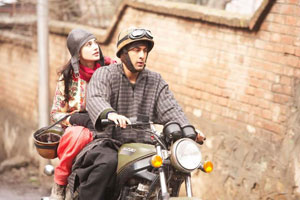
    Imtiaz Ali whose Jab We Met got him a great fan following, had Love Aaj Kal in between and now Rockstar, which has united critics and the general public in their adoration for Ranbir Kapoor, who is a star actor and superstar material; poor Nargis Fakhri came in for an equal amount of battering.

    The film itself got madly mixed reviews with rating from one to four stars that must have confused the reading public.

    Aniruddha Guha of DNA loved it. “For about 15 minutes in Rockstar, the narrative tends to resort to ‘Bollywoodism’; true love having the power to cure a terminal illness (almost), for example, doesn’t exactly fit with what the rest of the film has to say. Yet, Imtiaz makes it work somehow, interweaving the fantastical romantic part of the film with the more gritty, dark bits deftly.”

    Taran Adarsh of Bollywood Hungama, is left cold, “Alas! Rockstar is a sumptuously shot movie that is disjointed on script level. The problem with Rockstar is that it starts off most impressively, has some terrific moments in between, but the writing gets so erratic and incoherent as it heads towards the conclusion that you wonder, am I really watching an Imtiaz Ali film?” Strange coming from one who is otherwise generous with praise.

    Saibal Chatterjee, NDTV.com observes, “The film, nearly three hours long, traverses long physical distances – from Delhi to Kashmir and from there to Prague and then back again to Delhi as JJ follows his lady love (who gets married quickly enough and settles down to drab matrimony in faraway Czech Republic to make matters difficult) halfway around the world, singing and dancing his woes away. But despite all the frenetic movement in space that Rockstar offers, the film really goes nowehere. It feels strangely static.” Which is one of its major problems.

    Shubha Shetty Saha of Mid-day pins down another problem area, “The film that is supposed to be following the journey of a nobody later turning into an insanely famous musician, leaves you uninvolved as many milestones in that journey have been left out. One day, Jordan is in Pitampura trying to regale a few bystanders on the street, a few months later, he is this huge phenomenon running away from the paparazzi.”

    Sumit Bhattacharya of rediff.com found it in the Devdas mould. “Don’t let the title fool you. This movie is more an old-school Bollywood love story than the advent of heavy metal in Hindi cinema. Jordan is more like Devdas than his idol Jim Morrison….On the surface, the film is about a guitar-toting dimwit transforming into an angry ‘rock star’, an expression that can perhaps give ‘awesome’ a run for being the most misused term in the English language …But this film is devoid of any insight into an artiste’s anguish, try as it might by quoting Jalaluddin Rumi.”

    Mayank Shekhar gives it three stars but a tepid review. “From its start, to the way it progresses, you can tell, the film’s been through various stages of editing and several second thoughts. Sometimes the patchiness shows. It’s a stretch. Anything that’s 18 reels long (close to three hours) in a flickering world of low attention spans would be. Something fizzles out towards the end. You still don’t begrudge a movie that’s been this engaging, entertaining thus far.”

    Komal Nahata is critical of the extra-marital affair of the heroine which is without justification, and says, “The extra-marital affair may have been overlooked by some of the orthodox audience if that affair would’ve had a magical effect on Heer’s illness in the end but when that doesn’t happen, the audience is unable to stop itself from seeking reasons for the affair – and not finding any. The narrative style is also a bit confusing for the audience as overlapping scenes have been used to further the drama.

    On the plus side, the making is fresh and the canvas, big and wonderful. Dialogues, penned by Imtiaz Ali, are very natural. The film is extremely colourful and youthful and for that section of the youth, which won’t question the morals of Janardhan and Heer, the film becomes a veritably enjoyable fare. Again, a minus point of the drama is that comic and light moments are few and far between. The second half, especially, becomes dark and even depressing. Emotions don’t draw tears.”

    Anuj Kumar of The Hindu is also unimpressed. “A film works when the pain experienced by the characters on screen permeates into the darkness of the theatre. No such luck here. After an explosive opening, you become restless for lack of ingenuity on the part of the writer-director even when he has got the ingredients to turn it into a never-before experience. A. R. Rahman’s soulful tunes, Anil Mehta’s breathtaking camerawork and a malleable lead actor, but still it remains a glazed canvas. It has a lot to do with inappropriate casting and an overtly indulgent director, who seem to have started with the idea of making a global blockbuster with Ranbir Kapoor and then started work on the content.”

    Rajeev Masand of IBNlive also slams the script. “The film’s chief lapses are its meandering script and its less than impressive leading lady both of which cost the film dearly… “

    Sanjukta Sharma of Livemint notes, “The second half is a mess, as it travels picturesquely but cluelessly from Kashmir to Prague in search of ideas. And it goes on for much too long, as we wait for something better to happen. Nothing of the sort does. Whatever happened to Imtiaz’s sure-footedness which made ‘Jab We Met’ such a breeze ? Shakiness was evident in his next ‘Love Aaj Kal’. Here, he seems to have very little idea of how to get his lovers to smoulder despite the liplocks : most of the romance feels constructed, and contrived.

    Kunal Guha one of the first to review it on Yahoo with a brutal one star, writes, “Watching ‘Rockstar’ once is like watching it many times over, thanks to the repeated montages that sporadically recap the film. If you thought being stabbed once was bad, here’s what a knife set can do. The film drives home an unscientific hypothesis that people who’ve endured sufferings/ heart break/ loose motions etc will reach their creative best. By this logic, each person in the audience will be blessed with superhuman creativity as they step out after watching ‘Rockstar’.”

    Nikhat Kazmi, of the Times of India is predictably soft. “The fact that this romance unfolds on screen in the form of an explosive musical, capturing JJ’s transmutation into Jordan, the edgy artist, makes the film an absolutely engaging affair.”

  • Hard Knocks: How the Indian media doesn’t champion the cause of ‘lesser’ children

    By Anil Thakraney


    Just as it happened with crimes against Priyadarshini Matoo and Jessica Lal, our news channels have been busy doing shows on the dead young men from Mumbai, Keenan and Reuben. Just in case you are a Martian, the two were killed by some drunken elements when they protested against sexual harassment of the girls accompanying them. And yes, it’s nice that the media stands up for such people and puts pressure on the system for swift deliverance of justice. So, good show.

    However, what I don’t like about what’s happening is that the Indian media only stands up for the middle class, for ‘people like us’. Because crimes in the metro towns attract more attention, and I daresay, they also excite the advertisers. Which perhaps explains all the campaigns for justice. But the media must also stand up for crimes committed against the have-nots from interior India and run similar campaigns for justice on their behalf, even if this doesn’t interest the advertisers too much. Not just because residents of rural areas are Indians (lest we’ve forgotten), but because they are human beings too and their lives are just as precious.

    To illustrate this apathy with an example, let’s take the case of the heinous crime that was committed in the ‘unhappening’ Khairlanji village of Maharashtra some years ago. Priyanka Bhotmange was attacked by twelve men. They strapped her to a bullock cart as one would a disobedient animal, and dragged her out to the village chaupal. Then, they took turns to rape her, following which they completely stripped her and paraded their ‘trophy’. This was followed by beating her naked body with bicycle chains and publicly gang raping her all over again… and this went on till the mutilated Priyanka stopped breathing. However, not satisfied, the goons continued. The teenage corpse was raped yet again. On realizing the dead body was no longer rape-worthy, the men shoved iron rods into her blood clotted genitals and used pickaxes to disfigure her face.

    [youtube width=”400″ height=”250″]http://www.youtube.com/watch?v=GnGI76__sSA&feature=youtube_gdata_player[/youtube]

    Did the news channel run aggressive campaigns on her behalf? Were candle light marches held in her memory? Did the media keep the pressure going to get justice for her? The answer to these questions is a sad ‘NO’. Aside from the odd, reluctant story, Priyanka was quickly forgotten. And this, quite obviously, is unfair.

    So yes, I am proud that the media fights for the middle class urban victims of crimes. But I would be happier if this passion is also on display for the children of the lesser god.


    ***


    PS: Lilting tributes continue to pour in for Steve Jobs. Here’s a lovely one from Jonathan Ive, the Senior Vice President of Industrial Design at Apple Inc. No, we can’t have enough of Jobs, keep them coming! What a man!