Blog

  • Can media audits improve efficiencies?


    By Rishi Vora

    India is in the midst of a media blitzkrieg, where advertisers are hounded by a plethora of media options. What this fragmentation has done is for advertisers and clients, is the need to be more accountable. The need to improve efficiencies. The need to be measured.

    Last week, a London-based global media auditing firm – EMM International announced its launch in India. The company will offer its services of measuring media effectiveness for national as well as international brands, operating out of India via a joint venture initiative with Indraksh Media and Management Services. Global CEO Stephen White will serve as the chairman while Yuvraj Agarwal of Indraksh Media will lead the India operations as CEO.

    Though media audit is not a completely new phenomenon in India, it’ll be apt to say that the market is at a very nascent stage. There is only one national player in Spatial Access that is playing a significant role in the market. Media reports suggest that Spatial Access audits more than 40 percent of TV spends in India and that the plans are on to expand business operations to countries within the APAC region. Broadly speaking of the Indian industry, it is only roughly about 5-10 percent of the total media spends that are audited vis-à-vis, a 30-35 percent in the UK and 60 percent in the US.

    However, the market for media audits in India is at a stage, from where it could grow rapidly in the next few years to come. Speaking to MxM India, Mr White said categorically, “India needs more than one player, surely. It needs a company that can take a different approach to challenges, bring in fresh perspectives and of course, the experience of a global company – the knowledge, the skillsets and the reputation it brings to the market.” Mr White further added, “Next three to four years is going to be a very interesting period. India will see growth in media auditing by a significant number. From currently where it stands at 5-10 percent, I see that increasing to at least 25 percent.”

    The preliminary research that was conducted by the company before official launch stated that more than 90 percent of the respondents in India feel the need of an international audit company with a local partner. The thought process that EMM is adopting is “constant improvements” and for media agencies – the need to be more open to individual assessment. The London-based company will use market insights and data to evaluate performances.

    A senior member from the media agency fraternity said that media audits do bring in value to the business, and only time will tell if EMM India is able to live up to its international reputation, whether it is successful in providing solutions that are more meaningful.

    On whether or not media audits are useful for clients, Ajay Kakar, CMO – Financial Services, Aditya Birla Group opined, “Like all audits which help to optimize, increase efficiencies and provide an external perspective; I feel that media audits are also gradually becoming more acceptable to marketers as they provide an objective assessment of the marketing investments. This is more relevant from a process and compliance point of view especially when we include marketing initiatives like BTL programmes/events/production etc and make it a 360 solutions audit rather than only a traditional media audit.” Kakar feels that the space is relatively unchartered in India with a very few players, but is likely to grow as the market is seeing more value in measuring efficacy of media spends.

    While it is clear that there is growth and opportunity for both existing players and a few more to come in the years to come. There might be a possibility where we could see big one of the MNCs enter India acquiring one of the existing businesses, if the industry sees unprecedented growth. It will be interesting to see how EMM shapes up, and of course, how the current market leader responds. It’s going to be interesting watching this small but rapidly growing niche.

  • Amitabh Bachchan and the circus and the King of Bad Times!

    By Ranjona Banerji


    What seems to be the imminent collapse of Kingfisher is now looking to dominate the news. Newspapers are full of it – and not just on the business pages – and one can expect TV to follow soon. Ironically there was Vijay Mallya celebrating the “success” of India’s entry into Formula 1 just a few weeks ago; now he is described as “cash strapped”.

    On top of that, we have Air India employees claiming they have not been paid for months, which means that the glory story of Indian’s aviation industry may be heading for some dark days ahead and should also move out of business pages and papers into the mainstream.

    It would be fitting if our umpteen business channels would get their heads out of the stock market and examine a collapse like Kingfisher’s. We spend so much time congratulating ourselves for every teeny achievement by any random Indian anywhere. Surely we can expend a little effort to explain to readers and viewers why things have gone wrong?


    **


    Given the amount of excitement the collapse of the News of the World generated earlier this year, the second questioning of James Murdoch by a group of British MPs should have got some more airtime, surely, from international channels. Especially since firebrand MP Tom Watson likened the young Murdoch to a mafia chief. Indian TV and newspapers both covered the questioning but the BBC remained obsessed with the Eurozone crisis and so on.

    Interestingly it also took a long time for the BBC to acknowledge the riots which broke across the UK this summer. Is there some decision to keep home news quiet and just show prime minister David Cameron making a speech every now and then? Like Doordarshan of the old days?

    **


    Edits in most newspapers focused on the first convictions in the Gujarat riot cases of 2002, pointing out that while this was a rare occurrence which must therefore be lauded, there was a lot to do before peace and harmony could be established in Gujarat. TV channels need to get their heads around some basics of journalism: first report the facts and then get obsessed with reactions. For almost 30 minutes the other day the ticker on Times Now told us that Zakia Jafrey was happy with the verdict without telling us what the verdict was. Jafrey’s response is not the primary news. Time to go back to school? Oh, sorry, I forgot, most young journalists today have come out of some journalism school or the other.

    **


    Am curious to know whether anyone is going to tell us anything about the impending birth of the child of Aishwariya and Abhishek Bachchan. The fight between Amitabh Bachchan and the media is not new – it existed for most of his illustrious career and seemingly made no difference either to his fortunes or indeed to the film media’s. But to have a code of conduct over a celebrity event is surely too precious. Celebrities would not exist if it wasn’t for cooperation with the media. I guess Bachchan senior will send out tweet at the relevant moment and the whole world will know. The circus acts can follow later.

  • Newswatch: Katju, a harmless Rip Van Winkle

    By Parsa Venkateshwar Rao Jr


    Justice Markandey Katju, the chairman of the Press Council of India, has written a long-winded piece in The Hindu of November 5, expressing his views on the state of Indian society, economy, media and what to do with it all. It is a meandering argument with usual college textbook learning thrown in, with quotes from Firaq Gorakhpuri, Tulsidas, Shakespeare, some kind of socialist critique, some talk of a transition from the feudal age to an industrial age.


    The basic premise of the good judge is that India is in the age of 18th-century Europe, and what Voltaire, Diderot and Rousseau did then should now be done by the Indian media; fight the establishment, fight feudalism, fight superstition and worry about the plight of the poor people and the suicides of farmers as does P Sainath in The Hindu (Katju mentions Sainath by name). That is, fight the evil windmills.


    Then he talks of the need to regulate the media, especially the electronic media, which have programmes on astrology, devote more newstime to Lady Gaga and Kareena Kapoor’s wax image at Madame Tussaud’s than to the health and educational problems of the country.


    It is clear that Katju is a confused man. He has a bird’s-eye view of the situation, and he seems to miss both the woods and the trees. The judge is gravely mistaken in saying that India is passing from the feudal to the industrial age. There is no feudalism except in the minds of Marxist historians. The rural social set-up we find today, including the rightly hated caste panchayats, is not an example of good old feudalism but of an undeveloped rural bourgeoisie, with false sense of honour and tradition, with enough money and little wit. To think this is feudalism is reading the situation wrong with the help of dated textbooks, especially banal liberalism of the HAL Fisher-type A History of Europe, which is a silly book in retrospect or the CPI-type NCERT history textbooks in India.


    Katju is worried as to what will happen to displaced farmers moving to cities and not finding jobs because steel and automobile companies are producing more with less workforce. This is a perennial problem that has been with us for the last 60 years and more.  Farmers will pick up new skills as time goes along. All migrations involve changing lifestyles and working conditions.


    Then he makes the futile observation that more than 90 per cent of Indians are migrants, excepting the pre-Dravidian tribal populations. Now that statement is neither true nor false in any meaningful sense of the term.


    So, why was the media, especially the electronic media, getting angry with Katju? He uttered the word ‘regulation’ and said that no freedom is absolute. In themselves there is nothing wrong with the two ideas. Regulation if translated to transparent and fair rules is indeed the basis of any institution or sector. And even ardent liberals would accept that no freedom is absolute. We do not have radical liberals who argue for absolute freedom of speech, including hate speech. Our liberals are timid and politically correct.


    The real red rag in Katju’s long homily is that he wants to set himself as the watchdog of the media, which is what the Press Council is supposed to be. Either there should be no Press Council, or if there is one it has to be watching over the media. The only effective way of refuting Katju is to dissolve the Press Council. If the council is allowed to exist, then this Katju-type of exhortation – vain and in vain – will have a place in the public sphere. It will be interesting to pick holes in it. And it can even be ignored.


    Katju’s attitude does hint of paternalist socialism, the kind favoured by the Congress in its unconscious mind, where the government wants to tell people what is good for the people. Katju is no Stalinist – he would be horrified to know that there are intimations of Stalinism in his pompous obiter dicta – but he sounds very much a schoolmaster. It is, perhaps, nice to hear a schoolmaster once in a while, especially when you do not have to fall in line which is the case with Katju and the Press Council. But the truth is that Katju is a harmless intellectual Rip Van Winkle, speaking in the dead debating terms of a bygone era.


    The media should not have gone into a frenzy over what he said. As always, the media was looking for a good bone of contention and Katju provided one. The media should be grateful that Katju chose to be provocative in his own outdated manner.


    The writer works with the DNA newspaper at its Delhi office.

  • 7 reasons why the IMPACT 7th anniversary issue is unputdownable!

    By Pradyuman Maheshwari

    Shocked and surprised that I am writing nice things about what is perceived as competition? The problem with the Indian media is that we are too full of ourselves and don’t like to say good or bad things about the tribe. Especially about our past employers 🙂

    However, I had good fun putting together the fifth and sixth anniv issues of the magazine and I was happy to see the seventh anniversary issue getting better than the previous years.

    #1 The anniv issue is a veritable ready reckoner of the industry, the people who make it and what’s happening in and around it.

    #2 It’s a must-read for any newcomer to the business.

    #3 The 7th anniv issue is bigger and thicker than the 6th. (aside: So will the 8th anniv issue have 400 pages?)

    #4 The issue: Nice, cool design. Interesting lot of writers… beyond the biggies and the usual suspects. Good cover and great idea to crowdsource the design.

    #5 Being the only standalone weekly magazine for the advertising, media and marketing business, IMPACT’s a must-read. Okay, I’ve not been reading the print edition in the recent past, and I access the PDFs online… but that’s good enough.

    #6 Preeti ‘VGC’ Vyas’s design is as refreshing as it was unveiled last December.

    #7 It’s the first test of a leader. Is your product as good as it was six months after you left it? I believe it is. And I am happy to see it’s in very good, safe and able hands of a publisher, editor, designer and a bright team. So when I update my LinkedIn profile, I can safely say that I was associated with the magazine for a bit. Wink, wink.

    Greetings to the IMPACT team and all those who helped put it together. Thanks for ensuring that the flag continues to fly high.


    MxMIndia editor-in-chief and CEO Pradyuman Maheshwari was until April 2011 group chief editor with the exchange4media group 

  • Bawa Group wants creative partner

    By Shubhangi Mehta


    Bawa group of Hotels are in a lookout for an agency to handle their creative mandates, sources close to the development have confirmed the news to MxM India.  The incumbent on the account is Palasa and their media mandates are also handled by them. The account size could not be ascertained at the time of filing the report.


    Bawa Group of Hotels has established four properties are located in the commercial capital of India, Mumbai, since 1984, Newly opened in Kolkata and Jaipur and very shortly coming up in Goa, Hyderabad, Amritsar and New Delhi. The hotels are endowed with comfort and elegance at affordable prices.


    The Hotel Bawa International, owned by the Bawa Group of Hotels, has recently achieved ISO 9001:2008 certification by the International Organization of Standardization (ISO)

  • Anil Thakraney: Any one for brief briefs?

    By Anil Thakraney


    A firangi ad pal has come up with a fantastic idea: Clients and ad agency client servicing people should brief creative people only on Twitter. That, no other method should be used, and all current briefing formats must be junked. Brilliant! Because this means the suits will be compelled to tell their creative folks what the advertising needs to communicate in just 140 characters. And it will cut the temptation to file pages and pages of irrelevant info and put out excessive demands from an advert. This will result in sharp, focussed communications.


    I recall some years ago when I was in the advertising biz, I did recommend a similar sort of thing. I once bought a wad of tickets from a Mumbai BEST bus conductor. And then circulated the little tickets amongst the agency client servicing people and account planners, insisting that briefs must only be written on the back of the bus ticket. One brief per ticket. Of course, they were outraged. How can one state everything on that size of a paper, was the common protest. Yes, they missed the point completely. Which is the need to keep the brief simple and single-minded, state one promise that the ad must deliver on, and remove all the so-called secondary data, which planners and suits feel very tempted to load on. And which is not just unnecessary, it confuses the hell out of creative people.


    Well, no need for bus tickets any more. Technology has provided the answer. Tell your creative people in 140 characters what the ad must communicate and who it should address. If you can do this, chances are very high you’ll get a much better creative output. And if you refuse to tweet and continue to dart out large e-mails, then don’t blame your creative people for coming up with laundry garbage.
     

    Now let me sum up the above column in exactly 140 characters and you’ll notice it still works! No reason a brief should not.

    My tweet: “Mr Suit: Tell me who the target audience is. The brand promise. The desired brand personality. The media vehicles. And then leave me alone!”

    Happy tweeting!


    ***

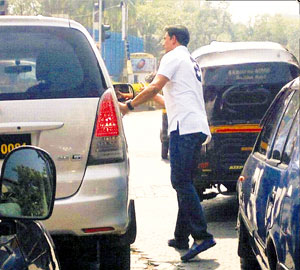
    PS: Loved it that hunky star Akshay Kumar chucked the empty ciggie pack back into the face of the car driver who had carelessly thrown it on to the street. We must all learn from Akshayji. Just one question: How did the hero manage to grab a picture of the incident? Does he take his publicist along wherever he goes? Hmmm.


    Image courtesy: Mumbai Mirror.

  • Technology changes offer hope for broadcasters at Casbaa

    By Nibha

    The 2011 edition of the Casbaa Convention closed last week with high optimism at a time of rapidly altering business models and quick time technological change for TV services across the Asia Pacific.


    “The new models provide huge opportunity,” said Mr Simon Twiston Davies, CEO, Casbaa, “while more than 420 million non-terrestrial TV connections are being logged across the region. Meanwhile, there are already more homes with multichannel TV inAsiathan the rest of the world combined.”


    On hand to give expert opinions during a variety of insightful panel sessions staged during CASBAA 2011 were a roster of high-powered international executives including Jana Bennett, President, Worldwide Networks & Global iPlayer, BBC Worldwide; Andy Lack, CEO, Bloomberg Media Group; Olivier Barberot, Chairman & CEO, GlobeCast Worldwide; Shuichi Mori, President & CEO, Jupiter Telecommunications; Blair Westlake, Corporate VP, Media & Entertainment Group, Microsoft; Jeff Shell, President, NBCUniversal International; Shigeki Nishiyama, Representative Director, Chairman, SKY Perfect JSAT Corporation; and, Nobuya Wazaki, President, WOWOW.


    Mr Tetsuo Yamakawa, Japan’s Vice Minister at the Ministry of Internal Affairs – and some of the most influential international players in Japan – detailed opportunities for deepening pay TV penetration in a market hungry for global content and collaboration with international partners and investors.


    India, too, continues to be an important market in the region and the hugely complicated and expensive task of digitizing the Indian market was the subject of one of the Convention panels. Mr Ravi Mansukhani, MD of IMCL, said digitisation would lead to a huge amount of localization of content and value-added services being introduced into the market. It was clear that setting a deadline for the switching off of analogue services was just the beginning of the process.


    Mr Liang Xiao Tao, President, CITVC described how TV audiences are evolving in China, shifting to online viewing and social media, and how more open policies on broadcasting are likely to see a shift away from the dominance of the big players.


    According to a lively team of panelists discussing the future ofMalaysia’s multichannel market there’s plenty of room for new entrants to the market. “Nearly 50% of the population have never had pay TV and they’re the ones who aren’t having their needs met,” pointed out Ms Kathleen Syron, Chief Content Officer, YTL Communications.


    With technology evolving so fast, this is an exciting time to be in the broadcasting business. The role of social media in the TV viewing experience came under the spotlight where the multiplier effect of channel and programme fans recommending TV content to their friends was immense.


    As well, as consumers increasingly demand content everywhere and anytime, the industry is combining technologies to get the best solutions for all the devices people are now using to watch video. An example was given by Mr John Couling, VP Marketing, Products and Platforms, Dolby, who mentioned that the next frontier will be bringing top-quality sound to mobile and tablet devices, so that there’s greater continuity of content quality across platforms.


    While opportunities abound, the challenge is in revising pay TV business models that would be just as valid in a world of multiple devices as it is to when the industry was literally just a box in the living room.


    As the era of digital delivery continues to grow, however, the threat of online piracy looms large and there is an imperative need to effectively address this problem.

    Held in conjunction with the Convention, Casbaa’s Annual General Meeting of its 130 Member companies drawn from 17 Asian markets saw the re-election of Mr Marcel Fenez of PwC as Chairman of the Association and the election of Mr Mark Patterson, CEO, Asia Pacific, GroupM to its Board of Directors. As part of a global media investment management group, Mr Patterson will bring a strategic commitment to advertising to the Association board.


    Stepping down from the Board of Directors, Mr Tom Keaveny of Discovery Networks Asia Pacific was recognized with Casbaa’s prestigious Chairman’s Award for his contributions to the development of Pay-TV in the region and his tireless work explaining the overall value of Pay TV to advertisers.


    Finally, in recognition of the importance of being able to give back to the communities that we operate in, Casbaa raised nearly US$50,000 during the annual Charity Ball presented by Turner for Plan International’s Early Childhood Care and Development Project to benefit underprivileged children in the Philippines.

  • Much ado over 3D?

    By Akash Raha

    Even as High Definition (HD) television channels are entering the Indian market, blogs and social networks are already abuzz with talk of 3D channels coming soon, and how that will revolutionize the entire TV-viewing experience. MxMIndia took a closer look at these claims, to find out whether such a time is actually anywhere close at hand.

    According to Ms Anamika Mehta, COO, Lodestar UM, “India is already an underleveraged and fragmented market and such innovations will definitely add to the monetary burden.  Indian consumers are yet to fully embrace HD, and 3D in that context is still years away. While some manufacturers have launched 3D products, we still do not have ample content. 3D content would mean significant investment in content cost and advertisers and viewers alike are unlikely to pay in the short run for the experience. Secondly, perhaps barring live sports there isn’t any genre that could see demand for 3D broadcasting. The other genre could be movies in theatres for an experience… Lastly, you need high quality content which lends to 3D viewing and strapped for budgets, very few production houses will bite.”

    But all said and done, the success of Mr James Cameron’s film Avatar in Indian theatres is enough proof that when you offer visually appealing content in 3D, people will flock to see it. Even so, such a number still remains way short of expectations for a market such as India to actually implement a 3D plan. If media analysts are to be believed, making 3D content for television is a very difficult job and the cost is too high to bear. Even today, many media houses use age-old technology for programming and non-35 mm cameras.

    Interestingly, in the US a $14-billion, eight-year deal by ESPN with the National Football League (NFL) includes international rights and distribution of 3D content. This is despite the earlier reports that they might give up on 3D technology altogether. Several other broadcasting plans, internationally, for 3D broadcast of live baseball and basketball games are also on the anvil. MxMIndia’s efforts to reach ESPN-Star in India for their take on the issue failed to elicit any response.

    Mr Dinesh Vyas, Business Head, MEC said that any talks of 3D technology coming into India in the current scheme of things is certainly a gimmick. He said, “HD and 3D televisions are already available in the market, but people are still apprehensive about it, especially, 3D. People get headaches when they see 3D content for extended periods. Such a technology is not going to take off any time soon in India. The Indian market is not very receptive to technology and it takes a long time to appropriate it… Cost of technology too is very high – and currently no advertiser will be interested in it, which implies that even media owners will have to drop any major 3D plan. However, there will always be small news here and there about 3D which might get everyone excited.”

    So is it a good idea for affluent Indians and the upcoming middle class to splash out on 3D television – which is touted as the technology of tomorrow? The answer is a plain simple – no. Or at least, not yet… After all, what use is a large sprawling 3D television in your living room without any 3D content to support it with? That is excluding a handful of 3D movie DVDs and Blu-Ray discs.

    However, not all media planners are pessimistic towards the technology and some still see hope, however dim, for it. Mr Premjeet Sodhi, President, The Collaborative, Lintas Media Group, said, “High value, premium or luxury goods and services are not new to the India market and like any other such goods and services the 3D TV sector is also amenable to adoption and success. However, I don’t think I am qualified to comment on which consumer technology will be successfully adopted. Whether 3D TV will be adopted and when and whether it will be a viable business is something for the custodians of these businesses to dwell upon and work towards. But, as and when the penetration of the technology reaches a critical mass, I am sure the media and advertising services will equip themselves to support the technology.”

    There may well be a time in future when 3D channels and television will be in vogue, but apparently that time is not near. If analysts are to be believed, it will be a long while before demand meets technological advancements. However, India still remains an unpredictable market. It is the same country which discarded pager technology and yet usurped the mobile. To write off 3D technology’s viability in India could be presumptuous.

  • More bite for toothless PCI?


    By Akash Raha

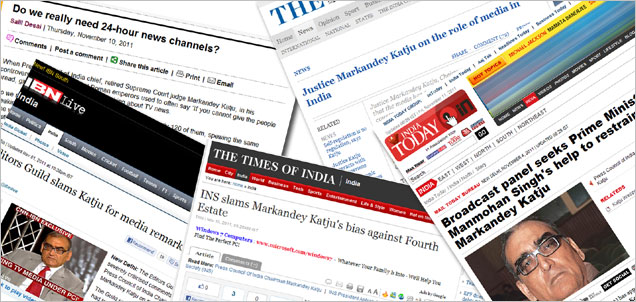
    Recently Chairperson of Press Council of India (PCI), Justice Markandey Katju triggered a volley of criticism and discussion after he lambasted the broadcast media, saying most of them suffer from “very poor intellectual level”. He went on to suggest that broadcast media should come under the purview of the PCI. MxM India asked some well-known media faces what they think.

    Arnab Goswami, Editor in Chief, Times Now and Vice President, Broadcast Editors’ Association (BEA) told MxMIndia: “I don’t know why Justice Katju is making these comments. There is absolutely no need to try and demolish the principle of self-regulation in TV news which ensures that electronic media is free and out of control of vested interests. Justice Katju should not make these sweeping generalizations.”

    Upset over Justice Katju’s comments on the media, former Chief Justice of India J S Verma too is reported to have recently called the PCI an “ineffective” body and said it should wrap up if it does not meet its mandate. Verma chairs the News Broadcasting Standard Authority (NBSA), which is set up by the News Broadcasters Association (NBA). In a recent statement Verma said that he is “deeply anguished” with the kind of language that Justice Katju uses which “sounds authoritarian”. NBA has requested the Prime Minister to stop the PCI from meddling with the dealings of broadcast media.

    On whether broadcast media should come under the ambit of the PCI, Rajdeep Sardesai, Editor in Chief, IBN18 Network said “I believe that the self-regulation mechanism which has been put in place by major news broadcasters must be allowed to strengthen itself. The Press Council has been unable to curb pernicious practices in the print media such as ‘paid news’, so I don’t see how mandating it to now to oversee the electronic media will serve any purpose.”

    Talking about whether he thinks electronic media should be brought under the purview of  PCI Paranjoy Guha Thakurta, an independent journalist and critic, said, “The electronic media needs to be regulated independently – this is because self-regulation is inadequate and ineffective under certain extreme circumstances. The regulator should be independent of both media interests – including the interests of the big corporate media – as well as the government. Even if the regulator is funded by the government, it can be truly autonomous and/or independent if it is Constitutionally mandated thus – such examples include the Supreme Court of India, the Election Commission of India and the Comptroller & Auditor General of India. Ideally the electronic media should have a separate regulator. Even if the ambit of the Press Council of India is widened to include the electronic medium, it has to be made truly independent and autonomous and, most importantly, empowered. The Press Council in its current form has no punitive powers and is hence akin to a toothless tiger.”

    To put things in perspective, PCI was established as a statutory print watchdog by an Act of Parliament in 1978. In recent times, PCI has come under question following chairperson Justice Markandey Katju’s recent remarks on the state of the media in India and its inability to keep a check on paid news.

    When asked if Justice Katju was trying to police the media, Mr Guha Thakurta played down the suggestion, saying, “The Press Council of India is a quasi-judicial body set up an act of Parliament. The way it is supposed to function has been clearly laid down. There is no question of Justice Katju (or for that matter, any Chairman of the Press Council) acting as either a good cop or a bad cop.”

    The question remains, should news broadcast come under the ambit of PCI? One of the reasons for opposing such a suggestion remains that since PCI has been unable to check the menace of paid news in print, there is no reason why it should make any positive change in the broadcast industry. Another argument says that the only reason why PCI has been unable to make a change is because it is still a toothless quasi-judiciary body and the government needs to empower it and give it some tooth. Either way, in this chatter and amidst much confusion is set Justice Katju and his criticism of media professionals as he sees them as naïve and stupid. Criticism which has obviously riled the veterans of the broadcast industry.

    In the wake of this controversy, several discussion forums are being organized on the PCI, the question of paid news, etc. The Foundation for Media Professionals (FMP) is organizing a panel discussion in collaboration with the Press Club of India on the topic ‘Media and Public Interest: Freedom vs Accountability’ on November 12 at Press Club of India, New Delhi. The panelists at this discussion will be Markandey Katju, Rajdeep Sardesai, Neelabh Mishra, Zoya Hasan, Pankaj Pachauri, Abheek Barman, Madabhushi Sridhar and Paranjoy Guha Thakurta with T R Ramachandran as moderator.

    Later, on November 18, MxMIndia has partnered the event ‘Paid News: Fooling People all the Time’ organised by Moneylife Foundation and Citizens Action Network with the support of industrialist Cyrus Guzder to be held in Mumbai’s Madame Cama Hall. The evening will see the screening of the documentary ‘Brokering News’ followed by a panel discussion with senior journalists and the film-maker Umesh Aggarwal. The panelists at this discussion are Umesh Aggarwal, Ayaz Memon, Paranjoy Guha Thakurta, Bhawana Somaaya, and Sucheta Dalal. This panel plans to discuss the issue of paid news, which has been a bugbear even for regulatory bodies such as the PCI.

    For more: http://www.mxmindia.com/2011/11/mxmindia-partners-%E2%80%98paid-news%E2%80%99-event/

  • Haresh Chawla quits Network18 to pursue ‘other’ interests

    By A Correspondent

    Mr Haresh Chawla, who has led Network18 for well over a decade, is currently overseeing a seamless leadership succession plan at the half-a-billion-dollar (in current year’s revenues) media conglomerate spanning news and entertainment broadcasting, web portals, publications, filmed entertainment and ecommerce operations and Viacom18.

    Commenting on Mr Chawla’s decision to eventually pursue other interests, Mr Raghav Bahl, Founder & Editor of Network18, said: “Haresh is the kind a of colleague one can only dream about, so utterly honest, committed and focussed he is on delivering excellence. However, I fully understand his desire to explore other interests, being a person with such boundless enthusiasm and passion for success. Perhaps Haresh’s greatest achievement is the strong cadre of next-generation leadership that he has nurtured at several of our Group operations. Over the next few months, Haresh will work closely with me and this young crop of leaders to ensure a seamless transition of leadership. Finally, on a personal note, I wish to say that you never can quite say good-bye to an extra-ordinary friend and colleague like Haresh. He will always be around, as a friend, philosopher, guide and advisor to Network18, and me, personally. His can-do spirit is irretrievably woven into Network18’s DNA.”

    Adding to the sentiment, Mr Chawla said: “It’s very rare for a professional to play a part in setting up so many businesses in a lifetime, and to lead such a talented team as we have at Network18. I am forever grateful to Raghav for the opportunity and the faith that he had in me. And I am deeply grateful to all my colleagues who worked with me to build this Network. Together, we built an enviable culture of excellence and speed at Network18, and I will work towards ensuring this legacy is carried on with the new leaders in the Group. Personally, it’s been a most fulfilling phase of my life and I now look forward to taking on newer challenges”


  • Rajesh Jejurikar joins Zee as prez

    By A Correspondent
    Zee Entertainment Enterprises Limited (Zee) has announced the appointment of Mr Rajesh Jejurikar as President, Zee Entertainment Enterprises Limited (ZEE). Mr Jejurikar has resigned has Chief Executive-Automotive Division at Mahindra & Mahindra. He will report to Mr. Punit Goenka, MD & CEO, ZEE for his role. In a career spanning 24 years, Mr Jejurikar, has worked in the packaged goods industry and advertising before he joined Mahindra & Mahindra in 2000.

    Speaking on the appointment, ZEE MD & CEO, Punit Goenka said, “We welcome Rajesh to the Zee family and are confident that his joining will further add to our capability of being a fiercely competitive Organisation. His vast experience in marketing and brand building will add immense value to the Organisation.”

    Commenting on his new role, Rajesh Jejurikar, the newly appointed President at Zee said, “After having spent a fulfilling decade at Mahindra, where I have grown and learned so much, both personally and professionally, I am happy to now be a part of India’s pioneering television broadcasting company. The dynamics of the media and entertainment sector excites me and I look forward to working with the Zee team.”

    Mr Jejurikar is a 1986 batch MBA from S. P. Jain Institute of Management and is likely to join Zee in February 2012.


  • Indigestion!

    Dabur Hajmola: Ad hazam nahin hua!

    Dabur has come up with a very ambitious idea in an effort to expand the market share for its digestive tablet brand, Hajmola. So far, if I recall correctly, the tablet was pitched at the over-eaters and the greedy pigs. But now Dabur wants you to have a Hajmola after every meal and snack! In short, they expect to net a whole lot of new consumers, many of who may never even have heard of the brand.

    Now when marketers attempt such a Himalayan task, it’s paramount that the advertising shines for them to harbour any notions of success. Sadly, Dabur has released a safe, dull, regressive commercial for Hajmola. It’s back to the ‘Desh ka choice’ route of the eighties. The commercial features all sorts of people eating all sorts of things and then topping it all up with a Hajmola. From burgers to paani puris to idlis to samosas to kebabs. ‘Hajmola kare khana complete’ is the new tagline.

    Total flop show. A tired idea and an even more tired execution. This is the sort of stuff we have seen over and over again. When what was needed out here was some advertising magic to go with such an ambitious project.

    Rating: (On a scale of 1 to 5): 0. Got a bad digestion!