Blog

  • Karthik Lakshminarayan to leverage his TV experience @ Crest

    By A Correspondent


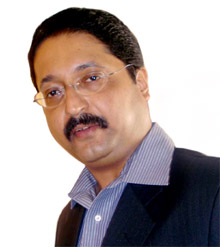
    Madison Media has roped in Karthik Lakshminarayan as COO of Crest to head the AOR of its ITC business. Mr Lakshminarayan has earlier worked with Madison and its homecoming for him. He has essentially been a media agency person, having spent close to 13 years on the agency side with Initiative Media, Starcom, besides Madison. He then crossed over to television where he spent close to four years with Colors and Food Food.


    Talking about the edge he will have because of his television experience, he said, “Having worked closely with the leading channels and even on the production side, I think it has given me first-hand experience of working on the other side of the business. Media planners tend to look at the past data of the channel to predict future and I think having worked in channel has given me an insight to work this premise in a better and meaningful way. It will help in bringing that amount of difference and identify benefit for our clients.


    “Also having worked on the production side has given me fair knowledge of how content can be integrated in a better way to bring a better value to the client,” added Mr Lakshminarayan.


    For Crest, he will be alternating between the Bangalore and Kolkata operations of ITC. In his career, he has worked on a large and diverse portfolio of brands including Godrej, Cadbury, Marico, Asian Paints, Bharti Axa, Infosys, Britannia, Titan, Heinz, Pillsbury and Hallmark amongst many others.


    On his role at Crest, Mr Lakshminarayan added, “Crest has been doing great work for ITC in the last one year and I am looking at further raising the bar of the work being done.”


    Punitha Arumugam, Group CEO, Madison Media, commented, “I am delighted to have Karthik back with Madison Media. The best testament for Madison Media as an organization is when ex Madisonites as talented as Karthik are willing to accept and explore career opportunities with us once again. “

  • Newswatch: Kalpana Sharma on the falling standards in newspapers

    By Kalpana Sharma


    When the new chair of the Press Council of India, Justice Markandey Katju held forth on the competence, or rather incompetence and lack of learning of journalists, we were outraged. How dare a person from outside the media cast aspersions on our competence? Has he any idea how difficult it is to produce readable newspapers and magazines and watchable TV shows?


    Yet what was considered inexcusable only a few decades ago now passes without anyone being hauled over the coals. By this I mean the bloomers one can find almost every day, particularly in print. On TV we now know that there probably are as many mistakes as in print. It took the former chair of the Press Council, Justice PB Sawant to catch one such “inadvertent” mistake and to ensure that it was never forgotten. But in print, the errors jump out at you every day – wrong photographs, captions, erroneous headlines, inaccurate data. Are all these inadvertent or do they reflect a lowering of standards in the media – where the rush to print has introduced carelessness that can sometimes prove costly?


    Earlier, nothing you wrote could find its way into print without passing through several filters, including people who were clued in on the law. Headline writers generally read the whole story before giving a headline. Even these would be checked before the page was passed. Much of this still exists but there is an obvious slackening of rigour. If there is a ‘post-mortem’ the next morning, and many media organisations have dispensed with this altogether, heads probably don’t roll if there is a mistake unless it provokes a legal notice.


    Take just one day in the life of newspapers in Mumbai. On November 28, three newspapers that I read carried stories on the efforts of two NGOs to have a car-free day in South Mumbai. The divergence in the numbers quoted in the reports tells its own story.


    On page 5, The Times of India had the following headline: “8,000 ditch vehicles to celebrate car-free SoBo”. (For the uninformed, SoBo is the fashionable name for south Mumbai.) But while the headline was unambiguous about 8,000 people participating, the first paragraph of the report read:


    “An initiative to reclaim south Mumbai for pedestrians and cyclists got off to a great start on Sunday morning, with around 800 Mumbaikars ditching their vehicles to participate in a walkathon and a bike-a-thon.”


    So who is right? The headline writer or the reporter?


    If you thought reading another paper might yield more accurate information, you would be mistaken. Hindustan Times, on the same day, had a six column headline on page 5 stating, “SoBo’s Car Free Day fails to gather steam” and below that: “Poor response: Only 150 people turn up for event, participants complain of poor arrangements.”


    How did HT spot only 150 people when TOI counted 800? Or 8,000?


    In frustration, I then turned to Express Newsline of Indian Express. It echoed HT’s headline: “Lukewarm turnout, but walkers and cycling enthusiasts have free run”. But unlike the 150 number of HT, Express quoted an organiser claiming that 150 cyclists and 200 pedestrians had participated. So that adds up to 350. So in the end were there 8,000, 800, 350 or 150?


    For those outside the media, this might sound like nitpicking. What does it matter? In any case, people only read one newspaper – that is if they read anything except the entertainment supplement.


    Yet, the fact that a simple report like this could show such variance actually points to a very basic problem in journalism today. The golden rule about statistics and numbers is: if in doubt, leave out. The structure of newspapers is supposed to provide the checks so that inaccuracies are caught. Journalists are supposed to be trained to be especially careful with numbers. And to double- check everything, even the most trivial detail. When something so basic begins to break down, then you are laying the ground for the kind of mistakes that bring in lawsuits.


    So even if Justice Katju’s remarks were sweeping generalisations, I would suggest that they were not entirely off the mark.


    Kalpana Sharma is an independent journalist and columnist.

  • J Dey murder case gets murkier

    By Ranjona Banerji


    When journalist J Dey was murdered in the Mumbai suburb of Powai in broad daylight in July 2011, the entire journalistic community came together in shock and horror. The first impulse was to believe that Dey was killed in pursuit of a story or that is, he was killed because he was a journalist. There were rallies and marches and seminars and panel discussions. Some sections of the media called for a special law to deal with attacks on journalists. It was alleged that the police would try and cover up the crime. The chief minister of Maharashtra swore that the administration would work as fast as it could to find those responsible.


    But since then, the story has become murkier. Dey, a crime reporter who had written a book on the underworld, was not killed because of any imminent story that he was working on, that much was clear. That the gunmen who did the deed were part of an underworld gang – specifically that of Chhota Rajan — was also clear. But there were several unanswered questions here as well and rumours amongst the journalistic community started emerging, of all sorts and colours.


    The story has now moved into the realm of the bizarre with another journalist, Jigna Vora of the Asian Age, being picked up for being involved in Dey’s murder – she is accused of passing on some vital information to Chhota Rajan which led to the killing. Although allegations of Vora’s involvement have been the air for a few months, her arrest was a shocker. Once again, many journalists came out in her support and her employers stood with her. But that was the initial reaction. As more details of the case emerged, we now learn that her colleagues are not so supportive any more.


    The journalistic community, which was brought together by Dey’s murder, is no longer a united front. Dey’s death was not of dangers inherent in the pursuit of a story and crime reporting in Mumbai cannot be compared to covering a war zone. The implication of another journalist has soured the waters. Journalists pick up a lot of information and not all of it can be printed. But that doesn’t mean that the information is false: it is sometimes just not possible to corroborate it. Dey’s death and Vora’s arrest fall into that category. The result is that a sympathy wave will now have to make way for the twists, turns and turmoil of a regular crime story. The kid gloves may well come off as friends of the murdered man and the accused trade charges and is it not likely that we will find some very unsavoury happenings at the bottom of it all?


    The implications (and accusations by the police) here are of a strange case of professional rivalry – not in trying to get a better story but in currying favour with your sources or the subjects of your stories.


    In all the discussion about paid news and medianet, perhaps this kind of journalistic corruption also needs to be included.

    **
    This is an aside which is aimed at the PR industry because I am a little curious and would like to know the experiences of other journalists. To put my questions in perspective, my last job was with DNA, where I was senior editor and was on the edit page. I quit in March 2010. But I did continue to write edits, columns and a weekly food review as a free lancer on contract for about nine months after that. In January 2011, DNA shut down its edit page. Soon after my food reviews stopped and in May, all my dealings with DNA ended. I have since then not worked with any other newspaper. I consult with MxMindia and I do a weekly column with Mid-Day.


    One of the best parts of not working for an organisation is that PR people drop you like a hot potato (you can see why I will never become as powerful as Barkha Dutt or Vir Sanghvi). My contact with public relations was limited to a few emails about new restaurants, which soon petered out. But this wonderful peace has been shattered over the past week. I have been called to cover some medical event because I am “the health reporter for DNA”, to write about diamonds for Hindustan Times and to cover art events for Mid-Day. These are calls, not emails.


    I would really like to know how this works. Someone suddenly thought of me in one PR agency and a domino effect started? There are people with the same name and number as me who work in DNA, Hindustan Times and Mid-Day? I have inadvertently entered my name in some sort of PR roulette?
    If anyone can help me, I would be very grateful.

    eom

  • CNBC TV18 Prime HD goes experiential

    By a Correspondent


    Targeted towards affluent male consumers across age groups, Aurora Comms is running its latest campaign on the new CNBC-TV18 Prime HD channel across electronics stores. Currently running in Mumbai, Delhi, Bangalore and Ahmedabad, the duration of this campaign is three weeks.


    Aurora Comms uses multiple television panels displayed in electronic stores to create an experiential zone for brands. While some of the brands use the medium as pure-play display medium, for some it also works as experiential or sampling. The business news channel is being broadcast live at various Croma Stores across multiple cities. The channel has also taken some facades for branding as a part of their out of home campaign.


    CNBC-TV18 Prime HD reaches out to premium consumers of the electronic store Croma through streaming of the HD channel across multiple LCD panels displayed in the store, creating an ambience of High Definition broadcast.


    Mr Samir Vithlani, Director – Key Accounts, Aurora Comms said, “It is our endeavour to deliver to targeted consumers in a contextual manner. Croma attracts intellectual consumers and therefore we worked on offering branding and showcasing the channel across these stores.”

  • 5 indicators of when it’s time you should start looking for a new job

    By Jaisurya Das


    1. Your boss smiles through the day… he probably found a new job!

    Tough to ask him (or her) actually but in all probability the smile is an indicator of things to come. Either the company has just decided to make him the big boss or he decided to call it a day and found his dream job. Or may be it’s that Hawaii vacation at someone else’s expense.


    2. Everyone is spending a lot of time chatting on their machines… the place just got too complacent!
    It’s nice isn’t it when even the field force can actually enjoy the luxury of a nice office and the computers. Wonder how long the company will survive. May be a good idea to check if the leaders are playing too. It’s career time dude. Don’t play, work. If not here then elsewhere before your career disk needs a hard reboot.


    3. Your customers give you a cup of tea and discuss the political climate… they don’t want to do business with you!
    Good customers and relationships that you believe can bail you out on performance and suddenly you notice lengthy meetings have essentially covered everything from the telecom scam to the Anna Hazare campaign and even the diving stockmarket. Hey, weren’t you there to discuss work? Take the hint: business with you is a no-no now for them!


    4. You believe you have learnt everything there is to the business… it’s about time you start meeting people sharper than you!
    Increasingly popular knowledge syndrome as I call it and interestingly causing even the larger companies getting hit. Often this belief spreads like a virus too. Let me tell you from experience. Three decades living on media probably taught me just about the basics . One learns by the hour now, be it audience, brand or just competition!
    Start talking to people around you.. You might just get a realistic view of what it takes to succeed….


    5. You have the ‘just got my dream job’ smile even after a year of work… You just stopped working!

    Ah ! Life is made isn’t it and your living on cloud nine thinking of your next holiday, the latest Tab and the evening cocktail and the swanky new lounge down the road. Have you realised that it’s also about time that you delivered on your targets and KRAs. Wonder if you still remember them or is it the delicately flavoured jamaican dark rum that just too prominence ?


    And, yes, if you decide to move on, sit back and think of all your successes and failures in the last job. It may just become your best operations manual for a great career ahead. Best wishes.


    Jaisurya Das is a veteran mediaperson and chief mentor and founder, Xanadu Consulting Group. A popular mentor and counsellor, he is Contributing Editor, MxMIndia, and guides readers at Dear MxM every week (see: http://www.mxmindia.com/dear-mxm)

  • Anugrah Madison offers Rural Academy for management students

    By A Correspondent


    Anugrah Madison Advertising, the rural division of Madison Communications Group, has launched a rural marketing education service called Anugrah Madison Rural Academy (AMRA) to teach the basics of rural marketing to management students.


    With more and more marketers turning their focus to rural India, AMRA aims at catering to that gap by arming students on the basics of rural marketing. Initially AMRA will offer certificate courses of one / two / three credits. If the management institutes are interested in giving an idea of the basics of rural marketing to all their students, it can also conduct a one-day / two-day seminar on rural marketing at the Management Institute’s premises.


    Announcing the development at the Silver Jubilee celebrations of the company, R V Rajan, Chairman of Anugrah Madison Advertising P Ltd, said, “With the growing importance of rural markets there is a growing demand for skilled / trained human resources willing to work in the rural areas. Many management institutes across the country have started offering rural marketing as an elective course. But there is a dearth of good faculty who have hands-on experience to provide practical knowledge for teaching the subject. AMRA hopes to fill this gap.”


    The faculty from AMRA will be the top management of Anugrah Madison and a few others with several decades of experience in dealing with rural marketing initiatives. Besides, AMRA will conduct the classes at the premises of the Management Institutes over weekends or according to the convenience of the Institute.


    Differentiating itself from other institutes that offer rural management courses like IRMA in Anand or other institutes that offer rural marketing as an elective, AMRA looks at customizing the course. It is not a full-time course but is aimed at building a foundation in rural marketing. AMRA will be responsible for course content, faculty and evaluation of students based on assignments.


    According to R Seshadri, Managing Director, “Mr. R V Rajan, a highly respected Rural Marketing Professional and one of the Founders & Past President of RMAI will be the Course Director. Initially the course will be offered to only Management Institutes located in South India.”

  • Vizeum wins media duties for Educomp Schools

    By A Correspondent


    Educomp Schools, as part of its growth strategy, has appointed Aegis Media’s Vizeum India as its media AOR. Media agency Vizeum India, which operates in 55 countries, will now handle Educomp Schools’ media mandate in India to identify the appropriate communication programmes and deliver the same most cost optimally.


    Founded in 1994, Educomp Solutions is a globally diversified education solutions provider. With an employee base of more than 10,000 professionals, Educomp serves 26,000 schools and 15 million learners and educators in India as well as the US, Canada, Singapore and Sri Lanka. The company works closely with schools to implement innovative models to create and deliver content to enhance student learning.


    Educomp Schools provides educational content / IP and educational infrastructure to a range of differentiated preschool and secondary school brands in its quest to be the school service and Infrastructure provider of choice for all demographic and psychographic segments of society across India. Between the three brands, Universal Academy, Takshila Schools and The Millennium School with their different learning systems, the infrastructure and fee structures, its schools provide distinctly different schooling experiences to students and parents.


    Partho Dasgupta, President, Educomp Schools, said, “We are happy to confirm the appointment of Vizeum as our strategic media partners. Their overall result-oriented approach is quite unique and interesting. They are mandated to help us overcome some of our business challenges. We look forward to working with Vizeum and wish them all the very best.”


    Commenting on the win, S Yesudas, Managing Director – Indian Subcontinent, Vizeum, said, “We have pleasure in welcoming Educomp into the Vizeum family. It is a challenging assignment and we are fully geared up with the right delivery solutions. We look forward to addressing the business issues of the client as their extended brand team. We are thankful to the Educomp management for considering us worthy to partner them. This business will be handled out of our Delhi office.”

  • AIM slams penalty against Times Now

    By A Correspondent


    Tarun Rai, President, Association of Indian Magazines (AIM), has reacted strongly to the penalty against the Times Now channel in the defamation case brought against it by Justice P B Sawant.


    “The quantum of penalty levied on Times Now is unheard of. It is not only unreasonable but can set a precedent that would threaten the independent functioning of news media in the country. Media in India is very vibrant and has helped uphold the strong democratic traditions of our country. It should be allowed to function and grow. At AIM (Association of Indian Magazines) we are extremely concerned about this development and hope for a fair outcome that will encourage media in India to continue to operate independently and fearlessly,” said Mr Rai in a statement to the media.


    The Indian Broadcasting Foundation (IBF) and the News Broadcasters Association (NBA) earlier had also reacted strongly to the impact of the Supreme Court’s dismissal of the Special Leave Petition filed by Times Now. The channel had asked for relief against the Bombay High Court order directing Times Now to deposit Rs 20 crore and furnish a bank guarantee for Rs 80 crore to hear an appeal in a defamation case.


    The directive occurred following a district court in Pune asking the channel to pay Rs 100 crore as damages in favour of Justice (Retd) PB Sawant for alleged defamation. The defamation case was registered after the channel published a photograph of Justice Sawant in place of another judge with a similar name, in connection with the Ghaziabad Provident Fund scam.


    Times Now had appealed to the Bombay High Court.

  • VIP journeys into e-commerce

    By A Correspondent


    Buying a VIP suitcase has become easier. Through its e-commerce site (www.vipbags.com), consumers can browse through VIP’s wide range of product offerings and make purchases online. The bags will be delivered to their doorstep within seven working days at no extra cost. Currently, payments can be made only through credit card, debit card or net banking but soon ‘cash on delivery’ will also be offered on the site. www.vipbags.com can also be used for gifting.


    Speaking on the initiative, Manish Vyas, Vice President Marketing, VIP Industries, said, “VIP as a brand has through the years been constantly evolving with the consumers to give way to category defining product ranges. The e-commerce feature is yet another initiative that places VIP Industries high up on the social relevance scale. It is focused on bringing the VIP brand experience closer to the consumer base no matter where they are in the country. With the launch of the online purchase feature, we have taken the first step in ushering a new age in the luggage segment.”


    Established in 1971, VIP Industries Ltd today has a global footprint with its products available across India and various other countries. Its four factories produce nearly five million pieces a year, making it the second largest producer of luggage in the world.

  • Debrief: High on Mia empathy

    By Anil Thakraney


    Interesting TV campaign from Tanishq for their new sub-brand called Mia. Mia is a jewellery brand targetted at working women. I suppose it’s meant for lady execs who usually wear imitation jewellery at work. And yes, I do think there’s a separate market for this segment. Jewellery pitched for use during momentous occasions like marriages, etc, can’t be adorned for daily wear. Good marketing strategy.


    Rating: (On a scale of 1 to 5): 4. Sound strategy backed by relevant creative.

    And what’s even better is that the creative work shines. There are three commercials on air. The idea is this: A female executive feels really happy when she wears her jewellery. Even if she’s stuck in a boring workshop. Or can’t find a parking place at the office building. Or gets a poor increment. The format of each commercial is that in the beginning you see the woman delighted at wearing her jewellery. And later arrives the twist of an ‘unhappy’ work situation.


    I like this campaign. For two reasons. One, because of the sharp understanding of the working woman by the advertiser. Which is that whatever be the work pressures, however sadela her job might be, a woman would want to look pretty at workplace. Two, the execution is steeped in reality. Yes, highly boring workshops and car park mess are realities we all totally identify with. The contrast is quite endearing. That of a desire to look beautiful. And a real life that’s full of stress. Good show!

  • DLF brings Scarecrow Delhi to its roster

    By A Correspondent


    DLF has appointed Scarecrow Communications as its creative agency for some of its residential products across India. The agency was selected after a rigorous pitch process. The spends would be sizeable and could fall in the vicinity of Rs 15 crore Though exact figure could not be estimated, but knowing the way residential projects are advertised these days it will be significant.


    Commenting on the development, Mr Raghu Bhat, Founder Director, Scarecrow Communications, said, “This is a very important win for our Delhi office. DLF is the largest real estate brand in the country. They are looking for fresh thinking and this is a great opportunity for Anindya and the Delhi team to do some great work.’


    On the win, Mr Anindya Banerjee, ECD at Scarecrow Delhi, said, “It’s a privilege to be working on a brand like DLF. It is also a challenge to be working on a category that shows immediate results.”


    Mr Manish Bhatt, Founder Director, says Scarecrow Delhi has “big plans”. “This win gives us a lot of encouragement. DLF is an iconic brand and this gives excellent visibility especially in the print medium.”


    For the record, DLF is India’s largest real estate company. Founded in 1946 by Raghuvendra Singh, it has currently over 3000 acres of planned development in place. It is best known for having developed Gurgaon into a major international sub city. DLF is a well-diversified group and their interests span residential, commercial and retail segments.

  • We’ve bn inconsistent in r work: Sonal Dabral


    By Anil Thakraney


    Sonal Dabral’s career has been nothing short of fantastic. In the nineties he partnered Piyush Pandey and together they turned around the fortunes of O&M. He later flew to Malaysia and then Singapore, and did ditto with O&M’s offices there. A few years ago he took on another challenge: To recreate the magic at Bates, where he is Regional Creative Director, Asia Pacific & Chairman for their Indian operations. While he has been over-seeing India, Sonal physically moved here only a few months ago. And though a few cartons still remain to be unpacked, the man is very clear about the way forward for his agency.


    In a rare, frank and a very insightful interview, the 49-year-old reveals his ideologies, his plans for India and his opinions on the ad industry. We also take a trip down his memorable career journey.


    What struck me most is how clued in Sonal is about the key challenges that face brands in contemporary times. I don’t always find that in Indian ad agency leaders.


    Q: There’s a buzz about you joining Mudra.
    No truth in it at all. But I can understand why the rumours must have started. Balki is the face of Lowe, Prasoon is the face of McCann and Piyush, of course, is the face of O&M. So for somebody of stature to walk into a big agency like Mudra… that just leaves me.


    Q: But if they approached you, you would talk to them?
    I won’t be interested. Lots of things to be done out here at Bates.


    Q: What motivated you to shift to India after all these years?
    When I joined Bates about three years ago, the agenda as the regional creative head was to improve the creative health of the agency through the right kind of hiring, inspiration and hands-on involvement. Bates, historically, has had some big clients and pockets of excellence with sporadic good stuff coming out. But overall the network’s creative health has not been good. My additional role is that of Chairman, Bates India, and it was the duality of the role that attracted me to this job. Which is to get back in touch with India and yet have a bigger role than what I was doing at O&M Singapore. So my first job was to ensure that we had the right kind of creative leadership in every place. Once that got done in the last three years, we started looking at India as a very important market for us. And India is a place where I can make a visible difference because of my equity out here, because of all the years I have spent here. And that’s why I decided to locate here.


    Q: Cut to the past. Why did you leave India in the first place? You were Piyush’s blue-eyed boy at O&M. Doing phenomenally well in the agency.
    In the latter part of the nineties, Neil French had taken over as the regional creative director for Asia. On his first trip to India he saw some print work I had done for Cadbury Perk and he was pretty impressed. He cancelled a lunch meet with Ranjan Kapur and Piyush Pandey and took me out for lunch instead! (Smiles.) And he asked that I move to O&M Malaysia. The agency was going down, and they desperately needed a creative head to come and build the place.


    Q: Am sure Piyush must have been upset with your decision to move.
    Neil spoke to Piyush and Ranjan about this. And they called me for a morning cup of tea on a Sunday. They said Neil sees this as a good opportunity for me. They said they wouldn’t like me to go, but wouldn’t stand in the way either. I thought about it for a long time because I was heading O&M Bombay which was 50 percent of the agency’s business, we were riding high. Anyway, I did a recce trip to Malaysia, and the O&M office turned out to be a small one, though they gave me a red carpet welcome. I came back and thought I would never join such a small place. Then they started writing to me, saying they wanted me out there. You know Anil, I believe in destiny, I believe things happen for a reason. Also, the charm of the unknown has always enticed and fascinated me. The discomfort of going to a new place, that too to a place that has nothing to offer, appealed to me. The same thing happened when I left Lintas to join Ogilvy in 1991. Ogilvy was nothing at that time and the only remarkable thing they had done was the ‘Mile Sur’ film.


    Q: But then you eventually left Ogilvy and joined Bates.
    Again, for the same reasons. Helping a place to shape up has always excited me. Maybe it’s to do with a big creative ego, though otherwise I don’t have an ego at all.


    Q: The key difference between working in an international market and working in India…
    In India we work a lot on the individual, friendship level. It’s like if I know Thakraney really well, and he is the agency and I am Unilever, then Thakraney and Dabral will work together and create a campaign. Things happen on a very personal level here. In the international markets… and you can call it professionalism or stuck-up-ness… there are still a lot of procedures and processes that get followed. I prefer a combination of the two methods. We are a very chaotic, free-for-all nation and at times that free-for-all-ness helps creativity. But it also brings with it a sense of indiscipline. And this affects the execution of work, that’s where we fall flat. Obviously, in the last 12 years, I have learnt something that’s different from India. And I am trying to get some systems in place in the way we work out here at Bates.


    Q: When you first came to Bates India, the good and the bad things you noticed…
    (Thinks carefully.) Creatively we have not been consistent. There is potential but the realisation is not happening. We need to correct that so that our number of hits increases.


    Q: The significant changes you’ve made in the last few months.
    I want to make this an agency of people who are not just creative but are intelligent, aware and knowledgeable creative people. True creativity needs you to be curious. The curiosity bit I want to feed as much as possible. Last weekend I invited a film chief from the National Institute of Design to conduct a film appreciation workshop. And it had nothing to do with advertising. Sometime later we’ll have another kind of workshop. Basically, I want to tell people that advertising is the only profession where you don’t learn things from the inside, it will all come from the outside.


    Q: What do you look for when you hire creative people?
    Besides obviously the work, I look for a certain amount of authenticity. It might be difficult to get that in a meeting, but you do get a sense of it. It’s very important for any creative person to let his or her guard down.


    Q: As a client, why should I choose Bates?
    We are the ‘change’ agency. It’s about making strategies that are based on the shifts that are happening within the product category or within the target audiences. And based on the cultural shifts that are happening within the society. We call that positioning ‘Change Engage’. It means a changed thinking which leads to work that has a two-way communication with the consumers. For example, you saw what happened during the Anna Hazare movement. It was about the power of people coming together really fast and having an opinion about something. Or for example what happened with the Kolaveri video. It’s the power of tech that consumers now have. This means advertising has to change in the way we approach things. We need to make an impact on a consumer for him to start conversing or debating about our brands. The other thing is we are an Asia-only network, so we are still small when compared to a JWT or an Ogilvy. So there’s a certain amount of nimbleness and spontaneity that we have. Also, on a personal front, the wealth of experience I bring with my Indian and global experience.


    Q: Why hasn’t Bates really taken off in India?
    It’s to do with the fast changes that have taken place. It’s been only about four years since it has emerged as Bates. Before that all the mergers were taking place. First it was Enterprise, then came David. Also there have been personnel changes. Subhash Kamath left for BBH, I have come now, Sandeep Pathak has taken over as CEO. It’s been going through a churn. It’s only now that we have begun to feel settled.


    Q: What’s all this about Smashing Pumpkins and Cabbage Curry?
    Smashing Pumpkins is something I coined for our annual creative conference. We would smash pumpkins at the event. Bates’s earlier colour was pumpkin yellow. And I said we need to be doing smashing work, so that’s how it got coined. Cabbage Curry Fridays I had started in Malaysia and Singapore. Every Friday we would have a chat session or a presentation which had to do with the culture of curiosity I was talking about earlier. I want to tell people that if you don’t have a passion beyond advertising, then your mind will become like a cabbage. (Laughs.)


    Q: What’s happening on your movie script?
    There are a couple of ideas in my head. I have started working on it but it’s been going very slowly. I have a story in mind that’s solid and substantial. It will not be a time-pass flick.


    Q: I last met you in the late nineties when you were a young, happy creative director. I have a feeling you have become a tough guy since.
    I have changed over the years to an extent which is required to run a place. But otherwise I am not as tough as I should be. Laughter to me is the biggest asset an ad agency can have.


    Q: I think in India you’ll have to kick ass at times.
    I totally agree with you.


    Q: Would it be right to call Piyush Pandey your mentor?
    He is one of the people. There would be others too like Neil French.


    Q: Do you at times feel you should never have left India? Bates is a small player, and had you stuck on, you could have been the captain of a very large ship.
    Not at all. I am extremely happy and I feel very lucky. That I did go and work in Malaysia and Singapore. The exposure that gave me towards communications, advertising, work, etc, couldn’t have happened in India. Also when I was abroad there were offers to head a large organisation here, and those offers won’t run away anywhere. I totally believe in destiny, I wasn’t meant to be here for those 12 years.


    Q: One creative chief of a large Indian agency you most admire.
    (Thinks for a long time.) I like the way Aggie (Agnello Dias) and Padhi (Santosh Padhi) have gone about their work. The way they have approached business, the kind of work they are doing. Their small size has not held them back. In terms of the large agency Chairmen, is there anyone I envy or admire? Well, no, not really.