Blog

  • After TVCs, the next best thing


    By Shubhangi Mehta


    Commercial advertisers often seek to generate increased consumption of their products or services through “Branding”, which involves the repetition of an image or product name in an effort to associate certain qualities with the brand in consumers’ minds.


    The marketing mix has been the key concept in advertising. Suggested by Professor E Jerome McCarthy in the 1960s, the marketing mix consists of four basic elements, famously called the Four Ps. They are Product; Price, representing the process of determining the value of a product; Place representing the variables of getting the product to the consumer like distribution channels, market coverage and movement organization; and Promotion, the process of reaching the target market and convincing them to go out and buy the product.


    There is a plethora of ways to do this. The modes of advertising include television, radio, online, OOH and then these further have various categories in them.


    Television is generally the first choice for most of advertisers, but what about radio, digital and OOH?


    Prasoon Joshi
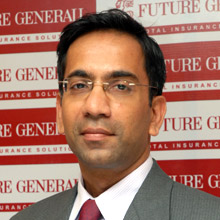
    Abraham Allapatt

    Prasoon Joshi, Executive Chairman, McCann Worldgroup, commented, “It’s all about the requirement of a brand, it depends on a particular brand as to what marketing mix is to be used. There might be a brand for which I may not even use television, but might go in for a local newspaper etc. Hence it is not possible to choose a particular medium over others across the board.”


    Abraham Allapatt, Head – Brand & Corporate Communication, Future Generali India Life Insurance Company Limited, said, “Frankly, one cannot definitively state that one of these mediums is the best (after TV) simply because each of them has pros and cons. Radio is good if one wants to reach out to young/upwardly mobile urban customer prospects with a limited budget – especially if you have a powerful/simple message and creative to deliver, but it’s limited in terms of reach.


    “Similarily when we talk about print, it can target specific audience and is quick in reach but again it is a little expensive as compared to other media (cost per reach) and it is relatively limited in terms of reach at an overall level versus TV.


    “OOH is a powerful reminder medium for topical messages but is a relatively disorganised sector/medium. There is no science to measure impact/effectiveness. Large agencies use some tools to add some science to measurement, but it is still not too dependable.


    “Digital is focused down to the individual and is measurable accurately and instantly. It is very good for reaching young, urban, upmarket segments, plus it is cost-effective and an image driver. The only issue is that it is still limited in reach to large cities/income segments.”


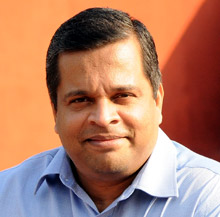
    Apurva Purohit

    Apurva Purohit, CEO, Radio City 91.1 FM, said, “Radio as a medium has the ability to impact millions of Indians due to its wide coverage. And that’s just one of the multiple benefits of the medium! It enjoys a deep personal connect with listeners, allows marketers to create customized and local communication for pocketed audiences, and offers extensive on-ground engagement prospects to supplement advertising campaigns. Such offerings make the medium superiorly effective and attractive for marketers.


    “Radio has an edge over other media due to the local relevance that the medium offers. Advertisers seek to maximize efficiency of their marketing spends by looking at micro targeting communication to consumers in focus markets. Radio serves as a key medium to fulfil this need with its ability to create customized and local communication for the relevant target audience.


    “Another important feature that gives radio a one-up is that it’s an anytime access medium. Hence, advertisers can reach their consumers anywhere, anytime. Different sets of people tune into radio at different points of time and therefore the medium is consumed across the day. This is unlike print which is mainly consumed in the morning and TV which is mainly consumed at night.


    “Of course, the medium’s cost-effectiveness is unquestionable. Radio is far more inexpensive than print. If you need a local media plan you will pay six times on print, while at one-sixth you will get the same kind of reach and frequency on Radio.”
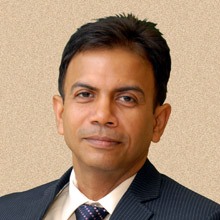
     

    Sanjay Tripathy

    Sanjay Tripathy , Executive Vice President – Head Marketing and Direct Channels at HDFC Life, said, “Choosing a medium will always be the prerogative of a brand marketer depending on his/her key objectives. While Television is the most preferred medium for marketers because of the kind of reach and opportunity for quality of communication it provides, Print comes a close second because of its ability to provide detailed information about the product/ service. This medium is also hugely preferred because the circulation and readership numbers are measurable unlike Radio and OOH, which are usually used for local, last mile reach. Contrary to popular perception, in a highly populous country like India, print still has a lot of scope for growth in the interiors where literacy is still catching up. Print provides flexibility in terms of customisation as per the regional target audience. However, the characteristics of the target audience influence hugely in terms of ‘where’ would the marketer best capture their attention, leaving a lot of scope for exploring different media channels. Especially in case of digital – the new-age innovative medium, which is my personal favourite and which, I believe, has a lot of potential over all the other media. Going forward, as most people are spending more and more time online and on social media, these will emerge as preferred media for brand engagement.


    Kalyan Kumar, CMO Games 24×7.com, said, “Being an e-commerce company, our vote will definitely go to digital. Digital is growing rapidly and has a great future scope. If there was a medium to be chosen after television, then hands down, my vote goes to digital.”


    Ranjeev Vij, Vice President, Head – Proximity, said, “We cannot isolate and say that digital is the only preferred choice. It works best when used in tandem with traditional media. For example look at “Quaker Mission to Make India Heart Healthy Campaign” done by BBDO/Proximity India in 2009 where TV and print ads were linked to the website (www.goodmorningheart.com) and the website led people to social media sites, which helped create buzz, conversations and relationships between consumers and the brand. What digital does brilliantly over other medium is that it helps build relationships and brings customers close to brands by enhancing user experience. Digital is best used to ‘amplify’ everything we do to the power of millions.


    “For marketers Digital provides real-time access to data and analytics, instant feedback on campaigns, product/service quality, etc. along with better understanding of consumer journey and behaviours. This data if mapped properly can help brands massively multiply the results of their marketing initiatives.”


    News paper image: Nuttakit

  • Would ‘Kolaveri Di’ have been a rage if it was only aired on FM?

    By Robin Thomas


    Already a huge hit online, with more than 94 lakh views on YouTube, and more than 46,000 ‘Likes’ on Facebook, ‘Why this Kolaveri Di’, a Tamil-English song promoting the Tamil film ‘3’, has become a national rage. The song became so popular online that it was instantly picked up by FM stations across the country irrespective of their language. The Chennai station of Big FM and Radio Mirchi however claim to have aired the song first on radio and that the song was heavily promoted on radio even before it became a craze online.


    According to a Big FM spokesperson, “The song is a rage – both nationally and internationally. Big FM premiered the song at our Chennai station with the musicians, following which it went on YouTube. It was the power of the product – lyrics and music that made it a hit! Radio today, has a key role to play in marketing and creating viral music, and in this case too, it worked! We played the song, across our stations in its Tamil-English version.”


    So, would the song would have created a similar sensation had it been aired only on FM radio? While there are those in the industry who believe that radio has the power and the reach to create a huge sensation, there is a section in the FM radio sector that are of the view that a ‘Kolaveri Di’ kind of national rage was only possible through Facebook and YouTube, as radio is more city/ town or even state-oriented.


    Vehrnon Ibrahim, National Programming Head, Oye! FM

    Vehrnon Ibrahim, National Programming Head, Oye! FM said, “I doubt the song would have been a huge sensation on air (radio) as compared to the craze online. We started playing this song only after it became a huge sensation on the social networking sites. It’s quite an entertaining song, a very filmy story, and we cover all that is filmy or entertaining. We are therefore following the story and not the song.”


    Kartik Kalla, National Programming Director, Radio City said, “Yes of course radio would have created such a rage. After all it’s the same person who tunes in to FM and online so whether radio airs it first or after two days is immaterial.”


    “We have a very robust policy where songs are tested with the listeners before being put on air. But honestly with Koleveri Di that was not required because it has broken all kinds of records online and you certainly can’t ignore that!” he added.


    Ravindran Nair, Director Programmes, Radio Mango

    Ravindran Nair, Director Programmes, Radio Mango, also believes that the song would have been a huge sensation had it been aired first on radio. “Definitely it would have been a hit. Radio has done similar things very successfully. In our case, a song from an album “Coffee on MG road” called “Palavattam” by actor/director/singer Vineeth Srinivasan became huge with radio airplay. Social media has become a part of marketing mix for most products and films and music will be no exception” he explained.


    On a different note, Shaan Menon, Manager Content CLUB FM stated, “I don’t think the song would have been such a rage had it been aired on radio first, it is all because of YouTube or Facebook. Just like Kolaveri, any radio link or radio creative such as a promo or an interview bite can also become viral. It’s unpredictable, but will happen for sure. These days, the internet is the first testing platform for any creative product. So, a product getting well sold on the internet is undoubtedly the choice of the masses! Social Network helps us to extend the reach of our product to more number of people.”


    He further said, “Radio is confined to a city or a state or to a nation, the possibilities for a Channel to fly high taking the flight of a social networking site is a huge positive sign. Radio is a medium which plays the right taste of the people. It’s just like his favourite restaurant where the listener gets his favourite food.”


    Some of the FM stations playing the ‘Kolaveri Di’ song are Radio Mirchi, Red FM, Big FM, Radio City, Oye! FM; Club FM, Radio Mango, Radio Hello and Radio Choklate.


    Of course the frequency of the song is pretty high among the south-based FM stations, particularly those in Chennai. The frequency of the song played on the Big FM Chennai station is also said to be very high as compared to its stations in other parts of the country. According to Radio Hello’s website, ‘Kolaveri Di’ has already become the top most popular song in its ‘Top 10 songs for this week’ list. Club FM, a Mathrubhumi initiative, used to play this song for 16 hours a day with a special promo along with it; Radio Mango, another FM station in Kerala, a Malayala Manorama initiative, used to play this song twice per hour, with heavy rotation. Radio City plays this song three to four times a day across their 20 stations whereas Oye! FM plays it for 172 hours.


    Interestingly, ‘Kolaveri Di’ is not the first song to have crossed language barriers among FM stations. Even earlier songs like, ‘Aika Dajiba’, a popular Marathi song; Tamil Song, ‘Apdi pode’ were played in various FM stations in the country irrespective of their language.

  • Viacom18’s ‘Sonic’ plan to dominate TV-land

    By Rishi Vora


    After announcing the launch of Comedy Central, Viacom 18 has now unveiled yet another offering in its bouquet: Sonic, a sci-fi entertainment channel catering to young adults, falling in the age bracket of 10-17. The channel will bank on Action, Adventure and Animation – the three main areas around which the programming strategy will revolve.


    What Sonic’s launch does to the market is extend its scope a bit. With other channels in the kids’ genre typically falling in the age group, largely between 4- 14, Sonic extends that to slightly older kids, up to 17 years – a segment which constitutes 30-40 percent of the 4+ market, and the one which is underserved in India. For Viacom 18, it is a significant development, for now as a group it caters to every segment in the Indian entertainment industry. Colors – the Hindi GEC, MTV in the youth category, Nick catering to kids aged between 10-14, and Comedy Central – a comedy channel for 14 + audiences.


    But it is too early to tell, whether Sonic will make an impact. A senior member from one of the kids’ channels, who did not wished to be named, said, “While we welcome one more channel in the genre, these are early days to comment on what it does to the segment – will it succeed, will it not? So it is only fair to wait and watch. Coming from the Viacom stable, all I can say is it’ll be interesting to see how the channel progresses.”


    Nikhil Rangnekar, Joint CEO, Spatial Access said, “It’s going to be challenging for the new player to establish itself, with its new positioning of catering to young adults. It will be interesting to see what differentiation they bring to the genre, as animation and adventure is a game that existing players are already playing.”


    Viacom 18 execs, however, are confident of putting up a good show. Mr Haresh Chawla, Group CEO, Viacom 18, said in the official communique, “Sonic further expands Viacom 18’s presence in a demographic bracket that has remained un-tapped, but is probably the biggest influencer on family purchase decisions. Like our other businesses, we are confident of Sonic establishing a dominating presence within the first year of its operations.”


    He further added, “The next 12 months will see Viacom 18 in an expansion mode and Sonic is the first step in that direction.” Mr Bob Bakish, President and CEO, Viacom International Media Networks said, “The launch of Sonic is significant in many ways. Not only does it further expand the Viacom 18 Network in India but it also opens up an interesting category for both viewers and advertisers. The Viacom 18 Network can now take pride in being the only entertainment network that has specific brands to entertain viewers across every possible age segment.”


    Mr Chawla’s comment on reaching a dominating position is a clear indication that the channel will pump in distribution monies, and of course investments on content acquisition. The plan is to reach 40 million households in India. So distribution and content acquisition are two key areas of investments the channel is looking into, in its bid to be a significant player.


    Executive Vice President and General Manager, Ms Nina Elavia Jaipuria said that the channel’s efforts will be to have a large set of loyal viewers and keep them engaged through never-seen-before digital initiatives. Elaborating on the TG, she said, “It is going to be a challenge to hold the attention of our TG – the young adults – ones who are on the cusp of adulthood. They’re rebellious, impatient, tech-savvy, hyperactive, confident and competitive. They’re early adapters, experimental, extremely opinionated and big influencers on matters such as purchase decisions.”


    Revenue-wise, it will be both advertising and subscription. Though digitization will help, the channel’s foremost challenge is to bring a wide variety of advertisers, from different categories on the channel.


    The tagline for Sonic is ‘Thrills. Guts. Glory.’ For presentation and packaging aspects, UK-based company – Red Bee has been hired. Scarecrow is the creative agency and Vizeum will handle media duties.


    December 2011 is when Sonic will go on air. The marketing will roll out soon, it’s going to be a 360-degree campaign to start with and digital initiatives as an on-going strategy to engage and interact with tech -savvy young adults.


    As history suggests, in other categories of course, many channels have launched with a bang. On being asked what her expectation were at launch, Ms Elavia Jaipuria chuckled, “Wish I could get 30 percent share and even surpass Nick. On a serious note, it will be only be right to review the channel’s performance post four to five weeks of launch.”

  • Dainik Bhaskar Group Wins 4 awards at ‘Global Awards for Brand Excellence’

    By A Correspondent


    The Global Awards for Brand Excellence were held on the second day of the World Brand Congress 2011 in Mumbai, and Dainik Bhaskar Group won two awards for Brand Excellence in Print and Radio category.


    – Newspaper: Brand leadership Award – Dainik Bhaskar
    – Radio : Brand Leadership Award- 94.3 MY FM
    Additionally,
    – Ms Neha Mavani, Manager MarComm at Dainik Bhaskar group, won the Young Achievers of the Year Award.
    – Mr Sanjeev Kotnala, Vice President, Dainik Bhaskar group was also felicitated with an award as one of the 25 Top Marketers.


    The Global Awards for Brand Excellence, part of the World Brand Congress Awards, are unique for their global recognition and celebration of leading marketers across Asia, who have shown innovative leadership in their fields and taken strides beyond national and regional boundaries as well as product categories. More than 800 professionals from 75 countries participated in this conclave.


    The awards had received encouraging recognition with more than 450 entries from 300+ companies in 40 categories. The brands were analyzed for Star Factor, Market Perception, Business Acumen, Financial Results, Employer of Choice, Impact and Innovation. For the Individual category, it was Leadership Skills, Business Ethics, Work-Life Balance, Contribution and Career Graph.

  • The Anchor: 5 publications you (nearly) forgot but are (often) unputdownable!

    By A N Chorrea


    #1 Caravan
    Published by Delhi Press, would be wrong to call it India’s answer to New Yorker, but a good read nevertheless. Was resurrected by the younger generation of the Naths and with a gora editor in tow.


    #2 Reader’s Digest
    Oh, yes, it’s still around. The format may not have changed much, but it’s the Digest content and attention to detail and fact-checking makes it a great buy.


    #3 Economic & Political Weekly
    You may not get it at all the railway stalls, but get hold of a copy and we’re sure you’ll enjoy it for the quality of content.


    #4 Current
    Resurrected by the late owner-editor Ayub Syed’s son Asif, Current is a super read with some incisive political analyses, often by heavyweights in the biz. Check content on the website, currentnews.in.


    #5 Screen
    Critics may say it exists more for the awards than to serve as the voice of the Indian film trade as it once did, but the bold new tabloid avatar is interesting and easy-to-navigate.One does miss those big broadsheet ads, but this is the age where smallness rules.

  • Synergy in Sabre finals

    By A Correspondent


    Synergy Public Relations has been nominated as the finalist to the Asia Pacific Sabre Awards 2011. Founded in the year 2000 by The Holmes Report, SABRE Awards recognize excellence in public relations programming. Over the past decade, the competition – which separates programmes in North America, the EMEA region and Asia Pacific – has grown to become the largest PR awards competition in the world, attracting more than 3,500 entries from more than 40 countries in 2008. The SABRE Awards mission is to raise the standards of the public relations industry globally by highlighting best practices from around the world and celebrating work that demonstrates the highest levels of creativity, integrity and effectiveness. Synergy Public Relations, a leading public relations company has been nominated as one of the finalist for the Asia Pacific SABRE Awards 2011.

  • Chuckle-worthy ads from Ideas@work for BigRock

    By Shubhangi Mehta


    Big Rock.com,an internet business providing web-presence solutions, has launched its latest advertising campaign.


    The campaign consisting of three TVCs, created by Ideas@work promotes BigRock.com’s offer of having a complete website for Rs. 499. The idea, “Got a business, get a website”, is a continuation of the campaign BigRock had rolled out in January this year.


    ideas@work and Big Rock started working together in September 2010. They have worked on TVCs and a few print campaigns.


    The dead-pan humour has found likeability to a lot of people’s sense and sensibilities. The treatment of a depicting a real business for whacky/imaginary products and services evoked humor and also drove home the message, subliminally, no matter what your business is, getting a website is essential.


    There is a continuation down the path of highlighting unusual businesses in a humorous light and in a way that connects with Indians everywhere. The campaigns are being launched in 5 languages because BigRock is a well-regarded pan India brand. The communication campaign that comprises of TV commercials, and viral campaigns are being unveiled across tier I, II and III cities with the simple message – ‘Got a Business? Get a Website.’ The communication showcases small businesses that have benefited with a website from BigRock and inspires the business owner to think – ‘if they can have a website, so should I.’


    The research insight for the campaigns was that there are an estimated 100 million users of the internet in the country. India is projected to become the third largest globally in terms of internet users by 2013. To give perspective, the top country’s in terms of internet usage today – China and US – have an internet user population of 485+ million + and 480+ million +, respectively.


    The total number of domains registered in India is only about 3 million. The ratio of the total internet users to the total domains registered in the country thus is an abysmal 1:45. In a country such as the USA that number would be 1:5 – thus there is every indication that the headroom for growth in this industry is enormous.
    Bhavin Turakhia, Founder, BigRock, said, “The ad was communicating a brand and a message which the TV Viewer has never been exposed to. Hence we had to take utmost care of keeping the concepts simple, relatable and humorous.


    “If you see any of our TVCs, they have 3 stages. The first stage talks about the funny / imaginary business which then leads to the business owner’s website name and the message – Got a business? Get a website. The last part is the product offering / offer window.


    “In totality, we tell the TV viewers that there is a wacky/unbelievable business which has a website and that every business should have their website and finally finishing with the offer that at BigRock, you can get a complete .COM Website at just Rs. 499.”


    He adds, “If you were to compare the BigRock ads to any other .COM Company ad, you’ll notice that the treatment and the concepts used for BigRock are highly disruptive, simple to understand and have a clear call to action. The look and feel of the ad is also highly real. We believe that the brand is for everyone who has a business/ has thought of setting up a website. There is a definite risk that when the campaign is this catchy, the consumer gets more engrossed in the campaign rather than focusing on the product but if you’re not entertaining the TV viewer, there are more chances of your brand being forgotten. The balance between the story and the product window has to be optimized to drive home both, the brand name and the communication”.


    The campaigns will be a 3-3.5 week affair on TV, Digital Media and Print.
    Sharing his views on the campaign Amod Dani, ECD, Leo Burnett, said, “Some really interesting stuff here by bigrock.com. The campaign has humour nicely woven into it and the Savitri Bai and Rambo acting classes commercials are very well crafted and funny. The “Newspaper… Toilet paper” touch and “Mere ladke ko julab ho gaya hai” got me ROFL!


    BigRock really stands out thanks to some good honest and simple execution. Nice to see humour well done, after a long time. Though I feel all of them are not as funny as Savitri Bai and Rambo acting classes, but overall the work is far better than what we’re seeing on the idiot box. Give me also a two now!”

  • UB bets big on ‘unchilled’ Kingfisher Red

    By Tuhina Anand


    Kingfisher Red, marketed as India’s first ‘all season’s beer’, is looking at expanding its footprint in the next 12-18 months and to have a nationwide presence. Currently, Kingfisher Red is available in nine states including Punjab, Chandigarh, Bihar, UP, Rajasthan, Himachal Pradesh, Arunachal Pradesh, Meghalaya and Assam.


    Talking about the roadmap for the product, Samar Singh Sheikhawat, Senior Vice-President Marketing, United Breweries, said, “There was a need to bring in a beer that can be consumed round the year as we have seen that the market swings a low of as much as 40 percent during cold weather as beer is largely seen as a drink for summer months. But I must add that since its launch one and a half year ago, Kingfisher Red comprises 5 percent of our total market share in the strong beer market and so far we are satisfied with the progress of the brand.”


    Kingfisher Red is marketed using the premise ‘Tastes great when chilled and even better when not chilled’. The product is designed to meet the unmet market during cold weather conditions when traditionally there is a drop in beer sales. Hence the communication is built around the season summer, monsoon and winter and how when it’s cold get Red, when it’s hot get Red and when it rains get Red hence a beer that is suitable for consumption irrespective of the season. The collaterals and merchandising is also built around seasons, like its jackets for winters and T-shirts for summer.


    On plans ahead, Mr Sheikhawat said, “We will be looking at being present in 15-20 markets in the next 12-18 months. Also currently the beer is brewed in Ludhiana and Rajasthan and we intend to pinpoint 5-6 more locations where it will be brewed.”


    He also said that the overall strong beer category from UB is growing at a CAGR (Compound Annual Growth Rate) of 15 percent in the last five years which means it is doubling growth yoy. In the case of Kingfisher Red it has been growing at more than 100 percent. In fact, he is bullish on the product and says that by end of March 2015 Kingfisher Red will comprise 10 percent of the total market share in the strong beer category.


    Kingfisher Red is a Premium Gravity beer and is specially brewed to give a distinctive taste with an oaky woody flavour and artistically crafted beer inspired by the traditional brewing practices of medieval European monks. It is so developed following a unique process whereby the beer is golden light oaky brown and can be consumed even at 14 to 17 degree Celsius, without any change in the taste of the beer.

  • Debrief: Cooking emotions

    By Anil Thakraney


    Here’s another tear-jerker. And if you are an emotional fool (like me), you will rush to your nearest grocer to pick up cartons of Fortune cooking oil. And when the emotion involves a mother/son situation, an advertiser can be pretty sure it’s a safe bet.


    Fortune’s new commercial features an elderly mom who whips up delicious food for her merchant navy officer son. Since the officer won’t get a holiday to visit home, she lands up on the ship to celebrate his budday. And then, of course, it’s the predictable re-union.


    Smart move. Instead of unleashing boring stories of healthy electrons and neutrons inside the cooking oil, Fortune has gone all out to win the housewife’s heart. And the cleverest thing about the ad is the soundtrack. It’s the classic song from SD Burman: ‘Meri duniya hai maa’. It’s the sort of song that will move a heartless, emotional geek, leave alone an already teary mother.


    However, I must add that I didn’t get the same emotional high that I did from the recent Cadbury ‘Lonely maa’ ad. Here, the emotion seems to be a bit contrived and forced, and I suspect the person to blame for that is the ad filmmaker. Somehow the tears get diluted in the translation of the storyboard. Tells you how important it is to cast the right director.


    Rating: (On a scale of 1 to 5): 3. Most of those marks go to Burmanda.

  • Kiranas key to service breadth of Indian consumers, says Kishore Biyani. But big, organized bazaars are cheaper

    By Sarah Jacob & Sagar Malviya


    Ram Agarwal, a kirana store owner at Kolkata’s Salt Lake area, every fortnight walks up to competition in the locality-in his case Big Bazaar and Spencer’s Retail outlets-to spy on their product prices. Without surprise, lower prices greet him at every visit.


    “The kind of deals these retailers provide in some products is impossible to match,” says Mr Agarwal, who has been running his shop, Radhe Shyam, for 24 years now. But he does match the retail goliaths when it comes to small pack sizes, which makes up the core of his sales basket.


    Mr Agarwal knows what opposition parties seem to ignore while opposing the government decision to allow 51% foreign investment in food and grocery retail-that modern retail helps consumers save their precious pennies amidst relentless rise in prices all around. The Economic Times visited popular kirana stores across Kolkata, Gurgaon, Delhi, Mumbai, Bengaluru, Hyderabad and Chennai to compare their prices of day-to-day items with big retail chains in their cities. Modern retail won hands down.


    In branded items such as detergents, wheat flour and edible oil, modern trade prices were 4-20% lower than general trade, which primarily sold them on MRP. And in unbranded staples such as sugar and onions, larger stores were cheaper anywhere between 10-35% in different cities. Take the case of onion.


    In Bengaluru, Aishwarya department store sells it for Rs 20 per kg, while Aditya Birla Retail’s More on the same road charges Rs 16.90. In Chennai, Star Bazaar, a hypermarket chain run by Tata’s Trent in a franchise agreement with UK’s Tesco, sells onion at Rs 18.50/kg, but at Jyothi kirana at T Nagar it costs Rs 24. The reason for this, say big retailers, is that they are able to cut through various levels of middlemen while sourcing. Also, these chains can bargain for lower prices with manufacturers because of their large purchase orders and pass on the savings to the consumer.


    “Modern retail generates up to 10% of the sales for consumer goods companies and can source products at lower prices,” says Mr Kishore Biyani, chairman, Future Group. He says that a big retail outlet, on an average, stocks up to 60,000 stock keeping units across categories, while kiranas store up to 4,000 SKUs.


    Does this mean modern retail will ultimately drive mom-and-pop stores out of business? No. Mr Biyani feels that kiranas are essential to service the breadth of Indian consumers. Analysts agree that consumers need both the formats, to always have an option to choose between the convenience of a neighbourhood store and value deals of a big retailer. They say consumers will always prefer aroundthe-corner kiranas for low-volume purchases.


    “Kiranas deal with consumer goods brands in low volumes. Since these firms do not share good margins, kiranas make it up by charging the MRP without discount,” says Mr Anand Ramanathan, associate director at management consultancy KPMG. Organised retailers, however, have to make it worth the consumer’s while to drive out, brave traffic and parking hassles and shopping queues. This is where their unique selling point of low prices comes in.


    “To draw consumers, retailers squeeze suppliers and ensure efficiency in categories that drive footfalls. They balance it out by enjoying higher margins in categories where impulse buying is high,” says Mr Ramanathan.


    As the table suggests, organised chains retail at lower prices even at a time when food inflation hovers at 9%. “It is all about offering consumers a hedge against rising costs,” says Aditya Birla Retail CEO Mr Thomas Varghese.


    For its Bengaluru stores, More sources half the produce directly from farmers and the remainder from traditional mandis or markets. “When the cost of procurement increases, kiranas raise prices. But we take a hit on margins and put pressure on the procurement channel instead,” says Mr Varghese.


    Experts say big retailers’ ability to offer lower prices will increase when international retailers open hundreds of stores and build backend infrastructure. “FDI in retail can, to some extent, compress the huge difference between the farm or factory gate prices and consumer prices in India, benefiting both producers and final consumers,” says Mr KT Chacko, director at IIFT.


    (With inputs from Writankar Mukherjee, Ratna Bhushan, Madhvi Sally, Jayashree Bhosale, Sangeetha Kandavel, Deepika Amirapu and PK Krishnakumar)


    Source:The Economic Times
    Copyright © 2011, Bennett, Coleman & Co. Ltd. All Rights Reserved

  • Of course journos suffer for their mistakes!

    By Ranjona Banerji


    In case Press Council chairman Markandey Katju believes that journalists don’t suffer enough for their mistakes, he can perhaps get some satisfaction from the arrest of senior journalist Gurbir Singh in Mumbai on Tuesday night. Singh was arrested for ignoring a court summons in a “rasta roko” (street protest?) case which dates back 11 years. As a result, a non-bailable warrant was issued against him.


    Without commenting on this particular case, several journalists have cases like this against them and litigants sometimes file them all over India mainly as a form of harassment. The Indian legal system being what it is, the cases drag over years and when the journalist concerned will most likely have a changed a few jobs by then, the annoyance increases. The upshot for Shri Katju: The legal system has its own ways of torturing people.


    **


    I was quite unpleasantly surprised to see a half page feature in the Mumbai edition of The Times of India dedicated to the wonders of probiotics. I looked carefully to see if the page was sponsored but could find no such legend. There was a signed piece by a doctor about how probiotics were essential for a number of reasons and a corroborating article. There was not one single word about contraindications – and there is no substance on earth which does not have side effects. Since probiotics can be dangerous for diabetics – of which India has a substantial number – one would have expected a soupcon of caution from both the doctor and the newspaper.


    **


    Not surprisingly, FDI in retail has been the big subject in the news (even I succumbed, I admit, in my column for Mid-Day), but while newspapers gave us multiple opinions and pros and cons, one yearns for an intelligent discussion on television which does not descend into shouting, blaming and general hysterics.


    Contrast this to the discussions on the just-held elections in Egypt – surely an emotive subject – on Al Jazeera where guests had their say, disagreed or agreed and left un-bloodied.


    **


    One of Indian television’s most popular guests is Suhel Seth. He is known for his emphatic opinions on just about every subject and is as a result a love-him-or-hate-him chap. Seth has just written a sort of self-help book on how to get ahead in life. Those who both love and hate him must read a biting, caustic and very intelligent review of the book by Mihir Sharma for Caravan magazine.


    The Twitter world is full of the review, reactions to it and Seth’s own reactions. Highly entertaining.


    Ranjona Banerji is a Mumbai-based journalist and former editor. She is Contributing Editor, MxMIndia

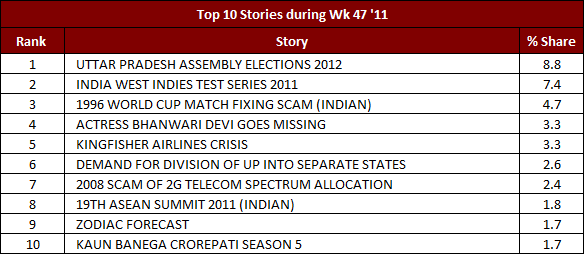
  • NCT Data Wk 47 ’11

    Source: News Content Track – A service of TAM Media Research Pvt. Ltd

    Channels: Aaj Tak, CNN IBN, Headlines Today, IBN 7, India TV, NDTV 24/7, NDTV India, Star News, Times Now, News 24 & Zee News

    Period: Wk 47 – Nov 13 to Nov 19, 2011

    Note : Analysis is based on the Telecast duration


    About TAM Media Research


    TAM is a joint venture between Nielsen Company & Kantar Media Research. Besides measuring TV Viewership, TAM also monitors Advertising Expenditure of Television, Print & Radio through its division AdEx India. Since 2004, it extended its presence in the PR Measurement & Analysis space for Corporate/Marketing Clients by setting up a separate division Eikona PR Measurement.


    In 2007, the joint venture introduced RAM (Radio Audio Measurement) service to track Radio Listenership for the Indian Radio Broadcast Industry. In year 2009, TAM launched a division, called TAM Sports that specializes in monitoring Sports Sponsorship ROI.


    TAM Media Research’s objective is to fuel media insights that will drive the growth of the Indian Media Industry.