Blog

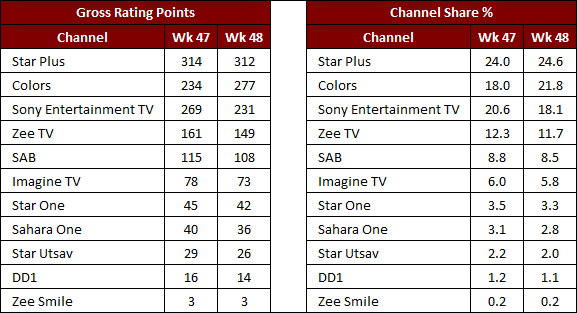
  • GRP Channel shares of HGECs- Wk 48 2011

    Source: TAM Peoplemeter System

    TG: CS 4+ yrs

    Market: HSM

    Period: Wk 47: Nov 13 to Nov 19, 2011

    Period: Wk 48: Nov 20 to Nov 26, 2011


    About TAM Media Research


    TAM is a joint venture between Nielsen Company & Kantar Media Research. Besides measuring TV Viewership, TAM also monitors Advertising Expenditure of Television, Print & Radio through its division AdEx India. Since 2004, it extended its presence in the PR Measurement & Analysis space for Corporate/Marketing Clients by setting up a separate division Eikona PR Measurement.


    In 2007, the joint venture introduced RAM (Radio Audio Measurement) service to track Radio Listenership for the Indian Radio Broadcast Industry. In year 2009, TAM launched a division, called TAM Sports that specializes in monitoring Sports Sponsorship ROI.


    TAM Media Research’s objective is to fuel media insights that will drive the growth of the Indian Media Industry.

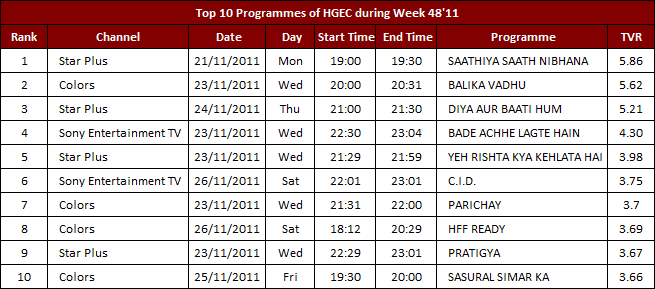
  • TAM data Top 10 programmes on HGEC – Wk 48’11

    Source: TAM Peoplemeter System

    TG: CS 4+ yrs

    Market: Hindi Speaking Market

    Period: Wk 48: Nov 20 to Nov 26, 2011


    About TAM Media Research


    TAM is a joint venture between Nielsen Company & Kantar Media Research. Besides measuring TV Viewership, TAM also monitors Advertising Expenditure of Television, Print & Radio through its division AdEx India. Since 2004, it extended its presence in the PR Measurement & Analysis space for Corporate/Marketing Clients by setting up a separate division Eikona PR Measurement.


    In 2007, the joint venture introduced RAM (Radio Audio Measurement) service to track Radio Listenership for the Indian Radio Broadcast Industry. In year 2009, TAM launched a division, called TAM Sports that specializes in monitoring Sports Sponsorship ROI.


    TAM Media Research’s objective is to fuel media insights that will drive the growth of the Indian Media Industry.

  • Sai Kumar to replace Haresh Chawla as Network 18’s Group CEO

    By A Correspondent


    The transition is in place. After the surprise exit of Group CEO Haresh Chawla, trusted aide and Group COO B Sai Kumar, 37, has been appointed successor at Network 18.


    This was conveyed to the Network 18 team in an internal circular by outgoing CEO Haresh Chawla. While Mr Sai Kumar will be Group CEO of Network 18, he will also be on the boards of Homeshop 18 and Viacom 18. The respective CEOs of both companies will report to the Board, the memo said, adding that given his (Mr Chawla’s) sharing of time with Viacom 18 in recent times, Mr Saikumar has had rich experience running the Network 18 businesses.


    In his assignment as Group COO, Mr Sai Kumar, led management teams across group companies and works closely with business heads to optimize business value and revenue generation.


    He has been a core member of the group’s business strategy team and through his decade-long stint has been responsible for providing operational leadership and enabling stellar organic growth across the group’s market leading brands. Mr Sai Kumar has also played an integral role in the various inorganic forays of the group across business verticals.


    Prior to joining the Network18 Group, he was with The Times of India Group, where he worked with Times Music, Times Retail and Times FM. He holds an MBA in Marketing and an undergraduate degree in Statistics.


    Adds a communique from Network 18:

    In his new role, Sai kumar will be responsible for the strategic and operational management of the Network18 Group. He would have direct responsibility of the Group’s News, Web, Publishing, Factual Entertainment and allied businesses which would include the IBN General News Network, CNBC TV18/ Awaaz Business News Network, Web18, Yellow Pages, Forbes India, AETN18 and the niche magazine stable among others.


    Sai kumar will also shortly be joining the Boards of Viacom18 and HomeShop18. The current CEOs and Management Teams of Viacom18 and HomeShop18 will continue to report to their respective Boards. Raghav Bahl, Founder and Editor of Network18 is expected to step up engagement with the Management Teams of Viacom18 and HomeShop18 and Sai kumar will be working closely with him on both of these businesses.


    Earlier, as Group COO, Sai kumar was responsible for leading management teams across Group companies apart from being a core member of Network18’s Business Strategy Team. Through his decade long stint, he has been responsible for providing operational leadership and enabling stellar organic growth across the Group’s market leading brands. He has also played an integral role in the various inorganic forays of the Group across businesses.


    On this announcement, current Group CEO, Haresh Chawla, said -“I am absolutely delighted to handover the mantle to Sai, who has worked very closely with me for over a decade, as we built the Network18 franchise. He has seen the Network grow from its very early days across various businesses, which has given him a width of experience that is tough to find in the media business. He is an accomplished leader and a true people’s person and I have no doubt that he’ll take the legacy forward to even greater heights. I will always be available to him as a friend and mentor and wish him success. ”


    Sai kumar added “It’s an honour to lead this world-beating team at Network18. The next phase of growth promises to be exciting and I look forward to it. Building upon the inspiring legacy left behind by Haresh, we have some very ambitious dreams for the future and we intend to see each one of them fulfilled.”


    Sai kumar will be reporting into Founder and Editor, Raghav Bahl in this new capacity.

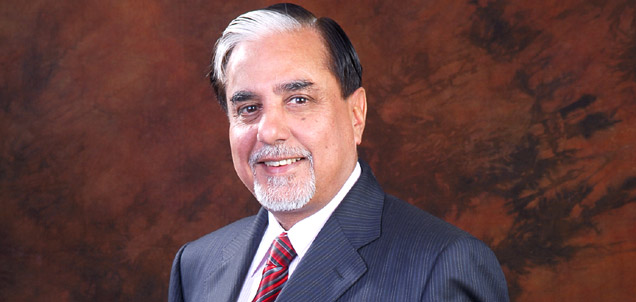
  • Happy Birthday, Mr Subhash Chandra!


    By Punit Goenka


    Although I was too young in 1992 when Zee TV started, our family was confident of him achieving success in the media and entertainment space.


    * I have been fortunate to work with him. His perseverance, never-give-up attitude, and complete commitment to his work have helped him achieve the status that he has today. It was his visionary abilities that enabled him to foresee opportunities much before others and launch pioneering ventures like India’s first Hindi satellite channel – Zee TV, India’s first Hindi News Channel – Zee News, India’s first direct-to-home company – Dish TV and many more.


    * Zee, under his leadership, has always remained grounded through its journey spanning two decades. Our ability to implement cost-control initiatives has helped us overcome the economic slowdown and achieve further operational efficiencies, which is why Zee has been able to deliver a shareholder value CAGR of over 30 percent since inception. Apart from this, the connect with our viewers and ability to innovate and create successful indigenous home grown formats have helped us sustain our leadership.


    * He has done a lot for all of us. We want to consolidate on the strong foundation he has created for Zee. We are working towards making Zee Entertainment Enterprises Limited one of the leading Media and Entertainment Company from the emerging markets.


    * By becoming the first Indian to be conferred with the prestigious Emmy Directorate Award 2011 recently, he has done the entire Indian M&E Industry proud.


    * His vision when he started was to take entertainment to the home of every Indian. In fact he was able to envision and understand the value chain of the entire TV broadcast business from content creation to content delivery – right upto the last mile. Now he wants to take Indian entertainment to the global audiences.


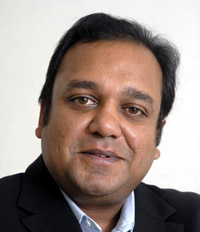
    Punit Goenka is Managing Director and CEO, Zee Entertainment Enterprises Limited


    As told to Johnson Napier

  • Gouri Dange:The Tower of Babel-Babble

    By Gouri Dange


    It’s not my mandate to talk about the news channels (that is ably done elsewhere on the MxMIndia site), but I couldn’t help snorting my coffee, at the alacrity with which one of the channels tried to cleverly throw in a new coinage, when The Slap incident happened.


    Speaking urgently into the camera (you can see the glee on their faces – after all, they’ve got some easily spreading news, lurid angles, lots of scope to whip up opinion polls and to repeat the incident frame-to-frame, this-and-that angle through the day), one newsperson (oh please, let me just use newswoman) used the word ‘Slapgate’ to label the incident. I mean comeon, “Slapgate”? Grow up, and grow away from the pretend-American phrases, please. Even the Americans don’t us the something-gate label for scandals or shocker incidents anymore.


    Some freshly-minted words and phrases after such an incident, do catch on. For instance, it was the easiest thing to caption the whole Slapping Incident ‘Why this kolaveri, kolaveri, kolaveri di?’ (kolaveri, for those who aren’t caught up by this gone-viral-on-internet song, means ‘murderous rage’ in Tamil). From A list channels to chota-mota papers, anchors and sub-editors instantly thought of asking cheekily (albeit unoriginally, as it turned out): Why this kolaveri…


    But some slapped-together phrases simply don’t make the cut. Chiefly because they don’t roll off the tongue well, though the newswoman concerned did a valiant job of spitting out all the awkward consonants of the word ‘Slapgate’as effortlessly as possible as many times as possible. The Hindi channels lovingly tossed the word ‘thappad’ around all day and well into the night. I didn’t watch MTV, but surely it was a landmark day for them, when their original One-Tight-Slap had suddenly become an official form of protest. The word ‘Slapgate’ didn’t hold, however many times the lady tried to use it with her expert guests also because the incident was dying down in spite of best efforts by mostly the electronic media and the usual suspects in Mumbai to keep it alive. Even TV channels faithfully moving the incident to other geographical locations, with various grassroots heroes putting their foots into their mouths while being asked for their reactions, didn’t quite help to keep the fizz and the buzz going.


    Never mind the various body parts – faces, palms, feet, and mouths. I am so through with watching that other body part – the Talking Head – on TV. And on Indian television, the heads rarely do much talking; they are only ever shouting heads. Some of them in fact seem to be trained and threatened by their handlers (their party, or their social organization) to keep saying whatever they want to say as if speaking into a dictaphone machine. No amount of attempts at interruptions, even by anchor people known to have PhDs in the Art of Interruption, can dam the flow of some of these shouters. It comes from the sad fact that they know how it is on Indian television. That if they pause for breath, some other geezer/geyser will instantly begin spouting, so they must say their say, without any of the natural rules of dialogue or debate being used.


    And in this, I think the Dilliwallahs far outshine the Mumbaiwallahs. In sheer lung power and in the tenacity, to go on talking over anything else being said. The Mumbaiwallah expert-panelist tries, but makes the fatal mistake of stuttering or trying to take an eloquent pause after making a point, only to be completely drowned out by shouting voices, who are not responding to him, so much as upchucking the words that are left in their stomachs, before the anchor begins screaming for a chance again.


    The important thing seems to be to not stop talking. So remember, Mumbai people, if you’re on one of these programmes, ‘Jo darr gaya, samjho marr gaya’, is the rule on Indian TV debates. Learn better breath control, never stop to clear your throat, and don’t make the fatal mistake of pausing to bleat some rhetorical question to the audience like ‘Don’t you agree?’ You’ll just give away your time to more able shouters.


    When we were very little, we played this game that one kid recites Jack and Jill on top of her voice while the other hollers Mary had a Little Lamb. The effort was to make your opponent forget her track and begin to inadvertently recite yours. I find the ‘discussions’ on prime-time Indian TV much like that game. At the risk of being stamped phoren-lover, I would much rather watch something being discussed on western television even if I have no particular interest in the subject, than watch and listen to the Babel-babble, even on relevant subjects, on Indian TV.


    Gouri Dange is a Pune-based counsellor, novelist and columnist. Naming No Names appears every Wednesday

  • Alt Del to conduct writing workshop

    By A Correspondent


    Alt Del (The Delhi Alternative) is conducting a writing workshop, worDomination -make words obey you- on December 3 at the Alliance Francaise, New Delhi from 9 am to 12 pm. The workshop aims to help writers, aspiring, junior, upcoming, jaded, tired, et al.


    Elaborating on the workshop, Prathap Suthan, who is the driving force behind Alt Del, said, “I plan to share a few ideas on how to get words listen to people. Or how to get the right words to express. This is not something that will transform people from dull writers to sparkling geniuses in three hours, but this something that will make them figure out, stumble on their own methods and ways of dealing with inspiration.


    “I’ll be discussing effective ways that would impact them, and help them come out of the workshop better than ever. Writing is a process, and it’s a lifelong process, but if one is armed with mental tools and guidance systems to impel their talent, they could become more prolific. I believe that words ought to be subservient to writers, and writers need to be the masters of their words. Words cannot be disobedient little things that have a mind of their own. They need to heel, they need to pay obeisance, and they need implicitly listen to their writer. Hence, all the communication that’s gone out on the workshop has been created along the more contemporary theme of ‘domination’. The workshop is called ‘worDomination’- make words obey you.”


    The workshop is one of the winter’s many ideas from Alt Del and is open to everyone in the communications industry and not just restricted to advertising professionals.

  • The Anchor: 5 ways to maintain a healthy client-agency relationship

    By Akshar Peerbhoy


    #1 No is a simple two-letter word. Learn it, memorize it and say it!

    “No” really is the hardest thing to tell a client, right up there with “goodbye” and “sorry”. However, if you don’t get yourself to say it, the consequences could be much harder to deal with! If you can confidently say, “No” and live by it, your client will actually respect you and the agency, far more than a desperate-to-please yes-man!


    #2 Set clear expectations.

    Like marriage, you should always know what you’re getting into when you sign a client on. If you don’t, then set your cards on the table right at the beginning. He might ask you for the moon, but be frank and tell him just how far you are ready to reach out for him.


    #3 Under-promise and over-deliver.

    When you sit in the client’s boardroom with the suited lot, don’t be over-eager to display your grey matter and spill all your beans at once. And, don’t promise the afternoon’s deadline. No matter how passionate and eager you may be, it’s always the best strategy to promise him the lamp post and then deliver the stars.


    #4 Be his best friend.

    If you can share a drink with your client and talk about anything under the sun, except your work, you are probably going to find your rightful place in his good books as much as at his corner office. Ask him about his pending promotion or tell him where to eat on his next vacation in Hong Kong. He’ll remember to forget your few mishaps and missed deadlines, in time!


    #5 Remember the three Vs – Value, Value and Value.

    The ultimate test of any client-agency relationship is always reserved for the end of a contract term. This is the time when the agency folk succumb to excessive nailbiting and nervous breakdowns. The strongest survive, not only because of points 1-4, but also because they have delivered value to the client, time and again. Value beyond savings, free media space and extra ideas. Value as defined by the client. Even if it means being at the meeting 20 minutes earlier each time. Or finding his vendor for him. Do it, it will save you a lot of trouble on D-day!


    Akshar Peerbhoy is Director at Maa Communications.

  • History being made on Digital platforms

    By A Correspondent


    History, the world’s leading factual entertainment channel, which debuted its India edition on October 9th, 2011 and reached out to 45 mn viewers within a month of its launch, is now available on the Mobile Platform. The channel has taken a step further to offer thrilling and action packed content from its channel to the viewers across the country.


    History will be available on both platforms – Live Streaming as well as Video On Demand on GPRS enabled mobile phones. To access the application, the user will have to send the keyword “HISTORY” as an SMS to 51818. The user can chose to either view the channel or key episodes from a particular show.


    This service is available via Mobile TV across all leading mobile operators on such as Vodafone, Airtel, Idea, Aircel, BSNL, MTNL, Reliance, Tata Docomo and Tata Indicom. There will be different subscription charges based on the package viz. daily (Rs. 7/-) or monthly (Rs. 150/-) based on the user’s choice. The service will soon be available in other Indian languages as well.


    Said Ajay Chacko, President, A+E Networks I TV18, “It is our endeavour to ensure that our innovative and cutting edge content reaches every possible audience with access to a screen – be it a TV screen, a computer screen or a mobile phone screen. By making HISTORY available on the mobile platform, we have once again taken a step in the direction of broad basing and growing this genre in India.”

  • New clients for Madison PR

    By A Correspondent


    Madison Public Relations (A Unit of Madison World) has recently signed on many new clients from diverse verticals.


    Healthcare: Apollo Hospitals – Bengaluru, a tertiary care flagship unit of the Apollo hospitals group,
    Infrastructure: Indian Society of Heating, Refrigerating, (ISHRAE) & J.K. Cement, one of the largest cement manufacturers in Northern India.


    Food: Godrej Tyson, India’s premier poultry and vegetarian products manufacturer and marketer, with strong brands such as Real Good Chicken and Real Good Yummiez.


    Lifestyle: Carat Lane, India’s first and largest online diamond and diamond jewelry portal.


    Commenting on the new wins, eena Gidwani, CEO, Madison PR said, “We are delighted to sign on these new businesses in our different offices and are looking forward to creating interesting and impactful campaigns for them across the country.”

  • Hard Knocks: The retail FDI tamasha

    By Anil Thakraney


    Total bullshit is going on over the subject of FDI in the multi-brand retail market. India is a vast, complicated, multi-layered nation. There are all sorts of market segments out here, based on all sorts of classifications… social, economic, regional, etc… each with its own needs and behavioural patterns. There is room for every kind of business out here. Co-existence is indeed the soul of this nation.


    Take a drive down Bandra in Mumbai. At a traffic signal, affectionately parked next to each other, you will notice a Benz, a Nano, a Luna and a bicycle. Ditto in a Punjab village. A loaded farmer would flaunt his latest Rolex. While one of his minders is eyeing that brand new 20 inch colour TV. Similarly, there is a market for Tesco. And a market for Nilgiris super market. And a market for the guy who runs the local kirana shop. Because there are various market segments they cater to. And even within each segment, a consumer would have different needs at different times. A housewife will want to indulge in a super store. But back home in the evening she will call her kirana guy for six eggs and pickle.


    And if at all there is increased competition, isn’t that a good thing for the consumers? Retailers will have to improve their offerings and service. The grocer in my building complex is a smart chappie, he’s already seen the future. Not only does he promptly send me maida and bread, he also helps with paying my electricity bill and offers to get appliances repaired, for a small fee.


    So basically, the whole tamasha is about the opposition parties trying to show the Congress-led UPA in a poor light. By scuttling their ideas. And the only thing they’ve managed to achieve is to get the anti-corruption bill off the agenda, as the parliament fights over retail chains.


    Who would have thought Walmart could trump Anna Hazare. Happens only in India.


    ***


    PS: Quite liked this ad from Chrysler. Talking tough, talking steel, talking business. Detroit’s fighting back, and how! Also, aggro, spirited singer Eminem is the perfect guy to represent them. Good one.

  • Power-packed sessions at HT Leadership Summit

    By A Correspondent


    Leaders from around the world will congregate in the country’s capital, as the ninth edition of the Hindustan Times Leadership Summit takes place on December 2-3, 2011 in New Delhi. The theme of the summit this year is ‘Keeping Pace with a Changing World’.


    On the occasion, Sanjoy Narayan, Editor in Chief, Hindustan Times, said, “In modern India, change is constant. In the last two decades, it is said, India has changed a lot. So has the world around us… The changes that India faces are, thus, on several fronts – some domestic, others global. And all of these changes throw up for India the challenge of keeping pace with them. It is with this in mind that the 9th edition of the annual Hindustan Times’ Leadership Summit this year offers a platform for debating these issues, to which there are, of course, no easy answers.”


    The annual summit has become a powerful forum bringing together leaders from all walks of life and encouraging interaction and debate on the burning issues of the moment. The inaugural session at the summit will be that of Pranab Mukherjee who will share his thoughts on the opportunities and challenges facing India.


    It will be followed by an innovative session on education trends from around the world – ‘The Education Prism: Global Perspectives’. Montek Singh Ahluwalia, Deputy Chairman, Planning Commission of India, Dr John A Quelche CBE, Distinguished Professor of International Management, Vice President and Dean, CEIBS and Gregory W Cappelli, Co-CEO, Apollo Group and Chairman, Apollo Global, will be speaking at this session. The Keynote Address of the day will be given by Tun Dr Mahathir Bin Mohamad, former Prime Minister of Malaysia, and he will be speaking about ‘The Challenges of Change in the 21st Century’.


    The other speakers on day one will be Kaushik Basu and Norman Pearlstine, Chief Content Officer, Bloomberg LP, who will be discussing the global economic crisis; husband-wife team Carol and Ken Adelman, who make up Movers & Shakespeares, will be sharing management lessons from Shakespeare’s plays in a repeat of their hugely successful session from the World Economic Forum at Davos earlier this year.


    The highly anticipated penultimate session of the day will see economics maverick Dr Steven Levitt, author of the popular Freakonomics books and professor at the University of Chicago, share his unique perspective in a session entitled ‘Unconventional Thinking for an Unpredictable World’.


    The closing session on the first day will look at the hot-button topic of the Arab Summer and will see Dr Paul Salem, Director, Carnegie Middle East Center and Emile Hokayem, Senior Fellow for Regional Security, The Internal Institute for Strategic Studies, discussing its causes and consequences.


    The second day of the summit will start with the keynote address by LK Advani, who will share his views on ‘India’s Yatra into the Future’. Mr Advani’s session will be followed by a special session led by the former Prime Ministers of Australia and Spain – John Howard and Jose Maria Aznar – on the recent social and economic upheavals around the globe.


    Actor-director Farhan Akthar and actor Vidya Balan will chat with Vir Sanghvi in the popular Hindi Film Industry session.


    Other speakers on day two are Mehbooba Mufti, President, Jammu and Kashmir Prople’s Democratic Party, Asfandyar Wali Khan, President, Awami National Party, Pakistan and Dr Farooq Abdullah, Minister of New and Renewable Energy, in a session titled ‘Settling Disputes for a Common Cause’.


    Julian Assange, Founder and Editor-in-Chief, Wikileaks, will be addressing the delegates via video on the second day.


    The final session of the summit will be addressed by Chief Ministers Sheila Dixit (Delhi), Prithviraj Chavan (Maharashtra) and Dr Raman Singh (Chattisgarh), who will speak about the connection between Personality Power and Good Governance.


    The sessions will be chaired by eminent leaders of the media world such as Rajdeep Sardesai, Sagarika Ghose, Suhasini Haidar, Karan Thapar, Vir Sanghvi and Sanjoy Narayan.


    The Hindustan Times Leadership Summit 2011 is guaranteed to bring a fresh new perspective on the critical issues and problems we find ourselves facing today. By leveraging the power of debate and discussion, this ninth edition of the Summit will tackle the challenges of change with insight and clarity.

  • Social Media is here to stay: Jonathan Kopp

    Mr Jonathan Kopp, Partner & Global Director, Ketchum Digital was in India recently to launch its India division with Sampark. The company is betting big on Social Media. On the onset, Ketchum Sampark Digital (Sampark is the Indian affiliate of global communications network Ketchum Inc) will service its existing clients in India, offering digital media services of which social will be a big part.


    MxM India’s Rishi Vora spoke to Mr Kopp on the Social Media scene in India. Excerpts:


    Q: What was the thought process behind launching a digital agency in India now? Have you entered the Indian marketplace a little late?

    I think the timing is perfect. Right now we’re in the era of the social web. There used to be a distinction between digital media and social networks, and now we are in a period where everything on the web is social. So if you have a web plan, or a digital plan, you’ve got to have a social plan as well. Pure play digital agencies are good in creating destinations, but that is not very relevant any more today. What matters the most is how you drive the conversations, what sort of content you require to drive conversations. These are areas which we specialize in. As for the timing of the launch, I think it’s just the right time to be here. Companies and brands are more than willing to go social.


    Q: Do you think Social Media has enough money to sustain itself as a profitable, longterm business?

    I think the growth of Social in India is going to be upward for a considerable period of time. If you think about the penetration of Digital – the numbers are good but percentages are small. So the opportunity is very much there. Whether you succeed as a brand in the social media space is a matter of how you present yourself in that space. Mobile is a potent medium in India. Combining that with video and social, it becomes so much more exciting for users; yet another reason why content should be taken so very seriously – how can you be more creative, more compelling and interesting enough to engage many users online, on to the social networks.


    Q: Is it a big challenge to sell social media to clients?

    There is not a single company in any industry that can afford not to be on the social web right now. So I’m a big believer in the power of social media. If you’re not on it, then you’re losing out a fantastic opportunity to speak with your customers. As a brand, it’s mighty important to be in the social environment because the consumers are out there.


    Q: But they’re not necessarily there to speak to brands.

    Yes, people are not interested in becoming friends or having a relationship with a brand. What they really want is to connect with the people behind the brand and so the personalisation of the brand, bringing forward the humanity – the faces, the voice, the personality – this is critical in the brand’s success in the social space. Authentic and transparent voices. Immediate response to consumers’ queries – things like these can only happen in social media.


    Q: What are the learnings from other markets that you bring to the table for Ketchum Sampark Digital?

    It’s an important question. We have invested an awful amount of lot of time and resources to build the Ketchum Global Digital Network of about 180 digital and social media experts around the world; expertise and case studies working together to really create a global perspective. One of the first things we need to do with our clients is help them understand the power of social media. So social media training is important for us to start, our clients need to understand it. It requires a lot of change – mindset change and structural change. Digital is blurring the lines across traditional communications disciplines. Digital and social media is also creating a potential clash of messages from the organisation to the public. So marketing, advertising and public relations, sales, customer service – are all entering the social space at the same time without coordinating with each other. So it’s a mess in a way. As a company, you may want to hire expertise on HR, Operations etc. Similarly, the time has come for companies to look for social media experts. I don’t think there is enough expertise on things like managing work flows in social media, guidelines, the right approach etc. These are things we have learnt by being in the business for several years internationally, and in India, it is time that we bring our expertise in the marketplace.


    Q: How do you, as a social media professional, handle negative publicity on brands?

    It’s a very good question. One of the ways to try and prevent damage in social space is be there first. You first need to be in the social media space, because when you’re in crisis, it’s not the time to be going around and looking for friends. So we have a base of constituents, a base of supporters going into the crisis and you already have an established network to tell your story. So it is important to be there first. Second, things happen. They happen in traditional media, they happen in the interactive space, they happen offline, events; so you need to respond to them. Where companies go wrong is when they are not direct and as transparent. And if the consumer figures that out quickly, the problem gets worse. So if you make a mistake, apologise and explain the situation, and do it quickly.


    Q: Do you agree that a social media campaign will have minimal impact on a brand’s profitability?

    No, I don’t agree with that. I think social media can be proven to drive revenues. Very tactical small example: Dell has sold laptops through Twitter. When there were discounts being offered, Dell tweeted about them and sold huge numbers of laptops. Social transaction as a trend is only going to grow in the coming years.


    Q: Most of what we’re seeing in social media in India is Facebook marketing. Do you see that changing?

    Facebook is an amazing company and a great platform. Over 800 million users worldwide. Those who use the mobile phone to access Facebook – there are as active as their desktop counterparts are. Facebook is a force to reckon with and it’s admirable and enviable in every regard. At the same time I also believe that it’s never been about the channel. It has always been about the conversation and the content. So yes, today it’s Facebook but it wasn’t that long ago that it was MySpace, and before that, it want too long that it was AOL.


    Q: Social media picked up when Facebook picked up.

    Absolutely. But the first mover is not always the last. So will Facebook continue to dominate? Maybe. But, my concern more as a social media professional is not to be too invested in any one channel; rather it should be driven by where the consumer is. Right now, conversation is being held on Facebook, so it would be absurd to ignore Facebook. We’re going to use Facebook, but there are many other channels that we need to watch and learn from. For example, if you’re looking at corporate communications and executive positioning, Facebook might be important but I would want to look at Slideshare because that’s a perfect platform for you to share thought leadership. Similarly, if your concern is employee recruitment or professional networking, LinkedIn is the place to be on. So it really depends on what the purpose is.


    Q: What do you think about Google Plus?

    Google Plus is a new entrant. It is directly connected to YouTube. If you’ve got video and video is the way you’re telling your stories, then you need to consider Google Plus and YouTube. Just like the numbers tell us India is an important market to be in, the numbers tell you that Facebook is an important platform to be on. But, our job is to look at all of the platforms and all of the technologies that’ll help our clients tell their stories on the social web.


    Q: Do you see Google Plus catching up with Facebook?

    Google takes a very different philosophical approach to social web than Facebook does. It’s just got launched and Facebook has been around for some time now. But I don’t think Google Plus is as important as a standalone social network as it is for its ability to connect content and people across the entire social web. Facebook is about the Facebook platform and selling advertisements on that platform and creating social commerce on Facebook. So I don’t see them competing with each other – they both have a different role to play in the social web.


    Q: Can Social Media be a primary medium of communication for brands?

    I think the way we are going to be moving forward is really about integrating communications. It’s not about social over others. It’s about a consistent message and consistent requirement of content across all the channels where we need to reach the audiences. Broadcasting, print – newspapers and magazines are doing social media but some campaigns are starting in the social space and moving out to traditional. Some are moving from traditional to social. We really need to be everywhere.


    Q: There is a feeling that the medium is not taken seriously. Marketers and advertising professionals are talking about it, but in a way, they are the ones who are not really putting in the time, money and effort vis-à-vis traditional modes of advertising. Is there anything that social media experts need to look into?

    Metrics and evaluation is going to play a big role. The way we evaluate social media today – there is no single measure. TV, there’s GRPs; in traditional PR, it’s impressions. What we are trying to measure in the social space is engagement, and it’s a fuzzy concept right now. Facebook, with its analytics has gone much closer to measuring engagement in a very important way… The analytics behind a Facebook page drives you to not just the number of fans or friends but really the active user and the talked-about and how content is moving and who are the people that are moving it. As that science continues to move forward, I think people are going to be able to put a specific value on social media. You can certainly measure direct ROI if you’re seeing sales through social commerce.