Blog

  • The Anchor: Karthi Marshan’s 5 rules for engaging financial services consumers on social media

    By Karthi Marshan


    Social media engagement for brands have many uses, and just like dating, socializing and evangelizing, there are things we must keep in mind. Here are a few of mine.


    #1 Listen first

    Obvious, isn’t it? Yet, we’d be amazed at the number of brands that ignore all the digital chatter their brands already enjoy / suffer, and dive blithely into a ‘campaign’ that plugs a product or extends their offline messaging. Just like you would at a party you have entered late, identify a group where some interesting conversation is happening, hang around and listen long enough to understand the mood, and then maybe, yes maybe consider interjecting with your two bits.


    #2 Speak human

    While it is contingent upon brand ambassadors to ensure propriety and appropriate representation of the brand’s stature, it would be prudent to eschew any language guidelines that the stuffed shirts throw at you and talk like you would at home or in a restaurant. It’s amazing how the people who run brands seem to check their human selves at the door when they communicate on behalf of brands, and start spouting what can only be described as ‘brandese’. Big words don’t impress, sincere ones do. So chill, be real, stay cool.


    #3 Chat, don’t plug

    Don’t be misled by it being called social ‘media’. Do not just blindly run your ads here. Just like you wouldn’t turn up at a friend’s cocktail party and start singing your brand’s jingle, apropos of nothing. Talk about what they are talking about. Be interested first, and then hopefully interesting. For heaven’s sake, don’t plug your messaging. Social media users are very sensitive to blatant plugging, and will flame the brand so badly, Hades (the place, not the person) will seem like Manali.


    #4 ‘Fess up

    When you join discussion groups or respond to comments about your brand and category, be clear about your identity. Don’t pretend to be just another regular guy who just ‘happens to really love the brand’. It smells a mile away. It’s perfectly fine to be a representative of the brand and defend it where relevant. So ‘fess up straight off the bat, don’t be cute.


    #5 Tell the truth

    While this sounds like a twin of ‘fess up’ there is a nuance I am trying to convey. Lots of brands are happy to troll the web and selectively display only the compliments they receive for good service. Stinks. If you want to share the bouquets, have the body parts to show off the brickbats also. So long as your intent to address the brickbats sincerely is evident, ‘they’ will understand. And just like in your marriage, saying sorry sincerely is usually more than enough. You will be forgiven and allowed to stop sleeping on the couch.


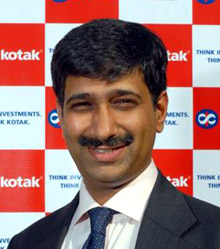
    Karthi Marshan heads marketing for the Kotak Mahindra Group.


  • Lenovo launches online network for idea sharing

    By A Correspondent


    Computer maker Lenovo has announced the launch of the Do Network (donetwork.lenovo.com), an online platform designed to inspire people to turn their big ideas into positive outcomes.


    The Do Network, building on Lenovo’s “For Those Who Do” brand campaign, extends Lenovo’s promise to empower the communities the doers operate in with the best tools, technology and resources.


    The focal point of the Do Network is an online space where like-minded Indians can unite to share and discuss ideas that they are passionate about, and to form project teams to develop these ideas into workable and concrete plans.


    The Do Network will also serve as a platform to connect these project teams to other people in the community who will act as mentors and lend their skills and expertise.


    “Through the Do Network, we want to create not just a platform but a movement that brings Doers together to push the limits on collaboration and creation, and inspire them to turn their great ideas into something meaningful and tangible,” said Shailendra Katyal, Director, marketing, Lenovo India.


    Lenovo will set up a Do Lab in India where the top 10 finalist teams will work with the mentors to discuss and refine their projects.


    The Do Network will comprise a series of four 90-day contest cycles, with different themes and thematic challenges introduced for each cycle.


    The first cycle will be based on the theme of ‘Innovation through Technology’ where teams have to come up with new ways of using technology to create solutions that address the tough problems that exist in their communities. The cycle will run till March 7, 2012. Interested participants can submit their project ideas at donetwork.lenovo.com


    Project teams will be required to work on one of the four challenges issued – portable education, traffic jam or products progress. The fourth, a wildcard challenge, will also be provided to allow Doers to pursue their individual ideas that may not fall under the specific challenge categories, but still fit with the theme.


    Rajiv Makhni, Managing Editor for Technology, NDTV, New-Delhi; Rajan Anandan MD Google India, India; Mahesh Murthy, Managing Partner, Seedfund; Kishore AK, CEO & Co-Founder at Althea system will act as mentors for the participating teams.


    The mentors will guide the project teams throughout the contest and will be part of the selection process for the top 10 finalists.

    The winners will receive the prize money of $25,000 as seed funds to put their projects to practical use.

  • Ricoh joins as official sponsor for Aircel Chennai Open 2012

    By A Correspondent


    Ricoh, which specializes in the office and production printing markets, has announced its association with the Aircel Chennai Open 2012 as an Official Sponsor. The $450,000 Aircel Chennai Open, operated and organised by IMG Reliance, isIndia’s only andSouth Asia’s premier ATP World Tour Open 250 event.


    The tournament will be held from January 2 to 8, 2012 and will see in action an impressive line-up of Indian and International players including world number 9 Janko Tipsarevic and world number 10 Nicolas Almagro, Somdev Devvarman, Rohan Bopanna and Mahesh Bhupathi, among others.


    Ricoh is also an Official Partner of the Barclays ATP World Tour Finals and also sponsors a host of other ATP Tour events, hence the association with India’s only premier ATP World Tour tennis event is a testament to the stature of the tournament.


    “The ATP is the region’s elite tennis arena and this partnership reflects our continued commitment and dedication to going beyond simply streamlining the document processes at the events we sponsor,” said Majima Nobuaki, Ricoh Asia Pacific’s Managing Director.


    Fernando Soler, the Tournament Director and Head of Tennis, IMG Worldwide, said: “It is a pleasure to have Ricoh on board as a sponsor for the Aircel Chennai Open. The support from global corporations such as Ricoh is a testimonial for it and for the growing popularity of the game inIndia.”

  • Yahoo! mail available in 8 Indian languages

    By A Correspondent


    Yahoo! India has announced that the latest version of Yahoo! Mail can now be accessed in eight new regional languages: Tamil, Hindi, Kannada, Telugu, Malayalam, Bengali, Marathi and Gujarati.


    With a simultaneous rollout in 27 new markets including 22 new languages and 16 new countries, Yahoo! Mail is now available in 46 new languages and more than 70 markets worldwide.


  • Business Standard joins the iPad gang

    By Akash Raha


    Business daily newspaper Business Standard has extended its digital presence with the launch of its new iPad Application. Attracting readers for its business content, Business Standard has translated this phenomenon into a very strong presence on the web with over a million unique visitors from around the world accessing its website. According to Business Standard sources, a fifth of its online visitors are from outside India. A mobile website that can be accessed on most handsets has also been providing news feeds on the go to readers for a while now.


    Talking about the development, Arun S Natesh, Head – Marketing, Business Standard, said, “To cater to the fairly evolved, widely travelled and tech savvy Business Standard readers’ requirements, and to keep pace with the emerging content consumption landscape, an iPad application has been designed keeping their interests in mind. The BS iPad application chooses to focus on the selection of key breaking stories, incisive analyses and insightful opinion in an easy-to-navigate, clutter-free format.”


    A highlight of the app is its coverage of stock market information. Readers can access stock price information, charts and news on India’s top 500 companies through a simple search. The app also features videos on top business events of the day and updates on the stock market. Sharing stories on social and professional networks apart from emailing is a one-click exercise.


    The app can be downloaded for free from the App Store, and is optimized for iOS4 and above. The Business Standard iPad App can be downloaded at: http://itunes.apple.com/us/app/business-standard/id482532990?ls=1&mt=8

  • ESPN acquires Cricket Australia rights

    By A Correspondent


    ESPN Star Sports has announced a five-year contract for the exclusive rights to broadcast Cricket Australia’s (CA) domestic and home international matches across various platforms including television, internet, mobile and radio, covering the entire Asian region.


    As a part of this deal, the current Future Tours Program (FTP) sees ESPN Star Sports broadcasting more than 191 days of live International cricket action from Australia, which includes 27 test matches, 44 one day internationals and 12 twenty-twenty games.


    This is the first time ever that a broadcast deal with Cricket Australia will give ESPN Star Sports rights to showcase two India series. India is slated to play four Test matches and a tri-series with England as the third team in the 2014-2015 season. This tri-series, featuring India, Australia and England and scheduled right before the ICC World Cup in 2015, is positioned as the ‘Clash of the Titans’. India will visit Australia again for seven one-day internationals and two twenty-twenty matches in the year 2015-2016.


    Over the next five years, all of the leading teams will be visiting Australia. In addition to the Ashes between arch rivals England and Australia in the year 2013-2014 which, based on the current FTP, will see 5 test matches, five ODIs and three twenty-twenty matches; other top cricket nations including South Africa, Pakistan, Sri Lanka, West Indies and New Zealand will tour Australia to test their mettle in the fiercely competitive environment of cricket down under.


    James Sutherland, Chief Executive Officer of Cricket Australia, said, “We are delighted that a telecaster of ESPN Star Sports’ standing and class will be putting Australian cricket in front of many cricket fans.”


    Manu Sawhney, Managing Director, ESPN Star Sports, said, “We are very pleased to announce this partnership with Cricket Australia with whom we share a very strong relationship. Australian Cricket has always been exciting and is played with utmost competitiveness in a super charged atmosphere which makes for every fan’s delight. It is therefore not surprising that it is called the ultimate test for any cricket player”. “This partnership with Cricket Australia is a testament to our commitment to serve our fans with more action packed cricket for years to come, he added.


    In addition to the cricket action, ESS also plans to broadcast Cricket Australia’s domestic cricket over 280 days. This includes popular tournaments such as the KFC Big Bash T20, the four-day Bupa Sheffield Shield tournament and the Ryobi One Day Cup.

  • Keep those 3D glasses handy. TVCs set to add that extra dimension

    By Ameya Chumbhale


    Hollywood has mastered it. Bollywood swears by it. Now it’s the turn of advertisers to take to 3D and add a new dimension to marketing.


    So, if you watch Don 2 in 3D later this month, there are chances that besides the don, Zoozoos and Axe girls too may appear within touching distance. That’s because several marketers are working on 3D commercials to cash in on the technology’s increasing popularity.


    “Today, you name any brand that is advertising on TV and it’s asking for an additional 3D version for their commercial,” says Mr Bhaarath Sundar, visual effects CEO and advertising partner at Prime Focus India.


    An advertising official says Hindustan Unilever, GlaxoSmithkline, Vodafone and Tata Motors are all working on 3D commercials to be released shortly, but none of the companies confirmed this.


    Post-production companies such as Pixion, Maya Digital and Prime Focus said they are busy producing 3D commercials for Indian companies for release early next year, but refused to name any of their clients.


    Mr Rajesh Mishra, CEO (Indian operations) of digital film distribution company UFO Moviez, said 3D advertising will become big in the country within 6-8 months. “Producing 3D content is expensive but brands can afford it because commercials are shorter in duration, lasting anywhere between 10 seconds to one minute,” he said.


    The main driver for this rush for a third dimension is the popularity of 3D films. While at least one 3D film from Hollywood is hitting the screen every month, Indian filmmakers too are joining the rush with about 10 local language 3D films in various stages of production or post-production.


    Mr Merzin Tavaria, co-founder and chief creative director at Prime Focus, says, “As numbers of 3D films grow, so shall 3D advertising.” His firm has refurbished its facility at Khar in Mumbai to handle the growing 3D needs of the advertising sector.


    Of all the commercials shown during the screening of Ra.One the one that stood out the most was the 3D commercial for Google Chrome.


    Mr Harish Shriyan, managing partner of OMD India, a media buying arm of Omnicom Group, says greater recall value and greater connect are among the advantages of 3D advertising.


    Mr James Stewart, a 3D filmmaking pioneer and founder of Canada-based Geneva Film Co, recently quoted multiple studies by ESPN, Xpand and Texas Instrument to say 3D ads delivered 92% recall among viewers and viewer retention was on an average 15% higher than normal ads.


    But there is one overwhelming disadvantage: Cost. Post-production prices, or the cost of converting 2-D film into 3D, to create a regular 30-second commercial could be anywhere between 6-12 lakh. This would mean 50%-80% additional cost on a normal advertisement.


    That kind of extra expense only for exposure to cinema halls showing 3D films could make several marketers turn their backs on the idea at a precarious time when the economy is slowing.


    “I’m certain that a lot of people start with the idea of exploring 3D advertising for brands, but the idea is usually abandoned in the first few meetings with clients and production houses. The cost is substantially more than 2D,” says Mr Sajan Raj Kurup, founder and creative chairman of Creativeland Asia, which recently created a 3D campaign for Audi A8 luxury sedan. “The question to be asked is does the idea really warrant the extra dimension, and is the extra cost justified,” he says.


    Durables brands Whirlpool and Panasonic aired 3D commercials during the live 3D screening of the Indian Premier League twenty20 cricket tournament in April. “We were the first company to make a 3D ad in India,” says Mr Shantanu Dasgupta, VP, corporate affairs at Whirlpool India. He, however, says the company is not planning more 3D commercials because it’s focusing on TV as a mass medium. “You really cannot have a 3D ad on TV, at least today.”


    Experts expect most marketers to stay lukewarm about 3D commercials until 3D television catches up. But it may take years in a country where HDTV, a natural precursor of 3D television, is in a fledgling stage with only a few high-definition channels in the country.


    “There is still a lot of time for TV getting captured by 3D advertising,” says Mr Josy Paul, chairman and national creative director of advertising agency BBDO India. He says 3D advertising starts from outdoor before graduating to in-camera.


    Source:The Economic Times

    Copyright © 2011, Bennett, Coleman & Co. Ltd. All Rights Reserved

  • Disney Channel’s Doraemon Movie delivers the best ratings

    By A Correspondent


    The premiere of Doraemon – Nobita’s Dinosaur on Disney Channel has delivered the best viewership performance since 2005 for a kid’s show at 5.24 TVR among all kids (CS 4-14 ABC) in HSM, beating its own record rating of 4.3 TVR for Doraemon in Nobita’s Great Adventure in the South Seas which was telecast on June 5.


    The channel received an overwhelming response across all channels with 33% share of viewing in Hindi Speaking Markets (HSM) and 28% share of viewing in all India during the primary telecast of the movie.


    The premiere ranked #1 across the time slot in the kids genre with 66% share of viewing in HSM and 63% in All India among all kids (CS 4-14 ABC).


    The viewership in certain markets was particularly noteworthy with Punjab(1 Mn+) showcasing double digit TVR with 10.55. This was followed by Delhi at 8.71 TVR, UP at 8.11 TVR, among others.


    “It is wonderful to see kids and families enjoy Disney Channel’s rich menu of content. Doraemon has an engaging storyline and a familiar setting that every Indian kid can relate to. This success is testament to the unique way in which Disney engages with its kids and family audience at multiple levels,” said Natasha Malhotra, VP and GM, Walt Disney Television International India.


    Across the week, over 17.9 million individuals and 6.5 million kids tuned into movie from All India.


    In addition to its popularity with Disney Channel audience, Doraemon has also been ranked as the #1 character for kids across India by Ormax India in October 2011.

  • Anil Thakraney: Sibal in Blunderland

    By Anil Thakraney


    I think Shri Kapil Sibal lives in a world of fantasy. Much like Alice in Wonderland.


    If you recall, the portly mantri made a sensational ‘discovery’ not too long ago. He claimed there was NO loss to the country in the 2G spectrum scam, and the figure being bandied about was in the media’s wild imagination. Yeah right, Alice.


    And now he’s back with another dreamy idea: To gag the internet. I guess the loyal minister had a wondrous vision the previous night in his journey to Wonderland. Where he imagined millions of Indians collectively sucking up to Sonia G and family, even as scams raged in her backyard. I like Kapilji’s idea of Wonderful India. Except that it in reality it isn’t Wonderful India. It’s Incredible India. Where politicians loot and plunder the nation freely, and lord over the junta on the basis of the good ol’ ‘Divide & Rule’ policy.


    In his fantasy, the mantri overlooked one critical ground reality: Leave alone the fact that it’s impossible to pre-screen millions of posts, the Indian Constitution guarantees every citizen the right to free speech. And when that right is misused, the courts decide on the fate of the alleged abuser. If we follow this principle when it comes to the traditional media, why must the digital media practise censorship?


    It’s simple, really: You defame someone, promote communal hatred or indulge in any writing/creation that’s illegal, you face a court trial and if convicted, you get punished. A tweet or a Facebook update can as easily be retrieved as a newspaper article or a television bite. In fact, Mr Suhel Seth is currently battling a lawsuit because of some allegedly defamatory tweets on ITC. So there you are.


    Basically, the man’s logic is so steeped in unreality, even little Alice would be confounded. What must worry us even more is that this nation is ruled by such fantastic ministers.


    ***


    PS: Great work from Coke. Very touching. Keep a handkerchief on standby.

  • History soars to No 1 in genre

    By Rishi Vora


    History, the channel from Network 18 and A+E Networks joint venture, has worked its way up to the No 1 position in the factual entertainment genre if one looks at the six metros market cluster. The channel’s market share is 33 per cent as against Discovery’s 31 per cent and National Geographic’s 13 per cent share in the same market.


    What is seen as a significant achievement for the channel is the fact that it has reached this peak in a timeframe of three months after launch. As a result, the genre too has expanded, say officials from the company.


    Sangeetha Aiyer, General Manager-Marketing, A+E Networks and TV18 JV, said, “While we are happy about the leadership status in the 6 metros, I think the real big story is about the growth of the genre. And that was pretty much our objective – to see if we can expand the genre from the current 1.5 per cent that it is at, to maybe 3 to 4 per cent, or even five. Given the genre growth of 57 per cent, led by History, I think we will be in a position to be able to achieve this sooner than later. Also, the leadership status in the six metros is an indication that all our endeavours in programming and content, marketing and distribution is resulting in rewards as planned.”


    She added, “Going forward it will be our conscious and concerted effort to hold on to our leadership status in the six metros market and consolidate leadership in other market clusters (1mn+ and All India) as well. We believe that our differentiated programming line-up, innovative marketing and focus on distribution will propel us in the direction of widening the gap and consolidating our position as the leader in the factual entertainment space.”


    The channel, according to Ms Aiyer, garners the highest time spent per viewer (40 minutes) vis-a-vis Discovery (29 minutes) and National Geographic (16 minutes). “History’s success is a result of differentiated programming and the stickiness quotient of its content,” she said.


    History reaches out to 50 million homes and 40 million viewers across India on cable TV platforms such as Hathway, In Cable, Den Networks and DTH platforms such as Tata Sky, Dish TV and Airtel.


    Source: TAM, Week 49’11, CS AB 15+, 2400 hrs

  • S Shriram is Indiaplaza’s SBU Head-Life Style

    By A Correspondent


    Indiaplaza.com, the company that pioneered online shopping in India since 1999, has appointed S Shriram as the SBU Head – Lifestyle.  A retailer by profession and choice, as he terms himself, Mr Shriram is passionate about retail. As SBU Head for Indiaplaza, he is responsible for building the Lifestyle business including men’s, women’s and kids’ apparel and accessories, jewellery, watches, sunglasses, home furnishings and furniture.


    According to K Vaitheeswaran, Founder & CEO, Indiaplaza.com, “We are very happy to have Shriram on board. I am confident his rich experience as a retailer will help position Indiaplaza as the leading online shopping destination for lifestyle also, just like for books and electronics.”


    Online shopping in India is booming across books and electronics. With the Indian internet population crossing 100 million recently, the next wave of growth is expected in the area of lifestyle. With a loyal base of customers and fast growing traffic, Indiaplaza is aiming to quickly establish leadership position in online retailing of lifestyle as well.


    Prior to joining Indiaplaza, Mr Shriram was the National Head of Business Development at Cafe Coffee Day and was responsible for their expansion among Key account partner-locations. Earlier to this, he was leading the Travel Retail and Consumer Businesses at Bangalore International Airport Limited as part of the Core Committee that was involved in selecting the operators across various commercial businesses such as Domestic and International Retail, Duty Free, F&B, Forex, Landside Traffic Management, Ground Transportation, etc.  He also had the privilege of working with United Colors of Benetton, one of the leading fashion brand and some of India’s prominent retail organizations : The Future Group and the RPG Group.

  • [PR CHANNEL] We are happy being No 1 as MSL group: Jaideep Shergill

    By Johnson Napier


    It was a year of jumps and gains as also of twists and pains for one of India’s leading PR agencies Hanmer MSL. After a fruitful 2010 that saw the company acquire a host of clients leading to a healthy growth story for the agency, 2011 was a challenging year given the lull in financial markets and the possibility of another slowdown striking the industry. But the company did post a 20 per cent growth rate in 2011 that was followed by the launch of a host of new ventures.


    Jaideep Shergill, CEO, Hanmer MSL India puts on his thinking cap and scrutinises the year gone by in a brief conversation with Johnson Napier of MxM India. From an increased focus on digital – led by social media – to acquiring a host of new clients and getting the talent platform right, Hanmer MSL is on track to be amongst the best in 2012, he says. Excerpts:


    Q: As the year 2011 draws to a close, how would you describe the journey so far for Hanmer MSL?

    The year has been a good one, I would say. From a business point of view, the year was good because we tried a few things differently. We started focusing on certain practices and industries; started looking at offering better solutions for our clients… Also, in areas like content and insights where we were not doing much earlier those are the areas that we have invested in now. We have started pursuing digital very aggressively although we were doing that in the past few years as well. The other area that we have gotten into is employee engagement and working with companies on their employee communication.


    But while we had a good year it was also a tough one – partly because the market has become very competitive. My feeling is that 2010 has been a bit better than 2011 and that’s also because of the fact that there has been a slowdown in the second half of 2011. Overall, it has been an okay year for us.


    Q: How would you rate your company’s performances in the last two-three quarters since you took formal charge from Mr Sunil Gautam?

    We continue to do the things we did when Sunil Gautam was around. It’s been a year now that I have been running the company. Sunil and I have been working with each for a long time now and we both had a common vision, which we continue to follow even now. So in that sense there is nothing new that we are doing.


    Q: Could you quantify the growth story of your agency with appropriate figures?

    I would say both in 2010 and 2011, we have grown by 20 per cent plus. We couldn’t grow at that rate in 2009 because of the slowdown.


    Q: While your roster of clients boasts an aggressive line-up, how has the client acquisition exercise panned out for you in 2011?

    It has been fairly good. Like I said, from the market point of view 2011 was not as good as 2010 although we did grow by 20 per cent – the thing is that we could have grown by more than 20 per cent. Normally what happens is when you’ve grown by 20 per cent one year, the next year you are expected to grow by 25-30 per cent. In terms of business development too, it was an okay year for us. We did win a lot of business. As for the centres, Delhi is an important market for us. In Mumbai we keep winning accounts consistently given our size and reputation but I think we need to do more in Delhi. We have grown to 60 people in Delhi though now. Bangalore is another market that has been performing well for us. There are already markets where we are established and are doing well like Pune, Chennai, Ahmedabad, etc. But with Delhi the thing is that there were a lot of agencies who were bigger than us when we entered that market, so they have a natural advantage over us.


    Q: Any (client) win that was worth the effort more than the others in 2011?

    I don’t just want to talk about 2011 but the last couple of years. Airtel, Star, World Gold Council, Western Union…and also across industries like Biocon (pharma), Volkswagen (auto), etc. So there has been a fair mix of clients and across sectors.


    Q: How would you rate Hanmer MSL on the parameter of client retention? How faithful have your clients been to your group?

    The retention levels have been fairly good. I would say 2010-11 have been our best years so far. We have hardly lost any business – less than two per cent, so to speak. This is a good number where the industry in concerned. For a long time the problem would be the inability of the agency to hold on to a business and clients too would not stick to an agency for a long time. But that is not the case here also because of the fact that we are investing in the right people and systems and making things work.


    Q: There was the famous recession of 2008 and now there is financial turmoil that has gripped Europe and to an extent, the US as well. How do you see the PR and communications industry being affected going forward?

    I don’t see an immediate impact right now. But there are signs that it is about to take place – pitches are slowing down, new clients coming and investing in communications is on a downward slide…and it is being observed across sectors like media buying and planning, advertising, etc. Moreover most of it is also psychological; it’s an artificial fear that is created in the market because of which companies start cutting back on their budgets. But after the 2008-09 slowdown, we should have learnt how to tackle the problem, which I believe we are ready for this time around.


    Q: How has the social media as a unit under digital grown over the past year for Hanmer MSL? What can be predicted from the unit going forward?

    It’s a medium that is going to continue to grow. Digital as an industry is growing by over 100 per cent. Currently it’s a very small pie in the entire media mix. As for the budgets, only 2-3 per cent of the budgets go into digital, which is very less. But I would say that digital is a medium that is here to stay. We started investing in the medium in 2008 itself and this year we have seen fairly good numbers.


    Q: You recently announced the launch of a separate Crisis Network unit; what was the need to branch off and launch it as a separate vertical under Hanmer MSL?

    We’ve only now started calling it by a separate name. Actually all global PR firms do crisis communications and we also have been doing it for a long time. The reason we have decided to package it and launch it like this is because we see that the world is changing very quickly and crisis and issues is becoming an integral part of people’s and companies lives and futures. 10-15 years ago nobody cared as such when crisis broke out as there was no social media – digital was largely undeveloped. So something would happen in the US and we in India wouldn’t know about it until later. But today the rate at which it spirals is a matter of concern.


    For us, there are a few things that we see as trends. The first is trust. People don’t trust companies as much as they used to. There’s more accountability because ever since banks and financial systems collapsed in 2008, people have started raising doubts on trusting people and systems. There is also a trust issue when it comes to government. So when there is a lack of trust, an issue or crisis can become much bigger. And the other big reason is digital, as I already explained. So that is the reason we launched the unit in a formal way so that we can strategise and build around it going forward.


    Q: What is the rationale behind agencies hiking their budgets when tending to clients in crises? Is this a common practice that most agencies follow?

    Crisis communications is a very big part of the PR business. I wouldn’t say that clients are over-charged; it’s just that we charge them the right amount of money. Normally they undercharge, so this is the right charge. The fact is that when there is a crisis then money is not the concern – things like reputation and all takes precedence. Also, what happens is that because it’s a crisis, the PR agencies and clients are willing to invest more time in more people and more money because they have to make it work. I am not saying that they would be overcharged but that you will have to spend a certain amount of money or resources or people to make the crisis work in your favour. Moreover we don’t have to do it on a day-to-day basis so it is okay to go the extra mile.


    Q: While pleasing the client is an attribute sacrosanct to any PR firm, is it right to gloss over the wrongs when engaging in a damage control exercise?

    I think the best thing that one can do is have a point of view. So if there is a negative sentiment floating around a company, it’s their job and that of the PR agency to correct that and give the right perspective or message. But that doesn’t mean that media or people can be gagged or stopped from writing; I don’t think that should be the approach.


    Q: How would you analyse the entry of foreign entities into India? Do you see more standalone Indian agencies being acquired in the future?

    The PR industry will see the coming in of more foreign players and also the existence of domestic players. There are advantages of multinationals coming in as they get in systems, practices and other such things. There is also an opportunity for talent acquisition. But at the same time the domestic agencies will continue to exist and operate as well.


    Q: How would you rate Hanmer MSL’s standing amongst your peers in the industry?

    As a group we are definitely No 1 but Hanmer as an agency is amongst the top 3. If the market is valued at Rs 400 crore (rough estimates), then MSL occupies double digit numbers. But it’s difficult to put a specific number as there is no clear indicator of the size of the industry. Even the figure that’s being put out by ASSOCHAM puts the industry at an unthinkable number whereas industry experts peg it to be in the vicinity of Rs 700-800 crore.


    Q: On the industry per se, do you see an order in the way the industry is organised or is it still work-in-progress?

    I don’t think there is a single solution; time is the best healer — like advertising agencies got consolidated with time. There will still be fragmentation – small, medium and large agencies will coexist. In a country like India, you will need to have agencies of different sizes and shapes to service an array of clients. Our market is still not mature enough; it will be another 5 years for that to happen, I guess.


    Q: What is the roadmap you have charted out for the agency for 2012?


    To survive another year and keep on posting healthy growth. If there is a slowdown this time we will be better prepared because we have a game plan. So let’s see how it pans out.


    Q: When do you see Hanmer becoming a clear No 1?

    Only Hanmer becoming No 1 – maybe two years, but we are happy being No 1 as MSL group. We prefer to operate as a single brand under MSL.