Blog

  • Anchor: 5 reasons why Digital is the next big thing in OOH

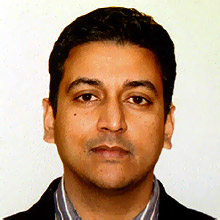
    By Anirban Ghosh


    #1 Reach (The Last Mile Syndrome):

    There is no doubt that digital media is growing fast in India and also getting accepted among the clients. According to me, the only challenge right now is to position it aptly in the minds of the consumer through proper placement of the media. The last mile positioning of these media at the point of sale would be one of the key factors to get response and hence would be easy to measure also. This would definitely excite the clients to experiment with this medium to get a quick response within a short span of time.


    #2 Interactivity:

    This is probably one of the media which can interact with the consumer directly and effectively, and one of the major influential factors in buying any particular product. There are various ways to interact with the consumer, which can be controlled and impactful at different touch points to create the brand recall, perception and even to clear doubts at the points of sale.


    #3 Customization:

    Another uniqueness of this medium is that it can be used either in static or dynamic mode. It’s got the flexibility to customize the content exactly as per the need of the target group of any particular product, which would make the medium more interesting, exciting and engage the consumer to get better results.


    #4 Experimental:

    Out of the box innovative ideas experimented through this medium can be a lifetime experience for any consumer and the brand will be remembered for a long time. Touch screen technology can be used very effectively, so that consumers can converse with the brand and hence make the consumer compulsive about using this medium every time.


    #5 Measurability:

    If this medium is used effectively with strategy and at specific locations, then of course it can be measurable. I am sure it makes all the difference as to how do we perceive and position and compel the consumption of this medium at various situations. Although there is no industry currency in place, surely it can be done through some bold steps taken in future for the betterment of Digital OOH, which according to me will be one of the strongest media to reach out to consumers.


    Anirban Ghosh is the Senior Vice President, Adz Edge.

  • Divya Radhakrishnan launches Helios to serve non-content needs of broadcasters, ropes in Bala Iyengar

    Divya Radhakrishnan

    By A Correspondent


    It’s now public. Divya Radhakrishnan, former TME president, has formed Helios Media Private Limited, an integrated ancillary service company for broadcasters. Helios, which was launched by Ms Radhakrishnan on November 1, has roped in Bala Iyengar as Business Director.


    The vision of this company has been crafted on the premise that the growing number of TV channels, and a large list waiting to come into the country, are facing a key business challenge. While content is the primary scope of these channels, a lot of effort has to be invested in creating a robust ecosystem to run the business. This puts a lot of stress on the channel business head, resulting in dilution of focus from the key delivery, which is content. Also, proliferation will lead to further slicing of the revenue pie making the all-encompassing business model non-viable.


    Helios Media has set up sales, marketing, research and traffic management verticals, offering services as a composite piece or as a stand-alone, based on the requirements of the broadcasters. It has offices covering the geographies of Mumbai, Delhi, Bangalore and Chennai.


    Bala Iyengar

    The need for such a platform is amplified with the fact that Helios has already signed up three channels/ groups at the outset. M Tunes is India’s First Bollywood Music Channel in HD. Music Express, the second music channel from the same stable, will have a combination of music, trailors, short filmy programming on current affairs and retro music.


    Meanwhile, Helios Media is also the Asian arm of World Media Connect which markets Indian channels to the ethnic population based in US and UK. The channels under this portfolio are 6 channels of the Sun Network (Sun TV, KTV, Gemini TV, Udaya TV, Gemini Movies, Surya TV) and Punjjabi TV. Helios will be aligning with some more channels shortly.


    With the above contracts already in place, Helios is in advanced stages of negotiations with four speciality channels coming into India.


    Ms Radhakrishnan, who has been in the business of media management for the last 24 years, is the Managing Director of Helios Media. She has worked with leading advertising agencies like Publicis and Rediffusion Young & Rubicam. In her last assignment, Divya headed the Contact Practice at Rediffusion Y&R.


    Mr Iyengar, who has 14 years of experience, leads the Sales and Content syndication function at Helios Media. He has held senior positions at The Times of India, Sony Entertainment Television, Star Network and MTV. In his last assignment, Bala was the Business Head of Zoom.

  • [PR Channel | By Invitation] CSR: More than PR, pursuing competitive advantage in the long run

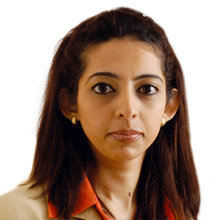
    By Kavita Lakhani


    Governments can’t do enough – they need business to step in. Business can’t step in unless stakeholders see value. As tolerance for corporate malfeasance has dropped, expectations of good corporate behaviour have risen. There has been an increasingly louder voice from the public urging corporations and businesses to fulfill social responsibilities while making legitimate profit.


    As a result, authenticity and transparency have become vital for all companies. Adding a social dimension to the value proposition offers a new frontier in competitive positioning. If, corporations were to analyze their prospects for social responsibility using the same frameworks that guide their core business choices, they would discover that Corporate Social Responsibility (CSR) can be much more than a cost, a constraint, or a charitable deed – it can be a source of opportunity, innovation, and competitive advantage.


    Do the Right Thing

    One of the best ways to win hearts and minds is to do good. However CSR is about more than philanthropy – albeit that’s an important element. CSR is about being a responsible business. It’s about issues like good corporate governance, marketplace transparency, respect for staff, community involvement and reducing environmental impact. Corporates the world over have begun to take their corporate social responsibilities seriously. 64% of the Fortune 500 companies publish CSR reports as part of their annual reports, and 52% publish separate CSR reports. Many companies now include social and environmental commitments in their core mission statements. A growing number are also adopting ‘triple bottom line reporting’ in which social and environmental results are measured and reported next to financial results.


    In India, the Tatas and the Birlas have had a long and distinguished tradition in the area of CSR. As across the world, in India too, the culture of CSR is spreading for various reasons but probably not at the desired rapidity.


    Not just acceptable but desirable?

    In a survey conducted by Lowe Lintas (in association with MSN India and Cross Tab) earlier this year, an overwhelming 93% of respondents say businesses should bear responsibility towards society when making legitimate profit and 69% of respondents are ready to exert their influence through consumption habits and to pick products that are made by companies with agreeable CSR initiatives. Interestingly 56% respondents say that supporting brands that undertake socially responsible activities is as good as doing socially responsible activities themselves!


    Choosing which social issues to address

    Gandhiji said, “We must become the change we want to see in the world.” No business can solve all of society’s problems or bear the cost of doing so. Instead, each company must select issues that intersect with its particular business. Other social agendas are best left to those companies in other industries, NGOs, or government institutions that are better positioned to address them.

    There is nothing authentic about merely writing a cheque. The essential test that should guide CSR is not whether a cause is worthy but whether it presents an opportunity to create shared value – that is, a meaningful benefit for society that is also valuable to the business. Supporting a dance company may be a generic social issue for a utility like Tata Power but an important part of the competitive context f or a corporation like American Express, which depends on the high end entertainment, hospitality, and tourism cluster.

    While some may baulk at the idea of deriving commercial benefit out of a social responsibility exercise, the advantage is that when there is a business benefit to be gained through the exercise, the chances of the program continuing and getting larger increase. It’s understandable that the greater the business/image benefit to the brand, the greater the brand’s willingness to continue and even upscale the exercise.


    Don’t be shy. Share It!

    Our economy is increasingly characterized by easier access to information and speedier communication. And like never before, the general public is better informed and able to shape the success of multinational companies. Every day the world’s political and business leaders perform in front of voters, employees, shareholders and the general public. Every word is weighed, every deed dissected – in print, on air, online and in person. Public relations firms create campaigns that go beyond mere product and brand promotion to emphasize transparency, authenticity, good work, and ethical behaviour.

    We advise clients that the speed with which information is disseminated via the Internet can quickly influence a company’s reputation. And a company’s reputation is largely determined by its communication. It has been shown that it is in a company’s best interest to provide substantive information about its responsible initiatives while demonstrating efforts to address vulnerabilities and challenges. We help companies craft the message and carefully consider its tone, because this can considerably impact how the firm is perceived by its stakeholders.


    Indeed companies, in my view, should be up front about their commitment to CSR, about how they are measuring their efforts and how they are tracking against their commitments. Of course, there are risks. We live in a far more transparent world where companies need to be wary of sacrificing goodwill for short term publicity. But doing well by doing good, is not only accepted as good business practice, it’s becoming an imperative. That’s nothing to be embarrassed about.


    In summation, when looked at strategically, corporate social responsibility can become a source of tremendous social progress, as the business applies its considerable resources, expertise, and insights to activities that benefit society. Peter Drucker said it best. All successful businesses serve social goals. Profit is just an internal metric of how successfully you serve those social goals.


    Kavita Lakhani is President, LinOpinion Public Relations & Co-Chair, India, IPG Women’s Leadership Network

  • Hazare rules. Absolutely!

    By Ranjona Banerji


    Such tremendous excitement there was in TV land on Sunday morning. Anna Hazare and his band of merry anti-corruptionists were going to have a public debate on the Lokpal Bill, the perfidy of the Congress and the lies of the government and Hazare was going on a token hunger strike as well.


    From 8.30 am, all other news in India and the world came to a standstill. Not even the tragedy in Kolkata could compete with this momentous event. First, we all went with Hazare to Rajghat, so he could meditate. In the irony-free world that is TV news, it occurred to no one that calling Hazare a ‘Gandhian” is a bit of a misfit. Gandhi, for all that he approved of abstention from alcohol, had never recommended public flogging for drinkers. That is just one example of course.


    As Hazare sat at Rajghat, crowds gathered at various venues in India, to show their solidarity with this anti-corruption movement. Breathless reporters could not contain their exuberance at being part of such a movement. “If my cameraperson can pan the crowd, at least 200 people have shown up”, said the reporter. Elsewhere it was as many as 1200 people (compared to 200 that’s a lot!).


    It took Monday morning’s papers to tell us that the biggest crowd was in Delhi (18,000) and Mumbai managed 4000.One newspaper even had the temerity to report on critics of India Against Corruption, something which TV finds very difficult to do.


    Meanwhile, the rest of the world kept turning but you never would have known it.


    **

    The Times of India in Mumbai has decided to make an impact on Mumbai readers by taking up various issues with a massive first page edit marking its commitment to the city. Hindustan Times meanwhile continues with its own special reports focusing on various aspects of city life. This means that other city newspapers will have to step up their games.


    The AMRI hospital fire may have vanished from TV on Sunday but the newspapers carried on with the stories and examined the shortcomings in hospitals across the country. Hardly surprisingly, the situation is almost universally dismal.


    **


    It was interesting to read about Delhi’s 100th birthday as the capital of India. (Although technically I think that’s 100 years as the capital as decided by the British. Delhi has had capital status in earlier times as well, if my memory serves me right.) Anyway, there has been some interesting writing about the old city, the new growths and migrations, the history, the quirks and the people. Delhi often gets short shrift compared to other Indian cities so this was a welcome change.


    **


    Absolutely: an adverb which means totally, completely, without exception, from absolute which means free from restriction, unadulterated, complete, outright. In which case, what does one make of the following conversation:


    Anchor to reporter: “Give us a sense of what is going on at the assembly/fire/stadium.”


    Reporter: ‘Well, MLAs have thrown chairs/ many people are dead/ India has won the series.”


    Anchor: Absolutely.


    I have nothing further to say on the matter. Absolutely nothing. Absolutely.

  • [PR CHANNEL] PR’s Media Fixation

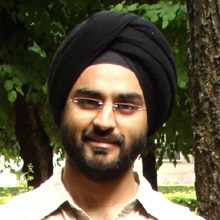
    By Sudarshan.S


    Welcome to the world of “PR” or public relations, for being in the industry, we do not know what we are into, till you have a client, for the client defines what you will do.


    Public Relations (PR) is something that the clients are clear about, but not the agencies themselves. Clients want Media Publicity – what is perceived as last mile connectivity, or the job of generating coverage/leads with media, and organize Press Meets.


    PR Agencies do this diligently and all claim “we do it differently” (including us), and approach the same media that comprises about a dozen English dailies, half a dozen English Business Dailies, ditto for the channels, websites, the leading vernaculars, and then all and sundry who are a part of the mass mailing list.


    The approach may differ slightly on the basis of the clientele that one handles, depending on Music & Entertainment, Investor Relations, Finance, Lifestyle, Technology, Luxury, Marketing, Commodities, and so on.


    There are full-service PR Agencies that have offices across the metro cities and maybe some other key cities depending on client profile. There is a set of second rung agencies who are region / city specific, and operate through associates, and there are boutiques.


    The key measurement factor becomes the number of cities that one can operate out of, and the amount of coverage (clippings/mentions) that can be generated, and hence the weight of the “Media Coverage Docket” is the ultimate measure of success. Quantity tends to take preference over quality, though the awareness of the former is surely increasing by leaps and bounds.


    For the sake of an intellectual debate, I would like to negate everything that is stated above and say that PR is much broader than this, for a PR practitioner is not just a communications man, but a ‘societal technician’, who knows that effective PR is based on reality-not on images, whether true or false. Deeds and action that serve the public interest are the basis of sound PR, thus establishing a meeting point, to the highest degree of adjustment, between an organisation and the publics upon which it depends.


    Professional PR practice depends on the application of the social sciences (psychology, sociology, social psychology, public opinion, communications study and semantics) to the problem at hand. The PR professional plays an important role in preparing the various segments of the society for coming developments-in order to prevent ‘future shock’.


    What one generates as the last mile coverage is the resultant of some PR advice that covers adjustment to the public, information to the public, and persuasion to the public to accept a service or product in the form of editorial coverage or other innovative methodologies.


    So PR as a profession is an occupation for which the necessary preliminary training is purely intellectual in character, involving knowledge in general and learning in particular, as distinguished from mere skill. Secondly, it is an occupation where one has to learn to wear others shoes and think for them, be it a client, media, or any constituent public.


    Public Relations has expanded to include Events, Experiential Marketing, Integrated Marketing Communications, Brand Programmes, Social Media and so on. Thanks to the Internet and technology, the ambit has surely gone wider than just the Media coverage, for the term Media itself has exploded beyond defined boundaries.


    Sudarshan S teaches public relations at various business and media schools. He also head the Mumbai-based Prognosys Marcom Services

  • Remembering Mario Miranda/Dev Nadkarni

    By Dev Nadkarni


    Mario Miranda never really liked to talk about himself or his work. But once during an assignment, when I pressed him on how he went about his meticulously detailed illustrations, he told me in his usual shy manner that he began at one corner of the blank sheet and put his scratchy ink pen nib down only when he had fully filled up the whole sheet.


    The maestro put his nib down one final time yesterday, having finished with the extraordinary canvas of his life. And what an incredibly rich and unforgettable picture he has drawn for all of us in his seven decade long career. His drawings, with their filigree-like detail, are an endless source of joy: you find something new in every illustration no matter how many times you’ve seen it before. That indeed was his genius.


    I knew Mario as a fan, friend, colleague and client – as fan for a lifetime, the rest for more than two decades. My first ever introduction to Goa was through one of his illustrated books, “Goa With Love – by Mario”, a copy of which we still have in our collection nearly half a century later.


    “Goa With Love” is Mario’s finest tribute to his most beloved Goa – it is completely illustrated, no copy except for an odd caption or two. It captures every aspect of Goa – the scenery, the people, the social mores, the cultural diversity, the oddly spelt Hindu names in Portuguese-influenced English, everything except perhaps the smell of feni.


    I have lost count of how many times I must have pored over that book throughout my life. I remember spending hours on each page when I was a child growing up in Panaji – which back then was Panjim. I can still find things to laugh about in the drawings.
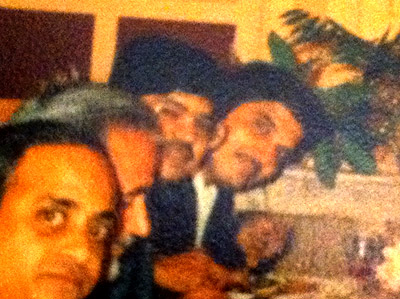
     

    Dev Nadkarni (third from left) with Mario Miranda

    I first shook hands with Mario when I was perhaps all of five in my father’s office in Panaji’s iconic Secretariat Building – my father, Mohan Nadkarni, was the newly formed union territory’s first information officer and was in charge of publicity, publications and PR. “This uncle here drew Goa With Love – his name is Mario,” I remember my father saying. I was excited because I had shaken hands with the man whose book I was so very fond of.


    In later years, I often ran into him in the Times of India building in Mumbai on my errands delivering my father’s music reviews and columns to the newsroom on the third floor (no emails and faxes then). I’d reintroduced myself as his fan from Goa and chatted on some occasions about some of his illustrations from “Goa With Love” and his other work, which appeared regularly in the Khushwant Singh-edited Illustrated Weekly and the Evening News of India.


    Our next significant encounter was at my first real job – as an assistant editor of the popular children’s fortnightly Tinkle at the India Book House. He was illustrating a children’s book, which my colleague Nira Benegal (noted film director Shyam Benegal’s wife) was editing. We settled down for a long chat and at the end of it, he handed two rather tired looking diaries to Nira.


    I noticed Nira put away the diaries carefully in her bottom drawer. After a few days, knowing my respect for Mario and his work and my own ambitions to launch my cartoon strip, she let me have a peek at those diaries. I was amazed as I leafed through them.


    They were diaries from Mario’s childhood. Most of us who kept diaries did so in long hand. Mario simply drew. On one of the pages the only words were something like: “walking back from the market I saw” and there was this amazingly stylised picture of a cow. He must have been 10 or 11 when he drew it – perhaps even younger.


    The picture was greatly detailed. There were the blades of grass, the pebbles, the vegetable vendor, other trappings of the marketplace, a carrera (those small rickety buses – now extinct – with about eight seats that packed in 24 people), the fisherwoman, everything on that A8 sized diary page. It left me dumbfounded. Nira let me borrow the diaries for the weekend and boy, what a weekend that was.


    The Benegals and Mirandas were close friends. Shyam’s Trikaal – based on Goa’s liberation – was shot for the most part in Mario’s splendid colonial Loutolim residence, which is where he breathed his last.


    Mario’s recognition as an illustrator par excellence grew and he was invited for assignments and exhibitions across the globe. The world’s major cities invited him to draw their monuments and main squares. The volume of his published work grew and he was soon awarded both the Padma Shri and the Padma Bhushan, besides many other awards.


    Then Karnataka chief minister Devraj Urs commissioned Dom Moraes and Mario to do a book on the state – and that’s another book in our collection signed by both Dom and Mario.


    By 1987, I had a couple of weekly cartoon strips going. One appeared in the Sunday edition of the Indian Express and the other in the Sunday editions of the Economic Times between 1984 and 1990. The latter, called Doldrumms Ltd, based around office and business situations, was definitely inspired by Mario’s Miss Nimbupani and her cartoon colleagues.


    In the middle of that year, Mario and I were part of a delegation of Indian cartoonists who visited Europe as part of the Festival of India. Our works were exhibited for a week in Sierre in Switzerland. It was there that despite our great differences in age and stature, he took me on as a friend.


    During those long wine filled nights, I got to see his melancholic side, which I had not seen before. On one such evening, I remember, as we were sitting on the deserted platform of the Sierre railway station after a couple of bottles of fine French Beaujolais, he told me the real reason why he left the Times of India – but not before extracting a promise that I’ll keep it only to myself.


    Weeks later we reconnected in downtown London and spent a busy morning drinking some more – this time beer. Celebrated modern dancer Astad Deboo joined us for a while.


    As editor of a publication for India’s first major amusement park Esselworld, I had the pleasure of commissioning some work from Mario. But what I’ll remember most is a one of a kind interview I did with him: we did a four-page cartoon strip interview. He drew the replies to my questions – how cool is that. He later told me how much he had enjoyed doing that.


    Though I visited his home in Colaba, Mumbai, several times, I never really got to know his wife Habiba or his sons. At one time, I remember he had pet turtles clambering up and down the living room. Mario’s close friend and one of India’s finest humorists, Busybee (Behram Contractor), modeled two of the characters of his “Round and About” column – Darryl and Derrick, the two sons of the fabulously rich ‘my friend who lives on the 21st floor’ – on Mario’s two boys.


    There will not be another cartoonist, illustrator or human being like Mario de Brito Miranda. His celebrity came in spite of his self-effacing and humble personality. He will be greatly missed by millions of his fans.


    One of the final pages of “Goa With Love” has an illustration of a Goan funeral. As well as a few weeping relatives around an elderly man’s bier there is also a lot of beer and feni flowing around. The young people are eyeing one another through their tears. There is one young lady by the man’s feet, a tear flying away from her thick eyelashes, as her gaze meets a young man’s standing by the head of the departed gent. Her expression is an inexplicable mix of grief and expectation – there is a definite air of getting on with life once the grieving is over.


    That’s perhaps the best way to lay the great soul to rest – celebrate his life more than grieve his passing.


    RIP Mario Miranda.
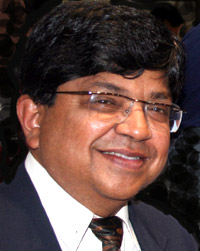

    Dev Nadkarni, cartoonist, teacher and editor, drew India’s first cartoon strip – Fekuchand Garibdas – for the Indian Express’s Sunday edition. Around a decade back, Dev shifted base to New Zealand where he edits a newspaper for the Indian diaspora, works closely with the government and international development agencies on a range of initiatives. He is also a columnist with several publications. Email: dev.nadkarni@gmail.com


    Photographs courtesy Dev Nadkarni
  • Compuware launches 14 new website performance benchmarks

    By A Correspondent


    Compuware Corporation (Nasdaq: CPWR), the technology performance company, recently announced the availability of new website performance benchmarks for eight industries inIndia. The new benchmarks provide companies with competitive and market-leader insight into the website performance.


    Compuware’s Gomez Benchmarks – recognized as the industry standard for measuring performance – provide a comprehensive set of global independent web and mobile performance metrics. This “real-world” view of performance helps companies understand the web or mobile experiences being delivered to customers.


    The new Indian benchmarks for Banking, Brokerage, eCommerce, Exchanges, Insurance, Media, Portals, Telecom and Travel measure the performance of the home page of the websites of selected companies in each industry. In select industries, Compuware also launched “Last Mile” benchmarks that measure website performance based on the end users’ experience at the desktop.


    In addition to these 14 new benchmarks that provide Indian companies with a robust web performance gauge across industries, Compuware will launch 12 more benchmarks in the coming months.


    “Because benchmarking helps companies to better understand the connection between website performance, business results, and improved process discipline, it has become a valuable tool in today’s competitive online marketplace. With competitive benchmarking, companies can improve web performance and better manage their customers’ online expectations and experiences,” said Neeraj Dotel, Managing Director, CompuwareIndia.

  • Disney Channel’s Doraemon Movie delivers the best ratings

    By A Correspondent


    The premiere of Doraemon – Nobita’s Dinosaur on Disney Channel has delivered the best viewership performance since 2005 for a kid’s show at 5.24 TVR among all kids (CS 4-14 ABC) in HSM, beating its own record rating of 4.3 TVR for Doraemon in Nobita’s Great Adventure in the South Seas  which was telecast June 5.


    The channel received an overwhelming response across all channels with 33% share of viewing in Hindi Speaking Markets (HSM) and 28% share of viewing in allIndiaduring the primary telecast of the movie.


    The premiere ranked #1 across the time slot in the kids genre with 66% share of viewing in HSM and 63% in All India among all kids (CS 4-14 ABC).


    The viewership in certain markets was particularly noteworthy withPunjab(1 Mn+) showcasing double digit TVR with 10.55. This was followed byDelhiat 8.71 TVR, UP at 8.11 TVR, among others.


    “It is wonderful to see kids and families enjoy Disney Channel’s rich menu of content. Doraemon has an engaging storyline and a familiar setting that every Indian kid can relate to. This success is testament to the unique way in which Disney engages with its kids and family audience at multiple levels,” said Natasha Malhotra, VP and GM, Walt Disney Television International India.


    Across the week, over 17.9 million individuals and 6.5 million kids tuned into movie from All India.


    In addition to its popularity with Disney Channel audience, Doraemon has also been ranked as the #1 character for kids across India by Ormax India in October 2011.

  • The Anchor: 5 reasons mobile advertising hasn’t gained momentum

    By Damandeep Soni


    #1 Digital is seen as an afterthought in the overall media plan. Ditto in the case of Mobile. While everyone talks about it, thinks about it and wants to do Digital, traditional media momentum starves marketers of time to think about utilizing the mobile medium. Many agencies often fail to recognize the importance of Mobile and miss out on opportunities to engage their audience.


    #2 You need a different mindset to think about engagement models using Mobile. It’s much more personal than other media consumption devices. A video, for example, created for a mobile ad should be very different from a TVC as there can be a huge amount of engagement hooks built for Mobile. While Mobile offers advertisers new opportunities for interacting with consumers, many agencies just use their web creatives for mobile ads. A lot more needs to be thought out on in-app experiences, mobile-optimized sites or landing pages rather than just repurposing creatives.


    #3 Apps have only started to take off in India very recently. In-app inventory is yet to be fully utilised. Smartphones have started making significant inroads into the country, which means apps (specifically Android apps) are set to proliferate. With a sizeable population of smartphones, an in-app ad revolution is around the corner.


    #4 Brands that are using Mobile are still thinking about the engagement model with the user – the push v/s pull debate. Do you show the user a location-specific advertisement when he is in a locality (and will that become an annoyance to the user and will he start ignoring the ad?) or do you want the user to pull the ad after checking in, using a service like Foursquare, and will there be enough users who would want to do this?


    #5 Lack of mobile sites is another issue. Most brands do not offer a tablet/mobile optimized experience to the user. Hence, even if they embark on a mobile campaign it does not give them the expected results.


    But it’s not all doom and gloom. Mobile advertising will pick up in the next two to five years. In India we are still in the early adopter stage of mobile advertising. However, once brands get to know of the engagement stats and get innovative with campaigns, there is no turning back. After all, even today, a person is six times more likely to click on mobile banners.

     
    Damandeep Soni is Vice President, Global Sales and GTM, Percept Knorigin. 
  • NDTVProfit.com in brand new avatar

    By A Correspondent


    NDTV Convergence has launched its financial and business portal NDTVProfit.com in a new avatar as a one-stop destination for live market data, research and expert insight and business news.


    The website is focused on the fast growing community of investors in the country, many of them first-timers, and provides financial tools, easy and intuitive access to detailed and relevant data, tips and know-how to help power personal wealth creation.


    The website has launched a brand new portfolio tool, which is convenient, easy-to-use and very secure, to track and plan not just an individual’s wealth, but also that of his entire family.


    Riding on its close, convergent relationship with NDTVProfit, the new website also brings the user the opportunity to interact one-on-one with experts and anchors, get stock recommendations and tips in real-time on the popular program “Buy or Sell”. The website also offers the users a chance to become a guru in his/her own community on the Profit board.


    Additionally, a new video pod makes it easy to access NDTVProfit’s programming in hundreds of easy-to-consume videos. The users can also view their favourite shows on the site.


    The new features are designed to bring the users a clutter-free, non-intimidating experience as they tracks markets live, gets experts’ views and immediate insight on market dynamics and a great viewing and reading experience.


    Geodesic has collaborated on the website with NDTV Convergence as the technical partner.

  • [PR Channel] Social media empowers to changes the world, says youth

    By A Correspondent


    In a nationwide survey conducted amongst the youth of India, nearly 76 per cent believe that social media empowers them to bring change to the world. They are convinced that causes for women and movements against corruption can be driven through this medium that is now growing as a source for information. In fact, as many as 28 per cent source information from social media sites whereas around 54 per cent prefer a mix of print, television and social media.


    With a sample size of 1200 in the age category of 18 to 35 years, covering the major cities of Delhi (NCR), Mumbai, Kolkata, Chennai, Hyderabad and Bangalore, the survey titled Youth in the day and age of Social Media conducted by Indiabiz News & Research Services, clearly shows that the youth feel empowered by the ability to express themselves and make their own choices.


    The respondents indicated that while they primarily engage in this space to connect with peers and garner information, they also feel that they almost influence consumer choice, human rights and social change, politics and policy making and corporate governance.


    What in many ways rebukes those who think that the youth believe only in symbolism, best described by clicking on the ‘like’ button for a Facebook group, about 70 per cent believe that ground realities cannot change by merely being part of a group. A lot more work on ground is needed.


    These trends are obviously turning into being areas of concerns for politicians and even corporations (who now engage a lot in this space). What would be a cause of concern for them is that anti-corruption has emerged as the most prominent social cause endorsed by 32 per cent of the respondents and 35 per cent of the youth saw protection of the girl child and violence against women as a significant issue.


    The power of this space, even though it cannot be measured in a comprehensive manner, is indicated by the increasing number of hours spent by the youth there. An India Biz survey conducted a year ago stated that this age group spent about an hour on social media sites. Now the time spent is one to two hours. And the advent of smart-phones, according to 82 per cent of the respondents, has helped increase connectivity.


    What is evident is the growing sense of empowerment that the youth of India feel with social media. They choose their friends, determine which group they should be associated, pick information that they think matters to them, influence public debate and reject or accept icons or leaders. As stated in one of the many comments, ‘Social media can always create revolutions – positive or negative is upon its moderator and how the debate evolves.’

  • 10 years of ‘Naye India Ka Bazaar’

    Since heralding the birth of modern retail in India in 2001, Big Bazaar has adapted to varying consumption needs over the past decade. It has not only catered to the Indian consumer’s inherent search for value, but also attuned itself to his emerging aspirations. Big Bazaar’s offerings were amongst the first to address these dual needs.


    On the occasion of Big Bazaar’s 10th anniversary, the challenge was twofold. They had to narrate the brand journey and also recast Big Bazaar’s promise – “Iss se sasta or accha kahin nahin” with a new and relevant meaning. They  needed to craft a promise which would mark Big Bazaar’s commitment to continual evolution.


    India of today was different from that of 10 years ago, and so was Big Bazaar. There was an existing symbiotic relationship between the two, which became the inspiration for the new tagline and logo.The promise of continuously evolving and keeping pace with the consumers was captured through the new logo and tagline – “Naye India Ka Bazaar”. The word “Naya” connoted an embrace of modernity while “Bazaar” re-instated the brands belief in rootedness and Indian values


    The journey of Big Bazaar would then be captured in the same way.


    The reason is simple; they are changing with their consumers. And in this journey of 10 years they accept the mistakes of the past, because Big Bazaar believes, ‘only when we accept and acknowledge our mistakes’ can real improvement occur.


    They have expressed their willingness to evolve through one simple word – “sorry”. A bold stance for any advertiser. And they express our gratitude towards our consumers by saying – “Shukriya” – Thank You.


    Credits:

    Mudra India (West)

    Office Head: Arijit Ray

    CCO: Bobby Pawar

    Creative Copy: Anil Bhardwaj

    Creative Art: Vinayak Nayak, Ninad Gharat

    Films: Vishal Sane, Mahen Solanki

    Production House: Red Carpet Entertainment

    Director: Rajkumar Gupta