Blog

  • 9XM to start Jalwa for older audiences

    By Rishi Vora


    On February 25, India’s music TV segment will see one more channel launch – 9x Jalwa – 9x Media’s second Bollywood music channel after 9xm.


    The differentiation, however, lies in the fact that the channel will cater to 25 + audiences and offer timeless Bollywood music from an era starting 1965 to 2000. The market which has few other players like Mastii, Channel V, MTV, Zoom, Bindass and Mix – most of these channels cater to relatively younger audiences.  Mastii is the genre leader with a relative market share of 12.4 per cent (Source: HSM, CS 15+, TAM Media Research), while 9xm is at 11.1 per cent share.


    While MTV and Channel V are skewed more towards being Youth Entertainment Channels, Mastii, 9xm and Sony Mix are pure play Bollywood music channels. And in that sense, 9x Jalwa comes as channel with a clear differentiation as far as its TG and content is concerned.


    For starters, the channel will be available across cable operators – analog and digital. As for DTH, the company will look to sign deals in phase 2 – once the channel gains some momentum.


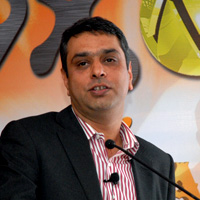
    Punit Pandey

    Content-wise, 9x Jalwa will have a rich library of over 2000 songs that will be played on the channel, besides short format shows, humour and trivia led interstitials. As against half-hour or one hour shows that is seen on other music channels, 9x Jalwa will air back-to-back music, giving viewers a non-stop music experience.


    Sharing the thought process of launching a second Bollywood music channel after 9xm, Sr VP and Head – New Business Mr Punit Pandey said: “9xm caters to audiences in the age group of 15-24. It is primarily a youth channel, but with 9x Jalwa, we’re looking at covering all age groups. Also, we will be the first channel to cater to the 25 + audience.”


    He further added, “The market for 9x Jalwa is fairly big, and we think there is a lot of potential.”  From a group perspective, it is advantage 9x Media; for it is the only group in the domain to have two Bollywood channels catering to two different age-groups. As Pandey states, it will help them add value on two most important fronts: viewers and advertisers.


    Amar Tidke

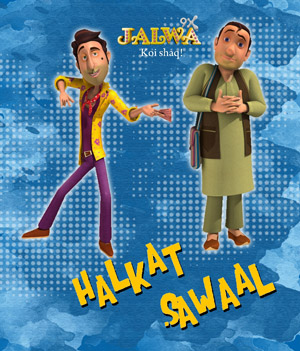
    On the programming front, Mr Amar Tidke, Head – Programming and Sr VP, 9x Media said; “With 9x Jalwa, viewers will get the best of Bollywood music, maximum nostalgia and humour.” Some of the shows on 9X Jalwa will include HalkatSawal, Kassette Kahaniyan and Bolly Brands. The company has signed on Brand Harvest as its creative agency. The packing aspect of the channel has been done by Point Break Media.


    The on-going marketing campaign comprises of on-air spots on group channels and a digital plan which includes social media initiatives.


    9x Jalwa is the group’s fourth offering after 9xm, Punjabi music channel 9xm Tashan and Marathi music channel 9x Jhakaas. It will be interesting to watch how the channel progresses and how the market responds.


  • The Anchor: 5 Challenges for film & entertainment industry in the digital space

    1. Lack of Infrastructure:

    One of the major challenges in digital space is lack of infrastructure and poor internet connectivity. The problem of bandwidth has been there for some time now. We need better streaming solutions and internet penetration inIndia. With 3G, and now 4G, coming on the scene, though the initial rollout has been slow, all plans are geared for boosting rollout and hence consumption of entertainment on digital platforms is expected to get a boost.


    2. Fragmentation in the Industry:

    We have a fragmented industry in terms of sheer number of platforms and business models. In present scenario, there is no clear leader except a handful of them who are making profit. But with more investors in the space, we are seeing both, better quality platforms and more sustainable rollouts, which are further fuelling the consumers’ digital consumption habit.


    3. Menace of Piracy:

    Piracy is another menace that the industry has been fighting against. Some of the players in digital space, like YouTube for example, have been taking some strong measures to ensure that the legitimate owner of the content gets fair share of the revenue. Additionally, content owners are increasingly partnering with platforms and finding win-win partnership models and working together to build the consumers’ habit of legal content consumption.


    4. Technological Challenge:

    Content owner face a lot of challenges to digitize and re-purpose the content. Technologies are getting redundant at a faster pace. It is a challenge for the content owners to cope up with the fast-growing technology and avail their content in compatible format for a particular platform. However, players are emerging with the scale to be able to handle this fragmented consumption and build better and more sustainable revenue streams, and bring all the efficiencies of scale. This also gives opportunities to bring in innovation in the presentation of the product.


    5. Need for better equipments

    Another hindrance is slow adoption of newer and better equipment/ end user device to access video content. But, the variety of gadgets available in the market at reasonable price points and loaded features are expected to address the problem.


    Jai Maroo is Director, Shemaroo Entertainment


  • So will media spends grow at 12 or 8%?


    By Johnson Napier


    A lot could be said about how the year 2011 has shaped up for the media industry in India. From a growth perspective, it possibly has shaped up the way brand marketers and industry observers had predicted it to be – a mixed year with its usual set of highs and lows. But despite the rise and fall, the enthusiastic performance displayed by the industry year-on-year is giving players from the space, as also research bodies, enough scope to track down this domain exclusively and come up with studies that predict the trajectory and also crystal-gaze into its performance for the forthcoming year.


    In pace with its observations on the growth witnessed by the media industry in India, a couple of media (agency) firms have rolled out reports citing healthy growth numbers for 2011 and a cautious-yet-optimistic trend for next year. After Mindshare India released its annual report titled ‘This Year, Next Year: Indian Media Forecast’, it was the turn of Pitch-Madison to reveal its report last week. Joining the above two reports was another finding from research firm Media Partners Asia that unveiled its study tracking the performance of media in 2011-12. (Disclosure: MxMIndia partnered with Mindshare to publish the report digitally and in print form as ‘The Mindshare Indian Media Forecast 2012’)


    2011 (cr) 2012 (cr) YOY % growth
    Mindshare 33,388 37,397 12
    Pitch-Madison 25,594 28,013 9
    Media Partners Asia 31,400 34,100 8.7


    While most studies have predicted a healthy growth trend what is noteworthy is the optimism in numbers that have been expressed through the various reports which range from a modest 8 per cent to a high of 13 per cent. This translates into adspend monies ranging from Rs 25,594 crore to Rs 33,388 crore approximately. As part of the ‘Mindshare Indian Media Forecast 2012’ published by MxMIndia, Ravi Rao, Leader, South Asia, Mindshare had expressed how predicting adspends has become more complex now than ever was. “The economic outlook is something that one can never get the handle right, with most studies not agreeing on one number. But this is what makes it exciting to look and estimate the Adex growth in India. Group M does yeoman’s service of providing some startling numbers based on science rather than gut, even though India tends to buck the trend away from global predictions.”


    When analysed further, the Mindshare study predicts an AdEx growth of 12.8 per cent in 2011 with net revenue totalling INR 33,388 crore. This was driven largely by the medium of television that contributed 18 per cent to the growth followed by Print at 7 per cent and Digital at 30 per cent. In fact for 2012, Mindshare predicts an overall growth rate of 12 per cent that will be led by spends on television – 15 per cent, print – 8 per cent and digital – 30 per cent.


    As for the insights by MPA, ad revenues in India for 2012 are expected to clock a growth rate of 8.7 per cent. According to MPA, this growth will be primarily driven by MNCs investing in India and stronger MCG sector, and if there are revisions carried out in 2H 2012. As for the advertising growth across key categories, MPA expects robust growth from the FMCG sector, which is the largest advertising category, contributing 30-35 per cent to total ad spend. The study predicts that MNCs are expected to report robust numbers while a few large MNC accounts are looking to increase spends by 50-70 per cent for the coming year. The other sectors that will see heightened activity include Auto – while traditional companies such as Maruti and Hyundai have reduced spends, global car manufacturers investing in India are driving the overall growth for the sector, Telecom and Life Insurance.


    On its part, the Pitch-Madison study (published by Pitch magazine, conducted by Madison) predicts a sluggish growth rate of 8 per cent due to slowdown worries in the second half of 2011. It predicts a cautious trend for 2012 which is expected to pick momentum only in the second half. It predicts a growth a 9 per cent with revenues totalling Rs 28,013 crore.


    The industry, on its part, seems undeterred with the varying figures being thrown up and appear comfortable with the current state of affairs so far. Divya Gupta, CEO, Dentsu Media India said, “The estimated adspend growth according to us stands at approx 9 per cent. Also, the growth trajectory may have slowed down versus what was reported in the last few years, but it is still very healthy!”


    According to Shubha George, Chief Operating Officer, South Asia – MEC, “Our estimate of 2011 closing numbers is close to 13 per cent. When analysed further, the mediums of TV, Digital and Cinema have outperformed vis-a-vis the overall 13 per cent whereas Print and Radio have been below par. As for 2012, our estimates are a percent lower than 2011 at 12 per cent.”


    Admitting that the so-called slowdown may have cast its effect on the growth of the industry, Anita Nayyar, Chief Executive Officer – India and South Asia, Havas Media said that “the actual rate that was predicted was in the range of 11-12 per cent but given the slowdown scare and also the volatility that was witnessed in the markets, the rate was revised to be in the region of 9-10 per cent.” Going forward, Nayyar feels that marketers will tread with a cautious approach as they are yet to see signs of recovery – a phenomenon that will start taking place in the second half of 2012. “Large clients like P&G and other FMCG units have announced a slash in the adspend rates. This indicates a cautious approach that’s being taken by the marketers. Even category-wise, sectors like FMCG, finance etc that used to spend heavily have taken a backseat for the moment. But what is surprising is the marketing drive that has been taken out by sectors such as education, real estate and to certain extent even auto, which are continuing to hike their adspend budgets.”


    Presenting a rather comprehensive outlook, S Yesudas, Managing Director – Indian sub-continent, Vizeum India stated that while the industry will grow at 10 per cent, growth will come in largely from three areas. “At a broad level it will come from investments in newer markets with the definition of India changing for many categories and consequent expansions. Share of voice reduction by certain categories will be balanced with increase by certain others which will include new launches particularly in the financial, automobile, IT and healthcare segment. Growth will also come from increased investments in the digital as well as out-of-home space and will be further boosted by changes in the audience buying-selling structure of traditional TV medium,” he asserted.


    While some clients may have decided to plug the unwarranted spends in advertising there are others who are jumping into the bandwagon to explore opportunities not found before. But slowdown or no slowdown, the industry appears to be keeping pace with its growth story the way it has been since the past few years and would continue to focus on ensuring that clients get maximum ROI for the monies spent.


  • Axis, banking on life’s growth story

    By A Correspondent


    Axis Bank has launched a new brand campaign, ‘Badhti ka naam zindagi’. Having established its credentials as a customer-centric bank, the new campaign aims to highlight the bank as a preferred partner in progress.


    [youtube width=”400″ height=”200″]http://www.youtube.com/watch?v=5Ar0AoIAVCs[/youtube]The campaign, designed by Lowe Lintas, features Axis Bank’s new brand philosophy of “success as a never-ending story”.


    Speaking on the launch of the campaign, Manisha Lath Gupta, Chief Marketing Officer, Axis Bank said, “Badhti ka naam zindagi or ‘progress on’ is an expression that encapsulates Axis Bank’s belief on the meaning and purpose of life that everyone wishes and works towards. We believe that success today is no longer about having accomplished a goal. It’s about setting newer goals and achieving each one of them. People today feel inspired about their own capabilities and that in turn triggers hope towards a better life.”


    R Balki, Chairman, Lowe Lintas, added, “It is fascinating to see how much movies have impacted our lives. When we fall in love there is background music playing in our heads. When we are angry, happy, sad, successful we have begun to see ourselves as actors in our own private film. This is a reality. So to express the philosophy of ‘Badhti ka naam zindagi’ it was interesting to visualize the real journey of life as if it were a film and use a director’s language to plot every step.”


    The repositioning of Axis Bank from ‘Aapka Solution’ to ‘Badhti ka naam zindagi’ is an important milestone in the journey of Axis Bank brand. The new campaign marks the evolution of Axis Bank brand from playing the role of a ‘problem solver’ in the customers life, to that of an ‘encouraging and enthusing partner’ by owning an attitude and belief that resonates with the target audience in everyday life.


    Axis Bank has also launched two applications, Meri Zindagi ka Safar and Meri Zindagi ki Picture, on its Facebook page. Meri Zindagi ka Safar is an application that lets users mark the places they have travelled to, thus enabling them to find out how much distance have they covered in these journeys of their life. The premise is that one is enriched by one’s experiences as one travels, and this helps people learn and grow and progress in their lives.


    Meri Zindagi ki Picture lets users compile their images in a showcase of their life’s story.


  • Radio reality show Big Memsaab to cover more states in season 5

    By A Correspondent


    Following a successful response over the last four years in the Hindi heartland of Uttar Pradesh, the fifth season of the reality-based radio show and on-ground property Big Memsaab will be launched across 13 states of India – Punjab, Maharashtra, Andhra Pradesh, Karnataka, West Bengal, Kerala, Tamil Nadu, Gujarat, Orissa, Rajasthan, Madhya Pradesh, Bihar and Jharkhand.


    Conceptualized and initiated by Big FM, it facilitates a platform for Indian women to showcase their talents and skills that deserve wider recognition and appreciation. Participants are thus ordinary women with extraordinary talent.


    Big Memsaab Season 5 promises to attract a wider range of audiences across India. For the promotion of this show Big FM will be utilizing its extensive in-house media networks including radio, television, digital and outdoor in a 360-degree campaign which will offer advertisers excellent visibility for their products and services.


    Contestants from each city will be shortlisted for four rounds followed by elimination in each round. The grand finale will have contestants from each city battling it out with one another for the final title and crown of Big Memsaab 5.


    A release from the company said, “We have always believed in entertaining and engaging our audiences by initiating unique concepts that will connect us directly to our listeners. Considering the success this show has seen for the last four seasons in the Hindi heartland, we feel the time is now right to take this woman-centric property to other parts of the country.”


  • Real Steel boxes its way into Top 10 iTunes Chart

    By A Correspondent


    Jump Games, a company owned by Reliance Entertainment’s Digital Arm, has set new records on the Apple iTunes with Real Steel, the official mobile game for the movie, Real Steel.


    Real Steel has received a staggering response, it is the first game made by an Indian Studio to touch such impressive figures on the iTunes Chart. The figures say it all: Best Top Sports Paid Apps Rank - 1; Best Top Action Paid Apps Rank – 5; Real Steel climbs to No. 6 in Top Paid Apps (Courtesy iOS)


    Real Steel has been in the top 50 list on the App store in countries like theUS, Australia,Canada,Germany and many others.


    This Underworld fighting game, which is an actual replica of the Real Steel movie, is set in the near future where 2,000-pound robots fight each other with no rules or regulations.


    To keep the player engaged, Jump keeps coming up with constant timely updates for the game ,current one being addition of two new ruthless robots - Twincites and Blacjac.


    The game provides high adrenaline rush to the player and he/she can use a mix of standard boxing moves, jabs, crosses, hooks, uppercuts, and some specific Underworld moves, such as low blows, knees to stomach, and so on in the fight. The game is available at just 0.99 cents on Apps store.


    Jump Games is a leading International developer and publisher of mobile games, apps and content. It is an integral part of Reliance Entertainment (Digital Business). Jump’s foray and expertise lies into the media and entertainment space.


    Jump partners with leading content owners, publishers, mobile operators, handset manufacturers and technology providers. Jump’s experience and expertise in creating innovative and cutting-edge gaming  content reflects in its client roster, which lists some of the best brands from across the world - Codemasters, GLU, Playboy  Hands-on, Dreamworks, Cartoon Network, and Konami to name a few.


    Fueling concepts for these ground-breaking games is the domain expertise of Jump’s strong, multi-disciplinary, and cross-skilled team spanning across the US, UK and India.


    Distributed across theUS, Europe, South Africa, Australia, the Middle East, and Asia, Jump’s content can be accessed through 80 leading networks across 40 countries as well as global AppStores. The content is available on leading networks like Vodafone, BSNL, TATA Docomo, M1, MTNL, Dialog Telekom, Reliance Mobile World, Telstra, Tele2, TIM, O2, Virgin Mobile, KPN, Telia, 3,Telefonica, Optimus, and Telenor.


  • Sony bullish on being numero uno Hindi GEC

    By Rishi Vora


    Sony Entertainment channel, which is sitting pretty at No 2 position in the line-up of Hindi general entertainment channels (currently at 210 GRPs, week 7, Source: TAM Media Research), is quite positive on the chances of becoming the genre leader – something the channel has long awaited in the many years it has been in the business.


    For Sony, however, Colors is seen as a tough contender for now. And the challenge, as viewed by many experts, is to increase the gap from the No 3 player and slowly but surely, reach to a point from where it could become the No 1 player.


    “Though the idea is to be the No 1 channel, we are not focussing too much on that. “We’re not desperate to get there,” says Sony Business Head Sneha Rajani.


    CID is doing well for the channel. The show, which was launched by Sony in the year 1998 – the longest TV series in India, continues to deliver the goods even today. If previous week’s numbers are to be considered, the show features in the Top 10 shows in the Hindi GEC segment with a rating of 4.12 TVR along with Crime Patrol.


    As far as the programming strategy is concerned, the focus continues to be on fiction. In a bid to enhance its fiction offering and also open its early prime time slot of 7: 30 pm, the channel is all set to launch Shubh Vivaah, produced by UTV Television.


    Ms Rajani said at the launch of the show: “Having consolidated our fiction line-up between 8 pm – 11 pm slot; we wanted to extend our offering further. So with this we’ve extended our prime time offering, from 7: 30 pm to 11 pm.”


    On Feb 19, the channel aired 57th Filmfare awards. As informed by Marketing head Danish Khan, the channel is expecting a TVR of over 5.


  • ad:tech 2012 set to kick off today

    By Shruti Pushkarna


    The biggest digital marketing, media and advertising event is here. ad:tech 2012 kicks off in New Delhi today. The three-day event is being held at The Leela Kempinski, Gurgaon, Delhi NCR from February 22 to 24.


    This year’s event will have participation of over 70 digital marketing companies, more than 2500 delegates and experts from the digital marketing fraternity. (see Disclosure)


    Speaking to MxMIndia, Event Chairman, ad:tech India and Founder, CEO & Managing Director, Rammohan Sundaram said, “We have over 100 speakers this year and more than 3000 delegates, combined both in the expo and at the conference. We’ve grown more than 50 per cent from last year in terms of participation.”


    The event is set to showcase 7 ground breaking keynotes. A line-up of global thought leaders for 2012 edition includes, Mr. Shiv Singh, Global Head of Digital, Pepsico Beverages; Mr. Gian M Fulgoni, Executive Chairman & Co-Founder, comScore Inc.; Mr Arvind Rajan, Managing Director & Vice President, Asia Pacific and Japan, LinkedIn; Mr Kent Wertime, Chief Operating officer, Ogilvy Asia Pacific; Pete Blackshaw, Global Head of Digital Marketing and Social Media, Nestle; Satyan Gajwani, Director-New Media, BCCL; and Richard Dunmall, Vice President, Global Accounts & Agencies, Microsoft Advertising.


    The agenda includes two parallel tracks of insightful panel discussions with 18 sessions conducted by experts from advertising, marketing and media industry. There will be three panel tracks on Brand Strategy, Performance and Venture Capital.


    Mr Sundaram believes that the star attraction for ad:tech has always been its keynotes and marketing masters. But the expo this year will also be a huge attraction and expos he believes tend to create a vibrant atmosphere. He told MxMIndia, “The expo is going to see a lot of action this year. We have ten more participants this year, with over 15 international companies participating.”


    Talking of slow economic growth because of the severity in European markets, Mr Sundaram believes that there is rising pressure on marketers today. So participants, he feels, are looking forward to some smart gains at the event.


    Expectations of participants are also high, given the line-up of speakers and huge delegate turn-out. Speaking to MxMIndia, Karl Gomes, Co-Founder at AgencyDigi said, “I have high expectations… for me it’s about meeting people, listening to perspectives and maybe help and evangelize the medium.” ad:tech he believes, “…is a nice meeting place for like-minded people. Delegates and speakers get a chance to chat, evangelize. While it’s essentially about marketing and technology, but other mediums also come in. Digital is part of every medium today, TV has become digital, radio is anyway interactive…so digital can actually help other mediums.”


    As the largest gathering of online marketers, the event promises to showcase leading Indian and global brands, including, Pepsi, Coca Cola, Nestle, Hindustan Unilever Limited, Facebook, Dell, Ford India, IBM< Nokia, Sony Entertainment Television, Bharti Airtel, LG Electronics, MTV, LinkedIn, Homeshop 18, Godrej appliances, comScore, Ogilvy, Avaya, mydala.com, Yatra.com, Kotak Mahindra Group, Tata Teleservices, MotorExchange, IndiaMART.com and Domino’s Pizza.


    ad:tech 2012 has a lot in store, as Mr Sundaram said, “Marketers can expect intense and thought-provoking discussions on wide-ranging topics from industry veterans and thought leaders.”


    More details about the event are at http://www.ad-tech.com/newdelhi/.

    Disclosure: MxMIndia is a media partner of the event.


  • Bridgestone is title sponsor of World Series Hockey

    By A Correspondent


    Bridgestone, the world’s largest tyre & rubber manufacturing company, has come on board as the ‘Title Sponsor’ of World Series Hockey (WSH), the biggest-ever hockey league in the world.


    The Bridgestone World Series Hockey will be held from February 29 to April 2, and will involve 200 leading players – Indian and international – who will showcase their talent in 59 matches and vie for the biggest prize money hockey tournament in the world.


    The 8 venues for the inaugural edition of the league are Bengaluru, Bhopal, Chandigarh, Chennai, Delhi, Jalandhar, Mumbai and Pune. Chandigarh Comets will face-off against Bhopal Badshahs in the first tie of the tournament on their home ground.


  • Retailers Mahindra group, Godrej Interio, Reliance Retail hire specialists to up sales

    By Writankar Mukherjee


    Whenever Mahindra Group decides to set up a new store for its speciality mother and child retail venture Mom & Me, it first looks out for ‘super moms and dads’ . These are experienced parents or grandparents who have the experience of raising a child and can offer customers, especially first-time parents, advice on choosing the right product and its usage.


    At last count, the Mahindras had appointed more than 60 super moms and dads across India, at a much higher salary than what its customer care executives earn. In the process, it is reaping huge business benefits. The conversion at the Mom & Me stores is more than 50 per cent, double the industry average.

    Conversion rate is the measure of the number of people who visit a shop making a purchase – a key indicator of a store’s success.


    “The last-mile service helps in increasing conversions, especially in tough times like this,” said Saloni Nangia, president of management consultancy Technopak Advisors. “The consumer experience also improves, and it builds a long lasting connect with them. In fact, such specialised talent will guide buyers to meet their specific requirements so that they are satisfied,” she added.


    In an emerging trend in the country’s Rs 20,000-crore organised retail sector, retailers are increasingly hiring specialists who can influence shoppers, provide personalised shopping advice and thereby increase conversion. As a result, shop floor jobs, earlier reserved for plus-two and general stream graduates, are now seeing a growing influx of specialized graduates or domain experts.


    Retailers see such specialised shop floor employees as critical to success in the current economic scenario, when consumer sentiments are down. Key retail categories like apparel, furniture and electronics are seeing far less trading, prompting retailers to spice up demand backed up by heavy discounts and promotions.


    Several studies have said consumer sentiments have been down for the past two to three quarters due to rising interest cost and inflation, though it improved in the urban markets from mid-January.


    Diamond jewellery chain, Orra, has started appointing designers at the shop floor to help customers in their purchase decision. The company has also started an extensive training programme for such designers on the various types of jewellery, gold and other precious stones.


    The company has hired one designer for each of its 33 stores. “The conversion rate has jumped by 10 per cent. We are now planning to increase the number of such specialised designers in the shop floor,” said CEO Vijay Jain. A 10per cent jump in conversion is no mean number, considering the per sq ft revenue in jewellery retailing is one of the highest in retail, as much as Rs20,000 per sq ft per month.


    Godrej Group’s furniture retailing arm, Godrej Interio has started training its existing shop floor employees on interior design and is also hiring specialised interior designers for its premium venture, U and Us, where consumers can design their own furniture.


    Hiring such specialists and training them is aimed at helping the sales force evolve as consultants, said COO Anil Mathur. Reliance Brands, a wholly-owned subsidiary of Mukesh Ambani’s Reliance Retail , which runs a chain of 55 premium stores for global brands like Diesel, Timberland, Ermenegildo Zegna, Paul & Shark and Steve Madden, has been hiring talent from fashion institutes to run the stores.


    This year, Reliance Brands hired 32 people from National Institute of Fashion Technology and three to four designers from London College of Fashion. The company refers to its store employees as ‘sales consultants’. Reliance Brands pays at least three times more salary to such employees compared with those in its other lifestyle formats. “We need such specialised talent, since a person buying a jeans for Rs15,000 at Diesel would require specialised knowledge on the product, design and far more engagement with the brand. Similarly, the average selling price at Paul & Shark is Rs24,000 and that at Ermenegildo Zegna is Rs 54,000. Selling such high-value products requires specialised skills,” said Reliance Brands president and CEO Darshan Mehta.


    The specialised hiring strategy also works for the employees as a second career opportunity. Mahindra Retail’s supermom and superdad concept, for instance , helps professionals coming from a break or as a post-retirement job opportunity . The super moms and dads have no sales targets either. The customer connect adds to the store’s sales; some of them end up dealing with sales worth as much as Rs 70,000, said Mahindra Retail CEO K Venkataraman.


    Architect Anjali Kar (name changed on request), joined Future Group’s furniture and home decor retail venture, Home Town in Kolkata, to gain experience in sales. “The selling experience and directly dealing with clients is a plus in career growth, more so if someone were to start up their own firm,” said Ms Kar.

    ‘Supermom’ Preeti Jhingran (46), joined Mahindra’s Mom & Me store in Bangalore after a stint with Genpact. She says the unique nature of the job impressed her. “I play the role of a mother to would-be parents,” she said. “In cities like Bangalore, where most young couples have nuclear families, all they need is some trustworthy advice which we provide by meeting their needs at the store,” she added.


    Similarly, pharma industry veteran Ganapathy Sankarnarayan (69), joined Mom & Me as a superdad, post-retirement . A soon-to-become grandfather with his children settled abroad, Sankarnarayan says he has already enjoyed being a grandfather at the store.


    Several new parents even leave their children with him while completing their shopping in the store. Retailers have started drawing career progression plans for specialised professionals . “The best way to dirty your hands in retail is on the shop floor. Such professionals can then move up the ladder,” said Mr Mehta. All in all, it’s a win-win for both.


    Source:The Economic Times
    Copyright © 2012, Bennett, Coleman & Co. Ltd. All Rights Reserved
  • Coke & Pepsi to sizzle summer with more drinks

    By: Ratna Bhushan


    Forget the Cola war; Coca-Cola and PepsiCo are heading for a high-pitched battle in the flavoured soft drinks segment this summer.


    Soon after reviving lemon drink Citra, Coca-Cola has decided to give fresh lease of life to orange drink Crush and tonic water Schweppes, said an industry official aware of the development.


    Rival PepsiCo, which has rolled out two variants of orange drink Mirinda and revived lemon drink Duke’s after a seven-year hiatus, plans to launch more flavours under its clear-lime brand 7Up, said trade insiders.


    Both are responding to the changes in consumption patterns in India’s Rs13,000-crore soft drinks market, said experts. “Flavours are growing faster than colas…heightened focus is recognition of the demand,” said Ravi Jaipuria, PepsiCo’s biggest bottler in South Asia.


    Crush For the Masses

    Coca-Cola plans to revive Crush and Schweppes, which it bought along with clear lemon Canada Dry as part of a global acquisition of Cadbury Schweppes soft drink business in 1999. Crush, like Citra, may target the low-income group with a lower price tag than Coca-Cola’s own Fanta orange drink, said an official familiar with the development. “That way, both brands can co-exist.”


    Schweppes tonic water and premium soda will be taken national across more than 10,000 outlets, and will be packaged in cans, the official says. Currently, Schweppes is available only in non-returnable glass bottles in a few restaurant channels and select modern trade stores.


    A Coca-Cola spokesman declined comment on the forthcoming launches of Crush and Schweppes, but said: “A combination of our ‘occasion, brand, pack, price, channel’ architecture along with brand activation plans and route to market focus will help us capitalise on the existing opportunity in the flavours segment.”


    Coca-Cola is already in the process of reviving Citra, which it had acquired from Ramesh Chauhan two decades ago, priced about 20 per cent cheaper than existing lime lemon drinks, Sprite and Limca, mainly to fight smaller regional B-brands.


    Unprecedented Rush

    Devendra Chawla, president of food and FMCG businesses at the country’s largest retailer Future Group, said launch of so many flavours and brands in one season is unprecedented in the industry. “While there would be some casualties among these by end-season, it’s good for the industry as India’s share of throat of soft drinks is minuscule; this engagement will grow consumption,” he added.


    Some experts say that a key factor that helped flavours outgrow colas is the widespread belief among Indian consumers that flavoured soft drinks are less harmful to the body than colas.


    Ruchira Jaitley, PepsiCo’s executive VP marketing, beverages (flavours), said flavours are growing in high double digits, without sharing exact numbers.


    But surprisingly, the new Mirinda flavours will be around only for three months and go off the shelves before peak season of May-June.


    Late last year, PepsiCo had relaunched its age-old Duke’s range of beverages, mainly as a regional brand in Mumbai, in lemon, raspberry and gingerale variants. It bought Duke & Sons in 1995. The rush for flavours is in the packaged juice segment as well.


    Source:The Economic Times
    Copyright © 2012, Bennett, Coleman & Co. Ltd. All Rights Reserved
  • Pavan Varshnei quits ABP, hands over to Kaushik Banerjee

    By A Correspondent


    Pavan Varshnei, President, English language publications at ABP, has decided to move on with Kaushik Banerjee, Vice President of the ABP group, taking additional charge with effect from March 1, 2012.


    Pavan Varshnei joined ABP in 2008 to run Businessworld, and set up and launch Fortune India. Prior to joining ABP, he was the Publishing Director of the Business Division at the India Today Group and was credited with rapidly expanding the portfolio. He identified new segments and successfully launched four new publications: Scientific American, Harvard Business Review, Men’s Health and BT More. He also negotiated a joint venture with Germany’s Axel Springer Group to launch Auto Bild India.


    Before joining the IT Group, he was executive vice-president at Lintas India. He spent 14 years at Lintas, working across several Unilever brands, Maruti Suzuki, Electrolux, Joyco, Wills Lifestyle and Sony Ericsson. At Lintas, he also served as head of insight and oversaw the AOR (agency of record) media business for Bajaj Auto, Idea Cellular, UTI, Pantaloon and Parle Agro. Varshnei is a Chevening scholar from the London School of Economics, UK. He graduated from St Stephen’s College, Delhi, and holds an MBA with distinction from the Asian Institute of Management, Manila.


    Mr Kaushik Banerjee joined ABP in 2007 and oversees all SBU activities of Anandabazar Patrika. Armed with 15 years experience in sales and marketing, he had a long stint at Titan Industries, where he was instrumental in launching their range of alarm clocks in India. Thereafter, he moved to Duncans Industries Ltd in Calcutta, becoming the marketing head for their packaged tea division.


    After a short stint at Bombay Dyeing, he joined Idea Cellular Ltd. He them moved on to the Murugappa group where he became Vice-President, Sales and Marketing, working with the bathroom products and travel divisions. Mr Banerjee is a mechanical engineer from Jadavpur University and is an alumnus of IIM, Lucknow. The move took place earlier this month and an internal communique was sent out. Mr Banerjee is likely to relocate to New Delhi from Kolkata and Mr Varshnei has not yet revealed his plans for the immediate future.