Blog

  • The Anchor: 7 ways of building a successful agency-client relationship

    By Aniruddha Oka


    #1 Like any business relationship, a successful agency-client relationship stands on the basic pillars of involvement, trust, mutual respect, empathy, freedom and space.


    #2 Firstly, for a relationship to be successful it has to be a win-win situation in the long run. And it’s here that the empathy becomes an important factor where one needs to see from other’s window, of course without detriment to one self.


    #3 A successful relationship can be built on trust, integrity and an egalitarian platform where both the parties respect and acknowledge the need for each other. This is built only over time, and one needs to invest that.


    #4 Getting to know the client’s brands/products/services as much as he/she does, if not better, is essential. Specifically so for industrial/techno products. Get to know their clients and customers, because a different perspective and POV is what clients seek and respect their agency for. And without a deep understanding of client’s customers, an agency cannot provide one. Similarly, getting to know the agency key people as ‘people’ is critical for understanding their unique strengths to harness.


    #5 Respect each other’s capabilities and give freedom/space/time to do their best in what they are best at. Understand and appreciate that clients have their internal clients too, and so does the agency.


    #6 Be truthful, honest and frank while giving advice, since it helps both, clients and agency, in the long run. I’d rather be remembered for a piece of advice that’s not liked, than one that was not right but just pleased someone.


    #7 Meet off-line in a deliberate and planned way to give and take feedback. Encouragement works wonders and does not cost much, but surely goes far beyond.


    Aniruddha Oka is Chief Operating Officer, Quadrant Communications.


  • Discovery Channel and TLC ranked amongst the top 5 most trusted TV brands in India

    By A Correspondent


    Discovery Network Asia Pacific’s two flagship channels in India – Discovery Channel and TLC have been ranked amongst the top 5 most trusted television brands in India by The Brand Trust Report 2012.


    Discovery channel has been ranked third, ahead of all the Hindi general entertainment and sports channels. TLC has been ranked fifth, ahead of all lifestyle, English entertainment, English news and English movie channels.


    Rahul Johri, Senior Vice President and General Manager, Discovery Networks Asia-Pacific, South Asia said: “This recognition by the Brand Trust Report 2012 is a reflection of our strategy to entertain viewers across India with the highest quality and differentiated non-fiction programming like Curiosity, Man Woman Wild and Swamp Brothers. We would like to take this endorsement as a source of encouragement for our future endeavours in creating new genres, trends and programme formats that resonate with the Indian audience.”


    Discovery Channel, India’s leading non-fiction channel, entertains viewers in multiple languages with a range of programming across genres including natural history, survival, technology, engineering, wildlife and India. TLC, India’s favourite lifestyle channel, since its launch in 2004 presents refreshing entertainment on travel, food, fashion, luxury, wellness and many other exciting lifestyle trends.


    N Chandramouli, CEO, Trust Research Advisory, publishers of The Brand Trust Report, India Study, 2012 said: “It is prestigious that Discovery Channel and TLC have been ranked third and fifth, respectively, among television brands by influencers-consumers in the 15 cities of the study. The study reflects how deeply Discovery Channel and TLC are trusted as measured by a comprehensive Brand Trust study on TRA’s proprietary 61-components.”


    The Brand Trust Report (BTR), compiled and released annually is the result of an exhaustive survey undertaken by the Trust Research Advisory (TRA). The methodology includes BTR questionnaire which is designed to illuminate approximately 425 aspects of brand trust, of which 391 were directly brand-related. The study also questioned respondents about two other important brand trust influencers – brand recall and the trust-experience of brands, the latter of which they were requested to furnish reasons for.


    The Brand Trust Report, India Study, 2012 research was conducted among 2718 ‘influencer’ respondents across 15 cities. The study was the most intensive undertaken on Brand Trust across the globe, generating nearly 2 million data points and 17,000 brands. Indian Statistical Institute helped create a statistically robust Brand Trust Index which has been used to hierarchically rank India’s brands on the basis of trust.


    Discovery Communications is the world’s number 1 non-fiction media company reaching more than 1.5 billion cumulative subscribers in 210 countries and territories. Discovery empowers people to explore their world and satisfy their curiosity through 130-plus worldwide networks, led by Discovery Channel, TLC, Animal Planet, Discovery Science and Discovery HD, as well as leading consumer and educational products and services, and a diversified portfolio of digital media services including HowStuffWorks.com.


    Trust Research Advisory (TRA), a part of the Comniscient Group, is a company dedicated to understanding and simplifying concepts related to Trust. TRA was conceived in 2008 to decipher, analyze and measure Brand Trust, to make it universally understood and easily applied. The organization’s focus areas include Research, Publishing, Trust Training, and Licensing.


  • INMA in LA to host digital revenue models and transformation strategies

    By A Correspondent


    INMA World Congress will hold a two-day conference on May 6-8 in Los Angeles on digital revenue models and transformation strategies. Earl J Wilkinson, Executive Director and CEO INMA said, “We have a fantastic program coming together for the INMA World which will be pushing our industry to identify new growth paths and revenue models under the theme “New Oxygen, New Growth. This will be a conference of aspiration and strategy, and I encourage participation in a program that will transcend national borders and media boundaries.”


    Some of the speakers at the conference focusing on digital revenue models and transformation strategies include Digital Revenue Models of the Future by Michael Lamb, Principal, McKinsey & Company. As news publishers aim to price content and get consumers to pay for digital access, McKinsey & Company has developed a four-point look at what media companies should be prioritising in the next five years. They include consumer-paid content, next-generation premium display advertising, how to build lead-generation networks, and video. Learn about the best practices across media companies and the strategies behind these best practices.


    Christian Unger, CEO, Ringier AG will talk on Digitisation, Diversification, and Entertainment. Ringier has a 180-year-old history of innovation. Recent years were all about the transformation from a traditional (print) publishing company to a digital and diversified media and entertainment house. This presentation will outline the course Ringier decided to take and experiences made on this journey. Ringier is a Switzerland-based media company with newspapers, magazines, and more in eight European countries as well as China and Vietnam.


    The Anatomy of Transformation will be delivered by Clark Gilbert, President and CEO, Deseret News Publishing Company. The Internet is forcing choices. If made definitively, these focusing decisions can lead to new growth and successful transformation. Most newspapers are unwilling to make these tough choices: inching their way down in print costs, still trying to cover every type of story, and trying to do both print and digital in the same organisation. The Deseret News has had unprecedented growth in both print and online areas by focusing its editorial emphasis on stories that are distinct to its voice for faith and family. This has enabled the company to double print circulation, launch a national Sunday, and create a separate digital division – leading to double-digit audience growth and three straight years of 50%+ online revenue growth. This session will focus on the organisation, financial, and content implications of a digital-first strategy.


    The early registration deadline is Friday, March 9.


  • Birla Tyres to roll with Grey Singapore

    By Shubhangi Mehta


    After assigning its creative duties to Dentsu in May 2011, Birla Tyres has now awarded the creative mandate to Grey Singapore. Industry sources close to the development have confirmed the news to MxMIndia.


    The account size of the business is estimated to be 10 crore.


    The incumbent on the account, DentsuIndia, was the first agency to work on the creative business of the account.


    Ever since its inception in 1991, Birla Tyres, a division of the BK Birla flagship Kesoram Industries Ltd, has seen a jump in its turnover from Rs1,947.22 crore in 2008-09 to Rs2,849.61 crore in 2009-10. The company is now looking to reach a target of Rs5,500 crore.


  • Salman Khan sets a Rs50cr record by selling satellite rights for Dabangg sequel

    By Nandini Raghavendra


    If you have been wondering whatever happened to Chulbul Pandey, news is that the Dabangg star – Salman Khan – will be back this Christmas in a sequel of the 2010 hit. And even before Khan begins shooting for Dabangg2 next week in Mumbai, the satellite rights for the movie have been snapped up by Star Network for a record Rs 48-50 crore for 11 years, according to a trade source closely associated with the deal. Also the music rights have been acquired by T-Series for over Rs 10 crore, said the same source.


    Though Hemal Jhaveri, senior vice-president at Star Gold confirmed the deal, he refused to share the details of the deal or the price. Jhaveri is responsible for acquiring the satellite rights for Star’s Hindi network, which includes Star Plus, Star Gold and Life OK.


    Just like his box office record, Khan’s satellite ratings have been trailblazing. Bodyguard, another of Khan’s blockbusters, registered a record television rating points (TRP) of 10.3 when it was aired on Star Gold in December 2011. The channel expects nothing less, if not more from Dabangg2, said Jhaveri.


    TRP, given in percentages, is a measure of what percentage of people in a defined time band and a defined profile watched a particular programme, a number which is keenly followed by the advertising industry and ads allocated accordingly to the one garnering the higher numbers.


    A film is considered a success on TV if it can manage to garner an average 2.5 TRP through the year, apart from the high number it garners on premieres. For example, the ICC Cricket World Cup final between India and Sri Lanka last year garnered a TRP of 21 (on three channels – Star Sports, Star Cricket and Doordarshan).


    Over the past few years, satellite prices have been playing a key role in bank-rolling films with at least a third of the movie’s cost of production coming from selling these rights prior to even beginning production.


    A Win-Win Situation for Channel

    It is also a win-win scenario for the channel, which generates both eyeballs and revenues by exclusively broadcasting a successful movie over a number of years. Competition among TV companies wanting to acquire the rights of hit movies has, as a result, led to an increase in the acquisition price of many recent big films.


    Hrithik Roshan’s Krissh3 and the Shah Rukh Khan-starrer Don2 was said to have been sold to Sony for Rs37 crore each, while Aamir Khan’s Talaash and Karan Johar’s Agneepath went for Rs40 crore.


    Channels usually spend an average of Rs 200-300 crore a year to acquire film titles for their library. “Increase in satellite prices for big-ticket films has a direct linkage to maximising gross rating points (GRPs), for the channels,” said Rakesh Jariwala, film segment leader, Ernst & Young.


    Movies contribute as high as 30 per cent to a channel’s GRPs. The channels also generate revenue from syndication and overseas subscriptions for the films they buy.


    Over the past two years, it’s been a close race between Star and Sony, with each raising the stakes with every new film. For Star, with films like Bol Bachchan, Son of Sardar, Ghayal Returns and Housefull 2 all snapped up, the slate for this year looks full while Sony has Aamir Khan’s Talaash and YRF’s Ek Tha Tiger among others.


    “We have built on the content game and we are confident of the returns as well as its ability to garner TRPs beyond the premiere,” added Mr Jhaveri. While Dabangg, produced by Arbaaz Khan Productions, was acquired by Ashtavinayak Cinevision, the sequel has so far not been sold to any corporate house, although almost every film corporate, including Hollywood studios in India, have been very eager to have it on their slate. Prices offered have ranged between Rs100 crore and Rs130 crore, though industry sources say in all likelihood the brothers will release the film themselves, after the success of Johar’s Agneepath.


    Star Network’s recent track record with Bodyguard, Singham and Ra.One, all notching up record TRPs, has also worked hugely in its favour. And with Star also holding a strong portfolio of Salman Khan’s films – Dabangg, Wanted, Ready, Bodyguard, Tere Naam, Pyar Kiya Toh Darna Kya- for 7-8 years, backing a Khan package may help garner more eyeballs.


    Source: The Economic Times

    Copyright © 2012, Bennett, Coleman & Co. Ltd. All Rights Reserved

  • Tamil KBC ropes in both national and local advertisers

    By A Correspondent


    Dubbed as the biggest property of the Tamil television industry, Neengalam Vellalam Oru Kodi, or Kaun Banega Crorepati in its Tamil avatar, has closed deal with both leading national and local players who will be featured on the show. Just like KBC 5 which saw several brands riding on its success, its Tamil counterpart too has been successful in roping in brands on the show. While the show is being presented by Sunfeast, it is powered by Cadbury Dairy Milk and associate sponsors include 7UP, Tata Docomo, Nano 2012, Muthoot Fincorp, UniverCell (retail), Nathella Jewellery (retail), Aachi Masala (retail) and Arun Excello (retail). In total 10 brands are already on the show and the few that are left on the inventory are expected to close by the time the show goes on air on February 27.


    K Sriram, General Manager, Vijay TV said, “There has been brilliant response to the show as advertisers see value in this property and have seen its success from other parts of the world. On KBC Tamil one can see a good mix of national advertisers along with local retail players. We have ensured exclusivity in terms of category for our advertisers, hence giving them maximum visibility without conflict. There is a tremendous buzz around the show which has been aptly created with a 360-degree marketing campaign with some unique use of media.”

    It is learnt that around 200 OOH options have been engaged for the show. R Balachandran, Senior VP, Vijay TV, shared details: “We have used a combination of media including bus shelters, bus backs, hoardings, mobile hoardings, shared auto, cinema posters among others. The innovative bit is our use of shared autos that have become quite popular in Chennai and this is probably the first time this medium is used, especially because these autos are used by the middle and lower middle class who form a huge part of our TG. Also we have used an entire local train with KBC branding.”

    Besides there is an attempt to create a larger than life image for KBC with false jacket, full page advertising and being present on digital platform including Facebook, YouTube and other prominent websites. The Hindu and Dinathanthi have been used in print. Also there are spots running on Vijay TV to engage viewers. Radio spots are used too. Not to forget that host Suriya has pulled all stops to give his full attention to the show and be more than just its host.

    In all the marketing budget for the show would be around Rs 8 crore, and with all the efforts, Vijay TV is confident that this will be a profitable venture right from the word go though Mr Sriram was unwilling to quantify how much this show would contribute in their growth. On the back of this show, three new fictions are planned which will be launched in March, April and May respectively.

    “Most importantly KBC Tamil has been a learning experience in how to create a sustainable campaign which was started in December and will continue till the show is on,” concluded Mr Sriram.

    The show will be aired Monday-Thursday at 8 pm.

    Also read:

    Star’s Vijay TV hopes to win big with Tamil KBC, nets superstar Suriya as host:

    http://www.mxmindia.com/2011/12/vijay-tv-banks-on-kbc-for-growth/

  • HT revamps Sunday supplement Brunch

    By A Correspondent


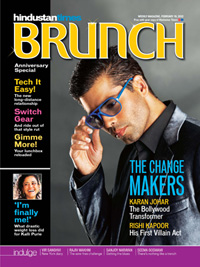
    HT Media Limited (HTML) unveiled the new avatar of Brunch Weekly on February 19. Brunch is the popular weekly lifestyle and entertainment magazine from Hindustan Times launched in 2003. It is currently circulated complimentary with HT and select editions of Mint on Sunday, and is the largest read English lifestyle magazine in India with a circulation of 13.1 lakh and growing.


    Poonam Saxena, Editor of Brunch Weekly, commented on the launch: “Brunch has an unmatched reach and a large bank of extremely loyal readers who have enjoyed the magazine over the last eight years. It was time to give our readers something new, something unexpected and something fresh. Readers will be delighted with what they find on their doorstep every Sunday morning. It is the same magazine we all fell in love with all those years ago, but with an exciting new look and feel, and more entertaining and interactive content. Brunch just made Sundays better!”


    The brand promises its readers “The Good Life” week after week with gripping content that covers various lifestyle and entertainment-related genres. The revamped Brunch includes several new features including weekly contests and feature series, celebrity columns, and stories with web codes that can be scanned for exclusive supplemental content. The lineup of Brunch columnists includes Vir Sanghvi, Rajiv Makhni, Seema Goswami, Shikha Sharma and Sanjoy Narayan.


    Rajan Bhalla, Head – Corporate Marketing & Magazines, added, “We decided to give Brunch a makeover for the benefit of our readers. More than three million people across the country read Brunch because we give them an exemplary reading experience. Brunch is a Sunday ritual for them; something they eagerly look forward to. We wanted to give our readers a clutter-free, sharp, witty, entertaining, and interactive start to their Sundays. All the favourites are still there, we have simply upped the ante on the design and content. The new, arresting masthead and crisp and clear pages give Brunch a contemporary edge. We are certain readers will love Brunch’s new style.”


  • Anil Thakraney: Yes, we want to read about the Saif punch-nama!

    By Anil Thakraney


    As usual, the knives are out for the media on the carpet coverage of Saif Ali Khan’s moment of madness at the Taj in Mumbai. The noble souls of the nation opine that too much attention is being given to what was just another brawl in a public place. That the media has lost it, that it must instead focus on serious issues.


    Reality check, people. I can assure you all these so-called nobles were hooked to their TV sets and read every single word in the newspapers on the fisticuffs saga, and they fully relished the drama. And then later quickly logged on to Twitter and got busy dissing the media. Such is the hypocrisy we suffer from.


    Truth is, nothing like a story of two ‘decent’ groups behaving like hooligans inside a five star hotel. And absolutely nothing like it if one of the parties happens to be a movie star. This sort of stuff is sensational, riveting and great fun. And secretly, we don’t want the opponents to reach a quiet truce, we would love it if the battle rages on, and some more blows on the nose will be soooo cool! Yup, we all love masala news, whether we confess to it or not.


    And this is not peculiar to India. If a Hollywood star behaved thus, respected newspapers like The New York Times and The Independent would dive right into the action. Celebrity news, especially of the violent kind, sells like hot potatoes; we are all suckers for it. Bottom-line: Saif’s nefarious deed collided with another big story: Congress leader Kripashankar Singh’s ill-gotten wealth. And the latter was given secondary importance to the Wasabi confrontation simply because that’s what excites us people. We are sick and tired of the routine political and civic stories, we need a break from these bores. And the media will give importance to what viewers/readers want, that’s the hard business reality.


    So please, kripa karein, and be a little less hypocritical.

    PS1: There have been allegations that the incident was engineered by the actor’s PR machinery to get some buzz going on his soon to be released flick. Bollocks, I say. Wish our PR industry was that smart. Alas!


    ***


    PS2: Ah! Sci-fi comes into hoardings. Super media innovation in London. A hoarding that ‘recognizes’ you and customizes content for you. High time we saw some excitement happen on this oft neglected medium.


    Link: http://www.guardian.co.uk/media/shortcuts/2012/feb/20/advertising-that-can-recognise-you

  • @ ad:tech: Go beyond clicks, marketers told


    Text and Video by Shruti Pushkarna


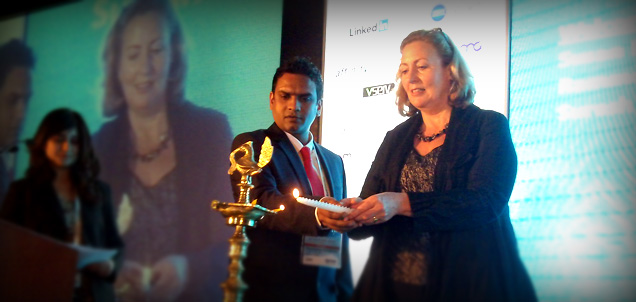
    ad:tech 2012 opened to a packed house today in the capital. The event boasted of digital experts not just from India but 15 other countries. Welcoming the delegates, Rammohan Sundaram, Event Chairman and Founder, CEO & Managing Director, Networkplay Media Pvt Ltd., said, “We promised to make this second edition of ad:tech in India bigger, better and bolder, and I’m excited to see such a huge turnout this year which is set to surpass our footfalls during the last ad:tech. This packed hall full of delegates, speakers and partners from so many different parts of the world, bringing in vast knowledge and experience, seems to have turned Delhi into the digital capital of the world!”


    Day 1 saw parallel panel sessions on brand strategy, performance marketing, retargeting and remarketing, branded content marketing, innovative technologies for improving brand engagement, advertising opportunities in online and social gaming, and video as a driver for user and advertiser engagement.


    Shiv Singh of Pepsico @ ad:tech 2012
    [youtube width=”400″ height=”250″]http://www.youtube.com/watch?v=xnh9V8wlMd8[/youtube]

    Real-time Marketing in a Hyper-connected Ecosystem

    Shiv Singh, Global Head of Digital, PepisoCo made the first keynote presentation of the day on real-time marketing. With 30 billion status updates published on Facebook every month and 250 million tweets published everyday, Mr Singh reiterated the scary times a marketer is living in today. With this crazy amount of penetration where none of these people care as much about brands, a marketer’s job only becomes tougher. So to fight this, Mr Singh believes, “…brands need to use their budgets not just for distribution but for creating content and then depending on their users for distribution of that content.”


    Mr Singh touched upon a few themes in his presentation, one of them being, real-time marketing. To explain real-time marketing, Mr Singh cited the example of Lady Gaga walking down Fifth Avenue in NY sipping a Pepsi. For real time marketing to happen, he would have to be there, smart enough to click a picture or make a video clip, send it to the Pepsi content studio, who would then rework and upload it for billions of fans in the next few minutes. That explains in a sense the power of real time marketing. Mr Singh admitted, “The entire marketing cycle from strategy and insight to execution takes months and months, and so how can one compete with a tweet or a Facebook status update which is published in seconds. That’s where real-time marketing comes in.” He added, “But for real time marketing to happen, six essentials are – real time insights, real time response, real time content studio, real time co-creation, real time distribution and real time engagement.”


    Mr Singh also stressed on the need to focus on connectedness in real-time marketing. Brands he believes need to go beyond the role of sponsorship and play the role of an observer, a curator and a creator. He said, “What happens in the digital is seeping and pervading into every other industry. TV ads become trailers for larger digital experience. There is a need to weave social media in everything you do.” He concluded by stating that the ultimate goal for every marketer or brand is to create ‘value’ and value comes from not just transactions but human connections.


    Brands are Now Publishers

    The session looked at the pressing issue of ‘what is the need for brands today to embrace content?’ The panel was moderated by Ravi Kiran, Co-Founder & Managing Partner, Friends of Ambition, and the panelists included- Wasim Basir, Director, Integrated Marketing Communications, Coca Cola India & South West Asia; Atit Mehta, Country Media Manager, Hindustan Unilever Limited; Nikhil Rungta, Country Marketing Head, Google India; Aditya Swamy, EVP & Business Head, MTV India.


    Ravi Kiran kicked off the debate with a fundamental question, “What is the compelling need for brands today to embrace content? What consumer behaviour change does one see that forces one to embrace content?” Mr Basir of Coca Cola had the answer ready when he said, “Consumers don’t need messages today. We have to tell them stories.” Mr Rungta echoed Mr Basir’s view when he admitted that consumers today are bombarded with so many messages that it is becoming increasingly important to tell a story to catch their attention. He said, “Marketing today needs to be inside the content. Users will go and find you if they have a need. The user today is saying to us, ‘don’t come knocking at my door’.”


    Atit Mehta also shared the worrying ad ignorance numbers that have gone up in the last two to three years. He said, “Advertisers today face a typical situation where they are spending more and reaching less.”


    The question to address seems, whether the consumer is ignoring the messages because of proliferation or whether the message is boring in itself. Mr Basir agreed that it is not like the earlier days when advertising was between content, rather today content is between advertising. So there is definitely a need to tell one’s message differently.


    The other point that was addressed in the session was if there is a need to create interactivity between consumers and brands. Mr Atit Mehta stated that interactivity is extremely critical today. He said, “I am spending on understanding and listening to the consumer. I want to know if the consumer understands what I am trying to tell him/her.” Mr Ravi Kiran asked the panelists of marketers are doing enough in India to embrace content. Mr Rungta replied, “Marketers are realising that this is important and if I don’t do this, I’ll not have a great feedback from my users. If your messaging is worthwhile, it will become content. Kolaveri video is a classic example in this sense, where an ad for a film turned into a viral on the internet.”


    Marketing Masters

    ‘Marketing Masters’ shared their learning, insights and best practices on the usage of digital for their brands, in this session. The session was moderated by Arun Tadanki, Managing Director, Yahoo India.


    Viral Oza, Marketing Director, Nokia shared his perspective on what’s the big deal about digital. Digital, he said, “…is a part of life and not a way of life. It’s neither offline nor online, but it’s both!” He also shared some data on the number of internet users in India. Out of the 100 million users, more than 75 percent of the internet usage is driven by youngsters. He reiterated the need for brands to ‘engage’ with consumers. Citing data, he said, “More than 30 percent consumers refer to internet for accessing information on brands and 40 percent of those consumers convert into referrals. 30 percent consumers recommend products to their peers based on their experience.” He added, “Marketers as we know it today are talking in a monologue- we don’t know if anyone is listening. Digital marketing means that we give the people the tools and a story and they will tell your story. The new communication mode is Dialogue.”


    Karthi Marshan, EVP & Head, Group Marketing, Kotak Mahindra Bank Ltd. chalked out the steps to transform digitally for a marketer. The underlying idea of his presentation was that a marketer need not be intimidated by technology, the real challenge is to convince the top leadership of the need for transformation.


    Virginia Sharma, Vice President, Marketing and Communications, India/South Asia, IBM India spoke about a corporate character that IBM enforces and stands for, and how digital will help shape a belief over the next 100 years. She said, “To keep a brand vibrant and growing, it needs to be relevant and relevance can be created if there’s something deeper in the brand.”


    Anurag Mehrotra, Vice President, Marketing, Ford India cited six trends in the market today in his presentation- i) increasing growth in reality television viewership ii) shift to ‘common man’ more pronounced than ever iii) growth in social media- 57 percent of people talk to people more online than they do in real life iv) growing influence of social media v) explosion In internet consumption vi) word of mouth is key.


    The trends indicate the need for integrated marketing campaigns. Mr Mehrotra said, “Ford has recognized the inherent power of reality voiced through the words, thoughts, feelings of consumers. Hence the Ford motto is- Real people, Real experiences.”


    Gian Fulgoni of comScore @ ad:tech 2012
    [youtube width=”400″ height=”250″]http://www.youtube.com/watch?v=OQkpiJxLufg[/youtube]

    All the presentations by the Marketing Masters seemed to underline one basic point, that of the need to integrate digital in everything you do, to build around platforms and not campaigns alone.


    State of the Global Internet with Lessons learned from Measurement of Online Advertising

    The last keynote of Day 1 was a presentation on the state of global internet by Gian Fulgoni, Executive Chairman and Co-Founder, comScore. In the session, Mr Fulgoni tried to provide a comprehensive understanding of how to best measure digital advertising effectiveness based on lessons learned from comScore’s extensive research.


    Some findings:


    i) Among various research points shared during the presentation, Mr Fulgoni stated that US was no longer the centre of the online universe. In 2011, US internet population versus the Rest of the World internet population was a 13 percent vs. 87 percent

    ii) Asia continues significant growth in the size of internet audience. Growth has slowed in North America and the European growth is mostly driven by Russia

    iii) Indian internet users are much younger than global average. 75 percent of audience is under 35 years compared to 52 percent of the world and 55 percent of the region

    iv) India’s internet usage is relatively low compared to similarly sized countries

    v) Young people drive internet consumption in India today, suggesting future overall usage will rise dramatically. India’s heaviest internet users are in the age group of 26 to 34 years


    Mr Fulgoni listed a few concluding points from the lessons learned from online advertising.


    i) The click is at best an incomplete and at worst a misleading metric

    ii) Display advertising is an efficient and effective way to build sales both online and offline

    iii) Accurate delivery of media plan is critical

    iv) Facebook is a very efficient way to amplify reach and persuasiveness


    Mr Fulgoni closed the session by stating, “Online advertising is effective both as a direct response and a branding strategy.” But he added that ad effectiveness needs to be measured beyond the ‘click’.

     

  • [MxM Radio] I don’t see news as a game changer: Naval Toshniwal, Tomato FM

    By Robin Thomas


    He completed his MBA from Symbiosis Institute of Business Management, Pune in 2003. He joined the radio business of Pudhari Publications and is said to have played a key role in winning the bids for Kolhapur and Sangli FM radio. Naval Toshniwal is the CEO of Tomato FM and Vice President, Pudhari Publications. In conversation with MxMIndia, Mr Toshniwal spoke at length about the success mantra of his talk-based radio station in Sangli. He also shed some light on radio consumption behaviour among the people of Kolhapur and Sangli markets, besides talking about the overall growth and challenges facing the radio industry.


    Q: How would you rate the year 2011 for Tomato FM and the radio industry?

    As every year, 2011 too was good in terms of acceptance of radio as a medium by advertisers. We saw more and more advertisers coming on board and using radio more effectively as a result the maturity and the acceptance of the medium have gone up. In addition to this development the year 2011 also saw bleak in advertising revenues were bleak, although the revenue levels have grown at the corporate level. The same year also saw a lot of content and marketing innovations in radio, a lot of and on ground activities and other activations that have helped the advertisers achieve their final objectives.


    Q: What is the Kolhapur and Sangli market like from a radio consumption perspective?

    Unlike other markets what is more significant about Kolhapur and Sangli is the fact that the overall penetration of radio in these markets is very high. Radio as a medium is very successful here, and it has been so for many years. However, the popularity and penetration of the medium further increased only after the entry of private radio stations. The kind of involvement the people in these two markets have with the medium is very high. The overall acceptance of medium too is very high. The listeners look up to the medium not only for music, but also for regular updates about their cities, their State and the Country.


    Q: Initially Tomato FM was present in both Kolhapur and Sangli, it has now been renamed to Aaple FM in the Sangli district. What was the entire concept behind this move?

    When we conducted a survey in the Sangli district we found out that there was a huge demand for a talk-based radio station which not only allowed the people to listen to experts discuss and debate on various topics but, also allowed them to participate in the discussions. Today, I can say that we have been successful to a very large extend in this format. Earlier there have been various attempts to start a talk-based radio station which more or less did not work. If you are starting a talk-based radio station there must be a very strong local connect to make the channel a success.


    Q: Do you also play music on the talk-based radio station? What is the talk and music content ratio in Aaple FM and what is the station language?

    Aaple FM is a completely local Marathi talk format radio station that plays only Marathi songs. However the majority content in Aaple FM is talk whereas the music content is very low. The songs are played for only 16 minutes an hour.


    Q: The government has approved the MIB’s phase III proposals, e-auctions, news through AIR etc. How do you view these developments in terms of growth in radio?

    Honestly, despite all these developments I don’t see any buoyancy or excitement in the industry. I believe this is because with every development proposed by the government there is also a handicap to it. For instance despite the government allowing news, the source of news is restricted to Prasar Bharati. So what is the differentiating factor here, news will sound same in every station perhaps without any local connect.


  • DDB Mudra announces new ‘A’ team

    By A Correspondent


    Madhukar Kamath, Group CEO and MD DDB Mudra Group announced on February 23 that the restructuring of the Mudra Group is complete, and shared a slew of changes in responsibility of his ‘A’ team, pursuant to the Group’s integration with Omnicom and DDB Worldwide.


    The architecture & identity of the new DDB Mudra Group will be shared with the media at a press meet scheduled on February 28, in the presence of John Zeigler, Chairman & CEO – DDB Asia Pacific, India & Japan. The effective date for the change of identity and the roll-out will be March 1.


    With regard to his senior team, Mr Kamath announced the following:

    Rajiv Sabnis will be President – DDB Mudra Group and will report to him.  He will be responsible for building the DDB Mudra and Mudra brands in Mumbai and the Western Region. He will also be responsible for initiating integration projects and business for DDB MudraMax from the existing clients within DDB Mudra and Mudra.


    Ranji Cherian will be President – DDB Mudra Group and will also report to him. He will be responsible for building the DDB Mudra and Mudra brands in the South. He will be responsible for initiating integration projects and business for DDB MudraMax from the existing clients within DDB Mudra and Mudra in the South.


    Anurag Bansal will be Director Finance, DDB Mudra Group.   He will now function as deputy to the Group CFO, Dilip Upadhyaya.


    Sudarshan Banerjee, apart from his role as Head, Mudra Ahmedabad, will now also be Director – Business Development, DDB Mudra Group and will report to the Group Chief Operating Officer, Pratap Bose.


    After a successful stint in Mudra West, Arijit Ray (currently President – Mudra West) will now work with Mr Kamath on a new assignment in the DDB Mudra Group, possibly in the DDB Asia-Pacific network.


    “With these changes in place and with Mandeep Malhotra (Mandy) driving the Experiential, Retail and OOH Agenda, Aneil Deepak (Andee) leading the planning and creative function in DDB MudraMax as National Head – Ideas, N.P. Sathyamurthy driving the MudraMax media agenda, Venkat Mallik running RAPP and Tribal DDB, Soumitra Sen and his fast expanding DDB Health & Lifestyle practice, Ashish Mishra in Water, and Radha in Maatra, Vandana Das joining us as President – DDB Mudra Group in Delhi in mid March, Sonal Dabral coming on board as the Chairman & Chief Creative Officer, from  March 1, and Pratap working closely with me as the Group COO and  driving the entire New Business Agenda, I look forward to exciting days ahead,”  said Mr Kamath.


    DDB Mudra Group isIndia’s largest integrated marketing communications and services network. Its customized and collaborative approach helps its clients build valuable and enduring brands. The group’s capabilities span Advertising, Media, Digital & Data marketing, Experiential marketing (Promotions, Events, Rural), Trade marketing, Youth marketing, Localization & Pre-Media services and Brand Strategy & Design consultancy.


    With over 1,100 employees and 26 offices, offering direct contact across 1,75,000 villages, 4000 towns, 3500 schools and nearly 7 million students, the DDB Mudra Group was India’s most awarded agency network at Cannes, Spikes and Abbys among others in 2011.


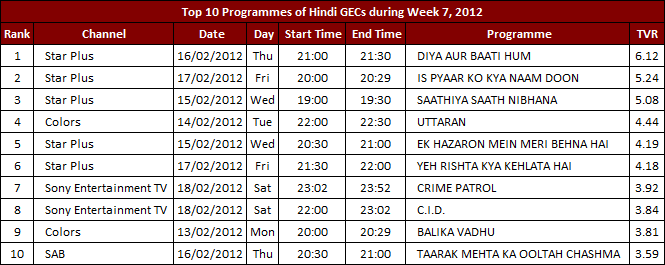
  • TAM data Top 10 programmes on HGEC – Wk 7 ’12

    Source: TAM Peoplemeter System
    TG: CS 4+ yrs
    Market: Hindi Speaking Market
    Period: Wk 7 (Feb 12 to Feb 18), 2012


    About TAM Media Research


    TAM is a joint venture between Nielsen Company & Kantar Media Research. Besides measuring TV Viewership, TAM also monitors Advertising Expenditure of Television, Print & Radio through its division AdEx India. Since 2004, it extended its presence in the PR Measurement & Analysis space for Corporate/Marketing Clients by setting up a separate division Eikona PR Measurement.


    In 2007, the joint venture introduced RAM (Radio Audio Measurement) service to track Radio Listenership for the Indian Radio Broadcast Industry. In year 2009, TAM launched a division, called TAM Sports that specializes in monitoring Sports Sponsorship ROI.


    TAM Media Research’s objective is to fuel media insights that will drive the growth of the Indian Media Industry.