Blog

  • Follow us at F-T-Y-B: Hareesh Tibrewala

    By Hareesh Tibrewala


    While on a business trip to Delhi last week.  I happened to find myself in the midst of a traffic jam (so what’s new?) and while patiently waiting for the car to start crawling, my eyes fell on a large advertising hoarding. It was a well-designed hoarding for a luxury brand with some superlative creatives and the company web URL printed in the lower left hand corner. While everything on this 200 square meter hoarding looked perfect, what triggered my discomfort were four small colourful boxes in the bottom right corner, preceded by the words “Follow us on”.


    The colourful boxes were the single character brand logos for Facebook, Twitter, YouTube and Blogger, and quite obviously the brand manager was trying to invite the reader to engage with the brand on these social networks. What I saw on this billboard is a representation of what one sees in others forms of communication as well. Lots and lots of social networking site logos and lots and lots of URLs. Does this really help?


    Here are my thoughts


    • Simply putting colourful boxes with logos of social networking sites (without the full brand URL eg www.facebook.com/yourbrand) does not add any value to your communication. If at all, it only contributes to promoting the brand value of that social networking site.
    • Putting a half a dozen URLs in a communication serves no purpose either. No one has time to visit a single URL or click on a single link, leave alone click on half a dozen links. When I see a communication which has lots “Follow us on ..” links, frankly it is a bit intimidating
    • Just because you ask someone to “Follow” you is no reason to believe that that person is actually going to follow you.


    So what should be done ?


    • Sure, social networking sites are now the default place where consumers engage with brands. Also the days when consumer went to content are over. Now content has to reach the consumer. Thus continuing the engagement with the consumer, from your bill board onto a social networking site makes all the sense
    • If your brand is present on multiple social networks, choose one where you think you have the best chance of building a community or engaging with the consumer. Promote just this one link. When the consumer reaches this page, you can always provide links to your other social media presence.
    • Display the link in full (www.Youtube.com/yourbrandname). Chance of a brand recall is much higher compared to just saying : Find us on YouTube
    • Finally if you are putting out a link, see if you can build in a strong call to action. Try to answer the question, “why should the consumer follow my link”. And use that answer to trigger a strong call to action.


    Hareesh Tibrewala is Joint CEO, Social Wavelength. You can engage with him socially at linkedin.com/in/hareeshtibrewala


  • 58 Days to D-Day | Analysis: TRAI’s Tariff Order will make channels bleed more

    By A Correspondent


    In another major blow for TV channels, the Telecom Regulatory Authority of India’s (Trai) recent tariff order for digitization has a loophole that allows distributors to surreptitiously charge ransom-like placement fees from broadcasters. While this would be true for all tiers, it would be especially compounded in the Basic Service Tier (BST) where around 80 private free-to-air (FTA) channels are to be offered at Rs100 a month.


    This makes for a crippling double whammy for TV channels and makes the “must carry” proviso meaningless as Trai has also legitimized the usurious carriage fee racket which has turned multiple system operators(MSOs) and cable companies into the most profitable part of the Indian TV industry, even as it has bled nine-tenths of the TV channels into sickness.


    Over and above their other costs, TV channels annually pay over Rs3,500 crore as carriage fees alone, but collectively receive around Rs4,000 crore only of the approximately Rs20,000 crore paid by India’s viewers to cable companies and distributors.


    Trai’s own report had said that there was evidence of tax evasion in the cable industry while independent industry estimates have routinely put under-declaration by this cash-rich industry at a whopping four-fifths of its subscriber base – all of which allows for thousands of crores to be denied to the exchequer every year.


    According to an estimate, the government had lost around Rs5,950 crore in 2006-2011 in service tax alone due to under-declaration even as it posited the income tax evasion during this period at Rs17,413 crore, besides the loss of entertainment tax by states.


    In this situation, industry sources said, Trai’s move to force TV channels to pay carriage fees to distributors, ostensibly to enable them digitize their systems, was totally unacceptable. “There is no justification for robbing the already impoverished TV channels to pay the rich distributors, as they have had a favourable business model for years, and in any case, would reap the rewards of digitisation far more than any other segment of the TV business,” said an industry source.


    Adding that there was no justification for making the broadcasters pay for upgrading the infrastructure of the MSOs, they pointed out that upgradation was a one-time investment, but the carriage fees would continue to be an annual recurrence for broadcasters who, in any event, could not be suddenly made the medium to fund distributors.


    Broadcasters are especially aghast by this move as the prices of their channels are regulated and have been frozen for years, even as distribution costs have been allowed to rise unchecked in the garb of scarcity of bandwidth – problems which were supposed to have been addressed by digitization.


    Industry sources told ET that while they welcomed the Rs100 BST for 100 channels as being in consumer interest, there was a hidden minefield in the Trai tariff order that had come as a further shock. They said that the new order had no rules banning placement fees for channels in any tier, including the BST, and hence, this would again allow cable companies and distributors to fleece TV channels by demanding huge sums of money.


    Distributors already demand placement fee for placing the channel in a particular slot – by a process known as Electronic Programme Guide management. However, they had hoped digitization to end this malpractice.


    This problem is especially compounded, with the BST having only a restricted number of private free-to-air channels in its basket of 100 channels, compared to the large number of channels in the market place. As per the rule, at least five channels are to be carried in each of the following genres: movie, general entertainment, children’s content, news and current affairs and sports. This would allow distributors to cherry pick the minimum five channels in each genre and demand a huge placement fee to carry them since there are many more channels in each genre, language or market. In addition to carriage fees, this would be a crippling double whammy for broadcasters, sources specified.


    The solution, sources said, would be to increase the numbers of channels and also ensure an equitable, but not equal, split between genres, since there is a larger proportion of news channels to, say, sports channels.


    They also said that there was another burden in store for TV channels that Trai did not appear to have foreseen: Since every broadcaster would like to place its channel in the BST, the distributor could potentially subvert the letter and spirit of the Trai digitization order by fixing the carriage fee of the BST much higher than the carriage fee of its platform.

    CARRIAGE FEE

    Earlier, the News Broadcasters’ Association had slammed the Trai move to legitimize the ransom-like carriage fees charged by distributors, which have now been made a mandatory payment by all the broadcasters to the MSOs. Under this order, the MSO will not be bound to carry the channel of a broadcaster unless it pays carriage fees – which means that the broadcaster would have to pay carriage fees to the MSO to be carried on its platform – which would be decided solely by the MSO and would differ from MSO to MSO even in the same geography.


    Industry sources said legitimizing carriage fees could sound the death knell for small broadcasters, particularly the regional channels. The Trai move also goes against the concerns showed by the government for small regional channels. Information and broadcasting minister Ambika Soni, in a Parliamentary motion to discuss the Cable Television Networks (Regulation) Amendment Bill, 2011, had said: “This process of digitalization, I feel, would have a major impact on regional channels. They do not get on to national carriages. They cannot pay the high (carriage) fee. There are small channels catering to different states…”


    MUST CARRY

    However, the nub of the matter was that the evil of carriage fee would be abolished only if the capacity constraint was adequately addressed by mandating MSOs to increase their capacity to 999 channels instead of just 500 channels.


    India currently has around 800 registered channels available in the market and more are lined up for approval in the information and broadcasting ministry.


    Despite this, surprisingly, Trai has put the minimum number of channel at 200 for small distributors and 500 channels for large distributors, which frustrates the purpose of “must carry” as outlined in the regulation. “Assuming for a moment that every broadcaster is willing to pay the carriage fee declared by the MSO in its RIO, how is the MSO going to carry all the channels on its platform if it has no capacity to carry all the channels,” sources asked.


    They feared that the end result would be increased litigation between the broadcasters and distributors, thus potentially adversely affecting the smooth rollout of digitization. They said the situation can be salvaged only if Trai increases the numbers of “must carry” channels to atleast 500 channels by June 30 and 999 channels by January 1, 2013.


    Industry sources also pointed to other major systemic issues which the Trai order had failed to address.


    First, MSOs have been given the unfettered rights to decide the maximum retail price of the channels they carry- a move that would adversely affect both consumers and broadcasters as the MRP of the same channel could be different at the platform of every MSO. This would not only create confusion among the consumers, but would also increase the number of disputes apart from potentially allowing distribution platforms having their own channels a distinct advantage to manipulate for their own benefit. Sources said the solution to the peculiar situation was in allowing the broadcaster to have a say in fixing the MRP as is the right of manufacturers in all other sectors.


    Second, the freeze on the price of a TV channel – which had been introduced as a temporary measure – had not been lifted even after eight years. This has seriously affected broadcasters as many have not been able to recover their basic cost of operation. Given that there are more than 800 channels, with more in the pipeline, market forces should be allowed to play out.


    Source: The Economic Times
    Copyright © 2012, Bennett, Coleman & Co. Ltd. All Rights Reserved


  • Star to go solo in sports, buy ESPN from JV

    By Nandini Raghavendra & Ratna Bhushan


    Broadcast major Star Group’s 16-year-old equal joint venture with sports broadcaster ESPN is being dissolved with Star buying out ESPN’s stake in the JV, three people familiar with the development said.


    Once the transaction is complete, Rupert Murdoch-owned Star will become the owner of ESPN’s India business, the people said. Two of them said the companies were finalising details of the deal and an announcement was likely to be made shortly. They declined to disclose details.


    ESPN Software India, which operates ESPN Star Sports’ India operations, generates revenues of about Rs2,500 crore through channels that include Star Sports, ESPN and Star Cricket. ESPN Star Sports owns television broadcast rights for the ICC World Cup Cricket and T20 Champions League.


    ESPN’s Singapore office said they did not comment on speculation. A spokesperson for ESS said, “We do not comment on speculations and rumours. ESPN Star Sports continues to run the business as usual. Two partner companies frequently discuss business plans and both the companies, ESPN and News Corp, are proud of the success ESS has made since its inception, and the relationship it shares with fans and business partners. They extend complete assurance for delivering value to our partners as committed by ESS.”


    Star India Chief Executive Officer Uday Shankar did not respond to an email and text messages sent to his mobile.


    “Star wants a bigger play in the sports broadcasting space,” one of the people quoted earlier said.


    “Star’s recent Rs4,000-crore acquisition of the rights to Indian cricket from the Board of Control for Cricket in India, beating rival Sony, are indications of its ambitions in this space,” one of the people quoted earlier said.


    It is not yet clear how many of the 200 employees of ESPN, who work for the joint venture, would be retained by Star. An ESPN official, requesting not to be quoted, said employees were uncertain about their future after the deal.


    A deal between the two companies could potentially be a complex one as they have a bouquet of advertising deals and cross-sponsorships. But senior executives at two leading media-buying companies, who deal closely with both broadcasting networks, said they did not foresee any impact on advertising deals and sponsorships.


    ESPN, Star Sports and Star Cricket either sell airtime and sponsorship inventory independently or as bulk package deals, they said. An analyst from one of the big four audit firms said the battle for the rights to various cricket events will now be fought out between Star and Sony, with the latter holding the rights for Indian Premier League, the 20-overs cricket tournament. ESPN Star Sports was formed as a 50:50 JV between two of the world’s leading cable and satellite broadcasters – Walt Disney, the owner of ESPN, and Rupert Murdoch’s News Corporation – in 1996 for Asia.


    It has offices in China, Hong Kong, India, Malaysia, Taiwan and Singapore, and employs more than 650 employees across the region. Star is fast changing gears in India. In the past two months, the broadcaster has launched its second Hindi movie channel under its new brand ‘OK’, called Movies OK. It recently exited its television news business and dissolved its JV with the ABP Group. It also purchased the broadcast rights to Indian cricket for around Rs4,000 crore.


    Star seems confident of making money from its cricketing ventures. Speaking to reporters a few days ago, Mr Shankar said the deal for cricket rights would not affect the JV with ESPN. However, the market has been abuzz with the latter’s exit. “Many permutations and combinations of the deal have been worked out, which has taken this long, but ESPN is now fully exiting,” said an official from a firm with knowledge of the deal.


    Source: The Economic Times
    Copyright © 2012, Bennett, Coleman & Co. Ltd. All Rights Reserved


  • Govt policies anti-small radio stations: Goyal

    Tarun Goyal is the Founder, Director of Radio Chaska, a radio station which was founded in 2006 by the Goyal family. In conversation with MxMIndia’s Robin Thomas, Mr Goyal speaks about the challenges facing the station in achieving break even, the issues that need to be resolved before the phase III rollout, on their plans to revamp their official website and whether the radio industry has been hit by slowdown?


    Founded in 2006, when you look back, how would you say the journey has been for Radio Chaska?

    The journey since 2006 has been a different one. We started a radio station in Gwalior, thinking that FM radio will catch the fancies of the people, and it did. Over the years there has also been a shift in the advertiser perspective about the medium. However it is the support from the government that we are lacking today, they are spending very less on radio. On a positive note, despite odd challenges, radio has managed to grow tremendously over the last many years, and has also contributed to the development of the city as well.


    What is the Gwalior market like for radio?

    Well, it certainly is very different from the metros. People invGwaliorvhave an altogether different taste for radio itself.  The advertising category on radio is mostly retail. We mainly play music all the time – mostly latest Hindi or Bollywood hits.


    Apart from advertising, what are the other sources of revenue generation for Radio Chaska?

    We do generate some revenues from activations, a good pie of our revenues also come from Radio Mirchi (ENIL), with whom we are instant partners for sales and then we rely on our local revenues. Although activations help increase our revenues, the profits generated are low, mainly because of the high costs in activation. Thereby, we primarily have to concentrate more on advertisements because that’s where a good portion of our revenues comes from. Nonetheless, more number of activation definitely helps us increase our brand value in the city, which in turn, helps us get more local advertisers.


    So, has the strategic sales alliance model worked? How does it benefit both Radio Chaska and Radio Mirchi?

    Since we are a single station owner in Gwalior, this partnership has been a strategic move for both Radio Chaska and Radio Mirchi. Since Radio Mirchi is present across Chhattisgarh and Madhya Pradesh except inGwaliorand Radio Chaska is present in Gwalior, therefore Radio Mirchi (ENIL), in strategic sales alliance with Radio Chaska, has created a space for itself in Gwalior as well. It is quite hard to sell a single station and keep track of various campaigns coming from different parts of the country. This strategic alliance with ENIL gives Radio Chaska an edge in reaching out to other parts of the country and the state. Thus we have had an extremely good partnership with ENIL ever since the inception of Radio Chaska.


    What are your break-even plans? When do you see Radio Chaska achieve break-even?

    I don’t know when we would be achieving break-even as the costs are escalating and hence we are unable to increase the revenues as anticipated. Unless we have some good policies from the government, small stations will never achieve break-even. Government policies, I believe have gone against the small radio broadcasters and, besides, there are other small issues which if resolved would help small stations achieve break-even.


    Music royalty is one of the issues that are yet to be resolved. The escalating fuel cost is another worry because it is adversely affecting the industry. A company’s five to seven per cent cost is always burnt in fuel because the government is unable to provide electricity. These may be small issues but nevertheless they are vital in helping the business sustain in the market.


    The MIB (Ministry of Information and Broadcasting) has already given its nod to news on private radio stations, multiple licenses are allowed, FDI limit has been marginally increased. How does Radio Chaska view these developments? Will these benefit smaller stations?

    We welcome this move, but issues like music royalty need to be sorted out first and only then I believe FM radio stations can probably flourish in the long run. Right now challenges for smaller stations, in particular, are many and only time will tell how FM phase III will benefit the industry. Nonetheless we welcome the policy and we too would try and be part of the phase III policy.


    So, will you approach phase III more cautiously? Will you expand to other markets? What are your phase III plans?

    We are eyeing for expansion in parts of Madhya Pradesh as well as in other markets, but yes, our approach will be a little cautious. We will not hype up the prices and bid unnecessarily. If we find the scenario viable only then we will bid, otherwise we will stay away.


    How significant a role does the website play for a radio station? Do you plan to add new features or redesign your website someday?

    Yes, we will be upgrading our website very soon, probably in next two months. Official websites have also become a medium for radio stations to interact with their listeners. Our RJs regularly interact with listeners on social networking sites and today official websites have also become an integral part of a radio station.


    It is said that the radio industry being hit by the economic slowdown. Do you agree?

    Yes, I do agree that the radio industry too has been hit by the economic slowdown. The telecom industry, for instance, was one of the highest spenders on radio and in the last three or four months we have not received any business from the telecom sector. So, yes there is a slowdown and radio has been affected by it, but nevertheless radio is surviving the slowdown.


  • Anil Thakraney: Why TV debates have become such an ordeal

    By Anil Thakraney


    Quite frankly, I am tiring big-time of television debates and chat shows. It’s become an ordeal to watch these. And if things don’t change, news channels will lose the war to the internet. And lose it much quicker than we had imagined.


    Here are five changes I would like to see happen, ASAP:


    1. Anchors must remain objective at all times. Their personal biases are easy to sniff out, and this reduces the discussion to a charade. One way to make this happen is for the Delhi journos to stop bonding with politicians. And for the Mumbai journos to stop bonding with industrialists and movie stars. Without the distance, it’s impossible to remain neutral.


    2. Anchors must offer no opinions. However tempting that might be. That is the job of the members on their panel. And if the anchors are itching to belt out personal views, that must happen in their newspaper columns (and quite a few senior anchors have that opportunity). Or, they can create special programmes on their channels with the agenda to make themselves be heard. Like ‘Arnab Speaketh’ or ‘Rajdeep Unplugged’. Viewers who value their opinions will patronize such shows.


    3. Programming heads must find new voices. And more importantly, relevant voices. The usual suspects cannot be shoved into our living rooms all the time. All the more so because programmers have no option but to invite the same spokespersons of various political parties. Therefore the rest of the panelists have to be fresh faces. Seriously, it’s rather comical to have Suhel Seth, Alyque Padamsee, Shobhaa De, Prahlad Kakar, and so on, shower their pearls of wisdom on us every evening and on every topic.


    4. Most TV debates conclude very sweetly with ‘The entire system has to be overhauled’. How priceless is that! Here’s a suggestion, guys: Be ruthless. During a live discussion, demand that viewers be offered fresh insights, don’t take nonsense from your guests. And for the recorded shows, if no new perspectives have emerged, simply trash that particular episode. And redo it at a later date. Much wiser to do that than to air mindless stuff.


    5. DO NOT PLAY JUDGE. Not in the news bulletin, not in the chat room, not in the panel discussion. And repeat this ten times in your head. When we viewers want justice, we’ll go to the court rooms. Thank you very much.


    * * *


    PS: Interesting approach by Old Spice. Believe in your ‘smellf’. Good attitude. If they can milk this property, Old Spice can own the category. A lesson for all those after-shave and male deo brands whose ads feature women mindlessly chasing the studs.


  • Disney Channel launches “Jet Set Go” summer initiative

    By A Correspondent


    Disney Channel has begun its one-of-a-kind initiative “Jet Set Go” this week. It is partnering with Jet Airways to give kids and their families a unique opportunity to win a magical all-expenses paid trip to the ‘happiest place on Earth’- Hong Kong Disneyland. The on-air contest will run throughout the month of May on Disney Channel and will give 30 kids and their families an opportunity to go toDisneyland.


    In celebration of “Jet Set Go”, Disney Channel is wrapping a Jet Airways aircraft in Disney favourite characters – Mickey and friends – to be unveiled on the May 9 in a special ceremony in Mumbai. “The aircraft wrap is a unique way to quite literally take one’s brand to the sky,” said Mr. Manish Dureja, vice president, Marketing at Jet Airways. “Disney’s focus on kids and families is aligned with our focus in catering to the needs of children and families in flight.”


    The children can enter by watching Disney Channel during the month of May and spotting the animated Jet Airways aircraft which will appear until May 28. Children can accumulate points each time they spot the aircraft by dialing a toll-free number flashing on the screen, absolutely free of cost, and leaving a missed call. Those who spot the plane the maximum number of times per day earn the maximum points and at the end of each day, the highest scorer will be announced as the winner on Disney Channel.


    “At the heart of Disney DNA is our passion for telling the world’s best stories and providing unique experiences for kids and families. We are pleased to work with Jet Airways and Hong Kong Disneyland Resort to bring our fans this fabulous opportunity to experience Disney magic first-hand,” said Vijay Subramaniam, business head, Walt Disney Television International,India.


    One winner will be picked each day, over the period of 30 days with the winners and their families going onto Hong Kong Disneyland Resort for a unique two day Disney experience. “Since opening in 2005, Hong Kong Disneyland Resort has welcomed more than 31 million guests from around the globe. It is the perfect destination for our Indian guests and we are thrilled to be collaborating with the Disney Channel on this campaign. We look forward to welcoming the winning families in July to enjoy all the magical experiences at Hong Kong Disneyland. We hope that they take home with them a lifetime’s worth of memories”, said Wendy Chu, Director of Marketing, Hong Kong Disneyland Resort.


    Disney ChannelIndiaoffers an unparalleled blend of quality Disney entertainment and distinctive, originally produced programs that kids love and families trust and enjoy. This includes Disney’s movies and series, sitcoms, family dramas and live action adventure stories. The channel’s multi-genre programming is designed to meet the under-served needs ofIndia’s preschool, kids and family audiences.


  • Spark 2B ultimate music destination: Rally

    By A Correspondent


    At a time when the numerous music channels are fighting to survive, it’s a big deal to turn one. Big CBS Spark, part of the Big CBS Network – the JV between Reliance Broadcast Network and CBS Studios International, completed one year on May 2.


    The channel, which has positioned itself as a youth channel with the core target group of 10-24, boasts of having an intense understanding and research of the entertainment requirements of their target audiences. “The transition to a music channel has helped, as the music content has increased and now people are able to relate to the channel as we are doing more and more stuff on Indian music scene,” said Vishal Rally, business head, Big CBS Networks.


    To stand out of the clutter and to reach out to the correct audience,  the channel conducted an extensive research study on various time slots catering to different age groups (what time of the day which age group (TG) prefers to listen to what kind of content). “We have created music time bands like Hip Hop MCs (for rap, hip hop music), Indie Rock Mania (for rock music and independent bands) and Hot Hitz. As we had the music library of major labels, we had the content. Our concern was planning and finding out the right kind of audience. Besides music, the channel also airs shows like the Cheaters, Maximum Exposure, Smash Cuts, Oblivious and Real TV targeting the youth audiences,” added Mr Rally.


    Apart from international music, the channel is also concentrating in providing a unique platform for independent artistes of the country to make Spark “the ultimate music destination”. “We offer original local content too with properties like Indie Music and The Great Gig in the Sky. The channel is attempting to incorporate almost every genre of music so that it has something to offer to everyone,” said Mr Rally.


    Talking about the channel’s future plans, Mr Rally said: “Our plan is to ensure the channel reaches the best content to its target audiences and strengthens its positioning as the ultimate music destination.”


    The first anniversary celebrations kicked off with a jam session between the pioneers of Sufi rock music, Junoon and the Indie Rock artist, Ankur Tewari.


  • Atul Hegde on why Digital is no longer New Media

    By Atul Hegde


    1. Serious spenders on traditional medium are now leading the way in digital spends

    When advertisers from the auto sector, FMCG, Corporate brands, Consumer Durables and other serious spenders, which for long have been spending heavily on traditional medium, begin to spend heavily in the digital media, it is the first indication that digital is no longer a new media.


    2. Large clients now have digital media/brand manager

    The very fact that large clients are investing in digital media, whether they are from the auto sector, telecom, FMCG’s, consumer durables  and so on, they have today either digital media managers or digital brand managers. This, in itself, shows that clients are spending serious amount of money to manage digital.


    3. Senior clients are regular consumers of the medium

    For any medium to succeed it is important that people who are buying it are also consuming the same medium because only when they consume that media will they realize the power of that media for their brands. Today there are senior clients who have become regular users of the medium.


    4. Movies and Cricket video consumption on digital has exploded

    Clients go where there are eyeballs, and inIndiawe view more than we read.Indiais a country where we consume films and cricket, both of which are heavily consumed on the internet. For instance IPL online has seen more viewership this year than the year before. Therefore, the more videos we have on movies and cricket, the more the audience will spend time viewing the videos and as a result, more advertisers will spend money on that medium. The explosion of video consumption inIndia, therefore, is bringing in more serious advertisers to digital media.


    5. Emergence of digital media awards (last count there were more than half a dozen)

    Today we find so many digital media awards, which only mean that clients are keen to win awards for digital. In fact, awards are a good way to boost the medium.


    Atul Hegde is the CEO, Ignitee Digital Services Pvt. Ltd


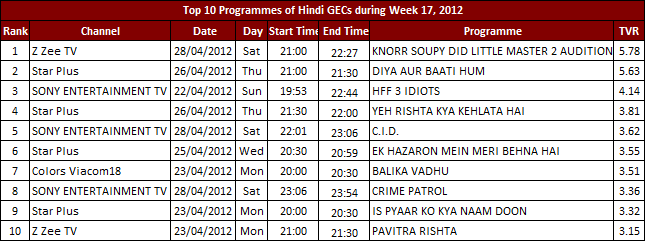
  • TAM data Top 10 programmes on HGEC – Wk 17’12


    Source: TAM Peoplemeter System
    TG: CS 4+ yrs
    Market: Hindi Speaking Market
    Period: Wk 17: Apr 22 to Apr 28, 2012


    About TAM Media Research

    TAM is a joint venture between Nielsen Company & Kantar Media Research. Besides measuring TV Viewership, TAM also monitors Advertising Expenditure of Television, Print & Radio through its division AdEx India. Since 2004, it extended its presence in the PR Measurement & Analysis space for Corporate/Marketing Clients by setting up a separate division Eikona PR Measurement.


    In 2007, the joint venture introduced RAM (Radio Audio Measurement) service to track Radio Listenership for the Indian Radio Broadcast Industry. In year 2009, TAM launched a division, called TAM Sports that specializes in monitoring Sports Sponsorship ROI.


    TAM Media Research’s objective is to fuel media insights that will drive the growth of the Indian Media Industry.

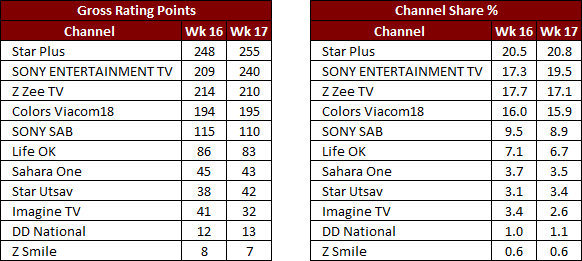
  • TAM Data (GRPs Channel shares of HGECs)- Wk 17’12


    Source: TAM Media Research
    TG: CS 4+ yrs
    Market: HSM
    Period: Wk 16: Apr 15 to Apr 21, 2012
    Period: Wk 17: Apr 22 to Apr 28, 2012


    About TAM Media Research

    TAM is a joint venture between Nielsen Company & Kantar Media Research. Besides measuring TV Viewership, TAM also monitors Advertising Expenditure of Television, Print & Radio through its division AdEx India. Since 2004, it extended its presence in the PR Measurement & Analysis space for Corporate/Marketing Clients by setting up a separate division Eikona PR Measurement.


    In 2007, the joint venture introduced RAM (Radio Audio Measurement) service to track Radio Listenership for the Indian Radio Broadcast Industry. In year 2009, TAM launched a division, called TAM Sports that specializes in monitoring Sports Sponsorship ROI.


    TAM Media Research’s objective is to fuel media insights that will drive the growth of the Indian Media Industry.

  • Possible for ethics & profit-making to co-exist: Paranjoy Guha Thakurta (Text & Video)


    By Shruti Pushkarna


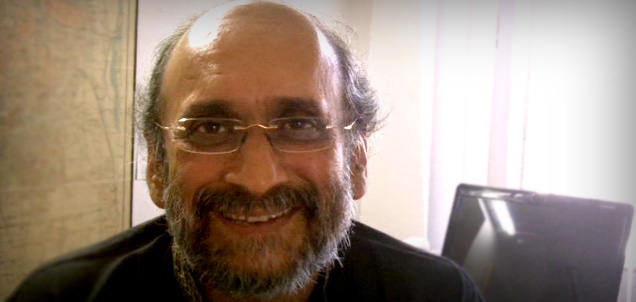
    As he launched the second expanded edition of his book, ‘Media Ethics: Truth, Fairness and Objectivity’,  in the capital last week, MxMIndia caught up with veteran independent journalist and educator,  Paranjoy Guha Thakurta for an exclusive interaction. In this candid one-on-one, Mr Guha Thakurta spoke at length about ethics in media today, self-regulation vs. regulation; the debate on the freedom of expression on the internet and the need for media to be ethically and socially responsible.


    Mr Guha Thakurta’s experience spanning nearly 35 years, cuts across different media: print, radio, television and documentary cinema. He is a writer, speaker, anchor, interviewer, teacher and commentator in three languages, English, Bengali and Hindi. His main areas of interest are the working ofIndia’s political economy and the media, on which he has authored/co-authored books and produced documentary films. He lectures on these subjects to general audiences and also trains aspiring and working media professionals.


    Mr Guha Thakurta has served as a member of the Press Council of India nominated by the University Grants Commission between January 2008 and January 2011. In April 2010, as a member of a two-member sub-committee of the Council, he co-authored a 36,000-word report entitled ‘Paid News: How Corruption in the Indian Media Undermines Democracy’.


    Does an expanded edition mean a lot more to discuss in media ethics?

    The first edition of this book came out more than three years ago, since then a lot has happened. Moreover, after the book came out, there were a lot of people who came up with suggestions on how this book could be improved. So this book is about 40 per cent bigger and thicker than the earlier edition. There are new chapters – there is an entirely new chapter on corruption in the media based quite a bit on my experience as a member of the sub-committee of the PCI, which inquired into corruption in media and how it undermines democracy, the entire phenomenon of paid news. There’s also a new chapter on reality television and some of the existing chapters have been drastically rewritten and revamped, notably the chapter on the internet because a lot has been happening in the internet space; also the chapter on advertising, which was particularly weak in the first edition – I think it has been strengthened substantially in the new edition.


    Also a whole lot of major developments have taken place concerning the media in the recent past; these have all been incorporated in the new edition. Among these would be the News of the World and Rupert Murdoch controversy in UK, the entire Wikileaks and Julian Assange phenomenon and back home here in India, the entire Niira Radia conversations; all of these have raised significant questions pertaining to media ethics and these have been incorporated in the new edition of the book.


    How important is the ‘code of ethics’ in today’s commercialized scheme of things?

    Ethics is very important in every sphere, particularly so in the case of media, because you are dealing with information which is akin to a public good. The problem essentially arises because this information is being disseminated by privately owned corporate bodies with an important goal to maximize profit; therein lies the conflicts of interest. The problem arises because there are sections of the media that are interested in profit maximization to the exclusion of other goals.


    It’s become a bit of a cliche – once upon a time it used to be said, ‘journalism is a mission’, today journalists work only for a commission. We are seeing the corporatization and commercialization of the media having an impact on the kind of content that is being produced. The viewers of television channels, the readers of newspapers, and the listeners of radio stations are being perceived more as ‘consumers’ rather as citizens. They are ‘consumers’ of products and services which are being provided by companies which advertise.


    Can journalistic ethics and profit-making can co-exist?

    I do believe it can, it’s not easy but it is possible for ethics and profit-making to co-exist.


    What is your view on the issue of regulation v/s self-regulation? What works for you?

    In an ideal world, self-regulation is the best form of regulation. But what do you do with those who cross that proverbial ‘lakshman rekha’, what do you do with those who don’t follow the code of conduct which is supposed to be self-regulatory in nature. I’ll give you an example, in the US, when Janet Jackson had a wardrobe malfunction in the middle of a live broadcast, the channel was fined immediately by the Federal Communications Commission because the wardrobe malfunction happened during a live broadcast, it happened during primetime and the channel had to first pay the fine and then appeal against the decision in a court of law.


    What happens in India? Not very long ago, there was a series of incidents involving Bhanwari Devi Maderna episode in Rajasthan and content was put out during the day on television, which many considered to be pornographic in nature. When the Ministry of Information and Broadcasting issued show cause notices against these TV channels, all of them came to Shastri Bhawan saying, ‘we apologize and we won’t do it again’. That’s the nature of self regulation in this country.


    As far as print is concerned, we have a Press Council of India which has no powers to punish anybody, it cannot impose a fine, leave alone put a person behind bars, and its recommendations are not even binding on the government. We don’t have statutory organizations which are empowered in the manner in which say the Federal Communications Commission is, or the Office of Communications in the UK is. So it’s fine to talk about self regulation but what do you do when somebody doesn’t listen to you, do you have the wherewithal to punish them?


    Do you think we need an independent official regulatory authority for television news channels as against one set up by the channels?

    Yes, I do personally believe that it is possible and desirable to have an independent regulatory authority which is independent of the government as well as the media. Such a regulatory authority can be funded by the government, but it can nevertheless be autonomous and independent of the government, in the manner in which bodies like the Supreme Court of India, or CAG or Election Commission of India function.


    So, I do believe it is possible to have such a communications commission. The problem is that for the last decade we have been debating the need for such a commission and the joke is that every time the government proposes to form such a commission, the government collapses. There have been 10 or 12 avatars of a Bill to set up such a commission; time alone will tell when and if such a commission is established in India.


    Your view on Dirty Picture not being allowed to air during the day on Sony?

    The whole Dirty Picture episode has thrown up a number of issues pertaining to censorship, pertaining to what content is appropriate or not, and if adult content can be shown on television, if so when. I think these issues are contentious and debatable and they are going to be debated for quite some time to come.


    Would you agree with Justice Katju’s view when he says people in media are of poor intellect?

    I think Justice Katju is exaggerating. There are journalists who are dumb and there are journalists who are not dumb. I think Justice Katju is not being fair to the media fraternity but that’s his personal point of view, he also thinks 90 per cent of Indians are fools, I beg to disagree with him.


    There’s a belief that the Indian media doesn’t take too kindly to criticism. Agree?

    Who among us are willingly going to accept criticism? All of us have our egos, in that sense, I don’t think the media is unique. I think there is neither any individual nor any group who likes criticism but the point is if you do believe in democracy, if you believe in fairness, and if you are in the public eye, then you better get used to criticism otherwise you’ll end up like Ms Mamata Banerjee who could not take being lampooned online. This shows not only lack of tolerance on part of individuals, especially public figures, but I think it fails to appreciate the nature of freedom of expression.


    Isn’t it upsetting that all the journalists’ organizations like Press Club, Editors Guild are tightlipped about Paid News?

    I won’t entirely go along with you on that, I mean there was a conspiracy of silence about corruption in media and paid news, even the report of the subcommittee that was prepared by me and my colleague for the PCI, was sought to be suppressed by a powerful lobby of publishers within the PCI. Finally in October 2011, the PCI was literally forced to make that report official, place it on their website with a disclaimer saying that entire council had not approved of its content. But I won’t say all journalists’ organizations conspired to put under wraps this report. There have been sections of the media who have been reticent of highlighting corruption within the media fraternity, but I don’t think it’s true for the entire media.


    Do you think that Public Relations has adversely impacted the quality of journalism?

    No, why blame the PR person…she or he is doing his or her job. You can also say the government has bribed the media, you can say that corporate captains have bribed the media. So I don’t think we need to look for excuses, I think journalists have to look within if they have to introspect about why there is corruption in the media. You can always hold somebody or the other responsible for your sins but at the end of the day, you are yourself responsible I believe.


    Your views on the ongoing debate on the freedom of expression in the internet age

    I think this is a huge debate. The internet is not just the newest medium of mass communication, it’s also a form of personalized communication, and it’s difficult to control. Issues relating to freedom of expression on the internet have acquired many new dimensions and these are very contentious and not easy to resolve. And we’ve seen this debate been going on for a while…the ‘infamous’ Danish cartoons on the prophet Mohammed were all drawn ostensibly to generate a debate on freedom of expression. Yes, that cartoon was widely circulated on the internet, as was the gruesome video showing Daniel Pearl getting beheaded. But it’s also worth remembering and underlining the fact that the mainstream media were restrained in reprinting, publicizing either the Danish cartoon or Daniel Pearl’s beheading.


    The point is, sometimes in the name of freedom of expression, you want to generate a debate but you end up generating one huge controversy which goes out of control. It was the Danish PM who argued that the cartoon controversy was the biggest crisis that small Scandinavian country faced after the Second World War and he was particularly worried because it even had an impact on the economy of Denmark because countries of West Asia stopped buying dairy products made inDenmark.


    So very often we might want to start a debate without realising its wider ramifications. But the bigger question of what constitutes the right to offend, what is freedom of expression and the new dimensions these issues have acquired in the day and age of internet, these are very important, they are being debated and I think these debates are going to go on for quite some time.


    And given all of this, your view on the future of news media in India?

    The future of news media in India is very bright. Unlike many countries in the world, all media in India continue to expand, whether it’s print, radio, TV or internet. According to 2011 census, one out of four persons in India still cannot read or write her or his name, so as more and more people become literate I think all sections of media are going to expand. At the same time, media has to become more responsible, not just socially responsible but also more ethical if it indeed has to contribute to building democracy, to building a better country.


    If you were still a kid getting out of college, would you get into journalism given the ethical standards followed?

    That’s a difficult question…when I became a journalist 35 years ago, the Emergency had just got over. That was a unique 19 month period in the history of the country where for the first and so far the only time in politically independent India, the government of the day sought to abridge freedom of expression. For 19 months, during the Emergency, freedom of expression was sought to be curbed. I don’t think that will happen again, but the very fact that I was a student during that period did influence my decision to become a journalist. If I was born 35 years later, I don’t know if I would have preferred to become a rock star, or an airline pilot or a heart surgeon instead of a journalist.

     

  • No comebacks on Tariff Order: TRAI chairman

    By A Correspondent


    While the News Broadcasters Association has protested against the tariff order for digital cable TV issued by TRAI on April 30, saying that the order ‘legalized’ carriage fee, TRAI Chairman JS Sarma has maintained that there is no cause for dissatisfaction on carriage fee.


    In an interview to NDTV 24×7, Mr Sarma said: “Carriage fee is now a well-regulated issue and it should be transparent. We will intervene if required but we won’t relook at the recommendations.”


    The NBA claims, “The primary purpose of digitization was to increase the number of channels broadcasted. The objective was to give consumers greater choice and to eliminate the phenomenon of ‘carriage fees’, which were being charged due to capacity constraints. However, the NBA is distressed and disappointed that TRAI’s new notification has actually legalized the practice of ‘carriage fees’ and given distributors the freedom to unilaterally set the amount of ‘carriage fees’ broadcasters must pay.”


    The TRAI has also prescribed that the MSOs increase their channel carrying capacity. In its recommendation, MSOs have been mandated to carry a minimum of 500 channels by January 1, 2013. TRAI stated in its order, “The Authority has mandated MSOs to carry a minimum of 500 channels from January 1, 2013. However, keeping in view that smaller MSOs having less than 25,000 subscribers may need some additional time for building capacity, they have been given time up to April 1, 2013.”


    The TRAI has prescribed that every MSO should have a minimum capacity to carry 200 channels by July 1.


    The Indian Broadcasting Foundation (IBF) convened a board meeting to discuss the issues pertaining to the TRAI order. A press statement is scheduled to be released on the issue later today.