Blog

  • Havells fans ropes in Bollywood’s first superstar Rajesh Khanna

    By Rajiv Singh


    He thrilled millions of his fans with his electrifying presence on silver screen during late 60s and 70s. Now, after staying out of the limelight for decades, but with his air of stardom almost intact, a frail Rajesh Khanna has pleasantly shocked all by featuring in his maiden TV ad – for Havells fans.


    Created by advertising agency Lowe Lintas, electrical equipment maker Havells India’s ‘Fans are forever’ campaign takes viewers down the memory lane by showing glimpses of the unprecedented mass hysteria and a frenzied fan following that the first official superstar of Bollywood enjoyed for decades.


    For a superstar whose fans were legion and who wrote romantic letters in blood to him, a fan commercial may not be the ultimate box-office humdinger, but it has definitely created a buzz with some advertising experts hailing it as a masterstroke.


    “It’s a bold ad, so true to the life of Rajesh Khanna,” said Prasoon Joshi, executive chairman and CEO of McCann Worldgroup India and president, South Asia.


    Sometimes ads are done not to hardsell a product, but to start a conversation or create a language for the brand, said Mr Joshi. “This is one of those advertisements.”


    For Havells India, which has more than 13 per cent share in the Rs3,500-crore fan market, the commercial is yet another instance of out-of-box advertisements that the brand has been resorting to over the last few years to break the clutter on television.


    “Fans are not so talked-about category,” said Anil Gupta, joint MD of Havells India. “With almost similar-kind of communication by all the brands, we wanted to break the clutter.”


    Josy Paul, chairman and national creative director of ad agency BBDO India, said Havells has always gone for highly salient advertising, to make people look again at boring stuff like switches and fans.


    “Nostalgia is a sweet thing and brands can benefit from this,” he says, adding, “We brought music director Bappi Lahiri back with 7Up ‘golden lemon offer’ in 2009, and the commercial was a super hit.”


    However, not all are impressed with the brand using a yesteryear superstar. Prathap Suthan, managing partner of brand-new independent ad agency Bang in the Middle, believes the Havells commercial is like a living obituary to the legendary superstar. “This is rank terrible advertising,” said Mr Suthan. “I don’t know whether to cry for Rajesh Khanna or console him.” He feels that the pun around ‘fans’ has not worked.


    YLR Moorthi, marketing Professor at IIM Bangalore, said the retro of an ageing yesteryear superstar who looks a pale shadow of his former self may not connect with young consumers. “The ad assumes that the target audience has seen the movie ‘Anand’,” said Mr Moorthi. “Will the new generation connect with the advertisement,” he wondered.


    However, Mr Gupta of Havells India is convinced that the new advertisement campaign with cut across all age barriers. “We did a lot of research before roping in Rajesh Khanna,” said Mr Gupta. The young generation is very much aware of Rajesh Khanna’s movies and songs, he added.


    The jury may still be out on the advertisement, but for Rajesh Khanna, the star who fathered superstardom in India, a small commercial is a reminder of the many glories that were his for the taking in a country that was rigidly socialist and almost without the amplified profusion of second-by-second ads that innundate the present.


    Source: The Economic Times
    Copyright © 2012, Bennett, Coleman & Co. Ltd. All Rights Reserved


  • [60 Days to D-Day] NBA damns Order for ‘legitimizing’ carriage fees

    By A Correspondent


    News Broadcasters Association (NBA), the apex association of Indian news broadcasters, has expressed “shock” and “dismay” at TRAI’s Tariff Order.


    The Notification has legitimised the very practice the NBA had hoped would be ended, said secretary general Annie Joseph in a communiqué, referring to the payment of “steep” carriage fees by broadcasters: “The primary purpose of digitisation was to increase the number of channels broadcasted. The objective was to give consumers greater choice and to eliminate the phenomenon of ‘carriage fees’, which were being charged due to capacity constraints. However, the NBA is distressed and disappointed that TRAI’s new notification has actually legalised the practice of ‘carriage fees’ and given distributors the freedom to unilaterally set the amount of ‘carriage fees’ broadcasters must pay.”


    Ms Joseph added: “This unfairly penalises broadcasters and threatens the very survival of the broadcasting industry.” The NBA has urged the government and TRAI to take corrective action.


    A member of the cable trade pooh-poohed the NBA’s reaction as childish. “Let them set up their own distribution mechanism and see how much they will need to pay. If we bleed, they will cease to exist,” a senior industry person told MxMIndia, requesting anonymity.


    We are fine with rationalising carriage fees, but not eliminating them, the industryperson from the distribution sector added. “They should look at increasing ad rates to earn more,” he said, arguing that carriage fees are justified


  • [60 Days to D-Day] All stakeholders need to work together: Neeraj Sanan

    The Telecom Regulatory Authority of India (TRAI) issued new rules refurbishing the regulatory structure of the broadcasting, cable and DTH industry ahead of the digitization switch over in four metros, Delhi, Mumbai, Kolkata and Chennai from July 1. The order deals with issues such as channel availability, channel pricing, carriage fee and revenue sharing.


    Digitization is being seen as the game changer for the Indian TV industry, expected to bring a sea change for viewers, broadcasters and cable operators. The broadcasting industry is expected to see a growth in subscription revenue post digitization, as opposed to the present model where they depend largely on advertising revenue.


    As per the new guidelines, ‘The Broadcaster would enjoy ‘must carry’ provision from 1.1.2013 or 1.4.2013 as the case may be, for Hindi, English and channels in the regional language of the concerned area.’  In the order, TRAI has also addressed the much debated issue of carriage fee. The order states, “Keeping in view the fact that substantial investment for implementation of Digital Addressable Cable TV Systems is made by the MSO and the cost involved in carriage of channels, the Authority has decided that every MSO may fix the Carriage Fee. However, it should be published in the Reference Interconnect Offer and applied in a uniform, non-discriminatory and transparent manner. The Carriage Fee cannot be revised upward for a minimum of 2 years. The Authority would intervene in case it is felt that the Carriage Fee is unreasonable.”


    The regulatory has also prescribed the MSOs to increase their channel carrying capacity, stating that every MSO should have a minimum capacity to carry 200 channels by July 1, 2012.


    MxMIndia’s Shruti Pushkarna spoke to Mr Neeraj Sanan, EVP- Marketing and Distribution, MCCS to get his response on the Tariff Order and Interconnection Regulations for the Digital Addressable Cable TV Systems issued by TRAI.


    What’s your first response to the Tariff Order? Specifically the MCCS position?

    It is a reaffirmation of the government’s stated position and something that TRAI has been working towards for a long time.


    The TRAI observes that the Order will help profitability of channels. But carriage fee exists. Do you think your bottomline will be impacted in a positive way with this?

    The TRAI’s order will help all stakeholders move to a position of working in a structured manner. A well-run business can hope to get its deserved profit.


    Do you see the implementation happening in the four metros before July 1?

    I understand that a lot of intelligent people in well-run MSO and LCO organizations are working round the clock to make it happen. A key factor here will be for the government to continue to do what it has been saying. We shall all have to brace ourselves to a large surge in operational logistics at the last minute, but yes all this is surmountable.


    What are the marketing initiatives you are undertaking to ensure that you retain viewers?

    This is a challenge more for a distributor.


    Do you think the government is doing enough to promote the switch to digitization and explain the benefits to consumers?

    There is always something better we could do, but yes, government has been consistent in it’s thought. Now it is for all stakeholders, including all state governments to realize the prudence of digitization and work together to make it happen.


    Are there any areas of worry in the run-up to digitization (given that we have just 60 days to go)?

    No constructive business happens without risk and yes there are a lot of things that could go awry but if all players remain aligned, this is achievable. We should all realize that it is history being written everyday for distribution and we need to carefully tread this path.


  • [60 Days to D-Day] Digitization good for industry: Sahil Gupta, PWC

    The Telecom Regulatory Authority of India (TRAI) issued the Tariff Order and Interconnection Regulations for the Digital Addressable Cable TV Systems on April 30.


    Aimed at providing the viewers with a better viewing experience and maximum choice, digitization is being seen as the biggest change broadcast and cable industry in the country is set to witness. Television viewers will get to choose a minimum of hundred Free to Air (FTA) channels at a maximum retail price of Rs100, as per new tariff rules for Cable TV announced by TRAI.


    The order states: “The basic purpose of digitization is to ensure ample choice to the consumer as well as to enable him to budget his subscription according to his paying capacity. Accordingly, the Authority has mandated MSOs to carry a minimum of 500 channels from January 1, 2013. However, keeping in view that the smaller MSOs having less than 25000 subscribers may need some additional time for building the capacity, they have been given time up to April 1, 2013. Besides, to ensure that the consumer is not adversely affected, the Authority has prescribed that every MSO should have a minimum capacity to carry 200 channels from July 1.”


    In the new guidelines issues, TRAI has also addressed issues pertaining to revenue sharing between MSOs and LCOs, carriage fee paid by broadcasters, channel pricing and so on.


    Mr Sahil Gupta, Senior Manager, Tax and Regulatory Services, PwCIndia shared his analysis of the recent order with MxMIndia’s Shruti Pushkarna and how he sees digitization as a win-win for all.


    What is your view on TRAI’s Tariff Order? 

    It’s a pro-consumer directive. Consumers can now pay for what they want to see, unlike in today’s time when they purchase a bouquet which has unwanted channels as well. Hence a la carte selection works more cost-efficient for consumers.


    So do you see digitization as a win-win for all?

    Digitization per se is good for the industry – consumers get better quality reception, broadcasters can know their exact consumer base, which will help them realise full value from MSOscable operators (which gets under-reported in current times based on what subscription base the intermediaries disclose to broadcasters). Moreover, it helps in bringing addressability in the system.


    Do you think the government is serious about the July 1 deadline?

    The government is taking a lot of initiatives to push digitization – it has a stakeholders’ meeting every week or two weeks and is helping stakeholders migrate to the new system. They are thus doing their bit for helping meet the deadline of July 1.


    But on the ground we hear that there is much to be achieved?

    The infrastructure is what is taking time. The digital/upgraded set top boxes need to be procured and be ready for installation at the consumer’s end. Some MSOs/cable operators are looking at funding mechanisms for meeting these procurement needs, while others are working towards building a right procurement strategy for the same. All in all, the industry is gearing up for it and all stakeholders doing their bit.


    Your view on the guidelines for carriage fees in the Order?

    Carriage fee is what MSOs charge broadcasters for carrying their channels to viewers. Some element of arbitrariness gets reduced from this Order as it needs to be uniform and non-discriminatory across all broadcasters. The TRAI will step in if it’s unreasonable and this will help.


    And on pricing of channels?

    The limits on pricing mentioned in the order is aimed mainly at ensuring that channels, especially popular ones, are not priced high.


    There’s also a mention on the revenue sharing between MSOs and cable operators…

    There seems to have been certain disputes between MSOs and cable operators in regard to sharing of distribution revenues. Prescribing the revenue sharing formula, in absence of an agreement between them, will help and bring in transparency…


  • Angry Birds forever!

    Angry Birds Space visual Courtesy Rovio.com


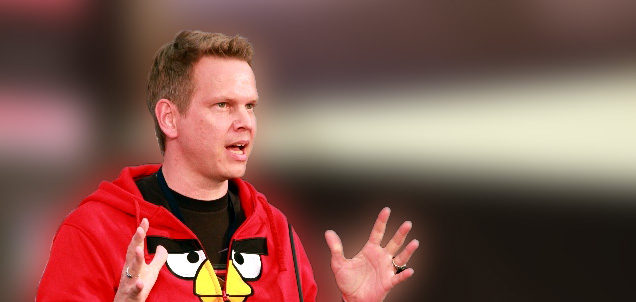
    Henri Holm is the Senior Vice President at Rovio Entertainment, the creators of Angry Birds. Holm, a Harvard alumnus, has extensive international management experience in consumer electronics, mobile internet, manufacturing, distribution, retail and brand management. At the sidelines of the recently concluded MTV Youth Marketing Forum 2012, MxMIndia’s Robin Thomas caught up with Henri Holm  who spoke at length about his India plans, India as a market for gaming and of course about Angry Birds and much more.


    You had said that it took Rovio Entertainment eight years to be where it is today. Tell us a little more about your company and your journey so far?

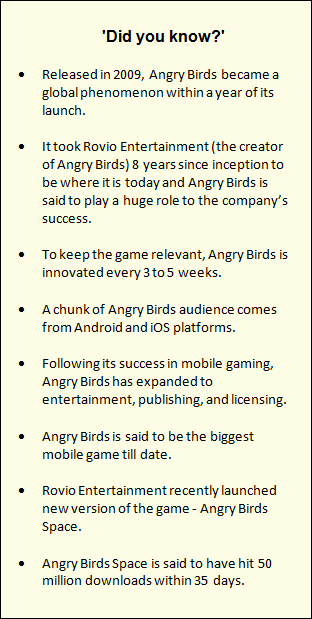
    Rovio Entertainment is a company which has grown very fast. We grew from a 12 people organization to over 300 plus professionals as of today. In our operations we cover mobile gaming, entertainments which include animations, books and publications, education content or edutainment, merchandising, licensing and sponsorships. In the entertainment space, we also cover advertising, so we are a major premium advertising channel provider. Globally, in fact, our ad impressions reach over 10 billion. It’s a company of young people who believe in their course, who neither give up nor give in.


    There are talks about the slow death of console gaming in India with the onslaught of mobile gaming especially with 3G and 4G coming in. Would you agree? Is the next phase of gaming coming from mobile?

    Console gaming is not necessarily as scalable as mobile gaming because I think it caters to a different set of audience or different media consumption or entertainment consumption. The mobile devices, including the tablets, are always with you and you can consume the game anytime anywhere, so the industry is certainly changing.


    Can you please throw some light on the entire thought process behind the Angry Birds concept? How did it come about?

    Everything started from the fact that the company has gone through 50 plus games. Being an audio manufacturer, we didn’t own a brand, we wanted to have our own IP and we wanted to build a brand. The thought process started with the characters and with distinctive personalities in those characters. The story was unique too, it was not a me-too story, and besides, the mechanics of the game itself was about simplicity, quality and paying a lot of attention to the details.


    You also said that Angry Birds will continue forever and that this is only just the beginning… How do you intend to stay relevant to the audience?

    Yes, we feel that this is just the beginning for us. Angry Birds as a brand, and as a story, will definitely continue. Every three to five weeks we try to keep the game relevant and innovative or new for our audience. However this does not mean that we will not be looking at other games or characters or stories, it’s just that we need to find the right time to introduce something new.


    Where is the Angry Birds audience coming from?

    Today’s audience primarily comes from the android and IOS platforms, however there are other very significant platforms besides the androids and IOS. So today we can cover all operating systems in mobile devices ranging from the smallest screens of the feature phones to the largest of the screen which are the tablets. So the mobile space is certainly growing the fastest. When you move away from the mobile to the web we cover the operating systems where Chrome has been leading the web experience supported by flash and now the social gaming like Angry Birds on Facebook. So each one of these platforms needs to be looked after individually and what is important is that we present the channel and the content where the fans are. So, if the fans are moving primarily into one operating system or one type of access into the content, we move with it.


    What is the role social networking sites have played for the success of games? According to a survey, young people in the west visit social networking sites only for friends and not necessarily brands…

    We are an entertainment company and we engage our fans on social media so, we are living social media 24×7 and we are participating in conversation all the time. Our business is about the fan engagement, delighting them and therefore I believe that social networking sites play a huge role in the success of any brand.


    What is the business model of Rovio Entertainment? Is it advertising led and how much has Angry Birds contributed to its revenue share?

    We have different business units, we have the games business unit, entertainment business unit and merchandising and licensing business unit. Each one of them contribute their own revenue but, they also complement the entire brand experience and the brand presence because of the huge opportunity to manage and monetize the brand. So our business model is purely based on the fan and the brand.


    How has 2012 welcomed you? What are your business plans this year? When you compare it with 2011 how has the growth been so far?

    In 2011 we launched one game and this year we have already launched two and have several more to go. The year 2011 was about building the infrastructure and the making the organization ready, 2012 on the other hand is about finding the right partnership and making the entire business ecosystem stronger and more global.


    So are you looking for more expansions and new partners?

    We are constantly looking for new partners and expansions as we need to build a very robust business and country plans before this.


    What is your view on India as a market for gaming and for your business?

    India is a very important market for us, as of now we are scouting for partners and once we find the right partnerships here it will give us better footprint and presence. We are looking for partnerships in the media space, in the digital distribution space, operators, and the major brands and all the big movers and shakers in the country.


  • Anil Thakraney: Unbundling of creative

    By Anil Thakraney


    In my interview with Taproot’s Agnello Dias for MxMIndia, the creative director made a stunning forecast for the future. He feels the typical ad agency will only consist of thinkers and strategizers. And that all creative work will have to be outsourced. This will mean specialized press ad shops, film script shops, digital design shops, and so on. And what he says makes a lot of sense. Here’s why.


    In the good old days, advertisers would use only press and TV as the key media, and the rest would consist of ‘supplementary’ stuff. And this resulted in ad agencies hiring copywriters and art directors. Writers would write storyboards and press ad copy, and the art directors would design the ads and other packaging material. So that was fine.


    However, in the last decade, the media has boomed big-time, and now clients look for special effort for a multitude of media platforms. Digital work, for instance, is being outsourced. Because agency’s creative personnel don’t get this space. As time goes by, and as technology unleashes more platforms, there will be serious pressure on ad agencies to find the right talent. And the agency shall not be in a position to hire all the staffers on its payroll; it would go bankrupt in months. The digital outsourcing will have a backlash on the traditional agency. It will mean that one day ALL work will have to be done by outsiders. In fact, radio, an old medium, has been crying out for specialists for decades. With the unbundling, we would see specialized radio script shops, and the quality of the creative work will dramatically improve.


    And most importantly, it will allow creative people to focus on their core competencies. It serves little purpose for a JJ Arts School grad to be breaking his head over internet videos. Likewise for fine English prose writers battling with Hindi television ad scripts. Specialization makes enormous sense.


    Yep, I hope Aggie is a good crystal ball gazer, and that what he predicts will come true. Personally speaking, I am all ready for the future. I have decided to start a specialized scam ads shop. Which to me sounds like a really lucrative business. 🙂


    * * *


    PS: A horrifying window display. Shocking is too mild a word. But it makes a strong case for stopping cruelty against animals. And hats off to the woman who volunteered for this campaign.


    Link: http://www.dailymail.co.uk/news/article-2134555/Lush-animal-testing-protest- Woman-subjected-experiments-horrified-shoppers.html?ICO=most_read_module

  • [60 Days to D-Day] Digitization in 4 metros will not happen by July 1: JS Kohli

    Late Monday night, Telecom Regulatory Authority of India (TRAI) announced the new tariff structure for digital cable TV services. Under the new rules, all cable operators will have to mandatorily offer a Basic Service Tier (BST) to viewers which would consist of 100 free to air channels, including 18 mandatory Doordarshan channels, as well as the Lok Sabha channel. The tariff order states that apart from the mandatory channels in the BST, cable operators and Multi System Operators (MSOs) will have to provide customers a minimum of five channels of different genres.


    The authority also stated that MSOs will have to increase their channel carrying capacity. TRAI stated: “The Authority has mandated MSOs to carry a minimum of 500 channels from January 1, 2013. However, keeping in view that smaller MSOs having less than 25,000 subscribers may need some additional time for building capacity, they have been given time up to April 1, 2013.” The TRAI has prescribed that every MSO should have a minimum capacity to carry 200 channels by July 1.


    TRAI has also established new guidelines for revenue sharing between Multi System Operators (MSOs) and Local Cable Operators (LCOs).


    MxMIndia’s Shruti Pushkarna spoke to Mr Jagjit Singh Kohli, a veteran of the cable industry and CEO of cable distribution firm Digicable, on his reading of the latest order issued by TRAI and if he thinks the sunset date of June 30 is still achievable.


    What’s your first response to the Tariff Order?

    Well, the order is on expected lines, no big surprises there. Given the circumstances, I am happy with it, in the sense that we know the regulatory has been operating under tremendous pressure from various stakeholders, so given that situation, I am actually happy with the order.


    TRAI has observed that the Order will help profitability of channels. But carriage fee exists. Do you think the bottom line will be impacted for both broadcasters and the cable trade?

    The channel capacity is increasing to 500 channels, so automatically the pressure on carriage will reduce. So, although the carriage fee remains but the channel capacity itself is increasing so much that the price per channel will come down.


    Given the status as of today, do you see the implementation happening in the four metros before July 1?

    Now, that I don’t think will happen. We will need a postponement of at least three to four months. The tariff order has just come; there are so many other issues such as DAS licenses being not issued till date. To meet the deadline the industry needs to deploy atleast 150,000 boxes every day, only then will we be able to meet that deadline, and that’s impossible.


    What about the availability of set-top boxes?

    Even that is an issue. But even if set top boxes were to be made available, it would be very difficult to meet the deadline.


    Do you think the government is doing enough to promote the switch to digitization and explain the benefits to consumers?

    Yes, you can’t blame them on this. They have been quite aggressive on the timelines and in their campaigns.


    Are there any areas of worry in the run-up to digitization (given that we have just 60 days to go)?

    The only area of worry is that we will need some more time to meet the deadline, otherwise everything is fine.


    Photograph: Fotocorp


  • The Anchor: Hemant Morparia on 5 reasons why cartoons can be more lethal than text

    By Hemant Morparia


    1. Cartoons are about satire

    Now satire is something that all people in power fear, because the last thing they want is ridicule. So when they face ridicule from ‘janata’ which they are trying to rule over, that is the last thing they would want. For them to appear ridiculous to a reader is a deadly blow.


    2. Cartoon is about making somebody laugh

    Why does that person laugh… because he recognizes that there is some truth in that. So there is some truth being outed, a cartoon cannot be bought. You can have a paid media, there could be a planted story but a cartoon cannot be a plant. Cartoon cannot be promoting somebody, cartoon is always attacking somebody.


    3. There is an agreement

    There is an agreement between the cartoonist and the reader on the kind of implicit sense of truth. Reader seems to understand that the cartoonist is trying to say something which is true and correct.


    4. Cartoon is also something that cannot be edited

    You can edit a text piece but you can’t partially edit a cartoon. Whereas if it’s an article which has a lot of data, different points of views, and so on, that could still be a plant or not telling you some relevant things.


    5. Cartoon is an honest voice

    And the reader also knows it. Cartoon is far from being bought.


    Hemant Morparia is a well-known cartoonist. Other than a daily pocket for Mumbai Mirror, he toons for various Indian and international publications


  • By Invitation | Atul Phadnis: Will TV measurement in India finally get its logical direction?

    By Atul Phadnis


    In March this year, three industry associations that have a significant say in television broadcast and TV advertising jointly announced a new chapter in the TV Ratings Measurement initiative. Broadcast audience Research Council (BARC) is the joint venture that has been in discussion, for the longest time, between the three stakeholder associations – Indian Broadcasting Foundation (IBF), Indian Society of advertisers (ISA) and the advertising agencies association of India (AAAI) to measure nationwide TV audience viewership. BARC has taken birth where a lot of earlier industry initiatives have failed to take off – hence, a lot of folks (including me) are watching these events very closely and curiously.


    Yes. There are cynics who doubt whether the BARC initiative will be able to streamline the industry ambitions for a wider and robust TV audience measurement thereby recasting/enhancing the offerings of the current ratings provider – TAM Media Research (a joint venture between Nielsen and Kantar-WPP).


    The genuine fear is that the industry initiative will again slow down or worse – get delayed due to lack of clarity or infighting amongst the associations/players. It’s a legitimate concern based on what we have seen in the past. In fact, the recent announcement has been possible only when a formula for compromise was reached after months of stalemate on the BARC shareholding and composition of its board.


    The genesis of the industry initiative that has now taken birth as BARC has in its vision the Rs329 billion TV industry that to a large extent depends on ratings and viewership information for key decisions, growth and business. So what are the key expectations of the industry that should get addressed if BARC is the answer to the TV industry’s call on TV Ratings?


    1. The Burden of Transparency

    For years now, TAM has been criticized, publicly and privately, for alleged opaque policies relating to aspects such as third-party audits, pricing, technology R&D results and panel performance KPIs. as is the case with any competitive industry bustling with cut-throat competition, rumor mills and conflicting agendas of different players, the transparency burden had been conveniently dumped on TAM. after all, we do see from time-to-time the so-called ‘open letters’ that certain channels would send out to TAM asking for explanations on why their blockbuster programs did not do well in terms of TRPs. Irrespective of where the answers for failure lie, these occasions, nonetheless, cast all sorts of aspersions on the trading currency and are hardly constructive. I haven’t seen a single such instance over the last decade produce any positive reaction – either in providing more answers on causality nor a bettering of the ratings system. and these instances surely can’t be healthy for the industry that has dependencies on advertising that in turn needs TV measurement.


    It’s high time the industry associations, perhaps via BARC, put their necks on the block and take frontal onus and responsibilities on transparency elements that will boost confidence on TV Ratings. Not only will this sharing of burden save the industry the blushes in front of the advertisers, it will also have a correctional effect with the routine debates being laid to rest. Hopefully, BARC is able to bring in transparency by defining deliverables and quality parameters clearly to the Ratings vendor(s) in the new scheme of things.


    2. Evolving data reporting policies

    Transparency in KPIs will also have an effect on how TV ratings data should be reported in our industry. There are a host of mature markets, in particular theUK, that have a threshold viewership criteria for TV program ratings to meet; if those numbers have to be reported in the weekly data. This ensures that viewership estimates for very small channels and very niche programs inside very small market groups are not reported. However, in our market, if the 700th channel gets launched tomorrow, TV ratings for that channel for very small markets and microscopic audience definitions will be available. Lack of industry understanding and consensus has stopped from any policy to take shape and solidify in this specific issue. This, in turn, has led to a sad saga of inexplicable rating fluctuations for specialist channel genres in small markets/ audiences. With the BARC coming in, certain wise old men (and women) can roll out this policy of releasing viewership numbers of only those channels and programs that are in the permissible and acceptable error level range.


    3. Structural changes in panel construction

    The methodology for TV Ratings in India- especially the way panel homes are selected from a neighborhood has remained largely the same. The criteria is defined through Primary Control Variables, a system to carve out quotas of what sort of homes should be selected to enter the panel. However, the dramatic changes that have occurred in the last 5 years – that of DTH now forming a large part of the TV universe – requires the Primary Control Variables to reflect an acceptance of that new reality. Earlier, say 8-10 years ago, cable monopolies in a neighborhood within an area, city or town ensured homogeneity of received signals in spite of the heterogeneity of viewing. That signal homogeneity within the neighborhoods would ensure that thousands of homes within that area would receive the same input from their cablewallah into their TV sets. Today that cable structure lies shattered wherein one single neighborhood would have the cablewallah’s analogue signal in certain homes, his digital (CAS) box in certain households as well as scores of homes with DTH connections from 7 DTH providers.


    Now layer this information on the specific channels or channel packs subscribed by DTH or Digital Cable viewers – and you have a distribution complexity that snarls into existence, dramatically affecting TV viewership. This distribution factor needs to be well modeled inside the Primary Control Variables to construct the panel. It is not there at the moment and neither has there been an active industry debate on how to bring newer factors such as these into the panel construction/ panel design exercise.


    4. Critical Measurement/ Panel Decisions (including R&D, Technology)

    Consumer patterns of TV consumption are dramatically changing with the advent of set-top-boxes, recorders, mobile TV, and so on. Viewing is also happening when people are on the move rather than only in-home TV viewing. In India, ratings are reported only for in-home TV viewing. TV consumption on mobiles, tablets, IPTV, computers or outside-of-home is unmeasured. If these new patterns need to be measured, a significant emphasis would be needed on R&D. This R&D and Trial Panels have to be budgeted by a vibrant industry determined to capture every viewing instance so as to analyse and eventually monetize those audiences. It would be a disappointment and a terrible waste if BARC did not have this early in its agenda.


    5. TV Measurement Vision

    It might seem unbelievable but it is true – the largest customers and users of TV ratings info today do not have a common goal or vision for the future of TV measurement in our market. Issues such as Rural versus Urban, increase coverage vis-a-vis better representation, upscale versus mass-market – would find distinctly different views within the industry. In the absence of a common vision, the strategy to expand, enhance, improve the measurement system is clearly not going to be very effective. With a forum like BARC, the attempt should be to collectively define the vision as well as the timelines and path to attaining that goal by mobilizing opinion and the industry war-chest. This is, perhaps, the most crucial aspect of the success or failure of BARC, the failure of which would risk reducing this initiative into a rudderless and spineless wonder.


    6. CPM versus CPRP

    In the last few years, broadcasters have tried, albeit unsuccessfully, to correct a long standing trading currency aberration in our industry. While the world uses CPMs (Cost per thousand ad impressions) to price benchmark TV ad inventory, our market has erroneously got locked into CPRPs (Cost Per Rating Points) – thanks to the myopic vision of media agency AORs of the 90s. While the entire industry (including media agency heads who publicly oppose change but privately admit its fairness) wants transition to the correct trading currency, the longstanding question has been who will do it first on both ends – advertisers and channels. Perhaps with BARC, the opportunity is in planning that roll-out as a coordinated industry action.


    7. Redressal Forum

    One of the biggest opportunities for BARC is to streamline the custom arguments, debates and requirements that individual players have on TV ratings into an ever evolving bucket of policies. In the current scheme of things, individual players have their differences with the TV ratings company, but not really have an escalation route to get their views heard. These issues range from pricing (dis)parity to use of raw data to choice of ratings software to conflicting TAM’s policy of not selling their data to certain client categories. Perhaps the most common arguments relate to unexplained fluctuations and peaks-troughs in the ratings data.


    BARC would be better served to pursue an approach built on open, transparent debates and a clever commercial policy in such instances that might see lesser open issues but greater revenues into the industry kitty.


    Summing up…

    The above piece is my attempt to get a constructive dialogue out in the open on a matter that deeply concerns TV Media professionals cutting across organizational lines. I personally have tremendous respect for professionals in this stream including those within the TAM Executive team as well as the industry folks driving the BARC initiative. It is my sincere hope that a constructive dialogue followed by clear and rapid forward actions by stakeholders leads to the World’s finest and biggest TV measurement initiative! amen…


    Atul Phadnis is Chief Executive, WHAT’S-ON-INDIA

     

  • [MJR] TV arguments that go nowhere

    By Ranjona Banerji


    Few crimes have been more astonishing and more bitterly fought over in the public domain than the murders of 14-year-old Aarushi Talwar and the domestic who worked in her home, Hemraj. Unlike the Jessica Lal murder case – where everyone know who the murderer was and the scandal was the cover-up – everything about this double murder remains open-ended four years later.


    The role of the media, however, came into question from day 1. it started with the intrusive and speculative reporting about Aarushi’s own life – with ridiculous segments on TV channels about how Aarushi would have celebrated her next birthday, had she been alive. Then, the initial police investigation added more grist to the rumour mill – were the parents swingers, had Aarushi and Hemraj become too close because of the parents’ activities and as a result, had the two been shut up because they knew too much? No evidence was presented to prove any of these speculations, yet the Noida police had no problem putting all these theories into the fray.


    Then the expected happened -various domestics were blamed. it didn’t help that Hemraj himself was blamed, by the parents as it happened. His body was found the next day since neither the police nor the family even bothered to check the whole house after the murder of the girl was discovered. His body was on the terrace – not really that far away.


    The media at this time, rather than focus on the salacious aspects of the case and dramatising this young girl’s life, perhaps should have put the police under the scanner for destroying evidence, for not treating the Talwar home as a crime scene and for careening between believing the Talwars implicitly to treating them as criminals.


    Television on Monday night revisited the Aarushi case as her mother Nupur finally appeared before a court after giving the authorities the run around for a year and was sent to jail. We have seen the Talwars presented as both victims and perpetrators. The media has taken sides and many have sided with the Talwars. The arguments presented have been sweetly naive -how can parents kill their children and neighbours say the Talwars are nice people. The dentist couple also had high profile patients like historian Patrick French who have launched a spirited defence.


    On NDTV, there was some soul-searching about whether the media had gone too far, Headlines Today enjoyed chasing Nupur Talwar all over Delhi and told us all about the jail she would be staying in and how she would be treated. On Times Now, we were treated to an expected fight fest. One of the lawyers for the Talwars, Pinaki Mishra, historian French, activist Ranjana Kumari and TV journalist Ashutosh Tiwari and Arnab Goswami himself slugged it out. Or rather, Mishra and French batted for the Talwars, Tiwari for the media, Kumari hardly got a chance to speak and Goswami seemed unsure whose side he was on. He did however ask why no one was bothered about the domestics who were accused at the Talwars’ behest and then let off. Mishra wanted everyone to know he was taking no money – how this impacted the case was unclear. Should his paying clients now feel that he only pays attention to cases he does free. French said that everyone said the Talwars were nice people. imagine writing a history of, say, Hitler, and then telling us many people liked him. it’s hardly a defence.


    The Noida police and the CBi, who really should be under the microscope, were not grilled. So one more TV argument that goes nowhere.


  • Mediaah! | 6 ways to make Goafest 2013 bigger, better & more purposeful

    By Pradyuman Maheshwari


    It’s been a little over a week since Goafest 2012 ended, and even though I wasn’t there personally, detailed accounts from colleagues and friends who were present got me to offer my two-bit. One of the problems which afflicts the Indian trade media is that it doesn’t put up tough observations and posers. Perhaps because the Goafest committee comprises biggies in the business, and it doesn’t want to upset them. But that doesn’t help any one in the long run… and almost all the officebearers will in private agree with these comments.


    Here are my 6 suggestions for making Goafest 2013 a finer fest:


    1. Get Lowe, or else…

    Until last year, we didn’t think too much of the Creative Abbys. And then a toughie organizing committee chairperson in Lynn de Souza and a tougher and determined Shashi Sinha ensured the Creative Abby was cleansed. Now in its second year of being squeaky clean, I think it’s time that the folks at the Abby go that extra mile to ensure Lowe participates. In an interview to MxMIndia editor-at-large Anil Thakraney a few weeks back, Lowe bossman Balki gave us his reasons. Which I thought were very valid, and I would urge the collective brainstrust at the Advertising Agencies Association of India and Advertising Club Bombay to incorporate Balki’s suggestions and get him on board. So get Lowe…. or someone else will.


    2. Need for one and all to be there…

    Is Goafest attended by all those who matter in advertising and marketing? No, it isn’t. I was trying to compile a list of those who didn’t attend this year, but couldn’t get the time to do it. Perhaps the organisers must. Also, find out who was present only at the Advertising Conclave and not on the other days and ask they Creative and Media Agency folk why some of them came in just to collect their awards. Guess they all had better things to do.

    It’s important that Goafest announces its schedule much in advance. Do it now. You know you’ve have it a few weekends before after the Good Friday-Easter weekend, so just let people keep their calendars free. For info: next year (2013), Good Friday falls on March 29.


    3. No Jan-Feb…?

    Hey, wait a minute before firming Goafest 2012 dates. Goa is forever humid, but April is dehydratingly hot. Even a countless pints of beer aren’t enough to keep you cool. I know there are issues – yearend for some folks and a possible tight schedule of other international awards, but there’s got to be a way out. Goa is a super place… it’s close to Mumbai and Delhiwallahs love to get here anyway. But we’ve got to find a solution!


    4. Get the marketers in…


    It’s a problem: true blue marketers don’t think much of what happens at a Goafest. Which is wrong, because there’s a lot of good. They just need to be exposed to it once. In fact next year, just as there is an attempt to woo the under-30s, perhaps it would be good to motivate the 40-plus-ers to also head here. Just ensure there’s a good single malt sponsor around J


    5. Could we see some serious stuff in?

    Sam Balsara’s comment that the Advertising Conclave must see some quality discussion on the business of advertising and the way-forward must be deliberated on. While many of the debates can’t happen in a public forum, some can well be. In addition, workshops, tutorials and assorted classroom sessions on the sidelines would do a world of good. There exist a few already, but carefully thought out ones – and in enough quantity and catering to all stratas – would be ideal.


    6. And lastly: plan early.

    It’s important to work on Goafest 2013 now. Appoint the key functionaries and agencies rightaway. That way we can be sure of a kickass fest!


    A good part of this column is also in MxM’s special print edition for Goafest. Meanwhile, buzz me if you have a story to tell. Confidentiality assured. There are various ways you can reach me: pradyumanm[at]mxmindia.com, BBM 23050B5D, Gtalk pradyumanm@gmail.com, Twitter @pmahesh and of course the mobile: 98338 76278.


    Disclaimer: Although he is CEO and Editor-in-Chief of this site, Pradyuman Maheshwari’s views in Mediaah! are not necessarily those of the rest of the team and MxMIndia.com. And decidedly not those of the sales team 🙂


  • Wow Awards 2012 ends on a high note

    By A Correspondent


    The Gitanjali WOW Awards 2012 were held on April 26 at Bhavan’s College Ground in Andheri, Mumbai. The WOW Awards were instituted in 2009 by Eventfaqs to celebrate excellence in events, entertainment and live experience creation.


    The fourth edition of the WOW Awards witnessed awards being presented in a total of 27 categories. The title sponsor for the WOW Awards 2012 was Gitanjali, while Giftyaar.com and Wings Group of Cos. were the co-sponsors. The awards show was powered by Idea.


    The awards ceremony opened with Sachin Gupta performing the WOW anthem. Hemant Malik, COO – Trade and Distribution, ITC Ltd. and EEMA President Brian Tellis took to the stage to address the audience in the inaugural segment.


    There were performances by Pakistani band Junoon, Sophie Choudhry with Sumit Vinod’s dance troupe, a special percussion act by DJ King, Terrence Lewis along with the Terrence Lewis Contemporary Dance Company and the finale act was by Bollywood actor Chitrangada Singh also backed by Sumit Vinod’s dance troupe.


    At the event, Gitanjali launched The Great Indian Wedding Carnival, a mega shopping festival dedicated to the wedding season. Actor Aditi Rao Hydari made a glamorous entry on stage with a doli. Aditi Rao Hydari and Gitanjali Gems CFO Kaushik Shah unveiled the The Great Indian Wedding Carnival logo on stage.


    Kaushik Shah, along with Raj Naik, CEO of Colors, Viacom 18 and Shri Krishna Hegde, MLA, Vileparle presented the WOW LIVE Film Personality award to Ayushman Khurana.


    Television personality Mini Mathur and actress Tisca Chopra were the hosts of the ceremony which also saw a special segment hosted by Roshan Abbas and Brian Tellis and another by RJ Malishka.