Blog

  • India will be key growth engine market: Clive Armitage

    It’s been a modest start for Bite Communications that completed a year of operations inIndiarecently. Still a newbie in the trade, the agency expects to widen its strides as it prepares to take on larger challenges in the communications space. Confident of putting up a stellar show going forward, Clive Armitage, Co-founder & CEO of Bite Communications says that India will emerge one of the hottest growth engine markets for the agency given the unlimited scope it throws up for agencies.


    In conversation with Johnson Napier of MxMIndia, Armitage delves on his agency’s performance in the past year inIndia, highlights a few markets that would help bring growth to the agency and maps out new avenues that would put the agency on a higher pedestal in the months to come. Excerpts:


    It’s been a year of existence for Bite Communications in India. As you look back, how would you analyse your journey thus far?

    There are different ways in which you can measure the growth of an agency – on a financial basis, on a reputational basis or on a service basis. The most important thing that you do when you start an agency is make sure that you start it with a good foundation because it’s the foundation that will decide how your agency will grow or sustain itself in the future. When we came intoIndia, we weren’t sitting here saying that the most important thing for us is to grow very quickly and earn lots of money but what we wanted to do was come into the market and establish a strong team doing really good work. The assumption was that if we do that, it will lead to a good performance on the financial front as well. I think after a year we have done exactly that. We have a good team out here who are working with clients that have a great calibre in the industry.


    Are you content with the way the Indian team has gone about establishing the network in India, especially the manner in which they have attracted clients onboard ?

    What we wanted to do when we started was be relatively selective around the clients that we work with. What we don’t want to be is an agency which is just the arms and legs to a client. We want to be a strategic partner to help the client achieve their goals. All of the client engagements that we have now got, we have been fortunate enough to establish that kind of a relationship. There have been moments when we have turned the client away because they didn’t want to work with us as they weren’t willing to consider digital solutions and other such things. From that standpoint, we have been able to meet our stated objective. The other thing to be stated here is that it is a pretty simple business model: if you hire a bunch of people and you want them to be really motivated and stick around, you have to give them a chance to work around big clients. If they get to work on clients who are just doing low profile jobs the best thing to do is leave. The thing about our team here is that we allow them to do big work with our clients. Obviously, every client is different and you do get challenging clients that are demanding, and we’ve had a fair share of those, but I think the current client base is what we are happy with and are seeing them grow very well. So we have seen a great start but it is just an introductory chapter to the book; there are many more chapters to write and much more work to be done.


    Despite India being a relatively nascent market, how do you see it shaping up as a market of choice for Bite Communications?

    The thing is that we have around 14 offices around the world. So when we have clients elsewhere and when we refer it to newer offices we are always nervous on how that relationship is going to go. The teams have to be strong and reliable enough that whenever we come across an opportunity to expand our relationship with our clients, we have tremendous confidence that we can suggestIndiaas an option and know that the work gets done and the result is going to be superb.


    How do the offices in Asia Pacific and around the globe stack up against each other?

    We have our office inHong Kongthat employs around 40 people. We also have offices inBeijing,Shanghai,SingaporeandSydney. Across the region we have around 100 people andIndiais our newest and favourite child. If I look around the business on a global basis, I have to look at where the growth potential is. Personally for me, the three markets that have the biggest growth potential include North America,ChinaandIndia. North America is a fairly established market already and there is more scope for growth but inChinawhere we have about 40 people and about 8-10 inIndia, we’ve got plenty of potential for rapid growth. That’s how I look atIndiaas a market – it’s one of the engines for the next 5-10 years for the growth of the business. Engine by the following aspects: one, by the sheer headcount and revenues and two, by innovation. Historically, we have a heavy focus on technology and as marketing gradually starts to evolve I seeIndiahaving a great advantage in terms of innovation and starting to deliver on some of the products that we can further use on a global basis.


    While you’re ideally tagged a small agency given the staff headcount, how would you associate Bite Communications as an emerging agency in India?

    We are 250-people strong agency across the 14 offices that we have our presence in. I would define us as being a small global network. Our objective is to be in a business that has a higher headcount across the offices that we are present in. I do not believe in the model whereby you have to have a dot on the map of every city. The challenge to that is you end up losing your overall proposition if you have a network that’s very huge. For us, we have around 14-15 offices that are strong and large enough that they can serve the needs of the clients at strategic locations around the world. Probably the countries where we need to make ourselves felt isBrazilandRussiawhere we work on partnerships and are not present there yet. So the next two years or so would be about those two locations and looking at ways to get into them and also growing smaller and younger offices likeIndiavery quickly.


    What is the role you see digital taking up for you in India?

    We are ambitious about the future and think about digital as once-in-a-lifetime opportunity for the PR industry to get out of the PR silo and get into large and marquee budgets – that’s what we are hungry for. We feel digital will help us become a much larger and bigger agency much quicker than the others.


    The Indian PR market is a cluttered one with more than 2000-odd agencies fighting it out to grab the mindshare of clients. What is the future you foresee for the PR space in India?

    I think there is plenty of scope for growth for PR agencies inIndia. I think it’s a reflection of how clients have become more mature and are ultimately left thinking and have started to fuel the need for working with specialist agencies inIndia. The space has become very competitive right now and it wasn’t the case around 8-10 years ago. I think the agencies that have a clear proposition and remain differentiated will manage to win the trust of their clients. We are not afraid of competition; we welcome it. It only inspires us to be more different and creative than most.


    As you move forward, what is the goalpost that you’ve set for the agency?

    The goalpost for me is not financial, it is going to be based around the type of work we do – increasingly doing more and more integrated communication campaigns. We still are a traditional agency but we want to be winning more awards for our integrated work which demonstrate we can take great content from client’s point of view in the marketplace and then deliver that to a commercial benefit via a host of different channels be it traditional media or digital media. The challenge for the team here is demonstrate that you can do that for the outside market place to gain a reputation – do that and all the financial success and growth will follow.

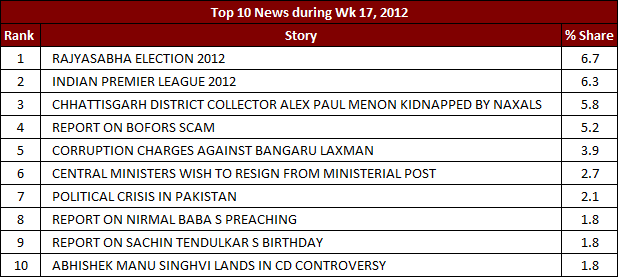
     

  • TAM NCT Data Wk 17 ’12

    Source: News Content Track – A service of TAM Media Research Pvt. Ltd
    Channels: Aaj Tak, CNN IBN, Headlines Today, IBN 7, India TV, NDTV 24/7, NDTV India, Star News, Times Now, News 24 & Zee News
    Period : Week 17 – Apr 22 to Apr 28, 2012
    Note : Analysis is based on the Telecast duration


    About TAM Media Research

    TAM is a joint venture between Nielsen Company & Kantar Media Research. Besides measuring TV Viewership, TAM also monitors Advertising Expenditure of Television, Print & Radio through its division AdEx India. Since 2004, it extended its presence in the PR Measurement & Analysis space for Corporate/Marketing Clients by setting up a separate division Eikona PR Measurement.


    In 2007, the joint venture introduced RAM (Radio Audio Measurement) service to track Radio Listenership for the Indian Radio Broadcast Industry. In year 2009, TAM launched a division, called TAM Sports that specializes in monitoring Sports Sponsorship ROI.


    TAM Media Research’s objective is to fuel media insights that will drive the growth of the Indian Media Industry.

  • [MJR] The mighty Murdoch empire wobbles

    By Ranjona Banerji


    The cycle of life and death is such a wicked thing, sparing no one, especially not the high and mighty (Thank god, really, for us who are not only low and but are also tiny – I’m speaking metaphorically here). And so the mighty Murdoch empire wobbles.


    The Leveson inquiry into media ethics last month and the British parliamentary committee report after an inquiry into Rupert Murdoch’s companies released last week after last year’s inquiry commission both highlight that fall. The parliamentary report indeed calls Murdoch senior “unfit” to run his companies, although the Conservative party members of the commission would not endorse that. The irony for British politicians is that both the Labour and Conservative parties can be accused of getting too close to the Murdochs and their editors.


    From the time he bought the Sun and then venerable Times, Murdoch has been a figure of controversy. His disdain for journalists and senior editors was applauded by media moghuls elsewhere as a fine way to treat employees (India’s journalists have also suffered from the Murdoch effect). Murdoch sacked, moved and reduced journalists everywhere to paid hacks, only capable of doing what he assigned them.


    At the end, that became hacking into the voice mails of a murdered child’s mobile phone in order to sell more copies of a newspaper.


    Murdoch has said he is sorry – inasmuch as he remembers anything at all. Although he does appear to recall a bit more than his son who saw and heard (and read) apparently almost nothing all the while that he ran the European branch of daddy’s company.


    At a time when the Indian media is grappling with all sorts of issues and allegations, the Murdoch saga presents an interesting contrast. That Murdoch’s editors bent the rules and ignored media ethics is a certainty but it presents almost the exact opposite of the way that the Indian media operates. Can you imagine any Indian reporter – especially one involved in the glamour world – going to such depths to get a story? Hiring private investigators, bribing police officers – all this shows a commitment to newsgathering that most Indian newspapers had given up and many journalists would faint at the idea of so much hard work. (So much easier to let the PR person write the story which his client has paid the marketing department for.) I am not sure how many would object to the ethical problems raised since we have our own monsters to deal with.


    Meanwhile it’ll be interesting to watch as the vultures start circling around.


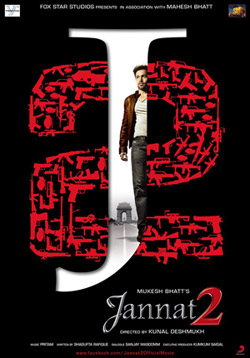
  • Reviewing the Reviews: Jannat 2

    Jannat 2


    Directed by-Kunal Deshmukh


    Produced by-Mahesh Bhatt, Mukesh Bhatt


    Story by-Shagufta Rafique


    Starring-Emraan Hashmi, Esha Gupta, Randeep Hooda Kunal Deshmukh’s Jannat 2, follows the Bhatt Brothers formula pretty faithfully. Crime, Sex, angst, Emraan Hashmi, in no particuar order of preference.


    Critics were divided on this one with ratings going from 1 to 4. It has opened well proving that Hashmi has a fan following among those who don’t go by film reviews.


    Sudhish Kamath of The Hindu titled it “Hardly Heaven” and wrote, “The fact that this is called Jannat 2 though it has no connection with Jannat except for the leading man and director only shows that the Bhatts are not ashamed to admit that they keep making the same film again and again (with Murder 2 or Raaz 3 coming up). Liked Murder? Then you’ll probably watch Murder 2.  Liked Jannat? Okay, here’s more of the same thing. The Bhatts have perfected this mass production with blatant disregard for originality or art by ripping off entire movies (like Murder 2 from The Chaser) or key moments here in Jannat 2 (from The Departed).”


    Raja Sen of rediff.com was left cold too. He gave it one star and cribbed, “A lot would have been forgiven – as it often is with these producers – if the film had either a meatier plot or a more gripping narrative, but this one’s just tiresome as the obvious story drags on. A couple of chase sequences, particularly one through the arteries of a Dargah, are slickly shot, but even these lose their charm as they get needlessly long-winded. And finally, telling a bad actress she looks like Angelina Jolie is just cruel – to both her and to the audience forced to sit there while she tries to smile coyly through a silly pout.”


    Rajeev Masand was kinder with 2.5 stars. “Jannat 2 isn’t all bad; in fact there are portions that are eminently watchable. Hashmi and Hooda play off nicely against each other, and their scenes together are particularly strong, occasionally laced with humour. The film also has at least two thrilling foot chase scenes, including one in the first half between two sets of cops and criminals that’s almost comical. The second chase, filmed in the crowded lanes of a dargah has an urgent breathless feel to it. If the film suffers, it’s because the material’s too slim. There just isn’t very much here apart from the obvious shades of The Departed, and some over-familiar scenarios of inter-gang rivalry. The film fully exploits its ‘Adult’ certification, peppering every scene with colourful Hindi cusswords, but after a while the graphic expletives seem excessive.”


    Anupama Chopra gave it 2.5 too, but was not too impressed. “Logic isn’t a priority here. Deshmukh is creating an old-school Bollywood film with high drama, punchy dialogue, thunderous background music and villains who glare and maim with aplomb. Some sequences are nicely done, including a chase sequence in a dargah. Emraan Hashmi and Randeep Hooda are also extremely watchable. But there are no surprises here and by the second half, Jannat 2 starts to feel like an endurance test with your head being bludgeoned by the violence and incessant Hindi swear words.”


    DNA’s Aakanksha Naval-Shetye & Chaya Unnikrishnan thought it worth 3 stars. “The action chase sequences in the dargah and the climax have been brilliantly executed and are worth a mention. Also unlike most films, the second half is actually better than the first. Kunal shows his tight grip on the film throughout and doesn’t let the film get neither preachy nor light-hearted, balancing finely between the serious nature of the topic and entertainment. The music is in tandem with the film. Emraan’s chemistry with his leading ladies has always been the talking point in all his films. But in this one, it’s clearly his chemistry with Randeep that steals the limelight and it’s this ‘jugalbandi’ between the cop and the criminal that makes the film worth a one time watch for sure.”


    Taran Adarsh of bollywoodhungama.com was one of the small 4 star clan. “Jannat 2 is a compelling account of a conflicted man who ultimately faces the effects of his deeds. The movie advocates that firearms and cartridges are the actual perpetrators accountable for the fatalities and killings of blameless people. Jannat 2 is ingeniously fashioned and skillfully filmed, while the characters are pertinent and compelling. On the whole, Jannat 2 is an engaging film with tremendous appeal for the masses. An absorbing story, a swift and coherent narrative, exemplary direction, fantastic action, soothing music and stellar performances summarize the highlights of this triumphant franchise.”


    Shubhra Gupta of The Indian Express isn’t half as gushy. “Don’t be fooled. This is not a sequel to ‘Jannat’, in which match-fixing shenanigans in high profile cricket matches gave Emran Hashmi and Kunal Deshmukh a fertile hunting ground, and us a watchable film. ‘Jannat 2’ is, for the most part, a badly-done, badly-acted enterprise, lifted only a notch by a couple of performances.”


  • Ad Strat: Havells Fans are Forever

    R Balki,  Chairman and Chief Creative Officer Lowe Lintas
     

    1. Name of the Campaign: Havells Fans are Forever


    2. The Brief: To communicate that Havells fans are forever


    3. The thought process behind the creative:

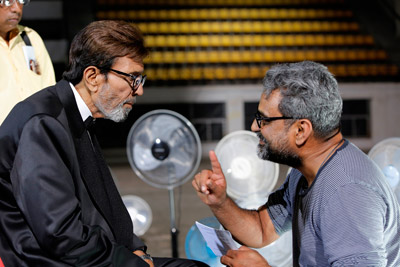
    Havells is known for interesting advertising and their association with the IPL. They have been associated with all the four editions of the IPL so far. This time round they are back with a new campaign for Havells fans which marks the comeback of the yesteryears’ superstar Mr. Rajesh Khanna in his first ever TVC. This iconic superstar is known for an unprecedented mass hysteria and a frenzied fan following in the history of Indian cinema. Never before or never after, has any film star been known for such a fan following. The new TVC for Havells Fans is a tribute to the phenomenon and the relationship he had with his fans.


    4. Media vehicles chosen: TV, Print, Internet and in-shop POSM


    5. Key issues kept in mind while executing the ad:

    The ad has to be a Havells fans ad first, and should not get overshadowed by the presence of any celebrity.


    6. Does the treatment do justice to the brief?

    Yes, as it clearly establishes the fact that Havells fans are forever.


    7. What according to you is the differentiating factor about the ad?

    The thought that Havells fans are forever and the way Rajesh Khanna has been used, doing justice to the idea and the thought. This is the first time that in the fans category, a brand has spoken about this proposition, and in a way like this.


    8. Market and client feedback:

    We have got extremely encouraging feedback from the market, including the trade, consumers and also from Bollywood.


    Compiled by Shubhangi Mehta, AdStrat appears every Monday. If you wish to see your campaign, featuring here, please write to Shubhangim [at] mxmindia.com with a cc to editor@mxmindia.com

  • Press Club Bombay honour bigger than Padma Shri: Vinod Mehta

    By A Correspondent


    Acknowledging to the audience that his heart still favoured Mumbai over Delhi and it was Mumbai that saw him at his pioneering best, Vinod Mehta, now advisor to the Outlook Group, was a picture of pride and fulfilment as he received the coveted Lifetime Achievement Award bestowed on him by the Press Club of Mumbai on May 4.


    Receiving the award from Kapil Sibal, Union Minister of Communications & IT, Mehta thanked the members of the fourth estate and said that this award means more to him than even the Padma Shri. Mr Mehta was felicitated for his selfless contribution of more than 35 years to his passion – journalism. Mr Mehta joined a host of winners from the fourth estate that were honoured by the Press Club for outstanding contribution to the trade.


    The evening also witnessed two special awards being given to late Pradeep Vijaykar (formerly with Times of India) and eminent journalist Madhu Shetye for their outstanding contribution to the domain. Gurbir Singh, President of Press Club of Mumbai delivered the keynote address while veteran sports journalist Ayaz Memon was the emcee for the evening.


    Prior to the awards ceremony, the evening witnessed a scintillating panel discussion on the role that media was portraying in the country and whether it was headed in the right direction. The panellists included Arnab Goswami of Times Now, who moderated the session, Vinod Mehta of Outlook Group, Kumar Ketkar of Divya Marathi and Uday Shankar of Star India.


    Mr Goswami began by stating that there is no shortage of attention being showered on media but expressed concern when he said that never has the media done so wrong. “The question that all journalists and editors need to ask ourselves is, are we doing everything right today? Is the chase for news headed in the right direction?”


    Replying to his question, Mr Mehta said: “There is no problem with the direction, what is essential is for us to judge the media in the environment it works in. The judiciary and press media still function with a degree of idealism and integrity but there is so much of self-congratulation that is happening; that is something that is slightly out of proportion.”


    Expressing his views on the issue of responsibility, Mr Mehta said: “Where the young journos are concerned, I feel they have a good sense of idealism and integrity but if there is somebody who has to take the blame for the current state of affairs, it is the editor. Even if somebody from the team has committed an error, the editor has to take ownership of that and find a solution to it. The problem is that the editors have forgotten what their job is and are pursuing their own agenda. The need of the hour is self-examination; we need to introspect and be accountable for our actions.”


    Replying to Mr Goswami’s query on whether there was unity between members of the fourth estate and the role that editors essayed, Kumar Ketkar said: “It is the editors who stop news from being published and not the management as many think. The editors try and control their reporters and that should not be the case.” Mr Ketkar cited the example of the slain BJP leader Pramod Mahajan, who was shot by his brother a few years ago. “When his brother was arrested for his murder, he had written a letter from the jail explaining his stance and he wished to supply the letter to all in the media. I was told that most editors had agreed to play up the letter in their publication and so I went ahead and planned a big editorial spread for the news. But the next day, I was surprised to see that only my paper had carried the news. This shows the lack of unity existing between the media players today.” According to him, “The media today is not clear on the role that it has to essay. They are not mature enough and lack understanding skills. Journalists themselves are timid and lack courage.”


    Uday Shankar, CEO of StarIndia went on to describe how television as a medium emerged in a big way first during the 90s and then again during 2008-09. “A lot is being said about how news television has been crowded space but I feel it managed to rediscover its own agenda during 2008-09. I cannot understand when some people say media doesn’t do self-introspection. If that is what is claimed, then how come they’ve come to rediscover themselves? Personally, I feel media has done the right thing by chasing news. If there are people who still have questions about the role of news channels, then I cannot understand whether media should be responsible for what it does or whether it should concentrate on doing the right thing?”


    The panel went on to discuss how urban centres led by metropolitan cities were receiving maximum attention from the media and how stories from the rural and less important towns were being ignored in a large way. The need of the hour, the panel highlighted, was to bring out stories from these small cities and towns which were inspirational in nature.


    Winnerspeak:

    Ashish Khetan, Editor – Investigations, Tehelka

    “I bagged the top award for my story on the national rural health mission scam that was unfolding in UP. The story was not about the bonds between the corporation and ministers but how corruption was actually killing people. The funds which were allocated for improving healthcare for the needy and rural people were being siphoned off and embezzled by the whole gravy train of bureaucrats, including politicians. Unfortunately the story did not get much play in the national media because it was centered around the poor but I feel the story was more important than 2G, CWG or other scams that were covered by the media.”


    Abhijit Sathe, Sr Asst Editor, Mumbai Mirror

    “I won the runners-up award for Crime (Pradeep Shinde award) for my story Hiranandani vs Hiranandani. The award means a lot to me. The story was a big one that chronicled infighting between families of one of the biggest names in business today. I exposed how two siblings were sabotaging each other’s interests. I am greatful that I was selected for, and eventually won the award.”


    Rafique Baghdadi, Business India

    “More than react to the win, I would like to say this: more than 62 years ago, a lady called Ms Panna Shah, had done a PhD in Indian Cinema and since then there is nobody who has done that course in the industry as yet. It’s high time the business houses, film industry and the state government should give grants and scholarship to aspiring candidates to pursue that course.”


  • Dream start for Satyamev Jayate


    By Meghna Sharma


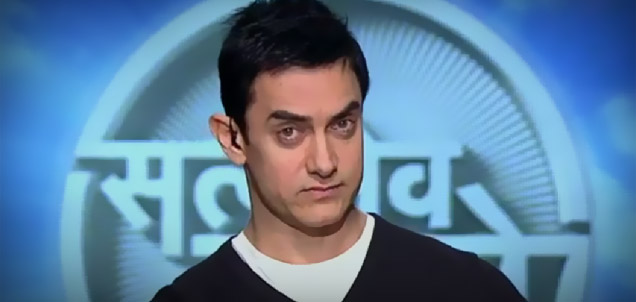
    On World Laughter Day, Aamir Khan was able to achieve just the opposite – make Indians wake up to the social evils we only talk about in hushed tones and cry while consuming  the harsh reality we all run away from. The much-awaited Satyamev Jayate premiered yesterday (Sunday, May 6) morning after a well-orchestrated marketing campaign. As expected, the show was a hit among the masses and media personalities. MxMIndia spoke to a cross-section of mediapersons and experts for their reactions to the show – and to know if the show will be able to sustain the hype and curiosity it has generated.


    Anita Nayyar

    TRPs, no problem

    Most media planners are happy with the show – personally as well as professionally. They feel that the show was able to generate enough curiosity by making people switch on their television sets on a Sunday morning and will continue to do so.


    “The show had a huge amount of emotional quotient, but the way the issue was dealt in the episode will be able to impact people and many of them will wait for the next episodes too. The way everyone is talking about it, I’m sure that the channel will be able to get its TRPs. Apart from the Aamir factor, the issues being discussed on the mass-reach channel will also help it,” said Anita Nayyar, director (customer strategy), BCCL.


    Mediaah! Thank you, Star Plus. Thank you, Aamir Khan

    Anil Thakraney: Oprah Khan

    Agreeing with Ms Nayyar, another senior media planner felt that that the show has the potential of becoming the highest TRP generator in the morning slot. “It’s an episodic show, so a lot depends on how each episode is produced. The show, though a little over dramatic at certain portions, will catch people’s attention,” said the media planner, requesting anonymity.


    The show was telecast on nine channels – of Star the network, Doordarshan and ETV Telugu  and was also dubbed and had subtitles to reach out to various parts of the country.


    Chandradeep Mitra, managing partner, Anvention and who is now based in Kolkata, liked the show and felt that even though it is not pure entertainment and deals with uncomfortable topic, it will be a hit among the masses. “The show was telecast with subtitles in Bengali on Star Jalsa, which helped it retain its genuineness. People here are comfortable with Hindi, so language won’t be a problem. After the initial hype, a lot will depend on how it is written and talked about on the social and mass media. Also, the topics will show how the show will do in the future. For instance, the first episode would have an impact on the Hindi-speaking belt,” he said.


    Anil Sathiraju

    Another media planner who saw the show on Star Plus and a regional channel, Star Vijay, felt that only Aamir Khan will be able to catch people’s attention down south. “It might not catch people’s attention as everyone is expecting, but it’s unpredictable.  Although, one look at the show and one can see that the actor and his team have done their homework well,” said Anil Sathiraju, head – south, Mudra Max Media.


    Many also felt that it’s a bold step by an entertainment channel to deal with such a topic and to such an extent. The money spent on the show is no secret. “Aamir is a popular actor, but I don’t think the show will be able to garner the same kind of popularity and following like other weekday prime time shows on similar channels. But hats off to the channel and the actor for taking up such a bold step and deal with social issues no one wants to talk about,” said Sundeep Nagpal, founder director, Stratagem Media.


    Marketers’ paradise?

    The 10-second advertisement slots for the show were said to have been sold at thrice the usual rates. The main sponsors have already paid a huge sum to be associated with the show. According to the marketers, the tear-jerker has the mass-appeal and the pull.


    Lloyd Mathias

    The show has been ‘trending’ on Twitter the whole of Sunday and has an ever-increasing number of followers on Facebook too. So, on the popularity front, the show has been able to reach out to its target audience. At least the socially networked intelligentsia for sure.


    Former CMO, Tata Teleservices, Lloyd Mathias said that the show is a huge marketing property. “The hype created before and after the show, is a clear signal about the impact it has created. Apart from the Aamir Khan factor, even the issues bieng dealt with have created uniqueness and curiosity.  So, every marketer will be glad to be associated with the show.”


    Sanjay Tripathy

    Even Sanjay Tripathy, executive vice president – Marketing & Direct Channels, HDFC Life, felt that marketers would be glad to jump onto the bandwagon: “Every show has a certain TG and marketers advertise with them according to their TG. Satyamev Jayate is a show which has appeal across sections – class, age, region and religion. So, even though the show is not at a prime time slot and not a pure entertainer, people will watch it. So, why wouldn’t any advertiser want to be part of it?


    More than a tear-jerker

    The first episode dealt with the issue of female foeticide – not something people aren’t aware of. Sociologist, human right activists and media commentators are glad that someone is talking about such taboo topics on such a platform. And since, an actor of certain credibility and reputation is bringing it to the masses, there might be some change in the society.


    “The portrayal of the issue was sensible and the personal experiences of the three women on the show were heart wrenching. Till now, such topics were only debated by academicians and activists. But now it’s in the public domain. And it has shaken up the people. However, now the concern is, will it be able to find a solution for such highly-prevalent evils of our society? A follow-up is needed so that the show doesn’t just become another tear-jerker,” said Sarla Bijapurkar, sociologist.


    Ranjona Banerji
    Ayaz Memon

    Ranjona Banerji, senior journalist and contributing editor, MxMIndia, felt that sustainability is a challenge now. “A lot of times, after a hard-hitting start, many shows tend to bend towards populist themes. So, I hope the show doesn’t do that or run behind TRPs. The show will have the similar constituency of followers like Anna Hazare. Thus, change in a society might happen, but a lot will depend on how the show progresses from here.”


    Agreeing with her is Ayaz Memon, veteran journalist and editor, who too believes that sustainability is a challenge the show will face if it wants to be different: “Very rarely do people want to watch ‘reality’, but the show was able to catch almost everyone’s attention on Sunday. Apart from sustainability, another challenge the show will have to overcome is how quickly it is able to capture the youth’s attention, because one doesn’t know what will happen after three weeks.”


    If that’s not enough, Teesta Setalvad, journalist and activist feels that the show was great, but there were loopholes in it too. “For instance, in the show Aamir Khan said that he will write a letter to the CM, but in reality he can’t do much about it. It’s the chief justice who can make a difference and take action. Also it didn’t tell people where to go when such issues happen, no matter how weak the organization might be. Apart from that, the show was excellent and a good start in creating awareness.”


    Photograph: Video grab from SatyamevJayate.in


    > The Importance of Being Aamir Khan

    > Why SJ will rule weekends; Stratagem analysis: Weekday Show #23 > Weekend Show #1

    > SJ is Aamir’s baby, completely: Satyajit Bhatkal (director of the show)

    > High EQ at Aamir Khan talk show Satyameva Jayate

    > Airtel slashes SMS rates for Satyamev Jayate

    > Anil Thakraney: Aamir wants to play God


  • MCCS channels unveil new look

    By A Correspondent


    MCCS will be relaunching news channels Star News as ABP News  in Hindi, Star Ananda as ABP Ananda in Bengali and Star Majha as ABP Majha in Marathi on June 1.


    The relaunch process begins today with a massive communication campaign  developed by Lowe Mumbai. The media buying plan has been formulated by Mindshare.


    The campaign would be, over the next 8 weeks, aggressively communicating the change, using a combination of TV, Print, Radio, Outdoor and Internet, to all the viewers and stakeholders about the new name and logo.


    The three news channels have helped MCCS evolve as a strong and respected broadcast news company. The theme of communication is simple and to the point: Our Stars don’t change, our News does not change, only our name changes.


  • Mediaah! Thank you, Star Plus. Thank you, Aamir Khan

    By Pradyuman Maheshwari


    I know it’s not a great idea to gush thus about a television channel, network and presenter. But can’t help doing that, for, in one masterstroke, Star India and its flagship channel Star Plus have atoned for the sins of not only unleashing regressive saas-bahu/domestic disharmony content over the years, but also shown the finger to all those who’ve been calling our broadcasters irresponsible.


    There’s been much buzz about how it was going to be a desi Oprah Winfrey Show. Perhaps that may have been the inspiration and the impact created is possibly quite like that of an Oprah. It’s not that Indian television hasn’t attemped social issues earlier. There have been some groundbreaking talk shows on social issues in the past. Priya Tendulkar’s Rajani in the mid-1980s was splendid. It was entertaining, thought-provoking and activisty. I remember noted litterateur Kamleshwar doing a show on social and current issues called Parikrama on Doordarshan in the late 1970s and 80s, but am fuzzy about its content and don’t find any detailed reference to on the internet.


    There’s a lot being said about Satyamev Jayate. On MxMIndia and elsewhere. What Satyajit Bhatkal and Co have done is no rocket science. It’s what a good, well-researched story in a newsmagazine or a weekend paper would be (and ought to be). Or a nice, detailed focussed programme on news television (sadly, the concentration these days is on panel discussions). But the dramatic differences are: 1. Aamir Khan and 2. The way the call-to-actions and online media have been weaved in.


    Every big star in Bollywood has been associated with social causes, and so’s Aamir. But given the movies that he’s been making over the years, his insistence on not accepting film awards, and more importantly his style of commitment and involvement with projects has worked towards building a unique aura around the man. Yes, there are many stories of directors exiting films or not wanting to be associated with projects that Aamir is involved but the proof of the pudding is in the eating. And if the final outcome of his films is any indication, I see nothing wrong with the star being aggressively active in the projects he has immersed himself in.


    Will Satymev Jayate make a difference? Yes, it will. The female foeticide problem is now a national problem. Don’t be surprised if you find the Rajasthan Chief Minister making a statement soon. Or it turning into a political issue. I am sure forthcoming episodes of the show will be as well-researched. That’s something you can be sure an Aamir Khan productions show will guarantee.


    It’s strong on the Emotional Quotient no doubt. I must confess I was much moved even though one is hardened by many such accounts as a journalist. I know of people sobbing almost uncontrollably in the first two segments, and it required an Aamir Khan to calm us down and get to action.


    He does it so very well.


    I am happy to learn that Star News (ABP News wef June 1) has tied up with Aamir to take the discussion forward after every episode.


    What next? What do other GECs do to counter AK’s SJ? Or SMJ as the Twitter handle abbreviates it.


    Since the season is going to last just 13 weeks, they just need to sit back and see how it unfolds. After all, the investments that Star has made are phenomenal and if it works for the channel, it would be nice to other GECs too trying something similar.


    My hearty congratulations to Uday Shankar and his team at Star India for boldly doing what no private television network CEO has ever done before. I met Uday on the evening before the show at the Press Club awards and he appeared confident that it would work. He also praised the attention to detail by Aamir and said he hadn’t seen anything before.


    I must confess I have been a little upset with Star for the way it has ignored many in the non-mass business and trade media on Satyamev Jayate. Sad. Perhaps we need an Aamir to champion our cause.


    For me, what Satyamev Jayate has achieved is beyond just a victory for Star India, Uday Shankar or Aamir Khan. It’s a huge win for the Indian entertainment television sector. Activists, retired judges, commentators and politicians of all hues have dubbed it irresponsible. Not all of it is without reason. Also, for too long have entertainers said that non-fiction shows like Satyamev don’t work. If the mix and presentation are right, we’ve seen that it can. Even news channels which have been riding on primetime chatshows should feel encouraged to attempt documentaries and discussions that may not be very ratings friendly. I am certain if the programme quality is good, the ratings will happen.


    Buzz/ping me if you have a story to tell. Confidentiality assured. There are various ways to do that: Mail: pradyumanm[at]mxmindia.com, BBM: 23050B5D, Gtalk: pradyumanm@gmail.com, Twitter: @pmahesh and the mobile: 98338 76278.


    Disclaimer: Although he is CEO and Editor-in-Chief of this site, Pradyuman Maheshwari’s views in Mediaah! are not necessarily those of the rest of the team and MxMIndia.com.


  • Digitization is going to be the biggest reform in broadcast sector: Ambika Soni

    By Shruti Pushkarna


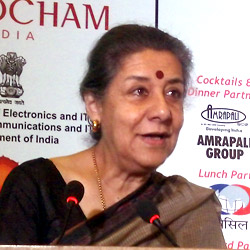
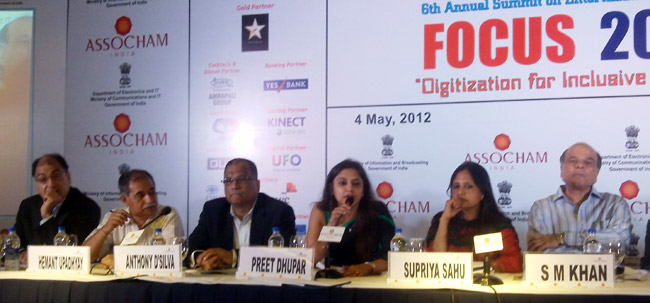
    High drama ensued at the Assocham event inNew Delhias local cable operators (LCOs) flagged black ribbons at the Minister for Information and Broadcasting, Mrs Ambika Soni. The Minister was attending the 6th Annual Summit on Entertainment and Media organized by Assocham, Focus 2012: Digitization for Inclusive Growth. As the theme suggests, one of the primary issues discussed at the event was Digitization of Cable television.


    The LCOs were protesting against the recent tariff order issued by the Telecom Regulatory Authority of India (TRAI), which they claim is an unfair order against all small operators. Following the heated arguments between cable operators present at the event venue and the Minister, one of the cable operators, Sandeep Mcgee who is based inEast Delhithreatened to commit suicide in front of the Minister. Mrs Soni, however, tried to pacify the operators’ fraternity and asked them to file a formal letter with all their grievances against the tariff order and the regulator. She also promised to address their concerns and, if need be, raise the same with the regulator.


    Addressing the concerns of broadcasters on the carriage fee mentioned in the same order, Mrs Soni said that the government will consult all stakeholders before taking a final call on the regulations decided by TRAI under which the Multi System Operators (MSOs) are allowed to charge a carriage fee from broadcasters.


    Earlier, in her inaugural address, the Minister emphasized the importance of digitization for the entire industry and all stakeholders: “Digitization is going to be the biggest reform in broadcast sector and enable operators to expand their revenue sources by providing more choice and variety to customers. Digitization is imperative to tabulate subscriber base and reduce carriage fee. Digitization will also help reduce all human error in the process.”


    Defending the tariff order issued by TRAI recently, she said that the government indulged in exhaustive consultations with all stakeholders on all issues including the carriage fee, and the main aim of the new regulations had been to benefit the consumer. Mrs Soni said: “The TRAI tariff order makes the viewer the most important beneficiary; the choice will be with the viewer.” As for the broadcasters, she said digitization would help reduce the dependence on TRPs and bring in transparency where every broadcaster would be in a position to identify exactly how many people are subscribing to the channel.


    On the issue of media regulation, Mrs Soni said: “Let’s not condemn self-regulation per se because even though self regulation is a slower way of correcting things, it is still a surer way as it involves converting minds and hearts in the process.” She added that in the whole race to growth, the provisions of the Cable Television Regulatory Act were overlooked and it was a fault in the functioning of the government that the act had been ignored.


    On the issue of Paid News, she said that while it was the worst phenomenon that existed, it’s not as easy to detect paid news. She was responding to scathing criticism of the media by the Chairman of Press Council of India, Justice Markandey Katju in his keynote address at the same event.


  • Full report of Assocham ‘focus’ on M&E

    By Shruti Pushkarna


    Assocham organized the 6th annual summit on entertainment and media, Focus 2012, inNew Delhion May 4 where the topic in focus was Digitization for Inclusive Growth. The event began with a keynote address by the Chairman of Press Council of India, Justice Markandey Katju, who came down heavily on the media once again, in his address.


    Justice Katju referred to the role played by the European media between the 17th and 19th century. He talked about the sacrifices made by writers like Voltaire, Rousseau and Thomas Paine to uplift the society and help it convert from a feudal state to a modern society. He criticised the Indian media for promoting superstition in form of cheap astrology shows on news television channels all day instead of promoting rational and scientific ideas. He said: “The function of the media is to uplift the intellectual levels of citizens, but our media instead has stooped down to the level of Indians, of which 90 per cent are fools.” He said that in the race for TRPs, the television channels focus on entertainment which constitutes 90 per cent of programming and leaves only 10 per cent room for real issues to be telecast.


    Justice Katju urged media professionals to play a socially responsible role at a time whenIndia, likeEuropein the 17th century, is going through a transitional phase. He emphasized on the need to promote rational ideas in this period of transition in Indian history. He also emphasized on the need for regulation as opposed to self regulation. He said, “I am the greatest fighter for freedom for press and that’s why I am not recommending control but regulation. In control, there is no freedom but in regulation there is reasonable restriction in the public interest.”


    Self regulation is no regulation, he added: “You cannot have absolute freedom to harm society. There is need for regulation, and this regulation cannot be from the government, it has to be from an independent regulatory authority which has penal powers.”


    Broadcasting & Digitization: India Goes Digital- Challenges & Way Forward

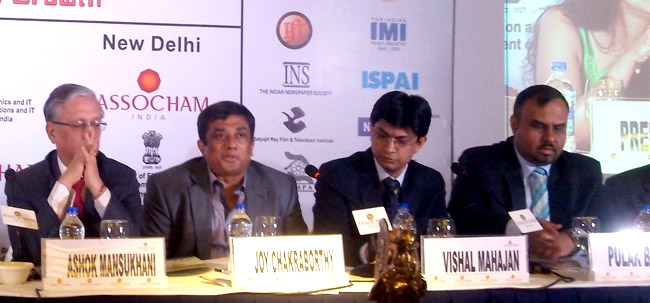
    The session on broadcasting and digitization was chaired by Supriya Sahu, Joint Secretary (Broadband & Policy), Ministry of Information and Broadcasting. The session was moderated by Preet Dhupar, Director, BBC World,India. The panelists included Anthony D’Silva, Group CEO, Sun Group; Hemant Upadhyay, Advisor, VOICE; Jehangir S Pocha, CEO, INX News; Roop Sharma, President, COFI; Vishal Mahajan, Sr. Director, Yes Bank; Himanshu Patel, COO Videocon D2H; Ashok Mansukhani, President, MSO Alliance; Joy Chakraborthy, CEO, TV Today Network; Pulak Bagchi, VP, Star India and SM Khan, DG, DD News.


    During the discussion, Ms Sahu said that the work on digitization, especially Phase 1, which looks at the four metros, was on track and with help from all stakeholders the government should be able to push digitization to happen in time. She defended the TRAI tariff order: “It is a win-win situation for every stakeholder. The clear winner, of course, is the consumer.” She said that the cities were almost ready for digitization, the government had made good progress as far as procurement of set top boxes (STBs) is concerned and the only area that needs attention is the seeding of these boxes. She agreed that for the target date to be achieved, around 20-25 lakh STBs have to be seeded and that makes it 1 lakh STBs to be seeded every day.


    Representing the MSO Alliance, Mr Mansukhani congratulated the government on taking up the challenge of digitization. He agreed that there were some concerns and issues on which they will seek clarification from the TRAI. He reiterated the commitment to digitization on part of MSOs and urged newspapers and business channels to clearly present all points of view to the debate on digitization.


    Ms Roop Sharma, President, COFI expressed hers and the cable operators’ disappointment at order issued by TRAI. She claimed that the order was unfair to LCOs and will result in putting them out of business: “Regulator wants to be the controller of the industry…the role of the regulator is very bad. We are all for digitization, but we are unhappy with the revenue share that has been decided in the order.” She added that 60 days are too less to meet the challenges of digitization and it is unlikely that the sunset date for Phase 1 is achievable.


    Jehangir Pocha, CEO INX News shared the plight of the broadcasters with the panelists on the issue of carriage fee. He said that a channel like Times Now had to pay a carriage fee of Rs50-55 crore to reach the viewers. He said: “I can’t applaud this order. Those who applaud this regulation perhaps benefit from it. It is the first time in the history ofIndiathat carriage fee is legalized, institutionalized and not regulated.” He said that the government claims to have taken the views of all stakeholders involved but their views were taken only in theory and not in spirit.


    The TRAI in its recommendations stated: “Keeping in view the fact that substantial investment for implementation of Digital Addressable Cable TV Systems is made by the MSO and the cost involved in carriage of channels, the Authority has decided that every MSO may fix the Carriage Fee.” But Mr Pocha argued that why should a channel pay for MSO investment. He said he would like the government to issue a white paper that looks at the earnings of all players.


    Sun Group CEO Anthony D’Silva said that the need of the hour is to get down to the nitty-gritties: “The lessons learnt from DTH are applicable to any other digital system. We need to look at how the subscriber management systems will work, what are the service parameters and who’ll set up the call centres because that involves huge costs.” He added that the government needs to look at  digitization as any other infrastructure project and support it by whatever means, whether its tax holiday or any other subsidies.


    Pulak Bagchi, VP, Star India expressed a need to recognize the challenge government and the regulator had in thinking through the entire process of digitization and the fact that it’s difficult to make everyone happy. He said: “Government and regulator are out there to protect the public interest and not to add to company bottom lines. We entrepreneurs need to work out our own course.”


    Responding to the issues voiced by the various panelists, Ms Sahu said: “All concerns are genuine and we would try and address them as well as we can but please read the fine print to clarify some of the concerns.” As for cable operators, she said that if cable operators don’t move to digitization fast enough, they will be wiped out by competition from DTH.


    Films, Animation and VFX: Digital Cinema- Present and Future

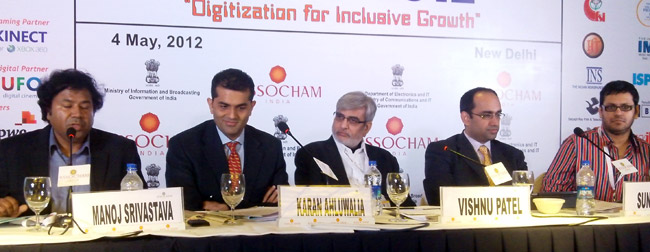
    The session was moderated by Karan Ahluwalia, Executive VP, Yes Bank and the panelists included, Ramesh Meer, CEO The FX Factory; Sunaman Sood, Co-founder, Director, Acendo Capital Advisors; Siddhartha M Jain, Producer@iRock; Vishnu Patel, CEO-Special projects, UFO Moviez and Manoj Srivastava, CEO, Enternainmentt Society of Goa.


    Siddhartha M Jain of iRock started the discussion by talking about the paradigm shift occurring in cinema: “Low budget films without stars which used to be niche earlier are picking up. We’ve had hits like Ragini MMS and Vicky Donor. So there is huge investor appetite, provided you have the right content. The key lies in keeping the budgets low and using the latest technology.” He added that there is also a huge power shift happening from Bollywood movies to movies outside Hindi cinema.


    Sunaman Sood said that producers have now begun to treat regional cinema with some seriousness, realising its potential. But Manoj Srivastava added that there is no platform or agency in the country that promotes regional cinema well enough.


    Speaking of digitization’s benefits to cinema, Vishnu Patel said that digital technology has helped revive the industry which was otherwise on a decline. He said that regional cinema has also benefitted from digital technology because digitization has cut down the distribution cost in terms of prints. Now regional film producers can distribute their films better without having to worry about prints’ costs.


    Print Media: Challenges and Opportunities in Digital Age

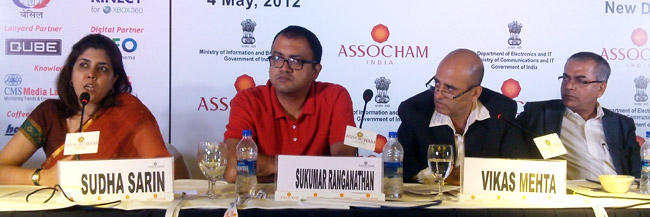
    The session was chaired by Suprio Guha Thakurta, MD, The Economist Group India. The session was moderated by Vikas Mehta, VP & Executive Business Director, JWT Delhi. The panelists included, Sukumar Ranganathan, Editor, Mint; Vandana Das, President, DDB Mudra;Sudha Sarin,MD, Ipan Hill & Knowlton and Raghav Subramanian, COO, Lintas Initiative Media.


    Sukumar Ranganathan initiated the debate by making a strong point that print is here to stay: “We often look at the western trends to decide the future of print in the country but we forget that the dynamics of the western market are very different from the Indian market.” He said that Mint has never defined itself as a newspaper; rather it looks at itself as a ‘newsroom’. Talking about integration of content, he said: “We update a story online as soon as it breaks. We also use social media to amplify the news. And in the paper, we value add with analysis and so on. I think integration is key to what a newspaper needs to do to survive in a digital area.”


    Suprio Guha Thakurta echoed Mr Ranganathan’s views but he also emphasized on the fact that content for every platform needs to be looked at differently: “You can’t just cut and paste from print to online or any other device.” He added that The Economist, which at present has about 85 per cent of subscriptions from print, aims at converting these into at least 50 per cent in digital in the next two years.


    Raghav Subramanian said: “It’s not that print is going to go away but it’s being increasingly threatened by digitization. Print is slow as a medium and now with news all over the place, the tangible paper is eroding in terms of the first choice for the younger generation.”


    Concluding the debate, all panelists agreed on the need to integrate content across different media to reach out to consumers/viewers/readers at different touch points.


    Radio and Music: New Avenues for Revenue/ Social Media & Gaming: Creating New Markets

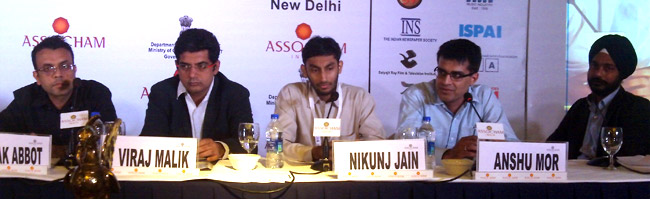
    The last two sessions on radio and gaming were merged into one discussion. The session was moderated by Uday Chawla, Secretary General, AROI and the panelists included, Anand Raj, Head- Non Traditional Revenue, Red FM; Geetanshu Anand, Head- Content, Mystica Music; Pallab Mitram Head- Consumer VAS, Tata Teleservices; Deepak Abbot, Head- Product, Zapak Digital Entertainment Pvt Ltd; Nikunj Jain, CEO, Inoxapps; Anshu Mor, Lead Entertainment & Media, Microsoft; CP Singh, CTO, Possible Worldwide; Akhilesh Saurikhia, Consultant, Department of Electronic and IT, Govt of India and Viraj Malik, CEO & MD, PK Online Ventures Pvt Ltd.


    Anand Raj of Red FM talked about alternate revenue avenues that radio stations can look at. He said that audio production is an unorganized market right now and if radio stations start looking at doing audio productions in-house, there is huge potential for revenues. He also pointed out initiative like the Mahabharata or Ramayana productions done by Fever and how radio stations can look at making money by selling productions like these to VAS mobile operators. Another area that radio stations haven’t exploited properly he said was social media. He said that radio can look at building communities on social media for commerce.


    Geetanshu Anand of Mystica Music said: “There is no lack of avenues for revenues; all we need to do is fill up the loopholes for revenues.” Radio industry, she said, plays a crucial role in promotion of music but when it comes to rights sharing then both radio and music companies get selfish and each wants a larger pie. She said that the need for the hour was to review the statutory licenses. She also said that it is important for radio to start promoting non-film music alongside film music.


    Talking about gaming and creating new markets for it, Anshu Mor of Microsoft said: “It’s important for us as an industry to change the concept of gaming and how we look at gaming.” He added that social media provides with an opportunity to promote the ‘Brand Me’ and hence plays a huge role in marketing.


    Viraj Malik added that mobile gaming is on a rise and will turn into a larger opportunity inIndiabecause mobile is fairly big in terms of reach and affordability. And this creates a huge opportunity for content and app developers, he said.


  • The Anchor: Viral Pandya on 5 ways how a small ad agency can beat the biggies

    By Viral Pandya


    1. Shut up and work!

    Believe me, it really helps. While in bigger agencies, people spend more time in excruciatingly painful meetings, churning out bigger strategies and smallest of ideas, you can sneak your way through by working on insights and simplicity.


    2. More is less!

    Remember it is never about how many pieces of work you bring to the table. And how many bucks you spend. Rather it is about coming up with a single piece of work that can do wonders for a brand, and of course for you too.


    3. All it takes is an idea!

    People will only remember you for your last work. So it does not matter whether you are small or big. Come up with ideas that excite the hell out of people. A great work will never get unnoticed. The same way, a bad piece of work will never get unnoticed, especially when coming from the bigger agencies. Isn’t it a win-win situation for tiny little us!


    4. Love your clients!

    As if they are the most important people in your life. Never forget that they have taken a great risk in you. They have given you an opportunity to prove your mettle. Don’t break their trust. Thrill them with great work. Take our instance; we share a great camaraderie with our client. We have enough and more freedom to work ingeniously. And together we believe in creating work that works. It is absolutely no surprise seeing our clients grow multifold. And that’s the reason we are winning international awards on our regular brand work, year after year. We always take our clients to each and every award show, and let them receive the awards. For us, looking at their faces glowing with pride is actually far bigger than the award itself.


    5. Let’s win!

    For us, it is nothing but Guerrilla warfare. When you are small you work as a tribe. A strong combative unit. You are not afraid to lose. You are like Spartans taking on the might of big. Lead from the front. Take your team forward, and the glory shall be yours. People love to support the underdogs. Nobody expects anything from you. When bigger agencies win, their folks celebrate. And when we win, the world celebrates. Enjoy being small yet lethal, and let your work score BIG.


    Viral Pandya is Chief Creative Officer at Out of the Box.