Blog

  • Discovery APAC wins Indo-Am Corp Excellence award

    By A Correspondent


    Discovery Networks Asia-Pacific (South Asia) has been awarded as the best US company operating inIndiaunder the Media & Entertainment category at the 8th Indo-American Corporate Excellence Award 2012 held in Mumbai on July 4.


    Discovery Networks Asia-Pacific (South Asia) was selected on the basis of its overall contribution to the Indo-US business and other parameters like human capital management and corporate social responsibility were also considered. The award commended Discovery’s programming and production excellence and its stellar performance in the country.


    The company broadcasts eight unique content channels inIndia– Discovery Channel, Animal Planet, TLC, Discovery Turbo, Discovery Science, Discovery HD World, Discovery Channel Tamil and Discovery Kids.


    Rahul Johri, senior vice president and general manager –South Asia, Discovery Networks Asia-Pacific, said: “This award is recognition of Discovery Networks Asia-Pacific’s commitment to engage and entertain Indian viewers with unique and credible programming. It exemplifies and values the positive contribution that the network brings inIndiathrough its innovative content.”


    Indo-American Chamber of Commerce (IACC) is the only bi-lateral Chamber of Commerce committed to promotion of Indo-US Trade & Economic Relations by facilitating joint venture, strategic alliances, trade, technology transfer and investments. IACC has over 2,600 members who together represent a wide spectrum of business and economic segments: manufacturing, exports, services et al.

  • ‘You are only as good as the value you bring to the table’: Divya Gupta

    Divya Gupta, the quintessential media strategist, moved to Dentsu Media as the CEO not very long back. Gupta, one of the early movers in the media space is oft admired for her clarity of thought and her business acumen. She has had an illustrious career both on the agency and client side of the business.


    In this conversation with Ritu Midha, she discusses her experiences in the industry, the glass ceiling, and the changing face of Indian woman among other interesting things.


    To begin with, why did you opt for media at a time when it was considered secondary to creative?

    I meandered into media. I knew very little about media at that time- almost nothing. All I knew was that I was very comfortable with numbers and my love for analytics. So I started off and I loved what I was doing and that was it.


    Had it anything to do with the fact that the domain was considered to be more suited for women?

    That did not play a part at all.


    [youtube width=”400″ height=”225″]http://www.youtube.com/watch?v=6KWJH0tf_AE[/youtube]

    You are considered to be a role model by many. Did being a woman ever prove to be a hindrance or an advantage?

    Never. Neither which ways.


    Never – not within the agency – not with media partners – and neither with clients. You are only as good as the value you bring to the table. There is complete gender neutrality.


    In fact, in many ways you get treated depending on how you behave. Let me give you one example, I did a short stint with O&M Media Network, London, and at that time, belief on the media buying floor was that women were lousy buyers. That despite the fact that the CEO at that time was a woman! I observed after joining, that the lone woman on the team there was more interested in doing her nail varnish than negotiating deals. So, to cut a long story short, by the end of my tenure, I was one of the boys.


    Looking at women across business houses, do you think that businesses are giving an equal opportunity to women now? Are they unbiased?

    Gender equality in our society is lip service. Biases begin at home, and they definitely exist at work. The facts are very hard to ignore. Women are more prone to opting out than men. Companies need to examine, and address the issue.


    There are many factors at work. Historically there has been an occupational segregation, for example, typically more female nurses and male doctors. Or the fact, that women are valued less, and paid even lesser. And then, many women with the homemakers’ responsibility, and that of parenting, get pulled down. And lastly, I find that perhaps women sometimes, don’t take themselves seriously enough. If you look at the women workforce, it is a very narrow pyramid. With women at the middle and senior level, twice as prone to opting out, than men – that needs to be addressed, for both the society and company’s benefit.


    There are umpteen examples in our society, where the glass ceiling has been breached. So, right from banking to FMCG sector, to good old politics, and closer home, even media. But these examples are iconic in nature. There is so much more that needs to be done – the narrow pyramid needs to become far more sturdier.


    And if you look at women at large, as consumers, do you think that they are becoming more powerful and influential now? Moving beyond their traditional territory of FMCGs…

    Women were always powerful, only quietly so. As for their becoming far more influential, there are multiple factors at play- (a) They are more economically independent and financially independent,  (b) They are decision makers right from household products, to higher outlay durables – even financial products, and last, they are no longer apologetic, no longer subservient in playing this role. In fact, overtly and confidently so. So, yes, there has been a shift.


    It’s often stated that women have a different set of priorities, references and attitudes vis-a-vis men. Do you agree?

    From a young age, I believe that a woman can do all that a man can. But, by that, I don’t necessarily mean to say that men and women are the same. There is so much more beyond the traditional, stereotypical role that we’ve assigned to men and women. So, if you look at the homemaker role assigned to a woman, it requires so much of hard work and dexterity, day in and day out. And often, thanklessly so. A career is as important to a woman as it is to a man, not just because of the money that she brings home, but as much for her self-esteem. So often, a woman who is good at her job – quits, we attribute it to attitude, behaviour, priorities. I would urge you to look beyond the obvious. What happens when we stretch an elastic band? It snaps. So, who is to say whether it was the quality of the elastic, or the fact that it had been stretched too much, too long?


    Do you think things are changing now?

    Yes and no, both. There is far more awareness, acknowledgement, most importantly from their partners, as in, the men. In a lot of areas, men are not shy of taking responsibility, and there is an equal partnership. Now, that is a great thing to happen. So yes, things are changing for the better. Having said that, while ten things are changing, as many are not. The pressure on multitasking today is far more. As a homemaker working from home, you worked as hard, but to an extent that elastic did not snap. But when you try to straddle too many stools, sometimes, there is a danger of falling in between, and that is not the so good part.


    How different is the metro woman today from the previous generation?

    The previous generation, more likely was a homemaker, working as hard – so she was the CEO, the CFO and the CMO of her house. Today’s woman is all that, and more. There is a career outside the home that she tends to. Not only does she contribute to the family kitty but there is a pressure and her own self esteem that she does well. As compared to her mother she is far more hard-pushed for time and energy, and she is also at the same time far more empowered in decision making, in leading her life her way- in asking for and getting equality with her partner, family, friends and social circle.


    How are the marketers looking at this shift?

    Marketers will mirror society. So increasingly you will find that across the spectrum – from FMCG to the durables to your financial products, they will address her as an equal prospect. There is hardly any category where her influence in decision making is not considered.


    What one needs to watch out for in this hurrah and egging her on, is that society needs to ensure that there is a support system for her. For example, one of my colleagues who is working with me currently is mother of a young baby – she needs her mother-in-law to look after the child. Family raised their hands recently. So she put the child in a crèche. A week later the child was traumatic. She just wouldn’t leave her mother – she was not able to adjust to crèche. There needs to be assistance from family, friends, society, companies – where you provide that safety net. A lot of work needs to be done in that direction.


    To conclude this interview, who, in your view, is a Diva?

    Somebody who walks the walk and talks the talk – who exemplifies and leads by example. To my mind that diva can be a lady who sweeps outside our building – or somebody sitting in an office. Anybody across the spectrum who worships her work and leads by showing other people examples. I salute such people.


  • Stay solo or scale up with a biggie?


    By Tuhina Anand with inputs from Shruti Pushkarna


    Creative hotshops have always co-existed with the bigger networks and every now and then one hears of a celebrated hotshop being taken over by a network. Publicis Groupe, which already had a stake in BBH, has now taken 100 per cent stake in the agency. Considering that BBH is among the most celebrated creative boutiques, the development makes one think that the lifespan of an independent has become short and for them to scale, being part of a network has become a necessity.


    Bharat Dabholkar, who collaborated his agency Zen Advertising with Publicis Groupe in 1999, is very clear that the only way to scale up is to merge with a network. He said: “When we started, we were servicing homegrown brands; but we realized that with global brands coming in, we had a handicap in getting them on board. By being part of the network, we immediately got access to big, international brands. I think it’s a personal choice, if you are happy servicing a handful of clients, then you can remain independent; but if you have ambitions of growing your outfit, then the way ahead is to merge with a network.”


    Also read:

    Anil Thakraney: BBH must remain the black sheep

    “I have also felt that when a client is small in size or have just started with their marketing activities, they will come to a small agency but after having tasted success with grown ambitions, they ditch the small agency and would want a bigger agency on board. They still might continue to work with small agency, but that usually is on few projects,” he added.


    Giving an understanding of the situation, a well-known financial advisor to media groups said: “First of all, it depends on how well the creative hotshop is doing. My view is that if it’s doing well and wants to scale up, the only way to do that is to align with some network. And the network will align only if you are doing well. If you are just a creative whiz who’s not doing well, nobody will go after you. They will go after you only if you can bring something to the table. I think one has to also look at the age profile of the creative guys. If you are young, then you can afford to be in the saddle of a creative hotshop for a long time without considering the possible money that you can make because you can afford to wait. If you are in the mid 40s, then it’s time to sell it whenever you are at your peak. So that’s an important consideration, what stage are you in.”


    The scale a network offers is one way that helps the creative hotshops. The second is the access to full-time retainers with most of the bigger clients. The advisor echoes what Mr Dabholkar said: “Whatever you see or hear of bigger clients working with smaller agencies, it’s not a permanent relationship and it goes from campaign to campaign. So when you have that scale, you might end up being the only agency on the roster. So that’s an advantage. Also you need to look at networks which don’t have a great reputation in India, they would like to go after these agencies. For instance, Ogilvy would not like to go after anybody because they have a good reputation here. Whereas for a Omnicom, which is internationally well-known for its creative body of work, there’s nobody here in India. So the networks also look at it from that perspective, because it will be an image booster for that group in India.”


    But then what about losing one’s independence? After all in most cases the reason the creative people to start their own outfit is the independence that comes with it as opposed to being with bigger agencies. Mr Dabholkar clarified: “As for losing our independent streak being a part of network, my experience was different. Publicis was a delightful network to work with, as it was understood that we had an entrepreneurial streak so they didn’t interfere in our day to day functioning. However, the big help came in terms of sharing knowledge and supporting us with key inputs on businesses.”


    Sajan Raj Kurup

    Mr Dabholkar set up a small agency in Tanzania which has seen positive growth. He is not averse to collaborating this agency to a Network; however he feels that latter would not be interested at this point of time as they wouldn’t see much value in that part of the world in terms of advertising. However, he says that such collaboration helps the people who have worked, as it widens their horizon and opens new windows of opportunity.


    So it is clear that to scale up sooner or later, either selling of stake or some kind of collaboration is required. However, Raj Kurup who started CreativeLand Asia is very clear that he wouldn’t want to sell because he clearly believes in the India growth story, though he is open to partnering on his own terms. He is looking at expanding footprint and opening office in London. CLA already has a regional office in Singapore.


    Even Scarecrow Communications that was set up two years back is clear that they have enough going on their own and wouldn’t want to sell stake but are open to collaborating with partners that will help them in maximizing their potential.


    Naresh Gupta

    Naresh Gupta, Managing Partner, Bang in the Middle, who along with partners has got on this entrepreneurial venture recently, said: “There is a future for independents, and a big one at that. Yes BBH got acquired, and some more may get over a period of time, but that for me is the process of evolution. BBH did path breaking work, made a name for itself, and as brand will still stand for the same black sheep thinking even if it’s a part of a network. I see the same thing to happen here.


    Independents will be the new force. They are nimble, they don’t have previous baggage, they will take greater risk, be more lateral in terms of business model, and be a challenge to the large networks.


    The larger networks at some stage will always be interested in the independents precisely for the values of thinking different and taking risks. Till the large networks protect those values, it may not even be a bad thing.”


    Prasanth Mohanachandran

    Clearly there are both merits and demerits of aligning with bigger players. Prasanth Mohanachandran, Founder Director, AgencyDigi, said: “A network always has one advantage – of scale. The other advantage they have is, when it comes to multinational brands, most of the brand decisions are not taken in India but in other parts of the globe. When independents come into play, learning is going to be tough because it’s actually two companies talking. The good part about independents is that it is easier for them to think beyond conventional framework. Network agencies think through a set framework, there is a standard process for creative ideation. Also, in independents, egos are smaller.”


    Mr Mohanachandran feels that while scale is important, when it comes to talking to different markets, it might be difficult to take an idea across to different international markets. “If you play cleverly there are ways around it. If you have like-minded partners, it is easy to work with independents. They have the power to take an idea across the globe, someday it will happen, but it’s still few years away.  In a network of course, there is a larger pool of experience behind running an organization. There are more people, in a network you don’t have to worry about too many things so that’s always a benefit,” he added.


    So ultimately, it’s a personal choice. You can remain small and thrive or you can have ambitions to scale up where merging with a network seems a better option. Naved Akhtar and Freddy Birdy have been among the most celebrated duo in advertising who quit and started their own agency in 2003, are very clear that they want to remain independent.


    Naved Akhtar

    Naved Akhtar, who quit after spending close to 25 years in mainline advertising, said: “For us it was a question of what we want to do with our life. You can grow and keep running endlessly but we wanted to do our own thing, remain independent and enjoy a quality life. We deliberately don’t want to expand but remain small. We have some big clients like ITC and we are comfortable working with them and never felt that our size was an impediment in delivering.”


    Clearly, there is no clear answer to advertising agencies aligning with large networks. To each it’s own, we guess.


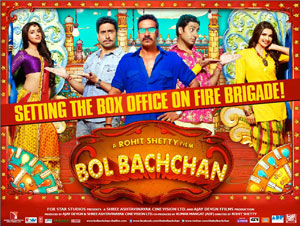
  • Critics don’t get generous with Bol Bachchan

    Bol Bachchan

    Directed by Rohit Shetty

    Produced by Ajay Devgn, Dhillin Mehta

    Screenplay by-Yunus Sajawal

    Starring-Ajay Devgn, Abhishek Bachchan, Asin Thottumkal, Prachi Desai, Krushna Abhishek


    Nobody in their right mind, except, of course those involved in the making and trade media could have anything good to say about Bol Bachchan.  It is loud, crude, garish and braindead. Rohit Shetty obviously wants box-office success, which such films seem to achieve, even if a majority of the audiences don’t actually like them, but with source material as rich as Hrishikesh Mukherjee’s Golmaal, there is no excuse for a film like Bol Bachchan. Except for The Times of India’s standard 3.5 stars, no critic could go over 2.5 stars, if they were feeling generous.


    It actually got 0.25 stars from Yahoo’s acerbic Kunal Guha. “Just after a cameo jig in the title song, Big B offers a disclaimer: he isn’t a part of this film, even though his name is. And that is hint enough for the wise. But for those who don’t know, Bol Bachchan (BB) jams chopsticks up the nose of Hrishikesh Mukherjee’s comic classic Golmaal and digs itself six feet under with it. While the story is same in theory, being a Rohit Shetty film only adds some cars nailing somersaults, trucks attempting a ballet, baddies playing mid-air Garba after being biffed and Ajay Devgn drawing his eyebrows close enough to show that he means business.”


    Sudhish Kamath of The Hindu savaged it too. “Sitting through Bol Bachchan is like sitting through multiple car wrecks. No, seriously. There is enough car-on-car action all through this unwarranted Rohit Shetty remake of Golmaal.   Well, it’s made by stuntmen, you see. Something they don’t want you to miss….There’s enough bad English in this film under the pretext of humour to make even Rowdy Rathore go: Don’t angry me. If you liked Hrishikesh Mukherjee’s Golmaal, which you sure did, you would want to protest this assault on one of the effortlessly funny films of all time.”


    Anupama Chopra of Hindustan Times gave it two stars and wrote, “Bol Bachchan, like most of Shetty’s earlier films, including the Golmaal series and All the Best: Fun Begins, isn’t so much a film as a series of gags strung together with songs and the requisite car-bashing action. There is no attempt at plotting, storytelling, delineating a character, building coherence or following logic. Shetty’s only agenda is to give you a good time.”


    Rajeev Masand of IBN went with 2 stars as well and commented, “‘Bol Bachchan directed by Rohit Shetty, revels gleefully in its silliness. This is a film whose pedestrian humor requires neither taste nor common sense to appreciate, and anyone seeking wit, a clever screenplay, or inspired performances might want to revisit Hrishikesh Mukherjee’s Golmaal, which Shetty plunders in the name of inspiration for this lazy film.”


    Karan Anshuman of Mumbai Mirror also gave it 2 stars and wrote, “The main problem with Bol Bachchan is that it unfolds like a play. There are literally a couple of sets where an overwhelming part of the action (and songs and dialogue exchanges) takes place. If you’ve experienced mainstream Hindi or Gujarati comedy theater (loud and forced comic situations devoid of experiment) you know precisely what to expect in BB. Even the genuinely funny bits are lost in a deluge of recycled jokes, preposterous situations, over the top ‘drama’ (you only know it’s drama because the background score suddenly spikes up to deafening levels), and – of course, how could a have a comic hit film without – offensive gay jokes.”


    Sukanya Varma of rediff.com raised it to 2.5 and ranted, “Shetty picks up all the major plot points of the original only to alter it with his boisterous, cheesy, slapstick and visually flashy sensibilities, known to work hugely in his favour given the success of the propitiously titled Golmaal franchise. Unlike the Utpal Dutt-Amol Palekar starrer, however, Bol Bachchan isn’t an out-and-out comedy throwing in large-scale action and irksome melodrama.”


    Shubhra Gupta of The Indian Express must have been in a good mood since she gives it 2.5 stars too and writes, “This is a Rohit Shetty film. Which means it is full of primary colours. I counted a red-blue-green-yellow palette more than a couple of times, all in the same frame. It is full of cars and jeeps hurtling down roads and crashing and smashing. It is full of Ajay Devgn, which is a given because Shetty and Devgn are long-time collaborators; plus, the star is the producer of the film. But this time around, there’s a slight difference. It’s also got Abhishek Bachchan, and that makes ‘Bol Bachchan’ not as much a Rohit Shetty film as his previous ones, which is not such a bad thing : I laughed more in this one than I have in his previous loud comedies.”


    Which brings one to Times of India’s Srijana Mitra Das of the 3.5 stars. “BB’s a dialogue-lover’s delight – lines like ‘fish and chips without water’, Devgn conveying the situation of a ‘jal bin machli’ – sparkle across the plot and you can feel the love as the actors reprise bits and bobs of vintage Bollywood. On the downside, it exceeds by about 30 minutes and has that odd, uneven heart-chart quality accompanying the film. But that aside, BB showcases Shetty as the maharaja of madness, Devgn clearly his crown prince. And Abhishek? His judwa bhai, of course. Tip-Off: Don’t strain your brain applying reason to this laugh-riot – but do buy more popcorn for that extra half-hour.”


  • MIB amends law, asks cable trade to furnish correct DAS info or face cancellation/ suspension

    From the MxM Infodesk


    Although the news was flashed by the wires last week, it got official only on Saturday. The Ministry of Information and Broadcasting has decided to amend the Cable Television Network Rule, 1995 (Cable Rules) making it obligatory for every Multi-system Operator (MSO) and Local Cable Operator (LCO) to provide correct and timely information to the Ministry as and when it is sought for.


    The background: The I&B ministry has been closely monitoring the preparedness of various activities for the implementation of Distributed Antenna System (DAS). The success of DAS depends on timely seeding of STBs at the consumer premises. As such, availability and deployment of set-top boxes (STBs) by MSOs / LCOs are paramount important for the implementation of DAS. Timely availability of accurate data with regard to the seeding of STBs by service providers (MSOs/LCOs) is also critical for the Ministry to ensure digital switch over within the timeframe as well as for taking mid-course corrections if necessary. While assessing the preparedness of DAS in four metros, the Ministry has come across numerous inconsistencies of data provided by the service providers, particularly MSOs, in regard to inventory position of STB and its deployment.


    In the Cable Television Network Rule, 1995(Second Amendment) Rule, 2012, a new rule, namely, rule 10A – Obligation to furnish information – has been inserted making it mandatory for MSOs and cable operators to provide information as and when it is sought for by the Central government or state government or authorized officer or any agency of the Central government. The obligation to furnish information under the amended rule 10 A has been incorporated as one of the terms and conditions of registration of cable operator under Rule 5 A and MSOs under rule 11 D.


    As per sub-section (7) of section 4 of the Cable Television Networks (Regulation) Act, 1995, the Central government may suspend or revoke the registration of cable operators or MSOs if they violate one or more of the terms and conditions of registration. Incorporation of rule 10 A as one of the terms and conditions of registration of cable operators and MSOs will empower the Central government to cancel or suspend the registration of cable operators or MSO if the information sought for by it is not provided by them. This, MIB hopes, will ensure correct and timely submission of information by cable operators and MSOs.


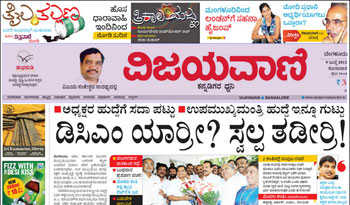
  • Vijayavani launches 9th edition in 3 months

    From the MxM Infodesk


    Vijayavani launched its ninth edition in Karnataka from Gulbarga on June 30. The Kannada daily started with only three editions when it launched on April 1 this year. It now has editions from Bengaluru, Mangalore, Hubli, Bijapur,Mysore, Gangavathi, Chithradurga, Shimoga and Gulbarga.


    Vijayavani was launched by Anand Sankeshwar, a leading businessman in the logistics space and a former newspaper baron. Mr Sankeshwar’s logistics company, VRL Logistics Ltd, has a fleet of commercial vehicles in the private sector. The company operates from 1,000 branches and franchisees across the country.


    In the last 3 months, Vijayavani is said to have averaged more than am innovation every week. An average main issue of 16 pages comprises four pages on local/ hyperlocal issues, two pages each on national, state and sports, one calendar page on entertainment/events, one page on serials/stories and  one page on commerce/business.


    In addition, Vijayavani carries  four page-supplements on various subjects – Vittavani (Commerce), Lalitha (Women), Masth (Youth), Samskruti (Culture), Cinivani (Cinema), Putani (Children), and VijayaVihara (Sundays). The paper is the only daily in Karnataka with all colour pages across all its editions.


  • Why CEOs find social media a double-edged sword

    By Nikhil Menon


    Recently, the CEO of Southwest Airlines in theUShit on a novel idea to get customer feedback directly from the source. He put up a question on LinkedIn asking: ‘How can an airline make you, the flier, more productive?’ He got 137 answers from people; many of them detailed essays on what his airline could do to improve its customer experience.


    “That kind of real, authentic feedback is very hard to get when you’re the CEO,” said Hari Krishnan, CEO of LinkedInIndia, as he recounts this story. And there, in a nutshell, you have perhaps the single most important thing about social networks – they are a great leveller. They also blur the line between what was considered one’s professional and personal space.


    From Donald Trump’s tirades against Barack Obama to Michael Dell’s constant praise for Dell’s employees worldwide and Vijay Mallya’s defensive tweets hitting back at critics of his ailing airline, CEOs are stepping up to make themselves heard. And while these are early days inIndia, promoter-CEOs and heads of business families like Anand Mahindra, Mallya and Naveen Jindal are early movers. The list of appointed CEOs on social media like HCL boss Vineet Nayar and RBS India head Meera Sanyal, however, is still rather small.


    Prakash Iyer, CEO of Kimberly-Clark Lever, admits that Indian executives are one step behind foreign CEOs in cashing in on the social media phenomenon: “Whenever something new comes along, we tend to see the negatives more than the good things. But CEOs, no matter what generation or industry they’re from, have to realise that social media is here to stay. And if they’re not using it, they are missing something.”


    If that’s true for heads of private companies, it’s truer for senior bureaucrats inIndia, who are known more for shunning the spotlight than soliciting it. Considering that, Amitabh Kant is a maverick. The 55-year old CEO of the DMIC (Delhi Mumbai Infrastructure Corridor) has an active Facebook account with 1,500-odd friends, a Twitter account he occasionally updates and even a personal blog, amitabhkant.in. Mr Kant reads and writes extensively on his pet interests – travel, urbanisation, photography, technology and cuisine – and also likes connecting with people who share those interests: “Social media has been a powerful and enlightening influence on my work. I read and discuss articles on infrastructure and urbanisation around the world.”


    What’s more, he thinks that others of his ilk should follow suit. “What’s the point of resisting social media? It’s a highly transparent world,” he said, relaxing at hisDelhihome after his mandatory Sunday morning golf session. “And civil servants need to understand that, especially in the RTI (right to information) age. In fact, I feel that the government should ask every bureaucrat above the rank of joint secretary to compulsorily be on social mediums to become more accessible to the people.”


    As long as we’re in the realm of wishful thinking, Jessie Paul has a gem of her own. As the battle to decideIndia’s next president rages on, the managing director of Paul Writer jokingly urges people to consider her for the position. When asked about her ambition to occupy Rashtrapati Bhavan, she chuckled: “I am a woman, so I am in a political minority. Besides, I am a Tamilian, married to a Bengali, so I should be acceptable to both Jayalalithaa and Mamta di. Why not?”


    Her irrefutable logic is met with much hilarity and even endorsement by the people who follow her. But looking beyond her easy candour, what’s interesting is how the managing director of Paul Writer effortlessly wields social media across half-a-dozen platforms.


    For Ms Paul, who is a regular on content sharing and networking sites like Slideshare, Youtube, Facebook and Flickr, online networking sites are food and drink.


    The author of a book on frugal marketing and former Chief Marketing Officer (CMO) of Wipro was one of LinkedIn’s first users inIndiain the early 2000s. In fact, Mr Krishnan of LinkedInIndiasaid that Jessie Paul is a case study, in the way she created a network of CMOs in her earlier avatar to trade best practices. Ms Paul eventually quit Wipro and started Paul Writer, through which she gives companies the benefit of her experience on tackling the social media beast. “Social media is more than about making friends or killing time; there’s some serious knowledge sharing going on, and more importantly, there are huge business opportunities waiting to be explored there,” she said.


    Some may argue that given her marketing background, it should be no surprise that Paul is so comfortable with social media. And it’s also worth mentioning that Amitabh Kant hasn’t been a ‘typical’ insular bureaucrat either. It’s been easier for Paul and Kant to brand themselves because social media has always been core to their interests and professions.


    Mr Kant, a 1980 Kerala cadre IAS officer, was earlier Joint Tourism Secretary with the Ministry of Tourism. He was also part of the teams that came up with the ‘Incredible India’ and ‘God’s Own Country’ (Kerala) branding campaigns in his former avatar. Mr Kant has written a book, Branding India, and is now co-launching an online initiative to promote ‘ancient Indian cuisine’. “It’s important to have interests outside of work. And using social media doesn’t take really much time – not when you’ve got the whole world on your smartphone,” he said.


    Using social media for casual networking may be a stretch, given that many CEOs don’t even use it for work. Tanvi Bhatt, founder of Panache Studios, advises many senior managers on personal brand management, of which online reputation management is a part. She said that less than 5 per cent of the senior executives she meets have a social media account.


    “They’re not even on LinkedIn, which I find amazing. These days, clients and partners Google senior executives before meeting them face to face. And if they don’t find them online, they start having doubts about the person’s or organisation’s credibility,” she said.


    The reasons for not having an account vary. Some CEOs are conservative by nature. Others don’t understand social media – and prefer to be safe rather than sorry. And then there are those who feel ‘I don’t need to do this, I’m the CEO’. Ms Bhatt said: “A lot of them think in terms of ‘what’s in it for me?’, whereas they should be thinking ‘what can I share from my knowledge and experience with the world?”


    Rajiv Dingra’s company WATConsult was one of the early movers in the social media consulting space back in 2007. And while he’s done a lot of work with companies, getting CEOs to apply themselves to the socialscape has been frustrating. “Frankly, Anand Mahindra is the only top CEO doing a good job – he connects with interesting people on a personal level, addresses complaints and leverages customer testimonials. The rest are rather boring,” he says. But there are those, like 30-year old venture capitalist Kris Nair, who are the very opposite of boring.


    Mr Nair, who heads Opdrage Ventures and has invested $20 million in about 33 companies so far, is unapologetically himself. He speaks his mind on everything from entrepreneurship to poetry to physics, rails at ‘idiots’ with the odd four- or five-letter word thrown in for emphasis. Sitting at a posh coffee shop in Bandra, Mumbai, he pushes his iPhone across the table so I can get a look at all the social apps on it. After the first dozen or so, I lose count.


    “A lot of my deal sourcing happens through social media. So I have to speak to my target audience of entrepreneurs and members of startup communities in a language they understand. I can never be a ‘suit’ and keep saying the right things,” he said, adding the last line with obvious contempt. It hasn’t always been smooth sailing, however. Once Mr Nair wrote against the Anna Hazare-led agitation and that got him in trouble, with threats pouring in online and offline. Then there was the time one of the investors in his fund asked him to curb his freewheeling style on social media.


    “They were afraid I might leak confidential information. That didn’t make me stop, of course, but I have mellowed down for sure,” Mr Dingra conceded that at some level, he understands the concerns senior executives have. “Being on social network is like being in a press conference 24/7. People can be particularly myopic and unforgiving on the Internet. The media can take your words and twist them around. You need to have a thick skin and take the bad with the good.”


    Ms Paul added: “Unlike western consumers, some buyers inIndiaare still immature. People will target you online if the washing machine made by your company doesn’t work. You have to be pretty confident of your service, especially if you’re in a B2C model.”


    While the possibility of being targeted always looms large, Meera Sanyal, chairperson and country executive of Royal Bank of Scotland Group feels social media provides a quick and very interactive channel for customer feedback.


    “While some of this may not be complimentary- if one uses the opportunity to remedy problems swiftly, then the organisation can build really good relationships with clients,” she said, “Therefore, I do act swiftly upon complaints directed to me in my official capacity, but in general on social media, I interact as an individual, sharing personal thoughts and views.”


    Ms Sanyal stood as an independent candidate for elections fromSouth Mumbaiin

    2009. She may not have made it to Parliament as the people’s representative, but is tremendously popular among tweeple, or people on Twitter. She says she began using Twitter ‘on an experimental basis’ some years ago. While she was a little hesitant at first, with some coaching by youngsters at home and work, she’s now a total convert.


    “The 140-character ceiling forces crispness of thought and posts from across the world keep me updated on the latest news and candid views of some very interesting people,” she says. How To Draw The Line – The first and perhaps most important thing to know before creating an account is which medium works best for you. Do you want to make friends, build business contacts, be a thought leader, recruit people or just read the latest news from your industry?


    Jessie Paul offers an easy-to-remember guide. “Facebook and LinkedIn are about who you know, while Twitter, Pinterest, Slideshare and Google Plus are about what you know,” she said. If getting on to social media is the first step, the second and perhaps more important thing is to avoid making a fool of oneself. Mallikarjunadas CR, CEO of Starcom MediaVest Group, said he doesn’t know what to think when he sees his peers playing games or watching dodgy videos in the middle of the day.


    “You have to be aware that people will form opinions based on all this,” he said, quoting the example of a person from his network, a senior TV channel executive, who bad-mouths brands left and right. “As a professional, one has to be careful when criticising people, organisations or brands. You may need their business tomorrow.”


    Mr Kant doesn’t write on anything that may get him into trouble; preferring to remain with topics like his travels, macro-economic issues and the occasional book or malt that captures his imagination. And like any proud parent, he cannot resist the occasional FB pic of his daughter’s graduation fromOxford. But apart from his busy Facebook page, he is quite selective about the people he chooses to add to his networks. Mr Iyer of Kimberly Clark Lever says that it’s important to come out of the shadow of the company you represent and present your human voice.


    “Anand Mahindra isn’t out there to sell one more car. It’s about listening to others and learning from them.” Being offensive or shallow is a lesser crime compared to being boring, feels Ms Paul, who advises people to stay away from social media unless they have a content pipeline. While you may have a lot to share, it all depends on how you weave it in your conversations. The good news is top executives seem to be getting it. As social media catches on, few can resist its lure. As Paul said: “Every time I log in, it’s a party out there.”


    Source: The Economic Times

    Copyright © 2012, Bennett, Coleman & Co. Ltd. All Rights Reserved


  • Maa network goes aggro on OOH

    By A Correspondent


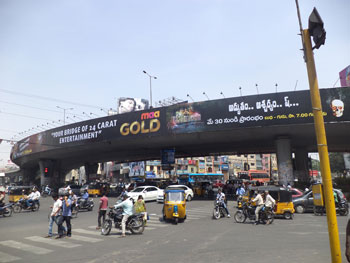
    To target all the sections of Telugu viewing population in Andhra Pradesh, Maa TV has gone out on the streets to promote their programs using the outdoor medium. The channels have been heavily promoted using flyover bridges, unipoles, centre medians and other offside promotions include train & bus branding too. The total outdoor units used are 200 Hoardings, 200+ Centre Medians across Andhra Pradesh.


    The highlight of the campaign was the selection of specific locations to place the outdoor creatives that have additional cut out of characters in heavy traffic areas.


    The channel was promoting their upcoming annual awards function, Cinema Awards 2012 heavily and also 2-month long programs that are running on Maa Gold.


    Maa Television Network has promoted all their programs in major parts of the state -Hyderabad, Vishakhapatnam,Vijayawada, Tirupathi and other few towns. It will be top among the GECs in Andhra Pradesh promoting the programs in a huge scale.


  • Crime pays for GECs

    By Meghna Sharma


    What is it about the dark side that attracts us? A glance over any newspaper or news channel will tell us the increased attention being given to the gruesome incidents.


    The media, especially the television which is a reflection of the society, has reflected this growing interest with the increasing popularity in the number of the unglamorous, and sometimes, gory crime shows. From Karamchand in the 80s on DD to the latest Gumraah on Channel V, most crime shows have done well and have been able to garner an interest that other genres might not be able to. The longest running show on the Indian television, CID, is a crime show which was started in 1998 and recently turned tri-weekly.


    Speaking about the show’s success, Sneha Rajani, senior EVP and business head, Sony Television, said: “CID has been doing well for years now; it’s not a recent phenomenon. On an average, the show gets TVR of 3.3-3.5, and sometimes even goes up to 4.5. So, it’s no surprise that show has its share of viewers, as week after week people switch on their TV sets to get inspired by the bravery and the relentless passion of CID against crime.”


    Popular Crime Shows

    Karamchand – 1980 – DD

    CID – 1998 – Sony

    India’s Most Wanted – 1999 – Zee

    Aadalat – 2010 – Sony

    Gumrah – 2012 – Channel V


    According to industry experts, most GEC experiments with crime shows have been successful – some have garnered a little interest and others have gone on to become national hits like Adaalat and India’s Most Wanted.


    Such crime shows consist of an economically viable format – no huge sets, no major actors, no glamorous outfits or expensive judges are required – hence, the channels don’t mind investing in them.


    Janardhan Pandey

    Janardhan Pandey, associate vice president, DDB Mudra Max feels that apart from reality shows, only crime shows have the ability to create sensationalism and that’s the main reason people are attracted towards the format. “People want to know what’s happening around them. And these shows are able to portray facts through dramatization, without costing too much for the channel.”


    ‘Curiosity killed the cat’ is the apt reason why crime shows work on television according to Anand Chakravarthy, executive vice president, Marketing, RBNL and business head, Big Magic. “Crime, as a genre, has an extremely wide appeal, irrespective of the country. In a developing nation likeIndiawhere crime and corruption are a part of the societal fabric, the audience is most likely to appreciate televised content in the genre.”


    Anand Chakravarthy

    He added: “The fascination with the morbid and intrigue that the genre provides work across a cross section of audience, regardless of age and gender, making it acceptable to a larger and diverse audience base.”


    However, the question which still arises is – aren’t such shows the figment of the writers’ imagination? The writers of such shows may choose to disagree about the authenticity. “Though some might say they are a writer’s figment of imagination, but in reality, newspaper reports, sometimes even FIRs and investigations done by channels help us gather facts and details about various cases,” said a writer with a national GEC.


    According to Priti Murthy, national director – Insights, Maxus, crime shows attract not only the middle-aged, but a large number of youth too. “Crime cuts across genres and finds a large number of youngsters hooked on to the genre like action, thriller, and crime. One could say it gives them adrenaline rush.”


    Prem Kamath

    Channel V recently launched a teen crime show, Gumraah, which has became popular for its disruptive format and unique viewpoint of understanding the psyche of young criminals. “V’s Gumrah, in its second season now, details the ecosystem in which a teen crime is conceived and the extraordinary circumstances that lead to it. The show has had an immense impact on us, in terms of viewership as well as vindicating our research and understanding of the youth. We have seen a tremendous response in terms of feedback and appreciation on social media and other consumer responses. It has also further encouraged us to try bolder formats and continue on our chosen content strategy,” said Prem Kamath, Executive VP and GM, Channel V.


    Most crime shows do attract a large number of eyeballs, but most GECs also claim that it’s not about entertainment alone; they are helping the society as well. “As for adults, and specifically parents, this show is an eye-opener: if one neglects their child’s need for attention or dismiss it as juvenile behaviour, it can have serious repercussions and lead to moment of madness, eternally irreversible,” added Mr Kamath.


    “Shows such as Police Files (aired on Big Magic), while showcasing crimes from the region, also attempt to educate and empower the viewer. The depiction of the crimes help the viewers to understand and accept the need to be vigilant in safeguarding themselves and their loved ones. The information imparted by way of applicable laws of the Indian Penal Code, safety tips by experts and NGOs help empower the viewer,” said Mr Chakravarthy.


    So, if one has to go by what industry experts have to say: it’s entertainment with awareness that makes one switch on their television sets to watch crime shows.  Whatever be the reason, the channels can surely say that ‘crime pays’!


  • AdStrat: Monster.com ‘Find Better’

    Soumitra Karnik, NCD, Dentsu India Group

     

    1. Name of the Campaign: Monster.com ‘Find Better’


    2. Research insights:

    Finding a better career/job is serious business, it’s no laughing matter. And yet, there is a danger of the brand and the business becoming too serious, too “manufacturer” oriented. According to a survey conducted by Monster India, 80 per cent of Indians believe that getting a new job is not just dependent on your capabilities and experience; ‘Luck’ plays an important role. 69 per cent people in India, believe that ‘Luck’ plays an important role in job search as well.


    [youtube width=”400″ height=”225″]http://www.youtube.com/watch?v=UakFavcFagw[/youtube]

    3. The Brief:

    With social media and professional networking playing a pivotal role in all spheres of our lives, there has been a shift in the way both jobseekers and employers are consuming services. This new media opportunity led the path for Monster to innovate in the e-recruitment space. Monster is the worldwide leader in successfully connecting people to job opportunities. From the web to mobile to social, they help companies find people through their most advanced technology. The innovative products and services help connect jobseekers and employers better than anyone else across the world. Now is the right time to transient into the next level.


    Monster India has introduced the new user interface. The company launched Monster College to facilitate campus hiring; Monster JobsActive, in partnership with DishTV, to help people with no internet access apply for jobs through Monster India. The company also launched The Monster Employment Index (MEI) which is a monthly gauge of online job posting activity in India based on a real-time review of tens of thousands of employer job opportunities culled from a large representative selection of career Web sites and online job listings


    4. The thought process behind the creative:

    Job-searching is subject to many vagaries – The pool of candidates in the fray, their relative ranking in the pool, having/not having any “contacts” in the field, the possible hiccups with the search and results of the job site, the timing of the opening, physical location of the opportunity, idiosyncrasies of the hiring manger, cultural fit, compensation criteria, not to mention an inevitable X factor.


    That X factor? It’s a little something called luck. And inIndia, as in most parts of the world, luck plays a huge role in almost every sphere of our lives. Or at least, people like to believe that. From the use of innumerable lucky charms to invoking many symbols of auspiciousness from human and other-worldly sources (caution against signs of good-luck such as sneezing, breaking glass, walking under a ladder, having a black cat cross your path), luck is wooed relentlessly.


    5. Media vehicles chosen: Owned, Paid, Earned


    6. Key issues kept in mind while executing the ad:

    The trick for a brand in this category is to find the right balance between creating clutter-breaking brand communications without dissing the serious nature of the task at hand.


    7. Does the treatment do justice to the brief?

    The TVC is about candidates who try to carry every possible symbol of luck with them to enhance their chances of getting a better job. The TVC exaggerates the acts of superstition in a humorous manner to show the extent that people go to, to get luck on their side. It then drives home the point that with Monster.com, you get luck on your side.


    Striking a balance between levity and gravity, it is a culturally relevant interpretation of the “Find Better”. It leverages the core strengths of monsterindia.com and its presence on web, mobile as well as social , beyond just a superior search algorithm, and demonstrates powerfully each of monsters ‘features’, showcasing how you can get luck on your side and find better.


    8. What according to you is the differentiating factor about the ad?

    The highlight of the film is when the mother emerges from the bag in this show of one-upmanship. It’s most unexpected and at the same time humorous; you can almost hear a gasp followed by a chuckle from the viewer.


    9. Market/client feedback: Not available yet


    AdStrat, compiled by Shubhangi Mehta appears every Monday.


  • We’ll continue focus on customer delight, says Myntra’s Bansal

    E-tailing in India has seen some brisk business being conducted by a few players in the recent past. While some may brand the space as crowded, there are a few players who have created a niche and are gaining handsome dividends too. Like Myntra.com, that has been consistently doubling its revenues every 5-6 months for the past 15 months and is currently doing over 8,000 transactions daily. According to Mukesh Bansal, Founder and CEO, Myntra.com, the opportunity to offer the widest catalogue across national and international brands, 24/7 shopping, 30 day returns and Cash on Delivery are some of the features unique to online shopping and have helped grow the market.


    In an interaction with MxMIndia, Mr Bansal talks about the growth story of Myntra in a crowded marketplace, on the USP that sets it apart from its peers and what are its plans to derive next phase of growth in India. Excerpts:


    What according to you are the factors that are driving the growth of the e-commerce marketplace in India?

    Some factors that are enabling the growth of the e-commerce in India:


    > Internet penetration:India, currently at 120 million users, is one of the fastest growing internet markets in the world and is expected to touch 300 million by 2015. This has led to opportunities for a vast number of businesses to mushroom online. E-commerce is the largest and the fastest growing segments online.

    > Success of online travel sites & ticket bookings: This has led to increased confidence among consumers to venture into online shopping.

    > Convenience: Widest catalogue across the best national and international brands, 24/7 shopping, 30 day returns and Cash on Delivery are some of the features unique to online shopping and have helped grow the market.

    > Investment from VCs and private players: Investors are looking at e-commerce as a long term investment portfolio as the space has shown tremendous potential to become a multi-billion dollar business.


    How would you analyse Myntra’s growth story in India over 2011-12?

    Myntra has been consistently doubling its revenues every 5-6 months for the past 15 months and is currently doing over 8,000 transactions daily. Our daily traffic has grown to over 4,00,000 visits and our network has grown to cover 1,200 towns and cities across the country. With over 350 of the best national and international brands, Myntra is, today, the largest online retailer in the fashion and lifestyle segment.


    We are also one of the well-funded companies in the space and at the current growth rate, we are confident of achieving our target of Rs500 crore by the end of this financial year.


    The e-tailing space is flooded with players offering the same set of user services, what is the USP that Myntra brings to the table? 

    Back in 2010, Myntra took a bold decision to enter the full catalogue, current season segment to retail merchandise on MRP. Along with the largest catalogue of marquee brands, Myntra was able to target untapped markets across the country coupled with on-time delivery and flexible policies.


    Cash on Delivery as a payment option became an instant hit among our shoppers and today constitute about 65 per cent of our overall business.


    Could you summarize what your core TG of online shoppers looks like?

    Our typical shoppers fall in the age bracket of 20-35 years (SECAB) with about 70 per cent of our shoppers being male. About 55 per cent of our shoppers are from tier 2 & 3 cities with the rest in top 10 cities.


    What is the emphasis you lay on the distribution/delivery across India?

    One of the biggest challenges for any e-commerce player is to effectively manage its supply chain and logistics. At Myntra, we are constantly upgrading our processes to provide a hassle free shopping experience while strengthening our in-house logistic network. We are currently operational in over 12 cities across the country and plan to reach as much as 70 per cent of our customers directly via our own logistic network by the end of this year.


    What is the impetus that you are laying on the marketing/communication plans for Myntra?

    Our latest TVC hit the networks in June 2012 across major national channels. We are now entering regional markets in the south with language specific ads in Tamil, Kannada and Malayalam.


    We are also partnering with various other properties that enhance our fashion quotient.


    Do you think e-tailing is gaining ground in India at the expense of other modes of shopping?

    The overall lifestyle category in India is pegged at approximately $50 billion, growing at 16 per cent CAGR. This is one of the largest categories, not considering travel & tourism. The industry is expected to cross $100 billion in 2015 with approximately 5-8 per cent of this being online. This clearly indicates that the market is big enough for both to co-exist.


    What are the challenges in running a successful e-tailing network in India?

    The biggest challenge for any e-commerce player is to effectively manage its supply chain (inventory, logistics etc) and customer experience. Delivery team and customer support being the two main touch point for an online retailer, utmost importance needs to be given to both these aspects.


    At Myntra, we are constantly upgrading our processes to provide a hassle free shopping experience while strengthening our in-house logistic network. We are also constantly training and motivating our CC teams to imbibe the Myntra core values and pass them on to our customers.


    What are your plans for the next phase of growth in India?

    According to recent reports, online apparel will be a $2 billion market by 2015 and we see great potential to grow in this environment. Our investments in technology, brand and supply chain is already paying dividends and we will continue to focus on delighting our customers.


    We are also adding new features on our interface to aid our customers in their buying process and helping them make the right fashion choice with our fashion blog called Style Mynt.


    Social media is a very important platform for us and we are making steady progress with over 6.5 lakh fans on our Facebook page while Twitter, Google and Pinterest are gaining momentum.


  • Metro Tyres unveils new visual identity

    By A Correspondent


    Metro Tyres Limited unveiled a new logo along with a new advertisement campaign. The new identity is designed to profile Metro as a company that understands youth aspirations and reaches out to young people, India’s dominant demographic segment, with cutting-edge products.


    “Metro Tyres has evolved significantly over the years with a view to stay ahead of the dramatic changes in the Indian business sector. Today, our company is present in more than 53 countries and is the largest exporter of bicycle tyres and tubes from India,” said Rummy Chhabra, Managing Director, Metro Tyres Limited. “Our new visual identity consists of a re-designed Metro name, appearing in italics to represent motion and speed. Complementing the logo, our advertisement campaign is a story of transformation: from a child to a youth. In doing so, it reflects who we are today and the company we aim to be tomorrow.”


    Metro has an exclusive tie up in two wheeler tyres with Continental, Germany, one of the world’s largest tyre companies. The link with Continental provides Metro with distinct advantages: access to the latest technology in the field and exports to the most advanced economies of the world including USA, Canada and the European Union under Continental brand.


    With a market share of 24 per cent in India, Metro Tyres manufactures close to 30 million tyres and 30 million tubes annually in its seven state-of-the-art plants inNorth India. It is the supplier to Honda Motorcycle and Scooter India, Bajaj Auto, Piaggio, Suzuki, Hero Cycles, TI Cycles, Atlas Cycles, Avon Cycles, among others.