Blog

  • Ranjona Banerji: Kudos to TV news

    Ranjona Banerji

    By Ranjona Banerji


    Wonders of wonders, I find myself forced to praise media efforts in a few rather reprehensible cases. The first is the curious story of former athlete Pinki Pramanik. This Asian Games medal winner was accused of rape by her long-time partner. As Pramanik is female, this raised all kinds of questions and plenty of salacious interest. It is just the kind of case that the media could have gone overboard with. But instead, it has concentrated on the human rights abuses which Pramanik has been subjected to. Not only has she been put through several gender determination tests, a video clip of those tests was made public with some extraordinary scenes apparently of policemen groping her breasts. She has also been placed in a male prison, pending the rape investigation. Thanks to media scrutiny we now know that West Bengal, where Pramanik lives does not have adequate gender determination facilities. Yet she was humiliated over and over again.


    This media attention will hopefully focus on the group of people who could be called “inter-sex” with indeterminate physical sexual characteristics. They may see themselves as male or female and society has to find a way to integrate them without stripping them of their dignity. Since there are situations where we see things only in the male-female perspective (like sports for instance), some greater awareness and sensitivity is needed in dealing with this issue.


    The media is often accused of being prurient and insensitive. However, in the Pramanik case the current “permanent outrage” mood has come to its assistance. Both TV and print media have taken up this story from the human rights angle.


    **


    The second case is that of Suja Jones Mazurier, a mother of three who has accused her husband, French consular officer Pascal Mazurier of sexually abusing their four-year-old daughter. The Bangalore police have apparently treated her as an accused rather than a mother trying to protect her child. This is extraordinary behaviour by the police who usually decide that all accused are guilty – as in the Pramanik case – without the benefit of investigation and trial.


    The media has informed us that the police not only delayed filing an FIR, they also delayed taking the accused into custody, well after it was made clear that he did not have diplomatic immunity. They also asked Suja Jones the most incredible questions as well as conducted tests on the child in the most appalling conditions.


    **


    The third case is that of the 10-year-old girl being forced to drink her own urine by a hostel warden at the prestigious Patha Bhavan school in Santiniketan. This is a case with very few grey areas and the media has gone hammer and tongs at the Vishwa Bharati university authorities for trying to protect the warden at first and slapping “trespassing” charges against the girl’s parents when they tried to rescue her as well as at the police for delaying taking action.


    **


    All these cases involve human rights abuses, exposing which has usually been the domain of NGOs. But the media now appears to have stepped in as well and upped the ante. This challenges old media notions of what is a “big” story or not and shifts the focus from politics. It might be too early to herald this as a shift towards a more mature society but it does appear to be a step in that direction.


    **


    All kudos to TV news however for having the courage and naivete to challenge old journalistic traditions, as they insist on answers for what India wants to know.


  • Magazines high on engagement but efficacy is key (+Video)

    By Our Correspondents


    The best compliment that befits the domain of print is its ability to appease the readership preferences of its readers while continuing to be a favourite with the advertisers as well. This is especially true in the case of magazines that continue to demand loyalty from consumers while at the same time enabling brands to come up with campaigns that can be as intimate and personal thereby ensuring maximum bang for their buck. But despite all the hype and hopes surrounding the medium, there is also talk of magazines not being able to do enough to prep up advertisers to loosen their purse strings, a fact that is compounded by the lack of (creative) ad innovations that continue to deprive the sector of its fast growth.


    As a way to measure the acceptability of magazines amongst its readers and find out its favourability with brands, Association of Indian Magazines (AIM) engaged the services of two research agencies IMRB and Quantum to carry out an Engagement Survey in the Indian marketplace. With a sample size of 3600 and spread across 10 cities, the survey had pretty interesting facets to throw up. Facets that could help revive the glory that magazines once commanded and even emerge an absolute favourite with the advertisers.


    Tarun Rai
    [youtube width=”400″ height=”225″]http://www.youtube.com/watch?v=cZuu2VvNty4[/youtube]

    Unveiling to the gathering some of the findings from the survey, Tarun Rai, CEO of WWM and President of AIM began by bringing to light how the media marketplace in India has seen an immense transformation. Be it television that has seen the number of channels exceed 745 in the last three decades or even newspapers and magazines that keep sprouting intermittently, the medium has never seen such a head rush ever before. In effect, media has become an ‘Always On’ medium in India today. But too many options have also led to the consumer becoming more distracted and confused leading to him/her losing trust on the medium. According to Mr Rai, the question that needs to be asked is whether everyone is communicating messages or just communicating noise and better still, whether there was a need for owners to move from more messages to better connections with the consumers? Mr Rai didn’t hesitate here when he said that “magazines make better connections than any other medium.”


    Proceeding to present more findings, Mr Rai said that magazines stood out as it was able to connect with the readers at a far deeper level and that they rated higher on engagement and trust scores. Other stats include: 68 per cent readers read magazines when they’re alone while 66 per cent turn to magazines when they want to relax; 87 per cent readers do nothing else while reading a magazine compared to television that recorded 40 per cent; only 12 per cent ad avoidance was recorded for magazines – the lowest by far for any medium and most importantly, 84 per cent of the readers believed that ads are part of the magazine experience and that they are not interruptions as was previously thought.


    Adding further, Mr Rai said, “The high points are the facts that this research very conclusively prove that magazines engage the readers and audiences the best across all media. Whether it is on trust, whether it is on propensity to purchase or whether it is time spent on magazine, there is no other medium which engages as best as the magazines do.”


    Shashi Sinha
    [youtube width=”400″ height=”225″]http://www.youtube.com/watch?v=UAGJWPzAEeM[/youtube]

    To verify the several advantages that magazines had to offer and whether the power of the medium was being harnessed to its fullest, the evening proceeded to a panel discussion that included the likes of KV Sridhar, National Creative Director, Leo Burnett; Mrinmoy Mukherjee, Director – Marketing & Business Development, Raymond; Nathalie Gerschtein, General Manager, Garnier India; Shashi Sinha, CEO, Lodestar Universal and Shubhranshu Singh, Director – Marketing, India & South Asia, Visa. The session was moderated by Annurag Batra, Chairman & Editor-in-Chief, exchange4media group.


    According to Ms Gerschtein, while magazines were a key medium for FMCG companies like Garnier, it was essential for them to be relevant and contextual to the needs of brands. She went on to cite one such example which demonstrated the power of magazines in enhancing the visibility and personality of a brand. The brand was L’Oreal Paris that was celebrating 40 years and the magazine with which it partnered was Femina, that had attributes which were similar to what was required.


    Mr Sridhar was at his explosive best as he began by expressing his love for the medium of print. “I have grown up on print advertising and I can say that if you are a book lover you will never go to the movies. That’s because the written word has more power; in fact it will never go out of power.” Adding further, Sridhar said that all mediums today are efficiency driven but it was important for them to have an emotional connect with their consumers – something that television has being doing so well. “It is important for every medium to reinvent itself because ultimately branding is about finding a purpose in people’s lives. According to a recent survey it was found that people were inspired more by brands (13 out of 20) than by celebrities, which is noteworthy. It is therefore essential for brands to build an emotional connect as it does in providing efficiency.”


    Mrinmoy Mukherjee
    [youtube width=”400″ height=”225″]http://www.youtube.com/watch?v=BCGbwMf89Wg[/youtube]

    According to Mr Singh, it is important to know that engagement is a two-way thing. Consumers are leading their lives in continuum today and mediums have to be able to accommodate to his needs faster than ever. “When I talk to a brand, I expect it to talk back to me and keep evolving. That is where the challenge lay for brands and magazine owners.”


    Said Mr Mukherjee, “There were several high points from the survey but what is important is that this survey brings out several areas which ensure that you get the information about how the consumer connects with magazines and that is overall a high point. It is also an enabler for decision making for brand owners.” Speaking on the importance of such surveys for the magazine industry, he said, “the survey is a first of its kind and it is important because it tells media planners and brand owners what they should be putting their monies on. Therefore it is like creating a currency basis which they get to decide.”


    Providing his insights on the survey, Mr Sinha said that the Engagement Survey is a very powerful idea. “There is a lot of data, but the data must be presented in the right manner to the media planner because media planners look at the numbers from IRS (Indian Readership Survey). The best thing would be to go agency by agency and present this data to media planners at the universal level, which is when this survey will be very powerful.” According to him, “Such surveys are important to open up people’s eyes and minds but, finally if you make it part of the mainstream survey like for instance a substitute for IRS or part of IRS on continuous basis, then that is where it is important otherwise it will be the way it is.”


    Advocating the future that lay ahead for the magazine industry, Mr Sinha said, “I believe that the year 2013 and 2014 will be a very big year not only because of what the magazines are doing but also what is going to happen to television. So depending on what the government decides to do both from digitization point of view and the restriction of advertising point of view, there will be an increase in cost for television. So a lot of advertisers who cannot afford television will look at alternate medium and magazines will be very viable for SEC A audiences. So I think it will become a lot more mass effective medium then.”


    When asked whether magazines have been looking to overpower other prominent media vehicles in the future, Mr Rai said, “We are not here to replace any media. All we are saying is that magazines do certain things that no other media can do. Magazines engage with consumers at a much deeper level and at a much more consistent level than any other media. A lot of people think magazines only build brands and that they don’t need to actually purchase but, our research shows that the propensity to purchase the call to action after seeing an advertisement in a magazine is highest amongst all media. So we are trying to now talk about the fact that magazines are not just good for brand building but, we also give you the best return on investment (ROI) where purchase and call to action are concerned. So we just want to start a new conversation which is beyond numbers, beyond eyeballs and talks about the quality of engagement and the quality of messaging.”


  • Debrief: Maruti: ‘Kitna deti hai?’ continues to rock

    By Anil Thakraney


    I have always been a fan of Maruti’s ‘Kitna deti hai?’ campaign. Okay, the phrase has an erotic ring to it (admittedly that’s my dirty mind at work), but its single-mindedness of purpose is admirable. And also the fact that it’s totally relevant; Indians tend to be obsessed with mileage. There’s one more reason for my liking this campaign: The commercials are always entertaining.


    Well, Maruti is back with yet another ‘Kitna deti hai?’ ad. And the timing could not have been more appropriate. With petrol prices going through the roof, this is the one question on top of every middle class car buyer’s mind. The new TVC re-creates the thirties. A firang lady called Amelia Johnson is the first woman to fly solo from England to Australia. She’s arrived for a ‘stop-over’ in Mumbai, and crowds have gathered to meet her. Amelia excitedly boasts about the various technical features of her aircraft when a desi jumps her with that most important question: Kitna deti hai?


    [youtube width=”400″ height=”225″]http://www.youtube.com/watch?v=1AyynrjP3EM[/youtube]

    Super stuff. Love this ad. The humour is solid and the treatment outstanding. (Not easy to re-create that era in an ad… ads usually have limited budgets.) And most importantly, I simply adore Amelia’s expression when that deadly question is fired at her. It’s a cross between amusement and astonishment. And it’s not an easy expression to deliver. A huge pat on the back to the film’s director just for this.


    Rating: (On a scale of 1 to 5): 4. Wonderful idea. Lovely execution.


  • ITSAnother independent agency!

    By Amit Bapna


    It’s a hotshop called ITSA. Based out of Gurgaon, the core team behind this creative outfit comprises brothers Emmanuel and Daniel Upputuru, Anirban Mozumdar and Vivek Suchanti.


    While Emmanuel and Anirban have worked together closely in their last stints at Publicis India as national creative director and national planning director respectively, Daniel was heading TAG McCann Delhi till he “got tired of advertising” and took off to study anthropology. Now he is back as chief creative officer, ITSA.


    Mr Suchanti, Chairman, Concept Group, who has invested in independent agencies like Scarecrow and Eleven Brandworks, feels “ITSA is a very different idea and it adds to the offerings from Concept.”


    Speaking exclusively, Anirban said: “ITSA Brand Innovations will create innovative products, services and communication platforms with the intent to patent some new product ideas and innovations.” The team’s inspiration comes from global independents like Ideo, Apple, Droga5 and +Castro.


    Some areas in which ITSA plans to apply for patents include automotive, insurance, youth, music and technology. Says Emmanuel: “We already have a prototype ready for the automotive sector followed by one for the financial services space.” The first launch is expected to go live by August.


    Emmanuel, who has worked in a number of agencies from Contract and Leo Burnett to Saatchi & Saatchi and Ogilvy India, is the eldest of the four Upputuru brothers of advertising. The quartet has the distinction of having worked in Ogilvy Delhi at one point in time.


    Source:The Economic Times

    Copyright © 2012, Bennett, Coleman & Co. Ltd. All Rights Reserved


  • The Anchor: 4 steps to stay away from misleading advertising

    By Alan Colaco


    1. Backed by a scientific study

    Ads should be truthful and honest. Before making any claim in an ad, there should be a scientific study in support of the claim. This scientific study should be preferably done by an independent government-approved laboratory.


    2. Support by consumer media research company

    If in an advertisement, one is relying at consumer data for an opinion, then the same claim should be supported by a related consumer media research company.


    3. Use clinical research

    When in an ad, one is resorting to technical claim, it should be backed by a clinical research study, and not consumer studies. Suppose a toothpaste brand is claiming that it cleans 99 per cent germs then don’t ask 100-200 consumers their opinion on the claim, but use a clinical research to support the claim.


    4. Disclaimer should be legible

    If there is a disclaimer that has to go along with the ad, then it should be legible and on television it should appear for at least 4 seconds. The disclaimer should also be on a clear background.


    Alan Colaco is the Secretary General of ASCI


  • And now a mobile video portal for women, Mira!

    From the MxM Infodesk


    Leading independent mobile video destination Vuclip will be launching India’s first mobile video portal, Mira!, this week. Set to be available on over 5500 different types of basic feature phones to advanced smart phones, Mira! will feature global and Indian mobile video content catering to a woman’s needs such as health, beauty, parenting, cookery, career and entertainment anywhere, anytime.


    Prof. Kiran Walia, Women Development Minister of Delhi will be chief guest and Vuclip global and India leadership will be in attendance. In India, Vuclip already has over 1.1 crore active monthly users, out of which about 15 lakh are women.


    Last month, Vuclip had announced the launch of Vuclip TV (available at http://tvshows.vuclip.com), which enable users to watch popular TV shows on their mobile phone. Initially, Vuclip TV is serving over 4000 video clips from various popular TV shows in Hindi, Telugu, English and other languages and new videos are being added regularly. Late last year, Vuclip had also launched India’s first independent mobile movie portal, Starlight Cinema (available at http://movies.vuclip.com), featuring over 9000 Bollywood and regional movie clips from over 350 popular movie titles including popular titles such as Rajneeti, Guzaarish, Once Upon a time in Mumbaai, 7 Khoon Maaf, I Hate Luv Storys, Sarkar, Family, Tees Maar Khan, Thank You, Barfee, and many more, along with clips of Hollywood movies like The Adventures of Tintin, The Awakening, Hugo and Tresspass. In its first 100 days itself, Vuclip Starlight Cinema had generated over 11 million video views from as many as 2 million movie-lovers.


    Vuclip also has a channel exclusively featuring South Indian movie clips including top-grosser blockbuster action comedy Dookudu, action film Oosaravelli, romantic action flick Dhada, romcom Mr Perfect, romantic drama Ye Maya Chesave, Panjaa, Sri Rama Rajyam; Sci-Fi 7 Aum Arivu, Poraali, Osthe and Mayakkam Enna amongst others.


  • Slow and not-yet-steady…


    By Robin Thomas


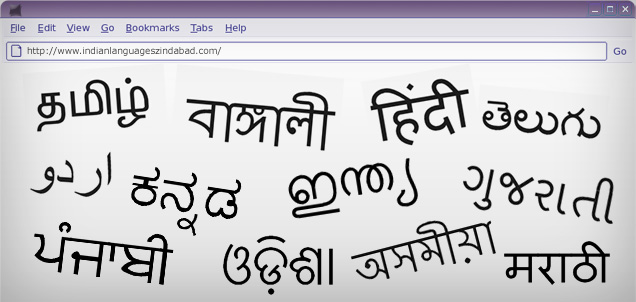
    India is a country where majority of the people don’t speak English and its media – print, television and radio, specifically – have a larger share of local language content. But the same cannot be said about the internet, at least now. The internet in India is still, by and large, dominated by the English language content. According to the ‘Internet World Stats’ 2010 report, after English, Chinese is the second widely used language on the internet followed by Spanish, Japanese, Portuguese and German. These results, perhaps, assure India that there is immense scope for Indian language content to not only flourish, but also increase user interactivity.


    Take for instance, i-Cube report 2011 by IAMAI-IMRB which states by December 2011, there were 121 million claimed Internet users. There are 90 million (70 mn in urban cities and 20 mn in rural villages) users that use Internet at least once a month (active Internet users). Of the active Internet users in urban cities, 26.3 million access Internet through their mobile phones. This has been the most recent change in the access behaviour and it is expected that this trend will continue to grow in the immediate future.

     

    BG Mahesh

    Mr BG Mahesh, Founder and MD, Oneindia.in observed: “Whatever is happening in print and TV will happen on the Internet. The language pie is far bigger than English in print and TV. English will also grow, but the language pie will be very large.”


    Even as the internet consumption rapidly grows, the Indian language content has also been evolving over the years. According to industry estimates, the search volume in Indian languages is less than 2 per cent of the total search that takes place online. The online growth of Indian language consumption is mainly said to be because of video consumptions.


    Hemant Jain

    Mr Hemant Jain, Senior Vice President, Hungama Mobile pointed out the need for relevant language content and the need for increasing access of language content to the consumers. “I believe that not only there is a need of content in local languages, but more importantly the content should have local context for it to be more relevant for the consumer. The challenge in increasing access to content in Indian language includes the standardization of fonts and internationalized domain names, an issue the Indian government is already working on. The two biggest challenges I foresee are bandwidth infrastructure to deliver ease of access and local language to drive mass adoption.”


    With online video touted as the next big thing for content consumption in Indian languages, there has been an increase in the Indian language video content found online, which may be due to the fact that video has more takers than written content.


    Some steps are said to be taken to increase local language content for instance, Raftaar, a Hindi language search engine developed by Delhi-based research firm Indicus Analytics, debuted earlier this year. Local language newspapers have gone online: webduniya.com offers content in Hindi, Tamil, Telugu and Malayalam. Malayala Manorama is another local language paper offering news online in Malayalam language.


    “There was a time when we saw 85 per cent of our traffic was from NRIs. Post 2007, we saw the page views increasing from India, now we get over 60 per cent of our traffic from India. The broadband penetration, mainly due to BSNL, has helped the growth of internet in non-urban India. Also, most schools have internet in their curriculum. So children lead the usage of internet at homes and other members have felt they might as well use the internet” added Mr Mahesh of Oneindia.


    As far as search in Indian languages is concerned, there have been efforts to localize the content. Google, for instance, in search has ‘transliteration’ which allows users to type Indian languages using Latin text. Google also has search options in the Indian languages and is said to be working proactively with the government as well as content companies in India to come out with a solution that would increase Indian language consumption on larger scale.


    Lalitesh Katragadda

    Mr Lalitesh Katragadda, Head of Products, India-Google, pointed out the need to solve the language consumption problem in order to increase the number of internet users. “We are going to rapidly run out of users if we don’t solve the language problem, which is making the internet work for Indic users. The challenge is that the Internet for the next 3 billion users will not be built by websites alone, or by monetary interests, which has driven the Internet for the first billion and a half. The Internet for the next 3 billion users will, by force, have to be built by the users themselves. For example, AdSense allowed a way for people to monetize their content, which got the content ecosystem to flourish and so on.”


    Mr Arpan Chatterjee, experienced online media professional and consultant with webdunia.com stated: “Lotof work is happening on this front, with Indian language search engines and Google having Search in major Indian languages. Major social networking sites are also now getting into Indian languages. But the availability of quality Indian language online content is still limited, except for some news portal of large Hindi or regional newspapers.”


    Arpan Chatterjee

    Also monetization of language content is a challenge today as there is not enough language content, and as a result, there is little or no language consumption online. There is a need to drive up language content in the online space. According to Mr Mahesh, not only is the government support crucial for this development, but the publishers too must take steps to help increase language consumption. “One needs a lot of patience and sustaining power to do well in the Indian language space. There are many opportunities in this space – ecommerce will be a reality in the language space in the coming years. With mobile internet becoming big one can think of providing various language services for the massive mobile user base in India,” he added.


    Nevertheless the growth of consumption of Indian language content may take some time as the broadband penetration in India is still very low. Another avenue, as pointed out by Mr Mahesh is, to look at is the mobile, as it is believed that the next phase of the internet explosion will come from mobile. Mobile, which is one of the highest penetrated devices in the country today, is expected to not only expand the internet usage, but also bring in more user participation which may result in the development of more Indian language content.


    Mr Chatterjee is of the view: “With more than 70 per cent penetration in mobile phone connections in India , and internet on mobile touching close to 100 million users, with more than 40 per cent being only mobile web users – only accessing the web through mobile. Mobile is the medium which can drive Indian language usage to a new level. Even in countries like Bangladesh, mobile payment solutions have helped get into interiors of the country.”


    With multiple devices now opening up opportunities – smart phones, tablets, and so on which are likely to spur language consumption online and mobile, government support is again is equally crucial, believe industry players. Access to mobile internet must be made at affordable rates especially with the arrival of 3G. “Mobile internet browsing is pathetically slow in India. 3G has arrived, but it is not affordable for majority of the users. Affordable, fast mobile internet plans and font support will change the mobile internet scene in India” said Mr Jain.


    Although the Indian language content in the online space has evolved over the years, it is said to be witnessing a slow adoption of its content especially from publishers mainly because of monetizing challenges. Digital players believe that like print, television and radio, Indian language consumption in the online space will also grow faster and soon have bigger share than the English language. One of the main reasons for this to happen is estimated to be because of the expansion of literacy rates and the increasing broadband and mobile penetration. ” India, with a much larger youth population, needs to put more focus on language online content and use mass channels like education portals, government services websites into multi lingual formats to drive language usage,” concluded Mr Chatterjee.


     

  • Mobile handset revenues drop 5% to Rs 31k cr

    By A Correspondent


    The Indian mobile handset market saw a drop of 5 per cent in revenues in FY 2011-12. The revenues dropped to Rs31,215 crore from Rs33,031 crore a year back. The annual survey of the Indian telecom industry by CyberMedia Group’s flagship journal for the telecom industry – Voice&Data attributes this drop to de-growth in the feature phones sales as well as lower average selling values (ASVs).


    The 17th annual study ‘V&D 100’ surveyed over 30 mobile handset firms – both multi-national and Indian – selling feature phones, multimedia phones, enterprise phones and smartphones in India.


    The disappearing act by the home-grown handset makers was a big surprise of the year. Barring Karbonn and Lava, none of the Indian handset players could face intense competition. Their main stay – feature phones – saw a negative growth while the entry level smartphones of various companies saw a marginal rise.


    “Indian mobile phone brands that had hoped to make a mark by sourcing Chinese handsets and selling them only on the price plank were in for a big surprise. These players will have to quickly rethink their product, marketing and service strategy afresh to put their house in order,” said Ibrahim Ahmad, Group Editor, Voice&Data.


    Top 10IndiaMobileHandset Vendors: Voice&Data 100 survey 2012
    Revenue in Rs Crore
    Rank 2011-12 2010-11 Change Mkt Share in %
    1 Nokia 11925 12929 -8 38.2
    2 Samsung 7891 5720 38 25.3
    3 Micromax 1978.0 2289 -14 6.3
    4 Blackberry 1460.0 1950 -25 4.7
    5 Karbonn 1327.0 1004 32 4.3
    6 HTC 923.0 450 105 3.0
    7 Spice 790.0 920 -14 2.5
    8 LG 780.0 1834 -57 2.5
    9 Huawei 750.0 626 20 2.4
    10 G’Five 670.0 1326 -49 2.1
    Total 31,215.0 33,031.0 -5 100.0
    Source: Cybermedia’s Voice&Data Annual survey of the industry 2012


    Nokia remained the number 1 player in the handset business in FY 2011-12 with revenue of Rs11,925 crore, despite a 8 per cent  drop. The Finnish company lost market share in smartphones and multi-media segment to Samsung, HTC and Apple, among others.


    Nokia felt its absence in the Android ecosystem dent its performance, it made a head way in the dual SIM phones category but lost out in the smartphone market and ended the year with a market share of 38.2 per cent.


    The Korean giant Samsung, grew its revenues 38 per cent to Rs7,891 crore at the second spot with a market share of 25.3 per cent. Voice&Data analysts attribute Samsung’s success to its rich product portfolio based on Windows, Android and Bada operating systems. Samsung’s Galaxy Note, a hybrid between smartphone and tablet was a trail blazer selling 40,000 units each month since launch in late 2011.


    “As consumers look for applications beyond voice and SMS, the market will see fight for high-end feature phones and smart phones intensify further. Consumers can also look forward to steeper price drops and more features in the same price,” said Mr Ahmad.


    Homegrown handset company Micromax with revenues of Rs1,978 crore ranked third among Voice&Data100 Top10 mobile handset brands, recording a 13 per cent negative growth and a market share of 6.3 per cent.


    The only other Indian player to post revenues of over Rs1,000 crore was Karbonn. The company grew its revenues 32 per cent to emerge as the No 5 player with a market share of 4.3 per cent.


    Among the global companies in the V&D100 Top 10 players, BlackBerry maker Research In Motion dropped the most- 25 per cent – to post revenues of Rs1,460 crore. At No 4, Blackberry had a market share of 4.7 per cent on the back of entry level smart phones last year.


    Taiwanese handset maker HTC saw maximum growth among all the brands surveyed by Voice&Data. HTC’s revenue more than doubled to Rs923 crore to inch a 3 per cent market share.


    The other key players in the Top 10 list include Spice Telecom (Rs790 crore), LG (Rs780 crore), Huawei (Rs760 crore) and G’Five (Rs670 crore),


  • Kapil Tammal promoted as Scarecrow ECD

    By Shubhangi Mehta


    Kapil Tammal

    Kapil Tammal joined Scarecrow Communications, Mumbai as creative director almost two years back and has now been promoted to Executive Creative Director. He moved in from McCann Erickson, Mumbai where he was a creative director. At Scarecrow Communications, Mr Tammal reports into the agency’s co-founders (cum directors) Raghu Bhat and Manish Bhatt and will continue reporting into them.


    On Mr Tammal’s elevation, Manish Bhatt, founder, Scarecrow, said: “Kapil has completed almost two years at Scarecrow. We are now looking at building a strong team headed by Kapil. As a worker Kapil brings in a lot to the table in terms of hard work, quality and he has a wonderful sense of design and idea. We knew hiring him was a great decision, but with his performance he has not left any doubt anywhere. At Scarecrow, we believe in growth of deserving workers and we decided to promote Kapil and credit him for his immense hard work.”


    Manish Bhatt

    Kapil Tammal, now ECD, Scarecrow, said: “It’s been a fantastic year. I’m happy and hoping to build a very strong team and put forth as much as I can in terms of great work.”


    Mr Tammal studied at the Sir JJ Institute of Applied Art and some of the brands he has worked with in the advertising industry, include Vaseline, Pears, Liril, Maybelline, Hanes, Wonderbra, The Economic Times, Onida, Siemens, Britannia, Nerolac, NDTV, Cathay Pacific, BIG Cinemas, EsselWorld Theme Park, NEO Cricket/Sports, Indian Oil Corporation, SBI, UTI, HDFC, Tata Indicom, Eureka Forbes amongst others


  • IdeaBox Works sets up in Bengaluru

    By A Correspondent


    IdeaBox Works, a boutique agency has been launched inBangalorewhich promises to provide clients with creative audio visual solutions for their advertising and communication needs.


    The company is the brain child of Smitha D’ Souza, Sowjanya Kashyap, Shanawas KA and Karun Venugopal. While Ms D’Souza and Ms Kashyap have rich experience of almost a decade in radio and television programming and content creation, Mr Shanawas has a 10 years of strong experience in Media and Mr Venugopal has extensive media strategy, planning and buying experience having worked with leading advertising agencies in the country for almost 30 years.


    The company aims to break away from run of the mill radio productions, to offer clients a distinct sound for their brand. “Radio ad breaks are a tune out only because each spot sounds like the one before it or the one after. Brands spends heavily on buying media and a bad creative can only ensure all their media spends have just gone down by the drain. Obviously client complains of an ineffective campaign,” they say.


    The company aims to put its collective television experience to good use by developing cost effective and quality TV commercials and corporate videos for their clients. “We have brought in fresh thinking to the concepts we develop for our clients. Having interacted with clients and audiences in various capacities of our professional lives, we have come to understand their needs and what interests the consumers. In fact, some of the clients that we’ve worked with, are delighted with our innovations.”


  • Marketing, Cycle-ishtyle

    By Tuhina Anand


    Arjun Ranga

    Cycle Pure Agarbathies has been finding unique ways to build connect with its consumers. One thing that stands out is the company’s attempt to invest in innovative advertising, unlike its competition that focuses mainly on trade-oriented promotions. In 2011, during the World Cup, it had very successfully launched Pray forIndiacampaign to connect with the masses.


    The brand, Cycle Pure Agarbathies, belongs to the parent company NR Group, which has a turnover of Rs650 crore. From its very inception, the company has been focusing on reaching the rural masses.


    However, three years back, it intensified its initiative and started focusing on reaching villages with a population of 10,000 and more. It modified its target in 2012 to reach places which have a minimum population of 5,000 people. In its bid to reach the interior most locales of India, the company has branded vans that move across hundreds of towns and villages in India. These vans have Cycle products that are ready to be sold to the public. The company also ensures that it participates in the community fairs and exhibitions that take place in villages and towns.


    Besides this, the company has been focusing on initiatives to preserveIndia’s dying culture and traditions. The company has been focusing on cause-related marketing activities, specifically on preserving India’s culture and heritage.


    To encourage young minds to appreciate India’s rich culture and heritage, the company has initiated a heritage quiz. The quiz is framed on many themes of India heritage including monuments, epics, mythology, origin of various festivals among others. The quiz just concluded its first session in Chennai on July 7 and will be held in Kolkata on August 25 followed by Ahmedabad in September this year.


    From 2009, the company has also been organizing the ‘Cycle Sheri Garba’ – Sheri Garba is a traditional art form of Gujarat- in its attempt to resurrect the original style of garba which is now crushed under commercialization. The organizers of Sheri Garbha have appreciated Cycle’s effort in reviving the Garba with its traditional practices.


    The company also started Rhythm Ta Ta Thai Thai to showcase the young female dance talent in and Rhythm Dhaker ladai, a contest for drum beaters in West Bengal.


    In a category like incense sticks, where building brand is difficult, Cycle has been quite successful. Arjun Ranga, Managing Director, Cycle Pure Agarbathies, elaborated: “We have unique fragrances with formulations handed down from generations that help in elevating mood for sampoorna dhyaan (complete concentration). Our prime focus is to get superior raw materials and provide consistency in quality. Besides, we have been bringing innovations across the value chain.”


    He added: “From the very inception, brand building was given priority, which was a key differential compared to competition. Well known advertising agencies were roped in. Over the year’s consistent quality, distribution, promotions and advertising have built up strong brand equity, and created a strong consumer pull.”


    While building the brand Cycle, there have been few parameters that include distinctly superior quality compared to competition, value for money offerings, exclusive fragrances, commitment and ethical practice, customer focus, constant innovation and investment in brand building and significant focus on R&D.


    The company has been launching occasion related pooja kits – like a kit for Ganesh Chaturthi. Mr Ranga also pointed out few other initiatives that include the rural marketing/saturation coverage in all parts of the country, intensifying involvement in cause-related marketing and focusing on social media and digital marketing.
    The Mysore-based NR Group was founded by N Ranga Rao in 1948. Interestingly, Mr Rao decided to call his range of incense sticks Cycle as the symbol recognized across the globe. Today Cycle Pure Agarbathies is widely known incense brand.


  • Phew! Over a billion online in APAC

    By A Correspondent


    The Asia Digital Marketing Association (ADMA), in co-operation with leading digital marketing companies and research houses, has published the sixth annual Asia Pacific Digital Marketing Yearbook. Among the thousands of facts and data points, readers will learn that 46 per cent of the world’s online population – 1.016 billion people – is now in Asia Pacific, of whom 623 million access the web via mobile.


    Although this enormous and growing addressable market seems to hold boundless business potential for marketers, the reality is more complicated – and more interesting.


    The Yearbook is compiled for marketers, advertisers, and their agencies, to help them understand and maximise the digital potential of their business in the region. The 2012 Yearbook has more information than ever before on online demographics, user behaviour, online advertising, mobile, e-commerce and social media.


    “The billion people online in Asia Pacific are spread across more than 14 countries, with a wide range of languages, cultures and online habits. More than half of them (513 million) are in China, which has its own media properties and consumer dynamics. In fact, seven of the top eleven sites in the region are in China,” said David Ketchum, ADMA Chairman.


    “Across the rest of Asia Pacific there is remarkable diversity; the way people use the web and interact with content and with one another differs significantly from Australia, to Korea, to Indonesia, to India. The Yearbook helps marketers make sense of what works where in Asia’s increasingly social, local and mobile web environments,” he added.


    The one billion user number is made up of hundreds of thousands of communities of users, spread across a wide variety of devices and platforms, languages and cultures, and who use the web in a profusion of different ways.


    The data in the ADMA Yearbook send a clear message: it’s time for marketers to get local and get personal.  The implications and opportunities are far-reaching:

    • Social media continues to gain in importance, but brands have to proceed with caution. Although 60 per cent of social networkers say that social networks are a good place to learn about brands, 50 per cent also say they don’t want to be bothered by brands.
    • As in past years, people still put the most trust in recommendations from friends and family over all other media channels (with 52 per cent of users in Asia Pacific trusting friends and family completely as compared with newspaper and magazine ads at 14 per cent).
    • Social commerce is on the rise, and marketers can deploy sophisticated, personalised approaches, depending on where they are in the sales funnel, to build brand awareness and understanding, create brand preference, make sales, and do CRM.
    • Search remains vital to helping customers find your brand and for you to find your audience. With crowd-sourced curation of content, natural search rises in importance and complexity, and paid search is still effective for driving “last click” results.  Search/navigation properties in the region have 84.7 per cent reach.
    • Despite the rise of social media and user-generated content, paid, owned and earned media all continue to play important roles in achieving marketing goals.
    • Although in this fragmented environment marketers must work harder to understand and find their target customers, analytics, behavioural targeting and big data are providing more and more powerful tools for marketers to reach and engage with internet users in personalised ways.


    The Yearbook, compiled by editor Rachel Oliver from government, industry, company and research data, is the single most comprehensive source available for the Asia Pacific region.