Blog

  • The Press has lost its sheen: Kuldip Nayar


    Text and Video by Shruti Pushkarna


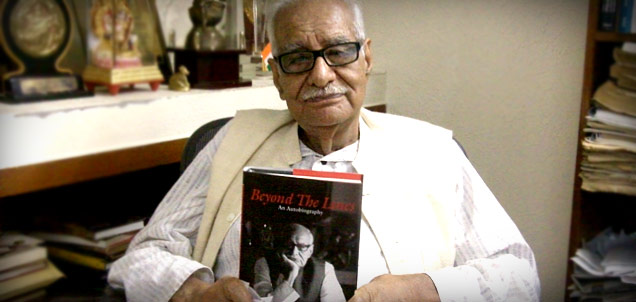
    Veteran journalist Kuldip Nayar memoirs, ‘Beyond the Lines’, are set to be released in the Capital today (July 11). He calls it a ‘political autobiography’ which recounts the political history of not just India, but Pakistan and Bangladesh as well.


    Now 89, Mr Nayar has been a close witness to a series of political events that unfolded in his journalistic career. An author and a human rights activist, Mr Nayar has also been a diplomat and Parliamentarian. He was appointed High Commissioner to Great Britain in 1990 and nominated to the Rajya Sabha in August 1997. He was media advisor to the late Prime Minister Lal Bahadur Shastri.


    He was also the former editor of the Statesman in Delhi, former Managing Editor of news agency UNI and former correspondent of the London Times. He still writes columns and op-eds for newspapers including The Daily Star, The Sunday Guardian, The News (Pakistan), Express Tribune (Pakistan), Dawn (Pakistan).


    A great believer in the power of press, Mr Nayar seems aware, and somewhere disappointed, at the emergence of the new ‘sensational’ journalism in the country. He feels that journalists today editorialize more than they report. As opposed to the ‘profession’ it used to be, Mr Nayar feels journalism today has become an ‘industry’, a ‘product’.


    In this candid one-on-one with MxMIndia, Mr Nayar shares his memories of journalism in the days gone by and the change he is witnessing today. Although he advocates self-regulation of the media, he believes that all journalists should prescribe to a strict code of ethics.


    Excerpts:


    This book is not based on columns. This is a book from my memory, 95 per cent of it is from memory, and only for about 5 per cent, I might have consulted my columns. It’s my political biography and it’s a current history of India, Pakistan and Bangladesh.You were among the first journalists to take your columns to the book form. Do you think that the book works better for a journalist?


    Have you given up on Indian media or Indian publications altogether?

    No, I have not given up entirely, because I still appear as a columnist in so many papers. Only the leading papers don’t publish my columns. I have full confidence in the press but I am disappointed that it has lost the sheen that used to be there in our times.


    Has it changed dramatically from the time when you were an active practitioner?

    Yes it has. Now it has become a product, then we were a profession, now it’s an industry. That way, independence is much less now. The influence of the owners and the corporate sector is much more than there was.


    Any other specific area where you see the change?

    Yes, the way of presenting news and the way of writing has changed. I find very few items of hard news now. In our times, we used to see what was happening in the cabinet and we even used to publish the cabinet agenda. Now it’s less inquisitive than before.


    In the Samir Jain incident you mentioned in the book, do you think the turning point in the treatment of editors by proprietors was when Girilal Jain has said to have slighted Samir Jain?

    That probably is one incident. The real watershed for journalism is the Emergency. That’s when the owners really saw that their pressmen caved in. So the owner thought that if they could cave in under pressure from government, they can also cave under my (owner’s) pressure. So the emergence of the owner started then, earlier the owner was nameless. But now we even see edits by owners and they decide who will write what.


    But there are still newspapers which are editorially driven…

    Very few.


    What’s your view of proprietors as super-editors especially in the regional, non-English media?

    That is a problem. Leading regional papers which have circulation in lakhs are owned by the same family, edited also by the same family and it’s being inherited down the generations, therefore it has become personal property. So this is a very serious issue.


    You’ve been an active votary of Indo-Pak ties, you are known to conduct candlelight marches to the Wagah border…do you think it’s correct for journalists to get ‘activist-y’?

    While I was in active journalism, I had certain views which I expressed, but did not participate in any activity. Now since I am only a columnist, I do take part in human rights violation, Indo-Pak relations and so on, because this is part of my ideology.


    You have also been quoted in the past to say that media plays a spoiler in Indo-Pak ties, that it only sensationalizes and most journalists have no sense of history…

    I think they (current media) don’t seem to have that sensitivity. I think media on both sides are still in the old age of mistrust, hatred and chauvinism. Things have changed in the region, so now we should be talking of conciliation. People on both the sides are willing to meet but media is a spoiler.


    Do you find newspapers having lost out in breaking news journalism vis-a-vis TV and the internet?

    Yes, newspapers are now breaking fewer stories, if at all they do, as compared to earlier. Television does much more. In our time, TV did not exist but now I can say that stories are broken by television network, and take the example of 2G scam, all these came from TV.  Newspapers followed up the story later.


    What’s your view on self-regulation versus government-controlled regulation of the media? You recently opposed the SC’s move to lay reporting guidelines stating that it will muzzle media. Is self-regulation the way forward?

    Yes, and why I say that is because however small regulation there may be, it will be controlled by somebody on the executive council. This question came up during Nehru’s time also, and Nehru said that he would rather have yellow press – sensational press – than controlled press. But I do want journalists to adopt a code of ethics. Editors’ Guild has formulated a code of ethics, Press Council has one, Press Commission had enunciated one. So I think we should have one code of ethics because the new type of journalism which is emerging is, at times, sensational, at times irresponsible and too much of editorializing. News is sacred, it should be conveyed as it is.


    What are your views on Paid news?

    Paid news is a recent phenomenon. This is the newspaper’s innovation and I think one of the biggest newspapers today initiated it. They are now selling space, not for advertisements, but space where the advertiser’s views will be presented as views from their correspondent. So it is really unfair to the reader who believes that news columns are sacred. You are selling the reader something motivated, some propaganda, through the credibility of your paper.


    Coming back to your book, any incident that you forgot to mention in the autobiography that you would like to share?

    Yes, there are quite a few…they were certain incidents about Mrs Gandhi’s regime which I should have included in the book. Also when I was in the Rajya Sabha, I had some exchanges with the Vajpayee government, I could have included those as well. Maybe I will do a sequel.


    Your message to a young entrant in the media…

    He or she should have commitment to certain values, commitment to the Constitution and commitment to the ethos of this country. Democracy, secularism and egalitarianism should be part of him or her while entering the profession.


    MxMIndia has partnered with Roli Books on the promotion of the book
     

  • Mogae to launch talking comics

    By A Correspondent


    Mullah Nassrudin
    Akbar-Birbal
    Vikram-Betaal
    Krishna
    Raavan

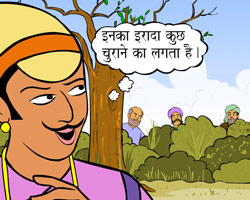
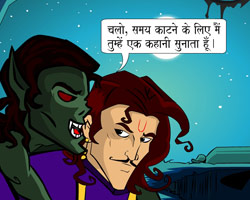
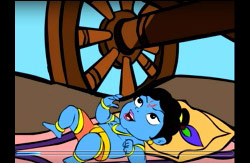
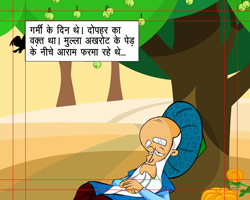
    Mogae Digital has announced that its pioneering product, Talking Comics, will go live on Tata Sky later in July. The video stories will be carried on Actve Wizkids and will be promoted on the default channel.


    “Talking Comics gives a video experience that does not take away from the pleasure of ‘reading’ a comic. Mogae has invested the last 4 years into creating original world-class IP in the comics’ space, specifically for mobile devices. Today we have over 50 titles and over 2,000 stories created entirely at Mogae Studios. But with newer opportunities opening up on DTH, we have spent over 18 months creating this new genre of Talking Comics,” said Tanya Goyal, Executive Director of the Mogae Group.


    Talking Comics were actually created to give a video experience to comics on mobile. “The file sizes are kept light. There is a nice voice-over, good music, some animation, plus all the text as in a normal comic … all of which gives a more wholesome ‘reading’ experience,” she added.


    Stories from Tenali Rama, Mullah Nassrudin, Akbar-Birbal, Bheema, Krishna, Vikram-Betaal and Krishna series will go live in the inaugural round. Yudhishtra, Duryodhan, Arjun, Karan, Bheeshma, Raavan, Guru Nanak, Sai Baba and  Gautam Buddha will be unveiled in September. Stories from the Bible and a series of Ghost Stories will be launched early next year.


    “Our illustration quality and the detail that has gone into each frame is unparalleled inIndia. We were the first to ‘create’ comics for mobile on Indian mythology, history and folklore. Earlier comic creators like Amar Chitra Katha created comics for paper. When taken on to mobile, these comics were heavy and difficult to download. In our case, each story has 12-14 frames … no more … so that the comic is easy to download, and easy to scroll. What’s more, we port each frame to 48 different sizes so that 95 per cent of all mobile devices receive the comic in exactly the screen size of the device,” explained Ms Goyal.


    The mobile versions of all comics are in UAT at most mobile operators and will go live this quarter. Mogae is in talks with other DTH operators too for the Talking Comics.


    A branded new humour series, created in partnership with a leading TV channel, is being currently worked upon as a Talking Comics product and the launch is slated for September.


    Later this year, Mogae will be launching a mobile-greetings product and over 2,000 animation based cards have been created.


    Mogae Digital is part of the Mogae Group, co-owned by Sandeep & Tanya Goyal, erstwhile JV partners of ad agency Dentsu India.


  • Ranjona Banerji: Don’t bother, Indian analysts… let Time do it

    By Ranjona Banerji


    The Indian media has taken a round beating here. Day after day, print and TV criticise the government and politicians. Columns, analysis, debates and discussions focus on the weakness, incompetence, “policy paralysis” of the current government. Does anyone care or pay attention? Of course not – unless the criticism comes in cartoon form about a person or issue long dead.


    But an article in the Asia edition of an American newsmagazine criticises the prime minister and the whole political community goes into a frenzy? Let us not be unfair to Time magazine, but the fact is that no one considers it to be a respected analyst of Indian politics. Nor indeed is the magazine the powerhouse it once was. Now if the Economist were to get so seriously critical, since it is known for its carefully considered views, then you might want to sit up and take notice.


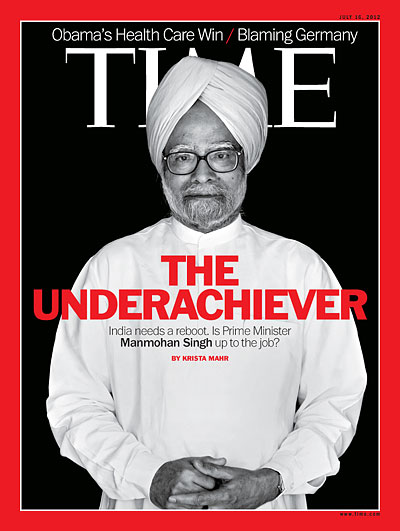
    Time’s “crime” is to call Manmohan Singh an “underachiever” and ask whether it is time for him to move over and let someone else become prime minister. This made the Congress jump to his rescue and the BJP to behave as if they’d won Uttar Pradesh.


    The Congress then looked back at an old Time article which had said Atal Behari Vajpayee was “asleep at the wheel” as prime minister. This was supposed to shut up the BJP as the same newsmagazine had also criticised them. Sigh.


    The BJP however could point out that Time’s tally is still higher since last year the magazine appeared to favour Gujarat chief minister Narendra Modi. Then the Congress can point out that Modi did not make it to Time’s poll of the greatest people in the world or whatever because of negative voting.


    And so we can go on and on about the various articles and activities of a barely read newsmagazine and the political classes can carry on doing even less than they do normally.


    As for all you analysts in the Indian media, why do you bother? Clearly, no one pays attention to all your criticisms and opinions. Congratulations are due to Time for having successfully upstaged the entire Indian media. Henry Booth Luce would be happy.


  • Kiranas dump big brands for high margin Bharti Walmart wares

    By Sagar Malviya


    A few months ago, Dhananjay Jain, a grocery owner at Vidisha Road in Bhopal, decided to stock two alien brands – Right Buy and Members Mark – because they offered much higher margins than national brands and had lower price tags. Today, these floor cleaners, tea and cornflakes brands contribute nearly 20 per cent to his monthly sales.

     

    Many of his consumers may still have no idea where these brands priced 10-30 per cent less than those of Hindustan Unilever, Dabur and PepsiCo are sourced from. Well, they come from the world’s largest retailer, Walmart.


    Mr Jain gets these brands from a Best Price Modern Wholesale outlet – run by Walmart’s joint venture with Bharti Enterprises – just two kilometres from his store.


    Walmart is not allowed to sell directly to Indian consumers yet, but its brands across some three dozen categories have started sliding into Indian homes, as its cash-and-carry venture becomes a hit among grocery shop owners.


    “The idea is that the reseller should make more profits by selling our brands than he does by selling national brands,” said Arvind Mediratta, chief operating officer of Bharti Walmart. He said the firm’s private labels adhere to all the quality norms despite their lower price tags.


    Bharti Walmart operates 17 cashand-carry format Best Price Wholesale outlets, selling products to licensed neighbourhood stores, schools, offices and large enterprises. It has more than 3 lakh members, who own grocery stores.


    The firm launched Right Buy and Members Mark after phasing out its earlier brand Great Value, which is now restricted to Bharti’s Easy Day supermarket chain.


    So far, Walmart has developed a network of 100 suppliers to make private label products ranging from groceries, home care and personal care products to apparel and stationery. And it may soon get into categories such as soaps, shampoos and detergent. “We are planning to add several more categories in coming months and open over 10 outlets by next year,” Mr Mediratta said.


    Company officials say its brands already control 20-22 per cent share in most categories at its members’ outlets. Some shop owners even say they have stopped stocking national brands. “In categories such as floor cleaners and dish washing, we have stopped stocking national brands as consumers just want the lowest priced products in these segments,” said Mohammed Fayaz, a storeowner at Guntur in Andhra Pradesh, where Walmart has opened two wholesale outlets.


    What excites kiranawallahs is the huge margin they get. For instance, a 500ml bottle of Walmart’s toilet cleaner brand sports a price tag of Rs55 but is available to a kirana owner at Rs37. That makes the retailer’s margin a whopping 48 per cent. National rivals such as Reckitt Benckiser’s Harpic and HUL’s Domex are sold at Rs58, with the grocer earning 12-15 per cent margin on an average. Bharti Walmart also provides 10-30 per cent higher margins than national brands on tea, colas and juices that allow shopkeepers earn 10-30 per cent higher margins than national brands. Consumer products companies have been increasingly fighting private labels of modern retailers.


    In fact, private labels outsell several national brands in home care and packaged food categories at the outlets of retailers such as Future Group, Reliance Retail and Aditya Birla Group.


    FMCG companies didn’t feel too threatened because modern trade accounts for just 7-10 per cent of their total sales. But now, with Walmart’s private labels finding place in consumer companies’ largest sales channel – the country’s ubiquitous neighbourhood stores – this trend could become a headache for them.


    “As Walmart and other similar players scale up their cash-and-carry operations, given the price consciousness of the Indian consumer and the fact that kirana stores are here to stay, it is likely that this trend will start to worry large consumer goods companies,” said Siddharth Bafna, partner at advisory firm Lodha & Co.


    Not everybody agrees. The chief executive of a leading consumer products firm, however, said such private labels would not challenge big brands in evolved categories such as personal care. “There are always some categories, especially commodities, that are more prone to losing out to private labels because of pricing. However, several brands in the personal care segment that keep innovating aren’t threatened by private labels even in markets where modern trade is evolved,” the person said, requesting anonymity because Walmart is one of its partners.


    Some shopkeepers say it’s not easy to make people try new brands. “We are able to convince some consumers to opt for lower priced Walmart brands. But there are still many consumers who want to buy popular brands from national companies even if the price is higher,” said Jas Karan Singh, a store owner in Amritsar, where Walmart opened its first cash-and-carry outlet four years ago. Private labels accounted for around 7 per cent of Bharti Walmart’s annual sales of Rs 1,876 crore last calendar at over Rs 130 crore.


    Worldwide, the US retail giant is performing well despite the slowdown. For the fiscal year ended January 2012, it increased net sales by 5.9 per cent to $443.9 billion and ranked first on the 2011 Fortune 500 list of the world’s largest companies by revenues.


    Source: The Economic Times

    Copyright © 2012, Bennett, Coleman & Co. Ltd. All Rights Reserved


  • PVR explores charging ads less for flops

    By Ratna Bhushan


    Multiplex operator PVR plans to link its advertising rates to ticket sales to make its cinemas more attractive to advertisers.


    PVR has approached advertisers such as Hindustan Unilever, Bharti Airtel and Hero Group with a first-time concept of charging for advertising at the start and during the interval on the basis of the number of tickets sold, a top PVR executive said.


    This does away with the practice of advertisers having to pay on the basis of projected box office collections of a movie.


    “There’s a captive audience, no remote control and least amount of spill over. Most of all, it’s completely validated because we can’t over-state ticket sales,” said PVR COO Gautam Dutta.


    The concept means advertisers can fix the reach and duration for which they pay to advertise. So, for example, if Agent Vinod flopped, advertisers would have the option of pulling out midway, and instead put their money on another flick-say, Kahaani.


    The bulk deal they would have committed to PVR gets carried forward to the next movie.


    Media-buying houses, which have been rooting for higher accountability on television ad spends, are keen on the new concept.


    “This could be a significant step towards making cinema advertising more accountable. Though small compared to television, it at least guarantees returns on investment,” said Basabdutta Chowdhury, CEO of Platinum Media, a division of media buying group Madison World, which buys media for Bharti Airtel.


    Ajit Varghese, MD, South Asia of Group M-promoted media buying firm Maxus, which buys on behalf of Hero Group, says: “Cost per audience is always a better measure in cinema advertising. It’s an ideal way of moving ahead, as long as it is implemented well.”


    The cost of in-theatre advertising works out about eight times cheaper than mass media, say media buyers. Theatre operators are allowed 18 minutes of advertising per movie screening.


    The buys can be segmented for consumers in tier II cities – at PVR Talkies, or at the high-end PVR Premiere, or at the luxury cinema Director’s Cut.


    Mr Dutta says the rates are flexible and would vary: “If Hero wants to advertise in our theatre in Baroda, rates will obviously be lower. If they want to buy screen time on theatres in Juhu in Mumbai, we will charge more.”


    PVR operates 179 screens across 24 cities. The move targets 28 m viewers in a year across PVR screens.


    Below-the-line advertising and promotions are common for most cinema and multiplex players. India’s largest carmaker Maruti, for example, had used sound technology to promote the launch of its new Zen model, while toothpaste brand Close Up had run a promotion where seats were sold only for couples.


    In 2011-12, cinema advertising contributed 13.5 per cent, or Rs61 crore, to PVR’s revenue of Rs492 crore. The company is projecting Rs85 crore in advertising revenue this fiscal. The concept could catch up among rival multiplex players as well.


    Source: The Economic Times

    Copyright © 2012, Bennett, Coleman & Co. Ltd. All Rights Reserved


  • Jaya TV stirs up rights market for Tamil films

    By Sangeetha Kandavel


    Jaya TV and a few other rivals of Tamil television leader Sun TV are making a hitherto-unseen charge toward bagging the TV rights for big-ticket Tamil movies, for long the preserve of the Kalanithi Maran-owned Sun TV. This has not only opened up the market but also pushed up rates.


    Jaya TV, the mouthpiece of the ruling AIADMK party and a distant rival to Sun TV, has virtually stirred up the market in the past few days by bagging two top titles. Last week, it acquired the rights for the upcoming Rajnikanth-starrer ‘Kochadaiyaan.’ On Monday, it bought another big-ticket  movie – the upcoming Suriya-starrer ‘Maatraan.’


    The previous Rajnikanth movie, ‘Endhiran,’ was produced by Sun TV, which had then called it the costliest Indian movie ever made. Jaya TV was never known to indulge in the buying of TV rights, something that’s a key part of Sun TV’s content strategy. But KP Sunil, vice president of Jaya TV, said that after a lull of six years the channel has started looking at Tamil movies aggressively. “We are looking are acquiring more such movies and it will be a mixture of big and small ones,” he added.


    The onslaught by Jaya TV and others comes after what has been a challenging year for Sun TV. Once she came to power last May, chief minister J Jayalalithaa floated a government-run cable service called Arasu to counter the ground distribution support that Sun TV enjoyed through another Maran-owned company. Cases were also filed against the then Sun TV COO Hansraj Saxena on charges of defrauding producers while purchasing movies for television.


    Maran and his brother, former Textiles Minister Dayanidhi Maran, have been under the lens of the Central Bureau of Investigation on allegations that Aircel’s former owner C Sivasankaran was arm-twisted to sell his company to Maxis founder T Anandakrishnan, who in turn invested in Kalanithi Maran’s Sun DTH.


    For those reasons, a challenge in the market for TV rights of movies has been expected for more than a year now. It’s only now that Jaya TV is in “full swing,” as a top official of a rival Tamil channel, wishing anonymity, put it. Executives at Sun TV and Star Vijay could not be reached for comment.


    The challenge isn’t confined to Jaya TV. Star Vijay has since last year has picked and chosen key titles it wants to buy. It has ended up with movies such as ‘Avan Ivan’ (directed by National Award winner Bala) and even ‘Nanban’ (the remake of ‘3 Idiots’), for which it is said to have paid record sums.


    Even Zee Tamil, a relatively late entrant in the Tamil entertainment market, has got onto the movie buying bandwagon. It has acquired the rights for the Simbu-starrer ‘Vettai Mannan.’ A Ficci-Deloitte report pegged the South Indian media and entertainment market in 2011 at Rs18,740 crore, 70 per cent of it coming from the Tamil and Telugu markets. TV accounted for Rs10,630 crore and films Rs2,110 crore.


    Political commentator Gnani Sankaran puts the trend down to clout. “Whichever party has political clout, they tend to bag satellite rights. When the DMK were in power, Sun Pictures was doing it,” he said. It isn’t as if Sun TV is struggling to buy anything. Being the TV network with the deepest pockets, it is still lapping up movies, being by far the biggest acquirer of movie rights. It recently got the rights for ‘Naan Ee’ as also the much-awaited Ajith-starrer ‘Billa 2.’ Sun TV has announced it will spend Rs200 crore on its movie library this year (this includes all languages in which it has a presence). This is a steep in crease from Rs80 crore last year. One reason for the significantly higher allocation, two industry executives said, could be because it anticipated competition to push up prices.


    Source: The Economic Times

    Copyright © 2012, Bennett, Coleman & Co. Ltd. All Rights Reserved


  • Bhaskar’s Brain Hunt gets 80k qualifying entries

    By A Correspondent


    Brain Hunt 2012, an initiative of Dainik Bhaskar Group, was a national level creative contest based on ‘out of the box thinking’ for young Indians. It set a benchmark with a response of 80,000 entries that qualified for the contest.


    This follows earlier initiatives like Junior Editor 2011 which was recognized for ‘Largest Writing Competition’, with 67,130 entries by Guinness World Records, Limca World Record and India Book of Records.


    To participate in Brain Hunt 2012, the contestants had to complete 16 activities featured in the workbook specifically created for kids between 6 to 16 years of age. Questions like ‘What if ‘Bapu’ was alive today?’, ‘After a series of inventions like iPhone, iPad and iTunes, what’s next and why?’, ‘What 10 things would you like to take with you on your journey to moon?’ are example of the questions the kids had to answer.
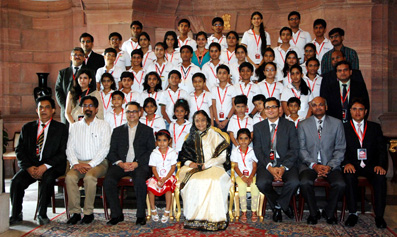
     

    The 80,000 qualifying entries included a letter written to the President which shared the kids’ ideas on ‘How can we makeIndia even a better country’. The winning letters were handed over to the President at Rashtrapati Bhavan during the award ceremony.


    Vinay Maheshwari, Vice President- Sales and Market Development, Dainik Bhaskar Group said: “The journey which started with a mere idea turned into some beautiful masterpieces of the imagination of 6 to 16-years-old kids, giving a new dimension to every challenge on which they were tested.”

     

    He added: “The reader engagements are carried out with a sole objective of engaging and involve our readers to strengthen the relationship. The group has successfully raised the bar with constant innovations and simultaneously reaching out to almost all household with its smart engagement proposition. Our upcoming smart reader engagements will now put higher emphasis on participation and contribution of both children and parents through such initiatives provided by Dainik Bhaskar to nurture their hidden talents.”


    The award function at Rashtrapati Bhavan, presided by the President of India, Hon Pratibha Patil was also attended by Dr Bharat Agrawal, Executive Director, Dainik Bhaskar Group.


  • Lowe wins Daimler commercial vehicle mandate

    By A Correspondent


    Chennai-based Daimler India Commercial Vehicles (DICV) has concluded its prolonged pitch process with the appointment of Lowe Lintas and Partners, Chennai, as its marketing communications partner.


    According to GV Krishnan, Executive Director, Lowe Lintas and Partners: “This must have been one of the most awaited pitch results of recent times. We are thrilled to have been given the mandate.”


    DICV went through two rounds of presentations before shortlisting agencies. Top 5 agencies were shortlisted and were in fray for the business.


    Mr Krishnan said: “The Indian trucking segment is in rapid evolution mode, and BharatBenz (as DICV’s trucks will be known in India) is uniquely poised to lead this revolution. As the pioneer of truck manufacturing, DICV will seek to assert its leadership through customer-oriented products and services. It feels great to be able to partner DICV from virtually their roll-out stage.”


    Joseph George, Chief Executive Officer Lowe Lintas and Partners added: “This is a significant win for our Chennai office. It will be an interesting challenge to the agency’s ability to strategize and persuasively communicate the rich, inspiring story of DICV. And with recent wins out of our Kochi and Bengaluru offices too, am particularly pleased with the way our South operations are performing.”


  • AKQA buy takes WPP to the top in digital: RECMA

    By A Correspondent


    Following the AKQA (a creative agency specializing in interactive marketing) acquisition by WPP, RECMA is pleased to announce the update of its latest USA report: the Top 112 digital agencies (published in July 2012).

     

    This report provides advertisers, agencies and major players of the digital industry detailed Profile Cards and various rankings of the Top 112 largest US digital agencies (based on staff figures 2012). These detailed Profile Cards and hierarchies are increasingly required by international advertisers seeking to consolidate their digital account regionally or globally. RECMA is read and used by 85 global advertisers, which appreciate our objective, homogenous and accurate information


    By investing $540 million, WPP bought one of the last independent digital jewel and has taken the lead in the industry. The RECMA report reveals the AKQA profile and the reasons why WPP offered such a package to Ajaz Ahmed and Tom Bedecarre.


    Now the question is which are now the last independent digital leaders in the USA left on the shelves to be acquired and which group holds an overly limited share of the industry and needs to reach the necessary competitive size?


    The table below shows the new WPP leadership in the USdue to the addition of the 600 US AKQA staffers. Previously WPP share was of 20.2, slightly behind Publicis 20.5.


    USA- Digital market shares July 2012
    Rank
    2012
    DIGITAL
    STAFF
    7 Group  owners and 61 agencies Digital shares
    1 8 328 WPP USA (8 agencies) 21.7%
    2 7 864 Publicis Groupe USA (7 agencies) 20.5%
    3 6 672 Interpublic  USA (12 agencies) 17.4%
    4 4 698 Omnicom Group USA (7 agencies) 12.3%
    5 1 370 Aegis Media USA (3 agencies) 3.6%
    6 1 099 Havas USA (1 agency) 2.9%
    7 825 DentsuAmerica (1 agency) 2.2%
    7 436 Independents USA  (23 agencies) 19.4%
    38 292 Top 112USAdigital agencies 100%


  • Anil Thakraney: Oye, ‘Time’ mein job milega?

    By Anil Thakraney


    TIME mag has termed our Prime Minister an ‘Underachiever’. I completely disagree with this description, it is much too kind. The truth is, and every sane Indian would agree, MMS has been a total flop show since he became PM once again in 2009. His government failed the country on every single parameter, and in particular, his team has damaged India’s growth story. Anyway, enough has been said on Manmohan Singh’s stellar performance, so I won’t delve on that.


    What got me interested is the impact of TIME’s cover story in India. Both, the politicians and the media got their knickers in a twist discussing this article threadbare. Almost as if the final report card had arrived from the Big Boss. As if what the goras, located thousands of miles away from the action, think of our PM is the gospel truth.


    All sorts of insinuations are being flung around. Some people suggest it’s a marketing gimmick from TIME mag to boost its circulation in India. One Left leader claimed it’s a conspiracy hatched by America to put MMS under pressure so that they can launch new businesses in India! And of course, the netas are busy hurling dirt at each other. As the BJP leaders gloat over the article, the Congresswallahs are firing back with: ‘Hello, but they were harsher on Atal Bihari Vajpayee!’

     

    However, what hurt me the most in this tamasha is that various Indian columnists and speakers have been dissing Manmohan Singh’s policies for a long time, but no one takes them seriously. It’s as if what India thinks about India does not matter. Quite obviously, after over six decades of independence, our colonial hangover hasn’t gone. No wonder then that some top industrialists from India happily meet the foreign press, while desi journos don’t even get a response to interview requests.


    My conclusion: To be taken seriously in India, I need to work for a foreign publication. That’s the irony of our existence. Therefore I am busy preparing my CV afresh, and will soon be knocking on the doors of gora editors. Jai Hind!


    * * *


    [youtube width=”400″ height=”225″]http://www.youtube.com/watch?v=aMfSGt6rHos[/youtube]

    PS: Glad this utterly charming ad from Chipotle won the Grand Prix at Cannes. My most favourite commercial of last year. Superb idea backed by terrific animation. It’s all soul, and it makes you think where we are headed. The film is particularly relevant in India, where we have lost our way in the mad ambition to be an industrialized nation. And yes, Coldplay’s haunting track, ‘The Scientist’, works wonderfully out here.


  • The Anchor: Veetika Deoras on 5 highs of being a marketer

    By Veetika Deoras


    1. It’s a ‘soul-to-soul’ job

    To build deeper and richer connections with customers, brands must arise above the rational benefits and build emotional bridges. Taking your brand to the emotional level involves cutting through the clutter to link the ‘soul’ of your brand with the ‘soul’ of the people. This necessitates reaching out to your right brain, as much, if not more, than the left brain. And more often than not, this ends up being a very fulfilling and heartwarming experience.


    2. Thinking out-of-the-box

    Overload of communication, multiple media vehicles and an ever-evolving customer, necessitate out-of-the-box thinking and innovation, in both the planning and execution of marketing campaigns. This makes a marketer’s job challenging and ensures that there’s never a dull moment.


    3. Proximity to customers

    With customers, brands and the environment changing constantly, there is a critical need for marketers to be in constant touch with their customers. To reach out to customers, and observe and understand their behaviour, with a view to garner deep insights is a highly fruitful and enjoyable experience.


    4. The debates

    In some interesting way, marketers have always had the dual challenge of selling their ideas, first to internal stakeholders and then to external stakeholders. The debates make the job most invigorating, the output superior and the victories, sweet.


    5. Satisfaction of creating an ‘intangible’, which yields results better than most tangibles.

    How often does one get the chance to say – I have created a ‘perception’, a ‘bond’, a ‘genuine promise’ and this perceptual bond, based on a genuine promise is worth a billion bucks! This probably is the biggest high for me as a marketer.


    Veetika Deoras is Head – Brand Marketing & Corporate Communication, Tata Capital Limited


  • In this business, you have to leave your ego and gender outside: Nandini Dias

    Nandini Dias, COO, Lodestar Universal, is one of most applauded professionals in the media industry. A firm believer in work-life balance, she manages her responsibilities at work with much aplomb.


    An excellent leader, in this conversation with Ritu Midha, Nandini talks about the KPI of a successful leader, need of policies to enable women to hold their own and the women consumer at large.


    You’ve come a long way in this industry today. What would you attribute your success and stature in the industry to?

    I guess sincerity is the key. Respect the brief, acknowledge the practicalities and give it your all. If you can start all this afresh again and again on assignment after assignment, things usually turn out well. I am not a master at it but I try. Always!


    Is being a woman helped or hindered you in your career in anyway?

    In this business one is supposed to leave one’s ego and gender outside the room. It really doesn’t make a difference what gender you are, at least in my experience.


    [youtube width=”400″ height=”225″]http://www.youtube.com/watch?v=-1ZbtHm62XM[/youtube]

    While most sectors are seeing women rising to the top now, it is different with Media where there have been women achievers since the time of Roda Mehta etc. What are your views on the same?

    Well, media planning and buying is a relatively new field without too much history. So I guess given an equal opportunity, equal number of women are seen in the top rung.


    Would you say that Indian businesses are now unbiased, and that women get equal opportunities as men?

    The mindsets have certainly opened up. Indian businesses have started understanding that if 50% of the workforce is cut off from any form of opportunity they are limiting their own talent pool and consequently their options by half. But to enable women to continue to stay in their career, a lot of infrastructure needs to be put in place, at least in India. There are periods in their life when women usually get off. Like childbirth, husbands transfer etc. We need to relook at our policies and enable women to continue during/post these times.


    Moving to women in general, do you agree that the women consumer segment is increasing in power and importance?

    There used to be very well defined male bastions and female bastions for most product categories. Technology, cars, finance etc were supposedly open only to men and FMCG products like shampoos, creams, edible oils etc to women. But now with more and more women joining the work force the behavioral pattern inside the household has changed and the division of house chores between the couple has become more ambiguous. As a result the decision making process has altered breaking the bastions. So both the male and female consumers have increased in power and importance on the non-traditional bastions.


    Does word of mouth play a more important role as far as women consumers are concerned?

    Today social networking is an important medium. In fact advertisers invest money in using groups and friends to spread the word. Bloggers are paid to create conversations. So word of mouth has become an organized medium. Word of mouth in marketing is relevant and used by both genders. If money is being invested to buy a product everyone should do due diligence check out opinions of people who are current users.


    Do you believe that a woman’s role as a home-maker is evolving to that of a home owner – more so in case of upmarket metro women?

    In my books, home-maker is part home owner irrespective of what the legal document says. It is important for everyone to understand that the role of all in a household has evolved.


    Is the upmarket metro woman growing at a pace faster than men today?

    Women in India have just started seeing economic independence. They have had to struggle to break traditional mindsets and become economically independent. As a result the mindset of working women is that they have to remain focused and have to succeed. It is going to be very important that we should be able to balance the work-family-life equation well. And to me success will be best defined if we manage the three without strain.


    Lastly, an unrelated question – how would you define a Diva?

    A woman who works towards a goal she sets for herself and accomplishes it.